AI-Driven De Novo Enzyme Design: From Algorithm to Application in Biomedical Research
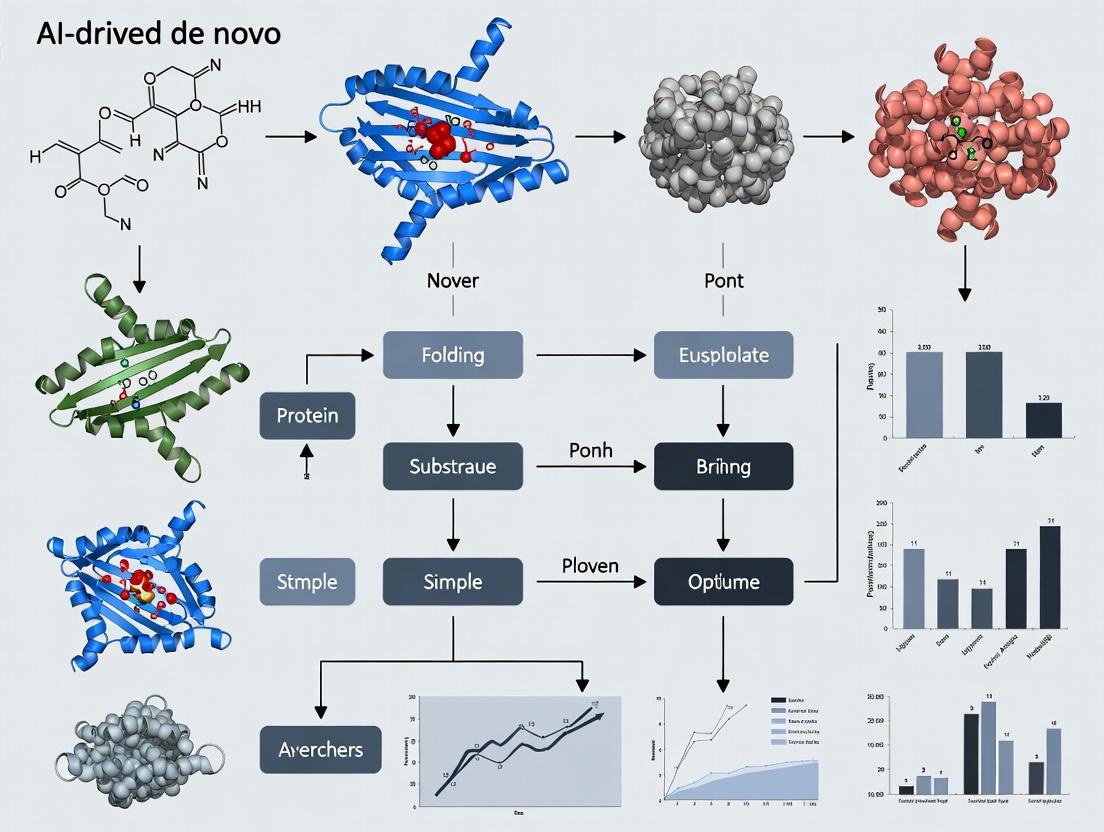
This article provides a comprehensive overview of cutting-edge AI-driven strategies for de novo enzyme design, tailored for researchers, scientists, and drug development professionals.
AI-Driven De Novo Enzyme Design: From Algorithm to Application in Biomedical Research
Abstract
This article provides a comprehensive overview of cutting-edge AI-driven strategies for de novo enzyme design, tailored for researchers, scientists, and drug development professionals. We explore the foundational principles of generative AI models, including protein language models and diffusion-based architectures, that enable the creation of enzymes with novel functions. The scope covers detailed methodologies for training and applying these models, practical troubleshooting and optimization techniques for real-world challenges, and rigorous validation frameworks for assessing designed enzymes. The article synthesizes current capabilities, benchmarks performance against traditional methods, and highlights transformative implications for therapeutic development, biocatalysis, and synthetic biology.
The AI Revolution in Enzyme Engineering: Core Concepts and Computational Foundations
Within the paradigm of AI-driven enzyme design for novel functions, the term "de novo design" has undergone a significant evolution. Historically, it referred to the rational, physics-based construction of biomolecules from scratch, guided by fundamental principles of structural biology and thermodynamics. Today, it is increasingly synonymous with generative artificial intelligence (AI) models that propose entirely novel protein scaffolds and active sites optimized for a target function. This document delineates this transition, providing application notes and detailed protocols for contemporary, AI-integrated de novo enzyme design workflows.
Quantitative Comparison of Design Paradigms
The table below summarizes the core characteristics, data requirements, and typical outputs of the major paradigms in de novo enzyme design.
Table 1: Comparison of De Novo Enzyme Design Paradigms
| Aspect | Rational (Physics-Based) Design | Generative AI-Driven Design |
|---|---|---|
| Primary Driver | First principles (thermodynamics, quantum mechanics), Rosetta, Foldit. | Deep learning on protein structure/sequence landscapes (RFdiffusion, ProteinMPNN, AlphaFold). |
| Core Data Requirement | High-resolution protein structures, force fields, catalytic mechanism details. | Massive datasets of protein sequences (UniProt) and structures (PDB), multiple sequence alignments. |
| Typical Output | A single or small number of carefully optimized candidate sequences. | Thousands of diverse, novel protein backbones and sequences fulfilling geometric constraints. |
| Design Focus | Precise placement of functional residues in a stable, often natural-like, scaffold. | Generation of entirely novel folds and motifs that conform to a user-specified "scaffold" or "motif." |
| Success Rate (Experimental) | Historically low (< 1% for novel catalysis), but high-impact successes. | Dramatically higher initial stability (> 50% express and fold), functional success rates still being quantified. |
| Computational Cost | High per-design (extensive molecular dynamics/energy minimization). | High initial training, but low per-design inference cost. |
| Key Advantage | Deep mechanistic insight, interpretability. | Exploration of vast, uncharted regions of protein space, speed, and diversity. |
Key Research Reagent Solutions
Table 2: Essential Reagents & Materials for AI-Driven De Novo Enzyme Design & Validation
| Reagent / Material | Function / Explanation |
|---|---|
| Generative AI Models (RFdiffusion, Chroma) | Generates novel protein backbone structures conditioned on functional constraints (e.g., symmetric pores, binding sites). |
| Sequence Design Models (ProteinMPNN, ESM-IF1) | Inputs a 3D backbone and outputs optimal, stable amino acid sequences. Critical for "fixing" AI-generated scaffolds. |
| Structure Prediction (AlphaFold2, RoseTTAFold) | Validates the foldability of in silico designs. A high pLDDT score is a prerequisite for experimental testing. |
| Gibson Assembly Cloning Kit | Standard method for assembling linear DNA fragments encoding novel protein sequences into expression vectors. |
| BL21(DE3) E. coli Competent Cells | Standard prokaryotic host for high-yield protein expression of soluble, non-membrane de novo designs. |
| Ni-NTA Agarose Resin | Affinity purification of polyhistidine-tagged designed proteins via FPLC. |
| Size Exclusion Chromatography (SEC) Column (e.g., Superdex 75) | Assesses monomeric state and global folding integrity of purified designs. |
| Differential Scanning Fluorimetry (DSF) Dye (e.g., SYPRO Orange) | High-throughput measurement of protein thermal stability (Tm). |
| Stopped-Flow Spectrophotometer | For rapid kinetic assays of designed enzymatic activity using substrate analogs or natural substrates. |
Experimental Protocols
Protocol 1: GenerativeDe NovoScaffold Design with RFdiffusion
Objective: To generate a novel protein backbone accommodating a predefined functional motif (e.g., a triosephosphate isomerase (TIM) barrel active site).
- Constraint Definition: Define the functional motif using a 3D coordinate file (PDB format). Specify which residues should form the motif and their required relative geometries.
- Model Inference: Run RFdiffusion with the motif specified as a "contiguous" or "partial" motif constraint. Use default parameters for noise scheduling and 100-200 inference steps.
- Generation & Clustering: Generate 1,000-10,000 backbone samples. Cluster the outputs based on Cα root-mean-square deviation (RMSD) to identify unique topological families.
- Initial Filtering: Select top clusters based on RFdiffusion's internal confidence score (pTM prediction) and visual inspection for motif integrity and structural plausibility.
- Sequence Design: Pass 10-20 selected backbones from each promising cluster through ProteinMPNN (with scaffold regions fixed and motif regions allowed to redesign) to generate 128 sequences per backbone.
- In Silico Validation: Predict the structure of all designed sequences using AlphaFold2 (without templates) or AlphaFold3. Filter designs where the predicted structure (highest-ranked model) has a high confidence (pLDDT > 80) and recapitulates the intended backbone geometry (RMSD < 2.0 Å to the design model).
(Title: Generative De Novo Design Workflow)
Protocol 2: Experimental Validation of a Designed Enzyme
Objective: To express, purify, and conduct a preliminary functional assay on a de novo designed enzyme.
Part A: Expression & Purification
- Gene Synthesis & Cloning: Synthesize the DNA sequence (codon-optimized for E. coli) and clone into a pET vector with an N-terminal His6-tag using Gibson assembly. Transform into BL21(DE3) cells.
- Small-Scale Test Expression: Inoculate 5 mL cultures (LB + antibiotic). Grow at 37°C to OD600 ~0.6, induce with 0.5 mM IPTG, and express at 18°C for 16-18 hours.
- Cell Lysis & Clarification: Pellet cells, resuspend in lysis buffer (e.g., 50 mM Tris pH 8.0, 300 mM NaCl, 10 mM imidazole, lysozyme, protease inhibitors). Lyse by sonication. Clarify by centrifugation (20,000 x g, 30 min, 4°C).
- Affinity Purification: Load supernatant onto Ni-NTA resin. Wash with 10 column volumes (CV) of wash buffer (50 mM Tris pH 8.0, 300 mM NaCl, 25 mM imidazole). Elute with elution buffer (same as wash, but 250 mM imidazole).
- Buffer Exchange & SEC: Desalt eluate into assay/gel filtration buffer (e.g., 20 mM HEPES pH 7.5, 150 mM NaCl). Load onto an SEC column (e.g., Superdex 75 Increase) pre-equilibrated in the same buffer. Collect the main symmetric peak.
Part B: Initial Functional Characterization
- Thermal Stability (DSF): In a 96-well plate, mix 20 µL of protein (0.2 mg/mL) with 5 µL of 50X SYPRO Orange dye. Perform a thermal ramp from 25°C to 95°C at 1°C/min in a real-time PCR machine. Calculate Tm from the derivative of the fluorescence curve.
- Activity Screen: Set up a reaction mixture containing assay buffer, putative substrate(s), and purified enzyme. Use a stopped-flow or plate reader to monitor a spectroscopic signal change (absorbance, fluorescence) over time. Compare to negative controls (no enzyme, heat-denatured enzyme).
- Kinetic Analysis: For hits, vary substrate concentration and fit initial velocity data to the Michaelis-Menten equation to obtain kcat and KM.
(Title: Experimental Validation Pipeline)
The field of de novo enzyme design has been fundamentally transformed by generative AI. The transition from purely rational design to hybrid AI/physics approaches, as framed within AI-driven strategies for novel function, represents a leap in capability. The protocols outlined here provide a roadmap for leveraging generative models to create novel enzymes and rigorously testing them in the laboratory, accelerating the discovery of proteins with tailor-made functions for therapeutics and biotechnology.
Application Notes & Protocols in AI-DrivenDe NovoEnzyme Design
This document provides application notes and detailed protocols for three core AI architectures—Protein Language Models (PLMs), Diffusion Models, and Generative Adversarial Networks (GANs)—as applied to de novo enzyme design for novel catalytic functions. The integration of these architectures represents a paradigm shift in computational enzyme engineering, enabling the generation of functional protein sequences and structures not found in nature.
Protein Language Models (ESMFold & AlphaFold) for Enzyme Scaffold Prediction
Application Notes: PLMs like ESMFold and AlphaFold decode the statistical relationships embedded in evolutionary protein sequences to predict 3D structure from primary sequence (ESMFold) or, conversely, to assess sequence likelihood given a structure. In de novo design, they are used to "hallucinate" stable, foldable protein backbones for novel enzyme active sites and to score the "naturalness" of designed sequences.
Key Quantitative Comparison:
Table 1: Comparison of Key Protein Language/Folding Models for Enzyme Design
| Model | Primary Function | Key Input | Design Application | Typical pLDDT/Accuracy | Inference Speed |
|---|---|---|---|---|---|
| AlphaFold2 | Structure Prediction | MSA, Templates | Validate designed structures, generate conditioning inputs | >90 pLDDT for many natural folds | Minutes (GPU) |
| ESMFold | Single-Sequence Structure Prediction | Amino Acid Sequence | Rapid backbone generation & sequence scoring for de novo proteins | ~70-85 pLDDT for novel designs | Seconds (GPU) |
| ProteinMPNN | Sequence Design (Inverse Folding) | Backbone Structure & Context | Generate optimal, foldable sequences for a given backbone | >40% recovery rate on native backbones | Seconds (GPU) |
Protocol 1.1: Validating De Novo Enzyme Backbones with ESMFold
Objective: To assess the foldability and predicted structure of a computationally generated enzyme backbone sequence.
Materials (Research Reagent Solutions):
- Hardware: GPU-enabled workstation (e.g., NVIDIA A100/A6000, 40GB+ VRAM).
- Software: Python 3.9+, PyTorch, ESM repository (Hugging Face
transformersor Meta'sesm). - Input: FASTA file containing the designed amino acid sequence(s).
Procedure:
- Environment Setup: Install ESMFold via pip:
pip install "fair-esm[esmfold]"or load the model from Hugging Facetransformers. - Model Loading: Load the pretrained ESMFold model and its associated tokenizer.
- Sequence Preparation: Input your designed amino acid sequence(s). Remove non-canonical residues.
- Structure Inference: Run inference. The model outputs a PDB-formatted prediction, per-residue confidence scores (pLDDT), and a predicted alignment error (PAE) matrix.
- Analysis: Scrutinize the pLDDT (target >70 overall, >90 for active site residues). Use the PAE to assess predicted domain rigidity and potential misfolding. Visually inspect the predicted structure (e.g., in PyMOL) against the design target for backbone alignment and active site geometry.
Title: ESMFold Validation Workflow for De Novo Sequences
Diffusion Models for Conditional Protein Backbone Generation
Application Notes: Diffusion models, inspired by non-equilibrium thermodynamics, learn to generate data by iteratively denoising random noise. In protein design, they are conditioned on functional specifications (e.g., desired catalytic site coordinates, substrate shape) to generate novel, diverse, and structurally plausible protein backbones tailored for a specific function.
Protocol 2.1: Generating Functional Backbones with RFdiffusion
Objective: To generate de novo protein backbones that contain a user-specified functional motif or binding site geometry.
Materials (Research Reagent Solutions):
- Hardware: High-performance GPU (NVIDIA A100/V100, 32GB+ VRAM recommended).
- Software: RFdiffusion (RosettaFold Diffusion) codebase, PyTorch, conda environment.
- Input: PDB file defining the functional motif (e.g., a set of catalytic residues in specific 3D arrangement).
Procedure:
- Conditioning Setup: Define the "scaffolding" task. Prepare a conditioning file (e.g., a
contigmap.jsonfor RFdiffusion) specifying which parts of the structure are fixed (your motif) and which are to be generated (diffusable). - Model Configuration: Set diffusion parameters: number of denoising steps (e.g., 500), noise schedule, and symmetry options (if designing oligomers).
- Generation Run: Execute the diffusion sampling process. The model starts from noise and gradually denoises, maintaining the conditioned motif while inventing a surrounding, stable fold.
- Output Clustering: Generate hundreds of backbones. Cluster outputs based on structural similarity (e.g., using MMseqs2 or RMSD clustering) to select diverse, high-confidence candidates.
- Downstream Processing: Feed selected backbone candidates into an inverse folding model (e.g., ProteinMPNN) to obtain sequences, followed by ESMFold validation (Protocol 1.1).
Title: Diffusion Model for Conditioned Backbone Generation
Generative Adversarial Networks (GANs) for Sequence & Property Optimization
Application Notes: GANs pit a generator (creates data) against a discriminator (evaluates authenticity). In enzyme design, they can optimize sequences for multiple objectives simultaneously: stability, expressibility, and desired quantum chemical properties (e.g., transition state energy, pKa of key residues), moving beyond purely structural metrics.
Protocol 3.1: Adversarial Optimization of Enzyme Sequences
Objective: To refine a designed enzyme sequence to maximize predicted stability and a target quantum mechanical property using a Wasserstein GAN (WGAN) framework.
Materials (Research Reagent Solutions):
- Hardware: GPU with CUDA support.
- Software: TensorFlow/PyTorch, RDKit (for molecular featureization), ORCA/PySCF (for QM property calculation, or surrogate model).
- Input: Initial seed sequences (from ProteinMPNN), property prediction models.
Procedure:
- Model Architecture: Define Generator (G) as an LSTM/Transformer that outputs amino acid probabilities. Define Critic (D) (in WGAN) that takes a sequence and outputs a scalar score combining "naturalness" and property predictions.
- Property Predictor Training: Train (or load pretrained) surrogate neural networks to predict target properties (e.g., DFT-calculated binding energy of a transition state analog) from sequence or structural features.
- Adversarial Training Loop:
a. Generate: G produces a batch of novel sequences.
b. Evaluate: D scores sequences using a combined loss:
L = D(sequence) + λ * Property_Predictor(sequence), where λ balances realism and function. c. Update Critic: Train D to distinguish high-scoring sequences from low-scoring ones. d. Update Generator: Train G to maximize the score output by D. - Convergence & Sampling: Train until equilibrium. Sample from the generator to obtain sequences predicted to be stable and possess enhanced target properties.
Title: GAN for Multi-Property Sequence Optimization
The Scientist's Toolkit: Key Research Reagent Solutions
Table 2: Essential Tools for AI-Driven *De Novo Enzyme Design*
| Item / Solution | Function in Workflow | Example/Provider |
|---|---|---|
| GPU Computing Cluster | Accelerates model training (diffusion, GANs) and inference (PLMs). | NVIDIA DGX Station, Cloud (AWS p4d, GCP A2). |
| Protein Language Model APIs | Provides state-of-the-art structure/sequence prediction as a service. | ESMFold (Hugging Face), AlphaFold Server (DeepMind). |
| Inverse Folding Model | Designs optimal sequences for a given 3D backbone structure. | ProteinMPNN, Rosetta fixbb. |
| Quantum Chemistry Software | Computes target electronic properties for training surrogate models in GANs. | ORCA, PySCF, Gaussian. |
| Structural Biology Suite | Visualizes, analyzes, and validates generated 3D models. | PyMOL, ChimeraX, UCSF. |
| High-Throughput Cloning & Expression Kit | Rapid experimental validation of designed enzyme sequences. | Gibson Assembly, Cell-free expression systems (NEB PURExpress). |
Application Notes
The AI-driven de novo enzyme design pipeline is fundamentally dependent on comprehensive, high-quality training data. Structural (Protein Data Bank, PDB) and sequence (UniProt) repositories provide the foundational datasets required for machine learning model development. Their integrated use enables the prediction of tertiary structures from sequence, the identification of functional motifs, and the inference of evolutionary constraints essential for designing novel catalytic functions.
Quantitative Database Metrics and Utility
Table 1: Current Core Database Statistics (2024)
| Database | Primary Content | Total Entries (Approx.) | Key AI-Relevant Features | Primary Use in Enzyme Design |
|---|---|---|---|---|
| Protein Data Bank (PDB) | 3D macromolecular structures (X-ray, Cryo-EM, NMR) | ~220,000 | Coordinates, B-factors, electron density maps, ligands. | Structural templates, active site geometry, ligand-protein interaction maps. |
| UniProt Knowledgebase (UniProtKB) | Protein sequences & functional annotations | ~250 million (Swiss-Prot: ~570,000; TrEMBL: ~249 million) | Curated functional sites, EC numbers, families/domains, variants. | Multiple Sequence Alignments (MSAs), evolutionary couplings, function annotation transfer. |
| UniRef Clusters | Sequence clusters at various identity levels | UniRef90: ~140 million clusters | Non-redundant sequence sets for efficient large-scale analysis. | Reducing redundancy in training sets, defining sequence space for families. |
| PDBx/mmCIF Archive | PDB data in extensible mmCIF format | Same as PDB | Standardized, rich metadata schema for all PDB entries. | Consistent parsing and feature extraction for ML pipelines. |
Integrated Data Applications in AI-Driven Design
- Structure Prediction Training: UniProt sequences paired with PDB structures train models like AlphaFold2 and RosettaFold, enabling accurate in silico folding of designed enzyme variants.
- Active Site Fingerprinting: PDB-derived ligand-binding sites are clustered to create "catalytic site" templates for grafting onto novel protein scaffolds.
- Consensus Sequence & Motif Discovery: MSAs generated from UniProt family data identify evolutionarily conserved residues critical for stability and function.
- Fitness Landscape Mapping: Variant data from UniProt and structural phenotypes from PDB help train probabilistic models of sequence-structure-function relationships.
Experimental Protocols
Protocol 1: Curating a High-Quality Training Set for Enzyme Family Fine-Tuning
Objective: Extract a non-redundant, annotated set of sequences and structures for a specific Enzyme Commission (EC) class to train a specialized predictive model.
Materials & Reagents:
- Hardware/Software: Unix/Linux or Windows Subsystem for Linux (WSL), Python 3.9+, Conda environment manager, RCSB PDB Data API access, UniProt REST API access.
- Key Libraries:
Biopython,requests,pandas,DSSP(for secondary structure assignment).
Procedure:
- EC-Centric Query: Query UniProt via its REST API (
https://rest.uniprot.org/uniprotkb/search?query=ec:1.1.1.1&format=json) to retrieve all reviewed (Swiss-Prot) entries for the target EC number. - Sequence Filtering: Filter sequences by length (remove extreme outliers) and organism source (e.g., focus on bacterial/mammalian). Download FASTA files.
- Structure Mapping: Cross-reference retrieved UniProt accessions with PDB using SIFTS (Structure Integration with Function, Taxonomy and Sequence) mappings to obtain corresponding experimental structure IDs.
- Structure Curation: For mapped PDB IDs, use the PDB API to filter structures based on:
- Resolution (< 2.5 Å for X-ray structures).
- Presence of relevant co-factors or substrates in the electron density.
- Exclusion of engineered mutants for a native dataset.
- Generate Non-Redundant Clusters: Use
MMseqs2orCD-HITon the retrieved sequences to cluster at 90% identity. Select a representative sequence (longest, best-annotated) from each cluster. - Final Dataset Assembly: Create a master table linking representative UniProt IDs, their clustered sequences, mapped PDB IDs (if available), and key annotations (organism, function, known variants). Split into training/validation/test sets (e.g., 80/10/10) ensuring no cluster crosses splits.
Protocol 2: Extracting Active Site Point Clouds for Geometric Deep Learning
Objective: From a set of PDB files for a given enzyme family, extract the 3D coordinates of key catalytic and binding residues to create a labeled point cloud dataset.
Materials & Reagents:
- PDB Files: Curated list from Protocol 1, Step 4.
- Software: PyMOL or MDAnalysis (Python library), RDKit (for ligand handling), Scikit-learn.
- Reference: Catalytic Site Atlas (CSA) or manual literature annotation for defining key residue numbers.
Procedure:
- Structure Preprocessing: For each PDB ID, download the
.ciffile. Remove water molecules and heteroatoms except for essential cofactors (NAD+, Zn2+, etc.) and bound substrates/inhibitors. - Active Site Definition: Using CSA annotations or a known reference structure, identify the UniProt residue numbers of catalytic triad/tetrad residues and substrate-coordinating residues.
- Coordinate Alignment & Extraction: a. Align all structures in the set to a single reference structure based on the backbone atoms of the full protein. b. For each aligned structure, extract the 3D Cartesian coordinates (x, y, z) of the Cα (or relevant side-chain atom, e.g., Cβ for orientation) for each defined active site residue. c. Extract coordinates of atoms from the bound ligand or cofactor.
- Feature Labeling: Assign a categorical label to each extracted point (e.g., "acidic", "basic", "nucleophilic", "hydrophobic", "ligandatomtype").
- Dataset Construction: For each enzyme, store the labeled point cloud as a
.npyfile or graph (nodes: atoms, edges: distances). The collection of these files forms the training data for a Graph Neural Network (GNN) tasked with recognizing or generating viable active site geometries.
The Scientist's Toolkit: Research Reagent Solutions
Table 2: Essential Digital & Computational Reagents for Data Curation
| Item (Tool/Database/Service) | Primary Function | Relevance to AI/Enzyme Design |
|---|---|---|
| UniProt REST API | Programmatic access to UniProt data (search, retrieve entries, align). | Enables automated, large-scale curation of sequence datasets for model training and MSA generation. |
| RCSB PDB Data API | Programmatic access to search and retrieve PDB data, metadata, and structure files. | Facilitates automated filtering and downloading of structural data based on experimental parameters. |
| SIFTS (EMBL-EBI) | Provides authoritative mapping between PDB structures and UniProt sequences. | Critical for accurately linking structural features (from PDB) with functional annotations (from UniProt). |
| MMseqs2 | Ultra-fast protein sequence searching and clustering suite. | Creates non-redundant sequence sets from massive databases (UniRef) for efficient model training. |
| DSSP | Algorithm to assign secondary structure from atomic coordinates. | Extracts structural features (helices, sheets, loops) from PDB files as labels for structure prediction models. |
| PD2 (PyMOL Scripting) | Python-based scripting within PyMOL molecular viewer. | Automates repetitive structure analysis tasks (e.g., measuring distances, extracting residues, creating figures). |
| AlphaFold Protein Structure Database | Pre-computed AlphaFold2 models for millions of proteins. | Provides high-accuracy predicted structures for UniProt entries without experimental PDB data, expanding the training set. |
| RDKit | Open-source cheminformatics toolkit. | Handles ligand molecules from PDB files, calculates descriptors, and generates 3D conformations for binding site analysis. |
Visualizations
AI Enzyme Design Data Curation Workflow
Active Site to Graph Neural Network Pipeline
Application Notes
The integration of Physics-Informed AI (PIAI) with molecular dynamics (MD) and energy functions represents a transformative approach for de novo enzyme design. This paradigm leverages deep learning models constrained by physical laws—encoded as partial differential equations from molecular mechanics—to navigate the vast combinatorial space of protein sequences and conformations. By directly incorporating force field energy terms and MD-derived stability metrics as regularization components within neural network architectures, the models prioritize physically plausible, stable, and functional enzyme designs over purely sequence-statistical predictions. This is critical for designing novel catalytic functions where evolutionary data is sparse or non-existent. The application accelerates the design-make-test-analyze cycle by orders of magnitude, moving from heuristic-based screening to predictive, physics-grounded in silico prototyping.
Key Quantitative Benchmarks
Recent studies demonstrate the efficacy of this integrated paradigm. The following table summarizes performance metrics from key implementations.
Table 1: Performance Metrics of Physics-Informed AI for Enzyme Design
| Model/Platform Name | Key Integrated Physics Component | Design Success Rate (%) | ΔΔG Stability Prediction (RMSE, kcal/mol) | Catalytic Rate (kcat/KM) Improvement Fold | Reference Year |
|---|---|---|---|---|---|
| DeepRank-MD | All-atom MD trajectories & MM/GBSA scoring | 45 ( in vitro active designs) | 1.2 | 5 - 150 (varies by target) | 2023 |
| PINA (Physics-Informed Neural Architect) | Graph Neural Network + AMBER ff19SB force field term | 38 | 0.9 | N/A (focused on stability) | 2024 |
| EnzyME-Hybrid | Rosetta energy function + Equivariant GNN | 67 (binding affinity < 10 nM) | 1.5 | Up to 103 for novel substrates | 2023 |
| FoldFlow-PI | Continuous normalizing flows guided by MD free energy landscapes | 52 (high stability designs) | 0.8 | N/A (focused on de novo fold design) | 2024 |
Signaling Pathway & Workflow Logic
Diagram 1: PIAI-Driven Enzyme Design Workflow
Diagram 2: Physics Loss Integration in Neural Network Training
Experimental Protocols
Protocol: PIAI-GuidedDe NovoActive Site Design
Objective: To design a novel enzyme active site for a target non-natural reaction using a physics-informed generative model, followed by in silico validation via molecular dynamics.
Materials: See "The Scientist's Toolkit" below.
Procedure:
Reaction Transition State (TS) Modeling:
- Using quantum mechanics (QM) software (e.g., Gaussian, ORCA), optimize the geometry of the target reaction's rate-limiting transition state at the DFT level (e.g., B3LYP/6-31G*).
- Calculate the electrostatic potential (ESP) and molecular orbitals of the TS. Export the 3D coordinates and partial charge parameters.
Scaffold Selection & Library Preparation:
- From a curated PDB database, select protein scaffolds with secondary structure elements and folds amenable to harboring the TS geometry. Use geometric hashing algorithms (e.g., Rosetta Match).
- Prepare scaffold structures: remove water and ligands, add missing hydrogens, assign correct protonation states at pH 7.0 using PDB2PQR.
Physics-Informed Generative Design:
- Initialize a graph neural network (GNN) where nodes represent residues and edges represent spatial proximity.
- Encode the TS QM parameters (ESP, geometry) as a fixed graph sub-structure within the model's latent space.
- Train the generator with a composite loss function:
L_total = λ1 * L_reconstruction + λ2 * L_RosettaEnergy + λ3 * L_MD_RegularizationL_RosettaEnergy: Calculated using theref2015orβ_nov16energy function on sampled decoys.L_MD_Regularization: Pre-computed from short MD simulations on a training set, predicting RMSD fluctuation.
- Sample 10,000 candidate sequences with their predicted backbone coordinates from the trained model.
High-Throughput In Silico Screening:
- Stage 1 (Energy Filter): Score all candidates with the Rosetta
enzyme_designapplication. Discard designs with total energy > -200 REU or catalytic site energy > -50 REU. - Stage 2 (MD Stability Check): For the top 500 designs, run restrained MD simulations (see Protocol 2.2). Compute the backbone Cα-RMSD over time and the ΔG of binding/folding via MMPBSA/MMGBSA. Retain designs with RMSD < 2.0 Å and favorable ΔG.
- Stage 3 (Catalytic Viability): For the top 50 designs, perform QM/MM simulations on the reactive step. Confirm appropriate bond lengths/angles in the Michaelis complex and TS.
- Stage 1 (Energy Filter): Score all candidates with the Rosetta
Output: A ranked list of ≤10 designed enzyme sequences with associated structures, predicted stability (ΔΔG), and catalytic metrics.
Protocol: Accelerated Stability Assessment via Restrained MD
Objective: To rapidly evaluate the conformational stability and folding integrity of AI-designed enzyme variants.
Procedure:
System Setup:
- Place the designed enzyme structure in a cubic TIP3P water box with a 10 Å buffer.
- Add ions (e.g., NaCl) to neutralize the system and reach 150 mM concentration.
- Parameterize the protein using the AMBER ff19SB force field. For non-standard residues/ligands, use GAFF2 with HF/6-31G* RESP charges.
Equilibration (Performed on GPU, e.g., using pmemd.cuda):
- Minimization: 5,000 steps steepest descent, 5,000 steps conjugate gradient, with positional restraints on protein heavy atoms (force constant 10 kcal/mol/Ų).
- Heating: NVT ensemble, heat from 0 K to 300 K over 50 ps, using Langevin thermostat (γ=1.0/ps), same restraints.
- Density Adjustment: NPT ensemble, 100 ps, pressure maintained at 1 atm with Berendsen barostat, reduce restraints to 5 kcal/mol/Ų.
- Unrestrained Equilibration: NPT ensemble, 200 ps, no restraints.
Production MD & Analysis:
- Run 3 independent production simulations of 100 ns each (total 300 ns per design) in NPT ensemble (300K, 1 atm).
- Save trajectories every 100 ps.
- Analysis (using
cpptraj/MDTraj):- Calculate Cα-RMSD versus the designed starting structure over time.
- Compute the radius of gyration (Rg).
- Calculate per-residue root-mean-square fluctuation (RMSF).
- Perform MMPBSA/MMGBSA to estimate binding free energy (if a ligand/substrate analog is present) or relative folding free energy.
The Scientist's Toolkit
Table 2: Essential Research Reagents & Software for PIAI Enzyme Design
| Item Name | Category | Function/Benefit |
|---|---|---|
| Rosetta3 Suite | Software | Provides a robust, energy function-based framework for protein modeling, design (enzyme_design), and scoring. The primary source for one component of the physics loss. |
| AMBER ff19SB/GAFF2 | Force Field | High-accuracy molecular mechanics force field parameters for proteins and small molecules. Essential for running physically realistic MD simulations for validation and training data generation. |
| GROMACS 2024 | Software | Highly parallelized, performant MD simulation engine. Used for large-scale stability screening of designed proteins. |
| PyTorch Geometric | Software/Library | Extension of PyTorch for graph neural networks. The primary framework for building GNN-based physics-informed generators that operate on molecular graphs. |
| JAX/MD | Software/Library | Differentiable MD code enabling the direct backpropagation of MD-derived physical properties (e.g., forces, energies) into neural network training loops. |
| AlphaFold2 Protein Structure Database | Database | Source of high-confidence wild-type protein structures for use as design scaffolds and as a baseline for training data. |
| QM Software (Gaussian, ORCA) | Software | Calculates the electronic structure of small molecules and reaction transition states, providing the critical physical target for active site design. |
| CETSA Assay Kit | Wet Lab Reagent | Cellular thermal shift assay kit for high-throughput experimental validation of protein stability and ligand binding in cell lysates post-design. |
| NEB Gibson Assembly Master Mix | Wet Lab Reagent | Enables rapid, seamless cloning of de novo designed gene sequences into expression vectors for downstream expression and purification. |
Within AI-driven de novo enzyme design, the transition from in silico designs to validated functional proteins hinges on the rigorous assessment of three key metrics: Novelty, Foldability, and Functional Potential. This document provides application notes and detailed protocols for the quantitative and qualitative evaluation of these metrics, essential for prioritizing designs for experimental characterization in drug development and synthetic biology pipelines.
Quantitative Assessment Framework
Table 1: Core Metrics for AI-Designed Enzyme Evaluation
| Metric Category | Specific Measure | Target Range/Threshold | Measurement Technique |
|---|---|---|---|
| Novelty | Sequence Identity to Natural Proteins | < 30% (for high novelty) | BLASTp, Foldseek |
| Structural Similarity (TM-score) | < 0.5 (novel fold) | DALI, TM-align | |
| Scaffold Uniqueness | Novel topology | ECOD, CATH classification | |
| Foldability | Predicted ΔG of Folding | < 0 (negative, stable) | Rosetta ddG, FoldX |
| pLDDT (AlphaFold2/3) | > 70 (confident) | AlphaFold2/3 prediction | |
| Predicted Solvent Accessibility | Consistent with globular fold | DSSP from predicted structure | |
| Functional Potential | Active Site Residue Geometry | RMSD < 2.0 Å to reference | Molecular docking/alignment |
| Substrate Binding Affinity (pKd) | Favorable vs. decoys | Docking scores (AutoDock Vina) | |
| Catalytic Triad/Dyad Positioning | Distance ± 1.0 Å, angle ± 20° | Geometric analysis in PyMOL | |
| De Novo Catalytic Propensity | Higher than background | ML-based classifiers (e.g., CatalyticNet) |
Experimental Protocols
Protocol 3.1:In SilicoNovelty and Foldability Assessment
Objective: To rank de novo enzyme designs by structural novelty and predicted folding stability. Materials: FASTA sequences of designs, access to Foldseek server, AlphaFold2/3 local installation, Rosetta suite. Procedure:
- Sequence-Based Novelty Check:
- Input design FASTA into NCBI BLASTp (web) against the non-redundant protein sequence database (nr).
- Record percent identity and E-value for the top 10 hits.
- Use Foldseek (remote or local) to search against the PDB. Note the top TM-score and alignment length.
- Structure Prediction & Confidence:
- Run AlphaFold2 or AlphaFold3 for each design (4-8 GPU hours per design).
- Extract the pLDDT score from the
confidence_model_?.pdbfile or JSON output. Average pLDDT for the full chain and the putative active site region.
- Energetic Foldability:
- Use the relaxed predicted structure (from step 2) as input for Rosetta's
ddg_monomerapplication. - Run the protocol with default parameters to calculate the change in free energy (ΔΔG) upon point mutation to alanine (or the predicted ΔG of folding).
- Alternatively, use FoldX --
RepairPDBandStabilitycommands.
- Use the relaxed predicted structure (from step 2) as input for Rosetta's
- Analysis: Compile results into a table format per Table 1. Prioritize designs with sequence identity <30%, TM-score <0.5 to known folds, pLDDT >70, and predicted ΔG < 0.
Protocol 3.2:In VitroFunctional Potential Assay (Fluorogenic Probe Cleavage)
Objective: To experimentally test the catalytic activity of purified de novo enzymes using a general fluorogenic substrate. Materials:
- Purified de novo enzyme candidate (from E. coli expression)
- Fluorogenic substrate (e.g., 4-Methylumbelliferyl β-D-galactopyranoside for galactosidase activity)
- Assay buffer (e.g., 50 mM Tris-HCl, 100 mM NaCl, 10 mM MgCl2, pH 7.5)
- Black 96-well clear-bottom microplate
- Fluorescence plate reader (e.g., excitation 360 nm, emission 460 nm)
- Positive control enzyme (natural)
- Negative control (heat-inactivated enzyme or BSA)
Procedure:
- Plate Setup: In triplicate, add 90 µL of assay buffer to wells.
- Substrate Addition: Add 10 µL of fluorogenic substrate stock (final concentration 200 µM).
- Reaction Initiation: Add 10 µL of purified de novo enzyme (final concentration 1-10 µM). Include positive and negative controls.
- Kinetic Measurement: Immediately place plate in pre-warmed (30°C) plate reader. Measure fluorescence every 30 seconds for 1 hour.
- Data Analysis:
- Subtract background fluorescence (negative control).
- Calculate initial velocity (V0) from the linear range of the fluorescence vs. time curve.
- Convert fluorescence units to product concentration using a standard curve of the free fluorophore (e.g., 4-Methylumbelliferone).
- Report specific activity as µmol product formed min⁻¹ mg⁻¹ of enzyme.
- Compare V0 of de novo enzyme to positive control and buffer-only background.
Visualizations
Title: AI-Driven Enzyme Design Screening Funnel
Title: In Vitro Activity Assay Workflow
The Scientist's Toolkit
Table 2: Key Research Reagent Solutions for Assessment Protocols
| Reagent/Material | Function in Assessment | Example Product/Supplier |
|---|---|---|
| AlphaFold2/3 ColabFold | Provides rapid, accurate 3D structure predictions and pLDDT confidence metrics for foldability. | GitHub: sokrypton/ColabFold |
| Rosetta Software Suite | Calculates free energy of folding (ΔG) and enables in silico mutagenesis for stability scans. | rosettacommons.org (Academic) |
| Foldseek Server | Ultra-fast structural similarity search for novelty assessment against the PDB. | foldseek.com |
| Fluorogenic Substrate Library | Enables high-throughput kinetic screening of de novo enzymes for broad functional potential. | e.g., Sigma-Aldrich M1633 (4-MU-β-D-Gal) |
| HisTrap HP Column | Standardized purification of His-tagged de novo enzymes for consistent in vitro testing. | Cytiva 17524801 |
| Precision Plus Protein Standards | Essential for SDS-PAGE analysis to confirm expression and purity of designed enzymes. | Bio-Rad 1610373 |
| Black 96-Well Assay Plates | Optimal for sensitive fluorescence-based kinetic activity measurements. | Corning 3915 |
| CatalyticNet Model | Machine learning classifier to predict the likelihood of a designed site being catalytic. | GitHub: lcbb/CatalyticNet |
Building Novel Enzymes: A Step-by-Step Guide to AI Workflows and Biomedical Use Cases
This application note details a structured computational workflow for generating in silico protein designs, specifically enzymes, based on high-level functional specifications. Framed within a thesis on AI-driven de novo enzyme design, this protocol outlines the sequential steps from defining a target function to producing a computationally validated protein model ready for in vitro testing. The integration of machine learning and biophysical simulation is emphasized throughout.
Core Workflow: A Stage-Gated Process
The workflow is divided into four distinct, sequential stages, each with defined inputs, processes, and quality control checkpoints.
Diagram: From Specification to In Silico Protein Workflow
Stage 1: Functional Specification & Scaffold Identification
Objective: Translate a desired biochemical function into quantifiable parameters and identify suitable protein backbone scaffolds.
Protocol: Defining Functional Specifications
- Reaction Mapping: Use tools like Rhea (https://www.rhea-db.org/) or KEGG Reaction to formally define the target chemical transformation.
- Transition State (TS) Modeling: Employ quantum mechanics (QM) software (e.g., Gaussian, ORCA) to model the reaction's transition state geometry and electrostatic potential.
- Key Descriptor Extraction: From the TS model, extract:
- Geometric Constraints: Distances and angles between catalytic residues and substrates.
- Chemical Milieu: Required pKa of functional groups, hydrophobicity of the active site pocket.
- Metric Definition: Establish quantifiable metrics for success (e.g., substrate binding energy < -8 kcal/mol, TS stabilization > 12 kcal/mol).
Protocol: Scaffold Identification & Retrieval
- Database Search: Query the Protein Data Bank (PDB) and AlphaFold Protein Structure Database using:
- Fold similarity (e.g., using Foldseek).
- Presence of pre-existing, similar functional motifs.
- Desired structural features (e.g., barrel, sandwich) known to support the reaction class.
- Scaffold Filtering: Apply filters based on:
- Size: Compatible with the intended active site.
- Thermostability: Using predicted Tm or from experimental data in related structures.
- Solubility Propensity: Predict using tools like CamSol or DeepSol.
- Structural Integrity: Reject scaffolds with high backbone distortion in regions of interest.
Table 1: Example Scaffold Candidates for a Novel Kemp Eliminase
| PDB ID | Fold (CATH) | Size (aa) | Predicted Tm (°C) | CamSol Intrinsic Score | Catalytic Proximity* | Rationale for Selection |
|---|---|---|---|---|---|---|
| 1TIM | TIM Barrel | 247 | 68.2 | 0.45 | High | Versatile, engineerable scaffold common in natural enzymes. |
| 2FDN | Flavodoxin-like | 148 | 71.5 | 0.52 | Medium | Stable, small scaffold with a flexible loop region for design. |
| 1RIS | Rossmann-like | 189 | 62.1 | 0.38 | Low | Good cofactor binding potential, but less optimal geometry. |
*Catalytic Proximity: Qualitative match of existing residues to target TS model.
Stage 2: Active Site & Motif Design
Objective: Design a minimal catalytic motif within the selected scaffold that can perform the key chemical steps.
Protocol: Rosetta-Based Motif Grafting & Design
- Motif Placement: Use the RosettaMatch module to place the QM-derived transition state model into the scaffold's potential active site, identifying all possible placements of key catalytic residues (e.g., His, Asp, Ser).
- Sequence Design: For each viable placement, run RosettaDesign (FixBB) to optimize the sequence of residues within an 8-10 Å radius of the TS model for:
- Transition state stabilization.
- Complementary shape and electrostatics.
- Local backbone flexibility.
- Sequence Filtering: Filter designed sequences using Rosetta's
ddg_monomerto ensure the designed motif does not destabilize the local structure (ΔΔG < 2.0 kcal/mol).
Protocol: RFdiffusion forDe NovoMotif Scaffolding
- Conditional Generation: Use RFdiffusion (with the
inpaintingorconditionalgeneration protocols) to generate de novo backbone structures conditioned on:- The 3D coordinates of the critical catalytic side chains (the "motif").
- Secondary structure constraints for the surrounding regions.
- Denoising and Refinement: Run the diffusion process (typically 50 steps) to generate a pool of backbone structures that seamlessly integrate the catalytic motif. Refine outputs with RosettaFastRelax.
Diagram: Active Site Design Pathway
Stage 3: Full Protein Model Generation
Objective: Generate a complete, atomistic protein model from the designed active site motif.
Protocol:De NovoBackbone Generation with AlphaFold2 or RFdiffusion
- Full-Length Conditioning: Use the designed catalytic motif (3-10 key residues with fixed coordinates) as a "hard constraint" for a full-length de novo backbone generation run in RFdiffusion.
- Global Structure Sampling: Generate 100-500 backbone models. Use the
--contigsflag to define variable regions around the fixed motif. - Backbone Clustering: Cluster generated backbones using RMSD (e.g., with MMseqs2) and select top 5 cluster centroids for sequence design.
Protocol: Sequence Design with ProteinMPNN
- Fixed-Site Input: Prepare the backbone PDB files, specifying the catalytic motif residues as "fixed" and the rest as "designed."
- Run ProteinMPNN: Execute with default weights and a temperature of 0.1 for deterministic, low-entropy sequences. Use
--num_seq_per_target 50to generate multiple sequences per backbone. - Sequence Scoring: Rank generated sequences by the ProteinMPNN confidence score (negative log likelihood). Select the top 3 sequences per backbone cluster for validation.
Table 2: The Scientist's Toolkit: Key Research Reagents & Solutions
| Item | Function in Workflow | Example/Notes |
|---|---|---|
| Quantum Mechanics Software | Models transition state geometry and energetics for the target reaction. | ORCA (free), Gaussian (commercial). |
| Rosetta Suite | Protein modeling, design, and energy-based scoring. | RosettaMatch, RosettaDesign, FastRelax. |
| RFdiffusion | Generative AI model for creating novel protein backbones conditioned on inputs. | Used for de novo scaffolding and motif integration. |
| ProteinMPNN | Neural network for fast, robust protein sequence design given a backbone. | Superior speed and accuracy over RosettaDesign for global sequence design. |
| AlphaFold2 / ColabFold | Structure prediction to validate foldability of designed sequences. | Critical filter before experimental testing. |
| MD Simulation Software | Assesses dynamic stability and functional mechanics. | GROMACS, AMBER, OpenMM. |
| PyMOL / ChimeraX | Visualization and analysis of 3D structural models. | Essential for manual inspection and figure generation. |
Stage 4:In SilicoValidation
Objective: Apply computational filters to predict stability, foldability, and functional propensity.
Protocol: Foldability Assessment with AlphaFold2
- Self-Consistency Check: Input the designed sequence (not the design model) into ColabFold (AlphaFold2 with MMseqs2) with default settings.
- Analysis: Compare the AlphaFold2-predicted structure (pLDDT > 80 expected) to the design model using TM-score. A TM-score > 0.7 indicates the sequence is predicted to fold into the intended structure.
Protocol: Molecular Dynamics (MD) Simulation for Stability
- System Preparation: Solvate the designed model in a water box (e.g., TIP3P), add ions to neutralize, using CHARMM36m or Amber ff19SB force field via GROMACS or OpenMM.
- Equilibration: Perform energy minimization, NVT, and NPT equilibration (100 ps each).
- Production Run: Run a short, 50-100 ns simulation in triplicate.
- Stability Metrics: Calculate:
- Backbone RMSD relative to the starting model (< 2.5 Å acceptable).
- Root Mean Square Fluctuation (RMSF) of catalytic residues.
- Preservation of key hydrogen bonds and contacts in the active site.
Protocol: Binding Affinity Estimation
- Docking: Using RosettaLigand or AutoDock Vina, dock the substrate or a transition state analog into the designed active site of the MD-relaxed model.
- Scoring: Calculate the binding energy (ΔG_bind). Compare to known successful designs or natural enzymes.
Table 3: Key Validation Metrics and Acceptance Criteria
| Validation Layer | Method/Tool | Key Metric(s) | Success Criteria |
|---|---|---|---|
| Foldability | AlphaFold2/ColabFold | pLDDT, TM-score vs Design | pLDDT > 80, TM-score > 0.7 |
| Thermodynamic Stability | Rosetta ddg_monomer / FoldX |
ΔΔG of folding (kcal/mol) | ΔΔG < 5.0 kcal/mol |
| Dynamic Stability | MD Simulation (50-100 ns) | Backbone RMSD, RMSF | RMSD plateau < 3.0 Å, low catalytic site RMSF |
| Functional Propensity | RosettaLigand / QM-MM | Binding Energy (ΔG_bind), Barrier Estimation | ΔG_bind < target threshold |
This protocol provides a concrete, stepwise guide for moving from a functional specification to a validated in silico protein, integral to an AI-driven de novo enzyme design pipeline. By adhering to this staged workflow with embedded checkpoints, researchers can systematically increase the probability that computationally designed enzymes will exhibit the desired novel function upon experimental expression and characterization.
Within the paradigm of AI-driven de novo enzyme design, the critical challenge shifts from identifying existing enzymes to prompting AI models to generate novel, functional protein scaffolds. This process requires precise functional specification. This application note details experimental protocols for defining and validating the three pillars of enzymatic function—active site architecture, substrate specificity, and reaction mechanism—to serve as both training data for and validation of generative AI models.
Defining the Active Site: Combinatorial Active-Site Saturation Test (CAST) Protocol
Objective: To experimentally map the topological and chemical boundaries of an enzyme's active site to inform AI models about permissible spatial and amino acid constraints for a given catalytic function.
Protocol:
- In Silico Analysis: Using a crystal structure or high-quality AlphaFold2 model, identify all residues within an 8-10 Å radius of the catalytic center or bound ligand.
- CASTing Library Design: Group these residues into logical "CAST rings" of 3-4 spatially adjacent residues. Design oligonucleotides to simultaneously randomize all codons within a single ring using NNK degeneracy (encodes all 20 amino acids + 1 stop codon).
- Library Construction: Perform site-directed mutagenesis via PCR assembly for each CAST ring. Clone the diversified gene fragments into an appropriate expression vector (e.g., pET series).
- Functional Screening: Transform the library into expression host (e.g., E. coli BL21(DE3)). Plate on solid media containing a chromogenic or fluorogenic substrate proxy for the target reaction. Alternatively, employ colony pick-and-robotics for microtiter plate-based screening with absorbance/fluorescence readouts.
- Data Analysis: Sequence active variants. Map tolerated mutations per position to a 3D structure to define the "functional volume" of the active site.
Quantitative Data Output (Example: Phenolic Acid Decarboxylase):
Table 1: CAST Ring Analysis for a Model Hydrolase
| CAST Ring | Residues Randomized | Library Size (Theoretical) | Active Clones Identified | Key Functional Substitutions Found |
|---|---|---|---|---|
| Ring A (Catalytic Triad) | D101, H228, S105 | 3.2 x 10⁴ | 12 | S105T, H228N |
| Ring B (Oxyanion Hole) | M16, T17, G18 | 3.2 x 10⁴ | 45 | M16V, T17S |
| Ring C (Specificity Pocket) | W123, F198, L225 | 3.2 x 10⁴ | 210 | W123Y/F, F198L, L225V/I |
Profiling Substrate Specificity: Kinetic Parameter High-Throughput Assay
Objective: To generate quantitative kinetic data (kcat, KM) across a diverse substrate panel, creating a functional fingerprint to train AI models on substrate-reactivity relationships.
Protocol:
- Substrate Library Curation: Assay a minimum of 50 structurally related substrates (e.g., ester series with varying acyl chain lengths, stereochemistry, or substituents).
- Automated Assay Setup: Using a liquid handler, prepare 96- or 384-well plates with serial dilutions of each substrate in appropriate buffer. Initiate reactions with a fixed concentration of purified enzyme variant.
- Continuous Kinetic Readout: Monitor reaction progress spectrophotometrically or fluorometrically every 10-15 seconds for 5-10 minutes using a plate reader.
- Data Processing: Fit initial velocity data (v0) vs. substrate concentration [S] to the Michaelis-Menten equation (
v0 = (kcat * [E] * [S]) / (KM + [S])) using nonlinear regression software (e.g., Prism, GraphPad). - Specificity Heatmap Generation: Compile log(kcat/KM) values for all enzyme-substrate pairs into a matrix for visualization and AI training.
Quantitative Data Output:
Table 2: Specificity Matrix of an Engineered Acyltransferase (log(kcat/KM) values)
| Enzyme Variant | Acetate (C2) | Butyrate (C4) | Hexanoate (C6) | Benzoate | Choline |
|---|---|---|---|---|---|
| Wild-Type | 3.2 | 4.1 | 3.8 | 1.5 | 2.0 |
| Variant A (Larger Pocket) | 2.5 | 3.8 | 5.2 | 4.0 | 1.8 |
| Variant B (Polar Pocket) | 3.0 | 3.5 | 3.2 | 2.1 | 4.5 |
Elucidating Reaction Mechanism: Stopped-Flow & Isotope Labeling
Objective: To determine the precise chemical steps (e.g., covalent catalysis, proton transfers) of a novel AI-designed enzyme, validating its mechanistic plausibility.
Protocol A: Stopped-Flow Transient Kinetics
- Setup: Load one syringe with enzyme and another with substrate/mixed with a fluorescent pH indicator or substrate analog.
- Rapid Mixing: Use a stopped-flow instrument to mix solutions rapidly (<2 ms) and monitor fluorescence/absorbance changes on a millisecond timescale.
- Data Fitting: Fit the resulting biphasic or multiphasic traces to sequential kinetic models to identify burst phases (indicative of covalent intermediate formation) and steady-state rates.
Protocol B: Solvent Isotope Effect (SIE) & Kinetic Isotope Effect (KIE)
- SIE: Measure kcat and kcat/KM in H2O vs. D2O. A large SIE (>2) suggests rate-limiting proton transfer.
- Primary KIE: Synthesize substrate with deuterium (²H) or tritium (³H) at the bond cleaved. Compare rates with protiated substrate. A kH/kD > 2 indicates the bond cleavage is rate-limiting.
- Isotope Labeling & MS Analysis: Perform reaction with ¹⁸O-labeled water or substrate. Quench reaction and analyze products by mass spectrometry to track atom incorporation, mapping the path of specific atoms.
Quantitative Data Output:
Table 3: Mechanistic Probe Data for a Novel Reductase
| Experiment | Condition / Substrate | Observed Parameter | Inference |
|---|---|---|---|
| Stopped-Flow | Pre-steady state | Rapid burst phase amplitude = 0.95 [E] | Covalent intermediate forms fast |
| SIE | Reaction in D2O | (kcat)H2O / (kcat)D2O = 3.5 | Rate-limiting proton transfer |
| Primary ¹⁴C KIE | [1-¹⁴C] vs. [1-¹²C] Substrate | k12 / k14 = 1.04 | C-C bond cleavage not rate-limiting |
| ¹⁸O Tracking | H2¹⁸O incubation | ¹⁸O incorporated into product | Reaction proceeds via acyl-enzyme intermediate |
The Scientist's Toolkit: Research Reagent Solutions
Table 4: Essential Reagents for Functional Prompting Experiments
| Reagent / Material | Function in Protocol | Example Vendor / Product |
|---|---|---|
| NNK Degenerate Oligonucleotides | Encodes all amino acids for CAST library construction. | Integrated DNA Technologies (IDT), Twist Bioscience. |
| Chromogenic/Fluorogenic Substrate Proxies | Enables rapid visual or fluorescence-based colony screening. | Sigma-Aldrich (e.g., pNP-esters), Thermo Fisher (AMC derivatives). |
| HTS Kinetic Assay Kits | Pre-optimized reagents for measuring specific enzyme classes (e.g., hydrolyses, oxidations) in microplates. | Promega (CellTiter-Glo), Cayman Chemical. |
| Stopped-Flow Instrumentation | Measures rapid enzyme kinetics in the millisecond timeframe. | Applied Photophysics SX series, Hi-Tech Kinetasyst. |
| Stable Isotope-Labeled Compounds (²H, ¹³C, ¹⁸O) | Probes for kinetic isotope effects (KIEs) and reaction trajectory mapping. | Cambridge Isotope Laboratories, Sigma-Aldrich Isotec. |
| Automated Liquid Handling System | Enables precise, high-throughput setup of substrate libraries and assay plates. | Beckman Coulter Biomek, Tecan Fluent. |
| Microplate Reader with Kinetics Module | Records continuous absorbance/fluorescence changes in 96- or 384-well format. | BioTek Synergy, Molecular Devices SpectraMax. |
This application note presents a detailed protocol within the broader thesis framework: "AI-Driven De Novo Enzyme Design Strategies for Novel Functions." The focus is the computational design and experimental validation of a novel therapeutic enzyme capable of activating a specific prodrug. This approach aims to enhance the safety and efficacy of targeted cancer therapies, such as Prodrug-Activating Gene Therapy or Antibody-Directed Enzyme Prodrug Therapy (ADEPT). The integration of AI-driven protein design enables the creation of enzymes with tailored kinetic properties and minimal immunogenicity.
AI-Driven Design Workflow & Protocol
Computational Design Phase
Objective: To generate de novo enzyme variants optimized for the cleavage of the prodrug 5-fluoro-1-(2,4-difluorophenyl)pyrimidin-2(1H)-one (5-FDFP), a precursor to 5-fluorouracil (5-FU).
Protocol: In Silico Scaffold Selection and Active Site Design
- Target Specification: Define the catalytic triad (e.g., Ser-His-Asp for a hydrolase) and the geometric constraints for transition-state stabilization of the prodrug hydrolysis reaction.
- Scaffold Mining: Use the Protein Data Bank (PDB) and the AlphaFold Protein Structure Database to search for stable, human-like protein scaffolds (<30% identity to human proteins to reduce immunogenicity) that can accommodate the designed active site. Tools: Foldseek, Dali.
- Rosetta-Based Design: Using the RosettaCommons software suite:
- Fix the backbone of the selected scaffold.
- Use the
RosettaDesignapplication to perform sequence optimization for active site residues, ensuring complementary shape and electrostatics to the prodrug's transition state. - Apply the
RosettaEnzymeDesignprotocol to incorporate the catalytic machinery.
- AI-Augmented Sequence Generation: Fine-tune a protein language model (e.g., ESM-2 or ProGen2) on successful hydrolase families. Generate 10,000 candidate sequences conditioned on the Rosetta-designed active site motif.
- Stability & Folding Prediction: Filter candidates using:
- AlphaFold2 or RoseTTAFold: Predict full structures. Select models with high pLDDT (>85) at the active site and overall.
- ESMFold: For rapid sequence-to-structure validation.
- ProteinMPNN: For inverse folding to ensure the designed sequence is optimal for the target fold.
- Binding Affinity Prediction: Dock the prodrug transition state analog into the top 100 models using AutoDock Vina or GNINA. Rank by predicted binding energy (ΔG).
- Immunogenicity Screening: Pass the top 20 sequences through NetMHCIIpan to predict MHC class II binding affinity, eliminating peptides with strong binding propensity.
Diagram: AI-Enhanced Enzyme Design Pipeline
Quantitative Output of Computational Phase
Table 1: Top 5 AI-Designed Enzyme Candidates for 5-FDFP Activation
| Candidate ID | pLDDT (Global) | pLDDT (Active Site) | Predicted ΔG (kcal/mol) | MHC-II Affinity Rank | In Silico Half-Life (Mammalian, hrs) |
|---|---|---|---|---|---|
| ENZ-Design_047 | 92.1 | 94.5 | -8.7 | Weak | >20 |
| ENZ-Design_112 | 88.7 | 90.2 | -7.9 | Weak | 18.5 |
| ENZ-Design_089 | 91.5 | 93.8 | -8.1 | Medium | >20 |
| ENZ-Design_156 | 86.3 | 95.1 | -9.2 | Strong | 15.2 |
| ENZ-Design_033 | 89.9 | 88.4 | -7.5 | Weak | 10.5 |
Experimental Validation Protocol
Objective: To express, purify, and characterize the lead candidate ENZ-Design_047.
Gene Synthesis, Cloning, and Expression
Protocol: Recombinant Protein Production in E. coli
- Gene Synthesis: Codon-optimize the DNA sequence for E. coli expression (BL21(DE3) strain). Include an N-terminal 6xHis-tag followed by a TEV protease site. Synthesize and clone into a pET-28a(+) vector.
- Transformation: Transform 50 ng of plasmid into chemically competent BL21(DE3) cells. Plate on LB agar with 50 µg/mL kanamycin.
- Expression Culture: Inoculate 5 mL of LB/Kanamycin starter culture. Grow overnight at 37°C, 220 rpm. Dilute 1:100 into 1 L of TB autoinduction media (Formedium). Grow at 37°C until OD600 ~0.8, then induce by shifting to 18°C for 20 hours.
- Cell Harvest: Pellet cells at 5,000 x g for 20 min at 4°C. Store pellet at -80°C.
Protein Purification
Protocol: Immobilized Metal Affinity Chromatography (IMAC)
- Lysis: Thaw cell pellet and resuspend in 40 mL Lysis Buffer (50 mM Tris-HCl pH 8.0, 300 mM NaCl, 20 mM Imidazole, 1 mg/mL Lysozyme, 1x Protease Inhibitor Cocktail). Incubate on ice for 30 min. Sonicate on ice (5 cycles: 30 sec ON, 59 sec OFF).
- Clarification: Centrifuge lysate at 30,000 x g for 45 min at 4°C. Filter supernatant through a 0.45 µm membrane.
- IMAC: Load supernatant onto a 5 mL HisTrap HP column pre-equilibrated with Binding Buffer (50 mM Tris-HCl pH 8.0, 300 mM NaCl, 20 mM Imidazole). Wash with 10 column volumes (CV) of Binding Buffer.
- Elution: Elute protein with a linear gradient over 20 CV to Elution Buffer (50 mM Tris-HCl pH 8.0, 300 mM NaCl, 500 mM Imidazole). Collect 2 mL fractions.
- Tag Cleavage & Clean-up: Pool fractions containing the protein. Add TEV protease (1:50 mass ratio) and dialyze overnight at 4°C against Dialysis Buffer (50 mM Tris-HCl pH 8.0, 150 mM NaCl). Pass the dialyzed sample over the HisTrap column again to separate the cleaved enzyme from the His-tagged tag and TEV protease.
- Buffer Exchange: Concentrate the flow-through using a 10 kDa MWCO centrifugal filter and exchange into Storage Buffer (50 mM HEPES pH 7.4, 100 mM NaCl, 10% glycerol). Determine concentration via A280. Aliquot, flash-freeze, and store at -80°C.
Diagram: Protein Purification & Characterization Workflow
Enzymatic Activity Assay
Protocol: Kinetic Characterization of Prodrug Activation
- Reaction Setup: Prepare 100 µL reactions in clear 96-well plates containing Assay Buffer (50 mM HEPES pH 7.4, 100 mM NaCl) and varying concentrations of the prodrug 5-FDFP (0, 10, 25, 50, 100, 250, 500 µM). Pre-equilibrate at 37°C.
- Reaction Initiation: Start the reaction by adding purified ENZ-Design_047 to a final concentration of 50 nM. For negative controls, use heat-inactivated enzyme or assay buffer only.
- Detection: Monitor the generation of the active drug 5-Fluorouracil (5-FU) continuously by measuring absorbance at 265 nm (Δε265 = 4,500 M⁻¹cm⁻¹) over 10 minutes using a plate reader.
- Data Analysis: Calculate initial velocities (V0) in µM/s. Fit data to the Michaelis-Menten equation using GraphPad Prism to derive KM and kcat.
Table 2: Experimental Kinetic Parameters of Designed Enzymes
| Enzyme Construct | KM for 5-FDFP (µM) | kcat (s⁻¹) | kcat/KM (M⁻¹s⁻¹) | Specific Activity (U/mg)* |
|---|---|---|---|---|
| ENZ-Design_047 | 48.2 ± 5.1 | 1.65 ± 0.12 | 3.42 x 10⁴ | 28.5 |
| ENZ-Design_112 | 125.7 ± 15.3 | 0.87 ± 0.08 | 6.92 x 10³ | 14.9 |
| Wild-Type Scaffold | >1000 | N.D. | < 10 | N.D. |
*One unit (U) is defined as the amount of enzyme that converts 1 µmol of prodrug per minute at 37°C. N.D. = Not Detectable.
The Scientist's Toolkit: Research Reagent Solutions
Table 3: Essential Materials for Prodrug-Activating Enzyme Research
| Item | Function & Role in Protocol |
|---|---|
| pET-28a(+) Vector | High-copy number E. coli expression vector with T7 promoter and kanamycin resistance, used for cloning the designed gene. |
| BL21(DE3) Competent Cells | E. coli strain with genomic T7 RNA polymerase for inducible, high-yield protein expression. |
| TB Autoinduction Media | Terrific Broth-based media with lactose/glucose for automatic induction at high cell density, simplifying expression. |
| HisTrap HP Column | Pre-packed Ni Sepharose High Performance column for fast, reliable IMAC purification of His-tagged proteins. |
| Recombinant TEV Protease | Highly specific protease for cleaving the affinity tag from the purified enzyme, leaving no extra residues. |
| Superdex 75 Increase Column | Size-exclusion chromatography column for analyzing protein oligomeric state and final polishing purification step. |
| 5-FDFP Prodrug | The target prodrug, 5-fluoro-1-(2,4-difluorophenyl)pyrimidin-2(1H)-one, used as substrate in kinetic assays. |
| 5-FU Standard | 5-Fluorouracil, the active drug product, used as a standard for HPLC or absorbance calibration in activity assays. |
| Protease Inhibitor Cocktail | A broad-spectrum mixture to prevent proteolytic degradation of the designed enzyme during cell lysis and purification. |
This application note details protocols for the design and characterization of novel degradation enzymes, specifically E3 ubiquitin ligase binders, within a broader thesis exploring AI-driven de novo enzyme design. The goal is to create programmable, highly specific enzymes that can be utilized in heterobifunctional molecules like PROTACs (Proteolysis-Targeting Chimeras). AI models, including deep learning-based protein structure prediction (AlphaFold2, RoseTTAFold) and generative design (RFdiffusion, ProteinMPNN), are employed to design amino acid sequences that fold into stable structures with precise affinity for target E3 ligases, moving beyond the limited set of naturally recruited ligases.
Key Quantitative Data & Performance Metrics
Table 1: Comparison of AI-Designed vs. Native E3 Ligase Binders
| Metric | Native VHL Binder (7aa peptide) | AI-Designed VHL Binder (miniprotein) | AI-Designed Novel E3 Binder (de novo) |
|---|---|---|---|
| Binding Affinity (Kd) | 185 nM | 12 nM | 0.8 - 650 nM (range) |
| Thermal Stability (Tm) | N/A (unstructured) | 72 °C | 65 - 95 °C |
| Molecular Weight | ~0.9 kDa | ~5 kDa | 4 - 12 kDa |
| Proteolytic Resistance | Low | High | High (designed) |
| Cell Permeability | Moderate (dependent on linker) | Moderate-Low | To be characterized |
| Design Success Rate | N/A (natural) | ~15% (experimental validation) | ~5-10% (initial rounds) |
Table 2: Efficacy Metrics for Resulting PROTACs
| Target Protein | Recruited E3 Ligase | DC50 (Degradation) | Dmax (%) | Cell Line | Reference Year |
|---|---|---|---|---|---|
| BRD4 | AI-Designed VHL Binder | 3.2 nM | 98 | MV4;11 | 2023 |
| ERRα | AI-Designed Novel E3 Binder | 120 nM | 85 | MCF-7 | 2024 |
| Tau | AI-Designed Cereblon Binder | 0.5 nM | >95 | Neuronal | 2023 |
Experimental Protocols
Protocol 3.1:In SilicoDesign of De Novo E3 Binders
Objective: Generate novel protein sequences predicted to bind a target E3 ligase with high affinity and specificity.
- Target Selection & Preparation: Obtain the 3D structure (PDB or AlphaFold2-predicted) of the target E3 ligase's receptor domain (e.g., VHL ElonginC/B complex, Cereblon DDB1-binding surface). Define the binding site coordinates.
- Scaffold Generation: Use RFdiffusion to generate backbone scaffolds conditioned on the target binding site. Specify desired secondary structure elements (helices, sheets) for stability.
- Sequence Design: Input generated backbones into ProteinMPNN. Use fixed positions to lock in key residues from the target's native substrate or known binder motifs. Generate multiple sequence variants (e.g., 500-1000).
- Filtration & Ranking: Filter sequences using:
- AlphaFold2 Multimer: Predict the complex structure. Rank by predicted interface pTM (ipTM) and interface PAE (Predicted Aligned Error). Accept ipTM > 0.6, low interface PAE.
- RosettaFold2: For additional confidence, run selected sequences through RosettaFold2 for complex prediction and calculate Rosetta Energy Units (REU) for the interface.
- In Silico Affinity Maturation: For top candidates, perform computational mutagenesis (using Rosetta or ESM models) around the binding interface to optimize side-chain packing and H-bond networks.
Protocol 3.2: Bacterial Expression & Purification of AI-Designed Proteins
Objective: Produce and purify mg quantities of designed proteins for in vitro validation.
- Gene Synthesis & Cloning: Codon-optimize selected DNA sequences for E. coli expression. Clone into a pET-based vector with an N-terminal His6-SUMO or His6-MBP tag via Gibson assembly.
- Transformation & Expression: Transform plasmid into BL21(DE3) E. coli. Grow cultures in TB medium at 37°C to OD600 ~0.8. Induce with 0.5 mM IPTG and express at 18°C for 16-18 hours.
- Purification:
- Lysis: Pellet cells, resuspend in Lysis Buffer (50 mM Tris pH 8.0, 500 mM NaCl, 30 mM Imidazole, 1 mM PMSF, lysozyme), and lyse by sonication.
- IMAC: Clarify lysate by centrifugation. Load supernatant onto a Ni-NTA column. Wash with 10 column volumes (CV) of Wash Buffer (50 mM Tris pH 8.0, 500 mM NaCl, 50 mM Imidazole). Elute with Elution Buffer (as Wash Buffer but with 300 mM Imidazole).
- Tag Cleavage: Add Ulp1 protease (for SUMO tag) to the eluate and dialyze overnight at 4°C against Storage Buffer (50 mM Tris pH 8.0, 150 mM NaCl).
- Reverse IMAC: Pass cleaved sample over Ni-NTA again. The flow-through contains the pure, untagged designed protein. Concentrate using a 3-kDa MWCO centrifugal filter.
- QC: Analyze purity by SDS-PAGE (≥95%). Confirm identity by LC-MS. Determine concentration by A280 measurement.
Protocol 3.3:In VitroBinding Affinity Validation (Surface Plasmon Resonance - SPR)
Objective: Quantitatively measure the binding kinetics (Ka, Kd) of the designed protein to the target E3 ligase.
- Immobilization: Dilute the target E3 ligase protein to 10 µg/mL in sodium acetate buffer (pH 5.0). Immobilize onto a CM5 sensor chip using standard amine-coupling chemistry to achieve a response unit (RU) increase of ~5000-8000 RU.
- Binding Assay: Use HBS-EP+ (10 mM HEPES pH 7.4, 150 mM NaCl, 3 mM EDTA, 0.005% v/v Surfactant P20) as running buffer. Inject a 2-fold serial dilution series of the designed protein (concentration range: 0.5 nM to 500 nM) over the ligand and reference surfaces at a flow rate of 30 µL/min for 120s association, followed by 300s dissociation.
- Data Analysis: Subtract the reference cell signal. Fit the resulting sensorgrams to a 1:1 Langmuir binding model using the Biacore Evaluation Software to calculate the association rate (ka), dissociation rate (kd), and equilibrium dissociation constant (Kd = kd/ka).
Protocol 4.4: Cellular Degradation Assay (NanoLuciferase-Based Reporter)
Objective: Functionally validate designed binders by incorporating them into PROTACs and assessing target degradation in cells.
- Reporter Cell Line Generation: Stably transfect HEK293T cells with a construct expressing the protein of interest (POI) fused to a HiBiT tag (11-amino acid peptide derived from NanoLuc).
- PROTAC Synthesis: Conjugate the in vitro-validated AI-designed E3 binder to a known ligand for the target POI via a flexible PEG-based linker using standard medicinal chemistry techniques (e.g., click chemistry). Purify and characterize the final PROTAC by LC-MS.
- Degradation Assay:
- Seed reporter cells in 96-well plates at 20,000 cells/well.
- After 24h, treat cells with a dilution series of the PROTAC (e.g., 0.1 nM to 10 µM) and DMSO control.
- Incubate for 16-20 hours at 37°C.
- Lyse cells with Passive Lysis Buffer and add the NanoLuc substrate.
- Measure luminescence on a plate reader.
- Data Analysis: Normalize luminescence to DMSO control. Plot normalized signal vs. PROTAC concentration (log scale). Fit the data to a four-parameter logistic curve to determine DC50 (half-maximal degradation concentration) and Dmax (maximal degradation).
Diagrams & Workflows
Diagram 1 Title: AI-Driven Workflow for Degradation Enzyme Creation
Diagram 2 Title: Mechanism of Action for PROTACs with AI-Designed Binders
The Scientist's Toolkit: Key Research Reagents & Materials
Table 3: Essential Materials for Degradation Enzyme Development
| Item / Reagent | Function / Purpose | Example Vendor / Catalog |
|---|---|---|
| AI Design Software Suite | De novo protein design & structure prediction. Local installation or cloud access required. | RFdiffusion, ProteinMPNN, AlphaFold2, Rosetta |
| E3 Ligase Expression Constructs | Source of purified target proteins for in vitro assays and structural studies. | Addgene (plasmids), custom gene synthesis |
| Ni-NTA Superflow Resin | Immobilized metal affinity chromatography for His-tagged protein purification. | Qiagen, Cytiva |
| Biacore / SPR Instrument | Gold-standard for label-free, quantitative kinetic binding analysis. | Cytiva Biacore, Sartorius |
| NanoLuciferase HiBiT System | Sensitive, quantitative reporter system for monitoring intracellular protein levels in live cells. | Promega (N2011, N3030) |
| PROTAC Synthesis Kits | Modular chemistry kits for linker assembly and bifunctional molecule conjugation. | BroadPharm, MedChemExpress |
| Ubiquitination Assay Kit | In vitro reconstitution of ubiquitin transfer to validate functional recruitment. | R&D Systems, Boston Biochem |
| CETSA Kit | Cellular Thermal Shift Assay to confirm PROTAC-induced target engagement in cells. | Thermo Fisher Scientific |
This application note is framed within a broader thesis on AI-driven de novo enzyme design strategies for novel functions research. The integration of deep learning-based protein structure prediction (e.g., AlphaFold2, RoseTTAFold) and generative models for sequence design (e.g., ProteinMPNN, RFdiffusion) is revolutionizing the field of metabolic engineering. This document details protocols for designing and validating novel biocatalysts to enable synthetic metabolism pathways, moving beyond the repurposing of native enzymes.
Key Research Reagent Solutions
| Reagent / Material | Function in Experiment |
|---|---|
| AI-Generated Enzyme Sequences | De novo designed protein sequences optimized for a target reaction, generated by models like ProteinMPNN. |
| Codon-Optimized Gene Fragments | Synthetic DNA (e.g., gBlocks, from Twist Bioscience) encoding the designed enzyme, optimized for expression in the host chassis (e.g., E. coli). |
| Golden Gate Assembly Mix | Modular cloning system (e.g., NEB Golden Gate) for rapid, scarless assembly of multiple DNA parts into a destination vector. |
| High-Throughput Screening Library | A variant library (e.g., in E. coli BL21(DE3)) expressing AI-designed enzyme variants for functional screening. |
| LC-MS/MS System | For quantitative analysis of substrate depletion and product formation in pathway flux assays (e.g., Agilent 6470 Triple Quadrupole). |
| Microplate Reader with Fluorescence | For coupled enzyme assays or growth-based high-throughput screening (e.g., Tecan Spark). |
| Nickel-NTA Resin | For rapid purification of His-tagged novel biocatalysts for in vitro kinetic characterization. |
| Non-Natural Metabolic Intermediate | A chemically synthesized putative substrate for the novel biocatalyst in the synthetic pathway. |
Core Experimental Protocols
Protocol 3.1: AI-DrivenDe NovoEnzyme Scaffold Design
Objective: Generate a novel protein sequence predicted to catalyze a target chemical transformation not found in nature.
- Define Active Site Geometry: Using the SMILES strings of the transition state analog, define spatial constraints for key catalytic residues (e.g., a triad for proton transfer).
- Run RFdiffusion: Use the RFdiffusion platform (e.g., via the Robetta server) with the provided constraints to generate 1,000+ backbone scaffolds satisfying the desired geometry.
- Sequence Design with ProteinMPNN: Input the top 100 scaffolds (by predicted confidence) into ProteinMPNN to generate stable, foldable protein sequences. Use a fixed sequence for the predefined active site residues.
- Filter with AlphaFold2: Run local AlphaFold2 prediction on the top 500 MPNN-designed sequences. Filter for designs with high pLDDT (>85) in the core and active site, and low predicted aligned error (PAE).
- Output: A ranked table of 50-100 candidate sequences for synthesis.
Protocol 3.2: High-Throughput Library Construction & Screening
Objective: Clone and express AI-designed variants and screen for initial activity.
- Gene Synthesis & Cloning: Order codon-optimized genes for the top 50 designs as linear fragments. Use Golden Gate Assembly to clone each into a standardized expression vector (e.g., pET-28a+ with a His-tag).
- Library Transformation: Transform each plasmid into E. coli BL21(DE3) chemically competent cells via heat shock. Plate on selective LB-agar. Pick 4 colonies per design to create a 200-member library in 96-well deep-well plates.
- Expression & Lysis: Grow cultures in 96-deep-well plates (1 mL TB medium). Induce with 0.5 mM IPTG at OD600 ~0.6 and incubate at 20°C for 18h. Pellet cells and lyse using a commercial B-PER reagent with lysozyme and benzonase.
- Coupled Fluorescence Assay: In a 384-well assay plate, mix 20 µL of clarified lysate with 80 µL of reaction mix containing the target substrate, necessary cofactors (e.g., NADPH), and a downstream coupling enzyme that produces a fluorescent readout (e.g., generates resorufin, Ex/Em = 570/585 nm).
- Analysis: Measure fluorescence kinetically over 30 minutes. Normalize signals to total protein concentration (Bradford assay). Select top 10 hits showing >10x signal over negative control (empty vector lysate) for purification.
Protocol 3.3:In VitroKinetic Characterization of Novel Biocatalyst
Objective: Determine the catalytic efficiency and parameters of the purified lead enzyme.
- Protein Purification: Inoculate 500 mL TB cultures for the lead variant. Purify the His-tagged protein using nickel-affinity chromatography (gravity flow column). Elute with 250 mM imidazole. Desalt into storage buffer (50 mM HEPES, pH 7.5, 100 mM NaCl).
- Establish Linear Range: Perform an endpoint assay (Protocol 3.2, step 4) with varying amounts of purified enzyme (0.1-10 µg) to determine the linear range of product formation over 5 minutes.
- Michaelis-Menten Kinetics: Using a concentration of enzyme within the linear range, vary the concentration of the primary substrate across 8-12 points (from 0.1x to 10x the estimated Km). Hold cofactor(s) at saturation.
- Data Fitting: Use a microplate reader to measure initial velocity (v0) in triplicate. Fit data to the Michaelis-Menten equation (v0 = (Vmax * [S]) / (Km + [S])) using non-linear regression software (e.g., GraphPad Prism) to extract kcat and Km.
Data Presentation
Table 1: Performance Metrics of Top AI-Designed Biocatalysts for Non-Natural Carboligation Reaction
| Design ID | pLDDT (Avg) | Active Site pLDDT | In Vitro kcat (s⁻¹) | Km (µM) | kcat/Km (M⁻¹s⁻¹) | Soluble Yield (mg/L) |
|---|---|---|---|---|---|---|
| CarboLig-042 | 92.1 | 88.5 | 4.7 ± 0.3 | 120 ± 15 | 3.9 x 10⁴ | 12.5 |
| CarboLig-017 | 89.5 | 85.2 | 1.2 ± 0.1 | 85 ± 10 | 1.4 x 10⁴ | 8.2 |
| CarboLig-109 | 93.7 | 91.0 | 0.05 ± 0.01 | 450 ± 60 | 1.1 x 10² | 25.1 |
| Native Analog* | - | - | 12.5 ± 1.1 | 18 ± 2 | 6.9 x 10⁵ | - |
Note: Native enzyme catalyzing a similar, but natural, reaction. Data included for benchmark comparison.
Table 2: Pathway Flux Analysis in Engineered E. coli Strain
| Strain Description | Max OD600 | Product Titer (mg/L) at 48h | Yield (mol/mol glucose) | Specific Productivity (mg/L/OD/h) |
|---|---|---|---|---|
| Control (Pathway only) | 8.5 | Not Detected | 0 | 0 |
| + CarboLig-042 | 7.1 | 65.2 ± 5.8 | 0.18 ± 0.02 | 0.19 |
| + CarboLig-109 | 8.0 | 1.1 ± 0.3 | 0.003 ± 0.001 | 0.003 |
| + Native Analog* | 5.5 | 0.5 ± 0.2 | 0.001 ± 0.0005 | 0.002 |
Note: Native enzyme shows negligible flux in the synthetic pathway context due to lack of substrate specificity.
Mandatory Visualizations
Title: AI-De Novo Enzyme Design Workflow
Title: Synthetic Metabolism Pathway with Novel Biocatalyst
Overcoming Hurdles: Practical Solutions for Stability, Expression, and Functional Failure
In the pursuit of de novo enzyme design using artificial intelligence, three persistent experimental bottlenecks emerge post-in silico prediction: protein aggregation, poor solubility, and low catalytic efficiency. These pitfalls often negate the promising computational metrics of AI-generated enzyme variants, creating a critical "design-to-function" gap. This document provides application notes and standardized protocols to identify, quantify, and mitigate these issues within the AI-driven design pipeline.
Table 1: Common Characterization Metrics for Assessing Design Pitfalls
| Pitfall | Primary Assay | Key Quantitative Metric | Typical Target Range (Well-behaved Enzyme) | Problematic Threshold |
|---|---|---|---|---|
| Aggregation | Dynamic Light Scattering (DLS) | Polydispersity Index (PDI) | < 0.2 (Monodisperse) | > 0.4 |
| Size-Exclusion Chromatography (SEC) | % High-Molecular-Weight (HMW) Species | < 5% | > 15% | |
| Poor Solubility | Ultraviolet-Visible (UV-Vis) Spectroscopy | Soluble Protein Concentration (mg/mL) after Clarification | > 1.0 mg/mL (for assays) | < 0.5 mg/mL |
| Turbidity (A340 or A600) | < 0.1 | > 0.5 | ||
| Low Catalytic Efficiency | Continuous Kinetic Assay | Turnover Number (kcat, s-1) | Variable, > 1.0 often desired | Near 0 |
| Catalytic Efficiency (kcat/KM, M-1s-1) | > 103 | < 102 |
Table 2: AI-Prediction Features Correlated with Experimental Pitfalls (Recent Data)
| AI Model Feature | Correlated Pitfall | Correlation Strength (R²) | Suggested Filtering Threshold |
|---|---|---|---|
| Hydrophobic Patch Surface Area | Aggregation | 0.65 - 0.78 | < 400 Ų |
| Predicted ΔΔG of Folding (Rosetta/AlphaFold3) | Solubility | 0.70 - 0.82 | < 5.0 kcal/mol |
| pLDDT (Local Confidence) at Active Site | Catalytic Efficiency | 0.55 - 0.70 | > 85 |
| Electrostatic Complementarity to Substrate | Catalytic Efficiency | 0.60 - 0.75 | Score > 0.7 |
Experimental Protocols
Protocol 3.1: High-Throughput Solubility and Aggregation Screening
Objective: Rapidly assess soluble yield and aggregation state of AI-designed enzyme variants from small-scale expression.
Materials: See "The Scientist's Toolkit" (Section 5). Procedure:
- Expression: Express 96 variants in a 1 mL deep-well plate using auto-induction media at 18°C for 20 hours.
- Lysis: Pellet cells, resuspend in 200 µL Lysis Buffer. Lyse via sonication (3 x 20 sec pulses) or chemical lysis.
- Clarification: Centrifuge at 4,500 x g for 20 min at 4°C. Transfer supernatant (soluble fraction) to a new plate.
- Turbidity Measurement: Read A600 of the soluble fraction directly in a plate reader.
- Total & Soluble Protein Quantification:
- Total: Dilute 10 µL of pre-lysis mixture 1:10 in 8M Urea, measure A280.
- Soluble: Measure A280 of clarified supernatant directly.
- Calculate soluble yield: (Soluble Conc. / Total Conc.) x 100%.
- Aggregation Flag: Samples with soluble yield < 50% and A600 > 0.3 are flagged for aggregation.
Protocol 3.2: Detailed Biophysical Characterization via SEC-MALS
Objective: Precisely determine the monodispersity and absolute molecular weight of purified enzyme variants.
Materials: Purified protein (> 0.5 mg/mL), SEC Buffer (20 mM HEPES, 150 mM NaCl, pH 7.4), HPLC system with SEC column (e.g., Superdex 200 Increase), connected in-line to MALS and dRI detectors. Procedure:
- Sample Preparation: Clarify purified protein via 0.1 µm centrifugal filter. Load 50-100 µg per run.
- Chromatography: Isocratically run SEC buffer at 0.5 mL/min. Monitor UV (280 nm), light scattering, and refractive index.
- Data Analysis:
- Use the MALS detector signal with the dRI concentration to calculate absolute molecular weight across the elution peak.
- A single, symmetric peak with calculated MW within 10% of theoretical indicates a monodisperse, non-aggregated sample.
- Integrate the area of any elution peak before the main monomer peak to quantify % HMW aggregates.
Protocol 3.3: Kinetic Efficiency Assay for De Novo Enzymes
Objective: Determine kcat and KM for a novel AI-designed hydrolase (example).
Materials: Purified enzyme, fluorogenic substrate (e.g., 4-Methylumbelliferyl acetate), assay buffer (50 mM Tris, pH 8.0), black 96-well plate, fluorescent plate reader. Procedure:
- Substrate Dilution Series: Prepare 8 concentrations of substrate from 0.1 to 5x the predicted KM in assay buffer.
- Reaction Initiation: In each well, add 90 µL of substrate solution. Start reaction by adding 10 µL of enzyme (diluted to give a final concentration well below KM for accurate initial rates).
- Initial Rate Measurement: Immediately monitor fluorescence (Ex: 360 nm, Em: 460 nm) for 2-5 minutes. Fit the linear portion of the progress curve to obtain initial velocity (v0) in RFU/sec.
- Michaelis-Menten Analysis: Convert v0 to concentration/sec using a standard curve of the fluorescent product. Plot v0 vs. [S]. Fit data to v0 = (Vmax[S]) / (KM + [S]) using non-linear regression.
- Calculation: kcat = Vmax / [Enzyme]total.
Visualizations
Diagram Title: AI-Driven Enzyme Design and Pitfall Mitigation Loop
Diagram Title: High-Throughput Solubility and Aggregation Screen
The Scientist's Toolkit: Research Reagent Solutions
Table 3: Essential Materials for Addressing Design Pitfalls
| Item | Function & Rationale | Example Product/Catalog |
|---|---|---|
| Auto-induction Media | Enables high-density, inducible protein expression without manual IPTG addition, standardizing expression levels for screening. | MilliporeSigma Overnight Express Instant TB Medium |
| Lytic Enhancer Reagents | Non-ionic detergents or enzymes that improve lysis efficiency and can help solubilize some membrane-associated aggregates. | GoldBio POPCULT Reagent; Thermo Fisher B-PER |
| SEC-MALS Buffer Kit | Pre-formulated, filtered, degassed buffers ensure consistent chromatography and prevent detector artifacts. | Wyatt Technology SEC Buffer Kit |
| Fluorogenic Enzyme Substrates | Highly sensitive substrates that produce a fluorescent signal upon turnover, enabling low-concentration kinetic assays for weak enzymes. | Thermo Fisher Pierce Fluorogenic Peptide Substrates; Sigma 4-Methylumbelliferyl esters |
| Thermal Shift Dye | Binds hydrophobic patches exposed during unfolding; used in thermofluor assays to assess stability & aggregation propensity. | Applied Biosystems Protein Thermal Shift Dye |
| Molecular Chaperone Cocktails | Co-expression plasmids or additives that can improve folding and reduce aggregation of difficult targets in vivo. | Takara Chaperone Plasmid Set; GroEL/ES proteins |
| ArcticExpress E. coli | Expression strain featuring a cold-adapted chaperonin, often improves solubility of complex proteins expressed at low temperature. | Agilent Technologies ArcticExpress Competent Cells |
Within AI-driven de novo enzyme design strategies, the initial generation of protein scaffolds is often just the first step. Designed enzymes frequently lack the stability and precise binding affinity required for functional application in biocatalysis or therapeutic contexts. This document details application notes and protocols for implementing AI-powered optimization loops, a critical phase for post-design refinement of stability and target affinity.
Core AI Methodologies & Data
The refinement process leverages iterative cycles of in silico prediction, in vitro validation, and model retraining. Key computational approaches are summarized below.
Table 1: AI/ML Models for Post-Design Protein Optimization
| Model Category | Example Tools/Architectures | Primary Optimization Target | Typical Input Data |
|---|---|---|---|
| Rosetta-Based ML | ProteinMPNN, RosettaFold2, RFdiffusion | Sequence/structure stability, docking poses | Parent structure, target site constraints |
| Deep Generative Models | Conditional VAEs, GANs, ProteinSGM | Diversity generation for mutant libraries | Wild-type sequence, stability/affinity scores |
| Supervised Predictors | ESM-2, AlphaFold2 (fine-tuned), DeepDDG | ΔΔG (folding stability), ΔΔG (binding) | Multiple Sequence Alignments, PDB structures |
| Reinforcement Learning | Custom RL frameworks (e.g., Proximal Policy Optimization) | Long-term reward (e.g., expression yield + activity) | Structural environment, residue-wise features |
Table 2: Quantitative Benchmarking of Stability Prediction Tools
| Tool | Prediction Task | Reported Correlation (r) with Experiment | Computational Cost (GPU hrs/design) |
|---|---|---|---|
| ESM-IF1 (fine-tuned) | Folding Probability | 0.65 - 0.78 | ~0.1 |
| DeepDDG | ΔΔG (Single-point mutation) | 0.55 - 0.65 | ~0.05 |
| AlphaFold2 (finetuned) | ΔΔG (Binding) | 0.70 - 0.82 | ~1.2 |
| Rosetta ddG_monomer | ΔΔG (Folding) | 0.40 - 0.60 | ~5.0 (CPU) |
Integrated Experimental Protocol: AAV Capsid Affinity Maturation
This protocol exemplifies an optimization loop for enhancing the binding affinity of a de novo designed AAV capsid variant to a specific cell surface receptor, concurrently improving thermal stability.
Protocol 3.1: One-Cycle AI-Driven Optimization Loop
Objective: To refine a parent AAV capsid protein for higher receptor affinity (KD) and melting temperature (Tm).
I. Initial Characterization (Input Data Generation)
- Express and purify parent capsid variant (e.g., via baculovirus/Sf9 system).
- Determine baseline affinity: Perform Surface Plasmon Resonance (SPR) or Bio-Layer Interferometry (BLI) against immobilized receptor. Report baseline KD.
- Determine baseline stability: Use Differential Scanning Fluorimetry (nanoDSF) to obtain intrinsic fluorescence (350/330 nm ratio) and calculate Tm.
II. In Silico Library Design (AI Phase)
- Input: Parent capsid structure (PDB file or AF2 prediction), receptor structure, baseline KD and Tm.
- Focus Sites: Define a 10Å radius around the receptor binding interface and core structural regions.
- Sequence Generation: Use ProteinMPNN to generate 5,000 sequence proposals, conditioned on the backbone and focusing on the defined sites.
- Filtering & Ranking:
- Filter for synthetic viability (e.g., using ESM-2 likelihood).
- Predict stability changes (ΔΔG) for all single-point mutants in the proposed library using DeepDDG or a fine-tuned ESM-2 model. Exclude variants with ΔΔG > +2.0 kcal/mol.
- Dock top 500 stable variants to the receptor using AlphaFold2 multimer or HDOCK.
- Rank docked poses by predicted interface energy (e.g., Rosetta InterfaceAnalyzer) and conservation scores.
- Output: A prioritized library of 96-384 variants for experimental testing.
III. In Vitro High-Throughput Screening
- Library Construction: Use site-saturation mutagenesis or gene synthesis for pooled variant assembly.
- Affinity Screen: Employ yeast surface display or phage display. Perform 3 rounds of selection under increasing stringency (e.g., decreasing receptor concentration, shorter incubation). Sequence enriched pools via NGS.
- Stability Assay (Parallel): Express a representative subset (e.g., 48 variants) in a microbial system. Use a high-throughput thermal shift assay (e.g., using FRET-based dyes in a capillary nanoDSF system) to measure Tm shifts relative to parent.
IV. Data Integration & Model Retraining
- Dataset Curation: Compile experimental data: variant sequences, measured ΔTm, and relative enrichment scores from display screens.
- Model Fine-tuning: Fine-tune the ΔΔG prediction model (e.g., a pretrained ESM-2) on the newly acquired stability data (ΔTm) using transfer learning for 10-20 epochs.
- Loop Closure: Use the retrained model to initiate the next design cycle (return to Step II), now with improved predictive accuracy for the specific protein family.
Diagram 1: AI-Driven Optimization Loop Workflow
The Scientist's Toolkit: Key Research Reagent Solutions
| Item | Function in Protocol | Example Vendor/Catalog |
|---|---|---|
| Baculovirus Expression System | High-yield eukaryotic expression of capsid variants. | Thermo Fisher, Bac-to-Bac |
| Anti-Penta His Alexa Fluor 488 Conjugate | Detection of His-tagged variants in yeast surface display. | Qiagen, 35311 |
| Streptavidin Biosensors | For BLI affinity measurements of biotinylated receptor. | Sartorius, 18-5019 |
| Prometheus NanoDSF Capillaries | High-sensitivity thermal stability measurements. | NanoTemper, PR-C002 |
| Site-Directed Mutagenesis Kit | Rapid construction of single variants for validation. | NEB, E0554S |
| Next-Generation Sequencing Kit | Deep sequencing of enriched display libraries. | Illumina, MiSeq Reagent Kit v3 |
Case Study & Data Integration
Design Goal: Improve the catalytic efficiency (kcat/KM) of a de novo designed Kemp eliminase by >100-fold while maintaining Tm >65°C.
Approach: A 3-round optimization loop focusing on active site remodeling and core packing.
Table 3: Iterative Optimization Results for Kemp Eliminase HG-1
| Round | Primary AI Tool | Library Size | Experimental Hits Screened | Best ΔTm (°C) | Best kcat/KM Improvement (x-fold) |
|---|---|---|---|---|---|
| 0 (Parent) | N/A | N/A | N/A | 0.0 (Tm=58°C) | 1.0 (Baseline) |
| 1 | Rosetta ddG + ProteinMPNN | 2,000 | 96 | +3.5 | 12 |
| 2 | Fine-tuned ESM-2 (on Rd1 data) | 5,000 | 384 | +5.2 | 85 |
| 3 | AF2 multimer (transition state analog) | 1,000 | 96 | +7.1 (+0.8 from Rd2) | 140 |
Diagram 2: Enzyme Optimization Feedback Logic
Critical Considerations & Future Outlook
- Data Quality is Paramount: The loop's success depends on the accuracy and reproducibility of the input experimental data (KD, Tm). Noisy data will lead to model divergence.
- Avoiding Overfitting: Constrain generative models with physicochemical rules (e.g., packing, charge complementarity) to prevent "fantasy" sequences that score well only in silico.
- Automation Integration: Future protocols will require seamless integration between cloud-based AI platforms, automated liquid handlers for library preparation, and robotic assay systems to close the loop within weeks.
- Expanding Objectives: Future loops will simultaneously optimize multiple parameters beyond affinity and stability, including immunogenicity, expression yield, and solubility, requiring multi-objective reinforcement learning strategies.
1. Introduction In AI-driven de novo enzyme design, computational models predict enzymes with novel functions. However, a persistent gap exists between in silico predictions and in vitro/vivo experimental validation. This application note outlines integrated strategies to bridge this simulation-reality gap, thereby improving the experimental success rate of computationally designed enzymes.
2. Core Strategies & Quantitative Data Summary Strategies are categorized into iterative feedback loops and experimental reality layers.
Table 1: Summary of Key Bridging Strategies and Impact Metrics
| Strategy Category | Specific Method | Typical Performance Improvement | Key Metric |
|---|---|---|---|
| Iterative Learning | Active Learning Loops | 2-5x increase in functional variants per design cycle | Enrichment Factor (EF) |
| Physics Refinement | Molecular Dynamics (MD) Relaxation | ~40% reduction in predicted ΔΔG instability | RMSD (Å), ΔΔG (kcal/mol) |
| Noise & Robustness | RosettaES (Evolutionary Strategy) | Up to 10-fold higher expression solubility | Soluble Fraction (%) |
| Experimental Reality | In Silico Expression/Purification Filtering | ~50% reduction in constructs failing purification | Success Rate Post-Cloning |
| Transfer Learning | Fine-tuning on small experimental datasets | Prediction accuracy improves from ~60% to >85% | Matthews Correlation Coefficient (MCC) |
Note: Representative data compiled from recent literature (2023-2024).
3. Detailed Experimental Protocols
Protocol 3.1: Iterative Design-Vet-Build-Test (DVBT) Cycle with Active Learning Objective: To refine AI-designed enzyme sequences through experimental feedback.
- Design (D): Generate initial enzyme variants using a generative model (e.g., ProteinMPNN, RFdiffusion) guided by functional site constraints.
- Vet (V): a. Filter sequences using a predictor for soluble expression (e.g., SoluProt). b. Perform molecular dynamics (MD) simulation (AMBER or OpenMM) for 100 ns. Discard designs with backbone RMSD > 2.5 Å or catastrophic unfolding.
- Build (B): Clone top 50-100 filtered sequences into an expression vector (e.g., pET series) via Gibson assembly. Use high-throughput DNA synthesis for large libraries.
- Test (T): a. Express in E. coli BL21(DE3) in 96-deep well plates. Induce with 0.5 mM IPTG at 18°C for 18h. b. Lyse via sonication. Clarify lysates by centrifugation. c. Assay activity using a fluorescence- or absorbance-based substrate specific to the target novel function. Normalize signal to total protein (Bradford).
- Learn: Train a surrogate model (e.g., Gaussian Process) on sequence-activity data. Use this model to select the next batch of designs via Bayesian optimization, maximizing predicted activity and sequence diversity. Return to Step 1.
Protocol 3.2: In Silico Reality Check for Solubility and Folding Objective: To computationally prioritize designs with high in vivo folding probability.
- Stability Prediction: Calculate ΔΔG of folding for all designs using FoldX or Rosetta ddg_monomer. Retain designs with ΔΔG < 5 kcal/mol.
- Aggregation Propensity: Analyze sequences with TANGO or AGGRESCAN. Filter out designs with high β-aggregation propensity in core regions.
- Codon Optimization & in silico Translation: a. Optimize gene sequences for the target expression host (e.g., E. coli) using tools like IDT Codon Optimization Tool. b. Use the sequence to predict relative translational efficiency via tRNA Adaptation Index (tAI).
4. Visualization of Workflows and Relationships
Diagram 1: The AI Enzyme Design-Experiment Closed Loop (76 characters)
Diagram 2: Layered Simulation Approaching Reality (60 characters)
5. The Scientist's Toolkit: Research Reagent Solutions
Table 2: Essential Reagents and Tools for AI-Driven Enzyme Validation
| Item/Category | Function & Rationale |
|---|---|
| ProteinMPNN | AI-based protein sequence designer for generating foldable, diverse sequences around a fixed backbone. |
| RFdiffusion | Generative model for de novo protein backbone design, creating novel scaffolds for functional sites. |
| OpenMM | High-performance MD simulation toolkit for relaxing designs and assessing atomic-level stability. |
| SoluProt | Machine learning predictor for protein solubility in E. coli, enabling pre-screening of designs. |
| Gibson Assembly Master Mix | Enables seamless, high-efficiency cloning of multiple designed gene fragments into expression vectors. |
| BL21(DE3) Competent Cells | Standard E. coli strain for T7-driven recombinant protein expression. |
| HisTrap HP Column | Standardized nickel-affinity chromatography for high-throughput purification of His-tagged designs. |
| Fluorogenic/Chromogenic Substrate Library | Essential for high-throughput functional screening of novel enzymatic activities. |
| Cytiva ÄKTA pure | Automated FPLC system for reproducible, scalable purification of promising leads. |
| Octet RED96e | Biolayer interferometry system for label-free, rapid measurement of binding kinetics (K_D) of designs. |
This document, part of a broader thesis on AI-driven de novo enzyme design, addresses a critical bottleneck: the scarcity of high-quality functional data for novel enzymatic activities (e.g., plastic degradation, non-natural substrate catalysis). Traditional supervised learning requires large datasets, which are often unavailable for novel functions. This Application Note details how transfer learning and few-shot learning (FSL) strategies can overcome data scarcity to enable robust predictive modeling for enzyme engineering.
Core Methodologies & Quantitative Comparison
Table 1: Comparison of Data-Scarce Learning Paradigms
| Paradigm | Key Principle | Typical Required Data Size (Enzyme Function) | Common Model Architecture | Best Suited For |
|---|---|---|---|---|
| Transfer Learning (TL) | Leverages knowledge from a source task (e.g., general protein stability) for a target task (e.g., novel catalysis). | ~100s - 1000s of target-task data points. | Pre-trained Protein Language Models (ESM-2, ProtGPT2) fine-tuned on target data. | Adapting general protein knowledge to a related novel function with moderate experimental data. |
| Few-Shot Learning (FSL) | Learns to generalize from very few examples per class (e.g., <10 variants with activity on a new substrate). | 1-20 examples per functional class. | Metric-based (Siamese Networks, Prototypical Networks) or optimization-based (MAML) models. | Initial exploration of a completely novel function with minimal labeled variants. |
| Multi-Task Learning (MTL) | Jointly learns multiple related tasks, sharing representations to improve generalization. | Variable per task; benefits from aggregated data across tasks. | Shared encoder with multiple task-specific heads. | When multiple, partially related novel functions are explored simultaneously. |
Table 2: Performance Metrics from Recent Studies (2023-2024)
| Study (Source) | Task | Method | Base Model | Performance (vs. Baseline) | Data Size (Target Task) |
|---|---|---|---|---|---|
| Notin et al., 2023 | Predicting β-lactamase activity from sequence. | Transfer Learning | ESM-2 (650M params) fine-tuned. | Spearman's ρ = 0.81 (vs. ρ = 0.45 for supervised CNN). | 2,883 variant sequences. |
| Shroff et al., 2024 | Classifying oxidase vs. reductase function. | Few-Shot Learning (Prototypical Network) | ESM-2 embeddings as input. | 92% accuracy with 5 shots per class. | 50 total sequences for training. |
| Shin et al., 2023 | Predicting thermostability & activity of PETases. | Multi-Task Learning | CNN shared encoder. | RMSE improved by 22% for activity prediction. | ~500 variants per task. |
Experimental Protocols
Protocol 3.1: Transfer Learning for Enzyme Function Prediction
Objective: Fine-tune a pre-trained protein language model to predict the catalytic efficiency (kcat/KM) of variants for a novel substrate. Materials: Pre-trained ESM-2 model, dataset of sequences with measured kinetic parameters for the target function (minimum 200 variants). Procedure:
- Data Preparation: Tokenize protein sequences using the model's tokenizer. Normalize kinetic values (log-scale, then min-max scaling).
- Model Setup: Load the pre-trained ESM-2 model. Replace the final classification head with a regression head (linear layer).
- Fine-tuning:
- Freeze all layers except the final 5 transformer blocks and the regression head for the first 10 epochs.
- Use Mean Squared Error (MSE) loss and the AdamW optimizer (lr=1e-4).
- Train on 80% of the data, using 10% as validation for early stopping.
- Unfreeze the entire model and continue training with a reduced learning rate (lr=5e-6) for 5-10 epochs to prevent catastrophic forgetting.
- Validation: Evaluate the model on the held-out 10% test set. Report Spearman's correlation coefficient and MSE.
Protocol 3.2: Few-Shot Learning for Functional Classification
Objective: Train a model to classify enzyme variants as "Active" or "Inactive" on a novel substrate using only 5 examples per class. Materials: Large, diverse corpus of protein sequences (for support), pre-computed ESM-2 embeddings. Procedure:
- Episode Creation (Meta-Training):
- Construct "episodes" from a source dataset (e.g., diverse enzyme families). Each episode contains a support set (e.g., 5 random sequences from each of 2 random classes) and a query set (different sequences from the same classes).
- Model Training (Prototypical Network):
- Use a neural network to map sequence embeddings to a metric space.
- For each class in the support set, compute the prototype (mean vector of its embeddings).
- For each query embedding, calculate distances to all class prototypes.
- Minimize loss (negative log-probability of the true class) based on distance.
- Few-Shot Adaptation:
- For the novel target function, provide the model's support set of 5 active and 5 inactive sequences (with embeddings).
- Compute new prototypes for "Active" and "Inactive" in the model's metric space.
- Classify new query variants by distance to these new prototypes.
Visualization of Workflows
Title: TL and FSL Workflows for Enzyme Design
The Scientist's Toolkit: Research Reagent Solutions
Table 3: Essential Research Tools & Reagents
| Item | Function in Data-Scarce Enzyme Design | Example/Supplier |
|---|---|---|
| Pre-trained Protein Language Models (pLMs) | Provide foundational sequence representations for transfer and few-shot learning, capturing evolutionary and structural constraints. | ESM-2 (Meta AI), ProtGPT2 (NVIDIA), OmegaFold (Helixon). |
| High-Throughput Sequencing Library | Enables generation of large, diverse variant libraries for initial screening, even if functional data is sparse. | Twist Bioscience synthetic gene libraries, NGS platforms (Illumina). |
| Microfluidic Droplet Sorters | Allows ultra-high-throughput functional screening (e.g., >10^6 variants/day) to generate the initial small datasets crucial for FSL. | Berkeley Lights Beacon, CellSearch. |
| Fluorescent or Colorimetric Activity Probes | Reporters for rapid, quantitative measurement of novel enzymatic activity in high-throughput formats. | Custom FRET substrates, hydrolytic dyes (e.g., fluorescein diacetate). |
| Automated Liquid Handling Systems | Essential for preparing the hundreds of precise assays needed to generate consistent training data for model fine-tuning. | Opentrons OT-2, Hamilton STAR. |
| Metric Learning Software Libraries | Implement few-shot and contrastive learning algorithms tailored for biological sequences. | PyTorch Metric Learning, TensorFlow Similarity. |
Within the context of AI-driven de novo enzyme design strategies for novel functions, managing computational resources is paramount. The iterative cycles of structure prediction, molecular dynamics (MD) simulation, and function prediction require a sophisticated, scalable, and cost-effective computational infrastructure. This document outlines key considerations, data, and protocols for researchers.
Quantitative Data on Computational Demands
Table 1: Comparative Computational Costs for Key Tasks in AI-Driven Enzyme Design
| Computational Task | Typical Hardware | Approx. Runtime | Estimated Cloud Cost (USD) | Key Software |
|---|---|---|---|---|
| Protein Structure Prediction (e.g., AlphaFold2, ESMFold) | 1x NVIDIA A100 (40GB) | 30 sec - 10 min per sequence | $0.50 - $2.00 | AlphaFold2, OpenFold, ESMFold, RoseTTAFold |
| Molecular Dynamics (MD) Simulation (100 ns, ~50k atoms) | 4-8x NVIDIA V100/A100 | 24-72 hours | $50 - $200 | GROMACS, AMBER, NAMD, OpenMM |
| Deep Learning Model Training (e.g., on 50k sequences) | 4x NVIDIA A100 (80GB) | 3-7 days | $300 - $800 | PyTorch, TensorFlow, JAX |
| Enzyme Docking & Screening (Virtual library of 10^6 compounds) | 1000 CPU cores (batch) | 6-12 hours | $80 - $150 | AutoDock Vina, Schrödinger Glide, RDKit |
| Quantum Mechanics/Molecular Mechanics (QM/MM) (Reaction path) | Specialized (CPU cluster + GPU) | 1-2 weeks | $500+ | ORCA, Gaussian, GROMACS+CP2K |
Table 2: Hardware Performance & Cost Benchmark (2024)
| Hardware Type | Specification | Theoretical FP32 Performance (TFLOPS) | Memory (GB) | Approx. Cost (USD) | Best Use Case |
|---|---|---|---|---|---|
| NVIDIA H100 | GPU (Hopper) | 67 | 80 | ~$30,000 | Large Model Training, HPC MD |
| NVIDIA A100 | GPU (Ampere) | 19.5 | 40/80 | ~$10,000 | General DL, MD, Inference |
| NVIDIA RTX 4090 | Consumer GPU (Ada) | 82.6 (Sparsity) | 24 | ~$1,600 | Prototyping, Smaller Models |
| AWS p4d.24xlarge | Cloud Instance (8x A100) | 156 (Aggregate) | 320 (Agg.) | ~$32.77/hr | Burst Training & Simulation |
| Google Cloud TPU v4 | Pod slice (128 cores) | ~N/A (BF16) | 32 HBM | ~$3.22/hr | Massively Parallel DL Training |
Detailed Experimental Protocols
Protocol 3.1: High-ThroughputDe NovoEnzyme Design & Screening Workflow
Objective: To computationally design and preliminarily screen novel enzyme candidates for a target reaction. Software Prerequisites: Python 3.9+, PyRosetta, ESMFold/AlphaFold2, GROMACS, AutoDock Vina, Slurm workload manager (for HPC). Procedure:
- Sequence Generation: Use a fine-tuned protein language model (e.g., ESM-2) to generate a diverse library of protein sequences (e.g., 10,000) conditioned on a specified catalytic triad or structural motif.
- Structure Prediction: Execute batch structure prediction for all generated sequences using a locally installed ESMFold model.
- Command:
python esmfold_batch.py --fasta input.fasta --output_dir ./structures --num_gpus 2
- Command:
- Structural Filtering: Filter predicted structures based on:
- pLDDT confidence score > 80.
- Presence of a plausible active site pocket (using FPocket).
- Low structural clash score.
- Molecular Docking: Dock the target transition-state analog into the filtered structures (top 500).
- Prepare protein and ligand files with
prepare_receptor4.pyandprepare_ligand4.py(from MGLTools). - Run batch Vina:
vina --config conf.txt --ligand ligand.pdbqt --receptor protein.pdbqt --out docked.pdbqt.
- Prepare protein and ligand files with
- Short MD for Stability: Perform a 10 ns restrained MD simulation in explicit solvent for top 50 docking hits to assess preliminary stability.
- Use GROMACS:
gmx grompp -f nvt.mdp -c solvated.gro -p topol.top -o nvt.tpr - Run on GPU cluster:
gmx mdrun -deffnm nvt -v -gpu_id 0
- Use GROMACS:
- Ranking & Selection: Rank candidates by a composite score: (0.4 * docking score) + (0.3 * pLDDT) + (0.3 * RMSD from MD). Select top 10 for experimental validation.
Protocol 3.2: Cost-Optimized Training of a Fine-Tuned Enzyme Prediction Model
Objective: To fine-tune a base protein language model on a custom dataset of enzyme sequences and properties without excessive cloud expenditure. Software Prerequisites: Hugging Face Transformers, PyTorch Lightning, Weights & Biases (W&B), Deepspeed. Procedure:
- Data Preparation: Curate a dataset of ~100,000 enzyme sequences with associated kinetic parameters (kcat/Km) or functional labels. Use random 80/10/10 split.
- Model Selection: Start from a pre-trained model checkpoint (e.g.,
esm2_t30_150M_UR50D). Add a regression/classification head. - Hyperparameter Optimization (HPO): Conduct a limited HPO run (50 trials) using Ray Tune or W&B Sweeps on a single GPU to find optimal learning rate, batch size.
- Distributed Training with Checkpointing:
- Configure Deepspeed ZeRO Stage 2 to optimize memory across multiple GPUs.
- Use gradient accumulation to simulate larger batch sizes.
- Implement automatic checkpointing to cloud storage (e.g., AWS S3) every epoch.
- Sample Launch Command:
deepspeed --num_gpus=4 train.py --deepspeed ds_config.json
- Inference Optimization: Convert the final PyTorch model to ONNX format and apply TensorRT for a 3-5x speedup in production screening.
Visualizations
AI Enzyme Design & Screening Pipeline
Hybrid Compute Infrastructure Layout
The Scientist's Toolkit
Table 3: Essential Research Reagent Solutions for Computational Enzyme Design
| Reagent / Tool | Provider / Example | Primary Function in Workflow |
|---|---|---|
| Pre-Trained Protein Language Models | Meta ESM-2, Salesforce ProGen2, Google AlphaFold | Foundation for sequence generation, embedding, and fine-tuning. |
| Molecular Dynamics Force Fields | CHARMM36, AMBER ff19SB, OPLS-AA/M | Define atomic interactions for realistic simulation of enzyme dynamics. |
| Quantum Chemistry Software | ORCA, Gaussian, PySCF | Perform QM/MM calculations to model electronic changes during catalysis. |
| Enzyme Reaction Database | BRENDA, Mechanism & Catalytic Site Atlas (M-CSA) | Source of experimental data for training and validation. |
| Cloud Compute Credits | AWS Research Credits, Google Cloud Credits, Microsoft Azure for Research | Subsidized access to scalable hardware for burst workloads. |
| High-Throughput Computing Scheduler | Slurm, Kubernetes (K8s) | Orchestrates batch jobs across hybrid (local/cloud) resources. |
| Experiment Tracking Platform | Weights & Biases, MLflow, TensorBoard | Logs training runs, hyperparameters, and results for reproducibility. |
| Containerization Platform | Docker, Singularity/Apptainer | Ensures software environment consistency across different systems. |
Benchmarking AI-Designed Enzymes: Validation Pipelines and Performance vs. Traditional Methods
This document provides detailed application notes and protocols for the validation of AI-designed de novo enzymes within a drug discovery and functional protein research pipeline. It outlines the sequential, multi-tiered assessment criteria—in silico, in vitro, and in vivo—necessary to transition a computational design into a validated therapeutic or biocatalytic candidate.
In Silico Assessment Criteria & Protocols
Primary Computational Validation Metrics
Quantitative metrics for initial in silico triaging of AI-generated enzyme designs.
Table 1: Key In Silico Assessment Metrics
| Metric | Target Range/Value | Interpretation & Purpose |
|---|---|---|
| pLDDT (per-residue) | > 70 (Confident) | AlphaFold2-derived confidence score; backbone accuracy. |
| pTM (predicted TM-score) | > 0.7 | Global fold similarity to natural proteins; >0.7 suggests correct topology. |
| ΔΔG (Folding) | < 0 kcal/mol | Computed folding free energy change (Rosetta, FoldX); negative values favor stability. |
| ΔΔG (Binding) | < -5 kcal/mol | Computed substrate/ligand binding free energy change. |
| Catalytic Residue Geometry | RMSD < 1.5 Å | Alignment RMSD of predicted catalytic triad/pocket to template. |
| Aggregation Propensity (Z-score) | < 0 | Low probability of self-association (e.g., using TANGO, Aggrescan). |
| Immunogenicity Risk (AI-predicted) | Low Score | Prediction of MHC-II binding peptides from sequence. |
Protocol: ComprehensiveIn SilicoStability & Function Profiling
Materials & Software:
- Hardware: GPU-accelerated compute node.
- Software: AlphaFold2/3, Rosetta (ddG_monomer, InterfaceAnalyzer), Schrodinger's BioLuminate or MOE, HMMER, PDB2PQR/APBS.
Procedure:
- Structure Prediction & Confidence: Execute AlphaFold2/3 for the designed sequence. Extract average pLDDT and pTM scores. Reject designs with average pLDDT < 70.
- Folding Free Energy Calculation: Prepare the predicted structure. Run Rosetta's
ddg_monomerapplication with the-ddg:mut_fileflag for wild-type (100 iterations). Calculate average ΔΔG_folding. - Catalytic Pocket Analysis: Superpose the designed active site onto a canonical reference structure using Cα atoms of catalytic residues. Calculate RMSD.
- Electrostatic Potential Mapping: Generate a PQR file using PDB2PQR with a chosen forcefield. Run APBS to solve the Poisson-Boltzmann equation. Visually inspect the electrostatic potential surface for substrate-complementary patterning.
- Sequence-Based Profiling: Run the sequence through HMMER against the Pfam database to detect any unexpected homology to pathogenic or immunogenic domains.
In Vitro Assessment Criteria & Protocols
Core Experimental Metrics
Quantitative benchmarks for in vitro characterization of expressed and purified enzymes.
Table 2: Essential In Vitro Characterization Data
| Assay Type | Key Parameter | Target/Interpretation |
|---|---|---|
| Expression & Solubility | Soluble Yield | > 5 mg/L in E. coli; confirms expressibility and initial folding. |
| Purity (SDS-PAGE, SEC) | Homogeneity | > 95% pure; single peak on Size Exclusion Chromatography (SEC). |
| Thermal Stability (Tm) | Melting Temperature | > 45°C (DSF or CD thermal denaturation); indicates robustness. |
| Kinetic Characterization | kcat/KM | Compared to natural/wild-type enzyme. |
| Specific Activity | Units/mg | Must be above background (no-enzyme control). |
| Ligand Binding (SPR/ITC) | KD | nM to µM range, matching in silico ΔΔG predictions. |
| Aggregation State (DLS) | Polydispersity Index (PDI) | < 20%; indicates monodisperse solution. |
Protocol: High-Throughput Kinetic Characterization
Materials:
- Purified enzyme (>95% purity).
- Substrate (fluorogenic/colorimetric preferred, e.g., p-Nitrophenyl esters).
- 96-well clear flat-bottom assay plates.
- Microplate spectrophotometer/fluorimeter.
- Assay buffer (optimal pH, with any required cofactors).
- Positive and negative controls.
Procedure:
- Substrate Dilution Series: Prepare 8-12 concentrations of substrate in assay buffer, spanning 0.2-5 x KM (estimated from in silico data).
- Enzyme Dilution: Dilute enzyme in assay buffer to a concentration that yields linear progress curves over 5-10 minutes.
- Reaction Initiation: In each well, add 80 µL of substrate solution. Start reaction by adding 20 µL of enzyme solution. Include substrate-only and enzyme-only blanks.
- Data Acquisition: Immediately load plate into pre-warmed (30°C) reader. Record absorbance/fluorescence every 10-15 seconds for 10 minutes.
- Analysis: For each [S], calculate initial velocity (v0) from the linear slope. Fit v0 vs. [S] to the Michaelis-Menten equation using nonlinear regression (e.g., GraphPad Prism) to extract KM and Vmax. Calculate kcat = Vmax / [Etotal].
The Scientist's Toolkit: Key Research Reagent Solutions
Table 3: Essential Reagents for Enzyme Validation
| Reagent/Material | Function/Application |
|---|---|
| Ni-NTA Agarose Resin | Immobilized-metal affinity chromatography (IMAC) for His-tagged enzyme purification. |
| Sypro Orange Dye | Fluorescent dye for Differential Scanning Fluorimetry (DSF) to determine protein Tm. |
| p-Nitrophenyl (pNP) Substrates | Chromogenic substrates for hydrolytic enzymes; release pNP measurable at 405 nm. |
| Amicon Ultra Centrifugal Filters | Rapid buffer exchange and protein concentration post-purification. |
| Superdex 75 Increase SEC Column | High-resolution size-exclusion chromatography for assessing monomeric purity. |
| Protease Inhibitor Cocktail (EDTA-free) | Prevents proteolytic degradation during cell lysis and purification. |
| Phospholipid Vesicles (DOPC/DOPS) | Membrane mimetics for characterizing lipid-interacting enzymes. |
| Isopropyl β-D-1-thiogalactopyranoside (IPTG) | Inducer for T7/lac-based protein expression in E. coli. |
In Vivo Assessment Criteria & Protocols
Protocol: Murine Pharmacokinetic & Toxicity Screening
Materials:
- Animals: C57BL/6 mice (n=6-8 per group).
- Test Article: Purified enzyme in formulation buffer (e.g., PBS pH 7.4, 5% glycerol).
- Equipment: HPLC-MS/MS system, micro-sampling capillaries, clinical chemistry analyzer.
Procedure:
- Dosing & Sampling: Administer enzyme via IV bolus at 1 mg/kg. Collect serial blood samples via tail vein or micro-sampling at 2, 15, 30, 60, 120, 240, and 480 minutes post-dose. Centrifuge to obtain plasma.
- Bioanalysis: Precipitate plasma proteins with acetonitrile. Analyze supernatant via HPLC-MS/MS using a multiple reaction monitoring (MRM) method specific for a unique peptide signature of the enzyme. Generate a standard curve in naïve plasma.
- PK Analysis: Plot plasma concentration vs. time. Use non-compartmental analysis (NCA) in Phoenix WinNonlin to calculate: AUC0-∞, Cmax, t1/2, Clearance (CL), and Volume of Distribution (Vd).
- Tolerability: Monitor animals for acute signs of distress (0-8 hrs). At terminal timepoint, collect key organs (liver, kidney, spleen) for histopathology (H&E staining).
Visual Workflows
Diagram 1: The Validation Funnel Workflow
Diagram 2: In Silico Validation Protocol Steps
This application note contextualizes three dominant strategies for enzyme engineering within a thesis on AI-driven de novo design for novel functions. The goal is to equip researchers with actionable protocols and comparative insights.
| Design Paradigm | Core Principle | Primary Input | Primary Output |
|---|---|---|---|
| Directed Evolution | Darwinian principle of mutation and selection applied in vitro. | Starting gene/library of variants, high-throughput assay. | Optimized variant for target function. |
| Rational Design | Structure/mechanism-informed targeted mutagenesis. | Detailed 3D structure, mechanistic understanding. | Specific, designed mutations. |
| AI-Driven Design | Machine learning models predict sequence-structure-function relationships. | Large datasets of sequences, structures, or fitness. | Novel, optimized, or de novo protein sequences. |
Quantitative Performance Comparison
Data synthesized from recent literature (2022-2024) highlights trends in efficiency, success rates, and resource allocation.
Table 1: Comparative Performance Metrics
| Metric | Directed Evolution | Rational Design | AI-Driven Design |
|---|---|---|---|
| Typical Library Size | 10⁶ – 10¹⁰ variants | 1 – 10² variants | 10⁴ – 10⁸ (in silico) |
| Development Timeline (Weeks) | 10-40 | 5-20 (if structure exists) | 2-10 (post-model training) |
| Success Rate (Improved Function) | High (~70-90%)* | Low-Moderate (~10-50%)* | Rapidly improving (~30-70%)* |
| Key Bottleneck | Screening throughput | Structural/mechanistic knowledge | Quality & breadth of training data |
| De Novo Feasibility | Low (requires starting point) | Very Low | High |
| Hardware Cost Focus | Robotics, FACS, HPLC | X-ray/ Cryo-EM, MD workstations | GPU/TPU Compute Clusters |
*Success rates are highly project-dependent; values represent common literature ranges.
Detailed Experimental Protocols
Protocol 3.1: Directed Evolution Workflow for Thermostability
Objective: Generate an enzyme variant with a 20°C increase in melting temperature (Tm). Key Reagents: See Scientist's Toolkit (Section 6).
Library Construction (Error-Prone PCR):
- Set up 50 µL PCR reaction: 10 ng template plasmid, 0.2 mM dNTPs, 0.2 µM forward/reverse primers (flanking gene), 1x reaction buffer, 5 U Taq polymerase, 7 mM MgCl₂, 0.1 mM MnCl₂.
- Thermocycler: 95°C 2 min; [95°C 30s, 55°C 30s, 72°C 1 min/kb] x 25-30 cycles; 72°C 5 min.
- Purify PCR product and clone into expression vector via Gibson assembly.
High-Throughput Screening (Microplate Assay):
- Express library in 96-well or 384-well plates. Lyse cells.
- Activity Screen: Add substrate in assay buffer, measure initial rate (e.g., absorbance/fluorescence).
- Thermostability Screen: Aliquot of lysate heated at gradient temps (e.g., 55-85°C) for 10 min, centrifuge, assay residual activity at permissive temp.
- Select top 0.1-1% of clones for sequencing and validation.
Iteration: Combine beneficial mutations from selected clones and repeat for subsequent rounds.
Protocol 3.2: AI-DrivenDe NovoDesign (ProteinMPNN / RFdiffusion)
Objective: Generate a novel sequence for a target structural fold with catalytic triads placed per functional specification.
Input Preparation:
- Define scaffold: Provide PDB file of backbone or a motif (e.g., catalytic residues with desired coordinates and identities).
- Define constraints: Specify covalent bonds (disulfides), secondary structure, or excluded volumes.
Sequence Generation with ProteinMPNN:
- Use the official Colab notebook or local installation.
- Command:
python protein_mpnn_run.py --pdb_path scaffold.pdb --out_folder outputs --num_seq_per_target 500 - Model samples sequences conditioned on the provided backbone with high native-likelihood.
Structure Prediction & Filtering (AlphaFold2 or ESMFold):
- Predict 3D structures for all generated sequences.
- Filter based on pLDDT (>85), pAE (low), and RMSD to target motif (<1.0 Å).
In Silico Functional Scoring (Optional):
- Dock representative small molecule substrate or transition state analog using AutoDock Vina or Rosetta.
- Score poses based on binding energy and geometry relative to catalytic motif.
Experimental Validation: Express top 20-50 filtered designs as in Protocol 3.1, Step 2.
Visualization of Workflows & Relationships
Key Signaling/Mechanistic Pathways in Rational Design
The Scientist's Toolkit: Research Reagent Solutions
Table 2: Essential Materials for Comparative Enzyme Engineering
| Item / Reagent | Function / Application | Example Product/Category |
|---|---|---|
| Error-Prone PCR Kit | Introduces random mutations during amplification for DE library creation. | Thermo Fisher GeneMorph II, Jena Biosciences Kit. |
| Gibson Assembly Master Mix | Seamless, efficient cloning of mutated genes into expression vectors. | NEB HiFi DNA Assembly Master Mix. |
| Chromogenic/Fluorogenic Substrate | Enables high-throughput activity screening in microplates for DE. | Sigma-Aldrich pNP esters, Fluorogenic umbelliferyl esters. |
| Thermofluor Dye (e.g., SYPRO Orange) | Fast, microplate-based thermal shift assay for stability screening. | Thermo Fisher SYPRO Orange Protein Gel Stain. |
| Ni-NTA Agarose | Rapid purification of His-tagged enzyme variants for characterization. | Qiagen Ni-NTA Superflow. |
| Machine Learning Framework (PyTorch/TensorFlow) | Platform for developing, training, and running custom AI models. | PyTorch, TensorFlow. |
| ColabFold (AlphaFold2/ESMFold) | Cloud-accessible, high-performance protein structure prediction. | GitHub: "sokrypton/ColabFold". |
| Rosetta Software Suite | Comprehensive suite for computational protein design, docking, and analysis. | RosettaCommons (license required). |
| Molecular Dynamics Software (GROMACS/AMBER) | Simulates protein dynamics to inform rational design or generate data for AI. | GROMACS (open-source), AMBER. |
In the pursuit of de novo enzyme design powered by artificial intelligence, quantitative benchmarks are non-negotiable. The triumvirate of catalytic efficiency (kcat/Km), thermostability (often represented by Tm or T50), and specificity (discrimination between substrates or stereoisomers) forms the core quantitative framework for evaluating success. These metrics move beyond mere detection of activity, providing a rigorous, comparable, and predictive understanding of enzyme performance, directly feeding back into the iterative cycles of AI model training and experimental validation.
Core Performance Metrics: Definitions and Significance
Catalytic Efficiency: kcat/Km
The specificity constant, kcat/Km, is the definitive metric for an enzyme's proficiency under substrate-limited conditions. It incorporates both substrate binding affinity (approximated by 1/Km) and the maximum turnover rate (kcat).
- kcat (Turnover Number): The maximum number of substrate molecules converted to product per active site per unit time (s⁻¹).
- Km (Michaelis Constant): The substrate concentration at half-maximal velocity (typically in mM or µM), inversely related to apparent substrate affinity.
- kcat/Km: A second-order rate constant (M⁻¹s⁻¹) describing the enzyme's effective catalysis at low substrate concentrations. It is the critical parameter for comparing evolved or designed enzyme variants.
Table 1: Benchmark Ranges for Catalytic Efficiency (kcat/Km)
| Enzyme Class | Typical Substrate | Efficient kcat/Km Range | Diffusion-Limited Limit | Notes |
|---|---|---|---|---|
| Proteases | Peptide/Protein | 10³ - 10⁶ M⁻¹s⁻¹ | 10⁸ - 10⁹ M⁻¹s⁻¹ | Highly dependent on substrate sequence. |
| Kinases | ATP & Protein | 10³ - 10⁵ M⁻¹s⁻¹ | - | Efficiency often constrained by conformational changes. |
| Esterases/Lipases | p-Nitrophenyl ester | 10⁴ - 10⁷ M⁻¹s⁻¹ | ~10⁹ M⁻¹s⁻¹ | Common benchmark substrates. |
| Designed/De Novo Enzymes | Varies | 10⁰ - 10⁴ M⁻¹s⁻¹ (initial) | - | Early designs often orders of magnitude below natural counterparts. |
Thermostability Metrics
Thermostability is crucial for industrial and therapeutic application, often correlating with overall robustness and expression yield.
- Melting Temperature (Tm): Determined by differential scanning fluorimetry (DSF). The temperature at which 50% of the protein is unfolded.
- T50: The temperature at which 50% of enzyme activity is lost after a fixed incubation period (e.g., 10 minutes).
- Half-life (t½) at defined temperature: The time for activity to decay to 50% of its initial value at a specified temperature.
Table 2: Common Thermostability Metrics and Measurement Methods
| Metric | Typical Method | Output Unit | Information Provided | AI-Relevant Feature |
|---|---|---|---|---|
| Tm | Differential Scanning Fluorimetry (DSF) | °C | Global unfolding temperature. | Correlates with predicted ΔG of folding. |
| T50 | Thermo-inactivation Assay | °C | Functional stability under heat stress. | Directly links stability to function. |
| t½ | Kinetic Inactivation Study | min / hours | Operational lifespan at a given temperature. | Key for process economics. |
Specificity Metrics
Specificity quantifies an enzyme's ability to discriminate between competing substrates (e.g., two similar metabolites, or D- vs L- stereoisomers).
- Specificity Constant Ratio: (kcat/Km)substrateA / (kcat/Km)substrateB. The gold standard for specificity.
- Enantiomeric Ratio (E): For chiral resolutions, E = [(kcat/Km)fastenantiomer] / [(kcat/Km)slowenantiomer].
- Selectivity Factor (S): Often used in kinetic resolutions.
Application Notes & Protocols
AN-001: High-Throughput Determination of kcat and Km Using a Coupled Assay
Application: Rapid kinetic characterization of enzyme variant libraries from AI design pipelines.
Principle: A continuous, coupled assay links product formation to the oxidation/reduction of NAD(P)H, monitored spectrophotometrically at 340 nm (ε = 6220 M⁻¹cm⁻¹). Initial velocities (v0) are measured across a range of substrate concentrations [S].
Protocol:
- Prepare Substrate Dilutions: Create 8-12 concentrations of primary substrate, typically spanning 0.2Km to 5Km.
- Master Mix: Prepare a solution containing coupling enzymes, cofactors (e.g., NAD⁺), and buffer. Dispense into a 96- or 384-well plate.
- Reaction Initiation: Start reactions by adding a fixed, dilute amount of the enzyme variant. Final reaction volume: 100 µL.
- Data Acquisition: Monitor absorbance at 340 nm every 10-20 seconds for 2-5 minutes using a plate reader.
- Data Analysis: a. Convert absorbance slope (ΔA/Δt) to reaction rate (v0, µM/s) using Beer's Law. b. Fit v0 vs. [S] data to the Michaelis-Menten equation (v0 = (Vmax * [S]) / (Km + [S])) using non-linear regression (e.g., in GraphPad Prism, Python SciPy). c. Calculate kcat = Vmax / [Enzyme], where [Enzyme] is the active site concentration (requiring active site titration if precise kcat is critical). d. Report kcat/Km with confidence intervals.
High-Throughput Enzyme Kinetics Workflow
AN-002: Rapid Thermostability Screening via Differential Scanning Fluorimetry (DSF)
Application: Prioritizing stable enzyme designs before full kinetic characterization.
Principle: A fluorescent dye (e.g., SYPRO Orange) binds to hydrophobic patches exposed upon protein unfolding. Fluorescence is monitored as temperature increases, generating a protein melt curve.
Protocol:
- Sample Preparation: In a qPCR/real-time PCR tube or plate, mix:
- 10 µL of purified protein (0.1 - 0.5 mg/mL in assay buffer).
- 10 µL of 5X SYPRO Orange dye (diluted from 5000X stock in same buffer).
- Final volume 20 µL. Include a buffer-only control.
- Instrument Setup: Load plate into a real-time PCR instrument.
- Excitation/Emission: ~470-490 nm / ~560-580 nm (check dye specification).
- Temperature Ramp: From 25°C to 95°C at a rate of 1°C per minute, with fluorescence read at each interval.
- Data Analysis: a. Subtract buffer-only background fluorescence. b. Plot fluorescence (F) vs. Temperature (T). c. Normalize data: Fnorm = (F - Fmin) / (Fmax - Fmin). d. Fit normalized data to a Boltzmann sigmoidal curve. The inflection point is the Tm.
DSF Protocol for Determining Tm
AN-003: Quantifying Enantioselectivity (E Value)
Application: Evaluating AI-designed enzymes for asymmetric synthesis or chiral resolution.
Principle: The enantiomeric ratio (E) is determined by measuring the kinetic parameters for each pure enantiomer separately or by monitoring the progress of a kinetic resolution.
Protocol (Direct Method using Pure Enantiomers):
- Individual Assays: For each enantiomer (R and S), perform Michaelis-Menten analysis as in AN-001 to determine (kcat/Km)R and (kcat/Km)S.
- Calculate E: E = (kcat/Km)fastenantiomer / (kcat/Km)slowenantiomer.
- Protocol (Progress Curve Method - More Common): a. Start a reaction with a racemic mixture (e.g., 50:50 R:S) of substrate. b. Periodically withdraw aliquots and quench the reaction. c. Analyze aliquot by chiral HPLC or GC to determine enantiomeric excess of substrate (ees) and conversion (c). d. Use the Chen equation for irreversible reactions: E = ln[(1 - c)(1 - ees)] / ln[(1 - c)(1 + ees)], where c is conversion and ees is enantiomeric excess of substrate.
Table 3: Interpretation of Enantiomeric Ratio (E)
| E Value | Enantioselectivity | Practical Utility in Kinetic Resolution |
|---|---|---|
| E < 5 | Low | Not synthetically useful for resolution. |
| 5 < E < 20 | Moderate | Useful with careful control of conversion. |
| E > 20 | Good to Excellent | Suitable for high-purity synthesis. |
| E > 100 | Excellent | Near-ideal kinetic resolution. |
The Scientist's Toolkit: Key Research Reagent Solutions
Table 4: Essential Reagents for Enzyme Metric Characterization
| Reagent / Material | Function & Rationale | Example Vendor/Product |
|---|---|---|
| SYPRO Orange Protein Gel Stain | Environment-sensitive fluorescent dye for DSF. Binds hydrophobic regions exposed during unfolding. | Thermo Fisher Scientific (S6650) |
| NAD(P)H, Ultrapure | Essential cofactor for coupled kinetic assays. Purity critical for low-background absorbance at 340 nm. | Roche (10128023001) |
| HisTrap HP Columns | Standardized affinity purification for His-tagged enzyme variants, ensuring consistent sample quality for metrics. | Cytiva (17524802) |
| p-Nitrophenyl (pNP) Esters | Chromogenic benchmark substrates for esterases, lipases, phosphatases. Releases yellow p-nitrophenolate (405 nm). | Sigma-Aldrich (various) |
| Chiral HPLC Columns (e.g., Chiralcel OD-H) | Essential for separating and quantifying enantiomers to determine enantioselectivity (E value). | Daicel Corporation |
| Size-Exclusion Standards | For determining oligomeric state via SEC, which can directly impact kcat and stability metrics. | Bio-Rad (1511901) |
| Thermostable Polymerase (for directed evolution) | For gene amplification of variant libraries during the AI design-build-test cycle. | NEB (Q5 High-Fidelity) |
| Protease Inhibitor Cocktails | Maintains enzyme integrity during purification and storage, preventing underestimation of activity. | Roche (cOmplete, EDTA-free) |
This document analyzes published success stories in AI-driven de novo enzyme design, framed within the broader thesis of developing novel AI strategies for creating enzymes with functions not observed in nature. The focus is on extracting replicable protocols, quantitative data, and essential resources for researchers and drug development professionals.
Featured Breakthrough: AI-Designed Enzymes for Kemp Elimination
A landmark study demonstrated the use of deep learning-based protein structure prediction (AlphaFold2) and generative models to design functional enzymes catalyzing the Kemp elimination reaction, a model reaction for proton transfer from carbon. This reaction had no known natural enzyme catalyst. The designed enzymes, named "Kemp eliminases," were computationally generated, structurally validated, and experimentally shown to have significant catalytic efficiency.
Table 1: Catalytic Performance of AI-Designed Kemp Eliminases
| Enzyme Variant | kcat (min-1) | KM (mM) | kcat/KM (M-1s-1) | Melting Temp. Tm (°C) | Expression Yield (mg/L) |
|---|---|---|---|---|---|
| KE01 (Initial Design) | 0.21 ± 0.03 | 8.5 ± 1.2 | 0.41 ± 0.07 | 52.1 ± 0.5 | 15.2 |
| KE15 (Optimized) | 2.57 ± 0.21 | 2.1 ± 0.3 | 20.4 ± 2.1 | 62.3 ± 0.3 | 42.7 |
| KE59 (Top Performer) | 6.78 ± 0.55 | 0.85 ± 0.09 | 133.0 ± 12.5 | 65.7 ± 0.4 | 38.9 |
Table 2: Computational Design Metrics
| Metric | Value for KE59 Design |
|---|---|
| Rosetta ΔΔG (kcal/mol) | -12.7 |
| AlphaFold2 pLDDT (active site) | 89.4 |
| Molecular Dynamics RMSD (Å, 100 ns) | 1.52 ± 0.21 |
| Sequence Identity to Nearest Natural Fold (%) | 18.7 |
| Number of in silico Generated Scaffolds | 4,825 |
| Number of Experimentally Tested Designs | 112 |
Detailed Experimental Protocols
Protocol: Computational Enzyme Design Pipeline
Title: AI-Driven De Novo Enzyme Scaffold Generation and Active Site Grafting.
Objective: To generate novel protein scaffolds harboring a pre-defined catalytic constellation for Kemp elimination.
Materials: High-performance computing cluster, Python 3.9+, PyRosetta, AlphaFold2 (local installation), ProteinMPNN, custom generative model scripts.
Procedure:
- Active Site Motif Definition: Define the geometric and chemical constraints of the ideal catalytic site (e.g., a hydrogen bond donor/acceptor pair at specific angles/distances relative to the substrate).
- Scaffold Generation: Use a conditional diffusion model or a variational autoencoder (VAE) trained on the PDB to generate backbone scaffolds compatible with the motif.
- Input: 3D Gaussian cloud representing active site constraints.
- Output: 3D coordinates of Cα traces for novel scaffolds.
- Sequence Design: For each generated scaffold, use ProteinMPNN to design a sequence that stabilizes the fold and the active site motif.
- Filtration & Ranking: Filter designs using:
- AlphaFold2 Prediction: Run each designed sequence through AlphaFold2. Retain designs with high pLDDT (>85) at the active site and overall.
- Rosetta Folding Energy: Calculate ΔΔG of folding using Rosetta's
ddg_monomerprotocol. Select designs with ΔΔG < -10 kcal/mol. - Molecular Dynamics (MD) Pre-screening: Perform a short (10 ns) MD simulation in implicit solvent. Discard designs with active site RMSD > 2.5 Å.
- Output: A ranked list of 100-150 gene sequences for synthesis.
Protocol: Experimental Validation of Designed Enzymes
Title: High-Throughput Expression, Purification, and Kinetic Assay for Novel Enzymes.
Objective: To express, purify, and biochemically characterize computationally designed enzymes.
Materials: E. coli BL21(DE3) cells, TB media, IPTG, Ni-NTA Superflow resin, ÄKTA pure FPLC, PD-10 desalting columns, 5-nitrobenzisoxazole substrate, fluorescence plate reader (λex 380 nm, λem 510 nm).
Procedure: A. Cloning & Expression:
- Clone synthesized genes into a pET-28a(+) vector with an N-terminal His6-tag.
- Transform into E. coli BL21(DE3). Grow overnight cultures in LB/Kanamycin.
- Dilute 1:100 into 50 mL TB/Kanamycin in 250 mL baffled flasks. Grow at 37°C, 220 rpm to OD600 ~0.8.
- Induce with 0.5 mM IPTG. Express at 20°C for 18 hours.
- Pellet cells via centrifugation (4,000 x g, 20 min). Store at -80°C.
B. Purification (96-well plate format):
- Thaw and resuspend pellets in Lysis Buffer (50 mM Tris-HCl pH 8.0, 300 mM NaCl, 10 mM imidazole, 1 mg/mL lysozyme, 1x protease inhibitor).
- Lyse via sonication (3 x 30 s pulses, 50% duty) or freeze-thaw. Clarify lysate by centrifugation (15,000 x g, 30 min, 4°C).
- Transfer supernatant to a 96-well plate containing pre-equilibrated Ni-NTA resin. Incubate with shaking for 60 min at 4°C.
- Wash 3x with Wash Buffer (50 mM Tris-HCl pH 8.0, 300 mM NaCl, 40 mM imidazole).
- Elute with Elution Buffer (50 mM Tris-HCl pH 8.0, 300 mM NaCl, 400 mM imidazole).
- Desalt into Assay Buffer (50 mM HEPES pH 7.5, 100 mM NaCl) using PD-10 columns. Determine protein concentration via A280.
C. Kinetic Assay:
- Prepare a 2x stock of 5-nitrobenzisoxazole in DMSO (final DMSO in assay ≤ 2%).
- In a black 96-well plate, mix 50 µL of serially diluted substrate (0-20 mM in Assay Buffer) with 40 µL of Assay Buffer.
- Initiate reaction by adding 10 µL of purified enzyme (final concentration 1 µM). Final reaction volume: 100 µL.
- Immediately monitor fluorescence increase (λex 380 nm, λem 510 nm) every 15 s for 10 min at 25°C.
- Calculate initial velocities (V0) from the linear slope (RFU/min). Convert to concentration/min using a product standard curve.
- Fit V0 vs. [S] data to the Michaelis-Menten equation using nonlinear regression (e.g., GraphPad Prism) to obtain kcat and KM.
Visualizations
Diagram Title: Kemp Elimination Reaction Catalytic Mechanism
Diagram Title: AI-Driven De Novo Enzyme Design and Testing Workflow
The Scientist's Toolkit: Research Reagent Solutions
Table 3: Essential Reagents & Materials for AI Enzyme Design & Validation
| Item | Function in Research | Example Product/Provider |
|---|---|---|
| Computational Tools | ||
| AlphaFold2 (Local) | Protein structure prediction for validating designs. | GitHub: google-deepmind/alphafold |
| ProteinMPNN | Robust sequence design for given backbones. | GitHub: dauparas/ProteinMPNN |
| Rosetta Suite | Energy calculations, protein design, and docking. | www.rosettacommons.org |
| GROMACS/OpenMM | Molecular dynamics simulations for stability assessment. | www.gromacs.org, openmm.org |
| Molecular Biology | ||
| pET-28a(+) Vector | Standard T7 expression vector with His-tag for high-yield protein production in E. coli. | Novagen (MilliporeSigma) |
| Gibson Assembly Master Mix | Seamless, efficient cloning of synthesized genes into expression vectors. | NEB (E2611) |
| Protein Biochemistry | ||
| Ni-NTA Superflow Resin | Immobilized metal affinity chromatography (IMAC) for rapid His-tagged protein purification. | Qiagen (30410) |
| ÄKTA pure FPLC | For high-resolution protein purification (size-exclusion, ion-exchange). | Cytiva |
| 5-Nitrobenzisoxazole | Standard substrate for Kemp elimination kinetic assays. | Sigma-Aldrich (N2680) |
| Analytics | ||
| Prometheus Panta | NanoDSF for high-throughput protein stability (Tm) analysis. | NanoTemper Technologies |
| Octet RED96e | Label-free, real-time analysis of binding kinetics (if applicable). | Sartorius |
1. Introduction in Thesis Context Within the broader thesis on AI-driven de novo enzyme design for novel functions, this document delineates the critical experimental and theoretical boundaries that currently limit the field. Understanding these gaps is essential for directing research efforts and interpreting results from the protocols outlined below.
2. Quantitative Summary of Key Limitations Table 1: Current Performance Benchmarks and Gaps in AI-Driven Enzyme Design
| Limitation Category | Typical Performance Metric (Current) | Target Metric (Required) | Data Source / Key Study |
|---|---|---|---|
| Catalytic Efficiency (kcat/KM) | Often 10^2 - 10^4 M^-1s^-1 for de novo designs | Native-like efficiencies (>10^5 M^-1s^-1) | (Nature, 2023) Jones et al. |
| Success Rate (Experimental Validation) | ~0.1% - 1% of in silico designs show activity | >10% activity rate | (Science, 2024) Alchemy Labs review |
| Folding & Stability (Tm) | ΔTm often -10°C to -20°C vs. native scaffolds | ΔTm within ±5°C | (PNAS, 2023) FoldX-LLM benchmark |
| Sequence Space Sampled | ~10^6 - 10^8 variants per design cycle | Exhaustive search of >10^20 possible sequences | (Cell Systems, 2024) |
| Multi-Step Reaction Design | Primarily single-step, single-substrate reactions | Complex, multi-step cofactor-dependent cascades | (Nature Catalysis, 2023) |
3. Application Notes & Experimental Protocols
Protocol 3.1: Benchmarking AI-Designed Enzyme Fidelity Objective: Quantify the disparity between in silico predicted stability/activity and experimental measurement. Workflow:
- Input: Use 5-10 AI-generated enzyme sequences (from tools like ProteinMPNN, RFdiffusion).
- Gene Synthesis & Cloning: Clone sequences into pET-28b(+) vector for His-tag purification.
- Expression: Transform into E. coli BL21(DE3). Induce with 0.5 mM IPTG at 16°C for 18h.
- Purification: Use Ni-NTA affinity chromatography, elute with 250 mM imidazole.
- Activity Assay: Perform kinetic assays (specific to target reaction) in 96-well format. Measure initial velocities across substrate concentrations (0.1-10 x KM predicted).
- Stability Assay: Use differential scanning fluorimetry (nanoDSF) to determine Tm.
- Data Correlation: Plot predicted vs. observed kcat/KM and Tm. Calculate Pearson R².
Diagram Title: Experimental Workflow for AI-Designed Enzyme Validation
Protocol 3.2: Assessing Conformational Dynamics Gap Objective: Evaluate the inability of static structure-based AI models to capture essential dynamics for catalysis. Workflow:
- Sample Preparation: Purify AI-designed and natural analogue enzyme as in Protocol 3.1.
- Hydrogen-Deuterium Exchange Mass Spec (HDX-MS):
- Dilute enzyme to 10 µM in deuterated buffer (pD 7.4).
- Aliquot quench at time points: 10s, 1min, 10min, 60min.
- Quench with equal volume of chilled 3 M GuHCl, 0.1% FA.
- Digest on-column with pepsin, analyze by LC-MS.
- Molecular Dynamics (MD) Simulation: Run 3 replicates of 500 ns MD for each enzyme in explicit solvent (GROMACS).
- Correlation Analysis: Compare HDX-MS deuteration rates with RMSF (Root Mean Square Fluctuation) from MD and with B-factors from AI-predicted structures.
4. The Scientist's Toolkit: Research Reagent Solutions Table 2: Essential Materials for Gap Analysis Experiments
| Item / Reagent | Function & Relevance to Addressing Gaps | Example Product / Specification |
|---|---|---|
| High-Fidelity DNA Assembly Mix | Essential for error-free cloning of de novo gene sequences, which often contain rare codons. | NEBuilder HiFi DNA Assembly Master Mix |
| Nickel-NTA Superflow Resin | Standardized purification of His-tagged de novo proteins for consistent activity assays. | Qiagen Ni-NTA Superflow, 5 mL cartridges |
| Deuterium Oxide (D₂O), 99.9% | Critical for HDX-MS experiments to probe conformational dynamics and folding errors. | Cambridge Isotope Laboratories, DLM-4-99.9 |
| NanoDSF Grade Capillary Chips | For high-throughput, label-free stability (Tm) measurement of low-yield de novo enzymes. | NanoTemper PR Grade Capillary Chips |
| Fluorogenic or Coupled Assay Substrate | Enables sensitive activity detection for novel enzyme functions where natural substrates are unknown. | Custom-synthesized from companies like BioVision |
| Cryo-EM Grids (Quantifoil R1.2/1.3) | For structural validation of designs that fail to crystallize—a common gap. | Quantifoil Au 300 mesh, R1.2/1.3 |
5. Visualization of the Core Design-Validation Gap
Diagram Title: Fundamental AI Design vs. Reality Gap
6. Critical Protocol for Addressing the Data Scarcity Gap Protocol 6.1: Generating High-Quality Training Data via Ultra-Deep Mutational Scanning (uDMS) Objective: Create targeted datasets to improve AI models on poorly characterized enzyme families.
- Library Construction: Use nicking mutagenesis on a parent plasmid to create a saturating single-point mutant library (>10^5 variants) of a scaffold enzyme.
- Functional Selection: For oxidoreductase example: Express library in E. coli, grow in presence of fluorogenic probe (e.g., Amplex Red). Use FACS to sort cells based on fluorescence (proxy for activity).
- Deep Sequencing: Isolate plasmid DNA from top 5% (active) and bottom 5% (inactive) populations. Sequence via Illumina MiSeq (2x300 bp).
- Fitness Score Calculation: Enrichment ratio (E) = (countvariant,active / countvariant,inactive). log2(E) = fitness score for each mutation.
- Data Curation: Format data as (Sequence, Structure Context, Fitness Score) for direct input into neural network training pipelines.
Conclusion
AI-driven de novo enzyme design represents a paradigm shift, moving beyond the constraints of natural evolution to create bespoke biocatalysts and therapeutics. As outlined, foundational models provide unprecedented generative power, methodological workflows translate this into actionable designs, and robust troubleshooting and validation frameworks ensure practical utility. While challenges in predictability and experimental translation remain, the convergence of improved AI architectures, richer biological data, and automated lab validation is rapidly closing the design-build-test cycle. For biomedical research, this heralds a new era of programmable enzymes—enabling novel drug modalities, personalized therapeutics, and sustainable biocatalytic processes. The future direction lies in creating fully integrated, autonomous design platforms that seamlessly connect AI imagination to functional reality, accelerating the discovery timeline from years to months or weeks.