Assessing the Reliability of Reported Enzyme Kinetic Parameters: A Framework for Accurate Research and Drug Development
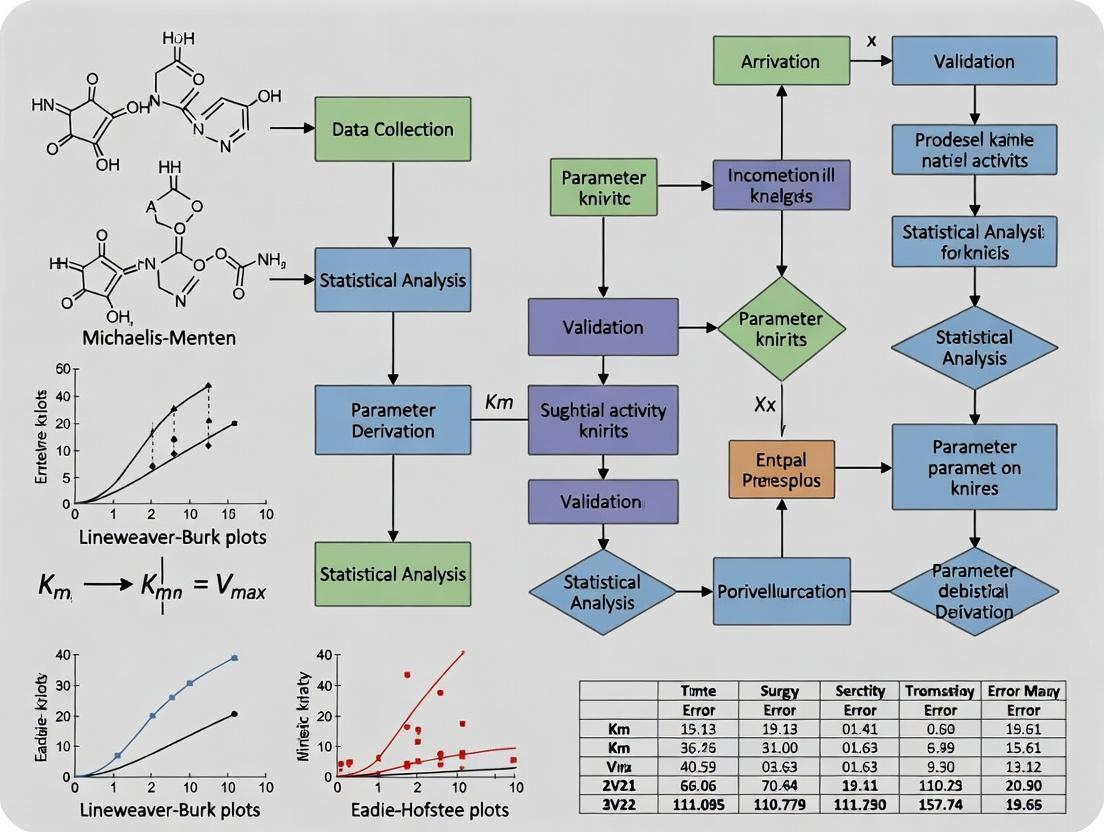
This article provides a comprehensive guide for researchers, scientists, and drug development professionals on evaluating the reliability of reported enzyme kinetic parameters (e.g., Km, kcat, Vmax).
Assessing the Reliability of Reported Enzyme Kinetic Parameters: A Framework for Accurate Research and Drug Development
Abstract
This article provides a comprehensive guide for researchers, scientists, and drug development professionals on evaluating the reliability of reported enzyme kinetic parameters (e.g., Km, kcat, Vmax). It explores the foundational importance of these parameters in systems modeling and enzyme engineering, reviews methodological approaches from classical assays to modern AI-based prediction tools, addresses common troubleshooting and data optimization challenges, and discusses validation and comparative analysis techniques. The goal is to equip the target audience with a practical framework to critically assess data quality, mitigate errors, and enhance the accuracy of kinetic parameters used in biomedical research, metabolic engineering, and therapeutic development[citation:1][citation:2][citation:4].
Understanding Enzyme Kinetic Parameters: Core Concepts and Reliability Challenges
Comparative Analysis of Core Kinetic Parameters
The quantitative characterization of enzyme activity relies on three fundamental parameters: the Michaelis constant (Kₘ), the maximum velocity (Vₘₐₓ), and the turnover number (kₐₜ). Together, they define an enzyme's affinity for its substrate and its catalytic power, providing essential metrics for comparing enzyme performance, engineering biocatalysts, and understanding metabolic regulation [1] [2].
Table 1: Definition, Interpretation, and Comparative Significance of Core Kinetic Parameters
| Parameter | Mathematical & Operational Definition | Biological & Functional Interpretation | Comparative Insight |
|---|---|---|---|
| Kₘ (Michaelis Constant) | The substrate concentration ([S]) at which the reaction velocity (v) is half of Vₘₐₓ [1] [3]. Defined as (k₋₁ + k₂)/k₁, where k₁ and k₋₁ are the rate constants for ES complex formation and dissociation, and k₂ is the catalytic rate constant [1]. | Inverse measure of apparent substrate affinity. A lower Kₘ value indicates that the enzyme requires a lower concentration of substrate to reach half-maximal efficiency, suggesting tighter binding or more efficient complex formation [2] [3]. It is often assumed, though not universally true, that the substrate with the lowest Kₘ is an enzyme's natural substrate [3]. | Enables direct comparison of an enzyme's affinity for different substrates or different enzymes' affinities for the same substrate. Critical for identifying the preferred substrate in a pathway. |
| Vₘₐₓ (Maximum Velocity) | The maximum reaction rate achieved when the enzyme is fully saturated with substrate (i.e., all active sites are occupied) [2]. The plateau of the hyperbolic curve in a Michaelis-Menten plot [2]. | Measure of catalytic capacity. Represents the intrinsic speed limit of the enzyme under a given set of conditions (pH, temperature). It is directly proportional to the total concentration of active enzyme [Eₜₒₜₐₗ]: Vₘₐₓ = kₐₜ[Eₜₒₜₐₗ] [1]. | Used to compare the total throughput of different enzymes or enzyme variants under saturating conditions. A higher Vₘₐₓ indicates a greater product output per unit time when substrate is non-limiting. |
| kₐₜ (Turnover Number) | The number of substrate molecules converted to product per active site per unit time when the enzyme is fully saturated [4]. Calculated as kₐₜ = Vₘₐₓ / [Eₜₒₜₐₗ] [5]. | Intrinsic catalytic rate constant. Measures the efficiency of the chemical conversion step once the ES complex is formed. A higher kₐₜ indicates a faster catalytic cycle [4]. | Allows comparison of the inherent catalytic power of enzyme active sites, independent of enzyme concentration. Essential for evaluating the success of enzyme engineering efforts. |
| kₐₜ/Kₘ (Specificity Constant) | The ratio of the turnover number to the Michaelis constant [4]. | Overall measure of catalytic efficiency. Combines affinity (Kₘ) and catalysis (kₐₜ) into a single second-order rate constant that describes the enzyme's performance at low, physiologically relevant substrate concentrations [4] [2]. A higher kₐₜ/Kₘ indicates a more efficient enzyme [4]. | The most important comparative metric for evaluating an enzyme's effectiveness for a given substrate. It is the definitive parameter for comparing the efficiency of different enzymes or mutant variants, as it reflects performance under non-saturating conditions [4]. |
Biological Significance and Practical Applications
These parameters are not abstract numbers but have direct physiological and industrial implications. For instance, in steroid hormone biosynthesis, human 21-hydroxylase (P450c21) exhibits a lower Kₘ for 17α-hydroxyprogesterone (1.2 µM) than for progesterone (2.8 µM), indicating a higher affinity and likely a role as a preferred physiological substrate, which is critical for understanding congenital adrenal hyperplasia [6]. Similarly, the selenoenzyme deiodinase type 1 (D1) has a Kₘ for thyroxine (T4) that is about 1000-fold higher than that of deiodinase type 2 (D2), explaining why D2 is responsible for intracellular T3 production under normal conditions, while D1 becomes a major source of plasma T3 in thyrotoxicosis [6].
In drug transport, kinetic analysis revealed a Kₘ of 71.5 nM for the efflux of propranolol by P-glycoprotein (P-gp) in conjunctival cells, confirming a high-affinity interaction that significantly restricts drug absorption [6]. These examples underscore that reliability in determining Kₘ, Vₘₐₓ, and kₐₜ is foundational for predicting in vivo enzyme behavior, diagnosing metabolic diseases, and designing drugs or inhibitors.
Methodological Comparison: Experimental vs. Computational Determination
The reliability of kinetic parameters is inextricably linked to the methodology used to derive them. Researchers must choose between traditional experimental characterization and emerging computational prediction, each with distinct workflows, strengths, and sources of error.
Table 2: Comparison of Methodological Pathways for Kinetic Parameter Determination
| Aspect | Traditional Experimental Characterization | Computational Prediction & AI Extraction |
|---|---|---|
| Core Principle | Direct measurement of reaction velocity under controlled in vitro conditions, followed by curve-fitting to the Michaelis-Menten equation [7] [5]. | 1. Prediction: Using machine learning models trained on existing kinetic data to forecast parameters for novel enzyme-substrate pairs [8].2. Extraction: Using natural language processing (NLP) to mine published literature for hidden ("dark matter") kinetic data [9]. |
| Primary Workflow | 1. Protein expression & purification [5].2. Assay development (e.g., colorimetric, fluoride probe) [7] [5].3. Initial rate measurement across a [S] range [7].4. Non-linear regression to fit v vs. [S] data [7]. | For Prediction (e.g., DLERKm model): Encode enzyme sequence, substrate/product SMILES strings, and reaction fingerprints → process through deep neural network → predict Kₘ value [8].For Extraction (e.g., EnzyExtract): Process full-text publications with OCR & NLP → identify and validate kinetic parameters → map data to structured databases [9]. |
| Key Advantages | • Provides direct, empirical evidence.• Can control for specific conditions (pH, temperature, cofactors).• Yields a full kinetic profile (curve).• Considered the "gold standard" for validation. | Prediction: Extremely fast, low-cost, scales to thousands of predictions, guides experimental design [8].Extraction: Unlocks vast amounts of legacy data from literature, creates large-scale, structured datasets for model training [9]. |
| Key Limitations & Reliability Concerns | • Time-consuming and resource-intensive [8].• Assay artifacts (e.g., non-linear product detection, enzyme instability) [5].• Errors in enzyme concentration determination propagate to kₐₜ.• Results are condition-specific and may not translate to in vivo. | Prediction: Model accuracy depends on training data quality and diversity; poor generalizability to novel enzyme classes [8].Extraction: Susceptible to OCR errors, misinterpretation of context (e.g., units, conditions), and incomplete reporting in source literature [9]. |
| Ideal Use Case | Definitive characterization of a specific enzyme under relevant conditions; validation of engineered enzyme variants; rigorous mechanistic studies [7] [5]. | High-throughput screening of enzyme libraries in silico; meta-analysis of kinetic trends across enzyme families; filling knowledge gaps where experimentation is impractical [9] [8]. |
Figure 1: Comparative Workflows for Deriving Enzyme Kinetic Parameters. The traditional experimental pathway (top) is empirical and condition-specific, while the computational pathway (bottom) leverages data-driven models for prediction or literature mining for extraction [7] [9] [8].
Critical Experimental Protocols for Reliable Data
The reliability of experimentally determined parameters hinges on meticulous protocol design. A standard Michaelis-Menten kinetics experiment involves several critical stages [7] [5]:
- Enzyme Preparation: Obtain purified enzyme at a known, accurate concentration. Impurities or inaccurate concentration measurement directly invalidate kₐₜ calculation.
- Assay Development: Choose a specific, linear detection method. For example, a colorimetric assay using 4-nitrophenol (pNP) release monitored at 405 nm is common for glycosidases [7]. Orthogonal validation with a direct method like a fluoride ion-selective electrode for dehalogenases is recommended [5].
- Determining the Linear Range: Conduct preliminary tests to identify the time window where product formation is linear with time and the enzyme concentration range where initial velocity (v₀) is proportional to [E]. This ensures measurements reflect true initial rates [5].
- Data Collection: Measure v₀ at a minimum of 6-8 substrate concentrations spanning values below and above the expected Kₘ. Each condition should be performed in replicate (e.g., triplicate) [7].
- Data Fitting and Analysis: Plot v₀ versus [S] and fit the data using non-linear regression to the Michaelis-Menten equation to obtain Kₘ and Vₘₐₓ directly. Avoid using linearized plots (e.g., Lineweaver-Burk) for parameter estimation, as they distort error distribution [7]. Calculate kₐₜ = Vₘₐₓ / [Eₜₒₜₐₗ].
A critical reliability pitfall is attempting to determine Kₘ from a single progress curve (product vs. time plot at one substrate concentration). As demonstrated in educational resources, while Vₘₐₓ can sometimes be estimated from a plateau, Kₘ cannot be determined without data from multiple substrate concentrations [10].
The Scientist's Toolkit: Essential Reagents and Materials
Table 3: Key Research Reagent Solutions for Enzyme Kinetic Assays
| Reagent/Material | Typical Source/Example | Primary Function in Kinetic Assays |
|---|---|---|
| Purified Enzyme | Heterologous expression (e.g., E. coli) and purification via affinity chromatography [5]. | The catalyst of interest. Must be purified to homogeneity, and its concentration must be accurately determined (via A₂₈₀ or assay) for kₐₜ calculation. |
| Synthetic Substrate | Commercial suppliers (e.g., Sigma-Aldrich, Fisher Scientific) [7]. Often coupled to a chromophore like p-nitrophenol (pNP). | The molecule upon which the enzyme acts. pNP-coupled substrates allow direct spectrophotometric detection of product formation [7]. |
| Specialized Assay Buffer | e.g., 10X GlycoBuffer (500 mM sodium acetate, 50 mM CaCl₂, pH 5.5) [7] or Tris buffer [5]. | Maintains optimal pH and ionic strength for enzyme activity. May contain essential cofactors (e.g., Ca²⁺) or stabilizers like BSA [7]. |
| Detection Reagent/Probe | • Chromogenic: p-nitrophenol (detect at 405 nm) [7].• Fluorometric: Fluoride ion-selective electrode/probe [5].• pH Indicator: Phenol red for proton-release assays [5]. | Enables quantitative measurement of product formation or substrate depletion over time. Choice dictates assay sensitivity and specificity. |
| Standard for Calibration | e.g., pNP standard for colorimetric assays; fluoride ion standards for ISE calibration [7] [5]. | Essential for converting raw signal (absorbance, voltage) into molar concentration of product, creating the standard curve needed for quantitation. |
| High-Throughput Platform | 96-well or 384-well microplate reader [7]. | Allows simultaneous kinetic measurement of many reactions (different [S], replicates, controls), improving throughput and data consistency. |
| Data Analysis Software | GraphPad Prism, SigmaPlot, or custom scripts (Python/R) [5]. | Performs non-linear regression fitting of v₀ vs. [S] data to the Michaelis-Menten equation, generating Kₘ, Vₘₐₓ, and associated confidence intervals. |
Reliability Assessment in a Modern Data Landscape
The thesis of reliability assessment must now contend with two parallel data streams: empirical results and computational predictions. The gold standard remains well-controlled experimentation, but its scope is limited. The emerging paradigm involves a synergistic loop:
- Computational models (like DLERKm for Kₘ prediction [8]) are trained on curated high-quality experimental data from databases like BRENDA and SABIO-RK.
- Literature mining tools (like EnzyExtract [9]) expand these training sets by automatically extracting the "dark matter" of enzymology—hundreds of thousands of previously inaccessible kinetic parameters from published literature.
- Improved models then make more reliable predictions to guide targeted experiments.
- New experimental results feed back into databases, closing the loop.
The major reliability challenge for computational data is traceability and context. An AI-predicted Kₘ value is useless without an estimate of confidence, and a literature-mined value is unreliable if the original experimental conditions (pH, temperature) are not captured [9]. Therefore, the future of reliable kinetic parameter research lies in standardized reporting (e.g., using EnzymeML), robust model benchmarking, and the integration of both empirical and computational evidence to build a more complete and trustworthy understanding of enzyme function.
The quantitative parameters describing enzyme catalysis—the turnover number (kcat), the Michaelis constant (Km), and the catalytic efficiency (kcat/Km)—form the foundational language of biochemistry. Their reliability is not merely an academic concern but a pivotal determinant of success across biotechnology. In metabolic modeling, inaccurate kinetic parameters compromise the predictive power of genome-scale models, leading to erroneous flux predictions and failed strain-engineering strategies [11] [12]. For drug discovery, unreliable parameters for targets or off-target enzymes can mislead the assessment of compound potency and specificity, wasting resources and increasing developmental risks [13]. In enzyme engineering, the iterative cycle of design, prediction, and testing hinges on the accuracy of baseline kinetic data and the models built upon them; unreliable data leads to plateaus in performance and inefficient campaigns [14] [15].
A core thesis emerging from contemporary research is that reliability is a multifaceted challenge. It encompasses the accuracy and generalizability of predictive computational models, the completeness and veracity of foundational datasets, and the context-specific application of parameters within systems-level frameworks [14] [9] [16]. This guide provides a comparative analysis of modern solutions addressing these reliability challenges, detailing their methodologies, performance, and practical applications.
Comparison of Modern Reliability Assessment and Enhancement Approaches
The following table compares three seminal approaches that target different facets of the reliability problem: a deep learning model for accurate parameter prediction, a large-language-model pipeline for expanding and curating reliable data, and a computational framework for reliable metabolic state comparison.
Table 1: Comparison of Modern Approaches for Enhancing Reliability in Enzyme Kinetics and Metabolic Analysis
| Approach / Tool | Core Purpose & Design | Key Inputs | Validation & Performance | Primary Advantages | Key Limitations |
|---|---|---|---|---|---|
| CataPro (Deep Learning Model) [14] | Predicts kcat, Km, and kcat/Km with enhanced accuracy and generalization. Uses ProtT5 protein embeddings and molecular fingerprints. | Enzyme amino acid sequence; Substrate structure (SMILES). | Unbiased 10-fold cross-validation (clustered by sequence similarity). Outperformed baseline models (DLKcat, TurNuP). Experimental validation: identified SsCSO enzyme (19.53x activity boost). | Mitigates data leakage and overfitting. Demonstrated utility in real-world enzyme discovery and engineering. Integrates state-of-the-art protein language models. | Performance limited by coverage of training data. May struggle with entirely novel enzyme folds or substrate classes. |
| EnzyExtract (LLM Data Pipeline) [9] | Automates extraction and structuring of enzyme kinetic data from literature to illuminate "dark data." Uses fine-tuned GPT-4o-mini and OCR. | Full-text scientific publications (PDF/XML). | Extracted 218,095 entries from 137,892 papers. 89,544 entries were new vs. BRENDA. Retraining existing kcat predictors (e.g., DLKcat) with its database (EnzyExtractDB) improved model performance (RMSE, MAE, R²). | Dramatically expands available, structured data. High accuracy benchmarked against manual curation. Directly enhances predictive models by providing more training data. | Confidence levels in entries vary (High/Medium/Low). Requires sequence and substrate mapping in post-processing. |
| ComMet (Metabolic State Comparison) [16] | Compares metabolic states/phenotypes in large genome-scale models (GEMs) without assuming an objective function. Uses flux space sampling and PCA. | Genome-scale metabolic model (GEM); Condition-specific constraints (e.g., uptake rates). | Applied to human adipocyte model to distinguish metabolic states with/without branched-chain amino acid uptake. Identified differentially active modules (e.g., TCA cycle). | Objective-function independent, crucial for complex human cell analysis. Identifies functional metabolic differences, not just flux values. Scalable to large models. | Computationally intensive for very high-dimensional sampling. Interpretation of PCA-based modules requires biochemical expertise. |
Detailed Experimental Protocols for Key Studies
This protocol outlines the creation of an unbiased benchmark and a robust deep learning model for kinetic parameter prediction.
Unbiased Dataset Construction:
- Data Collection: Compile initial datasets for kcat and Km by aggregating entries from the BRENDA and SABIO-RK databases.
- Data Curation: Extract entries where both kcat and Km are available to create a kcat/Km dataset. Map all entries to standardized enzyme sequences (UniProt) and substrate structures (PubChem CID, canonical SMILES).
- Sequence Clustering: Use CD-HIT to cluster enzyme sequences within each dataset at a 40% sequence identity threshold. This prevents homologous sequences from appearing in both training and test sets.
- Dataset Partitioning: Divide the resulting sequence clusters into ten distinct folds to create a ten-fold cross-validation dataset where each fold represents phylogenetically distinct enzyme groups.
Model Architecture (CataPro):
- Enzyme Representation: Encode enzyme amino acid sequences into a 1024-dimensional feature vector using the pre-trained protein language model ProtT5-XL-UniRef50.
- Substrate Representation: Encode substrate SMILES strings using a combined feature vector of MolT5 embeddings (768-dim) and MACCS keys fingerprints (167-dim).
- Network Design: Concatenate the enzyme and substrate vectors. Process through a multi-layer neural network consisting of:
- Three fully connected (dense) layers with ReLU activation and dropout for regularization.
- A final linear output layer to predict the log10-transformed value of the target kinetic parameter (kcat, Km, or kcat/Km).
- Training: Train the model using the Adam optimizer and Mean Squared Error (MSE) loss function on the prepared unbiased folds.
Experimental Validation (Case Study):
- Enzyme Mining: Use CataPro to screen for potential enzymes catalyzing the conversion of 4-vinylguaiacol to vanillin. Select a high-scoring candidate (SsCSO from Sphingobium sp.).
- Wet-Lab Assay: Express, purify, and kinetically characterize the candidate enzyme. Compare its activity (e.g., specific activity or kcat/Km) to a known reference enzyme (CSO2).
- Iterative Engineering: Use CataPro to predict the effects of point mutations on SsCSO activity. Design, construct, and test mutant libraries. A top mutant demonstrated a 3.34-fold increase in activity over the wild-type SsCSO.
This protocol describes an automated pipeline for mining published literature to build a comprehensive kinetic database.
Literature Acquisition and Parsing:
- Assemble a corpus of full-text scientific publications (PDF and XML) using APIs from publishers (Elsevier, Wiley) and open-access repositories (OpenAlex). Search using keywords related to enzyme kinetics (e.g., "kcat," "Michaelis-Menten").
- Parse XML files using BeautifulSoup. For PDFs, use PyMuPDF for text extraction and a fine-tuned ResNet-18 model for specialized unit recognition in figures/tables.
- Process tables within PDFs using the TableTransformer deep learning model to correctly identify and structure tabular data before converting to Markdown.
LLM-Powered Information Extraction:
- Segment processed text into relevant passages (e.g., methods, results sections).
- Use a fine-tuned GPT-4o-mini large language model (LLM) to extract entities and relationships from each passage. The LLM is prompted to identify and link:
- Enzyme: Name, organism, source, mutations.
- Substrate: Name, concentration.
- Kinetic Parameters: kcat, Km, values with units.
- Assay Conditions: pH, temperature, buffer.
- The LLM outputs structured JSON records for each identified data point.
Data Curation and Database Construction:
- Entity Mapping: Map extracted enzyme names to standardized UniProt IDs and protein sequences. Map substrate names to PubChem CIDs and SMILES.
- Confidence Scoring: Assign confidence levels (High/Medium/Low) to each entry based on the clarity of extraction and success of entity mapping.
- Database Creation: Compile high-confidence, sequence-mapped entries into a structured SQL database (EnzyExtractDB). The published database contains 92,286 high-confidence entries, significantly expanding upon manually curated resources.
This protocol details a hybrid computational method for identifying gene knockouts to optimize metabolite production.
Metabolic Model and Algorithm Setup:
- Obtain a genome-scale metabolic model (GEM) for the target organism (e.g., E. coli) in a stoichiometric matrix (S) format.
- Formulate the optimization problem: Identify a set of reaction (gene) knockouts that maximize the production flux of a target metabolite (e.g., succinate) while maintaining a minimum biomass flux.
- Hybridize a metaheuristic algorithm (Particle Swarm Optimization - PSO) with the metabolic modeling algorithm Minimization of Metabolic Adjustment (MOMA). MOMA predicts the sub-optimal flux distribution in the knockout mutant by minimizing the Euclidean distance from the wild-type flux distribution.
PSOMOMA Iterative Optimization:
- Initialization: Generate a swarm of particles, where each particle's position vector represents a potential set of reaction knockouts (e.g., a binary vector indicating reactions are knocked out or not).
- Fitness Evaluation: For each particle (knockout set):
- Apply the knockouts to the model by constraining the corresponding reaction fluxes to zero.
- Use MOMA (a quadratic programming solution) to calculate the steady-state flux distribution of the mutant.
- The fitness score is the calculated production flux of the target metabolite from the MOMA solution.
- Swarm Update: Update each particle's velocity and position based on its own best-known solution (personal best) and the swarm's best-known solution (global best). This stochastically explores the combinatorial knockout space.
- Termination: Repeat the fitness evaluation and swarm update for a predefined number of iterations or until convergence. The global best position indicates the predicted optimal knockout strategy.
Validation: The in silico predicted optimal knockout strain is constructed in vivo using genetic engineering techniques (e.g., CRISPR). The mutant strain is cultured under defined conditions, and the actual production yield of the target metabolite is measured via analytics (e.g., HPLC) and compared to the model prediction.
Visualizations of Workflows and Model Architectures
The Pathway from Data to Reliable Application
The Scientist's Toolkit: Key Research Reagent Solutions
Table 2: Essential Resources for Reliable Enzyme Kinetics and Metabolic Analysis Research
| Resource Name | Type | Primary Function & Application | Key Benefit for Reliability |
|---|---|---|---|
| CataPro [14] | Deep Learning Model | Predicts enzyme kinetic parameters (kcat, Km, kcat/Km) from sequence and substrate structure. Used for virtual enzyme screening and guiding engineering. | Built and tested on unbiased datasets to prevent overfitting, enhancing generalizability and trust in predictions. |
| EnzyExtractDB [9] | Curated Kinetic Database | A large-scale database of enzyme-kinetic data extracted from literature. Used as training data for models or a reference for experimentalists. | Illuminates "dark data," expanding the coverage and diversity of available reliable kinetic measurements. |
| ComMet [16] | Computational Framework | Compares metabolic states (e.g., healthy vs. disease) using genome-scale models without a pre-defined objective function. | Removes a major assumption (objective function) from metabolic analysis, leading to more biologically plausible and reliable comparisons. |
| BRENDA / SABIO-RK [14] [9] | Manually Curated Database | The gold-standard repositories for enzyme functional data, including kinetic parameters. | Provide essential, high-quality ground-truth data for validation, model training, and experimental design. |
| PSOMOMA / OptKnock [11] | Metabolic Optimization Algorithm | Identifies genetic interventions (e.g., knockouts) to optimize metabolite production in silico. | Integrates reliable kinetic/thermodynamic constraints to generate genetically engineered strains with a higher chance of success in the lab. |
| ProtT5 / ESM [14] | Protein Language Model | Converts amino acid sequences into informative numerical feature vectors (embeddings). | Provides a robust, general-purpose representation of enzyme sequences that captures evolutionary and functional information, improving model input reliability. |
| Directed Evolution Platforms (e.g., CodeEvolver) [15] [17] | Experimental Workflow | High-throughput systems for generating and screening mutant enzyme libraries. | Generates large, high-quality datasets linking sequence to function, which are critical for training and validating the next generation of reliable predictive models. |
The accurate reporting and curation of enzyme kinetic parameters—such as the Michaelis constant (Km), turnover number (kcat), and catalytic efficiency (kcat/Km)—form the empirical foundation for understanding biological systems [18]. These parameters are essential for deterministic systems modeling, drug discovery, metabolic engineering, and biocatalyst design. However, the reliability of these parameters in published literature and databases is often compromised by incomplete reporting of experimental conditions, inconsistent methodologies, and a lack of standardized data formats [18] [19]. This comparison guide objectively evaluates four primary sources of enzyme kinetic data—primary literature, the BRENDA database, the SABIO-RK database, and the STRENDA Initiative—within the critical context of reliability assessment for research and industrial applications.
The landscape of enzyme kinetic data sources varies significantly in curation method, data comprehensiveness, and intrinsic reliability. The following table provides a structured, high-level comparison of the four primary sources.
Table 1: Core Characteristics of Primary Enzyme Kinetic Data Sources
| Feature | Primary Literature | BRENDA (BRaunschweig ENzyme DAtabase) | SABIO-RK (System for the Analysis of Biochemical Pathways - Reaction Kinetics) | STRENDA (STandards for Reporting ENzymology DAta) DB |
|---|---|---|---|---|
| Primary Data Source | Direct publication of original research. | Automated text mining of literature, supplemented with manual curation [20]. | Manual extraction and curation from literature [21]. | Direct submission by researchers during manuscript preparation [19]. |
| Core Focus | Novel findings, specific enzymes, or methodologies. | Comprehensive enzyme information, including kinetic parameters, nomenclature, and functional data [18]. | Biochemical reactions and their kinetic properties, with an emphasis on supporting computational modeling [21] [22]. | Standardized reporting and validation of enzyme kinetics data to ensure completeness and reproducibility [19]. |
| Key Strength | Source of new, original data. | Extensive coverage of enzymes and parameters from a vast body of literature [18] [20]. | High data quality and rich context, including kinetic rate laws, formulas, and detailed experimental conditions [21]. | Promotes data reliability and completeness by enforcing reporting guidelines before publication [18] [19]. |
| Inherent Reliability Challenge | Highly variable; often omits essential metadata (pH, temperature, buffer) needed for reproducibility and comparison [18] [19]. | Risk of erroneous data extraction via automated text mining from poorly reported literature [20]. Quality depends on source literature. | Manual process limits data volume and coverage compared to automated systems [21]. | Voluntary adoption; data coverage is limited to submissions from authors and participating journals [20]. |
| Primary User Interface | Scientific journals. | Web-based search interface. | Web-based search interface and RESTful web services for integration into modeling tools [21]. | Web-based submission tool and public query database [19]. |
The following diagram illustrates the logical relationships and data flow between these sources and the broader research ecosystem.
Diagram 1: Data Flow and Relationships Between Kinetic Data Sources and Users. SRN: STRENDA Registry Number.
In-Depth Source Profiles and Reliability Metrics
Primary Scientific Literature
The primary literature is the origin of all experimental kinetic data. Its reliability is the foundational variable upon which all secondary databases depend. Common pitfalls that severely compromise reliability include the use of non-physiological assay conditions (e.g., wrong pH, temperature, or buffer systems), failure to report essential metadata like enzyme purity and source, and a lack of initial rate verification [18]. The absence of this information makes it impossible to validate, compare, or correctly integrate parameters into models.
BRENDA Database
BRENDA is the most comprehensive enzyme resource. Its kinetic data is primarily extracted via the KENDA (Kinetic ENzyme Data) automated text-mining pipeline, which scans scientific literature [20]. This allows for vast coverage but introduces reliability concerns. Automated extraction struggles with the unstructured and inconsistent reporting common in manuscripts, leading to potential annotation errors or the loss of critical contextual metadata [20]. While manual curation exists, it cannot fully vet all automatically mined entries. BRENDA's strength is its breadth, but users must critically evaluate individual entries for contextual completeness.
SABIO-RK Database
SABIO-RK prioritizes quality and contextual depth for systems biology modeling. It relies on manual curation by biological experts who extract and structure data from publications, ensuring a high degree of accuracy and completeness [21] [22]. As of 2017, it contained data from over 5,600 publications, comprising about 57,000 database entries across 934 organisms, with a focus on metabolic reactions [21]. Each entry is richly annotated with links to external databases (UniProt, ChEBI, KEGG) and includes critical information like kinetic rate laws, formulas, and detailed experimental conditions [21]. Its primary limitation is scale, as the manual process cannot match the volume of automated systems.
STRENDA DB Initiative
STRENDA DB addresses reliability at the source. It is a community-driven submission and validation system that implements the STRENDA Guidelines [19]. Authors input their kinetic data during manuscript preparation; the system automatically checks for completeness and formal correctness against the guidelines (e.g., mandatory pH, temperature, enzyme source) [19]. Compliant datasets receive a perennial STRENDA Registry Number (SRN) and DOI, which can be referenced in the publication [19]. This process ensures that before peer review, the data meets minimum reporting standards for reproducibility. Its effectiveness grows as more journals mandate its use.
Detailed Experimental Protocols for Data Handling and Curation
- Literature Selection: Publications are identified via keyword searches (e.g., in PubMed) or through specific collaboration projects and user requests.
- Expert Data Extraction: A biological expert reads the full publication.
- Structured Data Entry: The curator enters relevant information into a web-based curation interface. Data is semi-automatically checked for consistency.
- Contextual Annotation: The curator adds extensive annotations using controlled vocabularies and links to external databases (e.g., UniProt ID for the enzyme, ChEBI ID for compounds, NCBI Taxonomy for organism).
- Quality Control & Storage: The curated data for a single reaction under specific conditions is stored as a unique database entry. Data from models or labs can also be uploaded directly in SBML format for processing.
This protocol, used to create a structure-kinetics dataset, exemplifies the complex processing required to enhance the utility of database-derived information.
- Data Curation: Raw Km and kcat values for enzyme-substrate pairs are extracted from BRENDA. Redundant entries are resolved by computing geometric means after manual verification.
- Entity Annotation: Enzyme sequences are mapped to UniProtKB IDs to find associated protein structures (PDB IDs). Substrate IUPAC names are converted to isomeric SMILES strings using tools like OPSIN and PubChemPy.
- Structure Mapping & Modeling: Available PDB structures are classified (e.g., with substrate bound, apo form). For enzymes without a structure, homology modeling is performed. Substrate 3D structures are generated from SMILES.
- Complex Assembly & Refinement: Substrates are docked into enzyme active sites. The protonation states of enzyme residues are adjusted based on the experimental pH reported in BRENDA.
- Validation & Packaging: The final dataset of enzyme-substrate complex structures with associated kinetic parameters is compiled for downstream analysis.
Diagram 2: Workflow for Constructing a Structure-Kinetics Dataset from BRENDA.
- Researcher Registration: The user creates an account in the STRENDA DB system.
- Manuscript & Experiment Definition: The user creates a "Manuscript" entry and defines one or more "Experiments" within it, each detailing a specific enzyme/protein studied.
- Guideline-Driven Data Entry: For each Experiment, the user enters data into structured fields that enforce the STRENDA Guidelines. Mandatory fields include:
- Enzyme Source & Identity: Organism, recombinant source, purity, modifications.
- Assay Conditions: Temperature, pH, buffer, pressure.
- Substrate/Effector Details: Identity, concentrations.
- Kinetic Results: Parameter values (Km, kcat, etc.) with associated errors and the model used for fitting.
- Automated Validation: The system checks all compulsory fields for completeness and formal correctness (e.g., valid pH range).
- Identifier Assignment: Upon successful validation, the system issues a unique STRENDA Registry Number (SRN) and a DOI for the dataset, which the researcher cites in their manuscript.
Table 2: Key Resources for Reliable Enzyme Kinetics Research
| Tool / Resource | Primary Function | Role in Reliability Assessment |
|---|---|---|
| STRENDA Guidelines | A checklist of minimum information required for reporting enzymology data [19]. | Provides the gold standard for evaluating data completeness in any source (literature or database). |
| Enzyme Commission (EC) Number | A numerical classification system for enzymes based on the chemical reaction they catalyze [18]. | Critical for unambiguous enzyme identification, preventing errors from synonymous or similar enzyme names [18]. |
| UniProtKB Identifier | A unique accession number for a protein sequence entry in the UniProt Knowledgebase. | Enables precise mapping of kinetic data to a specific protein sequence and its known features, facilitating cross-database queries [21] [20]. |
| SBML (Systems Biology Markup Language) | A standard computational format for representing biochemical reaction networks [21]. | Allows for direct, error-free import of curated kinetic data (e.g., from SABIO-RK) into modeling and simulation software, preserving context [21]. |
| PubChem CID / ChEBI ID | Unique identifiers for chemical compounds. | Ensures precise and unambiguous identification of substrates, products, and effectors, which is often a major source of ambiguity in literature reports. |
| Primary Literature Reference (PMID/DOI) | The direct link to the original research article. | Essential for traceability. Any database entry should provide this to allow users to consult the original context and methodology [21] [18]. |
The reliability of reported enzyme kinetic parameters forms the cornerstone of research in biochemistry, drug discovery, and molecular diagnostics. This reliability is critically undermined by a triad of interconnected challenges: inconsistent experimental assay conditions, pervasive missing or inadequate metadata, and fundamental issues in database curation [23] [24] [25]. Inconsistent conditions lead to irreproducible and conflicting kinetic data, as vividly illustrated in the CRISPR-Cas field where reported turnover rates for the same enzyme vary by orders of magnitude [26]. Missing metadata strips experimental data of the essential context needed for validation and reuse, a systemic problem evident in major repositories like ClinicalTrials.gov [27]. Finally, inadequate curation at the database level allows these poor-quality data to persist, proliferate, and mislead subsequent analyses [24] [28]. This guide objectively compares methodologies and tools designed to address these challenges, providing a framework for researchers to assess and improve the robustness of their kinetic parameter data within the broader thesis of scientific reliability assessment.
Comparative Analysis of Critical Challenges and Solutions
This section provides a structured comparison of the three core challenges, detailing their manifestations, consequences, and the available strategies for mitigation. The following tables synthesize key findings from the surveyed literature to offer a clear, actionable overview.
Table 1: Challenge Comparison: Inconsistent Assay Conditions
| Aspect | Problem Manifestation | Documented Consequence | Recommended Mitigation Strategy |
|---|---|---|---|
| Environmental Control | Poor control of temperature, pH, and ionic strength [29]. | A 1°C change can alter activity by 4-8%; variable pH affects enzyme charge and substrate binding [29]. | Use automated analyzers with precise temperature control and pH probes [29]. |
| Methodology & Throughput | Use of manual spectrophotometry vs. variable microplate assays [29]. | Manual methods introduce human error; microplates suffer from edge effects and path length variability [29]. | Employ discrete analyzers using disposable cuvettes to eliminate edge effects and ensure consistent path length [29]. |
| Experimental Design | Use of "one-factor-at-a-time" (OFAT) optimization [30]. | Inefficient, misses factor interactions, can take >12 weeks for assay optimization [30]. | Adopt Design of Experiments (DoE) approaches (e.g., fractional factorial design) to model interactions and find optima faster [30]. |
| Data Validation | Publication of kinetically inconsistent data without basic validation [26]. | Gross errors, including violation of conservation laws; impossible turnover numbers reported [26]. | Apply self-consistency checks (e.g., Ratios R1-R3) [26] and report full progress curves with calibrations [26]. |
Table 2: Challenge Comparison: Missing and Inadequate Metadata
| Metadata Field | Documented Issue & Rate | Impact on Reusability & Analysis | Source of Evidence |
|---|---|---|---|
| Contact Information | Frequently missing or underspecified [27]. | Hinders collaboration, clarification, and data provenance tracking. | Analysis of ClinicalTrials.gov [27]. |
| Outcome Measures | Frequently missing or underspecified [27]. | Prevents assessment of selective reporting bias in systematic reviews and meta-analyses. | Analysis of ClinicalTrials.gov [27]. |
| Condition & Intervention | ~50% of conditions are not denoted by standardized MeSH terms [27]. | Impedes accurate search, data linkage, and interoperability across systems. | Analysis of ClinicalTrials.gov [27]. |
| Eligibility Criteria | Stored as semi-structured free text rather than a structured element [27]. | Cannot be computationally queried for patient matching to trials or automated meta-analysis. | Analysis of ClinicalTrials.gov [27]. |
| General Completeness | Required fields are often not filled, despite automated validation in systems like the PRS [27]. | Limits the utility of the entire record for secondary research and regulatory oversight. | Analysis of ClinicalTrials.gov [27]. |
Table 3: Challenge Comparison: Database Curation Issues
| Curation Phase | Common Deficiencies | Risks & Consequences | Best Practices & Frameworks |
|---|---|---|---|
| Collection & Assessment | Lack of upfront governance; inconsistent formats and sources [25]. | Data silos, incomplete datasets, and integration headaches downstream [24]. | Define governance policies and ethical/legal collection protocols at the project start [24] [25]. |
| Cleaning & Transformation | Ad hoc cleaning; lack of standardization and terminology harmonization [25]. | Inaccurate analytics, inability to combine datasets, and loss of data value. | Implement automated validation tools and align terms to controlled vocabularies/ontologies [24] [25]. |
| Storage, Preservation & Management | Inadequate metadata management; lack of data lineage tracking [24] [25]. | Data becomes inaccessible, uninterpretable, or non-compliant over time. | Use standardized metadata schemas (e.g., Dublin Core, HL7 FHIR) and data lineage tools [24] [28]. |
| Quality Framework | No systematic framework for assessing data quality throughout lifecycle [28]. | Unreliable data leads to poor research decisions and limits secondary analysis. | Adopt comprehensive guidelines like DAQCORD, which defines quality factors (completeness, correctness, etc.) [28]. |
Detailed Experimental Protocols
3.1 Protocol for Validating Self-Consistency of Enzyme Kinetic Data This protocol, derived from checks proposed for CRISPR-Cas kinetics [26], provides a minimum validation step for any reported Michaelis-Menten parameters.
- Objective: To perform three back-of-the-envelope checks on published or newly generated progress curve data to identify violations of basic conservation laws and kinetic principles.
- Principle: The calculations verify that the reported velocity and timescales are physically plausible given the reported initial concentrations of enzyme and substrate.
- Materials: Published article or dataset containing: initial reporter/substrate concentration (
[S]0), initial activated enzyme concentration ([E]0), reported reaction velocity (v), Michaelis constant (K_M), turnover number (k_cat), and a progress curve (signal vs. time). - Procedure:
- Extract or calculate the maximum reaction velocity,
v_max = k_cat * [E]0. - From the progress curve, estimate the timescale of the initial linear phase,
τ_linear. - Calculate the following three ratios as defined in the source [26]:
- R1:
(v * τ_linear) / [S]0. Acceptance Criterion: R1 < 1. This ensures the number of molecules consumed in the linear phase does not exceed the total available. - R2:
v / v_max. Acceptance Criterion: R2 < 1. This ensures the measured velocity does not exceed the theoretical maximum. - R3:
τ_linear / ([S]0 / v). Acceptance Criterion: R3 is on the order of 1 or less. This checks that the linear phase duration is consistent with the total reaction timescale.
- R1:
- Extract or calculate the maximum reaction velocity,
- Interpretation: Failure of any of these checks indicates a high probability of error in the experimental measurements, data analysis, or reported parameters. The data should be re-evaluated before use in comparative analyses or models.
3.2 Protocol for Rapid Enzyme Assay Optimization Using Design of Experiments (DoE) This protocol outlines a DoE approach to efficiently optimize assay conditions, contrasting with the traditional one-factor-at-a-time method [30].
- Objective: To identify significant factors affecting enzyme activity and determine optimal assay conditions in a time-efficient manner.
- Principle: A fractional factorial design screens multiple factors simultaneously, followed by response surface methodology (e.g., Central Composite Design) to model interactions and locate optima.
- Materials: Target enzyme, substrates, buffer components, plate reader or discrete analyzer capable of kinetic measurements [29].
- Procedure (Summary):
- Factor Selection: Identify key variables (e.g., pH, buffer concentration, ionic strength, [enzyme], [substrate], temperature, cofactors).
- Screening Design: Execute a fractional factorial design (e.g., Resolution IV) to test all selected factors at high and low levels in a minimal number of experiments. Measure response (e.g., initial velocity, signal-to-noise).
- Statistical Analysis: Use ANOVA to identify factors with statistically significant effects on the response.
- Optimization Design: For the significant factors (typically 2-4), perform a Response Surface Methodology design (e.g., Central Composite Design) to explore curvature and interaction effects.
- Modeling & Prediction: Fit a quadratic model to the data and use it to predict the combination of factor levels that yields the optimal response (e.g., maximum activity, stability).
- Verification: Experimentally confirm the predicted optimal conditions.
- Advantage: This structured approach can reduce optimization time from over 12 weeks (OFAT) to a few days while providing a robust model of the assay system [30].
Mandatory Visualizations
Data Curation Lifecycle and Metadata Management
Workflow for Validating Enzyme Kinetic Data Self-Consistency
The Scientist's Toolkit: Essential Research Reagent Solutions
Table 4: Key Research Reagents, Tools, and Materials
| Item | Category | Primary Function in Context |
|---|---|---|
| Discrete Automated Analyzer (e.g., Gallery Plus) [29] | Instrumentation | Provides superior temperature control (25-60°C), uses disposable cuvettes to eliminate microplate edge effects and path length issues, enabling reliable kinetic measurements [29]. |
| Fluorophore-Quencher Reporter Probes (ssDNA/ssRNA) [26] | Biochemical Reagent | Used as the trans-cleavage substrate for CRISPR-Cas (Cas12, Cas13) diagnostic assays. Cleavage separates fluor from quencher, generating a fluorescent signal proportional to activity [26]. |
| Validated CRISPR-Cas Enzyme (Cas12a, Cas13b, etc.) [26] | Enzyme | The core biocatalyst for CRISPR-based detection. Specificity is programmed by guide RNA. Kinetic performance (k_cat, K_M) fundamentally limits assay sensitivity and speed [26]. |
| Protocol Registration System (PRS) [27] | Software/System | The web-based data entry system for ClinicalTrials.gov. It enforces some data type rules but lacks strict ontology requirements for key fields, contributing to metadata quality issues [27]. |
| Biomedical Ontologies (MeSH, SNOMED CT, etc.) [27] | Standard | Controlled vocabularies that provide unique identifiers for concepts (e.g., diseases, drugs). Their mandated use in metadata fields is essential for making data findable and interoperable (FAIR) [27]. |
| Data Curation & Lineage Tools (e.g., Atlan, Collibra, IBM InfoSphere) [24] | Software/Platform | Facilitate metadata management, automated data quality checks, and tracking of data origin and transformations (lineage), which are critical for curation, reproducibility, and compliance [24]. |
| Statistical Software with MI/MMRM (e.g., SAS, R) [31] | Software | Enables advanced handling of missing data in experimental and clinical datasets using robust methods like Multiple Imputation (MI) and Mixed Models for Repeated Measures (MMRM), reducing bias [31]. |
The comparative analysis presented here underscores that the challenges of inconsistent assay conditions, missing metadata, and poor database curation are not isolated issues but interconnected facets of a systemic data quality crisis in enzyme kinetics and related fields. Addressing them requires a multi-pronged strategy: adopting robust experimental design and validation protocols, enforcing the use of standardized metadata from the point of data generation, and implementing rigorous, framework-driven curation throughout the data lifecycle. By integrating the tools and best practices compared in this guide—from DoE and self-consistency checks to ontology-driven metadata and the DAQCORD framework—researchers, database curators, and drug development professionals can significantly enhance the reliability, reproducibility, and ultimate value of enzyme kinetic data. This fosters a more solid foundation for scientific discovery, diagnostic development, and therapeutic innovation.
Methodologies for Reliability Assessment: From Experimental Best Practices to AI Predictions
The accurate determination of enzyme kinetic parameters (kcat, Km) is a cornerstone of biochemistry, with direct implications for understanding metabolic pathways, diagnosing diseases, and developing new therapeutics and biocatalysts [32]. Within the context of a broader thesis on the reliability assessment of reported kinetic parameters, a critical examination of foundational experimental methodologies is required. For decades, the measurement of initial rates under steady-state conditions has been the gold standard taught in textbooks and implemented in laboratories [33]. This method, which analyzes the linear portion of a reaction progress curve where substrate depletion is minimal (typically <10%), aims to simplify the complex differential equations governing enzyme kinetics.
However, this approach presents significant practical and theoretical challenges to reliability. Measuring a true initial rate often requires rapid, continuous monitoring techniques and can be highly sensitive to subjective judgments in determining linear regions, especially for reactions with rapid curvature [33] [34]. Furthermore, the requirement for multiple experiments at varying substrate concentrations to construct a Michaelis-Menten plot is resource-intensive. In contrast, progress curve analysis offers a powerful alternative by extracting kinetic parameters from a single time-course experiment that monitors product formation or substrate depletion until the reaction approaches completion [35] [33]. This method utilizes the integrated form of the rate equation, thereby containing more information about the reaction's kinetic properties. Recent methodological comparisons indicate that progress curve analysis, particularly with modern numerical tools, can provide robust parameter estimates with lower experimental effort, challenging the dogma that initial rate measurement is an absolute necessity [35] [33]. This guide objectively compares these two paradigms, providing researchers with the data and protocols needed to assess their suitability for ensuring the reliability of kinetic parameters in diverse applications.
Core Methodological Comparison: Initial Rate vs. Progress Curve Analysis
Initial Rate Measurements
- Core Principle: Measures the velocity of the enzymatic reaction (v = d[P]/dt) at time zero, under conditions where substrate concentration ([S]) is essentially constant and product inhibition is negligible.
- Experimental Requirement: Requires a separate reaction for each data point on the Michaelis-Menten plot. The reaction is typically stopped or monitored for only a short initial period (e.g., 30-60 seconds) where progress is linear.
- Data Fitting: The initial velocities (v) measured at different initial substrate concentrations ([S]₀) are fitted directly to the Michaelis-Menten equation (v = Vmax[S]₀ / (Km + [S]₀)) or its linear transformations (e.g., Lineweaver-Burk).
- Key Challenge: Determining the linear range can be subjective. For reactions with inherent curvature, like protein hydrolysis, defining a reliable initial rate may be impossible using simple linear regression [34].
Progress Curve Analysis
- Core Principle: Utilizes the entire time course of a single reaction, from [S]₀ to near-complete depletion. The integrated Michaelis-Menten equation (t = [P]/Vmax + (Km/Vmax) * ln([S]₀/([S]₀-[P]))) directly relates product concentration [P] at time t to Vmax and Km [33].
- Experimental Requirement: One continuous or densely sampled discontinuous assay per enzyme condition. The reaction is monitored over a longer period, often for multiple half-lives.
- Data Fitting: The [P] vs. t data is fitted to the integrated equation using non-linear regression. Advanced numerical approaches, such as direct integration of differential equations or spline interpolation of data, are also employed to handle more complex mechanisms [35].
- Key Advantage: More data points per experiment and inherent averaging over the reaction time course can lead to more robust parameter estimation, especially for low-activity enzymes or scarce substrates.
Table 1: Comparison of Initial Rate and Progress Curve Methodologies for Reliability Assessment
| Aspect | Initial Rate Measurement | Progress Curve Analysis | Implication for Reliability |
|---|---|---|---|
| Experimental Throughput | Lower (multiple assays per Km, Vmax) | Higher (single assay per Km, Vmax) | Progress curves reduce time/cost, enabling more replicates [35]. |
| Substrate/Enzyme Consumption | High | Low | Crucial for expensive or scarce materials; improves feasibility of robust testing. |
| Handling of Assay Artifacts | Susceptible to errors in judging linear phase; may miss lag/burst phases. | Reveals time-dependent artifacts (e.g., enzyme inactivation, product inhibition). | Progress curves provide inherent quality control of kinetic assumptions [33]. |
| Error in Parameter Estimation | Prone to systematic error if linear phase is misjudged, especially near Km. | Systematic error can arise from neglecting factors like product inhibition. | Modern numerical fitting of progress curves shows lower dependence on initial parameter guesses, enhancing robustness [35]. |
| Case Study Insight | Deemed unsuitable for proteolytic reactions due to immediate curvature [34]. | Non-linear fitting of progress curves enabled precise protease activity quantification and fair comparison [34]. | Demonstrates necessity of method matching to reaction chemistry. |
Experimental Protocols for Key Assays
Protocol A: Initial Rate Determination for a Standard Hydrolase This protocol is suitable for reactions where a clear linear progress phase can be established.
- Reaction Setup: Prepare a master mix of buffer and enzyme. In a microplate or cuvette, initiate separate reactions by adding substrate at a minimum of 8 concentrations spanning 0.2–5.0 x Km.
- Rapid Monitoring: Immediately start monitoring the signal (e.g., absorbance, fluorescence) using a continuous-read capable instrument. The total measurement time should not exceed 1-2% of the time estimated for complete substrate conversion.
- Linear Regression: For each [S]₀, plot the signal vs. time for the first 10-20 data points (typically 30-60 seconds). Perform a linear regression; the slope is the initial velocity (v).
- Parameter Estimation: Plot v against [S]₀. Fit the data to the Michaelis-Menten equation using non-linear regression software to obtain Km and Vmax.
Protocol B: Progress Curve Analysis via Integrated Rate Equation This general protocol extracts parameters from a single time-course [33].
- Reaction Setup: Prepare a reaction mixture with a single, well-defined initial substrate concentration ([S]₀). It is optimal to choose an [S]₀ value close to the expected Km.
- Continuous Monitoring: Initiate the reaction and record the product concentration ([P]) or a proportional signal at frequent intervals until the reaction reaches at least 70-80% completion. Ensure enzyme stability over this period (verify via Selwyn's test).
- Data Transformation: Convert the raw signal to [P] values using a calibration curve. Calculate the corresponding remaining substrate [S] = [S]₀ – [P].
- Non-Linear Fitting: Input the data pairs (t, [P]) into data analysis software. Fit the data directly to the integrated Michaelis-Menten equation:
t = [P]/Vmax + (Km/Vmax)*ln([S]₀/([S]₀-[P])). The fitting algorithm will iteratively solve for the best-fit values of Km and Vmax.
Protocol C: Numerical Progress Curve Analysis with Spline Interpolation (Advanced) For complex systems or noisy data, a numerical approach offers robustness [35].
- Data Collection: Follow steps 1-3 of Protocol B to obtain the [P] vs. t dataset.
- Spline Fitting: Instead of using the analytical integrated equation, fit a smoothing cubic spline function to the [P] vs. t data. This creates a continuous, differentiable mathematical representation of the progress curve.
- Rate Calculation: Differentiate the spline function numerically to obtain an estimate of the instantaneous reaction rate (v = d[P]/dt) at each time point.
- Substrate Association: For each time point, calculate the corresponding substrate concentration ([S] = [S]₀ – [P]).
- Parameter Regression: Perform a non-linear regression by fitting the (v, [S]) data pairs to the standard Michaelis-Menten equation (v = Vmax*[S] / (Km + [S])). This method decouples the integration and regression steps and has been shown to be less sensitive to initial parameter estimates [35].
Visualization of Methodological Workflows
Decision and Workflow for Kinetic Parameter Estimation
Progress Curve Analysis: Two Computational Pathways
The Scientist's Toolkit: Essential Reagents and Materials
Table 2: Key Research Reagent Solutions for Robust Kinetic Assays
| Reagent/Material | Function in Assay | Key Considerations for Reliability |
|---|---|---|
| High-Purity, Characterized Enzyme | The catalyst of interest; concentration must be known accurately. | Source (recombinant/purified), specific activity, and verification of absence of inhibitors or contaminating activities are critical. |
| Defined Substrate(s) | The molecule(s) transformed by the enzyme. | Purity is paramount. For spectrophotometric assays, the extinction coefficient (ε) must be accurately known. Solubility limitations can constrain usable [S]₀. |
| Universal Detection Reagents (e.g., Transcreener) | Fluorescent probes that detect common reaction products (e.g., ADP, GDP) [36]. | Enable homogeneous, mix-and-read assays across many enzyme classes (kinases, GTPases). Reduce assay development time and variability [36]. |
| pH & Ionic Strength Buffer | Maintains constant, physiologically relevant reaction conditions. | Must not interact with enzyme or substrates. Buffer capacity should be sufficient to handle proton production/consumption. |
| Cofactors / Metal Ions (Mg²⁺, ATP, NADH) | Essential activators or cosubstrates for many enzymes. | Required concentration must be determined and maintained in excess where applicable. Purity is critical to avoid inhibition. |
| Positive & Negative Control Inhibitors | Compounds with known mechanism (e.g., competitive inhibitor) and potency. | Essential for validating assay performance, calculating Z'-factor for HTS, and ensuring the system responds as expected [36]. |
| Case Study Material: Salmon Frame Proteins [34] | A complex, natural substrate mixture for protease assays. | Represents a physiologically relevant but heterogeneous substrate. Highlights the need for robust progress curve methods when classic initial rates fail [34]. |
| Reference Kinetics Dataset (e.g., from BRENDA/EnzyExtractDB) | Benchmark values (Km, kcat) for well-studied enzymes under specific conditions. | Serves as a critical external control for method validation. Automated extraction tools like EnzyExtract are expanding these reference datasets [9]. |
Application in Drug Discovery: From Screening to Mechanistic Insight
Robust enzyme assays are the engine of small-molecule drug discovery [36]. The choice between initial rate and progress curve methods depends on the stage of the pipeline.
- High-Throughput Screening (HTS): Speed and simplicity are prioritized. Initial rate measurements in homogeneous, fluorescent, or luminescent formats (e.g., detecting ADP production) dominate 384- or 1536-well primary screens [36]. Robustness is quantified by the Z' factor (≥0.7 is excellent).
- Hit Validation & Mechanistic Studies: Reliability and depth of information become paramount. Progress curve analysis is invaluable here. A single time-course experiment can not only confirm activity but also reveal time-dependent inhibition (e.g., slow-binding inhibitors), irreversible inactivation, or the onset of product inhibition—mechanisms that initial rate screens might miss [33]. This directly informs the drug's mechanism of action (MOA).
Table 3: Common Enzyme Assay Formats and Their Fit for Purpose in Reliability Assessment [36]
| Assay Format | Readout | Best for Initial Rate (IR) or Progress Curve (PC)? | Advantages for Reliable Kinetics | Disadvantages/Limitations |
|---|---|---|---|---|
| Fluorescence (FP, TR-FRET) | Fluorescence polarization or resonance energy transfer. | Primarily IR for HTS; PC possible with continuous read. | High sensitivity, homogeneous (mix-and-read), adaptable to many targets. | Potential compound interference (fluorescence/quenching). |
| Luminescence | Light emission (e.g., luciferase-coupled). | Primarily IR (endpoint). | Extremely sensitive, broad dynamic range. | Coupled enzymes add complexity; susceptible to luciferase inhibitors. |
| Absorbance (Colorimetric) | Change in optical density (OD). | Both IR and PC, if continuous read is available. | Simple, inexpensive, robust. | Lower sensitivity, can be hampered by colored compounds. |
| Label-Free (ITC, SPR) | Heat change or mass binding. | PC by nature (monitors binding/process over time). | No labeling, provides direct thermodynamic/affinity data. | Low throughput, high material consumption, specialized equipment. |
Integration of Enzyme Assays in the Drug Discovery Pipeline
Emerging Integration with Computational and Data Science
The reliability of experimental kinetics is increasingly intertwined with computational approaches. Two synergies are key:
- Data Curation for Model Training: Robust experimental parameters are the essential training data for machine learning (ML) models like CataPro [32], RealKcat [37], and EITLEM-Kinetics [38]. Automated extraction tools like EnzyExtract, which uses LLMs to mine kinetic data from literature, are creating larger, more diverse datasets (e.g., EnzyExtractDB with >218,000 entries) [9]. The quality of these datasets directly impacts model generalizability.
- In Silico Prediction for Experimental Design: These trained models can predict kinetic parameters for enzyme variants or new substrates, guiding researchers toward the most promising candidates for experimental testing. This creates a virtuous cycle: reliable experiments improve models, which then make research more efficient [32] [37].
Table 4: Comparison of Advanced Computational Tools for Kinetic Parameter Prediction
| Model (Year) | Core Approach | Key Input Features | Reported Performance / Advantage | Role in Reliability Assessment |
|---|---|---|---|---|
| CataPro (2025) [32] | Deep learning neural network. | Enzyme: ProtT5 embeddings. Substrate: MolT5 + fingerprints. | Enhanced accuracy & generalization on unbiased, clustered datasets. | Provides reliable in silico benchmarks and pre-screens enzyme variants. |
| RealKcat (2025 Preprint) [37] | Gradient-boosted trees (classification by order of magnitude). | Enzyme: ESM-2 embeddings. Substrate: ChemBERTa embeddings. | >85% test accuracy; sensitive to catalytic residue mutations. | Curated KinHub-27k dataset addresses inconsistencies in public data. |
| EITLEM-Kinetics (2024) [38] | Ensemble iterative transfer learning. | Enzyme sequence & substrate data. | Accurate for mutants with <40% sequence similarity to training set. | Predicts multi-mutation effects, aiding the design of reliable variant assays. |
| EnzyExtract (2025) [9] | LLM-powered data extraction pipeline. | Full-text scientific literature (PDF/XML). | Extracted 218k+ kinetic entries, expanding known datasets significantly. | Addresses "dark matter" of enzymology, creating larger validation datasets. |
The pursuit of reliable enzyme kinetic parameters does not mandate allegiance to a single historical method. Initial rate measurement remains a powerful, high-throughput tool, especially for primary screening where conditions can be tightly controlled to minimize its inherent limitations [36]. However, progress curve analysis emerges as a robust, information-rich alternative that can yield accurate parameters with greater efficiency and provide built-in quality checks for kinetic behavior [35] [33]. Its application in challenging systems, such as protease activity quantification, demonstrates its practical superiority where initial rates fail [34].
The future of reliability assessment in enzyme kinetics is unquestionably interdisciplinary. Experimental rigor must be coupled with computational transparency (detailed reporting of fitting procedures and confidence intervals) and data curation excellence. The integration of automated data extraction [9] and predictive ML models [32] [37] [38] will not replace careful experimentation but will instead elevate it, guiding researchers toward more informative assays and providing a broader context for evaluating their results. Ultimately, adopting a methodologically pluralistic approach—selecting the assay paradigm best suited to the enzyme system and research question—will be the most robust strategy for advancing our understanding of enzyme function and accelerating discovery.
Within the critical thesis of reliability assessment for reported enzyme kinetic parameters, selecting appropriate data sources is foundational. Manually curated databases like BRENDA and SABIO-RK serve as primary repositories, yet they differ fundamentally in scope, structure, and the contextual depth of their data, directly impacting their utility for reliable systems biology modeling and drug discovery [21] [18]. While BRENDA offers unparalleled breadth of enzyme-centric data, SABIO-RK provides deeper, reaction-oriented context including kinetic rate laws and experimental conditions [21] [39]. This guide objectively compares their performance, supported by experimental data, and situates them within a modern workflow that includes emerging machine learning frameworks and standardized reporting initiatives like STRENDA, which are essential for advancing parameter reliability [18] [40] [20].
Database Comparison: Core Characteristics & Performance
The selection between BRENDA and SABIO-RK hinges on the specific research question. The following tables break down their quantitative content, data models, and access capabilities.
Table 1: Quantitative Content and Coverage (Representative Statistics)
| Feature | BRENDA (As referenced in comparative studies) | SABIO-RK (Reported Data) | Implication for Reliability Assessment |
|---|---|---|---|
| Primary Focus | Enzyme-centric information and kinetic constants [21]. | Biochemical reactions and their kinetic properties [21] [39]. | BRENDA is optimal for enzyme-specific queries; SABIO-RK is better for pathway/modeling contexts. |
| Data Curation | Mix of manual curation and automated text mining (KENDA) [20]. | Manually curated by biological experts from literature [21] [39]. | Manual curation (SABIO-RK) may offer higher accuracy for complex data; automated mining (BRENDA) enables scale. |
| Key Kinetic Parameters | Contains kinetic constants (Km, kcat, Ki) [40]. | Contains kinetic parameters, plus associated kinetic rate laws and formulas [21]. | SABIO-RK provides directly model-ready mathematical relationships, reducing interpretation error. |
| Organism Coverage | Very broad (comprehensive enzyme database) [20]. | ~934 organisms (as of 2017), focused on eukaryotes and bacteria [21]. | BRENDA may have wider species coverage; SABIO-RK content is shaped by past projects/user requests [21]. |
| Content Volume (Entries) | Cited as containing ~87,000 kcat, 176,000 Km, and 46,000 Ki entries (2022 release) [40]. | ~57,000 database entries from >5,600 publications (2017) [21]. | BRENDA's larger raw volume offers more data points, but requires rigorous filtering for consistency. |
| Experimental Context | Provides assay conditions (pH, temp, etc.) [18]. | Explicitly stores detailed environmental conditions and experimental setups [21] [39]. | SABIO-RK's structured experimental data is critical for assessing parameter fitness for specific conditions [18]. |
| Mutant Data | Includes mutant enzyme data. | ~25% of entries are for specific mutant enzyme variants [21]. | Both are valuable for enzyme engineering studies, allowing wild-type/mutant comparisons. |
Table 2: Data Model, Access, and Integration
| Feature | BRENDA | SABIO-RK | Implication for Reliability Assessment |
|---|---|---|---|
| Data Model | Enzyme-centric. Each entry centers on an enzyme and its properties [21]. | Reaction-centric. Each entry describes a single reaction under specific conditions [21] [41]. | SABIO-RK's model aligns directly with the needs of kinetic modelers building reaction networks. |
| Search Interface | Standard database search with parameter statistics visualization [41]. | Advanced search with free text, filters, and interactive visual search (heat maps, parallel coordinates) [21] [41]. | SABIO-RK's visual tools help identify clusters, outliers, and parameter distributions, aiding reliability checks [41]. |
| Data Export Formats | Standard database formats. | SBML, BioPAX, Matlab, spreadsheet formats [21]. | Direct export to modeling formats (SBML) from SABIO-RK reduces manual transcription errors. |
| API/Integration | Web services available. | REST-ful web services; integrated into systems biology tools (COPASI, CellDesigner, etc.) [21]. | Programmatic access (SABIO-RK) facilitates reproducible workflows and integration into modeling pipelines. |
| External Links | Links to multiple resources. | Extensive links to UniProt, KEGG, ChEBI, GO, PubMed, etc. [21]. | Both enable cross-validation with authoritative sources, a key step in reliability assessment. |
Experimental Protocols for Reliability Assessment
Assessing the reliability of parameters sourced from these databases requires systematic validation. The following protocols are synthesized from best practices and recent research.
Protocol 1: Cross-Database Validation and Outlier Detection
This protocol is designed to identify and reconcile discrepancies between database entries for the same nominal parameter.
- Parameter Selection: Identify a target enzyme (via EC number) and kinetic parameter (e.g., Km for a primary substrate).
- Parallel Query: Execute identical queries in both BRENDA and SABIO-RK. Extract all reported values, ensuring you capture associated metadata: organism, tissue, pH, temperature, and publication source [21] [20].
- Data Structuring: Compile values into a table with columns for: Parameter Value, Organism, Experimental Conditions (pH, Temp), Publication PMID, and Source Database.
- Statistical & Contextual Analysis:
- Calculate basic statistics (mean, median, standard deviation, geometric mean for log-normal distributions) [20].
- Use SABIO-RK's visual search tools (e.g., scatter plots, parallel coordinates) to visualize the distribution and cluster data points by experimental conditions [41].
- Flag outliers (e.g., values beyond 3 standard deviations from the log-transformed mean) [20].
- Source Investigation: For outlier values and a representative sample of consensus values, retrieve the original publications. Check for adherence to STRENDA (STandards for Reporting ENzymology DAta) guidelines, such as clear initial rate conditions and full assay descriptions [18].
- Curation of a "Gold Standard" Set: Based on the above, select values obtained under conditions closest to your target physiological or experimental context, prioritizing studies with complete methodological reporting.
Protocol 2: Benchmarking Database-Derived Parameters in a Kinetic Model
This experimental protocol tests the functional reliability of database-sourced parameters in a practical modeling context.
- Pathway Definition: Select a small, well-defined metabolic pathway (e.g., a segment of glycolysis).
- Parameter Acquisition: Build a parameter set using either:
- BRENDA-Sourced: Collect Km and kcat values for each enzyme, applying filters for the correct organism and tissue.
- SABIO-RK-Sourced: Collect reactions, specifying the need for kinetic rate laws. Export the model scaffold in SBML format [21].
- Model Construction: Construct an ODE-based kinetic model using software like COPASI or PySCeS.
- Experimental Benchmarking: If possible, perform a simple wet-lab experiment (e.g., monitoring substrate depletion or product formation in a cell lysate) to generate a time-course dataset for the pathway.
- Model Simulation & Comparison: Simulate the model under the same initial conditions as the experiment. Compare the simulation output (metabolite dynamics) to the experimental data.
- Sensitivity Analysis: Perform parameter sensitivity analysis. Identify which kinetic parameters (likely those with high coefficients of variation in the database) have the greatest influence on model output. This pinpoints parameters where reliability is most critical [18].
- Iterative Refinement: Manually adjust the most sensitive parameters within their plausible ranges (based on database distributions) to improve the model fit. The need for significant adjustment indicates potential reliability issues in the database-derived value.
Visual Workflow for Reliability Assessment
The following diagrams map the logical process of assessing parameter reliability using databases and complementary tools.
Diagram Title: Workflow for Assessing Database Kinetic Parameter Reliability
Diagram Title: Ecosystem for Kinetic Data Reliability & Applications
This table details key resources, both physical and digital, essential for experimental and computational work in enzyme kinetics and reliability assessment.
Table 3: Research Reagent Solutions & Essential Resources
| Item / Resource | Function / Purpose in Reliability Assessment | Key Considerations & Examples |
|---|---|---|
| STRENDA Guidelines & Database | Defines the minimum information required for reporting enzymology data to ensure reproducibility and assessability [18] [20]. | A critical checklist when reviewing source literature. Journals increasingly require STRENDA compliance. |
| SKiD (Structure-oriented Kinetics Dataset) | Integrates kinetic parameters (kcat, Km) with 3D structural data of enzyme-substrate complexes [20]. | Allows correlation of kinetic values with structural features, adding a layer of validation beyond numerical value. |
| Machine Learning Frameworks (CatPred, UniKP, GELKcat) | Predicts kinetic parameters (kcat, Km, Ki) for uncharacterized enzymes and provides uncertainty estimates [40] [42] [43]. | Not a replacement for experimental data, but useful for validation (e.g., flagging predictions far from experimental values) and filling gaps with quantified uncertainty [40]. |
| GotEnzymes2 Database | Provides millions of predicted enzyme kinetic and thermal parameters (kcat, Km, optimal T) using benchmarked ML models [44]. | Offers broad coverage for initial screening or hypothesis generation. Users must be aware it is a prediction resource, not a repository of experimental measurements. |
| Physiologically-Relevant Assay Buffers | Buffers designed to mimic intracellular conditions (ionic strength, metal ion concentrations) [18]. | Parameters measured under non-physiological conditions may not be reliable for in vivo modeling. This is a major source of parameter variability in databases. |
| High-Purity Substrates & Cofactors | Essential for reproducible enzyme assay kinetics. | Variability in commercial substrate purity or cofactor quality (e.g., NADH/NAD+ ratios) is a hidden source of inter-laboratory discrepancy in reported parameters. |
| Standardized Enzyme Assay Kits | Provide optimized, validated protocols for specific enzymes. | Useful for generating internal control data to benchmark database values against, though kit conditions may not match the desired physiological context. |
The quantitative prediction of enzyme kinetic parameters—the turnover number (kcat), the Michaelis constant (Km), and the inhibition constant (Ki)—represents a critical frontier in computational biochemistry. For researchers and drug development professionals, these parameters are not merely numbers; they are the foundation for understanding metabolic fluxes, designing biosynthetic pathways, and predicting drug-enzyme interactions [40]. The traditional reliance on costly, low-throughput experimental assays has created a significant bottleneck, leaving a vast landscape of sequenced enzymes functionally uncharacterized [40]. Emerging AI-driven frameworks promise to bridge this gap by offering fast, scalable predictions. However, within the context of academic and industrial research, the reliability and generalizability of these predictions are paramount. A predictive model is only as useful as the trust researchers can place in its output, especially when it informs downstream engineering or diagnostic decisions. This guide provides a comparative analysis of three state-of-the-art frameworks—CatPred, UniKP, and EITLEM-Kinetics—focusing on their architectural innovations, performance benchmarks, and, crucially, their respective approaches to ensuring robust and reliable predictions for novel enzyme sequences and mutants.
Framework Comparison: Architectures, Capabilities, and Performance
The following table provides a structured comparison of the core technical specifications and published performance metrics for the CatPred, UniKP, and EITLEM-Kinetics frameworks.
Table: Comparative Overview of CatPred, UniKP, and EITLEM-Kinetics Frameworks
| Feature | CatPred | UniKP | EITLEM-Kinetics |
|---|---|---|---|
| Primary Innovation | Comprehensive framework with integrated uncertainty quantification for kcat, Km, and Ki [40]. | Unified model incorporating environmental factors (pH, temperature) as input features [37] [45]. | Ensemble iterative transfer learning strategy specialized for mutant enzyme kinetics [38]. |
| Core Architecture | Explores diverse deep learning architectures (CNNs, GNNs) with protein language model (pLM) and 3D structural features [40]. | Two-layer model using pLM embeddings for enzymes and molecular fingerprints for substrates [37] [45]. | Deep learning ensemble model based on an iterative transfer learning protocol [38]. |
| Key Input Features | Enzyme sequence (pLM embeddings), substrate structure (molecular fingerprints/graphs), optional 3D protein structure [40]. | Enzyme sequence (pLM embeddings), substrate structure (SMILES/fingerprints), pH, temperature [37]. | Mutant enzyme sequence, substrate information (SMILES) [38]. |
| Predicted Parameters | kcat, Km, Ki [40]. | kcat, Km, kcat/Km [37] [45]. | kcat, Km, KKm for mutants [38]. |
| Uncertainty Estimation | Yes (Bayesian/ensemble methods to quantify aleatoric & epistemic uncertainty) [40]. | Not a highlighted feature in core methodology. | Implied through ensemble approach, but not explicitly quantified as uncertainty. |
| Reported Performance (Representative) | ~79.4% of kcat and ~87.6% of Km predictions within one order of magnitude of experimental values [40] [37]. | Achieved R² of ~0.72 for kcat and ~0.69 for Km on in-distribution tests [40] [45]. | Accurate prediction for mutants with sequence similarity < 40% to training data; assesses multiple mutation effects [38]. |
| Generalization Focus | Robustness on out-of-distribution (OOD) enzyme sequences; pLM features enhance OOD performance [40]. | High accuracy on in-distribution data; environmental factors improve real-world applicability [45]. | Specialized for low-similarity mutants, addressing the generalization gap in enzyme engineering [38]. |
| Primary Application Context | General enzyme characterization, pathway pre-screening, initializing kinetic models [40]. | Condition-specific prediction, useful for biocatalysis under defined process conditions [45]. | Virtual screening for enzyme engineering, directed evolution campaign planning [38]. |
Experimental Protocols and Methodological Foundations
Data Curation and Benchmarking
A critical first step across all frameworks is the curation of high-quality, non-redundant training data from primary sources like BRENDA and SABIO-RK [40] [14]. To ensure fair evaluation and prevent data leakage, best practice involves clustering enzyme sequences by similarity (e.g., using CD-HIT with a 40% identity threshold) and performing cluster-wise splitting for training and testing, rather than random splitting [14]. This creates an unbiased dataset that rigorously tests a model's ability to generalize to novel enzyme families. For mutant-specific models like EITLEM-Kinetics, data is further enriched with variant sequences and may include synthetic negative data (e.g., catalytic residue alanine scans) to teach the model to recognize loss-of-function mutations [37] [38].
Feature Encoding and Model Training
- Enzyme Representation: Modern frameworks have moved beyond one-hot encoding. The standard approach is to use embeddings from protein language models (pLMs) like ESM-1b, ESM-2, or ProtT5, which are pre-trained on millions of sequences and capture complex evolutionary and structural patterns [40] [37] [14]. CatPred additionally explores integrating 3D structural features when available [40].
- Substrate Representation: Substrates and inhibitors are typically represented via their SMILES strings, which are then encoded using molecular fingerprinting methods (e.g., RDKit fingerprints, MACCS keys) or embeddings from chemical language models like ChemBERTa [37] [14].
- Model Architecture & Training: Frameworks employ different core architectures. CatPred investigates various neural networks (CNNs, GNNs) [40]. UniKP and others often use gradient-boosted trees or multilayer perceptrons on top of the extracted features [37] [45]. EITLEM-Kinetics's innovation lies in its iterative transfer learning process: an initial model trained on wild-type data is iteratively fine-tuned on increasingly dissimilar mutant data, allowing it to learn transferable rules about mutation effects [38].
- Uncertainty Quantification (CatPred): CatPred implements uncertainty estimation by training an ensemble of models or using Bayesian neural networks. The variance in predictions across the ensemble is used to estimate epistemic uncertainty (model uncertainty due to lack of data), while the data noise is modeled as aleatoric uncertainty. Lower predicted variance correlates with higher prediction reliability [40].
Performance Validation
Validation extends beyond standard metrics like R² or mean squared error. Key protocols include:
- Order-of-Magnitude Accuracy: Reporting the percentage of predictions falling within one order of magnitude of the experimental value, as kinetic parameters often span many orders of magnitude [40] [37].
- Out-of-Distribution (OOD) Testing: Explicitly evaluating performance on enzyme clusters withheld during training to test generalizability [40] [14].
- Wet-Lab Validation: The highest standard of validation involves using model predictions to guide real-world experiments, such as identifying a promising enzyme from a genomic database or ranking mutants in a directed evolution campaign, and then measuring their kinetics experimentally [14].
Architectural and Workflow Diagrams
Diagram 1: CatPred's ensemble-based workflow for generating predictions with uncertainty estimates.
Diagram 2: UniKP's two-layer architecture integrating enzyme, substrate, and environmental data.
Diagram 3: EITLEM-Kinetics' iterative process to expand predictive capability to distant mutants.
Table: Key Resources for AI-Driven Enzyme Kinetic Prediction Research
| Resource Category | Specific Examples | Function in Research |
|---|---|---|
| Primary Data Repositories | BRENDA, SABIO-RK, UniProt [40] [37] [14] | Source of experimentally measured kinetic parameters (kcat, Km, Ki) and associated protein sequences, substrates, and conditions. |
| Protein Language Models (pLMs) | ESM-1b, ESM-2, ProtT5-XL-UniRef50 [40] [37] [14] | Convert raw amino acid sequences into fixed-length, information-dense numerical embeddings that capture evolutionary and functional constraints. |
| Chemical Encoders | RDKit (for fingerprints), ChemBERTa, MolT5 [37] [14] | Convert substrate or inhibitor structures (e.g., SMILES strings) into numerical representations that encode molecular properties and topology. |
| Clustering & Splitting Tools | CD-HIT, MMseqs2 [14] | Create unbiased training and test sets by grouping enzymes based on sequence similarity to prevent data leakage and properly assess generalization. |
| Model Training Frameworks | PyTorch, TensorFlow, Scikit-learn [46] | Provide the foundational software environment for building, training, and evaluating deep learning and machine learning models. |
| Uncertainty Quantification Libraries | Pyro (for Bayesian NN), Ensemble methods [40] | Enable the implementation of uncertainty estimation techniques, which are critical for assessing prediction reliability. |
| Wet-Lab Validation Essentials | Purified enzyme variants, substrate stocks, plate readers or spectrophotometers [14] | Required for the ultimate experimental validation of computational predictions, closing the loop between in silico and in vitro analysis. |
The accurate determination of enzyme kinetic parameters, specifically the turnover number (kcat) and the Michaelis constant (Km), is fundamental to understanding biological catalysis, modeling metabolic networks, and designing industrial biocatalysts and drugs [18]. However, the reliability of these reported parameters is a persistent concern within biochemical research. A significant challenge lies in the frequent lack of standardized reporting of essential experimental metadata—such as precise assay conditions (pH, temperature, buffer composition), enzyme source, and purity—in the primary literature [18] [19]. This omission makes it difficult to assess data quality, compare results across studies, and select appropriate values for predictive modeling, leading to potential "garbage-in, garbage-out" scenarios in systems biology [18].
Traditionally, enzyme function has been inferred from sequence and kinetic data alone. A transformative advance is the integration of three-dimensional structural information with kinetic parameters. Since enzyme function is dictated by structure, mapping kcat and Km values to the atomic details of enzyme-substrate complexes provides a powerful mechanistic validation tool [20]. It allows researchers to interrogate whether reported kinetic trends are physically plausible given the observed binding geometries, active site architectures, and intermolecular interactions. The SKiD (Structure-oriented Kinetics Dataset) represents a pioneering resource in this integration, offering a curated repository of linked structural and kinetic data to address this critical gap and enhance the reliability of enzymological data [20].
The landscape of resources for enzyme kinetic data is diverse, ranging from comprehensive manual repositories to specialized validation databases and, now, structurally integrated datasets. The following table compares the scope, methodology, and primary utility of key platforms relevant to reliability assessment.
Table 1: Comparison of Major Enzyme Kinetics Data Resources and Their Role in Reliability Assessment
| Resource (Year) | Primary Data Source & Scope | Key Features & Methodology | Role in Reliability & Validation | Structural Integration |
|---|---|---|---|---|
| SKiD (2025) [20] | Kinetic data from BRENDA; ~13,653 unique enzyme-substrate complexes across 6 EC classes. | Integrates kcat/Km with 3D complex structures via docking & modeling; includes mutants & non-natural substrates; manual curation of conflicts. | Direct validation via structural plausibility; identifies outliers where kinetics and structural models conflict. | Core feature. Provides PDB IDs, modeled complex coordinates, and protonation states adjusted for experimental pH. |
| BRENDA [20] [18] | Comprehensive literature mining (manual & automated); largest repository of enzyme functional data. | Extensive kinetic parameter compilation; data linked to literature, organisms, and conditions. | Source data for other resources; quality varies with original reporting; enables cross-reference checks. | Limited. Provides PDB and UniProt links but does not generate or host enzyme-substrate complex structures. |
| STRENDA DB [19] | Author submissions pre- or post-publication. | Enforces reporting standards via checklist; assigns STRENDA Registry Number (SRN) and DOI to validated datasets. | Proactive quality control. Ensures completeness and formal correctness of metadata, promoting reproducibility. | Not a primary focus. Captures essential experimental metadata critical for interpreting any subsequent structural analysis. |
| SABIO-RK [18] [19] | Manually curated from literature; focuses on kinetic reactions for modeling. | High-quality, context-rich data for systems biology models; includes pathway and cellular information. | Provides manually vetted data for modeling; emphasis on data consistency for dynamic simulations. | Not a primary focus. |
| IntEnzyDB [20] | Curated enzyme-substrate pairs. | Maps kinetic data to ~155 unique PDB structures; lists active site residues. | Early effort at structural linking; limited scope (~1050 pairs). | Basic. Maps kinetics to known PDB files and active site annotations. |
SKiD occupies a unique niche by performing the computationally intensive task of generating biologically relevant 3D models of enzyme-substrate complexes, even where crystal structures are not available. This moves beyond mere database linkage to active validation, creating a testable structural hypothesis for every kinetic data point [20].
Experimental Protocols for Data Curation and Validation
The creation of SKiD involves a multi-stage pipeline to ensure the quality and structural relevance of its integrated data.
- Kinetic Data Harvesting & Deduplication: Experimentally measured Km and kcat values are extracted from the BRENDA database using in-house scripts. Redundant entries for the same enzyme-substrate pair under identical conditions are resolved by calculating the geometric mean. Outliers beyond three standard deviations of the log-transformed parameter distributions are pruned.
- Substrate & Enzyme Annotation: Substrate IUPAC names from BRENDA are converted to isomeric SMILES strings using tools like OPSIN and PubChemPy. For enzymes, UniProtKB IDs are used to map to Protein Data Bank (PDB) structures where available.
- Structure Mapping & Modeling: Available PDB structures are categorized (apo, substrate-bound, cofactor-bound). For enzymes without bound substrates, computational docking is performed. The protonation states of all enzyme residues are adjusted based on the experimental pH reported in BRENDA. Mutant enzymes are modeled from their wild-type templates.
- Complex Generation & Output: The final dataset provides the curated kinetic parameters, original literature references, experimental conditions, UniProt and PDB identifiers, and the 3D coordinates of the modeled enzyme-substrate complex, ready for visualization and analysis.
This protocol ensures new kinetic data is reported with sufficient rigor for future validation.
- Pre-Submission Preparation: Authors compile all functional enzyme data from their manuscript, ensuring they have details on: the exact identity of the enzyme (source, sequence, modifications), assay conditions (temperature, pH, buffer, substrate/ enzyme concentrations), and raw or derived kinetic results.
- Data Entry & Validation: Using the STRENDA DB web submission tool, authors enter this information. The system automatically checks for completeness and formal correctness (e.g., pH within a plausible range).
- Registration: Upon compliance, the dataset receives a unique STRENDA Registry Number (SRN) and a Digital Object Identifier (DOI). This SRN can be included in the manuscript submitted to a journal.
- Public Release: The dataset becomes publicly accessible in STRENDA DB after the associated manuscript is peer-reviewed and published, guaranteeing that the community can access the standardized metadata necessary to evaluate the data's reliability.
Before using a 3D structure (experimental or modeled) to validate kinetic parameters, its quality must be assessed.
- Select the Appropriate Model: Prefer an experimental structure (from the PDB) over a computed model when available. For SKiD complexes, note which parts are experimentally derived and which are computationally modeled.
- Evaluate Global Quality Metrics:
- For X-ray structures: Check resolution (lower Ångström values indicate higher clarity) and R-factor/R-free (lower values, typically <0.25, indicate better model fit to experimental data).
- For Computed Structure Models (CSMs): Use the predicted Local Distance Difference Test (pLDDT) score. Regions with pLDDT ≥ 70 are generally considered reliable, while scores < 50 indicate low confidence.
- Inspect Local Active Site Reliability: Examine Real-Space Correlation Coefficient (RSCC) values for key catalytic and substrate-binding residues. RSCC values should be >0.8 for well-resolved residues. Avoid drawing mechanistic conclusions from residues with poor RSCC or low pLDDT scores.
- Analyze the Complex Geometry: In the visualized complex, verify that the docked substrate's pose is chemically plausible, with appropriate bond lengths, angles, and non-covalent interactions (hydrogen bonds, hydrophobic contacts) relative to the enzyme's active site.
Visualization of Workflows and Conceptual Frameworks
Workflow for Building an Integrated 3D Kinetic Dataset
Framework for Validating Enzyme Kinetic Parameter Reliability
Table 2: Key Research Reagent Solutions and Computational Tools
| Tool/Resource | Type | Primary Function in Validation | Key Considerations |
|---|---|---|---|
| SKiD Dataset [20] | Integrated Database | Provides pre-linked structural and kinetic data for comparative validation and hypothesis testing. | Use to check if new kinetic measurements are structurally plausible by analogy to similar enzyme complexes. |
| STRENDA DB [19] | Validation & Submission Database | Ensures new data meets minimum reporting standards for reproducibility. | Submit data to obtain an SRN, signaling adherence to community standards and enhancing trustworthiness. |
| RCSB PDB & Validation Reports [47] | Structural Database & Analysis | Source of experimental 3D structures and quality metrics (resolution, R-free, RSCC, pLDDT). | Always check validation reports before using a structure to interpret mechanism or validate kinetics. |
| BRENDA [20] [18] | Comprehensive Kinetics Database | Reference source for historical kinetic data and experimental conditions across studies. | Critical for identifying the range of reported values and potential outliers for a given enzyme. |
| Geometric Mean Calculation [20] | Statistical Method | Resolves discrepancies between multiple reported values for the same parameter. | Applied during curation (e.g., in SKiD) to produce a single, representative value from redundant entries. |
| Global Bayesian Optimization [48] | Computational Fitting Method | Provides accurate parameter estimation and uncertainty quantification from noisy kinetic data. | Superior to standard non-linear regression for complex, sparse, or noisy datasets common in enzymology. |
| Integrated Rate Equation Analysis [33] | Experimental & Analytical Method | Allows estimation of Km and kcat from single time-point measurements when initial-rate assays are impractical. | Expands methodological options but requires strict adherence to underlying assumptions (e.g., no inhibition). |
Troubleshooting Kinetic Data: Identifying Errors and Optimizing for Accuracy
Comparison of Parameter Estimation Methods in Enzyme Kinetics
A core aspect of ensuring parameter reliability is the choice of estimation methodology. Traditional linearization techniques, while historically valuable, can introduce significant error compared to modern nonlinear approaches, especially when handling real-world experimental noise [49].
Table 1: Comparison of Michaelis-Menten Parameter Estimation Methods [49]
| Estimation Method | Key Description | Typical Data Transformation | Reported Advantage/Disadvantage | Impact on Parameter Reliability |
|---|---|---|---|---|
| Lineweaver-Burk (LB) | Linearization via double-reciprocal plot (1/V vs. 1/[S]). | Transforms hyperbolic data to linear. | Low accuracy/precision. Violates assumptions of linear regression (homoscedasticity), heavily distorts error structure. | Low. Prone to significant bias, especially with high-error data. |
| Eadie-Hofstee (EH) | Linearization plotting V vs. V/[S]. | Alternative linear transformation. | Moderate accuracy/precision. Less distorting than LB but still suffers from linearization artifacts. | Moderate. More reliable than LB but inferior to nonlinear methods. |
| Nonlinear Regression (NL) | Direct fit of V vs. [S] to the Michaelis-Menten equation. | No transformation; uses raw velocity-substrate data. | High accuracy/precision. Maintains native error distribution, provides unbiased parameter estimates. | High. Recommended for standard initial velocity data. |
| Nonlinear Regression to Full Time Course (NM) | Direct fit of [S] vs. time data to the integrated rate equation. | Uses all progress curve data without initial velocity calculation. | Highest accuracy/precision. Utilizes more data points per experiment, robust against error models (additive & combined). | Very High. Most reliable method, effectively accounts for enzyme instability and product inhibition during the reaction. |
Experimental Protocol for Simulation-Based Comparison (from [49]):
- Data Simulation: Generate virtual substrate concentration ([S]) vs. time datasets (1,000 replicates) using the Michaelis-Menten equation with known Vmax and Km values (e.g., Vmax=0.76 mM/min, Km=16.7 mM for invertase).
- Error Introduction: Incorporate realistic experimental error using either an additive error model ([S]i = [S]pred + ϵ1) or a combined error model ([S]i = [S]pred + ϵ1 + [S]pred × ϵ2), where ϵ represents random normal variables.
- Parameter Estimation: For each dataset, estimate Vmax and Km using the five different methods (LB, EH, NL, ND, NM).
- Analysis: Compare the accuracy (median of estimates vs. true value) and precision (90% confidence intervals) of the parameters derived from each method. The study conclusively demonstrated that nonlinear methods, particularly the full time-course analysis (NM), provided the most accurate and precise parameter estimates.
Reliability is compromised when assay conditions diverge from the enzyme's native environment or fail to account for its inherent properties [18].
Table 2: Common Experimental Error Sources and Mitigation Strategies
| Error Source | Description & Experimental Impact | Consequences for Reported Km & Vmax | Recommended Mitigation Strategies |
|---|---|---|---|
| Non-Physiological Assay Conditions [18] | Using buffer, pH, temperature, or ionic strength mismatched to the enzyme's natural cellular environment. Alters enzyme conformation, substrate affinity, and catalytic rate. | Parameters become conditional constants, not intrinsic properties. Obscures true physiological function and complicates in vivo prediction. | • Adopt "physiological assay media" mimicking intracellular conditions [18].• Systematically optimize using Design of Experiments (DoE) to understand factor interactions [30].• Report conditions in full compliance with STRENDA guidelines [18]. |
| Enzyme Instability [18] | Loss of activity during assay due to thermal denaturation, proteolysis, or surface adsorption. Causes reaction progress curves to deviate from ideal model (non-linear product formation). | Underestimation of true Vmax. Distorted Km if inactivation is substrate-concentration dependent. Compromises all parameter estimates. | • Use full time-course (NM) analysis, which can model activity decay [49].• Validate initial rate conditions (≤5% substrate conversion).• Include enzyme stability tests (pre-incubation) in assay development. |
| Product Inhibition [18] | Accumulating product binds to the enzyme's active or allosteric site, reducing observed velocity. A pervasive issue ignored in basic Michaelis-Menten analysis. | Underestimation of Vmax. Apparent Km is altered, failing to reflect true substrate affinity. | • Employ full time-course (NM) analysis with integrated rate equations that account for inhibition [49].• Use coupled assays to remove inhibitory product continuously.• Characterize inhibition mechanism (Ki) and correct for it. |
| Inappropriate Data Fitting [49] | Using linearized transformations (LB, EH plots) that distort experimental error, violating regression assumptions. | Systematic statistical bias. Reduced accuracy and precision of both Km and Vmax, as shown in simulation studies [49]. | • Always prefer nonlinear regression to the untransformed Michaelis-Menten equation [49].• Use software with robust fitting algorithms (e.g., NONMEM, Prism). |
Visualizing Methodologies and Error Relationships
Diagram 1: Workflow for Reliable Kinetic Parameter Determination
Diagram 2: How Error Sources Compromise Parameter Reliability
Diagram 3: Experimental Optimization Workflow Using Design of Experiments (DoE)
The Scientist's Toolkit for Reliable Kinetics
To mitigate the discussed errors and produce reliable kinetic parameters, researchers should utilize the following key resources and methodologies.
Table 3: Essential Research Tools and Resources
| Tool / Resource | Primary Function | Role in Mitigating Error | Key Reference/Example |
|---|---|---|---|
| STRENDA Guidelines | Standards for Reporting ENzymology DAta. A checklist for publishing kinetic data. | Ensures complete reporting of assay conditions (pH, temp, buffer), preventing ambiguity and enabling validation. Mandatory for many journals [18]. | STRENDA Commission |
| BRENDA Database | Comprehensive enzyme information system, listing kinetic parameters extracted from literature. | Allows cross-reference of reported parameters and conditions. Highlights variability and context-dependence of published values [18]. | BRENDA Enzyme Database |
| Design of Experiments (DoE) | Statistical approach to optimize multiple assay factors simultaneously. | Efficiently identifies optimal physiological assay conditions and factor interactions, moving beyond error-prone "one-factor-at-a-time" approaches [30]. | Fractional Factorial & Response Surface Methodology [30] |
| Nonlinear Regression Software | Tools for direct fitting of data to the Michaelis-Menten model or integrated rate equations. | Eliminates bias introduced by linear transformations. Essential for implementing the most reliable NM (full time-course) method [49]. | NONMEM [49], GraphPad Prism, R, Python (SciPy) |
| Progress Curve Analysis | Method of analyzing the full time-course of product formation/substrate depletion. | Directly accounts for enzyme instability and product inhibition during the fitting process, providing more robust parameter estimates [49]. | Integrated Michaelis-Menten equation [49] |
The accurate determination of enzyme kinetic parameters ((Km), (V{max}), (k_{cat})) is a foundational activity in biochemistry, drug discovery, and systems biology. However, these values are not intrinsic constants; they are parameters critically dependent on the specific conditions under which they are measured [18]. The reported literature contains a wide dispersion of values for the same enzyme, often stemming from non-standardized or non-physiological assay conditions. This variability directly challenges the reliability assessment of kinetic data, a core thesis in enzymology research [18]. Without confidence in these parameters, downstream applications—such as predicting metabolic flux, constructing accurate computational models, or assessing drug inhibition—are compromised, leading to a "garbage-in, garbage-out" scenario in systems modeling [18].
This comparison guide objectively evaluates key strategies for optimizing the four pillars of robust assay design: pH, temperature, buffer selection, and substrate concentration. By comparing traditional one-factor-at-a-time (OFAT) approaches with modern, efficient methodologies like Design of Experiments (DoE), we provide researchers and drug development professionals with a framework to generate reliable, reproducible, and physiologically relevant kinetic data.
Comparative Analysis of Assay Optimization Strategies
The optimization of enzyme assays is a multi-variable problem. Traditional and modern approaches differ significantly in efficiency, comprehensiveness, and suitability for different research stages.
One-Factor-at-a-Time (OFAT) vs. Design of Experiments (DoE)
The conventional OFAT approach varies a single parameter while holding others constant. While straightforward, it is inefficient, often requiring more than 12 weeks for full optimization, and fails to detect interactions between factors (e.g., how the optimal pH might shift with temperature) [30]. In contrast, Design of Experiments (DoE) employs structured matrices to vary multiple factors simultaneously. A fractional factorial DoE can identify significant factors affecting activity in less than 3 days, followed by Response Surface Methodology (RSM) to pinpoint optimal conditions [30]. This approach not only speeds up development for high-throughput screening (HTS) but also provides a superior understanding of the experimental landscape.
Optimized Experimental Design for Parameter Estimation
Beyond initial assay development, the experimental design for estimating kinetic parameters themselves is crucial. The traditional "in vitro half-life" method uses a single low substrate concentration (e.g., 1 µM) to estimate intrinsic clearance ((CL{int})). However, this design is suboptimal for estimating (Km) and (V{max}) and for assessing risks of non-linear, saturable metabolism [50]. An Optimal Design Approach (ODA), using multiple starting substrate concentrations ((C0)) with late time-point sampling, has been experimentally validated as superior. When evaluated against a robust reference method, ODA produced (CL{int}) estimates within a 2-fold difference in >90% of cases, and (V{max})/(K_m) estimates within 2-fold in >80% of cases, despite using a limited sample number [50]. This makes ODA an excellent alternative for reliable parameter estimation in drug discovery.
Table 1: Comparison of Assay Optimization and Parameter Estimation Methods
| Method | Key Approach | Time Requirement | Key Advantage | Primary Limitation | Best For |
|---|---|---|---|---|---|
| One-Factor-at-a-Time (OFAT) [30] | Sequentially optimize pH, buffer, [S], temperature | >12 weeks | Simple, intuitive, low planning overhead | Inefficient; misses factor interactions; very long timeline | Preliminary, exploratory studies with abundant resources |
| Design of Experiments (DoE) [30] | Fractional factorial screening + RSM optimization | <3 days (screening phase) | Efficient; models interactions; finds global optimum | Requires statistical software and planning expertise | Robust assay development for HTS and standardized protocols |
| Single-Point (C_0) (Half-life) [50] | Single low [S] (e.g., 1 µM), measure substrate depletion over time | Low | Fast, simple, low resource use | Poor estimation of (Km)/(V{max}); cannot assess non-linearity | Early-stage metabolic stability ranking |
| Optimal Design (ODA) [50] | Multiple starting [S] ((C_0)) with late time-point sampling | Moderate | Reliable (Km), (V{max}), and (CL_{int}) from limited samples; assesses non-linearity | More complex data analysis | Accurate parameter estimation for modeling & safety assessment |
Comparative Optimization of Core Assay Parameters
pH and Buffer Selection: A Critical Interdependence
The choice of pH and buffer is deeply interconnected and profoundly impacts measured kinetics. A 2025 study on cis-aconitate decarboxylase (ACOD1) provides a compelling case [51]. While a 167 mM phosphate buffer at pH 6.5 was commonly used, the study found it competitively inhibited human, mouse, and fungal enzymes compared to MOPS, HEPES, or Bis-Tris buffers at the same pH and ionic strength [51]. This inhibition was attributed to high ionic strength and direct interaction with the active site. Re-optimization to a 50 mM MOPS buffer with 100 mM NaCl (providing consistent, moderate ionic strength from pH 5.5-8.25) was essential for accurate kinetic analysis.
Furthermore, pH itself dramatically altered substrate binding. For ACOD1, (Km) values increased by a factor of 20 or more between pH 7.0 and 8.25, while (k{cat}) remained relatively stable [51]. A p(K_m)-pH plot revealed a slope of -2 above pH 7.5, indicating that at least two active-site histidines must be protonated for substrate binding—a mechanistic insight only possible with properly optimized buffer conditions [51].
General Buffer Selection Guidelines:
- Phosphate: Common but can inhibit kinases and certain enzymes; high ionic strength.
- Tris: Can chelate metal ions; has a large temperature coefficient ((\Delta pKa/°C)).
- HEPES/MOPS: "Good's" buffers with high stability, low metal binding, and suitable for a physiological pH range [52].
- Key Rule: The buffer must maintain the target pH under the exact assay conditions (temperature, ionic strength) and must not interact with the enzyme, substrates, or co-factors [52] [51].
Temperature Optimization
Temperature affects reaction rate, enzyme stability, and buffer pH. A study optimizing lipase-catalyzed synthesis used a Box-Behnken DoE to model the interaction of temperature, substrate concentration, and enzyme activity [53]. For the immobilized Thermomyces lanuginosus lipase, the model predicted and confirmed an optimal temperature of 50°C for maximum conversion [53]. While 30°C is common, and "room temperature" is ambiguous [18], the choice must balance enzyme activity with stability. Physiological relevance (e.g., 37°C for human enzymes) should also be considered for translational research [18].
Substrate Concentration Range and Initial Velocity
Determining the correct substrate concentration range is non-iterative and fundamental. The core principle is that initial velocity conditions (where <10% of substrate is consumed) must be maintained for Michaelis-Menten analysis [54]. This requires using a high enzyme-to-substrate ratio and a short reaction time.
- To measure (Km) and (V{max}), substrate concentrations should span 0.2 to 5.0 times the estimated (K_m) [54].
- For inhibitor screening (especially competitive inhibitors), the substrate concentration should be at or below the (K_m) to maximize sensitivity [54].
- Using substrate concentrations far above (K_m) makes velocity insensitive to [S] and masks the effect of competitive inhibitors.
Table 2: Experimental Protocols for Key Assay Optimization Steps
| Protocol Target | Recommended Method | Key Steps & Considerations | Primary Source |
|---|---|---|---|
| Initial Velocity Determination | Reaction Progress Curve | 1. Run time courses at 3-4 different enzyme concentrations [54]. 2. Identify the linear region where product formation is constant over time [54]. 3. Ensure <10% substrate depletion in the chosen assay window [54]. 4. Adjust enzyme concentration to achieve linearity within a practical measurement time. | [54] |
| (Km) & (V{max}) Determination | Substrate Saturation Curve | 1. Under initial velocity conditions, vary substrate concentration (8+ points recommended) [54]. 2. Use a range from 0.2–5.0 (Km) [54]. 3. Fit data to the Michaelis-Menten model (non-linear regression preferred). 4. (Km) = [S] at (V_{max}/2). | [54] |
| Multi-Parameter Assay Optimization | Design of Experiments (DoE) | 1. Screening: Use a fractional factorial design (e.g., Plackett-Burman) to identify significant factors (pH, [buffer], [S], temperature, [cofactor]) [30]. 2. Optimization: Use Response Surface Methodology (e.g., Box-Behnken, Central Composite) on critical factors to find the optimum [30] [53]. 3. Validate model predictions with confirmatory experiments. | [30] [53] |
| Reliable (Km)/(V{max}) Estimation | Optimal Design Approach (ODA) | 1. Incubate substrate with enzyme at multiple starting concentrations ((C0)) [50]. 2. Take late time-point samples to capture depletion curves for each (C0) [50]. 3. Fit all concentration-time data simultaneously to an integrated Michaelis-Menten equation to extract (Km), (V{max}), and (CL_{int}) [50]. | [50] |
The Scientist's Toolkit: Essential Reagent Solutions
Table 3: Key Research Reagent Solutions for Enzyme Assay Development
| Reagent / Material | Function & Importance in Reliability | Key Considerations for Selection |
|---|---|---|
| Enzyme (Pure or in matrix) | The catalyst of interest; source and purity are paramount [54]. | Source (species, tissue), isoenzyme form, purity (>95%), specific activity, lot-to-lot consistency. Use EC numbers for unambiguous identification [18]. |
| Native or Surrogate Substrate | The molecule transformed by the enzyme; defines reaction relevance [54]. | Chemical/radiometric purity, solubility in assay buffer, similarity to physiological substrate, stability under assay conditions. |
| Appropriate Buffer System | Maintains constant pH, ionic strength, and provides a stable chemical environment [52] [51]. | pKa within 1 unit of target pH, minimal enzyme inhibition or interaction, low temperature coefficient, appropriate ionic strength. |
| Essential Cofactors / Cations | Required for the catalytic activity of many enzymes (e.g., Mg²⁺ for kinases, NADPH for P450s). | Identity, concentration, stability (e.g., NADPH is light-sensitive). Omission leads to underestimated activity. |
| Positive & Negative Control Inhibitors | Validate assay performance and signal window [54]. | Well-characterized inhibitor for the target enzyme (positive control). Solvent/inactive compound (negative control). |
| Detection System Reagents | Enable quantification of product formed or substrate depleted (e.g., chromogenic/fluorogenic probes, LC-MS reagents). | Sensitivity, dynamic range, linearity with product concentration, compatibility with assay buffer and DMSO [54]. |
| Human Liver Microsomes / S9 | Key enzyme source for drug metabolism studies (e.g., CYP450 kinetics) [50]. | Donor pool diversity, activity characterization for major enzymes, low inter-lot variability. |
Diagrams of Workflows and Relationships
Diagram 1: Workflow from Assay Optimization to Reliable Parameters
Diagram 2: pH and Buffer Interdependence Effects on Kinetics
Diagram 3: Design of Experiments (DoE) Optimization Workflow
Optimizing assay conditions is not a mere preliminary step but a fundamental component of reliability assessment in enzyme kinetics. As this guide illustrates, haphazard condition selection—using non-physiological pH, inhibitory buffers, or suboptimal experimental designs—is a primary source of unreliable and irreproducible parameters in the literature [18].
The path forward requires a paradigm shift from OFAT to efficient, multi-factorial Design of Experiments for assay development [30], and from single-point methods to Optimal Design Approaches for parameter estimation [50]. Furthermore, adherence to reporting standards like STRENDA is critical for making published data evaluable and reusable [18]. By rigorously applying these principles of optimization in pH, temperature, buffer selection, and substrate concentration, researchers can generate kinetic parameters that are not just numbers, but reliable foundations for scientific discovery and drug development.
The accurate determination of enzyme kinetic parameters—most fundamentally the Michaelis constant (K_m) and the maximum velocity (V_max)—is a cornerstone of biochemical research and drug development. These parameters are not mere constants but are conditional, dependent on specific experimental environments such as temperature, pH, and ionic strength [18]. Their reliable estimation is critical for applications ranging from designing enzyme assays and understanding inhibition mechanisms to deterministic systems modeling of metabolic pathways [18]. The broader thesis of reliability assessment contends that the utility of any reported kinetic parameter is intrinsically linked to the rigor with which data variability is managed. Inaccurate or imprecise parameters lead to faulty models and misguided predictions, a quintessential "garbage-in, garbage-out" scenario [18].
This guide objectively compares contemporary experimental and analytical strategies for obtaining reliable kinetic parameters in the face of ubiquitous data variability. We define variability as arising from three primary, interconnected sources: measurement noise (random errors from instruments or techniques), outliers (anomalous data points from pipetting errors or instrument glitches), and the inherent biological and technical variance captured through replicate analysis. The focus is on practical, evidence-based comparisons of methodological approaches, providing researchers with a framework to assess fitness-for-purpose in their own reliability assessments [18].
Comparative Analysis of Experimental Strategies
The choice of experimental design fundamentally dictates how variability is managed and ultimately influences the reliability of the extracted parameters. The following table compares three established strategies, evaluated for their robustness against noise, efficiency, and overall parameter reliability.
Table 1: Comparison of Experimental Strategies for Enzyme Kinetic Parameter Estimation
| Strategy | Core Principle | Protocol Highlights | Handling of Noise & Variability | Reported Performance & Reliability |
|---|---|---|---|---|
| Classical Initial Rate (Steady-State) [18] [33] | Measures velocity before substrate depletion or product accumulation alters the reaction. Requires multiple time points in the linear phase or continuous monitoring. | Substrate varied over a range (typically 0.25-4 × K_m). Initial velocity (v) determined from linear slope of [P] or [S] vs. time at each [S]. Data fit to Michaelis-Menten equation [18]. |
Sensitive to noise in early time points. Outliers in individual v determinations can skew fits. Reliability hinges on verifying linearity and sufficient data density [33]. |
Gold standard when correctly executed. Prone to systematic error if "initial" conditions are not met. Integrated method may be superior when linear phase is short [33]. |
| Progress Curve Analysis (Integrated Rate Equation) [33] | Uses the integrated form of the Michaelis-Menten equation to fit a single progress curve where substrate conversion can be high (e.g., up to 70%). | Reaction monitored to high conversion. Single curve of [P] vs. time for a given [S]₀ is fit to: t = [P]/V + (K_m/V) * ln([S]₀/([S]₀-[P])). Can also use multiple curves [33]. |
Less sensitive to noise in estimating initial slope. Uses all data points in the curve, averaging random error. Systematic error from product inhibition is a key concern [33]. | Simulations show accurate V estimation even at 50% conversion; K_m overestimated but stays <20% error at ≤30% conversion [33]. Efficient with discontinuous assays. |
| Optimal Design Approach (ODA) with Multiple Depletion Curves [50] | Employs an algorithmically optimized design using multiple starting substrate concentrations with late sampling time points to estimate parameters from depletion data. | Several starting concentrations (C₀) incubated with enzyme (e.g., human liver microsomes). Substrate concentration measured at a late, shared time point (tₛ). Data fit to depletion kinetic model [50]. | Designed for robustness with limited samples. Explicitly balances information content across C₀ to minimize overall parameter uncertainty. | Experimental eval. vs. Multi-Depletion Curve Method (MDCM): >90% of CLint estimates within 2-fold; >80% of *Vmax* and K_m within/near 2-fold agreement [50]. |
Supporting Experimental Data from Direct Comparison: A key experimental study directly compared the ODA and a more data-intensive reference method, the Multiple Depletion Curves Method (MDCM) [50]. Using a set of 30 compounds and human liver microsomes, the study found:
- CL_int (Intrinsic Clearance): Over 90% of ODA estimates were within a 2-fold difference of MDCM estimates.
- V_max and K_m: More than 80% of estimates were within or nearly within a 2-fold difference.
- Impact of Variability: Decreased substrate turnover significantly increased variability in V_max and K_m estimates but only modestly affected CL_int estimates [50].
This demonstrates that strategically sparse designs like ODA can provide reliable parameter estimates, especially for clearance, while efficiently managing experimental resource constraints.
Strategic Workflow for Managing Data Variability
The following diagram outlines a logical decision pathway for selecting and applying strategies to handle data variability, from experimental design to data interpretation.
Strategic Decision Workflow for Kinetic Data Variability
Detailed Experimental Protocols
This protocol is advantageous when measuring true initial rates is difficult, such as with discontinuous assays (e.g., HPLC) or near detection-limit substrate concentrations.
- Reaction Setup: Prepare a single reaction mixture containing a known initial substrate concentration ([S]₀), chosen to be within a relevant range (e.g., 0.5 to 5 × estimated K_m). Ensure enzyme concentration [E]₀ is much lower than [S]₀.
- Reaction Initiation & Quenching: Start the reaction and withdraw aliquots at multiple time points (e.g., 6-10 points) spanning from near-zero to high substrate conversion (up to ~70%). Immediately quench each aliquot to stop the reaction (e.g., with acid, heat, or inhibitor).
- Product/Substrate Measurement: Quantify the product [P] or remaining substrate [S] in each quenched sample using an appropriate analytical method (spectrophotometry, chromatography, etc.).
- Data Fitting: Fit the data (time
tvs. product concentration[P]) directly to the integrated Michaelis-Menten equation using non-linear regression software:t = [P]/V + (K_m / V) * ln( [S]₀ / ([S]₀ - [P]) )The fitted parameters areV(V_max) andK_m. - Critical Validation Checks:
- Perform Selwyn's test (plotting [P] vs. time for different [E]₀) to verify enzyme stability during the assay.
- Test for product inhibition by checking if progress curves deviate from the ideal integrated form.
- Confirm reaction is effectively irreversible.
This protocol is optimized for efficient parameter estimation, particularly from systems like liver microsomes, using a limited number of samples.
- Experimental Design: Select 3-5 different starting substrate concentrations (C₀). The concentrations should span a range expected to cover from below to above the K_m. Design the experiment so that all incubations are sampled at a single, shared late time point (tₛ).
- Incubation: Incube each C₀ with the enzyme source (e.g., human liver microsomes) under standard conditions. Include appropriate controls (no enzyme, no cofactor).
- Sample Analysis: At the predetermined time tₛ, quench all incubations. Measure the remaining substrate concentration in each vial using a sensitive method like LC-MS/MS.
- Data Analysis: The substrate depletion data (C₀ vs. remaining concentration at tₛ) is analyzed by fitting to a kinetic depletion model (e.g., based on the Michaelis-Menten equation) using non-linear regression. This directly yields estimates for V_max, K_m, and the derived intrinsic clearance (CLint = *Vmax* / K_m).
- Key Advantage: This design strategically distributes analytical effort across different starting concentrations rather than multiple time points, often improving the robustness of parameter estimates for a given total number of samples [50].
Performance Comparison of Experimental Designs
The effectiveness of an experimental design in managing variability is reflected in the precision of its resulting parameters. The following diagram synthesizes findings from a direct comparative evaluation [50].
Comparative Performance of Kinetic Experimental Designs
The Scientist's Toolkit: Essential Reagents and Materials
Reliable kinetic studies depend on high-quality, well-characterized reagents. Adherence to reporting standards like those from STRENDA or ACS is critical for reproducibility and reliability assessment [18] [55].
Table 2: Key Research Reagent Solutions for Enzyme Kinetic Studies
| Reagent/Material | Critical Function & Role in Reliability | Reporting Requirements for Reproducibility |
|---|---|---|
| Enzyme Source (Recombinant enzyme, tissue lysate, microsomes) | Catalyzes the reaction under study. Source, purity, and specific activity are primary determinants of V_max. Isoenzyme composition can drastically alter kinetics [18]. | Report exact source (species, tissue, organelle), supplier, catalog/batch number, expression system (if recombinant), and storage conditions. For cell lines, provide authentication details [55]. |
| Validated Chemical Substrates & Inhibitors | Serve as probes for enzyme activity. Purity and stability directly impact measured rates and estimated K_m. | Provide compound name, supplier, catalog number, batch/lot number, and certificate of analysis detailing purity. Report storage and preparation methods (solvent, stock concentration) [55]. |
| Appropriate Biological Buffers | Maintain constant pH, crucial as kinetic parameters are pH-dependent. Buffer ions can activate or inhibit enzymes [18]. | Specify buffer identity, exact concentration, pH at assay temperature, and all ionic components. Justify choice relative to physiological conditions [18]. |
| Cofactors & Essential Ions (e.g., NAD(P)H, Mg²⁺) | Required for activity of many enzymes. Concentration affects measured velocity. | Report identity, source, and final concentration in the assay. |
| Analytical Standards (Pure substrate, product, internal standard) | Essential for calibrating analytical instruments (spectrophotometers, LC-MS) to convert signal (absorbance, peak area) to concentration. | As for substrates. For LC-MS, stable isotope-labeled internal standards are highly recommended to correct for variability [50]. |
| Reference Kinetics Dataset | Used for method validation and cross-comparison. | When using databases like BRENDA or SABIO-RK, cite the specific entry and note the experimental conditions, which may differ from your own [18]. |
The accurate determination and reporting of enzyme kinetic parameters are foundational to research in biochemistry, systems biology, and drug development. These parameters, notably the Michaelis constant (Km) and the maximum velocity (Vmax), are not true constants but are dependent on specific experimental conditions such as temperature, pH, and ionic strength [18]. Their reliability directly impacts the quality of predictive metabolic models, the understanding of disease mechanisms, and the development of enzyme-targeted therapeutics. The thesis of this guide is that inconsistencies in data curation practices—specifically in substrate identification, unit standardization, and isoenzyme differentiation—represent a critical threat to the reliability of reported enzyme kinetic parameters. Overcoming these challenges is essential for progressing from isolated data points to integrated, systems-level understanding.
Inconsistency 1: Substrate Mapping and Identification
A fundamental challenge in enzyme kinetics is the unambiguous identification and mapping of an enzyme's true physiological substrates. Relying on non-physiological or poorly characterized substrates can lead to kinetic data that misrepresents an enzyme's functional role in vivo.
Comparison of Substrate Identification Strategies
The following table compares experimental and computational strategies for identifying and validating enzyme substrates, highlighting their respective advantages and limitations.
Table 1: Comparison of Substrate Identification and Mapping Strategies
| Strategy | Core Principle | Key Advantage | Primary Limitation | Typical Data Output |
|---|---|---|---|---|
| SIESTA (System-wide Identification by Thermal Analysis) [56] | Detects changes in protein thermal stability (Tm) induced specifically by the enzyme + cosubstrate combination. | Unbiased, proteome-wide, detects direct structural changes in substrates. | May miss substrates whose thermal stability is unchanged by modification. | List of putative substrates ranked by ∆Tm and statistical VIP score. |
| Kinetic Database Curation (e.g., SKiD) [20] | Integration and reconciliation of kinetic data from literature with 3D structural information. | Creates structured, actionable datasets linking kinetics to mechanism. | Heavily reliant on the quality and consistency of original literature reports. | Curated dataset of kcat, Km values linked to enzyme-substrate complex structures. |
| Classical Activity-Based Assays | Measures product formation or substrate depletion for a defined candidate substrate. | Direct, quantitative measurement of catalytic activity. | Requires a priori substrate candidate, prone to false positives from impure enzymes. | Michaelis-Menten parameters (Km, Vmax) for tested substrate. |
| "Substrate-Trapping" Mutants [56] | Use of engineered enzyme mutants with impaired catalytic activity to bind and enrich substrates. | Can provide direct physical evidence of enzyme-substrate interaction. | Enzyme engineering may alter native binding specificity. | Co-purified proteins identified via mass spectrometry. |
Detailed Experimental Protocol: The SIESTA Workflow
The SIESTA method provides an unbiased, proteome-wide approach to substrate identification [56].
1. Sample Preparation:
- Prepare cell lysates in biological replicates.
- Aliquot lysates into four treatment conditions: (1) vehicle control, (2) enzyme alone, (3) cosubstrate/cofactor alone, (4) enzyme + cosubstrate combination.
- Incubate under defined conditions (time, temperature) to allow enzymatic reactions.
2. Thermal Profiling:
- Subject each aliquot to a series of heat pulses across a temperature gradient (e.g., 40-65°C).
- At each temperature, remove denatured protein by centrifugation or filtration.
- The remaining soluble protein fraction is collected.
3. Proteomic Analysis:
- Digest the soluble proteins from each temperature point with trypsin.
- Analyze peptides by liquid chromatography-tandem mass spectrometry (LC-MS/MS).
- Use label-free or multiplexed quantitative proteomics to calculate protein abundance at each temperature.
4. Data Processing & Hit Identification:
- For each protein, model the melting curve (soluble fraction vs. temperature) to determine its melting temperature (Tm) under each treatment.
- Calculate the shift in Tm (∆Tm) for the combination treatment versus single treatments.
- Use Orthogonal Partial Least Squares-Discriminant Analysis (OPLS-DA) to statistically contrast the combination treatment against controls. Proteins with significant ∆Tm and high Variable Influence on Projection (VIP) scores are prioritized as high-confidence substrate candidates.
Visualization: Substrate Mapping Data Curation Pipeline
Diagram 1: Substrate mapping data curation pipeline. This workflow illustrates the pathway from raw data to a structured database, highlighting the critical curation and validation steps required to resolve conflicts.
Inconsistency 2: Unit and Condition Standardization
The utility of kinetic parameters is severely compromised when they are reported without standardized units, explicit experimental conditions, or clear metadata.
Core Challenges and Database Comparisons
Major public databases address these standardization challenges with different philosophies, as shown in the table below.
Table 2: Standardization Approaches in Major Enzyme Kinetics Databases
| Database / Initiative | Primary Curation Method | Standardization Focus | Key Strength | Notable Limitation |
|---|---|---|---|---|
| BRENDA [18] [20] | Mixed: Automated text mining (KENDA) and manual curation. | Comprehensive coverage; collects all reported parameters and conditions. | Largest repository of enzyme kinetic data. | Inconsistencies from automated mining; variable data quality. |
| SABIO-RK [18] [57] | Manual curation by experts. | Data quality and rich contextual annotation (ontology-based). | High reliability and detailed metadata for modeling. | Lower throughput due to manual process; less data. |
| STRENDA DB [18] | Author-driven submission via guidelines. | Standardized reporting requirements (pH, temp, buffers, etc.). | Ensures minimum necessary metadata is reported. | Voluntary adoption; not all journals require it. |
| SKiD (Structure-oriented Dataset) [20] | Automated integration from BRENDA, with manual conflict resolution. | Linking kinetic parameters to 3D structural data; unit harmonization. | Enables structure-kinetics relationship studies. | Limited to data with mappable structural information. |
Common Standardization Failures: A critical analysis reveals frequent pitfalls [18] [57]:
- Ambiguous Units: Reporting Km without clear units (e.g., "M," "mM," "µM") or confusing weight/volume with molarity.
- Omitted Critical Conditions: Failing to report exact pH, temperature ("room temperature"), buffer composition, or ionic strength.
- Non-Physiological Assay Conditions: Using pH, temperature, or buffer systems that favor assay performance but misrepresent the enzyme's native activity [18].
Recommended Protocol for Reporting Kinetic Data
To ensure reliability and reproducibility, the following minimum information should be reported alongside all kinetic parameters [18]:
- Enzyme Identifier: Full name and EC number (IUBMB ExplorEnz is definitive) [18].
- Source Organism and Tissue: Species, tissue, and subcellular localization (e.g., cytosolic vs. mitochondrial isoform).
- Substrate Details: Full chemical name and concentration range tested. Specify if it is a non-physiological analog.
- Assay Conditions:
- Buffer: Exact identity, concentration, and pH at the assay temperature.
- Temperature: Precisely controlled and stated (°C).
- Ionic strength (if relevant).
- Presence of essential cofactors or activators.
- Data Collection: Confirmation that initial rate conditions were used (linear product formation vs. time) [18].
- Parameter Fitting: Method used to derive Km and Vmax (e.g., non-linear regression, linear transform) and associated estimates of error (e.g., standard error, confidence intervals).
Inconsistency 3: Isoenzyme Differentiation and Specification
Isoenzymes (isozymes) are distinct molecular forms of an enzyme that catalyze the same reaction but differ in kinetic properties, regulation, and tissue expression. Failure to specify the exact isoenzyme studied is a major source of irreproducibility and erroneous data integration [18] [58].
Comparison of Isoenzyme Differentiation Techniques
Different techniques offer varying levels of resolution for distinguishing isoenzymes, from functional to sequence-based.
Table 3: Methods for Differentiating and Characterizing Isoenzymes
| Method | Basis of Differentiation | Resolution | Throughput | Primary Application |
|---|---|---|---|---|
| Electrophoretic Mobility [59] [58] | Net charge and size of native protein. | Separates different polypeptide compositions (e.g., LDH A₄, B₄). | Medium | Species/strain typing [59]; clinical diagnostics [58]. |
| Kinetic Profiling | Comparative Km, kcat, inhibition, or substrate specificity. | Functional distinction between isoforms. | Low | Functional characterization of purified isoforms. |
| Immunological Detection (Western Blot) | Reactivity to isoform-specific antibodies. | Specific to epitope recognition; requires specific antibodies. | Medium | Detection and relative quantification in complex mixtures. |
| Long-Read RNA-seq (e.g., LR-Split-seq) [60] | Full-length sequencing of transcript isoforms. | Nucleotide-level resolution of splicing variants encoding different isoenzymes. | High (single-cell) | Discovering and quantifying transcript isoforms in cell types. |
| Genomic/PCR-based Analysis [58] | Detection of specific gene sequences or polymorphisms. | High specificity for known genetic variants. | High | Genotyping (e.g., ADH1B2 vs. ADH1B1 alleles) [58]. |
The Critical Impact: The kinetic consequences can be significant. For example, different isoenzymes of horse-liver alcohol dehydrogenase exhibit markedly different substrate specificities and kinetic parameters [18]. Similarly, polymorphisms in human ADH1B and ADH1C genes produce isoenzymes with 40-fold and 2.5-fold differences in activity, respectively [58].
Detailed Protocol: Native Gel Electrophoresis for Isoenzyme Analysis
This classic method is effective for separating isoenzymes based on their intrinsic physical properties [59] [58].
1. Gel Preparation:
- Prepare a non-denaturing (native) polyacrylamide or starch gel. Omit SDS and reducing agents to preserve protein structure and activity.
- Use an appropriate pH buffer system (e.g., Tris-glycine) to exploit charge differences between isoenzymes.
2. Sample Preparation and Loading:
- Prepare crude tissue extracts or partially purified enzyme samples in a non-denaturing loading buffer (without boiling).
- Centrifuge to remove insoluble debris.
- Load equal amounts of total protein or enzyme activity onto the gel.
3. Electrophoresis:
- Run electrophoresis at constant voltage (e.g., 100-150V) in a cold room (4°C) to prevent in-gel denaturation.
- Stop when the dye front approaches the bottom of the gel.
4. Activity Staining (Zymography):
- Carefully overlay the gel with a reaction mix containing:
- Substrate for the target enzyme.
- Necessary cofactors (NAD⁺, NADP⁺, metals, etc.).
- Coupling enzymes and reagents to generate a visible, insoluble product (e.g., a formazan dye for dehydrogenases via tetrazolium salts).
- Incubate at 37°C in the dark until distinct bands of activity appear.
- Stop the reaction by fixing the gel in a preservative solution (e.g., acetic acid/methanol/water).
5. Analysis:
- The pattern of colored bands represents the active isoenzyme profile.
- Different tissues or species will show characteristic banding patterns [58].
Visualization: SIESTA Experimental Workflow for Substrate Identification
Diagram 2: SIESTA experimental workflow for substrate identification. The process involves parallel treatment of lysates, thermal denaturation, proteomic quantification, and statistical modeling to identify proteins whose stability changes specifically upon enzymatic modification.
The Scientist's Toolkit: Essential Research Reagent Solutions
Addressing curation inconsistencies requires a combination of specific reagents, analytical tools, and database resources.
Table 4: Key Reagents and Resources for Reliable Enzyme Kinetics Research
| Category | Item / Resource | Primary Function | Key Consideration |
|---|---|---|---|
| Assay Reagents | Physiologic Buffer Systems (e.g., HEPES, PBS mimicking intracellular milieu) | Maintain enzyme activity under conditions reflecting the native cellular environment [18]. | Avoid non-physiological buffers that may artificially inhibit or activate the enzyme. |
| High-Purity, Defined Substrates & Cofactors | Ensure kinetic measurements reflect true enzyme specificity and avoid interference from contaminants. | Verify purity and stability; use natural substrates when possible. | |
| Isoenzyme Analysis | Native Gel Electrophoresis Kits | Separate active isoenzymes based on charge and size for functional profiling [59] [58]. | Must be non-denaturing; activity staining components are critical. |
| Isoform-Specific Antibodies | Immunological identification and quantification of specific isoenzyme proteins. | Requires validation for specificity in the target organism/tissue. | |
| Substrate Discovery | Thermal Shift Dyes / Proteomics Kits | Enable CETSA or SIESTA workflows to detect protein thermal stability changes [56]. | Compatibility with downstream MS analysis is key for proteome-wide methods. |
| Data & Curation Tools | EC Number Database (IUBMB ExplorEnz) | Definitive reference for unambiguous enzyme identification and naming [18]. | The authoritative standard; avoids confusion from synonymous names. |
| STRENDA Guidelines | Checklist for reporting enzymology data to ensure completeness and reproducibility [18]. | Should be adopted as a lab standard before manuscript preparation. | |
| SKiD or SABIO-RK Databases | Provide access to curated, structured kinetic data for modeling and comparison [57] [20]. | Prefer over completely uncurated sources for critical modeling work. |
The path to reliable enzyme kinetic parameters lies in confronting and systematically addressing major inconsistencies in data curation. This requires a concerted shift in practice: from using convenient but non-physiological assay conditions to adopting standardized, relevant protocols; from ambiguous reporting to compliance with STRENDA-level detail; and from treating an enzyme as a single entity to explicitly defining its isoenzymatic and genetic variant. By integrating rigorous experimental methods—such as SIESTA for substrate mapping, standardized reporting for unit harmonization, and electrophoretic or genomic tools for isoenzyme differentiation—with the use of expertly curated databases, researchers can generate data that is robust, reproducible, and truly fit for purpose. This foundational work is indispensable for building accurate predictive models in systems biology and for enabling the rational development of drugs that target specific enzymatic functions in disease.
Validation and Comparative Analysis: Ensuring Parameter Accuracy and Fitness for Purpose
In enzymology, the reported values of kinetic parameters such as kcat (turnover number) and Km (Michaelis constant) are fundamental to understanding biological systems, engineering metabolic pathways, and designing drugs [18]. However, these parameters are not universal constants; they are sensitive to specific experimental conditions, including pH, temperature, ionic strength, and buffer composition [18]. The reliability of these parameters is therefore paramount. Using inaccurate or contextually inappropriate values in predictive models or industrial applications leads to erroneous conclusions—a classic "garbage-in, garbage-out" scenario [18].
This guide objectively compares two cornerstone methodologies for validating enzyme kinetic parameters within the broader thesis of reliability assessment. The first is cross-referencing databases, which leverages curated repositories of published data. The second is experimental replication, which involves the de novo measurement or confirmation of parameters under controlled conditions. Each method serves distinct purposes and offers unique advantages and limitations in establishing parameter confidence.
Comparative Analysis at a Glance
The following table provides a high-level comparison of the two primary validation methodologies, summarizing their core principles, key tools, strengths, and limitations.
Table 1: Comparison of Kinetic Parameter Validation Methods
| Aspect | Cross-Referencing Databases | Experimental Replication |
|---|---|---|
| Core Principle | Aggregating, comparing, and assessing consistency of parameters from multiple published sources. | Direct measurement of parameters under defined conditions to confirm or establish a value. |
| Primary Goal | Assess consensus, identify outliers, and understand the range of reported values under varied conditions. | Generate a definitive, context-specific value with known precision and error margins. |
| Key Tools/Resources | BRENDA, SABIO-RK, STRENDA DB, EnzyExtractDB, UniProt, PubChem [18] [19] [9]. | Spectrophotometers, LC-MS/MS, purified enzymes, optimized assay buffers [50] [61]. |
| Typical Output | A distribution or range of values, metadata on experimental conditions, confidence scores based on data completeness. | Point estimates for kcat, Km, Vmax, etc., with associated statistical confidence intervals. |
| Major Strength | Fast, cost-effective, provides broad context and historical perspective. High-throughput via computational tools. | Highest possible accuracy and relevance for a specific experimental context. Allows control of all variables. |
| Key Limitation | Susceptible to propagation of historical errors. Often lacks granular metadata, making like-for-like comparison difficult. | Time-consuming, resource-intensive, and requires specialized expertise and materials. |
| Best Suited For | Initial literature surveys, computational model parameterization, hypothesis generation, and identifying knowledge gaps. | Critical applications in drug development, systems biology modeling, and final validation before industrial use. |
| Trend & Innovation | AI-powered extraction from literature (e.g., EnzyExtract) [9]; predictive machine learning models (e.g., CataPro, UniKP) [32] [42]. | Optimized experimental designs (ODA) for efficiency [50]; advanced fitting algorithms (e.g., Bayesian tQ model) [61]. |
Cross-Referencing Databases: Mining Collective Knowledge
This method involves consulting structured repositories of enzyme kinetic data to compare and evaluate reported parameters.
Core Databases and Tools
- BRENDA & SABIO-RK: These are the most comprehensive, manually curated repositories. BRENDA contains a vast collection of kinetic parameters extracted from the literature, while SABIO-RK focuses on kinetic data for biochemical reactions, often within a systems biology context [18]. A major challenge is the inconsistent reporting of essential metadata (e.g., exact pH, buffer details) in the original sources [18] [19].
- STRENDA DB: This database directly addresses the reproducibility crisis. It incorporates the STRENDA Guidelines, which mandate the reporting of minimum information required to reproduce an enzymology experiment [19]. Authors can submit data prior to publication for validation against these guidelines, receiving a STRENDA Registry Number (SRN) and DOI for the dataset [19]. This promotes data completeness, making cross-referenced parameters from STRENDA DB inherently more reliable.
- AI-Enhanced Extraction (EnzyExtract): A significant limitation of traditional databases is the "dark matter" of enzymology—data locked in unstructured PDFs. The EnzyExtract pipeline uses a fine-tuned large language model to automatically extract kinetic parameters, enzyme sequences, and substrate identities from full-text scientific literature [9]. This has expanded the known dataset significantly, adding over 89,000 unique kinetic entries absent from BRENDA, which can be used to retrain and improve predictive models [9].
Predictive Computational Models
Beyond data lookup, advanced tools predict kinetic parameters, creating in silico databases for validation:
- UniKP & CataPro: These are unified deep learning frameworks that predict kcat, Km, and kcat/Km from enzyme sequences and substrate structures. They use protein language models (e.g., ProtT5) for enzyme features and molecular fingerprints for substrates [32] [42]. They are valuable for validating whether an experimentally measured parameter falls within a plausible predicted range.
- CatPred & EnzyCLIP: These newer models address challenges like performance on dissimilar enzyme sequences and uncertainty quantification. CatPred provides predictions with query-specific uncertainty estimates [40], while EnzyCLIP uses a cross-attention dual-encoder framework to jointly predict kcat and Km, potentially capturing their interdependence better than single-parameter models [62].
Experimental Protocol: Validating a Parameter via Database Cross-Referencing
- Define the Query: Identify the enzyme using its EC number and source organism, and the specific substrate [18].
- Gather Data: Query multiple databases (BRENDA, SABIO-RK, STRENDA DB) for all reported kcat and Km values.
- Extract Metadata: For each entry, record all available experimental conditions (temperature, pH, buffer, assay type).
- Filter and Group: Group data by similar conditions (e.g., pH ± 0.5, same temperature). Discard entries with critically missing metadata.
- Analyze Distribution: Calculate the median, mean, and range of values within each condition group. Statistically identify outliers.
- Assess Confidence: Assign higher confidence to values from STRENDA-compliant entries, entries replicated across multiple labs, and entries where raw data or detailed methods are available.
- Report: Present the consensus value (e.g., median) for the desired condition, the full observed range, and a qualitative assessment of reliability based on data consistency and completeness.
Workflow for Database Cross-Referencing Validation
Experimental Replication: Establishing Definitive Values
This method involves performing new laboratory experiments to measure kinetic parameters, either to confirm a literature value or to establish one under novel conditions.
Foundational and Advanced Methodologies
- Classical Initial Rate Assays: The cornerstone of enzymology. Initial velocities are measured at varying substrate concentrations and fitted to the Michaelis-Menten model using non-linear regression or linear transformations (e.g., Lineweaver-Burk) [61]. This method requires careful verification that measurements are taken in the initial, linear phase of the reaction [18].
- Progress Curve Analysis: The entire time course of product formation is fitted to an integrated rate equation. This is more data-efficient but requires more sophisticated computational fitting [61]. The Bayesian total Quasi-Steady-State Approximation (tQ) model is a superior alternative to the classic Michaelis-Menten equation, as it provides accurate parameter estimates even when enzyme concentration is not negligibly low, a common limitation of the standard approach [61].
- Optimized Experimental Design (ODA): To maximize information from limited samples (crucial in drug discovery), Optimal Design Approaches use multiple starting substrate concentrations rather than multiple time points at a single concentration. This method has been experimentally validated to produce estimates of intrinsic clearance (CLint), Vmax, and Km that are within 2-fold of those from more resource-intensive reference methods in >80% of cases [50] [63].
Experimental Protocol: Replicating a Measurement via ODA
This protocol outlines the validated ODA for use with microsomal enzymes or purified systems [50].
- Reagent Preparation:
- Prepare a master mix of enzyme source (e.g., human liver microsomes) in appropriate physiological buffer.
- Prepare substrate stock solutions at 5-8 different starting concentrations (C0), typically spanning a range expected to bracket the Km (e.g., from 0.5 to 50 µM).
- Incubation:
- In a multi-well plate or series of tubes, initiate reactions by mixing the enzyme master mix with each substrate C0. Run each concentration in duplicate or triplicate.
- Incubate at the desired temperature (e.g., 37°C).
- Sampling:
- For each C0, take a single, late time-point (ts) aliquot that results in approximately 30-70% substrate depletion. The exact time is determined by pilot experiments.
- Stop the reaction immediately (e.g., by adding cold acetonitrile with internal standard).
- Analysis:
- Quantify remaining substrate concentration for each sample using a sensitive analytical method (e.g., Liquid Chromatography-Tandem Mass Spectrometry - LC-MS/MS).
- Data Fitting & Calculation:
- For each C0, calculate the depletion rate.
- Fit the pairs of [C0, rate] simultaneously to the Michaelis-Menten equation using non-linear regression software to directly estimate Vmax and Km.
- Calculate CLint as Vmax / Km.
Optimized Design (ODA) Experimental Workflow
Table 2: Key Research Reagent Solutions and Resources
| Tool/Resource | Primary Function in Validation | Key Consideration |
|---|---|---|
| STRENDA DB & Guidelines [19] | Provides a platform to find and deposit data with mandatory metadata, ensuring reproducibility. | The gold standard for assessing data quality during cross-referencing. |
| EnzyExtractDB [9] | Expands the accessible dataset by orders of magnitude via AI extraction from literature, improving statistical power for consensus analysis. | Data requires verification but massively increases coverage. |
| ProtT5 Protein Language Model [32] [42] | Converts enzyme amino acid sequences into high-dimensional feature vectors for predictive models (UniKP, CataPro). | Enables in silico sanity checks of experimentally obtained parameters. |
| PubChem / UniProt | Authoritative databases for substrate chemical structures (via SMILES) and enzyme sequences, enabling precise entity mapping [19] [9]. | Essential for disambiguating compounds and proteins across different studies. |
| LC-MS/MS Systems | The analytical core for sensitive and specific quantification of substrate depletion or product formation in replication studies [50]. | Required for ODA and low-concentration work; high capital and operational cost. |
| Bayesian Fitting Software (tQ model) [61] | Provides robust parameter estimation from progress curve data, especially under non-ideal conditions (high [E]). | Yields accurate estimates with credible intervals, superior to classic MM fitting in many cases. |
| Human Liver Microsomes | Standardized enzyme source for cytochrome P450 and other drug-metabolizing enzyme studies, crucial for pharmacologically relevant replication [50]. | Lot-to-lot variability must be characterized; used with appropriate co-factors. |
Comparing Analytical vs. Numerical Analysis Methods (e.g., for Progress Curves and Mechanism-Based Inactivation)
The reliability of reported enzyme kinetic parameters fundamentally depends on the analytical methods used to derive them. Analytical and numerical methods represent two distinct philosophies in data analysis, each with significant implications for parameter accuracy, especially in complex scenarios like progress curve analysis and mechanism-based inactivation (MBI) studies [64].
Analytical methods involve deriving explicit, closed-form equations to describe reaction kinetics. These solutions are typically based on integrated rate equations, such as the integrated Michaelis-Menten equation, which directly relate time-course data to parameters like Km and Vmax. Their use assumes idealized conditions (e.g., perfect initial rates, no product inhibition, stable enzyme).
Numerical methods employ computational algorithms to fit differential equation models directly to experimental progress curve data. Instead of relying on simplified integrated forms, these methods use ordinary differential equations (ODEs) that can incorporate complexities like time-dependent enzyme inactivation, product inhibition, and multi-step mechanisms [18].
The choice between these methods directly impacts the fitness for purpose of the resulting kinetic parameters, a core concern in reliability assessment [18]. The following table summarizes their key characteristics.
Table 1: Core Characteristics of Analytical and Numerical Analysis Methods
| Aspect | Analytical Methods | Numerical Methods |
|---|---|---|
| Mathematical Foundation | Closed-form, integrated rate equations. | Systems of ordinary differential equations (ODEs) [18]. |
| Primary Data Input | Initial reaction velocities or transformed progress curve data. | Full, untransformed time-course (progress curve) data [64] [65]. |
| Typical Applications | Steady-state kinetics, simple inhibition modes, basic progress curve analysis. | Complex mechanism elucidation, mechanism-based inactivation (MBI) [64], multi-substrate kinetics, systems biology modeling [18]. |
| Key Reliability Factors | Accuracy depends on strict adherence to assumed ideal conditions (e.g., true initial rates, no drift). Sensitive to data transformation errors. | Accuracy depends on correct model specification and robust fitting algorithms. Can be more tolerant of non-ideal conditions if modeled correctly. |
| Advantages | Computationally simple, rapid, provides direct insight into parameter relationships. | Highly flexible; can model complex, real-world kinetics without simplifying assumptions; extracts more information from a single experiment [65]. |
| Limitations | Prone to propagating error through data transformations; may fail or give biased parameters under non-ideal conditions common in MBI. | Computationally intensive; requires expertise in model selection; risk of "over-fitting" data with overly complex models. |
Methodological Implementation and Protocols
Experimental Protocol for Progress Curve Analysis of Mechanism-Based Inactivation
This protocol is adapted from studies analyzing cytochrome P450 inactivation [64] [65] and is suited for numerical analysis.
Objective: To determine the inactivation parameters (KI, the concentration for half-maximal inactivation, and kinact, the maximal inactivation rate constant) and concurrent reversible inhibition (Kiapp) for a suspected mechanism-based inactivator.
Materials: Recombinant enzyme or tissue microsomes (e.g., CYP1A2, CYP2C19), substrate specific to the enzyme, putative inactivator, cofactors (e.g., NADPH-regenerating system), reaction buffer, and analytical equipment (e.g., HPLC, fluorescence plate reader) [64] [65].
Procedure:
- Reaction Setup: Prepare a master mix containing enzyme, buffer, and cofactor. Dispense into multiple reaction vessels.
- Pre-incubation: Add a range of concentrations of the test inactivator to the vessels. Start the reaction by adding the NADPH-regenerating system. This pre-incubation period allows time-dependent inactivation to occur.
- Progress Curve Initiation: At a defined time point (t=0 for the progress curve), initiate the functional assay by adding a saturating concentration of the enzyme-specific substrate. The substrate is typically a probe whose conversion to product is easily monitored (e.g., fluorometrically) [65].
- Continuous Monitoring: Immediately begin monitoring product formation continuously over time (e.g., 30-60 minutes) to obtain a full progress curve for each inactivator concentration.
- Control Curves: Include control progress curves with (a) no inactivator (vehicle control) and (b) inactivator without NADPH cofactor (to test for NADPH-dependent inactivation).
Data Analysis via Numerical Integration:
- Model Specification: Construct an ODE model. A basic model for MBI with concurrent reversible inhibition might include:
- Active enzyme (E) depletion: d[E]/dt = - (kinact * [I] / (KI + [I])) * [E]
- Product (P) formation: d[P]/dt = (kcat * [E] * [S]) / (Km * (1 + [I]/Kiapp) + [S])
- Parameter Fitting: Use nonlinear regression software (e.g., GraphPad Prism, MATLAB, COPASI) to fit the system of ODEs simultaneously to the entire family of progress curves (all inactivator concentrations). The software iteratively adjusts the parameters (KI, kinact, Kiapp, kcat) to minimize the difference between the model simulation and the observed data.
- Validation: Confirm the mechanism by fulfilling established criteria: NADPH dependence, irreversibility (activity not restored by dialysis or dilution), and stoichiometry of inactivation [65].
- Model Specification: Construct an ODE model. A basic model for MBI with concurrent reversible inhibition might include:
Workflow Diagram for MBI Analysis
The following diagram illustrates the logical and experimental workflow for a mechanism-based inactivation study using numerical progress curve analysis.
Protocol for Traditional Analytical (Dilution) Assay of MBI
This established protocol provides a comparative baseline and is primarily analytical.
- Objective: To estimate KI and kinact using a two-stage dilution approach.
Procedure:
- Inactivation Stage: Incubate enzyme with various concentrations of inactivator and NADPH for different time periods (t).
- Dilution: Terminate the inactivation stage by a large dilution (e.g., 10- to 20-fold) into a large volume of assay mixture containing the substrate. This dilution reduces the inactivator concentration to a level presumed to be insignificant.
- Initial Rate Measurement: Immediately measure the initial rate of the residual enzyme activity.
- Data Analysis: a. For each inactivator concentration, plot the log of residual activity vs. incubation time. The slope is the observed inactivation rate (kobs). b. Plot kobs against inactivator concentration and fit to the hyperbolic equation: kobs = (kinact * [I]) / (K*I + [I]). This analytical fit yields the desired parameters.
Limitations for Reliability: The dilution step is a critical assumption. If reversible inhibition is potent, dilution may not fully dissociate the inhibitor, leading to an underestimation of residual activity and overestimation of inactivation potency. This method also extracts less information per experiment compared to progress curve analysis [64].
The Scientist's Toolkit: Research Reagent Solutions
Table 2: Essential Research Tools for Kinetic Reliability Assessment
| Tool Category | Specific Item/Resource | Function in Reliability Assessment |
|---|---|---|
| Data & Reference | BRENDA / SABIO-RK Databases [18] | Provide compiled literature kinetic parameters for comparison and initial estimates. Critical for sourcing reported values. |
| STRENDA Guidelines & Database [18] | Provide a reporting standard to assess the completeness and quality of published kinetic data. | |
| EC Number (ExplorEnz) [18] | Ensures correct enzyme identity, preventing errors from naming inconsistencies or confusion between isoenzymes. | |
| Experimental Reagents | Physiomimetic Assay Buffers [18] | Buffer systems designed to mimic intracellular conditions (pH, ionic strength, cofactors) yield more physiologically relevant parameters. |
| High-Purity, Characterized Enzymes | Using well-defined enzyme sources (specific isoenzyme, species, organelle) minimizes variability intrinsic to the biological material [18]. | |
| Analytical Software | ODE-Based Fitting Software (e.g., COPASI, KinTek Explorer) | Enables robust numerical analysis of complex mechanisms without relying on simplified analytical equations. |
| Global Fitting Algorithms | Allow simultaneous fitting of multiple datasets (e.g., progress curves at all inhibitor concentrations), improving parameter identifiability and reliability [64]. | |
| Computational Predictors | AI/ML Prediction Frameworks (e.g., CatPred) [66] | Provide predicted kcat, Km, and Ki values with uncertainty estimates. Useful for benchmarking experimental results, guiding assay design, and filling data gaps for modeling. |
| Uncertainty Quantification (UQ) Tools | Integrated into modern predictors and fitting software to estimate confidence intervals for parameters, a key component of reliability reporting [66]. |
Uncertainty Analysis and Reliability Assessment
Reliability transcends mere parameter estimation; it requires a rigorous assessment of uncertainty and fitness for a specific purpose, such as predicting in vivo drug-drug interactions from in vitro MBI data [18].
Table 3: Sources of Uncertainty and Mitigation Strategies
| Source of Uncertainty | Impact on Analytical Methods | Impact on Numerical Methods | Recommended Mitigation Strategy |
|---|---|---|---|
| Incorrect Model Selection | High. Using an integrated form for a simple mechanism when a complex one (e.g., MBI + inhibition) is operative causes severe bias. | Medium-High. Flexibility allows correct model use, but selection is crucial. | Mechanism Diagnosis: Use diagnostic plots (e.g., time-dependent inhibition plots) and model comparison statistics (AIC, F-test). |
| Experimental Noise & Drift | High. Noise is amplified by linearizing transformations (e.g., Lineweaver-Burk), distorting fits and error estimates. | Lower. Fitting raw data with appropriate weighting schemes is more robust to heteroscedastic noise. | Robust Fitting: Use numerical methods fitting untransformed data. Replicate experiments to characterize noise. |
| Parameter Identifiability | Can be low in complex models where analytical solutions become intractable or parameters are correlated. | Higher, but not automatic. Poorly designed experiments can still yield unidentifiable parameters in complex ODE models. | Experimental Design: Optimize sampling times and inhibitor/substrate concentration ranges to maximize information content [64]. |
| Inherent Biological Variability (e.g., isoenzyme mix, batch-to-batch differences) [18] | Affects both methods equally at the data generation stage. | Affects both methods equally at the data generation stage. | Source Documentation: Meticulously report enzyme source, purification, and storage. Use recombinant, uniform enzyme preps where possible. |
| Reporting Inconsistencies (pH, temp, buffer) [18] | Makes literature values incomparable and unreliable for direct use. | Makes literature values incomparable and unreliable for direct use. | Adhere to STRENDA: Report all assay conditions mandatory for replication. Use the STRENDA checklist when publishing [18]. |
The following diagram outlines a systematic process for assessing the reliability of kinetic parameters, integrating concepts from both methodological analysis and reporting standards.
The comparative analysis indicates that numerical methods are generally superior for ensuring reliability in complex kinetic studies, such as MBI characterization, due to their ability to model mechanisms directly and extract more information from comprehensive datasets [64] [65]. However, analytical methods retain value for simple systems and initial characterization.
For researchers aiming to generate and report reliable kinetic parameters within a thesis on this topic, the following integrated strategy is recommended:
- Method Selection by Mechanism: For straightforward Michaelis-Menten or competitive inhibition kinetics, analytical methods are sufficient. For any time-dependent behavior, multi-step mechanisms, or suspected MBI, adopt numerical progress curve analysis from the outset.
- Embrace Comprehensive Data Reporting: Adhere to the STRENDA guidelines as a minimum reporting standard. This allows others to assess the fitness for purpose of your parameters [18].
- Quantify and Report Uncertainty: Always report confidence intervals or credible regions for fitted parameters. Utilize software that provides these estimates, or calculate them via bootstrap or Monte Carlo methods. This practice is as important as reporting the parameter value itself.
- Leverage Computational Tools for Benchmarking: Use emerging AI predictors like CatPred [66] not as replacements for experiment, but as benchmarks. A significant discrepancy between a well-conducted experiment and a high-confidence prediction may warrant re-examination of the experimental model or conditions.
- Define the Purpose: The final judgment of reliability is always contingent on the intended use. Parameters reliable for ranking compound potency in a screening campaign may not be reliable for building a quantitative systems pharmacology model. Explicitly state the purpose for which the parameters are deemed fit.
By rigorously applying these principles, researchers can significantly improve the robustness and credibility of enzyme kinetic parameters, moving the field beyond the "garbage-in, garbage-out" paradigm in biochemical modeling [18].
The accurate prediction of enzyme kinetic parameters—the turnover number (kcat), the Michaelis constant (Km), and the inhibition constant (Ki)—represents a fundamental challenge in quantitative biology with profound implications for metabolic engineering, drug discovery, and enzyme design [40]. These parameters are essential for constructing predictive models of cellular metabolism, such as enzyme-constrained genome-scale metabolic models (ecGEMs), which simulate how organisms allocate their proteome and respond to genetic or environmental perturbations [67]. However, the experimental determination of these values is notoriously costly, time-intensive, and low-throughput, creating a vast gap between the millions of known protein sequences and the thousands of reliably characterized enzyme functions [40] [68].
This discrepancy has driven the development of computational tools aimed at high-throughput prediction. Among the most prominent are DLKcat, UniKP, and CatPred. Each employs distinct machine learning architectures and training philosophies, leading to varying performance profiles, especially when generalizing to novel, unseen enzymes—a core requirement for practical utility [69] [32]. Evaluating these tools fairly is complicated by the "dark matter" of enzymology: a wealth of kinetic data scattered across the literature but absent from structured databases [9]. Furthermore, common pitfalls in benchmark design, such as data leakage from high sequence similarity between training and test sets, can lead to overly optimistic performance estimates that fail under real-world conditions [69] [32].
This guide provides a structured, evidence-based comparison of CatPred, UniKP, and DLKcat. Framed within the broader thesis of reliability assessment in enzymology, we objectively evaluate their predictive performance, architectural strengths, and limitations based on current research and standardized benchmarking practices.
The three tools represent an evolution in approach, from early deep learning applications to more sophisticated frameworks incorporating modern protein language models and uncertainty quantification.
DLKcat, an early deep learning model, uses a Convolutional Neural Network (CNN) to process enzyme amino acid sequences and a Graph Neural Network (GNN) to process substrate structures represented as molecular graphs [67]. It was pioneering in its aim to provide high-throughput kcat predictions for metabolic enzymes from any organism [67].
UniKP employs a unified framework based on pretrained language models. It uses ProtT5 to generate enzyme sequence embeddings and a SMILES transformer for substrates [68]. These features are fed into an Extra Trees ensemble model (a tree-based algorithm) for prediction. UniKP was the first to jointly predict kcat, Km, and the derived catalytic efficiency (kcat/K*m), and introduced a two-layer model (EF-UniKP) to account for environmental factors like pH and temperature [68].
CatPred is the most comprehensive framework, designed to predict kcat, Km, and Ki. It explores diverse feature representations, including pretrained protein language models and 3D structural features [40] [70]. A key innovation is its focus on uncertainty quantification, providing query-specific confidence estimates for each prediction. It also introduced large, standardized benchmark datasets to mitigate inconsistencies in prior studies [40].
The following workflow diagrams illustrate the core architectural differences between these prediction tools and the critical process of unbiased dataset construction for fair evaluation.
Diagram 1: Comparative architectures of DLKcat, UniKP, and CatPred.
Diagram 2: Creating unbiased datasets for reliable benchmarking.
Performance Benchmarking on Diverse Tasks
Evaluating the true performance of these models requires rigorous benchmarks that separate in-distribution performance (predicting enzymes similar to those seen during training) from out-of-distribution (OOD) generalization (predicting for novel enzyme families). Recent studies highlight the critical importance of this distinction [69] [32].
Predictive Accuracy on StandardizedkcatTasks
The table below summarizes the quantitative performance of the three tools on kcat prediction, distinguishing between in-distribution tests and more challenging OOD scenarios.
Table 1: Benchmarking Performance on kcat Prediction Tasks
| Tool | Reported R² (In-Distribution) | Key Test Conditions | Reported R² (Out-of-Distribution) | Key Limitations Noted |
|---|---|---|---|---|
| DLKcat [67] | 0.50 (Test set) | Random split of its dataset (16,838 entries). Pearson r=0.71 on test set. | < 0 for enzymes with <60% sequence identity to training set [69]. Worse than predicting the mean. | Performance drops severely for novel enzymes. Over 90% of test sequences were >99% identical to training data [69]. Poor mutant effect prediction for unseen variants [69]. |
| UniKP [68] | 0.68 (Test set, avg.) | Same DLKcat dataset, random split. 20% improvement over DLKcat. PCC=0.85 on test set. | Not systematically evaluated on strict OOD splits in original publication. Demonstrated good performance when either enzyme OR substrate was unseen [68]. | Original evaluation may have in-distribution bias. Generalization to entirely novel enzyme families (low sequence identity) requires further validation. |
| CatPred [40] | ~0.61 (Benchmark) | Trained on its larger, curated dataset (~23k kcat entries). | Superior OOD performance using protein language model features. Lower prediction variance correlates with higher accuracy [40]. | Framework is complex, exploring multiple architectures. Absolute R² values vary based on chosen model configuration. |
Performance onKm,Ki, and Generalization
Beyond kcat, the tools vary in their scope and ability to predict other parameters.
Table 2: Scope and Generalization Capabilities
| Tool | Parameters Predicted | Key Architectural Features for Generalization | Uncertainty Quantification | Performance on Novel Enzyme Families |
|---|---|---|---|---|
| DLKcat | kcat only [67]. | CNN + GNN. Relies on raw sequence patterns and graph structures. | No. Provides single-point estimates. | Poor. Critically fails on sequences with <60% identity to training data [69]. |
| UniKP | kcat, Km, kcat/K*m [68]. | Pretrained language models (ProtT5, SMILES transformer). Extra Trees model. | No. Provides single-point estimates. | Moderate/Good. Language model embeddings capture generalizable features. EF-UniKP incorporates pH/temperature [68]. |
| CatPred | kcat, Km, Ki [40] [70]. | Ensemble of features: protein language models & 3D structural info. | Yes. Provides query-specific uncertainty estimates (aleatoric & epistemic) [40]. | Strong. Explicitly designed for OOD robustness. PLM features significantly boost OOD accuracy [40]. |
Critical Evaluation of Experimental Protocols and Data Integrity
A fair comparison hinges on the experimental design used to generate performance metrics. A significant critique of earlier models, particularly DLKcat, involves data leakage due to inappropriate dataset splitting [69] [32].
- The Flawed Random Split: DLKcat's dataset contained multiple measurements for the same enzyme-substrate pair (e.g., wild-type and mutants). A random split across data points, rather than across unique enzyme clusters, allowed highly similar variants to appear in both training and test sets [69]. This resulted in over 90% of test sequences having ≥99% identity to a training sequence, inflating performance estimates [69].
- The Cluster-Based Split Solution: Robust benchmarking, as employed in later studies like CataPro and advocated for CatPred, uses sequence-clustered splits [32]. Enzymes are clustered by sequence similarity (e.g., 40% identity), and entire clusters are assigned to training, validation, or test sets. This ensures no close homologs are shared across splits, simulating a real-world prediction scenario for a novel enzyme and providing a true measure of generalizability [32].
- The Impact of New Data: Tools like EnzyExtract, an LLM-powered pipeline, are mining hundreds of thousands of new kinetic entries from the literature—the "dark matter" of enzymology [9]. Retraining models like DLKcat and TurNup on such expanded datasets (EnzyExtractDB) has been shown to improve their predictive performance, highlighting that data quantity and quality are as crucial as model architecture [9].
Table 3: Key Research Reagent Solutions and Resources
| Resource Name | Type | Primary Function in Kinetic Prediction | Relevance to CatPred/UniKP/DLKcat |
|---|---|---|---|
| BRENDA [20] [67] | Comprehensive enzyme database. | Primary source of experimentally measured kcat, Km, Ki values. Used for training and benchmarking. | All three tools use data curated from BRENDA. |
| SABIO-RK [20] [67] | Kinetic database with curated reaction data. | Source of high-quality, context-rich kinetic parameters. | Used alongside BRENDA for dataset construction. |
| SKiD (Structure-oriented Kinetics Dataset) [20] | Curated dataset. | Provides ~13,653 enzyme-substrate pairs with mapped 3D structural data, linking kinetics to structure. | Useful for training models (like CatPred) that incorporate structural features and for independent validation. |
| EnzyExtractDB [9] | LLM-extracted literature database. | Expands training data by >218,000 new entries mined from full-text papers, addressing data scarcity. | Retraining existing models on this data improves performance, benefiting all prediction frameworks. |
| ProtT5 (Protein Language Model) [68] [32] | Pre-trained deep learning model. | Converts amino acid sequences into informative numerical embeddings that capture evolutionary and functional patterns. | Core feature extractor for UniKP and a key option in CatPred. Superior to raw sequence encoding. |
| UniProt [20] [32] | Protein sequence & functional information database. | Provides standardized access to protein sequences and functional annotations, essential for mapping database entries. | Critical for correctly linking kinetic data from BRENDA to specific protein sequences for model training. |
| PubChem [20] [32] | Chemical compound database. | Provides canonical SMILES strings and structural information for substrates, enabling standardized chemical representation. | Essential for converting substrate names from databases into machine-readable formats (SMILES) for all tools. |
Within the context of reliability assessment, the choice of a kinetic parameter prediction tool depends heavily on the specific research question and the need for generalizability.
- For predictions on enzymes closely related to well-characterized families: All tools can provide useful estimates. UniKP offers a good balance of accuracy and speed for kcat and Km [68].
- For exploratory work on novel enzyme families or directed evolution: CatPred is the most robust choice. Its explicit design for out-of-distribution generalization and built-in uncertainty quantification provide crucial guardrails, indicating when predictions are likely to be reliable [40]. Its ability to predict Ki is also unique among the three.
- For integrating predictions into metabolic models: Caution is advised with DLKcat for novel enzymes, given its documented failure modes on sequences dissimilar to its training data [69]. Using predictions from tools with demonstrated OOD robustness (CatPred) or supplementing with tools like CataPro [32] that are validated on cluster-split datasets is recommended.
- For future method development: The field is moving toward strict, cluster-based benchmarking and the incorporation of uncertainty estimates [32]. The explosion of data from automated extraction tools like EnzyExtract [9] promises to significantly improve all models, but careful, bias-free dataset construction remains paramount. The ultimate reliable tool will not just predict a number but will also tell you how much to trust it.
The assessment of enzyme kinetic parameters forms the cornerstone of understanding biological catalysis, informing fields from basic biochemistry to targeted drug discovery. However, the reliability and reproducibility of these parameters, such as the Michaelis constant (Kₘ), maximum velocity (Vmax), and inhibition constants (Kᵢ, kᵢₙₐcₜ), are frequently compromised by methodological inconsistencies and data reporting ambiguities [18]. The central thesis of this work posits that rigorous, standardized reliability assessment is not merely an academic exercise but a fundamental prerequisite for generating actionable scientific knowledge and viable therapeutic candidates. This is acutely evident in two complex areas: the analysis of Nitric Oxide Synthase (NOS) inhibition, where parameter accuracy dictates the understanding of a potent signaling molecule's regulation, and mutant enzyme analysis, where kinetic characterization of variants is essential for diagnosing diseases and engineering proteins [71] [72].
The challenges are multifaceted. Kinetic parameters are not true constants but are dependent on specific assay conditions, including temperature, pH, ionic strength, and buffer composition [18]. Furthermore, traditional methods for analyzing mechanism-based enzyme inactivation, common in NOS studies, can yield inaccurate estimates if they fail to account for concurrent enzyme degradation [73]. The emergence of high-throughput sequencing has identified a deluge of genetic variants, but linking these genotypes to functional, kinetic phenotypes remains a major bottleneck, often relying on computational predictions of variable reliability [71] [74]. This guide provides a structured, comparative framework for evaluating the reliability of experimental and computational approaches in these two critical applications, aiming to empower researchers with the criteria needed to generate and interpret robust enzymological data.
Comparison Guide 1: Methodologies for Nitric Oxide Synthase Inhibition Kinetics
The reliable quantification of NOS inhibition is vital for developing therapeutic agents for conditions involving nitric oxide (NO) dysregulation, such as neuroinflammatory diseases [72]. This comparison evaluates three established methodologies, highlighting their reliability based on accuracy, precision, and practical implementation in estimating key inhibitory parameters.
Table: Comparison of Methodologies for Analyzing NOS Inhibition Kinetics
| Method | Core Principle | Key Parameters Measured | Reported Advantages / Reliability | Reported Limitations / Reliability Concerns |
|---|---|---|---|---|
| Chemiluminescence Detection [75] | Measurement of NO gas via its reaction with ozone, generating light. | NOS activity; Kᵢ and kᵢₙₐcₜ for inhibitors. | Simple, reproducible, sensitive. Avoids radiolabeled materials. Parameters agree with other methods [75]. | Requires specific chemiluminescence detector. Signal can be influenced by other reactive nitrogen species. |
| Dixon & Kitz-Wilson Linearization [73] | Linear transformation of kinetic data (e.g., 1/v vs. [I]) to estimate parameters graphically. | Apparent Kᵢ (for Dixon). | Simple graphical analysis taught in standard curricula. | Dixon method fails to provide accurate Kᵢ in the presence of enzyme inactivation/degradation. Kitz-Wilson provides accurate estimates but with poor precision compared to nonlinear methods [73]. |
| Integrated Nonlinear Regression [73] | Direct fitting of raw kinetic data (activity vs. time) to a composite model incorporating inactivation and degradation. | Kᵢ, kᵢₙₐcₜ, enzyme degradation rate (kdeg). | Superior accuracy and precision for estimating all parameters. Robust in the presence of enzyme inactivation and instability [73]. | Requires understanding of complex model and access to nonlinear regression software. Model misspecification can lead to error. |
Experimental Protocols for Key NOS Inhibition Assays
Protocol 1: Chemiluminescence-Based NOS Activity and Inhibition Assay [75]
- Enzyme Preparation: Use purified NOS isoform (e.g., murine macrophage iNOS).
- Reaction Mixture: Combine NOS enzyme with required cofactors (NADPH, FAD, FMN, BH₄, Ca²⁺/calmodulin as needed) in a suitable buffer (e.g., HEPES, pH 7.4).
- Inhibition Kinetics: Pre-incubate enzyme with varying concentrations of the test inhibitor for a defined time (e.g., 0-30 min) before initiating the reaction with substrate (L-arginine).
- NO Detection: Transfer the headspace gas or a reaction aliquot to a chemiluminescence analyzer containing a purge vessel with a reducing agent (e.g., acidified potassium iodide) to convert NO₂⁻ to NO, which then reacts with ozone in the detection chamber.
- Data Analysis: Plot reaction velocity (light units/sec) vs. inhibitor concentration or pre-incubation time. For time-dependent inactivation, fit data to derive kᵢₙₐcₜ and Kᵢ.
Protocol 2: Nonlinear Analysis of Mechanism-Based Inactivation [73]
- Progress Curve Experiment: Initiate reaction by adding enzyme to a solution containing substrate and multiple concentrations of inhibitor. Monitor product formation continuously (e.g., via spectrophotometry) over a time course sufficient to observe curvature.
- Model Fitting: Fit the full progress curve data globally to an integrated rate equation that accounts for:
v = (k_cat * [E]_0 * [S] / (Kₘ + [S])) * exp(-(kᵢₙₐcₜ * [I] / (Kᵢ + [I]) + k_deg) * t). - Parameter Estimation: Use nonlinear regression software (e.g., GraphPad Prism, SigmaPlot) to obtain best-fit estimates for Kₘ, kcat, Kᵢ, kᵢₙₐcₜ, and kdeg, along with their standard errors, which indicate precision.
Visualization: NOS Signaling and Inhibition Pathways
NOS Signaling and Inhibition Pathways
Comparison Guide 2: Methodologies for Mutant Enzyme Kinetic Analysis
Characterizing the kinetic consequences of mutations is essential for diagnosing enzymopathies, understanding drug resistance, and engineering industrial enzymes. This guide compares experimental and computational approaches, focusing on their reliability in predicting or measuring changes in enzyme function and stability (ΔΔG).
Table: Comparison of Methodologies for Mutant Enzyme Analysis
| Method | Core Principle | Key Output | Reported Advantages / Reliability | Reported Limitations / Reliability Concerns |
|---|---|---|---|---|
| Live E. coli Complementation Assay (LEICA) [74] | Replace essential E. coli gene with human orthologue; bacterial growth rate reflects mutant enzyme activity. | Relative enzyme activity (growth rate correlation). | High-throughput, cost-effective. Growth rates show high linear correlation (R²~0.84) with in vitro enzyme activity. Captures in vivo-like conditions [74]. | Limited to soluble, expressible enzymes. Growth is a complex proxy; may miss subtle kinetic changes. |
| In Vitro Recombinant Enzyme Assays | Purify wild-type and mutant proteins; perform standard enzyme kinetics. | Direct k_cat, Kₘ, ΔΔG of folding. | Provides direct, detailed kinetic and thermodynamic parameters. Gold standard for validation. | Low-throughput, labor-intensive, requires functional purification [74]. |
| Computational ΔΔG Predictors (on Exp. Structures) [71] | Algorithms using physics-based or ML approaches on known 3D structures. | Predicted ΔΔG (kcal/mol). | Very high-throughput. Good performance on experimental structures (high baseline). | Performance deteriorates significantly with lower-quality homology models (<40% seq. identity) [71]. |
| Computational ΔΔG Predictors (on Homology Models) [71] | Apply predictors to 3D models built from structural templates. | Predicted ΔΔG (kcal/mol). | Enables studies where no experimental structure exists. | Unreliable for low-identity models. Poor performance for stabilizing mutations and solvent-exposed residues on models <40% identity [71]. |
Experimental Protocols for Key Mutant Analysis Assays
Protocol: Live E. coli Complementation Assay (LEICA) for Human Enzyme Variants [74]
- Strain Engineering: Create an E. coli knockout strain deficient in a specific metabolic enzyme (e.g., glucose-6-phosphate isomerase, pgi). Integrate the gene for the human wild-type or mutant enzyme under a constitutive promoter.
- Growth Condition: Culture the engineered strains in minimal medium with the relevant substrate (e.g., glucose) as the sole carbon source. Growth is contingent on the function of the human enzyme complementing the missing bacterial function.
- Phenotypic Readout: Measure the bacterial growth rate (optical density, OD₆₀₀) over time in a plate reader. The maximum growth rate (μ_max) is the primary quantitative output.
- Data Analysis: Correlate the growth rate of strains expressing mutant enzymes to the strain expressing the wild-type human enzyme (set as 100%). Validate by correlating growth rates with independently measured in vitro enzyme activities for a subset of variants to establish the correlation curve.
Protocol: In Vitro Kinetics of Purified Mutant Enzymes
- Protein Expression & Purification: Express wild-type and mutant enzymes (e.g., in E. coli). Purify using affinity and size-exclusion chromatography to homogeneity.
- Activity Assay: Under defined conditions (pH, temperature, buffer), measure initial reaction velocity across a range of substrate concentrations.
- Stability Assay (Thermal or Chemical Denaturation): Use techniques like differential scanning fluorimetry (thermal shift) or urea-induced denaturation monitored by circular dichroism or fluorescence to determine the melting temperature (Tm) or free energy of folding (ΔG).
- Parameter Calculation: Fit Michaelis-Menten plots to obtain kcat and Kₘ. Calculate ΔΔG = ΔGmutant - ΔG_wildtype for stability.
Visualization: Reliability Assessment Workflow in Enzyme Kinetics
Reliability Assessment Workflow for Enzyme Data
Table: Key Reagents, Tools, and Databases for Enzyme Reliability Studies
| Category | Item / Resource | Function & Importance in Reliability | Example / Source |
|---|---|---|---|
| Experimental Assays | Purified NOS Isoforms | Essential substrate for inhibition studies; source and purity critically affect Kₘ and k_cat values. | Recombinant human/murine eNOS, nNOS, iNOS [75] [72]. |
| Mechanism-Based Inactivators | Compounds used to study time-dependent inhibition kinetics (kᵢₙₐcₜ/Kᵢ). | L-Nitroarginine, S-Ethylisothiourea [73] [76]. | |
| Chemiluminescence Detector | Enables sensitive, direct detection of NO gas for NOS activity assays [75]. | NOA Series (Sievers). | |
| Computational Tools | ΔΔG Prediction Servers | Predict the impact of mutations on protein stability. Performance is structure-quality dependent [71]. | FoldX, Rosetta-ddG, mCSM, DUET [71]. |
| Homology Modelling Software | Generates 3D models for proteins lacking structures. Model quality (template identity >40%) is crucial for reliable predictions [71]. | MODELLER, SWISS-MODEL, AlphaFold2 [71]. | |
| Data Resources | SKiD (Structure-oriented Kinetics Dataset) | Curated dataset linking enzyme kinetic parameters (k_cat, Kₘ) with 3D structural data, aiding mechanistic studies [20]. | SKiD Database [20]. |
| STRENDA Guidelines & DB | Standards for reporting enzymology data to ensure completeness and reproducibility [18]. | STRENDA Commission [18]. | |
| BRENDA / SABIO-RK | Comprehensive databases of enzyme kinetic parameters. Require critical evaluation of source conditions [18] [20]. | BRENDA Enzyme Database [20]. |
Conclusion
The reliability assessment of enzyme kinetic parameters is a critical, multi-faceted process essential for advancing biomedical and clinical research. Synthesizing the key takeaways, robust reliability hinges on understanding foundational concepts, applying rigorous methodological and computational tools, proactively troubleshooting data quality issues, and employing thorough validation practices. Future directions should prioritize widespread adoption of reporting standards like STRENDA, enhanced integration of AI prediction tools with experimental validation, and the development of more comprehensive, structurally-aware kinetic databases. These efforts will significantly improve the accuracy of metabolic models, accelerate rational drug and enzyme design, and ultimately enhance the translation of biochemical insights into clinical and industrial applications[citation:1][citation:2][citation:4].
References
- 1. Catalytic Efficiency of Enzymes [https://chem.libretexts.org/Bookshelves/Biological_Chemistry/Supplemental_Modules_(Biological_Chemistry)/Enzymes/Enzymatic_Kinetics/Catalytic_Efficiency_of_Enzymes]
- 2. Enzyme Parameters and Michaelis-Menten Plots [https://www.sketchy.com/mcat-lessons/enzyme-parameters-and-michaelis-menten-plots]
- 3. Substrate Concentration [https://www.worthington-biochem.com/tools-resources/intro-to-enzymes/substrate-concentration]
- 4. Kcat/Km Definition - Biological Chemistry I Key Term [https://fiveable.me/key-terms/biological-chemistry-i/kcatkm]
- 5. Notebook Future: Enzyme Testing | LYON - iGEM 2025 [https://2025.igem.wiki/lyon/notebook_future]
- 6. Michaelis Constant - an overview [https://www.sciencedirect.com/topics/nursing-and-health-professions/michaelis-constant]
- 7. Experiments | ASU - iGEM 2025 [https://2025.igem.wiki/asu/experiments]
- 8. A Deep Learning-Based Approach for Predicting Michaelis ... [https://www.mdpi.com/2076-3417/15/7/4017]
- 9. Large language model‐based enzyme kinetic data ... [https://pmc.ncbi.nlm.nih.gov/articles/PMC12355964/]
- 10. Interpreting [P] vs Time Plots in Enzyme Kinetics: Determining ... [https://www.letstalkacademy.com/interpreting-p-vs-time-plots-in-enzyme-kinetics-determining-vmax-and-km/]
- 11. Comparison of Optimization-Modelling Methods for ... [https://pmc.ncbi.nlm.nih.gov/articles/PMC7734505/]
- 12. Metabolic Modelling as a Framework for Metabolomics Data ... [https://pmc.ncbi.nlm.nih.gov/articles/PMC7465778/]
- 13. Home | Zymvol Reliable Enzyme Innovation [https://zymvol.com/]
- 14. Robust enzyme discovery and engineering with deep ... [https://pmc.ncbi.nlm.nih.gov/articles/PMC11923063/]
- 15. Current status and emerging frontiers in enzyme engineering [https://www.sciencedirect.com/science/article/pii/S2405844024087048]
- 16. Comparison of metabolic states using genome-scale ... [https://journals.plos.org/ploscompbiol/article?id=10.1371/journal.pcbi.1009522]
- 17. Top Enzyme Engineering Platforms for High-Throughput ... [https://synapse.patsnap.com/article/top-enzyme-engineering-platforms-for-high-throughput-screening]
- 18. Parameter Reliability and Understanding Enzyme Function [https://pmc.ncbi.nlm.nih.gov/articles/PMC8746786/]
- 19. STRENDA DB: enabling the validation and sharing of ... [https://pmc.ncbi.nlm.nih.gov/articles/PMC6005732/]
- 20. A structure-oriented kinetics dataset of enzyme-substrate ... [https://www.nature.com/articles/s41597-025-05829-5]
- 21. SABIO-RK: an updated resource for manually curated ... [https://pmc.ncbi.nlm.nih.gov/articles/PMC5753344/]
- 22. Data extraction for the reaction kinetics database SABIO-RK [https://www.sciencedirect.com/science/article/pii/S2213020914000056]
- 23. Enzymes: principles and biotechnological applications - PMC [https://pmc.ncbi.nlm.nih.gov/articles/PMC4692135/]
- 24. Data Curation: Benefits, Challenges, and Best Practices [https://www.acceldata.io/blog/data-curation-explained-key-benefits-challenges-and-insights]
- 25. The 3 Vital Stages of Data Curation [https://ranchobiosciences.com/2024/04/primary-data-curation-stages/]
- 26. Inconsistent treatments of the kinetics of Clustered ... [https://pmc.ncbi.nlm.nih.gov/articles/PMC10392624/]
- 27. Obstacles to the reuse of study metadata in ClinicalTrials.gov [https://www.nature.com/articles/s41597-020-00780-z]
- 28. Guidelines for Data Acquisition, Quality and Curation ... [https://pmc.ncbi.nlm.nih.gov/articles/PMC7681114/]
- 29. Enzyme Assay Analysis: What Are My Method Choices? [https://www.thermofisher.com/blog/analyteguru/enzyme-assay-analysis-what-are-my-method-choices/]
- 30. A General Guide for the Optimization of Enzyme Assay ... [https://www.sciencedirect.com/science/article/pii/S247255522206779X]
- 31. Methodologies for Missing Data in Clinical Trials [https://www.quanticate.com/blog/missing-data-in-clinical-trials]
- 32. Robust enzyme discovery and engineering with deep ... [https://www.nature.com/articles/s41467-025-58038-4]
- 33. The measurement of true initial rates is not always ... [https://www.nature.com/articles/s41598-023-41805-y]
- 34. Equivalent dose methodology for activity-based ... [https://pmc.ncbi.nlm.nih.gov/articles/PMC12166830/]
- 35. Analytical and numerical approaches to the analysis of ... [https://www.sciencedirect.com/science/article/pii/S1359511325000376]
- 36. Enzyme Assays: The Foundation of Modern Drug Discovery [https://bellbrooklabs.com/enzyme-assays-and-drug-discovery/?srsltid=AfmBOorl-fDyKqMhFgx8tqVV-E-BV3OwJdO4Rx0cw2xIFIaynWU6omQ3]
- 37. Robust Prediction of Enzyme Variant Kinetics with RealKcat [https://pmc.ncbi.nlm.nih.gov/articles/PMC11844551/]
- 38. EITLEM-Kinetics: A deep-learning framework for ... [https://www.sciencedirect.com/science/article/pii/S2667109324002665]
- 39. SABIO-RK—database for biochemical reaction kinetics - PMC [https://pmc.ncbi.nlm.nih.gov/articles/PMC3245076/]
- 40. CatPred: a comprehensive framework for deep learning in ... [https://www.nature.com/articles/s41467-025-57215-9]
- 41. Improved insights into the SABIO-RK database via ... [https://pmc.ncbi.nlm.nih.gov/articles/PMC10066030/]
- 42. UniKP: a unified framework for the prediction of enzyme ... [https://www.nature.com/articles/s41467-023-44113-1]
- 43. A novel interpretability framework for enzyme turnover ... [https://www.sciencedirect.com/science/article/abs/pii/S1046202325000519]
- 44. GotEnzymes2: expanding coverage of enzyme kinetics and ... [https://pubmed.ncbi.nlm.nih.gov/41171142/]
- 45. Machine learning in predictive biocatalysis: A comparative ... [https://www.sciencedirect.com/science/article/pii/S0734975025001843]
- 46. GitHub - maranasgroup/ CatPred : Machine Learning models for in vitro... [https://github.com/maranasgroup/CatPred]
- 47. Assessing the Quality of 3D Structures [https://www.rcsb.org/docs/general-help/assessing-the-quality-of-3d-structures]
- 48. Accurate and reliable estimation of kinetic parameters for ... [https://www.sciencedirect.com/science/article/pii/S2215016119301554]
- 49. Comparison of various estimation methods for the ... [https://pmc.ncbi.nlm.nih.gov/articles/PMC6989224/]
- 50. Optimized Experimental Design for the Estimation of ... [https://www.sciencedirect.com/science/article/abs/pii/S0090955624061786]
- 51. Effect of pH and buffer on substrate binding and catalysis ... [https://www.nature.com/articles/s41598-025-89341-1]
- 52. How to Choose the Right Buffer for Enzyme Activity Tests [https://synapse.patsnap.com/article/how-to-choose-the-right-buffer-for-enzyme-activity-tests]
- 53. Optimization and Determination of Kinetic Parameters ... [https://www.mdpi.com/2073-4344/13/1/19]
- 54. Basics of Enzymatic Assays for HTS - NCBI - NIH [https://www.ncbi.nlm.nih.gov/books/NBK92007/]
- 55. ACS Research Data Guidelines [https://researcher-resources.acs.org/publish/data_guidelines]
- 56. System-wide identification and prioritization of enzyme ... [https://www.nature.com/articles/s41467-021-21540-6]
- 57. Challenges for an Enzymatic Reaction Kinetics Database [https://pubmed.ncbi.nlm.nih.gov/24165050/]
- 58. Isoenzyme - an overview [https://www.sciencedirect.com/topics/medicine-and-dentistry/isoenzyme]
- 59. Isoenzyme patterns: a valuable molecular tool for the ... [https://pubmed.ncbi.nlm.nih.gov/15368849/]
- 60. Mapping and modeling the genomic basis of differential ... [https://pmc.ncbi.nlm.nih.gov/articles/PMC8495978/]
- 61. Beyond the Michaelis-Menten equation: Accurate and ... [https://www.nature.com/articles/s41598-017-17072-z]
- 62. EnzyCLIP: A Cross-Attention Dual Encoder Framework ... [https://arxiv.org/abs/2512.00379]
- 63. Optimized experimental design for the estimation of ... [https://pubmed.ncbi.nlm.nih.gov/22942316/]
- 64. Progress curve analysis of CYP1A2 inhibition [https://pubmed.ncbi.nlm.nih.gov/17823234/]
- 65. CYP2C19 Progress Curve Analysis and Mechanism-Based ... [https://pubmed.ncbi.nlm.nih.gov/21908684/]
- 66. CatPred: a comprehensive framework for... | Nature Communications [https://www.nature.com/articles/s41467-025-57215-9?error=cookies_not_supported&code=72a12b4a-289f-4e53-b232-03177b3dfe0b]
- 67. Deep learning-based kcat prediction enables improved ... [https://www.nature.com/articles/s41929-022-00798-z]
- 68. UniKP: a unified framework for the prediction of enzyme ... [https://pmc.ncbi.nlm.nih.gov/articles/PMC10713628/]
- 69. DLKcat cannot predict meaningful kcat values for mutants and ... [https://pmc.ncbi.nlm.nih.gov/articles/PMC11427335/]
- 70. CatPred: a comprehensive framework for deep learning in ... [https://pubmed.ncbi.nlm.nih.gov/40021618/]
- 71. Systematic evaluation of computational tools to predict the ... [https://pmc.ncbi.nlm.nih.gov/articles/PMC9155634/]
- 72. Frontiers | Nitric as a Neuroprotective... Oxide Synthase Inhibition [https://www.frontiersin.org/journals/neurology/articles/10.3389/fneur.2018.00258/full]
- 73. Comparison of methods for analyzing kinetic data from... [https://link.springer.com/article/10.1208/ps020108]
- 74. A live bacteria enzyme assay for identification of human ... [https://www.nature.com/articles/s41551-025-01391-y]
- 75. Evaluation of nitric activity and oxide by... synthase inhibition kinetics [https://pubmed.ncbi.nlm.nih.gov/10944421/]
- 76. | IntechOpen Nitric Oxide Synthase Inhibitors [https://www.intechopen.com/chapters/53809]