Building Better Bones
How Sea Coral and Signaling Proteins Are Revolutionizing Bone Repair
The Challenge of the Broken Frame
Imagine the human skeleton as the architectural frame of a building. When a bone breaks, especially in a complex fracture or due to disease, the body's construction crew—cells called osteoblasts—swings into action. But sometimes, the damage is too severe. The gap is too large, and the crew can't bridge it. This is a "critical-sized bone defect," a major challenge in orthopedics and dentistry that can lead to permanent disability.
For decades, the gold standard treatment has been an autograft—taking a piece of bone from another part of the patient's own body, like the hip, to fill the gap. It's effective, but it's like repairing a hole in a wall by cutting a piece out of the floor: it creates a second, painful injury site.
Scientists have been searching for a superior off-the-shelf solution. Now, a powerful combination of nature's design and cutting-edge molecular biology is pointing the way forward: enhancing sophisticated bone grafts with the body's own powerful growth signals.
Critical Defects
Large bone gaps that cannot heal naturally
Autograft Limitations
Creates secondary injury sites with limited supply
Novel Solution
Combining natural scaffolds with growth factors
The Key Players: The Scaffold and the Foreman
To understand this breakthrough, we need to meet the two key players in this regenerative process.
Think of a bone graft as a scaffold for new bone growth. It needs to be:
- Biocompatible: Not rejected by the body.
- Porous: To allow blood vessels and bone cells to migrate in.
- Osteoconductive: Acting as a guiding template for new bone to crawl along.
A particularly promising scaffold comes from an unexpected source: sea coral. Certain corals have a skeleton made of a mineral form called aragonite. Through a chemical process, scientists can convert this aragonite into hydroxyapatite (HA)—the very same mineral that makes up about 70% of our natural bone!
The result is a hybrid graft (HA/Aragonite) that has the ideal porosity of coral and the chemical similarity to human bone, making it a fantastic, natural-born scaffold.
A scaffold is useless without a construction crew. This is where BMPs come in. Bone Morphogenetic Proteins are powerful signaling molecules naturally produced in your body. Their job is to act as a "foreman," shouting orders to undecided stem cells: "Become bone-forming cells (osteoblasts) now!" This process is called osteogenesis.
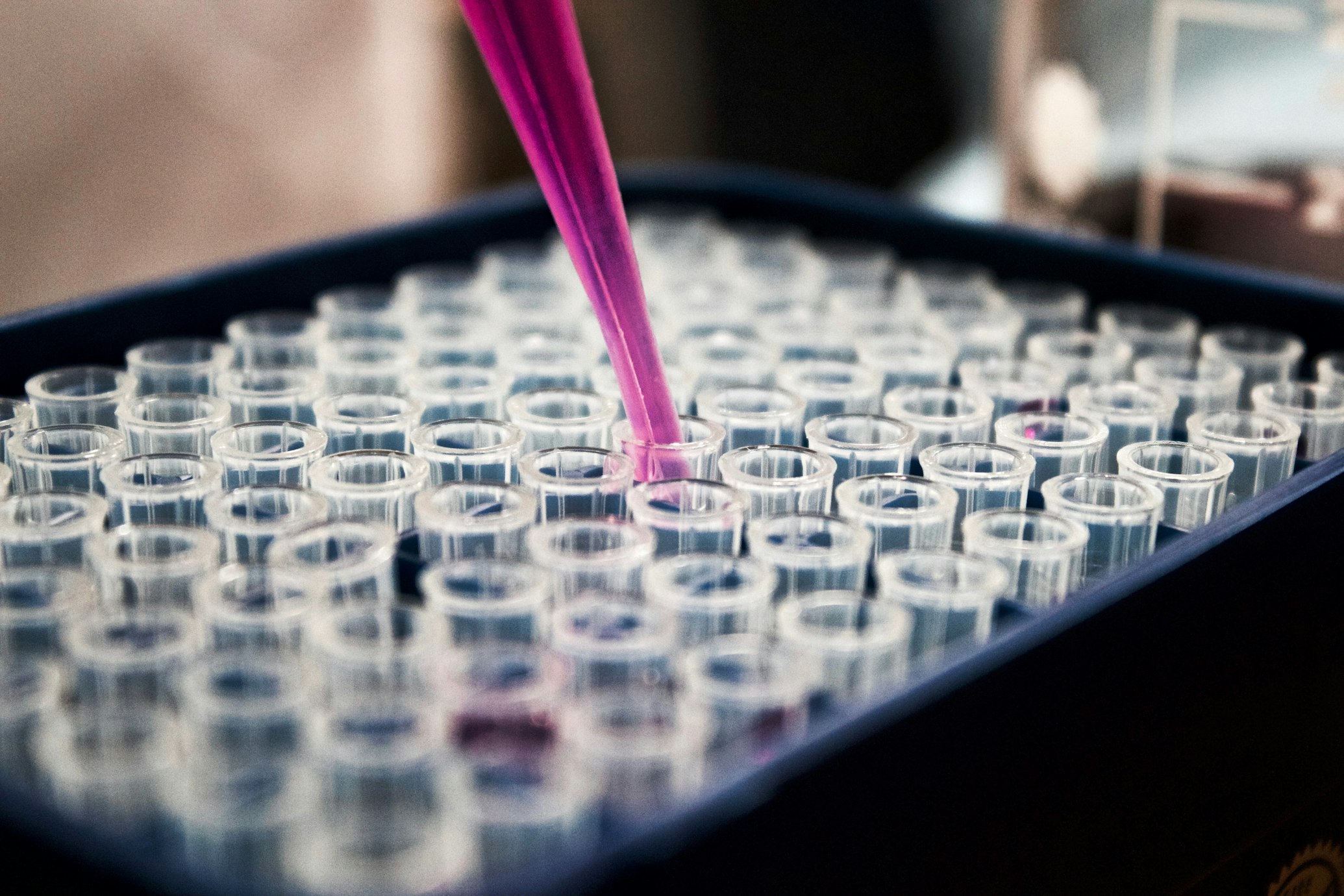
By soaking a bone graft in a solution of recombinant human BMPs (rhBMPs—safely produced in a lab), we can supercharge it. The scaffold provides the physical site, and the BMPs recruit and direct the workforce, creating a perfect regenerative partnership.
A Deep Dive into a Key Experiment: Testing the Dream Team
How do we know this combination truly works? Let's look at a typical pre-clinical study designed to put this "dream team" to the test.
To determine if combining a low dose of rhBMP-2 with an HA/Aragonite scaffold results in better bone healing than using either the scaffold or the protein alone.
Methodology: A Step-by-Step Breakdown
The experiment was conducted both in the lab (in vitro) and in live animal models (in vivo), following these key steps:
Graft Preparation
HA/Aragonite scaffolds were divided into three experimental groups with different treatments.
In Vitro Testing
Human stem cells were seeded onto scaffolds to measure bone formation markers.
In Vivo Study
Defects in animal models were implanted with grafts and monitored over time.
Group 1
Scaffold Only
Soaked in a neutral saline solution
Group 2
BMP Only
Soaked in a solution containing a high dose of rhBMP-2
Group 3
The Combo
Soaked in a solution containing a low dose of rhBMP-2
The in vivo study involved creating critical-sized defects in laboratory rats that would not heal naturally. These defects were then implanted with the prepared grafts from the three groups. After 8 and 12 weeks, the animals were scanned using micro-CT—a high-resolution 3D X-ray—to visualize and quantify the new bone growth inside the defect.
Results and Analysis: The Proof is in the Bone
The results were striking. The in vitro data showed that cells on the "Combo" graft (low-dose BMP + scaffold) were not only more active but also produced significantly more bone mineral than the other groups, suggesting a powerful synergistic effect.
The in vivo results, visualized through micro-CT and analyzed by bone volume, confirmed this synergy.
"The combination of the HA/Aragonite scaffold with a low dose of BMP led to the most robust and dense new bone formation, nearly filling the defect. The ultimate test of healing is strength. The bone repaired with the 'Combo' graft was almost as strong as native, healthy bone, a critical outcome for functional recovery."
Here's a look at the key materials that make this kind of groundbreaking research possible:
| Reagent / Material | Function in the Experiment |
|---|---|
| Recombinant Human BMP-2 (rhBMP-2) | The "foreman" protein; a lab-made version of the natural growth factor that instructs stem cells to become bone-forming cells. |
| Hydroxyapatite/Aragonite Scaffold | The 3D "scaffold"; a biocompatible and osteoconductive structure that provides a physical template for new bone growth and acts as a carrier for BMP. |
| Mesenchymal Stem Cells (MSCs) | The "construction crew"; undifferentiated cells harvested from bone marrow that have the potential to become osteoblasts, cartilage cells, or fat cells. |
| Osteogenic Differentiation Media | A special cell food containing specific factors (like Vitamin C and Dexamethasone) that primes stem cells to develop into bone cells. |
| Micro-Computed Tomography (Micro-CT) | A non-destructive 3D imaging system, like a super-powered CT scanner for small samples, used to precisely measure the volume and density of new bone formation. |
The Takeaway: This experiment demonstrated that the HA/Aragonite scaffold isn't just a passive carrier. It works with the BMP, likely by holding it at the site and releasing it slowly, making the protein more efficient. This allows for a lower, safer dose of BMP to be used while achieving a superior healing outcome.
A New Era for Healing Bones
The fusion of biomimetic materials like HA/Aragonite grafts with the potent biological signals of BMPs represents a paradigm shift in regenerative medicine.
This research moves us away from the paradigm of "filling a hole" and towards "actively instructing the body to regenerate itself." By providing both the perfect physical scaffold and the precise molecular instructions, scientists are developing next-generation bone grafts that are safer, more effective, and available off-the-shelf.
Natural Inspiration
Sea coral provides the ideal porous structure that mimics natural bone architecture, offering a biocompatible scaffold for regeneration.
Molecular Precision
BMP proteins deliver precise biological instructions to stem cells, directing them to become bone-forming cells exactly where needed.
For the millions of people worldwide suffering from complex fractures, spinal fusions, or facial reconstructions, this powerful combination of nature's blueprint and biological intelligence promises a future where broken frames can be rebuilt stronger than ever before.