ELISA Reagents & Components Explained: A 2024 Guide for Researchers on Assay Design, Troubleshooting, and Validation
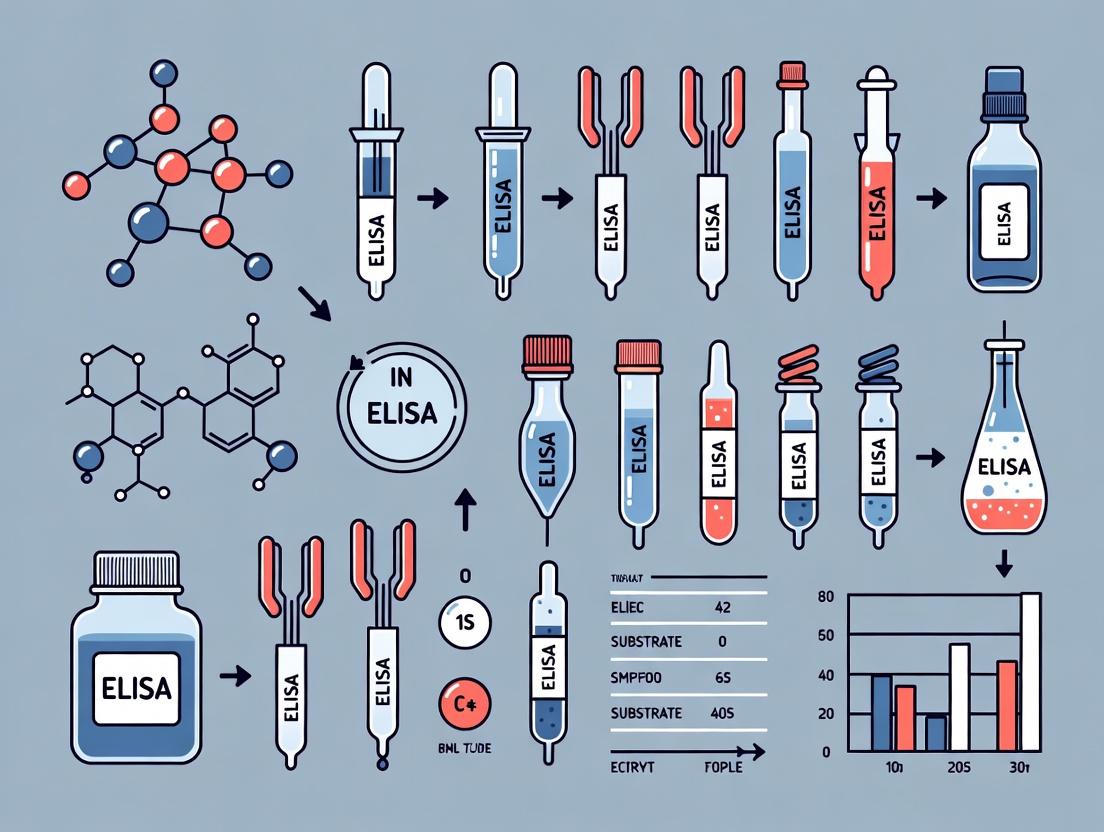
This comprehensive guide provides researchers, scientists, and drug development professionals with a complete overview of modern ELISA (Enzyme-Linked Immunosorbent Assay) reagents and components.
ELISA Reagents & Components Explained: A 2024 Guide for Researchers on Assay Design, Troubleshooting, and Validation
Abstract
This comprehensive guide provides researchers, scientists, and drug development professionals with a complete overview of modern ELISA (Enzyme-Linked Immunosorbent Assay) reagents and components. It begins by defining the essential elements—capture/detection antibodies, antigens, enzymes, and substrates—and explores the selection criteria based on assay type (direct, indirect, sandwich, competitive). The article details methodological best practices for reagent preparation, storage, and application, followed by a systematic troubleshooting section addressing common issues like high background and weak signal. Finally, it covers validation strategies and compares popular commercial ELISA kits versus custom in-house setups, providing a holistic resource for optimizing assay performance and reliability in diverse research and clinical contexts.
Building Blocks of ELISA: A Deep Dive into Core Reagents, Types, and Selection Criteria
What is ELISA? Defining the Assay and its Central Role in Biomedical Research
Abstract The Enzyme-Linked Immunosorbent Assay (ELISA) remains a cornerstone analytical biochemistry technique for the detection and quantification of proteins, peptides, antibodies, and hormones. Within the context of a broader thesis on ELISA reagents and components research, this whitepaper provides an in-depth technical guide. It details the core principles, variations, and quantitative data of the assay, underscores its pivotal role in biomedical research and drug development, and presents detailed experimental protocols. A critical focus is placed on the essential reagents that constitute the assay system, highlighting how ongoing research into their optimization directly impacts sensitivity, specificity, and reproducibility.
ELISA is a plate-based assay leveraging the specificity of antigen-antibody interaction and the sensitivity of enzyme-mediated chromogenic, fluorescent, or chemiluminescent detection. The target molecule is immobilized on a solid phase (typically a polystyrene microplate), specifically captured and detected by antibody-enzyme conjugates, and quantified by measuring the enzymatic conversion of a substrate into a detectable product. The intensity of the signal is proportional to the amount of target in the sample.
Key ELISA Formats and Methodologies
The four principal formats are distinguished by the order and type of antibody used.
Direct ELISA: The immobilized antigen is detected directly by an antigen-specific antibody conjugated to an enzyme. It is simple and rapid but offers less signal amplification. Indirect ELISA: The immobilized antigen is bound by a primary antibody, which is then detected by an enzyme-conjugated secondary antibody directed against the primary antibody's host species. This provides signal amplification. Sandwich ELISA: The target antigen is "sandwiched" between a capture antibody immobilized on the plate and a detection antibody. It requires two antibodies binding to non-overlapping epitopes and offers high specificity and sensitivity, making it the preferred format for complex samples. Competitive/Inhibition ELISA: Used for small antigens or haptens. Sample antigen competes with a reference antigen for binding to a limited amount of antibody. The signal is inversely proportional to the amount of target in the sample.
Diagram 1: Core ELISA Formats and Workflow
Quantitative Performance Metrics
Critical performance parameters are benchmarked across ELISA types. Data is synthesized from recent literature and commercial reagent kit specifications.
Table 1: Comparative Performance of Principal ELISA Formats
| Format | Typical Sensitivity (Lower Limit) | Dynamic Range | Advantages | Limitations | Best For |
|---|---|---|---|---|---|
| Direct | ~1-10 ng/mL | 2-3 logs | Fast, minimal steps | Low sensitivity, high background | Antigen purification analysis, simple samples |
| Indirect | ~0.1-1 ng/mL | 3-4 logs | Signal amplification, flexible | Cross-reactivity risk | Antibody screening/titration, viral serology |
| Sandwich | ~0.01-0.1 pg/mL | 3-4 logs | High specificity & sensitivity | Requires two antibodies | Biomarker quantification, cytokines, clinical diagnostics |
| Competitive | ~0.1-1 ng/mL | 2-3 logs | Measures small molecules | Inverse readout | Haptens, hormones, drugs |
Table 2: Common Enzyme-Substrate Systems in ELISA
| Enzyme | Common Substrate | Signal Type | Detection Wavelength | Notes |
|---|---|---|---|---|
| Horseradish Peroxidase (HRP) | TMB (3,3',5,5'-Tetramethylbenzidine) | Colorimetric (Blue → Yellow) | 450 nm (read), 620 nm (ref) | Most common; cost-effective; inhibited by sodium azide. |
| Horseradish Peroxidase (HRP) | Luminol + H₂O₂ + Enhancer | Chemiluminescent | N/A (Luminescence) | Higher sensitivity than colorimetric. |
| Alkaline Phosphatase (AP) | pNPP (p-Nitrophenyl Phosphate) | Colorimetric (Yellow) | 405 nm | Linear kinetics; stable signal; sensitive to phosphate inhibitors. |
| Alkaline Phosphatase (AP) | CDP-Star / AttoPhos | Chemifluorescent / Chemiluminescent | Emission ~460-560 nm | Very high sensitivity for specialized applications. |
Detailed Experimental Protocol: Sandwich ELISA for Cytokine Quantification
This protocol exemplifies a high-sensitivity application central to immunology and drug development research.
Materials: See "The Scientist's Toolkit" below. Procedure:
- Plate Coating: Dilute capture antibody to 1-10 µg/mL in carbonate-bicarbonate coating buffer (pH 9.6). Add 100 µL per well to a 96-well microplate. Seal and incubate overnight at 4°C.
- Blocking: Aspirate coating solution. Wash plate 3 times with 300 µL/well of PBS + 0.05% Tween 20 (PBST). Add 300 µL/well of blocking buffer (e.g., 1% BSA or 5% non-fat dry milk in PBS). Incubate for 1-2 hours at room temperature (RT) on a plate shaker.
- Sample & Standard Addition: Prepare serial dilutions of the protein standard in the sample diluent (e.g., blocking buffer). Dilute test samples appropriately. Aspirate block, wash 3x with PBST. Add 100 µL of standard or sample per well in duplicate/triplicate. Include blank wells (diluent only). Incubate 2 hours at RT or overnight at 4°C for maximum sensitivity.
- Detection Antibody Incubation: Aspirate sample, wash 3x with PBST. Add 100 µL/well of biotinylated detection antibody (diluted per manufacturer's recommendation in diluent). Incubate 1-2 hours at RT.
- Streptavidin-Enzyme Conjugate Incubation: Aspirate detection antibody, wash 3x with PBST. Add 100 µL/well of Streptavidin-HRP conjugate (typically 1:5000 to 1:20000 dilution in diluent). Incubate 30-60 minutes at RT, protected from light.
- Signal Development: Aspirate conjugate, wash 3-5x with PBST thoroughly. Add 100 µL of substrate solution (e.g., TMB) per well. Incubate at RT in the dark for 5-30 minutes, monitoring development.
- Reaction Stop & Reading: Add 100 µL of stop solution (e.g., 1M H₂SO₄ for TMB) per well. The color will change from blue to yellow. Read the absorbance at 450 nm (with a 570-620 nm reference) within 30 minutes using a microplate reader.
- Data Analysis: Generate a standard curve by plotting the mean absorbance (blank-corrected) of the standards against their concentration. Fit a 4- or 5-parameter logistic curve. Interpolate sample concentrations from the curve.
The Scientist's Toolkit: Key Reagent Solutions for a Sandwich ELISA
Optimization of these components is a primary focus of ELISA reagent research.
Table 3: Essential Materials and Their Functional Role
| Reagent / Component | Function & Research Consideration |
|---|---|
| High-Binding Polystyrene Microplate | Solid phase for passive adsorption. Surface chemistry and well geometry impact binding capacity and consistency. |
| Capture & Detection Antibody Pair | Critical for specificity. Must target non-overlapping epitopes. Research focuses on affinity maturation, recombinant engineering for batch consistency, and novel clonal selections. |
| Detection Enzyme (HRP, AP) | Signal generator. Research into enzyme stability, specific activity, and conjugation chemistry minimizes background and maximizes signal-to-noise. |
| Biotin-Streptavidin System | Signal amplification layer. High affinity interaction allows for significant signal enhancement. Research explores alternatives and optimization of biotinylation ratios. |
| Chromogenic/Luminescent Substrate | Ultimate signal source. Substrate formulation research aims for enhanced sensitivity, linearity, and stability (e.g., ready-to-use, stable formulations). |
| Blocking Buffer (BSA, Casein, etc.) | Reduces non-specific binding. Optimization of buffer composition (protein type, ionic strength, detergents) is crucial for lowering background. |
| Sample/Diluent Buffer | Matrix for standards and samples. Must preserve antigen integrity and prevent interference (e.g., from serum components). |
| Wash Buffer (e.g., PBST) | Removes unbound material. Surfactant concentration (Tween-20) and wash volume/cycles are key reproducibility factors. |
Central Role in Biomedical Research and Drug Development
ELISA's role extends beyond mere detection:
- Biomarker Discovery & Validation: Quantifying disease-associated proteins in serum, plasma, or tissue lysates.
- Therapeutic Antibody & Protein Drug Development: Critical for pharmacokinetic (PK)/pharmacodynamic (PD) assays, immunogenicity testing (anti-drug antibodies), and potency assays.
- Diagnostics: Foundation for clinical tests for infectious diseases (HIV, Hepatitis), autoimmune disorders, and cardiac markers.
- Basic Research: Standard tool for measuring cytokine expression, transcription factor activation, and post-translational modifications using specific antibodies.
Diagram 2: ELISA in the Drug Development Pipeline
ELISA is a fundamentally versatile and indispensable tool in the life sciences. Its continued central role is not a function of stagnation but of persistent evolution, driven by focused research into its core reagents and components. Advancements in antibody engineering, enzyme-substrate chemistry, plate surfaces, and detection methodologies directly translate to assays with greater precision, sensitivity, and multiplexing capability. Therefore, research dedicated to optimizing the ELISA system itself remains a critical enabler for discovery and innovation across biomedical research and therapeutic development.
Within the broader thesis of ELISA reagent optimization and standardization, this guide provides an in-depth technical overview of the core components. The performance, sensitivity, and reproducibility of any Enzyme-Linked Immunosorbent Assay (ELISA) are fundamentally dependent on the quality and precise application of these essential reagents. This whitepaper serves as a current reference for professionals engaged in assay development and diagnostic research.
Core Reagents: Function and Selection
Antibodies
Antibodies are the primary binding agents, conferring specificity. Selection depends on the assay format (direct, indirect, sandwich, competitive).
- Capture Antibody: High-affinity, monoclonal antibodies are preferred for sandwich ELISA to ensure specific antigen immobilization.
- Detection Antibody: Must recognize a different epitope than the capture antibody. Can be conjugated directly to an enzyme or used with a conjugated secondary antibody.
- Conjugation: Enzymes like Horseradish Peroxidase (HRP) or Alkaline Phosphatase (AP) are covalently linked via lysine or cysteine residues.
Antigens
The target molecule, which can be a protein, peptide, hormone, or small molecule. For competitive assays, a known quantity of purified antigen is immobilized. Antigen purity and stability are critical for reliable standard curve generation.
Enzymes and Substrates
The enzyme generates a measurable signal proportional to the amount of captured analyte.
Table 1: Common Enzyme-Substrate Systems in ELISA
| Enzyme | Common Substrate | Signal Type | Wavelength (nm) | Key Property |
|---|---|---|---|---|
| Horseradish Peroxidase (HRP) | 3,3',5,5'-Tetramethylbenzidine (TMB) | Colorimetric (Blue → Yellow) | 450 (read), 650 (ref) | High turnover, cost-effective. Inhibited by sodium azide. |
| Horseradish Peroxidase (HRP) | 2,2'-Azinobis [3-ethylbenzothiazoline-6-sulfonic acid] (ABTS) | Colorimetric (Green) | 405 | Stable endpoint. |
| Alkaline Phosphatase (AP) | p-Nitrophenyl Phosphate (pNPP) | Colorimetric (Yellow) | 405 | Linear reaction, less susceptible to interference. |
| β-Galactosidase | 4-Methylumbelliferyl-β-D-galactopyranoside | Fluorometric | Ex 360/Em 440 | High sensitivity for low-abundance targets. |
Buffers and Solutions
Each step requires specific buffers to maintain optimal pH, ionic strength, and to block non-specific binding.
Table 2: Essential ELISA Buffers and Their Composition
| Buffer | Typical pH | Key Components | Primary Function |
|---|---|---|---|
| Coating Buffer | 9.6 (Carbonate) or 7.4 (PBS) | Sodium carbonate/bicarbonate or PBS | Facilitates passive adsorption of antigen/antibody to plastic. |
| Wash Buffer (e.g., PBS-T) | 7.4 | Phosphate Buffered Saline (PBS), 0.05% Tween 20 | Removes unbound reagents; Tween reduces non-specific binding. |
| Blocking Buffer | 7.4 | PBS with 1-5% BSA, 5% non-fat dry milk, or casein | Saturates remaining binding sites on the plate to prevent false positives. |
| Sample/Diluent Buffer | 7.4 | Blocking buffer used as a base | Dilutes samples and detection antibodies to maintain stability and reduce background. |
| Stop Solution | Acidic (~2.0) | 1M or 2M Sulfuric Acid (H₂SO₄) | Terminates the enzymatic reaction (for HRP-TMB). |
Experimental Protocol: Sandwich ELISA for Cytokine Detection
Objective: To quantify a target cytokine (e.g., IL-6) in cell culture supernatant.
Materials: 96-well microplate, multichannel pipette, plate washer, microplate reader.
Day 1: Coating
- Dilute capture antibody in carbonate coating buffer (pH 9.6) to 2-5 µg/mL.
- Add 100 µL per well. Seal plate and incubate overnight at 4°C.
Day 2: Blocking and Sample Incubation
- Aspirate coating solution. Wash plate 3x with 300 µL PBS-T per well (1-minute soaks).
- Add 300 µL blocking buffer (5% BSA in PBS). Incubate for 1-2 hours at room temperature (RT).
- Wash plate 3x with PBS-T.
- Add 100 µL of sample (culture supernatant) or standard (recombinant cytokine in diluent buffer) per well in duplicate/triplicate. Include blank (diluent only). Seal and incubate 2 hours at RT.
- Wash plate 5x with PBS-T.
Detection Antibody Incubation
- Add 100 µL of HRP-conjugated detection antibody (diluted in diluent buffer per manufacturer's recommendation). Incubate 1-2 hours at RT in the dark.
- Wash plate 5x with PBS-T.
Signal Development and Detection
- Add 100 µL of TMB substrate solution per well. Incubate for 10-30 minutes at RT in the dark (observe blue color development).
- Stop the reaction by adding 100 µL of 2M H₂SO₄ per well (color turns yellow).
- Measure absorbance immediately at 450 nm with a reference at 650 nm.
Data Analysis: Generate a standard curve using a 4- or 5-parameter logistic (4PL/5PL) fit and interpolate sample concentrations.
Visualizing Key Pathways and Workflows
Diagram Title: Sandwich ELISA Step-by-Step Workflow
Diagram Title: HRP-TMB Enzymatic Reaction Pathway
The Scientist's Toolkit: Key Research Reagent Solutions
Table 3: Essential Materials for ELISA Development and Troubleshooting
| Item | Function & Rationale |
|---|---|
| High-Binding 96-Well Plates (e.g., Polystyrene) | The solid phase. High-binding plates maximize adsorption of capture proteins. |
| Precision Multichannel Pipettes (2-20µL, 20-200µL) | Ensures accurate, reproducible liquid handling across many wells. |
| Microplate Washer (Automated or Manual) | Critical for consistent and thorough washing to reduce background variability. |
| Spectrophotometric Microplate Reader | Quantifies colorimetric, and optionally fluorometric or chemiluminescent, signals. |
| Lyophilized Reference Standard with Certificate of Analysis (CoA) | Provides the anchor for the standard curve, ensuring quantitative accuracy. |
| Recombinant Positive Control Protein | Used to validate assay performance and calculate recovery rates. |
| HRP or AP Conjugation Kit | For in-house antibody conjugation, allowing customization of detection systems. |
| Stabilized TMB Substrate (Ready-to-Use) | Single-component, stable substrate reduces preparation error and increases consistency. |
| Plate Sealer (Adhesive Films) | Prevents evaporation and contamination during incubations. |
| Software for 4PL/5PL Curve Fitting | Essential for accurate interpolation of sample concentrations from non-linear standard curves. |
Within the ongoing thesis research on ELISA reagents and components, a foundational understanding of assay architecture is paramount. The Enzyme-Linked Immunosorbent Assay (ELISA) remains a cornerstone technique in biomedical research and drug development for detecting and quantifying proteins, peptides, antibodies, and hormones. The performance, sensitivity, and specificity of an ELISA are dictated by its format, which is in turn governed by the strategic selection and application of specific reagents. This technical guide provides an in-depth analysis of the four principal ELISA formats, framing their mechanisms within the context of reagent functionality and optimization for high-quality assay development.
Direct ELISA
Mechanism: In a direct ELISA, the target antigen is immobilized directly onto the polystyrene microplate surface. After blocking, a primary antibody conjugated directly to an enzyme (e.g., Horseradish Peroxidase, HRP) is added. This conjugate binds specifically to the antigen. Following a wash, a chromogenic substrate is added, and the enzymatic reaction produces a measurable signal proportional to the amount of antigen present.
Advantages & Disadvantages:
- Advantages: Rapid procedure due to fewer steps; minimal cross-reactivity from secondary antibodies.
- Disadvantages: Lower signal amplification (no secondary antibody); potential for high background if the primary antibody is not well-purified; every primary antibody requires individual conjugation, making it less flexible.
Key Research Reagent Solutions:
- High-Binding Polystyrene Microplates: Provide passive, hydrophobic adsorption of antigens.
- Blocking Buffer (e.g., BSA, Casein): Reduces non-specific binding of the enzyme-conjugated antibody.
- Enzyme-Conjugated Primary Antibody: The critical detection reagent. Conjugation quality directly impacts signal-to-noise ratio.
- Chromogenic/Chemiluminescent Substrate: Converted by the enzyme to a detectable product.
Experimental Protocol for Direct ELISA:
- Coating: Dilute purified antigen in carbonate/bicarbonate coating buffer (pH 9.6). Add 100 µL/well to a microplate. Incubate overnight at 4°C or 1-2 hours at 37°C.
- Washing: Wash plate 3x with PBS or Tris-based buffer containing 0.05% Tween 20 (wash buffer).
- Blocking: Add 200-300 µL/well of blocking buffer (e.g., 1-5% BSA in PBS). Incubate for 1-2 hours at room temperature (RT). Wash 3x.
- Detection Antibody Incubation: Add 100 µL/well of the enzyme-conjugated primary antibody diluted in blocking buffer. Incubate for 1-2 hours at RT. Wash 3-5x thoroughly.
- Substrate Incubation: Add 100 µL/well of substrate (e.g., TMB for HRP). Incubate for 10-30 minutes in the dark.
- Signal Measurement: Stop the reaction with an acid (e.g., 2N H₂SO₄ for TMB). Read absorbance immediately at the appropriate wavelength (450nm for TMB).
Direct ELISA Experimental Workflow
Indirect ELISA
Mechanism: The initial steps—antigen coating and blocking—are identical to the direct format. However, the detection employs two antibodies: an unlabeled primary antibody that binds the antigen, followed by an enzyme-conjugated secondary antibody that recognizes the constant region (Fc) of the primary antibody. This secondary amplification step is the key differentiator.
Advantages & Disadvantages:
- Advantages: High sensitivity due to signal amplification (multiple secondary antibodies can bind a single primary); high flexibility as the same enzyme-conjugated secondary can be used with many primary antibodies from the same host species; no need to conjugate every primary antibody.
- Disadvantages: Increased risk of cross-reactivity and non-specific binding; requires an extra incubation and wash step.
Key Research Reagent Solutions:
- Unlabeled Primary Antibody: Provides specificity. Can be a polyclonal (high sensitivity) or monoclonal (high specificity) antibody.
- Enzyme-Conjugated Secondary Antibody: The amplification reagent. Must be raised against the host species of the primary antibody (e.g., anti-mouse IgG-HRP).
- Optimized Blocking Buffer: Critical to minimize non-specific binding of the secondary antibody.
Experimental Protocol for Indirect ELISA:
- Steps 1 & 2 (Coating, Washing, Blocking): Identical to Direct ELISA protocol.
- Primary Antibody Incubation: Add 100 µL/well of unlabeled primary antibody diluted in blocking buffer. Incubate 1-2 hours at RT or overnight at 4°C. Wash 3-5x.
- Secondary Antibody Incubation: Add 100 µL/well of species-specific enzyme-conjugated secondary antibody diluted in blocking buffer. Incubate 1-2 hours at RT. Wash 3-5x thoroughly.
- Steps 5 & 6 (Substrate, Detection): Identical to Direct ELISA protocol.
Indirect ELISA Experimental Workflow
Sandwich ELISA
Mechanism: Sandwich ELISA is the preferred method for detecting complex antigens in solution. It requires two antibodies that bind to different, non-overlapping epitopes on the target antigen. The first antibody ("capture" antibody) is coated onto the plate. The sample containing the antigen is added, and the antigen is "captured." After washing, a second, enzyme-conjugated antibody ("detection" antibody) is added, forming an antibody-antigen-antibody "sandwich."
Advantages & Disadvantages:
- Advantages: High specificity (two epitopes required); excellent for complex samples (crude lysates, serum) as the antigen does not need to be purified prior to assay; wide dynamic range and high sensitivity.
- Disadvantages: Requires two matched antibodies that recognize distinct epitopes; more complex optimization of antibody pair and concentrations.
Key Research Reagent Solutions:
- Matched Antibody Pair: A critical reagent set. Includes a capture antibody and a detection antibody (often conjugated, or used with a conjugated secondary in an indirect sandwich format).
- Recombinant Protein Standard: Essential for generating a standard curve for precise quantification.
- Sample Diluent: Optimized to minimize matrix effects from serum or lysates.
Experimental Protocol for Sandwich ELISA:
- Capture Antibody Coating: Dilute the capture antibody in coating buffer. Add 100 µL/well. Incubate overnight at 4°C.
- Washing & Blocking: Wash 3x. Block with 200-300 µL/well of protein-based blocking buffer for 1-2 hours at RT. Wash 2x.
- Antigen/Sample Incubation: Add 100 µL/well of standard (serial dilutions) or diluted sample. Incubate 2 hours at RT or overnight at 4°C. Wash 3-5x.
- Detection Antibody Incubation: Add 100 µL/well of the enzyme-conjugated detection antibody. Incubate 1-2 hours at RT. Wash 5x thoroughly.
- Substrate & Detection: Identical to previous protocols.
Sandwich ELISA Experimental Workflow
Competitive ELISA
Mechanism: Competitive ELISA is used to measure small molecules (haptens) or antigens with only a single epitope. In a common format, the target antigen is immobilized on the plate. The sample (containing the unknown free antigen) is pre-incubated with a fixed, limiting concentration of enzyme-conjugated antibody. This mixture is then added to the antigen-coated well. Free antigen in the sample competes with the plate-bound antigen for binding to the conjugated antibody. The higher the concentration of antigen in the sample, the less conjugated antibody binds to the plate, resulting in a lower signal after substrate addition.
Advantages & Disadvantages:
- Advantages: Suited for small antigens; robust and consistent as all reagents are added in a single step (mix-and-incubate); less susceptible to sample matrix effects.
- Disadvantages: Inverse signal relationship can be counterintuitive; requires careful titration of antibody and plate-bound antigen; narrower dynamic range.
Key Research Reagent Solutions:
- Purified Antigen for Plate Coating: Must be identical or highly similar to the target analyte.
- Enzyme-Conjugated Antibody: The limiting reagent. Titer must be carefully optimized.
- Reference Standard (Unlabeled Antigen): Used to generate the standard curve for quantification.
Experimental Protocol for Competitive ELISA:
- Coating: Coat plate with known antigen (100 µL/well) overnight at 4°C.
- Washing & Blocking: Wash and block as described previously.
- Competitive Incubation: In a separate tube, mix a constant amount of enzyme-conjugated antibody with serial dilutions of the standard or sample. Incubate for 30-60 minutes at RT. Transfer 100 µL of this mixture to the antigen-coated plate.
- Incubation & Washing: Incubate the plate for 30-60 minutes at RT. The competition occurs both in solution and on the plate. Wash 5x thoroughly.
- Substrate & Detection: Add substrate. Note: Higher sample antigen concentration yields lower signal.
Competitive ELISA Principle of Competition
Comparative Analysis of ELISA Formats
The following table summarizes the key characteristics, reagent requirements, and performance metrics of the four ELISA formats, based on current reagent performance data.
Table 1: Comparative Analysis of Core ELISA Formats
| Feature | Direct ELISA | Indirect ELISA | Sandwich ELISA | Competitive ELISA |
|---|---|---|---|---|
| Complexity | Low | Medium | High | Medium |
| Steps | ~5 | ~7 | ~7 | ~6 |
| Time | Fast (~2.5h) | Moderate (~4h) | Long (often >4h, can include overnight steps) | Moderate (~3.5h) |
| Sensitivity | Low to Moderate | High (due to amplification) | Very High (typically 1-10 pg/mL) | Moderate to High |
| Specificity | Moderate | Moderate | Very High (uses two antibodies) | High |
| Antigen Requirement | Must be adsorbable to plastic | Must be adsorbable to plastic | Must have at least two distinct epitopes | Small, single epitope |
| Key Antibody Reagents | Conjugated Primary Antibody | Primary Antibody; Conjugated Secondary Antibody | Matched Pair: Capture Antibody & Detection Antibody | Conjugated Antibody; Pure Antigen for Coating |
| Signal Relationship | Direct | Direct | Direct | Inverse |
| Primary Application | Quick check for high-concentration antigen; antibody screening | High-sensitivity detection; flexible research tool | Quantification of proteins in complex samples (cytokines, biomarkers) | Measurement of small molecules (hormones, drugs), haptens |
The Scientist's Toolkit: Essential Research Reagent Solutions
Table 2: Critical ELISA Reagents and Components
| Reagent/Component | Primary Function | Key Considerations for Thesis Research |
|---|---|---|
| Microplate | Solid phase for immobilization. | Binding capacity: High vs. medium binding. Material: Polystyrene standard; consider specialty plates (e.g., streptavidin-coated) for biotinylated assays. |
| Coating Buffer | Optimizes passive adsorption of protein/antigen. | Typically carbonate-bicarbonate (pH 9.6). Alternative buffers (e.g., PBS) may be needed for specific antigens. |
| Blocking Buffer | Saturates unbound sites to prevent non-specific binding. | 1-5% BSA, casein, or non-fat dry milk in PBS/TBS. Choice impacts background and can interfere with specific assays (e.g., phospho-specific). |
| Capture Antibody | Binds and immobilizes the target analyte in a sandwich ELISA. | Should be high-affinity, purified, and used at an optimized concentration. Often monoclonal for specificity. |
| Detection Antibody | Binds to the captured analyte, enabling detection. | Can be direct or indirect conjugation. Must recognize a different epitope than the capture antibody. |
| Antibody Conjugates | Provides the enzymatic signal generation capability. | HRP and Alkaline Phosphatase (AP) are most common. Conjugation method (e.g., periodate vs. maleimide) affects stability and activity. |
| Substrate | Converted by enzyme to colored or luminescent product. | Chromogenic (TMB, pNPP): Simple, requires plate reader. Chemiluminescent: Higher sensitivity, wider dynamic range, requires luminometer. |
| Wash Buffer | Removes unbound reagents. | Typically PBS or Tris with a low concentration of detergent (0.05% Tween 20). |
| Stop Solution | Halts the enzymatic reaction. | Acid (for HRP/TMB) or base (for AP/pNPP). Critical for stabilizing chromogenic signal for reading. |
| Reference Standard | Calibrates the assay for quantitative measurements. | Must be highly pure, well-characterized, and identical to the target analyte. Serial dilutions create the standard curve. |
The selection of an ELISA format is a critical experimental design decision that hinges on the nature of the target analyte, the required assay performance, and the available reagents. This guide, framed within a thesis on reagent optimization, underscores that each format presents a unique interplay between its constituent components. Direct ELISA offers simplicity, indirect ELISA provides amplified sensitivity, sandwich ELISA delivers superior specificity for complex targets, and competitive ELISA is indispensable for small molecules. The continual advancement of ELISA performance relies on the ongoing research and development of higher-affinity antibodies, more stable enzyme conjugates, and optimized buffer systems—the very reagents and components that form the bedrock of this ubiquitous and powerful assay technology.
This whitepaper, framed within a broader thesis on ELISA reagent optimization, provides an in-depth technical guide for selecting polyclonal (pAb) and monoclonal (mAb) antibodies in sandwich immunoassays. The choice between these reagents for the capture and detection roles directly influences an assay's sensitivity, specificity, dynamic range, and robustness—critical parameters in drug development and diagnostic research.
Fundamental Characteristics: A Comparative Analysis
Table 1: Core Properties of Polyclonal vs. Monoclonal Antibodies
| Property | Polyclonal Antibodies (pAbs) | Monoclonal Antibodies (mAbs) |
|---|---|---|
| Production | Immunization of host animal; serum collection. | Hybridoma or recombinant technology; single B-cell clone. |
| Specificity | Recognizes multiple epitopes on the target antigen. | Recognizes a single, unique epitope on the target antigen. |
| Affinity | A mixture of antibodies with a range of affinities. | Defined, consistent affinity across all batches. |
| Cross-reactivity | Higher potential due to recognition of multiple epitopes. | Very low if the epitope is unique to the target. |
| Batch-to-Batch Variability | High; varies between immunizations and animals. | Very low; consistent and reproducible. |
| Time to Produce | Relatively short (several months). | Long (6-12+ months for initial development). |
| Cost (Production) | Lower. | Significantly higher. |
| Typical Use in Sandwich ELISA | Often preferred as capture antibody for broad epitome capture. | Often preferred as detection antibody for specific, consistent signaling. |
Strategic Application in Sandwich ELISA
The classical sandwich ELISA configuration requires two antibodies: one to capture the antigen onto the solid phase and a second, conjugated antibody to detect the immobilized antigen.
Table 2: Recommended Antibody Pairing Strategies for Sandwich ELISA
| Strategy | Capture Antibody | Detection Antibody | Rationale & Application |
|---|---|---|---|
| 1. pAb Capture / mAb Detect | Polyclonal | Monoclonal | Most Common. pAbs capture efficiently via multiple epitopes, increasing sensitivity. mAbs provide high specificity in detection, minimizing background. Ideal for quantifying novel targets. |
| 2. mAb Capture / mAb Detect | Monoclonal (Epitope A) | Monoclonal (Epitope B) | High Specificity. Requires two mAbs recognizing non-overlapping epitopes. Excellent specificity, low background, and superior lot consistency. Essential for complex matrices. |
| 3. pAb Capture / pAb Detect | Polyclonal (Host A, e.g., Rabbit) | Polyclonal (Host B, e.g., Goat) | Broad Capture & Signal Amplification. Used when mAbs are unavailable. Must be raised in different host species to prevent cross-reactivity. Can offer high sensitivity but may have higher background. |
Critical Consideration: Epitope Mapping
For any sandwich pair, especially mAb/mAb, the two antibodies must bind to distinct, non-competing epitopes on the target antigen. Epitope binning experiments are required.
Protocol 3.1: Epitope Binning via Bridging ELISA Objective: To determine if two monoclonal antibodies bind to overlapping or distinct epitopes. Materials: 96-well microplate, target antigen, two candidate mAbs (A and B), blocking buffer (e.g., 3% BSA/PBS), HRP-conjugated anti-species secondary antibody, TMB substrate, stop solution.
- Coat plate with mAb A (2-5 µg/mL in PBS, 100 µL/well, overnight at 4°C).
- Block plate with blocking buffer (300 µL/well, 1-2 hours, RT).
- Add a fixed, saturating concentration of antigen in blocking buffer (100 µL/well, 2 hours, RT).
- Add serial dilutions of mAb B in blocking buffer (100 µL/well, 1.5 hours, RT).
- Add appropriate HRP-conjugated secondary antibody against mAb B (100 µL/well, 1 hour, RT).
- Develop with TMB (15-30 min), stop with acid, read absorbance at 450 nm. Interpretation: A strong signal indicates mAb B can bind the antigen already captured by mAb A, meaning their epitopes are non-overlapping. A negligible signal suggests they compete for the same or sterically hindered epitopes.
Experimental Protocol: Establishing a pAb Capture / mAb Detection ELISA
Protocol 4.1: Optimized Sandwich ELISA Workflow Objective: Quantify a target cytokine in human serum samples. Reagents: See "The Scientist's Toolkit" below.
Day 1: Coating
- Dilute rabbit polyclonal anti-cytokine antibody in 0.1 M carbonate-bicarbonate coating buffer (pH 9.6) to 2 µg/mL.
- Add 100 µL per well to a 96-well microplate. Seal and incubate overnight at 4°C.
Day 2: Blocking, Sample & Detection Incubation
- Aspirate coating solution. Wash plate 3x with 300 µL/well PBS-T (0.05% Tween-20).
- Add 300 µL/well blocking buffer (1% BSA in PBS-T). Incubate 2 hours at RT on a plate shaker.
- Wash plate 3x with PBS-T.
- Add 100 µL/well of standard dilutions (prepared in analyte-free matrix) and test samples (diluted in assay buffer). Incubate 2 hours at RT with shaking.
- Wash plate 5x with PBS-T.
- Add 100 µL/well of biotinylated mouse monoclonal anti-cytokine detection antibody (optimally titrated, e.g., 0.5 µg/mL in blocking buffer). Incubate 1 hour at RT with shaking.
- Wash plate 5x with PBS-T.
- Add 100 µL/well of streptavidin-HRP conjugate (diluted per manufacturer's instructions). Incubate 30 minutes at RT in the dark with shaking.
- Wash plate 7x with PBS-T.
Day 2: Development & Analysis
- Add 100 µL/well of TMB substrate. Incubate in the dark for 5-20 minutes (kinetic monitoring recommended).
- Stop the reaction by adding 100 µL/well of 1M H2SO4.
- Read absorbance immediately at 450 nm (reference 570 nm or 620 nm).
- Generate a 4- or 5-parameter logistic (4PL/5PL) standard curve to interpolate sample concentrations.
Visualizing Workflows and Relationships
Diagram Title: Stepwise Sandwich ELISA Protocol Flow
Diagram Title: Antibody Selection Decision Tree for Sandwich ELISA
The Scientist's Toolkit
Table 3: Essential Research Reagent Solutions for Sandwich ELISA
| Reagent / Material | Function & Rationale |
|---|---|
| High-Binding Microplate (e.g., Polystyrene) | Solid phase for passive adsorption of capture antibodies. Maximizes protein binding capacity. |
| Carbonate-Bicarbonate Coating Buffer (pH 9.6) | Alkaline buffer promoting optimal electrostatic interaction between plate and antibody for stable coating. |
| Blocking Buffer (e.g., 1-5% BSA or Casein in PBS-T) | Saturates non-specific binding sites on the plate and wells to reduce background noise. |
| Wash Buffer (PBS with 0.05% Tween-20, PBS-T) | Removes unbound reagents while maintaining assay pH and ionic strength. Tween-20 minimizes non-specific binding. |
| Antigen-Free Matrix (e.g., Diluent for Standards) | Buffer or treated serum matching the sample matrix to ensure standard curve accuracy. |
| Biotinylated Detection Antibody | Enables powerful signal amplification via streptavidin-enzyme conjugation due to high biotin-streptavidin affinity. |
| Streptavidin-Horseradish Peroxidase (SA-HRP) | High-affinity binding to biotin. HRP catalyzes colorimetric or chemiluminescent substrate conversion. |
| TMB (3,3',5,5'-Tetramethylbenzidine) Substrate | Chromogenic HRP substrate yielding a soluble blue product that turns yellow upon acid stop. Safe and sensitive. |
| Plate Reader (Spectrophotometer) | Instrument to measure absorbance at specific wavelengths (e.g., 450 nm) for quantitative analysis. |
The strategic selection of polyclonal and monoclonal antibodies for capture and detection roles is a cornerstone of robust immunoassay design. The pAb/mAb combination often provides the most practical balance of sensitivity and specificity for novel assays. However, the move towards a matched monoclonal pair is definitive for regulated, high-throughput drug development applications, offering unparalleled specificity and reproducibility. The choice must be guided by a clear understanding of the target antigen, epitope availability, and the required assay performance characteristics, all within the broader context of reagent lifecycle management.
The Critical Role of Coating Buffers and Blocking Agents in Solid-Phase Assays
Solid-phase immunoassays, particularly the Enzyme-Linked Immunosorbent Assay (ELISA), form the cornerstone of modern diagnostic and drug development pipelines. Within the broader thesis of ELISA reagents and components research, the initial steps of surface coating and blocking are critically determinative of assay performance. This guide provides an in-depth technical analysis of coating buffers and blocking agents, whose optimization dictates the specificity, sensitivity, and reproducibility of the entire assay.
Fundamental Principles and Chemical Context
The solid phase, typically a polystyrene or polyvinyl microplate well, is hydrophobic. The coating process involves passive adsorption of the capture biomolecule (e.g., antibody, antigen, or protein) onto this surface. The coating buffer serves not merely as a diluent but as a chemical environment that maximizes adsorption while preserving the conformational integrity and immunoreactivity of the bound molecule. Subsequent blocking is the process of saturating all remaining unsaturated binding sites on the plastic surface with an inert protein or polymer to prevent nonspecific binding of subsequent reagents, thereby minimizing background noise.
Coating Buffers: Composition and Optimization
The choice of coating buffer affects the density, orientation, and stability of the immobilized layer.
Key Components and Functions:
- Alkaline pH (Carbonate-Bicarbonate, pH 9.6): The traditional standard. The high pH increases the hydrophobicity of many proteins and provides a net negative charge, enhancing attraction to the hydrophobic, positively charged plastic surface.
- Phosphate-Buffered Saline (PBS, pH 7.4): A neutral alternative for pH-sensitive antigens. Adsorption may be less efficient but preserves native conformation.
- Ionic Strength: Moderate ionic strength (e.g., 0.01M-0.05M) can promote adsorption by reducing charge repulsion, but high concentrations can promote salting-out and uneven coating.
- Additives: Sucrose or trehalose can stabilize protein structure during the often prolonged coating incubation (overnight at 4°C).
Table 1: Comparison of Common Coating Buffers
| Buffer Type | Typical pH | Ionic Strength | Best For | Key Consideration |
|---|---|---|---|---|
| Carbonate-Bicarbonate | 9.6 | Low (~0.05M) | Robust antibodies, stable proteins. | Standard, high efficiency. May denature sensitive epitopes. |
| Phosphate-Buffered Saline (PBS) | 7.4 | Moderate (~0.14M) | pH-sensitive antigens, peptides. | Preserves conformation. Lower adsorption efficiency. |
| Tris-based Buffers | 7.0 - 8.5 | Adjustable | Specific applications requiring fine pH control. | Less common for passive adsorption. |
| PBS with Additives | 7.4 | Moderate | Labile proteins. | 1% sucrose or BSA (0.1%) can enhance stability during coating. |
Experimental Protocol: Coating Buffer Comparison
Objective: To determine the optimal coating buffer for maximal specific signal-to-noise ratio for a novel monoclonal antibody.
- Prepare Coating Solutions: Dilute the capture antibody to a standard concentration (e.g., 2 µg/mL) in four buffers: 0.05M Carbonate (pH 9.6), PBS (pH 7.4), PBS + 1% sucrose, and Tris-HCl (pH 8.0).
- Coating: Add 100 µL/well to a 96-well microplate. Incubate overnight at 4°C.
- Washing: Aspirate and wash wells 3x with wash buffer (e.g., PBS + 0.05% Tween 20).
- Blocking: Apply a standardized blocking agent (e.g., 5% BSA in PBS) for 2 hours at room temperature (RT).
- Assay Execution: Proceed with a standard ELISA protocol: add target antigen, detection antibody, enzyme conjugate, and substrate.
- Analysis: Measure absorbance. The optimal buffer yields the highest positive/negative (P/N) ratio, indicating strong specific signal with minimal background.
Blocking Agents: Mechanisms and Selection
Blocking is a competitive process. The ideal agent binds rapidly and irreversibly to all non-specific sites without displacing the coated molecule or cross-reacting with assay components.
Categories of Blocking Agents:
- Protein-Based: Bovine Serum Albumin (BSA), casein, non-fat dry milk (NFDM), fish skin gelatin, normal serum.
- Polymer-Based: Polyvinyl alcohol (PVA), polyvinylpyrrolidone (PVP), polyethylene glycol (PEG).
- Detergent-Based: Tween 20, Triton X-100 (often used in wash buffers more than as primary blockers).
Table 2: Properties of Common Blocking Agents
| Blocking Agent | Typical Conc. | Mechanism | Advantages | Disadvantages |
|---|---|---|---|---|
| BSA | 1-5% | Hydrophobic & charge interactions. | Defined, pure, low interference in enzymatic steps. | Can contain bovine IgGs; variable lot-to-lot. |
| Non-Fat Dry Milk | 1-5% | Complex mixture of caseins & whey. | Inexpensive, effective for many applications. | Contains biotin & phosphates; can spoil; not defined. |
| Casein | 1-3% | Micelle-forming phosphoprotein. | Excellent blocker, low background, biotin-free. | Can be more expensive than milk. |
| Fish Skin Gelatin | 0.1-1% | Forms a thin, hydrophilic net. | Low mammalian cross-reactivity, ideal for mammalian samples. | Can be viscous; optimal concentration is critical. |
| Normal Serum | 1-10% | Matches species of detection reagents. | Reduces specific cross-reactivity in indirect assays. | Expensive, variable, can increase background if mismatched. |
| PVA/PVP | 0.1-1% | Forms a physical polymer barrier. | Inert, non-proteinaceous, cheap. | May not be effective for all assay formats. |
Experimental Protocol: Blocking Agent Efficacy Test
Objective: To identify the blocking agent that minimizes background for an ELISA detecting a low-abundance cytokine in mouse serum.
- Coat Plate: Use optimized coating buffer/conditions for the capture antibody.
- Blocking: Divide plate. Block different rows with: 5% BSA, 5% NFDM, 1% casein, 2% fish gelatin, and 1% mouse serum (all in PBS). Incubate 2h at RT.
- Challenge: Add serial dilutions of mouse serum matrix (including a zero standard) to simulate sample background. Also include high-concentration antigen controls.
- Detection: Use standard detection steps (biotinylated detection Ab, Streptavidin-HRP).
- Analysis: Compare absorbance of zero-standard wells across blockers. The best agent gives the lowest background while maintaining high signal in antigen-rich wells.
The Scientist's Toolkit: Essential Reagent Solutions
Table 3: Key Research Reagent Solutions for Coating and Blocking
| Item | Function & Rationale |
|---|---|
| Carbonate-Bicarbonate Buffer (0.05M, pH 9.6) | Standard alkaline coating buffer for efficient passive adsorption of proteins. |
| PBS (10X Stock, pH 7.4) | Universal diluent for neutral pH coating and base for blocking solutions. |
| Molecular Biology Grade BSA | Defined, pure blocking protein; standard for minimizing non-specific binding. |
| Chromatographically Purified Casein | High-performance, biotin-free blocking agent for sensitive streptavidin-based detection. |
| High-Purity Tween 20 | Non-ionic detergent for wash buffers; disrupts weak hydrophobic interactions. |
| 96-Well High-Binding Polystyrene Plates | Standard solid phase with consistent hydrophobic surface for protein adsorption. |
| Microplate Coating Sealer | Adhesive film to prevent evaporation and contamination during overnight coating at 4°C. |
| Blocking Buffer with Preservative | Ready-to-use, stable blocking solution (e.g., with 0.05% sodium azide or ProClin). |
Integrated Workflow and Pathway Diagrams
Diagram 1: Solid-Phase Preparation Workflow
Diagram 2: Mechanism of Non-Specific Binding & Blocking
Within the critical path of ELISA development, the selection and optimization of coating buffers and blocking agents are not mere preliminary steps but foundational determinants of success. Data demonstrates that an empirically optimized coating buffer can increase effective capture molecule density by over 50%, while the correct blocking agent can reduce non-specific background by an order of magnitude. This guide underscores that these reagents must be systematically evaluated in the context of the specific biomolecules and sample matrices used. Future research directions include the development of novel synthetic blocking polymers and covalent coating strategies to further enhance assay robustness for next-generation diagnostic and pharmacokinetic applications.
Within the expansive research on ELISA reagents and components, the selection of an enzyme-substrate system is a critical determinant of assay performance. Horseradish Peroxidase (HRP) and Alkaline Phosphatase (AP) are the two predominant enzymatic labels, each paired with distinct chromogenic and chemiluminescent substrates. This technical guide provides an in-depth comparison of these systems, focusing on their mechanisms, kinetic parameters, and optimal applications in drug development and diagnostic research.
Enzyme Mechanisms and Characteristics
Horseradish Peroxidase (HRP)
HRP (EC 1.11.1.7) catalyzes the reduction of hydrogen peroxide (H₂O₂), oxidizing a variety of donor substrates in the process. The catalytic cycle involves the native ferric enzyme reacting with H₂O₂ to form Compound I, which is reduced back via one-electron transfers from substrates.
Alkaline Phosphatase (AP)
AP (EC 3.1.3.1) is a hydrolase that catalyzes the removal of phosphate groups from a broad range of substrates, including proteins, nucleotides, and alkaloids, via a phosphoseryl intermediate. It requires divalent metal ions (Zn²⁺ and Mg²⁺) for activity.
Quantitative Comparison of Enzyme-Substrate Systems
The following tables summarize key performance metrics for common substrates.
Table 1: Chromogenic Substrates
| Enzyme | Substrate | Product Color | λ_max (nm) | Typical Time-to-Result | Sensitivity (Approx.) | Key Considerations |
|---|---|---|---|---|---|---|
| HRP | TMB (3,3',5,5'-Tetramethylbenzidine) | Blue (Yellow after acid stop) | 370, 650 | 5-30 min | ~1-10 pg/mL | Light-sensitive; acidic stop solution required. |
| HRP | ABTS (2,2'-Azinobis [3-ethylbenzothiazoline-6-sulfonic acid]) | Green | 414, 650 | 10-60 min | ~10-100 pg/mL | Stable endpoint; no stop solution needed. |
| AP | pNPP (p-Nitrophenyl Phosphate) | Yellow | 405 | 15-60 min | ~10-100 pg/mL | Requires alkaline buffer (e.g., diethanolamine). |
| AP | BCIP/NBT (5-Bromo-4-chloro-3-indolyl-phosphate / Nitro Blue Tetrazolium) | Purple/Blue | ~610 (insoluble) | 5-30 min (for blotting) | N/A (Used for Western blot) | Forms insoluble precipitate; used for imaging. |
Table 2: Chemiluminescent Substrates
| Enzyme | Substrate System | Peak Emission (nm) | Signal Half-Life | Dynamic Range | Sensitivity (Approx.) | Key Considerations |
|---|---|---|---|---|---|---|
| HRP | Luminol/H₂O₂ / Enhancer (e.g., phenols) | ~425 nm (blue) | Seconds to minutes | 3-4 logs | <0.1 pg/mL | Enhanced kinetics; rapid, bright flash. |
| HRP | Acridan-based (e.g., SuperSignal) | ~430 nm | Minutes to hours | 4-5 logs | <0.01 pg/mL | "Glow"-type; more stable signal. |
| AP | CDP-Star / CSPD (1,2-dioxetane phosphates) | ~466 nm (blue-green) | Hours to days (glow) | 4-5 logs | <0.1 pg/mL | Very stable glow; susceptible to contamination. |
| AP | AMPPD | ~477 nm | Long-lasting glow | 3-4 logs | ~0.1-1 pg/mL | Requires high pH (≥9) for optimal light emission. |
Experimental Protocols
Protocol 1: Standard HRP-TMB Chromogenic ELISA Development
Objective: To quantify target antigen using HRP-conjugate and TMB substrate.
- Coating: Dilute capture antibody in carbonate-bicarbonate buffer (pH 9.6). Add 100 µL/well to microplate. Incubate overnight at 4°C.
- Washing: Aspirate and wash plate 3x with 300 µL/well PBS containing 0.05% Tween-20 (PBST).
- Blocking: Add 200-300 µL/well of blocking buffer (e.g., 1% BSA or 5% non-fat dry milk in PBS). Incubate 1-2 hours at room temperature (RT). Wash 3x with PBST.
- Sample/Antigen Incubation: Add 100 µL/well of standard or sample in assay diluent. Incubate 2 hours at RT. Wash 3-5x with PBST.
- Detection Antibody Incubation: Add 100 µL/well of HRP-conjugated detection antibody in diluent. Incubate 1-2 hours at RT. Wash 3-5x with PBST.
- Substrate Development: Prepare TMB solution according to manufacturer's instructions. Add 100 µL/well. Incubate in the dark at RT for 5-30 minutes, monitoring color development.
- Stop Reaction: Add 100 µL/well of 1M H₂SO₄ or HCl. The color will change from blue to yellow.
- Reading: Immediately measure absorbance at 450 nm with a reference filter at 620-650 nm.
Protocol 2: Chemiluminescent ELISA Using AP and CDP-Star
Objective: To achieve high-sensitivity detection using AP-conjugate and a dioxetane substrate.
- Steps 1-5: Follow Protocol 1 for coating, blocking, antigen, and antibody incubation, using an AP-conjugated detection antibody.
- Washing: Perform final wash step with a specialized AP wash buffer (e.g., containing Tris and NaCl, pH ~7.5) to remove phosphate contaminants that inhibit AP.
- Substrate Incubation: Prepare CDP-Star substrate at working concentration in a diethanolamine or Tris-based buffer (pH ≥9.5). Add 50-100 µL/well.
- Incubation: Incubate plate at RT for 5-10 minutes in the dark to allow signal stabilization.
- Signal Detection: Read luminescence immediately using a microplate luminometer with integration times of 0.1-1 second/well.
Signaling Pathway and Workflow Diagrams
Diagram 1: HRP Catalytic Cycle with H₂O₂ and Donor Substrate
Diagram 2: AP Chemiluminescence via Dioxetane Phosphate Substrate
Diagram 3: Generic ELISA Workflow with Signal Generation Options
The Scientist's Toolkit: Essential Research Reagent Solutions
Table 3: Key Reagents for ELISA Signal Generation
| Reagent/Material | Primary Function | Key Selection Criteria |
|---|---|---|
| HRP Conjugates | Catalyzes chromogenic/chemiluminescent reaction. | Specific activity, degree of labeling (DOL), cross-reactivity, stability. |
| AP Conjugates | Catalyzes dephosphorylation of substrates. | Specific activity, sensitivity to levamisole inhibition (for PLAP), buffer compatibility. |
| TMB Substrate | Chromogenic donor for HRP. Produces soluble blue product. | Formulation (single vs. two-component), sensitivity, presence of stabilizers. |
| pNPP Substrate | Chromogenic phosphate ester for AP. Produces yellow product. | Buffer composition (pH ~9.8), presence of Mg²⁺. |
| Enhanced Chemiluminescent (ECL) Substrate (HRP) | Luminol/peroxide/enhancer mix for high-sensitivity HRP detection. | Signal type (flash vs. glow), intensity, duration, required dilution. |
| Dioxetane Substrate (AP) | Chemiluminescent phosphate ester for AP (e.g., CDP-Star, CSPD). | Signal stability (glow duration), required pH, susceptibility to contaminants. |
| Blocking Buffer | Covers non-specific binding sites on plate and components. | Protein type (BSA, casein, non-fat milk), compatibility with enzyme system (e.g., AP with casein). |
| Coating Buffer | Optimal pH and ionic strength for passive antibody adsorption. | Typically carbonate-bicarbonate buffer, pH 9.6. |
| Wash Buffer | Removes unbound material; minimizes background. | Typically PBS with 0.05-0.1% Tween-20. For AP, low-phosphate buffers are preferred. |
| Stop Solution | Halts enzymatic reaction for chromogenic substrates (e.g., acid for TMB). | Strength (e.g., 1M H₂SO₄) and compatibility with plate reader. |
| Microplate Reader | Detects absorbance (chromogenic) or luminescence (chemiluminescent). | Required filters/wavelengths, dynamic range, sensitivity for luminescence. |
The choice between HRP and AP systems hinges on specific assay requirements. HRP offers rapid kinetics and versatile, high-sensitivity chemiluminescent substrates, but is susceptible to inhibition by azide and thiols. AP provides a stable, long-lasting chemiluminescent signal ideal for high-throughput screening and is less affected by common inhibitors, but requires careful phosphate management. Within ELISA reagent research, ongoing innovation focuses on improving substrate stability, enzyme conjugates with higher specific activity, and formulations that extend dynamic range, directly contributing to the development of more sensitive and robust diagnostic and drug discovery assays.
Key Considerations for Antigen/Pepetide Selection and Conjugation in ELISA Development
Within the broader thesis on ELISA reagents and components research, the selection and conjugation of antigens or peptides constitute the foundational step that dictates the ultimate sensitivity, specificity, and reliability of the assay. This guide provides an in-depth technical analysis of the core principles and methodologies governing this critical phase, aimed at enabling researchers and drug development professionals to develop robust, quantitative immunoassays.
Core Principles of Antigen/Pepetide Selection
The immunoreactivity of an ELISA is predicated on the structural and biochemical properties of the immobilized capture molecule. Selection criteria must be rigorously evaluated.
1.1. Nature of the Target
- Native Proteins: Require preservation of conformational epitopes. Considerations include post-translational modifications (PTMs), quaternary structure, and source (recombinant vs. native purification).
- Synthetic Peptides: Represent linear epitopes. Ideal for detecting antibodies against specific protein domains, viral antigens, or autoantigens where sequence specificity is crucial.
- Haptens: Small molecules (<1 kDa) that are immunogenic only when conjugated to a carrier protein. Critical for competitive ELISA formats used in drug or hormone monitoring.
1.2. Key Selection Parameters
- Purity: >90% purity is typically required to minimize nonspecific background. Assessed by SDS-PAGE, HPLC, or mass spectrometry.
- Stability: The antigen must remain stable under coating and assay conditions (pH, temperature, buffers).
- Epitope Accessibility: The selected region must be solvent-exposed and not obscured by the plastic surface or conjugation chemistry.
Table 1: Comparative Analysis of Antigen Sources
| Source | Typical Purity | Advantages | Disadvantages | Best Use Case |
|---|---|---|---|---|
| Native Purification | 70-95% | Native conformation, PTMs | High cost, batch variability, contamination risk | Conformational antibody detection |
| Recombinant (E. coli) | >95% | High yield, low cost, sequence-defined | Lack of PTMs, potential inclusion bodies | Linear epitopes, protein domains |
| Recombinant (Mammalian) | >90% | Proper folding, some PTMs | Lower yield, higher cost, complex purification | Therapeutic protein analogs |
| Synthetic Peptide | >85% | Exact sequence, modifiable, no biological hazard | Linear epitopes only, may not reflect native structure | Autoantibody assays, viral serology |
Conjugation Strategies for ELISA Development
Conjugation is essential for hapten immobilization and often improves peptide adsorption. The choice of chemistry affects orientation and epitope presentation.
2.1. Direct Adsorption (Passive Coating) The simplest method, relying on hydrophobic interactions between the antigen and the polystyrene plate.
- Protocol: Dilute antigen in carbonate-bicarbonate coating buffer (50 mM, pH 9.6) or PBS (pH 7.4). Add 50-100 µL/well to a microtiter plate. Incubate overnight at 4°C or 1-3 hours at 37°C. Wash plate 3x with wash buffer (e.g., PBS + 0.05% Tween 20).
- Consideration: Can cause denaturation of conformational epitopes. Random orientation may hide key epitopes.
2.2. Chemical Conjugation to Carrier Proteins Used for haptens and small peptides to enhance immunogenicity and plate binding.
- Glutaraldehyde Cross-linking: Links primary amines (lysine residues) between the peptide and carrier (e.g., BSA, KLH). Can create heterogeneous polymers.
- EDC/NHS Chemistry: Carbodiimide chemistry cross-links carboxyl groups to primary amines, offering more control. Standard protocol below.
Experimental Protocol: EDC/NHS Conjugation for Peptide-Carrier Protein
- Reagents: Peptide (with terminal -COOH), Carrier Protein (e.g., BSA), EDC (1-ethyl-3-(3-dimethylaminopropyl)carbodiimide), NHS (N-hydroxysuccinimide), 2-(N-morpholino)ethanesulfonic acid (MES) buffer (0.1 M, pH 5.5), Dialysis buffer (PBS, pH 7.4).
- Activation: Dissolve peptide at 2 mg/mL in MES buffer. Add EDC to a final concentration of 2 mM and NHS to 5 mM. Mix gently and incubate for 15 minutes at room temperature.
- Conjugation: Add the activated peptide solution dropwise to a solution of carrier protein (5 mg/mL in MES buffer) at a molar ratio of 20:1 (peptide:carrier). Incubate for 2 hours at RT with gentle mixing.
- Purification: Transfer the reaction mixture to a dialysis cassette (MWCO appropriate for carrier protein). Dialyze against 2 L of PBS at 4°C, changing buffer 3-4 times over 24 hours.
- Validation: Analyze conjugation efficiency by MALDI-TOF mass spectrometry or a Bradford assay comparing conjugated vs. native carrier protein.
2.3. Site-Directed and Tag-Based Immobilization Enhances uniformity and preserves antigen functionality.
- Biotin-Streptavidin: Biotinylate a primary amine or cysteine residue on the antigen. Immobilize via streptavidin-coated plates. Provides consistent orientation.
- His-Tag / Ni-NTA: Recombinant antigens with a polyhistidine tag bind specifically to Ni²⁺-chelated plates.
Table 2: Common Conjugation Methodologies
| Method | Chemistry Target | Orientation Control | Epitope Preservation Risk | Typical Application |
|---|---|---|---|---|
| Passive Adsorption | Hydrophobic interaction | Low | High (denaturation) | Stable proteins, peptides >10 aa |
| Glutaraldehyde | Primary amines (-NH₂) | Low | Moderate | Peptide-carrier conjugation |
| EDC/NHS | -COOH to -NH₂ | Moderate | Low to Moderate | Hapten or peptide-carrier conjugation |
| Biotin-Streptavidin | Biotin to Streptavidin | High | Low | Sensitive assays requiring orientation |
| His-Tag / Ni-NTA | Histidine to Ni²⁺ | High | Low | Recombinant protein capture |
Experimental Workflow for Antigen Optimization
A systematic approach to validate selection and conjugation.
Title: ELISA Antigen Development and Optimization Workflow
The Scientist's Toolkit: Research Reagent Solutions
Essential materials for antigen selection and conjugation experiments.
| Item | Function & Relevance |
|---|---|
| Carbonate-Bicarbonate Buffer (pH 9.6) | High-pH coating buffer optimizes passive adsorption of proteins to polystyrene plates via hydrophobic interaction. |
| PBS (Phosphate Buffered Saline) | Neutral pH coating and washing buffer; used for antigens sensitive to alkaline conditions. |
| BSA (Bovine Serum Albumin) or Casein | Standard blocking agents to occupy nonspecific binding sites on the plate after antigen coating. |
| EDC & NHS Crosslinkers | Carbodiimide reagents for conjugating carboxyl groups to primary amines in a controlled manner. |
| Sulfo-NHS-LC-Biotin | Amine-reactive biotinylation reagent for introducing biotin tags onto antigens for oriented immobilization. |
| Streptavidin-Coated Plates | Provide high-affinity, oriented capture for biotinylated antigens, improving consistency. |
| His-Tagged Antigen & Ni-NTA Plates | Enable specific, oriented capture of recombinant antigens via metal affinity chromatography. |
| Tween-20 | Non-ionic detergent added to wash buffers (e.g., 0.05% in PBS) to reduce non-specific hydrophobic binding. |
| MES Buffer (pH 5.5) | Optimal buffer for EDC/NHS conjugation reactions, maintaining an acidic environment for carboxyl activation. |
| Dialysis Cassettes (MWCO 10kDa) | For purifying conjugated antigens from excess crosslinkers and reaction byproducts via buffer exchange. |
Critical Validation Pathways
Confirming that the selected and conjugated antigen performs appropriately in the immunoassay context.
Title: ELISA Signal and Interference Pathways
The strategic selection and precise conjugation of the antigen are the most determinative steps in ELISA development, directly impacting all subsequent assay performance parameters. By applying the principles outlined in this guide—choosing the appropriate antigen source, employing a controlled conjugation strategy, and following a rigorous validation workflow—researchers can establish a solid foundation for a sensitive, specific, and reproducible immunoassay. This work forms a critical chapter in the comprehensive thesis on ELISA reagent optimization, highlighting that the quality of the initial immobilization phase dictates the ceiling of performance for the entire assay system.
Mastering ELISA Protocols: Step-by-Step Application, Reagent Preparation, and Best Practices
This in-depth technical guide details the critical Standard Operating Procedure (SOP) for Enzyme-Linked Immunosorbent Assays (ELISA), framed within ongoing research on ELISA reagent optimization and component performance. The reliability of drug development and diagnostic research hinges on rigorous, reproducible assay execution. This SOP is designed to ensure precision from initial plate coating through final signal detection, directly contributing to the broader thesis of evaluating and standardizing reagent efficacy in immunodiagnostics.
Principle and Core Components
The ELISA technique quantifies antigens or antibodies by exploiting the specificity of immuno-binding and the enzymatic amplification of a signal. The core reaction involves an immobilized capture molecule, an enzyme-conjugated detection molecule, and a chromogenic substrate.
The Scientist's Toolkit: Essential ELISA Reagents & Components
| Component | Function & Key Considerations |
|---|---|
| Microplate | High-binding polystyrene plate (e.g., Nunc MaxiSorp). Function: Solid phase for passive adsorption of capture molecules. |
| Coating Buffer | Typically 0.05 M – 0.1 M carbonate/bicarbonate, pH 9.6. Function: Provides optimal pH and ionic strength for protein adsorption to plastic. |
| Capture Antibody/Antigen | Purified, high-affinity molecule. Research Focus: Concentration and stability are critical variables for assay sensitivity. |
| Blocking Buffer | 1-5% BSA or casein in PBS. Function: Covers unsaturated binding sites to minimize non-specific background. |
| Wash Buffer | PBS or Tris with 0.05% - 0.1% Tween 20 (PBST/TBST). Function: Removes unbound reagents; detergent reduces non-specific binding. |
| Detection Antibody | Target-specific antibody conjugated to an enzyme (e.g., HRP, ALP). Research Focus: Conjugate purity and enzyme activity are key. |
| Enzyme Substrate | Chromogenic (e.g., TMB for HRP, pNPP for ALP) or chemiluminescent. Function: Enzymatic conversion yields measurable signal. |
| Stop Solution | Strong acid (e.g., 1M H₂SO₄) for TMB. Function: Halts enzyme reaction and stabilizes final color. |
| Plate Reader | Spectrophotometer capable of reading at appropriate wavelengths (e.g., 450nm for TMB). |
Stepwise Protocol
Plate Coating
Objective: To immobilize the capture molecule onto the microplate wells.
- Dilute the purified capture antibody or antigen in coating buffer. The optimal concentration must be determined by checkerboard titration; a common starting point is 1-10 µg/mL.
- Dispense 100 µL per well into the microplate.
- Seal the plate and incubate overnight at 4°C (or 1-2 hours at 37°C).
- Following incubation, discard the coating solution.
Blocking
Objective: To block all remaining protein-binding sites on the plastic surface.
- Add 200-300 µL of blocking buffer to each well.
- Incubate for 1-2 hours at room temperature (or overnight at 4°C).
- Wash the plate three times with wash buffer (≥300 µL per well per wash). For manual washing, vigorously invert the plate over a sink after filling wells, then blot on clean paper towels.
Sample & Detection Antibody Incubation
Objective: To bind the target analyte and subsequently the enzyme-conjugated detection antibody.
- Add 100 µL of sample (diluted in blocking or assay buffer) or standard to appropriate wells. Include blank wells (buffer only). Incubate 1-2 hours at room temperature.
- Wash the plate three times as in Step 3.2.
- Add 100 µL of the optimally diluted detection antibody (conjugate) to each well. Incubate for 1-2 hours at room temperature, protected from light if necessary.
- Wash the plate three times.
Signal Development & Detection
Objective: To generate a measurable signal proportional to the amount of bound analyte.
- Prepare the enzyme substrate solution immediately before use, following manufacturer instructions.
- Add 100 µL of substrate solution to each well.
- Incubate at room temperature, protected from light, for a precise, predetermined time (e.g., 10-30 minutes). Monitor color development.
- Stop the reaction by adding 50-100 µL of stop solution (if applicable). A clear color change should occur immediately (e.g., TMB turns from blue to yellow).
- Read the absorbance of each well on a plate reader within 30 minutes, using the correct wavelength (e.g., 450nm for acid-stopped TMB).
Data Analysis & Interpretation
Quantitative data is derived from a standard curve. The mean absorbance values for blanks are subtracted from all other readings.
Table 1: Representative Standard Curve Data for a Human IgG Quantification ELISA
| Standard Concentration (ng/mL) | Mean Absorbance (450 nm) | Standard Deviation |
|---|---|---|
| 0 (Blank) | 0.045 | 0.005 |
| 7.8 | 0.125 | 0.010 |
| 15.6 | 0.245 | 0.015 |
| 31.3 | 0.490 | 0.022 |
| 62.5 | 0.950 | 0.040 |
| 125 | 1.520 | 0.055 |
| 250 | 2.100 | 0.080 |
The standard curve is generated by plotting the log of concentration against the absorbance (typically using a 4- or 5-parameter logistic fit). Unknown sample concentrations are interpolated from this curve. Key validation parameters include the Lower Limit of Detection (LLOD) and Lower Limit of Quantification (LLOQ), calculated as the mean blank + 3SD and mean blank + 10SD, respectively.
Critical Experimental Protocols for Reagent Research
Protocol: Checkerboard Titration for Optimal Reagent Concentrations
Objective: To determine the optimal pairwise dilutions of capture and detection antibodies. Methodology:
- Coat a microplate with capture antibody diluted in a two-fold series down the plate (e.g., from column 1 to 12: 10 µg/mL, 5 µg/mL, 2.5 µg/mL...).
- Block and wash as per the standard SOP.
- Apply a two-fold dilution series of a known positive antigen/analyte across the plate rows (e.g., from row A to H).
- Wash, then apply a two-fold dilution series of the detection antibody orthogonally (e.g., using a different plate layout).
- Develop and read the plate. The optimal pair is the combination yielding the highest signal-to-noise ratio (Positive/Negative) with the lowest reagent consumption.
Protocol: Assessment of Non-Specific Binding (NSB)
Objective: To quantify background signal from detection reagents. Methodology:
- Prepare wells coated with capture antibody and blocked (Test wells).
- Prepare control wells that are only blocked (no capture antibody).
- Run the entire assay on both sets of wells, using only assay buffer instead of sample/antigen.
- The signal in the control wells represents NSB from the detection antibody conjugate. An effective blocker and a clean conjugate should yield NSB absorbance values very close to the blank (substrate only).
Workflow Diagram: ELISA Procedure Steps
Principle Diagram: ELISA Immunocomplex and Signal
The enzyme-linked immunosorbent assay (ELISA) remains a cornerstone technique in biomedical research, clinical diagnostics, and drug development. Within the broader thesis of ELISA reagent optimization, the initial antigen (or antibody) coating step is fundamentally critical. It is the foundation upon which assay sensitivity, specificity, and reproducibility are built. Suboptimal coating conditions can lead to poor immobilization, high background noise, low signal-to-noise ratios, and ultimately, unreliable data. This whitepaper provides an in-depth technical guide to systematically optimizing the four pivotal parameters of the coating process: reagent concentration, buffer pH, temperature, and incubation time. The goal is to establish a robust, efficient protocol that maximizes the availability and immunoreactivity of the immobilized molecule for subsequent assay steps.
Core Principles of Coating Optimization
Coating involves the passive adsorption of proteins to the solid phase of a microplate. The process is governed by hydrophobic and ionic interactions between the protein and the plastic surface. Optimization aims to balance maximum binding capacity with the preservation of protein conformation and epitope/paratope accessibility.
- Concentration: Determines the density of immobilized molecules. Too low leads to insufficient signal; too high can cause multi-layer formation, steric hindrance, and wasteful reagent use.
- Buffer pH: Influences the charge of the protein and the plastic surface, affecting the strength and orientation of adsorption. A pH near the protein's isoelectric point (pI) often maximizes hydrophobic binding.
- Temperature: Affects the kinetics of adsorption. Higher temperatures increase the rate of binding but may also promote denaturation or evaporation.
- Incubation Time: Must be sufficient for binding to reach an effective equilibrium.
A systematic, univariate or factorial approach (e.g., Design of Experiments, DoE) is recommended to identify optimal interactions between these parameters.
Experimental Protocols for Optimization
3.1. Protocol for a Comprehensive Coating Checkerboard Experiment
This protocol outlines a method to simultaneously test multiple coating variables.
Materials:
- Purified coating antigen or antibody.
- Carbonate-bicarbonate coating buffer (pH 9.6), Phosphate Buffered Saline (PBS, pH 7.4), and other buffers (e.g., acetate buffers for lower pH).
- 96-well polystyrene microplates (high-binding recommended).
- Plate washer and microplate reader.
Method:
- Prepare Coating Solutions: Create a matrix of coating solutions varying in:
- Concentration: e.g., 0.5, 1, 2, 5, 10 µg/mL.
- Buffer pH: e.g., pH 5.0 (acetate), pH 7.4 (PBS), pH 9.6 (carbonate).
- Coat Plate: Add 100 µL of each unique coating solution to designated wells in triplicate. Include wells with buffer only (blank). Seal plate.
- Incubate under Varied Conditions:
- Temperature/Time Set 1: Place one plate at 4°C for 16-20 hours (overnight).
- Temperature/Time Set 2: Place a second plate at 37°C for 2 hours.
- (Optional Set 3): 25°C for 4 hours.
- Wash: After incubation, wash all plates 3 times with Wash Buffer (e.g., PBS with 0.05% Tween-20).
- Block: Add a standardized blocking buffer (e.g., 5% non-fat dry milk or 1% BSA in PBS) to all wells. Incubate at room temperature for 1-2 hours.
- Probe: Perform subsequent standard ELISA steps using a single, fixed concentration of primary detection antibody (if coating antigen) or target antigen (if coating antibody), followed by enzyme-conjugated secondary antibody and substrate.
- Read & Analyze: Measure absorbance. The optimal coating condition will yield the highest specific signal (signal from coated well minus blank) with the lowest coefficient of variation among replicates.
3.2. Protocol for Kinetic Study of Coating Time
To determine the minimum effective incubation time.
Method:
- Prepare a single optimal coating solution (based on preliminary data) at the preferred pH.
- Coat an entire plate and incubate at the chosen temperature (e.g., 37°C).
- At various time points (e.g., 30 min, 1h, 2h, 4h, 8h, 16h), remove a set of triplicate wells from the incubator, wash, and block immediately.
- Complete the ELISA as described in 3.1. Plot signal vs. time to identify the plateau point.
Table 1: Typical Optimal Ranges for Coating Parameters
| Parameter | Typical Optimal Range | Key Considerations |
|---|---|---|
| Concentration | 1 - 10 µg/mL | Dependent on molecule size and purity. 2-5 µg/mL is common starting point. |
| Buffer pH | 8.5 - 9.6 (carbonate) | For most antibodies (high pI). Near protein pI for antigens. Test pH 5-10. |
| Temperature | 4°C overnight OR 37°C for 1-3 hours | 4°C: gentle, minimizes evaporation. 37°C: faster, common for rapid assays. |
| Incubation Time | 1-3 hours (37°C) or 16-18 hrs (4°C) | Time to reach binding equilibrium. Longer times not necessarily beneficial. |
Table 2: Example Results from a Coating Checkerboard Experiment (Signal OD 450nm)
| Conc. (µg/mL) | pH 5.0 | pH 7.4 | pH 9.6 |
|---|---|---|---|
| 0.5 | 0.15 ± 0.02 | 0.22 ± 0.03 | 0.45 ± 0.04 |
| 1.0 | 0.25 ± 0.03 | 0.51 ± 0.05 | 1.05 ± 0.08 |
| 2.0 | 0.41 ± 0.04 | 0.98 ± 0.07 | 1.48 ± 0.06 |
| 5.0 | 0.55 ± 0.06 | 1.20 ± 0.10 | 1.52 ± 0.12 |
| 10.0 | 0.60 ± 0.05 | 1.25 ± 0.09 | 1.55 ± 0.15 |
Hypothetical data for an IgG antibody. Optimal condition highlighted (2 µg/mL, pH 9.6).
Visualization: Experimental Workflow and Decision Logic
Diagram Title: ELISA Coating Optimization Workflow
Diagram Title: Factors Influencing Coating Parameter Choice
The Scientist's Toolkit: Essential Research Reagent Solutions
Table 3: Key Reagents & Materials for Coating Optimization
| Item | Function in Coating Optimization | Example/Note |
|---|---|---|
| High-Binding Polystyrene Plates | Provides hydrophobic surface for passive protein adsorption. Essential for consistency. | Corning Costar 96-well, Nunc MaxiSorp. |
| Carbonate-Bicarbonate Buffer (pH 9.6) | Standard alkaline buffer for coating antibodies (IgG pI ~8). Promotes adsorption. | 0.05 M or 0.1 M concentration. Freshly prepared. |
| Phosphate Buffered Saline (PBS, pH 7.4) | Neutral pH buffer. Used for coating some antigens or as a comparative condition. | Common isotonic buffer. |
| Purified Coating Protein | The analyte to be immobilized. High purity is critical for specific, reproducible binding. | Recombinant antigen, monoclonal antibody. QC for concentration and integrity. |
| Blocking Agent (e.g., BSA, Casein) | Saturates remaining binding sites on plate post-coating to reduce non-specific binding. | Choice depends on assay; 1-5% solution in PBS or Tris buffer. |
| Microplate Washer | Removes unbound coating reagent and subsequent reagents, reducing background. | Automated washers improve reproducibility. |
| Microplate Reader | Quantifies the final colorimetric (or other) signal for objective comparison of conditions. | Able to read appropriate wavelength (e.g., 450 nm for TMB). |
| Statistical Software | Analyzes signal, noise, and variance across triplicate conditions to identify optimum. | JMP, GraphPad Prism, or R for DoE analysis. |
Best Practices for Reagent Preparation, Dilution, and Stability Testing
Within the broader thesis on ELISA reagents and components research, the standardization of reagent handling is paramount. The accuracy and reproducibility of ELISA results are intrinsically linked to meticulous preparation, precise dilution, and rigorous stability assessment of key reagents. This guide details core technical practices to ensure data integrity in research and drug development.
Reagent Preparation Fundamentals
Preparation begins with detailed, standardized protocols. All buffers, such as coating, wash, and blocking buffers, must be prepared with high-purity water (e.g., Milli-Q grade) and analytical-grade chemicals. Accurate pH adjustment is critical, as minor deviations can alter antibody affinity and enzyme activity. Stock solutions should be prepared in batches large enough to complete a study series, filtered through a 0.22 µm membrane to prevent microbial contamination, and aliquoted to minimize freeze-thaw cycles.
Precision in Dilution Protocols
Serial dilution is a primary source of error. Use calibrated pipettes with positive-displacement tips for viscous reagents like sera or conjugate. Perform dilutions in low-protein-binding tubes. For critical reagents like detection antibodies or conjugates, a working dilution series should be empirically determined for each new lot via checkerboard titration against known standards.
Table 1: Recommended Dilution Practices for Common ELISA Reagents
| Reagent | Typical Diluent | Recommended Dilution Method | Key Consideration |
|---|---|---|---|
| Capture Antibody | Coating Buffer (e.g., Carbonate-Bicarbonate) | Single-point or series dilution in bulk. | Optimize concentration (1-10 µg/mL) to maximize signal-to-noise. |
| Detection Antibody | Assay Diluent/Blocking Buffer | Serial dilution across plate for titration. | Minimize non-specific binding; include carrier protein (e.g., BSA). |
| Enzyme Conjugate | Assay Diluent | High-precision serial dilution. | Avoid azide in diluent if conjugate is HRP-based. |
| Standard (Protein) | Matrix-matched Diluent | Two-fold or logarithmic serial dilution. | Recreate sample matrix to parallelize recovery. |
| Serum/Sample | Assay Diluent | Pre-dilution before addition to plate. | Account for potential matrix effects; validate dilution linearity. |
Stability Testing: Methodologies and Data Interpretation
Stability testing defines the usable shelf-life of reagents under specific storage conditions. Real-time stability studies under labeled storage conditions (e.g., -80°C, 4°C) are the gold standard. Accelerated stability studies (e.g., stress at elevated temperatures like 37°C) can provide preliminary data.
Protocol: Accelerated Stability Testing for an HRP Conjugate
- Aliquot Preparation: Divide a single lot of conjugate into multiple identical aliquots.
- Stress Conditions: Store aliquots at prescribed temperatures: -80°C (control), 4°C, 25°C, and 37°C.
- Sampling Schedule: Test aliquots at time zero (T0), and after 1, 2, 4, and 8 weeks.
- Performance Assay: In each test session, dilute all aliquots identically using a standardized ELISA protocol with control antigens and antibodies. Measure the endpoint signal (e.g., OD at 450nm) and background noise.
- Data Analysis: Calculate the signal-to-noise ratio (SNR) for each condition/time point. Stability is compromised when SNR decreases by >20% compared to the T0 control.
Table 2: Representative Stability Data for an Anti-IgG HRP Conjugate
| Storage Temperature | Signal-to-Noise Ratio (Mean ± SD) at Time Point | |||
|---|---|---|---|---|
| T0 (Week 0) | Week 2 | Week 4 | Week 8 | |
| -80°C (Control) | 45.2 ± 3.1 | 44.8 ± 2.9 | 43.9 ± 3.4 | 45.1 ± 2.8 |
| 4°C | 45.2 ± 3.1 | 42.5 ± 3.3 | 40.1 ± 2.7 | 36.4 ± 3.5 |
| 25°C | 45.2 ± 3.1 | 38.7 ± 2.8 | 28.5 ± 4.1 | 15.2 ± 5.6 |
| 37°C | 45.2 ± 3.1 | 22.4 ± 4.3 | 8.1 ± 2.9 | 2.3 ± 1.2 |
Experimental Workflow: From Preparation to Validation
ELISA Reagent Lifecycle Workflow
Key Signaling Pathways in ELISA Detection
ELISA Signal Generation Cascade
The Scientist's Toolkit: Essential Research Reagent Solutions
| Item | Function & Importance |
|---|---|
| High-Purity Water System | Produces Type I water (18.2 MΩ·cm) for buffer preparation, eliminating ionic and organic contaminants that interfere with protein binding. |
| pH Meter with Temperature Probe | Enables precise buffer pH adjustment; temperature compensation is critical for reproducibility of carbonate-based coating buffers. |
| Low-Protein-Binding Microtubes & Tips | Minimizes adsorptive loss of precious reagents (e.g., antibodies, diluted conjugates) during handling and storage. |
| Calibrated Microplate Reader | Quantifies endpoint signals (absorbance, fluorescence) for generating standard curves and calculating analyte concentration. |
| Single-Channel & Multichannel Pipettes | Ensure accurate and reproducible liquid transfer for serial dilutions and plate washing steps. Regular calibration is mandatory. |
| Controlled-Temperature Storage | Includes -80°C freezers (long-term antibody storage), -20°C freezers (buffers, some proteins), and 4°C refrigerators (working aliquots). |
| Microplate Washer (Automated/Manual) | Provides consistent and thorough washing to remove unbound reagents, reducing background noise and variability. |
| Plate Sealer & Shaker | Sealers prevent evaporation and contamination during incubations. Shakers ensure even mixing during antibody-antigen binding steps. |
| Stability Chamber | Allows for controlled accelerated stability testing by maintaining precise temperatures (e.g., 4°C, 25°C, 37°C) over extended periods. |
| Data Analysis Software | Specialized software (e.g., 4- or 5-parameter logistic curve fitting) for accurately interpolating sample concentrations from standard curves. |
Integrating these best practices for preparation, dilution, and stability testing into the standard operating procedures of an ELISA-focused laboratory is non-negotiable for robust research and development. It ensures reagent consistency, protects against assay drift, and underpins the generation of reliable, high-quality data essential for scientific discovery and diagnostic development.
Within the ongoing research thesis on optimizing ELISA reagent systems, the selection of an appropriate blocking buffer is a critical determinant of assay performance. Blocking agents are employed to coat residual binding sites on the solid phase after antigen coating, thereby reducing nonspecific background signal. The core choice lies between traditional protein-based blockers and modern synthetic polymer alternatives. This guide provides an in-depth technical analysis to inform this decision.
Core Mechanisms and Classification
Blockers function by passive adsorption to polystyrene or other assay surfaces, creating a hydrophilic layer that minimizes hydrophobic interactions with assay components like detection antibodies or sample proteins.
Table 1: Classification and Characteristics of Major Blocking Agents
| Category | Specific Types | Primary Mechanism | Typical Working Concentration |
|---|---|---|---|
| Protein-Based | Bovine Serum Albumin (BSA), Casein, Non-Fat Dry Milk (NFDM), Normal Sera (e.g., FBS) | Occupies sites via protein adsorption; may share epitopes with some samples. | 1-5% w/v (BSA/Casein); 5-10% NFDM; 1-10% Serum |
| Synthetic Polymers | Polyvinyl Alcohol (PVA), Polyethylene Glycol (PEG), Blocking Reagent for Nucleic Acids | Forms a hydrophilic, non-proteinaceous polymer layer; inert to most biologics. | 0.1-2% w/v (PVA); 0.1-1% w/v (PEG) |
| Combination/Other | Tween-20 (detergent), Fish Skin Gelatin, Proprietary Commercial Blends | Mixed mechanisms; detergents solubilize hydrophobic interactions. | 0.05-0.1% v/v (Tween-20); 0.1-1% w/v (Gelatin) |
Quantitative Performance Comparison
Recent studies within our reagent research thesis quantitatively compared signal-to-noise ratio (SNR), background optical density (OD), and inter-assay coefficient of variation (CV%) for common blockers.
Table 2: Comparative Performance Metrics in a Model Sandwich ELISA
| Blocking Agent | Avg. Background OD (450nm) | Avg. Positive Signal OD | Signal-to-Noise Ratio | Inter-Assay CV% | Relative Cost per Plate |
|---|---|---|---|---|---|
| 5% BSA | 0.12 | 1.45 | 12.1 | 8.5% | $$$ |
| 5% NFDM | 0.18 | 1.38 | 7.7 | 12.3% | $ |
| 2% Casein | 0.09 | 1.51 | 16.8 | 7.1% | $$ |
| 0.5% PVA | 0.07 | 1.49 | 21.3 | 5.8% | $$ |
| 1% Fish Gelatin | 0.11 | 1.42 | 12.9 | 9.2% | $$$ |
| Commercial Synthetic Blend | 0.06 | 1.52 | 25.3 | 4.5% | $$$$ |
Detailed Experimental Protocols
Protocol 1: Direct Comparison of Blocking Efficiency
Objective: To empirically determine the optimal blocking agent for a specific antigen-antibody pair. Materials: Coated ELISA plate (antigen at 1-10 µg/mL in coating buffer), candidate blocking buffers, primary and HRP-conjugated secondary antibodies, TMB substrate, stop solution, plate reader. Method:
- After antigen coating and wash (3x with PBS + 0.05% Tween-20, PBST), add 300 µL/well of each candidate blocking buffer. Include wells for "no block" control (PBST only).
- Incubate for 2 hours at room temperature (RT) or overnight at 4°C with gentle shaking.
- Wash plate 5x with PBST.
- Add primary antibody in a dilution series (in a minimal protein buffer like 0.5% BSA/PBST) for 1 hour at RT.
- Wash 5x with PBST.
- Add HRP-conjugated secondary antibody (in same buffer as step 4) for 1 hour at RT.
- Wash 5x with PBST.
- Develop with TMB for 10-15 minutes, stop with 1M H₂SO₄.
- Read absorbance at 450nm. Calculate SNR for each blocker: (Mean Positive Signal - Mean Background) / (Standard Deviation of Background).
Protocol 2: Assessing Cross-Reactivity and Interference
Objective: To evaluate if endogenous biomolecules in samples bind to the blocking agent. Method:
- Prepare plates coated with the blocking agent alone (e.g., 5% BSA, 2% Casein) at 100 µL/well overnight.
- Block with the same agent (standard protocol).
- Apply biotinylated versions of potential interferents (e.g., human serum albumin, rheumatoid factor, lysozyme) at physiological concentrations.
- Detect with Streptavidin-HRP. High signal indicates specific binding/interference, disqualifying the blocker for samples containing that molecule.
Visualization of Decision Logic and Workflow
Decision Logic for Blocker Selection
ELISA Workflow with Blocking Step Highlighted
The Scientist's Toolkit: Key Research Reagent Solutions
Table 3: Essential Materials for Blocker Optimization Experiments
| Reagent/Material | Function in Experiment | Key Considerations |
|---|---|---|
| Polystyrene Microplates (High-Binding) | Solid phase for protein adsorption. | Lot-to-lot variability can affect blocking efficiency. |
| Purified Target Antigen | Used to coat plate for specificity testing. | Should be in carbonate/bicarbonate buffer (pH 9.6) for optimal adsorption. |
| Primary & HRP-Conjugated Antibodies | Generate specific signal. | Must be titrated in the context of the chosen blocker. |
| TMB (3,3',5,5'-Tetramethylbenzidine) Substrate | Chromogenic substrate for HRP. | Sensitive to light and contaminants; use high-sensitivity grade. |
| Blocking Buffer Components (BSA, Casein, NFDM, PVA) | The experimental variables. | Use high-purity, low-IgG, protease-free grades for consistency. |
| Plate Washer or Manual Wash Bottle | Remove unbound material. | Stringency of washing impacts background; must be consistent. |
| Microplate Reader (Absorbance, 450nm) | Quantify assay signal. | Must be calibrated; dual-wavelength reading (450nm - 570nm) corrects for plate imperfections. |
| Biotinylated Interferent Proteins | Test cross-reactivity. | Include biotin-HSA, biotin-RF, biotin-lysozyme. |
The research underscores that no universal blocking agent exists. Protein-based blockers like casein offer a cost-effective, high-performance option for many applications but risk cross-reactivity. Synthetic polymers provide superior, consistent background suppression and are ideal for high-sensitivity assays and multiplex platforms, aligning with the thesis goal of developing next-generation, reproducible ELISA reagent systems. The final choice must be validated empirically within the specific assay context, considering the sample matrix, detection system, and required performance thresholds.
Within the broader thesis on ELISA reagents and components research, sample preparation emerges as the critical first step determining the accuracy, sensitivity, and reproducibility of immunoassay results. The analysis of complex biological matrices like serum, plasma, and cell culture supernatant presents unique challenges, including high-abundance protein interference, lipid content, particulate matter, and matrix effects that can skew antigen-antibody interactions. This technical guide details contemporary, optimized protocols for preparing these matrices for downstream ELISA and other immunoassay applications, ensuring reliable quantitation of low-abundance analytes such as cytokines, biomarkers, and therapeutic proteins.
Core Challenges in Complex Matrix Analysis
The primary interferences in these matrices are summarized below:
Table 1: Primary Interfering Components in Common Complex Matrices
| Matrix | Key Interfering Components | Primary Impact on ELISA |
|---|---|---|
| Serum | Fibrin clots, lipids, hemoglobin (in hemolyzed samples), heterophilic antibodies, complement factors. | Non-specific binding, high background, false positives/negatives, hook effect. |
| Plasma | Anticoagulants (heparin, citrate, EDTA), platelets, residual clotting factors. | Analyte chelation, altered antibody binding kinetics, particulate interference. |
| Cell Culture Supernatant | Serum proteins (from FBS), phenol red, cellular debris, proteases, high salt from media. | Colorimetric interference, non-specific signal, analyte degradation. |
Detailed Experimental Protocols
Universal Pre-Processing Steps
Protocol 1: Initial Clarification and Handling
- Materials: Microcentrifuge, low-protein-binding tubes (e.g., polypropylene), pipettes.
- Method:
- Thawing: Thaw frozen samples overnight at 2-8°C or in a water bath at 37°C with gentle agitation. Avoid repeated freeze-thaw cycles.
- Mixing: Vortex samples for 5-10 seconds to ensure homogeneity.
- Clarification: Centrifuge all samples at 10,000 x g for 10 minutes at 4°C.
- Aliquotting: Carefully transfer the clear supernatant to a new low-protein-binding tube, avoiding the pellet (cells, debris, lipids, clots). Process immediately or store at -80°C.
Matrix-Specific Preparation Techniques
Protocol 2: Dilution and Matrix Matching
- Purpose: To reduce matrix effect and bring analyte concentration into the assay's dynamic range.
- Materials: Assay-specific calibrators, appropriate diluent (e.g., analyte-free matrix, commercial immunoassay diluent, PBS with carrier protein).
- Method:
- Perform a pre-test dilution series (e.g., 1:2, 1:5, 1:10, 1:20) in the recommended diluent to identify the optimal dilution for parallelism with the standard curve.
- Prepare all standards in a matrix identical to the sample matrix (e.g., for serum samples, use analyte-free serum for standard dilution). This is critical for accuracy.
- Dilute all samples and standards uniformly according to the optimized protocol.
Protocol 3: Depletion of High-Abundance Proteins (for Serum/Plasma)
- Purpose: Remove albumin and IgG, which constitute ~80% of serum protein, to enhance detection of low-abundance analytes.
- Materials: Commercial immunoaffinity depletion columns (e.g., MARS Hu-14, ProteoPrep), LC system or vacuum manifold, suitable buffers.
- Method (Spin Column Format):
- Equilibrate the depletion column with provided binding buffer.
- Apply 20-50 µL of clarified serum/plasma to the column.
- Centrifuge per manufacturer's instructions (typically 1000 x g, 1 min). The flow-through contains the depleted sample.
- Buffer-exchange the flow-through into an ELISA-compatible buffer using a desalting column or dialysis.
Protocol 4: Lipid Removal (for Lipemic Samples)
- Materials: Organic solvents (e.g., hexane), Ultracentrifuge, lipid removal agents (e.g., Lipoclear).
- Method (Organic Solvent Extraction):
- Mix 100 µL sample with 300 µL of ice-cold organic solvent (e.g., 1:3 hexane).
- Vortex vigorously for 2 minutes.
- Centrifuge at 15,000 x g for 15 minutes at 4°C.
- Carefully aspirate and discard the upper (organic) layer.
- Allow the residual solvent in the aqueous layer to evaporate for 30 minutes in a fume hood before assay.
Protocol 5: Preparation of Cell Culture Supernatant
- Purpose: Remove interference from media components.
- Materials: Serum-free media for standard preparation, protease inhibitor cocktail.
- Method:
- At collection, add a broad-spectrum protease inhibitor cocktail to the supernatant immediately.
- Clarify by centrifugation at 1,500 x g for 10 minutes to remove cells, then at 10,000 x g for 20 minutes to remove smaller debris.
- For assays sensitive to phenol red, perform a buffer exchange into PBS using a desalting spin column (e.g., Zeba).
- Dilute standards in the same serum-free culture media used in the experiment.
Workflow Visualization
Workflow for ELISA Sample Prep
Mechanisms to Counteract Matrix Effects
The Scientist's Toolkit: Research Reagent Solutions
Table 2: Essential Reagents and Materials for Sample Preparation
| Item | Function & Rationale |
|---|---|
| Analyte-Free/Charcoal-Stripped Serum | Used for matrix matching in standard curve preparation. Removes endogenous hormones and analytes to provide a clean background. |
| Commercial Immunoassay Diluent | Optimized buffer containing blockers (e.g., animal sera, proteins) to minimize non-specific binding and matrix effects in sample dilution. |
| Protease Inhibitor Cocktail (Broad Spectrum) | Added immediately to cell culture supernatants and some plasma samples to prevent proteolytic degradation of target analytes. |
| Heterophilic Antibody Blocking Reagents | Contains inert immunoglobulin or specific blocking agents to prevent false signals from human anti-animal antibodies in serum/plasma. |
| Lipid Removal Reagents (e.g., Lipoclear) | Non-organic polymer that binds lipids in solution, allowing clean removal via centrifugation to reduce turbidity and interference. |
| Immunoaffinity Depletion Columns | Selectively remove top 7-20 abundant proteins (Albumin, IgG, IgA, etc.) from serum/plasma to improve depth of analysis for low-abundance biomarkers. |
| Low-Protein-Binding Microtubes & Tips | Minimizes adsorptive loss of precious or low-concentration analytes during processing and storage. |
| Desalting/Buffer Exchange Spin Columns | Rapidly remove salts, dyes (phenol red), or small molecules from samples into an ELISA-compatible buffer (e.g., PBS). |
Within the broader context of ELISA reagents and components research, the optimization of washing steps is a critical determinant of assay performance. This technical guide examines the protocols and buffer formulations essential for minimizing non-specific binding (NSB), a primary source of background noise and reduced sensitivity in enzyme-linked immunosorbent assays (ELISA) and other immunoassays. Effective washing is not merely a procedural step; it is a sophisticated biochemical intervention that determines the signal-to-noise ratio and, consequently, the reliability of quantitative data in research and drug development.
The Biochemistry of Non-Specific Binding & Washing
Non-specific binding arises from hydrophobic, ionic, or other weak interactions between assay components (e.g., detection antibodies, enzymes, or sample proteins) and the solid phase or immobilized capture molecules. The wash buffer's role is to disrupt these undesirable interactions without compromising the specific antigen-antibody binding. Key biochemical parameters include ionic strength, pH, detergent type and concentration, and the presence of blocking agents.
Critical Components of Wash Buffers: A Quantitative Analysis
The efficacy of a wash buffer is dictated by its components. The table below summarizes the function and typical concentration ranges for key additives, based on current literature and reagent manuals.
Table 1: Key Components of ELISA Wash Buffers and Their Functions
| Component | Typical Concentration | Primary Function | Mechanism of Action |
|---|---|---|---|
| Buffering Salt (e.g., PBS, Tris) | 10-50 mM | Maintains pH stability (7.2-7.4) | Prevents pH-induced denaturation of proteins and antibodies. |
| Ionic Salt (e.g., NaCl) | 137-500 mM | Modulates ionic strength | Disrupts weak ionic interactions responsible for NSB. |
| Non-Ionic Detergent (e.g., Tween 20) | 0.05 - 0.1% (v/v) | Reduces hydrophobic interactions | Competes for hydrophobic binding sites on plate and proteins. |
| Blocking Protein (e.g., BSA, Casein) | 0.1 - 1% (w/v) | Saturates residual binding sites | Added to wash buffer for high NSB challenges; coats unoccupied plastic. |
| Chelating Agent (e.g., EDTA) | 1-5 mM | Binds divalent cations | Prevents cation-dependent NSB and inhibits metalloproteases. |
Experimental Protocols for Wash Buffer Optimization
Protocol 1: Systematic Titration of Detergent Concentration
Objective: To determine the optimal concentration of Tween 20 for minimizing NSB while preserving specific signal in a direct ELISA. Materials: Coated ELISA plate, antigen, primary detection antibody conjugate, assay diluent, wash buffer base (1x PBS), 10% Tween 20 stock, substrate, stop solution. Method:
- Prepare a series of wash buffers from the base PBS with Tween 20 concentrations: 0%, 0.01%, 0.05%, 0.1%, 0.5%.
- Perform the ELISA standard procedure. Include wells for high antigen concentration (positive control), no antigen (background/NSB control), and no primary antibody (blank).
- Between all incubation steps, wash plates 3x with 300 µL/well of the assigned wash buffer using a consistent technique (e.g., manual plate washer with defined soak time).
- Develop the plate and record absorbance.
- Calculate the signal-to-noise ratio (SNR) for each Tween concentration: SNR = (Mean Positive Signal - Mean Blank) / (Mean NSB Control Signal - Mean Blank). The concentration yielding the highest SNR is optimal.
Protocol 2: Evaluation of Wash Stringency via Ionic Strength
Objective: To assess the impact of increasing ionic strength on the removal of non-specifically bound proteins. Method:
- Prepare wash buffers with NaCl concentrations: 137 mM (standard PBS), 250 mM, 500 mM, 750 mM in 1x PBS with 0.05% Tween 20.
- Use an ELISA format known for moderate to high NSB (e.g., using a complex sample like serum).
- Process the assay, applying the different wash buffers post-sample incubation and post-detection antibody incubation.
- Analyze the background absorbance (NSB control wells). The lowest background indicates the most effective ionic strength for disrupting NSB without stripping specific binding.
Manual vs. Automated Washing Techniques
The technique is as crucial as the buffer composition. Inconsistent washing is a major source of variability.
- Manual Washing (Squeeze Bottle/Multi-channel Pipette): Requires careful, consistent dispensing and aspiration. A recommended best practice is to fill wells completely, allow a 15-30 second soak period, and then decapitate sharply into a waste container. Residual droplets should be removed by blotting on clean lint-free towels.
- Automated Plate Washers: Provide superior reproducibility. Key parameters to program include:
- Aspirate Depth/Position: Must be consistent to avoid scratching wells or leaving excess volume.
- Dispense Volume: Typically 300-350 µL for a 96-well plate.
- Soak Time: 5-30 seconds to allow buffer interaction.
- Wash Cycles: 3-6 cycles are standard; more cycles may be needed for high-affinity NSB.
- Post-Wash Residual Volume: Should be minimized and consistent (<10 µL).
The Scientist's Toolkit: Essential Research Reagent Solutions
Table 2: Essential Materials for Optimized ELISA Washing
| Item | Function & Importance |
|---|---|
| Polyoxyethylene (20) sorbitan monolaurate (Tween 20) | Gold-standard non-ionic detergent for blocking hydrophobic interactions. |
| Phosphate-Buffered Saline (PBS), 10X Concentrate | Provides consistent pH and isotonic base for wash buffer formulation. |
| Bovine Serum Albumin (BSA), Fraction V | The most common blocking protein; can be spiked into wash buffers for difficult assays. |
| Casein (from bovine milk) | An alternative blocking protein; often more effective than BSA for reducing NSB with phosphorylated targets or in biotin-streptavidin systems. |
| Automated Microplate Washer | Ensures reproducible and thorough washing across all wells and plates, critical for HTS and GLP environments. |
| Non-Sterile, Low-Binding Reservoir Troughs | For holding wash buffer without significant adsorption of detergent or protein to container walls. |
| Lint-Free Blotting Paper/Paper Towels | For removing residual wash buffer post-wash without introducing particulates. |
Visualizing Workflows and Interactions
Diagram 1: ELISA Wash Optimization Workflow & NSB Mechanisms
The precision of wash buffer formulation and washing technique is non-negotiable for generating robust, reproducible ELISA data. As research into ELISA reagents advances, the interplay between novel surface chemistries, recombinant proteins, and complex biological samples will demand continued refinement of washing protocols. By systematically optimizing both the chemical (buffer) and physical (technique) parameters, researchers can effectively minimize non-specific binding, thereby unlocking the full sensitivity and specificity potential of their immunoassays in critical drug development and diagnostic applications.
In the development and validation of enzyme-linked immunosorbent assay (ELISA) kits, the transition from raw optical density (OD) readings to precise analyte concentration is a critical, multi-step analytical process. This technical guide details the core computational and statistical methodologies employed in quantitative ELISA data analysis, a cornerstone of reagent and component research in immunodiagnostics and drug development.
Key Experimental Protocols for Calibration Curve Generation
Protocol 2.1: Standard Curve Assay
- Objective: To establish a relationship between known analyte concentrations and their corresponding absorbance signals.
- Methodology:
- Prepare a serial dilution of the purified standard analyte in the designated assay diluent, covering the expected dynamic range of the assay (e.g., 8 concentrations in duplicate).
- Run the standards alongside unknown samples on the same microplate following the specific ELISA procedure (coating, blocking, sample/standard addition, detection antibody, enzyme conjugate, substrate incubation).
- Terminate the reaction (if required) and read the absorbance of each well at the specified wavelength(s) (e.g., 450 nm with 620 nm or 570 nm reference) using a microplate reader.
- Subtract the mean absorbance of the blank (zero-concentration standard) from all other standard and sample readings to obtain corrected absorbance values.
Protocol 2.2: Parallelism/Matrix Recovery Assay
- Objective: To validate the accuracy of the standard curve in the biological sample matrix.
- Methodology:
- Spike a known amount of the pure analyte into the sample matrix (e.g., serum, cell lysate) at multiple concentrations across the standard curve range.
- Run the spiked samples and compare their measured concentrations (interpolated from the standard curve) against the expected concentrations.
- Calculate the percent recovery for each spike level. Acceptable recovery is typically 80-120%.
Core Data Analysis Workflow
The analysis proceeds through defined stages of transformation, modeling, and interpolation.
Diagram Title: ELISA Data Analysis Sequential Workflow
Standard Curve Models and Mathematical Transformations
Four-parameter logistic (4PL) and five-parameter logistic (5PL) regressions are the gold standard for immunoassay curve fitting due to their ability to model the asymmetric sigmoidal dose-response relationship.
Diagram Title: Standard Curve Model Selection Logic
Quantitative Comparison of Curve-Fitting Models
Table 1: Characteristics of Common ELISA Curve-Fitting Models
| Model | Equation (y = signal, x = concentration) | Key Parameters | Best For | Advantages | Limitations |
|---|---|---|---|---|---|
| Linear | y = m*log(x) + c |
Slope (m), Intercept (c) | Narrow linear range of dilution. | Simplicity, easy interpolation. | Poor fit for full sigmoidal data, inaccurate at extremes. |
| Log-Log Linear | log(y) = m*log(x) + c |
Slope (m), Intercept (c) | Crude estimation. | Simple log transformation. | Assumes constant proportionality error. |
| 4-Parameter Logistic (4PL) | y = D + (A-D)/(1+(x/C)^B) |
A=Min asymptote, B=Slope, C=EC50, D=Max asymptote. | Standard symmetric sigmoidal curves. | Robust, accounts for plateaus, industry standard. | Assumes symmetry around inflection point (IC50). |
| 5-Parameter Logistic (5PL) | y = D + (A-D)/(1+(x/C)^B)^E |
Adds E=Asymmetry factor. | Asymmetric data, advanced assays. | Superior fit for asymmetric curves, wider dynamic range. | More complex, requires more data points for stable fitting. |
The Scientist's Toolkit: Essential Research Reagent Solutions
Table 2: Key Reagents and Materials for Quantitative ELISA Analysis
| Item | Function in Analysis/Experiment |
|---|---|
| Reference Standard (Calibrator) | Highly purified analyte of known concentration used to generate the standard curve. Its accuracy is fundamental to all sample calculations. |
| Assay Diluent (Matrix-matched) | Buffer used to dilute standards and samples. Must mimic the sample matrix to minimize matrix interference effects. |
| Precision Controls (High, Mid, Low) | Samples with known analyte levels run in every assay to monitor inter- and intra-assay precision and accuracy over time. |
| Microplate Reader | Instrument for measuring absorbance (OD). Must be regularly calibrated and maintained for consistent photometric accuracy. |
| Data Analysis Software | Specialized software (e.g., SoftMax Pro, Gen5, ELISAcalc, R packages) capable of performing nonlinear regression (4PL/5PL) and sample interpolation. |
| Blocking Buffer (e.g., BSA, Casein) | Critical reagent that minimizes nonspecific binding, lowering background noise and improving the signal-to-noise ratio (S/N). |
| High-Sensitivity Substrate (e.g., TMB, OPD) | Chromogenic or chemiluminescent substrate for the enzyme conjugate. Its kinetics directly impact the assay's dynamic range and sensitivity. |
| Plate Washer & Buffer | Consistent washing is vital to reduce background variability, a major source of error in raw absorbance data. |
Quality Control and Validation Metrics
Reliable concentration calculations depend on rigorous quality control of both the standard curve and the assay run.
Table 3: Essential QC Parameters for Validation
| Parameter | Formula/Target | Purpose & Interpretation |
|---|---|---|
| Coefficient of Determination (R²) | 1 - (SS_res/SS_tot) |
Measures how well the model fits the standard data. Aim for ≥0.99 for 4PL/5PL curves. |
| Signal-to-Background (S/B) Ratio | Mean(OD_high standard) / Mean(OD_zero standard) |
Indicates assay sensitivity. Typically required to be >10 for robust assays. |
| Percent Recovery (Accuracy) | (Measured [Spike] / Expected [Spike]) * 100 |
Validates curve accuracy in sample matrix. Target: 80-120% across curve range. |
| Coefficient of Variation (CV) - Replicates | (Std Dev / Mean) * 100 |
Measures precision. Intra-assay CV should be <10%, inter-assay CV <15%. |
| Lower Limit of Quantification (LLOQ) | Lowest standard with CV<20% and recovery 80-120%. | The lowest concentration that can be measured with acceptable accuracy and precision. |
| Upper Limit of Quantification (ULOQ) | Highest standard with CV<20% and recovery 80-120%. | The highest concentration measurable within the linear range of the curve. |
Advanced Considerations in ELISA Data Reduction
- Outlier Identification: Use statistical methods (e.g., Grubbs' test) to identify and justify the removal of outlier data points from standard or sample replicates.
- Weighting Factors: Applying weights (e.g., 1/y, 1/y²) during regression can account for non-constant variance (heteroscedasticity) across the concentration range, where error often increases with signal.
- Automated Analysis Pipelines: Integration of analysis scripts (e.g., in Python or R) ensures reproducible, auditable data processing, reducing manual transcription errors.
Solving Common ELISA Problems: Expert Troubleshooting and Optimization Strategies
Within the broader research thesis on advancing ELISA reagents and components, a persistent and confounding challenge is non-specific binding (NSB), leading to high background signal. This compromises assay sensitivity, dynamic range, and data reliability. This whitepaper provides an in-depth technical guide for diagnosing root causes and implementing validated solutions, focusing on contemporary reagent formulations and protocols.
Primary Causes of High Background Signal
High background stems from interactions outside the intended antigen-antibody pairing. The major causes are summarized below.
Table 1: Root Causes and Manifestations of Non-Specific Binding
| Cause Category | Specific Mechanism | Typical Signal Increase Over Optimal Background |
|---|---|---|
| Protein-Based | Hydrophobic interactions with plate/blocker | 150-300% |
| Ionic interactions with charged surfaces | 100-250% | |
| Incomplete blocking of unsaturated sites | 200-500% | |
| Antibody-Related | Cross-reactivity with non-target antigens | 175-400% |
| Fc receptor binding on cells/tissues | 300-600% | |
| Aggregation of poorly conjugated detection antibodies | 250-450% | |
| Reagent/Protocol | High concentration of detection reagent | Linear increase with concentration |
| Inadequate washing stringency (buffer, volume, cycles) | 200-1000% | |
| Contaminated buffer components (e.g., bacterial albumin) | 150-200% | |
| Plate & Matrix | Non-optimized plate surface chemistry | 100-300% |
| Sample matrix interference (serum, lysate) | Highly variable |
Diagnostic Experimental Protocols
Protocol A: The "Checkerboard" Blocking Optimization
Objective: Systematically evaluate blocking buffers to identify the optimal condition for minimizing NSB.
Materials: Target antigen, capture antibody, detection antibody, substrate, and candidate blocking buffers (see Toolkit).
Method:
- Coat plate with capture antibody overnight at 4°C.
- Wash plate 3x with PBS + 0.05% Tween-20 (PBST).
- In a checkerboard pattern, add different blocking buffers to wells (e.g., 1% BSA, 5% non-fat dry milk, commercial protein-free blocker, 1% Casein). Include wells with no blocker as control.
- Block for 2 hours at room temperature (RT).
- Wash 3x with PBST.
- Add sample diluent (with or without target antigen) to appropriate wells. Include "no antigen" wells to measure background.
- Incubate 1 hour at RT, wash.
- Add detection antibody (optimally conjugated) for 1 hour at RT, wash.
- Add substrate, develop, and read.
Analysis: Compare signal in "no antigen" wells across blockers. The blocker yielding the lowest signal (with high specific signal in antigen wells) is optimal.
Protocol B: Detection Antibody Cross-Reactivity Assay
Objective: Determine if high background is due to off-target binding of the detection antibody.
Method:
- Coat separate plate rows with: a) Target antigen, b) A related non-target protein, c) BSA (negative control), d) Nothing (plate background).
- Block with optimized blocker from Protocol A.
- Wash.
- Apply detection antibody at the standard and a series of diluted concentrations (e.g., 1:500 to 1:5000).
- Proceed with standard detection protocol.
- Plot signal vs. concentration for each coating condition.
Analysis: A significant signal on non-target protein or BSA indicates cross-reactivity or polyreactivity, necessitating antibody replacement or additional absorption steps.
Protocol C: Wash Stringency Test
Objective: Quantify the impact of wash buffer composition and cycle number.
Method:
- Set up identical assay plates to the point of final detection antibody incubation.
- After incubation, subject plate columns to different wash regimens:
- Regimen 1: 3x washes with 200µL standard PBST.
- Regimen 2: 5x washes with 200µL PBST.
- Regimen 3: 3x washes with 300µL PBST.
- Regimen 4: 3x washes with PBST containing 0.1% Tween-20.
- Regimen 5: 3x washes with PBS only (no detergent).
- Complete assay and read.
Analysis: Identifies the minimum wash stringency required to minimize background without eluting specific signal.
Key Signaling Pathways and Workflows
Diagram 1: Pathways from Assay Steps to High Background
Diagram 2: Systematic Diagnostic Workflow for NSB
The Scientist's Toolkit: Key Research Reagent Solutions
Table 2: Essential Reagents for Diagnosing and Mitigating NSB
| Reagent Category | Specific Item | Primary Function in NSB Reduction |
|---|---|---|
| Blocking Agents | Protein-based (BSA, Casein, Normal Serum) | Saturate hydrophobic/charged sites on plate and sample. |
| Polymer-based (PVP, PEG, Commercial protein-free blockers) | Steric hindrance; often lower background than protein blockers. | |
| Detergent-enhanced blockers (e.g., with 0.05% Tween-20) | Reduce hydrophobic and ionic interactions simultaneously. | |
| Wash Buffers | PBS with 0.05-0.1% Tween-20 (PBST) | Standard; disrupts weak hydrophobic/ionic bonds. |
| High-salt Wash Buffers (e.g., PBS + 0.5M NaCl) | Disrupts charge-based (ionic) non-specific interactions. | |
| Low-pH or High-pH Elution Buffers | Used sparingly to disrupt strong NSB; risk of eluting specific signal. | |
| Antibody Modifiers | Secondary Antibody Pre-absorption Serum | Pre-adsorbed against IgG from other species to reduce cross-reactivity. |
| Antibody Stabilizer/Diluent | Prevents aggregation during storage and dilution. | |
| Plate Types | High-Binding (Hydrophobic) Polystyrene | Standard for most proteins; requires robust blocking. |
| Medium-Binding (Neutrally Charged) Plates | Reduce ionic NSB for basic or acidic proteins. | |
| Streptavidin/Biotin Capture Plates | Can lower background by orienting capture molecules. |
Validated Solutions and Best Practices
Based on diagnostic outcomes, implement targeted solutions:
- For Inadequate Blocking: Switch blocker type (e.g., from BSA to casein or a commercial protein-free formulation). Increase blocking time to 2 hours at RT or overnight at 4°C.
- For Detection Antibody Issues: Titrate to find the optimal concentration that minimizes background. Switch to a F(ab')₂ fragment to eliminate Fc-mediated binding. Pre-absorb the antibody against plate-bound proteins from the sample matrix.
- For Wash Issues: Increase wash volume to 300µL/well and cycles to 5-6. Incorporate a brief soak step (30-60 seconds) during washing. For stubborn ionic NSB, implement one wash with high-salt buffer.
- For Sample Matrix Effects: Increase dilution factor. Pre-clear samples by incubating with irrelevant coated plates or Sepharose beads. Use heterophilic antibody blocking reagents for serum samples.
Effective diagnosis and resolution of high background signal require a systematic approach, isolating variables from plate coating through detection. Within the ongoing thesis of ELISA reagent research, the development of next-generation, low-noise blocking buffers, engineered antibodies with minimal polyreactivity, and surface-modified plates with ultralow NSB potential remain critical frontiers. By applying the diagnostic protocols and solutions outlined here, researchers can significantly enhance assay performance and data fidelity.
Within the broader thesis on ELISA reagents and components, the phenomena of low or absent signal are critical failure modes directly impacting assay validity, data integrity, and project timelines in drug development. This technical guide dissects the core, often interlinked, issues of reagent degradation and suboptimal incubation—the predominant culprits behind signal loss. We synthesize current research and methodologies to provide a systematic framework for diagnosis and remediation.
Core Mechanisms and Quantitative Impact of Reagent Degradation
Enzyme-linked immunosorbent assay (ELISA) performance is contingent on reagent stability. Degradation of any core component introduces variability and diminishes specific signal while potentially elevating background.
Primary Degradation Pathways
- Antibody Denaturation: Loss of conformational epitope recognition due to repeated freeze-thaw cycles, thermal stress, or adsorption to surfaces.
- Enzyme (HRP/AP) Inactivation: Peroxidase (HRP) is highly susceptible to azide and microbial contamination; Alkaline Phosphatase (AP) is inhibited by inorganic phosphate and thiols.
- Chromogen/Substrate Oxidation: Spontaneous, light-induced oxidation of TMB or OPD, leading to increased background.
- Coating Buffer & Blocking Agent Efficacy: Carbonate/bicarbonate buffer pH drift, or microbial growth in BSA/casein blocks.
Quantitative Data on Degradation Effects
Table 1: Impact of Common Stressors on Key ELISA Reagents
| Reagent | Stressor | Quantitative Signal Loss (vs. Control) | Key Mechanism |
|---|---|---|---|
| Coating Antibody | 5 Freeze-Thaw Cycles | 40-60% | Aggregation & partial denaturation |
| HRP-Conjugate | Storage at 4°C for 6 months | 25-30% | Progressive enzyme inactivation |
| TMB Substrate | Exposure to ambient light for 8 hrs | Background OD increase by 0.2-0.3 | Photo-oxidation |
| Capture Antigen | Storage at -20°C without cryoprotectant | Up to 70% (for labile proteins) | Loss of conformational epitopes |
| Assay Buffer (with BSA) | Bacterial contamination | Variable, high background | Non-specific binding sites |
Incubation Parameters as a Determinant of Signal
Incubation is a kinetic process; deviations from optimal conditions directly affect antigen-antibody binding equilibrium.
Critical Incubation Variables
- Temperature Gradient: Non-uniform plate temperature (e.g., edge effects) creates well-to-well variability.
- Time Insufficiency: Incomplete binding of low-affinity antibodies or low-abundance analytes.
- Agitation: Lack of orbital shaking reduces binding efficiency by up to 50%, especially for short incubations.
- Evaporation: Unsealed plates during long incubations alter reagent concentration, particularly in edge wells.
Quantitative Optimization Data
Table 2: Signal Gain from Optimized Incubation Protocols
| Parameter | Suboptimal Condition | Optimized Condition | Typical Signal Improvement |
|---|---|---|---|
| Coating Time | 2 hrs, 37°C | Overnight, 4°C | 35% more consistent coating |
| Sample Incubation | 1 hr, static | 1 hr, 500 rpm orbital shaking | 25-40% higher OD |
| Conjugate Incubation | 30 min, 25°C | 60 min, 25°C with shaking | 20% (for low-titer targets) |
| Plate Sealing | Non-sealed, humid chamber | Adhesive plate sealers | Eliminates edge effect (CV<10%) |
Diagnostic Experimental Protocols
Protocol A: Reagent Integrity Check via Component Substitution
Objective: Systematically identify which degraded reagent is causing signal failure.
- Prepare: Fresh aliquots of all critical reagents: coating antibody, detection antibody-enzyme conjugate, substrate, and reference positive control sample.
- Set Up Plate: Coat and block plate as per standard protocol.
- Matrix Testing: Run the assay in a matrix format, testing the suspected old reagent against its fresh counterpart in all combinations. Include a "all fresh" and "all old" control.
- Analysis: Compare signals. A significant signal recovery when a single old reagent is replaced pinpoints the degraded component.
Protocol B: Incubation Kinetic Profiling
Objective: Determine optimal time and agitation for key binding steps.
- Time Course: For the sample/conjugate incubation step, test a series of times (e.g., 15, 30, 60, 90, 120 min) using a mid-range positive control.
- Agitation Variable: Perform each time point in duplicate with and without orbital shaking (500-700 rpm).
- Plot & Analyze: Graph OD vs. time for static and shaken conditions. The optimal time is near the plateau of the shaken curve, balancing signal strength with workflow efficiency.
Visualizing the Diagnostic Workflow and Key Pathways
Diagram Title: ELISA Low Signal Diagnostic Decision Tree
Diagram Title: Key Direct ELISA Signal Generation Pathway
The Scientist's Toolkit: Research Reagent Solutions
Table 3: Essential Materials for Troubleshooting Signal Issues
| Item | Function & Rationale |
|---|---|
| Aliquot Tubes (Single-Use) | Prevents repeated freeze-thaw cycles of antibodies and conjugates, the leading cause of denaturation. |
| Stabilized, Ready-to-Use TMB | Pre-mixed, peroxide-free formulation reduces background from spontaneous oxidation and increases lot-to-lot consistency. |
| Adhesive Plate Sealers (Polyester) | Superior to foil or lid mats; prevents evaporation and well-to-well contamination during incubation. |
| Microplate Orbital Shaker | Ensures consistent liquid agitation during incubations, dramatically improving binding kinetics and assay uniformity. |
| Plate Reader Wavelength Verification Kit | Validates the accuracy of filters, especially at 450nm (TMB) and 490nm (PNPP), critical for accurate OD measurement. |
| Reference Standard (Lyophilized, Stable) | Provides a long-term, stable positive control to separate reagent performance from sample variability. |
| Antibody Stabilizer/Cryoprotectant | Formulations containing sucrose, trehalose, or glycerol to protect antibodies during frozen storage. |
| Pre-Titrated Antibody Pairs | Matched pairs optimized for dynamic range and specificity, reducing development time and variability. |
1. Introduction Within the broader thesis of ELISA reagents and components research, achieving high precision and low inter-assay coefficient of variation (CV) is paramount. A primary obstacle to robust, reproducible data is high variability between replicate wells, often traced to two critical manual processes: inconsistent pipetting and inadequate plate sealing. This technical guide details the sources, impacts, and methodologies to mitigate these prevalent errors.
2. Pipetting Errors: Sources and Quantification Pipetting is the largest source of preventable error in ELISA workflows. Variability arises from technique, environmental factors, and instrument calibration.
Table 1: Impact of Pipetting Technique on Volume Dispensing Accuracy
| Pipetting Error Type | Typical Volume Error (%) | Resultant Impact on Final OD (Modeled) | Primary Mitigation Strategy |
|---|---|---|---|
| Tip Wetting (Pre-rinse omission) | -5% to -15% | Non-linear signal reduction, high CV | Mandatory pre-rinse/wetting step |
| Aspiration Angle (30° deviation) | +2% to +5% | Increased CV across replicates | Maintain vertical aspiration |
| "Blow-out" inconsistency (Positive Displacement) | -10% to +25% | Major outlier wells | Consistent, slow dispense with pause |
| Handling temperature variation | ±5% per 1°C delta | Drift across plate | Equilibrate reagents to lab temp |
| Using worn or non-certified tips | ±10% | Unpredictable scatter | Use high-quality, matched tips |
Experimental Protocol 1: Gravimetric Pipette Calibration Check
- Objective: Quantify the accuracy and precision of a single-channel pipette.
- Materials: Analytical balance (0.1 mg sensitivity), distilled water, microcentrifuge tubes, temperature probe.
- Method:
- Record water temperature and determine density using a standard Z-factor table.
- Set pipette to target volume (e.g., 10 µL, 50 µL, 100 µL).
- Pre-wet tip 3x. Dispense water into a tared tube on the balance.
- Record the gravimetric weight. Repeat 10 times per volume.
- Calculate volume: Volume (µL) = Weight (mg) x Z-factor.
- Determine accuracy (% of target) and precision (CV%).
- Acceptance Criteria: For volumes ≥10 µL, accuracy within ±5% and CV <3% is typically required for ELISA work.
3. Plate Sealing Problems: Evaporation and Contamination Inadequate sealing during incubation steps leads to edge effects (gradients in optical density) and increased well-to-well variability due to differential evaporation and contamination.
Table 2: Performance Comparison of Microplate Sealing Methods
| Sealing Method | Evaporation Prevention (Over 1hr, 37°C) | Risk of Contamination | Suitability for Agitation | Practical Notes |
|---|---|---|---|---|
| Adhesive PCR Foil (Optically Clear) | Excellent (<1% loss) | Very Low | Excellent | Must be firmly applied; hard to remove cleanly. |
| Plate Lid (Polystyrene) | Poor (Up to 10% edge loss) | Moderate | Poor | Only for short, ambient steps. |
| Adhesive Polyester Seals | Good (<3% loss) | Low | Good | Can pierce for reagent addition. |
| Heat Sealing Foil | Excellent (<1% loss) | Very Low | Excellent | Requires specialized sealer; permanent. |
Experimental Protocol 2: Quantifying Edge Effects via "Seal Integrity Test"
- Objective: Visualize and measure the impact of poor sealing on assay uniformity.
- Materials: Two identical ELISA plates, two sealing methods (e.g., adhesive foil vs. loose lid), homogeneous colored solution (e.g., TMB substrate or dye).
- Method:
- Pipette 100 µL of the same colored solution into all wells of both plates using a calibrated, multi-channel pipette.
- Seal Plate A with a high-quality adhesive foil. Cover Plate B with a standard loose lid.
- Incubate both plates at 37°C for the duration of a typical ELISA step (e.g., 1 hour).
- Measure the absorbance at the appropriate wavelength for all wells.
- Plot absorbance values by well position (e.g., column/row). Calculate the CV for inner wells (e.g., B2-G11) vs. perimeter wells.
- Expected Outcome: Plate B will show a pronounced gradient, with perimeter wells (especially corner wells) exhibiting higher absorbance due to evaporation and concentration. CV will be significantly higher for perimeter wells compared to Plate A.
4. Integrated Mitigation Workflow A systematic approach combining technique, reagent selection, and process control is required.
Title: Root Cause & Action Workflow for ELISA Variability
5. The Scientist's Toolkit: Essential Reagent Solutions Table 3: Key Research Reagent Solutions for Minimizing Variability
| Item | Function & Rationale |
|---|---|
| Certified Low-Binding Pipette Tips | Minimizes protein/analyte adhesion to tip surface, ensuring full volume delivery and reducing carryover. |
| Single-Use, Pre-Calibrated Pipettes (e.g., for Substrate) | Eliminates cross-contamination and variability from repetitive use of a single pipette for critical reagents. |
| Master Mixes (for Standards/Samples) | Preparing a single, large-volume mixture of sample/diluent or standard/diluent reduces pipetting steps and variability across replicates. |
| High-Quality Adhesive Plate Seals (Optically Clear) | Provides a vapor-tight seal for incubation steps, preventing evaporation-induced concentration gradients. |
| Electronic Multi-Channel Pipette | Improves speed and consistency for plate-wide reagent addition compared to manual multi-channels. |
| Non-Static, Polymer-Coated Tips | Reduces static-driven droplet formation and mis-dispensing, critical for organic solutions and low volumes. |
| Pre-Diluted Standard Curve Lyophilates | Removes the variability introduced by manual serial dilution, providing a consistent starting point for every assay. |
Optimizing Antibody Titers and Reagent Concentrations via Checkerboard Titration
This technical guide details the checkerboard titration, a fundamental experimental design for optimizing pairwise reagent concentrations in immunoassays. Within the broader thesis on ELISA reagents and components research, this method is critical for establishing robust assay conditions. It systematically identifies the optimal dilutions of capture and detection antibodies, or antigen and antibody, to maximize signal-to-noise ratio while minimizing reagent consumption and cost. This optimization is a prerequisite for developing sensitive, specific, and reproducible assays crucial for research, diagnostic, and drug development pipelines.
Core Principles & Experimental Design
The checkerboard titration involves arranging a series of dilutions for two key reagents in a grid format. Typically, one reagent (e.g., capture antibody) is diluted along the rows of a microtiter plate, while the other (e.g., antigen or detection antibody) is diluted down the columns. All other assay parameters (blocking, incubation times, temperatures, substrate development) are held constant. The resulting data matrix allows for the simultaneous evaluation of all combination effects.
Key Objectives:
- Identify the combination that yields the highest specific signal (e.g., OD450nm for a positive sample).
- Identify the combination that yields the lowest background signal (e.g., OD450nm for a negative control).
- Determine the combination providing the highest signal-to-noise (S/N) or signal-to-background (S/B) ratio, which represents the optimal assay window.
Detailed Experimental Protocol
3.1 Materials & Reagents
- Microtiter Plates: High-binding 96-well plates.
- Coating Buffer: 0.05 M Carbonate-Bicarbonate, pH 9.6, or PBS.
- Wash Buffer: PBS or Tris-based buffer with 0.05% Tween 20 (PBST/TBST).
- Blocking Buffer: 1-5% BSA or casein in wash buffer.
- Capture Antibody: Serial dilutions prepared in coating buffer.
- Target Antigen: Known positive sample and negative control.
- Detection Antibody: Conjugated to an enzyme (e.g., HRP), serial dilutions prepared in blocking or assay buffer.
- Enzyme Substrate: TMB or other chromogenic/chemiluminescent substrate.
- Stop Solution: 1M H2SO4 or equivalent.
- Plate Reader: Capable of reading at appropriate wavelength (e.g., 450nm for TMB).
3.2 Step-by-Step Methodology
- Plate Coating: Prepare a dilution series of the capture antibody (e.g., eight dilutions from 1:500 to 1:64,000). Dispense 100 µL of each dilution across the rows of the plate (Row A gets the highest concentration, Row H the lowest). Incubate overnight at 4°C.
- Washing: Aspirate and wash plates 3 times with wash buffer (300 µL/well).
- Blocking: Add 300 µL of blocking buffer per well. Incubate for 1-2 hours at room temperature (RT). Wash 3 times.
- Antigen Addition: Prepare a dilution series of the antigen (or positive/negative control samples) in assay buffer. Dispense 100 µL of each antigen dilution down the columns of the plate (Column 1 gets the highest concentration, Column 12 the lowest). Incubate for 1-2 hours at RT. Wash 3-5 times.
- Detection Antibody Addition: Prepare a dilution series of the detection antibody-conjugate in blocking buffer. Add 100 µL of each dilution to the appropriate wells, following the grid pattern so that each capture/antigen combination is tested against every detection antibody concentration. Incubate for 1-2 hours at RT. Wash 5 times thoroughly.
- Substrate Development: Add 100 µL of substrate solution per well. Incubate in the dark for a fixed time (e.g., 10-15 minutes).
- Signal Detection: Add 50-100 µL of stop solution (if required). Read absorbance immediately on a plate reader.
- Data Analysis: Plot the absorbance values for each well. Calculate S/N ratios for each combination (Positive Signal / Negative Control Signal). The optimal combination is not necessarily the one with the highest absolute signal, but the one with the highest S/N ratio at the lowest reagent usage.
Data Presentation
Table 1: Example Checkerboard Titration Results (Absorbance at 450nm) Antigen dilution across columns (1: highest conc.), Capture Ab down rows (A: highest conc.).
| Well / Capture Ab | Ag 1:100 | Ag 1:200 | Ag 1:400 | Ag 1:800 | Ag 1:1600 | Negative Ctrl |
|---|---|---|---|---|---|---|
| Ab 1:500 (A) | 3.250 | 2.980 | 2.101 | 1.440 | 0.901 | 0.210 |
| Ab 1:1000 (B) | 2.990 | 2.850 | 2.205 | 1.550 | 0.888 | 0.095 |
| Ab 1:2000 (C) | 2.401 | 2.502 | 2.100 | 1.601 | 0.950 | 0.055 |
| Ab 1:4000 (D) | 1.750 | 1.899 | 1.850 | 1.502 | 0.802 | 0.030 |
| Ab 1:8000 (E) | 1.101 | 1.250 | 1.401 | 1.210 | 0.702 | 0.022 |
| Ab 1:16000 (F) | 0.688 | 0.801 | 0.950 | 0.880 | 0.501 | 0.018 |
Table 2: Derived Signal-to-Noise (S/N) Ratios
| S/N Ratio Matrix | Ag 1:100 | Ag 1:200 | Ag 1:400 | Ag 1:800 | Ag 1:1600 |
|---|---|---|---|---|---|
| Ab 1:500 | 15.5 | 14.2 | 10.0 | 6.9 | 4.3 |
| Ab 1:1000 | 31.5 | 30.0 | 23.2 | 16.3 | 9.3 |
| Ab 1:2000 | 43.7 | 45.5 | 38.2 | 29.1 | 17.3 |
| Ab 1:4000 | 58.3 | 63.3 | 61.7 | 50.1 | 26.7 |
| Ab 1:8000 | 50.0 | 56.8 | 63.7 | 55.0 | 31.9 |
| Ab 1:16000 | 38.2 | 44.5 | 52.8 | 48.9 | 27.8 |
Optimal Condition: Based on S/N, Capture Ab at 1:4000 (Row D) with Antigen at 1:400 (Column 3) yields a high S/N of 61.7 while conserving both reagents.
Visualizations
Title: Checkerboard Titration Workflow
Title: Checkerboard Plate Layout & Key Combinations
The Scientist's Toolkit: Key Research Reagent Solutions
| Reagent / Material | Primary Function in Checkerboard Titration |
|---|---|
| High-Binding Polystyrene Plates | Solid phase for passive adsorption of capture antibodies. Surface chemistry maximizes protein binding consistency. |
| Precision Multichannel Pipettes | Enables accurate, reproducible serial dilution and reagent dispensing across the plate grid. |
| Purified, Carrier-Free Antibodies | Minimizes interference during coating and detection steps, allowing true optimization of specific binding pairs. |
| Blocking Agents (BSA, Casein) | Saturates non-specific binding sites on the plate and reagents to reduce background noise. |
| Stabilized Enzyme Conjugates (HRP, AP) | Provides consistent detection sensitivity across the entire experiment; stability is key for long incubation steps. |
| Consistent, Low-Background Substrates | Generates the measurable signal (color, light). Low spontaneous reaction rate is critical for high S/N ratios. |
| Automated Plate Washer | Ensures uniform and stringent washing between steps, a critical variable for reducing non-specific signal. |
| Data Analysis Software | Facilitates rapid transformation of raw absorbance data into S/N matrices and 3D surface plots for visual optimization. |
Within the broader thesis on ELISA reagents and components research, substrate formulation and stability represent a critical determinant of assay fidelity. Premature color development (high background) and rapid signal fade compromise data accuracy, leading to false positives or underestimation of analyte concentration. This guide provides an in-depth technical analysis of the underlying chemical and enzymatic mechanisms driving these issues and presents structured methodologies for their systematic investigation and resolution, essential for robust drug development and diagnostic research.
Underlying Chemical & Enzymatic Mechanisms
Premature Color Development (High Background):
- Spontaneous Oxidation: Chromogenic substrates (e.g., TMB, OPD) are susceptible to oxidation by ambient light, atmospheric oxygen, or contaminants (e.g., metal ions, peroxidases), leading to non-enzymatic signal.
- Substrate/Enzyme Impurities: Contaminating enzymes (e.g., microbial peroxidases in buffer components) or reactive impurities in the substrate formulation can catalyze the color reaction.
- HRP Contamination: Carryover of Horseradish Peroxidase (HRP) conjugate into the substrate well due to inadequate washing is a primary cause.
Rapid Signal Fade:
- Unstable Reaction End-Product: The oxidized chromogen (e.g., oxidized TMB) can be susceptible to photobleaching or chemical reduction over time, especially under suboptimal stop conditions.
- Inadequate Stopping: An insufficient concentration or volume of stop solution (e.g., sulfuric acid for TMB) fails to completely denature the enzyme and stabilize the chromophore.
- pH Instability: The final reading pH may shift, altering the protonation state and absorbance spectrum of the chromogen.
Key Investigative Experiments & Protocols
Experiment 1: Substrate Stability & Non-Enzymatic Oxidation Assessment
- Objective: Quantify background signal generation in the absence of enzyme.
- Protocol:
- Prepare substrate working solution according to manufacturer instructions.
- Aliquot 100 µL into 6 wells of a microplate.
- Incubate at room temperature (protected from light) and at 25°C under ambient lab light.
- Measure absorbance (e.g., at 370 nm for TMB kinetics or 450 nm for stopped reaction) at T=0, 15, 30, 60, and 120 minutes.
- Repeat using different substrate lots or brands.
- Data Interpretation: A steady increase in absorbance in the absence of enzyme indicates inherent substrate instability.
Experiment 2: HRP Enzyme Kinetics & Signal Linearity
- Objective: Determine the optimal read time window before signal plateau or fade.
- Protocol:
- Serially dilute a standard HRP conjugate in assay buffer.
- Add 100 µL of each dilution to wells (n=3 per dilution).
- Perform standard washing and blocking steps.
- Add substrate and initiate reading immediately on a kinetic plate reader.
- Record absorbance every 30 seconds for 20-30 minutes.
- Add stop solution and take a final endpoint reading.
- Data Interpretation: Identifies the linear phase of the reaction and the point of signal saturation or onset of fade.
Experiment 3: Stop Solution Efficacy Test
- Objective: Evaluate the completeness of the enzymatic reaction stop and subsequent signal stability.
- Protocol:
- Generate a strong signal using a high concentration of HRP conjugate.
- Add stop solution at varying volumes (e.g., 50 µL vs. 100 µL) or concentrations (e.g., 1M vs. 2M H₂SO₄).
- Read absorbance immediately after stopping, then at 5, 15, 30, and 60 minutes post-stop.
- Data Interpretation: Identifies optimal stop conditions that yield a stable, unchanging absorbance reading.
Table 1: Non-Enzymatic Oxidation of TMB Substrate Under Different Conditions
| Condition | Absorbance (370 nm) at T=0min | Absorbance (370 nm) at T=120min | ΔAbsorbance (120-0 min) |
|---|---|---|---|
| Protected from Light | 0.012 ± 0.003 | 0.025 ± 0.004 | +0.013 |
| Ambient Lab Light | 0.015 ± 0.003 | 0.089 ± 0.007 | +0.074 |
| With 1 µM Fe²⁺ Contaminant | 0.018 ± 0.005 | 0.152 ± 0.012 | +0.134 |
Table 2: Signal Stability Post-Stopping with Different Acid Strengths
| Stop Solution (H₂SO₄) | Absorbance (450 nm) T=0min | Absorbance (450 nm) T=60min | % Signal Change |
|---|---|---|---|
| 0.5 M (50 µL) | 1.245 ± 0.045 | 1.187 ± 0.041 | -4.7% |
| 1.0 M (50 µL) | 1.263 ± 0.038 | 1.260 ± 0.039 | -0.2% |
| 2.0 M (100 µL) | 1.258 ± 0.040 | 1.259 ± 0.038 | +0.1% |
Visualization of Pathways and Workflows
Diagram 1: ELISA Signal Development & Fade Pathways
Diagram 2: Systematic Troubleshooting Workflow
The Scientist's Toolkit: Key Research Reagent Solutions
| Reagent/Material | Primary Function in Troubleshooting |
|---|---|
| High-Purity Water (LC-MS Grade) | Eliminates metal ion contaminants that catalyze non-enzymatic substrate oxidation. |
| Single-Component, Stabilized TMB | Pre-mixed, low-pH substrate formulation reduces spontaneous oxidation compared to two-component systems. |
| HRP Enzyme Standard | Provides a controlled enzyme source for kinetic experiments to isolate substrate/stop solution variables. |
| Pre-Tested, Low-Peroxidase BSA | Ensures blocking agents do not introduce contaminating enzymatic activity causing high background. |
| Precision Plate Sealer Film | Prevents substrate evaporation and atmospheric oxidation during incubation, reducing edge effects. |
| Validated, High-Strength Stop Solution | Guarantees complete and instantaneous enzyme denaturation for stable endpoint signals. |
| Kinetic/Multimode Plate Reader | Enables real-time monitoring of signal development kinetics to identify premature plateau or fade. |
| Light-Protected, Airtight Substrate Storage Vials | Preserves substrate integrity by minimizing exposure to light and oxygen during storage. |
Correcting for Hook Effect and Matrix Interference in Quantitative Sandwich ELISA
Within the broader thesis on advancing ELISA reagent systems, this guide addresses two critical, yet often confounding, analytical phenomena: the Hook effect and matrix interference. The Hook effect, a prozone phenomenon, results in falsely low signals at extremely high analyte concentrations due to saturation of both capture and detection antibodies. Matrix interference arises from non-specific interactions or modifiers in complex biological samples (e.g., serum, plasma, cell lysates) that skew the true analyte concentration. This technical whitepaper provides an in-depth guide to identifying, correcting, and validating assays against these issues, ensuring data integrity in research and drug development.
Understanding the Hook Effect: Mechanism and Identification
The Hook effect occurs in sandwich ELISA when the analyte concentration is so high that it saturates all available capture sites on the immobilized antibody and simultaneously saturates the detection antibody. This prevents the formation of the essential "sandwich" complex, leading to a decrease in the measured signal at ultra-high concentrations, which can be misinterpreted as a lower concentration.
Identification Protocol:
- Perform a serial dilution (e.g., 1:10, 1:100, 1:1000) of a sample yielding a high signal (near the assay's upper limit).
- Re-assay the dilutions alongside the neat sample.
- Positive Hook Effect Indication: If the measured concentration of a diluted sample is significantly higher (e.g., >150%) than that of the neat sample, the Hook effect is present.
Strategies for Hook Effect Correction and Prevention
A. Assay Design (Primary Prevention):
- Use matched antibody pairs with high affinity and avidity.
- Optimize antibody concentrations: Ensure a vast molar excess of both capture and detection antibodies relative to the expected maximum analyte concentration.
B. Procedural Correction:
- Mandatory Sample Dilution: Establish a standard operating procedure to assay all samples at least at two dilutions (e.g., 1:10 and 1:100) within the validated range.
- Result Reconciliation: The valid result is taken from the dilution that yields a concentration within the assay's quantitative range and shows parallelism with the standard curve.
Table 1: Example Data Demonstrating Hook Effect Identification
| Sample ID | Dilution Factor | Raw OD (450nm) | Calculated Conc. (ng/mL) | Interpretation |
|---|---|---|---|---|
| Std. Curve | - | - | 0-100 ng/mL (Linear) | Valid Range |
| Patient A | Neat | 3.200 | 25 ng/mL | Falsely Low |
| Patient A | 1:10 | 2.850 | 85 ng/mL | Valid (Corrected) |
| Patient A | 1:100 | 0.950 | 95 ng/mL | Confirmatory |
Understanding and Characterizing Matrix Interference
Matrix interference refers to the effect of all sample components other than the analyte on its measurement. Types include:
- Non-specific binding (NSB): To the plate, capture antibody, or detection antibody.
- Enhancement/Inhibition: Specific matrix components (e.g., heterophilic antibodies, rheumatoid factor, complement, albumin) that modulate antibody-antigen binding.
- Cross-reactivity: Interaction with structurally similar molecules.
Characterization Protocol (Spike-and-Recovery Experiment):
- Prepare a pool of the target matrix (e.g., normal human serum from ≥10 donors).
- Spike a known concentration of the pure analyte (standard) into the matrix. Perform at low, mid, and high concentrations (n=3 each).
- Prepare the same spike concentrations in the assay's sample diluent (matrix-free).
- Assay all samples and calculate % Recovery.
- % Recovery = (Measured concentration in matrix / Measured concentration in diluent) x 100%
- Acceptance Criteria: Typically 80-120% recovery. Values outside indicate significant matrix interference.
Table 2: Example Spike-and-Recovery Data for Matrix Assessment
| Sample Matrix | Spike Conc. (ng/mL) | Measured Conc. (ng/mL) | % Recovery | Interpretation |
|---|---|---|---|---|
| Assay Diluent | 5.0 | 4.9 | 98% | Reference |
| Normal Serum | 5.0 | 3.8 | 76% | Inhibition |
| Assay Diluent | 50.0 | 51.0 | 102% | Reference |
| Normal Serum | 50.0 | 62.5 | 125% | Enhancement |
| Cell Lysate* | 50.0 | 47.5 | 95% | Acceptable |
*In optimized lysis buffer.
Strategies for Mitigating Matrix Interference
A. Sample Pre-Treatment:
- Dilution: The simplest method. Dilution reduces interfering substance concentration. Must validate that dilution does not parallelly dilute the analyte signal (check linearity of dilution).
- Use of Blocking Agents: Add irrelevant proteins (e.g., mouse IgG, bovine IgG) or polymers to the sample diluent to block heterophilic antibodies.
- Solid-Phase Extraction: To remove interfering lipids or salts.
B. Assay Reagent Optimization:
- High-Specificity Antibodies: Use monoclonal or affinity-purified antibodies to reduce NSB.
- Modified Diluent Formulation: Include salts (e.g., NaCl), detergents (e.g., Tween-20, CHAPS), chelators (EDTA), or specific blockers (e.g., HeteroBlock, MAB33).
- Use of Captive or Neutralizing Antibodies: Pre-incubate sample with specific antibodies to remove interfering substances.
Matrix Interference Validation Workflow:
Integrated Validation Protocol for Hook Effect & Matrix Interference
A combined protocol to establish a robust assay:
- Linearity of Dilution (Parallelism): Spike analyte into the target matrix at a high concentration. Serially dilute with the assay diluent or a simulated matrix. The plot of measured concentration vs. dilution factor should be linear. Non-linearity indicates interference.
- Hook Effect Check: Analyze the highest standard (or a supra-physiological spike) both neat and at a 1:50 or 1:100 dilution. No significant increase in calculated concentration should be observed.
- Spike-and-Recovery: As described in Section 4, across the assay range.
- Interference Specificity Test: Spike potential interfering substances (bilirubin, hemoglobin, lipids, common drugs) into low and high QC samples. Recovery should remain within ±15% of the nominal value.
The Scientist's Toolkit: Research Reagent Solutions
| Reagent / Material | Primary Function in Correction |
|---|---|
| Affinity-Purified, Matched Antibody Pairs | High specificity and avidity minimize NSB and reduce Hook effect risk via optimal binding kinetics. |
| Heterophilic Antibody Blocking Reagent (e.g., HeteroBlock, MAB33) | Blocks human anti-mouse antibodies (HAMA) and other heterophilic interferents in patient sera. |
| Commercially Available Assay Diluent Blends | Pre-optimized buffers containing blockers, proteins, and detergents to neutralize common matrix effects. |
| Analyte-Free Matrix (e.g., Charcoal-Stripped Serum) | Serves as a "clean" matrix for preparing standard curves that more closely match sample composition. |
| High-Purity Analyte Standard (Native or Recombinant) | Critical for accurate spike-and-recovery experiments and standard curve generation. |
| Pre-coated ELISA Plates with Optimized Capacity | Plates with validated binding capacity help manage the dynamic range and reduce Hook effect potential. |
| Automated Plate Washer with Controlled Stringency | Consistent removal of unbound matrix components is vital to reduce NSB and background interference. |
Within the critical field of ELISA reagents and components research, the integrity of experimental data is directly contingent upon the stability and purity of the biological and chemical reagents employed. This technical guide examines the molecular and environmental factors governing reagent degradation, providing evidence-based protocols to maximize shelf-life and prevent contamination, thereby ensuring assay reproducibility and accuracy in research and diagnostic applications.
Factors Influencing Reagent Stability
Reagent stability is governed by intrinsic molecular properties and extrinsic environmental conditions. Key factors include:
- Temperature: Enzymatic activity, protein aggregation, and chemical reaction rates are exponentially temperature-dependent.
- Light Exposure: Photosensitive reagents (e.g., substrates like TMB, fluorophores) undergo photobleaching or generate reactive oxygen species.
- Hydrolysis: Peptide bonds in antibodies and conjugated enzymes are susceptible to cleavage at non-optimal pH.
- Oxidation: Methionine and cysteine residues in proteins are prone to oxidation, altering structure and function.
- Microbial Contamination: Bacteria and fungi produce proteases and nucleases that degrade protein and nucleic acid reagents.
- Adsorption: Low-concentration proteins can adsorb to container surfaces, reducing effective concentration.
Table 1: Stability Profiles of Common ELISA Reagents
| Reagent/Component | Primary Degradation Mechanism | Recommended Storage Temp. | Typical Unopened Shelf-Life (from manufacturer) | Critical Stability Parameters |
|---|---|---|---|---|
| Coated Microplate | Desorption, Denaturation | 2-8°C (sealed with desiccant) | 6-12 months | Humidity (<20% RH), Physical shock |
| Capture/Detection Antibodies | Aggregation, Deamidation | ≤ -20°C (in aliquots) | 18-24 months | Freeze-thaw cycles, Buffer composition (e.g., 0.1-1% BSA, 50% glycerol) |
| Enzyme Conjugates (HRP, AP) | Active Site Inactivation | 2-8°C (with stabilizers) | 12 months | Avoid bacterial contamination, Preservatives (e.g., ProClin) |
| Chromogenic Substrates (TMB) | Photo-oxidation, Hydrolysis | 2-8°C (in dark) | 6-9 months | Light exposure, pH of stop solution |
| Reference Standard | Denaturation, Proteolysis | ≤ -60°C (in small aliquots) | Varies (lot-specific) | Matrix, Carrier protein |
| Wash/Assay Buffers | Microbial Growth, pH Shift | Room Temp (sterile) | 3-6 months post-opening | Sterility, Evaporation |
Experimental Protocols for Stability Assessment
To validate shelf-life and establish in-lab stability profiles, researchers should perform accelerated and real-time stability testing.
Protocol 3.1: Accelerated Stability Testing for Antibody Reagents
- Objective: To predict long-term stability by subjecting reagents to stressed conditions.
- Materials: Antibody aliquots, thermal cycler or incubators, microplate reader, functional ELISA kit.
- Method:
- Aliquot identical volumes of the antibody reagent into low-protein-binding microtubes.
- Subject aliquots to controlled stress conditions: elevated temperature (e.g., 4°C, 25°C, 37°C), repeated freeze-thaw cycles (e.g., 1, 3, 5 cycles between -20°C and RT), or mechanical agitation.
- At predetermined time points (e.g., 0, 1, 2, 4 weeks), retrieve an aliquot from each condition.
- Use the stressed antibodies alongside an unstressed control in a standard ELISA protocol, using a consistent antigen concentration.
- Measure the signal output (OD for chromogenic, RFU for fluorescent).
- Data Analysis: Plot signal versus stress exposure time/dose. Calculate the percentage activity remaining compared to control. Determine the degradation rate constant.
Protocol 3.2: Microbial Contamination Screening in Buffers and Bulk Reagents
- Objective: To detect low-level bacterial or fungal contamination in non-sterile reagents.
- Materials: Test reagent, LB agar plates, Sabouraud dextrose agar plates, sterile spreader, incubator.
- Method:
- Under a laminar flow hood, spread 100 µL of the test reagent onto both an LB agar plate (for bacteria) and a Sabouraud dextrose agar plate (for fungi).
- Also, spread 100 µL of sterile PBS or the reagent's buffer as a negative control.
- Incubate the LB agar plate at 37°C for 24-48 hours. Incubate the Sabouraud plate at 25-30°C for 5-7 days.
- Visually inspect plates for colony formation.
- Data Analysis: Any colony growth on the test plate absent on the control plate indicates contamination. The reagent should be discarded, and the storage conditions reviewed.
Visualization of Degradation Pathways and Mitigation Strategies
Standardized Storage and Handling Workflow
The Scientist's Toolkit: Essential Reagent Solutions
Table 2: Key Research Reagent Solutions for ELISA Stability
| Item | Function & Rationale |
|---|---|
| Low-Protein-Bind Microtubes (e.g., PCR tubes, 1.5 mL tubes) | Minimizes adsorption losses of precious antibody or protein standards to container walls, ensuring accurate concentration. |
| Cryogenic Vials with O-Ring Seal | Prevents vapor-phase liquid nitrogen ingress and sample cross-contamination during storage in liquid nitrogen or -80°C freezers. |
| Temperature Data Loggers | Provides documented evidence of maintenance of the cold chain during shipment and storage, critical for audit trails and troubleshooting. |
| Desiccant (e.g., silica gel packs) | Maintains low humidity within sealed containers (e.g., microplate pouches), preventing hydrolysis and condensation upon freezing. |
| Sterile Syringe Filters (0.22 µm PES) | Allows for sterile filtration of buffers or reconstituted reagents to remove microbial contaminants, extending in-use shelf-life. |
| Controlled-Rate Freezing Container ("Mr. Frosty") | Enables a gradual -1°C/minute cooling rate for sensitive reagents (e.g., cells, some enzymes), preventing ice crystal damage. |
| Parafilm M or Plate Sealer Film | Creates an airtight and vapor-tight seal over reagent wells or bottle openings, preventing evaporation and atmospheric gas exchange. |
| UV-Blocking Storage Boxes | Provides a secondary light barrier for photosensitive reagents like fluorophores and enzyme substrates, stored within refrigerators. |
The maximization of reagent shelf-life and the stringent prevention of contamination are non-negotiable pillars of robust ELISA research. By understanding degradation pathways, implementing rigorous stability-testing protocols, and adhering to systematic handling workflows, researchers can safeguard reagent integrity. This discipline directly translates to enhanced data reliability, reduced experimental variance, and greater reproducibility—foundational goals in the pursuit of scientific discovery and therapeutic development.
Ensuring Reliability: ELISA Validation Parameters and Commercial vs. In-House Kit Comparisons
Within the rigorous framework of ELISA reagent and component research, the validation of assays is foundational to reliable bioanalytical data. This whitepaper provides an in-depth technical analysis of five core validation parameters—Specificity, Sensitivity, Precision, Accuracy, and Linearity—detailing their definitions, experimental determination, and critical importance in the development and qualification of robust ELISA systems for drug development and clinical diagnostics.
The enzyme-linked immunosorbent assay (ELISA) remains a cornerstone technology for quantifying analytes in complex biological matrices. The performance and reliability of any ELISA are intrinsically linked to the quality of its components—capture and detection antibodies, enzyme conjugates, buffers, and substrates. This guide frames the discussion of key validation metrics within the thesis that systematic characterization of these reagents is paramount to developing assays that yield reproducible, accurate, and meaningful data in support of pharmacokinetic, immunogenicity, and biomarker studies.
Parameter Definitions and Experimental Frameworks
Specificity
Specificity measures an assay's ability to exclusively detect the target analyte in the presence of potential interferents (e.g., matrix components, structurally similar molecules, concomitant medications).
Experimental Protocol for Cross-Reactivity Assessment:
- Prepare a calibration curve of the target analyte at its expected working range.
- In parallel, prepare samples containing potential interfering substances at physiologically or experimentally relevant high concentrations. These may include:
- Structurally related proteins or drugs
- Circulating endogenous factors (e.g., rheumatoid factor, heterophilic antibodies)
- Common matrix additives (e.g., anticoagulants, preservatives)
- Run all samples in the ELISA according to the established protocol.
- Calculate the apparent concentration of the interferent sample. Specificity is expressed as the percentage cross-reactivity:
- % Cross-reactivity = (Measured concentration of interferent / Actual concentration of interferent) x 100.
- A value < 5% is generally considered acceptable, depending on the assay context.
Sensitivity
Sensitivity is defined by the Lower Limit of Detection (LLOD) and the Lower Limit of Quantification (LLOQ). The LLOD is the lowest analyte concentration distinguishable from zero. The LLOQ is the lowest concentration that can be measured with acceptable precision and accuracy.
Experimental Protocol for LLOQ/LLOD Determination:
- Prepare a minimum of 6-10 replicate samples of the zero calibrator (blank matrix).
- Prepare a minimum of 6-10 replicate samples at a low expected LLOQ concentration and at several concentrations below it.
- Analyze all replicates in a single run.
- LLOD Calculation (Signal-to-Noise): Typically, the mean signal of the blank + 3 standard deviations (SD). The corresponding concentration from the calibration curve is the LLOD.
- LLOQ Determination: The lowest concentration where:
- Precision (CV%) ≤ 20%
- Accuracy (% nominal) is within 80-120%
- The signal is at least 5x (or as per guideline) the signal of the blank.
Precision
Precision describes the closeness of agreement between a series of measurements from multiple sampling of the same homogeneous sample. It is subdivided into:
- Intra-assay Precision: Repeatability within a single plate/run.
- Inter-assay Precision: Reproducibility across different runs, days, operators, or reagent lots.
Experimental Protocol for Precision Testing:
- Prepare Quality Control (QC) samples at three concentrations: Low (near LLOQ), Medium (mid-range), and High (upper range).
- For intra-assay precision, analyze each QC level in a minimum of 6-10 replicates within a single assay run.
- For inter-assay precision, analyze each QC level in duplicate or triplicate across a minimum of 3-6 independent assay runs, preferably on different days by different analysts.
- Calculate the mean, standard deviation (SD), and coefficient of variation (CV%) for each QC level at each condition.
Accuracy
Accuracy (or trueness) reflects the closeness of the mean test result to the true or reference value of the analyte. It is often assessed as percent recovery.
Experimental Protocol for Accuracy/Recovery:
- Prepare spiked QC samples at Low, Medium, and High concentrations by adding a known amount of pure analyte to the biological matrix.
- Prepare reference samples by spiking the same amount of analyte into a non-matrix buffer (or a surrogate) to represent 100% recovery.
- Analyze all samples in the same run.
- Calculate % Recovery = (Mean measured concentration in matrix / Nominal concentration spiked) x 100.
- Calculate % Accuracy relative to the calibration curve = (Mean back-calculated concentration of QC / Nominal concentration) x 100.
Linearity
Linearity defines the ability of the assay to obtain test results that are directly proportional to the concentration of the analyte within a given range. The working range extends from the LLOQ to the Upper Limit of Quantification (ULOQ).
Experimental Protocol for Linearity and Dilutional Integrity:
- Prepare a standard calibration curve using a matrix-matched stock, serially diluted to cover the expected range (e.g., 9 points).
- For dilutional integrity (to confirm ULOQ), prepare a sample at a concentration above the ULOQ and serially dilute it with appropriate matrix to bring it within the assay range.
- Analyze the curve and diluted samples.
- Perform linear regression analysis (e.g., 4- or 5-parameter logistic for ELISA) on the calibration curve. The coefficient of determination (R²) should be ≥ 0.99.
- Assess diluted samples: The calculated concentration of the diluted sample, when multiplied by the dilution factor, should match the expected concentration with predefined accuracy (e.g., ±20%) and precision criteria.
Table 1: Typical Acceptance Criteria for ELISA Validation Parameters
| Parameter | Typical Acceptance Criteria | Experimental Measure |
|---|---|---|
| Specificity | ≤ 5% cross-reactivity with key interferents | % Cross-reactivity |
| Sensitivity (LLOQ) | CV ≤ 20%, Accuracy 80-120% | Concentration |
| Precision (Intra-assay) | CV ≤ 15% (≤ 20% at LLOQ) | % CV |
| Precision (Inter-assay) | CV ≤ 20% (≤ 25% at LLOQ) | % CV |
| Accuracy | Mean recovery 80-120% (85-115% preferred) | % Recovery / % Nominal |
| Linearity | R² ≥ 0.99 across stated range | Coefficient of Determination (R²) |
The Scientist's Toolkit: Key ELISA Research Reagent Solutions
Table 2: Essential Reagents for ELISA Development and Validation
| Reagent / Component | Primary Function | Critical Considerations for Validation |
|---|---|---|
| Capture Antibody | Binds and immobilizes target analyte onto plate. | Specificity, affinity, lot-to-lot consistency, coating efficiency. |
| Detection Antibody | Binds captured analyte; conjugated to reporter enzyme. | Specificity (different epitope than capture), conjugate stability, non-specific binding. |
| Recombinant Antigen/Protein | Serves as reference standard for calibration curve. | Purity, stability, accurate concentration, buffer composition. |
| Enzyme Conjugate | Commonly HRP or AP. Catalyzes colorimetric/chemiluminescent reaction. | Enzyme activity, stability, signal-to-noise ratio, optimal dilution. |
| Chromogenic/Luminescent Substrate | Provides measurable signal upon enzymatic conversion. | Sensitivity, dynamic range, stability, linear kinetics period. |
| Assay Diluent/Blocking Buffer | Reduces non-specific binding and modulates assay background. | Matrix compatibility, blocking efficiency, preservation of immunoreactivity. |
| Wash Buffer | Removes unbound reagents to minimize background. | Stringency, surfactant type/concentration, consistency. |
| Stop Solution | Terminates enzymatic reaction for chromogenic substrates. | Acid concentration, effect on signal stability and readout. |
Visualizing the Validation Workflow and Relationships
Diagram 1: ELISA Validation Parameter Assessment Workflow
Diagram 2: Interdependence of Key Validation Parameters
Establishing the Assay Dynamic Range and Limit of Detection (LOD)/Quantification (LOQ)
1. Introduction
Within the comprehensive research on ELISA reagents and components, defining the analytical performance characteristics is a foundational step. The dynamic range, Limit of Detection (LOD), and Limit of Quantification (LOQ) are critical parameters that determine the utility of an assay for quantitative analysis. This guide details the methodology for establishing these parameters, directly impacting the development of diagnostic and therapeutic monitoring applications in drug development.
2. Core Concepts and Calculations
Dynamic Range: The concentration interval over which the assay provides a linear, accurate, and precise response. It is bounded by the Lower Limit of Quantification (LLOQ) and the Upper Limit of Quantification (ULOQ).
LOD: The lowest concentration of analyte that can be reliably distinguished from a blank sample (no analyte present). It is a detection limit, not a quantitation limit.
LOQ: The lowest concentration of analyte that can be quantified with acceptable accuracy and precision (typically ≤20% CV and 80-120% recovery).
The following table summarizes the common calculation methods:
Table 1: Methods for Calculating LOD and LOQ
| Method | Description | Typical Use Case | Formula |
|---|---|---|---|
| Signal-to-Noise (S/N) | Ratio of analyte signal to background noise. | Quick estimate, chromatographic techniques. | LOD: S/N ≥ 3, LOQ: S/N ≥ 10 |
| Standard Deviation of Blank | Based on the mean and standard deviation (SD) of blank (zero calibrator) measurements. | Common for immunoassays with a true zero. | LOD = Mean(blank) + 3SD(blank); LOQ = Mean(blank) + 10SD(blank) |
| Calibration Curve (Linear Regression) | Uses the standard error of the regression (Sy) and the slope (S) of the calibration curve. | Most statistically rigorous for ELISA. | LOD = 3.3 * Sy / S; LOQ = 10 * Sy / S |
3. Experimental Protocol for ELISA Parameter Determination
A. Reagent and Sample Preparation
- Prepare a dilution series of the analyte standard in the appropriate matrix (e.g., assay buffer, diluted serum) to span the expected range (from zero to above the suspected ULOQ). Use a minimum of 8 non-zero calibrators.
- Prepare a minimum of 20 independent replicates of the blank (zero) sample (matrix without analyte).
- Prepare quality control (QC) samples at low, mid, and high concentrations within the expected range.
B. Assay Execution
- Run the complete calibration curve and blank replicates on the same plate in a single experiment (intra-assay) to minimize variability.
- Repeat the experiment across at least 3 separate days (inter-assay) using fresh reagent preparations.
- Follow the standard ELISA protocol (coating, blocking, sample/standard incubation, detection antibody incubation, enzyme conjugate incubation, substrate development, stop, and plate reading).
C. Data Analysis Protocol
- Plot the mean absorbance (y-axis) against the analyte concentration (x-axis) to generate the calibration curve.
- Perform linear regression analysis (y = Sx + b) on the linear portion of the curve. Determine the correlation coefficient (R²), slope (S), and y-intercept.
- Calculate Sy: The standard error of the y-estimate, derived from the regression analysis.
- Determine LOD & LOQ: Apply the calibration curve formulas: LOD = 3.3(Sy/S), LOQ = 10(Sy/S).
- Verify LOQ: Confirm that the calculated LOQ concentration demonstrates ≤20% coefficient of variation (CV) and 80-120% accuracy (percent recovery) from the pooled inter-assay data.
- Define Dynamic Range: The LLOQ is the verified LOQ. The ULOQ is the highest calibrator that maintains linearity (R² > 0.99) and acceptable precision/accuracy.
4. Visualization of the ELISA Performance Parameter Workflow
ELISA LOD/LOQ Determination Workflow
5. The Scientist's Toolkit: Essential Research Reagent Solutions
Table 2: Key Reagents and Components for ELISA Parameter Studies
| Reagent/Component | Critical Function in Parameter Establishment |
|---|---|
| High-Purity Analyte Standard | Provides the reference for accurate calibrator concentration, directly impacting slope (S) and curve accuracy. |
| Matrix-Matched Calibrator Diluent | Ensures calibrators behave like real samples, minimizing matrix effects that can alter the effective slope and intercept. |
| Affinity-Purified Capture/Detection Antibodies | Defines assay specificity and sensitivity; non-specific binding increases background noise, adversely affecting LOD. |
| Low-Lot-Variation ELISA Plate | Provides consistent binding capacity; well-to-well variability contributes to the standard error (Sy). |
| Precision Enzyme Conjugate | Directly influences signal magnitude and consistency; enzyme activity drift affects day-to-day regression parameters. |
| Sensitive Chemiluminescent/TMB Substrate | Generates the measurable signal; a high signal-to-background ratio is essential for achieving a low LOD. |
| Automated Liquid Handling System | Critical for reproducibly pipetting calibration curves and multiple blank replicates, reducing technical variability (SD). |
Precision, encompassing both intra-assay (within-run) and inter-assay (between-run) variability, is a cornerstone of robust analytical method validation. In the specific context of research into ELISA reagents and components, precise characterization is non-negotiable. The performance of novel detection antibodies, enzyme conjugates, blocking buffers, or substrate formulations hinges on their ability to generate reproducible results. High precision minimizes background noise, allowing researchers to confidently discern true biological signals, accurately titrate analytes, and compare results across experiments, laboratories, and time. This directly impacts the reliability of data supporting drug discovery, preclinical studies, and biomarker validation.
Defining Precision: Intra-Assay vs. Inter-Assay
- Intra-Assay Precision (Repeatability): The precision under the same operating conditions over a short interval of time. It assesses variability within a single plate or run (e.g., replicate wells).
- Inter-Assay Precision (Intermediate Precision): The precision between different runs performed on different days, by different analysts, or with different reagent lots. It captures the total variability expected in routine laboratory use.
Experimental Protocol for Precision Assessment
A standardized protocol for evaluating the precision of an ELISA method, focusing on reagent performance, is outlined below.
Objective: To determine the intra-assay and inter-assay Coefficient of Variation (%CV) for a target analyte using a defined ELISA protocol.
Materials (The Scientist's Toolkit):
| Research Reagent Solution | Function in Precision Testing |
|---|---|
| Coating Antibody (Capture) | Immobilizes the target analyte onto the microplate. Consistency in binding capacity is critical for inter-assay precision. |
| Recombinant Protein Calibrator | Provides a known quantity of the target analyte to generate a standard curve. High purity and stable formulation are essential. |
| Quality Control (QC) Samples | Pooled samples at low, mid, and high concentrations within the assay's dynamic range. Used to monitor precision across runs. |
| Detection Antibody | Binds specifically to the captured analyte. Batch-to-batch consistency in affinity and specificity is paramount. |
| Enzyme-Conjugate (e.g., HRP) | Catalyzes the colorimetric reaction. Enzyme activity stability directly impacts signal robustness and inter-assay CV. |
| Chromogenic Substrate (e.g., TMB) | Is converted by the enzyme to a colored product. Lot-to-lot consistency in sensitivity and background is crucial. |
| Stop Solution | Terminates the enzyme reaction at a fixed time point, critical for intra-assay timing precision. |
| Plate Washer & Buffer | Removes unbound reagents. Consistent and thorough washing is a major factor in reducing background variability. |
Procedure:
- Plate Preparation: Coat plate with capture antibody. Block.
- Sample & Standard Addition: In a single plate (for intra-assay), prepare 12 replicates of three QC samples (Low, Mid, High concentration). Include a standard curve in duplicate.
- Assay Steps: Follow the defined ELISA protocol for sample incubation, detection antibody addition, conjugate incubation, and substrate development.
- Data Acquisition: Measure absorbance at the appropriate wavelength.
- Inter-Assay Replication: Repeat the entire experiment (steps 1-4) on three separate days, using the same QC sample aliquots but fresh reagent preparations where appropriate.
Data Analysis and Calculation of CV
Calculate the mean (average) and standard deviation (SD) for the absorbance values (and subsequently the interpolated concentrations) of the QC replicates.
- Coefficient of Variation (%CV) = (Standard Deviation / Mean) x 100
Data Presentation:
Table 1: Representative Intra-Assay Precision Data (n=12 replicates in one run)
| QC Level | Mean Absorbance (OD) | SD (OD) | %CV | Mean Conc. (pg/mL) | SD (pg/mL) | %CV |
|---|---|---|---|---|---|---|
| Low | 0.245 | 0.012 | 4.9% | 15.3 | 0.8 | 5.2% |
| Mid | 0.897 | 0.028 | 3.1% | 78.5 | 2.5 | 3.2% |
| High | 1.850 | 0.045 | 2.4% | 285.2 | 7.1 | 2.5% |
Table 2: Representative Inter-Assay Precision Data (n=3 runs, 4 replicates per run)
| QC Level | Overall Mean Conc. (pg/mL) | SD (pg/mL) | %CV |
|---|---|---|---|
| Low | 15.8 | 1.2 | 7.6% |
| Mid | 77.9 | 3.8 | 4.9% |
| High | 281.5 | 11.5 | 4.1% |
Acceptance Criteria: While criteria are method-dependent, for ligand-binding assays like ELISA, a CV of <10-15% for intra-assay and <15-20% for inter-assay is often targeted, with higher stringency for critical pharmacokinetic or diagnostic assays.
Strategies to Ensure Reproducibility in ELISA
Achieving low CVs requires systematic control over variables:
- Reagent Consistency: Use dedicated aliquots of critical reagents (e.g., QC samples). Validate new lots of key components.
- Protocol Standardization: Adhere strictly to incubation times, temperatures, and wash cycles. Use calibrated pipettes.
- Instrument Calibration: Regularly maintain and calibrate plate readers, washers, and incubators.
- Data Quality Control: Implement Westgard-like rules for accepting runs based on standard curve fit (R² > 0.99) and QC sample recovery (e.g., 80-120%).
Visualizing the Precision Assessment Workflow
Precision Assessment Workflow
Key Factors Influencing ELISA CV
Within the broader context of ELISA reagents and components research, the selection of a commercial enzyme-linked immunosorbent assay (ELISA) kit is a critical decision point that directly impacts experimental validity, reproducibility, and cost-efficiency. This technical guide provides an in-depth comparison of commercial ELISA kits, analyzing their inherent advantages and limitations, and establishes a rigorous framework for vendor selection tailored for researchers, scientists, and drug development professionals.
Core ELISA Formats & Comparative Analysis
Commercial ELISA kits are predominantly available in three core formats, each with distinct operational principles and optimal applications.
Figure 1: Core ELISA Formats and Their Characteristics.
Table 1: Quantitative Comparison of Key ELISA Kit Performance Metrics
| Performance Metric | Direct ELISA | Indirect ELISA | Sandwich ELISA |
|---|---|---|---|
| Typical Sensitivity (pg/mL) | 500 - 5,000 | 50 - 500 | 1 - 50 |
| Assay Time (hands-on, hrs) | 2.5 - 3.5 | 3.5 - 4.5 | 4.0 - 5.5 |
| Specificity | Moderate | High (with validation) | Very High |
| Antibody Requirement | Labeled Primary | Unlabeled Primary | Matched Antibody Pair |
| Flexibility | Low | High | Moderate |
| Cost per Sample (approx.) | $ | $$ | $$$ |
Advantages of Commercial Kits
Commercial kits offer standardized, off-the-shelf solutions. Key advantages include:
- Standardization & Reproducibility: All components (plates, antibodies, buffers, standards) are batch-controlled, enabling cross-laboratory data comparison crucial for multi-center drug development studies.
- Time Efficiency: Eliminates the need for in-house antibody pairing, conjugation, and buffer optimization, saving weeks to months of development time.
- Technical Support & Validation Data: Reputable vendors provide detailed protocols, certificate of analysis (CoA), and performance data (e.g., sensitivity, dynamic range, recovery in specific matrices).
- Scalability: Kits are designed for reliable performance across a range of sample sizes, from small pilot studies to high-throughput screening.
Limitations & Critical Considerations
Despite their convenience, commercial kits present limitations that must be factored into experimental design:
- Matrix Effect Variability: A kit validated for human serum may perform sub-optimally with mouse plasma or cell culture supernatants due to matrix interferences, necessitating in-lab validation.
- Epitope Recognition Conflicts: The predefined antibody pair may recognize an epitope that is blocked or altered in your specific experimental model (e.g., recombinant vs. native protein).
| Limitation | Potential Impact | Mitigation Strategy |
|---|---|---|
| Defined Dynamic Range | Samples may require dilution/concentration, introducing error. | Pilot assay to estimate sample concentration. |
| Antibody Sequestration | Soluble receptors or binding proteins can cause false lows. | Use kits with extraction steps or sample pre-treatment. |
| Hook Effect (Sandwich) | Extremely high analyte saturates antibodies, causing false lows. | Always run samples at multiple dilutions. |
| Lot-to-Lot Variability | Data drift between kit batches. | Purchase bulk lots for long-term studies; re-establish standard curve. |
| Cross-Reactivity | Detection of homologous proteins, leading to false highs. | Review vendor's cross-reactivity data; confirm with orthogonal assay. |
Vendor Selection Criteria Framework
A systematic, multi-parameter approach is required for vendor evaluation.
Figure 2: Vendor Selection Criteria Workflow.
Table 2: Vendor Evaluation Checklist with Weighted Criteria
| Selection Criterion | Weight (1-5) | Key Questions for Vendor | Acceptable Evidence |
|---|---|---|---|
| Analytical Validation | 5 | What is the documented sensitivity (LoD) and range (LLoQ-ULoQ)? | CoA with data in your sample matrix. |
| Specificity/Cross-Reactivity | 5 | Has it been tested against relevant homologs or family members? | Detailed cross-reactivity panel (>50% listed is concern). |
| Sample Type Recovery & Precision | 4 | What are the spike-and-recovery and %CV results in your matrix? | Data showing 80-120% recovery and <12% inter-assay CV. |
| Kit Components & Stability | 3 | Are all critical reagents (e.g., conjugates) stable post-reconstitution? | Clear storage conditions and stability duration. |
| Regulatory Compliance | 4 (for GxP work) | Is the kit manufactured under ISO 13485? Are materials traceable? | Statement of compliance and material traceability docs. |
| Customer Support & Citation | 3 | Are protocols easily accessible? Are there peer-reviewed publications? | Responsive technical team; list of publications. |
Experimental Protocol for In-Lab Kit Validation
Before committing to a kit for a full study, conduct this core validation experiment.
Title: Protocol for Validation of a Commercial Sandwich ELISA Kit. Objective: To confirm vendor claims for sensitivity, dynamic range, precision, and accuracy in the user's specific laboratory and sample matrix.
The Scientist's Toolkit: Essential Reagents & Materials
| Item | Function & Selection Criteria |
|---|---|
| Commercial ELISA Kit | Test kit from primary vendor and one competitor for comparison. |
| Reference Standard | Internationally recognized standard (e.g., WHO, NIBSC) for independent standard curve generation. |
| Matrix (e.g., Serum/Plasma) | Sample type identical to study samples, preferably from a pooled or control source. |
| Blocking Buffer Additives | Potential additives (e.g., heterophilic blocking reagents) to mitigate matrix interference. |
| Precision Pipettes & Tips | Calibrated, low-retention tips for volumes ≤10 µL. Critical for reproducibility. |
| Plate Reader | Capable of reading the correct wavelength (e.g., 450 nm for TMB) with pathlength correction. |
| Data Analysis Software | 4- or 5-parameter logistic (4PL/5PL) curve-fitting software (not linear regression). |
Methodology:
- Preparation: Equilibrate all kit components and samples to room temperature (18-25°C). Prepare the standard dilutions as per kit protocol and using an independent reference standard in the desired sample matrix (e.g., analyte-free serum diluted 1:2 with calibrator diluent).
- Precision & Reproducibility Run: In a single plate, run a minimum of 8 replicates of the kit's Blank, Low, Medium, and High Quality Controls (QCs) or spiked samples. Across three separate days, run duplicates of the same QCs to assess inter-assay variability.
- Accuracy/Recovery Test: Spike known quantities of the independent reference standard into your target matrix at Low, Mid, and High points within the kit's dynamic range. Calculate % Recovery:
(Observed Concentration / Expected Concentration) * 100. - Parallelism/Dilutional Linearity: Prepare a series of dilutions (e.g., 1:2, 1:4, 1:8, 1:16) of a high-concentration native sample in the kit's sample diluent. The measured concentration, when corrected for dilution, should be constant (±20%).
- Data Analysis: Generate standard curves using 4PL/5PL regression. Calculate:
- Intra-assay Precision: %CV of the 8 replicates for each QC.
- Inter-assay Precision: %CV of the mean of duplicates across the three days for each QC.
- Sensitivity: Determine the Limit of Blank (LoB) and Limit of Detection (LoD) from the replicate zero standards.
Interpretation: A kit is suitable for use if in-lab validation meets pre-defined acceptance criteria (e.g., recovery 80-120%, total %CV <15%, dilutional linearity R² >0.95), aligning results with the vendor's claims.
Within the broader research thesis investigating the structure-function relationships and performance optimization of ELISA reagents and components, the strategic decision to develop assays in-house represents a critical inflection point. This technical guide analyzes the cost-benefit landscape and delineates the stringent control requirements necessary for successful implementation, positioning in-house development as a direct application of foundational reagent research.
Cost-Benefit Analysis: A Quantitative Framework
The financial and operational implications of in-house ELISA development are multifaceted. The following tables consolidate current market data and projected operational metrics.
Table 1: Upfront Development Cost Breakdown (Per Assay)
| Cost Component | Typical Cost Range (USD) | Notes |
|---|---|---|
| Recombinant Antigens | $500 - $3,000 | Primary cost driver; depends on purity and source. |
| Antibody Pair (Mab/Mab or Mab/Pab) | $1,500 - $5,000 | Capture & detection; critical for specificity. |
| Conjugation Kits/Enzymes | $300 - $800 | HRP or ALP conjugation to detection antibody. |
| Buffer/Substrate Reagents | $200 - $600 | Blockers, diluents, TMB, stop solution. |
| Plate & Validation Samples | $400 - $1,500 | Microplates, positive/negative controls, standards. |
| Total Estimated Upfront | $2,900 - $10,900 | One-time R&D investment. |
Table 2: Comparative Cost-Per-Test Analysis (96-well plate)
| Cost Component | Commercial Kit | In-House Assay (Post-Optimization) |
|---|---|---|
| Core Reagents | $250 - $600 | $40 - $120 |
| Plates & Consumables | Included | $15 - $30 |
| Labor (Technical Time) | $50 | $75 - $100 |
| QC/Validation Materials | Included | $20 - $40 |
| Total Cost Per Plate | $300 - $650 | $150 - $290 |
| Cost Per Test (Duplicate) | $6.25 - $13.54 | $3.13 - $6.04 |
Data sourced from current supplier catalogs and laboratory financial benchmarks. The in-house model shows significant per-test savings at sufficient throughput, typically realizing payback after 150-300 tests.
Key Benefits: Full intellectual property control, assay customization for unique antigens or matrices, rapid troubleshooting leveraging internal reagent knowledge, and long-term cost reduction. Key Drawbacks: High initial investment, extended development timeline (3-9 months), requirement for specialized expertise, and ongoing quality control burden.
Control Requirements and Experimental Protocols
Robust validation is non-negotiable. The following protocols and controls are essential within the thesis framework focusing on reagent performance.
3.1. Critical Control Elements
- Standard Curve: 8-point dilution in assay diluent, run in duplicate.
- Quality Control (QC) Samples: High, Mid, Low concentration pools, stored aliquoted at -80°C.
- Blank: Assay diluent only.
- Negative Control: Sample matrix confirmed to be analyte-negative.
- Precision Controls: Intra-assay (n=20 within plate) and inter-assay (n=20 across days/operators).
- Specificity Controls: Cross-reactivity testing against related molecules.
3.2. Core Experimental Protocol: Checkerboard Titration for Antibody Pair Optimization
Objective: To determine the optimal working concentration of matched capture and detection antibodies derived from reagent research.
Materials:
- Coating Buffer: 0.1 M Carbonate-Bicarbonate, pH 9.6.
- Wash Buffer: PBS + 0.05% Tween-20 (PBST).
- Blocking Buffer: PBS + 1% BSA or 5% non-fat dry milk.
- Capture Antibody: Purified monoclonal in coating buffer.
- Detection Antibody: HRP-conjugated monoclonal in blocking buffer.
- Antigen: Recombinant protein standard at known high concentration.
- Substrate: TMB.
- Stop Solution: 1M H₂SO₄ or 2M HCl.
Methodology:
- Coating: Prepare serial dilutions of capture antibody (e.g., 10, 5, 2.5, 1.25 µg/mL) in coating buffer. Add 100 µL per well to a 96-well plate. Incubate overnight at 4°C.
- Washing: Aspirate and wash plate 3x with 300 µL PBST using a plate washer.
- Blocking: Add 200 µL blocking buffer per well. Incubate 1-2 hours at room temperature (RT). Wash 3x.
- Antigen Addition: Add 100 µL of a fixed, saturating concentration of antigen (determined empirically) in blocking buffer. Incubate 2 hours at RT. Wash 3x.
- Detection Antibody Titration: Prepare serial dilutions of detection antibody (e.g., 1:2000, 1:4000, 1:8000, 1:16000) in blocking buffer. Add 100 µL per well, creating a matrix against capture antibody concentrations. Incubate 1 hour at RT. Wash 5x.
- Substrate & Signal Detection: Add 100 µL TMB substrate. Incubate 10-15 minutes in the dark. Add 100 µL stop solution. Read absorbance immediately at 450 nm (reference 570 nm or 620 nm).
Analysis: Plot signals for all combinations. The optimal pair is the lowest concentration of each antibody that yields a maximum (or near-maximum) signal for the antigen, providing the best sensitivity and reagent economy.
Visualizing Workflows and Pathways
Title: ELISA Development Decision and Workflow
Title: Direct ELISA Signal Generation Pathway
The Scientist's Toolkit: Research Reagent Solutions
Table 3: Essential Materials for In-House ELISA Development
| Item | Function & Relevance to Reagent Thesis |
|---|---|
| High-Affinity Matched Antibody Pair | The core of specificity. Research focuses on epitope binning and affinity maturation to improve pair performance. |
| Recombinant Antigen Standard | Critical for calibration. Research into post-translational modifications and stability informs standard choice and handling. |
| Low-Binding 96-Well Microplates | Solid phase for immobilization. Surface chemistry (e.g., Nunc MaxiSorp) is studied to maximize antibody binding capacity. |
| Precision Liquid Handling System | Ensures reproducibility in reagent dispensing, a key variable in intra-assay precision. |
| Enzyme Conjugation Kit (HRP/ALP) | Labels detection antibody. Research compares conjugation methods (periodate vs. SMCC) for maintaining antibody activity and enzyme stability. |
| Chromogenic Substrate (TMB/PNPP) | Generates measurable signal. Studies on formulation (e.g., single-component vs. two-component) aim to enhance sensitivity and reduce background. |
| Blocking Agent (BSA, Casein, etc.) | Reduces nonspecific binding. A major research area is identifying optimal blockers for different sample matrices (serum, lysate, etc.). |
| Plate Reader (Absorbance/Fluorescence) | Quantifies output. Research integrates with reagent development to match substrate kinetics with instrument detection limits. |
Cross-Reactivity Testing and Confirming Specificity in Multiplex or Complex Samples
The development and validation of robust enzyme-linked immunosorbent assays (ELISAs) are foundational to biomedical research and drug development. A core thesis in ELISA reagent research posits that the fidelity of an assay is not solely determined by the affinity of its primary antibodies, but by a holistic evaluation of all components—capture/detection antibodies, conjugates, blockers, and sample matrices—to minimize non-specific interactions. This whitepaper addresses a critical pillar of this thesis: systematic strategies for assessing cross-reactivity and confirming analytical specificity in multiplex assays or when analyzing complex biological samples (e.g., serum, lysates). These protocols are essential to ensure that measured signals are unequivocally attributable to the target analyte.
Core Concepts: Cross-Reactivity vs. Specificity
- Cross-Reactivity: The degree to which an antibody or other binding reagent generates a measurable signal with non-target analytes that share structural or epitope similarities.
- Analytical Specificity: The ability of an assay to measure solely the analyte of interest in the presence of other confounding components in the sample. It is confirmed by demonstrating a lack of cross-reactivity and interference.
Experimental Protocols for Specificity Assessment
Protocol A: Cross-Reactivity Panel Testing
This protocol quantifies the direct binding of assay reagents to structurally similar molecules.
- Materials: High-binding 96-well plate, target antigen, panel of potential cross-reactants (e.g., homologous proteins, metabolites, drug metabolites), assay buffer, detection system.
- Method:
- Coat plates with a standard concentration of each potential cross-reactant and the target antigen (positive control) in separate wells. Include a buffer-only well (negative control).
- Perform the standard ELISA procedure (blocking, detection antibody incubation, conjugate, substrate).
- Develop and measure the signal for each well.
- Calculation: % Cross-Reactivity = (Signal from Cross-Reactant / Signal from Target Antigen) x 100. A value of <1-5% is typically required for high-specificity assays.
Protocol B: Interference Testing in Complex Matrices
This protocol assesses the impact of sample components on the accurate quantification of the analyte.
- Materials: Pooled negative matrix (e.g., normal human serum), purified target analyte, potential interferents (e.g., heterophilic antibodies, rheumatoid factor, bilirubin, lipids, co-administered drugs), dilution buffer.
- Spike-and-Recovery Method:
- Prepare samples by spiking a known concentration of the target analyte into the matrix containing a high level of a potential interferent.
- Prepare control samples: analyte spiked into buffer and analyte spiked into clean matrix.
- Run all samples in the ELISA. Calculate % Recovery for each condition: (Measured Concentration / Expected Concentration) x 100.
- Acceptance Criterion: Recovery of 80-120% generally indicates lack of significant interference.
Protocol C: Multiplex Assay Cross-Talk Verification
For multiplexed ELISA formats (e.g., planar arrays or bead-based), verifying the absence of cross-talk between adjacent capture/detection pairs is crucial.
- Materials: Multiplex assay kit or platform, individual purified analytes.
- Method:
- Run each purified analyte individually at a high concentration through the full multiplex assay.
- Measure the signal generated on all detection channels/beads.
- The signal should be high only on the channel corresponding to the correct analyte and at or near background on all other channels. Any significant off-target signal indicates antibody cross-talk or detector cross-reactivity.
Data Presentation
Table 1: Cross-Reactivity Panel Results for a Hypothetical Cytokine ELISA
| Potential Cross-Reactant | Structural Similarity to Target | Signal Observed (OD) | Target Signal (OD) | % Cross-Reactivity |
|---|---|---|---|---|
| Target Cytokine A | Self | 2.850 | 2.850 | 100.0 |
| Cytokine B (Same family) | 25% AA homology | 0.045 | 2.850 | 1.6 |
| Cytokine C (Different family) | No significant homology | 0.010 | 2.850 | 0.4 |
| Inactive Metabolite | Structural analogue | 0.008 | 2.850 | 0.3 |
| Acceptance Threshold | --- | --- | --- | < 5.0% |
Table 2: Interference Testing via Spike-and-Recovery in Serum
| Interferent Added | Concentration of Interferent | Expected [Analyte] (pg/mL) | Measured [Analyte] (pg/mL) | % Recovery |
|---|---|---|---|---|
| None (Buffer) | N/A | 100.0 | 98.5 | 98.5 |
| None (Clean Serum) | N/A | 100.0 | 95.2 | 95.2 |
| Heterophilic Antibodies | 500 ng/mL | 100.0 | 132.5 | 132.5 |
| Bilirubin | 20 mg/dL | 100.0 | 102.1 | 102.1 |
| Intralipid (Lipids) | 5 mg/mL | 100.0 | 87.4 | 87.4 |
| Drug X | 100 µg/mL | 100.0 | 104.8 | 104.8 |
| Acceptance Range | --- | --- | --- | 80 - 120% |
Visualizations
Specificity Validation Workflow
Multiplex Assay Cross-Talk Detection
The Scientist's Toolkit: Key Research Reagent Solutions
| Item | Function in Specificity Testing |
|---|---|
| Highly Purified Antigen Panels | Includes the primary target and structurally related proteins/analogues for direct cross-reactivity screening. |
| Characterized Negative Matrices | Pooled, analyte-free samples (serum, plasma, tissue extracts) from relevant species for interference testing. |
| Interferent Stocks | Pure, quantified preparations of common interferents (e.g., biotin, lipids, hemoglobin, rheumatoid factor). |
| Monoclonal Antibody Pairs (Matched) | Pre-validated, high-affinity antibody pairs for capture and detection that define assay specificity. |
| Blocking Reagents (Protein/Serum) | Specialized buffers containing proteins or polymers to minimize non-specific binding in complex samples. |
| Multiplex Assay Platforms | Bead-based (Luminex) or planar array systems enabling concurrent testing of multiple analyte channels. |
| Signal Detection Systems | Chemiluminescent or fluorescent substrates with high sensitivity and broad dynamic range for accurate quantification. |
| Reference Standards | Internationally traceable analyte standards for precise spike-and-recovery experiments. |
Adherence to Regulatory Guidelines (FDA, ICH, CLSI) for Clinical and Preclinical Assays
The development and validation of clinical and preclinical assays, particularly enzyme-linked immunosorbent assays (ELISAs), are critically dependent on the quality and performance of their core components: plates, antibodies, conjugates, substrates, and calibrators. Research into optimizing these reagents is fundamentally constrained by the need for strict adherence to regulatory guidelines. This whitepaper details the application of key guidelines from the U.S. Food and Drug Administration (FDA), the International Council for Harmonisation of Technical Requirements for Pharmaceuticals for Human Use (ICH), and the Clinical and Laboratory Standards Institute (CLSI) to ensure data integrity, reproducibility, and patient safety from assay development through commercialization.
Foundational Regulatory Frameworks and Quantitative Requirements
Adherence requires understanding the scope and focus of each regulatory body. The following table summarizes their primary guidance documents relevant to immunoassay development and validation.
Table 1: Core Regulatory Guidelines for Assay Development and Validation
| Agency | Key Guideline(s) | Primary Focus | Applicable Stage |
|---|---|---|---|
| FDA | Guidance for Industry: Bioanalytical Method Validation (May 2018) | Defines validation parameters (accuracy, precision, selectivity, etc.) for data supporting FDA submissions. | Preclinical (non-clinical) & Clinical |
| ICH | ICH Q2(R2) Validation of Analytical Procedures (2023) | Harmonized principles for validation of chemical and biological analytical procedures. Provides a structured framework. | Drug Development & Manufacturing |
| CLSI | EP05-A3 Evaluation of Precision of Quantitative Measurement Procedures; EP06-A2 Evaluation of the Linearity of Quantitative Measurement Procedures; EP17-A2 Evaluation of Detection Capability; I/LA20-A2 Immunoassay Quality Control | Detailed, practical protocols for evaluating specific performance characteristics in a clinical laboratory setting. | Clinical Laboratory Testing |
Quantitative acceptance criteria, as synthesized from these documents, are presented below. These criteria are essential benchmarks for validating an ELISA within reagent research.
Table 2: Key Validation Parameters and Acceptance Criteria for Quantitative ELISAs
| Validation Parameter | Typical Acceptance Criterion (from FDA/ICH/CLSI) | Brief Experimental Description |
|---|---|---|
| Accuracy/Recovery | Mean recovery within 100 ± 15% (20% at LLOQ) | Compare measured concentration of spiked analyte in biological matrix to nominal concentration. |
| Precision (Repeatability) | CV ≤ 15% (20% at LLOQ) | Analyze multiple replicates (n≥5) of QC samples within a single run. |
| Intermediate Precision | CV ≤ 20% | Analyze QC samples across different days, analysts, or equipment. |
| Specificity/Selectivity | Deviation from nominal ≤ ±20% | Assess interference from matrix components (hemolysis, lipids, bilirubin) or structurally similar molecules. |
| Lower Limit of Quantification (LLOQ) | Signal ≥5x background; CV ≤20%; Accuracy 80-120% | Determine the lowest concentration measurable with acceptable precision and accuracy. |
| Linearity/Range | R² ≥ 0.99; Back-calculated standards within 15% (20% at LLOQ) | Evaluate across the claimed analytical measurement range. |
| Robustness | System suitability criteria met despite deliberate variations (e.g., incubation time ±10%, temperature ±2°C) | Introduce small, intentional changes to assay parameters. |
Detailed Experimental Protocols for Validation
Protocol for LLOQ and ULOQ Determination (Per FDA/ICH)
This protocol is central to defining the reportable range of an ELISA, directly impacted by the affinity of the capture/detection antibodies and the signal-to-noise ratio of the substrate.
Objective: To establish the lowest and highest analyte concentrations that can be quantitatively measured with acceptable precision and accuracy. Materials: Complete ELISA reagent set (plate, calibrators, antibodies, conjugate, substrate, stop solution), appropriate biological matrix (e.g., serum, plasma), wash buffer, microplate reader. Procedure:
- Sample Preparation: Prepare a series of analyte spiking solutions in the relevant biological matrix. Concentrations should bracket the expected range (e.g., from 0 to expected maximum).
- Assay Procedure: Perform the ELISA according to the optimized protocol. Include at least 6 replicate samples for the suspected LLOQ concentration and for the upper limit of quantification (ULOQ).
- Data Analysis:
- Construct a standard curve using a 4- or 5-parameter logistic (4PL/5PL) fit.
- Calculate the mean concentration, accuracy (% bias), and coefficient of variation (CV) for the LLOQ and ULOQ candidate levels.
- LLOQ Acceptance: The candidate LLOQ must have a signal ≥5x the mean signal of the blank (zero calibrator), a CV ≤20%, and an accuracy between 80-120%.
- ULOQ Acceptance: The candidate ULOQ must have a CV ≤15% and an accuracy between 85-115%.
- Reporting: Document the final established LLOQ and ULOQ, the standard curve model, and all supporting raw data.
Protocol for Precision (Repeatability & Intermediate Precision) Evaluation (Per CLSI EP05)
This protocol tests the consistency of the entire ELISA system, heavily reliant on the lot-to-lot consistency of reagents and plate uniformity.
Objective: To assess the closeness of agreement between a series of measurements under specified conditions. Materials: Three levels of quality control (QC) materials (Low, Mid, High), assay reagents, two analysts, multiple days. Procedure:
- Experimental Design: Perform a 2x2x10 design: Two analysts each run two runs per day for 10 days (total 40 runs). In each run, analyze the three QC samples in duplicate.
- Assay Execution: Each analyst follows the standard ELISA protocol independently, using shared reagent lots.
- Statistical Analysis:
- Calculate the mean, standard deviation (SD), and CV for each QC level.
- Separate the variance components: within-run (repeatability), between-run, between-day, and between-analyst.
- Total CV (intermediate precision) should be compared against pre-defined acceptance criteria (e.g., ≤20%).
- Reporting: Present ANOVA tables, variance component estimates, and summary statistics for all QC levels.
Protocol for Selectivity (Matrix Interference) Assessment (Per FDA/CLSI)
Critical for ELISA reagent selection, ensuring the assay performs accurately in diverse patient samples.
Objective: To demonstrate that the assay accurately measures the analyte in the presence of matrix components from different individuals. Materials: Blank matrix (serum/plasma) from at least 10 individual donors. High and Low QC spike solutions. Procedure:
- Sample Preparation: For each individual donor matrix:
- Prepare an unspiked sample (blank matrix).
- Prepare a Low QC spike (e.g., 3x LLOQ).
- Prepare a High QC spike (e.g., near ULOQ).
- Assay Execution: Analyze all samples in a single ELISA run.
- Data Analysis:
- For each donor's unspiked sample, verify the measured concentration is below the LLOQ.
- For each donor's spiked samples, calculate % recovery: (Measured Concentration - Endogenous Concentration) / Spiked Concentration * 100%.
- Acceptance Criteria: At least 80% of individual donor samples should have recoveries within 85-115% (or other pre-defined limits). Failure indicates potential matrix interference requiring reagent or protocol modification.
Visualizing the Regulatory-Adherent ELISA Workflow
Title: ELISA Development and Validation Regulatory Lifecycle
Title: FDA/ICH/CLSI Validation Parameter Framework
The Scientist's Toolkit: Essential Research Reagent Solutions
Table 3: Key Reagents and Materials for Regulatory-Compliant ELISA Development
| Item | Function & Regulatory Consideration |
|---|---|
| Reference Standard (Calibrator) | Highly purified analyte of known concentration and identity. Its purity and traceability (to a primary standard like WHO IS) are critical for assay accuracy. Must be characterized per ICH Q6B. |
| Critical Capture/Detection Antibodies | Define assay specificity and sensitivity. Must be validated for lot-to-lot consistency, cross-reactivity, and stability. Monoclonal antibodies are preferred for consistency. |
| Conjugate (Enzyme-Labeled Antibody/Protein) | Generates the detectable signal. Must be optimized for specific activity and stability. Conjugation methods and enzyme activity (e.g., HRP, ALP) require validation. |
| Matrix-Matched Calibrators & QCs | Calibrators and Quality Controls prepared in the same biological matrix as study samples (e.g., human serum). Essential for compensating for matrix effects and meeting selectivity requirements. |
| Validated Biological Matrix (e.g., Charcoal-Stripped Serum) | Used for preparing calibrators and spike-recovery samples. Must be confirmed to be devoid of the target analyte (or contain a consistent low level) and support analyte stability. |
| CLSI/Guideline-Compliant Control Materials | Third-party or internally prepared controls at multiple levels (low, medium, high) for daily run acceptance. Used to monitor precision and accuracy over time (per CLSI I/LA20). |
| Documented Reagent Preparation & Tracking System | All reagent preparation procedures (weighing, dilution, formulation) must follow standardized SOPs with traceable raw materials. Requires clear labeling with identity, concentration, date, and expiry. |
Conclusion
ELISA remains a cornerstone technology in biomedical research and diagnostics, and its success is fundamentally dependent on a deep understanding of its core reagents and components. From foundational knowledge of antibodies and substrates to the meticulous application of methodological protocols, each step influences the assay's outcome. Proactive troubleshooting and systematic optimization are critical for overcoming practical challenges, while rigorous validation ensures data reliability and regulatory compliance. The choice between commercial kits and custom in-house assays hinges on project-specific needs for throughput, cost, and flexibility. As the field advances with innovations like multiplex digital ELISA and ultrasensitive detection systems, a solid grasp of traditional ELISA principles will continue to empower researchers in drug development, biomarker discovery, and clinical diagnostics to generate robust, reproducible, and meaningful scientific data.