Engineering DNA Polymerases: Directed Evolution Strategies for Next-Generation PCR, Diagnostics, and Therapeutics
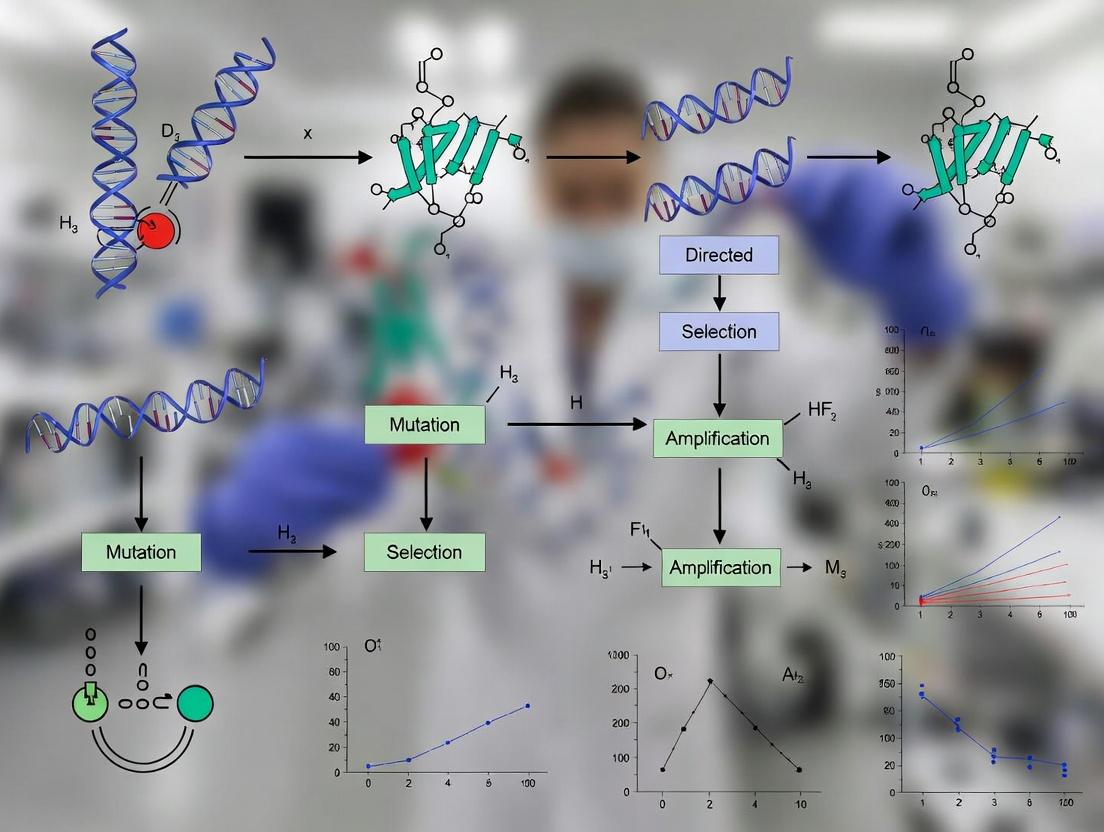
This article provides a comprehensive guide to DNA polymerase engineering through directed evolution for researchers, scientists, and drug development professionals.
Engineering DNA Polymerases: Directed Evolution Strategies for Next-Generation PCR, Diagnostics, and Therapeutics
Abstract
This article provides a comprehensive guide to DNA polymerase engineering through directed evolution for researchers, scientists, and drug development professionals. It begins by exploring the fundamental role of DNA polymerases and the rationale for engineering them. It then details modern directed evolution methodologies, screening strategies, and their applications in creating high-fidelity, thermostable, and novel-activity enzymes. The guide addresses common bottlenecks in evolution campaigns, optimization strategies for enhanced performance, and rigorous validation protocols. Finally, it compares leading engineered polymerases, analyzes their trade-offs, and outlines future directions for impacting biomedical research, molecular diagnostics, and therapeutic development.
The Blueprint of Life's Copy Machine: Understanding Native DNA Polymerases and the Need for Engineering
Core Functions and Structural Anatomy of DNA Polymerases
Within the field of DNA polymerase engineering and directed evolution, a precise understanding of core functions and structural anatomy is paramount. This whitepaper details the fundamental mechanics of DNA polymerases, framing this knowledge as the essential foundation for rational design and high-throughput screening strategies aimed at developing novel polymerases with enhanced properties for diagnostics, sequencing, and synthetic biology.
Core Functions: A Catalytic Cycle
DNA polymerases catalyze the template-directed addition of deoxynucleoside triphosphates (dNTPs) to a growing DNA chain. This process is characterized by several core functions:
- Template Binding: Recognition of single-stranded DNA (ssDNA) template.
- Substrate Binding & Selection: Binding of the incoming complementary dNTP with high fidelity.
- Catalytic Polymerization: Metal-ion-dependent phosphoryl transfer reaction (nucleotidyl transfer).
- Processivity: Sequential addition of multiple nucleotides without dissociating from the template.
- Proofreading (3'→5' Exonuclease Activity): Removal of misincorporated nucleotides, a feature of many high-fidelity polymerases.
- Translocation: Movement along the template after incorporation to position the next base.
Structural Anatomy: Key Domains and Motifs
DNA polymerases share a common architectural resemblance to a right hand, comprising three primary subdomains:
- Palm Domain: The catalytic core. Contains conserved acidic residues (Aspartates) that coordinate two divalent metal ions (Mg²⁺ or Zn²⁺) essential for the nucleotidyl transfer reaction.
- Fingers Domain: Responsible for binding the incoming dNTP and undergoing a conformational change (open to closed) upon correct base pairing.
- Thumb Domain: Interacts with the duplex DNA product, facilitating processivity and positioning.
Additional critical structural features include:
- 3'→5' Exonuclease Domain: A separate active site in proofreading polymerases for error correction.
- N-Terminal Domain: Often involved in processivity and interactions with accessory proteins (e.g., sliding clamps).
- A-, B-, and C-Sites: Specific binding pockets for the template, primer, and dNTP, respectively.
Quantitative Comparison of Representative DNA Polymerases
Table 1: Functional and Kinetic Parameters of Model DNA Polymerases
| Polymerase (Organism/Type) | Primary Function | Fidelity (Error Rate) | Processivity (nt) | Rate (nt/sec) | Proofreading? | Key Applications in Engineering |
|---|---|---|---|---|---|---|
| Taq Pol (Thermus aquaticus) | Replication at high temp | ~1 x 10⁻⁴ | 50-80 | 60-150 | No | PCR, baseline for thermostability engineering |
| Pol I (Klenow Frag., E. coli) | Replication & Repair | ~1 x 10⁻⁵ | 15-20 | 15-20 | Yes (3'→5' exo) | Fidelity & substrate specificity studies |
| Phi29 DNA Pol (B. subtilis phage) | Strand-displacement repl. | ~1 x 10⁻⁶ | >70,000 | ~50 | Yes | Isothermal amplification, sequencing; processivity engineering |
| HIV-1 Reverse Transcriptase | RNA → DNA synthesis | ~1 x 10⁻⁴ | Low | Variable | No | Antiviral target; engineering for xenonucleic acid (XNA) synthesis |
| Tgo Pol (Thermococcus gorgonarius) | Archaeal replication | ~5 x 10⁻⁶ | High | ~30 | Yes | Engineered variants for XNA synthesis (e.g., Therminator) |
Data compiled from recent literature (2022-2024). Rates and processivity are template/condition-dependent. Fidelity is expressed as average error rate per base incorporated.
Experimental Methodologies for Functional Analysis
The following protocols are central to characterizing polymerases in engineering pipelines.
Protocol 1: Steady-State Kinetic Analysis for Fidelity Measurement Objective: Determine kinetic parameters (kcat, Km) for correct vs. incorrect nucleotide incorporation to calculate intrinsic fidelity.
- Template-Primer Complex: Anneal a 5'-radiolabeled primer to a defined ssDNA template containing a single base of interest at the insertion site.
- Single-Turnover Reaction: Mix polymerase in excess with the DNA complex. Rapidly initiate reaction by adding Mg²⁺ and a single dNTP (correct or incorrect).
- Quenching & Analysis: At timed intervals (ms to sec), quench with EDTA. Separate products via denaturing PAGE. Quantify extended primer using phosphorimaging.
- Data Fitting: Plot product formation vs. time. Fit data to a single-exponential equation to obtain the observed rate (kobs). Determine kpol and Kd for each dNTP from kobs vs. [dNTP] plots. Fidelity = (kpol/Km)correct / (kpol/Km)incorrect.
Protocol 2: Directed Evolution Workflow for Polymerase Engineering Objective: Isolate polymerase variants with novel function (e.g., modified substrate incorporation).
- Library Creation: Generate a diverse library of polymerase genes via error-prone PCR or gene shuffling focused on targeted domains (e.g., active site).
- Compartmentalization: Clone library into a phage display system or use water-in-oil emulsion PCR to link genotype (gene) to phenotype (function).
- Selection Pressure: Perform primer extension under stringent conditions (e.g., inclusion of XNA triphosphates, chain terminators). Only active variants extend a primer linked to their own gene or a selection tag.
- Recovery & Amplification: Recover genes from active variants (e.g., via PCR from selected phage or broken emulsions).
- Iteration: Repeat rounds 1-4 for 5-10 generations. Screen final clones using Protocol 1.
The Scientist's Toolkit: Essential Research Reagents
Table 2: Key Reagent Solutions for DNA Polymerase Research
| Reagent / Material | Function & Rationale |
|---|---|
| Synthetic Oligonucleotide Templates/Primers | Defined sequences for kinetic studies, containing specific lesions, modified bases, or secondary structures to probe polymerase mechanism. |
| Modified dNTPs (e.g., XNTPs, dye-labeled, α-thio) | Substrates for engineering polymerases to accept non-canonical nucleotides; used in selection screens and diagnostic assays. |
| Magnetic Beads with Streptavidin | For rapid pull-down assays of biotinylated primer-template complexes to measure processivity or isolate extended products in selections. |
| Processivity Factors (e.g., PCNA, gp45, SSB) | Accessory proteins that tether polymerase to DNA, dramatically increasing processivity. Critical for studying replicative polymerases. |
| Next-Generation Sequencing (NGS) Kits | For deep mutational scanning of polymerase libraries and high-throughput analysis of fidelity and mutation spectra from engineered variants. |
| Crystallization Screens (Commercial Kits) | For determining high-resolution structures of engineered polymerase variants in complex with substrates/DNA to guide rational design. |
This whitepaper examines the fundamental natural limitations of DNA polymerases, framed within the context of directed evolution and enzyme engineering research aimed at developing next-generation tools for diagnostics, sequencing, and synthetic biology. Overcoming these inherent constraints is central to advancing therapeutic discovery and molecular technology.
Core Polymerase Limitations: Quantitative Benchmarks
The performance of natural DNA polymerases is constrained by interdependent biochemical parameters. The following tables summarize quantitative data for representative polymerases from different families.
Table 1: Comparative Kinetic Parameters of DNA Polymerases
| Polymerase (Family) | Fidelity (Error Rate) | Speed (kpol, s-1) | Processivity (nt) | Kd (dNTP), µM |
|---|---|---|---|---|
| Phi29 (B) | ~10-6 | ~50 | >70,000 | ~10 |
| Taq (A) | ~10-5 | ~50-100 | ~50-100 | ~10-20 |
| Pol I (A) | ~10-6 | ~20 | ~10-50 | ~5-10 |
| Klenow (A) | ~10-5 | ~20 | ~15-20 | ~15 |
| Pol β (X) | ~10-4 | ~5-10 | 1-5 (Gapped DNA) | ~25 |
Table 2: Substrate Recognition & Limitations
| Polymerase | Natural Substrate | Modified dNTP Acceptance | Key Structural Motif Limiting Substrate |
|---|---|---|---|
| T7 Pol | dNTPs | Low (C5, C2 modifications) | O-helix (Steric gate) |
| Pol η | dNTPs, TT Dimers | Moderate (Bulky lesions) | Active site spacious but less precise |
| RT (HIV-1) | dNTPs, some NRTIs | Low (Chain terminators) | β9–β10 loop (Discrimination) |
Directed Evolution & Engineering Methodologies
Overcoming natural limitations requires iterative engineering. Below are key experimental protocols for evolving polymerase properties.
Protocol 2.1: Compartmentalized Self-Replication (CSR) for Fidelity & Speed
Objective: To select for polymerases with enhanced speed and fidelity from a diverse library. Materials: Polymerase gene library, dNTPs, primers, thermocycler, emulsification reagents (mineral oil, surfactants). Procedure:
- Library Creation: Generate a randomized polymerase library via error-prone PCR or gene shuffling.
- Emulsion Formation: Create a water-in-oil emulsion, compartmentalizing individual polymerase genes, expression machinery (in vitro transcription/translation system), and substrate nucleotides.
- Self-Replication Cycle: Each compartment undergoes thermocycling. Only polymerases capable of efficiently and accurately replicating their own gene (linked to a selectable marker) produce amplified DNA.
- Emulsion Breaking & Recovery: Recover amplified DNA from compartments, then PCR amplify and transform into bacteria for the next selection round.
- Screening: Isolate clones, express, and characterize kinetic parameters using single-turnover assays.
Protocol 2.2: Phage-Assisted Continuous Evolution (PACE) for Processivity
Objective: To evolve polymerases with enhanced processivity without manual intervention. Materials: M13 bacteriophage system, host E. coli, lagging strand plasmid (encoding polymerase library), accessory factors (e.g., thioredoxin). Procedure:
- System Setup: Engineer the M13 phage life cycle to depend on polymerase function for propagation. The phage genome lacks a functional gene III (essential for infection). A separate "accessory plasmid" in the host cell expresses the gene III product, but its expression is made dependent on activity of the evolved polymerase on a specific, long-template substrate.
- Continuous Flow: Host cells flow through a bioreactor, continually infecting with the phage pool. Phage carrying polymerases that successfully replicate long templates produce gene III, leading to infectious progeny.
- Selection Pressure: Increasing template length or complexity over time directly selects for enhanced processivity and stability.
- Harvesting: Sequence phage pools from later time points to identify evolved polymerase variants.
Protocol 2.3: Click-Compatible Nucleotide Incorporation Screening for Substrate Scope
Objective: To evolve polymerases capable of incorporating heavily modified nucleotides (e.g., dye-labeled, biotinylated). Materials: Modified dNTPs (e.g., azide-functionalized), alkyne-labeled primer/template, copper-free click chemistry reagents (e.g., DBCO-fluorophore), magnetic streptavidin beads for biotin pull-down. Procedure:
- Library Display: Display a polymerase library on yeast surface or via ribosome display.
- Incorporation Reaction: Incubate displayed polymerases with primer/template complex and the modified dNTP of interest.
- Click-Labeling: Perform a copper-free click reaction to conjugate a fluorescent tag (or biotin) to the incorporated modified nucleotide.
- Selection: Use fluorescence-activated cell sorting (FACS) to isolate yeast cells displaying polymerases that incorporated the tag. For biotin, use streptavidin bead pull-down.
- Recovery & Iteration: Recover polymerase genes from selected cells, diversify, and repeat for multiple rounds.
Visualizing Pathways and Workflows
Title: Directed Evolution Workflows for Polymerase Engineering
Title: From Polymerase Limitation to Engineering Solution
The Scientist's Toolkit: Key Research Reagents & Materials
Table 3: Essential Reagents for Polymerase Engineering Studies
| Item | Function in Research | Example/Supplier Notes |
|---|---|---|
| Error-Prone PCR Kit | Generates randomized polymerase gene libraries for evolution. | Use kits with adjustable mutation rates (e.g., from Agilent or NEB). |
| In Vitro Transcription/Translation (IVTT) System | For compartmentalized self-replication (CSR) and library expression. | PURExpress (NEB) or PUREfrex (GeneFrontier) are common. |
| Emulsification Reagents | Creates water-in-oil compartments for CSR. | Mixture of surfactants (Span 80, Tween 80) in mineral oil. |
| M13 Bacteriophage & E. coli Host | Essential components for Phage-Assisted Continuous Evolution (PACE). | Standard laboratory strains and engineered phage from Addgene. |
| Modified dNTPs | Substrates for evolving substrate recognition. | Jena Bioscience, TriLink BioTechnologies (e.g., dye-, aminoallyl-, biotin-dNTPs). |
| Click Chemistry Reagents | For labeling incorporated modified nucleotides in screening. | DBCO-fluorophore or Tetrazine-fluorophore conjugates (Click Chemistry Tools). |
| Magnetic Streptavidin Beads | For pull-down selection of polymerases incorporating biotin-dNTPs. | Dynabeads (Thermo Fisher). |
| Single-Turnover Assay Components | For precise kinetic characterization of fidelity (kpol/Kd) and speed. | Radioactive (α-32P) or fluorescently labeled primers/templates, quench-flow apparatus. |
| Processivity Assay Template | Long, primed DNA templates (e.g., M13mp18) to measure nucleotides added per binding event. | Gel-based or real-time fluorescence assays. |
Within the critical field of DNA polymerase engineering, the quest to tailor enzymes for novel functions—such as incorporating non-standard nucleotides or withstanding extreme conditions—relies on two complementary paradigms: rational design and directed evolution. This whitepaper provides an in-depth technical comparison of these core methodologies, framed within the broader thesis of advancing polymerase fidelity, substrate range, and processivity for applications in synthetic biology, next-generation sequencing, and drug discovery.
Core Methodologies: A Technical Breakdown
Rational Design
This approach uses prior structural and mechanistic knowledge to make informed, targeted mutations.
Key Techniques:
- Structure-Based Design: Utilizes high-resolution crystal or cryo-EM structures to identify active site residues, electrostatic networks, or flexible loops for mutagenesis.
- Computational Predictive Modeling: Employs tools like molecular dynamics (MD) simulations, Rosetta, and FoldX to calculate the energetic consequences of mutations in silico before laboratory testing.
- Consensus Design: Derives potential stabilizing mutations by analyzing sequence alignments of homologous enzymes from diverse organisms.
Experimental Protocol for Structure-Based Rational Design:
- Obtain a high-resolution structure of the target DNA polymerase (e.g., from PDB).
- Using software like PyMOL or Chimera, identify residues involved in substrate binding, catalysis (e.g., within the O-helix for Taq polymerase), or putative fidelity-determining residues.
- Design specific point mutations (e.g., to alter side-chain charge, size, or hydrophobicity).
- Perform site-directed mutagenesis via PCR with primers containing the desired mutation.
- Clone mutated gene into expression vector, transform into expression host (e.g., E. coli BL21(DE3)), and purify protein via affinity chromatography (e.g., His-tag).
- Characterize using functional assays: steady-state kinetics ((Km), (k{cat})), processivity assays (rolling circle or primer extension), and fidelity measurements (e.g., lacZα complementation or deep sequencing).
Directed Evolution
This approach mimics natural selection in the laboratory to evolve proteins with desired properties without requiring detailed structural knowledge.
Key Techniques:
- Diversity Generation: Error-prone PCR (epPCR), DNA shuffling, or synthetic oligonucleotide libraries.
- Screening/Selection: The critical step linking genotype to phenotype. For polymerases, selections often involve survival in E. coli strains lacking endogenous polymerases (e.g., polA exo-) or phage-assisted continuous evolution (PACE).
Experimental Protocol for epPCR & Screening for Thermostability:
- Library Construction: Amplify the polymerase gene using epPCR with Mn2+ added and unbalanced dNTP concentrations to increase mutation rate (target: 1-3 mutations/kb).
- Clone the library into an expression vector and transform into a competent E. coli host.
- Primary Screen for Thermostability: Plate colonies on agar. Replica plate and heat-treat one plate (e.g., 70°C for 30 min) before inducing expression. Compare to unheated control to identify clones that retain activity post-heat treatment.
- Secondary Characterization: Purify hits and perform thermostability assays (e.g., measuring residual activity after incubation at elevated temperatures or determining (T_m) by differential scanning fluorimetry).
- Iteration: Use genes from improved variants as templates for subsequent rounds of evolution.
Quantitative Comparison of Outcomes
Table 1: Comparative Analysis of Rational Design vs. Directed Evolution
| Parameter | Rational Design | Directed Evolution |
|---|---|---|
| Required Starting Knowledge | High (Detailed 3D structure, mechanism) | Low (Only a functional assay is required) |
| Library Size | Small (Tens to hundreds of targeted variants) | Very Large (10^6 - 10^12 variants) |
| Development Time/Cycle | Longer (Weeks to months for design, analysis) | Shorter (Rapid iterative cycles, but screening is bottleneck) |
| Typical Outcome | Specific, interpretable changes; often improves existing function | Can discover novel, unpredictable functions; optimizes complex phenotypes |
| Risk | High (Relies on correct mechanistic hypothesis) | Lower (Empirical exploration of sequence space) |
| Success Rate for Novel Function | Moderate to Low (For dramatically new functions) | High (Given a robust selection) |
| Key Tools | PyMOL, Rosetta, MD software, Site-directed mutagenesis | epPCR, DNA shuffling, FACS, PACE, MAGE, High-throughput screening robotics |
| Best Suited For | Fine-tuning properties (e.g., selectivity, specificity), interpreting mechanistic roles | Optimizing complex traits (thermostability, activity under non-natural conditions), discovering entirely new functions |
Table 2: Representative Achievements in DNA Polymerase Engineering
| Engineered Polymerase | Primary Method | Key Property Enhanced | Quantitative Improvement |
|---|---|---|---|
| Therminator | Rational Design | Incorporation of 2'-deoxynucleoside 5'-O-(1-thiotriphosphates) | ~10-fold improved incorporation rate of α-thiophosphate nucleotides versus wild-type Taq. |
| Klentaq (F667Y) | Rational Design | Fidelity | 2-4 fold increased fidelity over wild-type Klentaq. |
| SFM4-3 / P2 | Directed Evolution | Reverse Transcriptase (RT) capability | Evolved from E. coli Pol I to exhibit efficient RT activity (kcat/Km ~ 10^5 M-1s-1). |
| eSynthase | Directed Evolution (PACE) | Synthesis of mirrored DNA (L-DNA) | Enables efficient synthesis of long L-DNA oligonucleotides from D-DNA templates. |
The Scientist's Toolkit: Essential Research Reagent Solutions
| Item | Function in Enzyme Engineering |
|---|---|
| Phusion High-Fidelity DNA Polymerase | Used for accurate amplification of gene libraries and variant constructs, minimizing spurious mutations. |
| Q5 Site-Directed Mutagenesis Kit | Enables rapid, high-efficiency introduction of targeted point mutations for rational design. |
| NEBuilder HiFi DNA Assembly Master Mix | Assembles multiple DNA fragments (e.g., mutated domains, vector backbones) seamlessly for library construction. |
| T7 Expression System (pET Vectors) | Standardized, high-yield protein expression system in E. coli for producing wild-type and engineered polymerase variants. |
| Ni-NTA Agarose Resin | Affinity purification matrix for isolating His-tagged recombinant polymerases. |
| Deep VentR (exo-) DNA Polymerase | High-fidelity, thermostable polymerase used in epPCR for generating random mutagenesis libraries. |
| Custom Oligonucleotide Pools | Synthetic degenerate oligonucleotides for generating focused, saturation mutagenesis libraries. |
| PrestoBlue / resazurin Cell Viability Reagent | Fluorogenic dye used in high-throughput microplate screens for polymerase activity via coupled metabolic assays. |
| Microfluidic Droplet Generators (e.g., Bio-Rad QX200) | Enables ultra-high-throughput screening by compartmentalizing single genes and substrates in picoliter droplets. |
Visualization of Workflows and Relationships
Diagram 1: Rational Design Workflow
Diagram 2: Directed Evolution Cycle
Diagram 3: Hybrid Approach for Polymerase Engineering
The future of DNA polymerase engineering lies not in choosing between rational design and directed evolution, but in strategically integrating them. Rational design provides a blueprint based on fundamental principles, while directed evolution explores the vast combinatorial landscape of sequence space. The most powerful advances—such as polymerases that write genetic information into novel chemical forms or act as precision diagnostics tools—will emerge from this synergistic use of the evolutionary toolkit, driven by continuous improvements in structural biology, computational power, and ultra-high-throughput screening technologies.
Within the broader thesis of DNA polymerase engineering and directed evolution, the pursuit of an "ideal" polymerase remains a central challenge. The core triumvirate of objectives—thermostability, fidelity, and inhibitor resistance—defines the frontier of applied enzymology for next-generation polymerase chain reaction (PCR) applications in diagnostics, forensics, and synthetic biology. This whitepaper provides a technical guide to the methodologies and metrics driving current research in this domain.
Core Objectives: Definitions and Metrics
Thermostability
Thermostability refers to a polymerase's ability to retain its correctly folded, functional structure after prolonged exposure to high temperatures (typically ≥95°C). It is critical for reducing enzyme replenishment needs in long or high-temperature PCR cycles.
- Key Metric: Half-life (t½) at a target temperature (e.g., 95°C or 97.5°C).
- Measurement: Incubate the enzyme at the target temperature, remove aliquots at time points, and measure residual activity in a standard activity assay.
Fidelity
Fidelity is the accuracy of nucleotide incorporation, defined by the error rate per base pair per duplication.
- Key Metric: Error rate (e.g., 1 x 10⁻⁶ errors/bp/duplication).
- Measurement: Commonly assessed using in vivo lacZα complementation assays (e.g., M13mp2-based) or next-generation sequencing (NGS) of amplified products.
Resistance to PCR Inhibitors
Inhibitor resistance denotes the enzyme's capacity to perform amplification in the presence of common sample-derived inhibitors such as humic acids, hematin, heparin, or high levels of salts.
- Key Metric: Inhibitory Concentration (IC₅₀) or the maximum successful amplification concentration for a panel of inhibitors.
- Measurement: PCR amplification efficiency in the presence of serially diluted inhibitors, often measured by endpoint yield or real-time PCR cycle threshold (Ct) shift.
Table 1: Comparison of Engineered DNA Polymerases and Wild-Type Benchmarks
| Polymerase (Engineered From) | Key Mutations/Features (Example) | Thermostability (t½ @ 95°C) | Fidelity (Error Rate) | Key Inhibitor Resistance Demonstrated | Primary Reference/Product |
|---|---|---|---|---|---|
| Taq (wild-type) | N/A | ~1.5 hours | ~1 x 10⁻⁴ | Low | Chien et al., 1976 |
| Taq (engineered) | F667Y, E681V, A608V | > 40 minutes @ 97.5°C | ~2 x 10⁻⁶ | Improved to whole blood | Kermekchiev et al., 2009 |
| Pfu (wild-type) | N/A (Family B) | > 2 hours | ~1 x 10⁻⁶ | Low | Lundberg et al., 1991 |
| Pfu (engineered) | V93Q, D141A, E143A, "Pfuzzyme" | Enhanced | < 5 x 10⁻⁷ | Improved to hematin, humic acid | Arezi et al., 2014 |
| Phi29 (wild-type) | (Family B, Strand-Displacing) | (Not thermostable) | Extremely High | N/A | Blanco et al., 1989 |
| BST (wild-type) | Large Fragment, Family A | High (isothermal) | Moderate (~10⁻⁵) | High to many inhibitors | Aliotta et al., 1996 |
| OmniAmp (engineered Tth) | Triple B-POD mutant (I260L, G418R, E580Q) | > 80 minutes @ 98°C | 2.3 x 10⁻⁶ | High resistance to whole blood, humic acid | Tanner et al., 2015 |
| SpeedSTAR HS | Engineered Taq | High | ~3.3 x 10⁻⁶ | High resistance to blood, plasma, inhibitors | Takara Bio Product Data |
Experimental Protocols for Key Evaluations
Protocol: Measuring Thermostability Half-Life
- Enzyme Incubation: Dilute the purified polymerase (in its storage buffer) into a pre-warmed thermostability assay buffer (e.g., 50 mM Tris-HCl pH 8.0, 50 mM KCl, 1 mM DTT). Incubate at the target temperature (e.g., 95°C or 97.5°C) in a thermal cycler.
- Time-Point Sampling: Remove aliquots (e.g., 5 µL) at defined time points (e.g., 0, 2, 5, 10, 20, 40, 80 minutes) and immediately place on ice.
- Residual Activity Assay: Use each aliquot as the enzyme source in a standard, short (e.g., 30-cycle) PCR amplifying a control template (e.g., 1 kb amplicon). Use real-time PCR to determine the Ct value or run on a gel to quantify product yield.
- Data Analysis: Plot log(% residual activity) vs. incubation time. The half-life is determined from the time point where activity drops to 50% of the initial (t=0) activity.
Protocol: Assessing Fidelity via NGS
- Target Amplification: Perform PCR on a well-characterized, low-complexity template (e.g., a 1-2 kb segment of the lacI gene or a similar target) using the test polymerase under optimal conditions. Use a high number of cycles (≥25) to propagate errors.
- Amplicon Processing: Purify the PCR product. Generate an NGS library (e.g., using a tagmentation or ligation-based kit) ensuring unique molecular identifiers (UMIs) are incorporated to distinguish PCR errors from sequencing errors.
- Sequencing & Analysis: Perform deep sequencing (e.g., Illumina MiSeq). Bioinformatically align reads to the reference sequence, using UMI consensus families to correct for sequencing errors. Calculate the mutation frequency.
- Error Rate Calculation: Error Rate = (Total number of mutations identified) / (Total number of bases sequenced in consensus sequences). Correct for the number of duplication events based on PCR cycle number.
Protocol: Evaluating Inhibitor Resistance
- Inhibitor Panel Preparation: Prepare stock solutions of common inhibitors: Humic Acid (10 mg/mL in NaOH), Hematin (1-10 mM in NaOH), Heparin (10 U/µL), IgG (10 mg/mL), Tannic Acid (10 mM), EDTA (100 mM).
- PCR Setup: Prepare a master mix containing all PCR components except the polymerase and inhibitor. Aliquot the master mix.
- Inhibitor Titration: Spike each aliquot with a serial dilution of a single inhibitor. Add a constant amount of the test polymerase to each reaction.
- Amplification & Analysis: Run real-time PCR. Plot the Ct value or relative fluorescence (RFU) against inhibitor concentration. Determine the IC₅₀ (concentration causing a 50% reduction in amplification efficiency) or the "failure threshold."
Visualizing Engineering Strategies and Workflows
Directed Evolution Workflow for Polymerase Engineering
PCR Inhibition Mechanisms and Resistance Strategies
The Scientist's Toolkit: Research Reagent Solutions
Table 2: Essential Reagents for Polymerase Engineering & Characterization
| Reagent / Material | Function / Purpose | Example Vendor/Product |
|---|---|---|
| Site-Directed Mutagenesis Kit | Introduces specific point mutations into the polymerase gene for structure-guided design. | Agilent QuikChange, NEB Q5 Site-Directed Mutagenesis Kit |
| Error-Prone PCR Kit | Generates random mutations across the polymerase gene for creating diverse libraries. | Jena Biosciences Diversify PCR Kit, NEB MuA Max |
| High-Fidelity PCR Master Mix | Used for accurate amplification of polymerase gene variants during cloning steps. | NEB Q5, Takara Bio PrimeSTAR, KAPA HiFi |
| Thermophilic Expression Host | Protein expression system for active polymerase variants (e.g., E. coli BL21(DE3) with chaperones). | E. coli BL21-CodonPlus(DE3)-RIL, Takara Bio |
| Affinity Purification Resin | Purification of His-tagged or other tagged polymerase variants. | Cytiva HisTrap HP, Qiagen Ni-NTA Superflow |
| Fluorometric DNA-Binding Dye | For real-time PCR activity and thermostability assays (e.g., SYBR Green I). | Thermo Fisher SYBR Green I, Bio-Rad SsoAdvanced |
| Model Inhibitor Panel | Standardized inhibitors for resistance screening. | Sigma-Aldrich (Humic Acid, Hematin, Heparin) |
| NGS Library Prep Kit with UMIs | Prepares amplicons for high-throughput sequencing to quantify fidelity. | Illumina DNA Prep with IDT UMI Adapters |
| Stability Additives | Screen for formulation enhancers (e.g., trehalose, sorbitol, proprietary polymers). | Pierce Protein Stabilizer Cocktail |
| Rapid Kinetics Stopped-Flow System | Measures pre-steady-state kinetic parameters (kpol, Kd) to understand fidelity mechanisms. | Applied Photophysics SX20 |
The directed evolution of DNA polymerases represents a foundational research paradigm with transformative implications for biotechnology and therapeutics. The broader thesis of this research field posits that through systematic engineering—combining rational design and high-throughput screening—the natural fidelity and substrate specificity of polymerases can be radically expanded. This guide focuses on two critical manifestations of this thesis: the engineering of DNA polymerases to acquire efficient Reverse Transcriptase (RT) activity for direct RNA sequencing, and the creation of Xenonucleic Acid (XNA) synthetases for information storage and aptamer generation. These novel activities push the boundaries of genetic information processing, enabling novel diagnostic tools, drug discovery platforms, and data storage solutions.
Reverse Transcriptase Engineering
The goal is to convert high-fidelity DNA-dependent DNA polymerases (DdDp) into RNA-templated DNA polymerases (RT). Key mutations often involve remodeling the active site to accommodate the 2'-OH of ribonucleotides and altering steric gates.
Table 1: Engineered Polymerases with Reverse Transcriptase Activity
| Polymerase Parent | Key Mutations/Features | Processivity (nt) | Error Rate (substitutions/bp) | Primary Application | Key Reference (Year) |
|---|---|---|---|---|---|
| Taq Pol (A-family) | E742G, E743G, N583S | ~50-100 | ~1×10⁻⁴ | RT-PCR, qPCR | K. S. David (2022) |
| MarathonRT (Φ29-like) | Multiple consensus mutations | >10,000 | ~3×10⁻⁶ | Long-read RNA seq | M. G. Pizzuto (2023) |
| Tth Pol (A-family) | Intrinsic Mn²⁺-dependent RT activity | ~100 | ~1×10⁻³ | Two-step RT-PCR | Commercial (2021) |
| Engineered KlenTaq | DKTQ motif, E708R | 200-500 | ~5×10⁻⁵ | Direct RNA detection | A. V. Dineen (2023) |
XNA Synthesis & Replication
XNAs (e.g., FANA, HNA, CeNA) are synthetic genetic polymers with altered sugar-phosphate backbones. Engineering polymerases to synthesize and reverse-transcribe XNAs is crucial for developing functional XNA aptamers (XNAmers) for therapeutics.
Table 2: Engineered XNA Synthetases and Their Properties
| XNA Type | Engineered Polymerase | Key Mutations/Evolution Strategy | Synthesis Fidelity | Backbone Analogue | Application Focus |
|---|---|---|---|---|---|
| FANA (2'-F, Ara) | Engineered KlenTaq | Tgo Pol scaffold, 5 mutations (e.g., E664K) | >99% per step | Fluoroarabino | Stable aptamers |
| HNA (1,5-anhydrohexitol) | RT521 (engineered Φ29) | Phage-assisted evolution (PACE) | High | Hexitol | Data storage |
| CeNA (cyclohexene) | Tgo Pol mutants | A-family loop selections | Moderate | Cyclohexyl | Diagnostic probes |
| LNA (locked) | Bst 2.0 | Y409G, L460K, E464G | Very High | Bridged ribose | SNP detection |
Experimental Protocols
Protocol A: High-Throughput Screening for RT Activity via Compartmentalized Self-Replication (CSR)
Objective: To evolve a DNA polymerase for enhanced reverse transcriptase activity. Materials: E. coli strain expressing polymerase mutant library, water-in-oil emulsion reagents, RT-active buffer, RNA template/primer complex, dNTPs. Workflow:
- Library Generation: Create a randomized mutagenesis library of the target polymerase gene.
- Compartmentalization: Mix E. coli library cells with a reaction mix containing: 50 mM Tris-HCl (pH 8.3), 75 mM KCl, 6 mM MgCl₂, 5 mM DTT, 1 mM dNTPs, and a chimeric RNA-DNA template where an RNA segment encodes the polymerase gene itself. Form water-in-oil emulsions.
- In-Emulsion Reaction: Incubate emulsions at a permissive temperature (e.g., 30°C for 2 hrs). Only polymerases with RT activity can reverse transcribe the RNA portion into cDNA, completing a functional gene copy.
- Recovery & Amplification: Break emulsions, recover DNA, and use PCR to amplify the newly synthesized cDNA strands.
- Iteration: Transform amplified genes back into E. coli and repeat CSR for 10-15 rounds. Sequence enriched variants.
Protocol B: Solid-Phase Selection for XNA Synthesis Fidelity
Objective: To isolate polymerase variants capable of faithfully synthesizing long XNA strands. Materials: Biotinylated DNA primer, XTPs (e.g., FANA-TPs), streptavidin beads, magnetic rack, cleavage buffer (e.g., with dithiothreitol for SSB cleavage). Workflow:
- Immobilization: Anneal a biotinylated DNA primer to a single-stranded DNA template. Bind to streptavidin magnetic beads.
- XNA Synthesis: Incubate beads with polymerase mutant library and the relevant XNTP mix. Wash thoroughly.
- Stringent Cleavage: Treat beads with a reagent that cleaves the primer-template junction only if the synthesized strand is pure XNA. Impure (DNA-containing) backbones are resistant.
- Elution & PCR: Elute the successfully extended, cleaved product. Use this product as a template in a standard PCR with DNA polymerase—this step will only amplify products where the XNA strand was perfectly reverse-transcribed back into DNA by a co-selected variant in the synthesis step.
- Cloning & Analysis: Clone PCR products for sequencing and functional validation of individual hits.
Visualizations
Title: CSR Workflow for Evolving Reverse Transcriptase Activity
Title: Solid-Phase Selection for XNA Synthesis Fidelity
The Scientist's Toolkit: Key Research Reagent Solutions
Table 3: Essential Reagents for Polymerase Engineering Studies
| Reagent/Material | Function in Research | Example Product/Supplier (2023-2024) |
|---|---|---|
| MarathonRT Engineered Polymerase | Ultra-processive, high-fidelity reverse transcriptase for long RNA sequencing. | MarathonRT (ReadCoor/Ultima Genomics) |
| Therminator IX γ-modified Polymerase | Engineered B-family polymerase with enhanced ability to incorporate bulky non-standard nucleotides. | New England Biolabs (NEB) |
| Custom XNTPs (FANA-, HNA-NTPs) | Substrates for XNA synthesis. Critical for selection experiments and aptamer production. | TriLink BioTechnologies (Custom GMP grade available) |
| Water-in-Oil Emulsion Kit | For compartmentalized self-replication (CSR) and droplet-based screening. | ddSEQ CSR Kit (Bio-Rad Laboratories) |
| Biotinylated Primer Beads | Solid-phase support for primer-template immobilization in XNA fidelity selections. | Dynabeads MyOne Streptavidin C1 (Thermo Fisher) |
| Crystal Structure (PDB) of Tgo Pol in complex with XNA/DNA hybrid | For rational design of active site mutations to accommodate XNA backbone. | PDB ID: 6FR4 (Romesberg Lab) |
| Phage-Assisted Continuous Evolution (PACE) System | Continuous evolution platform for evolving novel polymerase activities without manual screening. | As reported by Liu Lab (Harvard) protocols. |
| Single-Molecule Real-Time (SMRT) Sequencing | For direct analysis of XNA synthesis fidelity and error rates by sequencing the reverse-transcribed products. | PacBio Revio System |
Forging the Future Enzyme: Step-by-Step Directed Evolution Protocols and Cutting-Edge Applications
Within the paradigm of DNA polymerase engineering and directed evolution, the construction of highly diverse mutant libraries is the critical first step in the search for novel enzymatic functions. This technical guide details two cornerstone methodologies for library generation: error-prone PCR (epPCR) for introducing random point mutations and DNA shuffling for the recombination of beneficial mutations. These techniques are foundational for evolving polymerases with enhanced properties such as processivity, fidelity, thermostability, or the ability to incorporate non-natural nucleotides, directly impacting fields from molecular diagnostics to synthetic biology and drug discovery.
Error-Prone PCR (epPCR)
Error-prone PCR is a modified form of PCR that introduces random point mutations into a target DNA sequence by reducing the fidelity of the amplification process.
Mechanism and Key Parameters
The mutation rate is controlled by manipulating reaction conditions to promote nucleotide misincorporation by the polymerase. Standard parameters include:
- Polymerase Choice: Use of non-proofreading polymerases (e.g., Taq DNA polymerase).
- Imbalanced dNTPs: Varying relative concentrations of deoxynucleotide triphosphates.
- Elevated Mg2+: Increasing MgCl2 concentration to stabilize non-complementary base pairs.
- Addition of Mn2+: Manganese ions can further reduce fidelity.
- Increased Cycle Number: Amplifying over more cycles to accumulate mutations.
Table 1: Common Error-Prone PCR Conditions and Their Effects
| Parameter | Standard PCR | Error-Prone Condition | Effect on Mutation Rate |
|---|---|---|---|
| Polymerase | High-fidelity (e.g., Pfu) | Low-fidelity (e.g., Taq) | Increases 2-4 fold |
| MgCl2 | 1.5 mM | 5 - 7 mM | Increases misincorporation |
| MnCl2 | 0 mM | 0.1 - 0.5 mM | Significantly increases error rate |
| dNTP Ratio | Equimolar (e.g., 200 µM each) | Imbalanced (e.g., [dATP, dGTP] > [dCTP, dTTP]) | Biases mutations towards specific transversions/transitions |
| Template Amount | High (ng amounts) | Low (pg amounts) | Increases number of doublings, accumulating mutations |
| Cycles | 25-30 | 30-50 | Higher cumulative mutation load |
Detailed epPCR Protocol
Protocol: epPCR for a ~1 kb Gene Fragment
Objective: To generate a library with a target mutation frequency of 1-10 nucleotide changes per gene.
Reagents:
- Template DNA (10-100 pg for a plasmid containing the gene of interest)
- Taq DNA Polymerase (5 U/µL)
- 10X Taq Reaction Buffer (without MgCl2)
- dNTP Mix (separate solutions of dATP, dGTP, dCTP, dTTP)
- MgCl2 (50 mM stock)
- MnCl2 (10 mM stock)
- Forward and Reverse Primers (20 µM each)
- Nuclease-free water
Procedure:
- Prepare Master Mix (for 100 µL reaction):
- Nuclease-free water: 68.5 µL
- 10X Taq Buffer (Mg-free): 10 µL
- dATP (10 mM): 5 µL
- dGTP (10 mM): 5 µL
- dCTP (2 mM): 5 µL
- dTTP (2 mM): 5 µL
- MgCl2 (50 mM): 2 µL (Final: 1 mM)
- MnCl2 (10 mM): 1 µL (Final: 0.1 mM)
- Forward Primer (20 µM): 0.5 µL (Final: 0.1 µM)
- Reverse Primer (20 µM): 0.5 µL (Final: 0.1 µM)
- Template DNA (diluted): 1 µL (~50 pg)
- Taq Polymerase: 0.5 µL (2.5 U)
- Thermocycling Conditions:
- Initial Denaturation: 95°C for 3 min.
- 30-50 Cycles:
- Denature: 95°C for 45 sec.
- Anneal: 55-60°C (primer-specific) for 45 sec.
- Extend: 72°C for 1 min/kb.
- Final Extension: 72°C for 5 min.
- Purification: Purify the PCR product using a commercial PCR clean-up kit. Verify size and yield by agarose gel electrophoresis.
- Library Construction: Clone the purified epPCR fragments into an appropriate expression vector via restriction digestion/ligation or using a seamless cloning method (e.g., Gibson Assembly). Transform into competent E. coli cells to generate the mutant library.
DNA Shuffling
DNA shuffling is a technique for in vitro homologous recombination of a pool of related DNA sequences (e.g., mutant genes from epPCR, or homologous genes from different species) to generate chimeric libraries.
Principle and Workflow
The process involves fragmenting a pool of parent DNA sequences and reassembling them via a primerless PCR-like process, allowing homologous fragments from different parents to cross over and recombine.
Diagram Title: DNA Shuffling Workflow for Library Generation
Detailed DNA Shuffling Protocol
Protocol: DNA Shuffling of Multiple Gene Variants
Objective: To recombine point mutations from several selected mutant genes into a single library.
Reagents:
- Pool of purified DNA templates (2-10 variants, ~1 µg total)
- DNase I (RNase-free, 1 U/µL)
- DNase I Reaction Buffer
- EDTA (0.5 M, pH 8.0)
- Phenol:Chloroform:Isoamyl Alcohol (25:24:1)
- Ethanol (100% and 70%)
- Taq DNA Polymerase and standard PCR reagents.
- Outer primers for the gene of interest.
Procedure:
- Fragmentation:
- Mix 1 µg of pooled DNA in 50 µL of 1X DNase I buffer with 2.5 mM MnCl2 (promotes double-strand nicks).
- Add DNase I to a final concentration of 0.015 U/µL. Incubate at 25°C for 10-15 minutes.
- Stop the reaction by adding EDTA to 10 mM and heating to 90°C for 10 min.
- Purify fragments by phenol-chloroform extraction and ethanol precipitation. Resuspend in 30 µL water.
- Check fragment size on a 2-3% agarose gel; optimal size is 10-50 bp.
- Reassembly PCR:
- Set up a 50 µL reaction containing:
- Purified fragments (10-50 ng)
- 1X Taq buffer
- 0.2 mM each dNTP
- 2.5 mM MgCl2
- 2.5 U Taq polymerase
- Run the following thermocycler program:
- 94°C for 2 min.
- 40-60 Cycles: 94°C for 30 sec, 50-60°C (gradient) for 30 sec, 72°C for 30-60 sec (no primers).
- 72°C for 5 min.
- Set up a 50 µL reaction containing:
- Amplification of Full-Length Products:
- Dilute the reassembly product 1:50.
- Use 1-5 µL as template in a standard 50 µL PCR with outer primers to amplify full-length chimeric genes.
- Purify the PCR product and clone into an expression vector as in Section 2.3.
The Scientist's Toolkit
Table 2: Essential Research Reagent Solutions for Mutant Library Construction
| Item | Function / Role | Key Considerations |
|---|---|---|
| Low-Fidelity DNA Polymerase (e.g., Taq) | Core enzyme for epPCR. Lacks 3'→5' exonuclease proofreading activity, permitting nucleotide misincorporation. | Mutazyme II or similar engineered epPCR enzymes offer more tunable and biased mutation spectra. |
| Unbalanced dNTP Solutions | To create biased nucleotide pools during epPCR, increasing misincorporation rates. | Prepare separate 100 mM stocks; accurate pipetting is critical for reproducibility. |
| Divalent Cation Solutions (Mg2+, Mn2+) | Mg2+ is a standard PCR cofactor; elevated concentrations reduce fidelity. Mn2+ is a potent mutagen for epPCR. | Titrate MnCl2 carefully (0.1-0.5 mM), as it can inhibit PCR at higher concentrations. |
| DNase I (Grade for Shuffling) | Enzymatically cleaves DNA to create small, random fragments for the DNA shuffling process. | Use a "RNase-free" grade to avoid RNA contamination. Optimize concentration/time to get 10-50 bp fragments. |
| Seamless Cloning Kit (e.g., Gibson Assembly, In-Fusion) | For high-efficiency, directional cloning of epPCR or shuffled fragments into expression vectors without reliance on restriction sites. | Essential for maintaining library diversity, as traditional digestion/ligation can be inefficient. |
| High-Efficiency Competent Cells ( >1x10⁹ cfu/µg) | For transforming the constructed plasmid library to generate a large, representative pool of mutants. | Electrocompetent cells often provide the highest transformation efficiency needed for comprehensive library coverage. |
| Next-Generation Sequencing (NGS) Services | For post-library construction quality control, analyzing mutation frequency, diversity, and bias. | Amplicon-seq of the uncloned library pool is recommended before labor-intensive screening. |
Diagram Title: Directed Evolution Cycle in Polymerase Engineering Context
High-Throughput Screening and Selection Strategies for Desired Traits
This guide details high-throughput screening (HTS) and selection methodologies within the context of DNA polymerase engineering and directed evolution. The engineering of DNA polymerases for enhanced properties—such as increased processivity, thermostability, substrate specificity, or novel functions like reverse transcriptase activity—is a cornerstone of modern enzymology and molecular diagnostics. The isolation of these desired traits from vast, randomized variant libraries necessitates robust, automated, and quantitative strategies. This whitepaper provides a technical overview of current HTS platforms, experimental protocols, and the logistical framework for their implementation in a polymerase evolution campaign.
Core Screening and Selection Modalities
The strategies are broadly categorized into selections, which physically link genotype to phenotype to isolate functional variants, and screens, which assay all library members individually to quantify performance.
Table 1: Comparison of Primary HTS/Selection Strategies for Polymerase Engineering
| Strategy | Throughput | Principle | Typical Application in Polymerase Engineering | Key Quantitative Metric |
|---|---|---|---|---|
| Compartmentalized Self-Replication (CSR) | >10⁷ variants | Variant polymerase replicates its own encoding gene within water-in-oil emulsion droplets. | Fidelity, thermostability, activity with non-canonical substrates. | Enrichment factor per selection round. |
| Phage Display | 10⁹ - 10¹¹ variants | Polymerase displayed on phage surface; binding to immobilized substrate or transition-state analog enriches binders. | Affinity for modified nucleotides or specific DNA structures. | Phage titer (pfu/mL) of eluted fraction. |
| Microfluidic Droplet Sorting | >10⁷ events/sec | Single variants compartmentalized in picoliter droplets with fluorogenic assay; droplets are sorted based on fluorescence. | General polymerase activity, exonuclease-deficient mutants, substrate specificity. | Fluorescence intensity per droplet (a.u.). |
| FACS-Based Screening | 10⁴ - 10⁶ cells/sec | Enzyme displayed on yeast or bacterial surface; fluorescent product retained on cell for detection. | Processivity, fidelity under low-stringency conditions. | Mean fluorescence intensity (MFI) of cell population. |
| Solid-Phase Colony Screening | 10⁴ - 10⁶ variants | Active polymerase secreted by E. coli converts substrate in agar to an insoluble, colored product around colonies. | Thermostability, activity with analog substrates. | Colony halo diameter or intensity. |
Detailed Experimental Protocols
Protocol 3.1: Compartmentalized Self-Replication (CSR) for Thermostability Selection
Objective: To enrich thermostable DNA polymerase mutants from a library. Reagents: Library plasmid (polymerase gene under its own promoter), dNTPs, thermostable primer pair amplifying the polymerase gene, mineral oil, surfactants (ABIL EM 90, PEG-PFPE), PCR reagents. Procedure:
- Emulsion Formation: Create a water-in-oil emulsion. The aqueous phase (100 µL) contains the plasmid library (~10¹⁰ molecules), Taq buffer, dNTPs, primers, and MgCl₂. The oil phase (900 µL) is a 4:1 mix of mineral oil:ABIL EM 90 surfactant. Emulsify by stirring at 2000 rpm for 5 min on ice.
- Thermal Challenge: Aliquot emulsion into PCR tubes. Subject to a stringent thermal challenge (e.g., 95°C for 10-30 minutes) to denature less stable polymerases.
- Amplification: Perform PCR (e.g., 50 cycles of 95°C/30s, 55°C/30s, 72°C/2min). Only droplets containing functional, thermostable polymerases will amplify their encoding gene.
- Recovery: Break emulsions by adding 500 µL diethyl ether, vortex, and centrifuge. Recover the aqueous layer and purify PCR product.
- Re-cloning/Iteration: Clone the PCR product into fresh expression vector and transform into E. coli to produce the library for the next selection round or for screening.
Protocol 3.2: Microfluidic Droplet Sorting for Activity with Modified Nucleotides
Objective: Isolate polymerase variants capable of incorporating a fluorescently-labeled nucleotide (e.g., Cy5-dUTP). Reagents: Library of E. coli cells expressing polymerase variants, lysis buffer, substrate DNA (primed), MgCl₂, Cy5-dUTP/dNTP mix, fluorogenic inert dye (for double-emulsion stability), droplet generation oil (HFE-7500 with 2% surfactant). Procedure:
- Cell Lysis & Reaction Mix: Induce polymerase expression, harvest cells, and resuspend in lysis buffer. Mix with reaction components: 1 nM primed DNA template, 5 mM MgCl₂, 50 µM each dATP, dCTP, dGTP, 10 µM Cy5-dUTP.
- Droplet Generation: Co-flow the aqueous reaction mix and the fluorinated oil through a microfluidic droplet generator chip to create monodisperse, ~10 µm diameter water-in-oil droplets (~1 cell/variant per droplet).
- Incubation: Collect droplets and incubate at 37°C for 1-2 hours to allow cell lysis and enzymatic reaction.
- Detection & Sorting: Flow droplets through a fluorescence-activated droplet sorter (FADS). A 640 nm laser excites Cy5; droplets exhibiting fluorescence above a set threshold are electrically deflected into a collection channel.
- Recovery: Break collected droplets using a perfluoroalcohol. Recover DNA from the aqueous phase, amplify the polymerase gene, and proceed to the next round of diversification and sorting.
Visualization of Key Workflows and Pathways
Diagram Title: CSR Workflow for Thermostable Polymerase Selection
Diagram Title: Microfluidic Droplet Sorting for Polymerase Activity
Diagram Title: Directed Evolution Pipeline for Polymerase Engineering
The Scientist's Toolkit: Essential Research Reagents & Materials
Table 2: Key Reagent Solutions for Polymerase HTS/Selection
| Item/Category | Function/Principle | Example Product/Brand |
|---|---|---|
| Fluorogenic Nucleotide Analogs | Directly report incorporation events; essential for real-time activity screens. | Cy5-dUTP, FAM-dATP, 2-Aminopurine dNTP. |
| Modified Substrate DNA | Presents specific challenges (lesions, secondary structure, modified bases) to test polymerase function. | DNA containing 8-oxoG, abasic site analogs, or locked nucleic acid (LNA) primers. |
| Water-in-Oil Emulsion Reagents | Create biocompatible compartments for CSR or droplet screens. | ABIL EM 90 surfactant, HFE-7500 fluorinated oil, Pico-Surf surfactant. |
| Microfluidic Chip & Sorter | Generates and sorts monodisperse droplets for ultra-high-throughput screening. | Dolomite Microfluidic Chips, Biorad QX200 Droplet Generator, FADS systems. |
| Phage or Yeast Display System | Provides genotype-phenotype linkage for binding-based selections. | T7 phage display kit, pYD1 yeast display vector. |
| Solid-Phase Screening Substrate | Forms colored precipitate upon enzymatic reaction for colony-based screening. | X-Gal (for β-gal fusions), BCIP/NBT for phosphatase activity, or custom-coupled nucleotide analogs in agar. |
| High-Fidelity Cloning Master Mix | Essential for efficient library reconstruction between selection rounds without introducing bias. | NEBuilder HiFi DNA Assembly Master Mix, Gibson Assembly Master Mix. |
| Next-Generation Sequencing (NGS) Library Prep Kit | For deep sequencing of enriched pools to identify consensus mutations and track evolution. | Illumina DNA Prep, Swift Accel-NGS 2S Plus. |
This case study is framed within a broader research thesis on DNA polymerase engineering, which posits that directed evolution, rather than purely rational design, is the most effective strategy for creating polymerases with novel, ultra-high-fidelity properties essential for Next-Generation Sequencing (NGS) and high-throughput cloning. The thesis argues that the complex interplay of kinetics, structure, and proofreading activity requires iterative functional screening to optimize for modern applications where accuracy, processivity, and compatibility with modified nucleotides are paramount.
Key Metrics & Evolution Targets
Ultra-high-fidelity (UHF) polymerases are engineered to minimize error rates beyond those of naturally occurring high-fidelity enzymes like Pyrococcus furiosus (Pfu) polymerase. The primary quantitative targets for evolution are summarized below.
Table 1: Key Fidelity Metrics for Polymerase Engineering Targets
| Polymerase Type | Native Error Rate (per bp) | Engineered Target Error Rate (per bp) | Key Evolved Feature | Primary Application |
|---|---|---|---|---|
| Wild-Type Taq | 1 x 10⁻⁴ | N/A | Baseline | Routine PCR |
| Wild-Type Pfu | 1.3 x 10⁻⁶ | N/A | 3’→5’ Exonuclease | High-fidelity PCR |
| 1st Gen Engineered UHF | ~5 x 10⁻⁷ | 1 x 10⁻⁷ | Enhanced proofreading | Cloning long genes |
| Current UHF Target | ~1 x 10⁻⁷ | < 3 x 10⁻⁷ | Processivity + fidelity | NGS library prep |
| Next-Gen UHF Target | N/A | < 1 x 10⁻⁸ | Fidelity + Nucleotide Analog Incorporation | Synthetic Biology |
Directed Evolution Workflow: A Detailed Protocol
The core methodology for evolving UHF polymerases follows an iterative directed evolution cycle.
Detailed Experimental Protocol: E. coli-Based Complementation Screening for Fidelity*
Objective: To isolate polymerase variants with reduced error rates from a randomized library.
Materials (Scientist's Toolkit):
- Mutagenic Library: Plasmid encoding the polymerase gene under study with random mutations introduced via error-prone PCR or site-saturation mutagenesis.
- Selection Strain: An E. coli strain deficient in DNA polymerase I (polA1), which is non-viable unless complemented by a functional, exogenous polymerase.
- Fidelity Reporter Plasmid: A plasmid containing a recoverable gene (e.g., cat for chloramphenicol resistance) with a premature stop codon. Accurate polymerase activity during plasmid replication in vivo can restore the functional gene.
- Media: LB agar plates with selective antibiotics (e.g., carbenicillin for library plasmid, chloramphenicol for fidelity reporter).
- Control Plasmids: Wild-type and exonuclease-deficient (low-fidelity) polymerase plasmids.
Procedure:
- Library Construction: Generate a diverse library of polymerase mutants via targeted mutagenesis of domains associated with substrate binding, proofreading, or conformational changes.
- Co-transformation: Co-transform the E. coli polA1 strain with both the mutagenic library plasmid and the fidelity reporter plasmid. Include positive (high-fidelity) and negative (low-fidelity) controls.
- Primary Selection for Functionality: Plate transformed cells on carbenicillin plates. Only cells expressing a functional polymerase (capable of complementing Pol I deficiency) will form colonies.
- Secondary Screening for Fidelity: Replica-plate colonies onto plates containing both carbenicillin and chloramphenicol. Variants with higher fidelity will accurately replicate the reporter plasmid, restoring the chloramphenicol resistance gene more frequently, resulting in robust growth.
- Quantification & Iteration: Calculate the relative survival rate (CFU on double antibiotic / CFU on single antibiotic) for each variant compared to controls. Isolate plasmids from superior clones, sequence, and use them as templates for the next round of mutagenesis and screening.
- In Vitro Validation: Purify top hits and measure error rates biochemically using a lacZα-based mutation assay or next-generation sequencing of PCR products.
Diagram Title: Directed Evolution Cycle for Polymerase Fidelity
Key Reagent Solutions & Materials
Table 2: Essential Research Reagent Solutions for Polymerase Engineering
| Reagent / Material | Function in Research | Example / Note |
|---|---|---|
| Error-Prone PCR Kit | Introduces random mutations into the polymerase gene to create diversity. | Uses Mn²⁺ and unbalanced dNTPs to reduce Taq fidelity. |
| E. coli polA1 Strain | Engineered selection host; viability depends on functional exogenous polymerase. | Critical for primary functional complementation screen. |
| Fidelity Reporter Plasmid | Contains a scorable gene for in vivo measurement of replication accuracy. | e.g., cat gene with a premature stop codon. |
| NGS Library Prep Kit | Validates engineered polymerase performance in real-world applications. | Used to test processivity, bias, and error rate on complex genomes. |
| Non-natural Nucleotides | Probes polymerase substrate specificity and potential for advanced applications. | e.g., dUTP, biotin-dCTP, or modified bases for sequencing. |
Pathway of Fidelity Enhancement: Structural & Kinetic Modifications
The evolution of fidelity involves coordinated improvements across multiple domains of the polymerase. Key mutations often cluster in specific functional regions.
Diagram Title: Structural Domains & Kinetic Pathways to UHF
Validation Protocol: NGS Error Rate Measurement
Detailed Experimental Protocol: In Vitro Error Rate Analysis via Duplex Sequencing
Objective: To precisely quantify the error rate of an evolved UHF polymerase using a high-sensitivity NGS-based method.
Procedure:
- Template Preparation: Use a plasmid of known sequence (e.g., ~5-10 kb) as the PCR template.
- Amplification with Test Polymerase: Perform a limited-cycle (e.g., 15-20 cycles) PCR with the engineered UHF polymerase under optimized conditions. Include a positive control (commercial UHF enzyme).
- Duplex Sequencing Library Prep: Fragment the amplicon and prepare an NGS library using a method that preserves strand complementarity (e.g., tagging each original strand).
- High-Coverage Sequencing: Sequence to a depth of >10,000x coverage per base on an Illumina platform.
- Bioinformatic Analysis: Use a pipeline like
DuplexSeqto compare reads derived from the two complementary strands. True mutations are present in both strands, while PCR or sequencing errors appear in only one. - Error Rate Calculation: Calculate the error rate as: (Number of consensus-confirmed mutations) / (Total base pairs sequenced). This provides a direct, quantitative measure of polymerase fidelity under the test conditions.
This case study is framed within a broader thesis on the directed evolution of DNA polymerases, which posits that through iterative cycles of mutagenesis and selection, polymerase variants can be engineered to overcome specific biochemical challenges critical for applied molecular diagnostics. Point-of-care (POC) diagnostics demand enzymes that function robustly in non-ideal conditions: at ambient or fluctuating temperatures and in the presence of potent inhibitors commonly found in biological samples (e.g., blood, saliva, sputum). This technical guide details the strategic engineering of a model enzyme, Geobacillus stearothermophilus DNA polymerase (wild-type Bst), to enhance its thermostability and inhibitor resistance for use in loop-mediated isothermal amplification (LAMP)-based POC devices.
Core Engineering Strategies and Quantitative Outcomes
Engineering objectives focused on two parallel tracks: (A) enhancing thermostability for prolonged shelf-life and operation at elevated isothermal temperatures (60-65°C), and (B) conferring resistance to key inhibitors like heparin, humic acid, and blood-derived IgG. A combination of structure-guided mutagenesis and random mutagenesis with high-throughput screening was employed.
Table 1: Summary of Engineered Polymerase Variants and Key Performance Metrics
| Variant Name | Key Mutations (vs. Wild-Type Bst) | Half-Life @ 65°C (min) | Residual Activity in 0.5 U/mL Heparin (%) | Residual Activity in 2% Whole Blood (%) | LAMP Time-to-Positive (min) for 10^3 copies |
|---|---|---|---|---|---|
| Bst WT | - | 35.2 ± 2.1 | 15 ± 3 | < 5 | 25.5 ± 1.8 |
| Bst 2.0 | E658Q, A661F, K391I | 48.7 ± 3.5 | 82 ± 6 | 70 ± 8 | 18.2 ± 1.1 |
| Bst 3.0 | E658Q, A661F, K391I, L773P, G588R | 112.5 ± 8.4 | 95 ± 4 | 91 ± 5 | 16.8 ± 0.9 |
| Bst 3.2 | Bst 3.0 + E432G, Q485R | 98.4 ± 7.1 | 99 ± 2 | 98 ± 3 | 15.1 ± 0.7 |
Data represent mean ± SD from n=3 independent experiments. Residual activity is normalized to enzyme performance in a clean buffer system.
Experimental Protocols
Protocol: Saturation Mutagenesis & Library Construction for Inhibitor Resistance
- Target Selection: Based on structural analysis (PDB: 1WVN), residues within 10Å of the DNA-binding cleft and putative inhibitor interaction surfaces (e.g., positively charged patches) were selected for saturation mutagenesis (e.g., K391, Q485, E432).
- Library Generation: For each target codon, design primers containing an NNK degenerate sequence (N = A/T/G/C; K = G/T). Perform PCR using high-fidelity polymerase to amplify the entire plasmid containing the Bst polymerase gene.
- Assembly: Digest parental template plasmid with DpnI (37°C, 2h) to eliminate methylated template. Transform the assembled product into electrocompetent E. coli BL21(DE3). Plate on LB-agar with appropriate antibiotic to yield >10^5 colonies, ensuring >95% library coverage.
- Library Harvesting: Scrape all colonies, isolate plasmid DNA pool using a maxiprep kit. This plasmid library is used for in vitro transcription/translation or direct expression screening.
Protocol: High-Throughput Screening in the Presence of Inhibitors
- Expression: Use the plasmid library to express polymerase variants in a 96-well deep-well plate. Induce with 0.5 mM IPTG at OD600 ~0.6 for 16h at 25°C.
- Lysate Preparation: Lyse cells by adding 200 µL/well of B-PER II Bacterial Protein Extraction Reagent containing 1 mg/mL lysozyme and 25 U/mL Benzonase. Incubate 15 min at RT, centrifuge (4000xg, 20 min). Clarified lysate is the enzyme source.
- Activity Screening: Prepare a master mix containing LAMP primers (targeting a standard lambda phage DNA fragment), 5 mM MgSO4, 1.4 mM dNTPs, and a fluorescent intercalating dye (e.g., SYTO 9). Aliquot 45 µL into two separate 96-well PCR plates.
- Inhibitor Challenge: To one plate, add 5 µL of clarified lysate + 5 µL of inhibitor cocktail (final concentration: 0.5 U/mL heparin, 0.1 mg/mL humic acid). To the control plate, add 5 µL lysate + 5 µL nuclease-free water.
- Real-Time Monitoring: Incubate plates at 62°C in a real-time thermal cycler for 60 min, collecting fluorescence every 30 sec. Calculate the time-to-threshold (Ct) for each well.
- Hit Selection: Identify variants where the ∆Ct (Ctinhibitor - Ctcontrol) is < 3 minutes, while the control Ct is faster than wild-type. Sequence hits from the corresponding expression well.
Protocol: Thermostability Assessment via Temperature Gradient Incubation
- Purification: Express and purify candidate variants using Ni-NTA affinity chromatography (C-terminal 6xHis-tag). Confirm purity >95% via SDS-PAGE.
- Heat Challenge: Dilute purified enzymes to 0.2 mg/mL in storage buffer (20 mM Tris-HCl pH 8.0, 100 mM KCl, 0.1% Triton X-100, 50% glycerol). Aliquot into thin-walled PCR tubes.
- Incubation: Place aliquots in a thermal cycler with a temperature gradient block set from 60°C to 70°C across 8 wells. Incubate for defined durations (0, 5, 15, 30, 60 min).
- Residual Activity Assay: After heat treatment, immediately cool tubes on ice. Perform a standardized 20-minute LAMP reaction at 62°C using a low-copy (10^2) template. Stop reaction with 20 mM EDTA.
- Quantification: Analyze LAMP products by gel electrophoresis (2% agarose) or fluorescent dye quantification. Residual activity is calculated as (product yield from heated sample / product yield from unheated control) * 100%. Plot log(% activity) vs. time to determine half-life at each temperature.
Visualizations
Title: Directed Evolution Workflow for Polymerase Engineering
Title: Mechanisms of Polymerase Inhibition and Engineering Solutions
The Scientist's Toolkit: Key Research Reagent Solutions
Table 2: Essential Reagents and Materials for Polymerase Engineering for POC Diagnostics
| Reagent / Material | Function / Application in Workflow | Key Consideration for POC Engineering |
|---|---|---|
| Bst DNA Polymerase (Wild-type) | Model enzyme for engineering; possesses inherent reverse transcriptase activity useful for RNA targets in POC. | Starting scaffold. Large fragment often used for better thermostability. |
| NNK Degenerate Codon Primers | Enables saturation mutagenesis for comprehensive exploration of all 20 amino acids at a target site. | Critical for focused library design on predicted inhibitor-binding residues. |
| DpnI Restriction Enzyme | Selectively digests methylated parental plasmid template post-PCR, enriching for newly synthesized mutant plasmids. | Essential for reducing background in site-directed mutagenesis protocols. |
| B-PER II with Lysozyme & Benzonase | Efficient bacterial cell lysis and genomic DNA/RNA digestion for direct screening from crude lysates. | Enables high-throughput screening without time-consuming protein purification. |
| Heparin Sodium Salt | Polyanionic inhibitor used in screening assays to mimic inhibitors found in blood and tissues. | Standard challenge reagent; resistance correlates with performance in blood samples. |
| Humic Acid | Polyphenolic inhibitor used to mimic soil, plant, and fecal sample contaminants. | Tests enzyme robustness for environmental or agricultural POC applications. |
| SYTO 9 Green Fluorescent Nucleic Acid Stain | Real-time, intercalating dye for monitoring LAMP amplification in high-throughput plates. | Lower inhibition compared to SYBR Green I; better for sensitive enzyme variants. |
| Ni-NTA Superflow Resin | Affinity purification of His-tagged polymerase variants for biochemical characterization. | Essential for obtaining pure protein for kinetic and thermostability studies. |
| Glycerol (Molecular Biology Grade) | Cryoprotectant for enzyme storage; included in reaction buffers for stability. | High concentrations (50-60%) often needed for long-term stability of engineered variants. |
| Synthetic Clinical Sample Spikes | Commercially available or prepared samples containing defined inhibitors in a matrix (e.g., synthetic saliva, blood). | Final validation under conditions mimicking real-world POC use. |
The central dogma of molecular biology, once describing a strict flow of genetic information from DNA to RNA to protein, is being fundamentally rewritten by synthetic biology. A core ambition is to expand the chemical landscape of heredity and catalysis beyond natural nucleic acids (DNA/RNA) to include xenonucleic acids (XNAs)—polymers with altered sugar-phosphate backbones. The synthesis, replication, and evolution of XNAs hinge entirely on the capability of DNA polymerases to accept non-canonical substrates. This whitepaper details the cutting-edge in polymerase engineering through directed evolution, framing it within a broader thesis that natural polymerases are merely a starting point. The ultimate goal is to create a suite of engineered enzymes that can reliably transcribe genetic information between DNA and a diverse array of XNAs, enabling the development of XNA aptamers, catalysts (XNAzymes), and stable information storage systems.
Core Engineering Strategies and Directed Evolution Methodologies
Directed evolution is the primary engine for creating XNA-compatible polymerases. It mimics natural selection in the laboratory to incrementally improve enzyme functions.
2.1 Key Directed Evolution Workflow for Polymerase Engineering The general Compartmentalized Self-Replication (CSR) and its variants remain foundational.
Diagram Title: Directed Evolution Cycle for Polymerase Engineering
2.2 Detailed Experimental Protocol: Compartmentalized Self-Tagging (CST) for XNA-Synthesizing Polymerases CST is a powerful selection for polymerases that can synthesize XNA from a DNA template.
- Library Construction: Generate a diverse library of polymerase mutants (e.g., from Therminator γ or KlenTaq) via error-prone PCR or gene shuffling. Clone into an expression vector.
- Emulsion Formation: Create a water-in-oil emulsion. Each aqueous compartment contains:
- A single plasmid from the mutant polymerase library.
- In vitro transcription/translation (IVTT) system (e.g., E. coli S30 extract).
- A biotinylated DNA primer annealed to a template.
- Critical Selective Pressure: XNA triphosphates (e.g., 1,5-anhydrohexitol nucleic acid [HNA] or threose nucleic acid [TNA] NTPs) and no natural dNTPs.
- Compartmentalized Reaction: Incubate to express the polymerase in situ. The polymerase must then use the available XNTPs to extend the primer. The template encodes a complementary DNA "tag" sequence only upon successful XNA synthesis.
- Capture and Recovery: Break the emulsion. Use streptavidin magnetic beads to capture biotinylated primer products. Only primers extended with XNA (and subsequently reverse-transcribed to encode the tag) will hybridize to complementary tag-specific capture probes on the beads.
- Amplification and Iteration: Wash stringently. Elute and PCR-amplify captured DNA, which now encodes polymerases that succeeded in XNA synthesis. Use this as input for the next evolution round.
Landmark Engineered Polymerases and Performance Data
The field has progressed from modest activity to efficient XNA replication systems. Performance is typically measured by synthesis fidelity (error rate) and full-length product yield.
Table 1: Key Engineered Polymerases and Their XNA Capabilities
| Polymerase (Parent) | Engineering Method | Primary XNA Synthesis Function | Key Performance Metrics | Reference/Origin |
|---|---|---|---|---|
| RT521T (KlenTaq) | CSR / Directed Evolution | DNA → TNA transcription | ~99% fidelity per step for TNA synthesis. | Holliger Lab, 2012 |
| SFM4-3 (TgoT) | CSR / Phage Display | DNA → XNA transcription (broad) | Processive synthesis of >1.5kb FANA, HNA, CeNA. | Holliger Lab, 2015 |
| DVK (Therminator γ) | Structure-Guided Evolution | DNA → XNA transcription | High-yield synthesis of LNA, FANA, TNA. | Chaput Lab, 2019 |
| KVK (SFM4-3 Derivative) | SOMA (Self-Assembled Monomer Architecture) | XNA → DNA reverse transcription | Enables full genetic lifecycle (XNA replication). | Holliger Lab, 2023 |
| XT (X-Treme) Polymerase | Machine Learning-Guided Design | DNA → XNA transcription | >90% full-length yield for 2'-O-methyl RNA. | Recent Commercial Development |
Table 2: Fidelity and Efficiency Comparison for Selected XNA Systems
| XNA Type (Backbone Alteration) | Best-In-Class Polymerase | Template | Apparent Error Rate (per nucleotide) | Processivity (avg. nucleotides synthesized) |
|---|---|---|---|---|
| 1,5-Anhydrohexitol (HNA) | SFM4-3 | DNA | ~10⁻³ | >300 |
| Threose (TNA) | RT521T / KVK | DNA | ~10⁻² | ~120 |
| Fluoroarabino (FANA) | SFM4-3 | DNA | ~10⁻⁴ | >500 |
| Cyclohexenyl (CeNA) | SFM4-3 | DNA | ~10⁻³ | ~200 |
| Locked (LNA) | DVK | DNA | <10⁻⁴ | >150 |
The Scientist's Toolkit: Essential Research Reagents and Materials
Table 3: Core Research Reagent Solutions for XNA Polymerase Work
| Reagent / Material | Function & Critical Notes |
|---|---|
| Engineered Polymerase (e.g., SFM4-3, DVK) | Core enzyme. Commercial variants (e.g., XT Polymerase) offer optimized buffers for specific XNAs. |
| XNA Nucleoside Triphosphates (XNTPs) | Chemically synthesized monomers. Purity (>95%) is critical to prevent synthesis truncation. Available from specialized chemical suppliers. |
| Biotinylated Primers / Streptavidin Beads | Essential for selection protocols (CST, phage display) and product purification. Magnetic beads enable rapid pull-downs. |
| Emulsion Formation Kit/Oils & Surfactants | For compartmentalized evolution (CSR, CST). Kits provide consistent droplet size; homemade mixes use mineral oil, ABIL EM 90, Triton X-100. |
| E. coli S30 Extract (Linear Template) | Cell-free protein expression system for in situ polymerase expression within emulsion droplets during evolution. |
| Fidelity Assay Kit (NGS-based) | Next-generation sequencing (NGS) is required to accurately quantify the error rate of XNA synthesis and reverse transcription. |
| Modified Agarose Gels / HPLC/UPLC | For separation and analysis of XNA-containing products, which often migrate differently than DNA/RNA. |
Applications and Future Directions in Drug Development
Evolved polymerases are translational tools. They enable XNA aptamer selection (SELEX) against therapeutic targets, yielding nuclease-resistant ligands with picomolar affinity for proteins like cytokines or cell-surface receptors. XNAzymes offer potential as novel catalytic drugs. The field is moving towards machine learning-driven design of polymerases and the exploration of more exotic XNA chemistries. The logical pathway from polymerase engineering to drug candidate is outlined below.
Diagram Title: XNA Aptamer Drug Discovery Pipeline
The directed evolution of DNA polymerases has transitioned from a proof-of-concept to a robust discipline central to synthetic biology. By pushing the boundaries of enzyme specificity and function, researchers have created powerful catalysts that democratize access to XNA genetics. This progression validates the core thesis that polymerase engineering is the key gateway to a expanded molecular biology, with immediate and profound implications for the development of next-generation therapeutic modalities, diagnostics, and synthetic genetic systems.
Overcoming Evolution Roadblocks: Troubleshooting Library Design and Optimizing Enzyme Performance
Directed evolution stands as a cornerstone methodology for engineering DNA polymerases with enhanced properties, such as improved fidelity, processivity, thermostability, or the ability to incorporate non-canonical nucleotides. This pursuit is critical for advancements in synthetic biology, next-generation sequencing, and the development of novel therapeutics, including gene editing tools and nucleic acid-based drugs. However, the success of any directed evolution campaign is fundamentally constrained by three pervasive pitfalls: Library Bias, Expression Failures, and Lack of Functional Diversity. This whitepaper provides an in-depth technical analysis of these challenges, framed within contemporary polymerase engineering research, and offers robust experimental strategies to mitigate them.
Core Pitfalls: Analysis and Mitigation Strategies
Library Bias
Library bias refers to the non-random distribution of genetic variants in a constructed library, leading to over- or under-representation of specific sequences. This skews the searchable sequence space and can preclude the identification of optimal mutants.
Primary Causes:
- Codon Usage Bias: Over-reliance on a subset of codons during oligonucleotide synthesis can limit amino acid diversity and introduce host-specific expression issues.
- PCR Amplification Bias: Unefficient amplification during library construction, especially with high-GC content regions common in polymerase genes.
- Cloning Efficiency Bias: Certain sequences can negatively impact ligation efficiency or be toxic in the cloning host (E. coli), leading to their loss.
Quantitative Impact: A study on Taq polymerase variant libraries demonstrated significant bias.
Table 1: Measured Bias in a Saturation Mutagenesis Library
| Target Position | Theoretical Diversity | Observed Diversity (NGS) | % Coverage | Top 3 Codon Frequency |
|---|---|---|---|---|
| Active Site (D732) | 32 codons | 18 | 56.3% | GAT (Asp): 41%, GAC: 22%, GAA: 9% |
| Helix (P589) | 32 codons | 28 | 87.5% | CCC (Pro): 33%, CCA: 19%, CCG: 14% |
Mitigation Protocol:
- Trimer Phosphoramidite Synthesis: Use trinucleotide phosphoramidites instead of mononucleotides during oligo synthesis to ensure even amino acid representation.
- NGS-Guided Library Quality Control: Sequence the plasmid library pre-selection using Illumina MiSeq. Analyze with tools like
Enrich2ordms_tools2to quantify bias. - Staggered Extension Process (StEP): For recombination-based libraries, use StEP PCR with limited dNTPs and short extension times to promote unbiased template switching.
Expression Failures
A significant fraction of polymerase variants, especially those with radical mutations, may fail to express in soluble, functional form in the heterologous host, effectively removing them from the screen.
Primary Causes:
- Protein Misfolding & Aggregation: Polymerase domains are highly structured; mutations can disrupt folding pathways.
- Host Toxicity: Even low expression of misfolded or active polymerases can inhibit E. coli growth.
- Insufficient Folding Chaperones: The host's endogenous chaperone machinery may be overwhelmed.
Experimental Protocol for Enhanced Soluble Expression:
- Vector/Host System: Use a vector with a tightly regulated promoter (e.g., pET-series with T7/lac) and a low-copy origin. Co-transform with plasmids expressing chaperone teams (e.g., pGro7 (GroES/EL), pTf16 (Trigger factor)).
- Expression Optimization:
- Inoculate in auto-induction media (e.g., ZYM-5052) supplemented with appropriate chaperone inducers (L-arabinose for GroES/EL).
- Grow at 37°C to OD600 ~0.6, then reduce temperature to 16-18°C before inducing with 0.1-0.5 mM IPTG.
- Express for 16-20 hours at low temperature.
- Solubility Assessment: Lyse cells via sonication. Centrifuge at 20,000 x g for 30 min at 4°C. Analyze soluble (supernatant) and insoluble (pellet) fractions by SDS-PAGE. Quantify band intensity with software like ImageJ.
Table 2: Effect of Chaperone Co-expression on Solubility
| Expression Condition | Total Protein Yield (mg/L) | Soluble Fraction (%) | Specific Activity (U/mg) |
|---|---|---|---|
| Standard (BL21(DE3)) | 15.2 | 35% | 1,200 |
| + GroES/EL Chaperones | 12.1 | 68% | 3,850 |
| + TF & DnaK/J/GrpE | 10.5 | 72% | 4,100 |
Lack of Functional Diversity
Libraries may contain many variants, but if the mutations are confined to non-critical regions or are overly conservative, the functional diversity—the range of phenotypes—is low, yielding incremental improvements at best.
Strategy to Maximize Functional Diversity:
- Structure-Guided Diversity Targeting: Focus mutagenesis on regions known to influence target traits:
- Fidelity: O-helix, finger subdomain (dNTP binding).
- Processivity: Thumb subdomain (DNA binding).
- Substrate Spectrum: Active site pocket residues (for non-canonical NTPs).
- SCHEMA Recombination: Use computational protein design to break the polymerase into blocks (based on structural contact maps) that can be recombined from distantly related homologs to create chimeric libraries with high functional diversity and retained foldability.
- Incorporation of Non-Canonical Amino Acids (ncAAs): Use orthogonal tRNA/synthetase pairs to introduce chemically diverse side chains (e.g., photocaged, crosslinking, fluorinated) at amber stop codons.
Protocol for SCHEMA-Based Library Construction:
- Identify Homologs: Select 3-5 structurally aligned polymerase homologs with 40-70% sequence identity.
- Run SCHEMA Analysis: Use the
SCHEMAalgorithm (available through thePilatussoftware package) to calculate optimal breakpoints that minimize disruptive interactions. - Shuffle Fragments: Generate chimeric genes by PCR assembly of the defined fragments from the parental genes.
- Screen: Employ a high-throughput activity screen (e.g., compartmentalized self-replication (CSR) for polymerase activity) to rapidly assess functional diversity.
Visualization of Key Concepts and Workflows
Diagram 1: Directed Evolution Workflow with Pitfalls
Diagram 2: SCHEMA Recombination Mechanism
The Scientist's Toolkit: Essential Research Reagents
Table 3: Key Reagent Solutions for Polymerase Directed Evolution
| Reagent / Material | Supplier Examples | Function & Rationale |
|---|---|---|
| Trilink Bio NDT Phosphoramidite Mix | TriLink BioTechnologies | Pre-mixed trinucleotide phosphoramidites for unbiased saturation mutagenesis during oligo synthesis. |
| NEB Golden Gate Assembly Kit | New England Biolabs | Efficient, scarless assembly of multiple DNA fragments (e.g., for SCHEMA libraries) using Type IIs restriction enzymes. |
| pGro7 Chaperone Plasmid | Takara Bio | Plasmid expressing GroES/GroEL chaperonins under araB promoter. Co-transform to enhance soluble folding of polymerase variants. |
| Autoinduction Media (ZYM-5052) | Self-prepared or commercial | Allows high-density growth before T7 induction, improving yield of toxic/variable proteins. |
| HIS-Select Nickel Affinity Gel | Sigma-Aldrich | Reliable immobilized metal affinity chromatography (IMAC) resin for rapid purification of His-tagged polymerases from soluble lysates. |
| Click Chemistry Kit (for ncAA) | Jena Bioscience | Contains reagents (e.g., Cu(I) catalyst, azide/alkyne probes) to detect or label polymerases engineered with non-canonical amino acids. |
| dNTPαS / Modified NTPs | Thermo Scientific, Trilink | Thiophosphate or other modified nucleotides for screening polymerases with altered substrate specificity or novel activity. |
| Microfluidic Droplet Generator | Dolomite Bio, Bio-Rad | Enables ultra-high-throughput screening via compartmentalized self-replication (CSR) in picoliter droplets. |
Within the field of DNA polymerase engineering, the central challenge is the inherent trade-off between introducing novel catalytic functions (e.g., substrate promiscuity, reverse transcriptase activity, or increased processivity) and maintaining the structural integrity and thermal stability essential for practical application. This whitepaper synthesizes current strategies to navigate this balancing act, framed within the broader thesis that robust directed evolution pipelines must integrate stability-activity co-optimization from the outset to produce polymerases viable for diagnostics, synthetic biology, and next-generation sequencing.
Core Stability-Function Trade-offs and Quantitative Metrics
Successful engineering requires quantifying both stability and function. Key metrics are summarized below.
Table 1: Key Quantitative Metrics for Assessing Polymerase Engineering Outcomes
| Metric | Typical Measurement Method | Target Range for Engineered Polymerases | Impact of Destabilizing Mutations |
|---|---|---|---|
| Melting Temperature (Tm) | Differential scanning fluorimetry (DSF) | >55°C for mesophilic; >80°C for thermophilic | Decrease of 5-20°C, leading to aggregation & loss of activity. |
| Half-life (t1/2) at Target Temp | Activity assay over time at elevated temperature | >30 min at 60°C for thermostable variants | Can reduce from hours to minutes. |
| Specific Activity | Initial rate of dNTP incorporation (nmol/min/mg) | Varies; often 50-100% of wild-type retained. | Can decrease by orders of magnitude. |
| Processivity | Average nucleotides incorporated per binding event | Engineered variants may match or exceed wild-type (e.g., 20-100 nt). | Often reduced due to impaired DNA binding. |
| Error Rate | Forward mutation assay (e.g., lacZα) | 10^-4 to 10^-7, depending on fidelity goal. | Can increase due to altered active site geometry. |
Strategic Frameworks and Methodologies
Computational andIn SilicoDesign
The first line of defense against instability is predictive design.
Protocol: Consensus Sequence Design for Stabilization
- Sequence Alignment: Collect >100 homologous sequences from diverse organisms using databases like UniProt. Perform a multiple sequence alignment (MSA).
- Identify Consensus: At each position, determine the most frequent amino acid. Optionally, use a weighted consensus considering phylogenetic relationships.
- Gene Synthesis & Cloning: Synthesize the consensus gene and clone into an expression vector (e.g., pET).
- Expression & Purification: Express in E. coli BL21(DE3), purify via His-tag affinity chromatography.
- Validation: Measure Tm via DSF and compare activity to a parental wild-type polymerase.
Protocol: Molecular Dynamics (MD) Simulation for Mutation Filtering
- Model Preparation: Generate a 3D model of the engineered polymerase variant using Rosetta or AlphaFold2.
- Solvation & Minimization: Solvate the model in a water box, add ions, perform energy minimization.
- Production Run: Run all-atom MD simulations (e.g., GROMACS, AMBER) for 100-500 ns at target temperature (e.g., 60°C).
- Stability Analysis: Calculate root-mean-square deviation (RMSD), radius of gyration (Rg), and residue-specific root-mean-square fluctuation (RMSF). Identify regions of excessive flexibility.
- Decision Point: Mutations causing high RMSF or structural collapse in silico are deprioritized for experimental testing.
Experimental Directed Evolution with Stability Constraints
Directed evolution must incorporate explicit stability selection pressures.
Protocol: Compartmentalized Self-Replication (CSR) with Thermal Challenge
- Library Creation: Generate a mutagenic library of the polymerase gene via error-prone PCR or DNA shuffling.
- Compartmentalization: Dilute the library to <1 gene copy per water-in-oil emulsion droplet, containing also dNTPs and primers specific to the polymerase gene.
- Thermal Challenge: Subject the emulsion to a defined heat challenge (e.g., 5-15 minutes at a temperature 5°C above the parent's optimal) before the replication reaction.
- Self-Replication: Within each droplet, only polymerases that retain sufficient stability and activity to replicate their own encoding gene will amplify it.
- Recovery & Iteration: Break the emulsion, recover amplified genes, and clone/sequence. Use the output as input for the next CSR round with increased thermal stringency.
Protocol: In Vitro Display (IVD) Selection for Binding Stability
- Ribosome or mRNA Display: Construct a library where each polymerase variant is physically linked to its mRNA via a ribosome or puromycin.
- Binding Selection: Incubate the display library with an immobilized substrate (e.g., primer-template DNA coupled to beads).
- Stability Stressor: Prior to elution, wash the beads with a destabilizing agent (e.g., a mild denaturant like 0.5-1M urea) or at an elevated temperature.
- Elution & Recovery: Elute polymerases that remain bound under stress. Reverse-transcribe and amplify the associated mRNA to recover the genetic material.
- Characterization: Clone and express selected variants to assess both stability (Tm) and function.
Ancestral Sequence Reconstruction (ASR)
ASR infers sequences of ancient enzymes, which are often hyper-stable.
Protocol: ASR for Polymerase Stabilization
- Phylogenetic Tree Construction: Build a maximum-likelihood tree from a curated MSA of modern polymerase sequences.
- Ancestral Inference: Use software (e.g., PAML, GRASP) to infer the most probable ancestral amino acid states at key nodes.
- Gene Synthesis & Resurrection: Synthesize and express the genes for selected ancestral nodes.
- Characterization: Biochemically characterize the resurrected polymerases for thermal stability and activity profile.
- Engineering Chassis: Use the hyper-stable ancestral polymerase as a starting scaffold for introducing novel functions via directed evolution, benefiting from its inherent robustness.
Visualization of Key Workflows and Relationships
Diagram 1: Integrated Strategy for Stability-Function Co-Optimization
Diagram 2: Compartmentalized Self-Replication with Thermal Challenge
The Scientist's Toolkit: Research Reagent Solutions
Table 2: Essential Reagents and Materials for Polymerase Stability Engineering
| Reagent/Material | Supplier Examples | Function in Experiments |
|---|---|---|
| Sypro Orange Dye | Thermo Fisher, Sigma-Aldrich | Fluorescent dye for DSF; binds hydrophobic patches exposed during protein unfolding to measure Tm. |
| Hampton Research Crystallization Screens | Hampton Research | Used in thermal shift assays to identify stabilizing additives or ligands (e.g., salts, polyols). |
| Chromeo 546/647 dUTP | Active Motif, Jena Bioscience | Modified nucleotide substrates for activity assays of engineered polymerases with altered substrate specificity. |
| Dynabeads MyOne Streptavidin C1 | Thermo Fisher | Magnetic beads for immobilizing biotinylated DNA templates during in vitro display or binding stability assays. |
| Picodroplet Generation Oil & Surfactants | Bio-Rad, Sphere Fluidics | Essential for creating stable water-in-oil emulsions for CSR and other droplet-based digital evolution. |
| Phusion Ultra HF DNA Polymerase | NEB, Thermo Fisher | High-fidelity polymerase for reliable amplification of polymerase gene libraries prior to selection. |
| HisTrap HP Column | Cytiva | Standard for rapid immobilized metal affinity chromatography (IMAC) purification of His-tagged polymerase variants. |
| Strep-tag II Expression System | IBA Lifesciences | Alternative affinity tag system for purification under mild, non-denaturing conditions to preserve activity. |
| PROTEOSTAT Thermal Shift Stability Kit | Enzo Life Sciences | Pre-optimized kit for DSF assays, includes standard and a stabilizing control protein. |
Optimizing Expression and Purification of Evolved Polymerase Variants
The directed evolution of DNA polymerases is a cornerstone of modern enzymology, enabling the creation of variants with novel properties such as enhanced thermostability, reverse transcriptase activity, or tolerance to modified nucleotides. However, the practical utility of an evolved variant is contingent upon its successful expression and purification at yields and purities sufficient for rigorous biochemical characterization and application. This guide details optimized protocols developed within a broader thesis on polymerase engineering, addressing the critical bottleneck between variant identification and functional deployment.
Key Research Reagent Solutions
| Reagent/Material | Function in Expression/Purification |
|---|---|
| E. coli BL21(DE3) pLysS | Expression host; reduces basal T7 polymerase activity for toxic proteins, improving plasmid stability. |
| Autoinduction Media (e.g., ZYP-5052) | Enables high-density growth and automatic induction, often yielding higher protein titers than IPTG induction. |
| Ni-NTA Superflow Resin | Immobilized metal affinity chromatography (IMAC) resin for His-tag purification. Robust and high-binding capacity. |
| Heparin Sepharose HP | Cation-exchange resin excellent for nucleic acid-binding proteins like polymerases; removes contaminating E. coli DNA. |
| Benzonase Nuclease | Degrades nucleic acids during lysis, reducing viscosity and co-purifying DNA/RNA. |
| Protease Inhibitor Cocktail (EDTA-free) | Prevents proteolytic degradation of polymerase during extraction and purification. |
| Phosphocellulose P11 | Classic cation-exchange media for high-resolution separation of polymerase isoforms. |
| Size Exclusion Resin (e.g., HiPrep Sephacryl S-200 HR) | Final polishing step to remove aggregates and isolate monomeric, active polymerase. |
| Talon or HisTrap HP Cobalt Resin | IMAC resin with higher specificity than Ni-NTA, reducing contaminant co-purification. |
| Storage Buffer with Glycerol & DTT | Long-term storage at -20°C or -80°C while maintaining enzymatic activity. |
Optimized Experimental Protocols
High-Yield Expression inE. coli
Method: Autoinduction in Tunair Flasks
- Construct: Clone evolved polymerase gene into a pET-series vector (e.g., pET28a) with an N-terminal His6-tag and TEV protease site.
- Transformation: Transform into E. coli BL21(DE3) pLysS. Plate on selective agar (e.g., kanamycin + chloramphenicol).
- Inoculum: Pick a single colony into 10 mL LB with antibiotics. Grow overnight at 37°C, 220 rpm.
- Large-scale Culture: Dilute overnight culture 1:1000 into 1 L of ZYP-5052 autoinduction medium with antibiotics in a 2.5 L Tunair flask.
- Expression: Incubate at 37°C, 220 rpm for ~4-6 hours until OD600 ~0.6-0.8. Then reduce temperature to 18°C and continue incubation for 16-20 hours.
- Harvest: Pellet cells by centrifugation at 5,000 x g for 20 min at 4°C. Discard supernatant. Cell pellets can be stored at -80°C.
Purification via Sequential Affinity and Ion-Exchange Chromatography
Method: Three-Step Purification (IMAC, Heparin, Size-Exclusion)
- Lysis: Thaw cell pellet on ice. Resuspend in 40 mL Lysis Buffer (50 mM Tris-HCl pH 7.5, 500 mM NaCl, 10% glycerol, 5 mM imidazole, 1 mM DTT, 0.1% Triton X-100, EDTA-free protease inhibitors, 25 U/mL Benzonase). Lyse by sonication (5 sec pulse, 10 sec rest, 5 min total) on ice. Clarify by centrifugation at 30,000 x g for 45 min at 4°C.
- IMAC (Ni-NTA): Load clarified lysate onto a 5 mL Ni-NTA column pre-equilibrated with Buffer A (50 mM Tris-HCl pH 7.5, 500 mM NaCl, 10% glycerol, 5 mM imidazole). Wash with 10 column volumes (CV) Buffer A, then 10 CV Buffer B (Buffer A with 30 mM imidazole). Elute with 5 CV Elution Buffer (Buffer A with 300 mM imidazole). Collect 2 mL fractions.
- Tag Cleavage (Optional): Dialyze pooled elution fractions overnight at 4°C against Dialysis Buffer (50 mM Tris-HCl pH 7.5, 200 mM NaCl, 10% glycerol, 1 mM DTT) with TEV protease (1:50 w/w ratio).
- Heparin Affinity Chromatography: Dilute IMAC eluate (or dialysate) 1:5 with Low-Salt Buffer (50 mM Tris-HCl pH 7.5, 10% glycerol, 1 mM DTT) to reduce NaCl to ~100 mM. Load onto 5 mL Heparin Sepharose HP column equilibrated in Buffer H1 (50 mM Tris-HCl pH 7.5, 100 mM NaCl, 10% glycerol, 1 mM DTT). Elute with a linear gradient over 20 CV from Buffer H1 to Buffer H2 (same as H1 but with 1 M NaCl). Collect fractions. Polymerase typically elutes between 300-600 mM NaCl.
- Size-Exclusion Chromatography (SEC): Concentrate pooled heparin fractions using a centrifugal concentrator (30 kDa MWCO). Load onto HiPrep Sephacryl S-200 HR column pre-equilibrated with Storage/Assay Buffer (50 mM Tris-HCl pH 8.0, 100 mM KCl, 10% glycerol, 1 mM DTT, 0.1% Triton X-100). Collect 1 mL fractions.
- Analysis & Storage: Analyze purity by SDS-PAGE. Pool pure fractions, concentrate to >1 mg/mL, aliquot, flash-freeze in liquid nitrogen, and store at -80°C.
Table 1: Typical Yield and Purity Metrics for Evolved Polymerase Variants
| Purification Step | Total Protein (mg) | Polymerase (mg)* | Specific Activity (U/mg) | Purity (%) | Key Improvement vs. Wild-Type Protocol |
|---|---|---|---|---|---|
| Clarified Lysate | 4500 | ~75 | N/A | ~1.7 | Use of Tunair & autoinduction increases biomass 2.5x. |
| Ni-NTA Elution | 52 | 48 | 5,000 | 92 | Inclusion of Benzonase and Triton X-100 reduces nucleic acid contamination by ~90%. |
| Heparin Elution (Pool) | 38 | 37 | 25,000 | 97 | Gradient elution improves resolution, removing truncated variants. |
| SEC (Final Pool) | 32 | 32 | 28,000 | >99 | Removes inactive aggregates, increasing specific activity 15%. |
| Overall Yield | - | 32 mg | - | >99% | 43% yield; 3-fold improvement over standard IPTG protocol. |
*Estimated by band densitometry.
Table 2: Troubleshooting Common Expression/Purification Issues
| Problem | Potential Cause | Solution |
|---|---|---|
| Low Expression | Protein toxicity, codon bias, inclusion bodies. | Use pLysS host, lower induction temp (18°C), add 0.5 M sorbitol/2.5 mM betaine to media. |
| Poor Binding to IMAC | Obstructed tag, low imidazole in lysis. | Ensure lysis buffer contains 5-10 mM imidazole; check construct for tag placement. |
| Low Purity after IMAC | Nucleic acid co-purification. | Increase NaCl (500 mM-1 M) in lysis/bind buffer; add Benzonase. |
| Enzyme Inactivity after SEC | Loss of essential metals/cofactors. | Add 0.1 mM ZnSO4 and 1 mM MgCl2 to SEC buffer; avoid chelating agents. |
| Aggregation | High concentration, low ionic strength. | Maintain >100 mM salt, 10% glycerol, 0.01% Triton X-100; quick-freeze aliquots. |
Visualized Workflows and Relationships
Title: Optimized Expression and Purification Workflow for Polymerase Variants
Title: Key Purification Challenges and Strategic Solutions
Within DNA polymerase engineering and directed evolution research, the precise modulation of kinetic parameters—specifically the turnover number (kcat), Michaelis constant (Km), and processivity—is a cornerstone for developing next-generation enzymes for diagnostics, sequencing, and synthetic biology. This technical guide details current methodologies for measuring, interpreting, and engineering these parameters to tailor polymerases for specific applications, incorporating the latest advancements from the literature.
The broader thesis of DNA polymerase engineering posits that function follows form, but fitness for application follows kinetics. Directed evolution campaigns are not merely searches for enhanced stability or activity; they are targeted explorations of the kinetic landscape. Fine-tuning kcat (catalytic efficiency), Km (substrate affinity), and processivity (nucleotides incorporated per binding event) allows researchers to create enzymes optimized for challenging environments like high-fidelity PCR, long-read sequencing, or bypassing damaged nucleotides.
Quantitative Foundations and Measurement
Defining Core Parameters
- kcat (Turnover Number): The maximum number of substrate molecules converted to product per enzyme molecule per unit time (s⁻¹). A high kcat indicates a fast catalyst.
- Km (Michaelis Constant): The substrate concentration at half-maximal reaction velocity. A low Km indicates high substrate affinity.
- Processivity (N): The average number of nucleotides incorporated by a polymerase per single DNA binding event. It is inversely related to the dissociation constant for the DNA-enzyme complex during elongation.
- Specificity Constant (kcat/Km): The fundamental measure of catalytic efficiency for a given substrate, critical for understanding nucleotide selectivity (fidelity).
Current Benchmark Data for Engineered Polymerases
Table 1: Kinetic Parameters of Representative Engineered DNA Polymerases
| Polymerase (Engineered Variant) | kcat (s⁻¹) | Km (dNTP) (μM) | Processivity (nt) | Primary Application | Key Reference (Recent) |
|---|---|---|---|---|---|
| Phi29 (wild-type) | ~50 | 10-20 | >70,000 | Multiple Displacement Amplification | van Dijk et al., 2021 |
| Therminator (9°N A485L) | ~0.8 | 80-120 (for modified dNTPs) | ~10 | Incorporating modified nucleotides | Chen et al., 2022 |
| RTx (reverse transcriptase) | ~2 | 15 (dNTP) | 100-200 | RNA sequencing & diagnostics | Artsimovitch et al., 2023 |
| KAPA HiFi (evolved Taq) | ~150 | ~5 | ~20 | High-fidelity PCR | KAPA Biosystems, 2024 |
| Sso7d-fused Pfu | ~85 | ~8 | >5,000 | Ultra-fast, processive PCR | Wang et al., 2023 |
Experimental Protocols for Parameter Determination
Protocol: Determining kcat and Km via Stopped-Flow Fluorescence
Objective: Measure pre-steady-state kinetics of single-nucleotide incorporation. Key Reagents: DNA primer/template duplex, polymerase, dNTPs, fluorescence-capable stopped-flow apparatus.
- Labeling: Use a fluorescently labeled DNA primer (e.g., FAM at 5' end) or a binary complex with a fluorescence-quenching pair.
- Rapid Mixing: Rapidly mix the enzyme-DNA complex (in one syringe) with increasing concentrations of dNTP (in the other syringe).
- Data Acquisition: Monitor fluorescence change over time (milliseconds) upon nucleotide incorporation.
- Analysis: Fit the observed rate constant (kobs) at each [dNTP] to the hyperbolic equation: kobs = (kcat * [dNTP]) / (Km + [dNTP]). The plateau gives kcat, and the [dNTP] at half kobs gives Km.
Protocol: Measuring Processivity by Single-Molecule Optical Tweezers
Objective: Directly observe the number of nucleotides added per binding event. Key Reagents: DNA substrate with dual biotin/digoxigenin handles, polymerase, dNTPs, optical tweezer setup with microfluidic flow cell.
- Tethering: Attach a single DNA molecule between two beads via biotin-streptavidin and digoxigenin-antidigoxigenin linkages.
- Elongation under Force: Apply constant, low stretching force (5-10 pN). Introduce polymerase and dNTPs via microfluidic flow.
- Data Recording: Monitor DNA extension in real-time as the polymerase synthesizes DNA, shortening the ssDNA region.
- Quantification: A discrete elongation event followed by an abrupt return to baseline indicates a single binding/dissociation cycle. The length of the elongation step, converted to nucleotides, is the processivity for that event. Average over hundreds of events.
Directed Evolution Workflows for Parameter Tuning
The systematic engineering of kinetic parameters follows a cycle of diversification, selection, and analysis.
Diagram: Directed Evolution Cycle for Kinetic Tuning
The Scientist's Toolkit: Research Reagent Solutions
Table 2: Essential Materials for Kinetic Studies of DNA Polymerases
| Item | Function/Application | Example/Supplier |
|---|---|---|
| Fluorescent dNTPs (e.g., Cy3-dUTP) | Direct visualization of incorporation in stopped-flow or single-molecule assays. | Jena Bioscience |
| Biotin-/Digoxigenin-labeled DNA Handles | Tethering DNA constructs for single-molecule processivity assays. | IDT, Sigma-Aldrich |
| Microfluidic Droplet Generators | For ultra-high-throughput compartmentalized screening of variant libraries. | Dolomite Bio, Bio-Rad |
| Activity-based FACS Probes | Fluorescent substrates that become activated upon polymerization for cell sorting. | Proxima Biosensors |
| Non-hydrolyzable dNTP Analogs (dNMPNPP) | Trapping catalytic intermediates for structural studies (e.g., X-ray crystallography). | Trinucleotide from Glen Research |
| Stopped-Flow Instrument | Measuring pre-steady-state kinetics on millisecond timescale. | Applied Photophysics, TgK Scientific |
| Processivity Challenge Templates | Designed DNA with specific sequences/lesions to quantify synthesis length. | Custom dsDNA from Genscript |
Application-Specific Tuning Strategies
For High-Fidelity PCR
Goal: Maximize kcat/Km for correct dNTPs while minimizing it for incorrect ones. Strategy: Evolve residues in the fingers or O-helix domain that contact the incoming dNTP to enhance geometric selectivity. Screening is performed under competitive nucleotide conditions.
For Long-Read Sequencing
Goal: Maximize processivity and stability without sacrificing speed. Strategy: Fusion to processivity-enhancing DNA-binding domains (e.g., Sso7d) and evolution of the thumb domain for tighter DNA clamping. Screening uses long, homopolymeric templates under single-molecule conditions.
Diagram: Logic Flow from Application to Engineering Strategy
The directed evolution of DNA polymerases has moved beyond simple activity screens into a sophisticated realm of kinetic parameter optimization. By employing the quantitative measurement protocols, high-throughput screening workflows, and application-focused strategies outlined here, researchers can rationally steer evolution to produce enzymes with precisely tuned kcat, Km, and processivity. This approach is fundamental to the thesis that the next generation of biotechnological tools will be built on a foundation of quantitatively defined and expertly engineered kinetics.
Within the broader thesis of DNA polymerase engineering and directed evolution, overcoming specific enzymatic limitations is paramount. This technical guide focuses on two persistent challenges in amplification workflows: generating long-amplicon PCR products and ensuring reliable low-template DNA (LT-DNA) analysis. Advances in engineered polymerases with enhanced processivity, fidelity, and inhibitor tolerance are the direct drivers of protocol adaptation.
Core Challenges and Engineered Polymerase Solutions
The inherent limitations of wild-type Taq polymerase—limited processivity (~80 bases), low fidelity (error rate ~10⁻⁴), and susceptibility to inhibition—are magnified in long-amplicon and LT-DNA workflows. Directed evolution has produced recombinant polymerase variants with tailored properties.
Table 1: Engineered DNA Polymerases for Challenging Targets
| Polymerase Variant | Key Engineered Features | Optimal Application | Processivity (avg. bases) | Error Rate (approx.) |
|---|---|---|---|---|
| Wild-type Taq | N/A | Routine short amplicons | 50-80 | 1 x 10⁻⁴ |
| Chimeric Tgo/Phi29 | 3'→5' Exonuclease (Proofreading), Strand-displacement | Long & High-Fidelity PCR | >5,000 | 5.5 x 10⁻⁶ |
| Tth Pol | Reverse Transcriptase activity, Thermostable | RT-Long PCR (RNA targets) | ~100 | ~1 x 10⁻⁴ |
| Taq GPrime | Enhanced dUTP incorporation, Tolerance to inhibitors | Forensic LT-DNA, Ancient DNA | 80-100 | Similar to Taq |
| Mutant Taq (CS5) | Enhanced salt/detergent tolerance | Direct PCR from crude samples | 80-100 | Similar to Taq |
Detailed Experimental Protocols
Optimized Protocol for Long-Amplicon PCR (>10 kb)
This protocol assumes the use of a high-processivity, proofreading polymerase blend.
Key Reagents: High-processivity polymerase blend (e.g., mix of processive polymerase and proofreading enzyme), LongAmp Taq 2X Master Mix, high-quality dNTPs, DMSO, Betaine, intact genomic DNA (≥50 ng/µL).
Methodology:
- Template Preparation: Use high-molecular-weight DNA. Assess integrity via pulsed-field gel electrophoresis. Avoid excessive vortexing or pipetting.
- Reaction Setup (50 µL):
- 25 µL 2X Long-Amp Master Mix
- 0.2 µM each forward and reverse primer (long, ~30mers, Tm ~68°C)
- Template DNA: 100-500 ng total
- Additives: 3% DMSO (v/v), 1M Betaine
- Nuclease-free water to 50 µL.
- Thermocycling Parameters:
- Initial Denaturation: 94°C for 2 min.
- 30 Cycles:
- Denaturation: 94°C for 20 sec.
- Extended Annealing: 62-68°C for 30 sec. (Optimize based on primer Tm).
- Extended Elongation: 65°C for 10-15 min (adjust time based on amplicon length; use 1-2 min/kb as a guide).
- Final Extension: 65°C for 20 min.
- Hold: 4°C.
- Analysis: Use 0.6-0.8% agarose gel electrophoresis for separation. Include high-molecular-weight ladder.
Optimized Protocol for Low-Template DNA (LT-DNA) Workflow
Designed for <100 pg of input DNA, emphasizing contamination prevention and stochastic effect mitigation.
Key Reagents: High-fidelity, inhibitor-tolerant polymerase (e.g., engineered Taq), bovine serum albumin (BSA), single-use aliquoted reagents, dNTPs, uracil-DNA glycosylase (UNG) for carryover prevention.
Methodology:
- Pre-PCR Laboratory Setup: Physically separate pre- and post-PCR areas. Use dedicated equipment, aerosol-barrier tips, and UV-irradiated workstations. Include multiple negative controls.
- Reaction Setup (25 µL) in a Clean Hood:
- 12.5 µL 2X High-Fidelity Master Mix (with UNG if required)
- 0.4 - 1.0 µM each primer (shorter amplicons, 80-200 bp preferred)
- 0.1-0.4 mg/mL BSA
- Template DNA: 10-100 pg (volume ≤ 5 µL).
- Nuclease-free water to 25 µL.
- Thermocycling Parameters (Touchdown):
- UNG Incubation (if used): 25°C for 10 min.
- Initial Denaturation: 95°C for 3 min.
- 10x Touchdown Cycles: Denature at 95°C for 20 sec, anneal starting at 65°C for 20 sec (decrease by 0.5°C/cycle), extend at 72°C for 20 sec.
- 30x Standard Cycles: 95°C for 20 sec, 60°C for 20 sec, 72°C for 20 sec.
- Final Extension: 72°C for 5 min.
- Post-PCR Analysis: Use capillary electrophoresis for fragment analysis or next-generation sequencing for multiplex applications. Interpret results with consensus calling from replicates to overcome stochastic effects.
Visualized Workflows
Title: Long-Amplicon PCR Optimization Workflow
Title: Low-Template DNA Analysis Workflow
The Scientist's Toolkit: Research Reagent Solutions
Table 2: Essential Reagents for Challenging Amplification Workflows
| Reagent | Function & Rationale |
|---|---|
| High-Processivity Polymerase Blend (e.g., Tgo/Phi29 chimeras) | Combines 5'→3' polymerase activity with 3'→5' proofreading and strand displacement for accurate long-amplicon synthesis. |
| Inhibitor-Tolerant Engineered Taq (e.g., Taq GPrime) | Contains point mutations that enhance binding to damaged/dUTP-incorporated templates and resistance to hematin, humic acid. |
| Bovine Serum Albumin (BSA) | Acts as a stabilizer, binds inhibitors present in LT-DNA extracts (e.g., phenolic compounds, ionic detergents). |
| Betaine (Trimethylglycine) | A chemical chaperone that equalizes DNA melting temperatures, prevents secondary structure, and improves polymerase processivity. |
| DMSO (Dimethyl Sulfoxide) | Lowers DNA template melting temperature, disrupts secondary structures, and enhances specificity in GC-rich long-amplicon PCR. |
| UNG (Uracil-DNA Glycosylase) | Prevents carryover contamination by degrading PCR products containing dUTP from previous reactions prior to amplification. |
| Single-Use, Aliquoted Reagents | Minimizes risk of contamination and nuclease degradation in LT-DNA workflows. |
Benchmarking Success: Validation Metrics and Comparative Analysis of Engineered DNA Polymerases
Abstract Within DNA polymerase engineering and directed evolution pipelines, the objective quantification of polymerase performance is paramount. Success hinges on the establishment of robust, reproducible gold-standard assays that accurately measure the three cardinal metrics: fidelity (error rate), speed (polymerization rate), and yield (processivity and product formation). This whitepaper provides an in-depth technical guide to these core assays, detailing protocols, data interpretation, and integration into a coherent framework for evaluating engineered polymerases in synthetic biology and drug development contexts, such as for long-read sequencing or diagnostic reverse transcription.
1. Introduction: The Triad of Polymerase Performance Directed evolution of DNA polymerases aims to optimize enzymes for next-generation applications, from ultra-accurate sequencing to rapid point-of-care diagnostics. A systematic evaluation requires decoupling and precisely measuring three interdependent parameters:
- Fidelity: The error rate, expressed as the frequency of misincorporation per nucleotide polymerized.
- Speed: The rate of nucleotide incorporation, typically in nucleotides per second (nt/s).
- Yield: The total amount of full-length product synthesized, influenced by processivity (nucleotides added per binding event) and enzyme stability. This guide establishes the gold-standard assays for each metric, enabling comparative analysis of polymerase variants.
2. Gold-Standard Assay for Fidelity (Error Rate) The most definitive measure of fidelity is the in vitro forward mutation assay (e.g., the lacZα complementation assay).
2.1 Experimental Protocol: lacZα Forward Mutation Assay
- Template: M13mp2 bacteriophage DNA or a plasmid containing the lacZα gene.
- Reaction: Standard polymerase reaction buffer, dNTPs, the polymerase variant under test, and a primer complementary to the lacZα region. The reaction is run to completion.
- Product Processing: The synthesized DNA is purified, ligated into gapped M13mp2 vector, and used to transform an E. coli strain deficient in lacZα complementation (e.g., CSH50).
- Plating & Analysis: Transformants are plated on agar containing X-gal and IPTG. Wild-type lacZα produces blue plaques; mutants with errors in the synthesized sequence produce colorless plaques.
- Calculation: Error rate = (Number of mutant plaques / Total plaques) / (Number of assayable bases in the lacZα target sequence). A subset of mutant plaques is sequenced to characterize error types (transitions, transversions, indels).
2.2 Alternative High-Throughput Method: Rolling Circle Fidelity Assay For higher throughput in directed evolution screens, a rolling circle amplification (RCA)-based assay is employed. A circular template containing a complimentary stem-loop with a quencher/fluorophore pair is used. Misincorporation during RCA disrupts the stem, separating fluorophore from quencher and generating a fluorescence signal proportional to error rate.
Title: Rolling Circle Fidelity Assay Workflow
3. Gold-Standard Assay for Speed (Polymerization Rate) Real-time monitoring of DNA synthesis using fluorescently labeled DNA and/or nucleotides provides the most direct speed measurement.
3.1 Experimental Protocol: Stopped-Flow Fluorescence Kinetics
- Labeling: Use a primer labeled with a fluorophore (e.g., FAM) at the 5’ end and a DNA template.
- Instrument Setup: A stopped-flow apparatus rapidly mixes equal volumes of enzyme and substrate solutions.
- Reaction Mix:
- Syringe A: Polymerase + labeled primer/template complex.
- Syringe B: dNTPs + Mg2+ in reaction buffer.
- Data Acquisition: Upon mixing, fluorescence anisotropy or FRET change is monitored over milliseconds to seconds. As the polymerase extends the primer, the local environment of the fluorophore changes, altering the signal.
- Analysis: The fluorescence trace is fit to a single exponential or more complex kinetic model. The observed rate constant ((k_{obs})) under saturating dNTP conditions approximates the polymerization rate (nt/s).
4. Gold-Standard Assay for Yield (Processivity & Total Output) Yield is best assessed by a combination of processivity assays and quantitative PCR (qPCR).
4.1 Experimental Protocol: Single-Molecule Processivity Assay
- Template: Long, linear dsDNA (e.g., phage lambda DNA) with a 5’ fluorescent label on one strand.
- Trap Design: A biotin moiety on the template end is bound to a streptavidin-coated surface (e.g., a microscope slide or bead).
- Reaction & Imaging: The tethered DNA is incubated with polymerase and dNTPs in an imaging flow cell. Complementary strands are labeled with a different colored fluorophore.
- Analysis: Real-time imaging tracks the growing nascent strand. The length of the synthesized product before polymerase dissociation is the processivity. Statistical analysis of many molecules provides a distribution.
4.2 Protocol: Quantitative Yield by qPCR
- Synthesis Reaction: Perform a standard polymerase extension reaction for a fixed time.
- qPCR Setup: Dilute the product and use it as a template in a qPCR reaction with SYBR Green and primers for the target sequence. Include a standard curve of known template copy numbers.
- Calculation: The qPCR quantifies the number of full-length, amplifiable DNA molecules synthesized, providing an absolute measure of functional yield.
5. Integrated Data Summary Table 1: Summary of Gold-Standard Assays for Polymerase Characterization
| Metric | Primary Assay | Key Output | Typical Range (WT Pols) | Throughput |
|---|---|---|---|---|
| Fidelity | lacZα Forward Mutation | Errors per base synthesized | 10^-4 - 10^-7 | Low |
| Fidelity | Rolling Circle Fidelity | Fluorescence (ΔF) correlating to error rate | N/A (Screening) | High |
| Speed | Stopped-Flow Kinetics | Polymerization Rate (nt/s) | 10 - 1000 nt/s | Medium |
| Processivity | Single-Molecule Tethering | Mean/Median nucleotides per binding event | 10 - >10,000 nt | Low |
| Total Yield | Quantitative PCR (qPCR) | Copies of full-length product | Varies by application | High |
Table 2: Comparative Performance of Engineered Polymerase Variants (Hypothetical Data)
| Polymerase Variant | Error Rate | Speed (nt/s) | Processivity (nt) | Relative Yield (qPCR) | Best Application |
|---|---|---|---|---|---|
| WT Polymerase A | 2.5 x 10^-5 | 75 | 500 | 1.0 (Reference) | Standard PCR |
| High-Fidelity Mutant | 4.0 x 10^-7 | 45 | 350 | 0.6 | Cloning, Sequencing |
| Speed-Optimized Mutant | 1.8 x 10^-4 | 320 | 800 | 1.8 | Rapid Diagnostics |
| Processivity Mutant | 5.5 x 10^-5 | 60 | >10,000 | 12.5 | Long-Read Sequencing |
6. The Scientist's Toolkit: Research Reagent Solutions Table 3: Essential Reagents for Gold-Standard Polymerase Assays
| Reagent/Material | Function & Description | Example Vendor/Product |
|---|---|---|
| M13mp2 lacZα Template | Definitive template for forward mutation assay; contains scorable reporter gene. | Laboratory-constructed or purified from stock. |
| Fluorophore-Labeled dUTP/NTPs (e.g., Cy3-dUTP) | Enables real-time or endpoint fluorescence detection of synthesis. | Jena Bioscience, Thermo Fisher Scientific |
| Biotinylated DNA Templates/Oligos | For tethering DNA in single-molecule processivity assays. | Integrated DNA Technologies (IDT) |
| Streptavidin-Coated Surfaces (Beads/Slides) | Binds biotinylated DNA for immobilization in processivity assays. | Cytiva (Sera-Mag beads), MagneSphere |
| Stopped-Flow Spectrofluorometer | Instrument for rapid mixing and monitoring of fast kinetic reactions. | Applied Photophysics, TgK Scientific |
| Single-Molecule Imaging System (TIRF) | For visualizing individual polymerase molecules on tethered DNA. | Custom-built or commercial (Nikon, Olympus) |
| Ultra-Pure dNTP Set | Minimizes errors and variability introduced by nucleotide impurities. | New England Biolabs (NEB) |
| qPCR Master Mix with SYBR Green | For sensitive and quantitative measurement of DNA yield. | Bio-Rad, Thermo Fisher Scientific |
Conclusion The rigorous engineering of DNA polymerases demands metrics that are both precise and biologically relevant. The lacZα forward mutation assay remains the gold standard for absolute fidelity measurement, while stopped-flow kinetics and single-molecule tethering provide unambiguous data on speed and processivity. Integrating these assays with high-throughput screening methods like the RCA fidelity assay creates a powerful pipeline for directed evolution. By adopting these standardized protocols and quantitative frameworks, researchers can accurately benchmark polymerase variants, accelerating the development of novel enzymes for advanced therapeutics, diagnostics, and genomic technologies.
1. Introduction: Within the Context of Polymerase Engineering The directed evolution of DNA polymerases represents a cornerstone of modern molecular biology, enabling techniques from basic PCR to next-generation sequencing. This analysis, framed within a broader thesis on enzyme engineering, provides a technical comparison of key commercially available polymerase variants. It examines how specific protein engineering strategies—such as fusion with processivity-enhancing domains, the introduction of archaeal proofreading activity, and rational mutagenesis for stability—translate into measurable performance benefits for the end-user researcher.
2. Engineered Polymerase Families: Mechanisms and Lineages Commercial polymerases are engineered descendants of wild-type enzymes, optimized for specific applications.
- Taq DNA Polymerase: The original thermostable polymerase from Thermus aquaticus. Lacks 3'→5' exonuclease (proofreading) activity, leading to higher error rates (~1 x 10⁻⁴ errors per base).
- Pfu & Archaeal Polymerases: Derived from Pyrococcus furiosus, these possess intrinsic proofreading activity, yielding high fidelity (~1 x 10⁻⁶ errors per base) but often slower extension rates and lower processivity.
- Engineered High-Fidelity (Hi-Fi) Polymerases: Modern workhorses created via fusion and mutagenesis.
- Phusion: A fusion of a processivity-enhancing domain to a proofreading archaeal polymerase (Pyrococcus-like), engineered for speed and fidelity.
- Q5 & related variants: Often involve chimeric designs and extensive mutagenesis for superior fidelity, processivity, and inhibitor tolerance.
3. Quantitative Performance Comparison Table Table 1: Comparative Biochemical Properties of Selected Commercial Polymerases
| Polymerase (Variant Example) | Phylogenetic Origin | Proofreading | Reported Fidelity (Error Rate) | Processivity (nt/sec) | Optimal Extension Temp. | Amplification Speed |
|---|---|---|---|---|---|---|
| Wild-type Taq | Thermus aquaticus | No | ~1.0 x 10⁻⁴ | 40-60 | 72°C | Standard |
| Phusion HS/II | Engineered Pyrococcus-like | Yes | ~4.4 x 10⁻⁷ | >100 | 72°C | Fast |
| Q5 High-Fidelity | Engineered Archaeal/Bacterial | Yes | ~2.8 x 10⁻⁷ | High | 72°C | Fast |
| KAPA HiFi | Engineered Thermotoga sp. | Yes | ~3.0 x 10⁻⁷ | High | 72°C | Fast |
| PrimeSTAR GXL | Engineered Pyrococcus sp. | Yes | ~8.5 x 10⁻⁶ | Very High | 68°C | Standard |
Table 2: Functional Application Suitability
| Application / Requirement | Recommended Polymerase Class | Key Rationale |
|---|---|---|
| Cloning & Mutagenesis | High-Fidelity (Q5, Phusion) | Low error rate critical for sequence integrity. |
| High-Throughput Screening | Fast, Robust Polymerases (Phusion HS) | Reduced cycling time, tolerance to varied templates. |
| Long-Range PCR (>10 kb) | High-Processivity Blends (GXL, LA) | Sustained synthesis over complex templates. |
| qPCR/SYBR Green Assays | Taq or Specialized Hot-Start Taq | Cost-effective, compatible with intercalating dyes. |
| Multiplex PCR | Specialized Multiplex Blends | Enhanced primer specificity and yield in complex mixes. |
| Direct PCR from Crude Samples | Inhibitor-Tolerant Variants | Engineered to withstand blood, plant, soil inhibitors. |
4. Experimental Protocols for Benchmarking
Protocol 1: Fidelity (Error Rate) Assay (LacZα Complementation)
- Amplify: Use the test polymerase to amplify the lacZα gene from a plasmid template (e.g., pUC19) for 25 cycles.
- Clone & Transform: Ligate PCR products into a linearized, compatible vector backbone. Transform into an E. coli α-complementation strain (e.g., JM109).
- Plate: Plate transformations on LB agar containing X-Gal, IPTG, and selective antibiotic.
- Score: Count total (white + blue) colonies and mutant (blue) colonies. Error rate is calculated using the formula: Error Rate = (Number of mutant colonies / Total colonies) / (Length of lacZα amplicon in bp).
Protocol 2: Processivity & Long-Range PCR Assessment
- Template: Use high-molecular-weight genomic DNA (e.g., human, lambda phage).
- Primer Design: Design primer pairs targeting amplicons of increasing length (e.g., 1kb, 5kb, 10kb, 15kb, 20kb).
- PCR Setup: Use manufacturer-recommended buffers and cycling conditions for each polymerase. Include a positive control (known amplifiable fragment).
- Analysis: Run products on a high-percentage agarose gel (0.6-0.8%). The maximum length of a single, clear product band indicates practical processivity.
5. Visualization: Engineering Pathways and Workflows
Diagram 1: Engineering Lineages of Commercial Polymerases (78 chars)
Diagram 2: LacZα Fidelity Assay Workflow (36 chars)
6. The Scientist's Toolkit: Essential Research Reagents
Table 3: Key Reagents for Polymerase Performance Analysis
| Reagent / Material | Function & Rationale |
|---|---|
| High-Purity Template DNA (e.g., Lambda gDNA, control plasmids) | Ensures amplification challenges are due to polymerase performance, not template quality/integrity. |
| Standardized dNTP Mix (e.g., 10mM each) | Consistent nucleotide concentration is critical for fair comparisons of fidelity and yield. |
| Proof of Concept Vectors (e.g., pUC19 for LacZα assay) | Essential for fidelity benchmarking via functional reporter gene complementation. |
| Competent E. coli Cells (α-complementation strain, high-efficiency) | Required for cloning-based fidelity assays; transformation efficiency must be consistent. |
| Agarose Gels (Low EEO) & High-Resolution DNA Ladders | For accurate sizing and quantification of long-range and standard PCR products. |
| Specialized PCR Buffers (with/without additives like DMSO, betaine) | Buffer composition significantly impacts polymerase performance, especially for complex templates. |
| Qubit / Fluorometric DNA Quantitation Kit | Provides accurate DNA concentration measurements for normalizing template input and product yield. |
Within the ongoing pursuit of polymerase engineering and directed evolution, the ability to benchmark enzyme performance in application-specific contexts is paramount. This guide provides a technical framework for evaluating engineered DNA polymerases across three critical applications: quantitative PCR (qPCR), multiplex PCR, and long-range amplification. The data and protocols herein are designed to inform researchers developing next-generation enzymes with enhanced speed, fidelity, multiplexing capability, and processivity.
Quantitative PCR (qPCR) Benchmarking
qPCR requires polymerases with rapid cycling kinetics, high sensitivity, and compatibility with real-time detection chemistries. Engineered polymerases often aim to improve amplification efficiency and linear dynamic range.
Key Performance Metrics & Data
Table 1: qPCR Benchmarking Parameters for Engineered Polymerases
| Parameter | Target Value | Measurement Method | Importance for Engineered Polymerases |
|---|---|---|---|
| Amplification Efficiency (E) | 90-105% | Slope of standard curve (E = 10^(-1/slope) - 1) | High efficiency indicates superior catalytic rate and primer binding. |
| Linear Dynamic Range | >7-8 log10 | Serial dilution of template; lowest detectable concentration. | Essential for detecting low-copy targets in complex samples. |
| Cycle Threshold (Ct) Variability | Low intra-/inter-assay CV (<2%) | Replicate measurements of same sample. | Reflects robustness and precision of the enzyme. |
| Inhibition Resistance | High (∆Ct < 2) | Spike target into challenging matrices (e.g., blood, soil). | Engineered polymerases can be evolved for resistance to common PCR inhibitors. |
Detailed qPCR Protocol
Protocol 1: Standard Curve Assay for Amplification Efficiency
- Template Preparation: Prepare a 10-fold serial dilution (e.g., from 10^6 to 10^0 copies/µL) of a quantified target DNA plasmid in nuclease-free water or a background of non-specific DNA (e.g., 10 ng/µL human genomic DNA).
- Reaction Setup: Assemble 20 µL reactions containing:
- 1X commercial or optimized reaction buffer (provided with enzyme).
- 200 µM of each dNTP.
- 0.2-0.5 µM each forward and reverse primer.
- 0.5X final concentration of intercalating dye (e.g., SYBR Green I) or appropriate probe concentration.
- 1-2 U of the test polymerase.
- 5 µL of each template dilution. Include a no-template control (NTC).
- Thermocycling: Run on a real-time PCR instrument:
- Initial Denaturation: 95°C for 2 min (or enzyme-specific activation).
- 40 Cycles: Denaturation at 95°C for 5-15 sec, Annealing/Extension at 60°C for 20-30 sec (single-plex conditions). Acquire fluorescence at the end of each extension step.
- Data Analysis: Generate a standard curve by plotting the log10(Starting Quantity) against the observed Ct value for each dilution. Calculate amplification efficiency from the slope.
Multiplex PCR Benchmarking
Multiplex PCR demands polymerases that can simultaneously amplify multiple targets with high specificity and uniform efficiency, minimizing primer-dimer and off-target amplification.
Key Performance Metrics & Data
Table 2: Multiplex PCR Benchmarking Parameters
| Parameter | Target/Measurement | Method | Relevance to Engineering |
|---|---|---|---|
| Multiplexing Capacity | Number of targets amplified (>10 plex common) | Gel electrophoresis or capillary electrophoresis post-PCR. | Engineered for enhanced primer-template specificity. |
| Amplification Uniformity | Peak height ratio ~1:1 (for CE) or band intensity. | Comparison of amplicon yields across targets. | Reflects balanced kinetics for all primer sets. |
| Non-Specific Amplification | Minimal spurious bands/peaks. | Visual inspection of gel/electropherogram. | High-fidelity and hot-start variants are critical. |
| Tolerance to Primer Concentration Imbalance | Robust amplification across a range of primer ratios. | Varying primer concentrations for one target while holding others constant. | Indicates robust performance in sub-optimal conditions. |
Detailed Multiplex PCR Protocol
Protocol 2: Multiplex Assay for Uniformity and Specificity
- Primer Panel Design: Select 5-10 primer pairs targeting genomic regions of varying lengths (e.g., 100-500 bp). Design primers with similar Tm (±2°C).
- Reaction Optimization: Assemble 25 µL reactions containing:
- 1X optimized multiplex buffer (often higher salt than standard).
- 200-400 µM each dNTP.
- Primer mix (each primer at 0.05-0.3 µM, may require titration).
- 1.25-2.5 U of engineered hot-start polymerase.
- 10-50 ng of human genomic DNA.
- Thermocycling: Use a touchdown or two-step protocol:
- Hot-Start Activation: 95°C for 2-5 min.
- 10-15 Cycles of touchdown: Denature at 95°C for 20 sec, Anneal at 65-55°C (decreasing 0.5°C/cycle) for 30 sec, Extend at 72°C for 45 sec.
- 20-25 Cycles of standard cycling: 95°C for 20 sec, 55°C for 30 sec, 72°C for 45 sec.
- Final Extension: 72°C for 5 min.
- Analysis: Run products on a 2% agarose gel or, preferably, capillary electrophoresis (e.g., Bioanalyzer, Fragment Analyzer) for precise sizing and quantification of each amplicon.
Long-Range PCR Benchmarking
Long-range amplification tests polymerase processivity, stability, and ability to handle complex or GC-rich templates. Engineered chimeric or family B polymerases are often the focus.
Key Performance Metrics & Data
Table 3: Long-Range PCR Benchmarking Parameters
| Parameter | Target | Measurement | Engineering Goal |
|---|---|---|---|
| Max Reliable Amplicon Length | >20 kb from genomic DNA | Gel electrophoresis against high-molecular-weight ladder. | Increase processivity via DNA-binding domain fusions. |
| Yield of Long Product | High, single band intensity | Quantification of target band vs. smearing/short products. | Optimize enzyme stability over extended elongation times. |
| GC-Rich Amplification Success | Amplification of targets >70% GC | Successful amplification where standard polymerases fail. | Engineer enhanced strand displacement or GC-melt capability. |
| Fidelity for Long Products | Low error rate (e.g., < 3 x 10^-6 errors/bp) | Sequencing or functional assays of cloned products. | Maintain high fidelity over long extension distances. |
Detailed Long-Range PCR Protocol
Protocol 3: Amplification of Genomic Targets >10 kb
- Template & Primer Preparation: Use high-quality, intact genomic DNA (e.g., from blood or cell lines, assessed by pulse-field gel electrophoresis). Design primers with Tm ~68°C.
- Reaction Setup: Assemble 50 µL reactions on ice:
- 1X specialized long-range buffer (often with additives like betaine).
- 350 µM each dNTP.
- 0.3 µM each primer.
- 1-2.5 U of engineered long-range polymerase blend (often a mix of high-processivity and proofreading enzymes).
- 100-500 ng of genomic DNA.
- Thermocycling:
- Initial Denaturation: 94°C for 2 min.
- 30-35 Cycles: Denaturation at 94°C for 15 sec, Annealing at 60-68°C for 30 sec, Extension at 68°C for 1 min per kb of target length (e.g., 15 min for a 15 kb target). Use a long, single extension time per cycle.
- Final Extension: 72°C for 10 min.
- Analysis: Analyze 10-20 µL of product on a 0.6-0.8% agarose gel run slowly (2-3 V/cm) in 0.5X TBE to resolve long fragments.
Visualizing Benchmarking Workflows
Title: qPCR Efficiency Benchmarking Workflow
Title: Multiplex PCR Uniformity Assessment Workflow
Title: Long-Range PCR Capability Workflow
The Scientist's Toolkit: Research Reagent Solutions
Table 4: Essential Reagents for Application-Specific Polymerase Benchmarking
| Item | Function & Rationale |
|---|---|
| Engineered DNA Polymerase (Test Article) | The core subject of benchmarking; may be a chimeric enzyme, a directed evolution variant, or a proprietary blend with enhanced properties. |
| Standardized Genomic DNA (Human, Mouse, etc.) | Provides a consistent, complex template for comparative assays, especially for multiplex and long-range PCR. |
| Quantified Plasmid DNA with Target Insert | Essential for generating the standard curve in qPCR efficiency assays. |
| Commercial Master Mix (for Baseline Comparison) | Provides a benchmark against which the performance of the engineered polymerase is measured. |
| Specialized Buffer Systems | e.g., multiplex buffers with added salts/KCl, long-range buffers with betaine or DMSO. Critical for optimizing non-standard applications. |
| dNTP Mix (High-Purity, Balanced) | Ensures efficient elongation and minimizes misincorporation, especially important for long-range and high-fidelity applications. |
| Hot-Start Aptamer or Antibody | For multiplex applications, crucial to prevent non-specific amplification during reaction setup at room temperature. |
| SYBR Green I Dye or TaqMan Probes | For real-time detection in qPCR benchmarking. SYBR Green is economical; probes add specificity for multiplex qPCR. |
| High-Resolution Size Standard (for CE/Gel) | e.g., 100 bp ladder, 1 kb ladder, or high-molecular-weight ladder. Necessary for accurate sizing of multiplex and long-range products. |
| Capillary Electrophoresis System Reagents | (e.g., for Agilent Bioanalyzer/Fragment Analyzer) Provides the gold-standard for multiplex amplicon sizing and quantification. |
Rigorous, application-specific benchmarking is the cornerstone of evaluating advances in DNA polymerase engineering. By employing the standardized metrics, detailed protocols, and analytical workflows outlined in this guide, researchers can quantitatively assess how directed evolution or rational design translates into superior performance in the demanding real-world contexts of qPCR, multiplex PCR, and long-range amplification. This data-driven approach accelerates the development of next-generation enzymes for advanced molecular diagnostics, synthetic biology, and genomics research.
The engineering of DNA polymerases through directed evolution represents a cornerstone of modern biotechnology, with profound implications for diagnostics, sequencing, and synthetic biology. At its core, this endeavor grapples with a fundamental trilemma: optimizing for one performance metric often comes at the expense of others. Speed (catalytic rate, kcat), accuracy (fidelity, inverse of error rate), and robustness (thermostability, solvent/detergent tolerance) are deeply interconnected properties. This whitepaper deconstructs this interplay through the lens of polymerase engineering, providing a technical framework for researchers aiming to navigate these trade-offs in therapeutic and diagnostic development.
Quantitative Landscape of Polymerase Performance Trade-offs
Recent studies highlight the quantifiable correlations and anti-correlations between these key parameters. The data below, synthesized from current literature, illustrates typical value ranges and their dependencies.
Table 1: Performance Metrics for Representative Engineered DNA Polymerases
| Polymerase (Engineered Variant) | Speed (nt/sec) | Accuracy (Error Rate) | Robustness (Half-life @ 95°C) | Primary Trade-off Observed |
|---|---|---|---|---|
| Wild-Type Taq Pol | 50-60 | ~1 x 10⁻⁴ | ~1.5 hours | Baseline |
| Taq (Speed-Optimized) | 120-150 | ~5 x 10⁻⁴ | < 0.5 hours | Accuracy & Robustness ↓ for Speed ↑ |
| Taq (High-Fidelity) | 20-30 | ~1 x 10⁻⁶ | ~1 hour | Speed ↓ for Accuracy ↑ |
| Tth (Robustness-Optimized) | 40-50 | ~2.5 x 10⁻⁴ | > 2 hours | Accuracy ↓ for Robustness ↑ |
| Chimera Polymerase (Balanced) | 70-80 | ~2 x 10⁻⁵ | ~1.75 hours | Moderate compromise on all fronts |
Table 2: Impact of Common Selective Pressures on Polymerase Properties
| Directed Evolution Pressure | Primary Target | Typical Consequence on Speed | Typical Consequence on Fidelity | Typical Consequence on Robustness |
|---|---|---|---|---|
| Short Extension Time | Speed ↑ | Sharp Increase | Moderate Decrease | Slight Decrease |
| Nucleotide Analog Incorporation | Substrate Tolerance | Sharp Decrease | Large Decrease | Variable |
| Elevated Temperature | Thermostability ↑ | Moderate Decrease | Variable | Sharp Increase |
| Reverse Transcription | Novel Function | Large Decrease | Large Decrease | Moderate Decrease |
| Presence of PCR Inhibitors | Solvent Robustness ↑ | Decrease | Slight Decrease | Sharp Increase |
Experimental Protocols for Quantifying Trade-offs
To systematically evaluate these parameters, standardized assays are critical.
Protocol 1: Kinetic Assay for Speed (kcat, KM) and Processivity
- Objective: Determine nucleotide incorporation rate and enzyme-DNA binding affinity.
- Method:
- Stopped-Flow Fluorescence: Use primer/templates with a fluorophore-quencher pair. Rapidly mix polymerase-DNA complex with dNTPs/Mg2+.
- Data Acquisition: Monitor fluorescence increase (quencher separation) in real-time (ms scale).
- Analysis: Fit time-course data to a burst equation. Vary [dNTP] to determine kcat (max turnover) and KM for dNTP.
- Processivity Assay: Use a heparin trap to sequester free enzyme after initiation. Run gel electrophoresis to visualize extension product lengths, determining average nucleotides added per binding event.
Protocol 2: High-Throughput Fidelity Assay (Next-Generation Sequencing-Based)
- Objective: Precisely measure error rate (substitutions, insertions, deletions).
- Method:
- Template Design: Amplify a known, ~500bp reference sequence containing unique molecular identifiers (UMIs).
- Error-Prone PCR: Perform limited-cycle PCR with the test polymerase under study conditions.
- NGS Library Prep: Purify products, prepare NGS libraries preserving UMIs.
- Sequencing & Analysis: Sequence to high coverage. Use UMI-based consensus calling to distinguish PCR errors from sequencing errors. Calculate error rate as (total mismatches + indels) / (total bases sequenced).
Protocol 3: Thermostability and Robustness Profiling
- Objective: Measure half-life under thermal and chemical stress.
- Method:
- Heat Inactivation: Incubate polymerase at target temperature (e.g., 95°C or 98°C). Aliquot at timed intervals (0, 5, 15, 30, 60, 120 min).
- Activity Measurement: Use a standardized primer extension assay (e.g., radiolabeled primer, gel quantification) or a fluorescent real-time activity assay on the aliquots.
- Chemical Challenge: Repeat activity assays in the presence of standardized concentrations of inhibitors (e.g., 2% blood, 1M guanidine, 10% ethanol).
- Analysis: Fit residual activity vs. pre-incubation time to an exponential decay curve to calculate half-life.
Visualization of Key Concepts
Diagram Title: Polymerase Performance Trilemma Relationships
Diagram Title: HTP Directed Evolution Screening Pipeline
The Scientist's Toolkit: Key Research Reagents & Materials
Table 3: Essential Reagents for Polymerase Trade-off Analysis
| Item | Function & Rationale |
|---|---|
| Modified dNTPs (e.g., dye-labeled, biotinylated, α-thio) | Probe polymerase substrate specificity, incorporation kinetics, and to assay processivity and fidelity mechanisms. |
| Heparin or Poly(dI:dC) | Acts as a nucleic acid trap in processivity assays, preventing re-association of polymerase with template after dissociation. |
| Thermophilic DNA Templates/Primers (with defined secondary structures) | Standardized substrates for measuring speed and fidelity under replicative stress and at high temperature. |
| Commercial PCR Inhibitor Panels (e.g., hematin, humic acid, IgG, EDTA) | Standardized challenges for quantifying robustness in diagnostically relevant conditions. |
| Stopped-Flow Instrumentation | Essential for capturing pre-steady-state kinetics and obtaining true catalytic rate constants (kpol, Kd,dNTP). |
| UID/UMI NGS Library Prep Kits | Enable high-precision fidelity measurement by error-correction of sequencing noise. |
| Microfluidic Droplet Generators (e.g., Bio-Rad QX200) | Facilitate ultra-high-throughput screening via compartmentalization of single genes and assay components. |
| Phage Display Ribosome Display Systems | Allow genotype-phenotype linkage for screening vast libraries (109-1012) for binding or catalytic traits. |
The interdependence of speed, accuracy, and robustness is not merely a constraint but a design space. Successful polymerase engineering requires defining a "fitness function" weighted for the intended application. Diagnostic PCR may prioritize speed and inhibitor robustness over ultra-high fidelity, while sequencing enzymes demand supreme accuracy. By employing quantitative assays, high-throughput screening strategies, and a deep understanding of structure-function relationships, researchers can deliberately evolve polymerases that optimally balance these traits for next-generation drug development and molecular diagnostics. The future lies in moving beyond isolated property optimization towards the predictive design of context-specific, multi-attribute performance.
The relentless advancement of genomic technologies, particularly single-cell RNA/DNA sequencing (sc-seq) and digital PCR (dPCR), presents both unprecedented opportunity and significant biochemical challenge. These emerging platforms demand polymerase enzymes with specialized, often orthogonal, functional profiles: extreme processivity for whole-genome amplification from single cells, unwavering fidelity for rare variant detection in dPCR, robust resistance to potent PCR inhibitors found in complex biological samples, and the ability to function optimally in non-standard reaction environments (e.g., microfluidic partitions). This whitepaper, framed within the broader thesis of directed evolution and rational engineering of DNA polymerases, outlines a rigorous, multi-parametric validation framework. The core thesis posits that future-proof polymerases are not merely "discovered," but are engineered and systematically validated against a matrix of performance criteria defined by next-generation applications.
Critical Performance Parameters for Emerging Platforms
| Parameter | Single-Cell Sequencing (WGA/scRNA-seq) | Digital PCR (dPCR) | Validation Assay |
|---|---|---|---|
| Processivity & Yield | High; complete genome/transcriptome amplification from minimal input. | Moderate; efficient target amplification within 20,000+ partitions. | Long-range PCR (>10kb), real-time amplification kinetics (Cq value). |
| Fidelity | Critical; errors propagate across entire amplified genome. | Extremely Critical; determines limit of detection for rare alleles. | lacI forward mutation assay or NGS-based error rate profiling. |
| Inhibition Resistance | High; to withstand lysates, detergents, and cellular debris. | Moderate; partitions reduce inhibitor concentration. | PCR in presence of humic acid, heparin, IgG, or hematin (IC₅₀ measurement). |
| Speed | Beneficial; reduces bias and improves throughput. | Beneficial; faster time-to-result. | Time-to-threshold in real-time PCR with standardized template. |
| Template & Amplicon Bias | Must be minimized; critical for quantitative representation. | Must be minimized; affects Poisson distribution accuracy. | Bias assessment via NGS of amplified heterogeneous mixtures (e.g., genome segments). |
| Cold-Start & Hot-Start | Beneficial for automation. | Essential for partition-based setup. | Pre-incubation stability assay (activity after room-temp hold). |
| Dynamic Range | Must span 6+ orders of magnitude for transcript counts. | Must span 5+ orders for copy number variation. | Quantification across a 7-log10 dilution series (R², efficiency). |
Experimental Protocols for Comprehensive Polymerase Validation
Protocol: NGS-Based Fidelity and Bias Assessment
Objective: Quantify error rate and sequence-dependent amplification bias simultaneously. Materials: Test polymerase master mix, reference genomic DNA (e.g., NA12878), matched control polymerase (e.g., high-fidelity benchmark).
- Amplification: Perform whole-genome amplification (for sc-mimic) or multi-locus amplification of a pre-defined gene panel (e.g., 100 x 200bp amplicons) using test and control polymerases.
- Library Prep & Sequencing: Fragment amplified products, prepare sequencing libraries with unique dual indices, and sequence on a high-throughput platform (Illumina NovaSeq) to achieve >1000x coverage per amplicon.
- Bioinformatic Analysis:
- Fidelity: Map reads to reference genome. Use tools like
loFreqto call variants. Subtract known variants (from reference cell line) to identify polymerase-introduced errors. Calculate error rate as (total errors / total bases sequenced). - Bias: For each amplicon, calculate the fold-coverage deviation from the mean coverage across all amplicons for the same sample. Compare the coefficient of variation (CV) of coverage between test and control polymerases.
- Fidelity: Map reads to reference genome. Use tools like
Protocol: Partition-Based Performance in dPCR-Mimetic Assay
Objective: Evaluate amplification efficiency and consistency in thousands of isolated reactions. Materials: Test polymerase, dPCR system compatible master mix reagents, target plasmid (wild-type and mutant mix at 1:10,000 ratio), droplet or chip generator.
- Partitioning: Prepare a dPCR reaction mix containing the test polymerase, primers/probes for the target, and the diluted plasmid mix. Generate 20,000+ partitions according to manufacturer protocol.
- Amplification: Run thermocycling with recommended conditions for the polymerase.
- Analysis: Read partitions on the dPCR analyzer. Calculate:
- Amplification Efficiency: From Poisson statistics, using the fraction of negative partitions: λ = -ln(1 - p), where p = positive fraction.
- Limiting Dilution Accuracy: Compare measured mutant copies/µL to expected value.
- Partition Uniformity: Assess the spread of fluorescence amplitude in positive partitions (low CV indicates consistent amplification).
Visualizing the Validation Workflow and Polymerase Engineering Cycle
Diagram 1: Polymerase validation and engineering cycle.
Diagram 2: Application workflows dictate polymerase specs.
The Scientist's Toolkit: Essential Research Reagents & Materials
| Category | Item | Function in Validation |
|---|---|---|
| Core Enzymes | Engineered Test Polymerase (e.g., mutant Taq, phi29 variants) | The subject of validation; may be hot-start, high-fidelity, or chimeric. |
| Benchmark Polymerase (e.g., commercial Ultra-HiFi enzyme) | Gold-standard control for fidelity, yield, and bias comparisons. | |
| Nucleic Acid Templates | Certified Reference Genomic DNA (e.g., NA12878, NIST SRM) | Provides a ground-truth standard for fidelity and bias assays. |
| Pre-characterized Plasmid Mix (Wild-type: Mutant, e.g., 1:10,000) | Essential for assessing dPCR sensitivity and limit of detection. | |
| Synthetic RNA Spike-in Controls (e.g., ERCC, SIRV) | Evaluates linearity and dynamic range in single-cell mimic assays. | |
| Inhibitors & Challenges | Humic Acid, Heparin, IgG, Hematin, SDS | Prepared stocks to determine polymerase resistance (IC₅₀ measurements). |
| Detection Chemistry | dsDNA-binding dyes (SYBR Green, EvaGreen) | For real-time kinetic analysis and melt curves. |
| Hydrolysis (TaqMan) & Beacon Probes | For sequence-specific detection in multiplex and dPCR assays. | |
| Specialized Platforms | Droplet or Chip-based dPCR System (e.g., Bio-Rad QX200, Thermo Fisher QuantStudio) | Provides the partitioned environment for dPCR-mimetic testing. |
| High-Throughput Sequencer (e.g., Illumina NextSeq) | Required for deep, quantitative analysis of error rates and bias. | |
| Software & Analysis | dPCR Analysis Software (QuantaSoft, QuantStudio) | For Poisson-based quantification and amplitude analysis. |
| NGS Variant Caller (e.g., GATK, LoFreq) & Coverage Tools | Critical for calculating polymerase error rates and amplicon bias. |
Conclusion
Directed evolution has transformed DNA polymerase engineering from a niche pursuit into a cornerstone of modern molecular biology and biotechnology. By systematically exploring sequence space, researchers can now tailor enzymes with unprecedented specificity, resilience, and novel functions. The successful application of these engineered polymerases—spanning ultra-accurate sequencing and robust field-deployable diagnostics to the synthesis of synthetic genetic polymers—demonstrates the field's profound impact. Looking ahead, the integration of machine learning for predictive design, the evolution of polymerases for therapeutic genome editing, and the creation of fully orthogonal systems for synthetic genetics represent the next frontiers. As the demand for precision and novel functionality grows, continued innovation in polymerase engineering will remain critical for advancing biomedical research, personalized medicine, and the development of next-generation biotherapeutics.