Enzyme Activity Assays in Clinical Chemistry: Core Principles, Advanced Methods, and Best Practices for Accurate Diagnostics
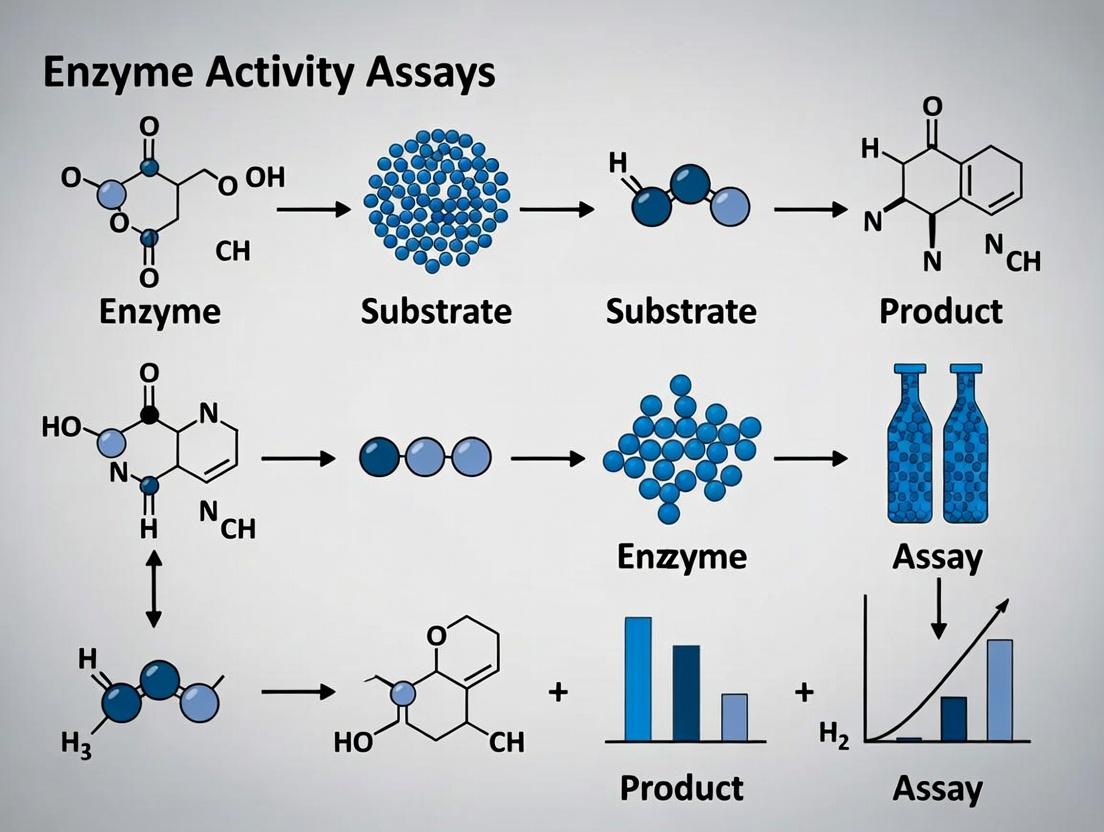
This comprehensive guide explores the fundamental principles and modern applications of enzyme activity assays in clinical chemistry.
Enzyme Activity Assays in Clinical Chemistry: Core Principles, Advanced Methods, and Best Practices for Accurate Diagnostics
Abstract
This comprehensive guide explores the fundamental principles and modern applications of enzyme activity assays in clinical chemistry. Designed for researchers, scientists, and drug development professionals, the article systematically covers foundational theory, including Michaelis-Menten kinetics and enzyme cofactors. It details current methodological approaches from spectrophotometry to high-throughput platforms, addresses common troubleshooting and optimization challenges, and critically evaluates validation protocols and comparative assay performance. By synthesizing these four key intents, the article provides a robust framework for developing, validating, and interpreting enzyme assays to ensure reliable results in clinical diagnostics and therapeutic monitoring.
Unlocking Enzyme Kinetics: The Foundational Science Behind Clinical Assays
In clinical chemistry research, the quantitative measurement of enzyme activity is a foundational principle. Enzyme activity, defined as the catalytic effect expressed in units measuring substrate conversion per unit time under specified conditions, serves as a direct functional readout for numerous disease biomarkers. This guide details the core principles, assay methodologies, and data interpretation essential for leveraging enzyme activity in biomarker research and drug development.
Fundamental Principles and Units of Enzyme Activity
The International Union of Biochemistry and Molecular Biology (IUBMB) defines the standard unit, the katal (kat), as the amount of enzyme that catalyzes the conversion of one mole of substrate per second. The more commonly used Unit (U) is defined as the amount of enzyme that catalyzes the conversion of one micromole of substrate per minute under optimal conditions.
Table 1: Standard Units of Enzyme Activity
| Unit | Symbol | Definition | Conversion |
|---|---|---|---|
| Katal | kat | 1 mol·s⁻¹ | 1 kat = 6.0 × 10⁷ U |
| Enzyme Unit | U | 1 μmol·min⁻¹ | 1 U = 16.67 nkat |
| International Unit | IU | Equivalent to 1 U (μmol·min⁻¹) | 1 IU = 1 U |
Specific activity is a critical parameter, expressed as units of enzyme activity per milligram of total protein (U/mg), which indicates enzyme purity and is essential for standardizing biomarker assays.
Core Methodologies for Measuring Enzyme Activity
Two primary approaches are employed: continuous (kinetic) and discontinuous (fixed-time) assays. Kinetic assays are preferred for clinical applications due to their ability to monitor the reaction in real-time.
Detailed Protocol: Kinetic Spectrophotometric Assay for Lactate Dehydrogenase (LDH)
LDH is a key biomarker for tissue damage, including myocardial infarction and hepatic injury.
Principle: LDH catalyzes the reversible reduction of pyruvate to lactate, with concurrent oxidation of NADH to NAD⁺. The decrease in absorbance of NADH at 340 nm is measured.
Materials & Reagent Kit:
- Sodium Pyruvate (Substrate): Typically 0.6 mM in final assay mixture.
- NADH (Co-enzyme): 0.18 mM in final assay mixture.
- Tris-HCl Buffer: 50 mM, pH 7.4-7.6, containing 0.1% BSA, to maintain optimal pH and enzyme stability.
- Test Sample: Serum or tissue homogenate (diluted appropriately).
- Spectrophotometer: Equipped with a thermostatted cuvette holder (set to 37°C).
- Timer and Pipettes.
Procedure:
- Prepare a master assay mix: 2.7 mL Tris-HCl buffer, 0.1 mL NADH solution.
- Pipette 2.8 mL of master mix into a 1 cm pathlength quartz cuvette.
- Pre-incubate the cuvette at 37°C in the spectrophotometer for 5 minutes.
- Initiate the reaction by adding 0.1 mL of diluted sample. Mix rapidly by inversion (avoid bubbles).
- Immediately monitor the decrease in absorbance at 340 nm (A₃₄₀) for 3-5 minutes, recording values at 30-second intervals.
- Calculate the ΔA₃₄₀/min from the linear portion of the curve.
- Activity Calculation:
- Activity (U/L) = (ΔA₃₄₀/min × Vt × 10⁶) / (ε × Vs × l)
- Where: Vt = total reaction volume (2.9 mL), Vs = sample volume (0.1 mL), ε = molar absorptivity of NADH at 340 nm (6220 M⁻¹·cm⁻¹), l = pathlength (1 cm). The factor 10⁶ converts moles to micromoles.
Detailed Protocol: Fixed-Time Colorimetric Assay for Alkaline Phosphatase (ALP)
ALP is a biomarker for liver and bone disorders.
Principle: ALP hydrolyzes p-nitrophenyl phosphate (pNPP) to inorganic phosphate and p-nitrophenol, which is yellow and absorbs at 405 nm.
Materials & Reagent Kit:
- pNPP Substrate Solution: 10 mM in diethanolamine buffer (1.0 M, pH 9.8, containing 0.5 mM MgCl₂).
- Stop Solution: 0.1 M NaOH.
- ALP Calibrator. Microplate reader capable of reading at 405 nm.
Procedure:
- Pipette 100 µL of sample (or calibrator/blank) into a microplate well.
- Pre-warm plate to 37°C for 5 minutes.
- Start the reaction by adding 100 µL of pre-warmed pNPP substrate solution.
- Incubate at 37°C for exactly 15 minutes.
- Stop the reaction by adding 50 µL of 0.1 M NaOH.
- Read the absorbance at 405 nm (A₄₀₅) within 30 minutes.
- Calculate activity from a calibration curve generated with the ALP calibrator.
Table 2: Comparison of Key Enzyme Assay Types in Clinical Biomarker Analysis
| Parameter | Continuous (Kinetic) Assay | Discontinuous (Fixed-Time) Assay |
|---|---|---|
| Data Collection | Continuous, in real-time | Single endpoint measurement |
| Advantages | Detects linearity, automation-friendly, higher precision | Simplicity, useful for unstable products |
| Disadvantages | Requires specialized instrumentation | More susceptible to interference, less precise |
| Clinical Example | Lactate Dehydrogenase (LDH), Alanine Transaminase (ALT) | Alkaline Phosphatase (ALP), Acid Phosphatase (ACP) |
| Typical CV (%) | 2-5% | 5-10% |
The Scientist's Toolkit: Key Research Reagent Solutions
Table 3: Essential Reagents and Materials for Enzyme Activity Assays
| Item | Function & Critical Considerations |
|---|---|
| Purified Enzyme (Calibrator) | Serves as primary standard to define a calibration curve. Must be of high purity and defined specific activity. |
| Synthetic Substrate (Chromogenic/Fluorogenic) | Provides a detectable signal upon enzymatic conversion (e.g., pNPP for phosphatases). High purity and stability are essential. |
| Cofactors (NADH/NADPH, Mg²⁺, etc.) | Required for catalytic function of many enzymes. Must be fresh due to instability. |
| Assay Buffer Systems | Maintains optimal pH and ionic strength (e.g., Tris, PBS, HEPES). May contain stabilizers (BSA) and activators. |
| Enzyme Inhibitors (Control Reagents) | Used in negative controls to confirm signal specificity (e.g., EDTA for metalloenzymes). |
| Stable-Light Luminescence Substrate | For high-sensitivity detection in kinase/phosphatase assays (e.g., ATP/ADP conversion assays). |
| Activity-Based Probes (ABPs) | Chemical tools that covalently label the active site of enzymes in complex proteomes for functional proteomics. |
Data Interpretation and Clinical Correlation
Enzyme activity is reported in U/L or μkat/L for serum/plasma. Reference intervals are population and method-dependent. The diagnostic sensitivity and specificity of an enzyme as a biomarker depend on factors like tissue distribution and clearance rate.
Table 4: Exemplary Clinical Biomarker Enzymes and Interpretations
| Enzyme (EC Number) | Primary Clinical Indication | Typical Specimen | Reference Interval (Adult, 37°C) | Key Isoform/Cofactor |
|---|---|---|---|---|
| Alanine Aminotransferase (ALT) [EC 2.6.1.2] | Hepatocellular damage (e.g., hepatitis) | Serum, Plasma | 7-35 U/L | Pyridoxal phosphate (Vitamin B6) |
| Creatine Kinase (CK) [EC 2.7.3.2] | Myocardial infarction, Muscle disorders | Serum | : 46-171 U/L, : 34-145 U/L | CK-MB (cardiac), CK-MM (muscle) |
| α-Amylase [EC 3.2.1.1] | Acute pancreatitis, Salivary gland disorders | Serum, Urine | 28-100 U/L | Requires Ca²⁺ |
| γ-Glutamyl Transferase (GGT) [EC 2.3.2.2] | Hepatobiliary disease, Alcohol abuse | Serum | : 8-61 U/L, : 5-36 U/L | Membrane-bound, activated by bile acids |
Visualizing Principles and Workflows
Diagram Title: Workflow for Clinical Enzyme Activity Measurement
Diagram Title: General Enzyme Kinetics with Cofactor
Advanced Considerations in Clinical Research
Modern drug development requires analysis beyond serum activity. Activity-Based Protein Profiling (ABPP) allows for the functional interrogation of enzymes in complex proteomes using active-site directed probes. Furthermore, the development of homogeneous assay formats (e.g., using fluorescence resonance energy transfer, FRET, or luminescent oxygen channeling, LOCI) is crucial for high-throughput screening in pharmaceutical discovery. Continuous innovation in defining and measuring enzyme activity remains the cornerstone for identifying and validating the next generation of clinical biomarkers.
Enzyme activity assays are fundamental to clinical diagnostics and therapeutic drug development. Quantifying the rate of an enzyme-catalyzed reaction provides critical information about patient health (e.g., cardiac enzymes like creatine kinase), disease states (e.g., alkaline phosphatase in liver disorders), and the efficacy and mechanism of pharmaceutical inhibitors. The mathematical framework of Michaelis-Menten kinetics is the cornerstone for interpreting these assay results, transforming raw absorbance or fluorescence data into meaningful kinetic constants (V_max, K_M) that describe enzyme function under specific conditions.
The Kinetic Model and Derivation
The Michaelis-Menten model describes the relationship between the initial reaction velocity (v₀) and the substrate concentration [S] for a single-substrate, irreversible reaction. Its core assumptions are: 1) rapid equilibrium (or quasi-steady-state) formation of the enzyme-substrate complex (ES), and 2) the concentration of ES is constant over the measured initial velocity period.
The fundamental reaction scheme is: [ E + S \underset{k{-1}}{\overset{k1}{\rightleftharpoons}} ES \overset{k_{cat}}{\rightarrow} E + P ]
Derivation under the steady-state assumption (d[ES]/dt = 0) yields the Michaelis-Menten equation:
[ v0 = \frac{V{max} [S]}{K_M + [S]} ]
Where:
- v₀ = Initial reaction velocity
- V_max = Maximum reaction velocity (k_{cat} [E]_total)
- K_M = Michaelis constant ( = (k_{-1} + k_{cat}) / k_1), the substrate concentration at half of V_max
- k_{cat} = Catalytic constant (turnover number)
Diagram: Michaelis-Menten Reaction Pathway.
Key Kinetic Parameters and Their Clinical Significance
The parameters derived from this equation are quantitatively summarized below:
Table 1: Michaelis-Menten Kinetic Parameters
| Parameter | Symbol | Definition | Clinical/Research Significance |
|---|---|---|---|
| Michaelis Constant | K_M | [S] at which v₀ = V_max/2 | Affinity indicator. Low K_M ≈ high apparent affinity. Used to compare substrate preferences and diagnose enzyme variants. |
| Maximum Velocity | V_max | Theoretical max v₀ at saturating [S] | Proportional to total active enzyme concentration [E]. Direct measure of enzyme levels in patient serum. |
| Catalytic Constant | k_{cat} | V_max / [E]_total | Turnover number. Intrinsic efficiency of the enzyme. |
| Catalytic Efficiency | k_{cat} / K_M | Specificity constant | Best measure of enzyme proficiency for a substrate. Key for comparing drug metabolism enzymes (e.g., Cytochrome P450 isoforms). |
Experimental Protocol: DeterminingK_MandV_max
Title: Continuous Spectrophotometric Assay for Lactate Dehydrogenase (LDH) Activity.
Principle: LDH catalyzes the reversible reduction of pyruvate to lactate while oxidizing NADH to NAD⁺. The decrease in absorbance at 340 nm (A₃₄₀) due to NADH consumption is monitored over time.
Detailed Protocol:
- Reagent Preparation: Prepare an assay buffer (50 mM Tris-HCl, pH 7.5). Prepare a stock NADH solution (e.g., 10 mM) in buffer, kept on ice. Prepare a serial dilution of sodium pyruvate substrate in buffer, typically 8 concentrations ranging from 0.1 to 5 times the estimated K_M.
- Instrument Setup: Configure a temperature-controlled spectrophotometer (e.g., 37°C). Set the wavelength to 340 nm.
- Reaction Initiation: In a cuvette, mix:
- 980 µL of assay buffer.
- 10 µL of NADH stock (final [NADH] = 0.1 mM – saturating).
- 10 µL of purified LDH sample (appropriately diluted).
- Equilibrate for 60 seconds.
- Initiate the reaction by adding 10 µL of a specific pyruvate dilution. Mix rapidly by inversion.
- Data Acquisition: Immediately record A₃₄₀ every 5 seconds for 2-3 minutes. Ensure the linear phase of the reaction (typically the first 60 seconds) is captured.
- Velocity Calculation: Calculate the slope (ΔA₃₄₀/Δtime) for the linear portion. Convert to reaction velocity (v₀) using the NADH extinction coefficient (ε₃₄₀ = 6220 M⁻¹cm⁻¹): v₀ = (ΔA/Δt) / (ε × pathlength (1 cm)).
- Repeat: Perform steps 3-5 for each substrate concentration in the series. Run all assays in duplicate or triplicate.
Data Analysis Workflow:
Diagram: Kinetic Data Analysis Workflow.
The Scientist's Toolkit: Research Reagent Solutions
Table 2: Essential Materials for Michaelis-Menten Assays
| Item | Function & Rationale |
|---|---|
| Purified Enzyme | The protein of interest. Must be highly purified and of known concentration for accurate k_{cat} determination. |
| Substrate(s) | The molecule(s) transformed by the enzyme. Must be >95% pure. A concentration series spanning 0.2–5× K_M is ideal. |
| Cofactors (NADH/NADPH) | Common electron donors/acceptors in oxidoreductase assays. Light-sensitive; prepare fresh. Their absorbance enables continuous monitoring. |
| Buffers (Tris, Phosphate, HEPES) | Maintain constant pH, critical as enzyme activity is pH-dependent. Must not contain inhibitory contaminants. |
| Plate Reader / Spectrophotometer | Instrument for detecting signal change (absorbance, fluorescence) over time. Requires precise temperature control. |
| Microcuvettes / Microplates | Reaction vessels. Must have a defined, consistent pathlength for accurate concentration calculations. |
| Data Analysis Software (Prism, GraphPad) | Used to fit the v₀ vs. [S] data directly to the hyperbolic Michaelis-Menten equation via nonlinear regression, the preferred modern method. |
In clinical chemistry research, the quantitative assessment of enzyme activity is fundamental for diagnosing diseases, monitoring therapeutic interventions, and drug discovery. Enzymes serve as critical biomarkers; deviations in their catalytic efficiency often signal pathological states. The kinetic parameters Vmax, Km, and kcat provide an indispensable framework for characterizing enzyme function. This whitepaper details these parameters, their interrelationships, and their diagnostic utility, framed within the principles of enzyme activity assays.
Defining the Core Kinetic Parameters
Michaelis Constant (Km)
Km, the Michaelis constant, is defined as the substrate concentration at which the reaction velocity is half of Vmax. It is a measure of the enzyme's apparent affinity for its substrate: a lower Km indicates higher affinity. In diagnostic assays, alterations in Km can indicate enzyme isoforms, the presence of inhibitors, or genetic mutations affecting substrate binding.
Maximum Velocity (Vmax)
Vmax is the maximum reaction rate achieved when all enzyme active sites are saturated with substrate. It is directly proportional to the total enzyme concentration ([E]total). In clinical settings, Vmax derived from an activity assay often correlates directly with enzyme concentration in a sample, serving as a primary diagnostic readout.
Catalytic Constant (kcat)
kcat, the turnover number, is the number of substrate molecules converted to product per enzyme active site per unit time when the enzyme is fully saturated. It is calculated as Vmax / [E]total. kcat defines the intrinsic catalytic efficiency of the enzyme. The ratio kcat/Km is the specificity constant, describing the enzyme's efficiency at low substrate concentrations.
Quantitative Relationships and Diagnostic Significance
The Michaelis-Menten equation formalizes the relationship: v = (Vmax * [S]) / (Km + [S])
Where v is the initial velocity and [S] is the substrate concentration. The diagnostic power lies in how these parameters shift under different physiological and pathological conditions.
Table 1: Diagnostic Significance of Altered Kinetic Parameters
| Parameter Change | Potential Clinical/Chemical Interpretation | Example Condition |
|---|---|---|
| Decreased Vmax, Normal Km | Reduced amount of functional enzyme | Organ damage (e.g., elevated liver enzymes in plasma due to leakage) |
| Increased Km, Normal Vmax | Decreased substrate affinity; competitive inhibition | Presence of endogenous metabolites or drugs acting as competitive inhibitors |
| Decreased Vmax & kcat | Inactivation or non-competitive inhibition | Poisoning (e.g., heavy metals), irreversible drug binding |
| Increased kcat/Km | Enhanced catalytic efficiency | Gain-of-function mutations (rare) |
| Decreased kcat/Km | Reduced overall efficiency | Loss-of-function mutations, isoenzyme profiles |
Table 2: Representative Clinical Enzyme Kinetic Data
| Enzyme (Biomarker For) | Typical Substrate | Reference Range Km (mM) | Diagnostic Context of Change |
|---|---|---|---|
| Alkaline Phosphatase (ALP) | p-Nitrophenyl phosphate | 0.1 - 0.5 | Bone vs. liver isoenzymes have distinct kinetic profiles. |
| Lactate Dehydrogenase (LDH) | Lactate | 0.2 - 1.0 | Elevated Vmax indicates tissue damage (MI, hemolysis). |
| Angiotensin-Converting Enzyme (ACE) | Hip-His-Leu | 1.0 - 5.0 | Monitoring in sarcoidosis; drug (ACE inhibitor) effect alters apparent Km. |
| Gamma-Glutamyl Transferase (GGT) | Gamma-glutamyl-p-nitroanilide | 0.5 - 2.0 | Inducer drugs (e.g., phenobarbital) increase Vmax. |
Experimental Protocols for Determination
Protocol: Determining Km and Vmax via Initial Rate Measurements
Objective: To characterize enzyme kinetics by measuring initial velocities at varying substrate concentrations.
Methodology:
- Reaction Setup: Prepare a master mix containing buffer, cofactors, and any essential ions. Aliquot into a series of cuvettes or microplate wells.
- Substrate Dilution: Create a series of substrate solutions covering a range typically from 0.2Km to 5Km.
- Initiation: Start each reaction by adding a fixed, small volume of enzyme preparation to each substrate solution. Final reaction volume: 1 mL (cuvette) or 200 µL (microplate).
- Continuous Monitoring: Immediately record the change in absorbance (or fluorescence) over time (e.g., 1-5 minutes) using a spectrophotometer/plate reader.
- Data Analysis: Calculate the initial velocity (v) for each [S] from the linear slope of product formation vs. time. Plot v against [S] and fit data to the Michaelis-Menten equation via non-linear regression. Km and Vmax are derived directly from the fit.
Protocol: Determining kcat
Objective: To calculate the turnover number, requiring an accurate measure of active enzyme concentration.
Methodology:
- Determine Vmax: As per Protocol 3.1.
- Determine [E]active: Use an active-site titration method (e.g., with a tight-binding irreversible inhibitor) or a validated quantitative immunoassay specific for the active enzyme. For purified enzymes, use the molar concentration based on total protein and known purity/activity.
- Calculation: kcat (s⁻¹) = Vmax (M s⁻¹) / [E]active (M).
The Scientist's Toolkit: Research Reagent Solutions
Table 3: Essential Reagents for Enzyme Kinetic Assays in Clinical Research
| Item | Function & Rationale |
|---|---|
| Recombinant Human Enzyme (Wild-type & Mutant) | Gold-standard protein for assay development, calibration, and inhibitor screening. Ensures relevance to human physiology. |
| Clinical-Grade Enzyme Substrate | High-purity, well-characterized chromogenic/fluorogenic probe (e.g., p-nitrophenol derivatives). Minimizes background signal. |
| Positive Control Inhibitor | Potent, characterized inhibitor (e.g., a known drug) for assay validation and as a reference in inhibition studies. |
| Stable Cofactor Solutions (NAD(P)H, ATP, Mg²⁺) | Essential for many enzymatic reactions. Prepared at defined concentrations and pH for reproducible kinetics. |
| Standardized Assay Buffer Systems | Buffers (e.g., Tris, phosphate) with optimized ionic strength and pH, often containing stabilizers (BSA, DTT). |
| Activity-Based Probes (ABPs) | Irreversible inhibitors with reporter tags (fluorophores/biotin) for active-site quantification and profiling in complex samples. |
| Multi-Isoform Enzyme Panels | Purified isoforms of a target enzyme (e.g., CYP450 isoforms) to assess substrate specificity and drug interaction potential. |
| Continuous Kinetic Assay Kits | Optimized, ready-to-use reagent kits for high-throughput determination of initial rates for specific enzymes (e.g., kinases, proteases). |
Visualization of Concepts and Workflows
Diagram 1: Relationship between Kinetic Parameters and Diagnostics
Diagram 2: Experimental Workflow for Kinetic Parameter Determination
1. Introduction and Thesis Context Within the framework of basic principles of enzyme activity assays in clinical chemistry research, understanding the molecular determinants of enzymatic specificity is paramount. This guide examines three critical layers of this specificity: cofactors (essential non-protein chemical compounds), isoenzymes (genetically distinct enzymes catalyzing the same reaction), and isoforms (products of alternative splicing or post-translational modification of a single gene). Their interplay dictates catalytic efficiency, substrate preference, regulatory mechanisms, and ultimately, the accurate interpretation of clinical enzyme assays. Misidentification or lack of control for these variables can lead to significant diagnostic inaccuracies in measuring biomarkers like lactate dehydrogenase (LDH) or creatine kinase (CK).
2. Cofactors: Essential Chemical Partners Cofactors are ions or organic molecules (coenzymes) required for an enzyme’s catalytic activity. They often serve as transient carriers of specific functional groups or electrons, directly influencing the enzyme's chemical mechanism and substrate scope.
Table 1: Major Classes of Enzyme Cofactors and Their Roles
| Cofactor Class | Example | Key Role/Group Transferred | Clinical Enzyme Example |
|---|---|---|---|
| Metal Ions | Mg²⁺, Zn²⁺, Fe²⁺/Fe³⁺ | Lewis acid catalysis, electron transfer, substrate stabilization. | Mg²⁺ in Alkaline Phosphatase (ALP) |
| Coenzymes (Vitamin-Derived) | NAD⁺/NADH (B3) | Hydride ion (H⁻) transfer. | Lactate Dehydrogenase (LDH) |
| FAD/FADH₂ (B2) | Electron/proton transfer. | Glucose-6-Phosphate Dehydrogenase | |
| Coenzyme A (Pantothenate) | Acyl group transfer. | Various dehydrogenases & transferases | |
| Pyridoxal Phosphate (B6) | Amino group transfer. | Alanine Aminotransferase (ALT) | |
| Prosthetic Groups | Heme (in cytochromes) | Oxygen binding, electron transfer. | Cytochrome P450 enzymes |
| Biotin | CO₂ transfer. | Pyruvate Carboxylase |
Experimental Protocol: Assessing Cofactor Dependence (Chelation/Reconstitution Assay)
- Enzyme Preparation: Purify the enzyme of interest via affinity chromatography.
- Cofactor Depletion: Dialyze the purified enzyme against a chelating buffer (e.g., 10 mM EDTA for metal ions) or a charcoal-treated buffer to remove loosely bound cofactors.
- Baseline Activity Assay: Measure catalytic activity of the apo-enzyme (without cofactor) under optimal pH and temperature conditions using a continuous spectrophotometric assay.
- Reconstitution: Incubate separate aliquots of the apo-enzyme with:
- Suspected specific cofactor.
- Broad spectrum of potential cofactors/metal ions.
- Buffer only (negative control).
- Activity Measurement: Re-assay activity for each aliquot. Reactivation of activity identifies the essential cofactor. Calculate fold-reactivation compared to the apo-enzyme control.
3. Isoenzymes and Isoforms: Genetic and Post-Transcriptional Diversity Isoenzymes (or isozymes) are distinct enzyme forms catalyzing the same reaction but encoded by different genetic loci, leading to variations in kinetics, regulation, and tissue distribution. Isoforms typically arise from alternative splicing or post-translational modifications (PTMs) of a single gene product, offering finer regulatory control.
Table 2: Key Clinical Isoenzymes: Distribution and Diagnostic Significance
| Enzyme | Major Isoenzymes | Primary Tissue Source | Clinical Indication |
|---|---|---|---|
| Lactate Dehydrogenase (LDH) | LDH-1 (H4) | Heart, RBC, Kidney | Myocardial infarction, hemolysis |
| LDH-2 (H3M1) | Reticuloendothelial system | ||
| LDH-3 (H2M2) | Lungs, Lymphocytes | Pulmonary embolism, lymphoma | |
| LDH-4 (H1M3) | Skeletal muscle, Liver | Muscular dystrophy, liver disease | |
| LDH-5 (M4) | Liver, Skeletal muscle | Liver disease, solid tumors | |
| Creatine Kinase (CK) | CK-MM | Skeletal muscle | Muscular injury, myopathies |
| CK-MB | Cardiac muscle | Acute myocardial infarction | |
| CK-BB | Brain, Smooth muscle | Brain injury, certain cancers | |
| Alkaline Phosphatase (ALP) | Tissue-nonspecific (TNSALP) | Liver, Bone, Kidney | Hepatobiliary disease, bone disorders |
| Intestinal ALP | Intestine | Non-pathologic variant, post-prandial rise | |
| Placental ALP | Placenta | Pregnancy, certain tumors (Regan) | |
| γ-Glutamyl Transferase (GGT) | Multiple glycosylation isoforms | Liver (biliary epithelium) | Hepatobiliary obstruction, alcohol use |
Experimental Protocol: Separation and Quantification of Isoenzymes (Agarose Gel Electrophoresis)
- Sample Preparation: Dilute serum or tissue homogenate in non-denaturing sample buffer.
- Electrophoresis: Load samples onto a 1% agarose gel prepared in pH 8.6 barbital buffer. Run at 100V for 45-60 minutes in a cooled chamber.
- Overlay and Incubation: Pour a specific substrate-agarose overlay. For CK: CK reagent (creatine phosphate, ADP, glucose, hexokinase, G6PD, NADP⁺, Mg²⁺). For LDH: Lactate, NAD⁺, phenazine methosulfate (PMS), nitrobue tetrazolium (NBT).
- Detection: Incubate at 37°C in the dark (10-30 mins). The coupled reactions generate a formazan dye at the site of enzyme activity. For CK, bands appear as violet-blue; for LDH, as blue-purple.
- Quantification: Scan the gel and perform densitometric analysis of band intensities to determine isoform percentages.
4. The Scientist's Toolkit: Key Research Reagent Solutions
Table 3: Essential Reagents for Studying Cofactors and Isoforms
| Reagent/Material | Function/Application |
|---|---|
| EDTA / EGTA Chelators | Selective chelation of divalent cations (Ca²⁺, Mg²⁺) to probe metal cofactor dependence. |
| NADH / NADPH (Reduced Forms) | Essential coenzyme substrates for dehydrogenase assays; monitored at 340 nm. |
| Protease & Phosphatase Inhibitor Cocktails | Preserve native enzyme isoforms by preventing degradation and altering PTMs during extraction. |
| PNGase F (Glycosidase) | Removes N-linked glycans to study glycosylation isoforms and their effects on stability/activity. |
| Isoform-Specific Monoclonal Antibodies | For immunocapture, ELISA, or Western blotting to isolate and quantify specific isoenzymes. |
| Recombinant Expression Systems (E. coli, HEK293) | Produce pure, specific isoforms for kinetic characterization without background from other isoforms. |
| Chemical Crosslinkers (e.g., DSS) | Stabilize transient enzyme-cofactor or multimeric isoenzyme complexes for structural analysis. |
| Continuous Spectrophotometric Assay Kits | Enable real-time, kinetic measurement of enzyme activity under varied cofactor/isoform conditions. |
5. Visualization of Concepts and Workflows
Diagram 1: Enzyme Diversity from Genes to Active Complex
Diagram 2: Workflow for Isoenzyme Separation Assay
6. Implications for Clinical Assay Design and Drug Development The specificity conferred by cofactors, isoenzymes, and isoforms has direct consequences:
- Assay Interference: Endogenous substances can affect cofactor availability (e.g., citrate chelates Mg²⁺, affecting kinase assays).
- Diagnostic Specificity: Measuring total enzyme activity (e.g., total LDH) is less informative than profiling isoenzymes (e.g., LDH-1:LDH-2 flip in MI).
- Drug Targeting: Isoenzyme-specific inhibitors can achieve tissue-selective effects, reducing side effects (e.g., targeting COX-2 over COX-1).
- Therapeutic Monitoring: Drug-induced changes in PTM patterns (isoforms) can serve as pharmacodynamic biomarkers.
- Assay Optimization: Clinical assays must include optimal, defined concentrations of required cofactors and use conditions (or specific inhibitors) that differentiate between similar isoenzymes to ensure diagnostic accuracy.
Precise knowledge and control of these three dimensions of enzyme diversity are therefore non-negotiable foundations for robust clinical chemistry research and translational application.
Within the context of basic principles of enzyme activity assays in clinical chemistry research, the quantification of specific enzyme activities in biological fluids serves as a cornerstone of modern diagnostics. The foundational thesis is that the abnormal release, or altered activity, of intracellular enzymes into the bloodstream reflects underlying cellular injury or dysfunction. This whitepaper provides an in-depth technical examination of key diagnostic enzymes, detailing assay methodologies, clinical interpretation, and their indispensable role in assessing organ-specific pathologies from liver to heart.
Key Diagnostic Enzymes: Quantitative Data
Table 1: Core Diagnostic Enzymes: Characteristics and Clinical Significance
| Enzyme (Abbr.) | Primary Tissue Source | Major Isoform(s) | Reference Interval (U/L)* | Primary Clinical Significance | Key Conditions |
|---|---|---|---|---|---|
| Alanine Aminotransferase (ALT) | Hepatocytes (Cytosol) | ALT1, ALT2 | Male: 7-55Female: 7-45 | Hepatocellular Injury | Viral hepatitis, NAFLD, Drug-induced liver injury |
| Aspartate Aminotransferase (AST) | Heart, Liver, Muscle, RBCs (Mitochondria/Cytosol) | AST1, AST2 | 8-48 | Generalized Tissue Injury | Myocardial infarction, Liver disease, Muscle injury |
| Alkaline Phosphatase (ALP) | Liver (Canalicular), Bone, Placenta | Tissue-nonspecific (TNSALP), Intestinal, Placental | 30-120 | Cholestasis, Bone Turnover | Biliary obstruction, Paget's disease, Bone metastases |
| Gamma-Glutamyl Transferase (GGT) | Hepatobiliary Duct Epithelium (Membrane) | Multiple Glycoforms | Male: 9-48Female: 7-33 | Cholestasis, Alcohol Induction | Alcoholic liver disease, Biliary obstruction |
| Lactate Dehydrogenase (LD/LDH) | Ubiquitous (Cytosol) | LD1 (H4) to LD5 (M4) | 125-220 | Generalized Cell Injury | Myocardial infarction, Hemolysis, Advanced malignancies |
| Creatine Kinase (CK) | Heart, Skeletal Muscle, Brain | CK-MB, CK-MM, CK-BB | Male: 39-308Female: 26-192 | Muscle/Brain Injury | Myocardial injury, Rhabdomyolysis, Muscular dystrophy |
| Cardiac Troponin (cTnI/cTnT) | Cardiac Myocytes (Contractile Apparatus) | cTnI, cTnT | < 99th %ile URL (assay-specific) | Gold Standard for Myocardial Injury | Acute myocardial infarction, Myocarditis |
*Reference intervals are illustrative and vary by assay methodology and population.
Experimental Protocols for Enzyme Activity Assays
Protocol 3.1: Spectrophotometric Kinetic Assay for ALT (IFCC Recommended Method)
Principle: ALT catalyzes the transfer of an amino group from L-alanine to α-ketoglutarate, forming pyruvate and L-glutamate. Pyruvate is then reduced to lactate by lactate dehydrogenase (LDH) with concomitant oxidation of NADH to NAD⁺. The rate of decrease in absorbance at 340 nm (ΔA₃₄₀/min) is proportional to ALT activity.
Reagents:
- Buffer (pH 7.5): 100 mmol/L Tris, 150 mmol/L NaCl.
- Substrate Solution: 400 mmol/L L-alanine, 12 mmol/L α-ketoglutarate.
- Cofactor/Enzyme Solution: 0.2 mmol/L NADH, ≥ 1,200 U/L LDH.
- Pyridoxal Phosphate (PLP): 0.1 mmol/L (activator for apo-ALT).
- Calibrator: Pyruvate standard for verification.
Procedure:
- Pre-incubate 100 µL of serum sample with 20 µL of PLP solution for 5-10 minutes at 37°C.
- In a cuvette, mix 1.0 mL of substrate solution and 100 µL of cofactor/enzyme solution. Equilibrate to 37°C.
- Add 100 µL of pre-incubated sample, mix gently.
- Monitor the absorbance at 340 nm for 180 seconds after an initial 60-second lag phase.
- Calculate enzyme activity: ALT Activity (U/L) = (ΔA₃₄₀/min × Vt × 10⁶) / (ε × Vs × l), where Vt = total reaction volume (1.22 mL), ε = molar absorptivity of NADH (6,220 L·mol⁻¹·cm⁻¹), Vs = sample volume (0.1 mL), l = pathlength (1 cm).
Protocol 3.2: Immunoassay for Cardiac Troponin I (cTnI) (Chemiluminescent Microparticle Immunoassay)
Principle: A two-step sandwich assay. Magnetic microparticles coated with anti-cTnI antibodies capture cTnI from the sample. After washing, an acridinium-labeled conjugate antibody binds to a different epitope on the captured cTnI. The chemiluminescent reaction is triggered, and the resulting relative light units (RLUs) are proportional to cTnI concentration.
Reagents:
- Anti-cTnI Coated Magnetic Microparticles.
- Sample Diluent.
- Acridinium-labeled Anti-cTnI Conjugate.
- Pre-Trigger/Trigger Solutions.
- cTnI Calibrators (Six-point curve).
Procedure:
- Combine 50 µL of sample (or calibrator/control) with 100 µL of anti-cTnI coated microparticles.
- Incubate for 7.5 minutes at 37°C to form antibody-antigen complexes.
- Wash the microparticles 2-3 times to remove unbound material.
- Add 100 µL of acridinium-labeled conjugate. Incubate for 5 minutes at 37°C.
- Wash again to remove unbound conjugate.
- Add pre-trigger and trigger solutions. Measure chemiluminescence immediately.
- Determine cTnI concentration from the calibration curve.
The Scientist's Toolkit: Research Reagent Solutions
Table 2: Essential Reagents for Clinical Enzyme Assay Development
| Reagent / Material | Function in Assay | Key Considerations |
|---|---|---|
| Recombinant Purified Enzymes (e.g., Human ALT, CK-MB) | Calibration standards, interference studies, positive controls. | Ensure biological activity and stability; source from reliable vendors. |
| Stable Lyophilized Control Sera (Abnormal & Normal levels) | Quality control, inter-day precision monitoring, method validation. | Commutability with patient samples; defined target values & ranges. |
| Substrate Cocktails (Optimized for specific enzymes) | Provide reactants for enzymatic reaction. | Purity, solubility, stability in buffer; optimal concentration for Km. |
| Cofactors (NADH, NADPH, PLP) | Electron donors/acceptors or essential coenzymes. | Susceptibility to photodegradation; require fresh preparation. |
| High-Affinity Monoclonal Antibody Pairs (for immunoassays) | Capture and detection of specific protein isoforms (e.g., cTnI). | Epitope mapping to ensure non-competition; low cross-reactivity. |
| Chemiluminescent/Luminescent Detection Substrates | Signal generation in immunoassays. | High signal-to-noise ratio, stability, and kinetic characteristics. |
| Matrix-Matched Diluents | Dilution of samples outside the analytical range. | Must mimic patient serum to avoid dilution-related bias. |
| Inhibitors/Activators (e.g., Anti-LD1 antibody, EDTA) | Selective inhibition of isoforms or chelation of interfering ions. | Specificity and potency must be validated for the assay system. |
Visualizations: Pathways and Workflows
Diagram 1: Clinical Algorithm for Liver Enzyme Pattern Interpretation
Diagram 2: Cardiac Biomarker Release & Detection Workflow
From Theory to Bench: Contemporary Methods and Applications in Enzyme Assay Design
Within the systematic study of basic principles of enzyme activity assays in clinical chemistry research, spectrophotometric assays represent the foundational and most ubiquitously applied technique. Their principle—measuring the change in absorbance of light by a reaction component—provides a direct, continuous, and quantitative readout of catalytic rate. This whitepaper details the core technical methodologies, contemporary applications, and practical considerations that cement UV/Vis spectrophotometry as the indispensable workhorse for diagnosing disease, monitoring therapy, and facilitating drug development through enzymatic analysis.
Core Principles and Reaction Types
Spectrophotometric enzyme assays monitor the appearance of a product or disappearance of a substrate that absorbs light in the ultraviolet or visible range (typically 340–700 nm). The fundamental relationship is defined by the Beer-Lambert Law: A = εcl, where A is absorbance, ε is the molar absorptivity coefficient (M⁻¹cm⁻¹), c is concentration (M), and l is the pathlength (cm). The rate of change in absorbance (ΔA/min) is directly proportional to the enzyme activity.
Two primary reaction designs are employed:
- Direct Assays: The substrate or product has inherent absorbance. Example: Lactate Dehydrogenase (LDH) reversal reaction uses NADH (absorbance at 340 nm) conversion to NAD⁺.
- Coupled Assays: The reaction of interest is linked to a second, indicator enzyme that generates a detectable product. This is essential when the primary reaction lacks a chromophore. Example: Alanine Aminotransferase (ALT) activity is coupled through LDH and NADH consumption.
Detailed Experimental Protocols
Protocol 1: Direct Endpoint Assay for Acid Phosphatase (ACP)
Principle: At acidic pH, ACP hydrolyzes p-nitrophenyl phosphate (colorless) to p-nitrophenol (yellow), measurable at 405 nm.
- Reagent Preparation: Prepare 0.1 M citrate buffer, pH 4.8. Substrate solution: 10 mM p-nitrophenyl phosphate in the same buffer.
- Procedure: In a cuvette, mix:
- 1.0 mL substrate solution.
- 20 µL of serum sample.
- Incubation: Incubate at 37°C for exactly 30 minutes.
- Termination & Measurement: Add 2.0 mL of 0.1 M NaOH to stop the reaction and develop full color. Measure absorbance at 405 nm against a reagent blank (substrate incubated without serum, then NaOH added).
- Calculation: Use the molar absorptivity of p-nitrophenol (ε₄₀₅ ≈ 18,800 M⁻¹cm⁻¹ under these conditions) to calculate activity. Activity (U/L) = (ΔA × Total Volume (mL) × 1000) / (ε × Pathlength (cm) × Sample Volume (mL) × Incubation Time (min)).
Protocol 2: Continuous Monitoring (Kinetic) Assay for Lactate Dehydrogenase (LDH)
Principle: LDH catalyzes: Pyruvate + NADH + H⁺ ⇌ Lactate + NAD⁺. The decrease in NADH absorbance at 340 nm is monitored.
- Reagent Preparation: Prepare 0.1 M phosphate buffer, pH 7.4. Working reagent: 0.6 mM pyruvate and 0.18 mM NADH in buffer.
- Procedure: Pre-incubate 1.0 mL of working reagent at 37°C for 5 min.
- Initiation & Measurement: Add 50 µL of serum sample, mix rapidly, and transfer to a thermostatted cuvette.
- Data Acquisition: Immediately record the absorbance at 340 nm every 15-30 seconds for 3-5 minutes.
- Calculation: Determine the linear rate of decrease in absorbance (ΔA/min). Activity (U/L) = (ΔA/min × Reaction Volume (mL) × 1000) / (ε₃₄₀ of NADH (6220 M⁻¹cm⁻¹) × Pathlength (cm) × Sample Volume (mL)).
Key Clinical Enzymes: Assay Parameters & Reference Intervals
Table 1: Common Clinical Enzyme Assays Using UV/Vis Spectrophotometry
| Enzyme (Abbr.) | Clinical Significance | Primary Reaction Type | Wavelength (nm) | Chromophore | Typical Reference Interval (Adult) |
|---|---|---|---|---|---|
| Alkaline Phosphatase (ALP) | Liver/Bone disorders | Coupled (with AMP buffer) | 405 | p-Nitrophenol | 30-120 U/L |
| Alanine Aminotransferase (ALT) | Hepatocellular damage | Coupled (with LDH/NADH) | 340 | NADH consumption | 7-55 U/L |
| Aspartate Aminotransferase (AST) | Cardiac/Liver damage | Coupled (with MDH/NADH) | 340 | NADH consumption | 8-48 U/L |
| Creatine Kinase (CK) | Myocardial infarction | Coupled (with HK/G6PDH) | 340 | NADPH formation | Male: 39-308 U/L; Female: 26-192 U/L |
| γ-Glutamyl Transferase (GGT) | Hepatobiliary disease | Direct | 405 | p-Nitroaniline | Male: 8-61 U/L; Female: 5-36 U/L |
| Lactate Dehydrogenase (LDH) | Tissue damage (broad) | Direct (reverse reaction) | 340 | NADH consumption | 125-220 U/L |
The Scientist's Toolkit: Essential Research Reagent Solutions
Table 2: Key Reagents and Their Functions in UV/Vis Enzymology
| Reagent / Material | Function & Critical Role |
|---|---|
| High-Purity Buffers (e.g., Tris, Phosphate, Bis-Tris) | Maintains optimal and stable pH for enzyme function and assay reproducibility. |
| Cofactors (e.g., NADH, NADPH, Mg²⁺) | Essential co-substrates or activators for many enzymes; purity directly impacts assay baseline. |
| Synthetic Chromogenic Substrates (e.g., p-NPP, DTNB) | Provide a specific, cleavable moiety that generates a measurable color change upon enzyme action. |
| Coupling Enzymes (e.g., LDH, G6PDH, HK, POD) | Enable the indirect measurement of non-chromogenic reactions; require high specific activity. |
| Stabilizers & Activators (e.g., DTT, BSA, AMP) | Protect enzyme activity in the assay medium or activate the target enzyme (e.g., AMP for ALP). |
| Enzyme Calibrators (Traceable to IFCC Reference Methods) | Provide the essential link between the measured ΔA/min and the reported activity in standardized units. |
Critical Experimental Considerations & Optimization
- Linearity: Verify that the reaction rate (ΔA/min) is constant over the measurement period. This confirms zero-order kinetics with respect to substrate, a prerequisite for accurate activity measurement.
- Blanking: Use appropriate blanks (sample, reagent, enzyme) to correct for endogenous chromophores or non-enzymatic reaction.
- Interferences: Substances like hemoglobin (hemolysis), bilirubin (icterus), or lipids (lipemia) can cause spectral interference. Use sample blanks, bichromatic measurements, or specimen pretreatment.
- Temperature Control: Strict thermostatting (±0.1°C) is vital as enzyme activity has a high Q₁₀ (typically 1.5-2.0).
Visualization of Assay Workflows
Diagram Title: Continuous Kinetic Assay Workflow
Diagram Title: Logic of a Coupled Enzyme Assay
Spectrophotometric assays remain the bedrock of clinical enzymology due to their robustness, quantitative precision, and adaptability. When executed with rigorous attention to the principles of kinetics, interference management, and standardization outlined herein, they provide unparalleled reliability for translational research and diagnostic applications. Their ongoing evolution, through automation and improved reagent chemistry, ensures their continued central role in the thesis of clinical enzyme methodology.
Within the basic principles of enzyme activity assays in clinical chemistry research, the choice between continuous (kinetic) and fixed-time (endpoint) assays is fundamental. This technical guide explores the core principles, applications, and selection criteria for these two kinetic approaches, which are pivotal for accurate measurement of enzyme activity in diagnostics, drug development, and biochemical research.
Core Principles and Definitions
Continuous Assays involve measuring the rate of product formation or substrate consumption in real-time over a linear period of the reaction. The velocity is determined from the slope of the linear progress curve.
Fixed-Time (Endpoint) Assays involve stopping the reaction after a predetermined time interval and measuring the total amount of product formed or substrate consumed at that single time point.
Comparative Analysis: Key Parameters
The following table summarizes the critical quantitative and qualitative differences between the two methodologies.
Table 1: Comparative Analysis of Continuous vs. Fixed-Time Assays
| Parameter | Continuous (Kinetic) Assay | Fixed-Time (Endpoint) Assay |
|---|---|---|
| Data Points | Multiple measurements over time (≥3). | Single measurement at reaction end. |
| Linearity Check | Intrinsic; linear slope confirms steady-state. | Assumed; requires prior validation. |
| Typical Duration | 30 seconds to 5 minutes (initial velocity phase). | 5 minutes to several hours. |
| Reaction Quenching | Not required. | Required (chemical or physical). |
| Susceptibility to Lag Phase | Low (can be visually identified and excluded). | High (can invalidate result if present). |
| Susceptibility to Substrate Depletion | Low (uses initial rates). | High (critical error if occurs). |
| Automation Suitability | Excellent for high-throughput analyzers. | Good, but requires precise timing. |
| Primary Application | Enzyme kinetics (Km, Vmax), diagnostic enzymology. | High-sensitivity assays (ELISA), coupled assays with long incubation. |
| Common Clinical Examples | ALT, AST, LDH, ALP, CK measurements. | Glucose (hexokinase), ELISA, certain immunoassays. |
Table 2: Representative Performance Characteristics
| Characteristic | Continuous Assay | Fixed-Time Assay |
|---|---|---|
| Typical Coefficient of Variation (CV) | 1-3% | 2-5% (can be higher if quenching is inconsistent) |
| Detection Limit | Limited by signal change rate. | Often lower, due to signal accumulation. |
| Dynamic Range | Defined by linear slope range. | Defined by calibration curve linearity. |
| Substrate Consumption | <5% (to maintain [S] ~ constant). | Up to 95% (to maximize signal). |
| Key Interference Risk | Non-linear drift (e.g., instrument drift). | Non-specific signal at endpoint (turbidity, chromogen instability). |
Detailed Experimental Protocols
Protocol 1: Continuous Assay for Serum Alanine Aminotransferase (ALT)
Principle: ALT catalyzes the transfer of an amino group from alanine to α-ketoglutarate, forming pyruvate and glutamate. Pyruvate is then reduced to lactate by lactate dehydrogenase (LDH) with concomitant oxidation of NADH to NAD+, monitored by decreasing absorbance at 340 nm.
- Reagent Preparation:
- Buffer: 100 mM Tris-HCl, pH 7.5.
- Substrate Solution: 400 mM L-alanine and 15 mM α-ketoglutarate in Tris buffer.
- Cofactor Solution: 0.18 mM NADH and 1,200 U/L LDH in Tris buffer.
- Assay Procedure:
- Pipette 1.0 mL of substrate solution into a cuvette thermostatted at 37°C.
- Add 0.1 mL of cofactor solution. Incubate for 3-5 minutes to allow temperature equilibration and oxidation of endogenous substrates.
- Record the initial baseline absorbance at 340 nm (A340) for 60 seconds.
- Initiate the reaction by adding 0.1 mL of serum sample. Mix immediately.
- Record the decrease in A340 for 180 seconds at 30-second intervals.
- Calculation:
- Plot A340 vs. time. Calculate the slope (ΔA/min) from the linear segment.
- Enzyme activity (U/L) = (ΔA/min × Vtotal × 10^6) / (ε × d × Vsample)
- Vtotal = total reaction volume (1.2 mL)
- ε = molar absorptivity of NADH at 340 nm (6,220 L·mol⁻¹·cm⁻¹)
- d = light path length (1 cm)
- Vsample = sample volume (0.1 mL)
Protocol 2: Fixed-Time Assay for Glucose (Hexokinase/Glucose-6-Phosphate Dehydrogenase)
Principle: Hexokinase (HK) catalyzes glucose phosphorylation using ATP. Glucose-6-phosphate dehydrogenase (G6PD) then oxidizes the product with simultaneous reduction of NADP+ to NADPH, which is measured at 340 nm after the reaction is stopped.
- Reagent Preparation:
- Reagent A (Reaction Mix): Contains HK, G6PD, ATP, NADP+, Mg²⁺, and stabilizers in buffered solution (pH 7.5-8.0).
- Assay Procedure:
- Pipette 1.0 mL of Reagent A into a test tube. Warm to 37°C.
- Initiate the reaction by adding 10 µL of serum or standard.
- Vortex mix and incubate exactly at 37°C for 15 minutes.
- Stop the Reaction: Add 0.1 mL of 0.5 M HCl. Mix thoroughly. This denatures the enzymes and halts the reaction.
- Allow the mixture to stand at room temperature for 5 minutes.
- Measure the absorbance of the solution at 340 nm against a reagent blank (prepared similarly but with water instead of sample).
- Calculation:
- Construct a calibration curve using glucose standards of known concentration.
- Determine the sample glucose concentration by interpolating its A340 value from the standard curve.
Visualizing the Assay Decision Pathway
Assay Selection Decision Tree
The Scientist's Toolkit: Key Research Reagent Solutions
Table 3: Essential Materials for Enzyme Activity Assays
| Item | Function | Key Considerations |
|---|---|---|
| High-Purity Enzymes (Substrates/ Coupling Enzymes) | Catalyze the reaction of interest; essential for coupled assays. | Purity (lack of contaminating activities), specific activity, stability (lyophilized vs. glycerol stock). |
| Cofactors (NADH/NADPH, ATP, Mg²⁺) | Essential for catalytic function of many enzymes; often the detected species. | Stability in solution (e.g., NADH photodegradation), buffer and pH compatibility. |
| Chromogenic/Fluorogenic Substrates | Yield a detectable product (colored or fluorescent) upon enzymatic conversion. | Extinction coefficient/quantum yield, solubility, membrane permeability (for cellular assays). |
| Stopping Reagents (Acid, Base, Chelators, Inhibitors) | Rapidly and completely halts enzymatic reaction in endpoint assays. | Must not interfere with detection signal; should be compatible with downstream steps. |
| Buffers (Tris, Phosphate, HEPES) | Maintain optimal and constant pH for enzyme activity. | pKa at desired pH, lack of metal ion chelation, inertness to reaction components. |
| Stabilizers (BSA, Glycerol, DTT) | Protect enzyme activity during storage and assay, reduce surface adsorption. | Must be non-interfering; DTT can reduce disulfide bonds. |
| Microplate Reader / Spectrophotometer | Measures absorbance or fluorescence change over time. | Temperature control, kinetic software, precision of low-volume readings, wavelength flexibility. |
| Automated Liquid Handlers | Ensures precise, reproducible reagent and sample dispensing, especially for HTS. | Precision at low volumes, tip washing to avoid carryover, integration with plate readers. |
The decision between continuous and fixed-time assays hinges on the specific enzyme system, required sensitivity, available instrumentation, and the necessity for real-time kinetic data. Continuous assays, offering inherent verification of linearity, are the gold standard for clinical enzymology and kinetic studies. Fixed-time assays remain indispensable for high-sensitivity applications and complex coupled reactions requiring extended incubation. Mastery of both approaches, grounded in the principles of enzyme kinetics, is essential for robust experimental design in clinical chemistry and drug development research.
Within the broader thesis on basic principles of enzyme activity assays in clinical chemistry research, a central challenge is the detection and quantification of low-abundance enzymes. These targets, crucial in early disease diagnostics (e.g., circulating tumor-derived enzymes) or in monitoring subtle cellular signaling events, often produce signals below the detection threshold of traditional colorimetric or absorbance-based methods. This whitepaper details the technical application of fluorometric and chemiluminescent assays, which offer vastly superior sensitivity—often reaching the attomole to zeptomole level—by fundamentally altering the signal generation and detection paradigm.
Core Principles and Quantitative Comparison
Mechanism of Enhanced Sensitivity
- Fluorometric Assays: Rely on the detection of light emitted from an excited fluorophore. Sensitivity gains are achieved through high quantum yields, minimized background from non-resonant light (using optimal excitation/emission filters), and time-resolved measurements to eliminate short-lived autofluorescence.
- Chemiluminescent Assays: Generate light via a chemical reaction, typically the oxidation of a luminol or acridinium derivative catalyzed by the enzyme of interest (e.g., horseradish peroxidase, HRP). The absence of an excitation light source eliminates scatter and background photoluminescence, leading to extremely low background and the highest signal-to-noise ratios.
Table 1: Quantitative Comparison of Assay Modalities for Low-Abundance Enzyme Detection
| Parameter | Colorimetric (e.g., pNPP) | Fluorometric (e.g., AMC) | Chemiluminescent (e.g., Luminol/HRP) |
|---|---|---|---|
| Typical Detection Limit | 10⁻⁹ – 10⁻¹² moles | 10⁻¹⁵ – 10⁻¹⁸ moles | 10⁻¹⁸ – 10⁻²¹ moles |
| Dynamic Range | 1-2 orders of magnitude | 3-5 orders of magnitude | 5-8 orders of magnitude |
| Key Advantage | Simple, inexpensive | High sensitivity, multiplex potential | Highest sensitivity, low background |
| Primary Limitation | Low sensitivity, high background | Photo-bleaching, autofluorescence | Reaction kinetics can be complex |
| Common Read Mode | Absorbance (405-450 nm) | Fluorescence (e.g., 360/460 nm) | Luminescence (integrating) |
Detailed Experimental Protocols
Protocol: Fluorometric Caspase-3 Activity Assay (Microplate Format)
This protocol detects caspase-3 activity in apoptotic cell lysates using the fluorogenic substrate Ac-DEVD-AMC.
Key Research Reagent Solutions:
| Reagent/Solution | Function |
|---|---|
| Cell Lysis Buffer (e.g., with 1% Triton X-100) | Disrupts cells, releases intracellular enzymes while maintaining activity. |
| Assay Buffer (e.g., HEPES, pH 7.4, with DTT) | Provides optimal ionic and redox conditions for enzyme activity. |
| Ac-DEVD-AMC Substrate Stock (10 mM in DMSO) | Fluorogenic substrate; caspase-3 cleaves AMC, producing a fluorescent signal. |
| Recombinant Caspase-3 Standard | Serves as a positive control for generating a standard curve. |
| Caspase-3 Specific Inhibitor (Ac-DEVD-CHO) | Confirms signal specificity. |
Methodology:
- Sample Preparation: Lyse 1x10⁶ cells in 100 µL of ice-cold lysis buffer. Centrifuge at 16,000 x g for 15 min at 4°C. Transfer supernatant to a fresh tube.
- Reaction Setup: In a black 96-well plate, combine:
- 50 µL assay buffer
- 10 µL sample or caspase-3 standard (0-100 pM range)
- 40 µL of 50 µM Ac-DEVD-AMC substrate (diluted in assay buffer from stock).
- Controls: Include a negative control (assay buffer only) and an inhibitor control (sample pre-incubated with 10 µM Ac-DEVD-CHO for 30 min).
- Measurement: Incubate plate at 37°C for 60-120 min. Measure fluorescence (excitation 360 nm, emission 460 nm) using a plate reader at 5-10 min intervals.
- Data Analysis: Calculate enzyme activity from the slope of the fluorescence increase (RFU/min) using the standard curve. Express as pmol AMC generated/min/mg protein.
Protocol: Chemiluminescent Kinase Activity Assay (ADP-Glo Principle)
This protocol measures activity of a low-abundance protein kinase by quantifying ADP generated from the kinase reaction.
Key Research Reagent Solutions:
| Reagent/Solution | Function |
|---|---|
| Kinase Substrate (e.g., peptide/Protein) | Phosphate acceptor in the kinase reaction. |
| ATP Solution | Phosphate donor; concentration is critical for measuring IC50 values. |
| ADP-Glo Reagent | Terminates kinase reaction and depletes remaining ATP. |
| Kinase Detection Reagent | Converts ADP to ATP, which is then measured via a luciferase/luciferin reaction. |
| Recombinant Low-Abundance Kinase | The enzyme target of interest. |
Methodology:
- Kinase Reaction: In a white 384-well plate, combine kinase (1-10 pM), substrate, and ATP (e.g., 10 µM) in a 5-10 µL reaction volume. Incubate for 60 min at 25°C to allow ADP accumulation.
- ATP Depletion: Add an equal volume (5-10 µL) of ADP-Glo Reagent. Incubate for 40 min to stop the reaction and degrade remaining ATP.
- ADP Detection: Add 10 µL of Kinase Detection Reagent. Incubate for 60 min to convert ADP to ATP and generate light.
- Measurement: Record luminescence signal with an integrating plate reader.
- Data Analysis: Normalize signals to no-enzyme (background) and no-inhibitor (max activity) controls. Fit data to a sigmoidal curve to determine kinase activity or compound IC50.
Visualization of Workflows and Pathways
Fluorometric Assay Signal Generation Workflow
Chemiluminescent Luminol Oxidation Pathway
Chemiluminescent ADP Detection Logic
Within the fundamental principles of enzyme activity assays in clinical chemistry research, a critical distinction exists between measuring the concentration of an enzyme molecule (its mass) and measuring its catalytic function (its activity). This guide details the technical principles, applications, and methodologies of immunoassays in this dual-measurement paradigm. Quantifying mass typically employs immunometric assays (e.g., ELISA), while activity assays measure the rate of substrate conversion. The correlation—or frequent lack thereof—between these measurements provides vital insights into enzyme regulation, inhibition, genetic variants, and post-translational modifications, directly impacting diagnostic accuracy and drug development.
Fundamental Principles and Assay Classifications
Enzyme Mass Immunoassays: These are typically sandwich immunoassays that quantify the absolute amount of enzyme protein, irrespective of its function. They use two antibodies binding to different epitopes on the enzyme. The readout is proportional to the number of enzyme molecules present.
Enzyme Activity Assays: These functional assays measure the rate of conversion of a specific substrate to product under defined conditions (pH, temperature, saturating substrate). The rate (e.g., in μmol/min) is proportional to the concentration of catalytically active enzyme.
Discrepancy Drivers: Divergence between mass and activity can indicate:
- Presence of inactive isoforms (zymogens) or genetic variants.
- In vivo inhibition (e.g., by drugs or toxins).
- Post-translational modifications (e.g., phosphorylation).
- Sample handling issues causing denaturation.
Quantitative Data Comparison
Table 1: Core Characteristics of Mass vs. Activity Assays for Enzymes
| Parameter | Immunoassay (Mass) | Activity Assay |
|---|---|---|
| Measurand | Enzyme protein concentration (ng/mL, μg/L) | Catalytic activity concentration (U/L, μkat/L) |
| Principle | Antigen-antibody binding | Catalytic substrate turnover |
| Key Reagents | Capture/detection antibodies, calibrators | Substrate, cofactors, buffer, activators |
| Typical Assay Time | 2-4 hours (incubation steps) | 5-30 minutes (kinetic measurement) |
| Detects Inactive Forms | Yes | No |
| Affected by Inhibitors | No (unless epitope blocked) | Yes |
| Standardization | Against pure protein standard | Against defined reaction conditions |
| Primary Clinical Utility | Determining total enzyme pool, identifying overexpression | Determining functional enzyme capacity, detecting inhibitors |
Table 2: Example Enzymes in Clinical Chemistry: Mass vs. Activity Correlation
| Enzyme (Clinical Context) | Typical Mass Assay | Typical Activity Assay | Common Discrepancy & Interpretation |
|---|---|---|---|
| Cardiac Troponin I (cTnI)* | High-sensitivity sandwich ELISA | N/A (non-enzymatic) | N/A – illustrative example of pure mass measurement. |
| Lipase (Pancreatitis) | Chemiluminescent immunoassay | Colorimetric (diglyceride substrate) | High mass, low activity: suggests circulating pro-enzyme or inhibition. |
| Creatine Kinase-MB (MI) | Immunoinhibition/Immunoassay | UV kinetic (NADPH generation) | Elevated mass with normal activity can indicate macro-CK complexes. |
| Prostate-Specific Antigen (PSA) | Sandwich immunoassay | N/A (protease, but activity not routine) | N/A – mass is primary measure. |
| Alkaline Phosphatase (ALP) | Isoform-specific ELISA | p-Nitrophenyl phosphate hydrolysis | Liver vs. bone isoform differentiation; inhibition by levamisole. |
Note: cTnI is included as a key clinical marker often measured by the same immunoassay platforms used for enzyme mass, though it is not an enzyme.
Detailed Experimental Protocols
Protocol 1: Sandwich ELISA for Enzyme Mass Quantification (e.g., Lipase)
Objective: To quantify the mass concentration of a specific enzyme in human serum.
Key Reagents: Microplate coated with capture anti-lipase antibody, serum samples and calibrators, detection anti-lipase antibody (biotinylated), streptavidin-HRP conjugate, TMB substrate, stop solution (1M H₂SO₄), wash buffer.
Procedure:
- Coating: Plate is pre-coated with capture antibody.
- Blocking: Add 300 μL blocking buffer (e.g., 1% BSA/PBS) per well, incubate 1 hour at RT. Wash 3x.
- Sample Incubation: Add 100 μL of calibrators, controls, and diluted serum samples in duplicate. Incubate 2 hours at RT or overnight at 4°C. Wash 5x.
- Detection Antibody: Add 100 μL biotinylated detection antibody. Incubate 1-2 hours at RT. Wash 5x.
- Enzyme Conjugate: Add 100 μL streptavidin-HRP conjugate. Incubate 30 minutes at RT in the dark. Wash 5x.
- Signal Development: Add 100 μL TMB substrate. Incubate 15-30 minutes at RT in the dark.
- Stop Reaction: Add 50 μL stop solution. Read absorbance at 450 nm immediately.
- Calculation: Generate a 4- or 5-parameter logistic standard curve from calibrators. Interpolate sample concentrations.
Protocol 2: Continuous Kinetic Activity Assay for Serum Alkaline Phosphatase (ALP)
Objective: To measure the catalytic activity concentration of ALP in human serum under optimal conditions.
Key Reagents: Diethanolamine buffer (1.0 mol/L, pH 9.8), Magnesium chloride (0.5 mmol/L), p-Nitrophenyl phosphate (pNPP, 10 mmol/L), serum sample, calibrator (p-Nitrophenol standard).
Procedure (IFCC Standardized Method):
- Pre-incubation: Pipette into a cuvette: 1.0 mL diethanolamine buffer, 10 μL MgCl₂ solution, and 50 μL serum. Mix and incubate for 5 min at 37°C.
- Initiate Reaction: Add 100 μL pNPP substrate solution. Mix rapidly.
- Measurement: Immediately transfer cuvette to a spectrophotometer thermostatted at 37°C. Record the increase in absorbance at 405 nm (A₄₀₅) for 3-5 minutes.
- Calculation: Determine the linear rate of ΔA₄₀₅/min. Calculate activity:
- ALP Activity (U/L) = (ΔA₄₀₅/min) * (Total Reaction Volume in mL * 1000) / (Molar Extinction Coefficient of pNP * Sample Volume in μL * Light Path in cm)
- Using ε₄₀₅ pNP = 18,700 L·mol⁻¹·cm⁻¹, total vol = 1.16 mL, sample vol = 50 μL, path = 1 cm:
- ALP (U/L) = ΔA₄₀₅/min * (1.16 * 1000) / (18700 * 0.05 * 1) ≈ ΔA₄₀₅/min * 1241
Visualizations
Title: Decision Workflow: Enzyme Mass vs. Activity Measurement
Title: Comparative Protocol Workflows
The Scientist's Toolkit: Key Research Reagent Solutions
Table 3: Essential Reagents for Comparative Enzyme Mass & Activity Studies
| Reagent Category | Specific Example | Function in Assay | Critical Quality Parameters |
|---|---|---|---|
| Capture Antibodies | Monoclonal anti-enzyme Ab (clone-specific) | Immobilizes target enzyme from sample onto solid phase for mass assay. | High affinity, specificity, recognizes non-active site epitope. |
| Detection Antibodies | Biotin- or HRP-conjugated anti-enzyme Ab | Binds captured enzyme to generate measurable signal in mass assay. | High affinity, pairs with capture Ab without interference, low cross-reactivity. |
| Enzyme Calibrators | Recombinant pure enzyme, WHO/IFCC standards | Provides known mass concentration for standard curve in immunoassay. | Value-assigned, commutability, matrix-matched to sample type. |
| Activity Assay Substrates | p-Nitrophenyl phosphate (pNPP), Chromogenic peptides | Converted by active enzyme to measurable product (color, fluorescence). | High purity, >99%, Km-matched to physiological range, low blank signal. |
| Cofactors / Activators | Mg²⁺, Ca²⁺, NADH, ATP | Required for optimal enzymatic activity in functional assays. | Optimal concentration in buffer, metal ion purity, stability. |
| Enzyme Inhibitors (Controls) | Specific small-molecule inhibitors (e.g., Levamisole for ALP) | Negative control for activity assays; confirms signal specificity. | High specificity, defined IC50, used to confirm assay validity. |
| Signal Generation Systems | Streptavidin-HRP, TMB substrate, Luminol | Amplifies and transduces antibody binding (mass) or product formation (activity) into detectable signal. | High specific activity, low background, linear dynamic range. |
| Assay Buffer Systems | PBS (pH 7.4), DEA buffer (pH 9.8), Tris-HCl | Maintains optimal pH, ionic strength, and stability for antigen-antibody binding or catalysis. | Consistent pH, osmolality, protease/phosphatase-free. |
This whitepaper examines the integration of High-Throughput Screening (HTS) and laboratory automation as foundational to modern drug development. Within the broader thesis on the basic principles of enzyme activity assays in clinical chemistry research, these platforms represent the logical evolution from manual, low-volume kinetic studies to massively parallelized, quantitative analyses. The core principles of measuring reaction velocity, substrate conversion, and inhibitor potency—central to enzyme assay theory—are now executed at scales of hundreds of thousands of reactions per day, fundamentally accelerating hit identification, lead optimization, and ADMET (Absorption, Distribution, Metabolism, Excretion, Toxicity) profiling.
Core Technological Pillars
Automated Liquid Handling Systems
These systems are the workhorses of HTS, replacing manual pipetting to ensure precision, reproducibility, and scalability.
- Methodology: Non-contact acoustic dispensers (e.g., Echo) use sound waves to transfer nanoliter-scale droplets from source to destination plates, minimizing reagent consumption and cross-contamination. Positive displacement or air-displacement pipetting heads manage microliter-scale volumes for bulk reagent addition.
- Key Protocol - Compound Library Reformatting:
- Source: 10mM DMSO stock compounds in 384-well storage plates.
- Destination: Assay-ready 1536-well polypropylene plates.
- Process: The automated system performs a series of dilutions in intermediate plates using buffer to achieve a 100 µM intermediate concentration. Using acoustic dispensing, 20 nL of the intermediate is transferred to the destination plate, resulting in a final assay concentration of 10 µM after addition of 180 µL enzyme/buffer mix.
- Controls: Each plate includes 32 wells of positive control (no inhibitor) and 32 wells of negative control (no enzyme).
High-Throughput Detection Modalities
Detection systems are tailored to the signal output of enzyme assays.
- Absorbance & Turbidimetry: Used for NADH/NADPH-dependent dehydrogenases (340 nm) or chromogenic substrates.
- Fluorescence Intensity (FLINT): Common for fluorogenic substrates (e.g., 4-Methylumbelliferyl derivatives).
- Time-Resolved Fluorescence (TRF) & Fluorescence Resonance Energy Transfer (FRET): Minimizes compound interference and background.
- Luminescence: ATP-detection assays for kinase activity or viability.
- Protocol for a Fluorescence-Based Kinase Assay:
- Dispense 2 µL of test compound in DMSO to a 1536-well plate.
- Add 4 µL of kinase enzyme in reaction buffer.
- Initiate reaction by adding 4 µL of ATP/fluorogenic peptide substrate mix.
- Incubate for 60 minutes at 25°C.
- Stop reaction with 10 µL of detection reagent containing EDTA and a chelated metal cation that recognizes the phosphorylated product.
- Read fluorescence after a 15-minute incubation (Ex/Em ~400/450 nm).
Integrated Robotic Platforms & Scheduling Software
Fully automated workcells combine incubators, liquid handlers, washers, and detectors. Scheduling software (e.g., Green Button Go, Overlord) manages plate movement, device synchronization, and protocol execution 24/7.
Data Management and Informatics
HTS generates terabytes of raw data. Automated data pipelines perform normalization, curve fitting for IC50/EC50 determination, and statistical analysis to identify valid hits.
Table 1: Performance Metrics of HTS vs. Traditional Manual Assays
| Parameter | Manual Assay (96-well) | Automated HTS (1536-well) | Improvement Factor |
|---|---|---|---|
| Assays per Day | 50 - 100 | 50,000 - 100,000+ | ~1000x |
| Reagent Consumption per Data Point | ~200 µL | ~20 µL | 10x reduction |
| Data Point Coefficient of Variation (CV) | 10-15% | 5-10% | ~2x improvement |
| Time for 1M Compound Screen | ~200 days | ~1-2 days | ~200x reduction |
| Typical Z'-Factor (Assay Quality) | 0.5 - 0.7 | 0.7 - 0.9 | Significant robustness gain |
Table 2: Common Enzyme Assay Formats in Automated HTS
| Assay Format | Detection Method | Typical Enzyme Classes | HTS-Adaptable Readout |
|---|---|---|---|
| Direct Chromogenic | Absorbance | Proteases, Phosphatases | Yes, via miniaturization |
| Coupled Enzymatic | Absorbance/ Fluorescence | Dehydrogenases, Kinases | Yes, with optimized coupled enzymes |
| Fluorogenic Substrate | Fluorescence (TR-FRET, FP) | Proteases, Phospholipases | Highly suitable for HTS |
| Luminescent ATP Depletion | Luminescence | Kinases, ATPases | Highly suitable for HTS |
| Label-Free (e.g., SPR, MS) | Various | All | Emerging in ultra-HTS |
Experimental Workflow & Pathway Visualization
Title: Automated HTS Workflow from Target to Lead
Title: Biochemical Pathway in a Kinase Inhibition Screen
The Scientist's Toolkit: Key Research Reagent Solutions
Table 3: Essential Reagents & Materials for HTS Enzyme Assays
| Item | Function in HTS | Key Consideration for Automation |
|---|---|---|
| Recombinant Enzyme | Catalytic target for screening. | High purity, stability in buffer for >24h, lyophilized or glycerol stocks for long-term storage. |
| Fluorogenic/C-hromogenic Substrate | Generates detectable signal upon enzymatic conversion. | High solubility in aqueous buffer, low background signal, suitable Km for assay conditions. |
| Cofactor (e.g., ATP, NADH) | Essential for enzymatic activity. | Stability in solution; often prepared fresh daily or from frozen single-use aliquots. |
| Assay Buffer | Maintains optimal pH, ionic strength, and enzyme stability. | Includes additives like BSA (0.01-0.1%) to prevent adsorption, DTT for reducing environment. |
| Detection Reagent | Stops reaction and develops signal (e.g., antibody, metal complex). | Compatible with robotic dispensing; must yield stable, homogeneous signal for batch reading. |
| DMSO-Tolerant Plates | Vessel for reactions (384/1536-well). | Low protein binding, minimal evaporation, optical clarity for detection mode. |
| Compound Library | Collection of small molecules for screening. | Standardized concentration (e.g., 10mM in DMSO), arrayed in source plates compatible with liquid handlers. |
| QC Control Compounds | Known inhibitor/activator for assay validation (Z'-factor). | Used in every plate to monitor assay performance and inter-plate variability. |
Solving Common Pitfalls: A Practical Guide to Optimizing Enzyme Assay Performance
Accurate enzyme activity assays are foundational to clinical chemistry research, drug development, and diagnostic validation. The reliable measurement of enzymes like alanine aminotransferase (ALT), aspartate aminotransferase (AST), alkaline phosphatase (ALP), and lactate dehydrogenase (LDH) is predicated on precise spectrophotometric or fluorometric detection of reaction products. These assays are highly susceptible to interference from endogenous substances present in patient samples, most notably hemolysis, icterus, and lipemia (HIL interferences). Within the broader thesis on basic principles of enzyme activity assays, this guide provides an in-depth technical analysis of the mechanisms by which HIL interferences compromise assay integrity and details current, evidence-based methodologies for their identification and mitigation, ensuring data validity in preclinical and clinical research.
Mechanisms of Interference in Enzyme Assays
Interferences act through optical, chemical, and physical pathways, directly contravening the core principles of enzyme kinetics and spectrophotometric measurement.
2.1 Hemolysis Hemolysis, the rupture of erythrocytes, releases intracellular components into serum or plasma.
- Spectral Interference: Hemoglobin (Hb) exhibits broad absorbance peaks at 415 nm (Soret band), 540 nm, and 570 nm, directly overlapping with common assay wavelengths (e.g., 340 nm for NADH, 405-410 nm for p-nitrophenol). This increases apparent absorbance, leading to falsely decreased activity for rate assays measuring substrate disappearance or falsely increased activity for product formation assays.
- Chemical Interference: Released enzymes (e.g., ALT, AST, LDH, acid phosphatase) artificially increase measured activity of these analytes. Potassium and lactate dehydrogenase released from red blood cells can affect coupled enzyme reactions. Iron from heme may catalyze undesirable side reactions.
- Dilutional Effect: Fluid shift from erythrocytes can dilute the sample, potentially lowering analyte concentration.
2.2 Icterus Icterus, caused by elevated bilirubin, interferes primarily through its chemical and optical properties.
- Spectral Interference: Bilirubin absorbs strongly in the blue region (~450-460 nm), interfering with assays using these wavelengths.
- Chemical Interference: Bilirubin acts as a potent antioxidant, scavenging peroxide intermediates in peroxidase-coupled reactions (e.g., glucose, cholesterol, uric acid assays), leading to falsely low results. It can also react directly with diazonium salts in some endpoint methods.
2.3 Lipemia Lipemia, caused by elevated chylomicrons and very-low-density lipoproteins (VLDL), creates turbidity.
- Light Scattering Interference: Turbid samples scatter incident light, increasing apparent absorbance. This positive interference is most pronounced at shorter wavelengths (<600 nm) and can cause significant error in rate calculations. It mimics product formation.
- Volume Displacement Effect: High lipid concentrations displace the aqueous phase of serum, effectively concentrating all aqueous-phase analytes (including enzymes and electrolytes) within a smaller volume fraction, potentially leading to falsely elevated results if not accounted for.
- Chemical Interaction: Lipids can partition reagents, alter reaction rates, or interfere with antibody binding in immunochemical assays.
Table 1: Quantitative Impact of HIL Interferences on Common Enzyme Assays
| Interference Type | Representative Substance | Target Assay/Wavelength | Mechanism | Typical Impact Threshold* | Direction of Bias |
|---|---|---|---|---|---|
| Hemolysis | Hemoglobin | ALT/AST (340 nm) | Spectral Absorbance | >0.5 g/L Hb | Falsely Decreased (NADH consumption) |
| Hemolysis | Intracellular LDH | LDH (340 nm) | Chemical (Additive) | >0.1 g/L Hb | Falsely Increased |
| Icterus | Unconjugated Bilirubin | ALP (405 nm) | Spectral Absorbance | >20 mg/dL | Falsely Decreased |
| Icterus | Bilirubin | Peroxidase-coupled (500 nm) | Chemical (Inhibition) | >2 mg/dL | Falsely Decreased |
| Lipemia | Triglycerides (Turbidity) | Amylase/Lipase (Multiple) | Light Scattering | >300 mg/dL TG | Falsely Increased |
| Thresholds are assay and instrument-dependent. CLSI guidelines recommend establishing laboratory-specific limits. |
Experimental Protocols for Detection and Quantification
3.1 Protocol: Spectrophotometric H-Index Determination (Hemolysis)
- Principle: Measurement of free hemoglobin at its characteristic absorbance peaks.
- Procedure:
- Prepare a 1:10 dilution of the sample in 0.9% saline or a suitable diluent (e.g., phosphate-buffered saline).
- Blank the spectrophotometer with the same diluent.
- Measure the absorbance of the diluted sample (Asample) at 415 nm, 540 nm, and 570 nm using a cuvette with a 1 cm pathlength.
- Calculation: H-index (mg/dL) ≈ A415 * Dilution Factor * K, where K is an instrument-specific constant derived from a hemoglobin calibrator. Alternatively, use the formula: H-index = (2*A540 + A570)* Dilution Factor * 85.8 (approximate).
- Validation: Compare against a hemoglobin standard curve (0-1000 mg/dL).
3.2 Protocol: I-Index Determination (Icterus)
- Principle: Measurement of bilirubin absorbance.
- Procedure:
- Prepare a 1:5 dilution of the sample in 0.9% saline.
- Blank the spectrophotometer with the same diluent.
- Measure the absorbance of the diluted sample at 460 nm (primary) and 415 nm (to correct for hemoglobin overlap).
- Calculation: I-index (mg/dL) ≈ (A460 - (A415 * Correction Factor)) * Dilution Factor * K. The correction factor is instrument-specific. A simplified method uses A_460 alone with a validated multiplier.
- Validation: Use bilirubin calibrators (unconjugated and conjugated).
3.3 Protocol: L-Index Determination (Lipemia)
- Principle: Measurement of light scattering due to turbidity.
- Procedure:
- Use the sample undiluted. High-speed centrifugation (e.g., 10,000 x g, 15 min) can be performed first to pellet large aggregates, but the index is measured on the native sample.
- Blank the spectrophotometer with distilled water or a clear diluent.
- Measure the absorbance of the sample at 660 nm, 700 nm, or a wavelength not used by common assays where water absorbance is minimal.
- Calculation: L-index (mg/dL Triglyceride equivalent) ≈ A_660/700 * K, where K is derived from a triglyceride suspension calibrator (e.g., Intralipid).
- Note: This measures turbidity, not direct triglyceride concentration.
3.4 Protocol: Evaluation of Interference in an Enzyme Activity Assay (e.g., ALT)
- Principle: Spiking recovery experiment to determine tolerance limits.
- Procedure:
- Prepare a base pool of human serum with low, known ALT activity.
- Prepare interferent stocks: Hemolysate (freeze-thaw of packed RBCs), concentrated bilirubin (in alkaline buffer), and lipid emulsion (Intralipid 20%).
- Spike the base pool with increasing volumes of interferent stock to create a series of samples with graded H, I, or L indices. Include an unspiked control (spiked with diluent).
- Measure the ALT activity in all samples using the standard assay protocol.
- Calculate recovery: %Recovery = (Activity of Spiked Sample / Activity of Unspiked Control) * 100.
- Analysis: Define the tolerance limit as the interferent concentration at which recovery falls outside 90-110% (or a pre-defined bias limit based on biological variation).
Mitigation Strategies
4.1 Pre-Analytical Mitigation
- Proper Phlebotomy & Handling: Use appropriate needle size, avoid forceful transfer or mixing, and separate serum/plasma from cells promptly.
- Ultracentrifugation (Gold Standard for Lipemia): Sample is spun at >100,000 x g for 15-30 minutes. The infranatant (clear aqueous layer) is carefully aspirated for analysis. Effective for removing chylomicrons and VLDL.
- Sample Dilution: Dilution can lower the effective concentration of the interferent below the assay's interference threshold. Validation is required to ensure linearity of the diluted analyte response.
- Use of Alternate Sample Types: For hemolysis-prone patients, consider using heparin plasma (avoids platelet release), but note heparin's potential interference with some chemistries.
4.2 Analytical Mitigation
- Spectrophotometric Blanking: Use a serum blank (sample + reagent without key substrate) to correct for background absorbance. Critical for endpoint assays; automated analyzers often use bichromatic or polychromatic wavelength corrections.
- Reagent Modification: Use higher wavelength substrates (e.g., using pyruvate oxidase with a Trinder reaction at 550 nm instead of 340 nm for ALT/AST can reduce Hb interference). Add surfactants to dissolve lipids or disrupt micelles.
- Chemical Scavengers: Add potassium ferrocyanide to convert Hb to methemoglobin which has lower absorbance at 540/570 nm. Add bilirubin oxidase to degrade bilirubin before the main reaction.
- Physical Separation: Use solid-phase extraction or specialized filtration devices to remove lipids or cellular debris.
4.3 Post-Analytical Mitigation
- Instrument-Based Flagging: Modern clinical analyzers automatically calculate and report H, I, L indices, flagging results that exceed user-defined thresholds.
- Algorithmic Correction: Some systems apply validated mathematical corrections based on the measured index and the known interferent's molar absorptivity. This is less reliable than physical removal.
The Scientist's Toolkit: Research Reagent Solutions
| Item | Function / Application |
|---|---|
| Hemolysate (in-house prepared) | Used as a spiking agent to create hemolyzed samples for interference studies. Prepared via freeze-thaw lysis of packed red blood cells. |
| Intralipid 20% Intravenous Fat Emulsion | A standardized lipid emulsion used to simulate lipemic interference by spiking into clear serum pools. |
| Unconjugated Bilirubin (Powder) | Dissolved in mild alkaline solvent (e.g., 0.1M NaOH with albumin) to create icteric spike solutions. Must be protected from light. |
| Hemoglobin & Bilirubin Calibrators | Commercial calibrators with assigned values for establishing instrument-specific multipliers (K factors) for H and I index calculations. |
| Surfactant-Containing Assay Buffers (e.g., Triton X-100, CHAPS) | Included in reagent formulations to solubilize lipoproteins and membrane-bound enzymes, reducing light scattering and improving reagent accessibility. |
| Bilirubin Oxidase | Enzyme added to reagent formulations to catalytically oxidize bilirubin, eliminating its spectral and chemical interference prior to the indicator reaction. |
| Specialized Ultracentrifugation Tubes | Tubes designed for high-speed separation of lipid layers, allowing clean aspiration of the infranatant aqueous phase from lipemic samples. |
Visualizations
In clinical chemistry research, enzyme activity assays are fundamental for diagnosing diseases, monitoring therapeutic drug levels, and elucidating metabolic pathways. The accuracy and reproducibility of these assays are critically dependent on the precise optimization of reaction conditions. This whitepaper, framed within a broader thesis on the basic principles of enzyme assays, provides an in-depth technical guide to optimizing three cardinal parameters: pH, temperature, and ionic strength. Proper optimization ensures maximal enzyme activity, stability, and fidelity, which is paramount for researchers, scientists, and drug development professionals seeking reliable in vitro data.
The Impact of pH on Enzyme Activity
pH profoundly influences enzyme activity by affecting the ionization states of amino acid residues in the active site, substrate molecules, and cofactors. Deviations from the optimal pH can alter the enzyme's tertiary structure and reduce catalytic efficiency.
Key Considerations:
- Optimal pH: The pH at which the enzyme exhibits maximum activity. It is specific to each enzyme and its source (e.g., pepsin in stomach vs. alkaline phosphatase in intestine).
- Buffer Selection: A buffer with a pKa within ±1.0 unit of the desired pH and sufficient ionic strength to maintain pH during proton release/uptake in the reaction is essential.
- Clinical Relevance: In clinical assays, buffer conditions are standardized to ensure consistent results across laboratories and instrument platforms.
Experimental Protocol for Determining Optimal pH
Objective: To determine the optimal pH for a given enzyme. Materials: Purified enzyme, substrate, a series of buffers covering a pH range (e.g., citrate-phosphate for pH 3-7, Tris-HCl for pH 7-9, glycine-NaOH for pH 9-11), spectrophotometer or fluorometer. Method:
- Prepare assay master mixes for each pH buffer, containing identical concentrations of substrate and cofactors.
- Pre-incubate the enzyme and buffer-substrate mix separately at the assay temperature for 5 minutes.
- Initiate the reaction by adding enzyme to the mix.
- Monitor the initial velocity of product formation (e.g., change in absorbance per minute, ΔA/min).
- Plot reaction velocity (V) versus pH. The peak of the curve indicates the optimal pH.
Quantitative Data on pH Optima for Common Clinical Enzymes
Table 1: Optimal pH for Selected Enzymes in Clinical Assays
| Enzyme | Clinical Relevance | Typical Optimal pH | Common Assay Buffer |
|---|---|---|---|
| Alkaline Phosphatase (ALP) | Liver/bone disorders | 9.5 - 10.2 | 2-Amino-2-methyl-1-propanol (AMP) |
| Lactate Dehydrogenase (LDH) | Myocardial infarction, hemolysis | 8.6 - 9.0 | Tris-HCl |
| Alanine Aminotransferase (ALT) | Liver function | 7.3 - 7.8 | Phosphate |
| Acid Phosphatase (ACP) | Prostate cancer | 4.8 - 5.5 | Citrate |
| Creatine Kinase (CK) | Myocardial infarction | 6.7 - 6.9 | Imidazole acetate |
The Role of Temperature
Temperature has a dual effect: increasing kinetic energy and reaction rates (Q₁₀ effect) while simultaneously increasing the rate of thermal denaturation. The optimal temperature is a compromise between these factors.
Key Considerations:
- Standardization: The International Federation of Clinical Chemistry (IFCC) defines reference methods at precisely 37°C.
- Temperature Coefficient (Q₁₀): The factor by which the reaction rate increases for a 10°C rise. For many enzymes, Q₁₀ is ~2.
- Pre-incubation: Essential for equilibrating all reagents to the assay temperature.
Experimental Protocol for Temperature Optimization & Q₁₀ Calculation
Objective: To determine the optimal assay temperature and calculate the temperature coefficient. Materials: Thermocycler or precision water baths, enzyme, substrate, buffer. Method:
- Set up identical reaction mixtures.
- Incubate and run assays at a series of temperatures (e.g., 25°C, 30°C, 35°C, 37°C, 40°C, 45°C).
- Measure initial velocities (V) at each temperature.
- Plot V vs. T. The peak defines the optimal temperature for the assay duration.
- Calculate Q₁₀ between two temperatures (T₁ and T₂) using: Q₁₀ = (V₂/V₁)^(10/(T₂-T₁)).
Quantitative Data on Temperature Effects
Table 2: Temperature Characteristics of Clinical Enzymes
| Enzyme | IFCC Standard Assay Temp. | Typical Q₁₀ Range | Critical Denaturation Threshold |
|---|---|---|---|
| Aspartate Aminotransferase (AST) | 37°C | 1.7 - 2.0 | > 42°C (rapid loss) |
| γ-Glutamyl Transferase (GGT) | 37°C | 1.8 - 2.1 | > 45°C |
| Lipase | 37°C | 1.5 - 1.8 | > 40°C (variable) |
| Amylase | 37°C | 1.6 - 1.9 | > 50°C |
Influence of Ionic Strength
Ionic strength (I) impacts enzyme activity by modulating electrostatic interactions within the enzyme and between the enzyme and substrate. It can stabilize or destabilize the active conformation.
Key Considerations:
- Salt Activation/Inhibition: Some enzymes (e.g., CK) require specific ions (Mg²⁺, K⁺) as cofactors, while others are inhibited by heavy metals.
- Debye-Hückel Effect: High ionic strength can shield charged groups, potentially disrupting essential ionic bonds.
- Buffer Composition: Buffers contribute to ionic strength; this must be accounted for when adding salts.
Experimental Protocol for Ionic Strength Optimization
Objective: To determine the optimal ionic strength and identify essential activators. Materials: Enzyme, substrate, primary buffer (e.g., Tris), salt solutions (KCl, NaCl, MgCl₂), chelators (EDTA). Method:
- Prepare a series of reaction mixtures with a constant pH and temperature but varying concentrations of a salt (e.g., KCl from 0 to 200 mM).
- Measure initial velocities.
- Plot V vs. ionic strength (or [Salt]). The plateau indicates the optimal range.
- To test for specific ion requirements, run assays with and without a suspected essential ion (e.g., Mg²⁺) in a buffer treated with chelators (EDTA) to scavenge trace metals.
Integrated Optimization Workflow
A systematic approach is required to optimize interdependent parameters without introducing confounding variables.
Diagram Title: Enzyme Condition Optimization Workflow
The Scientist's Toolkit: Research Reagent Solutions
Table 3: Essential Reagents for Optimizing Enzyme Assays
| Reagent / Material | Function in Optimization | Key Consideration |
|---|---|---|
| High-Purity Buffers (e.g., Tris, HEPES, Phosphate) | Maintain precise pH; minimize metal contamination. | Choose buffer with minimal UV absorbance if monitoring at low wavelengths. |
| Substrate Stocks | Provide the reactant. Kinetic purity is critical. | Solubility and stability in the chosen buffer at working concentration. |
| Cofactor Solutions (e.g., NADH, NADPH, MgCl₂, KCl) | Activate enzyme or couple reactions. | Prepare fresh or store aliquots at -20°C; avoid repeated freeze-thaw. |
| Chelators (e.g., EDTA, EGTA) | Remove trace metal inhibitors or test metal ion requirements. | Use judiciously as they may also remove essential metals. |
| Thermostable Enzymes (for high-Temp assays) | Allow assays at elevated temperatures without denaturation. | Source from extremophiles; often used in molecular diagnostics. |
| Spectrophotometer/Fluorometer with Peltier Cuvette Holder | Precisely measure reaction rates while controlling temperature. | Calibration of temperature in the cuvette holder is mandatory. |
| Enzyme Stabilizers (e.g., BSA, Glycerol, DTT) | Protect enzyme from surface adsorption, oxidation, or instability during assay. | Must not interfere with the detection method. |
Diagram Title: How Reaction Conditions Affect Enzyme Activity
The systematic optimization of pH, temperature, and ionic strength is not a mere preliminary step but a foundational requirement for generating valid, precise, and clinically relevant data from enzyme activity assays. By adhering to rigorous experimental protocols, utilizing current reference data, and understanding the underlying biophysical principles, researchers can develop robust assays. This optimization ensures that observed changes in activity are attributable to biological or therapeutic interventions rather than uncontrolled environmental variables, thereby strengthening the entire thesis of clinical chemistry research.
Within the foundational principles of enzyme activity assays in clinical chemistry research, the accurate measurement of initial velocity is paramount. Deviations from linear progress curves, primarily caused by substrate depletion and product inhibition, introduce significant errors in determining kinetic parameters (Vmax, Km) and, consequently, in diagnostic interpretation and drug discovery. This guide provides a technical examination of these phenomena, their impact on assay linearity, and methodologies for their detection and mitigation.
Fundamental Principles of Non-Linear Kinetics
The Assumption of Initial Velocity
Standard Michaelis-Menten analysis requires measurement of the initial rate of reaction, where substrate concentration [S] >> Km and product concentration [P] ≈ 0. Under these conditions, the reverse reaction and inhibitory effects are negligible, yielding a linear progress curve.
Causes of Non-Linearity
- Substrate Depletion: Occurs when a significant fraction (>5-10%) of the initial substrate is consumed. As [S] decreases, the reaction velocity drops non-linearly.
- Product Inhibition: The accumulating product acts as a competitive, non-competitive, uncompetitive, or mixed inhibitor of the enzyme, reversibly decreasing the observed reaction rate.
Quantitative Impact and Detection
Table 1: Quantitative Indicators of Non-Linear Kinetics
| Parameter | Typical Threshold for Linearity | Impact on Progress Curve | Primary Diagnostic Method |
|---|---|---|---|
| Substrate Depletion | [S]t ≥ 0.9[S]0 | Concave downward (decelerating) | Plot of [P] vs. time; residual analysis. |
| Product Inhibition (Competitive) | [P] < 0.1 * K_i (Inhibition Constant) | Concave downward | Vary initial [S]; inhibition relieved at high [S]. |
| Product Inhibition (Uncompetitive) | [P] < 0.1 * K_i' | Curve may plateau prematurely | Vary initial [S]; inhibition worsens at high [S]. |
| % Substrate Consumed | <5% | Maintains linearity (R² > 0.99) | Calculate ([S]0 - [S]t)/[S]_0 * 100. |
| Deviation from Linear Fit | Residuals < ±2% of signal range | Systematic pattern in residuals indicates failure. | Statistical analysis of residuals from linear regression. |
Experimental Protocol: Assessing Assay Linearity
Objective: To determine the time window over which the reaction velocity is constant. Procedure:
- Prepare a reaction mixture with [S] = 5-10 * Km (estimated).
- Initiate the reaction and monitor product formation (e.g., absorbance, fluorescence) continuously at a high temporal resolution.
- Record data for a duration expected to consume ~20-30% of the substrate.
- Fit a linear regression to successive time segments (e.g., 0-1 min, 0-2 min, etc.).
- Identify the maximum time interval for which the regression coefficient (R²) remains >0.99 and residuals are randomly distributed.
- Confirm by calculating the fraction of substrate consumed within the linear window (<5%).
Methodologies to Mitigate Non-Linear Kinetics
Protocol: Coupled Enzyme Assays to Remove Inhibitory Product
Objective: To continuously remove the reaction product, preventing its accumulation and inhibition. Workflow:
- The primary reaction (Enzyme A) produces Product P1, which is inhibitory.
- Include a high, non-rate-limiting activity of a coupling enzyme (Enzyme B) in the assay mixture.
- Enzyme B must utilize P1 as its substrate, converting it instantaneously to a non-inhibitory final product P2.
- The signal is generated from the consumption or production of a cofactor (e.g., NADH/NAD+) in the coupling reaction.
- Optimize conditions to ensure the coupling system is ≥10x faster than the primary reaction.
Diagram: Coupled Assay Workflow for Product Removal
The Scientist's Toolkit: Key Research Reagent Solutions
Table 2: Essential Materials for Robust Kinetic Assays
| Reagent/Material | Function & Rationale | Key Consideration |
|---|---|---|
| High-Purity Substrate | Minimizes background noise and unintended side reactions. Essential for accurate initial [S]. | Purity >99%; verify absence of contaminating inhibitors. |
| Recombinant Enzyme (Stable) | Ensures consistent activity and specificity between experiments. | Use expressed with purity tag; aliquot and store at -80°C. |
| Cofactor Regeneration Systems | Maintains constant concentration of cofactors (e.g., ATP, NADH). Prevents depletion-related slowdown. | Examples: Pyruvate Kinase/Lactate Dehydrogenase; Glucose-6-P Dehydrogenase. |
| Continuous Assay Detection Mix | Allows real-time monitoring without stopping the reaction. Critical for defining linear phase. | Choose fluorogenic or chromogenic probes with high extinction coefficient/sensitivity. |
| Inorganic Phosphate Scavenger | Removes Pi, a common product inhibitor for kinases and phosphatases. | Purine nucleoside phosphorylase (PNP) with 7-methylguanosine. |
| Advanced Curve-Fitting Software | To analyze non-linear progress curves and extract true initial velocity (v0) via integrated rate equations. | Tools like GraphPad Prism, SigmaPlot with appropriate enzymatic models. |
Advanced Analysis: Working with Non-Linear Data
When mitigation is impossible, integrated rate equations must be employed. Protocol: Direct Fit of Progress Curve
- Collect continuous data until the reaction approaches equilibrium.
- Fit the full time course data to the integrated Michaelis-Menten equation, modified for product inhibition:
[P] - (V_max * t) / (1 + (K_m / [S]_0) + ([P] / K_i))(for competitive inhibition) - Use non-linear regression software to solve for Vmax, Km, and K_i simultaneously. This provides a more accurate estimation of kinetic constants from a single progress curve.
Diagram: Analysis of Non-Linear Progress Curves
For researchers in clinical chemistry and drug development, rigorous recognition and management of non-linear kinetics due to substrate depletion and product inhibition are non-negotiable for deriving accurate enzymatic constants. By implementing validated linearity checks, employing coupled or scavenger systems where feasible, and utilizing integrated analyses when necessary, scientists can ensure the reliability of their activity data, forming a solid foundation for diagnostic assay development and inhibitor screening.
Accurate measurement of enzyme activity is a cornerstone of clinical chemistry research, underpinning diagnostics, biomarker validation, and drug development. The broader thesis on basic principles of these assays posits that analytical rigor is futile without meticulous control of the pre-analytical phase. Enzyme activities are exquisitely sensitive to pre-analytical variables; improper sample handling can induce denaturation, proteolysis, or alter co-factor dependencies, leading to erroneous kinetic data (Vmax, Km) and unreliable conclusions. This guide details the technical parameters governing sample stability and provides standardized protocols to ensure data integrity from collection to analysis.
Critical Pre-analytical Variables & Quantitative Stability Data
The stability of common clinical enzymes under varying pre-analytical conditions is summarized below. Data is synthesized from recent literature and guidelines (Clinical and Laboratory Standards Institute [CLSI] documents EP25-A and GP44-A4).
Table 1: Stability of Common Enzymes in Serum/Plasma Under Different Conditions
| Enzyme | Room Temp (20-25°C) | Refrigerated (4°C) | Frozen (-20°C) | Frozen (-80°C) | Primary Inhibitor/Variable |
|---|---|---|---|---|---|
| Alkaline Phosphatase | 7 days | 1 month | 3 months | >1 year | pH shift, Mg2+ loss |
| Alanine Transaminase | 3 days | 7 days | 1 month | 1 year | Proteolysis, Oxidative inactivation |
| Aspartate Transaminase | 3 days | 7 days | 1 month | 1 year | Proteolysis, Loss of PLP cofactor |
| Lactate Dehydrogenase | 2 days | 3 days | 2 weeks | 6 months | Temperature-dependent subunit dissociation |
| Gamma-Glutamyl Transferase | 7 days | 1 month | 1 year | >1 year | Stable; surfactant contamination |
| Creatine Kinase | 2 days | 1 week | 1 month | 6 months | Sulfhydryl group oxidation |
Table 2: Effect of Hemolysis on Common Enzyme Assays (Interference Threshold)
| Analyte | Visible Hemolysis (H-index) | % Increase Observed | Mechanism of Interference |
|---|---|---|---|
| Lactate Dehydrogenase | >10 (Slight) | +100 to +400% | Erythrocyte leakage (high [ ] in RBC) |
| Aspartate Transaminase | >20 (Moderate) | +20 to +50% | Erythrocyte leakage |
| Potassium | >10 (Slight) | +Variable | Intracellular release |
| Alanine Transaminase | >50 (Marked) | Minimal effect | -- |
Detailed Experimental Protocols
Protocol 1: Systematic Stability Validation for a Novel Enzyme Activity Assay
Objective: To empirically determine the stability of a target enzyme activity in human plasma under defined pre-analytical conditions.
Materials: See "The Scientist's Toolkit" below.
Methodology:
- Sample Collection: Draw venous blood from consented donors (n≥6) into K2-EDTA, lithium heparin, and serum separator tubes. Process within 30 minutes.
- Initial Processing:
- Centrifuge all tubes at 1500-2000 x g for 10 minutes at 4°C.
- Aliquot plasma/serum immediately into 0.5 mL pre-labeled cryovials.
- Stability Arms: Subject aliquots to the following conditions:
- A. Room Temp (RT): Hold for 0, 2, 6, 24, 48, 72h before analysis.
- B. Refrigerated (4°C): Hold for 0, 1, 3, 7, 14 days before analysis.
- C. Frozen (-80°C): Analyze baseline aliquot (0). Store remaining aliquots at -80°C. Thaw once at RT at intervals of 1, 3, 6, 9, 12 months for analysis.
- D. Freeze-Thaw Cycles: Subject a separate set of aliquots to 1, 3, and 5 freeze-thaw cycles (snap-thaw at 37°C, 5 min) before analysis.
- Analysis: Perform enzyme activity assay in duplicate for all conditions using a validated kinetic continuous assay. Maintain constant assay temperature (e.g., 37°C).
- Data Analysis: Express activity as % of baseline (Time 0). Define stability as <10% loss of activity. Plot decay curves and calculate half-lives (t1/2) for each condition.
Protocol 2: Assessing the Impact of Delayed Centrifugation on Cellular Metabolism
Objective: To quantify the release of labile enzymes from blood cells during prolonged contact.
Methodology:
- Collect blood into serum gel tubes (n=5).
- Hold tubes at RT. Centrifuge subsets immediately (Time 0) and at 1, 2, 4, 8, and 24 hours post-collection.
- After each centrifugation, analyze serum for target enzyme activity (e.g., LDH, AST) and measure potassium and the hemolysis index (H-index) on a clinical analyzer.
- Correlate the increase in analyte activity with the H-index and time to centrifugation.
Visualization of Processes and Workflows
Title: Pre-analytical Phase Workflow & Critical Variables
Title: Enzyme Inactivation Pathways from Pre-analytical Stress
The Scientist's Toolkit: Essential Research Reagent Solutions
Table 3: Key Materials for Pre-analytical Stability Studies
| Item / Reagent Solution | Function & Rationale |
|---|---|
| Validated Collection Tubes | Ensures consistency. Use BD Vacutainer, Sarstedt S-Monovette with defined additives. |
| Protease Inhibitor Cocktails | Broad-spectrum (e.g., AEBSF, Aprotinin, Leupeptin) to arrest in vitro proteolysis. |
| Antioxidants (e.g., DTT, Ascorbate) | Stabilizes sulfhydryl-dependent enzymes (e.g., CK, GAPDH) against oxidation. |
| Cofactor Supplements (e.g., PLP, MgCl2) | Stabilizes transaminases and phosphatases in sample matrix prior to assay. |
| Hemolysis Index Calibrators | Quantifies degree of hemolysis (H-index) for data inclusion/exclusion criteria. |
| Matrix-Matched Stabilizers | Commercial solutions (e.g., Cytiva ProteaseGuard) added to plasma/serum for extended shelf-life. |
| Low-Protein-Binding Microtubes | Prevents adsorption loss of low-abundance enzymes during aliquoting and storage. |
| Temperature Monitoring Devices | Data loggers (e.g., TempTale) for continuous validation of storage/transport conditions. |
| Automated Aliquotter | Ensures rapid, uniform aliquoting to minimize time-based degradation during processing. |
In clinical chemistry research, the accurate quantification of enzyme activity (e.g., alanine aminotransferase (ALT), aspartate aminotransferase (AST), alkaline phosphatase (ALP)) is fundamental for diagnosing and monitoring disease. The core thesis is that reliable and comparable results across laboratories and time are achievable only through a metrological traceability chain. This chain establishes an unbroken, documented link from the routine assay result back to internationally recognized reference materials and methods, ensuring standardization and facilitating the correct interpretation of data in drug development and clinical studies.
The Traceability Chain in Enzyme Activity Measurement
Traceability in enzyme activity assays follows a hierarchical path from the routine laboratory method to the primary reference.
Diagram 1: Hierarchical Traceability Chain for Enzyme Assays (97 chars)
Key Reference Materials and Methods
Primary Reference Measurement Procedures (RMPs)
These are definitive methods with the highest metrological order, often based on spectrophotometric principles with well-defined molar absorptivity. Example: The IFCC (International Federation of Clinical Chemistry and Laboratory Medicine) reference procedures for ALT, AST, and ALP.
Detailed Protocol for IFCC Primary Reference Method for ALT (at 37°C):
- Principle: L-Alanine + α-Ketoglutarate L-Glutamate + Pyruvate. Pyruvate + NADH + H⁺ L-Lactate + NAD⁺ (catalyzed by L-Lactate Dehydrogenase, LDH).
- Reagents:
- Tris buffer (100 mmol/L, pH 7.15 at 37°C).
- L-Alanine (500 mmol/L).
- α-Ketoglutarate (15 mmol/L).
- NADH (0.18 mmol/L).
- LDH (≥ 1,200 U/L, pyruvate-free).
- Pyridoxal phosphate (0.1 mmol/L).
- Procedure:
- Temperature equilibrate all reagents and sample (human serum) to 37°C.
- In a spectrophotometer cuvette with a 10 mm light path, mix: 100 µL sample, 1000 µL Tris buffer (with NADH, LDH, and pyridoxal phosphate).
- Incubate for approximately 5 minutes at 37°C to allow reaction of endogenous pyruvate.
- Start the reaction by adding 100 µL of α-ketoglutarate solution.
- Record the decrease in absorbance at 339 nm (ΔA/min) for at least 3 minutes.
- Calculation: ALT activity (U/L) = (ΔA/min * Vtotal * 1000) / (ε * d * Vsample). Where ε (NADH) = 6300 L·mol⁻¹·cm⁻¹ at 339 nm, d=1 cm, Vtotal=1.2 mL, Vsample=0.1 mL.
Certified Reference Materials (CRMs)
CRMs are characterized by a primary RMP and provide an anchor for the traceability chain. For enzyme assays, enzyme-calibrator CRMs (e.g., ERM-AD452 from IRMM) are used.
Table 1: Examples of Key Reference Materials for Enzyme Assays
| Material (Catalog/Code) | Source | Target Analyte | Certified Value & Uncertainty | Primary Method of Certification |
|---|---|---|---|---|
| ERM-AD452/IFCC | JRC (IRMM) | ALT, AST, ALP, GGT, CK, LDH, Amy | Activity concentration per IFCC reference procedure at 37°C | IFCC primary reference measurement procedures |
| SRM 2921 | NIST | Human Cardiac Troponin Complex | Mass concentration (μg/mL) | Amino acid analysis and isotope dilution mass spectrometry |
| BCR-646 | JRC (IRMM) | Lactate Dehydrogenase (LDH) | LDH activity at 30°C and 37°C | Spectrophotometric reference method |
Implementing Traceability: A Calibration Protocol
The following workflow details the steps for establishing traceable calibration in a research laboratory.
Diagram 2: Workflow for Establishing Traceable Calibration (95 chars)
The Scientist's Toolkit: Essential Research Reagent Solutions
Table 2: Key Research Reagents for Traceable Enzyme Activity Assays
| Reagent / Material | Function & Importance for Standardization |
|---|---|
| Primary Grade Reference Material (CRM) | Provides the anchor point for the traceability chain. Used to calibrate secondary or master assays. |
| Substrates of Defined Purity (e.g., α-Ketoglutarate, NADH) | Substrate purity and concentration directly impact reaction kinetics. High-purity, quantified substrates are essential for reference methods. |
| Buffers with Certified pH & Ionic Strength | Enzyme activity is highly dependent on pH and ionic milieu. Certified buffers ensure consistent reaction conditions. |
| Enzyme Cofactors (e.g., Pyridoxal Phosphate for ALT/AST) | Ensures enzymes are fully saturated with necessary cofactors, maximizing and standardizing measured activity. |
| High-Purity Water (CLSI Type I) | Removes potential interferences from ions or organics present in lower-grade water. |
| Commutable Control/Serum Pools | Matrix-matched materials that behave like patient samples, essential for validating the transfer of a calibration to routine methods. |
Data Analysis and Validation of Traceability
Validation requires demonstrating that the routine method's results are consistent with the assigned values of CRMs across the measuring interval.
Table 3: Example Validation Data for an ALT Assay Calibration Traceable to ERM-AD452
| Sample ID | Assigned Value (IFCC U/L) | Mean Measured Value (U/L) | Bias (%) | Allowable Bias (CLIA '88) |
|---|---|---|---|---|
| CRM (Level 1) | 45.2 ± 1.8 | 45.8 | +1.33 | ± 20% |
| Commutable Pool A | 78.5 (Ref. Lab) | 79.3 | +1.02 | ± 20% |
| Commutable Pool B | 210.0 (Ref. Lab) | 214.2 | +2.00 | ± 20% |
| Linearity (High Sample) | ~350 (Theoretical) | 345 | -1.43 | ≤ 5% deviation |
Protocol for Method Comparison (Passing-Bablok Regression):
- Sample Selection: Include 40-50 individual patient samples covering the entire reportable range.
- Testing: Measure all samples with both the routine method and a reference method (or method calibrated to a higher order) within a short time interval.
- Statistical Analysis:
- Calculate Passing-Bablok regression:
y = a + bx. - Intercept (a): Estimates constant systematic error.
- Slope (b): Estimates proportional systematic error.
- 95% confidence intervals for
aandb. If CI foraincludes 0 and CI forbincludes 1, no significant bias is detected.
- Calculate Passing-Bablok regression:
- Acceptance Criteria: Bias at medical decision points should be less than defined allowable total error (e.g., based on biological variation or clinical guidelines).
Establishing metrological traceability to reference materials and methods is not an administrative exercise but a fundamental scientific requirement in clinical chemistry research. For enzyme activity assays, it ensures that research data on biomarkers for drug efficacy or toxicity are accurate, comparable over time, and translatable across different laboratory settings. This rigorous foundation is indispensable for generating robust, reproducible data that can reliably inform clinical decision-making and drug development.
Ensuring Diagnostic Fidelity: Validation, Harmonization, and Comparative Analysis of Enzyme Assays
Within a broader thesis on the basic principles of enzyme activity assays in clinical chemistry research, the validation of analytical methods is paramount. For researchers, scientists, and drug development professionals, adherence to internationally recognized standards ensures the reliability, comparability, and defensibility of data. The Clinical and Laboratory Standards Institute (CLSI) and the International Organization for Standardization (ISO) provide the foundational frameworks—specifically EP05, EP15, EP06, and ISO 5725—for validating the core performance characteristics of precision, accuracy, and linearity. This guide details the technical application of these guidelines to enzyme activity assays, providing protocols, data presentation standards, and essential resources.
Precision (Repeatability and Reproducibility)
Precision measures the closeness of agreement between independent test results under stipulated conditions. CLSI EP05 and EP15 provide the primary protocols.
Key Concepts:
- Repeatability: Precision under identical conditions (same operator, equipment, short interval). Expressed as Standard Deviation (SD) or Coefficient of Variation (CV%).
- Intermediate Precision: Variation within a laboratory (different days, analysts, instruments).
- Reproducibility: Precision between laboratories.
Experimental Protocol for Precision (CLSI EP05-A3)
- Material: Select a minimum of two pooled patient serum samples or quality control materials with enzyme activities at medically relevant levels (e.g., low-normal and high-normal for ALT).
- Design: Perform 2 runs per day, with 2 replicates per run, over 20 days (total 80 measurements per sample).
- Analysis: Use nested ANOVA to partition variance components:
- Within-run (repeatability)
- Between-run/day (intermediate precision)
- Acceptance Criteria: Establish based on biological variation, manufacturer's claims, or laboratory-defined goals. Typical CV% for enzyme assays should be <5-10% for repeatability.
Table 1: Example Precision Data for a Hypothetical AST Assay
| Sample (Level) | Mean Activity (U/L) | Within-Run SD (U/L) | Within-Run CV (%) | Between-Day SD (U/L) | Total CV (%) |
|---|---|---|---|---|---|
| QC Low (30 U/L) | 29.8 | 0.45 | 1.51 | 0.85 | 3.22 |
| QC High (200 U/L) | 202.1 | 2.10 | 1.04 | 4.25 | 2.38 |
Accuracy (Trueness and Bias)
Accuracy reflects the closeness of agreement between a measured value and a true reference value. It encompasses trueness (systematic bias) and precision (random error). CLSI EP15 and ISO 5725 are key guidelines.
Experimental Protocols for Accuracy
A. Method Comparison vs. Reference Procedure (CLSI EP09)
- Material: Analyze 40-100 patient samples covering the assay's measuring interval.
- Procedure: Test each sample with both the new (test) method and a reference method (e.g., IFCC-standardized method for enzymes) within a narrow time frame.
- Statistical Analysis: Perform Deming or Passing-Bablok regression to account for error in both methods. Calculate bias at medical decision points.
B. Recovery Experiment
- Material: Prepare a base patient pool and an analyte-enriched pool (spike with purified enzyme of known activity).
- Procedure: Measure the base pool, the enriched pool, and the spike solution. Calculate recovery:
- Recovery (%) = (Measured [spiked] – Measured [base]) / Theoretical Added Concentration × 100.
- Acceptance: Recovery of 90-110% is often targeted for enzyme assays.
Table 2: Accuracy Assessment via Method Comparison (ALT Assay)
| Statistic | Value | Interpretation |
|---|---|---|
| Slope (Deming) | 1.03 | Minimal proportional bias (3%) |
| Intercept (U/L) | -1.5 | Minimal constant bias |
| Correlation Coefficient (r) | 0.998 | High correlation |
| Mean Bias at 100 U/L | +2.1 U/L | Clinically acceptable bias |
Linearity and Measuring Interval
Linearity defines the range over which the measured response is directly proportional to the analyte concentration. CLSI EP06 provides the standard protocol.
Experimental Protocol for Linearity (CLSI EP06-A)
- Preparation: Create a high-concentration sample (H) and a low or zero-concentration sample (L). Mix them in precise proportions (e.g., 5:0, 4:1, 3:2, 2:3, 1:4, 0:5) to generate at least 5 concentrations spanning the claimed linear range.
- Analysis: Perform each measurement in duplicate or triplicate.
- Evaluation: Use polynomial regression (1st, 2nd, 3rd order). The relationship is linear if:
- The 2nd and 3rd order coefficients are statistically non-significant (p > 0.05).
- The deviation from linearity (difference between observed and linear fit) is less than a predefined allowable error.
Table 3: Linearity Verification for an ALP Assay
| Sample Mix (H:L) | Expected Activity (U/L) | Observed Mean (U/L) | Deviation from Linearity |
|---|---|---|---|
| 5:0 | 750 | 748 | -2 |
| 4:1 | 600 | 602 | +2 |
| 3:2 | 450 | 452 | +2 |
| 2:3 | 300 | 298 | -2 |
| 1:4 | 150 | 149 | -1 |
| 0:5 | 0 | 1 | +1 |
| Conclusion | Polynomial test: p(quadratic)=0.12. Linearity accepted up to 750 U/L. |
Visualizing the Validation Workflow
Diagram Title: CLSI/ISO Method Validation Core Workflow
The Scientist's Toolkit: Key Research Reagent Solutions
Table 4: Essential Materials for Enzyme Assay Validation
| Item | Function in Validation |
|---|---|
| Certified Reference Materials (CRMs) | Provide an accuracy base with assigned values and uncertainties for bias assessment. |
| IFCC Primary Calibrators | Essential for standardizing enzyme activity assays to ensure comparability to reference methods. |
| Pooled Human Serum | Matrix-matched patient-like material for precision, linearity, and comparison studies. |
| Enzyme Control Materials (Multi-level) | Stable, assayed controls for monitoring repeatability and intermediate precision over time. |
| Purified Enzyme Preparations | Used for spike recovery experiments to assess accuracy and potential interferences. |
| Linearity Panels | Pre-prepared dilutions at specific intervals for efficient linearity verification. |
| Buffers & Cofactors | Ensure optimal and standardized reaction conditions (pH, ionic strength, substrate saturation). |
Determining Analytical Sensitivity (LoD) and Functional Sensitivity (LoQ)
Thesis Context: Basic Principles of Enzyme Activity Assays in Clinical Chemistry Research
Within the rigorous framework of clinical chemistry research, enzyme activity assays are foundational for diagnosing diseases, monitoring therapeutic efficacy, and elucidating pathological mechanisms. The analytical validity of these assays hinges on precisely defining their lower limits of performance. This whitepaper provides an in-depth technical guide to determining the Analytical Sensitivity, or Limit of Detection (LoD), and the Functional Sensitivity, often analogous to the Limit of Quantification (LoQ), within the specific context of enzyme activity assays.
Fundamental Definitions and Clinical Relevance
Analytical Sensitivity (LoD): The lowest concentration of an analyte (e.g., an enzyme like cardiac troponin or alkaline phosphatase) that can be reliably distinguished from a blank sample (zero analyte). It is a binary measure of detection ("presence" vs. "absence").
Functional Sensitivity (LoQ): The lowest concentration at which the analyte can be quantitatively measured with stated acceptable precision (typically a coefficient of variation, CV ≤ 20%) and accuracy. It defines the limit for reliable numerical reporting and is crucial for tracking trends over time, such as in cardiac injury or cancer monitoring.
For enzyme activity assays, these parameters are confounded by matrix effects, substrate depletion kinetics, and non-linear reaction phases, making their empirical determination essential.
Experimental Protocols for Determination
Protocol for Limit of Detection (LoD) Determination
The LoD is typically derived from repeated measurements of a blank and a low-concentration sample.
- Materials: Assay buffer (blank matrix), calibrator or patient sample with low enzyme activity.
- Procedure:
- Prepare a series of dilutions of the enzyme standard in the appropriate assay buffer.
- Independently measure the blank (buffer only, n ≥ 20) and a low-concentration sample (near the expected LoD, n ≥ 20) over multiple runs and days.
- For the blank, calculate the mean (μblank) and standard deviation (SDblank).
- Calculation: A common approach is:
- LoD = μblank + 3*(SDblank) (for non-normal distributions, a non-parametric method using percentiles is recommended).
- Alternatively, the LoD can be calculated from the calibration curve: LoD = (3.3 * SD of the y-intercept) / Slope of the calibration curve.
Protocol for Functional Sensitivity / Limit of Quantification (LoQ) Determination
The LoQ is established by testing precision profiles across a low-concentration range.
- Materials: Multiple patient pools or quality control materials with enzyme activities spanning the low range.
- Procedure:
- Select at least 5 different low-concentration pools.
- Analyze each pool in replicate (n ≥ 20) over at least 10 separate runs to capture between-day imprecision.
- Calculate the mean observed activity and the CV (%) for each pool.
- Analysis: Plot CV (%) against mean concentration. The LoQ is defined as the concentration at which the CV reaches an acceptable threshold (e.g., 20% for tumor markers, 10% for cardiac enzymes). This is determined by fitting a regression model (e.g., power function) to the precision profile data.
Summarized Quantitative Data
Table 1: Example Precision Profile Data for a Cardiac Enzyme (e.g., CK-MB) Activity Assay
| Sample Pool | Mean Activity (U/L) | Within-Run SD (U/L) | Within-Run CV (%) | Total SD (U/L) | Total CV (%) |
|---|---|---|---|---|---|
| Low 1 | 0.8 | 0.12 | 15.0 | 0.18 | 22.5 |
| Low 2 | 1.5 | 0.15 | 10.0 | 0.20 | 13.3 |
| Low 3 | 2.2 | 0.18 | 8.2 | 0.22 | 10.0 |
| Low 4 | 3.0 | 0.20 | 6.7 | 0.23 | 7.7 |
| Low 5 | 5.0 | 0.25 | 5.0 | 0.28 | 5.6 |
Based on the data above, the LoQ (at 10% CV) for this assay is approximately 2.2 U/L.
Table 2: Key Statistical Parameters for LoD Calculation (Hypothetical Enzyme Assay)
| Parameter | Blank (n=24) | Low Sample (n=24) |
|---|---|---|
| Mean Activity (U/L) | 0.05 | 0.40 |
| Standard Deviation (U/L) | 0.03 | 0.07 |
| Calculated LoD (μ_blank + 3*SD) | 0.14 U/L | - |
Visualization of Workflows and Relationships
Title: Workflow for Determining LoD and LoQ in Enzyme Assays
Title: LoD and LoQ on the Assay Response Curve
The Scientist's Toolkit: Research Reagent Solutions
Table 3: Essential Materials for LoD/LoQ Studies in Enzyme Activity Assays
| Reagent/Material | Function & Rationale |
|---|---|
| Enzyme Standard (Purified) | Provides a known activity calibrator for generating precise dilutions in the relevant matrix. |
| Assay-Specific Buffer | Maintains optimal pH, ionic strength, and co-factor conditions to ensure consistent enzyme kinetics. |
| Matrix-Matched Diluent | (e.g., Charcoal-stripped serum). Serves as the "blank" and dilution matrix to mimic patient sample effects. |
| Stable, Low-Level QC Material | Commercially available or in-house prepared pools for long-term precision studies across runs. |
| High-Affinity Substrate | Ensures zero-order kinetics across the measurement range, preventing substrate depletion at low analyte levels. |
| Signal Detection Reagents | (e.g., chromogens, fluorogens). Must have high signal-to-noise ratio to discriminate low activity from background. |
| Precision Pipettes & Tips | Critical for accurate volumetric handling of low-volume, low-concentration samples and standards. |
In clinical chemistry research, the validation of new enzyme activity assays against established reference methods is fundamental. Comparative method studies are the statistical cornerstone of this process, determining whether a novel assay is suitable for clinical use. These analyses move beyond simple correlation to rigorously quantify systematic bias (e.g., constant or proportional errors) and assess the agreement between methods, ensuring that measurements of enzyme activity (e.g., ALP, ALT, CK) are reliable, accurate, and translatable across laboratories and instrument platforms for drug development and patient diagnostics.
Core Analytical Concepts & Quantitative Data
Correlation Analysis (Association)
Correlation assesses the strength and direction of a linear relationship between two methods. It is a measure of association, not agreement.
- Pearson's r: For normally distributed data (e.g., many validated clinical assays).
- Spearman's ρ: For non-parametric data or ordinal ranks.
Table 1: Interpretation of Correlation Coefficients
| Coefficient ( | r | or | ρ | ) | Strength of Association |
|---|---|---|---|---|---|
| 0.90 – 1.00 | Very Strong | ||||
| 0.70 – 0.89 | Strong | ||||
| 0.40 – 0.69 | Moderate | ||||
| 0.20 – 0.39 | Weak | ||||
| 0.00 – 0.19 | Very Weak/None |
Bias Analysis (Difference)
Bias quantifies the systematic error between the new and the comparative method. The Bland-Altman plot (Difference Plot) is the gold standard for visualization and calculation.
- Mean Difference (d̄): Estimates the constant bias.
- Limits of Agreement (LOA): d̄ ± 1.96s, where s is the standard deviation of the differences. Defines the range within which 95% of differences between the two methods lie.
Table 2: Example Bias Analysis for a Novel AST Assay (U/L)
| Metric | Value | Interpretation |
|---|---|---|
| Sample Pairs (n) | 120 | Sufficient for preliminary evaluation. |
| Mean Difference (d̄) | +2.5 | New method yields a constant positive bias. |
| Standard Deviation (s) | 5.8 | |
| Lower LOA (d̄ - 1.96s) | -8.9 | For 95% of samples, the new method may read up to 8.9 U/L lower or... |
| Upper LOA (d̄ + 1.96s) | +13.9 | ...up to 13.9 U/L higher than the reference. |
| Clinical Decision | Bias & LOA must be judged against clinically acceptable limits (e.g., based on biological variation). |
Agreement Analysis (Equivalence)
Agreement assesses whether two methods are interchangeable. Correlation is high, but good agreement requires a small, non-systematic bias.
- Coefficient of Determination (R²): The proportion of variance in the new method explained by the reference method. >0.95 is often targeted.
- Passing-Bablok Regression: A non-parametric method resistant to outliers. It provides an intercept (constant bias) and slope (proportional bias) with confidence intervals.
- Intercept CI containing 0: Suggests no significant constant bias.
- Slope CI containing 1: Suggests no significant proportional bias.
Experimental Protocols for Method Comparison
Protocol 1: Sample Collection & Preparation for Enzyme Assay Comparison
- Cohort Selection: Obtain 40-120 residual patient samples covering the entire clinically reportable range (e.g., from normal to pathological enzyme activities). Include various matrices (serum, heparin plasma) if claimed.
- Stability & Handling: Process samples per standard operating procedures. Analyze in a single run or over ≤5 days to minimize within-lab variation.
- Measurement Order: Analyze each sample by both the test method (novel assay) and the reference method in random order to avoid systematic run bias.
Protocol 2: Statistical Analysis Workflow
- Initial Scatter & Correlation: Plot reference (X) vs. test (Y) method. Calculate Pearson's r and R².
- Passing-Bablok Regression: Calculate slope and intercept with 95% CIs. Visually inspect the regression line against the line of identity (Y=X).
- Bland-Altman Plot: a. Calculate the difference for each sample: Test - Reference. b. Calculate the average of the two methods for each sample: (Test + Reference)/2. c. Plot differences (Y-axis) against averages (X-axis). d. Calculate and plot the mean difference (bias) and its 95% LOA.
- Error Grid Analysis (Clinical Context): For critical enzymes, create a plot with clinical decision thresholds to categorize differences into zones of no, minor, or major clinical risk.
Visualizing the Analytical Workflow & Statistical Relationships
Diagram Title: Comparative Method Analysis Decision Workflow
The Scientist's Toolkit: Key Research Reagent Solutions
Table 3: Essential Materials for Enzyme Assay Comparison Studies
| Item / Reagent Solution | Function in Comparative Studies |
|---|---|
| Certified Reference Material (CRM) | Provides a matrix-based standard with assigned target values for trueness verification of both methods. |
| Unassayed/Assayed Quality Control (QC) Pools | Monitors precision and stability of measurement systems across the analytical run. |
| Calibrators (Method-Specific) | Establishes the analytical measurement function for each instrument/assay. Must be traceable to reference procedures. |
| Interference Test Kits (e.g., Hemoglobin, Bilirubin, Lipids) | Evaluates susceptibility of the new assay to common interferents vs. the reference method. |
| Stability Additives & Preservatives | Ensures enzyme activity remains stable in patient samples throughout the testing protocol. |
| Precision Micro-pipettes & Calibrated Glassware | Critical for accurate reagent and sample volumetric delivery, minimizing technical variation. |
| Data Analysis Software (e.g., R, MedCalc, EP Evaluator) | Performs advanced regression (Passing-Bablok), bias plots, and statistical hypothesis testing for agreement. |
Within the broader thesis on basic principles of enzyme activity assays in clinical chemistry research, harmonization emerges as a critical, non-negotiable imperative. Enzyme assays form the cornerstone of diagnosing and monitoring countless conditions, from liver disease to myocardial infarction. Yet, the clinical utility of these assays is fundamentally undermined by a lack of comparability between results generated on different analytical platforms or in different laboratories. This whitepaper delves into the technical strategies and experimental protocols essential for achieving standardization, ensuring that a result for alanine aminotransferase (ALT) or alkaline phosphatase (ALP) is consistent, reliable, and clinically actionable, regardless of where or how it is measured.
Quantifying and controlling pre-analytical, analytical, and post-analytical variables is the first step. Key sources of variation include:
- Calibrator Traceability: Lack of traceability to a higher-order reference.
- Method Principle: Differences in assay principles (e.g., coupled vs. direct assays).
- Reagent Composition: Variability in buffer pH, cofactor concentration, and detergent type.
- Measurement Conditions: Disparities in temperature control, wavelength accuracy, and measurement interval.
- Data Processing: Inconsistent algorithms for calculating enzyme activity from reaction rates.
Foundational Harmonization Methodologies
Commutability Studies with Certified Reference Materials (CRMs)
A pivotal experiment for validating any harmonization effort is the assessment of commutability. A material is commutable if it demonstrates the same inter-assay relationship as native clinical samples.
Experimental Protocol:
- Sample Selection: Obtain a panel of at least 20 fresh, individual human serum samples with activities spanning the clinical reportable range (e.g., low, normal, high). Simultaneously, acquire candidate CRMs and commercially available quality control (QC) materials.
- Testing Design: Measure all samples (native and processed materials) in duplicate on at least three different analytical platforms (e.g., Roche Cobas, Abbott Alinity, Siemens Atellica) within a single laboratory run to minimize within-lab drift.
- Statistical Analysis: For each analyte (e.g., AST), perform Deming regression analysis between each platform pair using native samples only. Establish the 95% prediction interval for the regression line.
- Commutability Assessment: Plot the result for each processed material (CRM/QC) on the Deming regression plot. If the result falls within the prediction interval, the material is considered commutable for that platform pair. Non-commutable materials cannot be used for effective calibration harmonization.
Table 1: Example Commutability Study Results for Aspartate Aminotransferase (AST)
| Material Type | Mean Activity (U/L) Platform A | Mean Activity (U/L) Platform B | Deming Regression Slope (A vs. B) | Within Prediction Interval? (Y/N) | Commutability Decision |
|---|---|---|---|---|---|
| Native Sample 1 (Low) | 22 | 25 | 1.14 | Y | - |
| Native Sample 5 (High) | 98 | 105 | 1.14 | Y | - |
| CRM ERM-AD457 | 45 | 47 | - | Y | Commutable |
| Commercial QC (Lyophilized) | 78 | 90 | - | N | Non-commutable |
Establishment of a Reference Measurement System (RMS)
The RMS provides the metrological backbone for true standardization.
Diagram 1: Traceability Pyramid in Clinical Enzyme Assays
Experimental Protocol for IFCC Reference Measurement Procedure (e.g., for ALT):
- Reagent Setup: Prepare primary and secondary reagents according to IFCC specifications. Key parameters include: Tris buffer (pH 7.8 at 37°C), L-alanine (500 mmol/L), NADH (0.18 mmol/L), LDH (≥ 1,200 U/L), and α-ketoglutarate (15 mmol/L).
- Instrumentation: Use a high-performance spectrophotometer with precise temperature control (±0.1°C) and accurate wavelength selection (339 nm for NADH).
- Measurement: Pre-incubate sample and primary reagent (containing NADH, L-alanine, LDH) at 37°C for 5-10 minutes. Initiate reaction by adding α-ketoglutarate. Monitor the decrease in absorbance at 339 nm for at least 180 seconds.
- Calculation: Calculate activity using the molar absorptivity of NADH at 339 nm (ε = 630 L·mol⁻¹·cm⁻¹). Activity (U/L) = (ΔA/min × Vtotal × 1000) / (ε × d × Vsample), where Vtotal = total reaction volume, d = light path (cm), Vsample = sample volume.
The Scientist's Toolkit: Key Research Reagent Solutions
Table 2: Essential Reagents for Enzyme Assay Harmonization Studies
| Item | Function in Harmonization | Critical Specification |
|---|---|---|
| Commutability-Validated CRMs (e.g., NIST SRM 2921, JCCRM 511) | Serve as anchor points for calibration traceability; used to assign target values to manufacturer calibrators. | Value assigned by higher-order method, documented commutability. |
| Unprocessed Human Serum Pools | The gold-standard sample matrix for method comparison and commutability assessment. | Fresh or freshly frozen (-70°C), no additives, characterized for target enzymes. |
| IFCC Primary Reference Reagents | Provide the exact chemical components (substrates, buffers, coenzymes) for executing the reference measurement procedure. | Stated purity, mass fraction, and water content per certificate. |
| Instrument-Specific Calibrators | Platform-specific materials used to standardize the instrument's response according to the traceability chain. | Assayed values traceable to CRM via a reference method. |
| Multi-Analyte Quality Control Serums | Monitor daily precision and long-term drift of routine assays; used to verify harmonization is maintained. | Third-party, human-based, with peer-group mean values. |
Data Analysis and Validation Framework
Table 3: Statistical Metrics for Assessing Harmonization Success
| Metric | Formula/Description | Target for Harmonization | ||
|---|---|---|---|---|
| Bias (%) | [(MeanPlatform - MeanReference) / Mean_Reference] × 100 | ≤ Allowable Total Error (TEa)* based on biological variation. | ||
| Passing-Bablok Slope | Non-parametric regression slope (95% CI). | 1.00 within confidence interval. | ||
| Passing-Bablok Intercept | Non-parametric regression intercept (95% CI). | 0 within confidence interval. | ||
| Average Percent Difference | Mean of individual % differences between methods. | ≤ ½ TEa. | ||
| Sigma Metric | (TEa - | Bias | ) / CV. | ≥ 6 for world-class performance. |
*Example TEa for ALT based on desirable specification from EFLM: ±16.0%.
Diagram 2: Harmonization Validation Workflow
Achieving true standardization of enzyme activity assays across platforms and laboratories is a multi-faceted technical endeavor grounded in rigorous metrology. It requires the integrated application of commutable reference materials, rigorously defined reference measurement procedures, and a robust traceability chain. By implementing the experimental protocols and validation frameworks outlined here, researchers and manufacturers can systematically close the gaps between methods. This harmonization is not merely an academic exercise; it is a fundamental requirement for enabling personalized medicine, improving patient outcomes through reliable longitudinal monitoring, and ensuring the validity of multi-center clinical trials in drug development. The path forward lies in the continued collaboration between standardization bodies (IFCC, NIST), diagnostic manufacturers, and clinical laboratories to implement these principles universally.
In clinical chemistry research, the accurate measurement of enzyme activity via assays is fundamental to diagnosing disease, monitoring therapeutic efficacy, and advancing drug development. The utility of any assay is contingent upon a robust reference interval (RI), which defines the expected range of values in a healthy population. This whitepaper details the critical process of establishing population-specific and partitioned RIs, a non-negotiable requirement for ensuring the diagnostic validity and clinical relevance of enzyme activity data.
The Imperative for Population-Specific and Partitioned Ranges
Biological variation in enzyme activity arises from factors such as age, sex, ethnicity, and physiological state. A single, non-partitioned RI can mask clinically significant differences, leading to misclassification. Partitioning is the statistical process of determining whether separate RIs for subgroups (e.g., males/females, different age decades) are necessary. The decision to partition must be evidence-based, following established statistical criteria.
Statistical Criteria for Partitioning
The need for partitioning is determined using statistically rigorous methods. The following table summarizes the primary criteria, as per the IFCC and CLSI EP28-A3c guidelines.
Table 1: Statistical Criteria for Determining Need for Partitioned Reference Intervals
| Criterion | Threshold for Partitioning | Interpretation |
|---|---|---|
| Standard Deviation Ratio (SDR) | SDR ≥ 0.3 | The ratio of the standard deviations between subgroups. A value ≥0.3 suggests a significant difference in dispersion, warranting partition. |
| Standardized Median Difference (SMD) | SMD ≥ 0.5 | The absolute difference between subgroup medians, divided by a pooled measure of dispersion. A value ≥0.5 indicates a significant difference in central tendency. |
| Biological Variation-Based | Δ% > 25% of CVI | The difference between subgroup means (Δ%) exceeds 25% of the within-subject biological variation (CVI). This indicates the difference is clinically relevant. |
Experimental Protocol for RI Establishment
This protocol outlines the direct a priori method for establishing RIs, as recommended by the IFCC.
1. Study Design & Subject Recruitment:
- Objective: Recruit a minimum of 120 healthy reference individuals per partitioned subgroup.
- Inclusion/Exclusion Criteria: Define health rigorously via questionnaire, physical examination, and pre-defined pathology screens (e.g., CRP, creatinine, ALT). Exclude individuals with acute illness, chronic disease, medication use, or recent blood donation.
- Ethical Compliance: Obtain informed consent and IRB approval.
2. Sample Collection & Analysis:
- Pre-analytical Standardization: Strictly control conditions (time of day, fasting status, posture, tourniquet time, sample tube type). For enzyme assays, ensure consistent temperature handling to preserve activity.
- Analytical Phase: Analyze all samples in a single batch, or if necessary, across multiple batches with appropriate calibration and quality control (QC) materials to correct for inter-batch variation. Assays must be performed following standardized, validated protocols.
3. Statistical Analysis & RI Calculation:
- Outlier Detection: Use the Dixon or Tukey method to identify and remove statistical outliers.
- Distribution Assessment: Test for Gaussian distribution using the Anderson-Darling or Shapiro-Wilk test.
- Partitioning Decision: Apply criteria from Table 1. If SDR ≥ 0.3 and SMD ≥ 0.5, partitioning is statistically justified.
- RI Estimation:
- For Gaussian data: Use parametric method (Mean ± 1.96 SD).
- For non-Gaussian data: Use non-parametric method (2.5th to 97.5th percentiles with 90% confidence intervals).
Title: Workflow for Establishing Partitioned Reference Intervals
The Scientist's Toolkit: Essential Reagent Solutions
Table 2: Key Research Reagent Solutions for Enzyme Activity Assays & RI Studies
| Reagent / Material | Function in RI Studies |
|---|---|
| Certified Reference Materials (CRMs) | Provides metrological traceability to higher-order standards, ensuring assay accuracy and long-term comparability of RIs. |
| Unassayed/Assayed Quality Control (QC) Pools | Monitors precision and detects systematic error (bias) during the analysis of the reference sample batch. Essential for validating assay stability. |
| Matrix-Matched Calibrators | Calibrators formulated in a matrix similar to the patient sample (e.g., human serum) are critical for minimizing matrix effects in enzyme activity measurements. |
| Stable Enzyme Preparations | Lyophilized control materials with known, stable activity levels for verifying assay performance pre- and post-analysis. |
| Specific Substrates & Cofactors | High-purity, optimized reagents to ensure maximal and specific enzyme activity, reducing assay variation. |
| Inhibitors & Activators | Used in method validation to confirm assay specificity for the target enzyme (e.g., checking for lipoprotein lipase inhibition by NaCl). |
Title: Statistical Partitioning Decision Logic
Establishing robust, population-specific RIs is a cornerstone of valid clinical chemistry research. For enzyme activity assays, which are sensitive to pre-analytical and biological variables, a partitioned approach guided by objective statistical criteria (SDR, SMD) is essential. This ensures that diagnostic thresholds and research findings are physiologically relevant, clinically actionable, and foundational for reliable drug development and patient care.
Conclusion
Mastering enzyme activity assays requires a holistic understanding that spans from foundational kinetic principles to rigorous validation practices. By integrating the core science of enzyme function with robust methodological design, proactive troubleshooting, and stringent comparative validation, professionals can ensure assays deliver clinically actionable and reliable data. Future directions point toward increased automation, multiplexed platforms, and the integration of artificial intelligence for kinetic data analysis, further enhancing the precision and predictive power of enzymatic diagnostics in personalized medicine and therapeutic drug development. Ultimately, the continual refinement of these assays remains pivotal for advancing biomarker discovery, improving disease monitoring, and accelerating the pipeline from drug development to clinical implementation.