Enzyme Engineering Methodologies: A Comprehensive Evaluation of Machine Learning, Directed Evolution, and High-Throughput Approaches
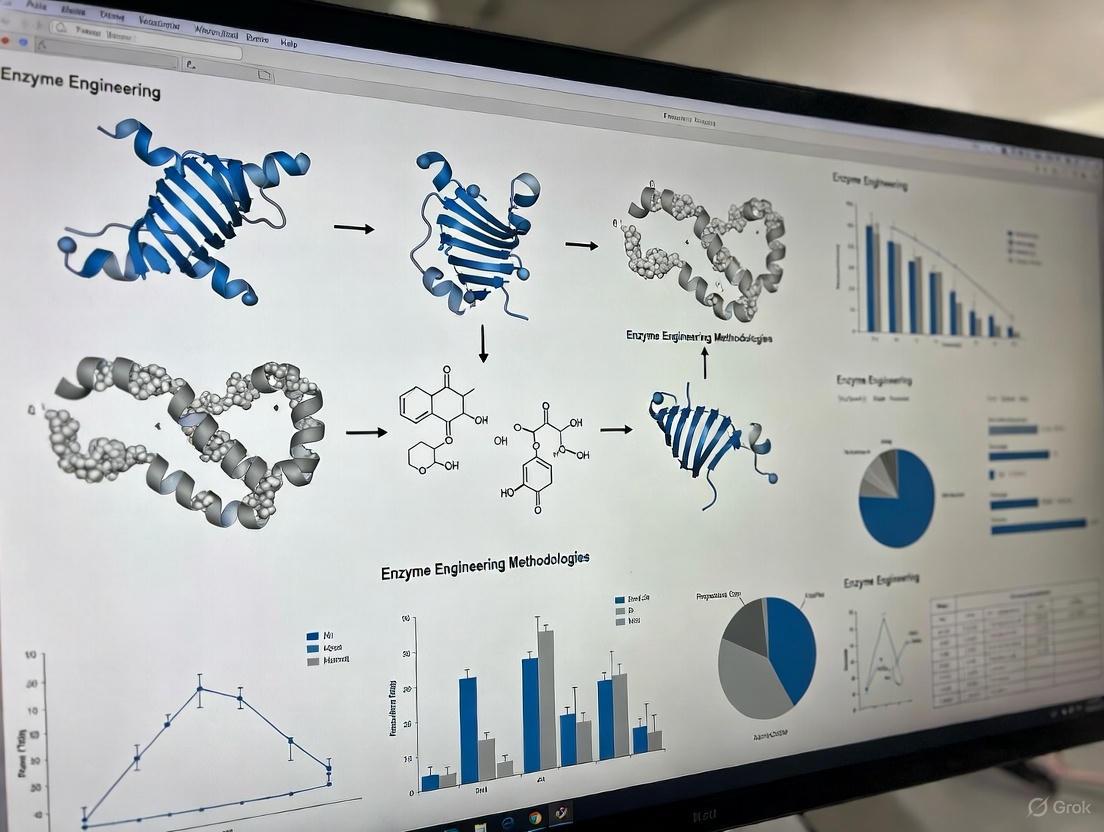
This article provides a critical evaluation of modern enzyme engineering methodologies for researchers, scientists, and drug development professionals.
Enzyme Engineering Methodologies: A Comprehensive Evaluation of Machine Learning, Directed Evolution, and High-Throughput Approaches
Abstract
This article provides a critical evaluation of modern enzyme engineering methodologies for researchers, scientists, and drug development professionals. It explores the foundational principles of enzyme engineering, examines cutting-edge methodological approaches including machine learning and directed evolution, addresses common troubleshooting and optimization challenges, and presents rigorous validation frameworks for comparative analysis. By synthesizing insights from recent high-impact studies and emerging technologies, this review serves as a comprehensive resource for selecting appropriate engineering strategies to develop biocatalysts with enhanced properties for biomedical, industrial, and therapeutic applications.
The Enzyme Engineering Landscape: Core Principles and Evolutionary Frameworks
Enzyme engineering represents a pivotal frontier in biotechnology, dedicated to overcoming the inherent limitations of natural enzymes for industrial applications. Native biocatalysts, while efficient in their physiological contexts, often lack the robust stability, substrate specificity, or catalytic efficiency required for commercial-scale processes in pharmaceuticals, biofuel production, and sustainable chemistry [1]. The field has evolved significantly from traditional random mutagenesis to sophisticated methodologies that integrate computational intelligence and high-throughput experimental biology. This guide objectively compares the dominant enzyme engineering paradigms, providing a detailed analysis of their experimental protocols, performance outcomes, and practical implementation requirements to inform researchers and drug development professionals.
The imperative for advanced enzyme engineering stems from critical industrial challenges. Naturally occurring enzymes frequently demonstrate insufficient activity under process conditions, vulnerability to harsh industrial environments (extreme pH, temperature, organic solvents), and limited substrate scope for non-natural compounds [1]. Pharmaceutical applications particularly demand high enantioselectivity and product yield for economic viability. Engineering approaches aim to systematically address these limitations through targeted modifications of enzyme structure and function, bridging the gap between natural catalysis and industrial requirements.
Comparative Analysis of Enzyme Engineering Methods
Contemporary enzyme engineering employs three primary strategies: rational design, directed evolution, and the emerging machine learning (ML)-guided framework. Each approach offers distinct mechanisms for navigating the vast protein sequence space to identify variants with enhanced properties. The table below provides a systematic comparison of these methodologies across critical performance and implementation parameters.
| Engineering Method | Key Differentiating Factor | Screening Throughput Required | Data Dependency | Typical Activity Improvement (Fold) | Primary Industrial Application |
|---|---|---|---|---|---|
| Rational Design | Structure-based computational prediction | Low to Moderate (102-103 variants) | High (requires detailed structural knowledge) | 1.5-5x | Introducing specific properties (e.g., thermostability) |
| Directed Evolution | Iterative random mutagenesis and screening | Very High (104-106 variants) | Low (initial library generation) | 10-100x+ | Broad substrate scope, activity enhancement |
| ML-Guided Engineering | Predictive modeling from sequence-function data | Moderate (103-104 variants for training) | High (requires structured training dataset) | 1.6-42x (demonstrated for amide synthetases) [2] | Parallel optimization for multiple target reactions |
Experimental Protocols and Workflow Specifications
Directed Evolution Protocol:
- Library Generation: Create genetic diversity through error-prone PCR or site-saturation mutagenesis targeting specific residues [1].
- Expression and Screening: Express variant libraries in host systems (e.g., E. coli, yeast) and implement high-throughput activity screening (microtiter plates, FACS).
- Selection and Iteration: Identify improved variants, use as templates for subsequent evolution rounds. Critical to this method is the screening assay design, which must reliably detect desired improvements in activity, specificity, or stability across thousands of variants.
ML-Guided Engineering Protocol (as demonstrated for amide synthetase engineering [2]):
- Initial Dataset Generation:
- Model Training: Use sequence-function data to train supervised ridge regression ML models, optionally augmented with evolutionary zero-shot fitness predictors [2].
- Prediction and Validation: Model predicts higher-order mutants with improved activity; top candidates are experimentally validated.
- DBTL Cycle: Iterate through design-build-test-learn cycles, incorporating new data to refine model predictions [2].
Visualization of ML-Guided Enzyme Engineering Workflow
ML-Guided Enzyme Engineering Workflow
Case Study: ML-Guided Engineering of Amide Synthetases
Experimental Implementation and Outcomes
A recent landmark study demonstrates the implementation of ML-guided engineering for amide bond-forming enzymes, with significant implications for pharmaceutical synthesis [2]. Researchers focused on McbA, an ATP-dependent amide bond synthetase from Marinactinospora thermotolerans, which displays natural substrate promiscuity but requires enhancement for efficient synthesis of pharmaceutical compounds [2]. The experimental workflow generated 1,217 enzyme variants that were evaluated in 10,953 unique reactions to map sequence-function relationships for nine target pharmaceutical compounds, including moclobemide, metoclopramide, and cinchocaine [2].
The resulting dataset trained augmented ridge regression ML models that successfully predicted enzyme variants with significantly improved activity. Quantitative results demonstrated 1.6- to 42-fold improved activity relative to the parent enzyme across the nine target compounds [2]. This approach notably enabled parallel optimization of a single generalist enzyme (McbA) into multiple specialist variants, each optimized for distinct chemical transformations – a capability challenging to achieve with conventional directed evolution.
Comparative Performance Data
The table below summarizes the quantitative improvements achieved through ML-guided engineering of McbA amide synthetase compared to what might be expected through conventional methods.
| Engineering Outcome | ML-Guided Approach | Traditional Directed Evolution | Rational Design |
|---|---|---|---|
| Variants Screened | 1,217 initial variants [2] | Typically 104-106 variants | 102-103 variants |
| Activity Improvement Range | 1.6-42x fold increase [2] | 10-100x+ possible, but resource intensive | Typically 1.5-5x |
| Parallel Optimization Capacity | High (9 compounds simultaneously) [2] | Low (typically sequential) | Moderate (requires individual designs) |
| Sequence-Function Insights | Quantitative landscape mapping | Limited to hit identification | Structure-based hypotheses |
| Resource Requirements | Moderate throughput screening with computational prediction | Very high throughput screening | Low throughput with computational design |
The Scientist's Toolkit: Essential Research Reagents and Solutions
Successful implementation of advanced enzyme engineering methodologies requires specialized reagents and platforms. The following table details essential research solutions employed in cutting-edge enzyme engineering workflows, particularly the ML-guided cell-free approach.
| Research Tool | Function in Workflow | Implementation Example |
|---|---|---|
| Cell-Free Gene Expression (CFE) Systems | Rapid protein synthesis without cloning or transformation | Expressed 1,217 McbA variants in a day [2] |
| Linear Expression Templates (LETs) | PCR-amplified DNA for direct protein expression | Enabled rapid iteration in design-build-test-learn cycles [2] |
| Site-Saturation Mutagenesis Libraries | Systematic exploration of single-residue mutations | Targeted 64 active site residues in McbA (1,216 variants) [2] |
| Machine Learning Platforms | Predictive modeling from sequence-function data | Ridge regression models trained on 10,953 reaction outcomes [2] |
| High-Throughput Screening Assays | Functional characterization of variant libraries | Measured amide bond formation for pharmaceutical synthesis [2] |
The comparative analysis presented in this guide demonstrates that ML-guided approaches represent a transformative advancement in enzyme engineering, particularly for complex optimization challenges requiring parallel development of multiple enzyme specialties. While directed evolution remains powerful for broad activity enhancements and rational design offers precision for specific properties, the integration of machine learning with high-throughput experimental platforms creates unprecedented capability to navigate protein sequence space efficiently [2] [3].
For researchers and drug development professionals, the practical implications are substantial. The ML-guided framework reduces screening burdens while generating quantitative sequence-function landscapes that accelerate both applied enzyme development and fundamental understanding of catalytic mechanisms [2]. As artificial intelligence methodologies continue advancing rapidly, future developments will likely further enhance prediction accuracy and expand the scope of engineerable enzyme functions [3]. These technologies promise to bridge more effectively the critical gap between natural catalysis and industrial requirements, enabling more sustainable and efficient biocatalytic processes across the pharmaceutical and chemical industries.
The concept of a protein fitness landscape provides a powerful framework for understanding the complex relationship between a protein's amino acid sequence and its function. Originally introduced to describe the relationship between fitness and an entire genome, this term is now widely used to describe the mapping between a protein-coding gene sequence and the resulting protein function [4]. In this landscape, protein sequences are mapped to corresponding fitness values representing measurable properties like catalytic activity, thermostability, or expression levels [5]. Protein engineering aims to navigate this vast sequence space to discover variants with enhanced or novel functions, with applications spanning biotechnology, medicine, and industrial biocatalysis [6] [5].
Despite conceptual elegance, experimental characterization of fitness landscapes faces fundamental challenges. The sequence space for even a small protein is astronomically large—a 250-amino-acid protein has 20²⁵⁰ possible sequences [4]—while experimental measurements remain sparse relative to this vastness [7]. This data limitation has driven the development of innovative methodologies that combine high-throughput experimentation with machine learning to efficiently explore and exploit fitness landscapes. This guide provides a comparative analysis of these methodologies, their experimental protocols, and their performance in practical protein engineering applications.
Methodological Comparison
Recent advances in protein engineering have produced three dominant paradigms for navigating fitness landscapes: autonomous laboratory platforms, machine-learning guided cell-free systems, and computational prediction methods. The table below compares their key characteristics and applications.
Table 1: Comparison of Protein Fitness Landscape Navigation Methodologies
| Methodology | Key Features | Throughput | Experimental Validation | Primary Applications |
|---|---|---|---|---|
| Self-Driving Laboratories (SAMPLE) | Fully autonomous design-test-learn cycles; Bayesian optimization; robotic experimentation | 3 protein designs per round; 9-hour cycle time | Glycoside hydrolase thermal tolerance improved by ≥12°C; <2% of landscape searched [6] | Enzyme thermal stability optimization; autonomous protein engineering |
| ML-Guided Cell-Free Engineering | Ridge regression models; cell-free protein expression; substrate promiscuity mapping | 10,953 reactions for 1,217 variants [2] | 1.6- to 42-fold improved activity for pharmaceutical synthesis [2] | Divergent enzyme specialization; multi-substrate optimization |
| Computational Fitness Prediction (EvoIF) | Protein language models; evolutionary information; inverse folding likelihoods | 217 mutational assays; >2.5M mutants [7] | State-of-the-art on ProteinGym benchmark with 0.15% training data [7] | Zero-shot fitness prediction; mutation impact assessment |
Experimental Protocols
Autonomous Laboratory Systems
The Self-driving Autonomous Machines for Protein Landscape Exploration (SAMPLE) platform implements fully autonomous protein engineering through integrated machine learning and robotic experimentation [6]. The experimental workflow comprises:
Gene Assembly: Pre-synthesized DNA fragments are assembled using Golden Gate cloning to produce full genes with necessary untranslated regions for T7-based protein expression [6].
Expression Template Amplification: Assembled expression cassettes are amplified via polymerase chain reaction (PCR), with products verified using EvaGreen fluorescent dye for double-stranded DNA detection [6].
Cell-Free Protein Expression: Amplified expression cassettes are added directly to T7-based cell-free protein expression reagents to produce target proteins [6].
Biochemical Characterization: Expressed proteins are characterized using colorimetric/fluorescent assays to evaluate biochemical activity and properties, with specialized assays for thermostability (T₅₀ measurement) [6].
The platform incorporates multiple quality control checkpoints, including verification of successful gene assembly and PCR, analysis of enzyme reaction progress curves, and detection of background hydrolase activity from cell-free extracts [6].
ML-Guided Cell-Free Engineering
This methodology employs cell-free systems for rapid protein expression and functional characterization, with the following optimized protocol [2]:
Cell-Free DNA Assembly: DNA primers containing nucleotide mismatches introduce desired mutations through PCR, followed by DpnI digestion of parent plasmid.
Intramolecular Gibson Assembly: Forms mutated plasmid without requiring bacterial transformation.
Linear Expression Template Amplification: Second PCR amplifies linear DNA expression templates (LETs) for direct use in cell-free systems.
Cell-Free Protein Synthesis: Mutated proteins are expressed using cell-free gene expression systems, bypassing cellular constraints.
High-Throughput Functional Assay: Enzyme activities are measured against multiple substrates in parallel, enabling substrate promiscuity profiling.
This workflow enables construction and testing of hundreds to thousands of sequence-defined protein mutants within a single day, with mutations accumulated through rapid iterations [2].
Deep Mutational Scanning
For fitness landscape characterization, deep mutational scanning provides high-throughput functional assessment of protein variants [8] [4]:
Library Construction: Generate variant libraries through error-prone PCR or saturation mutagenesis, with each variant identified by a unique DNA barcode.
Functional Sorting: Sort variants based on functional output (e.g., fluorescence intensity via FACS) while controlling for expression levels using a reporter protein like mKate2 [4].
Sequencing & Analysis: Sequence barcodes from sorted populations and use frequency changes to estimate functional fitness for thousands of variants.
Data Processing: Employ specialized tools like InDelScanner for detecting, aggregating, and filtering insertions, deletions, and substitutions in sequencing data [8].
Workflow Visualization
Workflow for Fitness Landscape Navigation
Performance Metrics
Quantitative assessment of methodology performance reveals distinct strengths across optimization metrics.
Table 2: Experimental Performance Metrics Across Methodologies
| Methodology | Optimization Target | Performance Gain | Screening Efficiency | Key Limitations |
|---|---|---|---|---|
| SAMPLE Platform | Glycoside hydrolase thermal tolerance | ≥12°C improvement in T₅₀ [6] | <2% of landscape searched; 60 designs tested [6] | Specialized robotics required; initial equipment cost |
| ML-Cell-Free | Amide synthetase activity | 1.6- to 42-fold improvement across 9 pharmaceuticals [2] | 1217 variants tested in 10,953 reactions [2] | Limited to reactions compatible with cell-free systems |
| EvoIF Prediction | General fitness prediction | State-of-the-art on ProteinGym benchmark [7] | Zero-shot prediction without experimental data [7] | Accuracy depends on evolutionary information availability |
Research Reagent Solutions
The experimental methodologies rely on specialized reagents and computational tools, summarized in the table below.
Table 3: Essential Research Reagents and Tools for Fitness Landscape Studies
| Reagent/Tool | Type | Function | Example Applications |
|---|---|---|---|
| Cell-Free Expression Systems | Biochemical reagent | Rapid protein synthesis without cellular constraints | High-throughput enzyme characterization [2] |
| Golden Gate Assembly | Molecular biology tool | Modular DNA assembly from standardized fragments | Combinatorial library construction [6] |
| DNA Barcodes | Sequencing tool | Unique variant identification in pooled assays | Deep mutational scanning [8] [4] |
| InDelScanner | Software | Detection and analysis of insertions and deletions | Fitness landscape analysis with indels [8] |
| Protein Language Models (pLMs) | Computational tool | Zero-shot fitness prediction from evolutionary patterns | EvoIF framework [7] |
| Fluorescent Reporters (mKate2) | Optical tool | Expression normalization in sorting assays | FACS-based deep mutational scanning [4] |
The navigation of protein fitness landscapes has evolved from purely experimental approaches to integrated methodologies that combine machine learning, high-throughput experimentation, and computational modeling. Autonomous systems like SAMPLE demonstrate remarkable efficiency in focused optimization tasks, achieving significant stability improvements while searching only a tiny fraction of sequence space [6]. ML-guided cell-free engineering excels at parallel optimization across multiple functional objectives, enabling divergent specialization of generalist enzymes [2]. Meanwhile, computational methods like EvoIF provide increasingly accurate zero-shot predictions by leveraging evolutionary information from natural sequences [7].
The choice between these methodologies depends critically on the specific protein engineering objectives, available resources, and desired throughput. For industrial applications requiring specialized enzymes with multiple optimized properties, ML-guided cell-free systems offer compelling advantages. For stability engineering with limited experimental capacity, autonomous platforms provide robust optimization. Computational methods continue to advance, with benchmarks like the Protein Engineering Tournament establishing standardized performance evaluation [9] [10]. As these methodologies mature and integrate, they promise to accelerate the design of novel proteins with transformative applications across biotechnology, medicine, and sustainable manufacturing.
Historical Context
Directed evolution (DE), a method that mimics natural selection in a laboratory setting to steer proteins toward user-defined goals, has revolutionized enzyme engineering and biomolecule design [11]. Its development, recognized by the 2018 Nobel Prize in Chemistry, represents a convergence of insights from various experimental traditions over decades.
The conceptual origins of directed evolution can be traced to pioneering in vitro evolution experiments in the 1960s. In 1967, Sol Spiegelman and colleagues conducted a landmark study demonstrating the evolution of self-replicating RNA molecules by Qβ bacteriophage RNA polymerase, creating what became known as "Spiegelman's Monster" [11] [12]. This work provided an early model system for studying evolutionary principles under controlled conditions. Throughout the 1970s and 1980s, researchers began applying mutagenesis to whole cells; one early example from 1964 used chemical mutagenesis to induce a xylitol utilization phenotype in Aerobacter aerogenes [13].
A significant shift toward application-driven protein engineering occurred in the 1980s with the development of phage display by George Smith. This technique allowed the selection of binding peptides and proteins displayed on the surface of filamentous phages, providing a direct link between genotype and phenotype [13] [12]. However, the broader adoption of directed evolution for enzyme engineering began in the 1990s, marked by the development of general methods for creating and screening diverse gene libraries. A landmark 1993 study by Chen and Arnold demonstrated the power of iterative random mutagenesis using error-prone PCR to evolve subtilisin E for 256-fold higher activity in dimethylformamide [13]. The subsequent development of DNA shuffling by Willem Stemmer in 1994 introduced in vitro recombination as a powerful diversification strategy, enabling the evolution of a β-lactamase with a 32,000-fold increase in antibiotic resistance [13].
Table 1: Major Historical Milestones in Directed Evolution
| Time Period | Key Development | Significance |
|---|---|---|
| 1960s-1970s | Early in vitro evolution (Spiegelman's Monster) | Demonstrated evolutionary principles in a test tube [12] |
| 1980s | Development of phage display | Enabled selection of proteins with desired binding properties [11] |
| 1990s | Error-prone PCR & DNA shuffling | Established general methods for enzyme evolution and improvement [13] |
| 2000s-2010s | High-throughput screening methods | Dramatically increased library screening capacity [14] |
| 2010s-Present | Ultrahigh-throughput & in vivo continuous evolution | Enabled exploration of vastly larger sequence spaces [15] |
Fundamental Mechanisms
The fundamental mechanism of directed evolution intentionally mirrors the process of natural selection, condensing it into an iterative, manageable laboratory workflow. This process consists of three core steps repeated over multiple generations: diversification, selection/screening, and amplification [11].
The Directed Evolution Cycle
The directed evolution cycle is a recursive process designed to accumulate beneficial mutations in a stepwise fashion.
Step 1: Generating Diversity (Diversification)
The first step involves creating a library of genetic variants for the gene of interest. The methods for generating this diversity fall into several categories, each with distinct advantages.
Random Mutagenesis introduces mutations throughout the entire gene sequence without requiring prior structural knowledge. The most common method is error-prone PCR (epPCR), which uses biased reaction conditions (e.g., Mn²⁺ addition, unbalanced dNTP concentrations) to reduce the fidelity of DNA polymerase, resulting in random base substitutions [13] [16]. This approach is ideal for globally determined properties like thermostability but offers reduced sampling of mutagenesis space [12]. Other methods include using mutator strains of E. coli with defective DNA repair systems or chemical mutagens like nitrous acid or ethyl methane sulfonate to modify template DNA [16].
Recombination Strategies mimic natural genetic recombination by shuffling fragments from multiple parent genes. DNA shuffling involves digesting a set of homologous genes with DNase I, then reassembling the fragments into full-length chimeric genes using a primer-free PCR [13]. This method allows the combination of beneficial mutations from different parents and can access novel sequences between parental genes in sequence space [11]. Related techniques include the Staggered Extension Process (StEP), which generates recombinant genes through abbreviated primer extension cycles that promote template switching [13].
Targeted/Semi-Rational Mutagenesis focuses diversity on specific regions of the protein to create smaller, more intelligent libraries. Site-saturation mutagenesis replaces a specific amino acid position with all or most of the other 19 amino acids, allowing in-depth exploration of key positions [12] [16]. This approach is particularly effective when structural data identifies active site residues or other functionally important regions [14].
Table 2: Common Methods for Library Generation in Directed Evolution
| Method | Principle | Key Advantage | Common Application |
|---|---|---|---|
| Error-Prone PCR | Random point mutations via low-fidelity PCR | Easy to perform; no prior knowledge needed | Global properties (e.g., thermostability) [12] |
| DNA Shuffling | Recombination of gene fragments from multiple parents | Combines beneficial mutations; jumps in sequence space | Family shuffling of homologous enzymes [13] |
| Site-Saturation Mutagenesis | Systematic randomization of specific codons | Focused exploration of key residues | Active site engineering [16] |
| RAISE | Random insertion and deletion of short sequences | Generates indels; explores different length variations | Backbone remodeling [12] |
| Orthogonal Replication Systems | In vivo mutagenesis using engineered DNA polymerases | Continuous evolution in host organism | Long-term adaptive evolution [15] |
Step 2: Identifying Improved Variants (Selection/Screening)
The second step involves identifying the rare improved variants from the library. This requires a robust method that links the protein's function (phenotype) to its gene (genotype) [11].
Screening Methods involve individually assaying each variant (or host cell expressing it) to quantitatively measure activity. This requires a detectable signal, often from a colorimetric or fluorogenic reaction. While providing detailed quantitative data, screening throughput is often limited by instrumentation [11]. Ultrahigh-throughput screening methods have dramatically expanded capabilities:
- Fluorescence-Activated Cell Sorting (FACS) can screen millions of variants per hour when activity is coupled to fluorescence [15].
- Microfluidic Droplet Sorting encapsulates single cells or enzymes in picoliter-volume water-in-oil emulsions, allowing compartmentalized assays and sorting at rates exceeding thousands of droplets per second [14].
Selection Methods directly couple desired protein function to host cell survival or replication. For example, an enzyme that degrades a toxin or synthesizes an essential metabolite allows only improved variants to propagate [11]. While extremely powerful for enriching functional clones from enormous libraries (up to 10¹⁵ variants), selection systems can be challenging to design and provide less quantitative information than screening [11].
Step 3: Gene Amplification and Iteration
The final step involves amplifying the genes encoding the best-performing variants, either using PCR or by growing host cells [17]. These sequences then serve as templates for the next round of diversification, continuing the evolutionary cycle until the desired functionality is achieved [11]. The stringency of selection can be increased with each round to drive further improvements.
Experimental Protocols and Data
Representative Experimental Workflow: Evolving Thermostable α-Amylase
A 2024 study demonstrated an ultrahigh-throughput screening-assisted in vivo directed evolution platform for enzyme engineering [15]. The workflow for evolving α-amylase activity exemplifies modern directed evolution protocols:
Library Construction: An in vivo mutagenesis system in E. coli was employed, utilizing a mutagenic plasmid expressing an error-prone DNA polymerase I (Pol I*) and a genomic MutS mutation to fix mutations. The system was thermally inducible, allowing controlled mutation rates.
Diversification: Cultures of E. coli hosting the α-amylase gene were grown under inducing conditions (temperature upshift to 37°C) to activate the mutagenesis system, generating a diverse library of α-amylase variants.
Screening: The library was subjected to microfluidic droplet screening. Single cells were encapsulated in droplets with a fluorescent substrate for α-amylase. Active variants produced a fluorescent signal, enabling sorting.
Iteration: Improved variants identified by sorting were subjected to additional rounds of diversification and screening.
Outcome: After iterative rounds, a mutant with a 48.3% improvement in α-amylase activity was identified [15].
Quantitative Outcomes of Directed Evolution Campaigns
An analysis of 81 directed evolution campaigns from the literature provides quantitative insight into the typical improvements achieved [16]. The data reveal that while dramatic improvements are possible, most successful campaigns achieve more modest gains.
Table 3: Quantitative Analysis of Directed Evolution Outcomes from 81 Studies [16]
| Kinetic Parameter | Average Fold Improvement | Median Fold Improvement |
|---|---|---|
| kcat (or Vmax) | 366-fold | 5.4-fold |
| Km | 12-fold | 3-fold |
| kcat/Km | 2548-fold | 15.6-fold |
Notable success stories beyond these averages include:
- The evolution of a P450 monooxygenase for propane oxidation, creating a pathway from alkanes to alcohols as biofuels [16].
- The engineering of phosphite dehydrogenase for cofactor regeneration, improving its half-life at 45°C by more than 23,000-fold [16].
- The evolution of an enantioselective transaminase for sitagliptin synthesis, streamlining manufacturing and reducing costs for this antihyperglycemic drug [16].
The Scientist's Toolkit: Key Research Reagents
Successful directed evolution experiments rely on specialized reagents and tools. The following table details essential components for a typical campaign.
Table 4: Essential Research Reagents for Directed Evolution
| Reagent/Tool | Function | Examples & Notes |
|---|---|---|
| Mutagenic Polymerases | Introduces random mutations during PCR | Engineered error-prone polymerases (e.g., Mutazyme II) reduce mutation bias [16] |
| Expression Vectors | Hosts the gene library for expression in a host organism | Vectors with inducible promoters (e.g., pET, pBAD); phage vectors for display technologies [11] |
| Host Organisms | Expresses the variant proteins | E. coli (common), yeast (for eukaryotic proteins), specialized mutator strains [11] |
| Fluorogenic/Chromogenic Substrates | Enables detection of enzyme activity in screening | Substrates that release a fluorescent or colored product upon enzymatic turnover [14] |
| Microfluidic Droplet Generators | Creates monodisperse emulsion compartments for UHTS | Commercial systems (e.g., Dolomite Bio); allows screening of >10⁷ variants [14] [15] |
| FACS Instrumentation | Sorts cells or beads based on fluorescence | Standard flow cytometers; essential for screening display libraries or biosensor-coupled systems [14] [15] |
| Commercial Library Services | Synthesizes custom DNA libraries | Vendors (e.g., Twist Bioscience, Genscript) provide high-quality targeted libraries [14] |
The field of enzyme engineering is undergoing a profound transformation, moving from traditional laboratory-based methods to sophisticated computational approaches that are accelerating the design and optimization of biocatalysts. Where once researchers relied primarily on directed evolution and rational design based on natural enzyme templates, computational methods now enable the prediction, design, and optimization of enzyme structures and functions with unprecedented speed and precision [18] [19]. This paradigm shift is particularly evident in the emergence of artificial intelligence (AI) and machine learning (ML) techniques that can analyze complex sequence-function relationships and generate novel enzyme designs that transcend natural evolutionary boundaries [20] [21]. These advanced approaches are overcoming the limitations of conventional methods, which often struggled with small functional datasets, low-throughput screening strategies, and limited exploration of sequence space [3].
The integration of multi-step computational workflows represents the cutting edge of enzyme engineering research. By combining structure prediction algorithms with generative AI and molecular dynamics simulations, researchers can now tackle increasingly complex enzyme design challenges [22]. This review provides a comprehensive comparison of computational enzyme engineering methodologies, their experimental validation, and their practical applications in addressing pressing challenges in biotechnology, medicine, and sustainable chemistry.
Methodological Comparison: Computational Approaches in Enzyme Engineering
Traditional Structure-Based Design
Traditional computational approaches to enzyme engineering have primarily focused on modifying existing enzyme scaffolds through structure-based rational design. These methods leverage computational tools to analyze protein structures and identify specific residues for mutation to enhance desirable properties such as stability, activity, or selectivity [19]. Molecular docking simulations and molecular dynamics have been particularly valuable for understanding enzyme-substrate interactions and predicting the effects of mutations on enzyme function [23]. While these approaches have yielded significant successes, they remain constrained by the fundamental limitations of natural enzyme templates and our incomplete understanding of the complex relationship between protein structure and function [19].
AI and Machine Learning-Driven Engineering
The emergence of AI and ML has introduced powerful new capabilities to enzyme engineering. These data-driven approaches can identify complex patterns in large sequence-function datasets that are not apparent through traditional analysis [18] [24]. Supervised learning algorithms such as support vector machines (SVMs), random forests, and neural networks have demonstrated remarkable performance in predicting enzyme functional classes from sequence and structural features [18]. More recently, deep learning architectures including convolutional neural networks (CNNs), recurrent neural networks (RNNs), and graph neural networks (GCNs) have shown superior capability in capturing spatial and sequential relationships within enzyme structures [18] [24].
Generative AI for De Novo Enzyme Design
The most revolutionary development in computational enzyme engineering is the application of generative AI for de novo enzyme design [20] [21]. Unlike previous approaches that modified existing natural enzymes, generative AI models can create entirely novel enzyme sequences and structures optimized for specific functions [20]. Techniques such as Generative Adversarial Networks (GANs) and diffusion models have enabled researchers to explore vast regions of protein sequence space beyond natural evolutionary boundaries [24] [21]. For instance, ProteinGAN, a specialized variant of GAN, has demonstrated the ability to learn natural protein sequence diversity and generate functional novel sequences [21]. These approaches mark a pivotal shift from identifying and modifying natural enzymes to ground-up design of bespoke biocatalysts [21].
Table 1: Comparison of Major Computational Approaches in Enzyme Engineering
| Methodology | Key Features | Advantages | Limitations | Representative Tools/Platforms |
|---|---|---|---|---|
| Structure-Based Rational Design | Modifies existing enzyme scaffolds based on structural analysis | High precision for targeted mutations; Well-established methodology | Limited by natural enzyme templates; Requires extensive structural knowledge | Molecular docking software; Molecular dynamics simulations |
| Machine Learning-Guided Engineering | Learns sequence-function relationships from large datasets | Identifies complex patterns beyond human perception; Improves with more data | Dependent on quality and quantity of training data; Black box nature | SVM; Random Forest; CNN; RNN [18] |
| Generative AI De Novo Design | Creates novel enzyme sequences from scratch | Explores beyond natural sequence space; No template limitations | High computational cost; Complex validation required | RFDiffusion; PLACER; ProteinGAN [21] [22] |
| Hybrid AI-Physics Workflows | Combines AI with physics-based simulations | Leverages strengths of both approaches; More physiologically realistic | Implementation complexity; Parameterization challenges | PLACER with RFDiffusion [22] |
Experimental Protocols and Workflows
ML-Guided Cell-Free Engineering Platform
A groundbreaking experimental platform developed by Karim and colleagues demonstrates the powerful integration of machine learning with high-throughput experimentation for enzyme engineering [3]. This methodology addresses critical limitations of conventional approaches by enabling rapid generation of large functional datasets that ML models require. The protocol begins with the creation of a diverse mutant library of the target enzyme, in their case the amide synthetase McbA. Rather than relying on cellular expression systems, the team employs a cell-free protein synthesis platform to express 1,217 enzyme variants in parallel [3]. This cell-free approach enables high-throughput screening under customizable reaction conditions, ultimately allowing the team to assess enzyme functionality across 10,953 unique reactions [3].
The resulting sequence-function data serves as training material for machine learning models that predict enzyme performance on novel substrates. In their published work, the researchers used the trained model to identify amide synthetase variants capable of synthesizing nine small-molecule pharmaceuticals [3]. The platform's iterative nature enables continuous refinement of the ML models as additional experimental data is accumulated. This methodology significantly accelerates the exploration of sequence-fitness landscapes across multiple regions of chemical space simultaneously, representing a substantial advancement over conventional one-reaction-at-a-time approaches [3].
AI-Driven Multi-Step Enzyme Design Workflow
A more complex experimental workflow for designing entirely novel enzymes has been demonstrated by researchers tackling the challenge of creating esterase enzymes capable of digesting plastic polymers [22]. This protocol involves a multi-step AI pipeline that begins with RFDiffusion, a generative AI tool that creates novel protein scaffolds based on structural motifs from known esterase enzymes [22]. The initial designs are then filtered by a second neural network that selects amino acid sequences forming binding pockets complementary to the target ester substrate.
The most innovative aspect of this protocol is the integration of PLACER, a specialized AI tool trained on protein-ligand complex structures that can optimize enzyme designs for multi-step catalytic mechanisms [22]. Through iterative cycles of design generation with RFDiffusion and optimization with PLACER, the researchers successfully created functional enzymes capable of catalyzing the complex four-step reaction mechanism required for ester bond hydrolysis [22]. This workflow represents a significant advancement in de novo enzyme design, as it addresses the challenge of creating enzymes that must adopt multiple transition states during their catalytic cycle.
Diagram 1: AI-Driven Multi-Step Enzyme Design Workflow. This workflow illustrates the iterative process combining multiple AI tools for de novo enzyme design, as demonstrated in the development of plastic-digesting enzymes [22].
Performance Comparison and Experimental Data
Quantitative Assessment of Engineering Approaches
Direct comparison of computational enzyme engineering approaches reveals significant differences in their efficiency, success rates, and applicability. Traditional structure-based design methods typically achieve functional enzyme variants in approximately 5-15% of designed mutants, with optimization cycles requiring several months to complete [19]. In contrast, ML-guided approaches demonstrate substantially improved efficiency. The cell-free platform described by Karim et al. enabled engineering of McbA amide synthetase for six pharmaceutical compounds simultaneously, with all newly generated enzyme variants showing improved amide bond formation capability [3].
The most impressive performance metrics come from advanced AI-driven de novo design workflows. In the development of esterase enzymes, researchers reported that initial designs using RFDiffusion alone yielded only 2 functional enzymes out of 129 designs (1.6% success rate) [22]. However, with the integration of PLACER for multi-step mechanism optimization, the success rate increased more than three-fold, ultimately reaching 18% for enzymes capable of cleaving ester bonds, with two designs ("super" and "win") demonstrating full catalytic cycling capability [22]. This progressive improvement highlights the power of combining complementary AI tools in structured workflows.
Table 2: Performance Metrics of Computational Enzyme Engineering Approaches
| Engineering Approach | Success Rate | Time Cycle | Key Performance Metrics | Experimental Validation |
|---|---|---|---|---|
| Structure-Based Design | 5-15% | 3-6 months | Moderate improvements in activity/selectivity | Individual enzyme assays; Kinetic characterization |
| ML-Guided Cell-Free Platform [3] | Significant improvement over conventional methods | Weeks | Enabled engineering for 6 compounds simultaneously | 10,953 reactions tested; Pharmaceutical synthesis validated |
| AI-Driven De Novo Design (Initial Phase) [22] | 1.6% (2/129 designs) | Not specified | Basic ester bond cleavage | Fluorescence-based activity screening |
| AI-Driven De Novo Design (with PLACER) [22] | 18% | Not specified | Full catalytic cycling; PET plastic digestion | Multiple reaction cycles; Plastic degradation assays |
Application-Specific Performance
The comparative performance of computational enzyme engineering approaches varies significantly across different application domains. In industrial biotechnology, ML-guided engineering has demonstrated remarkable success in optimizing enzymes for harsh process conditions. For example, engineering of cellulases and hemicellulases to withstand high temperatures and acidic environments has significantly improved the economic viability of biofuel production [19]. Similarly, in the pharmaceutical sector, engineered cytochrome P450s and amine oxidases have enabled more efficient synthesis of complex drug molecules [19].
Generative AI approaches have shown particular promise in creating enzymes for novel functions not observed in nature. The development of enzymes capable of digesting plastic polymers like PET demonstrates how AI-driven design can address environmental challenges [22]. In another innovative application, Biomatter's generative AI tools successfully redesigned α1,2-fucosyltransferase to selectively produce Lacto-N-fucopentaose (LNFP I), a valuable human milk oligosaccharide, while minimizing byproduct formation – an essential achievement for industrial-scale manufacturing [21].
The Scientist's Toolkit: Essential Research Reagents and Solutions
Table 3: Key Research Reagent Solutions for Computational Enzyme Engineering
| Reagent/Resource | Function | Application Examples |
|---|---|---|
| Cell-Free Protein Synthesis Systems [3] | High-throughput expression of enzyme variants without cellular constraints | Rapid screening of 1,217 McbA mutants across 10,953 reactions [3] |
| Directed Mutagenesis Libraries | Generation of sequence diversity for ML training | Creating sequence-function landscapes for amide synthetase engineering [3] |
| Fluorescence-Based Activity Reporters [22] | High-throughput screening of enzyme function | Detection of ester bond cleavage in de novo designed enzymes [22] |
| AlphaFold Protein Structure Predictions [24] | Accurate 3D structure prediction from amino acid sequences | Providing structural data for enzyme binding pocket engineering [24] [23] |
| RFDiffusion [22] | Generative AI for novel protein scaffold design | Creating initial enzyme designs for esterase function [22] |
| PLACER [22] | AI optimization for multi-step catalytic mechanisms | Engineering functional esterases with full catalytic cycling capability [22] |
| ProteinGAN [21] | Generative adversarial network for protein sequence generation | De novo design of α1,2-fucosyltransferase with improved specificity [21] |
The field of computational enzyme engineering is rapidly evolving, with several emerging frontiers promising to further accelerate innovation. The integration of larger and more diverse training datasets will continue to enhance the predictive capabilities of ML and AI models [18] [24]. Additionally, the development of more sophisticated AI architectures that better capture the dynamic nature of enzyme catalysis and allosteric regulation represents an important research direction [20] [23]. As noted by Karim, "New and powerful artificial intelligence approaches are coming out rapidly. We would like to take advantage of these new methods to make our workflows even more capable of creating new-to-nature proteins" [3].
Future advancements will likely focus on increasing the robustness and industrial applicability of computationally designed enzymes. This includes engineering not just for catalytic activity, but also for stability, expression yield, and resistance to process inhibitors [3] [19]. The successful application of these advanced computational approaches will ultimately enable the development of bespoke enzymes for applications in green chemistry, pharmaceutical manufacturing, environmental remediation, and sustainable energy production – expanding the toolbox available to address some of humanity's most pressing challenges [3] [21] [22].
In the field of enzyme engineering, the systematic evaluation of engineered biocatalysts relies on four fundamental performance metrics: activity, stability, specificity, and expressibility. These parameters form the cornerstone of assessing the success of enzyme engineering methodologies, from traditional directed evolution to cutting-edge machine learning (ML)-guided approaches. For researchers, scientists, and drug development professionals, understanding and quantifying these metrics is crucial for developing enzymes that meet the demanding requirements of industrial applications, pharmaceutical synthesis, and sustainable technologies.
The evolution of enzyme engineering has been significantly accelerated by the integration of computational and data-driven approaches. Where conventional methods faced limitations in screening throughput and navigating vast sequence spaces, modern frameworks combine high-throughput experimental systems with ML models to efficiently explore fitness landscapes [3] [2]. This review provides a comparative analysis of current methodologies for evaluating enzyme performance, presenting standardized experimental protocols and quantitative benchmarking data to inform research and development decisions across academic and industrial settings.
Quantitative Comparison of Enzyme Performance Metrics
Activity: The Catalytic Measure
Enzyme activity, typically quantified as catalytic efficiency or turnover number, represents the fundamental capacity of an enzyme to convert substrate to product. The Michaelis constant (Kₘ) serves as a crucial parameter measuring enzyme-substrate affinity, with lower values generally indicating higher affinity [25]. Recent machine learning approaches have demonstrated remarkable capabilities in predicting Kₘ values for both wildtype and mutant enzymes, enabling virtual screening of enzyme variants before experimental validation.
Table 1: Benchmarking Enzyme Activity Enhancement Through Engineering Approaches
| Engineering Approach | Enzyme Class | Activity Enhancement | Experimental Measurement Method | Key Findings |
|---|---|---|---|---|
| ML-Guided Cell-Free Platform [3] [2] | Amide synthetase (McbA) | 1.6- to 42-fold improvement relative to parent enzyme | Cell-free expression with functional assays | High-throughput screening of 1,217 mutants across 10,953 reactions |
| GraphKM Model [25] | Various wildtype and mutant enzymes | Kₘ prediction accuracy: MSE = 0.653, R² = 0.527 | Literature-derived HXKm dataset validation | Integrates graph neural networks with protein language models |
| Data-Driven Engineering [26] | Various enzyme classes | Identified function-enhancing mutations (<1% natural occurrence) | Statistical modeling of sequence-function relationships | Machine learning screens efficiency-enhancing mutants |
Stability: Operational Longevity
Stability encompasses an enzyme's capacity to maintain structural integrity and catalytic function under operational conditions, including thermal, pH, and solvent challenges. This metric is broadly categorized into shelf stability (retention of activity during storage) and operational stability (retention of activity during use) [27]. The half-life—time taken for an enzyme to lose half its initial activity—serves as a key quantitative measure for stability assessment.
Table 2: Enzyme Stability Profiles and Enhancement Strategies
| Stability Type | Measurement Parameters | Enhancement Strategies | Industrial Relevance |
|---|---|---|---|
| Shelf Stability [27] | Time-dependent activity loss under storage conditions | Immobilization, chemical modification, supercritical fluid treatment | Determines storage requirements and product shelf life |
| Operational Stability [27] | Activity retention during reaction cycles, temperature profiles | Directed evolution, rational design, non-conventional media | Impacts process efficiency and cost in continuous operations |
| Thermal Stability | Half-life at elevated temperatures, melting temperature (Tₘ) | Ancestral sequence reconstruction, consensus design | Critical for high-temperature industrial processes |
Environmental factors profoundly influence enzyme stability. Pressure treatments, temperature-time profiles, and reaction media composition can induce conformational changes that either stabilize or destabilize enzyme structure [27]. In industrial applications, enzyme stability directly correlates with process economics, as more stable enzymes require less frequent replacement and maintain consistent productivity over extended operational periods.
Specificity: Catalytic Precision
Specificity defines an enzyme's selectivity toward particular substrates, reaction types, or stereochemical outcomes. This metric is crucial for applications requiring precise biotransformations, such as pharmaceutical synthesis where enantioselectivity determines product purity and regulatory compliance. Modern enzyme engineering approaches have demonstrated success in transforming generalist enzymes into specialized catalysts through divergent evolution strategies [2].
Engineering campaigns focused on specificity often begin with evaluating enzymatic substrate promiscuity—testing an extensive array of substrates including primary, secondary, alkyl, aromatic, and complex pharmacophore molecules [2]. This mapping of substrate scope identifies both preferred substrates and inaccessible products, guiding subsequent engineering efforts. For the amide synthetase McbA, wild-type enzyme showed strong chemo-, stereo-, and regioselectivity preferences, such as strongly favoring synthesis of S-sulpiride over R-sulpiride [2].
Expressibility: Production Yield
Expressibility quantifies the achievable yield of functional enzyme produced in a host system, directly impacting process scalability and economic viability. This metric encompasses both the quantity of expressed protein and the fraction that correctly folds into active conformation. Cell-free protein synthesis systems have emerged as valuable tools for rapid expression screening, bypassing the complexities of cellular transformation and culturing [2].
Advanced platforms now integrate cell-free DNA assembly with cell-free gene expression, enabling construction and testing of thousands of sequence-defined protein variants within days [2]. This approach eliminates biases from degenerate primers in traditional site-saturation libraries and allows accumulation of mutations through rapid iterative cycles. The methodology has been validated using well-characterized proteins like monomeric ultra-stable green fluorescent protein before application to target enzymes such as McbA [2].
Experimental Protocols for Metric Evaluation
High-Throughput Activity Screening
The ML-guided cell-free platform demonstrates a comprehensive workflow for activity assessment [3] [2]:
- DNA Library Construction: Design primers containing nucleotide mismatches to introduce desired mutations via PCR
- Template Preparation: Digest parent plasmid with DpnI, perform intramolecular Gibson assembly to form mutated plasmids
- Cell-Free Expression: Amplify linear DNA expression templates (LETs) via PCR and express mutated proteins through cell-free systems
- Functional Assay: Conduct reactions under industrially relevant conditions (low enzyme loading, high substrate concentration)
- Data Collection: Quantify conversion rates using analytical methods (e.g., mass spectrometry)
- Model Training: Use sequence-function data to train machine learning models (e.g., augmented ridge regression) for predictive design
Stability Assessment Protocol
Standardized methodologies for stability evaluation include [27]:
- Thermal Stability: Incubate enzymes at various temperatures, periodically sampling for residual activity determination
- Storage Stability: Monitor activity retention of enzyme preparations (dehydrated, solution, immobilized) over extended storage periods
- Operational Stability: Measure activity maintenance during continuous use or multiple batch cycles
- Kinetic Analysis: Calculate half-life from activity decay curves to obtain quantitative stability parameters
Specificity Profiling
Comprehensive specificity assessment involves [2]:
- Substrate Scope Screening: Test enzyme against diverse substrate panels including structural analogs, stereoisomers, and functionalized molecules
- Kinetic Parameter Determination: Measure Kₘ and k꜀ₐₜ values for each substrate to calculate catalytic efficiency (k꜀ₐₜ/Kₘ)
- Selectivity Analysis: Quantify enantiomeric ratio (E-value) for chiral synthesis applications
- Product Characterization: Identify and quantify reaction products using chromatographic and spectroscopic methods
Expressibility Quantification
Standardized expressibility evaluation includes [2]:
- Host System Comparison: Express target enzyme in multiple production systems (bacterial, yeast, mammalian, cell-free)
- Soluble Fraction Analysis: Separate soluble and insoluble fractions, quantifying active enzyme in each
- Functional Yield Determination: Measure total active enzyme per unit culture volume or reaction time
- Scale-Up Correlation: Assess consistency of expression levels between small-scale screening and production-scale systems
Diagram: Enzyme Engineering Workflow and Metric Evaluation
Research Reagent Solutions for Enzyme Performance Characterization
Table 3: Essential Research Reagents and Platforms for Enzyme Evaluation
| Reagent/Platform | Function | Application Context |
|---|---|---|
| Cell-Free Expression Systems [2] | Rapid protein synthesis without cellular constraints | High-throughput screening of enzyme variants |
| ESM-2 Model [25] | Protein sequence representation via transformer-based language model | Converting protein sequences to 1,280-dimensional feature vectors |
| Graph Neural Networks [25] | Molecular graph representation of substrates | Generating 128-dimensional substrate vectors for activity prediction |
| RDKit [25] | Chemical informatics and SMILES processing | Converting substrate SMILES codes to molecular graphs |
| PaddlePaddle/PGL Framework [25] | Deep learning and graph learning implementation | GNN training and enzyme kinetics prediction |
| Gradient Boosting Models (XGBoost) [25] | Machine learning for regression tasks | Predicting kinetic parameters from sequence and structural features |
Comparative Analysis of Engineering Methodologies
Traditional vs. Data-Driven Approaches
The landscape of enzyme engineering has evolved significantly from traditional methods to increasingly sophisticated data-driven approaches:
- Directed Evolution: Classical approach involving iterative rounds of mutagenesis and screening; effective but limited by screening throughput and potential oversight of epistatic interactions [2]
- Rational Design: Structure-based engineering requiring detailed mechanistic knowledge; effective for targeted improvements but limited by structural information availability
- ML-Guided Engineering: Integrates high-throughput experimental data with machine learning models; enables navigation of sequence-function landscapes and prediction of higher-order mutants with enhanced activities [2] [26]
Key Advances in Methodology
Recent innovations have addressed fundamental limitations in enzyme engineering:
- Overcoming Small Functional Datasets: ML-guided platforms rapidly generate large sequence-function datasets, capturing interactions among different amino acid residues within proteins [3]
- High-Throughput Screening Strategies: Cell-free approaches enable testing of thousands of enzyme variants across multiple reactions, providing comprehensive fitness landscapes [2]
- Divergent Evolution Capability: Engineering generalist enzymes into multiple specialists for different chemical transformations, dramatically expanding application potential [2]
Diagram: Data-Driven Prediction of Enzyme Performance Metrics
The comprehensive evaluation of activity, stability, specificity, and expressibility provides the critical framework for advancing enzyme engineering methodologies. As the field progresses toward increasingly sophisticated data-driven approaches, the integration of high-throughput experimental systems with predictive computational models enables more efficient navigation of complex sequence-function landscapes. This synergistic methodology accelerates the development of specialized biocatalysts for pharmaceutical applications, industrial processes, and sustainable technologies.
Future directions will likely focus on enhancing model generalizability across diverse enzyme families, addressing multi-objective optimization challenges, and improving integration of structural and dynamic information. The continued refinement of standardized assessment protocols and benchmarking datasets will further establish rigorous comparative evaluation across enzyme engineering platforms, ultimately advancing the design of novel biocatalysts with tailored properties for specific applications.
Advanced Engineering Toolkit: Machine Learning, Automation, and Experimental Platforms
In the field of enzyme engineering, the creation of mutant libraries represents a fundamental step in the pursuit of optimized biocatalysts. These strategies primarily diverge into two philosophical approaches: targeted mutagenesis, which focuses diversity on specific regions predicted to be functionally important, and whole-gene random approaches, which distribute genetic changes broadly across the entire gene sequence. The choice between these methodologies significantly impacts the size, quality, and functional diversity of the resulting library, ultimately determining the success of downstream screening and selection campaigns [28] [1].
This guide provides an objective comparison of these core strategies, framing them within the broader context of evaluating enzyme engineering methodologies. We present experimental data, detailed protocols, and analytical frameworks to assist researchers, scientists, and drug development professionals in selecting the most appropriate library creation method for their specific project goals.
Core Principles and Comparative Analysis
Defining the Approaches
- Targeted Mutagenesis encompasses methods that introduce mutations at predefined positions or regions within a gene. This approach requires prior structural or functional knowledge, such as active site residues, substrate-binding pockets, or regions known to influence stability [28] [29]. Techniques include site-saturation mutagenesis (where a single codon is randomized to all possible amino acids) and combinatorial mutagenesis of multiple specific sites [1].
- Whole-Gene Random Mutagenesis involves the introduction of mutations randomly throughout the entire gene sequence. This approach does not require prior structural knowledge and aims to explore a broader sequence space, potentially discovering unexpected beneficial mutations in distal regions [28] [30]. Common methods include error-prone PCR (epPCR) and random transposon insertion [28] [30].
Quantitative Comparison of Strategic Profiles
Table 1: Strategic comparison between targeted and whole-gene random mutagenesis approaches.
| Feature | Targeted Mutagenesis | Whole-Gene Random Mutagenesis |
|---|---|---|
| Knowledge Requirement | High (requires structural/functional data) | Low (no prior knowledge needed) |
| Library Size & Diversity | Smaller, focused diversity | Larger, broad diversity |
| Control over Mutation Location | High precision | No control |
| Probability of Identifying "Hot-Spots" | High, as focused on known areas | Can discover novel, unexpected hot-spots |
| Risk of Disrupting Protein Folding | Lower, as stable regions can be avoided | Higher, due to random mutations |
| Primary Application | Optimizing specific properties (e.g., activity, selectivity) | Gene mining, discovering novel functions, directed evolution |
| Throughput & Screening Efficiency | Higher, smaller libraries are easier to screen | Lower, requires high-throughput screening |
| Representative Techniques | Site-directed, Site-saturation, MAGE | Error-prone PCR, Chemical mutagenesis, Transposon mutagenesis |
Key Performance Metrics and Experimental Data
Table 2: Summary of experimental data and performance outcomes from selected studies.
| Study Focus | Mutagenesis Approach | Key Experimental Outcome | Performance Improvement / Result |
|---|---|---|---|
| Enzyme Binding Affinity [29] | Site-directed amino acid-specific mutagenesis | Molecular docking and MD simulations on cellulase (1FCE) | Binding free energy (ΔG) improved by 13.0% (Thr226Leu) and 23.3% (Pro174Ala). |
| Functional Genome Analysis [30] | IS6100-based random transposon mutagenesis | Creation of a library of 10,080 independent clones in Corynebacterium glutamicum. | 97% probability of disrupting any given non-essential gene; 2.9% frequency of auxotrophic mutants obtained. |
| Directed Evolution [28] | Error-Prone PCR (epPCR) | Established under mutagenic PCR conditions (modified MgCl₂, MnCl₂, dNTP concentrations). | Achieved an overall mutation rate of ~0.007 per base per reaction. |
| Therapeutic Enzyme Engineering [31] | Coupled with HTS and NGS | Integration of mutagenesis with microfluidic HTS and next-generation sequencing. | Enabled a 25-fold improvement in detection sensitivity for NADH-coupled assays. |
Essential Methodologies and Protocols
Protocol for Targeted Saturation Mutagenesis
This protocol is used to randomize a single residue to all 19 possible amino acids.
- Primer Design: Design forward and reverse primers that are complementary to the region flanking the target codon. The target codon is replaced with an NNK degeneracy, where N is any nucleotide (A, C, G, or T) and K is G or T. This degeneracy encodes all 20 amino acids and the TAG stop codon, but reduces the number of stop codons compared to NNN.
- PCR Amplification: Perform a polymerase chain reaction (PCR) using a high-fidelity DNA polymerase, the designed mutagenic primers, and a plasmid template containing the wild-type gene.
- Template Digestion: Following PCR, treat the product with the restriction enzyme DpnI. DpnI specifically cleaves methylated DNA, which is present in the original plasmid template isolated from most E. coli strains. This step digests the parental template, enriching the final product for the newly synthesized mutated plasmids.
- Transformation and Library Generation: Transform the DpnI-treated PCR product into competent E. coli cells. The cells repair the nicks in the plasmid, and the resulting colonies constitute the mutant library.
- Validation: Sequence a statistically relevant number of clones (e.g., 20-50) to confirm the diversity and distribution of mutations at the targeted position.
Protocol for Whole-Gene Random Mutagenesis via Error-Prone PCR (epPCR)
This protocol introduces random point mutations throughout the entire gene.
- Reaction Setup: Set up a PCR reaction under mutagenic conditions to reduce polymerase fidelity. Key parameters include:
- Non-standard dNTP concentrations: Imbalance the concentrations of dATP, dTTP, dGTP, and dCTP.
- Addition of MnCl₂: Manganese ions promote misincorporation of nucleotides by the polymerase.
- Elevated MgCl₂ concentration: Increases the error rate further.
- Use of Taq DNA polymerase: This polymerase lacks proofreading activity, allowing mutations to be retained.
- Amplification: Run the PCR for the desired number of cycles. The mutation frequency can be adjusted by varying the number of cycles and the concentration of Mn²⁺.
- Cloning: Purify the epPCR product and clone it into an expression vector using standard molecular biology techniques (e.g., restriction digestion/ligation or Gibson assembly).
- Library Transformation: Transform the ligated plasmid library into a suitable host strain to create the mutant library for screening.
- Library Assessment: Sequence a random subset of clones to determine the average mutation rate (mutations per kilobase) and the spectrum of mutations (transitions vs. transversions).
Advanced Workflow: Integrating Machine Learning
Modern enzyme engineering increasingly couples these experimental library creation methods with computational analysis. A prominent workflow involves:
- Creating a initial mutant library using targeted or random approaches.
- High-throughput screening to gather sequence-function data.
- Next-generation sequencing (NGS) of active and inactive variants [31] [32].
- Training machine learning (ML) models (e.g., Random Forest, CNN) on this data to predict the fitness of unseen sequences [33].
- Using the ML model to virtually screen much larger sequence spaces and design a subsequent, more focused, and higher-quality library for experimental testing, creating an efficient "design-build-test-learn" cycle [31] [33].
Visualizing Strategic Workflows
Targeted vs. Random Mutagenesis Workflow
The Scientist's Toolkit: Essential Research Reagents
Table 3: Key reagents and solutions for library creation and analysis.
| Reagent / Solution | Function / Application | Example Use-Case |
|---|---|---|
| NNK Degenerate Primers | Encodes all 20 amino acids at a targeted codon during PCR. | Central to site-saturation mutagenesis for exploring all possible substitutions at a single residue [1]. |
| Taq DNA Polymerase | A low-fidelity polymerase lacking 3'→5' exonuclease proofreading activity. | Essential for error-prone PCR (epPCR) to introduce random mutations across a gene [28]. |
| MnCl₂ (Manganese Chloride) | A divalent cation that increases the error rate of DNA polymerases. | Added to epPCR reactions to elevate the mutation frequency [28]. |
| DpnI Restriction Enzyme | Specifically digests methylated and hemimethylated DNA. | Used post-PCR to selectively degrade the original, template plasmid DNA, enriching for the mutated product [29]. |
| Transposon Vector (e.g., pAT6100) | An artificial DNA construct containing a mobile genetic element (transposon) and a selectable marker. | Used for random insertional mutagenesis to disrupt genes and create comprehensive mutant libraries, as in C. glutamicum [30]. |
| Next-Generation Sequencing (NGS) | Platforms for massively parallel DNA sequencing (e.g., Illumina, SOLiD). | Critical for deep mutational scanning, analyzing library diversity, and generating data for machine learning models [31] [32]. |
| Machine Learning Tools (e.g., RF, CNN) | Algorithms for predicting sequence-function relationships. | Used to analyze NGS data from mutant libraries and guide the design of subsequent, smarter libraries [33]. |
The dichotomy between targeted and whole-gene random mutagenesis is not a matter of selecting a single superior strategy, but rather of choosing the right tool for the specific stage of an engineering project. Targeted mutagenesis offers a highly efficient path for optimization when functional regions are known, maximizing resource utilization. In contrast, whole-gene random approaches remain invaluable for initial discovery, exploring uncharted sequence space, and when structural data is lacking.
The future of library creation lies in the intelligent integration of both approaches, powered by computational and data-driven methods. As exemplified by the rise of machine learning in enzyme engineering, the iterative cycle of building diverse libraries, testing them with high-throughput methods, and learning from the resulting data will continue to accelerate the development of novel biocatalysts for therapeutics and industrial applications.
Enzyme engineering is undergoing a transformative shift with the integration of machine learning (ML), moving beyond traditional directed evolution approaches. Where directed evolution performs greedy hill-climbing on the protein fitness landscape through iterative mutagenesis and screening, ML methods now enable researchers to navigate this vast sequence space more intelligently [34]. The search space of possible proteins is astronomically large, and functional proteins are scarce within this space, making accurate fitness prediction and sequence design an NP-hard problem [34]. ML-assisted enzyme engineering addresses this challenge through three fundamental approaches: classifying enzyme functions from sequence data, generating novel enzyme variants using generative models, and predicting variant fitness to guide experimental screening. This review provides a comparative analysis of these methodologies, their experimental protocols, and their performance in engineering enzymes for industrial and pharmaceutical applications.
Machine Learning Classification for Enzyme Function Prediction
Computational Tools for Enzyme Commission Number Prediction
Accurate enzymatic classification serves as the foundation for discovering engineering starting points. The Enzyme Commission (EC) number represents a hierarchical classification system that divides enzymes into classes and subclasses based on their catalytic activities [35]. ML classification models have emerged to annotate the millions of uncharacterized proteins in databases like UniProt, where less than 0.3% of sequences have functional annotations [34]. These models use sequence and structural features beyond simple homology, enabling accurate predictions even for proteins with few known homologs.
Table 1: Comparison of Machine Learning Tools for Enzyme Classification
| Tool Name | ML Method | Input Type | Key Capability | Availability |
|---|---|---|---|---|
| DeepEC | CNN | Sequence | Complete EC number prediction | Downloadable |
| ECPred | Ensemble (SVMs, kNN) | Sequence | Complete or partial EC number prediction | Webserver |
| mlDEEPre | Ensemble (CNN, RNN) | Sequence | Multiple EC number predictions for one sequence | Webserver |
| CLEAN | Contrastive Learning | Sequence | State-of-the-art EC classification with promiscuity detection | Not specified |
These classification tools address a critical bottleneck in enzyme engineering—identifying suitable starting points for engineering campaigns. For example, CLEAN (Contrastive Learning-Enabled Enzyme Annotation) has demonstrated remarkable accuracy in characterizing understudied halogenase enzymes with 87% accuracy, significantly outperforming the next-best method at 40% accuracy [34]. Importantly, CLEAN can also identify enzymes with multiple EC numbers, corresponding to promiscuous activities that often serve as starting points for evolving non-natural enzyme functions [34].
Experimental Workflow for Function-Based Enzyme Discovery
The typical workflow for ML-classified enzyme discovery involves:
- Database Curation: Compiling sequences from UniProt, metagenomic databases, and other biological repositories
- Feature Extraction: Generating numerical representations of protein sequences (e.g., embeddings, structural features)
- Model Training: Optimizing classifiers on known enzyme families and activities
- Experimental Validation: Testing predicted enzymes against target substrates using high-throughput assays
Generative Models for Enzyme Design and Optimization
Steering Generative Models with Experimental Data
Generative models represent a paradigm shift in enzyme engineering, enabling the design of novel sequences rather than merely optimizing existing ones. Steered Generation for Protein Optimization (SGPO) has emerged as a powerful framework that combines unlabeled sequence data with limited experimental fitness measurements [36]. SGPO methods leverage generative priors of natural protein sequences while steering generation using fitness data, addressing the limitations of zero-shot methods that rely solely on evolutionary patterns without experimental guidance [36].
Table 2: Performance Comparison of Generative Modeling Approaches
| Method Category | Prior Information Used | Experimental Fitness Used | Scalability to Large N | Representative Examples |
|---|---|---|---|---|
| SGPO | Yes | Yes | Yes | Lisanza et al., Widatalla et al. |
| Generative: Zero-Shot | Yes | No | Yes | Hie et al., Sumida et al. |
| Generative: Adaptive | No | Yes | Yes | Song & Li, Jain et al. |
| Supervised | Yes | Yes | No | Wittmann et al., Ding et al. |
Recent advances demonstrate that steering discrete diffusion models with classifier guidance or posterior sampling outperforms fine-tuning protein language models with reinforcement learning [36]. These methods show particular promise when working with small datasets (hundreds of labeled sequence-fitness pairs), which aligns with the real-world constraints of wet-lab experiments where fitness measurements are low-throughput and costly [36].
MODIFY: Co-optimizing Fitness and Diversity in Library Design
The MODIFY (Machine learning-Optimized library Design with Improved Fitness and diversitY) algorithm addresses a critical challenge in enzyme engineering: designing combinatorial libraries that balance fitness and diversity, particularly for new-to-nature functions where fitness data is scarce [37]. MODIFY employs an ensemble ML model that leverages protein language models and sequence density models for zero-shot fitness predictions, then applies Pareto optimization to design libraries with optimal fitness-diversity tradeoffs.
The algorithm solves the optimization problem: max fitness + λ · diversity, where parameter λ balances between prioritizing high-fitness variants (exploitation) and generating diverse sequence sets (exploration) [37]. This approach traces out a Pareto frontier where neither fitness nor diversity can be improved without compromising the other.
In benchmark evaluations across 87 deep mutational scanning datasets, MODIFY demonstrated superior zero-shot fitness prediction compared to individual state-of-the-art models including ESM-1v, ESM-2, EVmutation, and EVE [37]. MODIFY achieved the best Spearman correlation in 34 out of 87 datasets, showing robust performance across protein families with low, medium, and high multiple sequence alignment depths [37].
Fitness Prediction and Landscape Navigation
Supervised Learning for Fitness Prediction
Supervised ML models learn mappings between protein sequences and their associated fitness values from experimental data, acting as virtual screens to prioritize variants for experimental testing [34]. These models range from simpler ridge regression to sophisticated deep learning architectures. For example, augmented ridge regression ML models have been successfully applied to engineer amide synthetases, evaluating substrate preference for 1,217 enzyme variants across 10,953 unique reactions [2]. The resulting models predicted variants with 1.6- to 42-fold improved activity relative to the parent enzyme across nine pharmaceutical compounds [2].
Experimental Framework for ML-Guided Enzyme Engineering
A comprehensive ML-guided enzyme engineering platform integrates several components:
- Cell-free DNA assembly for rapid construction of sequence-defined protein libraries
- Cell-free gene expression for protein synthesis without laborious transformation and cloning
- High-throughput functional assays to generate sequence-function data
- Machine learning models to predict fitness from sequence data
This workflow was validated using ultra-stable green fluorescent protein before application to amide synthetases, where researchers performed hotspot screens of 64 residues enclosing the active site and substrate tunnels (generating 1,216 single mutants) to identify positions that positively impact fitness [2].
ML-Guided Enzyme Engineering Workflow
Comparative Performance Analysis
Quantitative Benchmarking of ML Approaches
Table 3: Experimental Performance Metrics Across ML Engineering Approaches
| Method | Engineering Target | Library Size | Performance Improvement | Experimental Validation |
|---|---|---|---|---|
| ML-guided Cell-free Platform | Amide synthetases | 1,216 variants | 1.6- to 42-fold activity improvement | 9 pharmaceutical compounds |
| MODIFY | Cytochrome C for C-B/C-Si bond formation | Not specified | Superior or comparable to evolved enzymes | New-to-nature catalysis |
| SGPO with Discrete Diffusion | GB1, TrpB, CreiLOV | Hundreds of variants | Consistently identified high-fitness variants | Multiple protein fitness datasets |
| Ridge Regression ML Models | Amide synthetase specificity | 10,953 reactions | Successful prediction of multi-reaction specialists | Parallel optimization campaigns |
Case Study: Engineering Amide Synthetases for Pharmaceutical Applications
The application of ML-guided engineering to amide bond-forming enzymes demonstrates the power of these approaches. Beginning with McbA from Marinactinospora thermotolerans, researchers first explored the enzyme's native substrate promiscuity across 1,100 unique reactions, identifying molecules of pharmaceutical interest that could be synthesized with wild-type enzyme (such as moclobemide with 12% conversion) and those that could not (such as imatinib and nilotinib) [2]. This substrate scope analysis informed the selection of engineering targets, followed by ML-guided engineering to create specialist enzymes for specific chemical transformations.
Research Reagent Solutions for ML-Guided Enzyme Engineering
Table 4: Essential Research Reagents and Computational Tools
| Reagent/Tool | Type | Function in Workflow | Example Application |
|---|---|---|---|
| Cell-free Expression System | Biochemical | Rapid protein synthesis without cloning | High-throughput variant screening [2] |
| Linear DNA Expression Templates | Molecular Biology | Template for cell-free protein expression | Bypassing transformation steps [2] |
| Protein Language Models (ESM-1v, ESM-2) | Computational | Zero-shot fitness prediction | MODIFY ensemble modeling [37] |
| Discrete Diffusion Models | Computational | Sequence generation with steering | SGPO with experimental data [36] |
| Ridge Regression Models | Computational | Sequence-function mapping | Predicting amide synthetase activity [2] |
| Deep Mutational Scanning Data | Experimental | Training data for supervised ML | ProteinGym benchmark datasets [37] |
Machine learning has fundamentally transformed the enzyme engineering landscape, providing powerful alternatives and complements to traditional directed evolution. Classification models enable efficient annotation and discovery of starting points, generative models design novel sequences with desired properties, and fitness prediction models navigate complex sequence landscapes with unprecedented efficiency. The integration of these approaches—as demonstrated by platforms that combine cell-free expression with ML guidance—creates a powerful framework for addressing enzyme engineering challenges, from optimizing natural functions to creating new-to-nature catalysis. As these methods continue to mature, they promise to accelerate the development of biocatalysts for pharmaceutical synthesis, industrial biotechnology, and sustainable chemistry.
The rapid advancement of synthetic biology and biotechnology is increasingly demanding sophisticated high-throughput screening (HTS) technologies for optimizing protein expression and enzyme functionality [38]. High-throughput screening platforms enable researchers to evaluate thousands to millions of biochemical, genetic, or pharmacological tests rapidly through automated, miniaturized assays, significantly accelerating the discovery and optimization of enzymes and therapeutic antibodies. The global HTS market is projected to grow from USD 26.12 billion in 2025 to USD 53.21 billion by 2032, reflecting a compound annual growth rate of 10.7% [39]. This growth is driven by the need for faster drug discovery processes and the integration of artificial intelligence with HTS platforms.
Within this landscape, three platforms have emerged as particularly transformative for enzyme engineering and antibody development: emulsion microdroplet systems, fluorescence-activated cell sorting (FACS), and integrated microfluidic systems. These technologies address critical limitations of conventional methods, which are often characterized by low efficiency, long manufacturing cycles, and labor-intensive processes [40]. This guide provides a comprehensive comparison of these three platforms, focusing on their operational principles, performance metrics, and applications within enzyme engineering research, supported by experimental data and detailed protocols.
Emulsion Microdroplet Systems
Emulsion microdroplet technology compartmentalizes single cells or enzymes in water-in-oil (W/O) or water-in-oil-in-water (W/O/W) double emulsion droplets, creating billions of picoliter-to-nanoliter scale reaction vessels per milliliter [38] [41]. This system enables the screening of vast numbers of individualized assays by physically linking genotype to phenotype. The technology is particularly valuable for screening extracellular compound production in microorganisms, as it couples the extracellular product to the producer genotype through compartmentalization [41]. Key factors affecting screening success include the nature of the producing organism (should be robust without invasive growth), product characteristics (should not be soluble in oil), and the assay method (preferably fluorescence-based) [41].
Fluorescence-Activated Cell Sorting (FACS)
FACS is a specialized type of flow cytometry that provides quantitative, multi-parameter analysis and sorting of individual cells based on fluorescent markers. In enzyme engineering and antibody development, FACS is frequently integrated with display technologies such as yeast surface display or phage display to isolate high-affinity binders from vast libraries [40] [42]. FACS enables the screening of libraries up to 10^9 in size, leveraging eukaryotic protein folding and post-translational modifications that enhance the solubility and expression of properly folded enzymes and antibody fragments [40]. Recent advances have combined FACS with next-generation sequencing (NGS) analysis, allowing researchers to sequence yeast antibody libraries using platforms like Illumina HiSeq to rapidly identify high-affinity candidate sequences [40].
Microfluidic Systems
Microfluidic devices manipulate small amounts of fluids (typically microliters or nanoliters) through micro-channels to perform precise analyses or reactions [43]. These systems offer significant advantages including reduced sample size, faster processing times, lower costs, and integration of multiple functions in a single platform [43]. The global microfluidic devices market was valued at USD 22.40 billion in 2024 and is anticipated to grow at a CAGR of 7.80% through 2034 [43]. Microfluidic technology has evolved from simple devices for analyzing single metabolic by-products to complex multicompartmental co-culture organ-on-chip platforms, with close spatial and temporal control over fluids and physical parameters [44]. These systems are particularly valuable for high-throughput and combinatorial screening that closely mimics physiological conditions [44].
Table 1: Performance Comparison of High-Throughput Screening Platforms
| Performance Metric | Emulsion Microdroplets | FACS | Integrated Microfluidic Systems |
|---|---|---|---|
| Throughput | Billions of droplets/mL [41] | Libraries up to 10^9 clones [40] | Varies by design; typically high due to parallelization [44] |
| Assay Sensitivity | Fluorescence signals enhanced by 100× within 24h proliferation [38] | Single-cell resolution [40] | High sensitivity through miniaturization [43] |
| Sorting Rate | Limited by detection method | High-speed sorting (thousands of cells/sec) [40] | Integrated sorting capabilities [44] |
| Volume Requirements | Picoliter to nanoliter droplets [41] | Microliter to milliliter samples [42] | Nanoliter to microliter scale [43] |
| Key Advantages | Ultrahigh-throughput, genotype-phenotype linkage [41] | Multi-parameter analysis, quantitative [40] | Miniaturization, automation, integration [44] [43] |
| Primary Limitations | Product must not be soluble in oil [41] | Library size constraints [40] | Fabrication complexity [44] |
Table 2: Application Suitability Across Enzyme Engineering Tasks
| Engineering Application | Emulsion Microdroplets | FACS | Integrated Microfluidic Systems |
|---|---|---|---|
| Enzyme Affinity Maturation | Moderate (if fluorescence-coupled) | Excellent (with display technologies) [42] | Good (with appropriate detection) |
| Antibody Discovery | Good for cell-based screening [38] | Excellent (with yeast/mammalian display) [40] [42] | Emerging for antibody screening [43] |
| Metabolic Pathway Engineering | Excellent for production screening [41] | Limited | Good for pathway optimization [44] |
| Enzyme Stability Engineering | Moderate | Good (with stability reporters) | Excellent for environmental control [44] |
| Enzyme Specificity Profiling | Limited | Excellent (multiplexed labeling) [42] | Excellent (multiple parallel assays) [44] |
Experimental Protocols and Methodologies
Microdroplet Screening for Enzyme Engineering
Protocol: High-throughput Screening of Microchip-Synthesized Genes in Programmable Double-Emulsion Droplets [38]
Gene Synthesis and Preparation: Synthetic gene variants of target enzymes are synthesized using a custom-built microarray inkjet synthesizer. The DNA template must include regions for amplification and expression.
Double-Emulsion Droplet Generation:
- Utilize microfluidics-generated water-in-oil-in-water (W/O/W) double emulsion (DE) droplets.
- The inner aqueous phase contains the cell-free expression system or E. coli cells bearing individual gene variants.
- The oil phase typically consists of fluorinated oil with appropriate surfactants (2-5% concentration) to stabilize droplets.
- The external aqueous phase contains nutrients and inducers.
Incubation and Expression:
- Incubate droplets at appropriate temperature (e.g., 30-37°C for E. coli) for 12-48 hours to allow protein expression.
- For inducible systems, include isopropyl β-d-1-thiogalactopyranoside (IPTG) in the external phase, which permeates through the thin oil layer to initiate target gene expression.
Fluorescence Detection and Sorting:
- After incubation, screen droplets using fluorescence-activated cell sorting (FACS).
- The induced expression of fluorescent protein fusion or activity-based fluorescence generates detectable signals.
- Intact droplets containing at least ∼100 bacteria per droplet typically generate sufficient fluorescence for detection.
Recovery and Validation:
- Sort positive droplets into recovery media.
- Break emulsions using perfluorocarbon oils or destabilizing agents.
- Recover and sequence genetic material for validation.
This protocol demonstrated enrichment of functionally-correct genes by screening DE droplets containing fluorescent clones of bacteria with the red fluorescent protein (rfp) gene, achieving 100 times fluorescence signal enhancement within 24 hours of proliferation [38].
FACS with Yeast Surface Display for Enzyme Optimization
Protocol: High-throughput Screening of Enzyme Variants Using Yeast Surface Display [40] [42]
Library Construction:
- Clone enzyme or antibody fragment genes into yeast display vectors (e.g., pYD series).
- The construct should include surface anchoring domains (e.g., Aga1p-Aga2p system) and epitope tags for detection.
Yeast Transformation and Induction:
- Transform Saccharomyces cerevisiae (e.g., EBY100 strain) with the display vector.
- Induce expression by transferring cells to galactose-containing media (SG-CAA) and incubating at 20-30°C for 24-48 hours.
Labeling for Sorting:
- Harvest approximately 10^7 - 10^8 cells by centrifugation.
- Label cells with fluorescent ligands:
- Primary label: Biotinylated substrate or target antigen (0.1-1 μM)
- Secondary label: Fluorescent streptavidin conjugate (e.g., SA-PE, 1:100 dilution)
- Detection tag: Anti-epitope antibody with alternative fluorophore (e.g., anti-c-myc-FITC, 1:100)
- Incubate on ice for 30-60 minutes, washing between labeling steps.
FACS Analysis and Sorting:
- Resuspend cells in ice-cold PBS with 0.1-1% BSA at density of 10^7 cells/mL.
- Sort using a high-speed cell sorter (e.g., BD FACSAria, MoFlo) with appropriate laser and filter configurations.
- Gate on double-positive population (both binding and expression signals).
- Collect 0.1-1% of top binders into recovery media.
Analysis and Iteration:
- Culture sorted populations for plasmid recovery or further rounds of sorting.
- After 2-4 rounds, isolate single clones for characterization.
- Sequence variants and characterize kinetics using complementary methods (BLI, SPR).
This methodology has been successfully applied to engineer amide synthetases and antibody fragments, with studies demonstrating the screening of 10^8 antibody-antigen interactions within 3 days when combined with NGS analysis [40] [3].
Integrated Microfluidic Screening Platforms
Protocol: Machine-Learning Guided Cell-Free Expression for Enzyme Engineering [3]
Library Design and Preparation:
- Design mutagenesis libraries targeting specific enzyme regions (e.g., active site, substrate pocket).
- Use PCR-based mutagenesis or gene synthesis to create variant libraries.
Cell-Free Reaction Assembly:
- Prepare cell-free protein expression system (E. coli, wheat germ, or rabbit reticulocyte based).
- Dispense nanoliter volumes of cell-free reactions into microfluidic chambers or droplets using integrated microfluidic circuits.
- Include fluorescent reporters or coupling enzymes that respond to product formation.
On-Chip Incubation and Monitoring:
- Incubate microfluidic device at controlled temperature (typically 25-37°C).
- Monitor fluorescence development in real-time using integrated detection systems.
Data Acquisition and Machine Learning Integration:
- Collect time-course fluorescence data for each variant.
- Export data for training machine learning models to predict enzyme function from sequence.
- Use trained models to design subsequent library iterations.
Variant Recovery and Validation:
- Sort hits using integrated dielectrophoretic, acoustic, or pneumatic sorting mechanisms.
- Recover genetic material for sequencing and validation in larger-scale expression.
This platform was used to assess 1,217 mutants of an amide synthetase (McbA) in 10,953 unique reactions, mapping functionality and training ML models to predict effective synthetase variants capable of making nine small molecule pharmaceuticals [3].
Essential Research Reagent Solutions
Successful implementation of high-throughput screening platforms requires specialized reagents and materials optimized for each technology. The following table details key solutions essential for establishing these screening methodologies in research settings.
Table 3: Essential Research Reagent Solutions for High-Throughput Screening
| Reagent/Material | Function | Platform Application | Key Characteristics |
|---|---|---|---|
| Fluorinated Oils with Surfactants | Forms stable, biocompatible emulsions | Emulsion Microdroplets | Prevents droplet coalescence, enables gas exchange [38] [41] |
| Fluorescent Substrates/Reporters | Detection of enzyme activity or binding | All Platforms | High quantum yield, stability, specific recognition [38] [42] |
| Cell-Free Expression Systems | In vitro transcription/translation | Microdroplets, Microfluidics | High yield, minimal background, compatibility [3] |
| Surface Display Vectors | Surface expression of enzymes/antibodies | FACS | Proper folding, accessibility, detection tags [40] [42] |
| Biotinylated Ligands | Binding detection with streptavidin-fluorophore | FACS, Microfluidics | High affinity, minimal activity impact [40] |
| Microfluidic Chip Materials | Device fabrication | Microfluidic Systems | Biocompatibility, optical clarity, manufacturing ease [44] [43] |
| NGS Library Prep Kits | High-throughput sequencing of variants | All Platforms | High efficiency, low bias, compatibility [40] [42] |
Emulsion microdroplets, FACS, and microfluidic systems each offer distinct advantages for high-throughput screening in enzyme engineering. Emulsion microdroplets provide the highest throughput for cellular assays and are particularly effective when combined with fluorescence-activated sorting. FACS delivers superior quantitative multi-parameter analysis at single-cell resolution, especially when integrated with display technologies. Microfluidic systems enable unprecedented miniaturization, automation, and integration of complex workflows. The optimal choice depends on specific research requirements including throughput needs, assay compatibility, available resources, and integration with data analysis pipelines. Emerging trends point toward increased integration of these platforms with artificial intelligence and machine learning, creating powerful synergies that accelerate the enzyme engineering cycle from design to validation [3] [39]. As these technologies continue to evolve, they are poised to dramatically reduce the time and cost required to develop novel enzymes for therapeutic, industrial, and research applications.
The field of biological engineering is undergoing a profound transformation, driven by the integration of automation, artificial intelligence, and data science. This shift is moving research from traditional manual protocols toward highly automated biofoundries and increasingly autonomous self-driving laboratories [45] [46]. These advanced platforms are revolutionizing how scientists approach biological design, particularly in enzyme engineering, by dramatically accelerating the Design-Build-Test-Learn (DBTL) cycle that underpins biological engineering [47] [48]. Biofoundries represent the current state-of-the-art, integrating robotic automation, analytical instruments, and computational tools to execute high-throughput experiments with minimal human intervention [46]. These facilities function as integrated, automated platforms that facilitate labor-intensive experiments at scale while ensuring reproducibility [46]. The emerging frontier of self-driving laboratories builds upon this foundation by incorporating artificial intelligence for predictive modeling and iterative learning, creating systems that can autonomously propose and execute experiments [46]. This evolution is particularly transformative for enzyme engineering, where traditional approaches have been limited by small functional datasets, low-throughput screening strategies, and selection methods focused on single transformations [3] [2]. As these automated platforms mature, they are enabling a fundamental shift from artisanal biological engineering toward standardized, data-driven methodologies that promise to accelerate innovation across biotechnology, pharmaceuticals, and sustainable manufacturing.
Methodology: Comparative Analysis Framework
Defining Evaluation Metrics
To objectively compare automated workflow platforms, we established a framework based on quantifiable performance metrics relevant to enzyme engineering applications. Through analysis of current literature and experimental reports, we identified six key parameters for evaluation: throughput (number of enzyme variants screened weekly), process modularity (flexibility in workflow reconfiguration), automation integration (level of human intervention required), data generation capacity (sequence-function relationships mapped per cycle), iterative learning capability (DBTL cycle time), and predictive accuracy (performance of AI-generated designs) [3] [49] [2]. These metrics capture both the operational efficiency and scientific output quality of each platform type, providing a multidimensional comparison specifically relevant to enzyme engineering methodologies.
Experimental Protocol Standardization
For consistent comparison across platforms, we analyzed standardized experimental protocols for enzyme engineering campaigns. The foundational protocol for biofoundry operations follows these core stages: (1) Automated DNA Primer Design using tools like j5 DNA assembly design software; (2) High-Throughput DNA Assembly via automated modular cloning systems such as Gibson assembly or Golden Gate assembly; (3) Cell-Free Protein Expression utilizing in vitro transcription-translation systems; (4) Robotic Functional Assays performed in microplate formats with automated liquid handling; (5) Data Capture and Curation through integrated software platforms; and (6) Machine Learning Analysis using ridge regression models or similar approaches to predict improved enzyme variants [49] [2] [50]. For self-driving laboratories, an additional stage is incorporated: (7) Autonomous Experimental Design where AI algorithms analyze results and propose subsequent experimentation without human intervention [46]. This protocol structure enables fair comparison between traditional, biofoundry, and self-driving laboratory approaches while accounting for their methodological differences.
Platform Architecture Comparison
Biofoundry Operational Hierarchy
Biofoundries operate through a structured abstraction hierarchy that organizes activities into interoperable levels, creating a standardized framework for automated biological engineering [47]. This hierarchy consists of four distinct levels: Level 0 (Project) represents the overall biological engineering goal to be carried out, such as developing an enzyme for pharmaceutical synthesis; Level 1 (Service/Capability) defines the specific functions required from the biofoundry, such as automated enzyme variant screening or AI-driven protein engineering; Level 2 (Workflow) comprises the DBTL-based sequence of tasks needed to deliver the service, with each workflow assigned to a single stage of the DBTL cycle to ensure modularity; and Level 3 (Unit Operations) represents the actual hardware or software that performs discrete tasks within workflows, such as liquid handling robots or protein structure prediction software [47]. This hierarchical organization enables researchers to work at high abstraction levels without needing to understand the lowest-level operations, while simultaneously ensuring that automated workflows can be precisely defined, reconfigured, and executed across different biofoundry platforms. The separation of concerns through this hierarchy is crucial for both operational efficiency and the development of standardized performance metrics across facilities [47].
Self-Driving Laboratory Infrastructure
Self-driving laboratories represent an advanced evolution of biofoundries, characterized by their integration of artificial intelligence for autonomous experimental planning and iteration [46]. While biofoundries excel at executing predefined workflows at scale, self-driving laboratories incorporate additional architectural components that enable fully autonomous operation: Closed-Loop DBTL Systems that automatically iterate through design-build-test-learn cycles with minimal human intervention; AI-Guided Experimental Design where machine learning models not only analyze data but also propose subsequent experiments; Adaptive Workflow Optimization that dynamically adjusts experimental parameters based on real-time results; and Predictive Modeling Integration that incorporates both physics-based and data-driven models to guide exploration of biological design spaces [46]. These systems typically employ directed acyclic graphs (DAGs) for workflow representation and orchestrators for execution, creating a flexible architecture that can adapt to changing experimental conditions and objectives [49]. The continuous learning capability of self-driving laboratories enables them to improve their performance over time, gradually reducing the number of DBTL cycles required to achieve engineering targets such as improved enzyme activity or stability [46].
Table 1: Architectural Comparison of Automated Biology Platforms
| Architectural Feature | Traditional Laboratory | Biofoundry | Self-Driving Laboratory |
|---|---|---|---|
| Workflow Representation | Manual protocols | Modular workflows [47] | Directed acyclic graphs (DAGs) [49] |
| Execution Control | Human operator | Workflow orchestrator [49] | Autonomous AI system [46] |
| Data Integration | Notebook documentation | Centralized datastore [49] | Real-time learning system [46] |
| Experiment Planning | Researcher intuition | Predefined workflows | Adaptive AI planning [46] |
| Iteration Mechanism | Manual analysis | Scheduled DBTL cycles [48] | Continuous autonomous cycling [46] |
| Hardware Coordination | Standalone instruments | Integrated robotic systems [50] | Cloud-connected automation [51] |
Performance Metrics and Experimental Outcomes
Quantitative Performance Comparison
Automated biology platforms demonstrate significant advantages across key performance metrics essential for advanced enzyme engineering. The transition from traditional methods to biofoundries and subsequently to self-driving laboratories produces step-change improvements in throughput, efficiency, and predictive accuracy. These metrics are particularly relevant for enzyme engineering applications where exploring vast sequence-function landscapes is necessary to identify variants with enhanced properties. The following comparative analysis synthesizes performance data from multiple experimental studies to provide a comprehensive assessment of each platform's capabilities.
Table 2: Performance Metrics Across Enzyme Engineering Platforms
| Performance Metric | Traditional Laboratory | Biofoundry | Self-Driving Laboratory |
|---|---|---|---|
| Throughput (variants/week) | 10-100 [2] | 1,500+ [51] | 10,000+ (projected) [46] |
| DBTL Cycle Time | Weeks to months [48] | 1-2 weeks [50] | 2-3 days (estimated) [46] |
| Data Points per Campaign | 100-1,000 [2] | 10,000+ [2] | 100,000+ (projected) [46] |
| Error Rate | 15-30% [51] | <10% [51] | <5% (projected) [46] |
| Enzyme Activity Improvement | 2-5 fold [19] | 1.6-42 fold [2] | Not yet fully characterized |
| Multi-parameter Optimization | Sequential | Parallel limited [3] | Parallel comprehensive [46] |
Case Study: ML-Guided Enzyme Engineering for Amide Bond Formation
A recent landmark study demonstrates the capabilities of biofoundry platforms for enzyme engineering. Researchers developed a machine-learning-guided platform that integrated cell-free DNA assembly, cell-free gene expression, and functional assays to engineer amide synthetases [3] [2]. The experimental workflow consisted of five key phases: (1) mapping the substrate promiscuity of wild-type McbA amide synthetase through 1,100 unique reactions; (2) creating site-saturated mutagenesis libraries targeting 64 residues enclosing the active site; (3) high-throughput screening of 1,217 enzyme variants in 10,953 unique reactions; (4) training augmented ridge regression machine learning models on the resulting sequence-function data; and (5) validating ML-predicted enzyme variants for synthesis of nine pharmaceutical compounds [2]. This approach generated orders of magnitude more sequence-function data than traditional methods, enabling the development of predictive models that successfully identified enzyme variants with 1.6- to 42-fold improved activity across nine different compounds [2]. The entire campaign, from initial substrate screening to validated enzyme variants, was completed within a timeframe unachievable through manual methods, highlighting the transformative potential of integrated automation and machine learning for enzyme engineering.
Workflow Visualization
DBTL Cycle Architecture
The Design-Build-Test-Learn (DBTL) cycle forms the core operational framework for both biofoundries and self-driving laboratories [48]. This engineering-based approach transforms biological design from an artisanal process into a systematic, iterative methodology. In automated platforms, each phase of the DBTL cycle is enhanced through specialized technologies and workflows that accelerate iteration and improve outcomes. The following diagram illustrates the architecture of an automated DBTL cycle and the technologies involved at each stage.
DBTL Cycle Architecture: This diagram illustrates the core engineering framework for automated biology platforms, showing the four phases and their associated technologies that enable iterative biological design optimization.
Self-Driving Laboratory Workflow
Self-driving laboratories implement an advanced, autonomous version of the DBTL cycle where artificial intelligence systems coordinate experimental planning, execution, and analysis with minimal human intervention [46]. These systems employ sophisticated workflow representation using directed acyclic graphs (DAGs) and execution orchestration to manage complex experimental sequences across integrated hardware and software resources [49]. The autonomous nature of these platforms enables continuous, adaptive experimentation that can rapidly explore biological design spaces far more efficiently than human-directed approaches. The following diagram illustrates the integrated architecture of a self-driving laboratory workflow.
Self-Driving Laboratory Workflow: This diagram illustrates the integrated architecture of an autonomous experimental platform, showing how AI systems coordinate with automation and data management to enable continuous, adaptive experimentation.
Research Reagent Solutions for Automated Enzyme Engineering
The implementation of effective automated workflows in both biofoundries and self-driving laboratories requires specialized reagent systems and materials optimized for high-throughput operations. These solutions must address the unique requirements of automation, including compatibility with liquid handling systems, stability in microplate formats, and reproducibility across thousands of parallel experiments. The following table details essential research reagents and their functions in automated enzyme engineering platforms.
Table 3: Essential Research Reagents for Automated Enzyme Engineering Platforms
| Reagent/Material | Function in Workflow | Automation-Specific Properties |
|---|---|---|
| Cell-Free Protein Synthesis Systems | Enables rapid protein expression without cellular constraints [2] | Compatible with microplate formats; stable for robotic dispensing |
| Sequence-Defined Protein Libraries | Provides variant libraries for fitness landscape mapping [2] | Standardized formatting for automated assembly; barcoded for tracking |
| Enzymatic DNA Synthesis Reagents | Supports de novo DNA synthesis for construct assembly [51] | Clean enzymatic process (non-toxic); suitable for automated platforms |
| Modular Cloning Toolkits | Enables standardized DNA assembly (e.g., Golden Gate, Gibson) [50] | Automation-friendly protocols; minimal hands-on time requirements |
| High-Throughput Assay Reagents | Facilitates functional screening of enzyme variants [2] | Miniaturized formats; compatible with detection systems |
| Specialized Microplates | Serves as reaction vessels for automated workflows [47] | ANSI-standard dimensions; optimized for robotic handling |
The comparative analysis of automated workflow integration from biofoundries to self-driving laboratories reveals a clear trajectory toward increasingly autonomous, data-driven biological engineering. Biofoundries already demonstrate substantial advantages over traditional laboratory methods, particularly in throughput, reproducibility, and the ability to generate large datasets for machine learning [47] [2] [50]. The documented capability of biofoundries to engineer enzymes with 1.6- to 42-fold improved activity for multiple compounds simultaneously highlights their transformative potential for enzyme engineering applications [2]. These platforms address critical limitations of conventional approaches, including small functional datasets and low-throughput screening strategies that have historically constrained enzyme engineering campaigns [3].
Self-driving laboratories represent the emerging frontier in this evolution, promising even greater autonomy through the integration of artificial intelligence for experimental planning and iteration [46]. While comprehensive performance data for fully self-driving laboratories is still emerging, their architectural foundations suggest potential for further reductions in DBTL cycle times, increased experimental complexity management, and enhanced optimization capabilities [46] [49]. The continued development of both biofoundries and self-driving laboratories will likely focus on improving interoperability through standards like SBOL (Synthetic Biology Open Language), enhancing AI-driven experimental design, and expanding the scope of biological engineering challenges that can be addressed [47] [46]. As these platforms mature, they are poised to dramatically accelerate progress in enzyme engineering and broader synthetic biology applications, potentially reducing development timelines from years to weeks for important biocatalysts used in pharmaceutical manufacturing, sustainable chemistry, and biomedical applications [2] [19] [51].
The field of enzyme engineering is undergoing a transformative shift, moving beyond the repurposing of natural scaffolds to the computational de novo design of protein structures that encode specific catalytic functions. This paradigm shift is largely driven by advances in deep learning and computational modeling, which enable the creation of enzymes from scratch that are unconstrained by evolutionary history. This guide provides a comparative evaluation of the key methodologies shaping this frontier, focusing on the critical interplay between computational scaffolding techniques and the implementation of novel catalytic activities. The objective analysis of these approaches, their experimental validation, and their supporting reagent toolkits provides a foundational resource for researchers and drug development professionals navigating this complex landscape.
Comparative Analysis of Scaffolding Approaches
The choice of scaffolding strategy is fundamental to the success of any de novo enzyme design project. The following section objectively compares the primary scaffolding approaches, detailing their underlying principles, advantages, and limitations, supported by available experimental data.
Table 1: Comparison of Computational Scaffolding Approaches for De Novo Enzyme Design
| Scaffolding Approach | Core Principle | Key Advantages | Documented Limitations | Representative Enzymes Designed |
|---|---|---|---|---|
| Deep-Learning-Based Hallucination (e.g., for NTF2-like folds) [52] | Generates idealized, stable protein backbones with diverse pocket shapes using a deep-learning-based ‘family-wide hallucination’ approach. | - Creates large numbers of novel scaffolds not found in nature.- High shape complementarity for target substrates.- Excellent stability and expression (e.g., Tm >95°C) [52]. | - Limited to folds well-represented in training data (e.g., NTF2-like).- Requires a known protein family as a starting point for hallucination. | Artificial luciferases (e.g., LuxSit) for diphenylterazine and 2-deoxycoelenterazine [52]. |
| Denoising Diffusion Models (e.g., RFdiffusion) [53] | Employs a diffusion model, fine-tuned from a structure prediction network (RoseTTAFold), to generate protein backbones from noise, conditioned on design specifications. | - Extreme generality across design challenges (binders, oligomers, active sites).- Can scaffold minimalist functional motifs with high success rates.- Generates highly diverse, designable protein monomers of up to 600 residues [53]. | - Experimental validation for complex enzymatic designs is still ongoing.- Computational resource intensity can be high. | Designed binders, symmetric oligomers, metal-binding proteins, and enzyme active site scaffolds [53]. |
| De Novo Designed β-Barrel Scaffolds [54] [55] | Uses a hyperstable, computationally designed eight-stranded β-barrel as a robust and modular scaffold for introducing catalytic residues. | - Hyperstability provides high mutational tolerance.- Well-understood sequence-structure relationships simplify design.- Amenable to backbone remodeling and directed evolution [55]. | - The β-barrel fold is rare in natural enzymes, which may limit catalytic diversity.- Initial catalytic efficiencies can be low without optimization. | Retro-aldolases (e.g., RAβb-9) catalyzing the cleavage of methodol [55]. |
| Complex Active Site Modeling (e.g., with ProdaMatch) [56] | Matches a multi-residue "complex active site model" of the transition state onto protein scaffolds, aiming to create a preorganized catalytic environment. | - Aims to better recapitulate the preorganized electrostatic environment of natural enzymes.- Can reproduce native active sites with high accuracy (RMSD <1.0 Å) [56]. | - Computationally intensive due to combinatorial complexity.- Fewer documented successes in creating truly novel activities de novo. | Designed esterases for hydrolysis of p-nitrophenyl acetate and cephalexin [56]. |
Experimental Protocols for Key Methodologies
The following protocols detail the core experimental workflows used to validate and optimize computationally designed enzymes, as cited in the comparative literature.
This high-throughput protocol addresses the bottleneck of generating large sequence-function datasets for training machine learning models.
- Library Construction: Generate a defined mutational library of the target enzyme gene (e.g., 1,217 mutants of an amide synthetase like McbA).
- Cell-Free Protein Synthesis: Express the mutant library using a cell-free protein expression system. This allows for a customizable reaction environment and high-throughput parallel processing.
- High-Throughput Activity Screening: Assay the expressed variants in a multi-well format against the target substrate(s). The cited study performed 10,953 unique reactions to map enzyme functionality [3].
- Data Collection & Model Training: Collect quantitative activity data (fitness metrics) and use it to train a machine learning model (e.g., to predict enzyme activity based on sequence).
- Model Prediction & Validation: Use the trained model to predict new, optimized enzyme variants. Synthesize and test these variants experimentally to validate the model's predictions, for example, by assessing their performance in producing small molecule pharmaceuticals [3].
This protocol describes the optimization of an initial computational design through iterative rounds of evolution.
- Initial Computational Design: Design a β-barrel scaffold with a buried lysine residue positioned in a hydrophobic pocket to lower its pKa, enabling nucleophilic catalysis for a retro-aldol reaction.
- Scaffold Rigidification: Analyze and redesign the scaffold to improve rigidity and prevent unzipping of β-strands, which can lead to the escape of the catalytic lysine from the hydrophobic environment. This may involve loop grafting and backbone remodeling [55].
- Library Generation via Directed Evolution: Create mutant libraries of the improved design (e.g., RAβb-9) using methods like error-prone PCR or site-saturation mutagenesis.
- Screening for Activity: Screen the library for improved retro-aldolase activity using a spectrophotometric assay with a model substrate like racemic methodol.
- Iteration: Identify improved hits and use them as templates for subsequent rounds of evolution until the desired catalytic efficiency and stereoselectivity are achieved.
This protocol outlines the key steps for experimentally characterizing a newly designed enzyme, using a luciferase as an example.
- Gene Synthesis and Cloning: Assemble oligonucleotides encoding the designed protein into a suitable expression vector (e.g., for E. coli).
- Protein Expression and Purification: Express the protein and purify it using affinity chromatography (e.g., His-tag). Confirm solubility and monodispersity via size-exclusion chromatography.
- Biophysical Characterization:
- Structural Content: Analyze secondary structure using circular dichroism (CD) spectroscopy.
- Thermostability: Perform CD melting experiments to determine melting temperature (Tm).
- Functional Assay: Incubate the purified protein with its target substrate (e.g., diphenylterazine) and measure luminescence output using a plate reader or luminometer. Determine the emission spectrum.
- Kinetic Analysis: Measure initial reaction rates at varying substrate concentrations to determine apparent catalytic efficiency (kcat/KM).
The logical relationships and workflow between computational design, experimental validation, and model refinement in this field can be visualized as follows:
Diagram 1: The iterative cycle of computational design and experimental validation in de novo enzyme engineering.
The Scientist's Toolkit: Essential Research Reagents and Materials
Successful de novo enzyme design relies on a suite of computational and experimental tools. The table below catalogs key reagent solutions referenced in the literature.
Table 2: Key Research Reagent Solutions for De Novo Enzyme Design
| Reagent / Material | Function in De Novo Enzyme Design | Example Use Case |
|---|---|---|
| Cell-Free Protein Synthesis System | High-throughput expression of protein variant libraries, enabling a customizable reaction environment [3]. | ML-guided screening of 1,217 amide synthetase mutants [3]. |
| Rosetta Software Suite | A comprehensive software suite for protein structure prediction, design, and docking; used for scaffold design, active site placement, and sequence optimization [55] [52] [56]. | Designing and optimizing the active site in a de novo β-barrel scaffold [55]. |
| RFdiffusion | A deep-learning-based diffusion model for generating novel protein backbones conditioned on user specifications (e.g., functional motifs) [53]. | De novo design of protein binders and scaffolding of enzyme active sites [53]. |
| ProteinMPNN | A deep learning-based protein sequence design tool that rapidly generates sequences that fold into a given protein backbone structure [53]. | Designing sequences for RFdiffusion-generated protein backbones [53]. |
| Diphenylterazine (DTZ) | A synthetic luciferin substrate with high quantum yield and red-shifted emission; used as a target for designing novel luciferases [52]. | The target substrate for the de novo designed luciferase LuxSit [52]. |
| Racemic Methodol | A standard substrate for the retro-aldol reaction model; used to test and evolve designed retro-aldolase enzymes [55]. | Screening and directed evolution of de novo β-barrel retro-aldolases [55]. |
The process of designing an enzyme de novo, from specifying the functional requirement to a functional protein, involves several stages that build upon one another.
Diagram 2: The workflow from theoretical enzyme design to a functional protein.
Enzyme engineering methodologies are pivotal for developing biocatalysts tailored to demanding industrial and therapeutic applications. By leveraging techniques from rational design to directed evolution, engineers can enhance key enzyme properties such as catalytic efficiency, substrate specificity, and stability under operational conditions. This guide objectively evaluates the performance of engineered enzymes across three specialized domains: therapeutic interventions, plastic biodegradation, and biosynthetic pathways, providing researchers with comparative data to inform enzyme selection and engineering strategies.
Performance Comparison of Engineered Enzymes
Plastic-Degrading Enzymes
Table 1: Performance Metrics of Engineered Plastic-Degrading Enzymes
| Enzyme Name | Source Organism | Target Polymer | Key Engineering Methodology | Degradation Efficiency | Optimal Conditions | Key Mutations/Modifications |
|---|---|---|---|---|---|---|
| PETase | Ideonella sakaiensis | Polyethylene Terephthalate (PET) | Structure-guided rational design [57] | ~90% film weight loss over ~10 days [57] [58] | 30-40°C, Neutral pH [57] | S238F, W185 H-bonds, S214 (accommodates "wobbling" Trp185) [57] |
| MHETase | Ideonella sakaiensis | PET (converts MHET to TPA/EG) | Chimeric fusion with PETase [58] | Works synergistically with PETase; degrades MHET [57] [58] | 30-40°C, Neutral pH [57] | Lid domain for substrate specificity; Fusion constructs with PETase [57] [58] |
| Cutinases (e.g., LCC) | Fungal/Bacterial | PET, PLA, PCL | Directed evolution, Surface charge engineering [57] [58] | High depolymerization rate; >90% conversion of PET film [57] | 50-70°C, Alkaline pH [57] | Improved thermostability and surface hydrophobicity [57] |
| Protease K | Engyodontium album | Polylactic Acid (PLA) | Pretreatment with Advanced Oxidation Processes (AOPs) [59] | Up to 90% weight loss of pre-treated PLA films [59] | 37-42°C [59] | Used in cocktail with lipases; AOP pre-treatment (UV, ultrasound) [59] |
| Lipases | Various | PLA, Polyesters | Used in enzyme cocktails [59] | Effective in synergy with proteases for PLA [59] | 37-42°C [59] | Commercial alkaline lipases in cocktails [59] |
Enzymes in Plastic Degradation: Mechanisms and Workflows
Enzymatic plastic degradation primarily involves hydrolases (e.g., cutinases, esterases, lipases) that break ester bonds in polymer backbones [57] [58]. The general mechanism and workflow for evaluating these enzymes is as follows:
Experimental Protocol for Evaluating Plastic-Degrading Enzymes
- Material Preparation: Plastic substrates (e.g., PET, PLA films) are often pretreated to enhance enzymatic accessibility. Methods include:
- Thermal Pretreatment: Heating near the polymer's glass transition temperature (e.g., ~60°C for PLA) to increase amorphous regions [59].
- Advanced Oxidation Processes (AOPs): Using ultraviolet (UV) irradiation, ultrasounds, or their combination to modify the polymer surface and reduce molar mass [59].
- Degradation Assay: Incubate the pretreated plastic material with the purified enzyme or enzyme cocktail in a suitable buffer (e.g., phosphate buffer for PETase) at mesophilic temperatures (e.g., 37°C) with agitation [59].
- Analysis of Degradation:
- Gravimetric Analysis: Measuring weight loss of the plastic film over time [59].
- Product Identification: Using techniques like High-Performance Liquid Chromatography (HPLC) or Mass Spectrometry to identify and quantify degradation products such as terephthalic acid (TPA) and ethylene glycol (EG) for PET, or lactic acid oligomers for PLA [57] [59].
- Surface Analysis: Employing Scanning Electron Microscopy (SEM) to observe physical erosion and changes in surface morphology [59].
Diagram 1: Workflow for enzymatic plastic degradation and valorization of products.
Optimization of Enzyme Kinetic Parameters
Accurate determination of kinetic parameters like Michaelis constant (Km) and maximum velocity (Vmax) is crucial for comparing enzyme efficiency. Traditional linearization methods (e.g., Lineweaver-Burk plots) can lead to anomalous parameter estimation due to error distribution issues [60]. Nonlinear optimization techniques offer more accurate alternatives.
Experimental Protocol for Kinetic Parameter Estimation via Nonlinear Optimization
- Data Collection: Measure initial reaction rates (v) at multiple different substrate concentrations ([S]).
- Model Fitting: Fit the Michaelis-Menten equation (v = (Vmax * [S]) / (Km + [S])) directly to the (v, [S]) data pairs by minimizing the sum of squared residuals between observed and theoretical reaction rates [60].
- Optimization Algorithm: Employ evolutionary algorithms like Genetic Algorithms (GA) or Particle Swarm Optimization (PSO) to find the values of Km and Vmax that minimize the error function. Constraints include non-negativity (Km ≥ 0, Vmax ≥ 0) [60].
The Scientist's Toolkit: Research Reagent Solutions
Table 2: Essential Research Reagents and Materials for Enzyme Engineering and Application
| Category | Item/Reagent | Function/Application | Example Use-Case |
|---|---|---|---|
| Enzymes | PETase, MHETase, Cutinases | Hydrolysis of ester bonds in polyesters like PET [57] [58] | Plastic depolymerization for recycling |
| Protease K, Alkaline Proteases, Lipases | Hydrolysis of PLA and other polymers [59] | Degradation of bioplastics | |
| Chemical Reagents | Non-hydrolysable Substrate Analogues | Trapping enzyme-substrate complexes for structural studies [57] | X-ray crystallography to study mechanism |
| Software & Algorithms | Molecular Docking Software | Modeling atomic-level interactions between enzymes and substrates [57] | Predicting binding poses and guiding protein engineering |
| Genetic Algorithm (GA) & Particle Swarm Optimization (PSO) | Nonlinear optimization of enzyme kinetic parameters (Km, Vmax) [60] | Accurate determination of catalytic efficiency | |
| Analytical Tools | HPLC, Mass Spectrometry | Identifying and quantifying plastic degradation products (e.g., TPA, MHET) [57] [59] | Validating and quantifying degradation efficiency |
| Scanning Electron Microscope (SEM) | Visualizing physical changes and erosion on plastic surfaces post-degradation [59] | Assessing degradation progression |
The comparative analysis presented herein demonstrates that the performance of engineered enzymes is highly application-dependent. Success in plastic degradation relies on improving enzyme stability and substrate accessibility, whereas therapeutic applications demand precise specificity and controlled activity. Future enzyme engineering methodologies will likely be dominated by integrative approaches combining computational predictions, machine learning, and high-throughput screening to navigate the complex fitness landscape of enzyme properties. As these tools mature, the development of specialized enzymes for sustainable chemistry and targeted therapeutics will accelerate, paving the way for innovative solutions to global challenges.
Navigating Engineering Challenges: Optimization Strategies and Pitfall Avoidance
The pursuit of advanced biocatalysts through enzyme engineering is fundamentally reliant on the successful recombinant production of proteins. However, this pathway is often hindered by three persistent experimental failures: low protein expression, incorrect truncation, and protein misfolding. These challenges are not merely technical inconveniences but represent significant bottlenecks that can derail research projects and impede progress in biotechnology and pharmaceutical development. For researchers, scientists, and drug development professionals, understanding the root causes of these failures and the strategies to overcome them is crucial for advancing enzyme engineering methodologies.
The economic implications of these challenges are substantial. Industrial enzyme production represents a market projected to grow from USD 6.6 billion in 2021 to USD 9.1 billion by 2026, highlighting the enormous commercial stake in solving these fundamental biological problems [61]. Similarly, the production of protein drugs, including monoclonal antibodies, recombinant vaccines, and hormones, depends on efficient expression systems [61]. This review systematically compares contemporary approaches to addressing expression failures, truncation errors, and misfolding phenomena, providing both quantitative comparisons and detailed experimental protocols to guide research planning and methodology selection.
Expression Issues: From Genetic Design to Host Engineering
The Fundamental Challenges in Heterologous Expression
Heterologous expression of enzymes faces numerous obstacles that can limit protein yield. Host burden represents a primary constraint, where the massive production of recombinant proteins competes with host cellular resources including transcription and translation machinery, amino acid pools, and energy reserves [61]. This burden is particularly pronounced when expressing membrane proteins or toxic enzymes, which can saturate cellular transport pathways or lead to significant autolysis of production strains [61]. Additionally, the inherent codon bias between source organisms and expression hosts can dramatically reduce translation efficiency, leading to poor protein yields despite successful transcription [62].
The expression host Escherichia coli remains the dominant platform for recombinant protein production due to its inexpensive fermentation requirements, rapid proliferation ability, and well-characterized genetics [61]. However, conventional expression strains are often unable to effectively express proteins with complex structures or toxicity, necessitating specialized approaches [61]. Even with the gold standard BL21(DE3) strains and pET expression systems, success is not guaranteed, particularly for challenging enzyme classes.
Computational and Experimental Solutions
Table 1: Comparison of Expression Optimization Strategies
| Strategy Category | Specific Approach | Key Mechanism | Reported Improvement | Applicability |
|---|---|---|---|---|
| Transcription Regulation | T7 RNAP promoter engineering | Modifies transcription intensity of target genes | 298-fold for industrial enzyme GDH [61] | Toxic proteins, membrane proteins |
| RBS library engineering | Controls translation initiation rates | Customized hosts in 3 days [61] | Difficult-to-express proteins | |
| Codon Optimization | OCTOPOS software | Simulates ribosome dynamics & protein synthesis | 3× increase vs. wildtype [62] | Heterologous expression across species |
| Standard codon adaptation | Matches codon usage to highly expressed genes | Variable, sometimes suboptimal [62] | General purpose expression | |
| Host Engineering | C41/C43(DE3) strains | Reduced T7 RNAP transcription leakiness | Enabled membrane protein expression [61] | Membrane proteins, toxic proteins |
| Lemo21(DE3) strain | T7 lysozyme inhibition of T7 RNAP | Controlled expression intensity [61] | Toxic protein production |
Experimental Protocol: T7 RNAP Optimization for Toxic Proteins
The regulation of T7 RNA polymerase (RNAP) expression represents a powerful strategy for optimizing the production of challenging enzymes. The following protocol, adapted from recent studies, enables fine-tuning of expression intensity [61]:
Promoter Replacement: Replace the native lacUV5 promoter controlling T7 RNAP with alternative inducible promoters (ParaBAD, PrhaBAD, or Ptet) to reduce leaky expression and enable more rigorous regulation.
RBS Library Construction: Using CRISPR/Cas9 and cytosine base editor systems, construct an extensive RBS library for T7 RNAP with expression levels ranging from 28% to 220% of wild-type strains.
High-Throughput Screening: Express eight difficult-to-express proteins (including autolytic proteins, membrane proteins, antimicrobial peptides, and insoluble proteins) in the host variants and quantify expression levels.
Host Selection: Select optimized hosts based on protein yield and cell viability. In validation studies, this approach increased production of the industrial enzyme glucose dehydrogenase by 298-fold compared to conventional expression hosts [61].
Truncation Errors: Understanding and Preventing Incomplete Proteins
Causes and Consequences of Protein Truncation
Truncation errors represent a significant failure mode in recombinant protein expression, particularly for multi-domain enzymes such as cellulases. These errors typically occur when linker sequences between protein domains are degraded by host proteases, resulting in non-functional enzyme fragments [63]. The problem is especially prevalent in bacterial expression systems, where heterologously expressed eukaryotic proteins often contain structural elements unrecognized by the host quality control systems.
Experimental evidence has demonstrated that improper truncation strategies during construct design can also lead to loss of function, even when the expressed protein is stable. In one notable study focusing on copper superoxide dismutase (CuSOD), researchers found that truncations made to natural sequences often removed residues critical for the dimer interface, thereby interfering with expression and activity [64]. When equivalent truncations were applied to positive-control enzymes, including human SOD1, the result was complete loss of activity, confirming that the truncation strategy itself rather than expression failure caused the functional defect [64].
Computational and Experimental Solutions
Table 2: Approaches to Prevent Truncation Errors
| Challenge | Solution Strategy | Experimental Evidence | Success Rate |
|---|---|---|---|
| Protease degradation of linkers | Fusion with stabilizing domains | Carbohydrate-binding module fusion improved solubility [63] | Varies by protein |
| Low-temperature expression | Cryptopygus antarcticus cellulase expressed soluble at 10°C [63] | Effective for psychrophilic enzymes | |
| Improper domain boundary prediction | Structure-guided design | Crystal structure analysis prevented interface disruption [64] | 19% active vs. 0% without guidance [64] |
| Signal peptide interference | Phobius prediction & cleavage | Correct signal peptide processing restored activity in 8/14 CuSOD sequences [64] | 57% success in CuSOD |
| Inclusion body formation | OsmY fusion proteins | Enhanced transport across outer membrane in E. coli [63] | Not quantified |
Experimental Protocol: Structure-Guided Truncation Design
Based on successful methodologies reported in recent literature, the following protocol provides a systematic approach to avoid functional truncation errors [64]:
Structural Analysis: Obtain or generate a high-quality structural model of the target enzyme, focusing specifically on multimeric interfaces and active site architecture.
Domain Boundary Mapping: Use computational tools (e.g., Pfam domain annotation) to identify discrete structural domains while preserving inter-domain linkers of sufficient length.
Interface Identification: Analyze quaternary structure to identify residues involved in multimer formation. Avoid truncations that would disrupt these interfaces.
Signal Peptide Prediction: Utilize prediction tools like Phobius to identify and properly truncate signal peptides at their native cleavage sites [64].
Validation Constructs: Design multiple truncation variants and test for both expression and activity. In the CuSOD study, this approach revealed that while overtruncation affected ancestral sequence reconstruction variants, many remained active, possibly due to the stabilizing effect of this methodology [64].
Misfolding: From Inclusions to Functional Enzymes
The Misfolding Landscape
Protein misfolding represents perhaps the most structurally complex failure mode in enzyme engineering. Misfolded enzymes may form inclusion bodies, aggregate, or adopt non-functional conformations despite proper amino acid sequence. The limited post-translational modification capacity of prokaryotic expression systems and insufficient molecular chaperone availability often contribute to misfolding, particularly for complex eukaryotic enzymes [61].
Research in yeast models has demonstrated that different classes of misfolded proteins engage distinct quality control pathways, with variable cellular impacts [65]. For instance, integral membrane substrates of endoplasmic reticulum-associated degradation (ERAD) cause significantly greater toxicity when proteasome activity is reduced compared to soluble misfolded proteins [65]. This hierarchy of quality control pathways reveals the complex proteostasis network that maintains protein folding homeostasis.
Computational and Experimental Solutions
Table 3: Misfolding Mitigation Strategies
| Misfolding Type | Solution Approach | Key Components | Experimental Outcome |
|---|---|---|---|
| Inclusion body formation | Chaperone co-expression | Various chaperone systems | Improved soluble yield |
| Low-temperature expression | Reduced growth temperature (e.g., 10-15°C) | Successful for various difficult proteins [63] | |
| Aggregation-prone domains | Fusion tags | Maltose-binding protein, glutathione S-transferase | Enhanced solubility and folding |
| Proteostasis network overload | Strain engineering | Proteasome overexpression via Rpn4 transcription factor | Reduced toxicity from misfolded membrane proteins [65] |
| Limited PTM capacity | Specialized expression hosts | Eukaryotic systems (yeast, insect, mammalian cells) | Proper modification of complex enzymes |
Experimental Protocol: Machine Learning-Guided Engineering with Cell-Free Expression
Recent advances have integrated machine learning with cell-free expression systems to rapidly optimize enzyme folding and function. The following protocol, demonstrated for amide synthetase engineering, enables efficient mapping of sequence-fitness landscapes [2]:
Library Construction: Implement cell-free DNA assembly with site-saturation mutagenesis targeting residues enclosing the active site and substrate tunnels (e.g., within 10Å of docked native substrates).
Cell-Free Expression: Utilize cell-free gene expression systems to rapidly synthesize protein variants without laborious transformation and cloning steps.
High-Throughput Screening: assay enzyme activity against target substrates using low enzyme loading and high substrate concentrations to approximate industrial conditions.
Machine Learning Modeling: Build augmented ridge regression ML models using sequence-function data, incorporating evolutionary zero-shot fitness predictors.
Model-Guided Design: Extrapolate higher-order mutants with predicted increased activity. This approach has demonstrated 1.6- to 42-fold improved activity relative to parent enzymes across nine pharmaceutical compounds [2].
Integrated Workflows and Emerging Technologies
Comparative Analysis of End-to-End Solutions
The most successful approaches to overcoming expression failures integrate multiple strategies into coordinated workflows. The Design2Data (D2D) program at UC Davis exemplifies this integrated approach, providing undergraduate students with laboratory experiences focusing on enzyme engineering through an enzyme design-build-test workflow [66]. This program emphasizes fundamental skills including pipetting, quantitative data generation, and experimental troubleshooting – all essential competencies for addressing expression challenges.
Similarly, the machine learning-guided platform for amide synthetase engineering combines cell-free DNA assembly, cell-free gene expression, and functional assays with predictive modeling to navigate fitness landscapes across protein sequence space [2]. This integrated system enabled the evaluation of substrate preference for 1217 enzyme variants in 10,953 unique reactions, generating the extensive datasets necessary for effective machine learning.
The Scientist's Toolkit: Essential Research Reagents
Table 4: Key Research Reagents for Overcoming Expression Challenges
| Reagent/Category | Specific Examples | Function | Application Context |
|---|---|---|---|
| Expression Hosts | BL21(DE3) derivatives (C41/C43, Lemo21) | Reduce metabolic burden, control leaky expression | Toxic proteins, membrane proteins [61] |
| Expression Systems | pET vectors with T7 promoters | High-level protein expression | General recombinant protein production [61] |
| Chaperone Plasmids | GroEL/GroES, DnaK/DnaJ/GrpE | Facilitate proper protein folding | Aggregation-prone proteins |
| Cell-Free Systems | PURExpress, homemade extracts | Rapid protein synthesis without living cells | High-throughput screening, toxic proteins [2] |
| Proteostasis Modulators | Rpn4 overexpression | Enhance proteasome capacity | Reduce misfolded protein toxicity [65] |
Visualization of Experimental Workflows
Workflow for Machine-Learning Guided Enzyme Engineering
Protein Quality Control and Misfolding Pathways
The systematic comparison of approaches to overcome expression issues, truncation errors, and misfolding reveals a consistent theme: success in enzyme engineering requires integrated strategies that address both genetic design and cellular physiology. The experimental data summarized in this review demonstrate that while no single solution guarantees success, methodological frameworks that combine computational prediction with experimental validation consistently outperform singular approaches.
For researchers navigating the complex landscape of enzyme engineering, several principles emerge as particularly significant. First, the strategic selection and engineering of expression hosts based on specific protein challenges can dramatically improve outcomes. Second, structural guidance in construct design prevents functionally catastrophic errors that no amount of optimization can rescue. Third, the integration of machine learning with high-throughput experimental methods creates powerful iterative cycles of improvement that efficiently explore sequence-function relationships.
As enzyme engineering continues to advance, embracing these integrated methodologies while remaining attentive to the fundamental biological principles governing protein expression and folding will enable researchers to overcome the persistent challenges of expression failures, truncation errors, and misfolding. The result will be accelerated development of novel biocatalysts with applications spanning pharmaceutical development, industrial biotechnology, and sustainable manufacturing.
The application of machine learning (ML) in enzyme engineering has emerged as a transformative approach for navigating the vast complexity of protein sequence space. As biocatalysts, enzymes play crucial roles in pharmaceutical synthesis, bio-manufacturing, and therapeutic development, yet engineering them for enhanced properties often confronts the dual challenges of limited experimental data and the need for high prediction accuracy. This comparison guide objectively evaluates prevailing ML methodologies through the critical lens of data scarcity and accuracy, synthesizing performance metrics from recent experimental studies to inform researchers, scientists, and drug development professionals.
The fundamental challenge in ML-guided enzyme engineering lies in the rugged fitness landscapes of proteins, where beneficial mutations are rare and often exhibit complex epistatic interactions. While traditional directed evolution explores these landscapes through iterative screening, its effectiveness is constrained by experimental throughput. Machine learning promises to accelerate this process by learning sequence-function relationships, but model performance is highly dependent on the quantity and quality of training data, the choice of algorithm, and the strategic integration of biological knowledge.
Comparative Analysis of Machine Learning Approaches
The table below summarizes the core characteristics, performance, and data requirements of the primary ML paradigms applied in enzyme engineering.
Table 1: Comparison of Machine Learning Approaches for Enzyme Engineering
| ML Approach | Representative Models/Methods | Key Strengths | Data Requirements | Reported Performance & Experimental Validation |
|---|---|---|---|---|
| Supervised Learning for Fitness Prediction | Ridge Regression, Random Forest, Support Vector Machines [35] [2] | High interpretability; effective with smaller, targeted datasets; models can incorporate physical and evolutionary constraints. | Requires experimentally measured sequence-function data for training. Performance improves with library size and diversity. | • Ridge Regression: Achieved 1.6- to 42-fold improved activity in amide synthetases over wild-type using 10,953 reaction measurements [2].• Random Forest: Successfully applied to predict enzyme solubility, thermophilicity, and substrate specificity [35]. |
| Generative Models for De Novo Design | Ancestral Sequence Reconstruction (ASR), Generative Adversarial Networks (GANs), Protein Language Models (e.g., ESM-MSA) [64] | Capable of generating vast and diverse novel sequences; can explore regions of sequence space distant from natural starting points. | Often requires large, family-wide multiple sequence alignments or massive pretraining datasets. | • ASR: Generated active enzymes (9/18 for CuSOD; 10/18 for MDH) with 70-80% identity to natural sequences [64].• GANs & ESM-MSA: Initial rounds showed low success rates (0-2/18 active enzymes), but performance greatly improved with computational filtering [64]. |
| Pretrained & Transfer Learning Models | Protein Language Model (PLM) Embeddings (e.g., EpHod model) [67] | Mitigates data scarcity by leveraging general protein knowledge learned from vast databases (e.g., UniProt); requires minimal task-specific fine-tuning. | Lower requirement for project-specific experimental data. Relies on large, diverse pre-training corpora. | • EpHod: Accurately predicted enzyme optimum pH from sequence alone, outperforming traditional biophysical methods, especially for extreme pH values [67]. |
| Hybrid & Meta-Frameworks | TeleProt, COMPSS [64] [68] | Integrates multiple data types (evolutionary, structural, experimental) and models; uses computational filters to pre-screen generated sequences. | Flexible; designed to maximize information extraction from limited or heterogeneous datasets. | • COMPSS Framework: Increased experimental success rate by 50-150% by filtering generated sequences with a composite metric [64].• TeleProt: Achieved a higher hit rate and discovered a nuclease with 11-fold improved specific activity compared to directed evolution [68]. |
Quantitative Performance Benchmarking
The following table presents key quantitative results from recent studies, providing a direct comparison of the efficacy of different ML strategies in practical enzyme engineering campaigns.
Table 2: Experimental Performance Benchmarks of ML-Guided Enzyme Engineering
| Engineering Campaign / Model | Key Metric | Performance Outcome | Data Scale for Training | Reference |
|---|---|---|---|---|
| ML-guided Cell-Free Platform (Ridge Regression) | Activity Improvement | 1.6- to 42-fold increase for 9 pharmaceutical compounds | 10,953 reactions from 1,217 variants [2] | |
| Ancestral Sequence Reconstruction (ASR) | Experimental Success Rate | 50-55% (9/18 CuSOD, 10/18 MDH variants active) | Trained on 6,003 CuSOD and 4,765 MDH sequences [64] | |
| Generative Models (GAN/ESM-MSA) without Filtering | Experimental Success Rate | 0-11% (0/18 to 2/18 variants active) | Trained on 6,003 CuSOD and 4,765 MDH sequences [64] | |
| Generative Models with COMPSS Filter | Increase in Success Rate | 50-150% improvement over un-filtered sequences | Composite metric from generated sequences [64] | |
| TeleProt Meta-Framework | Specific Activity Improvement | 11-fold improved nuclease activity vs. wild-type | Derived from a dataset of 55,000 nuclease variants [68] | |
| EpHod (pH prediction) | Prediction Accuracy | Superior to traditional methods, especially at extreme pH | Trained on a dataset of 9,855 enzymes [67] |
Experimental Protocols and Methodologies
Machine-Learning Guided Cell-Free Expression Workflow
A prominent protocol for addressing data scarcity involves integrating high-throughput cell-free expression with ML. This approach rapidly generates sequence-function data and uses it for predictive modeling [2].
- Design: Select target residues for mutation based on structural data (e.g., active site, substrate tunnels).
- Build: Use cell-free DNA assembly with mutagenic primers to create site-saturated, sequence-defined protein libraries. This bypasses cloning and transformation, allowing the creation of thousands of mutants in a day.
- Test: Express mutant proteins using cell-free gene expression (CFE) and assay function in high-throughput formats (e.g., using mass spectrometry or coupled assays). This yields quantitative fitness data for each variant.
- Learn: Train a supervised ML model (e.g., Ridge Regression) on the collected sequence-function data. The model can be augmented with zero-shot evolutionary fitness predictors.
- Predict & Iterate: Use the trained model to predict the fitness of higher-order mutants (double, triple mutants) that are likely to have enhanced activity. The most promising predictions are then synthesized and tested in the next DBTL cycle.
The following diagram illustrates this iterative workflow:
Evaluating and Filtering Generated Sequences with COMPSS
For generative models, a critical protocol involves computationally scoring and filtering proposed sequences before costly experimental validation. The COMPSS framework was developed to address the low success rates of naive generative models [64].
- Sequence Generation: Generate novel protein sequences using contrasting models (e.g., ASR, GAN, Protein Language Models).
- Multi-Metric Computation: Calculate a battery of computational metrics for each generated sequence:
- Alignment-based: Sequence identity to natural homologs, BLOSUM62 score.
- Alignment-free: Pseudo-log-likelihood from protein language models.
- Structure-based: AlphaFold2 confidence (pLDDT), Rosetta energy scores, etc.
- Filter Application: Apply the composite COMPSS filter, which combines the most predictive metrics, to classify sequences as "likely active" or "likely inactive."
- Experimental Validation: Express and purify the filtered sequences and assay their activity in vitro.
- Model Refinement: Use the experimental results to refine the computational filter, improving its predictive power for subsequent rounds.
Successful implementation of ML-guided enzyme engineering relies on a suite of computational and experimental resources.
Table 3: Essential Research Reagents and Solutions for ML-Guided Enzyme Engineering
| Resource / Reagent | Type | Function & Application | Examples / Availability |
|---|---|---|---|
| Cell-Free Protein Synthesis System | Experimental Reagent | Enables rapid, high-throughput synthesis and testing of protein variants without living cells, crucial for generating large training datasets [2]. | PURExpress (NEB), homemade extracts [2] |
| Public Protein Databases | Computational Resource | Provide sequences, structures, and functional annotations for model training, pre-training, and evolutionary analysis [69] [64]. | UniProt, PDB, BRENDA, Pfam [69] [35] [64] |
| Pretrained Protein Language Models (PLMs) | Computational Tool | Provide powerful, general-purpose sequence representations (embeddings) that boost predictive performance in low-data tasks [64] [67]. | ESM-2, ProtTrans [64] [67] |
| Structured Enzyme Fitness Datasets | Data Resource | Large, standardized datasets of sequence-function relationships used to benchmark and develop new ML models. | 55,000 nuclease variants [68], family-wide screens [70] |
| Automated Synthesis Planning Software | Computational Platform | Integrates enzymatic reaction rules to propose synthetic pathways; ML models can prioritize enzymes for each step [70]. | RetroBioCat, ASKCOS [70] |
The comparative analysis presented in this guide reveals that no single machine learning approach holds an absolute superiority in enzyme engineering; rather, the optimal model selection is deeply contextual, hinging on the specific data landscape of the project. For campaigns where generating thousands of data points is feasible, supervised models like Ridge Regression and Random Forests offer a powerful, interpretable solution for navigating local fitness landscapes. In contrast, for exploring entirely novel sequence spaces, generative models show immense potential, though their current utility is critically dependent on robust computational filters like COMPSS to mitigate high failure rates.
The most promising trends for overcoming data scarcity involve transfer learning using pretrained protein language models and the development of hybrid meta-frameworks like TeleProt and COMPSS. These strategies effectively leverage the growing wealth of public biological data to compensate for limited private experimental data. As the field matures, the integration of high-throughput experimental platforms with sophisticated, data-efficient ML models will continue to close the loop between sequence design and functional validation, accelerating the development of bespoke enzymes for advanced applications in drug development and synthetic biology.
Enzyme engineering faces the fundamental challenge of optimizing multiple, often competing, biochemical properties simultaneously. Industrial processes demand biocatalysts that are not only highly active but also sufficiently stable under harsh conditions like extreme temperatures and pH, while maintaining strict substrate specificity to ensure reaction purity and yield [1]. Achieving excellence in one property can sometimes come at the cost of another, creating a critical engineering trade-off. For instance, mutations that rigidify a protein to enhance thermal stability may reduce its catalytic activity by limiting necessary conformational dynamics [1]. Similarly, engineering the active site to improve specificity for a non-native substrate can destabilize the protein's fold. Navigating this complex fitness landscape requires sophisticated methodologies that can predict and balance these trade-offs.
Contemporary protein engineering has moved beyond optimizing single traits, embracing strategies that address the multi-objective nature of industrial biocatalysis. The field has evolved from traditional methods like rational design and directed evolution to increasingly incorporate data-driven approaches powered by machine learning (ML) [26] [2]. These computational models help unravel the complex sequence-structure-function relationships that govern enzymatic properties, enabling researchers to make more informed decisions that balance stability, activity, and specificity. This guide provides a comparative analysis of the primary enzyme engineering methodologies, their applications, and experimental protocols, framed within the broader thesis that successful modern enzyme engineering requires integrated strategies that explicitly address these multi-objective trade-offs.
Comparative Analysis of Enzyme Engineering Methodologies
Methodology Comparison Table
The following table summarizes the core characteristics, strengths, and limitations of the three predominant enzyme engineering methodologies.
Table 1: Comparison of Primary Enzyme Engineering Methodologies
| Methodology | Key Features | Data Requirements | Typical Screening Throughput | Advantages | Disadvantages |
|---|---|---|---|---|---|
| Rational Design | - Site-directed mutagenesis based on structural/evolutionary knowledge- Focuses on active site, substrate access tunnels, or stabilizing residues [1] | High (3D structures, mechanistic knowledge) | Low to Medium | - Targeted approach, fewer variants to screen- Provides mechanistic insights | - Limited by incomplete structural/mechanistic knowledge- Can miss long-range or epistatic effects |
| Directed Evolution | - Random mutagenesis and/or gene shuffling- Iterative rounds of screening/selection for desired trait [1] [2] | Low (no prior structural knowledge needed) | Very High (for selection) | - No prior structural knowledge needed- Can discover unexpected beneficial mutations | - Risk of missing optimal sequences due to screening bottleneck- Laborious and time-consuming iterative process |
| ML-Guided Engineering | - Machine learning models predict function from sequence/structural features [26] [2]- Combines computational prediction with experimental validation | Medium (large datasets of sequence-function relationships) | Medium (focused libraries) | - Efficient exploration of sequence space- Can predict higher-order mutants and epistasis- Reduces experimental screening burden [2] | - Requires substantial training data- Model performance depends on data quality and feature selection |
Quantitative Performance Data
The application of these methodologies has yielded concrete improvements in enzyme performance, as demonstrated by the following experimental data.
Table 2: Representative Experimental Outcomes of Multi-Objective Enzyme Engineering
| Enzyme / Methodology | Primary Engineering Objective | Key Mutations / Strategy | Experimental Results | Observed Trade-offs / Synergies |
|---|---|---|---|---|
| Transaminase for Sitagliptin Synthesis (Directed Evolution) [1] | - Activity & Specificity for a non-native pro-sitagliptin ketone | - Multiple rounds of evolution; 27 mutations distant from active site | - 99.95% enantiomeric purity- ~50% productivity increase vs. chemical process | - Achieved high activity & specificity without compromising stability |
| McbA Amide Synthetase (ML-Guided) [2] | - Activity for pharmaceutical synthesis (9 different compounds) | - Ridge regression ML model trained on 1,217 variants- Prediction of higher-order mutants | - 1.6 to 42-fold improved activity over wild-type across different products | - ML model successfully balanced specificity for different substrates |
| Ketoreductases (KREDs) for Chiral Alcohols [1] | - Activity, Specificity & Stability for industrial conditions | Not specified in detail | - Successful synthesis of intermediates for montelukast, atorvastatin, duloxetine, etc. | - Engineered for performance under process-relevant conditions (e.g., in organic solvents) |
Experimental Protocols for Key Studies
Machine-Learning Guided Engineering of Amide Synthetases
The following workflow was used to engineer McbA amide synthetase for improved synthesis of pharmaceutical compounds, demonstrating a modern, data-driven approach to balancing activity and specificity [2].
- Substrate Promiscuity Evaluation: The reaction space of the wild-type enzyme (wt-McbA) was mapped by testing its activity with a diverse array of 1100 substrate combinations, including complex pharmacophores and challenging heterocycles, to identify potential engineering targets [2].
- Library Generation via Cell-Free Protein Synthesis:
- Site-Saturation Mutagenesis: A hot spot screen (HSS) was performed on 64 residues surrounding the active site and substrate tunnels (64 residues × 19 amino acids = 1216 single mutants).
- Cell-Free DNA Assembly: Mutations were introduced via PCR with primers containing nucleotide mismatches, followed by DpnI digestion of the parent plasmid and intramolecular Gibson assembly.
- Linear DNA Expression Templates (LETs): The mutated plasmid was amplified by PCR to create LETs for direct use in cell-free expression, bypassing cloning and transformation.
- Cell-Free Gene Expression (CFE): Proteins were expressed using a cell-free system, enabling rapid synthesis and testing [2].
- Functional Assaying: The 1217 enzyme variants were tested for activity against the target substrates. In total, 10,953 unique reactions were conducted to build a robust dataset of sequence-function relationships [2].
- Machine Learning Model Training & Prediction:
- Model: An augmented ridge regression ML model was trained on the sequence-function data.
- Features: The model used site-specific one-hot encodings of the protein sequences and was augmented with an evolutionary zero-shot fitness predictor.
- Prediction: The trained model predicted higher-order mutants (double, triple) with improved activity for nine target pharmaceutical compounds [2].
- Validation: The top ML-predicted variants were synthesized and experimentally tested, confirming 1.6 to 42-fold improved activity over the wild-type enzyme [2].
Directed Evolution for Transaminase Engineering
This protocol outlines the general steps for the directed evolution campaign that produced the transaminase used in sitagliptin synthesis, a classic example of achieving high activity and specificity [1].
- Gene Library Construction: Create diversity through error-prone PCR and/or gene shuffling of the parent transaminase gene.
- Expression and Screening: Express the variant library in a suitable host (e.g., E. coli). Employ a high-throughput screening method or selection to identify clones exhibiting improved activity and enantioselectivity for the pro-sitagliptin ketone substrate.
- Hit Isolation and Sequencing: Isolate the best-performing clones and sequence their genes to identify the accumulated beneficial mutations.
- Iterative Rounds: Use the best variant from one round as the template for the next round of mutagenesis and screening, repeating the process until the desired performance metrics (e.g., enantiomeric purity, conversion rate) are achieved. The final evolved transaminase for sitagliptin contained 27 mutations [1].
Visualizing Experimental Workflows and Method Selection
ML-Guided Engineering Workflow
The following diagram illustrates the integrated DBTL (Design-Build-Test-Learn) cycle used in the ML-guided engineering of amide synthetases [2].
Methodology Selection Logic
This decision tree provides a logical framework for selecting an appropriate engineering methodology based on project constraints and goals.
The Scientist's Toolkit: Essential Research Reagents and Solutions
The following table catalogs key reagents, methodologies, and computational tools essential for implementing the enzyme engineering strategies discussed in this guide.
Table 3: Key Research Reagent Solutions for Enzyme Engineering
| Item / Solution | Function / Application | Relevance to Multi-Objective Engineering |
|---|---|---|
| Cell-Free Gene Expression (CFE) Systems [2] | Rapid, in vitro synthesis of protein variants without living cells. | Accelerates the "Build-Test" cycle, enabling rapid generation of large sequence-function datasets for ML model training. |
| Machine Learning (ML) Platforms (e.g., Ridge Regression, XGBoost) [26] [2] | Predicts enzyme fitness from sequence data and identifies beneficial mutations. | Enables navigation of fitness landscapes to find variants that balance multiple properties (e.g., activity, stability). |
| Site-Saturation Mutagenesis (SSM) Libraries | Systematically explores the functional impact of all amino acids at a given position. | Provides foundational data on local sequence space, informing models about permissible substitutions that maintain stability while altering activity/specificity. |
| One-Hot Encoding & Physicochemical Feature Vectors (e.g., AAindex) [26] | Numerical representation of protein sequences for computational analysis. | Feeds meaningful structural and evolutionary information into ML models, improving prediction accuracy for complex traits. |
| Augmented Ridge Regression Models [2] | A type of ML model that combines experimental data with evolutionary sequence information. | Leverages existing biological knowledge (zero-shot predictor) to make better predictions with limited experimental data, optimizing multiple objectives. |
In protein sciences, epistasis describes the non-additive, often non-linear effects that occur when multiple mutations are combined within a protein sequence [71] [72]. This phenomenon arises from biophysical interactions between amino acid residues, which can directly interact or influence each other through complex interaction networks and protein dynamics [72]. The management of epistatic interactions presents both a formidable challenge and a significant opportunity in enzyme engineering. When epistasis occurs, the functional effect of a mutation can change in magnitude or even switch from beneficial to deleterious depending on the genetic background in which it appears [72]. This non-linearity can reverse the effects of mutations, constrain evolutionary pathways, and complicate rational design efforts [71] [72].
Understanding and navigating these complex interdependencies is crucial because epistasis fundamentally shapes the fitness landscapes that protein engineers must traverse. While epistasis can create evolutionary dead-ends by restricting access to certain adaptive pathways, it can also facilitate the emergence of novel functions through coordinated mutations that would be inaccessible through single mutations alone [72]. The growing recognition that intramolecular interaction networks govern protein function and evolvability has driven the development of new methodologies specifically designed to detect, quantify, and exploit epistatic phenomena in enzyme engineering campaigns [71] [72].
Comparative Analysis of Epistasis Management Methodologies
Performance Comparison of Engineering Approaches
Table 1: Comparison of enzyme engineering methodologies for epistasis management
| Methodology | Screening Throughput | Epistasis Detection Capability | Key Advantages | Quantified Performance | Primary Limitations |
|---|---|---|---|---|---|
| Traditional Directed Evolution | Low to Moderate (typically 10^3-10^4 variants) | Limited to pairwise interactions in later stages | Established protocols; requires minimal prior knowledge | Often misses higher-order epistatic interactions [2] | Laborious cycles; limited sequence space exploration [2] |
| ML-Guided Cell-Free Engineering (Karim et al., 2025) | High (1,217 variants × 9 reactions = 10,953 data points) [2] | Explicitly maps fitness landscapes; detects higher-order epistasis | Rapid DBTL cycles; parallel optimization for multiple substrates [2] [3] | 1.6- to 42-fold improved activity for pharmaceutical synthesis [2] | Requires sophisticated infrastructure; computational dependencies |
| Statistical Epistasis Analysis (Anderson et al., 2020) | Moderate (complete combinatorial libraries) [72] | Comprehensive higher-order epistasis mapping | Reveals intramolecular interaction networks; statistical rigor | Identifies functional sectors and cooperative residues [72] | Limited to preselected positions; resource-intensive |
| Computational Epistasis Mapping (Snitkin & Segrè, 2011) | High (in silico all possible double deletions) [73] | Genome-scale pairwise interactions across multiple phenotypes | Multi-phenotype perspective; identifies coherent/incoherent interactions | 8-fold more interactions detected across 80 phenotypes vs. single phenotype [73] | Model-dependent; requires experimental validation |
Key Experimental Findings on Epistasis Management
Recent research has yielded several crucial insights regarding epistasis management in enzyme engineering. The ML-guided cell-free approach demonstrated that machine learning models trained on sequence-function data can successfully predict variant activity despite complex epistatic interactions, achieving substantial improvements in amide synthetase activity for pharmaceutical synthesis [2]. This approach effectively navigated the fitness landscape of McbA enzyme variants through ridge regression models augmented with evolutionary zero-shot fitness predictors [2].
Studies of multi-phenotype epistasis have revealed that genetic interaction networks are far more extensive than apparent when examining single phenotypes. Research using genome-scale metabolic modeling in yeast found that the total number of epistatic interactions between enzymes increases rapidly as more phenotypes are considered, plateauing at approximately 8-fold more connectivity than observed for growth rate alone [73]. Furthermore, gene pairs frequently interact incoherently across different phenotypes, exhibiting antagonistic epistasis for some traits while showing synergistic epistasis for others [73].
The pervasiveness of higher-order epistasis has been established through multiple studies. Research on self-cleaving ribozymes demonstrated that extensive pairwise and higher-order epistasis prevents straightforward prediction of multiple mutation effects, necessitating machine learning approaches that can capture these complex interactions [71]. Similarly, statistical analyses of protein mutational libraries have confirmed that three-body and higher-order interactions make significant contributions to protein function, complicating traditional pairwise approaches to enzyme engineering [72].
Experimental Protocols for Epistasis Analysis
ML-Guided Cell-Free Engineering Workflow
Table 2: Key research reagents for ML-guided cell-free epistasis management
| Research Reagent | Function in Experimental Protocol | Specific Application in McbA Engineering |
|---|---|---|
| Cell-Free Gene Expression (CFE) System | Enables rapid protein synthesis without cellular constraints | Expressed 1,217 McbA amide synthetase variants [2] [3] |
| Linear DNA Expression Templates (LETs) | PCR-amplified DNA for direct protein expression | Bypassed cloning steps; accelerated variant construction [2] |
| Machine Learning (Ridge Regression) Models | Predicts variant fitness from sequence-function data | Guided engineering of McbA for 9 pharmaceutical compounds [2] |
| Site-Saturation Mutagenesis Libraries | Comprehensively samples individual residue variability | Targeted 64 active site residues (1,216 single mutants) [2] |
The ML-guided cell-free engineering protocol begins with cell-free DNA assembly to construct site-saturated, sequence-defined protein libraries [2]. This process involves five key steps: (1) designing DNA primers containing nucleotide mismatches to introduce desired mutations via PCR, (2) using DpnI to digest the parent plasmid, (3) performing intramolecular Gibson assembly to form mutated plasmids, (4) amplifying linear DNA expression templates (LETs) through a second PCR, and (5) expressing mutated proteins through cell-free gene expression systems [2]. This workflow enables rapid construction of hundreds to thousands of sequence-defined protein mutants within a single day, with the capacity for accumulating mutations through iterative cycles.
Following protein expression, the protocol implements high-throughput functional characterization to generate quantitative fitness data. For the McbA amide synthetase engineering campaign, researchers evaluated substrate preference for 1,217 enzyme variants across 10,953 unique reactions [2]. The functional assays were conducted under industrially relevant conditions, employing relatively high substrate concentrations (25 mM) and low enzyme loading (~1 µM) to ensure identification of practically useful variants [2]. This extensive dataset provided the experimental foundation for training machine learning models to predict enzyme fitness.
The final phase involves machine learning-guided prediction and validation. Researchers used the collected sequence-function data to build augmented ridge regression ML models capable of extrapolating higher-order mutants with increased activity [2]. These models incorporated evolutionary zero-shot fitness predictors to enhance predictive power and were optimized to run on standard computer CPUs, making the approach broadly accessible [2]. The ML-predicted enzyme variants were subsequently validated experimentally, confirming significantly improved activity for pharmaceutical synthesis.
ML-Guided Engineering Workflow
Statistical Analysis of Mutational Epistasis
For researchers requiring comprehensive epistasis mapping, the statistical analysis protocol described by Anderson et al. (2020) provides a robust methodology [72]. The process begins with strategic selection of target mutations based on evolutionary relevance, functional significance, or structural considerations. The selected positions should represent binary variation (e.g., ancestral/derived states or wild-type/mutant alternatives) to enable complete combinatorial analysis [72]. Ideally, 4-6 positions are chosen to balance comprehensiveness with experimental feasibility.
The experimental phase involves creating complete combinatorial libraries through iterative site-directed mutagenesis. The protocol recommends using high-fidelity DNA polymerase and mutagenic primers containing mutated codons at each targeted position [72]. Following PCR amplification, DpnI restriction enzyme digests the parent plasmid, and the mutated plasmids are transformed into appropriate expression hosts [72]. For proteins requiring chaperones for proper folding, co-expression with GroEL/ES may be incorporated [72].
After generating the variant library, researchers conduct rigorous functional characterization of all combinatorial mutants. The specific assay depends on the enzyme system but must provide quantitative, reproducible measurements of the targeted function (e.g., catalytic activity, stability, or specificity). This complete dataset enables comprehensive epistasis analysis through generalized linear models that quantify individual mutation effects and their interactions:
Statistical Epistasis Analysis Pipeline
The statistical analysis employs multivariate regression approaches to decompose the observed function into additive effects and interaction terms. For a three-mutation system, the model would be: Function = β₀ + β₁X₁ + β₂X₂ + β₃X₃ + β₁₂X₁X₂ + β₁₃X₁X₃ + β₂₃X₂X₃ + β₁₂₃X₁X₂X₃ + ε, where β terms represent the additive effects (β₁, β₂, β₃) and epistatic interactions (β₁₂, β₁₃, β₂₃, β₁₂₃) [72]. Significant interaction terms indicate epistasis, with higher-order terms (β₁₂₃) representing complex interdependencies beyond pairwise interactions.
Visualization of Epistatic Interaction Networks
The management of epistatic interactions requires sophisticated visualization strategies to represent complex interdependencies between mutations. Multi-phenotype epistasis mapping reveals that genetic interaction networks are substantially more extensive than apparent from single-phenotype analyses [73]. When researchers examine epistasis across multiple metabolic phenotypes rather than just growth rate, they observe approximately 8-fold more interactions, with gene pairs frequently showing antagonistic epistasis for some phenotypes while exhibiting synergistic epistasis for others [73].
These complex interaction patterns can be represented through three-dimensional epistatic maps that capture perturbation-by-perturbation-by-phenotype relationships [73]. Each "slice" of this 3D matrix represents an epistatic interaction network for a specific phenotype, while the composite reveals the full complexity of genetic interdependencies [73]. This multi-phenotype perspective demonstrates that the functional importance of genes is often hidden in their total phenotypic impact, with highly connected genes in such networks tending to be more highly expressed, evolving slower, and more frequently associated with diseases [73].
The management of epistatic interactions represents both a formidable challenge and transformative opportunity in enzyme engineering. Traditional approaches that neglect these complex interdependencies risk encountering evolutionary dead-ends or suboptimal solutions, while methodologies that explicitly address epistasis can leverage these interactions to accelerate engineering campaigns and achieve superior results [2] [72]. The development of ML-guided, cell-free platforms represents a significant advancement, enabling researchers to rapidly map fitness landscapes and navigate complex sequence spaces that would be intractable through conventional methods [2] [3].
Future directions in epistasis management will likely focus on integrating artificial intelligence with experimental characterization, as new powerful AI approaches emerge rapidly [3]. Additionally, there is growing recognition of the need to engineer enzymes not just for activity but also for stability and industrial utility, requiring multi-objective optimization strategies that account for epistatic interactions across these different traits [3]. As these methodologies mature, the strategic management of epistatic interactions will become increasingly central to successful enzyme engineering, enabling the creation of specialized biocatalysts with transformative applications across energy, materials, medicine, and sustainable manufacturing [2] [3].
The escalating costs of conventional enzyme engineering, driven by extensive experimental screening, present a significant bottleneck in biocatalyst development. This guide objectively compares traditional directed evolution with emerging computational methodologies, focusing on their capacity to reduce experimental burden through intelligent pre-screening and optimized library design. We evaluate these strategies within a broader thesis on enzyme engineering methodology, framing the comparison through quantitative experimental data on screening efficiency, functional improvements, and resource allocation. The analysis leverages recent peer-reviewed studies to provide drug development professionals and researchers with a data-driven framework for selecting cost-effective engineering strategies.
Comparative Analysis of Engineering Methodologies
Traditional Directed Evolution
Traditional directed evolution mimics natural selection in the laboratory through iterative cycles of random mutagenesis and high-throughput screening [74]. While successful in generating improved enzymes, its reliance on large library sizes (often >10^4 variants) makes it inherently resource-intensive. The methodology's principal cost driver is the screening burden, as functional variants are typically rare within largely random sequence space. Common techniques like error-prone PCR and DNA shuffling offer broad exploration but low precision, often requiring multiple evolution rounds and complicating the detection of beneficial epistatic interactions [2] [74].
Computational Pre-screening and Library Optimization
Computational strategies leverage machine learning (ML) and protein language models to predict enzyme fitness before experimental validation, dramatically constricting library size while enriching for functional variants. These methods address the "needle-in-a-haystack" problem by using algorithms to intelligently navigate sequence space.
Key Platforms:
- ML-Guided Cell-Free Platform: Integrates cell-free gene expression with supervised ridge regression ML models trained on sequence-function data. This platform enables rapid mapping of fitness landscapes and predicts higher-order mutants with enhanced activity [2] [3].
- MODIFY (ML-optimized library design with improved fitness and diversity): An ML algorithm that co-optimizes predicted fitness and sequence diversity in starting libraries. It uses an ensemble of unsupervised models for zero-shot fitness prediction, requiring no prior experimental fitness data. MODIFY achieves Pareto optimality, balancing the exploitation of high-fitness variants with the exploration of diverse sequence space [75].
Table 1: Quantitative Performance Comparison of Enzyme Engineering Methodologies
| Methodology | Typical Library Size | Screening Efficiency | Reported Activity Improvement | Key Resource Reduction |
|---|---|---|---|---|
| Traditional Directed Evolution [74] | >10,000 variants | Low (random sampling) | Varies by campaign | Baseline |
| ML-Guided Cell-Free Platform [2] | 1,217 variants (evaluated) | High (model-guided) | 1.6- to 42-fold improvement over parent for 9 pharmaceuticals | Cell-free system bypasses cloning; ML reduces screening by ~90%* |
| MODIFY Algorithm [75] | Designed for high diversity with minimal size | Very High (co-optimized) | Successful engineering of new-to-nature C–B and C–Si bond formation | Reduces experimental burden for novel functions with no starting fitness data |
Estimated reduction based on comparison of library sizes between traditional and ML-guided approaches.
Experimental Data and Protocols
Protocol: ML-Guided Engineering of Amide Synthetases
This protocol outlines the key workflow for machine-learning-guided enzyme engineering as applied to amide synthetases [2].
1. Initial Dataset Generation (Build-Test):
- Library Construction: A site-saturation mutagenesis library of 1,216 single-point mutants of the McbA enzyme (amide synthetase) was created using cell-free DNA assembly and expression, bypassing traditional cloning.
- Functional Screening: All 1,217 enzyme variants (including wild-type) were expressed via cell-free protein synthesis and tested for activity across 9 different pharmaceutical compound syntheses, generating 10,953 unique reaction data points.
2. Machine Learning Model Training (Learn):
- Model: An augmented ridge regression model was trained on the collected sequence-function data.
- Input Features: The model used site-specific one-hot encoding of mutations and incorporated an evolutionary zero-shot fitness predictor.
- Output: The model learned to predict enzymatic activity (fitness) for novel variant sequences.
3. Prediction and Validation (Design-Test):
- In Silico Prediction: The trained model was used to predict higher-order mutants with improved activity for the target reactions.
- Experimental Validation: The top-predicted variants were synthesized and tested, confirming 1.6- to 42-fold improved activity relative to the parent enzyme [2].
Protocol: MODIFY for Zero-Shot Library Design
This protocol is for designing optimized enzyme libraries without initial experimental data, ideal for engineering new-to-nature functions [75].
1. Input and Zero-Shot Prediction:
- Residue Selection: Researcher specifies a set of target residues in the parent enzyme for mutagenesis.
- Fitness Prediction: MODIFY's ensemble model (incorporating ESM-1v, ESM-2, EVmutation, and EVE) performs zero-shot fitness predictions across the combinatorial sequence space.
2. Pareto Optimization:
- Library Design: The algorithm solves the optimization problem
max fitness + λ · diversity, tracing a Pareto frontier to balance high fitness and high sequence diversity. - Filtering: Predicted variants are filtered based on in silico assessments of foldability and stability.
3. Library Implementation:
- Synthesis & Screening: The final, optimally designed library is synthesized and subjected to experimental screening. The enriched diversity and fitness increase the probability of identifying distinct, high-performing variants.
Table 2: Key Research Reagent Solutions for Computational Enzyme Engineering
| Reagent / Tool | Function in Workflow | Specifications / Examples |
|---|---|---|
| Cell-Free Protein Synthesis System [2] | Enables rapid, high-throughput expression of enzyme variants without cloning. | Based on E. coli extracts; used for synthesizing and testing 1,217 McbA variants. |
| Protein Language Models (PLMs) [75] | Provides zero-shot fitness predictions from evolutionary sequences. | ESM-1v, ESM-2; used in MODIFY's ensemble model. |
| Sequence Density Models [75] | Predicts variant effects from multiple sequence alignments. | EVmutation, EVE; used in MODIFY's ensemble model. |
| Ridge Regression Model [2] | Supervised ML model for predicting enzyme activity from sequence data. | Augmented with evolutionary zero-shot predictor; trained on 10,953 reactions. |
The experimental data demonstrates a paradigm shift in enzyme engineering economics. Computational pre-screening and library optimization directly target the primary cost center: non-productive experimental screening.
The ML-guided cell-free platform establishes a robust DBTL (Design-Build-Test-Learn) cycle, where learning from a moderately sized initial dataset (1,217 variants) enables accurate prediction of superior performers, effectively reducing subsequent screening burdens by orders of magnitude [2]. Its reliance on an initial dataset makes it ideal for optimizing enzymes with existing functional assays.
In contrast, the MODIFY algorithm addresses the "cold-start" problem for engineering novel functions absent of experimental fitness data. Its ability to co-optimize fitness and diversity in silico ensures that even small, synthesized libraries are rich with functional and structurally distinct variants, as proven by its success in creating new-to-nature biocatalysts [75]. MODIFY outperformed state-of-the-art unsupervised methods in zero-shot fitness prediction across 87 deep mutational scanning datasets, confirming its general utility [75].
In conclusion, the strategic integration of computational pre-screening is no longer optional but essential for cost-effective enzyme engineering. While traditional directed evolution remains a viable tool, its high costs are often unjustifiable when compared to the efficiency gains offered by ML-guided strategies. For researchers and drug development professionals, the choice between platforms hinges on the project's context: ML-guided cell-free systems are superior for optimizing known functions, while MODIFY-like algorithms are groundbreaking for pioneering new-to-nature enzymology. The future of the field lies in the continued refinement of these computational tools, promising further reductions in development timelines and costs.
Benchmarking Success: Validation Frameworks and Methodology Performance Assessment
For researchers in enzyme engineering and drug development, robust experimental validation of enzyme activity and stability is not merely a preliminary step but the foundation of reliable and reproducible scientific progress. Assays that quantify functional activity are critical for diagnosing disease, assessing pharmacodynamic response, and evaluating drug efficacy, particularly for therapies targeting enzyme deficiency disorders [76]. The integrity of downstream data, from initial high-throughput screening (HTS) to final conclusions about an enzyme's performance, is entirely dependent on the rigor of the underlying activity and stability assays. This guide establishes the core standards and best practices for developing these essential methods, providing a framework for the objective comparison of engineered enzymes and therapeutic candidates.
The transition of enzyme engineering from an art to a quantitative science hinges on the community's adoption of stringent and consistent validation practices. As the field increasingly leverages advanced techniques like machine learning-guided engineering and directed evolution, the quality of the initial sequence-function data used to train models becomes paramount [2]. Inconsistent or poorly validated assay data can lead to misguided engineering campaigns and unreliable predictions. Furthermore, in drug discovery, understanding the mechanism of action (MOA) of enzyme inhibitors is critical for extensive Structure-Activity Relationship (SAR) studies, and this understanding is only possible with rigorously characterized assays [77]. This guide will navigate the key parameters, statistical tools, and experimental designs necessary to establish confidence in enzymatic data, ensuring that comparisons between enzyme variants are both objective and meaningful.
Core Principles of Robust Assay Development
Establishing Initial Velocity Conditions
The most fundamental requirement for generating kinetically meaningful data is ensuring that activity measurements are taken during the initial velocity phase of the enzymatic reaction. This is defined as the period when less than 10% of the substrate has been converted to product [78]. Adhering to this principle is non-negotiable for several reasons, as deviations invalidate core kinetic assumptions.
- Consequences of Non-Linearity: When a reaction proceeds beyond the initial linear phase, the velocity ceases to be constant. This leads to an unknown and continuously decreasing substrate concentration, potential product inhibition, and an increasing contribution from the reverse reaction [78]. The resulting non-linear progression curves make it impossible to accurately determine the relationship between enzyme concentration and activity, thereby invalidating the steady-state kinetic treatment.
- Practical Determination: To establish initial velocity conditions, scientists must perform a time-course experiment at multiple enzyme concentrations. The goal is to identify a time window and enzyme concentration where product formation increases linearly with time and enzyme amount, before plateauing due to substrate depletion. As illustrated in Figure 2 of the Assay Guidance Manual, reducing the enzyme concentration is often an effective strategy to extend the linear phase of the reaction [78].
Key Validation Parameters
Once linear initial velocity conditions are established, the assay itself must be validated against a set of standard performance metrics. These parameters ensure the assay is reliable, reproducible, and fit-for-purpose in both academic and regulatory contexts.
Table 1: Key Validation Parameters for Enzymatic Activity Assays
| Parameter | Definition | Acceptance Criteria |
|---|---|---|
| Signal Linearity | The range over which the detection system's signal is directly proportional to the product concentration. | Must encompass the product concentrations generated during the initial velocity period [78]. |
| Z'-Factor | A statistical measure of assay quality and suitability for HTS, accounting for the signal dynamic range and data variation. | Z' > 0.5 is desirable for robust screening assays. |
| Km and Vmax | The intrinsic kinetic parameters of the enzyme-substrate pair. Km is the substrate concentration at half Vmax. | Km should be verified with the specific assay setup; it is used to set appropriate substrate concentrations for inhibitor screening [78] [77]. |
| Precision | The reproducibility of measurements, often expressed as % Coefficient of Variation (%CV). | Intra-assay %CV < 20% for HTS; < 15% for lead optimization [77]. |
| Specificity | The ability to accurately measure the target enzyme's activity in the presence of other cellular components. | Demonstration that signal is dependent on the target enzyme and its specific substrate. |
A critical aspect of validation is confirming the linear range of the detection system. This is done by plotting the signal generated against a concentration series of the pure reaction product. If the enzyme reaction produces a signal outside this linear range (e.g., the "Capacity 20" trace in Figure 1 of the Assay Guidance Manual), subsequent data analysis and kinetic parameter estimation will be severely compromised [78].
Experimental Protocols for Activity and Stability
Protocol 1: Determination of Kinetic Constants (Km and Vmax)
Objective: To accurately determine the Michaelis constant (Km) and maximal reaction velocity (Vmax) for an enzyme, which are essential for understanding its catalytic efficiency and for designing subsequent inhibition or optimization experiments.
Methodology:
- Reaction Setup: Under established initial velocity conditions, run a series of reactions with the substrate concentration varied around the suspected Km value. A broad range of 8 or more substrate concentrations between 0.2-5.0 Km is recommended for a reliable fit [78].
- Data Collection: Measure the initial velocity (v) at each substrate concentration ([S]).
- Analysis: Plot the velocity (v) against substrate concentration ([S]). The data should fit a hyperbolic curve described by the Michaelis-Menten equation:
v = (Vmax * [S]) / (Km + [S]). Use non-linear regression analysis to obtain the best-fit values for Km and Vmax. - Application in Screening: For assays designed to identify competitive inhibitors, the reaction should be run with a substrate concentration at or below the Km value. Using higher concentrations will make it more difficult to detect this common class of inhibitors [78] [77].
Protocol 2: Investigating Mechanism of Action (MOA)
Objective: To characterize how an inhibitor interacts with the target enzyme, which is critical for interpreting cellular activity and guiding medicinal chemistry.
Methodology:
- IC50 Determination: First, run a concentration-response curve with a single substrate concentration (at or below its Km) to determine the compound's IC50 value.
- MOA Assay: Perform a detailed kinetic analysis by measuring enzyme activity at multiple inhibitor concentrations and multiple substrate concentrations (spanning below and above the Km).
- Data Analysis: Plot the data on a Lineweaver-Burk (double-reciprocal) plot or use global fitting of the untransformed data to a competitive, non-competitive, or uncompetitive inhibition model.
- Competitive Inhibition: The inhibitor binds only to the free enzyme. Apparent Km increases, Vmax is unchanged [77].
- Non-competitive Inhibition: The inhibitor binds to both the free enzyme and the enzyme-substrate complex with equal affinity. Apparent Vmax decreases, Km is unchanged [77].
- Uncompetitive Inhibition: The inhibitor binds only to the enzyme-substrate complex. Both apparent Vmax and Km decrease [77].
Protocol 3: Assessing Enzyme Thermostability
Objective: To quantify an enzyme's stability at elevated temperatures, a key property for industrial applications and shelf-life.
Methodology:
- Heat Challenge: Incubate purified enzyme samples at a defined elevated temperature (relevant to the application) for varying time periods.
- Residual Activity Measurement: Rapidly cool the samples and assay the remaining enzymatic activity under standard initial velocity conditions.
- Data Analysis: Plot the log of residual activity versus incubation time. The half-life (t₁/₂) of the enzyme, which is the time required for a 50% loss of activity, can be calculated from the slope of the decay curve. For example, applying a short-loop engineering strategy to lactate dehydrogenase from Pediococcus pentosaceus resulted in a mutant with a half-life 9.5 times longer than the wild-type enzyme [79].
The following workflow integrates these protocols into a cohesive strategy for enzyme engineering, from initial setup to stability validation.
Comparative Analysis of Engineering Methodologies
The ultimate test of robust assays is their ability to provide clear, quantitative data for comparing different enzyme engineering outcomes. The table below contrasts two modern engineering approaches, highlighting how standardized activity and stability assays enable objective performance comparisons.
Table 2: Comparison of Enzyme Engineering Methodologies and Outcomes
| Engineering Method | Key Technology | Typical Assay Throughput | Reported Performance Improvement | Key Experimental Validation Data |
|---|---|---|---|---|
| ML-Guided Cell-Free Engineering [2] | Machine learning + cell-free gene expression | Ultra-high (10,953 reactions reported) | 1.6- to 42-fold improved activity for amide synthetases | Initial velocity rates for 1217 variants; specific activity for 9 pharmaceutical compounds. |
| Short-Loop Engineering [79] | Structure-based cavity filling in rigid loops | Medium (Saturation mutagenesis libraries) | 1.43 to 9.5-fold increase in thermal half-life | Half-life (t₁/₂) at elevated temperature; residual activity plots; molecular dynamics (RMSF/RMSD). |
The data in Table 2 demonstrates the critical role of standardized metrics. The ML-guided approach reports improvement in catalytic activity (fold-increase in reaction rate), while the short-loop strategy focuses on thermal stability (fold-increase in half-life). A comprehensive enzyme engineering thesis would require both types of assays to fully evaluate new enzyme variants, as improvements in one property (e.g., activity) can sometimes come at the cost of another (e.g., stability).
Essential Research Reagent Solutions
The reliability of any enzymatic assay is contingent on the quality and consistency of its core components. The following table details key reagents and their critical functions in assay development and validation.
Table 3: Essential Reagents for Enzyme Activity and Stability Assays
| Reagent / Material | Critical Function in Validation | Considerations for Selection |
|---|---|---|
| Purified Enzyme | The target of analysis; source and purity directly impact results. | Requires known amino acid sequence, purity, specific activity, and freedom from contaminating activities. Lot-to-lot consistency is crucial [78]. |
| Enzyme Substrate | The molecule upon which the enzyme acts; choice defines the reaction. | Use natural substrate or a well-characterized surrogate. Must have defined chemical purity and a sustainable supply [78] [80]. |
| Cofactors & Additives | Molecules (e.g., Mg²⁺, ATP, NADH) required for activity or stability. | Identity and optimal concentration must be determined through exploratory research and optimization [78]. |
| Control Inhibitors/Activators | Benchmark compounds used to validate assay performance and sensitivity. | A known inhibitor/activator is essential for confirming the assay is functioning correctly and can detect modulation. |
| Buffer Components | Maintain the pH and ionic environment for optimal and consistent enzyme function. | The optimal pH and buffer composition should be determined before measuring kinetic parameters [78]. |
Advanced Topics and Future Outlook
As enzyme engineering evolves, so do the methods for validation. Two areas are particularly impactful:
- Design of Experiments (DOE) for Assay Optimization: Traditional one-factor-at-a-time (OFAT) optimization is inefficient for understanding complex, interacting assay parameters. DOE is a statistical approach that systematically varies all relevant factors (e.g., pH, ionic strength, substrate and enzyme concentration) simultaneously to model their effect on the assay output (e.g., signal-to-noise, Z'-factor). This allows for the rapid identification of optimal assay conditions and a deeper understanding of the relationship between parameters, ultimately leading to more robust and reproducible assays [81].
- Automation and High-Throughput Adaptation: The growing demand for enzyme activity assays in drug development is pushing the market toward increased automation and high-throughput screening (HTS) platforms [82]. Adapting a validated bench-top assay to an HTS format requires additional validation to ensure that miniaturization and automation do not adversely affect the assay's performance, precision, and linearity. The integration of data analytics and machine learning for result interpretation is a key emerging trend that enhances the value derived from these large-scale datasets [82].
The field of enzymatic assay validation is moving toward more predictive, automated, and data-rich paradigms. By adhering to the core standards of initial velocity measurements, rigorous parameter validation, and the use of well-characterized reagents, researchers can ensure their work provides a solid foundation for comparing enzyme performance, advancing engineering methodologies, and accelerating therapeutic development.
The field of enzyme engineering increasingly relies on computational metrics to navigate the vastness of protein sequence space and predict the functionality of novel designs. Generative models can produce millions of novel enzyme sequences, but a significant challenge remains: accurately predicting which of these in silico designs will fold correctly, express successfully, and exhibit catalytic activity in the real world. The COMPSS framework has been developed specifically to address this critical bottleneck. COMPSS (Composite Computational Metrics for Protein Sequence Selection) is a powerful filter that integrates a diverse set of computational metrics to significantly improve the selection of functional enzyme sequences from generative models, thereby enhancing the efficiency of protein engineering campaigns [83] [64].
This guide provides a comparative analysis of the COMPSS framework against other computational and experimental methodologies. We will objectively examine its performance data, detail the experimental protocols used for its validation, and place it within the broader toolkit available to researchers and drug development professionals working in enzyme engineering.
The COMPSS Framework: A Multi-Metric Approach
Core Architecture and Workflow
The COMPSS framework operates on a multi-step filtering principle, strategically combining rapid initial screens with more computationally intensive, high-fidelity metrics [83]. This layered approach efficiently sifts through large sequence libraries to identify the most promising candidates.
The typical COMPSS workflow, as implemented on platforms like Tamarind Bio, follows these stages [83]:
- Input: The process begins with sequences generated by models like ProteinGAN, ESM-MSA, or Ancestral Sequence Reconstruction (ASR).
- Alignment & Sequence-Based Metrics: Initial, quick quality checks remove sequences with undesirable features, such as long repeats or transmembrane domains. This is followed by scoring with protein language models (e.g., ESM-1v) to pre-filter promising candidates.
- Structure-Based Metrics: For sequences that pass the first stage, 3D structures are predicted using tools like AlphaFold2. These structures are then evaluated by inverse folding models, such as ProteinMPNN, which score how well the designed sequence fits its predicted structure.
- Output: The composite scores from all metrics are used to generate a prioritized list of sequences with the highest probability of being active for experimental testing.
The following diagram illustrates this integrated workflow.
Key Metrics within the COMPSS Framework
COMPSS synthesizes three distinct classes of metrics to form a robust evaluation filter, each addressing different potential failure modes in protein expression and folding [64]:
- Alignment-Based Metrics: These include measures like sequence identity to the closest natural sequence or BLOSUM62 scores. They rely on homology to natural sequences and are effective at detecting general sequence properties but may miss complex epistatic interactions [64].
- Alignment-Free Metrics: Often based on protein language models (e.g., ESM-1v), these methods are fast to compute and do not require homology searches. They are sensitive to mutations that disrupt folding and can identify sequence defects based on learned evolutionary principles [83] [64].
- Structure-Based Metrics: These more computationally expensive metrics use predicted 3D structures from AlphaFold2 and evaluate them with tools like Rosetta, ProteinMPNN, or the AlphaFold2 confidence score (pLDDT). They directly assess the structural plausibility of a sequence and its fit to a given fold [83] [64].
Comparative Performance Analysis
Performance of COMPSS vs. Single Metrics and Other Methodologies
The efficacy of COMPSS was rigorously tested in a study published in Nature Biotechnology, which involved expressing and purifying over 500 natural and computer-generated sequences from two enzyme families: malate dehydrogenase (MDH) and copper superoxide dismutase (CuSOD) [64]. The initial round of "naive" generation, without sophisticated filtering, resulted in mostly inactive sequences, with only 19% of all tested sequences showing activity [64].
By developing and applying the COMPSS composite filter, the researchers significantly improved the experimental success rate. The framework was shown to improve the rate of experimental success by 50% to 150% compared to unfiltered or singly-metric-filtered approaches [64]. In some specific cases, the use of COMPSS enabled the selection of libraries with a 100% success rate for finding active enzymes [83].
The table below summarizes key quantitative comparisons between COMPSS and other prominent approaches in the field.
Table 1: Comparative Performance of Enzyme Engineering Methodologies
| Methodology | Key Feature | Reported Performance / Improvement | Experimental Context |
|---|---|---|---|
| COMPSS Framework | Composite computational filter for generated sequences | 50-150% increased experimental success rate; up to 100% active libraries in some cases [83] [64] | Selection of active MDH and CuSOD sequences from generative models [64] |
| ML-Guided Cell-Free Platform | Ridge regression ML models trained on cell-free expression data | 1.6 to 42-fold improved activity over wild-type for 9 pharmaceutical compounds [3] [2] | Engineering amide synthetases (McbA) for drug synthesis [2] |
| SOLVE (ML Predictor) | Enzyme function prediction from primary sequence | Predicts Enzyme Commission (EC) number from main class (L1) to substrate (L4) with high accuracy [84] | In silico prediction for functionally uncharacterized sequences [84] |
| OmniESI (ML Predictor) | Unified framework for enzyme-substrate interaction | Outperformed state-of-the-art specialized methods across seven benchmarks [85] | Prediction of kinetic parameters, enzyme-substrate pairing, and mutational effects [85] |
Analysis of Comparative Advantages
The data demonstrates that COMPSS occupies a specific and critical niche in the enzyme engineering pipeline. While tools like SOLVE and OmniESI are powerful for predicting function or interactions from sequence or structure, COMPSS is specialized in vetting the fundamental foldability and basic functionality of novel sequences created by generative models. Its composite nature is its key strength, as the study found that no single metric was sufficient to handle the multiple failure modes that occur in protein expression and folding [83].
In contrast, the ML-Guided Cell-Free Platform represents a different, highly experimental approach. It excels at optimizing existing enzymes for specific reactions by rapidly generating large sequence-function datasets. COMPSS is complementary, acting as a crucial upstream filter to ensure that the sequences entering such intensive experimental pipelines have a high baseline probability of being functional.
Detailed Experimental Protocols
COMPSS Validation Protocol
The experimental protocol for validating the COMPSS framework and other computational metrics was designed to directly connect in silico predictions with in vitro activity [64].
- Protein Families: Malate dehydrogenase (MDH) and copper superoxide dismutase (CuSOD) were selected. Both are well-characterized, enzymatically complex (acting as multimers), and have substantial sequence diversity and available structural data (PDB) [64].
- Generative Models: Sequences were generated using three contrasting models: a phylogeny-based statistical model (Ancestral Sequence Reconstruction - ASR), a generative adversarial network (ProteinGAN), and a transformer-based multiple-sequence alignment language model (ESM-MSA) [64].
- Sequence Selection & Filtering: Generated and natural test sequences were selected to have 70-80% identity to the closest natural training sequence. The COMPSS filter, comprising the various alignment-based, alignment-free, and structure-based metrics, was applied to select candidates for experimental testing [64].
- Expression & Purification: Sequences were cloned into E. coli expression vectors, expressed, and purified using standard affinity chromatography techniques [64].
- Activity Assay: The functionality of purified proteins was determined using spectrophotometric assays specific to each enzyme's catalytic function. A protein was considered "experimentally successful" only if it could be expressed and folded in E. coli and demonstrated activity significantly above background in the in vitro assay [64].
Protocol for ML-Guided Cell-Free Engineering
A key alternative methodology against which COMPSS can be contextualized is the machine-learning-guided cell-free platform, detailed in Nature Communications [2]. Its workflow is distinct and tailored for high-throughput optimization.
- DNA Library Construction: Site-saturated mutagenesis libraries are created using a cell-free DNA assembly method. This involves PCR with mutagenic primers, DpnI digestion of the parent plasmid, intramolecular Gibson assembly, and PCR amplification of linear DNA expression templates (LETs). This bypasses the need for traditional cloning and transformation [2].
- Cell-Free Gene Expression (CFE): The LETs are directly used in a cell-free gene expression system to synthesize the mutant protein variants. This step allows for the rapid production of thousands of proteins in a matter of hours without the constraints of cellular growth [2].
- High-Throughput Functional Screening: The expressed enzyme variants are assayed directly in the reaction plates for their ability to catalyze the target reaction (e.g., amide bond formation). This generates a large dataset of sequence-function relationships [2].
- Machine Learning Model Training: The data from the functional screens is used to train machine learning models (e.g., augmented ridge regression). These models learn the sequence-fitness landscape and predict higher-order mutants with improved activity [2].
- Model-Guided Design: The trained ML model is used to predict the most promising multi-mutant enzyme variants, which are then synthesized and tested experimentally, closing the Design-Build-Test-Learn (DBTL) cycle [2].
The logical flow of this high-throughput, experimental-centric protocol is captured in the diagram below.
The Scientist's Toolkit: Essential Research Reagents and Solutions
The implementation of the COMPSS framework and related enzyme engineering methodologies relies on a suite of computational and experimental tools. The following table details key resources mentioned in the cited research.
Table 2: Key Research Reagents and Computational Tools for Enzyme Engineering
| Tool / Reagent | Type | Primary Function in Research |
|---|---|---|
| ESM-1v / ESM-MSA [83] [64] | Computational Tool (Protein Language Model) | An alignment-free metric for scoring sequences and predicting the effect of mutations; also used for zero-shot fitness prediction and sequence generation. |
| AlphaFold2 [83] [64] | Computational Tool (Structure Prediction) | Predicts the 3D structure of a protein sequence from its amino acid sequence, enabling subsequent structure-based metrics. |
| ProteinMPNN [83] [64] | Computational Tool (Inverse Folding) | Scores how well a given protein sequence fits a specific protein backbone structure, acting as a key structure-based metric in COMPSS. |
| Cell-Free Gene Expression (CFE) System [2] | Experimental Reagent | A transcription-translation system derived from cell lysates (e.g., E. coli) that allows for rapid, high-throughput protein synthesis without living cells. |
| Linear DNA Expression Templates (LETs) [2] | Molecular Biology Reagent | PCR-amplified linear DNA used directly in CFE systems to express proteins, eliminating the need for plasmid cloning and streamlining the Build phase. |
| Tamarind Bio Platform [83] | Software Platform (No-Code) | A web-based platform that provides access to the COMPSS workflow and other computational models, abstracting away the need for high-performance computing infrastructure. |
The field of enzyme engineering is undergoing a transformative shift with the integration of generative artificial intelligence models. These computational tools are designed to sample novel protein sequences, thereby uncovering previously untapped functional sequence diversity and reducing the number of nonfunctional sequences that need to be experimentally tested [86]. Among the most prominent approaches are Ancestral Sequence Reconstruction (ASR), Generative Adversarial Networks (GANs), and Protein Language Models (PLMs), each with distinct underlying principles and capabilities.
This comparative guide objectively analyzes the performance of these three contrasting generative models within the context of enzyme engineering methodologies. The evaluation is grounded in experimental data and real-world applications, providing researchers, scientists, and drug development professionals with actionable insights for selecting appropriate computational tools for biocatalyst development. As emphasized in recent research, predicting whether generated proteins will fold and function remains a fundamental challenge, making comparative performance assessment critical for advancing the field [86].
Model Architectures and Fundamental Principles
Ancestral Sequence Reconstruction (ASR)
ASR is a phylogeny-based statistical model that reconstructs putative ancestral protein sequences from contemporary sequences using evolutionary models. Unlike truly generative models, ASR is constrained within a phylogeny to traverse backward in evolution without the inherent ability to navigate sequence space in entirely new directions [86]. This model has successfully resurrected ancient sequences and demonstrated capabilities for increasing enzyme thermotolerance [86]. Its strength lies in exploiting evolutionary information to produce stable, functional protein variants that have been tested by evolutionary pressure.
Generative Adversarial Networks (GANs)
ProteinGAN is a specialized implementation of GANs for protein engineering, employing a convolutional neural network with attention mechanisms [86]. The GAN architecture consists of two competing neural networks: a generator that creates novel protein sequences and a discriminator that distinguishes between natural and generated sequences. Through this adversarial training process, the generator learns to produce sequences that increasingly resemble the natural training distribution. However, GANs face challenges including mode collapse, training instability, and sensitivity to hyperparameters [87].
Protein Language Models (PLMs)
Protein language models, such as the transformer-based ESM-MSA, leverage self-attention mechanisms to learn evolutionary patterns from vast protein sequence databases [86] [88]. While not exclusively designed as generative models, they can generate new sequences through iterative masking and sampling techniques [86]. These models are pre-trained on massive datasets like UniProtKB using self-supervised objectives, particularly masked language modeling, enabling them to capture complex dependencies and semantic information in protein sequences [88]. The ESM (Evolutionary Scale Modeling) series and ProtBERT represent prominent examples in this category [89].
Comparative Performance Analysis
Experimental Success Rates in Enzyme Engineering
Recent large-scale experimental validations expressing and purifying over 500 natural and generated sequences provide critical performance insights. The study focused on two enzyme families—malate dehydrogenase (MDH) and copper superoxide dismutase (CuSOD)—with generated sequences maintaining 70-90% identity to the most similar natural sequences [86].
Table 1: Experimental Success Rates by Model and Enzyme Family
| Generative Model | CuSOD Active Sequences | MDH Active Sequences | Overall Success Rate |
|---|---|---|---|
| ASR | 9/18 (50%) | 10/18 (56%) | 53% |
| ProteinGAN (GAN) | 2/18 (11%) | 0/18 (0%) | 5.5% |
| ESM-MSA (PLM) | 0/18 (0%) | 0/18 (0%) | 0% |
| Natural Test Sequences | 8/14 (57%) | 6/18 (33%) | 43% |
The data reveals striking performance differences. ASR significantly outperformed both neural network-based approaches, generating functional enzymes at rates comparable to or exceeding natural test sequences [86]. This demonstrates ASR's remarkable capability to produce phylogenetically diverse yet functional proteins. In contrast, the initial implementation of ProteinGAN and ESM-MSA struggled to generate active enzymes, highlighting the challenge of ensuring functionality despite generating plausible sequences.
Prediction Capabilities for Enzyme Function
Beyond direct generation, protein language models have been extensively evaluated for predicting enzyme function, typically encoded by Enzyme Commission (EC) numbers. Comparative assessments reveal that PLMs like ESM2, ESM1b, and ProtBERT, when combined with fully connected neural networks, surpass deep learning models relying on one-hot encodings of amino acid sequences [89].
Table 2: Enzyme Commission Number Prediction Performance
| Model Type | Key Strengths | Limitations |
|---|---|---|
| BLASTp (Alignment) | Marginally better overall performance; established gold standard for homologous sequences | Cannot assign function to proteins without homologs |
| PLMs (ESM2, ProtBERT) | Better predictions for difficult-to-annotate enzymes; effective below 25% identity threshold; captures long-range dependencies | Suboptimal for routine annotation compared to BLASTp; requires computational resources |
| Hybrid Approaches | Combines strengths of both methods; complementary performance | Increased complexity in implementation |
Although BLASTp provided marginally better results overall, protein language models demonstrated particular advantages for more difficult annotation tasks and for enzymes without close homologs, especially when sequence identity between the query and reference database falls below 25% [89]. This suggests that LLMs and sequence alignment methods complement each other, with hybrid approaches potentially offering superior performance.
Experimental Methodologies and Validation Frameworks
Standardized Evaluation Metrics for Generative Models
Evaluating generative protein models presents inherent challenges. Researchers typically compare distributions of generated sequences to natural controls using alignment-derived scores such as identity to the closest natural sequence [86]. However, these approaches have limitations, prompting the development of more comprehensive assessment frameworks:
- Alignment-based metrics: Sequence identity or BLOSUM62 scores detect general sequence properties but give equal weight to all positions and may not account for epistatic interactions [86]
- Alignment-free methods: Fast to compute and can identify sequence defects based on likelihoods computed by protein language models [86]
- Structure-supported metrics: Include Rosetta-based scores, AlphaFold2 residue confidence scores, and neural network inverse folding models, though these can be computationally expensive [86]
Researchers have developed COMPSS (Composite Metrics for Protein Sequence Selection), a framework that combines multiple metrics and improved the rate of experimental success by 50-150% across three rounds of experiments [86].
High-Throughput Experimental Validation
Robust experimental validation is crucial for benchmarking computational predictions. Recent methodologies have embraced high-throughput, cell-free platforms that enable rapid testing of thousands of protein variants. For instance, researchers have developed platforms assessing over 1,200 mutants of an amide synthetase in nearly 11,000 unique reactions to map sequence-fitness landscapes [3]. This approach combines the customizable reaction environment of cell-free systems with machine learning to screen mutational libraries efficiently, addressing limitations of conventional enzyme engineering that include small functional datasets and low-throughput screening strategies [3].
In these experimental pipelines, a protein is typically considered experimentally successful if it can be expressed and folded in E. coli and demonstrates activity above background in specific in vitro assays [86]. This standardized definition enables meaningful cross-study comparisons.
Diagram 1: Experimental Workflow for Model Evaluation. This flowchart illustrates the standardized methodology for evaluating generative model performance, from initial data collection to final success rate analysis.
The Scientist's Toolkit: Essential Research Reagents and Materials
Table 3: Essential Research Reagents and Experimental Materials
| Reagent/Material | Function/Application | Specific Examples |
|---|---|---|
| Expression System | Heterologous protein production | Escherichia coli expression strains |
| Enzyme Assays | Functional activity measurement | Spectrophotometric activity assays for MDH and CuSOD |
| Sequence Databases | Training data for models | UniProtKB, Pfam domains, Protein Data Bank |
| Cell-Free Platforms | High-throughput protein screening | ML-guided cell-free expression systems [3] |
| Computational Filters | Predicting in vitro enzyme activity | COMPSS framework [86] |
| Structural Templates | Guiding sequence design and truncation | PDB structures (e.g., 4B3E for CuSOD) [86] |
Applications in Biotechnology and Drug Development
The translational potential of these generative models spans multiple domains within biotechnology and pharmaceutical development. Engineered enzymes are poised to have transformative impacts on the bioeconomy across numerous applications in energy, materials, and medicine [3]. Specific applications include:
- Therapeutic Development: "If an enzyme undergoes a mutation, it can lead to a genetic disease. By engineering enzymes, we can use them directly as therapeutics to treat these conditions" [90]. This approach is particularly relevant for enzyme replacement therapies.
- Green Chemistry: ML-guided enzyme engineering enables the development of biocatalysts for sustainable chemistry, including the formation of amide bonds critical for pharmaceuticals and agrochemicals [3].
- Drug Discovery: Beyond direct enzyme therapeutics, engineered enzymes facilitate the design of small molecules that target pathological enzymes to treat various diseases [90].
Future Directions and Emerging Trends
The field of generative model-assisted enzyme engineering continues to evolve rapidly, with several promising research directions emerging:
- Hybrid Approaches: Combining the strengths of physical chemistry principles with data-driven generative AI shows promise for designing novel enzyme activities not seen in nature [90]. Researchers are working to "combine generative AI with molecular simulations to enable scientists to design efficient enzymes" [90].
- Advanced Architectures: New and powerful artificial intelligence approaches are emerging rapidly, with opportunities to enhance workflows for creating new-to-nature proteins [3].
- Stability Engineering: Beyond catalytic activity, research efforts are increasingly focusing on engineering enzymes for stability and industrial utility [3].
- Standardized Evaluation: The development of robust, standardized evaluation frameworks remains critical for advancing the field and enabling meaningful model comparisons [87].
Diagram 2: Future Enzyme Engineering Workflow. This diagram illustrates the emerging paradigm of iterative, data-driven enzyme engineering combining physical modeling with generative AI.
This comparative analysis demonstrates that current generative models for enzyme engineering present distinct strengths and limitations. ASR shows remarkable performance in generating functional, stable enzymes but is constrained by evolutionary histories. GANs offer theoretical potential but face challenges in practical implementation for ensuring protein functionality. Protein language models excel at capturing complex sequence relationships and show particular promise for predicting functions of distant homologs, though their generative capabilities require further refinement.
The experimental success rates, prediction accuracies, and application case studies presented provide researchers with evidence-based guidance for selecting appropriate computational tools. While ASR currently demonstrates superior performance in generating functional enzymes, the rapid advancement of neural network approaches suggests their growing future impact. The integration of these computational methods with high-throughput experimental validation creates a powerful framework for accelerating enzyme engineering, with significant implications for therapeutic development, green chemistry, and industrial biotechnology.
The ideal approach appears to be model-specific, with hybrid strategies that combine evolutionary information with deep learning representations showing particular promise. As the field progresses, standardized evaluation metrics and benchmarking datasets will be crucial for driving innovation and translating computational advances into practical biocatalysts.
The integration of machine learning (ML) into enzyme engineering promises to revolutionize the creation of specialized biocatalysts for applications in pharmaceuticals, green chemistry, and sustainable biomanufacturing. However, a significant challenge remains: experimentally validating the performance of ML-generated enzymes to benchmark different methodologies and identify best practices for the field. This case study provides a comparative experimental analysis of two distinct ML-driven approaches for enzyme engineering—a cell-free, ML-guided platform for amide synthetase engineering and the COMPSS framework for evaluating sequences from generative models. By examining their experimental protocols, performance outcomes, and reagent requirements, this guide offers researchers a foundational understanding of current capabilities and practical considerations for implementing these technologies.
Experimental Benchmarking of ML-Guided Enzyme Engineering Platforms
This section details two recently published platforms, comparing their experimental designs, the models and enzymes tested, and their key performance outcomes.
The following table summarizes the core attributes and experimental findings from the two primary studies examined in this case study.
Table 1: Experimental Benchmarking of ML-Guided Enzyme Engineering Platforms
| Feature | ML-Guided Cell-Free Platform (Karim et al.) | COMPSS Framework (Notin et al.) |
|---|---|---|
| Core Innovation | Integrates cell-free gene expression with ML to rapidly map sequence-fitness landscapes [2] | A composite computational metric to select functional enzymes from generative models [86] |
| ML Model(s) Used | Augmented ridge regression [2] | ESM-MSA, ProteinGAN, Ancestral Sequence Reconstruction (ASR) [86] |
| Enzyme(s) Studied | McbA amide synthetase from Marinactinospora thermotolerans [2] | Malate dehydrogenase (MDH) and Copper Superoxide Dismutase (CuSOD) [86] |
| Key Experimental Metric | Improved catalytic activity (1.6 to 42-fold increase over wild-type) [2] | Success rate of generating expressed, folded, and active enzymes [86] |
| Throughput Scale | 1,217 enzyme variants tested in 10,953 unique reactions [2] [3] | Over 500 natural and generated sequences expressed and purified [86] |
| Primary Outcome | Successful parallel engineering of one generalist enzyme into multiple specialists for pharmaceutical synthesis [2] | COMPSS filter improved the experimental success rate by 50–150% [86] |
| Identified Challenge | N/A | Initial "naive" generation resulted in mostly (81%) inactive sequences [86] |
Analysis of Experimental Findings
The data from these studies highlight divergent strategies. The cell-free platform by Karim et al. demonstrates a targeted, high-throughput application of ML. By leveraging cell-free systems for rapid protein synthesis and testing, the team efficiently generated a large dataset to train a relatively simple ridge regression model. This model successfully predicted highly active variants, enabling the divergent evolution of a single parent enzyme into multiple specialists [2] [3]. In contrast, the work by Notin et al. provides a critical benchmark for de novo generative models. Their finding that a majority of initially generated sequences were inactive underscores the fact that raw sequence generation is only part of the challenge [86]. The development of the COMPSS framework, which combines alignment-based, alignment-free, and structure-based metrics, was crucial for filtering generated sequences to enrich for functional enzymes, thereby significantly improving the odds of experimental success [86].
Detailed Experimental Protocols
A critical component of benchmarking is a clear understanding of the methodologies used to generate the data. Below are the detailed experimental workflows for the two key studies.
Protocol 1: ML-Guided Cell-Free Workflow for Amide Synthetase Engineering
This protocol describes the iterative "Design-Build-Test-Learn" cycle used to engineer the McbA enzyme [2].
- Step 1: Design. Based on a crystal structure of McbA, 64 residues within 10 Å of the active site were selected for mutagenesis. Site-saturation libraries were designed to cover these positions completely [2].
- Step 2: Build. A cell-free DNA assembly and expression pipeline was employed:
- A DNA primer with a nucleotide mismatch introduces the desired mutation via PCR.
- The parent plasmid is digested with DpnI.
- An intramolecular Gibson assembly forms the mutated plasmid.
- A second PCR amplifies linear DNA expression templates (LETs).
- The mutated protein is expressed using a cell-free gene expression (CFE) system [2].
- Step 3: Test. The expressed enzyme variants were screened for their ability to synthesize target pharmaceutical compounds. Reactions were conducted under industrially relevant conditions (e.g., ~1 µM enzyme, 25 mM substrate), and conversion was measured using techniques like mass spectrometry [2].
- Step 4: Learn. Sequence-function data from screening 1,216 single-point mutants were used to train an augmented ridge regression ML model. This model was then used to predict beneficial higher-order combinations of mutations for further experimental validation [2].
The workflow for this protocol is visualized below.
Protocol 2: Benchmarking Generative Models with the COMPSS Framework
This protocol outlines the multi-round process used to evaluate and filter sequences from generative models for MDH and CuSOD [86].
- Step 1: Model Training and Sequence Generation.
- Training sets were constructed from thousands of MDH and CuSOD sequences sourced from UniRef.
- Three generative models—ESM-MSA, ProteinGAN, and Ancestral Sequence Reconstruction (ASR)—were used to generate novel sequences.
- Generated sequences were filtered to have 70-80% identity to the closest natural sequence in the training set [86].
- Step 2: Initial Experimental Round (Round 1 - "Naive").
- 144 generated sequences and natural test sequences were expressed and purified in E. coli.
- Activity was measured via spectrophotometric assays.
- Result: Only 19% of all tested sequences were active, revealing the low success rate of naive generation [86].
- Step 3: Analysis and Metric Development.
- Failure analysis identified common issues: presence of predicted signal peptides/transmembrane domains and over-truncation that disrupted dimer interfaces.
- A composite computational filter (COMPSS) was developed using a combination of alignment-based, alignment-free, and structure-based metrics [86].
- Step 4: Validation with COMPSS Filter.
- The COMPSS filter was applied to select new sequences for experimental validation.
- Result: The filter improved the rate of experimental success by 50% to 150% compared to the initial round [86].
The workflow for this benchmarking protocol is detailed below.
The Scientist's Toolkit: Key Research Reagent Solutions
Implementing these advanced enzyme engineering methodologies requires a specific set of reagents and tools. The following table catalogs the essential materials derived from the featured case studies.
Table 2: Essential Research Reagents and Tools for ML-Guided Enzyme Engineering
| Reagent / Tool | Function in Workflow | Specific Example / Note |
|---|---|---|
| Cell-Free Gene Expression (CFE) System | Enables rapid, high-throughput protein synthesis without living cells, bypassing cloning and transformation [2]. | Used for expression of all 1,217 McbA variants [2]. |
| Linear DNA Expression Templates (LETs) | PCR-amplified DNA templates directly used in CFE systems, accelerating the "Build" phase [2]. | Generated via PCR for mutated McbA plasmids [2]. |
| Gibson Assembly | An enzymatic method for seamless assembly of multiple DNA fragments, used here for plasmid mutagenesis [2]. | Part of the cell-free DNA assembly pipeline [2]. |
| Generative Protein Models | Algorithms that sample novel protein sequences from learned distributions of natural sequences. | ESM-MSA, ProteinGAN, and Ancestral Sequence Reconstruction [86]. |
| COMPSS Computational Filter | A composite metric using multiple computational scores to predict the likelihood of a generated sequence being functional [86]. | Improved experimental success rates by 50-150% [86]. |
| Phobius | A tool for predicting signal peptides and transmembrane domains in protein sequences, critical for avoiding mislocalization and poor expression [86]. | Used to diagnose failure causes in Round 1 benchmarking [86]. |
| Spectrophotometric Activity Assays | Functional assays to measure enzyme activity by tracking changes in absorbance, allowing for high-throughput screening [86]. | Used to determine in vitro activity of MDH and CuSOD variants [86]. |
Experimental benchmarking, as demonstrated in these case studies, is vital for translating the theoretical potential of ML-generated enzymes into practical biocatalysts. The ML-guided cell-free platform excels in the rapid, iterative optimization of a known enzyme scaffold for multiple related functions, showing dramatic activity improvements. The COMPSS framework addresses the fundamental challenge of quality control in de novo sequence generation, providing a necessary filter to improve the functional yield of diverse generative models. For researchers, the choice of strategy may depend on the project's goal: refining a specific enzyme versus exploring entirely novel sequence spaces. As the field progresses, the integration of more advanced AI, standardized benchmarking datasets, and a focus on industrially relevant properties like stability will be crucial next steps [3] [86]. These studies collectively mark a significant move from proof-of-concept to robust, data-driven enzyme engineering.
The field of enzyme engineering is pivotal for advancing therapeutic and diagnostic applications, particularly in complex areas like cancer treatment. The efficacy of any enzyme engineering campaign is fundamentally dependent on the methodologies employed to screen and select improved variants. Within a broader thesis on evaluating enzyme engineering methodologies, this guide provides an objective comparison of two dominant experimental approaches: traditional site-saturation mutagenesis (SSM) hot spot screening and machine-learning (ML) guided platforms that integrate cell-free expression systems. The performance of these methodologies is evaluated based on experimental data from a recent study that engineered the amide synthetase McbA, providing a direct comparison of their throughput, efficiency, and outcomes [2]. This analysis is designed to inform researchers, scientists, and drug development professionals in selecting optimal strategies for their projects.
Methodologies at a Glance: Core Principles and Workflows
To understand the performance gaps between different enzyme engineering approaches, it is essential first to grasp their fundamental workflows. The two methodologies examined here share a common goal—improving enzyme activity—but diverge significantly in their execution and underlying philosophy.
Traditional Site-Saturation Mutagenesis (SSM) Hot Spot Screening
This established method relies on creating libraries of enzyme variants by systematically mutating targeted amino acid positions to all other possible amino acids. The process is primarily guided by structural knowledge of the enzyme, focusing on regions like the active site. Each variant is then expressed, tested for function, and the resulting sequence-function data is used to identify beneficial "hot spot" mutations for further rounds of engineering [2].
Machine-Learning (ML) Guided Cell-Free Platform
This integrated, high-throughput approach frames enzyme engineering as a Design-Build-Test-Learn (DBTL) cycle [2]. It starts by using cell-free DNA assembly and expression to rapidly generate sequence-function data for a large number of single-order mutants. This dataset is then used to train supervised ML models, which predict higher-order mutants with enhanced activity, effectively extrapolating beyond the initial experimental data to navigate the protein fitness landscape.
The following workflow diagram illustrates the sequential steps of this integrated ML-guided platform:
Quantitative Performance Comparison
The ultimate measure of an enzyme engineering methodology is the performance of the variants it generates. The following table summarizes key quantitative outcomes from the parallel engineering campaigns for McbA, directly comparing the results achieved by traditional screening versus the ML-guided approach.
Table 1: Experimental Outcomes of Traditional vs. ML-Guided Engineering of McbA [2]
| Engineering Methodology | Scale of Variants Screened/Generated | Experimental Output | Fold Improvement in Enzyme Activity (Relative to Wild-Type) |
|---|---|---|---|
| Traditional SSM Hot Spot Screening | 1,216 single-order mutants (64 residues × 19 amino acids) | Identified beneficial single-point mutations from initial sequence-function landscape. | Not specified for single mutants alone; served as training data for ML model. |
| ML-Guided Platform | Used SSM data to predict higher-order mutants for 9 pharmaceutical compounds. | Generated specialized enzymes for 9 distinct chemical reactions from a single dataset. | 1.6 to 42-fold improvement across the nine different compounds. |
Detailed Experimental Protocols
To ensure clarity and reproducibility, this section outlines the specific laboratory protocols that form the backbone of the ML-guided DBTL workflow, as applied in the referenced study [2].
Protocol 1: Cell-Free Site-Saturation Mutagenesis and Expression
This protocol enables the rapid generation of sequence-defined protein mutant libraries without the need for cellular transformation.
- Primer Design and PCR: Design a DNA primer containing a nucleotide mismatch that encodes the desired amino acid mutation. Use this primer in a polymerase chain reaction (PCR) to amplify the parent plasmid.
- Digestion: Treat the PCR product with DpnI restriction enzyme to digest the methylated parent plasmid template.
- Gibson Assembly: Perform an intramolecular Gibson assembly reaction to circularize the mutated plasmid.
- Template Amplification: Use a second PCR to amplify linear DNA expression templates (LETs) from the mutated plasmid.
- Cell-Free Expression: Express the mutated protein using a cell-free gene expression (CFE) system with the LETs as input.
Protocol 2: Machine-Learning Model Training and Prediction
This protocol covers the computational workflow for building predictive models from experimental data.
- Data Compilation: Compile a dataset of sequence-function relationships, where the input features are the protein variant sequences (e.g., one-hot encoded mutations) and the target variable is the measured activity (fitness) from the functional assays.
- Model Selection and Training: Train an augmented ridge regression model on the compiled dataset. The model can be augmented with an evolutionary zero-shot fitness predictor to improve its generalizability.
- Variant Prediction: Use the trained model to predict the fitness of all possible higher-order (e.g., double, triple) mutants within the defined sequence space. The model is run on a standard computer's central processing unit (CPU).
- Selection and Validation: Select the top-predicted variants for synthesis and experimental validation using the cell-free expression and functional assay protocols described above.
The Scientist's Toolkit: Essential Research Reagents
Successful execution of the described methodologies, particularly the integrated ML-platform, requires a specific set of reagents and tools. The following table details these essential components and their functions.
Table 2: Key Research Reagent Solutions for ML-Guided Enzyme Engineering [2]
| Reagent / Tool | Function in the Experimental Workflow |
|---|---|
| Cell-Free Gene Expression (CFE) System | A biochemical machinery extract that allows for the rapid in vitro synthesis of proteins without using living cells, crucial for high-throughput testing. |
| Linear DNA Expression Templates (LETs) | PCR-amplified linear DNA molecules that serve as direct templates for protein synthesis in the CFE system, bypassing cloning steps. |
| Augmented Ridge Regression Model | A supervised machine learning algorithm that models the relationship between enzyme sequence and activity, used to predict high-fitness variants. |
| ATP-dependent Amide Synthetase (McbA) | The model enzyme used in the referenced study, which catalyzes amide bond formation and was engineered for activity on various pharmaceutical substrates. |
| Functional Assay Reagents | Substrates and co-factors (e.g., ATP, carboxylic acids, amines) specific to the enzymatic reaction being engineered, used to measure the activity of each variant. |
Analysis of Cross-Methodology Gaps
The experimental data reveals a clear performance gap centered on efficiency and scope. The traditional SSM approach is effective for mapping local sequence space and identifying beneficial single-point mutations. However, its primary limitation is the exponential resource commitment required to explore combinations of these mutations. Screening 1,216 single mutants is a substantial task, but comprehensively screening all possible double and triple mutants derived from them would be prohibitively slow and expensive [2].
The ML-guided platform addresses this gap directly. It uses the initial SSM data not as a final result, but as a training set to build a predictive model of the fitness landscape. This model can then virtually screen millions of potential higher-order combinations, prioritizing only the most promising ones for experimental testing. This shift from exhaustive screening to targeted prediction is what enabled the simultaneous development of multiple specialized enzymes with 1.6 to 42-fold improvements from a single, manageable initial dataset [2]. The relationship between the data input and the scope of the engineering outcome is illustrated below.
The cross-methodology comparison reveals that while traditional SSM remains a reliable tool for initial exploration, the ML-guided DBTL platform represents a paradigm shift in efficiency and capability. The key performance gap lies in the latter's ability to leverage limited experimental data to make accurate, expansive predictions across the sequence landscape, thereby accelerating the development of specialized biocatalysts. For researchers in drug development, where speed and the ability to engineer enzymes for multiple, distinct reactions are critical, integrating machine learning with high-throughput experimental techniques like cell-free expression is becoming an indispensable strategy.
Conclusion
The evaluation of enzyme engineering methodologies reveals an increasingly integrated future where machine learning, automated experimentation, and directed evolution converge to accelerate biocatalyst development. Foundational principles continue to inform new approaches, while methodological advances in AI and high-throughput screening dramatically expand the engineerable sequence space. Troubleshooting insights highlight the importance of addressing experimental pitfalls and multi-objective optimization, and robust validation frameworks ensure reliable progression from computational prediction to functional enzyme. The emerging paradigm of ML-guided, automated workflows promises to overcome traditional barriers in enzyme engineering, enabling rapid development of novel biocatalysts for advanced therapeutic applications, sustainable biomanufacturing, and environmental remediation. Future progress will depend on continued collaboration between computational and experimental approaches, improved data standardization, and the development of more accurate predictive models for complex enzyme properties.
References
- 1. Current status and emerging frontiers in enzyme : An... engineering [https://pmc.ncbi.nlm.nih.gov/articles/PMC11193041/]
- 2. Accelerated enzyme by... | Nature Communications engineering [https://www.nature.com/articles/s41467-024-55399-0?error=cookies_not_supported&code=98d788ac-91fb-4c64-878d-65e5efa0a569]
- 3. ML-Guided Enzyme Engineering Advances Green Chemistry | News | Northwestern Engineering [https://www.mccormick.northwestern.edu/news/articles/2025/01/ml-guided-enzyme-engineering-advances-green-chemistry/]
- 4. Heterogeneity of the GFP fitness and data-driven landscape ... protein [https://elifesciences.org/articles/75842]
- 5. Machine learning to navigate fitness for landscapes ... protein [https://pmc.ncbi.nlm.nih.gov/articles/PMC9177649/]
- 6. Self-driving laboratories to autonomously navigate the protein ... fitness [https://www.nature.com/articles/s44286-023-00002-4?error=cookies_not_supported&code=287cc910-da62-4c37-bc0b-67fdf137bb9e]
- 7. Evolutionary Profiles for Protein Prediction Fitness [https://arxiv.org/html/2510.07286v2]
- 8. Characterising fitness of landscapes evolution by... protein [https://www.repository.cam.ac.uk/items/621061ad-b97e-4238-8221-18dcf447f169]
- 9. 2025 Tournament — Align to Innovate [https://alignbio.org/protein-engineering-tournament-2025]
- 10. GitHub - Peldom/papers_for_protein_design_using_DL: List of papers about Proteins Design using Deep Learning [https://github.com/Peldom/papers_for_protein_design_using_DL]
- 11. Directed evolution - Wikipedia [https://en.wikipedia.org/wiki/Directed_evolution]
- 12. A primer to directed evolution: current methodologies and future directions - PMC [https://pmc.ncbi.nlm.nih.gov/articles/PMC10074555/]
- 13. : Past, Present and Future - PMC Directed Evolution [https://pmc.ncbi.nlm.nih.gov/articles/PMC4344831/]
- 14. Directed Evolution Methods for Enzyme Engineering - PMC [https://pmc.ncbi.nlm.nih.gov/articles/PMC8470892/]
- 15. Ultrahigh-throughput screening-assisted in vivo directed evolution for enzyme engineering | Biotechnology for Biofuels and Bioproducts | Full Text [https://biotechnologyforbiofuels.biomedcentral.com/articles/10.1186/s13068-024-02457-w]
- 16. Assessing directed evolution methods for the generation of biosynthetic enzymes with potential in drug biosynthesis - PMC [https://pmc.ncbi.nlm.nih.gov/articles/PMC3155183/]
- 17. Directed Evolution [https://www.sigmaaldrich.com/IN/en/technical-documents/technical-article/protein-biology/protein-expression/directed-evolution]
- 18. Exploration of Computational Approaches in Enzyme Classification... [https://link.springer.com/article/10.1007/s11831-025-10377-7]
- 19. Current status and emerging frontiers in enzyme engineering: An industrial perspective - ScienceDirect [https://www.sciencedirect.com/science/article/pii/S2405844024087048]
- 20. - AI de novo driven : Strategies, applications, and future... enzyme design [https://pubmed.ncbi.nlm.nih.gov/40368118/]
- 21. Breaking Nature’s Limits: Enzyme Design for a Sustainable Future Powered by Intelligent Architecture™ - SynBioBeta [https://www.synbiobeta.com/read/intelligent-architecture-in-enzyme-design-for-a-sustainable-future]
- 22. used to AI a multi-step design that can digest... - Ars Technica enzyme [https://arstechnica.com/science/2025/02/using-ai-to-design-proteins-is-now-easy-making-enzymes-remains-hard/]
- 23. -Aided Techniques in the Computer of Engineering Binding... Enzyme [https://pubmed.ncbi.nlm.nih.gov/40790341/]
- 24. Artificial intelligence driven innovations in biochemistry: A review of... [https://pmc.ncbi.nlm.nih.gov/articles/PMC11959397/]
- 25. GraphKM: machine and deep learning for KM prediction of wildtype and... [https://bmcbioinformatics.biomedcentral.com/articles/10.1186/s12859-024-05746-1]
- 26. Data-driven enzyme engineering to identify function-enhancing... [https://pmc.ncbi.nlm.nih.gov/articles/PMC10365845/]
- 27. sciencedirect.com/topics/biochemistry-genetics-and-molecular-biology... [https://www.sciencedirect.com/topics/biochemistry-genetics-and-molecular-biology/enzyme-stability]
- 28. : A sniper-like diversity generator in microbial... Targeted mutagenesis [https://pmc.ncbi.nlm.nih.gov/articles/PMC5636951/]
- 29. A computational approach to targeted amino acid mutagenesis for... [https://link.springer.com/article/10.1007/s44371-025-00349-y]
- 30. in Corynebacterium glutamicum ATCC 13032... Random mutagenesis [https://bmcgenomics.biomedcentral.com/articles/10.1186/1471-2164-7-205]
- 31. High-throughput screening, next generation sequencing and machine learning: advanced methods in enzyme engineering - PMC [https://pmc.ncbi.nlm.nih.gov/articles/PMC8851469/]
- 32. Frontiers | Methods to improve the accuracy of next-generation sequencing [https://www.frontiersin.org/journals/bioengineering-and-biotechnology/articles/10.3389/fbioe.2023.982111/full]
- 33. Machine learning for enzyme engineering, selection and design - PMC [https://www.ncbi.nlm.nih.gov/pmc/articles/PMC8299298/]
- 34. Opportunities and Challenges for Machine Learning-Assisted Enzyme ... [https://pmc.ncbi.nlm.nih.gov/articles/PMC10906252/]
- 35. Machine learning for enzyme engineering, selection and design - PMC [https://pmc.ncbi.nlm.nih.gov/articles/PMC8299298/]
- 36. Steering Generative Models with Experimental for Protein... Data [https://arxiv.org/html/2505.15093v2]
- 37. Machine learning-guided co-optimization of fitness and diversity... [https://pmc.ncbi.nlm.nih.gov/articles/PMC11289365/]
- 38. - High of microchip-synthesized genes in... throughput screening [https://pubmed.ncbi.nlm.nih.gov/28239692/]
- 39. Market Forecast, High -2032 Throughput Screening 2025 [https://www.coherentmarketinsights.com/industry-reports/high-throughput-screening-market]
- 40. - High strategies for monoclonal antibody throughput ... screening [https://jbioleng.biomedcentral.com/articles/10.1186/s13036-025-00513-z]
- 41. and selection for improved microbial... Microdroplet screening [https://research.vu.nl/en/publications/microdroplet-screening-and-selection-for-improved-microbial-produ/]
- 42. Accelerating antibody discovery and optimization with... [https://pmc.ncbi.nlm.nih.gov/articles/PMC12063268/]
- 43. Devices Market Share Growth, Trends Microfluidic -2034 2025 [https://www.expertmarketresearch.com/reports/microfluidic-devices-market]
- 44. - High approaches and combinatorial... throughput screening [https://pubmed.ncbi.nlm.nih.gov/26361719/]
- 45. Biofoundries: a revolution for research and global economy | Bioconvs [https://bioconvs.org/biofoundries-a-revolution-for-research-and-global-economy/]
- 46. Architectures of emerging biofoundry platforms for synthetic biology [https://pubmed.ncbi.nlm.nih.gov/41177134/]
- 47. Abstraction hierarchy to define biofoundry and operations... workflows [https://www.nature.com/articles/s41467-025-61263-6?error=cookies_not_supported&code=f0127cdc-0305-4e7d-88a6-982d2a46ff37]
- 48. Frontiers | Frontiers in biofoundry : opportunities and challenges [https://www.frontiersin.org/journals/synthetic-biology/articles/10.3389/fsybi.2025.1630026/full]
- 49. An engineering biology approach to automated workflow and biodesign - PMC [https://pmc.ncbi.nlm.nih.gov/articles/PMC11210394/]
- 50. AutoBioTech─A Versatile Biofoundry for Automated Strain Engineering - PubMed [https://pubmed.ncbi.nlm.nih.gov/38975718/]
- 51. : The Biofoundries Engine Powering the Global... Automated [https://idstch.com/technology/biosciences/biofoundries-the-automated-engine-powering-the-global-bioeconomy-revolution/]
- 52. of luciferases using deep learning | Nature De novo design [https://www.nature.com/articles/s41586-023-05696-3?error=cookies_not_supported]
- 53. De novo design of protein structure and function with RFdiffusion | Nature [https://www.nature.com/articles/s41586-023-06415-8]
- 54. and optimization of Design in a enzymatic β-barrel... activity de novo [https://pubmed.ncbi.nlm.nih.gov/36305767/]
- 55. and optimization of Design activity in a enzymatic β‐barrel... de novo [https://pmc.ncbi.nlm.nih.gov/articles/PMC9601869/]
- 56. Use of an Improved Matching Algorithm to Select Scaffolds for Enzyme Design Based on a Complex Active Site Model - PMC [https://pmc.ncbi.nlm.nih.gov/articles/PMC4887040/]
- 57. Engineering Plastic Eating Enzymes Using Structural Biology - PMC [https://pmc.ncbi.nlm.nih.gov/articles/PMC10526444/]
- 58. Recent trends in microbial and enzymatic ... plastic degradation [https://biotechsustainablematerials.biomedcentral.com/articles/10.1186/s44316-024-00011-0]
- 59. Study of PLA pre-treatment, enzymatic and model-compost... [https://link.springer.com/article/10.1007/s11274-023-03605-4]
- 60. Nonlinear Optimization of Enzyme Kinetic Parameters [https://scialert.net/fulltext/?doi=jbs.2008.1322.1327]
- 61. Strategies for efficient production of recombinant proteins in Escherichia coli: alleviating the host burden and enhancing protein activity | Microbial Cell Factories | Full Text [https://microbialcellfactories.biomedcentral.com/articles/10.1186/s12934-022-01917-y]
- 62. Optimizing the dynamics of protein expression | Scientific Reports [https://www.nature.com/articles/s41598-019-43857-5]
- 63. Challenges and advances in the heterologous expression of... [https://biotechnologyforbiofuels.biomedcentral.com/articles/10.1186/s13068-014-0135-5]
- 64. Computational scoring and experimental evaluation of enzymes generated by neural networks | Nature Biotechnology [https://www.nature.com/articles/s41587-024-02214-2]
- 65. The characterization of distinct classes of misfolded proteins uncovers... [https://pmc.ncbi.nlm.nih.gov/articles/PMC8531709/]
- 66. Students Learn About Enzymes | UC Davis [https://www.ucdavis.edu/student-researcher/news/catalyzing-change-engineering-enzymes-meet-human-needs]
- 67. Advancing Enzyme Predictions with Machine Learning [https://scisimple.com/en/articles/2025-06-28-advancing-enzyme-predictions-with-machine-learning--a3wwj4d]
- 68. Engineering highly active nuclease enzymes with machine learning and high-throughput screening - ScienceDirect [https://www.sciencedirect.com/science/article/pii/S2405471225000699]
- 69. Machine Learning to Predict Enzyme–Substrate Interactions in Elucidation of Synthesis Pathways: A Review - PMC [https://pmc.ncbi.nlm.nih.gov/articles/PMC10972002/]
- 70. Machine learning modeling of family wide enzyme-substrate specificity screens - PMC [https://pmc.ncbi.nlm.nih.gov/articles/PMC8865696/]
- 71. Editorial: Machine learning, epistasis , and protein engineering : From... [https://pmc.ncbi.nlm.nih.gov/articles/PMC9755881/]
- 72. Statistical analysis of mutational epistasis to reveal intramolecular interaction networks in proteins - ScienceDirect [https://www.sciencedirect.com/science/article/abs/pii/S0076687920302871]
- 73. Maps Relative to Multiple... | PLOS Genetics Epistatic Interaction [https://journals.plos.org/plosgenetics/article?id=10.1371/journal.pgen.1001294]
- 74. Enzyme Engineering: Performance Optimization, Novel Sources, and Applications in the Food Industry - PMC [https://pmc.ncbi.nlm.nih.gov/articles/PMC11639928/]
- 75. Machine learning-guided co-optimization of fitness and diversity facilitates combinatorial library design in enzyme engineering | Nature Communications [https://www.nature.com/articles/s41467-024-50698-y]
- 76. Best Practices for Development and Validation of Enzymatic Activity Assays to Support Drug Development for Inborn Errors of Metabolism and Biomarker Assessment - PubMed [https://pubmed.ncbi.nlm.nih.gov/39179710/]
- 77. Mechanism of Action Assays for Enzymes - Assay Guidance Manual - NCBI Bookshelf [https://www.ncbi.nlm.nih.gov/books/NBK92001/]
- 78. Basics of Enzymatic Assays for HTS - Assay Guidance Manual - NCBI Bookshelf [https://www.ncbi.nlm.nih.gov/books/NBK92007/]
- 79. Short-loop engineering strategy for enhancing enzyme thermal... [https://pmc.ncbi.nlm.nih.gov/articles/PMC11982487/]
- 80. and Binding Activity for Natural Assays Substrates Enzyme [https://www.creative-enzymes.com/service/activity-and-binding-assays-for-natural-enzyme-substrates_643.html]
- 81. Using design of experiment to optimize enzyme activity assays [https://link.springer.com/article/10.1007/s40828-019-0095-2]
- 82. Activity Enzyme Service Projected to Grow at XX CAGR... Assay [https://www.datainsightsmarket.com/reports/enzyme-activity-assay-service-1461603]
- 83. How to use COMPSS Protein Metrics online [https://www.tamarind.bio/tools/protein-metrics]
- 84. of Prediction function using an interpretable optimized... enzyme [https://pubs.rsc.org/en/content/articlehtml/2025/sc/d5sc04513d]
- 85. [2506.17963] OmniESI: A unified framework for enzyme -substrate... [https://arxiv.org/abs/2506.17963]
- 86. Computational scoring and experimental... | Nature Biotechnology [https://www.nature.com/articles/s41587-024-02214-2?error=cookies_not_supported&code=a18544cb-0203-4f66-bf52-45e7e8fd4898]
- 87. for synthetic Generative ... adversarial networks data generation [https://ijirss.com/index.php/ijirss/article/view/8655]
- 88. A Comprehensive Review of Protein Language Models [https://arxiv.org/html/2502.06881v1]
- 89. Assessment of Comparative Large Protein for... Language Models [https://bmcbioinformatics.biomedcentral.com/articles/10.1186/s12859-025-06081-9]
- 90. Using generative AI to engineer enzymes, UF researchers help transform biotechnology » College of Pharmacy » University of Florida [https://pharmacy.ufl.edu/2025/03/24/using-generative-ai-to-engineer-enzymes-uf-researchers-help-transform-biotechnology/]