Extremozymes: Discovering Novel Enzymes from Extremophiles for Biomedical and Industrial Applications
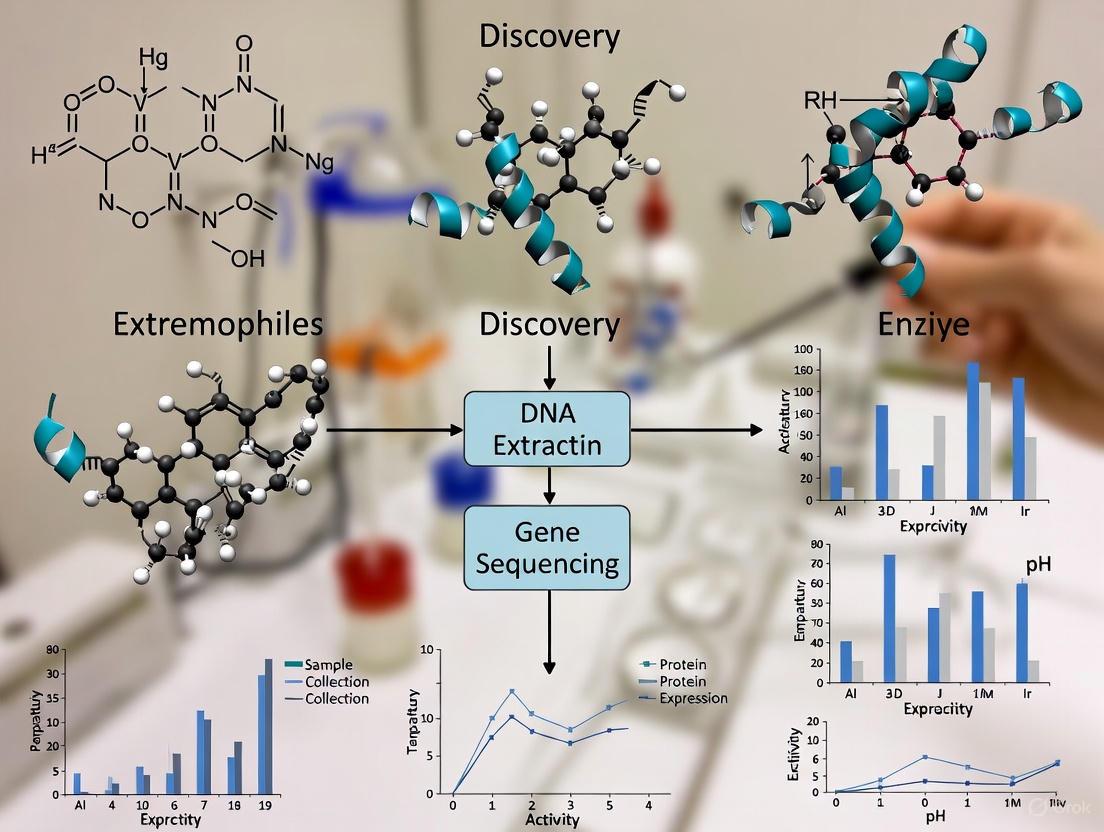
This article explores the rapidly advancing field of discovering novel enzymes, or extremozymes, from microorganisms that thrive in extreme environments.
Extremozymes: Discovering Novel Enzymes from Extremophiles for Biomedical and Industrial Applications
Abstract
This article explores the rapidly advancing field of discovering novel enzymes, or extremozymes, from microorganisms that thrive in extreme environments. Tailored for researchers, scientists, and drug development professionals, it provides a comprehensive overview of the unique adaptations of extremophiles, modern discovery methods like functional metagenomics and computational mining, and strategies to overcome key challenges in cultivation and expression. The content synthesizes current research to highlight the significant potential of these robust biocatalysts in driving innovation across pharmaceuticals, industrial biotechnology, and bioremediation, with a forward-looking perspective on future research directions.
Life on the Edge: Understanding Extremophiles and Their Unique Enzymatic Toolkit
Extremophiles are organisms that thrive in environments characterized by extreme physical or geochemical conditions, habitats that were once considered incompatible with life [1] [2]. These remarkable organisms have redefined our understanding of life's limits and adaptability, inhabiting ecological niches from scorching hydrothermal vents and acidic lakes to frozen polar regions and hypersaline basins [3] [4]. The study of extremophiles provides critical insights into evolutionary biology, the origins of life on Earth, and the potential for life elsewhere in the universe [1] [5]. From a biotechnological perspective, extremophiles represent a largely untapped reservoir of novel enzymes, or "extremozymes," with unique properties that make them invaluable for industrial processes, molecular biology, and drug development [3] [5]. Their enzymes exhibit remarkable stability and functionality under extreme conditions that would denature most conventional proteins, offering tremendous potential for applications requiring high temperatures, extreme pH, high salinity, or other challenging parameters [1] [6]. This taxonomic framework outlines the classification of extremophiles based on their environmental preferences, describes their unique adaptive mechanisms, and details the experimental methodologies enabling the discovery of novel biocatalysts from these resilient organisms, all within the context of advancing extremophile enzyme research.
Extremophile Taxonomy and Environmental Classification
Extremophiles are classified based on the specific environmental parameters in which they exhibit optimal growth. These classifications are not mutually exclusive, and many organisms fall into multiple categories, being classified as polyextremophiles [2]. The table below provides a comprehensive taxonomy of major extremophile types, their environmental preferences, and representative examples.
Table 1: Taxonomic Classification of Extremophiles and Their Environmental Niches
| Extremophile Type | Optimal Growth Conditions | Representative Genera/Species | Domain |
|---|---|---|---|
| Thermophile | Temperatures > 45°C [2] | Thermus aquaticus [5] | Bacteria |
| Hyperthermophile | Temperatures > 80°C [7] [2] | Pyrolobus fumarii, Methanopyrus kandleri [2] | Archaea |
| Psychrophile | Temperatures < 15°C [7] [2] | Psychrobacter sp. [1] [4] | Bacteria |
| Acidophile | pH < 5 [7] | Picrophilus oshimae (pH < 1) [2] | Archaea |
| Alkaliphile | pH > 9 [7] [2] | Natronobacterium [2] | Archaea |
| Halophile | Salt concentrations > 50 g/L [2] | Halobacteriaceae, Dunaliella salina [1] [2] | Archaea, Eukarya |
| Piezophile (Barophile) | High hydrostatic pressure (> 10 MPa) [2] | Pyrococcus species from Mariana Trench [2] | Archaea |
| Radioresistant | High ionizing radiation [2] | Deinococcus radiodurans [3] [2] | Bacteria |
| Xerophile | Low water activity (< 0.8) [2] | Chroococcidiopsis from deserts [2] | Bacteria |
Prokaryotes, including bacteria and archaea, represent the most common and diverse group of extremophiles, largely due to their simpler cellular structure, genetic flexibility, and rapid adaptive capabilities [1] [5]. However, certain extremophilic eukaryotes, including fungi, algae, and even some multicellular organisms, also exhibit unique adaptations to extreme conditions [1]. The environmental factors shaping these classifications impose intense selective pressures, driving the evolution of specialized structural, biochemical, and genomic adaptations that enable survival [5].
Genomic and Molecular Adaptation Mechanisms
Genomic Signatures of Environmental Adaptation
Recent advances in genomic analysis have revealed that adaptation to extreme environments imprints a discernible environmental component in the genomic signature of microbial extremophiles. Machine learning analyses of k-mer frequency vectors (genomic signatures) from approximately 700 extremophile genomes have demonstrated that environmental conditions such as extreme temperature and pH can be classified with medium to high accuracy ((3 \leq k \leq 6)), independent of taxonomy [7]. This suggests convergent evolution at the genomic level in response to similar environmental pressures.
Specific genomic adaptations include:
- Nucleotide Composition Bias: Thermophiles often display higher G+C content in their tRNA and DNA, contributing to nucleic acid stability at high temperatures [7] [4].
- Codon Usage Patterns: Selective pressure favors codons that enhance translation efficiency and protein folding under extreme conditions [7].
- Horizontal Gene Transfer (HGT): This process enables extremophiles to acquire advantageous genes from other organisms, rapidly conferring traits like stress resistance [5]. The radiophile Deinococcus radiodurans, for instance, possesses the PprA DNA protection protein that aids in repair of radiation-induced damage [5].
Proteomic and Enzymatic Adaptations
At the proteomic level, extremophiles exhibit distinct amino acid compositional biases that stabilize protein structure under extreme conditions. The following table summarizes key adaptive strategies across different extremophile types.
Table 2: Molecular Adaptation Mechanisms in Extremophiles
| Extremophile Type | Protein Adaptations | Membrane Adaptations | Specialized Molecules |
|---|---|---|---|
| Thermophiles | Increased hydrophobic interactions, salt bridges, disulfide bonds; shorter loops; more compact structures [4] | Ether-linked lipids in Archaea; saturated fatty acids [4] | Heat-shock proteins; chaperonins [1] |
| Psychrophiles | Increased protein flexibility; more glycine residues; fewer salt bridges; reduced hydrophobic cores [4] | Increased unsaturated fatty acids to maintain fluidity [4] | Antifreeze proteins (AFPs) [1] |
| Halophiles | Acidic proteome with high surface glutamate and aspartate residues for hydration shell formation [1] | Production of compatible solutes (e.g., glycerol, ectoine) [1] | |
| Acidophiles | Reinforced protein surface structures; proton pumps [1] | Highly impermeable membranes with tetraether lipids [1] | Buffering molecules |
| Piezophiles | Reduced protein cavity volume; increased small amino acids [1] | Increased unsaturated fatty acids to maintain membrane fluidity [4] | Piezolyte proteins |
These molecular adaptations enable extremozymes to maintain structural integrity and catalytic functionality under conditions that would rapidly inactivate conventional enzymes, making them particularly valuable for industrial and pharmaceutical applications [1] [3].
Experimental Methodologies for Extremophile Enzyme Discovery
Sampling, Isolation, and Cultivation Techniques
The discovery of novel enzymes from extremophiles begins with the careful collection of samples from extreme environments. Specific methodologies vary depending on the habitat.
Table 3: Sampling Protocols for Extreme Environments
| Environment | Sampling Method | Preservation & Transport | Key Considerations |
|---|---|---|---|
| Hot Springs & Geothermal Vents | Sterilized temperature-resistant samplers; in situ temperature and pH measurement [4] | Anaerobic chambers; maintenance of source temperature [4] | Rapid processing to prevent oxygen exposure for anaerobes |
| Deep-Sea Hydrothermal Vents | Remotely Operated Vehicles (ROVs) with specialized samplers; pressure-retaining vessels [4] | Pressurized containers to simulate in situ hydrostatic pressure [4] | Mimicking deep-sea pressure (piezophily) is critical for viability |
| Polar Regions & Sea Ice | Ice corers; sterile collection of cryoconite [4] [8] | Maintenance at sub-zero temperatures; avoidance of freeze-thaw cycles [4] | Low-nutrient conditions require specific cultivation strategies |
| Hypersaline Lakes | Filtration and concentration of water samples; sediment cores [1] | Avoidance of dilution shock for extreme halophiles | |
| Acidic Mine Drainage | Filtration of water; collection of biofilms [3] | pH stabilization during transport |
Following sample collection, cultivation-dependent methods are employed to isolate extremophiles. These techniques are crucial for studying microbial physiology, metabolic pathways, and environmental interactions under controlled conditions [4]. However, it is estimated that >99% of microorganisms cannot be cultivated with standard techniques, necessitating the development of specialized culturing approaches such as:
- Simulated Natural Environments: Media and incubation conditions that closely mimic the chemical and physical parameters of the source environment (e.g., high salt, temperature, pressure) [4].
- Co-culture Systems: Recognizing that some extremophiles require symbiotic relationships or signals from other organisms [3].
- Long-Term Incubation: Extended incubation periods to accommodate potentially very slow growth rates under nutrient limitation [4].
Culture-Independent Metagenomic Approaches
Given the challenges of cultivation, culture-independent metagenomic techniques have become cornerstone methodologies for exploring the genetic potential of extremophile communities [3] [4]. The standard workflow for metagenome-guided enzyme discovery is depicted below.
Key Steps in Metagenomic Analysis:
DNA Extraction: Direct lysis of cells in the environmental sample, followed by purification of high-molecular-weight DNA. This step is critical for capturing genetic material from the entire microbial community, including uncultivable members [4].
Sequencing and Assembly: Next-generation sequencing (e.g., Illumina, PacBio) generates vast numbers of short reads, which are computationally assembled into longer contiguous sequences (contigs) and binned into Metagenome-Assembled Genomes (MAGs) [7] [4].
Gene Prediction and Annotation: Computational tools (e.g., Prokka, MG-RAST) identify open reading frames (ORFs) within contigs and MAGs. Predicted genes are functionally annotated by comparing their sequences to curated databases (e.g., Pfam, CAZy, KEGG) to identify putative enzymes [3] [6].
Target Gene Identification: Genes of biotechnological interest (e.g., polymerases, proteases, lipases) are prioritized based on sequence homology, phylogenetic origin, and the presence of specific protein domains associated with stability or function under extreme conditions [3].
Functional Screening and Heterologous Expression
The identification of putative enzyme genes is followed by functional validation. Two primary approaches are used:
Function-Based Screening: Environmental DNA is cloned into expression vectors to create metagenomic libraries, which are then introduced into a cultivable host bacterium (e.g., Escherichia coli). These libraries are screened under selective conditions (e.g., high temperature, specific pH, or the presence of a target substrate) to identify clones exhibiting the desired enzymatic activity [8].
Sequence-Based Screening: Putative enzyme genes identified through metagenomic annotation are synthesized or PCR-amplified and cloned into expression vectors for heterologous production [3] [8]. This approach was successfully used for a novel type II L-asparaginase from a halotolerant Bacillus subtilis strain, which was expressed in E. coli and shown to have remarkable thermal stability (optimal activity at pH 9.0 and 60°C) [8].
For both approaches, the choice of heterologous host is critical. Standard hosts like E. coli may lack the cellular machinery to correctly fold or post-translationally modify enzymes from distantly related extremophiles. As alternatives, alternative mesophilic hosts (e.g., Bacillus subtilis) or engineered extremophilic hosts are increasingly being developed [3].
The Scientist's Toolkit: Key Research Reagents and Solutions
The experimental workflows in extremophile research rely on specialized reagents and materials. The following table details essential components of the research toolkit.
Table 4: Key Research Reagents and Solutions for Extremophile Enzyme Discovery
| Reagent / Material | Function / Application | Specific Examples & Notes |
|---|---|---|
| Specialized Growth Media | Cultivation of extremophiles under simulated natural conditions. | Anaerobic media for deep-sea vent organisms; high-salt media for halophiles; low-nutrient media for oligotrophs [4]. |
| Pressure-Retaining Vessels | Cultivation and sampling of piezophiles from deep-sea environments. | Critical for maintaining organism viability and enzyme activity post-sampling [4]. |
| DNA Extraction Kits (Environmental) | Lysis and purification of high-quality metagenomic DNA from complex samples. | Must be effective for diverse cell wall types (e.g., Gram-positive, Archaea) and resistant to inhibitors [4]. |
| PCR Reagents & Thermostable Polymerases | Amplification of target genes from metagenomic DNA or isolates. | Taq polymerase (from Thermus aquaticus) [5] and Pfu polymerase (from Pyrococcus furiosus) [5] are themselves extremozymes that revolutionized molecular biology. |
| Cloning & Expression Systems | Heterologous production of target extremozymes. | Vectors with strong, inducible promoters (e.g., pET system for E. coli); specialized hosts for difficult-to-express proteins [3] [8]. |
| Activity Assay Reagents | Functional characterization of purified enzymes under various conditions. | Chromogenic/fluorogenic substrates; pH buffers for a broad range (e.g., pH 0-11); additives for testing stability (e.g., salts, detergents, organic solvents) [8]. |
The systematic taxonomy of extremophiles provides an essential framework for targeting the discovery of novel enzymes with exceptional stability and activity. The convergence of traditional microbiology with advanced genomic, metagenomic, and synthetic biology tools is rapidly accelerating the pace of discovery from these resilient organisms [3] [6]. The continued exploration of Earth's most extreme environments, coupled with increasingly sophisticated bioinformatic and functional screening platforms, promises to unlock a wealth of novel extremozymes. These enzymes hold immense potential to address global challenges, driving innovation in industrial biocatalysis, pharmaceutical development, and the transition toward a sustainable bio-based economy [1] [3] [6].
Extremozymes are enzymes produced by extremophiles—organisms that thrive in extreme environments—exhibiting exceptional stability and catalytic efficiency under harsh conditions such as extreme temperatures, pH, salinity, and pressure. These enzymes have redefined our understanding of life's resilience and have become a major focus of research due to their profound applications in biotechnology, pharmaceuticals, and industrial processes. Through unique structural adaptations, including specialized amino acid compositions, charged surfaces, and robust molecular interactions, extremozymes maintain structural integrity and functionality where conventional enzymes fail. This whitepaper explores the molecular mechanisms underlying extremozyme stability, details advanced methodologies for their discovery and engineering, and frames their significance within the broader context of discovering novel enzymes from extremophile research, highlighting their potential to drive innovations in drug development and sustainable technologies.
Extremophiles are remarkable organisms capable of growing and developing in extreme environments that were once considered incompatible with life, including volcanic areas, polar regions, deep seas, salt and acidic lakes, and deserts [1]. The study of these organisms has revolutionized our understanding of life's limits and has become a major focus of research due to their unique lifestyles and adaptation capabilities [1]. These environments closely resemble early Earth's conditions, and studies suggest that extremophiles, particularly hyperthermophiles, cluster near the universal ancestors on the tree of life, making them crucial for understanding life's origins [1] [3].
The adaptive strengths of extremophiles are manifested through specialized proteins and enzymes known as extremozymes [1]. These enzymes are characterized by their high stability and functionality under extreme conditions, making them valuable for in vitro molecular processes requiring high temperatures or other challenging parameters [1]. The discovery of thermoresistant enzymes from extremophiles, such as Taq polymerase from Thermus aquaticus, has been instrumental in developing fundamental techniques like PCR, showcasing their transformative potential in molecular biology and diagnostics [1] [3]. Extremophiles span both prokaryotic and eukaryotic domains of life, with prokaryotes (bacteria and archaea) representing the most common and diverse group due to their simpler cellular structure, genetic flexibility, and adaptability [1].
Molecular Adaptation Mechanisms of Extremozymes
Extremozymes have evolved sophisticated structural and mechanistic adaptations to maintain stability and activity under physicochemical extremes that would typically denature proteins and disrupt cellular functions in mesophilic organisms. These adaptations are often convergent, arising across different taxonomic groups facing similar environmental challenges [7].
Structural Stabilization Strategies
The structural integrity of extremozymes under extreme conditions is maintained through a combination of intrinsic and extrinsic factors:
- Amino Acid Composition and Protein Folding: Thermophilic and hyperthermophilic enzymes exhibit a higher prevalence of charged residues (e.g., lysine and arginine) and a lower frequency of thermolabile residues like cysteine and asparagine. This promotes the formation of intramolecular ion pairs (salt bridges) and dense hydrophobic cores, conferring rigidity and resistance to thermal unfolding [1] [7]. Psychrophilic (cold-adapted) enzymes, in contrast, display greater structural flexibility achieved through a reduction in proline and arginine residues in loops, fewer salt bridges, and a less hydrophobic core, allowing catalytic function at low thermal energy levels [1].
- Surface Charge and Solvation: Halophilic (salt-loving) enzymes possess a high surface density of acidic residues (aspartate and glutamate), which facilitates coordinated hydration shell formation in high-salt environments, preventing aggregation and precipitation through self-repulsion of the negatively charged surfaces [3].
- Oligomerization and Complex Formation: Many extremozymes form stable oligomeric complexes and higher-order structures. This subunit interaction provides increased structural stability, particularly for enzymes operating under high pressure (piezophiles) or high temperatures [1].
Genomic and Proteomic Signatures
Recent machine learning analyses of extremophile genomes have identified a discernible environmental component in their genomic signatures, in addition to the strong phylogenetic signal [7]. For instance, adaptations to extreme temperatures and pH imprint specific patterns in k-mer frequency profiles (short DNA sequences of length k) within genomic DNA. Studies using supervised learning achieved medium to high accuracy in classifying microbial genomes based on environmental categories (e.g., thermophile vs. psychrophile) using k-mer frequencies for values of 3 ≤ k ≤ 6 [7]. This suggests that the selective pressures of extreme environments have led to convergent evolution at the nucleotide level, influencing codon usage patterns and amino acid compositional biases that are reflected in the resulting extremozyme structures [7].
Table 1: Key Structural Adaptations in Different Extremozyme Classes
| Extremozyme Class | Primary Environmental Challenge | Core Structural Adaptations | Functional Outcome |
|---|---|---|---|
| Thermozymes (Thermophiles/Hyperthermophiles) | High temperature (>45-80°C; >80°C) [7] | Increased intramolecular ion pairs (salt bridges); dense hydrophobic packing; reduced thermolabile residues; higher G+C content in coding DNA [1] [7] | Resistance to thermal denaturation and unfolding; high melting temperature (Tm) |
| Psychrozymes (Psychrophiles) | Low temperature (<20°C) [7] | Reduced proline/arginine in loops; fewer salt bridges/aromatic interactions; increased surface hydrophilicity [1] | Enhanced molecular flexibility and catalytic efficiency at low kinetic energy |
| Halozymes (Halophiles) | High salinity (>3.5% NaCl) [1] | Abundant acidic surface residues (Asp, Glu); low lysine content; coordinated hydration shells [3] | Solubility and prevention of aggregation in high ionic strength milieus |
| Piezozymes (Piezophiles) | High pressure (e.g., deep sea) | Stabilized oligomeric interfaces; specific volume-reducing substitutions [1] | Resistance to pressure-induced denaturation and volume changes |
| Acidozymes/Alkalizymes (Acidophiles/Alkaliphiles) | Extreme pH (<5 / >9) [7] | Stable active site protonation states; charged surface adaptations; acid-/base-stable bonds [1] | Maintenance of active site chemistry and global structure at extreme pH |
Methodologies for Discovering and Engineering Novel Extremozymes
The exploration of extremophiles has gained significant momentum due to advancements in genetic sequencing, DNA analysis techniques, and bioinformatics [1] [9]. The following experimental and computational workflows are central to the discovery and optimization of novel extremozymes.
Discovery Workflows: From Metagenomics to Function
Much of the microbial diversity in extreme environments remains unculturable in laboratory settings. Therefore, metagenomics—the direct analysis of genetic material recovered from environmental samples—has become a cornerstone of extremozyme discovery [9] [3].
Diagram 1: Metagenomic discovery pipeline for novel extremozymes.
The process involves several critical steps:
- Sample Collection and DNA Extraction: Environmental samples are collected from extreme habitats (e.g., hot springs, deep-sea vents, acidic mines). Total community DNA is extracted, bypassing the need for cultivation [3].
- Sequencing and Assembly: Shotgun sequencing generates millions of DNA fragments, which are computationally assembled into contigs and scaffolds to reconstruct genomic fragments from the microbial community [9].
- Gene Mining and Annotation: Assembled sequences are scanned for open reading frames (ORFs) and compared against databases to identify putative enzyme-encoding genes. A significant challenge is that 20-40% of predicted genes from metagenomes cannot be annotated and are of unknown function, representing a vast reservoir of potential novelty [9].
- Heterologous Expression and Screening: Putative extremozyme genes are cloned and expressed in suitable laboratory hosts (e.g., E. coli, Thermus thermophilus for thermozymes). The expressed proteins are then screened for activity under simulated extreme conditions using chromogenic substrates or other functional assays [9].
Engineering and Optimization with Deep Learning
Wild-type extremozymes often require optimization for industrial or therapeutic applications. Directed evolution has been a successful laboratory method, but it is time-consuming and costly [10]. Computational rational design offers a complementary approach, and deep learning (DL) models are now revolutionizing the field.
Diagram 2: Deep learning workflow for enzyme engineering.
DL models like CataPro predict enzyme kinetic parameters (kcat, Km, kcat/Km) by using embeddings from pre-trained protein language models (e.g., ProtT5) for enzyme sequences and molecular fingerprints for substrates [10]. This approach demonstrates superior accuracy and generalization ability compared to previous models. In a representative study, combining CataPro with traditional methods identified an enzyme (SsCSO) with 19.53 times increased activity compared to an initial enzyme, and subsequent engineering improved its activity by a further 3.34 times [10]. This highlights the high potential of DL as an effective tool for future extremozyme discovery and modification.
Table 2: Key Research Reagent Solutions in Extremozyme Discovery
| Reagent / Tool / Method | Function in R&D | Application Example |
|---|---|---|
| Metagenomic Libraries (plasmid, fosmid, cosmid) | Cloning and maintaining environmental DNA from unculturable extremophiles for functional screening [9] | Discovery of novel lipases and proteases from deep-sea vent microbiomes [9] |
| Specialized Expression Hosts (e.g., Thermus thermophilus) | Overproduction of thermostable proteins that cannot be expressed in mesophilic systems like E. coli [9] | High-yield production of hyperthermostable polymerases [9] |
| Chromogenic Hydrolase Substrates | Enable high-throughput functional screening of metagenomic libraries for enzyme activity (e.g., proteases, esterases) [9] | Identification of active clones based on color change in agar plates |
| Pre-trained Protein Language Models (e.g., ProtT5) | Generate informative numerical representations (embeddings) of enzyme sequences for deep learning models [10] | Used as input features in CataPro for predicting enzyme kinetic parameters (kcat/Km) [10] |
| Molecular Fingerprints (e.g., MACCS keys) | Numerical representation of substrate chemical structure for computational analysis [10] | Used alongside enzyme embeddings in CataPro to model enzyme-substrate interactions [10] |
Applications and Future Directions in Drug Development and Biotechnology
Extremozymes offer immense potential across numerous industries due to their robustness and novel mechanisms of action. In the pharmaceutical sector, their unique properties are being leveraged to overcome limitations of conventional enzymes.
- Therapeutics and Drug Synthesis: Extremozymes are used as therapeutic agents and catalysts for synthesizing chiral pharmaceutical intermediates. For example, L-asparaginase from halotolerant bacteria is used in cancer treatment, while thermostable transaminases are employed in the biosynthesis of chiral amines with high enantioselectivity, which is crucial for drug safety and efficacy [3] [10].
- Combatting Antibiotic Resistance: Extremophiles are a promising source of novel antimicrobial peptides (e.g., Halocins) that exhibit potent activity against drug-resistant pathogens through novel mechanisms, such as pore-forming mechanisms or targeting lipid II in cell wall synthesis, potentially bypassing existing resistance mechanisms [3].
- Diagnostics and Molecular Biology: Thermostable DNA polymerases like Taq polymerase are indispensable for PCR-based diagnostics. Other extremozymes, such as nucleases and ligases with unique fidelity and stability profiles, are continually being developed for advanced molecular diagnostics and biosensing [1] [3].
The future of extremophile research is intrinsically linked to overcoming current challenges, such as the difficulty of cultivating many extremophiles and scaling up extremozyme production [9] [3]. The integration of multi-omics approaches, advanced cultivation methods, and powerful AI-driven tools like CataPro will accelerate the discovery and engineering of next-generation extremozymes. These innovations promise to provide innovative solutions to global challenges in healthcare, including the development of new antibiotics, more efficient biocatalysts for green chemistry, and stable enzymatic therapeutics [9] [3] [10].
The pursuit of novel enzymes from extremophiles represents a frontier in biotechnology, driven by the need for more robust and efficient industrial biocatalysts. Extremozymes, enzymes derived from microorganisms that thrive in extreme environments, have emerged as cornerstones for biocatalysis under conditions where conventional mesophilic enzymes fail [11] [12]. These enzymes are not merely stable but are optimally active under extreme temperatures, pH, salinity, and pressure, offering unique catalytic properties that are often unattainable through protein engineering of mesophilic counterparts alone [13] [14]. The global enzymes market, expected to reach $14.5 billion by 2027, underscores the economic and industrial significance of these biological catalysts [14]. Framed within the broader context of novel enzyme discovery, this review details the major classes of industrially relevant extremozymes, their functional adaptations, and the advanced methodologies employed to harness their potential for transformative biotechnological applications.
Major Classes of Industrially Relevant Extremozymes
Extremophiles produce a diverse array of enzymes tailored to their specific environmental niches. The table below summarizes the key classes, their sources, and industrial applications.
Table 1: Major Classes of Industrially Relevant Extremozymes
| Extremozyme Class | Extremophile Source | Key Industrial Applications |
|---|---|---|
| Amylases [11] [15] | Thermophiles, Psychrophiles, Acidophiles, Alkaliphiles [11] | Starch processing, sugar syrups production, gluten-free and low-acrylamide foods [11] |
| Proteases [11] [15] | Thermophiles, Halophiles, Alkaliphiles [11] | Detergents, dairy processing, predigested foods (e.g., baby formulae) [11] |
| Lipases [11] [15] | Thermophiles, Psychrophiles, Halophiles [11] | Detergents, dairy flavoring, trans-fat reduction [11] |
| Laccases [11] [14] | Thermoalkaliphiles [14] | Cellulose pulp bleaching, textile dye decolorization, bioremediation [11] [13] |
| β-Galactosidases [16] | Thermophiles (e.g., from hydrothermal vents) [16] | Lactose-free dairy products [11] |
| Cellulases [13] [15] | Thermophiles, Acidophiles [11] | Biomass conversion, biofuel production [13] |
| Xylanases [11] [13] | Thermophiles [11] | Pulp bleaching in paper industry, bread quality improvement [11] [13] |
| Pullulanases [11] [15] | Thermophiles [11] | Starch saccharification, production of sweeteners [11] |
The unique properties of extremozymes are a direct result of structural adaptations to their hostile habitats. Psychrophilic enzymes, for instance, exhibit increased structural flexibility that allows for high catalytic efficiency at low temperatures, often accompanied by thermal lability [12]. In contrast, thermophilic enzymes display superior rigidity through increased ionic interactions, hydrogen bonding, and more hydrophobic cores, which prevent unfolding at high temperatures [13] [12]. Halophilic enzymes possess a high surface density of acidic amino acids, which facilitates solvation and function in low-water-activity, high-salt environments [17]. These intrinsic properties make extremozymes ideal for industrial processes that involve harsh conditions, thereby enhancing reaction rates, reducing contamination risk, and minimizing the need for costly cooling or heating steps [12].
Discovery and Development Workflow for Novel Extremozymes
The journey from an environmental sample to a commercially viable extremozyme involves a multi-stage pipeline, integrating both culture-dependent and culture-independent strategies.
Diagram 1: Roadmap for novel extremozyme discovery and production, integrating culture-dependent and independent approaches.
Phase 1: Discovery and Screening
The initial discovery phase relies on two complementary approaches to access the vast enzymatic potential of extremophiles.
3.1.1 Culture-Dependent Functional Screening This traditional method involves cultivating extremophiles from environmental samples under selective pressures that mimic the target industrial condition [14]. Key steps include:
- Sample Collection: Sourcing from extreme environments like hot springs, deep-sea vents, polar regions, and acidic mines [11] [3].
- Selective Enrichment: Inoculating samples in culture media with defined parameters (e.g., high temperature, extreme pH, high salinity) to favor the growth of desired extremophiles [14].
- Activity-Based Screening: Isolating pure strains and screening for enzyme activity using plate-based assays. Examples include:
- Laccase Screening: Using guaiacol-containing agar plates, where positive colonies produce a brown halo [14].
- Catalase Screening: Enriching for antioxidant producers (e.g., from Antarctica) via exposure to UV-C radiation [14].
- Amine-Transaminase Screening: Using media supplemented with α-methylbenzylamine (MBA) as an enzyme inducer [14].
3.1.2 Culture-Independent Metagenomic Screening Given that an estimated 99% of microorganisms are uncultivable in the laboratory, this approach bypasses the need for cultivation, providing access to the "microbial dark matter" [13].
- Metagenomic Library Construction: Direct extraction and cloning of total environmental DNA into a cultivable host [11] [16].
- Sequence-Based Screening: Identification of target genes using conserved sequence motifs, hybridization with specific probes, or PCR with degenerate primers [11].
- Function-Based Screening: Expression of metagenomic DNA in a host like E. coli and screening for desired enzymatic activity, allowing discovery of completely novel sequences [11] [13].
Phase 2: Development and Production
Once a promising enzyme is identified, the focus shifts to its scalable production.
- Gene Cloning and Recombinant Expression: The target gene is cloned and expressed in a suitable heterologous host, typically E. coli [14]. Strategies include codon optimization and co-expression of molecular chaperones to improve the yield and solubility of recombinant extremozymes [13].
- Biochemical Characterization: The purified recombinant enzyme is rigorously tested to determine its optimal pH, temperature, stability, kinetic parameters, and tolerance to solvents and inhibitors [14].
- Scale-Up and Downstream Processing: The fermentation and purification processes are optimized for large-scale production, culminating in a standardized, commercial enzyme product [14].
Experimental Protocols for Key Extremozymes
Detailed methodologies are critical for the reproducible discovery and characterization of novel extremozymes. The following table outlines specific experimental protocols.
Table 2: Detailed Experimental Protocols for Extremozyme Discovery and Characterization
| Experimental Objective | Detailed Protocol & Conditions | Key Reagents & Tools |
|---|---|---|
| Screening for Psychrotolerant Catalase [14] | 1. Sample Source: Elephant Island, Antarctica.2. Enrichment: Cultivate at 8°C, pH 6.5 for up to 2 weeks.3. Selective Pressure: Expose cultures to UV-C radiation for 2 hours to enrich microorganisms with robust antioxidant defenses.4. Isolation: Serial dilution and spread-plating until pure isolates are obtained. | - Culture media for psychrotrophs- UV-C lamp- Antioxidant assay kits |
| Screening for Thermoalkaliphilic Laccase [14] | 1. Sample Source: Geothermal site.2. Enrichment: Cultivate at 50°C, pH 8.0 with lignin as an enzyme inducer.3. Activity Screening: Plate on agar containing 0.5 mM guaiacol. Positive colonies develop a brown color due to guaiacol oxidation.4. Identification: Select and purify brown-haloed colonies. | - Lignin- Guaiacol- Thermostable alkaline buffers |
| Screening for Thermophilic Amine-Transaminase [14] | 1. Sample Source: Fumaroles in Whalers Bay, Antarctica.2. Enrichment: Cultivate at 50°C, pH 7.6 for 24 hours.3. Enzyme Induction: Supplement media with 10 mM α-methylbenzylamine (MBA).4. Isolation: Use serial dilution-to-extinction techniques for purification. | - α-Methylbenzylamine (MBA)- Specific amine assay reagents |
| Metagenomic Screening for β-Galactosidase [16] | 1. DNA Extraction: Isolate genomic DNA directly from environmental samples (e.g., deep-sea hydrothermal vents).2. Computational Pipeline: Apply a bioinformatic pipeline for sustainable enzyme discovery that integrates sequence analysis and structural prediction.3. Gene Synthesis: Candidates are codon-optimized and synthesized de novo.4. Heterologous Expression & Validation: Express in E. coli and test for activity in vitro. | - Metagenomic DNA extraction kits- Bioinformatics software (e.g., for structural prediction)- Synthetic gene services |
| Biochemical Characterization of a Recombinant Enzyme [14] | 1. Expression: Heterologous expression in E. coli with IPTG induction.2. Cell Lysis: Sonication (e.g., ten 15-second bursts).3. Purification: Heat treatment (for thermophilic enzymes) followed by column chromatography.4. Activity Assays: Measure enzyme activity across a range of temperatures, pH, and in the presence of metal ions/reducing agents. | - IPTG- Sonication equipment- Chromatography systems (e.g., FPLC)- Spectrophotometer for activity assays |
The Scientist's Toolkit: Essential Research Reagents and Materials
The experimental workflow for extremozyme research relies on a suite of specialized reagents and tools.
Table 3: Essential Research Reagents and Materials for Extremozyme Discovery
| Reagent / Material | Function / Application | Specific Examples & Notes |
|---|---|---|
| Selective Culture Media | Enriches for specific extremophiles from environmental samples by simulating extreme conditions. | Media for thermophiles (50-80°C), psychrophiles (≤15°C), alkaliphiles (pH >9), acidophiles (pH <5), halophiles (high NaCl) [14]. |
| Enzyme Activity Indicators | Allows visual or spectroscopic detection of specific enzyme activities in functional screenings. | Guaiacol (for laccases), starch-iodine test (for amylases), chromogenic substrates (for proteases, lipases) [11] [14]. |
| Heterologous Expression System | Enables high-yield production of recombinant extremozymes for characterization and application. | Host: E. coli BL21(DE3) is common.Vector: IPTG-inducible expression vectors (e.g., pET series).Consideration: Avoid patented vectors/tags for commercial freedom [14]. |
| Metagenomic Sequencing & Bioinformatics Tools | For culture-independent discovery and analysis of novel enzyme genes from environmental DNA. | Sequencing: Illumina MiSeq platform.Bioinformatics: Specialized pipelines for gene identification, annotation, and structural prediction [16] [14]. |
| Chromatography Systems | Purifies recombinant enzymes from cell lysates or culture supernatants for biochemical studies. | Affinity, ion-exchange, and size-exclusion chromatography are standard. Heat treatment is a simple first step for thermostable enzymes [14]. |
The systematic exploration of extremophiles and their enzymes is pivotal to the ongoing discovery of novel biocatalysts. Extremozymes such as amylases, proteases, lipases, and laccases, with their exceptional stability and activity under non-conventional conditions, are already reshaping industrial bioprocesses. The continued integration of culture-dependent functional screening with powerful culture-independent metagenomic and computational approaches promises to unlock the vast potential of the uncultured microbial majority [11] [13] [16]. As genomics, protein engineering, and fermentation technologies advance, the pipeline from the isolation of a novel extremophile to the commercialization of a robust extremozyme will become increasingly efficient. This journey not only fuels industrial innovation but also deepens our fundamental understanding of life's remarkable adaptability.
Extremophile Habitats as Unexplored Reservoirs of Biodiversity
The study of extremophiles—organisms that thrive in conditions once considered incompatible with life—has fundamentally reshaped our understanding of the limits of biology and evolution [3]. These resilient organisms, encompassing archaea, bacteria, and microbial eukaryotes, inhabit Earth's most inhospitable environments, from scorching hydrothermal vents and hyperacidic lakes to polar ice sheets and hypersaline basins [3] [18]. Their existence challenges conventional biogeochemical paradigms and positions extreme environments as significant reservoirs of undiscovered biodiversity [19].
For researchers in enzyme discovery and drug development, extremophiles represent a frontier for bioprospecting. The unique evolutionary pressures of extreme environments have selected for novel biochemical pathways, resulting in the production of stable, bioactive compounds and robust enzymes (extremozymes) with exceptional properties [3] [20]. These molecules often exhibit thermostability, acid/alkali tolerance, and unique mechanistic actions that are highly desirable for industrial biocatalysis and pharmaceutical development [20]. This whitepaper synthesizes current methodologies and discoveries to guide ongoing research into these unparalleled biological resources.
Classification of Extremophile Habitats and Microbial Diversity
Extremophiles are systematically classified based on the specific physicochemical parameters of their habitats. Table 1 provides a comprehensive overview of major extremophile types, their habitats, and key survival adaptations.
Table 1: Classification of Extremophiles, Their Habitats, and Adaptive Mechanisms
| Extremophile Type | Defining Environmental Condition | Representative Habitats | Key Survival Adaptations | Notable Microbial Taxa |
|---|---|---|---|---|
| Thermophile | High temperature (45-122°C) [21] [20] | Hydrothermal vents, geothermal springs [21] | Thermostable enzymes (extremozymes), heat-shock proteins [3] | Methanopyrus kandleri, Pyrolobus fumarii, Sulfolobus solfataricus [21] [20] |
| Psychrophile | Freezing temperatures (down to -20°C) [18] | Polar ice sheets, sea ice, permafrost [19] | Antifreeze proteins, cold-active enzymes, fluid cell membranes [3] | Fragilariopsis cylindrus, Cladosporium herbarum [18] |
| Acidophile | Low pH (<3) [18] | Acid mine drainage, volcanic springs | Proton-pumping mechanisms, acid-stable membrane lipids [3] | Galdieria sulphuraria (alga) [18] |
| Alkaliphile | High pH (>9) [20] | Soda lakes, alkaline soils | Reverse transmembrane potential, alkaliphilic enzymes [20] | Bacillus subtilis CH11 [19] |
| Halophile | High salinity (up to saturation) [3] | Salt flats, salterns, hypersaline lakes | Osmoprotectants (e.g., compatible solutes), halophilic proteins [3] | Halotolerant Bacillus species [19] |
| Piezophile | High pressure (up to 110 MPa) [3] | Deep-sea trenches, oceanic sediments | Pressure-resistant membrane fluidity, specialized molecular chaperones [3] | Uncultured microbial "dark matter" [3] |
| Radioresistant | High ionizing radiation [3] | Nuclear waste sites, deserts | Efficient DNA repair mechanisms, melanin production [3] | Deinococcus radiodurans, Cladosporium chernobylensis [3] |
The exploration of these habitats has revealed remarkable examples of microbial ingenuity. In deep-sea hydrothermal vents, microorganisms such as Methanopyrus kandleri thrive on chimney walls at temperatures up to 122°C, harvesting energy from hydrogen gas and releasing methane via methanogenesis [21]. Conversely, in the cryosphere, the diatom Fragilariopsis cylindrus can grow at temperatures as low as -20°C [18]. Beyond prokaryotes, microbial eukaryotes (protists) demonstrate significant adaptability, with lineages like Echinamoebida and Heterolobosea displaying impressive thermophily, and algae such as Cyanidioschyzon merolae tolerating temperatures up to 60°C [18].
Methodological Framework for Discovery and Characterization
Sampling and Cultivation Strategies
Accessing and studying extremophile communities requires specialized techniques to preserve their delicate integrity and enable laboratory analysis.
- Sampling Protocols: The initial step involves collecting biomass or environmental samples (water, sediment, rock) while maintaining in situ conditions. For deep-sea hydrothermal vents, this requires remotely operated vehicles (ROVs) to collect plume fluids and chimney structures [21]. For subsurface or cave environments, sterile coring devices are essential to avoid contamination [19]. A critical consideration is the rapid stabilization of parameters like pressure and temperature post-sampling to prevent cellular stress or death [18].
- Cultivation Techniques: Many extremophiles are uncultivable using standard laboratory media, necessitating specialized approaches. These include:
- Simulated In Situ Conditions: Replicating the native physicochemical environment (pH, temperature, pressure, salinity) in bioreactors [19].
- Co-culture Systems: Cultivating interdependent microbial communities together, as many extremophiles exist in syntrophic relationships [3].
- Diffusion Chambers: Using semi-permeable membranes to grow microbes in their natural environment while containing them for study [3].
- Long-term Enrichment: Incubating samples for extended periods under selective conditions to encourage the growth of slow-growing or rare taxa [19].
'Omics-Driven Biodiscovery
Culture-independent methods have revolutionized the field, allowing researchers to tap into the vast "microbial dark matter" that remains uncultured [3] [22].
- Metagenomics: This involves sequencing the total DNA extracted directly from an environmental sample. The resulting data allows for the assembly of Metagenome-Assembled Genomes (MAGs) and the identification of genes encoding novel biocatalysts without the need for cultivation [3] [22]. This is particularly powerful for discovering Candidate Phyla Radiation (CPR) bacteria and other elusive lineages in acidic mine drainage and other extremes [3].
- Functional Metagenomics: Cloning large fragments of environmental DNA into a cultivable host (e.g., E. coli) and screening libraries for desired enzymatic activities (e.g., esterase, lactamase) under extreme conditions [20]. This links gene sequence directly to function.
- Single-Cell Genomics: Isolating single microbial cells from an environmental sample, amplifying their genome, and sequencing it. This provides genomic context for organisms that cannot be cultured or assembled from metagenomes [3].
- Metatranscriptomics & Metaproteomics: Analyzing the total RNA and proteins expressed by a microbial community under specific conditions. These approaches reveal the actively used metabolic pathways and functional responses to environmental stimuli, guiding the identification of physiologically relevant enzymes [22].
The following diagram illustrates the integrated workflow from sampling to enzyme characterization.
Figure 1: Integrated workflow for discovering and characterizing novel enzymes from extremophiles, from environmental sampling to industrial application.
The Scientist's Toolkit: Key Reagent Solutions
The experimental workflows in extremophile research rely on specialized reagents and materials. Table 2 details essential research solutions for enzyme discovery and characterization.
Table 2: Key Research Reagent Solutions for Extremophile Enzyme Discovery
| Reagent / Material | Core Function | Application Example in Extremophile Research |
|---|---|---|
| Specialized Growth Media | To replicate the chemical composition and physicochemical conditions (pH, salinity) of the native habitat for cultivation. | Culturing halophiles requires media with high molarity of NaCl or other salts; acidophiles need buffered low-pH media [19]. |
| Thermostable DNA Polymerases | Enzymes that catalyze DNA amplification via PCR at high temperatures, crucial for genetic manipulation. | Pfu polymerase from Pyrococcus furiosus offers high fidelity in PCR of GC-rich extremophile DNA [20]. |
| Heterologous Expression Systems | Genetically engineered hosts (e.g., E. coli, yeast) used to produce proteins from cloned extremophile genes. | Production of Sulfolobus solfataricus γ-lactamase in E. coli for biocatalyst development [20]. |
| Immobilization Matrices | Solid supports (e.g., sepharose, polymer resins) for attaching enzymes to enhance stability and reusability. | Cross-linked enzyme aggregates of thermophilic γ-lactamase for use in continuous-flow microreactors [20]. |
| Activity-Based Probes | Chemical reagents that bind covalently to enzymes based on their catalytic mechanism, enabling detection and identification. | Fluorophosphonate probes for identifying serine-hydrolase family enzymes in complex metaproteomic samples [20]. |
| Ninhydrin Stain | A chromogenic agent that reacts with primary amines, visualizing amino acid production in screening assays. | Identifying active colonies in library screens for amidase or lactamase activity on agar plates [20]. |
Case Studies in Novel Enzyme Discovery
γ-Lactamase fromSulfolobus solfataricus
- Background: The bicyclic synthon (rac)-γ-lactam is a key intermediate for the synthesis of Abacavir, a potent anti-HIV drug [20]. The challenge is to kinetically resolve the racemic mixture to obtain a single enantiomerically pure product.
- Discovery & Protocol: A genomic library of the thermophilic archaeon Sulfolobus solfataricus MT4 was constructed and expressed in E. coli. Colonies were screened by overlaying with filter paper soaked in the racemic γ-lactam substrate and ninhydrin stain. Active colonies that produced the amino acid product turned brown, allowing for identification of the (+)-γ-lactamase gene [20].
- Biochemical Characterization: The purified enzyme is a homodimer with optimal activity at high temperatures. It belongs to the signature amidase family but exhibits a unique mechanism, being activated by thiol reagents and inhibited by heavy metals [20].
- Industrial Application: The thermostable γ-lactamase was immobilized as a cross-linked enzyme preparation and packed into microreactors. The immobilized enzyme retained 100% activity after 6 hours at 80°C, demonstrating superior stability for continuous bioprocessing compared to the free enzyme [20].
L-Asparaginase from HalotolerantBacillus subtilis
- Background: L-asparaginase is a critical therapeutic enzyme used in the treatment of acute lymphoblastic leukemia and in the food industry to reduce acrylamide formation [19]. Discovering stable and efficient variants is a key goal.
- Discovery & Protocol: A halotolerant strain, Bacillus subtilis CH11, was isolated from the hypersaline Chilca salterns in Peru [19]. The gene encoding a novel type II L-asparaginase was identified, cloned, and heterologously expressed in E. coli.
- Biochemical Characterization: The enzyme showed optimal activity at pH 9.0 and 60°C, with a half-life of nearly 4 hours at this temperature. Its activity was significantly enhanced by ions like K⁺ and Ca²⁺, which is characteristic of enzymes adapted to saline environments. Kinetic studies confirmed its efficiency and substrate affinity [19].
- Application Potential: Its alkaliphilic and thermotolerant nature, combined with halotolerance, makes it a promising candidate for industrial processes that occur under harsh conditions, offering potential improvements over existing mesophilic enzymes [19].
L-Aminoacylase fromThermococcus litoralis
- Background: Optically pure unnatural amino acids, like l-tert-leucine, are essential precursors to numerous pharmaceuticals, including antitumor compounds [20].
- Discovery & Protocol: An l-aminoacylase gene was identified from a DNA expression library of the thermophilic archaeon Thermococcus litoralis, initially screened for esterase activity [20].
- Biochemical Characterization: The enzyme is highly thermostable, with a half-life of 25 hours at 70°C and optimal activity at 85°C. It exhibits broad substrate specificity, showing high activity toward N-acetylated aromatic and aliphatic amino acids [20].
- Industrial Application: The recombinant enzyme was immobilized on Sepharose beads to create a column bioreactor. This system showed no loss of activity after 5 days of continuous operation at 60°C, demonstrating exceptional operational stability for the production of chiral amino acids [20].
Current Research Landscape and Future Directions
The field of extremophile research is experiencing rapid growth, with the number of related scientific documents tripling over the past 25 years and yearly patent filings increasing four-fold since 2000 [3]. This reflects a rising recognition of the commercial and scientific value of these organisms.
Future advancements will be driven by several key frontiers:
- Astrobiology and the Origin of Life: Extremophiles serve as analogs for potential extraterrestrial life. Subsurface methanogens in permafrost and sulfur-metabolizing archaea in hydrothermal vents provide clues about how life might persist on Mars, Europa, or Enceladus [3] [21]. Studying their adaptations helps define the universal constraints on life.
- Addressing Antibiotic Resistance: Extremophiles are a rich source of novel antimicrobial peptides with unique structures, such as hyperthermostable peptides from deep-sea thermophiles that disrupt bacterial membranes through pore-forming mechanisms, potentially bypassing existing resistance pathways [3].
- Environmental Sustainability and Green Chemistry: Extremozymes are pivotal for developing environmentally friendly industrial processes. Their use in biocatalysis avoids the toxic waste associated with traditional chemistry [20]. Furthermore, their application in bioremediation—such as using bacteria from disused copper mines to break down pollutants in hypersaline, sulfidic environments—offers solutions for cleaning contaminated sites [19].
- Overcoming Discovery Challenges: The main hurdles remain the cultivation of the majority of extremophiles and the scalability of compound production [3] [22]. Future research must leverage synthetic biology and CRISPR-based pathway engineering to express entire biosynthetic gene clusters in tractable hosts [3]. There is also a pressing need to integrate toxicity and efficacy validation into standard biodiscovery pipelines to accelerate the translation of novel compounds from the lab to the market [22].
In conclusion, extremophile habitats constitute a vast and still underexplored reservoir of biodiversity. The unique evolutionary innovations encoded within these ecosystems offer unparalleled opportunities for the discovery of novel enzymes and bioactive compounds. As exploration and analytical technologies continue to advance, research into life at the edge will undoubtedly yield transformative solutions for medicine, industry, and environmental stewardship.
Extremozymes, enzymes derived from microorganisms that thrive in extreme environments, are rapidly transitioning from scientific curiosities to central pillars of modern industrial biotechnology. Their inherent stability and catalytic efficiency under harsh conditions—where conventional enzymes fail—make them uniquely suited to revolutionize industries ranging from pharmaceuticals to biofuels. This whitepaper delineates the compelling commercial rationale behind the multibillion-dollar valuation of the extremozymes market, frames their discovery within the context of novel enzyme research, and provides a detailed technical guide for their procurement and characterization. Supported by quantitative market analysis and explicit experimental methodologies, we posit that extremozymes are not merely a niche segment but a fundamental commercial imperative for sustainable industrial innovation.
The global industrial enzymes market is a robust, high-growth sector, with the broader market projected to expand from approximately USD 8.76 billion in 2025 to USD 16.04 billion by 2034, growing at a CAGR of 6.95% [23]. Within this landscape, extremozymes represent a critical and rapidly accelerating segment. Recent market intelligence specifically values the global extremophile enzymes market at USD 1.24 billion to USD 1.59 billion in 2024 [24] [25]. This niche is forecasted to grow at a remarkable CAGR of 7.8% to 9.4%, reaching a projected value of USD 2.81 billion to USD 3.16 billion by 2033 [24] [25], significantly outpacing the growth of the general industrial enzymes market.
The table below summarizes key market data and growth projections for the extremozyme sector.
Table 1: Extremozymes Market Size and Forecast
| Metric | 2024/2025 Value | 2033/2034 Forecast | CAGR (%) | Source |
|---|---|---|---|---|
| Extremophile Enzymes Market Size | USD 1.24 - 1.59 Billion | USD 2.81 - 3.16 Billion | 7.8 - 9.4 | [24] [25] |
| Broader Industrial Enzymes Market Size | USD 8.76 Billion (2025) | USD 16.04 Billion (2034) | 6.95 | [23] |
| North America Market Share (2024) | ~38% | - | - | [24] |
| Leading Product Segment | Thermophilic Enzymes (~33% share) | - | - | [24] |
| Dominant Source Segment | Bacterial Sources (~45% share) | - | - | [24] |
This growth is fundamentally driven by the escalating demand for sustainable and efficient biocatalysts across myriad industries. Extremozymes offer unparalleled advantages, including improved process efficiency, increased specificity, and a reduced environmental footprint compared to traditional chemical catalysts [23]. Their ability to function under extreme temperatures, pH, salinity, and pressure aligns perfectly with the harsh conditions of industrial processes, making them indispensable for green chemistry initiatives and cost-effective manufacturing [12] [25].
Scientific and Industrial Rationale
Defining Extremophile Adaptations and Extremozyme Properties
Extremophiles are organisms belonging to the domains Archaea and Bacteria that colonize ecological niches considered inhospitable to most life, including hot springs, deep-sea vents, polar ice, and hypersaline lakes [4] [3]. Their enzymes, extremozymes, have evolved distinct structural and mechanistic adaptations that confer exceptional stability and activity under these extremes [12] [13].
The following diagram illustrates the logical relationship between extreme environments, the adaptive features of extremozymes, and their resulting industrial advantages.
Diagram: The logical pathway from extreme environments to industrial value, showcasing how specific environmental pressures select for unique enzymatic adaptations that translate into commercial benefits.
For instance, thermophilic enzymes exhibit enhanced protein rigidity through increased hydrophobic interactions, salt bridges, and a higher proportion of charged amino acids, enabling function at elevated temperatures [4] [12]. In contrast, psychrophilic enzymes maintain high flexibility and increased entropy at low temperatures via a higher content of small, less bulky amino acids like glycine and a reduction in stabilizing salt bridges [4] [12]. These intrinsic properties are the foundation of their commercial utility.
Key Industrial Applications and Market Drivers
The application spectrum of extremozymes is vast and expanding, directly fueling market growth.
- Pharmaceuticals and Biotechnology: This is a dominant application segment [24] [25]. Extremozymes are crucial for drug synthesis, biotransformation, and the production of active pharmaceutical ingredients (APIs) [25]. Their high specificity and stability under extreme conditions enable greener pharmaceutical manufacturing. Furthermore, enzymes like Taq polymerase (from Thermus aquaticus) have revolutionized molecular biology through PCR, and L-asparaginase from halotolerant bacteria is used in cancer treatment [4] [3].
- Biofuels: The biofuel segment is expected to grow at a significant rate [26]. Thermophilic carbohydrases (e.g., cellulases, xylanases) are indispensable for the efficient breakdown of lignocellulosic biomass into fermentable sugars at industrially relevant high temperatures, improving yield and reducing contamination risk [23] [25].
- Food & Beverages: The demand for clean-label and natural ingredients is driving the adoption of extremozymes in food processing [26] [25]. Psychrophilic enzymes are used for low-temperature processes, preserving heat-sensitive substrates and saving energy, while proteases and carbohydrases enhance flavor, texture, and shelf life [23] [25].
- Detergents and Household Care: Alkaliphilic proteases and lipases are workhorses in detergent formulations, maintaining activity in the high-pH, surfactant-rich environments of modern washing machines [12].
- Agriculture and Environmental Remediation: Extremozymes are used for soil remediation, crop protection, and waste management [25]. Their ability to function in contaminated or extreme environments makes them ideal for bioremediation of pollutants and treatment of industrial effluents [4] [3].
The primary market drivers include the shift towards sustainable and green industrial processes, technological advancements in enzyme engineering, and stringent environmental regulations [23] [24] [25].
Discovery and Development Workflow
The pipeline from sampling to a commercially viable extremozyme is complex and requires interdisciplinary expertise. The following section details the experimental protocols and workflows central to this process.
Sample Collection and Microbial Isolation
Protocol 1: Sampling from Extreme Environments
- Objective: To aseptically collect environmental samples rich in extremophilic microorganisms.
- Materials: Sterile sampling containers (e.g., Niskin bottles for deep-sea vents, corers for geothermal soils), temperature and pH probes, portable freezer for psychrophilic samples, anaerobic jars for anoxic sites.
- Methodology:
- Site Selection: Prioritize underexplored extreme biomes (e.g., deep-sea hydrothermal vents, hyperacidic lakes, polar permafrost) [4].
- In-situ Characterization: Measure and record physical parameters (temperature, pH, salinity) at the collection point.
- Sample Collection: Use sterile techniques to avoid contamination. For subsurface samples, drilling or coring may be necessary. Preserve sample integrity by mimicking in-situ conditions during transport (e.g., using pressure vessels for piezophiles) [4] [13].
Protocol 2: Cultivation-Dependent Isolation
- Objective: To isolate pure extremophilic cultures from environmental samples.
- Materials: Specific culture media designed to mimic the chemical and physical conditions of the source environment (e.g., thermophilic media incubated at 70-100°C, halophilic media with 2-5M NaCl), anaerobic chambers, shaker incubators.
- Methodology:
- Enrichment Culture: Inoculate sample into selective liquid media and incubate under extreme conditions to enrich for target extremophiles.
- Pure Culture Isolation: Streak enriched culture onto solid agar plates of the same medium. Isolate individual colonies and re-streak until purity is confirmed via microscopy and 16S rRNA gene sequencing [4].
- Challenge: An estimated 99% of microorganisms are unculturable with standard techniques, representing a significant bottleneck known as "microbial dark matter" [13].
Culture-Independent Metagenomic Discovery
To bypass cultivation limitations, metagenomic approaches are now standard.
Protocol 3: Metagenomic Library Construction and Screening
- Objective: To access the genetic potential of the entire microbial community without cultivation.
- Materials: DNA extraction kits optimized for complex matrices (e.g., soil, sediment), fosmid or bacterial artificial chromosome (BAC) vectors, competent E. coli cells for library hosting, substrates for functional screening (e.g., cellulose azure for cellulases).
- Methodology:
- Total DNA Extraction: Directly extract high-molecular-weight DNA from the environmental sample [4] [13].
- Library Construction: Fragment the DNA and clone it into a suitable vector, which is then transformed into a surrogate host (typically E. coli) to create a metagenomic library representing the collective genome of the sample [13].
- Screening:
- Function-Based Screening: Plate library clones on media containing a substrate for the target enzyme activity (e.g., skim milk for proteases, tributyrin for lipases). Positive clones form a halo zone indicating substrate degradation [13].
- Sequence-Based Screening: Use degenerate primers to PCR-amplify conserved enzyme genes from the metagenomic DNA, followed by sequencing and heterologous expression of full-length genes [13].
The following workflow diagram integrates both cultivation-dependent and independent pathways for extremozyme discovery.
Diagram: A unified workflow for extremozyme discovery, showing parallel cultivation-dependent and metagenomic pathways converging on enzyme characterization.
Key Reagents for Extremozyme Research
The following table details essential reagents and their functions in extremozyme discovery and characterization.
Table 2: Research Reagent Solutions for Extremozyme Discovery
| Research Reagent / Material | Function in Experimental Protocol |
|---|---|
| Specialized Culture Media | Mimics the chemical (pH, salinity, specific electron donors/acceptors) and physical (gelling agents for high temp) parameters of the source environment to facilitate cultivation of fastidious extremophiles [4] [13]. |
| Fosmid / BAC Vectors | Used in metagenomic library construction for cloning large (30-40 kb) fragments of environmental DNA, helping to capture large gene clusters and operons [13]. |
| Surrogate Expression Hosts | Model organisms like E. coli or Bacillus subtilis are used for the heterologous expression of cloned extremozyme genes. Requires optimization, sometimes including co-expression of molecular chaperones, to correctly fold complex proteins [13]. |
| Chromogenic/ Fluorogenic Substrates | Synthetic substrates (e.g., p-nitrophenyl derivatives) that release a colored or fluorescent product upon enzymatic hydrolysis. Enable high-throughput functional screening of metagenomic libraries or characterization of enzyme kinetics [13]. |
| Affinity Chromatography Resins | Tags (e.g., His-tag) are engineered into recombinant extremozymes, allowing for single-step purification using resins like Ni-NTA, which is crucial for obtaining pure protein for biochemical and structural studies [13]. |
Technological Advancements and Future Outlook
The field is being transformed by several key technologies that address current challenges and unlock new potential.
- Artificial Intelligence and Machine Learning: AI and deep neural network models are accelerating enzyme discovery and engineering by predicting enzyme structures, functions, and stability from sequence data. This guides the rational design of extremozymes with enhanced properties like thermal stability, activity, and selectivity for specific industrial processes [23] [27].
- Advances in Enzyme Engineering: Directed evolution and rational protein design are being used to tailor the properties of naturally discovered extremozymes to meet even more stringent industrial requirements [13] [25]. This includes improving catalytic efficiency, altering substrate specificity, and enhancing stability in organic solvents.
- Overcoming Production Challenges: A major hurdle in the commercial development of extremozymes is low biomass yield and slow growth of native extremophilic producers [13]. Strategies to overcome this include optimized fermentation processes, codon optimization of genes for heterologous expression, and the co-expression of chaperone proteins in surrogate hosts to aid in the correct folding of complex extremozymes [13].
The future of this market is intrinsically linked to the continued development and application of these technologies. As the demand for sustainable industrial solutions grows, extremozymes are poised to play an increasingly critical role in enabling the biocatalytic processes of the future, solidifying their status as a multibillion-dollar commercial imperative.
From Sample to Solution: Modern Methods for Extremozyme Discovery and Their Applications
Within the broader context of discovering novel enzymes from extremophiles, culture-dependent approaches remain a cornerstone methodology for accessing the functional potential of resilient microorganisms. While metagenomic techniques provide unprecedented insights into genetic blueprints, cultivating microbial isolates is indispensable for directly linking genotype to phenotype, enabling researchers to study functional characteristics, metabolic pathways, and enzyme production under controlled laboratory conditions [28]. The primary challenge in this field is the "great plate count anomaly," where traditionally only a small percentage of microorganisms from any environment were believed to be culturable [28]. However, recent advances have demonstrated that a higher proportion of marine bacteria, and by extension extremophiles, can be cultured than previously thought when appropriate techniques are employed [28].
Extremophiles thrive in environments characterized by extreme temperature, pH, salinity, pressure, or radiation, and have evolved unique biochemical adaptations to survive these conditions [3]. These adaptations include specialized enzymes known as extremozymes, which exhibit remarkable stability and functionality under harsh conditions that would denature most proteins [3]. For researchers focused on drug development and industrial applications, culture-dependent approaches provide direct access to these extremozymes, which hold immense potential for pharmaceutical processes, biotechnology, and therapeutic interventions [29] [3]. This technical guide details the methodologies for isolating, cultivating, and screening microbial isolates from extreme niches specifically for novel enzyme discovery.
Strategic Isolation Approaches from Diverse Extreme Niches
Successful isolation of extremophiles requires careful consideration of the source environment and replication of those specific conditions in the laboratory. The table below summarizes target organisms and strategic considerations for sampling from various extreme environments.
Table 1: Strategic Isolation Approaches for Different Extreme Environments
| Extreme Environment | Target Microorganisms | Sampling & Isolation Considerations | Potential Enzyme Targets |
|---|---|---|---|
| High Temperature (e.g., hot springs, hydrothermal vents) | Thermophiles, Hyperthermophiles (e.g., Thermus aquaticus, Sulfolobus species) | Use heat-resistant materials; maintain anaerobic conditions for subsurface samples; simulate vent pressure if possible [28] [3] | Thermostable DNA polymerases, proteases, lipases [3] |
| Low Temperature (e.g., polar ice, deep sea) | Psychrophiles (e.g., Psychrobacter, Polaromonas) | Prevent temperature fluctuation during transport; use low-temperature pre-reduced media [28] [18] | Cold-active enzymes (proteases, lipases) for detergents, food processing [29] |
| High Salinity (e.g., salt lakes, salterns) | Halophiles (e.g., Halobacterium, Salinibacter) | Include compatible solutes (e.g., betaine) in media; adjust ionic strength to match environment [28] [3] | Halotolerant enzymes for industrial catalysis in non-aqueous media [3] |
| Extreme pH (Acidic: acid mine drainage; Alkaline: soda lakes) | Acidophiles (e.g., Acidithiobacillus), Alkaliphiles (e.g., Bacillus alkaliphilus) | Buffer media strongly at target pH; consider element solubility changes at extreme pH [3] [30] | Acid-stable cellulases, alkaliphilic proteases for detergents [29] [3] |
| High Pressure (e.g., deep-sea sediments, trenches) | Piezophiles (Barophiles) | Utilize pressurized vessels; simulate in-situ temperature and chemical composition [28] | Pressure-resistant enzymes for high-pressure bioreactors |
Cultivation Techniques and Media Formulation
Mimicking Natural Habitat Conditions
The fundamental principle in cultivating extremophiles is replicating the chemical, physical, and biological conditions of their native environment. This requires careful attention to:
- Physicochemical Parameters: Precisely control temperature, pH, pressure, and oxygen concentration throughout the cultivation process [28]. For example, thermophiles require incubation at elevated temperatures (45-122°C), while psychrophiles need temperatures below 15°C [18].
- Media Composition: Formulate growth media with ionic strength and nutrient composition reflecting the source environment. For halophiles, this means high concentrations of specific salts (e.g., 1.5-4.0 M NaCl); for acidophiles, strongly buffered acidic media [3].
- Nutrient Specificity: Many extremophiles have fastidious growth requirements that are difficult to replicate in the laboratory [28]. Some may require specific growth factors, trace elements, or unique energy sources available only in their native habitat.
- Solid vs. Liquid Media: Utilize both solid and liquid media formats to increase cultivation success. Gellan gum is often preferred over agar for solid media, especially for acidophiles, as it remains stable at extreme pH and does not inhibit growth like agar can at high temperatures [28].
Addressing the "Unculturable" Challenge
Several innovative strategies have emerged to improve cultivation success for previously uncultivated extremophiles:
- Diffusion Chambers: Cultivate microorganisms in their natural environment by using diffusion chambers that allow chemical exchange with the native habitat while containing the cells [28].
- Co-culture Approaches: Simulate microbial interactions by cultivating target organisms with their natural symbiotic partners, as many microorganisms depend on metabolic cooperation [28].
- High-Throughput Cultivation: Utilize microcultivation techniques in 96-well plates with diluted inocula to isolate slow-growing species that would be outcompeted in standard plates [28].
- Long Incubation Periods: Extend incubation times significantly (weeks to months) to accommodate extremely slow-growing organisms with generation times much longer than typical laboratory strains [28].
Quantitative Growth Parameters for Extremophiles
Designing appropriate cultivation conditions requires understanding the growth limits and optima for different classes of extremophiles. The following table summarizes key parameters for major extremophile groups, providing targets for media development and incubation conditions.
Table 2: Growth Parameters for Major Extremophile Classes
| Extremophile Type | Growth Temperature (°C) | Growth pH Range | Salinity Tolerance | Notable Adaptations |
|---|---|---|---|---|
| Psychrophiles | -20 to 15 [18] | Neutral (varies) | Low to moderate | Flexible enzymes, antifreeze proteins [28] |
| Thermophiles | 45-80 [28] [3] | Neutral (varies) | Low to moderate | Thermostable enzymes, specialized membranes [3] |
| Hyperthermophiles | 80-122 [28] [3] | Neutral to acidic | Low | Reverse DNA gyrase, ether-linked lipids [3] |
| Acidophiles | Variable | 0.5-5.5 [3] | Low to moderate | Proton pumps, acid-stable proteins [3] |
| Alkaliphiles | Variable | 8.5-11.5 [3] | Low to high | Sodium motive force, alkaline-stable proteins [3] |
| Halophiles | Variable | Neutral to alkaline | 1.5-4.0 M NaCl [3] | Compatible solutes, salt-in strategy [3] |
Screening for Enzyme Activity
Primary Screening Methodologies
Once isolated, extremophilic microorganisms must be screened for enzyme production using targeted approaches:
- Substrate-Based Assays: Incorporate specific substrates directly into growth media to detect enzyme activity. For example, cellulose or xylan for hydrolytic enzymes, skim milk for proteases, or tributyrin for lipases [31]. These assays typically produce visible zones of hydrolysis around active colonies.
- Chromogenic and Fluorogenic Substrates: Use synthetic substrates that release colored or fluorescent products upon enzymatic hydrolysis, enabling sensitive detection and semi-quantification of activity directly on agar plates [31].
- pH-Based Screening: For activities that alter pH (e.g., esterases, lipases), incorporate pH indicators like phenol red or bromothymol blue to detect acid production from substrate hydrolysis [31].
High-Throughput Screening Approaches
To efficiently process numerous isolates, implement high-throughput screening methods:
- Microtiter Plate Assays: Grow isolates in 96- or 384-well plates and assay enzyme activity using small-volume reactions with spectrophotometric, fluorometric, or luminescent detection [31].
- Robotic Screening Systems: Employ automated systems capable of processing thousands of clones daily, significantly increasing screening throughput [31].
- Multi-Substrate Profiling: Screen each isolate against multiple substrates to identify enzymes with broad specificity or unexpected activities [31].
Experimental Workflow: From Sampling to Enzyme Characterization
The following diagram illustrates the comprehensive workflow for culture-dependent discovery of novel enzymes from extreme environments, integrating both standard and advanced approaches to maximize discovery potential.
The Scientist's Toolkit: Essential Research Reagents and Materials
Successful cultivation and screening of extremophiles requires specialized reagents and materials tailored to their unique growth requirements. The following table details essential components for establishing a comprehensive extremophile research program.
Table 3: Essential Research Reagents and Materials for Extremophile Cultivation and Screening
| Reagent/Material | Function/Application | Specific Examples/Considerations |
|---|---|---|
| Specialized Growth Media | Provides appropriate nutrients and environmental conditions | DSMZ medium for halophiles; ATCC medium for thermophiles; acidophile media buffered with sulfuric acid [28] [3] |
| Osmoprotectants & Stabilizers | Maintains osmotic balance and membrane integrity in halophiles | Betaine, ectoine, potassium chloride; concentration must match native environment [3] |
| pH Buffers | Maintains stable pH for acidophiles and alkaliphiles | Phosphate buffers for neutral pH; CAPS for alkaline conditions; citrate buffers for acidic conditions [3] |
| Reducing Agents | Creates anaerobic conditions for anaerobes | Cysteine-HCl, sodium sulfide, titanium citrate; required for methanogens and sulfate-reducers [28] |
| Gelling Agents | Solidifying agent for isolation plates | Gellan gum (preferred for high temperatures and extreme pH); agar alternatives for specific applications [28] |
| Enzyme Substrates | Detection of specific enzyme activities | p-Nitrophenyl derivatives (pNP-acetate for esterases); AZO-dyed substrates (AZO-CM-cellulose); MUF substrates for fluorometric detection [31] |
| Antimicrobial Inhibitors | Selective isolation of specific groups | Cycloheximide to inhibit eukaryotes; antibiotics for selective bacterial isolation [28] |
Culture-dependent approaches remain an essential methodology in the pipeline for discovering novel enzymes from extremophiles. While technically challenging, the direct access to living microorganisms and their functional enzymes provides invaluable opportunities for characterizing biocatalysts with exceptional stability and novel mechanisms. By implementing the strategic isolation, cultivation, and screening protocols outlined in this technical guide, researchers can successfully navigate the complexities of working with extremophilic microorganisms. The integration of these traditional approaches with modern molecular techniques and high-throughput technologies creates a powerful platform for unlocking the biotechnological potential encoded in these remarkable organisms, particularly for applications in drug development and industrial biotechnology where enzyme stability and novel activities are paramount.
The pursuit of novel enzymes for biotechnology and drug development has increasingly turned to extremophiles—organisms that thrive in environments of extreme temperature, pH, salinity, or pressure [3]. The unique evolutionary pressures in these niches yield enzymes, known as extremozymes, with unparalleled stability and novel mechanisms of action, making them ideal for harsh industrial processes and as therapeutic agents [32] [3]. However, a significant bottleneck has historically impeded this discovery pipeline: it is estimated that less than 1% of microbial species can be cultivated under standard laboratory conditions [33]. This "uncultivable majority" represents a vast reservoir of unexplored genetic and functional diversity.
Functional metagenomics has emerged as a powerful, culture-independent approach to access this hidden potential. This technique involves extracting environmental DNA directly from a sample, cloning it into a cultivable host, and screening for expressed functions, thereby bypassing the need to culture the original microorganisms [33]. This review provides an in-depth technical guide to functional metagenomics, framing its methodologies within the critical context of discovering novel enzymes from extremophiles. It is designed to equip researchers and drug development professionals with the protocols and tools needed to unlock this promising frontier.
Functional Metagenomics: Core Principles and Workflow
Functional metagenomics differs from sequence-based approaches by focusing on the expression of cloned genes and the subsequent detection of their functions in a surrogate host. The primary advantage is its ability to discover entirely novel genes and enzymes with no sequence similarity to known proteins, as it does not depend on prior sequence information [33]. The core workflow involves a series of methodical steps, from environmental sampling to the final identification of a desired activity.
The following diagram illustrates the complete experimental and analytical pipeline for a functional metagenomics study.
Phase 1: Sample Collection and DNA Extraction from Extreme Environments
The first and most critical step is the selection of an appropriate extreme environment and the preservation of its intrinsic microbial diversity during sampling.
- Sample Collection: Sources include hot springs and geothermal areas (for thermophiles like Thermus aquaticus), deep-sea hydrothermal vents (for thermophiles and barophiles like Methanopyrus kandleri), hypersaline lakes (for halophiles), acid mine drainages (for acidophiles), and polar regions (for psychrophiles like Psychrobacter sp.) [4] [28]. Proper oceanographic and geological sampling techniques are crucial to maintain the integrity of the microbial community and its DNA [28].
- DNA Extraction: The method must yield high-molecular-weight DNA with sufficient purity for downstream cloning. This often requires optimized protocols to overcome challenges such as high levels of contaminants (e.g., humic acids in soil, salts in saline samples) that can inhibit enzymatic reactions [33]. The goal is to obtain DNA that represents the entire microbial community, including rare taxa.
Phase 2: Metagenomic Library Construction
This phase involves preparing the environmental DNA for cloning and expression in a host.
- DNA Fragmentation: The extracted DNA can be fragmented either by restriction enzyme digestion or by mechanical shearing. Mechanical shearing is often preferred for generating large, random fragments, which increases the chance of cloning complete operons and large genes [33].
- Vector Ligation: The DNA fragments are ligated into a suitable cloning vector. The choice of vector depends on the desired insert size:
- Plasmids: Suitable for small inserts (up to 15 kb), ideal for single genes.
- Fosmids/Cosmids: Accommodate larger inserts (25-45 kb), useful for gene clusters.
- Bacterial Artificial Chromosomes (BACs): Can harbor very large DNA fragments (up to 200 kb), enabling the study of large biosynthetic gene clusters [33].
- Transformation into Heterologous Host: The constructed vectors are then introduced into a cultivable host. While Escherichia coli is the most common and genetically tractable host, it often fails to express genes from phylogenetically distant extremophiles [33]. Using alternative hosts (e.g., Streptomyces, Pseudomonas, or extremophilic hosts like Thermus thermophilus) with broad-host-range vectors can significantly improve the expression and detection of functional extremozymes [33].
Key Research Reagent Solutions for Functional Metagenomics
Table 1: Essential reagents and materials for constructing and screening a functional metagenomic library.
| Reagent/Material | Function | Key Considerations |
|---|---|---|
| Vectors (Plasmids, Fosmids, BACs) | Carries the environmental DNA fragment and enables its replication in the host. | Choose based on desired insert size; fosmids/BACs are better for large gene clusters [33]. |
| Heterologous Hosts (E. coli, Streptomyces spp.) | Provides the cellular machinery for gene expression and clone propagation. | E. coli is standard; alternative hosts can improve expression of extremophile genes [33]. |
| Functional Screening Assays | Detects the desired enzymatic activity from positive clones. | Can be based on substrate hydrolysis (halo formation), color change, or survival under stress [33]. |
| Broad-Host-Range Vectors | Allows cloning and expression in multiple, diverse microbial hosts. | Crucial for expressing DNA from extremophiles that may not function in E. coli [33]. |
Phase 3: High-Throughput Functional Screening
Screening is the most critical and labor-intensive step. Assays are designed to detect the desired enzymatic activity based on a change in the phenotype of the host.
- Activity-Based Screening: Clones are grown on solid media containing a substrate for the target enzyme. A positive clone is identified by a zone of clearance (halo) or a color change. This method has successfully identified novel lipases, esterases, cellulases, and other hydrolases from extreme environments [34] [33]. For example, lipase and esterase activity can be screened on tributyrin or rhodamine B plates, respectively [34].
- Compound-Mediated Screening: This involves screening for the production of antimicrobial peptides, anticancer agents, or antioxidants by testing metagenomic clones against indicator pathogens or using specific biochemical assays [3].
- Survival-Based Screening (Complementary): Clones can be screened for their ability to confer resistance to extreme conditions (e.g., high metal concentration, acidic pH, or salinity) to the host, allowing for the identification of resistance genes [33].
Phase 4: Hit Characterization and Sequencing
Once a positive clone is identified, it undergoes further analysis.
- Sequence Insert: The inserted environmental DNA from the positive clone is sequenced to identify the open reading frame (ORF) responsible for the activity.
- Bioinformatic Analysis: The sequence is analyzed to annotate the gene's function, assess its novelty, and study its evolutionary relationships. This is challenging as many extremozyme sequences may have low homology to known proteins in databases [32].
- Characterize Novel Extremozyme: The gene is often subcloned and expressed in a dedicated expression system for large-scale production. The purified enzyme is then biochemically characterized for its optimal pH, temperature, stability, kinetics, and tolerance to organic solvents [3].
Applications in Novel Enzyme Discovery from Extremophiles
Functional metagenomics has proven highly effective in discovering robust enzymes with direct industrial and biomedical applications. The table below summarizes key successes.
Table 2: Examples of novel extremozymes discovered via functional metagenomics from various extreme environments.
| Extreme Environment | Target Enzyme Class | Key Discovery/Feature | Potential Application |
|---|---|---|---|
| Hot Springs / Hydrothermal Vents | Lipases & Esterases | Thermostable and solvent-tolerant [34] | Biofuel production, polymer synthesis [34] [4] |
| Hypersaline Lakes | Glycoside Hydrolases (GHs) | Active at high salinity; novel variants [35] | Biomass conversion under harsh conditions [35] |
| Acidic Mine Drainage | Nickel & Arsenic Resistance Genes | Novel resistance mechanisms [33] | Bioremediation of heavy metal contamination [33] |
| Antarctic Soils | Cold-Active Lipases & Esterases | High activity at low temperatures [33] | Food processing, low-temperature detergents [4] [33] |
| Deep-Sea Sediments | Antimicrobial Peptides (e.g., Halocins) | Novel structures, potent bioactivity [3] | Drug development against resistant pathogens [3] |
The relationships between these extreme environments, the types of extremophiles they host, and the resulting extremozymes with their applications can be visualized as a network.
Current Challenges and Future Perspectives
Despite its power, functional metagenomics faces several challenges. The low expression of heterologous genes in standard hosts like E. coli remains a major hurdle, often leading to false negatives [32] [33]. Furthermore, high-throughput screening can be time-consuming and requires specific, sensitive assays for each target function. Finally, the functional annotation of genomic data is limited, as a vast majority of sequences in public databases have not been experimentally characterized, creating a "vicious loop" that hinders reliable prediction [32].
Future progress will be driven by integrating multiple advanced methodologies:
- Multi-Omics Approaches: Combining metagenomics with metatranscriptomics and metaproteomics can identify which genes are actively expressed in the environment, providing a prioritized list of targets [36].
- Advanced Host Systems: Developing a wider array of alternative bacterial and eukaryotic expression hosts will improve the odds of successfully expressing genes from diverse extremophiles [33].
- Machine Learning and Bioinformatics: Enhanced computational tools and databases are needed for the predictive functional annotation of novel sequences, accelerating the identification of high-value candidates [35].
- Single-Cell Genomics: Techniques like Single Amplified Genome (SAG) analysis can be integrated with metagenomics to obtain genome information from low-abundance organisms that are difficult to access even through metagenomic sequencing [32].
Functional metagenomics is an indispensable tool for overcoming the uncultivable majority, providing direct access to the immense functional diversity of extremophiles. By following the detailed workflows and leveraging the reagent solutions outlined in this guide, researchers can systematically discover novel extremozymes. As methods in sequencing, bioinformatics, and synthetic biology continue to advance, functional metagenomics will play an increasingly pivotal role in delivering the next generation of biocatalysts for sustainable industries and innovative therapeutics.
The escalating crisis of antimicrobial resistance and the relentless pursuit of sustainable industrial processes have intensified the search for novel biocatalysts [3] [37]. Extremophiles, organisms thriving in harsh environments, have emerged as a paramount source of robust enzymes, or extremozymes, characterized by remarkable stability and bioactivity under extreme conditions [3] [32]. However, a fundamental bottleneck persists: it is estimated that over 99% of environmental microorganisms defy conventional laboratory cultivation, rendering their vast enzymatic potential inaccessible through traditional methods [32] [38].
The advent of metagenomics, the direct analysis of genetic material recovered from environmental samples, has effectively bypassed this cultivation barrier [37] [39]. This culture-independent approach provides a powerful lens to decipher the "microbial dark matter" residing in extreme environments, from deep-sea vents to hot springs [3] [39]. Concurrently, advances in computational bioprospecting are revolutionizing our ability to mine these metagenomic datasets efficiently. By integrating sequence-based mining with emerging structure-based predictions, researchers can now rapidly identify, annotate, and prioritize novel enzyme candidates for further experimental validation [40] [35]. This technical guide delineates the core methodologies and protocols underpinning the computational discovery of novel enzymes from extremophiles, framing them within the context of a broader thesis on leveraging microbial diversity for biomedical and industrial innovation.
Computational Mining Strategies
The computational mining workflow for metagenomic data can be broadly categorized into two complementary paradigms: sequence-based and structure-based approaches. The sequential integration of these strategies creates a powerful pipeline for enzyme discovery.
Sequence-Based Mining
Sequence-based mining relies on homology and hidden Markov models (HMMs) to identify putative enzyme-coding genes within metagenomic assemblies.
- Homology-Based Screening with BLAST: This is the most widely used initial step. Metagenomic assembled contigs are translated into predicted protein sequences, which are then screened against custom or public databases (e.g., UniRef90, NCBI nr) using tools like DIAMOND-BLASTp to identify sequences with significant similarity to known enzymes [40]. For instance, a study targeting γ-class carbonic anhydrases from hot spring metagenomes identified 1,534 predicted candidates through this method [40].
- HMM-Based Profiling: This method offers greater sensitivity for detecting distant homologs. It involves building a multiple sequence alignment of a target enzyme family, from which a profile HMM is constructed. This HMM can then be used to scour metagenomic datasets for sequences that match the model, even with low pairwise sequence identity [38]. This is particularly valuable for discovering novel members of well-defined enzyme families like glycoside hydrolases or peptidoglycan hydrolases [37] [35].
The following workflow diagram illustrates the integrated process of sequence-based and structure-based mining:
Structure-Based Mining
Structure-based mining leverages predicted protein structures to infer function, offering a powerful solution when sequence homology is low.
- Protein Structure Prediction: The deployment of deep learning tools such as AlphaFold2 has enabled highly accurate protein structure prediction from amino acid sequences [41]. This allows for the in silico generation of 3D models for thousands of putative proteins from a metagenome.
- Structure-Based Function Inference: The predicted structures are then analyzed to identify functional features that are conserved evolutionarily, such as catalytic triads, binding pockets, and substrate channels. This can be achieved through structure alignment against databases of known enzymes (e.g., PDB) or through computational analysis of surface geometries and electrostatic potentials [41]. For example, the hyperthermophilic quinone reductase (SbQR) was characterized through structural analysis and molecular dynamics simulations, confirming its stable trimeric configuration and identifying key residues for cofactor binding [41].
Machine Learning-Enhanced Discovery
Machine learning (ML) represents a paradigm shift, moving beyond pure homology to classify enzymes based on patterns in their sequence or derived physicochemical properties.
- Feature Engineering: ML models are trained on known thermophilic and mesophilic enzyme sequences. Input features can include:
- Dipeptide Composition (DPC): The frequency of all 400 possible pairs of amino acids, capturing local sequence order information [40].
- Physicochemical Properties (AAindex): Features derived from databases like AAindex, which include metrics for hydrophobicity, polarity, molecular volume, and structural propensities [40].
- Model Training and Screening: A variety of algorithms (e.g., AdaBoost, LightGBM, Random Forest) are evaluated for their ability to discriminate between enzyme classes [40]. The optimized model is then deployed to screen thousands of metagenome-derived candidate sequences, rapidly prioritizing those with a high probability of possessing desired traits like thermostability. One study achieved this with high sensitivity and specificity, leading to the experimental validation of three novel thermophilic carbonic anhydrases [40].
Table 1: Machine Learning Algorithms for Classifying Thermophilic Enzymes
| Algorithm | Best-Suited Feature Set | Reported Performance Highlights |
|---|---|---|
| AdaBoost | Dipeptide Composition (DPC) | Highest accuracy (74.00%) and Matthews Correlation Coefficient (0.451) in γ-CA classification [40] |
| LightGBM | Physicochemical Properties (AAindex) | Best performance with AAindex features [40] |
| Support Vector Machine (SVM) | Dipeptide Composition (DPC) | High sensitivity (85.79%) and competitive accuracy (72.67%) [40] |
| Random Forest (RF) | Dipeptide Composition (DPC) | Competitive accuracy (72.67%) and MCC (0.423) [40] |
Experimental Validation Protocols
Computational predictions require rigorous experimental validation to confirm enzyme function and characterize biochemical properties. The following section details standard protocols for this critical phase.
Heterologous Expression and Purification
The primary route for obtaining a sufficient quantity of a putative extremozyme for characterization is through heterologous expression in a mesophilic host.
- Gene Synthesis and Cloning: The candidate gene sequence is codon-optimized for expression in the chosen host, typically Escherichia coli. The gene is then synthesized and cloned into an appropriate expression vector (e.g., pET, pGEX) that facilitates inducible expression and often includes an affinity tag for purification [40] [41].
- Protein Expression and Purification: The recombinant vector is transformed into an expression strain of E. coli (e.g., BL21). Protein production is induced, commonly with Isopropyl β-d-1-thiogalactopyranoside (IPTG). Cells are lysed, and the recombinant protein is purified using affinity chromatography (e.g., Ni-NTA for His-tagged proteins, GST-affinity for GST-tagged proteins). Tags are often cleaved using specific proteases like PreScission protease [41]. Purity and molecular weight are assessed by SDS-PAGE, as demonstrated in the characterization of SbQR, where a band at ~29 kDa confirmed successful expression [41].
Functional and Biochemical Characterization
Once purified, the enzyme undergoes a series of assays to define its functional identity and stability profile.
- Functional Activity Assay: A specific assay is designed to measure the enzyme's catalytic activity. For example:
- Biophysical Characterization:
- Optimal Temperature and pH: Enzyme activity is measured across a range of temperatures and pH values to determine its optimal working conditions [40] [41].
- Thermostability: The enzyme's half-life at elevated temperatures is determined by incubating it at a target temperature (e.g., 80°C) and measuring residual activity over time. Melting temperature (Tm) can be assessed using differential scanning fluorimetry [40]. Validated candidates like TtCA and CrCA exhibited melting temperatures between 97.0 °C and 109.1 °C [40].
- Effects of Metal Ions and Inhibitors: Activity is measured in the presence of various metal ions (e.g., Mg²⁺, Mn²⁺, Cu²⁺) and known enzyme inhibitors to identify cofactor requirements and inhibitory profiles [41].
Table 2: Key Reagents for Experimental Validation of Metagenomically-Discovered Enzymes
| Reagent / Kit | Specific Example | Function in Protocol |
|---|---|---|
| Cloning Vector | pGEX-6p-1 [41] | Heterologous expression of target gene as a Glutathione S-transferase (GST) fusion protein for improved solubility and purification. |
| Expression Host | E. coli BL21 [41] | Standard mesophilic workhorse for recombinant protein production. |
| Affinity Chromatography Resin | Glutathione Sepharose (for GST-tag) [41], Ni-NTA Agarose (for His-tag) | Purification of recombinant protein from cell lysate based on affinity tag. |
| Protease for Tag Cleavage | PreScission Protease [41] | Site-specific removal of affinity tag after purification. |
| Protein Quantification Kit | Bicinchoninic Acid (BCA) Assay Kit [41] | Colorimetric determination of protein concentration. |
| Activity Assay Substrates | NADPH (for reductases) [41] | Enzyme-specific substrate to measure catalytic conversion. |
Applications in Novel Enzyme Discovery
The synergy of computational metagenomic mining and experimental validation has directly led to the discovery of novel extremozymes with significant potential.
- Antimicrobial Agents (Endolysins): Metagenomic functional screening of diverse ecosystems, including the human microbiome and hot springs, has identified novel endolysins with potent antibacterial properties [37]. These phage-derived enzymes, which degrade bacterial peptidoglycan, are promising enzybiotics against multidrug-resistant pathogens. Their inherent thermostability and specificity, discovered through sequence and structure-based mining, make them ideal candidates for therapeutic development [37].
- Industrial Biocatalysts: Metagenomics has unlocked a treasure trove of robust industrial enzymes.
- Carbonic Anhydrases: ML-guided discovery from hot spring metagenomes yielded thermostable γ-class CAs with melting temperatures >97°C, positioning them as prime candidates for carbon capture utilization and storage (CCUS) technologies [40].
- Glycoside Hydrolases (GHs): Mining metagenomes from extremophiles has proven a rich resource for novel GHs, which are essential in biofuel production, food processing, and bioremediation [35].
- Hyperthermophilic Reductases: The discovery of SbQR, the first hyperthermophilic 3-quinuclidinone reductase from hot-spring metagenomes, showcases the power of this approach. SbQR operates optimally at ≥95°C and exhibits strict stereoselectivity, making it an excellent biocatalyst for the synthesis of (R)-3-quinuclidinol, a key intermediate for pharmaceuticals treating conditions like urinary incontinence and Parkinson's disease [41].
Computational bioprospecting, integrating sequence-based and structure-based mining of metagenomic data, has fundamentally transformed the discovery of novel enzymes from extremophiles. This paradigm shift, powered by machine learning and advanced bioinformatics, allows researchers to efficiently navigate the vast genetic resource of uncultured microbial diversity. The continued development of these computational strategies, coupled with robust experimental pipelines for validation, is poised to accelerate the delivery of innovative enzymatic solutions to pressing global challenges in health, energy, and environmental sustainability.
The quest to characterize novel enzymes from extremophiles—organisms that thrive in extreme environments—is being transformed by machine learning (AI/ML). Extremophiles, inhabiting niches from Antarctic ice to deep-sea hydrothermal vents, harbor enzymes, or extremozymes, with extraordinary stability and novel functions, making them invaluable for biotechnology, medicine, and industrial processes [8]. However, experimentally determining enzyme function is time-consuming, costly, and unable to keep pace with the vast sequence space uncovered by modern genomics [42]. The Enzyme Commission (EC) number, a hierarchical system classifying enzyme function from broad reaction types to specific substrates, provides a standardized framework for this functional annotation [42].
AI/ML models are overcoming the limitations of traditional, homology-based methods by learning complex patterns directly from protein sequences and structures. These models are now capable of not only distinguishing enzymes from non-enzymes but also predicting their precise EC numbers and specific properties, such as substrate specificity and optimum pH [42] [43] [44]. This technical guide explores the state-of-the-art AI methodologies that are accelerating the discovery and functional annotation of novel enzymes from the world's most resilient organisms.
The Machine Learning Landscape for Enzyme Function Prediction
Contemporary ML approaches for enzyme function prediction leverage a variety of data types, from primary sequences to 3D structures. The table below summarizes and compares several state-of-the-art methods.
Table 1: Overview of State-of-the-Art ML Models for Enzyme Function Prediction
| Model Name | Core Methodology | Input Data | Key Capabilities | Reported Performance Highlights |
|---|---|---|---|---|
| SOLVE [42] | Ensemble (RF, LightGBM, DT) with focal loss | Protein primary sequence (6-mer tokens) | Enzyme/non-enzyme classification; EC number prediction (L1-L4) | Precision: 0.97, Recall: 0.95 (Enzyme/Non-enzyme) |
| EZSpecificity [43] | Cross-attention SE(3)-equivariant GNN | Enzyme-substrate structures | Substrate specificity prediction | Accuracy: 91.7% (vs. 58.3% for previous model) |
| GraphEC [44] | Geometric Graph Learning | ESMFold-predicted structures, active sites | Active site, EC number, and optimum pH prediction | AUC: 0.9583 (Active Site Prediction) |
| CLEAN-Contact [45] | Contrastive Learning (ESM-2 & ResNet50) | Amino acid sequence & protein contact maps | EC number prediction, especially for rarer classes | Precision: 0.652, Recall: 0.555 (New-392 dataset) |
Core Methodologies and Experimental Protocols
Sequence-Based Ensemble Learning: The SOLVE Framework
The SOLVE framework demonstrates how engineered features from primary sequences can achieve high-accuracy function prediction [42].
- Data Preprocessing and Feature Extraction: Input protein sequences are decomposed into overlapping
k-mers (sub-sequences ofkamino acids). Systematic analysis has determined that 6-mers provide the optimal balance of information and computational efficiency, effectively capturing local functional patterns while maintaining separability between different enzyme classes [42]. These 6-mers are tokenized into a numerical representation suitable for model ingestion. - Model Architecture and Training: SOLVE employs an ensemble soft-voting system integrating three distinct models: Random Forest (RF), Light Gradient Boosting Machine (LightGBM), and Decision Tree (DT). The framework uses a weighted strategy to combine their predictions, enhancing overall robustness and accuracy. A focal loss penalty is incorporated during training to mitigate the challenge of class imbalance, which is common in enzyme datasets [42].
- Interpretability: The model's decisions are interpreted using Shapley analysis, which identifies the specific subsequences (6-mers) that most contribute to a given functional prediction. This can help pinpoint potential functional motifs at catalytic and allosteric sites [42].
Structure-Aware Geometric Learning: The GraphEC Model
GraphEC leverages protein structural information, which is critical as enzyme function is intimately tied to 3D conformation, particularly the geometry of active sites [44].
- Structure Prediction and Graph Construction: For a given protein sequence, a 3D structure is first predicted using the efficient ESMFold model. This structure is then converted into a graph where each node represents an amino acid residue. Nodes are connected by edges based on spatial proximity, creating a geometric graph that encapsulates the protein's fold [44].
- Feature Enhancement: Node features are augmented with informative sequence embeddings from a pre-trained protein language model (ProtTrans). This combines evolutionary information with structural data [44].
- Geometric Graph Learning and Active Site Guidance: A geometric graph neural network processes this graph to learn residue embeddings. The model is first trained to predict enzyme active sites (GraphEC-AS), assigning an importance weight to each residue. These weights then guide an attention mechanism in the final pooling layer to focus the model on structurally and functionally critical regions for EC number prediction [44]. A label diffusion algorithm can be applied post-prediction to further refine results by incorporating homology information.
Multi-Modal Contrastive Learning: The CLEAN-Contact Framework
CLEAN-Contact integrates both sequence and structural information within a contrastive learning paradigm to achieve superior performance, particularly on understudied EC numbers [45].
- Multi-Modal Representation Extraction:
- Sequence Branch: Amino acid sequences are processed by the ESM-2 protein language model to generate function-aware sequence representations.
- Structure Branch: Protein contact maps (2D representations of 3D structure) are derived from predicted or experimental structures. These image-like data are processed by a ResNet-50 convolutional neural network to extract structure representations.
- Contrastive Learning Objective: The core of the framework maps the sequence and structure representations into a shared embedding space. Contrastive learning is used to minimize the distance between enzymes sharing the same EC number while maximizing the distance between enzymes with different EC numbers. The final combined representation is the sum of the aligned sequence and structure embeddings [45].
- EC Number Selection: A query enzyme's EC number is predicted based on the proximity of its combined representation to those of known enzymes in the shared space. This can be done using either a p-value selection algorithm or a max-separation algorithm [45].
Table 2: The Scientist's Toolkit: Key Research Reagents and Resources
| Resource / Reagent | Type | Function in Enzyme ML Research |
|---|---|---|
| UniProt/Swiss-Prot [42] | Database | Source of millions of curated enzyme sequences and their EC numbers for model training and validation. |
| ESMFold [44] | Software Tool | Rapidly predicts protein 3D structures from amino acid sequences, enabling structural analysis at scale. |
| ProtTrans / ESM-2 [45] | Pre-trained Model | Generates informative numerical embeddings from protein sequences, capturing evolutionary and functional constraints. |
| 6-mer Tokenization [42] | Feature Engineering | Converts variable-length protein sequences into a fixed-length numerical feature vector capturing local patterns. |
Application to Extremophile Research
The application of these AI tools to extremophile research creates a powerful synergy for novel enzyme discovery.
- Leveraging Extremophile Diversity: Extremophiles from environments like Antarctic microbial communities [8] or halotolerant strains from saline environments [8] [6] are a rich source of unique and robust enzyme sequences. ML models can be trained on these specialized datasets to pinpoint sequences with high potential for novel catalytic functions or exceptional stability.
- From Sequence to Function in Silico: For example, an ML model can screen a metagenomic dataset from a hydrothermal vent, identifying putative enzyme sequences and predicting their EC numbers and optimal operating conditions (e.g., pH, temperature) before any lab work begins. This drastically narrows down candidate sequences for costly experimental validation [8] [44].
- Case Study: Halotolerant L-Asparaginase: A novel type II L-asparaginase was discovered from a halotolerant Bacillus subtilis strain from the Chilca salterns in Peru [8]. An ML model like GraphEC could have been used to predict its function and optimal pH (experimentally determined to be pH 9.0), guiding researchers to prioritize this enzyme for its potential application in industrial processes or cancer therapy [8].
Critical Considerations and Future Directions
Despite significant progress, critical challenges remain in the application of ML to enzyme function prediction.
- Data Quality and "True Unknowns": A major limitation is the reliance on existing databases, which can contain propagated errors [46]. Furthermore, supervised ML models are inherently designed to assign known functional labels and struggle to identify truly novel functions that do not belong to any pre-existing EC class [46].
- The Imperative of Domain Expertise: The discovery of hundreds of likely erroneous "novel" predictions in a high-profile study underscores the necessity of integrating deep domain knowledge [46]. ML predictions must be critically evaluated by scientists who can assess biological context, such as whether a predicted substrate (e.g., mycothiol) is even synthesized by the organism in question [46].
- Future Frontiers: The integration of AI/ML into extremophile research is poised for growth. Future directions include developing models better suited for "true unknown" function discovery, incorporating more detailed reaction data and genomic context, and using generative AI to design novel extremozymes with custom properties for synthetic biology [8] [6]. As one review notes, interdisciplinary collaborations will be crucial for unlocking the full potential of extremophiles through these advanced computational tools [8].
Machine learning and artificial intelligence have unequivocally established themselves as indispensable tools in the race to characterize the enzymatic repertoire of the natural world, particularly from the resilient and biotechnologically promising extremophiles. By moving beyond simple sequence homology to learn complex structure-function relationships from vast datasets, models like SOLVE, GraphEC, and CLEAN-Contact are providing unprecedented accuracy in predicting enzyme function, specificity, and properties. For researchers and drug development professionals, mastering these computational frameworks is no longer optional but essential for driving the next wave of discovery in enzyme engineering, metabolic pathway design, and the development of novel therapeutics.
The discovery and commercialization of novel enzymes, particularly those sourced from extremophiles, represent a frontier in industrial biotechnology. These robust biological catalysts, known as extremozymes, are revolutionizing processes across the pharmaceutical, food, and detergent industries by offering unparalleled stability and functionality under extreme conditions. This whitepaper provides an in-depth technical analysis of the journey from enzyme discovery to market implementation, framed within the context of extremophile research. We examine detailed case studies, experimental protocols, and market dynamics driving this rapidly evolving sector, with particular emphasis on the critical role of advanced technologies such as artificial intelligence, metagenomics, and protein engineering in accelerating development timelines. The integration of these technologies has enabled researchers to overcome traditional barriers in enzyme discovery and optimization, paving the way for more sustainable and efficient industrial processes across multiple sectors.
Extremophiles are organisms that thrive in environments previously considered incompatible with life, including hydrothermal vents, hypersaline waters, acidic lakes, and polar ice sheets. These remarkable organisms have evolved unique biochemical adaptations to survive under extreme conditions of temperature, pH, salinity, and pressure [3]. Their survival strategies involve specialized enzymes known as extremozymes, which possess exceptional stability and functionality under harsh physicochemical conditions that would denature most conventional enzymes [6]. This inherent robustness makes extremozymes particularly valuable for industrial applications where processes often involve elevated temperatures, extreme pH levels, or organic solvents.
The global enzymes market demonstrates significant growth potential, with an estimated value of USD 10.98 billion in 2024 and projected expansion to USD 16.26 billion by 2034, representing a compound annual growth rate (CAGR) of 4% [27]. Within this broader market, specialized segments show even more dynamic growth, with the drug discovery enzymes market expected to grow at a CAGR of 6.2% from 2025 to 2035, reaching USD 1.9 billion [47]. Similarly, the enzymes for laundry detergent market is projected to expand at a CAGR of 5.4% during the same period, reaching USD 466.1 million by 2035 [48]. These growth trajectories underscore the increasing industrial adoption of enzyme-based technologies and the expanding commercial potential of extremozymes.
Table: Global Market Outlook for Industrial Enzymes (2024-2034)
| Market Segment | Market Size (2024/2025) | Projected Market Size (2034/2035) | CAGR | Primary Extremozyme Applications |
|---|---|---|---|---|
| Overall Enzymes Market | USD 10.98 billion (2024) | USD 16.26 billion (2034) | 4.0% | Multiple industrial processes |
| Drug Discovery Enzymes | USD 1.1 billion (2025) | USD 1.9 billion (2035) | 6.2% | Target validation, high-throughput screening |
| Laundry Detergent Enzymes | USD 275.5 million (2025) | USD 466.1 million (2035) | 5.4% | Stain removal, fabric care, low-temperature washing |
| Industrial Enzymes | 57% share of total market (2024) | Dominant segment | - | Detergents, textiles, food & beverages |
The classification of extremophiles is based on the specific extreme conditions they inhabit, with major categories including thermophiles (high temperatures), psychrophiles (freezing temperatures), acidophiles and alkaliphiles (extreme pH), halophiles (high salinity), barophiles (high pressure), and xerophiles (extreme dryness) [3]. Each category offers unique enzymatic adaptations with distinct industrial applications. For instance, thermostable enzymes from thermophiles are valuable for high-temperature industrial processes, while cold-adapted enzymes from psychrophiles enable energy-efficient low-temperature applications in detergents and food processing.
Technical Framework: From Extremophile Bioprospecting to Enzyme Engineering
Extremophile Sampling and Strain Isolation
The initial phase of extremophile enzyme discovery involves careful sampling from extreme environments. These environments include hydrothermal vents, hypersaline lakes, acidic hot springs, polar ice cores, and deep subsurface biospheres [3]. Sampling protocols must maintain in situ conditions to preserve viable extremophile communities, utilizing specialized equipment such as temperature-controlled containers, anaerobic chambers, and pressure-retaining samplers. For example, the discovery of Deinococcus radiodurans from nuclear sites required stringent containment protocols, while sampling of Sulfolobus species from acidic hot springs necessitated pH stabilization during transport [3].
Following sample collection, isolation procedures employ selective cultivation techniques that mimic the extreme environmental conditions of the sampling site. These include the use of specialized growth media with adjusted temperature, pH, salinity, or pressure parameters to select for specific extremophile classes [3]. Recent advances in culture-independent techniques such as single-cell genomics and metagenomics have enabled researchers to access the vast majority of extremophile diversity (estimated at over 99%) that was previously unculturable using standard laboratory methods [3]. These approaches allow for the identification and genetic characterization of extremophiles without the need for cultivation, significantly expanding the discovery pipeline.
High-Throughput Screening and AI-Enabled Discovery
The RADICALZ project, funded by the European Union, exemplifies cutting-edge approaches in enzyme discovery. This initiative developed a platform that combines microfluidics and artificial intelligence to dramatically accelerate the identification of viable enzymes [49]. The microfluidics component enables the manipulation of fluids at the micrometric scale, reducing assay volumes by factors of thousands and allowing researchers to carry out approximately a million assays in a few hours for minimal cost (approximately €10) [49]. This high-throughput approach significantly compresses the discovery timeline while reducing resource requirements.
The AI component of the platform leverages machine learning algorithms trained on proprietary datasets to predict enzyme efficacy for specific processes [49]. Similarly, BRAIN Biocatalysts employs its MetXtra platform for AI-guided enzyme discovery, using neural networks to screen hundreds of thousands of enzyme variants and model structures to predict substrate interactions [50]. These computational approaches enable a more targeted search for enzyme candidates from vast sequence spaces, reducing the number of wet-lab trials required and identifying novel biocatalytic possibilities that would remain hidden through traditional methods [50].
Enzyme Engineering and Optimization Platforms
Once promising enzyme candidates are identified, protein engineering approaches are employed to enhance their functionality for specific industrial applications. Techniques such as rational design, directed evolution, and semi-rational design create enzyme variants with improved properties including thermal stability, substrate specificity, catalytic efficiency, and solvent tolerance [50]. BRAIN Biocatalysts employs a integrated approach that combines AI with classical bioinformatics for enzyme design, coupled with lab-based testing in engineered microbial production strains [50]. This enables rapid feedback loops and early selection of the best enzyme candidates.
The optimization process addresses critical factors that may not be accurately predicted by computational models alone, including enzyme solubility, cofactor requirements, substrate inhibition, and stability under process conditions [50]. Modern enzyme engineering also focuses on developing enzymes compatible with specific industrial requirements, such as stability in detergent formulations, performance at low washing temperatures, or compatibility with organic solvents used in pharmaceutical synthesis [51] [48]. This optimization phase is crucial for bridging the gap between computationally promising enzymes and industrially applicable biocatalysts.
Table: Research Reagent Solutions for Extremophile Enzyme Discovery
| Research Tool Category | Specific Examples | Function in R&D Pipeline | Technical Specifications |
|---|---|---|---|
| Extremophile Sampling Kits | Temperature-controlled containers, Anaerobic chambers, Pressure-retaining samplers | Maintain in situ conditions during sample transport from extreme environments | pH stability ±0.2 units, Temperature maintenance ±2°C, Pressure retention up to 100 MPa |
| AI-Enabled Discovery Platforms | MetXtra, RADICALZ AI platform | Screen enzyme sequence spaces, predict substrate interactions, model structures | Capacity: ~100,000 variants screened in silico; Prediction accuracy: >85% for thermostability |
| High-Throughput Screening Systems | Microfluidic droplet systems, Automated assay platforms | Enable rapid functional characterization of enzyme variants | Volume reduction: 1000-fold; Throughput: ~1 million assays in hours; Cost: ~€10 per million assays |
| Heterologous Expression Hosts | E. coli, Bacillus, Komagataella (formerly Pichia) | Produce target enzymes in scalable, well-characterized production systems | Yield: >5 g/L for optimized systems; Purity: >95% for industrial applications |
| Enzyme Characterization Assays | Activity profiling kits, Stability testing panels, Specificity screening arrays | Determine enzymatic performance under process-relevant conditions | Temperature range: 20-100°C; pH range: 2-11; Solvent tolerance: up to 50% organic solvents |
Pharmaceutical Industry Case Study: Drug Discovery Enzymes
Market Dynamics and Key Players
The drug discovery enzymes market represents one of the most rapidly growing segments of the industrial enzymes sector, projected to expand from USD 1.1 billion in 2025 to USD 1.9 billion by 2035, at a CAGR of 6.2% [47]. This growth is fueled by increasing demand for precision medicine, rapid advancements in molecular biology, and the critical role of enzymes in target identification, lead optimization, and high-throughput screening processes [47]. Active kinases dominate the product segment with a 41.7% market share in 2025, reflecting their pivotal role in cellular signaling pathways regulating growth, differentiation, and apoptosis [47]. Pharmaceutical and biotechnology companies constitute the primary end-users, accounting for 59.3% of market revenue [47].
The competitive landscape features established players such as Sigma-Aldrich Co. LLC., Merck KGaA, Kaneka Corporation, and Pfizer Inc., alongside innovative startups leveraging AI-driven platforms [47]. For instance, Genesis Therapeutics entered an AI-powered, multi-target drug discovery collaboration with Genentech in 2024, applying graph machine learning to identify novel drug candidates [47]. Similarly, Bayer established a strategic collaboration with Exscientia to design and optimize novel lead compounds for cardiovascular and oncological conditions [47]. These partnerships highlight the growing integration of computational approaches with enzymatic drug discovery.
Extremozyme Applications in Pharmaceutical Development
Extremozymes offer significant advantages in pharmaceutical applications due to their stability and functionality under diverse conditions. Notable examples include:
Taq Polymerase: Derived from the thermophile Thermus aquaticus, this enzyme revolutionized PCR technology by withstanding the high temperatures required for DNA denaturation [3]. Its discovery enabled the automation of PCR and paved the way for numerous molecular diagnostics and research applications.
L-Asparaginase: A halotolerant variant from Bacillus subtilis CH11 strain, isolated from Peruvian salt flats, shows enhanced stability for applications in cancer treatment and food processing [3]. Developing L-asparaginase variants with increased stability and efficiency remains a crucial goal due to the widespread use of this enzyme.
Novel Antimicrobial Peptides: Hyperthermostable antimicrobial peptides from deep-sea thermophiles disrupt bacterial membranes through novel pore-forming mechanisms, offering potential solutions to antibiotic resistance [3]. These compounds often exhibit novel structures that bypass existing resistance mechanisms.
Radiation-Resistant Pigments: From Deinococcus species, these compounds demonstrate potent antioxidant activity via unique free radical scavenging pathways, with applications in cancer treatment and radioprotection [3].
Experimental Protocol: Kinase Screening for Oncology Targets
Kinases represent one of the most important drug target classes, particularly in oncology. The following experimental protocol outlines a standard approach for kinase inhibitor screening:
Target Identification and Validation: Select kinase targets based on genomic, proteomic, and clinical validation of their role in specific cancer pathways. Utilize CRISPR-Cas systems (derived from Streptococcus thermophilus) for functional validation of target relevance [3].
Enzyme Production and Purification: Express recombinant active kinases in heterologous systems such as E. coli or insect cells. Implement affinity chromatography tags (e.g., His-tag) for purification, ensuring >90% purity as verified by SDS-PAGE and mass spectrometry.
High-Throughput Screening Assay Development: Configure fluorescence-based or luminescence-based activity assays in 384-well or 1536-well formats. Optimize buffer conditions (pH, ionic strength, divalent cations) to maintain kinase stability and activity. Include appropriate controls for background subtraction and normalization.
Compound Library Screening: Screen diverse compound libraries (typically 10,000-100,000 compounds) at multiple concentrations (1 nM-10 μM) to identify initial hits. Utilize robotic liquid handling systems for assay automation and ensure Z'-factor >0.5 for assay quality assurance.
Hit Validation and Characterization: Confirm initial hits through dose-response studies (IC50 determination), counter-screens against related kinases to assess selectivity, and mechanistic studies to determine mode of inhibition (competitive, non-competitive, allosteric).
Lead Optimization: Employ structure-based drug design using X-ray crystallography of kinase-inhibitor complexes, followed by iterative medicinal chemistry to optimize potency, selectivity, and drug-like properties.
This comprehensive approach has yielded numerous successful kinase inhibitors, with the active kinases segment accounting for 41.7% of the drug discovery enzymes market revenue in 2025 [47].
Detergent Industry Case Study: Laundry Enzymes
The enzymes for laundry detergent market is projected to grow from USD 275.5 million in 2025 to USD 466.1 million by 2035, at a CAGR of 5.4% [48]. This growth is propelled by increasing consumer demand for effective yet eco-friendly cleaning products, regulatory standards aimed at reducing the environmental impact of household chemicals, and growing awareness of chemical sensitivity and skin allergies [48]. Protease enzymes dominate this market segment with a 42% share in 2025, due to their exceptional protein stain removal capabilities and proven effectiveness in diverse washing conditions [48]. Household laundry detergent applications represent the largest end-use segment, accounting for 71% of enzyme demand [48].
Regionally, China exhibits the highest growth potential with a projected CAGR of 7.3% through 2035, driven by its position as a global consumer goods powerhouse and massive domestic market for household cleaning products [48]. India follows with a 6.8% CAGR, supported by rapid urbanization and growing consumer awareness of advanced cleaning technologies [48]. Key players in this market include AB Enzymes, Novozymes, BASF, IFF Health & Biosciences, and DuPont, who continuously innovate to develop more efficient and stable enzyme formulations [48].
Extremophile Enzymes in Detergent Applications
Detergent enzymes derived from extremophiles offer significant performance advantages, particularly in cold-water washing and stability under alkaline conditions:
Proteases: Successfully target impurities containing proteins, such as egg, milk, and blood stains [52]. Modern protease enzymes incorporate sophisticated molecular structures and enhanced stability features that enable optimal cleaning performance across a range of temperatures and pH conditions while ensuring excellent fabric care [48].
Mannanases: Target stains from guar gum and locust bean gum, which are often used as thickeners and stabilizers in processed foods [52]. These enzymes break down difficult polysaccharide-based stains, making the job of surfactants more effective.
Cold-Active Enzymes: Psychrophilic enzymes enable effective cleaning at temperatures as low as 20°C, compared to 40°C required for conventional detergents, resulting in significant energy savings and reduced carbon emissions [52]. BASF's Lavergy product line exemplifies advances in this area, offering highly concentrated enzymes effective in small doses at low temperatures [52].
Alkaline-Tolerant Enzymes: Derived from alkaliphilic extremophiles, these enzymes maintain activity under the alkaline conditions typical of laundry detergents, ensuring consistent performance throughout the wash cycle.
Experimental Protocol: Detergent Enzyme Stability Testing
Evaluating enzyme stability in detergent formulations requires rigorous testing under conditions mimicking real-world applications:
Formulation Compatibility Testing: Incubate enzymes in complete detergent formulations at relevant concentrations (typically 0.1-1.0% w/w) under accelerated stability conditions (37°C, 60-70% relative humidity) for up to 12 months. Withdraw samples at predetermined intervals (e.g., 0, 1, 3, 6, 9, 12 months) for activity assessment.
Performance Under Washing Conditions: Assess enzyme activity across a range of temperatures (20-60°C), pH values (8-10.5), and water hardness levels (0-20°dH) using standardized stain removal tests. Common test stains include blood/milk/ink (EMPA 116), cocoa/milk/sugar (EMPA 164), and pigment/sebum (CFT BC-1).
Compatibility with Detergent Components: Evaluate enzyme stability in the presence of individual detergent components, including surfactants (linear alkylbenzene sulfonates, alcohol ethoxylates), builders (zeolites, citrates), bleaching agents (sodium percarbonate, TAED), and other additives. Identify any incompatibilities that could necessitate formulation adjustments.
Storage Stability Studies: Monitor residual enzyme activity following storage in final product packaging under various temperature conditions (4°C, 25°C, 37°C). Establish correlation between accelerated and real-time stability data to predict shelf life.
Fabric Care Assessment: Evaluate potential for fabric damage through multiple wash cycles (typically 25 cycles) using standard textile swatches. Measure tensile strength, color fastness, and weight loss compared to detergent without enzymes.
The RADICALZ project demonstrated the effectiveness of this comprehensive approach, developing 27 new ingredients for consumer products while securing patents through industrial partners [49].
Food Industry Applications and Future Directions
While detailed case studies from the food industry were limited in the search results, several key applications of extremophile enzymes are evident. The broader enzymes market analysis indicates that the carbohydrase segment accounts for 47% of market share, with significant applications in food processing [27]. Enzymes from extremophiles offer particular advantages in food applications due to their stability under processing conditions and reduced contamination risk.
Notable examples and emerging trends include:
Novel Food Enzymes: Amano Enzyme USA has demonstrated advancements in enzyme solutions for food manufacturing and processing, particularly for plant-based applications [27]. These innovations address the growing demand for specialized enzymes in alternative protein processing.
Extremophile Bioprospecting: The discovery of novel type II L-asparaginase from a halotolerant Bacillus subtilis CH11 strain, isolated from Peruvian salt flats, highlights the potential of extremophiles in food enzyme development [3]. L-asparaginase finds applications in both cancer treatment and food processing, reducing acrylamide formation in baked and fried foods.
Sustainability Drivers: The food industry is increasingly adopting enzyme technologies to improve sustainability through reduced energy consumption, waste minimization, and replacement of chemical processes with biological alternatives [27]. This aligns with broader industry trends toward green chemistry and sustainable manufacturing.
Challenges and Future Perspectives
Technical and Commercialization Barriers
Despite significant advances, several challenges persist in the development and commercialization of extremophile-derived enzymes:
Scale-Up Bottlenecks: Moving from promising biocatalytic reactions to robust, commercially scalable processes remains a significant hurdle [51]. Scaling from 3L development batches to 750L or 10,000L commercial fermentations presents both biological and engineering challenges, requiring consistent yield, purity, and reproducibility [50].
Production Costs: Enzyme development remains expensive, focusing significant time and resources [49]. High production costs and the need for specialized formulation expertise can limit market adoption, particularly in price-sensitive applications [48].
Stability and Handling Issues: Enzymes can demonstrate sensitivity to temperature and pH variations, requiring specialized handling and presenting safety hazards in some cases [47]. These factors can complicate manufacturing, distribution, and end-use application.
Regulatory Hurdles: Varying regulatory requirements across different markets and deficiencies in the clinical research workforce can impede market growth, particularly for pharmaceutical applications [47] [48].
Emerging Technologies and Future Outlook
Several emerging technologies show promise for addressing current challenges and advancing the field:
AI and Machine Learning: The integration of data science and automation is becoming central to enzyme development [51]. Machine learning tools predict enzyme performance, optimize strain design, and refine fermentation parameters in real time, enabling more predictive bioprocessing [50].
Advanced Engineering Platforms: Synthetic biology platforms employing CRISPR-based pathway engineering and computational modeling are accelerating the optimization of enzyme production strains and biosynthetic pathways [3].
Sustainability Initiatives: The push for greener chemistry and environmentally conscious manufacturing is encouraging adoption of enzymatic processes that reduce solvent use and energy consumption while improving yield and scalability [51]. Modern enzyme manufacturers are implementing breakthrough biotechnology processes and comprehensive sustainability initiatives that enable reduced environmental impact [48].
Microfluidics and Miniaturization: Platforms like that developed in the RADICALZ project demonstrate how microfluidics can dramatically reduce assay volumes and costs while increasing throughput [49]. These approaches make enzyme discovery more accessible and efficient.
The future of extremophile enzyme development will likely be characterized by increased integration across the discovery-production continuum, with collaborative efforts between academia, research institutions, and industry stakeholders essential for overcoming existing barriers [51]. As pharmaceutical, detergent, and food companies continue to prioritize sustainability and efficiency, enzymes derived from extremophiles will play an increasingly central role in enabling greener, more precise, and more efficient industrial processes across multiple sectors.
Navigating the Discovery Pipeline: Overcoming Key Challenges in Extremozyme Development
The exploration of natural products from microorganisms has been a major driver of pharmaceutical and biotechnological innovation, yet conventional laboratory techniques have failed to culture the vast majority of microorganisms in the environment [53]. This immense untapped reservoir of genetic and chemical diversity, often termed "microbial dark matter," represents over 99% of microbial life, leaving an entire universe of biological potential largely unexplored [13]. Within the context of discovering novel enzymes from extremophiles—organisms that thrive in conditions inhospitable to most life—this cultivation bias presents both a significant challenge and a remarkable opportunity. Extremophiles, inhabiting environments from deep-sea hydrothermal vents to hypersaline lakes and Antarctic ice, have evolved unique biochemical adaptations to survive [19]. Their enzymes, known as extremozymes, are adapted to function under extreme conditions—such as high temperatures, extreme pH, or high salinity—that would denature most conventional enzymes [13]. These properties make extremozymes exceptionally valuable for biotechnological applications, including in medicine and industrial processes [13] [19]. Accessing the genetic potential of uncultured extremophiles is therefore paramount for advancing scientific discovery and addressing real-world challenges.
The escalating threat of global antimicrobial resistance has created an urgent need for new therapeutics with novel mechanisms of action to combat drug-resistant strains effectively [53]. Uncultured microorganisms, particularly those inhabiting unique and extreme environments, are believed to harbor novel biosynthetic pathways capable of producing structurally diverse and biologically active secondary metabolites, which are crucial for developing antibiotics, anticancer agents, and other therapeutic compounds [53]. To unlock this potential, researchers must overcome the hurdle of culturing these elusive microorganisms. Recent innovations in cultivation strategies, combined with advances in metagenomics, single-cell genomics, and synthetic biology, have opened new avenues for accessing and harnessing bioactive natural products from these previously inaccessible microorganisms [53]. This guide details the innovative strategies and methodologies being employed to uncover uncultivated microorganisms from diverse environmental niches, framing these advances within the critical pursuit of novel extremozymes.
The Challenge of Cultivation Bias in Extremophile Research
The natural habitats that support microbial life are challenging to replicate in laboratory conditions due to varying parameters such as pH, temperature, and pressure [53]. The specific nutritional demands and growth factors of many extremophilic microbes remain poorly understood. Dormant states in microbial life cycles and the essential role of microbial interactions, including both interspecies and intraspecific relationships, add significant layers of complexity to cultivation efforts [53]. Furthermore, extremophiles typically exhibit lower biomass and slower growth rates compared to non-extremophilic organisms, requiring more time and specialized equipment for cultivation and enzyme production [13].
Table 1: Types of Extremophiles and Their Optimal Growth Conditions
| Type of Extremophile | Optimal Growth Conditions | Example Environments |
|---|---|---|
| Thermophiles | 45–80 °C | Hot springs, deep-sea vents |
| Hyperthermophiles | Above 80 °C | Volcanic vents, submarine hydrothermal systems |
| Psychrophiles | Below 20 °C | Polar ice caps, deep ocean waters |
| Halophiles | Above 8.8% NaCl | Salt lakes, salt pans, saline soils |
| Acidophiles | Below pH 5.0 | Acid mine drainage, volcanic areas |
| Alkaliphiles | Above pH 9.0 | Soda lakes, carbonate-rich soils |
| Piezophiles | Above 10 MPa | Deep ocean trenches, sub-seafloor crust |
Culture-based methods for extremophiles require a profound understanding of the geological and geochemical characteristics of the sampling sites to discover microorganisms that produce potentially novel and active enzymes [13]. The genetic mechanisms that enable survival in extreme environments, such as the transmissible locus of stress tolerance (tLST) in heat-resistant Escherichia coli, exemplify how microorganisms adapt to environmental stressors, providing insights into extremophile biology that could inform future research and applications [19].
Advanced Cultivation Strategies for Uncultured Microorganisms
To address cultivation challenges, innovative technologies are being developed that aim to mimic ecological conditions and microbial social dynamics. These strategies move beyond classical microbiological methods to create conditions that support the growth of fastidious uncultured microbes.
Enrichment and In Situ Cultivation
Enrichment strategies involve crafting nutrient media with selective properties and manipulating physicochemical conditions to favor certain species [53]. This includes incorporating specific nutritional factors such as zincmethylphyrins, coproporphyrins, short-chain fatty acids, and iron oxides that fulfill the unique metabolic requirements of fastidious uncultured microbes [53]. Other methods involve using selective suppression preparations to inhibit the growth of dominant species and allow slow-growing or rare microbes to prosper [53].
In situ cultivation techniques, such as the use of diffusion chambers, allow microorganisms to grow in their natural environment while being isolated from competitors and predators. For example, the novel antibiotic-producing bacterium Eleftheria terrae was isolated from soil using an in situ cultivation approach [53]. Similarly, diffusion chambers have been used to enable the growth of previously uncultured microorganisms by allowing the free exchange of chemicals and signalling molecules from the natural environment [53].
Co-cultivation and Microbial Interaction Systems
Many uncultured microorganisms depend on metabolic cooperation with other species for growth. Co-cultivation strategies leverage these natural interactions by growing target microorganisms alongside their symbiotic partners. A notable breakthrough was the cultivation and study of Candidatus Prometheoarchaeum syntrophicum, representing the first identification of an Asgard archaeon [53]. This research team used a continuous-flow cell system to enrich and purify deep-sea microbes utilizing methane as an energy source, facilitating the effective isolation of this syntrophic organism [53]. This study bridged a gap in our comprehension of the evolutionary transition from archaea to eukaryotes [53].
Another significant example is the cultivation of TM7x, a member of the Candidate Phyla Radiation (CPR) associated with periodontal disease, which was achieved by growing it in co-culture with its bacterial host [53]. The development of bio-devices such as biofilm reactors and continuous feeding systems has further advanced co-cultivation efforts, enabling the study of complex microbial communities and their interactions [53].
Table 2: Representative Previously Uncultured Microorganisms and Cultivation Methods
| Representative Taxa | Sources | Classification | Cultivation Methods | Key Findings/Applications |
|---|---|---|---|---|
| Candidatus Manganitrophus noduliformans | Tap water | Bacteria | Selective nutrient media | First bacterium known to grow chemoautotrophically through manganese oxidation [53] |
| Chloroflexota (unrecognized order) | Lake water | Bacteria | Selective nutrient media & physicochemical conditions | Non-oxygenic photosynthetic bacterium; used diuron as inhibitor of oxygenic phototrophs [53] |
| Candidatus Prometheoarchaeum syntrophicum strain MK-D1 | Marine | Archaea | Bio-devices (continuous-flow cell system) | First Asgard archaeon identified; insights into archaea-to-eukaryote evolution [53] |
| Candidatus Ethanoperedens thermophilum | Marine | Archaea | Selective physicochemical condition | Thermophilic methane-metabolizing archaeon [53] |
| TM7x | Animal (oral) | Bacteria | Selective nutrient media & co-cultivation | CPR bacterium associated with periodontal disease [53] |
| Bacillus subtilis CH11 | Chilca salterns, Peru | Bacteria | Selective nutrient media & physicochemical conditions | Halotolerant strain producing novel type II L-asparaginase with therapeutic potential [19] |
| Halophilic bacterial communities | Disused copper mine, Germany | Bacteria | Selective nutrient media | Sulfur-oxidizing bacteria in saline, sulfidic environment; potential for bioremediation [19] |
Culture-Independent Approaches for Enzyme Discovery
When cultivation proves impossible or impractical, culture-independent methods allow researchers to bypass the need for laboratory growth and directly access the genetic potential of microbial dark matter.
Metagenomics and Single-Cell Genomics
Metagenomics has emerged as a powerful tool, enabling the direct extraction and analysis of genetic material from environmental samples, leading to the identification of new biosynthetic gene clusters (BGCs) [53]. This approach involves sequencing all the genetic material from an environmental sample, then using bioinformatic tools to identify genes and pathways of interest. For example, a novel lineage of the order Sulfolobales (HS-1) and a novel species of the genus Sulfolobus (HS-3) were identified from a hot spring using metagenomics [53].
Single-cell genomics has advanced our understanding by providing detailed insights into the metabolic capabilities of individual microorganisms [53]. This technique involves isolating single microbial cells from environmental samples, amplifying their genomes, and sequencing them. This approach has been used to study members of the TM7 phylum and alphaproteobacterial clade UBA11222 from various environments [53]. These methods have been particularly valuable for studying Antarctic microbial communities, where researchers have uncovered a diverse array of bacterial, fungal, and archaeal communities using amplicon-based metagenomics targeting 16S rRNA and ITS2 regions [19].
Heterologous Expression and Synthetic Biology
Once promising genes or biosynthetic gene clusters are identified, synthetic biology plays a pivotal role in reconstructing and expressing these complex biosynthetic pathways in heterologous hosts [53]. This typically involves cloning the target gene into a cultivable host organism, such as Escherichia coli, and optimizing expression conditions. For example, a novel type II L-asparaginase from a halotolerant strain of Bacillus subtilis CH11, isolated from the Chilca salterns in Peru, was successfully expressed in E. coli [19]. The recombinant enzyme exhibited remarkable thermal stability, with optimal activity at pH 9.0 and 60°C, and a half-life of nearly four hours at this temperature [19].
However, heterologous expression of extremozymes can present challenges. Extremophilic proteins may not fold correctly in mesophilic hosts, and codon usage differences can limit expression [13]. To address these issues, researchers may co-express molecular chaperones, use codon-optimized synthetic genes, or employ specialized extraction and refolding protocols to recover active enzymes from inclusion bodies [13].
Experimental Workflows and Methodologies
Integrated Workflow for Accessing Microbial Dark Matter
The following diagram illustrates the comprehensive, integrated workflow for discovering novel enzymes from uncultured extremophiles, combining both cultivation-dependent and cultivation-independent approaches:
Detailed Methodology: Enrichment and Isolation of Extremophiles
The diagram below provides a detailed protocol for the enrichment and isolation of extremophilic microorganisms from environmental samples, a critical first step in many cultivation-based studies:
Detailed Methodology: Functional Metagenomic Screening
For culture-independent approaches, functional metagenomic screening provides a powerful method for discovering novel enzymes directly from environmental DNA:
The Scientist's Toolkit: Essential Reagents and Materials
Successful research into microbial dark matter requires specialized reagents and materials tailored to the unique challenges of working with uncultured microorganisms and extremophiles. The following table details key research reagent solutions essential for experiments in this field.
Table 3: Essential Research Reagents and Materials for Microbial Dark Matter Research
| Reagent/Material | Function/Application | Examples/Specifications |
|---|---|---|
| Selective Growth Factors | Meets unique metabolic requirements of fastidious microbes | Zincmethylphyrins, coproporphyrins, short-chain fatty acids, iron oxides [53] |
| Extremophile Culture Media | Supports growth under specific extreme conditions | Media formulations for thermophiles, halophiles, acidophiles, etc.; may require specific pH buffers, salts, or nutrients [53] [19] |
| DNA Extraction Kits for Complex Samples | High-quality DNA extraction from low-biomass or inhibitor-rich samples | Kits optimized for soil, sediment, or extreme environments; should include steps for inhibitor removal [53] |
| Metagenomic Library Construction Systems | Creation of large-insert libraries from environmental DNA | BAC or fosmid vectors, packaging extracts, high-efficiency electrocompetent cells [53] |
| Single-Cell Genomics Reagents | Whole genome amplification from individual microbial cells | Multiple displacement amplification (MDA) kits, microfluidics equipment for cell isolation [53] |
| Heterologous Expression Systems | Production of target enzymes in cultivable hosts | Expression vectors (e.g., pET systems), E. coli expression strains, induction reagents (IPTG) [13] [19] |
| Protein Purification Resins | Purification of recombinant extremozymes | Immobilized metal affinity chromatography (IMAC) resins, ion-exchange media, size exclusion columns [13] |
| Enzyme Activity Assay Kits | Characterization of extremozyme function and stability | Substrate-specific assays; should be validated for extreme pH, temperature, or salinity conditions [13] [19] |
The strategies outlined in this guide—from advanced cultivation techniques that mimic natural environments to sophisticated culture-independent molecular approaches—are progressively dismantling the barriers posed by cultivation bias. When framed within the context of discovering novel enzymes from extremophiles, these methodologies take on heightened significance. The unique biological mechanisms that enable extremophiles to endure extreme conditions also make them ideal candidates for solving industrial and environmental problems [19]. For example, extremophile-derived enzymes can enhance biocatalysis under conditions where conventional enzymes fail, while their metabolic pathways offer blueprints for sustainable materials and bioenergy production [19].
Looking ahead, interdisciplinary collaborations will be crucial for unlocking the full potential of microbial dark matter [19]. Advances in genomics, synthetic biology, and systems biology offer exciting opportunities to engineer extremophilic traits for tailored applications. The continued exploration of extreme environments—on Earth and beyond—will undoubtedly reveal new extremophiles and novel adaptations, further expanding the horizons of science and technology [19]. By systematically addressing cultivation bias, researchers can transform microbial dark matter from an unexplored frontier into a wellspring of enzymatic innovation, driving advances in medicine, industry, and environmental sustainability.
The discovery of novel enzymes from extremophiles represents a frontier in biotechnology, offering access to biocatalysts with extraordinary stability and activity under harsh conditions. These extremozymes have revolutionized processes in industries ranging from pharmaceuticals to biofuel production [3]. However, the immense potential of these enzymes often remains locked until they can be successfully produced in sufficient quantities in model host organisms, a process known as heterologous expression. This technical guide examines current strategies for optimizing the heterologous expression of enzymes sourced from extremophiles, ensuring not only high yield but also functional activity. The fundamental challenge lies in bridging the adaptive gap between the native extremophilic environment and the conventional laboratory host, a process that requires systematic optimization at multiple biological levels [54].
The value proposition is significant: enzymes from thermophiles exhibit stability at high temperatures, while those from psychrophiles offer high catalytic efficiency at low temperatures, and halophile-derived enzymes function in high-salt conditions [3] [54]. Successfully expressing these enzymes in model hosts such as Escherichia coli, Saccharomyces cerevisiae, and Aspergillus niger enables scalable production and application across diverse biotechnological fields, from drug discovery to sustainable manufacturing [55] [56].
Core Optimization Strategies for Heterologous Expression
Optimizing heterologous enzyme production requires a multi-faceted approach addressing transcriptional, translational, and post-translational bottlenecks. The table below summarizes key optimization areas and their implementation in different host systems.
Table 1: Key Optimization Strategies for Heterologous Enzyme Production in Different Host Systems
| Optimization Area | Specific Strategy | Implementation in Prokaryotic Hosts (e.g., E. coli) | Implementation in Eukaryotic Hosts (e.g., S. cerevisiae, A. niger) |
|---|---|---|---|
| Transcriptional Control | Strong/Inducible Promoters | T7, lac promoter systems [57] | A. niger AAmy promoter [55]; S. cerevisiae Gal1/10 promoter [56] |
| Gene Copy Number | High-copy-number plasmids [57] | Multi-copy integration into genomic high-expression loci [55] [56] | |
| Translational Efficiency | Codon Optimization | Replacement of rare codons with host-preferred synonyms [57] [56] | Full gene resynthesis to match host codon bias [56] |
| Secretory Pathway | Signal Peptides | Sec or Tat pathway signal peptides | S. cerevisiae α-factor prepro leader; A. niger GlaA signal sequence [56] |
| Host Engineering | Chassis Development | BL21(DE3) for toxic proteins | Protease-deficient strains (e.g., A. niger ΔPepA) [55]; Glyco-engineered S. cerevisiae [56] |
| Cellular Transport | Vesicular Trafficking | N/A | Overexpression of COPI component Cvc2 in A. niger [55] |
Transcriptional and Genomic Optimization
Achieving high-level transcription is the first critical step. This involves selecting strong, host-specific promoters and ensuring an adequate gene dosage. In the eukaryotic host Aspergillus niger, a powerful strategy is the targeted integration of the heterologous gene into native high-expression loci. For instance, in a chassis strain engineered from an industrial glucoamylase-producing strain, researchers successfully replaced 13 of the 20 native glucoamylase gene copies with target genes, leveraging the robust native transcriptional and secretory machinery of those loci [55]. This approach enabled the expression of diverse proteins, including a thermostable pectate lyase (MtPlyA) and a bacterial triose phosphate isomerase (TPI), with yields reaching up to 416.8 mg/L in shake-flask cultures [55]. Similarly, in S. cerevisiae, multi-copy integration using vectors like YEp (episomal plasmids) can significantly boost expression levels [56].
Translation and Secretory Pathway Engineering
For the translated enzyme to be functional, optimization must extend beyond transcription. Codon optimization is a standard practice to match the codon usage bias of the host organism, thereby enhancing translational efficiency and accuracy. This process involves the in silico design of the coding sequence to replace rare codons with more common synonyms, adjust GC content, and avoid problematic sequence motifs [56]. For example, codon optimization of Talaromyces emersonii glucoamylase in yeast resulted in a 3.3-fold increase in extracellular enzyme activity compared to the native gene sequence [56].
For secretion of the enzyme into the culture supernatant—which simplifies downstream purification—engineering the secretory pathway is essential. This includes using effective signal peptides for directing the protein into the endoplasmic reticulum. Furthermore, co-expression of pathway components can alleviate bottlenecks. A notable example from A. niger research showed that overexpressing Cvc2, a component of COPI vesicles involved in retrograde transport within the Golgi apparatus, enhanced the production of a pectate lyase (MtPlyA) by 18% [55]. This demonstrates how modulating vesicular trafficking can be a powerful strategy to boost secretion.
Functional Expression and Host Compatibility
Ensuring the enzyme is not only produced but also functional requires attention to host compatibility. A key strategy is the use of protease-deficient strains. In the engineered A. niger chassis strain AnN2, disruption of the major extracellular protease gene PepA resulted in a 61% reduction in background extracellular protein, minimizing degradation of the target heterologous enzyme [55]. For enzymes that require specific co-factors or post-translational modifications, selecting an appropriate host is critical. The successful functional expression of a copper-dependent decarboxylase from the lichen Cladonia uncialis in E. coli was achieved without codon optimization, producing a 35 kDa active enzyme that was purified via its His-tag using Ni+-NTA chromatography [57]. This highlights that for some enzymes, particularly those with co-factor requirements like zinc or copper, a simple prokaryotic system can suffice if the basic expression and purification parameters are correctly applied [57].
Experimental Protocols for Validation
Protocol: CRISPR/Cas9-Mediated Genomic Integration in Filamentous Fungi
This protocol is adapted from the construction of a high-yielding Aspergillus niger chassis strain [55].
- Chassis Strain Preparation: Start with an industrial production strain (e.g., A. niger AnN1). Use a marker-free CRISPR/Cas9 system to disrupt major extracellular protease genes (e.g., PepA) to reduce protein degradation.
- Donor DNA Construction: Clone the target heterologous enzyme gene into a modular donor plasmid. The expression cassette should be flanked by homology arms (500-1000 bp) corresponding to the desired high-expression genomic locus (e.g., the former site of a glucoamylase gene).
- CRISPR/Cas9 Delivery: Co-transform the chassis strain with:
- A plasmid expressing Cas9 and a single-guide RNA (sgRNA) targeting the genomic integration site.
- The linearized donor DNA fragment.
- Selection and Screening: Screen for successful recombinants using auxotrophic markers or fluorescence. Employ a CRISPR/Cas9-assisted marker recycling strategy to enable sequential genetic modifications.
- Validation: Confirm correct genomic integration via PCR and Southern blotting. Quantify the success of protease deletion by measuring the reduction in total extracellular protein and residual protease activity.
Protocol: Functional Activity Assay for Novel Enzymes
This general protocol is crucial for confirming that the expressed enzyme is functional and is based on standard practices in enzyme characterization [58] [57].
- Cell Lysis and Clarification: Harvest the culture and lyse the cells via sonication or mechanical disruption. Centrifuge to remove cell debris and collect the crude protein extract.
- Protein Purification: If necessary, purify the enzyme using affinity chromatography (e.g., Ni+-NTA for His-tagged proteins [57]) or ion-exchange chromatography.
- Activity Assay Setup:
- Prepare a reaction mixture containing the appropriate buffer, substrate, and co-factors. The choice of substrate is critical and should reflect the enzyme's putative function.
- For the lichen Cu-decarboxylase, the assay contained the purified enzyme and resorcinol to detect decarboxylation activity [57].
- Incubate the reaction at the enzyme's optimal temperature and pH.
- Reaction Monitoring: Use a method suitable for detecting the product or the consumption of the substrate. This can include:
- Spectrophotometry: Measuring a change in absorbance.
- High-Performance Liquid Chromatography (HPLC): Separating and quantifying reaction components.
- Fluorescence-based assays: Using specific probes for high-throughput screening [58].
- Kinetic Analysis: Determine the enzyme's catalytic efficiency by performing the activity assay with varying substrate concentrations. Calculate key kinetic parameters, including the Michaelis constant (KM) and the maximum reaction rate (Vmax).
- Inhibitor/Sensitivity Screening: To characterize the enzyme further, test the effect of potential inhibitors, metal ions, or varying environmental conditions (e.g., temperature, salinity) on its activity.
The Scientist's Toolkit: Essential Research Reagents
Table 2: Key Research Reagents for Heterologous Expression and Characterization
| Reagent / Tool | Function and Application | Example Use Case |
|---|---|---|
| CRISPR/Cas9 System | Enables precise genomic editing (e.g., gene knock-out, knock-in) in a wide range of hosts. | Disruption of the PepA protease gene and integration of target genes into specific genomic loci in A. niger [55]. |
| Ni+-NTA Resin | Affinity chromatography matrix for purifying polyhistidine (His)-tagged recombinant proteins. | Purification of a heterologously expressed Cu-decarboxylase from E. coli [57]. |
| Enzyme Activity Assay Kits | Pre-optimized reagents for quantitative measurement of specific enzyme activities, often suited for high-throughput screening (HTS). | Used in drug discovery to identify and characterize enzyme inhibitors or activators during preclinical testing [58]. |
| Specialized Expression Vectors | Plasmids containing strong promoters, selection markers, and tags for protein expression and secretion. | pQE80L vector for expression in E. coli [57]; vectors with the A. niger AAmy promoter for high-level expression [55]. |
| Synthetic Codon-Optimized Genes | Genes synthesized de novo to match the host's codon usage bias, maximizing translation efficiency. | Increased extracellular activity of Talaromyces emersonii glucoamylase in yeast by 3.3-fold [56]. |
Visualization of Key Workflows
The following diagrams illustrate the core experimental and biological concepts described in this guide.
Workflow for Expressing Extremophile Enzymes
Eukaryotic Protein Secretion Pathway
The successful heterologous expression of functional enzymes from extremophiles is a multi-faceted challenge that requires a integrated strategy. By combining genomic engineering (e.g., CRISPR/Cas9), transcriptional optimization (high-expression loci, strong promoters), and post-translational enhancement (secretory pathway engineering, protease knockout), researchers can transform unique extremophile genetic resources into practical, high-yielding biocatalysts. As synthetic biology and AI-driven protein design tools advance [59] [60], the pipeline from gene discovery to functional enzyme production will become increasingly efficient, unlocking the vast biotechnological potential encoded in the genomes of Earth's most resilient organisms.
The discovery of novel enzymes from extremophiles—organisms thriving in extreme environments—is significantly hampered by the challenge of protein annotation errors. A substantial proportion of genes in any sequenced genome are annotated as "hypothetical" or "conserved hypothetical" proteins, with functions unknown [61] [62]. In primate proteomes, for instance, up to 50% of sequences may contain errors [63]. These inaccuracies obscure true enzymatic potential, leading to missed opportunities in biotechnology and drug discovery. This guide details the sources of these errors, presents advanced computational and experimental strategies to overcome them, and provides a structured framework for researchers to confidently characterize novel enzymes from extremophiles.
The Scale and Impact of the Annotation Problem
Quantifying the Problem
Genome sequencing projects consistently reveal that a large fraction of predicted proteins lack assigned functions. Despite advances in sequencing technology, the "70% hurdle" persists, with only about 50-70% of genes in any given genome having functions predicted with reasonable confidence [61]. The remainder are classified as "conserved hypothetical" proteins (homologous to genes of unknown function) or "hypothetical" proteins (no known homologs) [61]. As of 2006, one out of three proteins in the NCBI database had no assigned function, and one out of ten was annotated as "conserved hypothetical" [61]. Even in well-studied organisms like Escherichia coli strain K-12, approximately half of all encoded proteins had not been experimentally characterized [61].
A detailed analysis of primate proteomes revealed the specific prevalence of different error types, as shown in Table 1 [63].
Table 1: Prevalence of Protein Sequence Errors in Primate Proteomes
| Error Type | Number Detected | Potential Causes |
|---|---|---|
| Internal Deletions | 29,045 | Undetermined genome regions; Genome sequencing/assembly issues |
| Internal Insertions | 12,436 | Limitations in gene exon-intron structure models |
| Mismatched Segments | 11,015 | Sequencing errors; Inaccurate gene prediction |
| N-terminal Extensions | 10,280 | Incorrect start codon identification |
| N-terminal Deletions | 10,264 | Incomplete gene models |
| C-terminal Deletions | 4,692 | Premature stop codon assignment |
| C-terminal Extensions | 4,573 | Missed stop codons |
Consequences for Extremophile Enzyme Discovery
The implications of these errors are particularly profound in extremophile research, where scientists seek to discover novel enzymes with unique properties for industrial and biomedical applications [3]. Proteins from extremophiles, known as extremozymes, maintain stability and activity under harsh conditions such as extreme temperatures, pH, or salinity, making them invaluable for biotechnology [64] [3]. However, annotation errors can:
- Obscure true enzymatic function: Misannotated extremophile proteins may be overlooked for further study.
- Hinder drug discovery: Many current drugs and bioactive compounds are derived from extremophiles, including L-asparaginase from halotolerant bacteria for cancer treatment and Taq polymerase from Thermus aquaticus for PCR [3].
- Skew evolutionary analyses: Errors in domain annotation can lead to overestimation of domain gains and losses, with one study showing domain losses are overestimated ten-fold in non-human primates and three-fold in fungi [65].
Advanced Computational Correction Strategies
Frameshift-Aware Annotation Tools
Sequencing errors, particularly in homopolymer regions of long-read sequencing data, can introduce frameshifts that fragment predicted proteins, making them difficult or impossible to annotate correctly [66]. BATH (Bioinformatics Annotation of Translational Homologs) is a recently developed tool (2024) that addresses this challenge through novel frameshift-aware algorithms [66].
Table 2: Comparison of Advanced Annotation Tools
| Tool | Key Features | Advantages | Limitations |
|---|---|---|---|
| BATH [66] | Frameshift-aware translated search; Built on HMMER3; Direct protein-to-DNA alignment | Superior accuracy for sequences with indels; Sensitive annotation of error-prone sequences (e.g., long-read data) | Relatively new tool with less established user base |
| Comparative Annotation Toolkit (CAT) [67] | Simultaneous clade-wide annotation; Combines projection and ab initio prediction | Integrates multiple evidence types (TransMap, AugustusCGP); Identifies novel genes/isoforms | Complex setup and parameterization |
| DIAMOND & LAST [66] | Frameshift-aware alignment using quasi-codons | Faster than HMM-based approaches; Provides E-value statistics | Lower sensitivity compared to full profile HMM approaches |
BATH's workflow begins by identifying open reading frames (ORFs) in target DNA and converting them to peptides via standard translation. It then applies HMMER3's accelerated pipeline (MSV and Viterbi filters) to compare these peptides to query proteins [66]. For unfiltered matches, BATH performs frameshift-aware alignment, explicitly modeling nucleotide insertions or deletions that cause reading frame shifts. This approach uses homology to guide ORF prediction, which in turn leads to better homology detection [66].
Structure-Based Function Prediction
When sequence-based methods fail, protein structure can provide critical clues to function. The advent of accurate structure prediction tools like AlphaFold2 has revolutionized this approach [64]. Structure-based methods are particularly valuable because folding patterns are often more conserved than sequences during evolution [61].
A notable example comes from the crystal structure of a hypothetical protein, MJ0577, from Methanococcus jannaschii, which revealed a bound ATP molecule, suggesting ATPase activity [61]. This structural insight provided functional information that was not apparent from sequence analysis alone.
GeoPoc, a recent model (2024) for predicting optimal protein conditions (temperature, pH, salt concentration), leverages both protein structures from AlphaFold2 and sequence embeddings from pre-trained language models [64]. This integration of structural and sequence information achieved a Pearson correlation coefficient (PCC) of 0.78 for optimal temperature prediction, demonstrating the power of structural data for functional inference [64].
Diagram: A workflow for comprehensive functional annotation of hypothetical proteins, integrating multiple computational approaches followed by experimental validation.
Experimental Validation Frameworks
Mass Spectrometry-Based Verification
Mass spectrometry (MS) serves as a powerful analytical technique for validating protein-coding genes and characterizing their products at the translation level [62]. The typical workflow involves:
- Sample Preparation: Cell culture and protein fractionation to separate complex protein mixtures.
- Separation: Two-dimensional gel electrophoresis (2-DE) with immobilized pH gradients separates proteins based on isoelectric point (pI) and molecular mass (Mr). Modern 2-DE can resolve more than 5,000 proteins simultaneously and detect less than 1 ng of protein [62].
- Identification: Matrix-assisted laser desorption ionization-mass spectrometry (MALDI-MS) analyzes the separated proteins through peptide mass fingerprinting, matching experimentally obtained peptide masses to theoretical masses from protein databases [62].
- Confirmation: Tandem MS (MS-MS) resolves ambiguities from peptide mass fingerprinting, particularly for larger genomes [62].
Recent advancements include robotic technology for increased sample throughput and nanospray ionization sources for analyzing very small sample volumes (nl) [62].
Functional Characterization via Protein-Protein Interactions
Studying protein-protein interactions provides critical functional insights, as proteins often operate in complexes or pathways [61]. Microfluidics large-scale integration (mLSI) technology enables high-throughput analysis of these interactions by integrating thousands of micromechanical valves, allowing hundreds of assays to be performed in parallel with multiple reagents [62].
The Rosetta-Stone method predicts function based on fusion events: if two polypeptides A and B in one organism are expressed as a single polypeptide AB in another, they are likely to interact [61]. This approach leverages the correlation between co-interacting proteins and their functions, though it should be noted that Rosetta stone proteins may not be definitive proof of interaction [61].
Table 3: The Scientist's Toolkit: Essential Research Reagents and Platforms
| Reagent/Platform | Function/Application | Utility in Extremophile Research |
|---|---|---|
| BATH [66] | Frameshift-aware annotation of protein-coding DNA | Critical for accurate annotation of error-prone long-read sequencing data from diverse extremophiles |
| GeoPoc [64] | Prediction of protein optimal conditions (temperature, pH, salinity) | Identifies candidate extremozymes with desired stability properties for industrial applications |
| Mass Spectrometry [62] | Validation of protein expression and identification | Confirms actual expression of hypothetical proteins under extreme conditions |
| Microfluidics (mLSI) [62] | High-throughput protein-protein interaction studies | Enables rapid functional characterization of multiple hypothetical proteins in parallel |
| 2-D Gel Electrophoresis [62] | Separation of complex protein mixtures | Resolves proteome changes in extremophiles under different environmental conditions |
| HMMER3 [66] | Profile hidden Markov model-based sequence search | Underpins BATH; provides maximum sensitivity for detecting remote homologs |
Application to Extremophile Research
Leveraging Genomic Context in Extreme Environments
Genome context methods predict functional associations between proteins by analyzing gene fusion events, conservation of gene neighborhood, or co-occurrence of genes across species [61]. These approaches are particularly valuable for extremophile research because they can identify functionally linked proteins with no obvious sequence similarity.
For example, the STRING database provides precomputed associations based on genomic context, enabling researchers to infer potential functions for hypothetical proteins in extremophiles based on their genomic neighbors or phylogenetic profiles [61]. This method was successfully used to detect new functional features of M. genitalium proteins, demonstrating a correlation between spatial proximity of genes on the genome and directness of interaction between their encoded proteins [61].
Discovering Novel Bioactive Compounds
The unique evolutionary pressures on extremophiles have yielded bioactive compounds with unparalleled properties and novel mechanisms of action [3]. Recent discoveries include:
- Hyperthermostable antimicrobial peptides from deep-sea thermophiles that disrupt bacterial membranes through novel pore-forming mechanisms [3].
- Radiation-resistant pigments from Deinococcus species that exhibit potent antioxidant activity via unique free radical scavenging pathways [3].
- Acid-stable antibiotics from Sulfolobus with modified thioether bridges that target drug-resistant pathogens through dual mechanisms of cell wall inhibition and membrane depolarization [3].
These discoveries underscore the importance of accurate annotation for unlocking the biotechnological potential of extremophiles. With over 40% of microbial bioactive compounds remaining undiscovered, extremophiles represent a major untapped resource [3].
Diagram: A pipeline for the functional characterization of hypothetical proteins from extremophiles and their path to biotechnological application.
Addressing the challenge of protein annotation errors is essential for advancing extremophile research and unlocking the full potential of novel enzyme discovery. By integrating frameshift-aware computational tools like BATH, structure-based prediction methods, and rigorous experimental validation frameworks, researchers can significantly reduce the fraction of "hypothetical proteins" in extremophile genomes. As sequencing technologies continue to advance and generate ever more data, these integrated approaches will be crucial for translating genomic information into meaningful biological insights and innovative applications in biotechnology, medicine, and industry. The systematic investigation of extremophile proteins not only expands our enzymatic arsenal but also provides fundamental insights into life's remarkable adaptability.
Metagenomics has revolutionized our understanding of microbial diversity, enabling researchers to access the genetic potential of unculturable microorganisms from diverse environments, including extreme habitats. For researchers focused on discovering novel enzymes from extremophiles, this approach is particularly valuable, as it allows the mining of biocatalysts from organisms that thrive under conditions mimicking industrial processes. However, the journey from sample collection to sequence data is fraught with technical challenges that can significantly distort the representation of microbial communities. Biases introduced during DNA extraction and amplification can skew taxonomic profiles, misrepresent functional potential, and ultimately lead to incorrect biological conclusions. This technical guide examines the principal sources of bias in metagenomic library construction, with particular emphasis on their impact on the discovery of novel extremozymes, and provides evidence-based strategies for their mitigation.
DNA Extraction: The Primary Gatekeeper
The initial step of DNA extraction represents one of the most substantial sources of bias in metagenomic studies. Different cell wall structures across microbial species respond differently to lysis methods, leading to skewed representation in the resulting DNA pool.
Gram-positive bacteria, with their thick peptidoglycan layers, often resist standard lysis buffers, while Gram-negative bacteria may be over-represented [68]. Recent studies report approximately 40-60% recovery of Gram-positive bacterial DNA compared to Gram-negative species in the same sample [68]. This differential extraction creates a fundamentally distorted picture of the actual microbial community, which is particularly problematic when searching for novel enzymes from diverse taxonomic groups.
The bias is even more pronounced with fungi and archaea, which may require specialized extraction protocols entirely. Kits lacking mechanical bead-beating "consistently under-represented Gram-positive taxa (e.g., Lactobacillus, Bifidobacterium) while inflating Gram-negatives such as Escherichia and Salmonella" [68]. The worst-performing kits recovered approximately 40-60% fewer Gram-positive reads than expected [68].
Table 1: Impact of DNA Extraction Methods on Taxonomic Representation
| Extraction Method | Gram-Positive Recovery | Gram-Negative Recovery | Overall DNA Yield | Recommended Use Cases |
|---|---|---|---|---|
| Bead-beating + enzymatic lysis | High (90-97%) | High | High (≈300,000 ng) | Balanced communities, extremophile samples |
| Enzymatic lysis only | Low (25-40%) | High | Moderate | Delicate DNA, PCR-targeted studies |
| Chemical lysis only | Low (35-65%) | High | Variable | Specific applications only |
| Magnetic bead-based (T180H) | Moderate | High | High | High throughput workflows |
| Magnetic bead-based (TAT132H) | High | Moderate | High | Gram-positive enriched samples |
DNA Amplification: Distorting Molecular Ratios
When working with low-biomass samples—common in extremophile research from niche environments—DNA amplification is often necessary. However, different amplification methods introduce distinct biases that dramatically alter the apparent composition of microbial communities.
Multiple Displacement Amplification (MDA), which employs phi29 DNA polymerase and random hexamers, strongly favors the amplification of single-stranded DNA (ssDNA) viruses and circular genomes while under-representing double-stranded DNA (dsDNA) viruses [69] [70]. In marine virome studies, MDA resulted in libraries where "most sequences were from single-stranded DNA viruses, and double-stranded DNA viral sequences were minorities" [69]. This bias is particularly problematic when attempting comprehensive viral metagenomics or when studying communities with mixed genome structures.
Linker Amplified Shotshot Library (LASL) methods, in contrast, are restricted to amplifying double-stranded DNA due to the adapter ligation step [69]. While this method has been widely used in diverse environments from marine systems to human feces, it completely overlooks ssDNA viruses, creating a different but equally problematic bias [69].
PCR-based amplification methods exhibit significant GC content bias, under-representing both high-GC and low-GC regions [71] [70]. A recent evaluation found that targets above 70% GC were covered at only ≈25-30% of the depth seen in mid-GC regions—a three- to four-fold shortfall consistent across vendors and chemistries [68]. This bias can profoundly affect the recovery of enzymes from organisms with atypical genomic GC content.
Table 2: Comparison of DNA Amplification Methods in Metagenomics
| Amplification Method | Principle | Preferred Templates | Disfavored Templates | Artifacts | Best Applications |
|---|---|---|---|---|---|
| Multiple Displacement Amplification (MDA) | Isothermal amplification with φ29 polymerase | ssDNA, circular genomes | dsDNA, high-GC content | Chimeras, stochastic bias | Low biomass, ssDNA virus studies |
| Linker Amplified Shotgun Library (LASL) | Adapter ligation and PCR amplification | dsDNA | ssDNA | GC-bias, fragmentation artifacts | dsDNA virus enrichment |
| Sequence-Independent Single-Primer Amplification (SISPA) | Random priming with defined 5' end | Moderate GC content | Extreme GC content | Uneven coverage, primer bias | Broad viral detection |
| Primase-based MDA | DNA primase provides random primers | Balanced representation | Minimal | Reduced background | Low-biomass extremophile samples |
Impact on Novel Enzyme Discovery from Extremophiles
The biases introduced during DNA extraction and amplification present particular challenges for researchers seeking novel enzymes from extremophiles. These organisms often possess unique cellular structures and genomic features that make them particularly vulnerable to misrepresentation in metagenomic surveys.
Metagenomic approaches have become essential for discovering extremozymes from prokaryotes that cannot be cultured in laboratory settings [32]. The vast majority (≥99%) of microorganisms cannot be cultivated using standard techniques, making metagenomics the only viable approach for accessing their genetic potential [11] [38]. However, when biases in library construction distort community representation, truly novel enzymes from rare or structurally distinct organisms may be completely overlooked.
The problem is compounded by the fact that extremophiles themselves often have atypical cellular structures—such as the tough S-layers of archaea or the thick peptidoglycan of certain thermophiles—that make them particularly resistant to standard lysis methods [11]. If these organisms are not effectively lysed, their enzymes remain inaccessible to discovery pipelines. Furthermore, the genomic features of extremophiles, including atypical GC content, may further exacerbate amplification biases, creating a double penalty in representation.
Recent advances in sequence-based metagenomics (SBM) and single amplified genomes (SAGs) have improved access to extremozymes from unculturable prokaryotes [32]. However, the effectiveness of these techniques still depends on unbiased DNA extraction and amplification to accurately represent the true diversity of extreme environments, from hydrothermal vents and hypersaline lakes to polar ice and acidic hot springs.
Figure 1: Comprehensive Workflow for Extremophile Metagenomics Highlighting Major Bias Sources. The diagram illustrates the sequential steps in metagenomic library construction from extreme environments, with key bias points indicated. Extremophiles present specific challenges at each stage that can distort enzyme discovery outcomes.
Mitigation Strategies and Best Practices
Optimized DNA Extraction Protocols
A balanced extraction workflow deliberately combines different lysis forces to ensure no major taxonomic group is systematically excluded. The following evidence-based protocol has demonstrated effectiveness for diverse microbial communities:
Combined mechanical and enzymatic lysis protocol:
- Sample preparation: Stabilize samples immediately after collection using appropriate stabilization chemistry to maintain microbial community profiles at room temperature during transport and storage [71].
- Bead-beating optimization: Use a combination of small (0.1 mm) and large (2.8 mm) ceramic beads in a bead-beating homogenizer. Research shows this combination can achieve up to 97% bacterial lysis efficiency, compared to as low as 25% with suboptimal bead types [68].
- Enzymatic treatment: Supplement mechanical lysis with a multi-enzyme cocktail including lysozyme, mutanolysin, and lysostaphin to target diverse bacterial cell wall types [68].
- Inhibitor removal: Implement purification steps specifically designed to remove humic acids, polysaccharides, and other inhibitors common in environmental samples [71].
This combined approach has been shown to recover significantly higher DNA yields (338,000 ng vs. 26,000 ng) compared to non-optimized protocols when processing complex samples like intestinal tissue [68].
Balanced Amplification Approaches
When amplification is unavoidable due to low DNA yield, the following strategies can minimize bias:
For MDA protocols:
- Omit the heat-denaturation step and place samples on ice instead, as this modification has been shown to reduce bias [69].
- Use S1 nuclease digestion after amplification to eliminate artifacts [69].
- Consider primase-based MDA, which slightly outperforms hexamer-based methods in handling sequences with extreme GC content [70].
For PCR-based methods:
- Incorporate PCR additives such as betaine to improve coverage of GC-rich regions, or trimethylammonium chloride for GC-poor regions [71].
- Reduce temperature ramp rates in the thermocycler to promote more uniform amplification [71].
- Implement low-cycle amplification and use polymerases validated for diverse template types.
Enrichment strategies:
- For samples with high host DNA contamination, consider bacterial DNA enrichment methods. A modified enrichment protocol replacing proteinase K treatment with collagenases/thermolysin digestion generated less distorted taxonomic profiles while substantially improving bacterial detection [72].
Quality Control and Validation
Robust quality control measures are essential for identifying technical bias in metagenomic data:
- Mock communities: Include defined mixtures of microorganisms with known abundances to quantify bias introduced during sample processing [71] [70].
- Indicator ratios: Monitor Gram-positive to Gram-negative ratios as an indicator of extraction bias, with significant deviations from expected values signaling technical issues [68].
- GC distribution analysis: Examine the GC content distribution of sequenced reads compared to expected profiles from reference genomes [71].
- Process replicates: Include multiple technical replicates to distinguish technical variation from biological variation.
Table 3: Research Reagent Solutions for Bias Mitigation
| Reagent/Kit | Primary Function | Bias Addressed | Key Features | Considerations for Extremophile Research |
|---|---|---|---|---|
| Optimized bead sets (0.1mm & 2.8mm ceramic) | Mechanical cell lysis | Gram-positive under-representation | 97% lysis efficiency demonstrated | Essential for tough extremophile cell walls |
| Multi-enzyme cocktails (Lysozyme + mutanolysin + lysostaphin) | Enzymatic cell wall degradation | Taxonomic discrimination | Targets diverse peptidoglycan types | May require optimization for archaeal S-layers |
| Host DNA depletion kits (e.g., Ultra-Deep Microbiome Prep) | Selective host DNA removal | Low pathogen-to-host ratio | 3-4 log reduction in host DNA | Modified protocols needed for tissue samples |
| GC-rich enhancement buffers (Betaine, DMSO) | PCR optimization | GC content bias | Improves amplification of extreme GC templates | Critical for high-GC actinobacteria and low-GC bacteroidetes |
| Stabilization chemistry | Sample preservation | Community composition shifts | Maintains profiles at room temperature | Essential for field work in remote extreme environments |
Bias in metagenomic library construction presents significant challenges for researchers seeking novel enzymes from extremophiles. The methods used for DNA extraction and amplification systematically distort microbial community representation, potentially causing researchers to miss valuable enzymatic diversity. However, through understanding these bias mechanisms and implementing validated mitigation strategies—including optimized bead-beating, balanced amplification methods, and rigorous quality control—researchers can significantly improve the fidelity of their metagenomic surveys.
For the field of extremophile enzyme discovery, where genetic novelty often correlates with unusual cellular structures and genomic features, addressing these technical biases is particularly crucial. The implementation of robust, bias-aware metagenomic workflows will accelerate the discovery of novel extremozymes with applications across biotechnology, medicine, and industrial processes, ultimately unlocking the full potential of Earth's microbial diversity.
The discovery of novel enzymes from extremophiles represents a frontier in biotechnology, with applications ranging from therapeutic development to industrial biocatalysis. However, a significant limitation has been the "great plate count anomaly," where the majority of environmental microorganisms resist cultivation under standard laboratory conditions [73]. While metagenomics allows researchers to access the genetic potential of these uncultured microbes through sequence-based analyses, it often produces incomplete genomic fragments and provides limited functional validation [32]. Conversely, traditional cultivation methods enable direct physiological and biochemical characterization but access only a fraction of microbial diversity. This technical guide outlines integrated approaches that combine cultivation-independent metagenomics with advanced cultivation strategies to comprehensively explore extremophilic ecosystems for enzyme discovery. By leveraging the complementary strengths of both methodologies, researchers can overcome individual limitations and significantly enhance the discovery of novel biocatalysts from Earth's most resilient organisms.
Fundamental Principles and Rationale
Limitations of Single-Method Approaches
Metagenomics-alone limitations include the frequent assembly of fragmented metagenome-assembled genomes (MAGs) that lack completeness, the presence of many genes with unknown functions in databases, and the inability to directly link genetic potential with observable phenotypic traits or biochemical activities [73]. Furthermore, many genes from extremophiles fail to express properly in standard heterologous hosts like Escherichia coli due to differences in transcription, translation, and protein folding mechanisms [33].
Cultivation-alone limitations primarily stem from our inability to replicate complex environmental conditions and microbial interactions in laboratory settings. It's estimated that uncultured genera and phyla could comprise 81% and 25% of microbial cells across Earth's microbiomes, respectively, representing an enormous reservoir of unexplored enzymatic diversity [73].
Synergistic Value of Integration
The integrated approach creates a virtuous cycle of discovery: metagenomic data provides clues about microbial nutritional requirements, metabolic capabilities, and environmental preferences that inform cultivation strategies [73]. Subsequently, cultivated isolates deliver complete genomes and enable experimental validation of gene functions and enzyme activities [32]. This synergy is particularly valuable for extremophile research, where unique adaptations to extreme temperatures, pH, salinity, or pressure offer novel enzymatic mechanisms with exceptional stability properties highly sought after for biomedical and industrial applications [3] [33].
Methodological Framework
Metagenomics-Guided Cultivation Strategies
Table 1: Metagenomic Data Applications for Cultivation Guidance
| Metagenomic Insight | Cultivation Strategy | Target Extremophiles |
|---|---|---|
| Nutrient utilization pathways | Supplement media with specific nutrients/carbon sources | Oligotrophs, specialized metabolizers |
| Environmental parameter genes (pH, temperature, salinity) | Replicate precise physical/chemical conditions | Polyextremophiles |
| Cross-feeding dependencies | Co-culture approaches; simulated community media | Symbionts, interdependent species |
| Stress response mechanisms | Apply pre-adaptation strategies; stressor supplementation | Radiation-resistant, heavy metal-tolerant |
| Genome reduction/auxotrophy | Targeted metabolite supplementation | Host-dependent, parasitic species |
Metabolic Pathway Reconstruction for Media Design
The reconstruction of metabolic pathways from metagenomic-assembled genomes (MAGs) enables rational design of cultivation media tailored to specific microbial requirements. For example, if MAGs suggest the presence of sulfur-oxidizing metabolism in an extremophile community from a copper mine environment, researchers can develop media with specific sulfur compounds as energy sources [19]. This approach has successfully revealed diverse sulfur-oxidizing bacteria in copper mine ecosystems, including halophiles adapted to highly saline and sulfidic conditions [19]. Similarly, the discovery of novel type II L-asparaginase from a halotolerant Bacillus subtilis CH11 strain isolated from Peruvian salt flats was facilitated by understanding the halotolerance mechanisms through genomic analysis [19].
Single Amplified Genomes (SAGs) for Targeted Isolation
Single Amplified Genome (SAG) technology involves separating individual cells from environmental samples before genomic analysis, providing genome-level information from low-abundance or slow-growing organisms that would be missed in bulk metagenomics [32]. This approach is particularly valuable for extremophile studies where sample biomass is often limited. The genomic information obtained from SAGs guides the development of specialized cultivation strategies targeting specific phylogenetic groups. For instance, SAG technology has enabled the whole-genome assembly of Candidate Phyla Radiation (CPR) bacteria from acidic mine drainage environments, revealing their ultra-small size, reduced genomes, and host dependency mechanisms [32].
Functional Metagenomics for Enzyme Discovery
Library Construction and Screening
Functional metagenomics involves extracting environmental DNA, cloning it into suitable vectors, and expressing it in culturable host systems to screen for desired enzymatic activities [33]. This approach bypasses cultivation requirements and allows direct access to the functional genetic repertoire of microbial communities. Key considerations include:
- DNA Extraction: Methods must ensure sufficient yield and high molecular weight DNA appropriate for large-insert libraries [33].
- Vector Selection: Choose vectors based on desired insert size (plasmids: <15 kb; fosmids/cosmids: 25-45 kb; bacterial artificial chromosomes: >100 kb) [33].
- Host Systems: While E. coli remains the most common host, alternative hosts such as Streptomyces, Pseudomonas, or extremophilic hosts may improve expression of genes from extremophiles [33].
Table 2: Functional Screening Applications in Extreme Environments
| Extreme Environment | Enzymes Discovered | Screening Approach |
|---|---|---|
| Acidic mine drainage (pH -3.6 to 3.0) | Metal resistance genes; novel lipases | Activity-based screening on selective media |
| Hydrothermal vents (65-121°C) | Thermostable polymerases, xylanases | Temperature-based functional assays |
| Hypersaline lakes (>30% salinity) | Halotolerant esterases, dehydrogenases | Salt-based activity screening |
| Antarctic soils (<15°C) | Cold-active cellulases, amylases | Low-temperature substrate hydrolysis |
Expression Optimization in Alternative Hosts
Many extremophile enzymes fail to express functionally in standard mesophilic hosts due to differences in codon usage, protein folding requirements, or post-translational modifications [33]. To address this challenge:
- Broad-host-range vectors enable expression across diverse bacterial hosts, increasing the chance of proper protein folding and function [33].
- Extremophilic hosts such as halophiles or thermophiles may provide cellular environments more compatible with enzymes from similar habitats [33].
- Synthetic biology approaches allow codon optimization, fusion tags for solubility, and co-expression of chaperones to improve functional expression [54].
Integrated Workflow Implementation
The following diagram illustrates the core integrated workflow combining metagenomic and cultivation approaches for enzyme discovery from extremophiles:
Case Studies and Applications
Hot Spring Thermophile Discovery
Research on thermophilic environments like hot springs demonstrates the power of integrated approaches. Initial 16S rRNA gene sequencing of the Jim's Black Pool hot spring in Yellowstone National Park revealed extensive microbial diversity [74]. Subsequent metagenomic analysis of multiple hot springs worldwide identified genes encoding heat-resistant enzymes including polymerases, beta-galactosidases, esterases, and xylanases [74]. This genetic information guided the development of targeted cultivation strategies using elevated temperatures and specific nutrient profiles, resulting in the successful isolation of novel Thermus species that produced highly thermostable DNA polymerases with significant biotechnological applications [74] [3].
Halotolerant Enzyme Characterization
The discovery and characterization of a novel type II L-asparaginase from a halotolerant Bacillus subtilis CH11 strain exemplifies the integrated approach [19]. Metagenomic insights from the Chilca salterns in Peru guided the isolation strategy for halotolerant organisms. Subsequent heterologous expression in Escherichia coli and biochemical characterization revealed an enzyme with remarkable thermal stability (optimal activity at pH 9.0 and 60°C, with a half-life of nearly four hours at this temperature) and enhanced activity in the presence of potassium and calcium ions [19]. This enzyme shows significant promise for cancer therapy and food processing applications, demonstrating the biomedical relevance of extremophile enzyme discovery.
Acidophile Bioprospecting
Integrated approaches in extremely acidic environments like acid mine drainages (pH as low as -3.6) have identified novel acid-resistant genes and enzymes through functional metagenomics [33]. Screening of metagenomic libraries constructed from these environments has revealed genes involved in heavy metal resistance, pH homeostasis, and organic compound degradation under extreme acidic conditions [33]. These genetic insights have informed the development of cultivation strategies that mimic the natural acidic environment, leading to the isolation of novel acidophilic species with unique enzymatic capabilities applicable to industrial processes requiring acidic conditions.
Essential Research Reagents and Tools
Table 3: Key Research Reagents for Integrated Extremophile Studies
| Reagent/Tool Category | Specific Examples | Function/Application |
|---|---|---|
| DNA Extraction Kits | Meta-G-Nome DNA Isolation Kit, PowerSoil DNA Isolation Kit | High-quality metagenomic DNA extraction from complex samples |
| Cloning Vectors | pCC1FOS, pBACe3.6, pUC19, broad-host-range vectors | Large and small insert metagenomic library construction |
| Host Strains | E. coli EPI300, E. coli BL21, Streptomyces lividans, extremophilic hosts | Heterologous expression of metagenomic DNA |
| Specialized Media | R2A, Reasoner's 2A agar, oligotrophic media, condition-specific media | Cultivation of previously uncultured extremophiles |
| Activity Assays | chromogenic substrates, antibiotic selection, functional screens | Detection of desired enzymatic activities from libraries or isolates |
| Sequencing Platforms | Illumina, PacBio, Oxford Nanopore | High-quality metagenomic sequencing and assembly |
| Bioinformatics Tools | MetaPhlAn, Kraken, CheckV, vConTACT2 | Taxonomic profiling, viral identification, quality assessment |
Technical Protocols
Metagenome-Guided Cultivation Protocol
This protocol outlines the process for using metagenomic data to guide the cultivation of previously uncultured extremophiles:
Sample Collection and Metagenomic Sequencing:
- Collect environmental samples with appropriate preservation for nucleic acid extraction and cultivation attempts
- Extract high-molecular-weight DNA using methods that maximize yield from difficult samples (e.g., those with high mineral content)
- Perform shotgun metagenomic sequencing using Illumina or PacBio platforms
- Assemble sequences and bin into MAGs using tools such as MetaBAT2 or MaxBin
Metabolic Reconstruction and Media Design:
- Annotate MAGs using PROKKA, RAST, or DRAM
- Reconstruct metabolic pathways identifying potential energy sources, carbon utilization pathways, and auxotrophies
- Design specific media based on reconstructed metabolism:
- Include predicted energy sources and carbon substrates
- Add required growth factors based on auxotrophy predictions
- Adjust pH, salinity, and temperature to match source environment
- Consider adding signaling molecules or antibiotics to inhibit fast-growing competitors
Cultivation and Isolation:
- Use high-throughput cultivation techniques with varied media formulations
- Incubate under physical conditions matching the natural environment
- Monitor growth using optical density, microscopy, or DNA quantification
- Isplicate pure cultures using dilution-to-extinction or colony picking
- Confirm identity of isolates through 16S rRNA gene sequencing or whole-genome sequencing
Functional Metagenomic Screening Protocol
This protocol describes the construction and screening of metagenomic libraries for novel enzyme discovery:
Metagenomic Library Construction:
- Extract high-molecular-weight DNA from environmental samples
- Partially digest with Sau3AI or mechanically shear to desired fragment size
- Size-fractionate DNA using pulse-field gel electrophoresis or column purification
- Ligate fragments into appropriate vectors (fosmids, cosmids, or BACs)
- Transform into suitable host strains (E. coli or alternative hosts)
- Array and preserve library clones for screening
Functional Screening:
- Plate library clones on selective media containing substrates for target enzymes
- For hydrolytic enzymes, use agar plates containing substrate analogs that produce colorimetric or fluorescent signals upon hydrolysis
- For antibiotic resistance genes, plate on media containing specific antibiotics
- For other activities, develop appropriate high-throughput screening assays
- Isplicate positive clones and confirm activity through secondary screening
Hit Characterization:
- Sequence insert DNA from positive clones using primer walking or transposon mutagenesis
- Annotate open reading frames and identify genes responsible for activity
- Subclone candidate genes into expression vectors for protein production
- Purify and biochemically characterize recombinant enzymes
Integrated approaches combining metagenomics and cultivation represent a powerful paradigm for comprehensive discovery of novel enzymes from extremophiles. As these methodologies continue to evolve, several emerging technologies promise to further enhance their effectiveness: microfluidic-based single-cell isolation systems improve cultivation efficiency of rare taxa; CRISPR-based genome editing enables functional validation in non-model extremophiles; and protein structure prediction algorithms like AlphaFold facilitate enzyme engineering based on metagenomic sequences [54] [73]. The continued refinement of these integrated approaches will accelerate the discovery of novel biocatalysts from Earth's most extreme environments, advancing applications in drug development, industrial processes, and sustainable technologies. By embracing both cutting-edge molecular techniques and innovative cultivation strategies, researchers can unlock the full potential of extremophilic diversity for biomedical and biotechnological innovation.
Proving Potential: Validating, Comparing, and Profiling Novel Extremozymes
The pursuit of novel enzymes from extremophiles—organisms thriving in extreme environments—represents a frontier in biotechnology and drug discovery [3]. These microorganisms have evolved unique biochemical adaptations, producing enzymes known as extremozymes that remain stable and functional under harsh conditions such as extreme temperatures, pH, salinity, or pressure [3] [75]. The biochemical characterization of these enzymes is critical for translating their innate capabilities into industrial and therapeutic applications, including the development of novel drugs, robust industrial catalysts, and solutions for environmental sustainability [3] [8].
This technical guide provides an in-depth framework for characterizing the stability, activity, and kinetics of extremophilic enzymes. It is structured within the broader thesis that extremophile research is a vital source of innovative biocatalysts with properties unmatched by their mesophilic counterparts. The methodologies outlined herein are designed to meet the needs of researchers and drug development professionals seeking to exploit the unique potential of these biological treasures.
Fundamental Properties of Enzymes and Extremophilic Adaptations
Enzyme Classification and Catalytic Principles
Enzymes are biological catalysts that speed up biochemical reactions without being consumed in the process [76]. They are classified by the International Union of Biochemistry into seven main classes based on the reaction they catalyze, as defined by the Enzyme Commission (EC) number [76]. For instance, lactate dehydrogenase has the EC number 1.1.1.27, indicating it is an oxidoreductase (first digit), acts on an alcohol group as a hydrogen donor (second digit), and uses NAD+ as a hydrogen acceptor (third digit) [76].
The enormous catalytic power of enzymes is best described by their turnover number (kcat), which represents the number of substrate molecules converted to product per enzyme molecule per unit time [76]. This value varies widely, from 600,000 s⁻¹ for carbonic anhydrase to 1 s⁻¹ for tyrosinase, highlighting the vast differences in catalytic efficiency among enzymes [76].
Molecular Adaptations of Extremozymes
Extremozymes exhibit specialized structural adaptations that confer stability and activity under extreme conditions [75]. Understanding these adaptations is crucial for designing appropriate characterization protocols:
- Thermophilic enzymes from high-temperature environments often feature increased ionic interactions, hydrophobic packing, and compact structures that prevent thermal denaturation [3].
- Psychrophilic enzymes from cold environments typically have more flexible structures, reduced hydrophobic interactions, and surface charges that maintain activity when water is near freezing [75] [77].
- Halophilic enzymes from high-salinity environments possess high surface acidity with an abundance of negatively charged residues (aspartate and glutamate) that compete with ions for hydration, maintaining a stable water shell essential for function [75].
These molecular distinctions mean that characterization protocols must be tailored to probe the specific stability mechanisms relevant to each class of extremophile.
Experimental Characterization Frameworks
Assessing Enzyme Stability
Stability is a cornerstone property of extremozymes, determining their applicability in industrial processes and therapeutic formulations.
Thermal Stability
Protocol: Thermal stability is assessed by incubating the enzyme at various temperatures and measuring residual activity over time. The half-life (t₁/₂) is calculated as the time at which 50% of initial activity is lost. Additionally, melting temperature (Tm) can be determined using differential scanning calorimetry or by monitoring structural changes via spectroscopic methods [75].
Example: A novel type II L-asparaginase from a halotolerant Bacillus subtilis strain exhibited remarkable thermal stability with a half-life of nearly four hours at 60°C and optimal activity at pH 9.0 [8]. Its activity was significantly enhanced by ions such as potassium and calcium, demonstrating the importance of cofactors in stability [8].
Pressure Stability
Protocol: Pressure stability is measured using specialized high-pressure cells with optical windows for in-situ monitoring. Enzyme activity is assayed under various pressures, and the activation volume (ΔV‡) is determined from the slope of ln(k) versus pressure [78].
Example: Studies on MT1-MMP revealed that pressure decreases enzymatic activity until complete inactivation occurs at 2 kbar. This inactivation was associated with changes in the rate-limiting step caused by additional hydration of the active site upon compression [78].
pH and Solvent Stability
Protocol: pH stability profiles are generated by incubating enzymes in buffers of varying pH followed by activity assays. Solvent tolerance is tested by measuring activity in the presence of different organic solvents [75].
The following diagram illustrates the decision-making workflow for assessing extremozyme stability across multiple environmental parameters:
Kinetic Characterization
Kinetic analysis reveals the catalytic efficiency and substrate preferences of extremozymes, providing critical parameters for comparing their performance to conventional enzymes.
Michaelis-Menten Kinetics
Protocol: Initial reaction rates are measured at varying substrate concentrations. Data is fitted to the Michaelis-Menten equation: V = Vmax[S]/(Km + [S]), where Vmax is the maximum reaction rate and Km is the Michaelis constant (substrate concentration at half Vmax) [79]. From these, the catalytic efficiency (kcat/Km) is calculated, where kcat = Vmax/[E]total [76].
Example: In the characterization of chloroplast-localized RNase H1 from Arabidopsis thaliana (AtRNH1C), kinetic assays demonstrated that the enzyme's efficiency is highly dependent on the length of the DNA/RNA hybrid duplex, with the most rapid degradation observed for an R-loop with an 11 nt hybrid region [80].
Table 1: Key Kinetic Parameters for Enzymes from Various Extremophiles
| Enzyme | Source Organism | Km (μM) | kcat (s⁻¹) | kcat/Km (μM⁻¹s⁻¹) | Optimal Conditions |
|---|---|---|---|---|---|
| L-asparaginase | Halotolerant Bacillus subtilis CH11 | Not specified | Not specified | Balance of efficiency and substrate affinity noted | pH 9.0, 60°C [8] |
| Extracellular enzymes | Cold-adapted soil communities | Varies with temperature | Varies with temperature | Temperature-sensitive | Cold environments [79] |
| Halophilic malate dehydrogenase | Haloarcula sp. | Not specified | Not specified | Maintains activity at high salt | High salinity [75] |
Temperature and Pressure Effects on Kinetics
Protocol: To determine activation energy (Ea), measure reaction rates at different temperatures and construct an Arrhenius plot (ln(k) vs 1/T). Similarly, for activation volume (ΔV‡), measure rates at different pressures and plot ln(k) vs pressure [78] [79].
Example: Research on extracellular enzymes along a climate gradient in southern California revealed that temperature sensitivity of Vmax and Km varies with microbial origin, supporting the concept of local adaptation to thermal regimes [79].
Table 2: Thermodynamic Parameters of Enzymes Under Extreme Conditions
| Enzyme | Condition | Activation Energy, Ea (kJ/mol) | Activation Volume, ΔV‡ (mL/mol) | Reference |
|---|---|---|---|---|
| MT1-MMP | Temperature range 10-55°C | Small conformational change detected at 37°C | Not specified | [78] |
| MT1-MMP | Pressure range up to 2 kbar | Not specified | Negative volume change upon transition state formation | [78] |
| Soil extracellular enzymes | Climate gradient | Lower temperature sensitivity in cold-adapted communities | Not applicable | [79] |
Structural Analysis Techniques
Understanding the structure-function relationship in extremozymes requires sophisticated analytical techniques.
X-ray Crystallography: This technique determines the three-dimensional structure of enzymes at atomic resolution, revealing molecular adaptations to extreme conditions. It requires successful crystallization of the enzyme, which can be challenging for extremozymes [81].
Spectroscopic Methods:
- UV-visible spectroscopy monitors substrate conversion or cofactor changes.
- Fluorescence spectroscopy probes conformational changes through intrinsic tryptophan fluorescence.
- Circular dichroism (CD) assesses secondary structure content and stability under denaturing conditions [81].
Nuclear Magnetic Resonance (NMR): NMR is ideal for exploring enzyme dynamics and conformational changes in solution under near-native conditions [81].
Mass Spectrometry: This method determines molecular weight, post-translational modifications, and molecular interactions, requiring highly purified samples [81].
The following workflow outlines a comprehensive structural and functional characterization pipeline:
Case Studies in Extremozyme Characterization
RNase H1 fromArabidopsis thaliana(AtRNH1C)
Background: AtRNH1C is a chloroplast-localized enzyme essential for maintaining genome stability by degrading R-loop structures [80].
Experimental Approach: Researchers designed synthetic R-loop substrates with varying hybrid lengths (11, 16, 21, and 31 bp) to systematically evaluate substrate preferences. Activity was measured using fluorescence-based assays [80].
Key Findings: AtRNH1C exhibited a strong preference for short R-loop structures (11 bp), which mirrors the natural length of hybrids found in transcription elongation complexes. The enzyme cleaves RNA within DNA/RNA hybrids with preference for purine-rich sequences, particularly at G↓X dinucleotides [80].
L-Asparaginase from HalotolerantBacillus subtilis
Background: This enzyme, isolated from Peruvian salt flats, has applications in cancer therapy and food processing [8].
Experimental Approach: The gene was heterologously expressed in E. coli, followed by purification and biochemical characterization. Activity was measured across temperature and pH gradients, and ion effects were tested by adding various metal salts [8].
Key Findings: The enzyme showed optimal activity at pH 9.0 and 60°C with remarkable thermal stability (half-life ~4 hours). Activity was significantly enhanced by potassium and calcium ions, as well as reducing agents, demonstrating its utility in industrial processes [8].
The Scientist's Toolkit: Essential Research Reagents
Table 3: Key Reagents for Extremozyme Characterization
| Reagent/Category | Specific Examples | Function in Characterization |
|---|---|---|
| Expression Systems | Escherichia coli BL21(DE) | Heterologous expression of extremozyme genes [78] [8] |
| Purification Tools | Inclusion bodies purification, FPLC | Obtaining highly purified enzyme preparations [78] |
| Buffers & Salts | Tris/HCl, NaCl, CaCl₂, KCl | Maintaining pH and ionic conditions; testing cofactor requirements [78] [8] |
| Fluorogenic Substrates | Mca-Lys-Pro-Leu-Gly∼Leu-Lys(Dnp)-Ala-Arg-NH₂ | Continuous monitoring of proteolytic activity [78] |
| Spectroscopic Reagents | CD spectroscopy buffers, fluorescence dyes | Probing structural features and conformational changes [75] [81] |
The biochemical characterization of extremophilic enzymes demands an integrated approach that assesses stability, activity, and kinetics under conditions that mimic their native environments or intended applications. The experimental frameworks outlined in this guide provide a roadmap for rigorously evaluating these remarkable biocatalysts.
As extremophile research continues to advance, driven by metagenomics, synthetic biology, and sophisticated analytical techniques, the discovery and characterization of novel extremozymes will undoubtedly yield transformative solutions across medicine, industry, and environmental sustainability [3] [8]. The systematic implementation of the methodologies described herein will accelerate the translation of these biological resources into innovative applications that address global challenges.
The discovery of enzymes from extremophilic microorganisms—those thriving in conditions inhospitable to most life forms—has fundamentally expanded the toolbox available to researchers and industrial biotechnologists. These extremozymes, derived from organisms inhabiting extreme temperatures, pH, salinity, and pressure, exhibit unique properties that distinguish them from their mesophilic counterparts, which operate optimally under moderate conditions (typically 20-45°C and neutral pH) [13] [82]. The intrinsic limitations of mesophilic enzymes, particularly their instability under industrial process conditions, have driven the search for more robust biocatalysts. Extremozymes address this need by offering exceptional stability and functionality under harsh conditions that would denature or inactivate most conventional enzymes [13] [3]. This comparative analysis examines the structural, functional, and operational distinctions between these enzyme classes within the broader context of discovering novel enzymes from extremophile research.
Structural and Functional Adaptations
Fundamental Mechanisms of Environmental Adaptation
Extremozymes have evolved distinct structural adaptations that correlate directly with their environmental niches. The table below summarizes the key adaptive strategies across different extremophile classes:
Table 1: Structural Adaptations of Extremozymes Compared to Mesophilic Enzymes
| Extremophile Class | Optimal Growth Conditions | Primary Structural Adaptations | Impact on Enzyme Properties |
|---|---|---|---|
| Thermophiles/Hyperthermophiles | 45-80°C / >80°C [13] | Increased protein rigidity, improved atomic packing, enhanced electrostatic interactions [13] [83] | Thermal stability, reduced flexibility, resistance to chemical denaturation |
| Psychrophiles | <20°C [13] | Increased structural flexibility, decreased core hydrophobicity, reduced aromatic interactions [13] [82] | High catalytic efficiency at low temperatures, thermal lability |
| Acidophiles | Increased surface acidic residues (glutamate, aspartate) [13] | Stability and function at low pH, proton resistance | |
| Alkaliphiles | >pH 9.0 [13] | Increased surface basic residues (lysine, arginine) [13] | Stability and function at high pH |
| Halophiles | High salinity [3] | Abundant acidic residues on protein surface, strategic chlorine binding sites [3] | Solubility and function at high salt concentrations |
Protein Structural Dynamics: Order Versus Disorder
Comparative studies on intrinsically disordered proteins (IDPs) reveal fascinating differences between thermophilic and mesophilic enzymes. Research indicates that mesophiles generally exhibit higher abundance of intrinsically disordered proteins compared to thermophiles [84]. This structural distinction correlates with optimal growth temperature (OGT), where thermophilic enzymes demonstrate:
- Reduced protein flexibility to maintain structural integrity at high temperatures
- Lower abundance of intrinsically disordered regions compared to mesophilic counterparts
- More rigid tertiary structures with optimized hydrophobic cores [84] [83]
Analysis of residue clusters in thermophilic enzymes reveals improved atomic packing with significantly fewer cavities compared to mesophilic homologs. These structural optimizations occur primarily through substitutions at positions neighboring highly conserved "anchor residues" that form the structural core [83].
Diagram 1: Structural comparison between mesophilic and thermophilic enzymes
Quantitative Performance Comparison
Stability and Activity Under Extreme Conditions
The operational advantages of extremozymes become particularly evident when comparing quantitative stability parameters across enzyme classes:
Table 2: Performance Metrics of Extremozymes Versus Mesophilic Enzymes
| Performance Parameter | Mesophilic Enzymes | Thermophilic Enzymes | Psychrophilic Enzymes |
|---|---|---|---|
| Temperature Optima | 20-45°C [82] | 45-80°C (thermophiles); >80°C (hyperthermophiles) [13] | <20°C [13] |
| Thermal Inactivation | Rapid above 50°C [85] | Stable for hours at 60-100°C [13] [86] | Rapid above 30-40°C [82] |
| pH Stability Range | Narrow (typically neutral) [82] | Wide range, often pH 5-9 [13] | Varies by class and source |
| Organic Solvent Tolerance | Generally low | Moderate to high [13] | Varies by class and source |
| Catalytic Efficiency (kcat/Km) | Moderate | Similar or slightly reduced at moderate temperatures [82] | Significantly enhanced at low temperatures [82] |
Industrial Process Economics
The robust nature of extremozymes translates directly to economic advantages in industrial applications:
- Extended operational half-lives: Thermophilic enzymes maintain functionality over prolonged periods at elevated temperatures [13] [86]
- Reduced contamination risk: High-temperature processes with thermozymes minimize microbial contamination [83]
- Lower enzyme loading: Enhanced stability reduces the quantity of enzyme required per unit of product [87]
- Superior downstream processing: Thermostable enzymes can be more easily recovered and reused through heat treatment [13]
Methodologies for Discovery and Characterization
Experimental Workflow for Extremozyme Development
The pathway from environmental sample to commercially viable extremozyme involves multiple critical stages, each with specific methodological considerations:
Diagram 2: Experimental workflow for extremozyme development
Culture-Dependent Functional Discovery
Traditional isolation and cultivation approaches remain valuable for extremozyme discovery:
- Selective enrichment cultures: Environmental samples are inoculated under specific selective pressures (e.g., temperature, pH, substrate) to enrich for desired extremophiles [87]
- Function-based screening: Isolates are screened for target enzyme activities using plate-based assays (e.g., guaiacol for laccases, specific nitriles for nitrilases) [87]
- Polyphasic identification: Promising isolates are identified through morphological, biochemical, and genotypic characterization [87]
For example, in the discovery of a novel amine-transaminase, environmental samples from Antarctic fumaroles were cultivated at 50°C and pH 7.6 in media supplemented with 10 mM α-methylbenzylamine as an enzyme activity inducer [87].
Molecular Biology and Recombinant Expression
Overcoming the challenges of low biomass and slow growth in extremophiles requires recombinant approaches:
- Gene identification and amplification: Target genes are PCR-amplified from genomic DNA or chemically synthesized following codon optimization [87]
- Heterologous expression: Genes are cloned into expression vectors (e.g., IPTG-inducible T5 promoter systems) and expressed in suitable hosts, typically Escherichia coli [13] [87]
- Solubility and folding optimization: Co-expression of molecular chaperones or fusion partners can enhance proper folding of recombinant extremozymes [13]
Critical considerations in recombinant expression include avoiding patented vector/host systems for commercial development and minimizing the use of affinity tags that may complicate intellectual property positions [87].
The Scientist's Toolkit: Essential Research Reagents
Table 3: Key Research Reagents for Extremozyme Discovery and Characterization
| Reagent/Category | Specific Examples | Function/Application |
|---|---|---|
| Selection Media Components | Lignin, α-methylbenzylamine, guaiacol [87] | Selective enrichment and functional screening of extremophiles with target enzyme activities |
| Expression Systems | IPTG-inducible T5 promoter vectors, E. coli host strains [87] | Heterologous production of recombinant extremozymes |
| Activity Assay Reagents | Nitriles, amides, specific chromogenic substrates [85] | Enzymatic characterization and kinetic parameter determination |
| Stabilizing Additives | CuSO₄ (for metalloenzymes), glycerol, specific ions [87] | Enhanced stability and activity during purification and storage |
| Purification Materials | Chromatography resins, cell disruption reagents [87] | Downstream processing and enzyme purification |
Industrial Applications and Case Studies
Established Industrial Applications
Extremozymes have already demonstrated significant value across multiple industrial sectors:
- Molecular biology: Taq polymerase from Thermus aquaticus revolutionized PCR technology [3]
- Detergent industry: Alkaline proteases and lipases from alkaliphiles enhance cleaning efficiency [13] [82]
- Biofuel production: Thermophilic cellulases and xylanases improve biomass conversion at high temperatures [13]
- Food processing: Psychrophilic enzymes maintain high activity at refrigeration temperatures [82]
- Pharmaceutical synthesis: Enantioselective nitrilases and transaminases enable production of chiral intermediates [85]
Emerging Applications and Future Directions
Recent advances have expanded the potential applications of extremozymes:
- Bioremediation: Radioresistant enzymes from organisms like Deinococcus radiodurans show potential for waste degradation [3]
- Antibiotic development: Novel antimicrobial peptides from extremophiles offer solutions to drug-resistant pathogens [3]
- Textile and plastic recycling: Thermophilic and alkaliphilic enzymes degrade recalcitrant polymers under industrial conditions [88]
- Cosmetics and personal care: Stable antioxidants and UV-protectants from radiation-resistant extremophiles [3]
Challenges and Future Perspectives
Despite their significant potential, challenges remain in fully realizing the promise of extremozymes:
- Production bottlenecks: Extremophiles typically exhibit lower biomass yields and slower growth rates than conventional industrial microorganisms [13]
- Heterologous expression difficulties: Recombinant extremozymes may misfold or aggregate when expressed in mesophilic hosts [13] [87]
- Discovery limitations: An estimated 99% of microorganisms resist cultivation under standard laboratory conditions [13] [88]
- Characterization constraints: Some extremozymes require specific cofactors or metal ions that may be lacking in standard expression systems [87]
Emerging technologies are addressing these challenges through:
- Culture-independent approaches: Single-cell genomics and metagenomic mining bypass cultivation requirements [88]
- Advanced bioinformatics: AI-driven sequence analysis identifies novel enzymes from genomic data [88]
- Protein engineering: Rational design and directed evolution optimize extremozymes for specific applications [13]
- Synthetic biology: Design of specialized chassis organisms for improved extremozyme production [13]
The comparative analysis of novel extremozymes against their mesophilic counterparts reveals a compelling value proposition for biotechnology and industrial applications. Extremozymes offer superior stability, enhanced functionality under extreme conditions, and novel catalytic properties unmatched by mesophilic enzymes. While challenges in discovery and production persist, advances in genomics, bioinformatics, and recombinant technologies are rapidly expanding access to these remarkable biocatalysts. As extremophile research continues to unveil nature's biochemical adaptations to extreme environments, the potential for innovative applications across healthcare, industry, and environmental sustainability appears boundless. The ongoing exploration of Earth's extreme environments promises to yield a new generation of biocatalysts that will further redefine the boundaries of enzymatic applications.
The discovery of novel enzymes from extremophiles—organisms that thrive in extreme environments—represents a frontier in biotechnology, with profound implications for drug development, industrial catalysis, and synthetic biology [8]. For researchers and scientists, confirming the novelty of a candidate enzyme is a critical, multi-faceted challenge. It requires demonstrating not only unique sequence characteristics but also distinct structural features and functional capabilities. This technical guide outlines an integrated validation framework combining phylogenetic analysis for evolutionary placement and 3D structural modeling for functional characterization. By employing these complementary approaches, researchers can robustly confirm the novelty of enzymes isolated from extremophilic organisms, such as the promiscuous P450 macrocyclases from atropopeptide pathways or carbonic anhydrases from biocementing bacteria [8] [89] [90].
Phylogenetic Analysis for Evolutionary Context
Phylogenetics provides the evolutionary context necessary to assess an enzyme's uniqueness by comparing its relationship to known protein families.
Core Concepts and Relevance
- Evolutionary Relationships: Phylogenetic analysis reconstructs the evolutionary history of genes or organisms, visualizing them as trees where branching patterns indicate divergence from common ancestors [90]. This reveals whether a candidate enzyme occupies a distinct, previously uncharacterized branch.
- Functional Insights: Clustering with enzymes of known function can infer potential biochemical roles, while placement in a novel clade suggests unique functional divergence [90].
- Guiding Discovery: As demonstrated in the discovery of the promiscuous P450 macrocyclase ScaB, a phylogeny-guided approach can strategically target early-diverging enzymes, which may retain broader substrate promiscuity and serve as versatile biocatalysts [89].
Experimental Protocol: Constructing a Phylogenetic Tree
The following protocol is adapted from phylogeny-guided enzyme discovery workflows [89] [90].
Step 1: Sequence Acquisition and Curation
- Input: Obtain the amino acid sequence of the candidate enzyme.
- Database Search: Perform a BLASTP search against non-redundant protein databases (e.g., UniProt, NCBI) to identify homologous sequences.
- Curate Dataset: Compile a dataset of homologous sequences, including an outgroup—a distantly related sequence used to root the tree (e.g., P450Blt was used as an outgroup for atropopeptide P450s) [89].
Step 2: Multiple Sequence Alignment (MSA)
- Tool Selection: Use alignment tools like MAFFT or ClustalOmega to generate an MSA of your curated dataset.
- Quality Control: Visually inspect and trim the MSA to remove poorly aligned regions.
Step 3: Phylogenetic Tree Construction
- Method Selection: Choose a tree-building method:
- Maximum Likelihood: A widely used, robust method that finds the tree with the highest probability of producing the observed sequences (e.g., used for the 288 P450 enzymes in [89]).
- Bayesian Inference: Provides posterior probabilities for tree branches.
- Software: Use tools like IQ-TREE, RAxML, or MrBayes. Execute the analysis with appropriate models of sequence evolution and include bootstrap analysis (e.g., 1000 replicates) to assess branch support [89].
Step 4: Tree Annotation and Interpretation
- Visualization: Use software like iTOL or FigTree to visualize the tree.
- Analysis: Identify the clade containing your candidate enzyme. A long branch length or placement in a distinct, poorly characterized clade, especially with high bootstrap support, provides strong evidence of novelty [89].
Table 1: Key Bioinformatics Tools for Phylogenetic Analysis
| Tool Category | Specific Tool/Resource | Function | Relevance to Novelty Assessment |
|---|---|---|---|
| Orthology Database | EggNOG [90] | Provides hierarchical clusters of orthologous genes (OGs) | Cleanly separates gene families; helps identify the correct orthologous group for a candidate sequence. |
| Sequence Alignment | MAFFT, ClustalOmega [90] | Generates multiple sequence alignments (MSA) | Creates the foundational data matrix for all downstream phylogenetic analysis. |
| Tree Building | IQ-TREE, RAxML [89] | Constructs phylogenetic trees from MSA | Reconstructs evolutionary history to place the candidate enzyme relative to known proteins. |
| Tree Visualization | iTOL, FigTree [89] | Annotates and displays phylogenetic trees | Allows for intuitive interpretation of evolutionary relationships and clade distinctness. |
3D Structural Modeling for Functional Characterization
While phylogenetics assesses evolutionary history, 3D structural modeling provides direct insight into an enzyme's functional mechanics, active site architecture, and potential for unique substrate interactions.
Core Concepts and Relevance
Structural modeling moves beyond sequence to predict or analyze the three-dimensional arrangement of atoms in a protein. For novelty assessment, this is critical because:
- Active Site Analysis: It allows for the precise mapping of the catalytic pocket, revealing unique residue compositions or geometries that suggest novel substrate specificity or catalytic mechanism [89].
- Rational Engineering: A high-quality structural model is the foundation for site-directed mutagenesis studies, which can probe function and expand biocatalytic utility, as demonstrated with the P450 ScaB [89].
- Ligand Docking: Models enable in silico docking experiments to predict how substrates, inhibitors, or products interact with the enzyme, generating testable hypotheses about function [91].
Experimental Protocol: From Sequence to Validated Model
This protocol covers comparative (homology) modeling, a widely used method when a related experimental structure exists.
Step 1: Template Identification and Alignment
- Input: Use the candidate enzyme's amino acid sequence.
- Search for Templates: Perform a search against the Protein Data Bank (PDB) using tools like HHblits or Phyre2 to identify suitable structural templates with known 3D structures.
- Select Template: Choose the template with the highest sequence similarity and coverage. Align the candidate sequence with the template sequence.
Step 2: Model Building
- Software: Use specialized homology modeling software such as MODELLER, SWISS-MODEL, or Phyre2.
- Generate Models: The software uses the template structure and the sequence alignment to generate multiple 3D models of your candidate enzyme.
Step 3: Model Validation This is a critical quality control step to ensure the model's reliability [91].
- Geometric Checks: Use tools like MolProbity to assess bond lengths, angles, and torsions.
- Steric Clash Analysis: Check for unrealistic atom-atom overlaps.
- Statistical Potential Scores: Use tools like PROSA or Verify3D to evaluate the model's "fitness" based on known protein structures.
Step 4: Structural Analysis and Comparison
- Visualization: Use molecular visualization software (e.g., PyMOL, UCSF Chimera).
- Active Site Mapping: Identify and characterize the putative active site, especially in regions where the model differs from the template.
- Superimposition: Overlay your model with its template and other related enzymes to identify structurally unique regions that may confer novelty.
Table 2: Key Reagents and Computational Tools for Structural Modeling
| Category | Item / Software | Function / Explanation | Relevance to Novelty Assessment |
|---|---|---|---|
| Computational Tools | SWISS-MODEL, MODELLER, Phyre2 | Performs homology modeling to build a 3D structure from a sequence and template. | Generates the initial structural hypothesis for the candidate enzyme. |
| PyMOL, UCSF Chimera | Molecular visualization and analysis software. | Essential for visually inspecting the model, mapping active sites, and comparing structures. | |
| MolProbity, PROSA | Validates the structural quality and geometric realism of the model. | Ensures the model is reliable enough for downstream analysis and interpretation. | |
| AutoDock Vina, GOLD | Performs molecular docking of ligands into the protein model. | Predicts substrate binding modes and interactions, suggesting novel function. | |
| Research Reagents (for functional validation) | Site-Directed Mutagenesis Kit | Reagents for introducing specific point mutations into the gene encoding the enzyme. | Tests the functional role of unique residues identified through structural modeling (e.g., as in [89]). |
| Purified Enzyme Substrates | Potential small molecule substrates for the enzyme based on its proposed function. | Used in activity assays to empirically confirm predictions made from the structural model. |
Integrated Workflow for Confirming Novelty
The true power of structural validation emerges from the deliberate integration of phylogenetic and 3D modeling data. The following workflow synthesizes these approaches into a rigorous protocol for confirming enzyme novelty.
Case Study: Phylogeny-Guided Discovery of a Promiscuous P450 Macrocyclase
A seminal example of this integrated approach is the discovery of the promiscuous cytochrome P450 enzyme, ScaB [89].
- Phylogenetic Hypothesis: Researchers constructed a phylogenetic tree of 288 atropopeptide-modifying P450s. They hypothesized that an enzyme (ScaB) located near the root of the tree might retain broader substrate promiscuity, an ancestral trait.
- Functional Validation via Combinatorial Biosynthesis: This phylogenetic prediction was tested experimentally by expressing ScaB with various non-cognate precursor peptides. ScaB successfully cyclized a wide range of these peptides, confirming its exceptional promiscuity.
- Engineering and Application: Further site-directed mutagenesis of the core peptide sequence, informed by structural understanding, generated a diverse library of atropopeptides, several of which showed antiviral and anti-inflammatory activities [89].
The Scientist's Toolkit: Essential Research Reagents
This table details key laboratory reagents required for the experimental validation phase of the integrated workflow.
Table 3: Research Reagent Solutions for Experimental Validation
| Research Reagent | Function / Explanation | Use Case in Validation Workflow |
|---|---|---|
| Heterologous Expression System (e.g., E. coli, Streptomyces albus) | A host organism engineered to produce a recombinant protein from a foreign gene. | Essential for producing sufficient quantities of the candidate extremophile enzyme for biochemical and structural studies. Used in [89] for P450 expression. |
| PCR and Cloning Reagents | Enzymes and kits for amplifying the gene of interest and inserting it into an expression vector. | Required for constructing the genetic material needed for heterologous expression. |
| Site-Directed Mutagenesis Kit | A system for introducing specific, targeted changes into the DNA sequence of the gene. | Used to probe the function of unique active site residues identified through 3D modeling, testing their role in catalysis or substrate specificity [89]. |
| Chromatography Media (e.g., for IMAC, SEC) | Resins for purifying the expressed enzyme based on properties like affinity or size. | Critical for obtaining a pure, functional enzyme sample for downstream activity assays and structural biology. |
| Activity Assay Components | Specific substrates, co-factors, and detection reagents (e.g., spectrophotometric). | Used to measure the enzyme's catalytic activity, kinetic parameters (Km, kcat), and substrate range, providing functional evidence for its novelty. |
For researchers and drug development professionals, the integrated framework of phylogenetics and 3D structural modeling provides a powerful, defensible strategy for confirming enzyme novelty. The phylogeny-guided discovery of the ScaB P450 macrocyclase serves as a compelling precedent, demonstrating how evolutionary insights can directly lead to the identification of versatile biocatalysts [89]. As the field advances, the incorporation of machine learning for functional prediction and the expanding structural data from extremophile research will further accelerate the discovery pipeline. By systematically applying this dual-pronged validation strategy, scientists can confidently advance novel enzymes from extremophiles into the development of new therapeutic agents and industrial processes.
The discovery of novel enzymes from extremophiles—organisms that thrive in extreme environments—represents a frontier in biotechnology with profound implications for industrial applications. These microbes, inhabiting niches with extreme temperatures, pH, salinity, or pressure, produce enzymes known as extremozymes that exhibit remarkable stability and functionality under harsh conditions [92] [3]. For researchers and drug development professionals, evaluating the industrial fitness of these enzymes involves a rigorous assessment of three core criteria: scalability (the potential for cost-effective mass production), specificity (including stereoselectivity and catalytic efficiency for target substrates), and cost-effectiveness (the overall economic viability of production and application) [93]. The global industrial enzymes market, valued at $7.5 billion in 2024 and projected to reach $12.01 billion by 2030, underscores the economic significance of these biocatalysts [94] [95]. This whitepaper provides a technical framework for evaluating these parameters, positioning extremophile enzyme research within the broader thesis that these biological tools can revolutionize sustainable industrial processes, from pharmaceutical synthesis to environmental remediation.
Scalability: From Discovery to Industrial Production
Scalability is paramount in translating a laboratory-discovered enzyme into an industrially viable biocatalyst. This process encompasses the entire pipeline, from initial bioprospecting to large-scale fermentation.
Scalable Fermentation Systems
The choice of fermentation system is critical for scalable enzyme production. The table below compares the primary fermenter types used in industrial enzyme manufacturing.
Table 1: Comparison of Scalable Fermenters for Industrial Enzyme Production
| Fermenter Type | Key Features | Agitation Mechanism | Advantages | Ideal Use Cases |
|---|---|---|---|---|
| Stirred Tank [96] | Mechanical impeller, controlled temperature/pH/O2 | Mechanical agitation | Versatile, excellent oxygen transfer, easy scale-up | Aerobic fermentations; general enzyme production |
| Airlift [96] | Draft tube for medium circulation | Pneumatic (gas sparging) | Low shear stress, energy-efficient | Shear-sensitive microorganisms |
| Packed Bed [96] | Bed of solid particles for cell immobilization | N/A (continuous flow) | Continuous operation, high product concentration | Immobilized cell systems |
| Fluidized Bed [96] | Solid particles fluidized by upward gas/liquid flow | Fluid dynamics | High cell density, excellent mass transfer | Processes requiring high volumetric productivity |
| Membrane Bioreactor [96] | Integrates fermentation with membrane filtration | Varies | Simultaneous cell retention & product extraction, high purity | Processes requiring high product purity |
Advanced Discovery and Scale-Up Tools
Modern enzyme discovery has moved beyond traditional cultivation, leveraging molecular techniques to access the vast majority of unculturable microbes [97].
- Metagenomics: This protocol involves extracting environmental DNA (eDNA) directly from extreme habitats (e.g., hot springs, deep-sea vents, saline lakes). The eDNA is sequenced, and genes encoding putative enzymes are identified via homology searches. These genes are then synthesized de novo and heterologously expressed in tractable host organisms like Escherichia coli or Bacillus species for functional screening [92] [97].
- Multi-Omics Integration: A combined metagenomic, meta-transcriptomic, and metaproteomic approach provides a comprehensive view of microbial community function. Metagenomics identifies potential genes, transcriptomics reveals which are actively expressed, and proteomics confirms the synthesis of the functional enzymes, guiding the prioritization of the most promising candidates [92].
- AI-Enabled Enzyme Engineering: Tools like ZymCTRL allow researchers to generate novel enzyme sequences by inputting a code for a desired activity. Furthermore, in-silico models powered by AI (e.g., AlphaFold) can predict enzyme structure and function, enabling virtual screening and design before synthesis, drastically reducing development time [94] [97].
Specificity and Stability: The Hallmarks of Extremozymes
Enzymes from extremophiles possess unique structural adaptations that confer both high specificity and robust stability under industrial conditions that would denature their mesophilic counterparts.
Structural Adaptations and Industrial Applications
The specificity of extremozymes makes them invaluable for precision industries like pharmaceuticals. For instance, a γ-lactamase from the thermophilic archaeon Sulfolobus solfataricus is used in the resolution of a racemic bicyclic lactam synthon to produce a single enantiomer, a key building block for the antiviral drug Abacavir [93]. Similarly, an L-aminoacylase from Thermococcus litoralis can generate optically pure unnatural amino acids, which are precursors to various pharmaceuticals [93].
The table below summarizes the key structural features of extremozymes and their direct industrial benefits.
Table 2: Extremozyme Adaptations and Industrial Advantages
| Extremozyme Type | Structural/Functional Adaptations | Industrial Advantages | Example Applications |
|---|---|---|---|
| Thermophile [92] [93] | Increased hydrophobic core, disulfide bonds, compact oligomers, high arginine/alanine content | Resistance to thermal denaturation, low contamination risk, high reaction rates | PCR (Taq polymerase), biomass degradation, synthesis of chiral intermediates [3] [93] |
| Psychrophile [92] | Reduced proline/arginine, increased glycine, flexible active sites, surface-loaded residues | High catalytic efficiency at low temperatures, energy savings | Food processing (cheese ripening), cold-wash detergents, bioremediation in cold climates |
| Halophile [3] | Acidic, hydrophilic protein surfaces | Stability in low-water, high-salt environments | Catalysis in organic solvents, biosensors for saline samples |
| Polyextremophilic [92] | Combinations of the above | Functionality under multiple harsh conditions | "Green chemistry" processes combining high temperature and organic solvents |
Experimental Protocol: Assessing Specificity and Stability
To quantitatively evaluate enzyme fitness, the following experimental protocols are essential.
- Determining Substrate Specificity and Kinetics:
- Reaction Setup: Incubate the purified enzyme with a range of potential substrates under optimal pH and temperature conditions.
- Activity Assay: Measure initial reaction rates (e.g., by spectrophotometry, HPLC) for each substrate.
- Data Analysis: Calculate kinetic parameters (Km, kcat, kcat/Km) to determine catalytic efficiency and specificity. A low Km and high kcat/Km indicate high affinity and efficiency for a specific substrate.
- Assessing Thermostability:
- Heat Challenge: Incubate aliquots of the enzyme at a defined elevated temperature (e.g., 60-100°C).
- Time-course Sampling: At regular intervals, remove samples and immediately place them on ice.
- Residual Activity Measurement: Assay the remaining activity of the samples under standard conditions.
- Half-life Calculation: Plot residual activity vs. time and determine the time point at which 50% of the initial activity is lost (T1/2). For example, the T. litoralis L-aminoacylase has a half-life of 25 hours at 70°C, indicating superb thermostability [93].
Cost-Effectiveness: Economic Viability of Extremozyme Processes
The ultimate adoption of any biocatalyst depends on its cost-effectiveness, which is influenced by production and operational costs.
Leveraging Low-Cost Raw Materials
A significant portion of production cost is the growth medium. Using low-cost substrates is a powerful strategy to improve economics.
- Plant Biomass: Agricultural and horticultural wastes (e.g., stalks, leaves) are abundant, renewable, and inexpensive. These lignocellulosic materials, composed of cellulose, hemicellulose, and lignin, can serve as the primary carbon source for microbial fermentation in enzyme production, reducing raw material costs by up to 28% [98].
- Industrial Wastewater: Research demonstrates that extremophiles like Thermococcus paralvinellae can utilize brewery wastewater for growth and biohydrogen production. This principle can be extended to enzyme manufacturing, simultaneously reducing substrate costs and waste disposal expenses [99].
Manufacturing Cost Analysis and Process Optimization
A detailed cost model for a mid- to large-scale enzyme manufacturing plant with a 60-kilo liter/year capacity reveals key financial metrics [94].
- Capital Investment (CapEx): Includes fermenters, filtration units, evaporators, and other high-cost equipment [94].
- Operating Expenditure (OpEx): Dominated by raw materials (e.g., agro-waste, salts, glucose), utilities, and labor [94]. For instance, producing 1 liter of lipase requires 1.70 kg of agro-industry waste among other materials [94].
- Profitability: A well-optimized plant can achieve gross profits of 76-79% and net profits of 44-58%, demonstrating strong financial viability [94].
Table 3: Mass Balance for Industrial Enzyme Production (per Liter)
| Enzyme | Raw Material | Quantity | Notes / Function |
|---|---|---|---|
| Lipase [94] | Agro-industry waste | 1.70 kg | Low-cost carbon source |
| Olive Oil | 0.03 kg | Inducer for lipase production | |
| Aspergillus sp. | 0.17 kg | Production microorganism | |
| Glucose | 0.025 kg | Supplementary carbon source | |
| Water | 18.06 kg | Reaction medium | |
| Amylase [94] | Starch | 0.02 kg | Primary carbon source & inducer |
| Yeast Extract | 0.0002 kg | Source of vitamins and growth factors | |
| Casein Hydrolysate | 0.0002 kg | Source of amino acids (nitrogen) | |
| Salts (e.g., NH₄Cl, MgSO₄) | Trace amounts | Essential minerals for microbial growth |
Integrated Evaluation Framework and Case Studies
Evaluating industrial fitness requires an integrated approach that synthesizes scalability, specificity, and cost-effectiveness.
Case Study: Uricase fromThermoactinospora rubra
The discovery and development of a uricase (TrUox) from the thermophile Thermoactinospora rubra exemplifies this framework [99].
- Specificity & Stability: The enzyme was cloned and expressed, demonstrating high catalytic efficiency at neutral pH and remarkable thermostability (retaining activity after 4 days at 50°C). This reduces the need for frequent reagent replacement in an industrial setting.
- Experimental Protocol (Cloning & Expression): The uricase gene (truox) was amplified from genomic DNA, ligated into an expression vector, and transformed into a host like E. coli. Recombinant cells were fermented, induced, and the enzyme was purified via chromatography for characterization [99].
- Cost-Effectiveness: Its stability lowers long-term operational costs. Furthermore, in hyperuricemia models, TrUox effectively reduced serum uric acid levels, confirming its bioactivity and potential as a therapeutic agent, which justifies the production cost [99].
The Scientist's Toolkit: Key Research Reagent Solutions
Table 4: Essential Reagents and Materials for Extremophile Enzyme Research
| Reagent / Material | Function / Application | Example Use Case |
|---|---|---|
| Metagenomic Library [92] [97] | Source of novel enzyme genes from unculturable extremophiles | Bioprospecting for novel hydrolases or oxidoreductases |
| Heterologous Expression Hosts (e.g., E. coli, B. subtilis) [97] | Production vehicle for recombinant extremozymes | Scalable production of a thermophilic polymerase |
| Specialized Growth Media [98] [99] | Supports growth of extremophiles or production hosts; can use low-cost agro-waste | Using olive oil and agro-waste to induce lipase production [94] |
| Affinity Chromatography Resins | Purification of recombinant enzymes | His-tag purification of a novel extremozyme |
| Stabilizers & Buffers [94] | Maintain enzyme activity during formulation and storage | Adding stabilizers to final enzyme product for extended shelf-life |
| Non-Natural Substrates [97] | Screening for promiscuous activity or engineering new functions | Evolving an enzyme for a non-biological reaction like cyclopropanation |
The systematic evaluation of scalability, specificity, and cost-effectiveness is the cornerstone of successful extremophile enzyme development. By employing integrated multi-omics discovery platforms, leveraging low-cost raw materials like plant biomass, and utilizing robust fermentation systems, researchers can efficiently translate the unique properties of extremozymes into industrially viable and economically attractive biocatalysts. As advancements in AI-driven enzyme design and metabolic engineering continue to accelerate, the pipeline for discovering and deploying these powerful biological tools will only become more efficient, solidifying their role in the future of sustainable industrial biotechnology and pharmaceutical development.
Extremozymes, the enzymes derived from microorganisms thriving in extreme environments, have emerged as powerful biocatalysts revolutionizing industrial and research applications. Their inherent stability and high activity under harsh conditions—such as extreme temperatures, pH, and salinity—address critical limitations of traditional mesophilic enzymes. This whitepaper details validated success stories of extremozymes, including the foundational Taq DNA polymerase and novel L-asparaginase variants, highlighting their documented commercial impact across molecular biology, pharmaceuticals, and biotechnology. Supported by quantitative market data projecting growth to USD 3.16 billion by 2033, the report underscores the economic and scientific value of extremophile research [25]. Furthermore, we provide detailed experimental protocols for their discovery and production, visual workflows for enzymatic mechanisms and bioprocessing, and a curated toolkit of research reagents. This resource is designed to inform researchers, scientists, and drug development professionals engaged in the discovery and application of novel biocatalysts.
Extremophiles, organisms that thrive in ecological niches previously considered inhospitable to life, have evolved unique biochemical adaptations to survive [3]. These adaptations include the production of specialized enzymes, known as extremozymes, which are functionally active under extreme physicochemical conditions such as high temperatures, extreme pH, high salinity, and pressure [4] [54]. The structural and functional robustness of extremozymes—including enhanced thermostability, pH tolerance, and resistance to organic solvents—makes them superior to their mesophilic counterparts in industrial processes where conventional enzymes would rapidly denature and lose activity [14].
The commercial significance of extremozymes is substantial and growing. The global extremophile enzymes market, valued at USD 1.59 billion in 2024, is projected to grow at a compound annual growth rate (CAGR) of 7.8%, reaching USD 3.16 billion by 2033 [25]. This growth is driven by the increasing demand for robust biocatalysts in sectors like biotechnology, pharmaceuticals, food & beverages, agriculture, and environmental remediation. The following sections explore specific, validated extremozymes that have transitioned from fundamental discovery to tangible commercial and research impact.
Validated Extremozyme Success Stories
Taq DNA Polymerase fromThermus aquaticus
- Source and Function: Taq DNA polymerase is isolated from Thermus aquaticus, a thermophilic bacterium discovered in hot springs and thriving at temperatures around 70°C [3] [4]. This enzyme synthesizes new DNA strands and is functional at temperatures exceeding 90°C, a critical property for its application [54].
- Commercial and Research Impact: Taq polymerase revolutionized molecular biology by enabling the Polymerase Chain Reaction (PCR) technique. Its thermostability allows for automated, high-temperature cycling without the need to add fresh enzyme after each denaturation step, making PCR efficient, scalable, and automated [3] [54]. This success story is a foundational example of how an extremozyme can transform an entire scientific field, from basic research to commercial diagnostics and genetic testing.
- Industrial Relevance: The widespread adoption of PCR has created a massive market for Taq polymerase, cementing its status as one of the most significant commercial extremozyme products.
L-Asparaginase from HalotolerantBacillus subtilis
- Source and Function: A novel type II L-asparaginase was identified from a halotolerant strain of Bacillus subtilis CH11, isolated from the Chilca salterns in Peru [19]. This enzyme exhibits optimal activity at pH 9.0 and 60°C and demonstrates remarkable thermal stability, with a half-life of nearly four hours at this temperature [19].
- Commercial and Research Impact: L-Asparaginases are crucial in the pharmaceutical industry for the treatment of acute lymphoblastic leukemia and are also used in the food industry to reduce acrylamide formation in processed foods [3] [19]. The discovery of more stable and efficient variants, such as this halotolerant L-asparaginase, is a key goal to improve existing therapies and processes. Its alkaliphilic and thermophilic nature makes it suitable for industrial-scale biocatalysis and therapeutic applications where stability under process conditions is paramount [19].
- Industrial Relevance: The development of L-asparaginase variants with increased stability and efficiency is a primary objective for both cancer therapy and food safety applications, highlighting the enzyme's cross-industry value [3].
Ectoine and Hydroxyectoine from Halophiles
- Source and Function: Halophiles like Halomonas species synthesize compatible solutes, such as ectoine and hydroxyectoine, as osmoprotectants to balance intracellular osmotic pressure in high-saline environments [54] [100]. These are not enzymes but valuable bioactive compounds produced via enzymatic pathways.
- Commercial and Research Impact: Ectoine and its derivatives are used in biotechnology as stabilizers for enzymes, DNA, and whole cells against various stresses, including freezing, drying, and heating [100]. In the cosmetic and pharmaceutical industries, they act as potent moisturizers and stress-protective agents [100]. For instance, Halomonas bluephagenesis is engineered to produce ectoine efficiently [54].
- Industrial Relevance: The market for these compatible solutes is expanding due to their "natural" label and diverse protective applications in formulations, driving interest in halophile fermentation.
Cold-Active Enzymes from Psychrophiles
- Source and Function: Psychrophilic microorganisms, isolated from polar regions or the deep sea, produce cold-active enzymes that maintain high catalytic activity at low temperatures [4] [54]. These enzymes, including proteases, lipases, and cellulases, exhibit high flexibility in their structures to function in cold environments [54].
- Commercial and Research Impact: Their high activity at low temperatures offers significant energy savings in industrial processes such as food processing (e.g., cheese maturation), low-temperature laundry detergents, and bioremediation in cold climates [54] [25]. The use of cold-active enzymes avoids the need for heating steps, preserving heat-sensitive substrates and reducing overall energy consumption.
- Industrial Relevance: The demand for energy-efficient and environmentally friendly "green" processes is accelerating the adoption of cold-active enzymes in various sectors.
Table 1: Documented Commercial Extremozymes and Their Applications
| Extremozyme/Compound | Source Organism | Extreme Environment | Key Commercial/Research Application | Impact Metric |
|---|---|---|---|---|
| Taq DNA Polymerase | Thermus aquaticus [3] [54] | Terrestrial hot springs [4] | PCR for molecular biology, diagnostics, and research [3] | Foundational enzyme for the molecular biology market |
| L-Asparaginase | Bacillus subtilis CH11 (Halotolerant) [19] | Peruvian salt flats (Chilca salterns) [19] | Leukemia treatment; acrylamide reduction in food [3] [19] | Optimal activity at pH 9.0 and 60°C; half-life of ~4 hours at 60°C [19] |
| Ectoine | Halomonas spp. [54] [100] | Hypersaline environments [100] | Stabilizer in biotech/cosmetics; model for engineered production [54] [100] | Production reported from 0.01 to 3.17 mg/L in wild strains [100] |
| Cold-Active Protease | Psychrophilic bacteria (e.g., Psychrobacter sp.) [4] | Antarctic soils and glaciers [4] | Food processing, low-temperature detergents, bioremediation [54] [25] | Enables energy-saving, cold-process operations |
Experimental Protocols for Extremozyme Discovery and Production
The journey from environmental sample to commercial extremozyme product involves a multi-stage process. The following protocols detail key steps for the functional screening and recombinant production of novel extremozymes.
Functional Screening for Novel Extremozymes
Objective: To isolate and identify extremophilic microorganisms producing industrially relevant enzyme activities from environmental samples [14].
Materials:
- Sample Source: Environmental samples (e.g., soil, sediment, water) from extreme habitats (Antarctica, hot springs, saline lakes) [14].
- Culture Media: Appropriate nutrient media (e.g., LB, R2A) adjusted to target selective pressures [14].
- Inducers/Substrates: Enzyme-specific substrates or inducers added to the media or assay plates (e.g., guaiacol for laccase, α-methylbenzylamine for amine-transaminase) [14].
- Incubation Equipment: Shaking incubators or temperature-controlled chambers set to the desired extreme condition.
Procedure:
- Sample Collection and Enrichment: Collect environmental samples aseptically. Inoculate samples into liquid culture media designed with specific selection pressures (e.g., low temperature for psychrophiles, high pH and temperature for thermoalkaliphiles, high salt for halophiles). Include relevant enzyme inducers in the media [14].
- Isolation of Pure Cultures: After enrichment, perform several rounds of serial dilution and spread-plating on solid agar media containing the same selective pressures. Incubate until single, isolated colonies appear. Pursue repeated sub-culturing until a pure, axenic culture is obtained [14].
- Functional Activity Screening:
- Plate-Based Assay: For extracellular enzymes like laccase, grow isolates on agar plates containing a chromogenic substrate (e.g., 0.5 mM guaiacol). Positive colonies are identified by a characteristic color change (brown halo) around the colony [14].
- Liquid Culture Assay: Inoculate promising isolates in liquid media and incubate under optimal growth conditions. Harvest cells or culture supernatant via centrifugation. Assess enzymatic activity in the cell-free extract or supernatant using standard spectrophotometric or fluorometric assays specific to the target enzyme (e.g., monitoring product formation or substrate depletion) [14].
- Strain Identification: Identify the isolated microorganism using a polyphasic approach, including 16S rRNA gene sequencing and whole-genome sequencing for definitive taxonomic classification and gene identification [14] [100].
Recombinant Expression and Production inE. coli
Objective: To clone and overexpress the gene encoding a target extremozyme in a heterologous host for high-yield production [14].
Materials:
- Gene Source: Genomic DNA from the isolated extremophile or a synthesized, codon-optimized gene [14].
- Cloning Vector: An unpatented expression plasmid (e.g., pET-based vector with a T5/lac promoter and kanamycin resistance) [14].
- Host Strain: Chemically competent E. coli cells (e.g., BL21(DE3)) [14].
- Reagents: PCR reagents, restriction enzymes, T4 DNA ligase, IPTG (inductor), kanamycin (antibiotic), lysis buffer, sonicator or French press.
Procedure:
- Gene Amplification and Cloning: Amplify the target gene from extremophile genomic DNA via PCR using gene-specific primers. Alternatively, obtain a synthesized, codon-optimized gene [14]. Digest both the PCR product and the expression vector with appropriate restriction enzymes. Ligate the gene into the vector and transform the construct into E. coli cloning strains. Verify the correct sequence of the recombinant plasmid through DNA sequencing [14].
- Heterologous Expression:
- Transform the verified plasmid into an expression host like E. coli BL21(DE3).
- Inoculate a single colony into a small volume of LB medium supplemented with kanamycin. Grow aerobically at 37°C with shaking until the OD₆₀₀ reaches 0.6-0.8.
- Induce protein expression by adding IPTG to a final concentration of 0.1-0.5 mM.
- Lower the incubation temperature to 30°C and continue shaking for 6-12 hours to improve proper protein folding [14].
- Cell Harvest and Lysis: Harvest the cells by centrifugation (e.g., 9,000 × g for 15 min at 4°C). Resuspend the cell pellet in a suitable lysis buffer. Disrupt the cells using sonication (e.g., ten cycles of 15-second bursts) or a French press. Clarify the lysate by centrifugation at high speed to remove cell debris [14].
- Downstream Processing: The clarified lysate contains the recombinant extremozyme. For initial characterization, the enzyme may be used from the crude extract. For commercial production, further purification steps (e.g., ion-exchange chromatography, size-exclusion chromatography) are implemented. Finally, the enzyme is formulated into a stable product for storage and shipment [14].
Visualizing Workflows and Mechanisms
From Discovery to Commercial Extremozyme Product
The following diagram visualizes the stepwise strategy for the discovery and development of a commercial extremozyme product, integrating both culture-dependent and culture-independent approaches.
Next-Generation Industrial Biotechnology (NGIB) Workflow
This diagram contrasts the simplified, cost-effective processes enabled by extremophile-based fermentation with traditional methods, highlighting key advantages.
The Scientist's Toolkit: Research Reagent Solutions
The following table lists key reagents, materials, and tools essential for research in extremozyme discovery and bioprocess development.
Table 2: Essential Research Reagents and Tools for Extremozyme Development
| Reagent/Material | Function/Application | Specific Examples/Notes |
|---|---|---|
| Specialized Culture Media | Enrichment and isolation of extremophiles under selective pressure. | Media adjusted for high salt (for halophiles), extreme pH (for acidophiles/alkaliphiles), or specific inducers (e.g., lignin for laccase production) [14]. |
| Chromogenic Enzyme Substrates | Functional screening for enzyme activity in plates or liquid assays. | Guaiacol for laccase (forms brown halo) [14]; other substrates like AZCL-linked polysaccharides for hydrolases. |
| Heterologous Expression System | Cloning and high-yield production of recombinant extremozymes. | Vectors (e.g., pET series) and mesophilic hosts like E. coli BL21; codon optimization may be required for high expression [14]. |
| Extremophile Chassis Organisms | Engineered hosts for open, non-sterile, continuous fermentation. | Halomonas bluephagenesis for high-salt conditions; allows use of seawater and low-cost bioreactors [54]. |
| Synthetic Biology Tools (CRISPR) | Genetic engineering of extremophiles for pathway optimization. | CRISPR/Cas9 for gene editing; promoter libraries for tuning gene expression; biosensor systems for dynamic regulation [54]. |
| Metagenomic Sequencing Kits | Culture-independent discovery of novel enzyme genes from complex samples. | Kits for DNA extraction from environmental samples and next-generation sequencing (e.g., Illumina) for direct gene mining [4]. |
The documented success stories of extremozymes like Taq polymerase and novel L-asparaginases validate the immense potential of extremophile research in delivering innovative solutions for biotechnology and medicine. The transition from traditional, resource-intensive bioprocesses to Next-Generation Industrial Biotechnology (NGIB) using engineered extremophiles promises more sustainable, cost-effective, and robust manufacturing pipelines [54]. Future advancements will be driven by the integration of metagenomics, synthetic biology, and protein engineering, accelerating the discovery and optimization of novel extremozymes [3] [54]. As research continues to explore Earth's most inhospitable environments, the repository of unique biocatalysts will expand, further unlocking the power of life at the edge to address global challenges in health, industry, and environmental sustainability.
Conclusion
The discovery of novel enzymes from extremophiles represents a dynamic and critically important frontier in biotechnology. The synthesis of foundational knowledge, advanced methodological tools, optimized troubleshooting strategies, and rigorous validation protocols provides a powerful framework for unlocking the immense potential of these robust biocatalysts. Future progress will be fueled by the deeper integration of multi-omics data, advanced cultivation techniques, and machine learning, which will accelerate the functional characterization of the vast 'microbial dark matter.' For biomedical and clinical research, this promises a new pipeline of stable therapeutic enzymes, novel antimicrobials to combat resistance, and specialized biocatalysts for green pharmaceutical synthesis, ultimately leading to more sustainable and innovative healthcare solutions.
References
- 1. The Extremophiles: Adaptation Mechanisms and ... [https://pmc.ncbi.nlm.nih.gov/articles/PMC12024854/]
- 2. - Wikipedia Extremophile [https://en.wikipedia.org/wiki/Extremophile]
- 3. Extremophiles: Unlocking biomedical and industrial ... [https://www.cas.org/resources/cas-insights/extremophiles-biomedical-industrial-innovations]
- 4. Advances in Extremophile Research: Biotechnological ... [https://pmc.ncbi.nlm.nih.gov/articles/PMC11433292/]
- 5. The Extremophiles: Adaptation Mechanisms and ... [https://www.mdpi.com/2079-7737/14/4/412]
- 6. Extremophiles: Unlocking Bioactive Compounds and ... [https://chemrxiv.org/engage/chemrxiv/article-details/687dde5023be8e43d63fe57a]
- 7. Environment and taxonomy shape the genomic signature ... [https://www.nature.com/articles/s41598-023-42518-y]
- 8. Extremophiles Breakthrough: Hot Topics and Current Issues in ... [https://pmc.ncbi.nlm.nih.gov/articles/PMC11944117/]
- 9. Extremophiles in a changing world - PMC [https://pmc.ncbi.nlm.nih.gov/articles/PMC11058618/]
- 10. Robust enzyme discovery and engineering with deep ... [https://www.nature.com/articles/s41467-025-58038-4]
- 11. Extremophilic Microorganisms as a Source of Emerging ... [https://pmc.ncbi.nlm.nih.gov/articles/PMC11716999/]
- 12. Cold and Hot Extremozymes: Industrial Relevance and ... [https://pmc.ncbi.nlm.nih.gov/articles/PMC4611823/]
- 13. Extremozymes: Challenges and opportunities on the road ... [https://www.sciencedirect.com/science/article/abs/pii/S1359511324001314]
- 14. From the Discovery of Extremozymes to an Enzymatic ... [https://www.frontiersin.org/journals/bioengineering-and-biotechnology/articles/10.3389/fbioe.2021.752281/full]
- 15. Extremozymes: A Potential Source for Industrial Applications [https://pubmed.ncbi.nlm.nih.gov/28104900/]
- 16. Computational pipeline for sustainable enzyme discovery ... [https://pubmed.ncbi.nlm.nih.gov/40252419/]
- 17. Extremozymes and Their Industrial Applications [https://www.sciencedirect.com/book/9780323902748/extremozymes-and-their-industrial-applications]
- 18. Extreme environments offer an unprecedented opportunity ... [https://www.nature.com/articles/s41467-023-40657-4]
- 19. Extremophiles Breakthrough: Hot Topics and Current ... [https://www.mdpi.com/2075-1729/15/3/434]
- 20. Enzymes from Extreme Environments and Their Industrial ... [https://pmc.ncbi.nlm.nih.gov/articles/PMC4602302/]
- 21. The Microbes That Keep Hydrothermal Vents Pumping [https://ocean.si.edu/ecosystems/deep-sea/microbes-keep-hydrothermal-vents-pumping]
- 22. Microbial Blue Bioprospecting: Exploring the Advances of ... [https://pmc.ncbi.nlm.nih.gov/articles/PMC12565130/]
- 23. Industrial Enzymes Market Size to Surpass USD 16.04 Bn ... [https://finance.yahoo.com/news/industrial-enzymes-market-size-surpass-142300679.html]
- 24. Extremophile Enzymes Market Research Report 2033 [https://marketintelo.com/report/extremophile-enzymes-market]
- 25. Extremophile Enzymes Market Research Report 2033 [https://dataintelo.com/report/extremophile-enzymes-market]
- 26. Industrial Enzymes Market Size to Cross USD 8.46 Billion ... [https://www.towardsfnb.com/insights/industrial-enzymes-market]
- 27. Enzymes Market Size to Surpass USD 16.26 Billion by 2034 [https://www.precedenceresearch.com/enzymes-market]
- 28. Darkness to Discovery: A Comprehensive Mini-Review on ... [https://pmc.ncbi.nlm.nih.gov/articles/PMC12274225/]
- 29. Bioprospecting of microbial enzymes: current trends in ... [https://pubmed.ncbi.nlm.nih.gov/35254498/]
- 30. Extremophilic microbes tolerate high concentrations of rare ... [https://pubmed.ncbi.nlm.nih.gov/40987947/]
- 31. Precision enzyme discovery through targeted mining of ... [https://link.springer.com/article/10.1007/s13659-023-00426-8]
- 32. Bioprospecting of Novel Extremozymes From Prokaryotes ... [https://www.frontiersin.org/journals/microbiology/articles/10.3389/fmicb.2021.630013/full]
- 33. Functional metagenomics of extreme environments [https://www.sciencedirect.com/science/article/abs/pii/S0958166916300234]
- 34. New extremophilic lipases and esterases from metagenomics [https://pubmed.ncbi.nlm.nih.gov/24588890/]
- 35. Mining metagenomes from extremophiles as a resource for ... [https://pubmed.ncbi.nlm.nih.gov/40288852/]
- 36. Metagenomic Approaches to Isolation of Extremophiles [https://books.aijr.org/index.php/press/catalog/book/177/chapter/3464]
- 37. The impact of metagenomic analysis on the discovery ... [https://pmc.ncbi.nlm.nih.gov/articles/PMC12103483/]
- 38. A brief account on enzyme mining using metagenomic ... [https://www.frontiersin.org/journals/systems-biology/articles/10.3389/fsysb.2022.1046230/full]
- 39. Metagenomics and its impact on environmental ... [https://link.springer.com/article/10.1007/s00203-025-04588-6]
- 40. Machine learning-guided discovery of thermophilic ... [https://www.nature.com/articles/s41598-025-24713-1]
- 41. Discovery and characterization of the first ... [https://www.sciencedirect.com/science/article/abs/pii/S0141813025022573]
- 42. Prediction of enzyme function using an interpretable ... [https://pmc.ncbi.nlm.nih.gov/articles/PMC12424445/]
- 43. Enzyme specificity prediction using cross-attention graph ... [https://www.nature.com/articles/s41586-025-09697-2]
- 44. Accurately predicting enzyme functions through geometric ... [https://www.nature.com/articles/s41467-024-52533-w]
- 45. Improved enzyme functional annotation prediction using ... [https://pmc.ncbi.nlm.nih.gov/articles/PMC11666736/]
- 46. Deep learning gets the glory, deep fact checking gets ignored [https://rachel.fast.ai/posts/2025-06-04-enzyme-ml-fails/]
- 47. Drug Discovery Enzymes Market | Global Market Analysis ... [https://www.futuremarketinsights.com/reports/drug-discovery-enzymes-market]
- 48. Enzymes for Laundry Detergent Market [https://www.futuremarketinsights.com/reports/enzymes-for-laundry-detergent-market]
- 49. Fast, adaptable and cost-efficient enzyme discovery tools [https://cordis.europa.eu/article/id/461062-fast-adaptable-and-cost-efficient-enzyme-discovery-tools]
- 50. From AI to Application: Turning Enzyme Discovery into… [https://www.biocatalysts.com/media-resources/ai-enzyme-discovery]
- 51. Reflections from CPHI 2025: Enzyme Innovation at the… [https://www.biocatalysts.com/media-resources/biotrans-biocatalysis-future-trends-2]
- 52. Enzyme laundry detergent: the key to cleaner, greener ... [https://www.basf.com/global/en/media/magazine/creatingchemistrystories/2025/enzyme-laundry-detergent]
- 53. Mining Microbial Dark Matter: Advanced Cultivation ... [https://pmc.ncbi.nlm.nih.gov/articles/PMC12566907/]
- 54. Next-generation biotechnology inspired by extremes [https://pmc.ncbi.nlm.nih.gov/articles/PMC11893800/]
- 55. Development of an efficient heterologous protein ... [https://pmc.ncbi.nlm.nih.gov/articles/PMC12236015/]
- 56. Engineering strategies for enhanced heterologous protein ... [https://microbialcellfactories.biomedcentral.com/articles/10.1186/s12934-024-02299-z]
- 57. Functional heterologous expression of the reversible Cu- ... [https://www.sciencedirect.com/science/article/pii/S2667370325000256]
- 58. The Power of Enzyme Activity Assays: Unlocking Novel ... [https://bellbrooklabs.com/enzyme-activity-assays/?srsltid=AfmBOoqD8WOa4-eu0YSCAOckDDVRuCYShVAmspUiKCfBTSUm4rG4iBlt]
- 59. 'Remarkable' new enzymes built by algorithm with physics ... [https://www.nature.com/articles/d41586-025-01897-0]
- 60. Generating new enzymes with complex active sites [https://www.bakerlab.org/2025/02/13/ai-enzymes-with-complex-active-sites/]
- 61. Functional annotation of hypothetical proteins – A review [https://pmc.ncbi.nlm.nih.gov/articles/PMC1891709/]
- 62. Annotation and curation of uncharacterized proteins [https://www.frontiersin.org/journals/genetics/articles/10.3389/fgene.2015.00119/full]
- 63. Understanding the causes of errors in eukaryotic protein ... [https://pmc.ncbi.nlm.nih.gov/articles/PMC7656754/]
- 64. Accurately predicting optimal conditions for microorganism ... [https://www.nature.com/articles/s42003-024-07436-3]
- 65. Real or fake? Measuring the impact of protein annotation ... [https://www.frontiersin.org/journals/bioinformatics/articles/10.3389/fbinf.2023.1178926/full]
- 66. Sensitive and error-tolerant annotation of protein-coding ... [https://pmc.ncbi.nlm.nih.gov/articles/PMC11223822/]
- 67. Comparative Annotation Toolkit (CAT)—simultaneous clade ... [https://pmc.ncbi.nlm.nih.gov/articles/PMC6028123/]
- 68. Addressing Bias in Metagenomic Studies [https://blog.omni-inc.com/blog/addressing-bias-in-metagenomic-studies]
- 69. Amplification Methods Bias Metagenomic Libraries of ... [https://pmc.ncbi.nlm.nih.gov/articles/PMC3209148/]
- 70. Evaluation of bias induced by viral enrichment and random ... [https://microbiomejournal.biomedcentral.com/articles/10.1186/s40168-018-0507-3]
- 71. Five ways to bust biases in metagenomics [https://www.qiagen.com/us/knowledge-and-support/knowledge-hub/science-matters/microbiome/five-ways-to-bust-biases-in-metagenomics]
- 72. Effect of bacterial DNA enrichment on detection and ... [https://www.nature.com/articles/s43705-022-00208-2]
- 73. Opportunities and challenges of using metagenomic data to ... [https://microbiomejournal.biomedcentral.com/articles/10.1186/s40168-022-01272-5]
- 74. Metagenomics of Thermophiles with a Focus on Discovery of ... [https://pmc.ncbi.nlm.nih.gov/articles/PMC5037290/]
- 75. Function and biotechnology of extremophilic enzymes in low ... [https://pmc.ncbi.nlm.nih.gov/articles/PMC3310334/]
- 76. Enzymes: principles and biotechnological applications - PMC [https://pmc.ncbi.nlm.nih.gov/articles/PMC4692135/]
- 77. The Extremophile Protein That Revolutionized DNA Sequencing [https://astrobiology.com/2025/01/the-extremophile-protein-that-revolutionized-dna-sequencing.html]
- 78. Pressure and Temperature Effects on the Activity ... [https://pmc.ncbi.nlm.nih.gov/articles/PMC4675863/]
- 79. Extracellular enzyme kinetics and thermodynamics along a ... [https://www.sciencedirect.com/science/article/abs/pii/S0038071716307222]
- 80. Biochemical Characterization of R-Loop Degradation by ... [https://www.mdpi.com/1422-0067/26/22/11125]
- 81. Enzyme Characterization Methods [https://www.mtoz-biolabs.com/enzyme-characterization-methods.html]
- 82. Frontiers | Cold and Hot Extremozymes: Industrial ... [https://www.frontiersin.org/journals/bioengineering-and-biotechnology/articles/10.3389/fbioe.2015.00148/full]
- 83. Comparing Residue Clusters from Thermophilic and ... [https://journals.plos.org/plosone/article?id=10.1371/journal.pone.0145848]
- 84. Mesophiles vs. Thermophiles: Untangling the Hot Mess of ... [https://pmc.ncbi.nlm.nih.gov/articles/PMC10889376/]
- 85. Biochemistry and biotechnology of mesophilic ... [https://link.springer.com/article/10.1007/s007920050062]
- 86. Thermozymes [https://www.sciencedirect.com/science/article/abs/pii/S1387265608700061]
- 87. From the Discovery of Extremozymes to an Enzymatic ... [https://pmc.ncbi.nlm.nih.gov/articles/PMC8790482/]
- 88. Next Generation Technologies To Unlock Nature's Enzyme ... [https://www.forbes.com/sites/stevensavage/2025/09/09/next-generation-technologies-to-unlock-natures-enzyme-superpowers/]
- 89. Phylogeny-guided discovery of a promiscuous P450 ... [https://pubs.rsc.org/en/content/articlehtml/2025/sc/d5sc03525b]
- 90. Bioinformatics - 2025 UBC iGEM Wiki [https://2025.igem.wiki/ubc-vancouver/biocementing-bacteria/bioinformatics]
- 91. 3d Scan to BIM Conversion: QC & Validation Techniques [https://www.hitechdigital.com/blog/3d-scan-to-bim-conversion-qc-validation-techniques]
- 92. Extremophile Microbial Communities and Enzymes for ... [https://pmc.ncbi.nlm.nih.gov/articles/PMC7521039/]
- 93. Enzymes from Extreme Environments and their Industrial ... [https://www.frontiersin.org/journals/bioengineering-and-biotechnology/articles/10.3389/fbioe.2015.00161/full]
- 94. Industrial Enzymes Manufacturing Cost Analysis | Case Study [https://www.imarcgroup.com/insight/harnessing-the-power-of-industrial-enzymes-a-comprehensive-cost-model]
- 95. Industrial Enzymes Market worth $12.01 billion by 2030 [https://www.marketsandmarkets.com/PressReleases/industrial-enzymes.asp]
- 96. What Are the Best Scalable Fermenters for Industrial ... [https://synapse.patsnap.com/article/what-are-the-best-scalable-fermenters-for-industrial-enzyme-production]
- 97. Discovery and Development of Novel Enzymes [https://www.scientificupdate.com/process-chemistry-articles/discovery-and-development-of-novel-enzymes/]
- 98. Cost-effective production of biocatalysts using inexpensive ... [https://pmc.ncbi.nlm.nih.gov/articles/PMC8137741/]
- 99. Editorial: Industrial Application of Extreme Microbes ... [https://www.frontiersin.org/journals/microbiology/articles/10.3389/fmicb.2025.1697504/abstract]
- 100. Extremozymes and compatible solute production potential ... [https://www.nature.com/articles/s41598-024-63581-z]