Mastering the MTT Assay: A Step-by-Step Guide to Accurate IC50 Determination for Drug Discovery
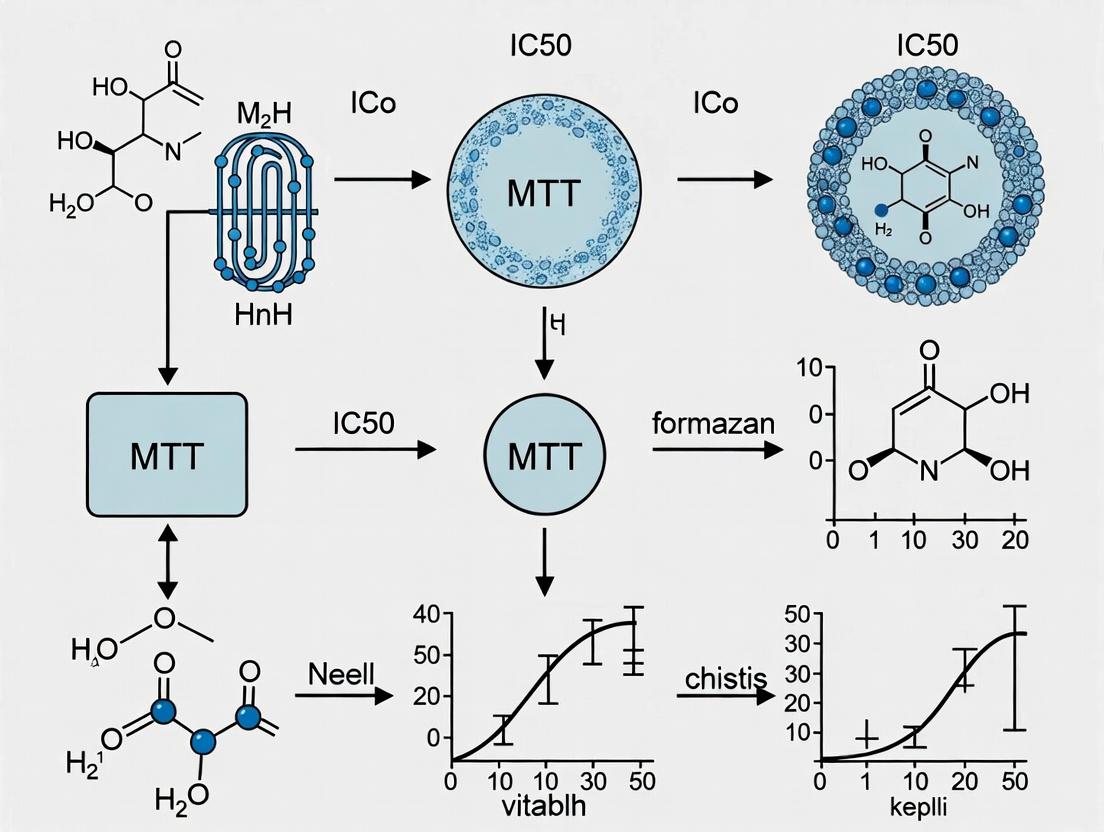
This comprehensive guide provides researchers and drug development professionals with a complete protocol for performing the MTT assay to determine the half-maximal inhibitory concentration (IC50) of compounds.
Mastering the MTT Assay: A Step-by-Step Guide to Accurate IC50 Determination for Drug Discovery
Abstract
This comprehensive guide provides researchers and drug development professionals with a complete protocol for performing the MTT assay to determine the half-maximal inhibitory concentration (IC50) of compounds. Covering foundational principles, detailed methodology, critical troubleshooting steps, and validation against alternative assays, the article equips scientists to generate reliable and reproducible cytotoxicity data essential for preclinical drug screening and cancer research.
The Science Behind the Assay: Understanding MTT Chemistry and IC50 Fundamentals
Historical Context and Evolution
The MTT (3-(4,5-dimethylthiazol-2-yl)-2,5-diphenyltetrazolium bromide) assay, introduced by Mosmann in 1983, revolutionized quantitative cell viability and proliferation analysis. It provided a non-radioactive, colorimetric alternative to earlier methods like thymidine incorporation. Its simplicity and reliability led to rapid adoption in screening for chemotherapeutic agents. Subsequent developments, such as water-soluble formazan dyes (e.g., XTT, MTS, WST-1), aimed to address its limitation of requiring a solubilization step, but MTT remains a gold standard for endpoint assays.
Principle and Signaling Context
MTT is a yellow tetrazolium salt that serves as a metabolic indicator. In viable cells, mitochondrial succinate dehydrogenase (and other reductases) reduces MTT to purple, water-insoluble formazan crystals. The quantity of formazan produced is directly proportional to the number of metabolically active cells.
The reduction occurs primarily within the mitochondrial electron transport chain (ETC), specifically at the inner mitochondrial membrane, involving NAD(P)H-dependent oxidoreductase enzymes. This links the assay directly to cellular metabolic activity.
Title: MTT Reduction Pathway in Mitochondria
Key Research Reagent Solutions and Materials
| Reagent/Material | Function in MTT Assay |
|---|---|
| MTT Reagent | Yellow tetrazolium salt; substrate reduced by cellular enzymes to formazan. |
| Cell Culture Medium | Serum-free medium for diluting MTT to avoid serum protein interference. |
| Solubilization Solution | (e.g., DMSO, SDS, Acidified Isopropanol). Dissolves formazan crystals for absorbance reading. |
| Positive Control | (e.g., Untreated, healthy cells). Defines 100% viability. |
| Negative Control | (e.g., Cells treated with cytotoxic agent like Staurosporine). Defines 0% viability/background. |
| Microplate Reader | Spectrophotometer measuring absorbance at 570 nm (reference ~650 nm). |
| 96-Well Plate | Standard, clear flat-bottom plate for cell culture and assay. |
Detailed Protocol for IC50 Determination
A. Experimental Workflow
Title: MTT Assay Workflow for IC50
B. Step-by-Step Methodology
- Cell Plating: Seed adherent cells in a 96-well plate at an optimized density (e.g., 5,000-10,000 cells/well in 100 µL complete medium). Incubate overnight for attachment.
- Compound Treatment: Prepare a serial dilution (e.g., 1:2, 1:3, 1:10) of the test compound. Replace medium with treatment medium containing the compound gradient. Include control wells: medium-only (blank), untreated cells (100% viability), and a cytotoxic control (0% viability). Incubate for desired exposure time (e.g., 48 hours).
- MTT Incubation: After treatment, carefully remove medium. Add 100 µL of serum-free medium containing 0.5 mg/mL MTT. Incubate for 2-4 hours at 37°C. Observe purple formazan crystals under a microscope.
- Formazan Solubilization: Remove MTT solution. Add 100-150 µL of DMSO (or recommended solvent) to each well. Shake gently on an orbital shaker for 10-15 minutes to fully dissolve crystals.
- Absorbance Measurement: Using a microplate reader, measure the absorbance at 570 nm. Use a reference wavelength of 650-750 nm to subtract background.
C. Data Analysis and IC50 Calculation
- Calculate average absorbance for each set of replicates.
- Subtract the average absorbance of the blank wells (medium + DMSO only) from all other readings.
- Calculate percent viability for each treatment:
% Viability = [(Abs_treatment - Abs_blank) / (Abs_untreated_control - Abs_blank)] * 100 - Plot % Viability (Y-axis) against log10(compound concentration) (X-axis). Fit data using a non-linear regression four-parameter logistic (4PL) model:
Y = Bottom + (Top - Bottom) / (1 + 10^((LogIC50 - X)*HillSlope))WhereBottomis the minimum response,Topis the maximum response, andXis the log concentration.
D. Representative IC50 Data Table
| Compound | Cell Line | Exposure Time | IC50 (µM) | 95% Confidence Interval | R² (Goodness of Fit) |
|---|---|---|---|---|---|
| Doxorubicin | MCF-7 (Breast Cancer) | 48 h | 0.15 | 0.12 - 0.18 | 0.992 |
| Cisplatin | A549 (Lung Cancer) | 72 h | 5.2 | 4.5 - 6.1 | 0.985 |
| Staurosporine | HeLa (Cervical Cancer) | 24 h | 0.007 | 0.005 - 0.010 | 0.998 |
| Test Compound X | HEK293 (Renal Embryonic) | 48 h | 12.8 | 10.5 - 15.6 | 0.978 |
Critical Considerations and Troubleshooting
- Interference: Compounds that are reducing agents or colored can interfere. Include appropriate controls (compound + MTT in cell-free wells).
- Assay Linearity: Optimize cell seeding density to ensure absorbance is within the linear range of the instrument (typically 0.1 - 1.0 AU).
- Solubilization: Ensure crystals are fully dissolved before reading. Gentle heating (~37°C) may be required.
- Metabolic Perturbation: The assay measures metabolic activity, not strictly cell number. Treatments altering metabolism without causing death can confound results. Confirm with orthogonal assays (e.g., clonogenic, ATP-based).
What is IC50? Defining the Half-Maximal Inhibitory Concentration and Its Significance in Pharmacology
The half-maximal inhibitory concentration (IC50) is a quantitative measure that represents the concentration of a substance (e.g., a drug, inhibitor, or toxin) required to inhibit a specific biological or biochemical function by half in vitro. It is a fundamental parameter in pharmacology, toxicology, and drug discovery, providing a standardized metric for comparing the potency of therapeutic or inhibitory compounds.
Within the broader thesis on MTT assay protocol for IC50 determination research, the IC50 serves as the primary endpoint for evaluating the in vitro cytotoxicity of novel compounds or the efficacy of enzyme inhibitors. Its accurate determination is critical for hit selection, lead optimization, and establishing preliminary dose ranges for in vivo studies.
Core Principles and Quantitative Data
The IC50 value is derived from a dose-response curve, where the response (e.g., cell viability, enzyme activity) is plotted against the logarithm of the compound concentration. A standard sigmoidal curve is fitted to the data.
Table 1: Interpretation of IC50 Values in Pharmacological Screening
| IC50 Value Range | Relative Potency | Implication for Lead Development |
|---|---|---|
| < 0.01 µM | Very High | Exceptional candidate; prioritize for further profiling. |
| 0.01 – 0.1 µM | High | Strong lead compound. |
| 0.1 – 1.0 µM | Moderate | Typical lead; requires optimization for potency. |
| 1.0 – 10 µM | Low | May be acceptable for certain target classes; often needs SAR improvement. |
| > 10 µM | Very Low | Often considered inactive; may be deprioritized. |
Table 2: Key Statistical Parameters for Robust IC50 Determination
| Parameter | Typical Target Value | Purpose in MTT/IC50 Assay |
|---|---|---|
| R² (Goodness-of-fit) | > 0.95 | Indicates reliability of the sigmoidal curve fit. |
| Hill Slope | -1 to -3 (for cytotoxicity) | Describes steepness of the dose-response curve. |
| 95% Confidence Interval | Narrow, not spanning an order of magnitude | Reflects precision of the IC50 estimate. |
| Number of Data Points (per curve) | Minimum 8, with replicates | Ensures statistical robustness. |
Application Notes & Protocols: MTT Assay for IC50 Determination
Protocol 1: Standard MTT Viability Assay Workflow
Objective: To determine the IC50 of a test compound on adherent cancer cell lines (e.g., HeLa, MCF-7) using the MTT colorimetric assay.
The Scientist's Toolkit: Essential Research Reagent Solutions
| Item | Function & Specification |
|---|---|
| MTT Reagent | (3-(4,5-Dimethylthiazol-2-yl)-2,5-diphenyltetrazolium bromide); 5 mg/mL in PBS, filter-sterilized. Yellow tetrazolium salt reduced to purple formazan by viable cells. |
| Cell Culture Media | (e.g., DMEM + 10% FBS + 1% P/S). For maintaining and treating cells. |
| Test Compound Dilution Series | Typically 8-10 concentrations prepared in DMSO (<0.5% final in well) or media, spanning a 3-4 log range (e.g., 100 µM to 0.01 µM). |
| Solubilization Solution | (e.g., DMSO, Acidified Isopropanol, or SDS-based Lysis Buffer). Dissolves insoluble purple formazan crystals for absorbance reading. |
| 96-Well Microplate Reader | Equipped with a 570 nm filter (reference 630-650 nm). For measuring formazan absorbance. |
Step-by-Step Methodology:
- Cell Seeding: Seed cells in a 96-well flat-bottom plate at an optimized density (e.g., 5,000-10,000 cells/well in 100 µL complete media). Incubate for 24 hours (37°C, 5% CO₂) to allow attachment.
- Compound Treatment: Prepare serial dilutions of the test compound in culture media. Aspirate old media from wells and add 100 µL of each concentration to triplicate wells. Include vehicle control (0% inhibition) and blank/untreated cells.
- Incubation: Incubate plate for the desired treatment period (e.g., 48 or 72 hours).
- MTT Addition: Add 10-20 µL of MTT stock solution (5 mg/mL) directly to each well. Return plate to incubator for 2-4 hours.
- Formazan Solubilization: Carefully aspirate the media containing MTT. Add 100-150 µL of solubilization solution (e.g., DMSO) to each well. Shake gently on an orbital shaker for 15 minutes to dissolve crystals.
- Absorbance Measurement: Read the absorbance at 570 nm with a reference wavelength of 650 nm using a microplate reader.
- Data Analysis:
- Calculate the mean absorbance for each test concentration (Atest).
- Calculate the mean absorbance for vehicle control cells (Acontrol).
- % Viability = (Atest / Acontrol) * 100.
- Plot % Viability vs. Log10[Compound].
- Fit a four-parameter logistic (4PL) sigmoidal curve using software (e.g., GraphPad Prism, R).
- The IC50 is the concentration at which viability is reduced to 50% of the control.
Protocol 2: Data Analysis and Curve Fitting for IC50
Objective: To accurately calculate the IC50 and associated parameters from MTT viability data.
Methodology:
- Data Normalization: Normalize absorbance data to the mean of the vehicle control (100% viability) and the mean of the blank (0% viability, if using media-only wells).
- Model Fitting: Use nonlinear regression to fit the dose-response data to a 4PL (Hill equation) model:
Y = Bottom + (Top - Bottom) / (1 + 10^((LogIC50 - X) * HillSlope))Where Y = response, X = logarithm of concentration, Top and Bottom = plateaus. - Constraint Application: Constrain the "Top" parameter to ~100 and "Bottom" to ≥0 for typical cytotoxicity assays.
- Outlier Identification: Use residual analysis to identify and potentially exclude statistical outliers.
- Reporting: Report the IC50 value, its 95% confidence interval, R², and Hill Slope.
Signaling Pathways and Experimental Workflows
Title: Mechanism of IC50 Determination via MTT Assay Pathway
Title: MTT Assay Experimental Workflow for IC50
The MTT (3-(4,5-dimethylthiazol-2-yl)-2,5-diphenyltetrazolium bromide) assay is a cornerstone colorimetric method for assessing cell viability and proliferation, essential for calculating the half-maximal inhibitory concentration (IC50) of compounds in drug discovery. The core biochemical event is the reduction of the yellow, water-soluble MTT tetrazolium salt to purple, water-insoluble formazan crystals by active mitochondrial dehydrogenases in viable cells. The intensity of the formazan product, quantified via spectrophotometry, is directly proportional to the number of metabolically active cells, enabling dose-response analysis for IC50 determination.
II. Detailed Biochemical Mechanism
The reduction of MTT occurs primarily in the mitochondrial inner membrane and endoplasmic reticulum. The process is catalyzed by NAD(P)H-dependent oxidoreductase enzymes, including succinate dehydrogenase, in the mitochondrial electron transport chain (ETC).
Key Enzymes & Cofactors:
- Primary Catalysts: Mitochondrial dehydrogenases (e.g., Complex II: Succinate Dehydrogenase).
- Electron Donors: Reduced nicotinamide cofactors (NADH, NADPH) generated from cellular metabolic pathways (glycolysis, Krebs cycle).
- Mechanism: These dehydrogenases transfer electrons from NAD(P)H to the tetrazolium ring of MTT, cleaving it and resulting in the insoluble, colored formazan product. This reaction is dependent on the mitochondrial membrane potential and overall metabolic activity.
Diagram Title: Electron Transfer Pathway for MTT Reduction to Formazan
Table 1: Key Parameters in the MTT Reduction Reaction
| Parameter | Typical Condition / Value | Notes for IC50 Assay Consistency |
|---|---|---|
| Primary Electron Source | NADH / NADPH | Levels depend on glucose metabolism and cell health. |
| Key Enzyme Complex | Mitochondrial Dehydrogenases (e.g., Succinate Dehydrogenase) | Activity is pH and temperature sensitive. |
| Optimal pH Range | 7.0 - 8.0 | Phenol red-free media is recommended to avoid interference. |
| MTT Incubation Time | 1 - 4 hours | Must be optimized per cell line to prevent toxicity. |
| Formazan Solubilizer | DMSO, SDS, Acidified Isopropanol | Must fully dissolve crystals without forming precipitates. |
III. Detailed Protocols for IC50 Determination
A. Standard MTT Assay Protocol for 96-Well Plates Objective: To determine the IC50 of a test compound by assessing its effect on cell metabolic activity.
Materials & Reagents: (See The Scientist's Toolkit below). Procedure:
- Cell Seeding: Seed cells in 96-well flat-bottom plates at an optimized density (e.g., 5,000-10,000 cells/well in 100 µL complete growth medium). Include a "cell-free" background control (medium only). Incubate for 24h (37°C, 5% CO₂) for adherence.
- Compound Treatment: Prepare serial dilutions of the test compound. Remove medium from wells and replace with 100 µL of fresh medium containing the desired concentration of the compound. Include a "vehicle control" (0% inhibition) and a "blank control" (100% inhibition, e.g., medium with 1% SDS). Incubate for the desired treatment period (e.g., 48h).
- MTT Addition: Prepare MTT stock solution (5 mg/mL in PBS). Add 10-20 µL directly to each well to achieve a final concentration of 0.5-1.0 mg/mL. Swirl gently to mix.
- MTT Incubation: Incubate plate for 1-4 hours (37°C, 5% CO₂). Protect from light.
- Formazan Solubilization: Carefully aspirate the medium without disturbing the formed formazan crystals. Add 100-150 µL of solubilization solution (e.g., DMSO) to each well. Place plate on an orbital shaker for 10-15 minutes to ensure complete dissolution.
- Absorbance Measurement: Measure the absorbance of each well at 570 nm (formazan peak) with a reference wavelength of 630-650 nm to correct for nonspecific absorption. Use a microplate reader.
- Data Analysis: Calculate the mean absorbance for each treatment group. Normalize data: % Viability = [(Abssample - Absblank) / (Absvehiclecontrol - Abs_blank)] * 100. Plot % Viability vs. log10(Compound Concentration) and fit a sigmoidal dose-response curve (e.g., using four-parameter logistic model) to calculate IC50.
Diagram Title: MTT Assay Workflow for IC50 Determination
B. Critical Optimization and Validation Protocol Objective: To establish a robust, linear relationship between cell number and formazan production for reliable IC50 data. Procedure:
- Perform a cell titration assay (e.g., 1,000 to 50,000 cells/well) without any test compound.
- Conduct the standard MTT assay as above.
- Plot the measured absorbance (570-650 nm) against the seeded cell number. The relationship should be linear in the range used for subsequent IC50 experiments (typical r² > 0.95).
- Determine the optimal MTT incubation time where absorbance is in the linear range and does not plateau for control wells.
Table 2: Example Validation Data for A549 Cell Line
| Cell Number Seeded (per well) | Mean Absorbance (570-650 nm) | Standard Deviation | % CV |
|---|---|---|---|
| 2,500 | 0.15 | 0.02 | 13.3 |
| 5,000 | 0.32 | 0.03 | 9.4 |
| 10,000 | 0.67 | 0.05 | 7.5 |
| 20,000 | 1.25 | 0.08 | 6.4 |
| 40,000 | 1.98 | 0.12 | 6.1 |
Optimal seeding for IC50 assay: 5,000-20,000 cells/well. MTT incubation: 2 hours.
IV. The Scientist's Toolkit: Essential Research Reagents
Table 3: Key Reagents for MTT Assay & IC50 Research
| Item | Function & Rationale |
|---|---|
| MTT Tetrazolium Salt | The substrate reduced by cellular dehydrogenases to generate the measurable formazan product. Must be prepared fresh or stored frozen, protected from light. |
| DMSO (Cell Culture Grade) | A common, effective solvent for dissolving the water-insoluble formazan crystals. Also used to solubilize many hydrophobic test compounds. |
| PBS (without Ca2+/Mg2+) | Used to prepare the MTT stock solution. The absence of divalent cations prevents precipitation. |
| Phenol Red-Free Medium | Eliminates background absorbance from the pH indicator dye at 570 nm, improving assay sensitivity. |
| SDS Solubilization Solution | An alternative to DMSO (e.g., 10% SDS in 0.01M HCl). Can be added directly without removing medium, simplifying the protocol. |
| Positive Control Compound (e.g., Staurosporine, Cisplatin) | A known cytotoxin used to validate assay performance and generate a reference IC50 curve. |
| Multi-Channel Pipette & 96-Well Plates | Essential for consistent reagent dispensing and high-throughput processing of compound dilutions. |
| Microplate Spectrophotometer | For accurate, high-throughput measurement of absorbance at 570 nm with a reference wavelength. |
Within the context of a broader thesis on MTT assay protocol for IC50 determination research, this application note details the specific scenarios where the MTT assay is the most appropriate and informative tool. The MTT (3-(4,5-dimethylthiazol-2-yl)-2,5-diphenyltetrazolium bromide) assay remains a cornerstone colorimetric method for assessing cell metabolic activity, which serves as a proxy for cell viability and proliferation in response to chemical or physical agents.
Key Applications and Decision Framework
The MTT assay is best applied in specific phases of research. The following table summarizes its primary use cases and limitations.
Table 1: Application Scope of the MTT Assay in Drug Discovery
| Application Context | Primary Use | Rationale for MTT | Key Outputs | Typical Throughput |
|---|---|---|---|---|
| Initial Cytotoxicity Screening | High-throughput screening of compound libraries. | Rapid, cost-effective metabolic activity readout for identifying "hits." | Percent viability relative to control. | 96/384-well plates. |
| IC50 Determination | Quantifying the potency of a cytotoxic agent. | Provides a reliable, quantitative dose-response relationship based on metabolic inhibition. | Dose-response curve; IC50 value (µM or nM). | 96-well plates. |
| Proliferation Assessment | Measuring growth factor effects or long-term proliferation. | Tetrazolium reduction correlates with mitochondrial activity in viable, proliferating cells. | Growth curves over time. | 24/96-well plates. |
| Radio/Chemo-sensitivity Testing | Evaluating the efficacy of radiation or chemotherapeutic agents. | Standardized method for comparing metabolic impairment post-treatment. | Survival fraction. | 96-well plates. |
| Biocompatibility Testing | Assessing the toxicity of biomaterials or nanoparticles. | Well-established ISO standard for initial in vitro toxicity screening. | Percent viability. | 24/96-well plates. |
Table 2: When to Avoid or Supplement the MTT Assay
| Scenario | Reason | Recommended Alternative Assays |
|---|---|---|
| Compounds that directly interact with MTT (e.g., reducing agents). | Leads to false positives/negatives by non-cellular MTT reduction. | Resazurin (Alamar Blue), ATP-based assays (CellTiter-Glo). |
| Real-time kinetic monitoring over short intervals. | MTT is an endpoint assay requiring cell lysis. | Continuous assays like Resazurin or impedance-based systems. |
| Specific cell death mechanism analysis (apoptosis vs. necrosis). | MTT only measures metabolic activity, not death pathway. | Annexin V/PI staining, Caspase-3/7 activity assays. |
| Studies with non-adherent cell lines (certain suspensions). | Formazan crystal solubilization can be inconsistent. | XTT, WST-1, or Alamar Blue assays. |
| High-concentration drug screening (>1 mM). | May cause precipitation of MTT formazan crystals. | Colony formation assay (clonogenic survival). |
Detailed Protocol: MTT Assay for IC50 Determination
This protocol is optimized for determining the half-maximal inhibitory concentration (IC50) of a test compound on adherent cancer cell lines.
Part 1: Materials and Reagent Preparation
The Scientist's Toolkit: Essential Reagents and Materials
| Item | Function/Description |
|---|---|
| Cell Line of Interest | Target cells (e.g., HeLa, MCF-7). Culture in appropriate medium. |
| Test Compound(s) | Drug/chemical agent dissolved in suitable solvent (e.g., DMSO, <0.5% final). |
| MTT Reagent | 5 mg/mL MTT in PBS. Filter sterilize (0.2 µm) and protect from light. |
| Cell Culture Medium | Phenol-red free recommended to avoid absorption interference. |
| Solubilization Solution | Typically DMSO, acidified isopropanol (0.1N HCl), or SDS-based buffers. |
| 96-Well Microplate | Flat, clear bottom for cell culture; opaque walls reduce cross-talk. |
| Multi-channel Pipette & Plate Reader | For efficient reagent handling and absorbance measurement (570 nm). |
| CO2 Incubator | Maintains 37°C, 5% CO2 for cell growth during treatment. |
Part 2: Step-by-Step Experimental Workflow
Diagram Title: MTT Assay Workflow for IC50 Determination
Part 3: Detailed Procedural Steps
- Cell Seeding: Harvest exponentially growing cells. Seed 100 µL of cell suspension per well in a 96-well plate at an optimized density (e.g., 5,000-10,000 cells/well for most adherent lines). Include control wells: medium only (blank), untreated cells (vehicle control, 100% viability).
- Pre-incubation: Incubate plate for 24 hours at 37°C, 5% CO2 to allow cell attachment and resumption of log-phase growth.
- Compound Treatment: Prepare serial dilutions of the test compound in culture medium. Remove 100 µL of old medium from each well and add 100 µL of the dilution series. For vehicle control, add medium with solvent only. Incubate for the desired exposure period (e.g., 24, 48, 72 hours).
- MTT Addition: After treatment, carefully add 10-20 µL of MTT solution (5 mg/mL) to each well. Swirl gently to mix. Return plate to the incubator for 2-4 hours.
- Formazan Solubilization: After incubation, carefully remove 80-100 µL of medium from each well without disturbing the formed purple formazan crystals. Add 100-150 µL of solubilization solution (e.g., DMSO). Place plate on an orbital shaker for 10-15 minutes in the dark to fully dissolve crystals.
- Absorbance Measurement: Read the absorbance immediately at 570 nm using a microplate reader, with a reference wavelength of 630-650 nm to correct for nonspecific absorption.
Part 4: Data Analysis for IC50 Calculation
- Background Correction: Subtract the average absorbance of the medium-only (blank) wells from all other readings.
- Viability Calculation: Calculate the percentage of cell viability for each treatment condition:
- % Viability = [(Abssample - Absblank) / (Absvehiclecontrol - Abs_blank)] × 100
- IC50 Determination: Plot % Viability (Y-axis) against the logarithm of the compound concentration (X-axis). Fit the data using a four-parameter logistic (4PL) nonlinear regression model (e.g., in GraphPad Prism, R). The IC50 is the concentration at which the curve reaches 50% viability.
Diagram Title: Data Analysis Pathway for IC50 Determination
Critical Considerations and Best Practices
- Linearity Validation: Prior to the main experiment, perform an MTT assay with a serial dilution of cells to ensure the signal (Abs) is linear with cell number over the expected range.
- Solvent Controls: The final concentration of any solvent (e.g., DMSO) must be consistent across all wells and non-toxic to cells (<0.5% v/v typically).
- Edge Effect: Avoid using outer perimeter wells for critical data; fill them with PBS or medium to minimize evaporation.
- Assay Endpoint: Optimize the MTT incubation time. Over-incubation can lead to cytotoxicity from MTT itself.
The MTT assay is a robust, economical, and well-characterized method ideally suited for initial, high-throughput cytotoxicity profiling and quantitative IC50 determination of compounds that do not interfere with the tetrazolium reduction pathway. When applied within its validated scope and with appropriate controls, it provides critical potency data that can guide subsequent, more mechanistically focused studies in drug development research.
Application Notes
The MTT (3-(4,5-dimethylthiazol-2-yl)-2,5-diphenyltetrazolium bromide) assay is a cornerstone colorimetric method for assessing cell metabolic activity, widely applied in drug discovery for IC50 determination. Accurate and reproducible results depend on the precise selection of materials, equipment, and protocols. This document, framed within a thesis on MTT assay optimization for IC50 research, provides a foundational checklist and detailed methodologies for establishing a robust MTT laboratory workflow.
The Scientist's Toolkit: Essential Research Reagent Solutions
| Item | Function & Selection Notes |
|---|---|
| MTT Reagent | Yellow tetrazolium salt. Function: Reduced by mitochondrial dehydrogenases in viable cells to purple formazan. Use high-purity, sterile-filtered stock solutions (typically 5 mg/mL in PBS). |
| Cell Culture Media | Phenol red-free medium (e.g., RPMI-1640, DMEM) is recommended to avoid absorbance interference during plate reading. |
| Solubilization Solution | Dissolves insoluble formazan crystals. Common options: DMSO, Acidified Isopropanol (with 0.1N HCl), or commercial MTT solubilization buffers. |
| Reference Compound | For assay validation (e.g., Staurosporine for cytotoxicity positive control). |
| Cell Lines | Well-characterized, relevant lines (e.g., HeLa, MCF-7, primary cells) with known doubling times and metabolic profiles. |
| 96-Well Cell Culture Plates | Flat-bottom, tissue-culture treated plates. Ensure uniform cell seeding for consistency. |
| Multichannel Pipettes & Reservoirs | For rapid, reproducible dispensing of MTT reagent and solubilization solutions across plates. |
Detailed Experimental Protocol for IC50 Determination
Title: Standardized MTT Assay Protocol for IC50 Determination.
Principle: Metabolically active cells reduce MTT to formazan crystals, proportional to cell viability. Test compounds inhibit growth, shifting the dose-response curve.
Materials:
- Complete checklist as per the table above.
- Microplate spectrophotometer (reader) capable of measuring 570 nm with a reference filter at 630-650 nm.
- CO2 incubator, biosafety cabinet, centrifuge, inverted microscope.
Procedure:
- Cell Seeding: Harvest exponentially growing cells. Seed 100 µL of cell suspension at optimized density (e.g., 5,000-10,000 cells/well for adherent lines) in a 96-well plate. Include cell-free control wells (background). Incubate 24h (37°C, 5% CO2) for adherence.
- Compound Treatment: Prepare serial dilutions of the test compound. Aspirate medium from seeded wells and add 100 µL of compound-containing medium per well. Include a vehicle control (0% inhibition) and a positive cytotoxicity control (100% inhibition). Incubate for desired exposure time (e.g., 48-72h).
- MTT Addition: Add 10-20 µL of MTT stock solution (5 mg/mL) to each well. Swirl gently. Incubate for 2-4 hours (37°C, 5% CO2).
- Solubilization: Carefully aspirate the medium containing MTT. Add 100-150 µL of solubilization solution (e.g., DMSO) to each well. Place plate on an orbital shaker for 15 minutes to ensure complete crystal dissolution.
- Absorbance Measurement: Read the absorbance immediately at 570 nm, using 630-650 nm as a reference wavelength. Subtract background absorbance from cell-free control wells.
- Data Analysis: Calculate percent viability relative to vehicle control. Use non-linear regression analysis (e.g., four-parameter logistic curve) in software like GraphPad Prism to determine the IC50 value.
Data Presentation: Critical Parameters for MTT Assay Setup
| Parameter | Optimal Range / Recommendation | Justification |
|---|---|---|
| Cell Seeding Density | 2,000 - 20,000 cells/well (line-dependent) | Must be optimized to ensure control wells are in linear absorbance range (0.5 - 1.2 AU) post-assay. |
| MTT Incubation Time | 2 - 4 hours | Varies with cell line metabolic rate. Over-incubation leads to background. |
| Absorbance Wavelength | 570 nm (Test), 630-650 nm (Reference) | Peak absorbance for formazan. Reference reduces well imperfections. |
| Final DMSO Concentration | ≤ 0.1% (v/v) in cell wells | Higher concentrations can be cytotoxic and interfere. |
| Assay Linear Range (Typical) | 500 - 50,000 cells/well (Varies) | Must be validated for each cell line under local conditions. |
Visualization: MTT Assay Workflow and Signaling Context
Diagram Title: MTT Assay Workflow for IC50 Determination
Diagram Title: Cellular Pathway of MTT Reduction
Step-by-Step MTT Protocol: From Cell Seeding to IC50 Calculation
This application note, framed within a thesis on MTT assay protocol for IC50 determination, details the critical pre-assay parameters that directly impact assay reproducibility and data validity. The foundation of any reliable cytotoxicity or drug efficacy study lies in the rigorous standardization of cellular materials and their maintenance.
Core Considerations for Cell Line Selection
The choice of cell line is dictated by the biological question, target pathway, and the disease model. Key factors include species origin, tissue type, growth characteristics, and genetic stability. For drug discovery, both normal and transformed cell lines are used to assess therapeutic index. Recent searches emphasize the growing importance of authenticated, mycoplasma-free cultures from reputable repositories (e.g., ATCC, ECACC) to combat the pervasive issue of misidentified cell lines.
Table 1: Quantitative Comparison of Common Cell Lines Used in IC50 Assays
| Cell Line | Origin/Tissue | Doubling Time (Hours) | Typical Seeding Density for 96-well plate (cells/well) | Common Application in Drug Screening |
|---|---|---|---|---|
| HEK 293 | Human Embryonic Kidney | 24-36 | 10,000 - 20,000 | Transfected receptor studies, toxicity of gene delivery vectors |
| HeLa | Human Cervical Carcinoma | 20-24 | 5,000 - 10,000 | Broad-spectrum anticancer agent screening |
| MCF-7 | Human Breast Adenocarcinoma | 36-48 | 8,000 - 15,000 | Estrogen receptor-positive breast cancer therapeutics |
| A549 | Human Lung Carcinoma | 22-26 | 6,000 - 12,000 | Non-small cell lung cancer, chemotherapeutic agents |
| HepG2 | Human Hepatocellular Carcinoma | 48-72 | 15,000 - 25,000 | Hepatotoxicity, metabolism studies |
| SH-SY5Y | Human Neuroblastoma | 48-72 | 20,000 - 40,000 | Neurotoxicity, neurodegenerative disease models |
| CHO-K1 | Chinese Hamster Ovary | 14-18 | 10,000 - 15,000 | Recombinant protein production, cytotoxicity of biologics |
Culture Conditions and Standardization
Protocol: Routine Maintenance and Subculture
- Materials: Sterile culture flasks, complete growth medium (base medium + serum + antibiotics), 0.25% Trypsin-EDTA, phosphate-buffered saline (PBS), 37°C humidified CO2 incubator.
- Method:
- Observation: Visually inspect cultures daily for confluence, morphology, and medium color (phenol red indicator).
- Medium Change: For sub-confluent cultures, aspirate spent medium and replace with fresh, pre-warmed complete medium every 2-3 days.
- Subculturing (Passaging): Aspirate medium from confluent (70-90%) culture. Rinse monolayer gently with PBS to remove serum inhibitors. Add pre-warmed Trypsin-EDTA (e.g., 2 mL for T75 flask). Incubate at 37°C until cells detach (typically 2-5 minutes).
- Neutralization: Add an equal or greater volume of complete medium to neutralize trypsin.
- Centrifugation & Seeding: Transfer cell suspension to a tube, centrifuge at 200 x g for 5 minutes. Aspirate supernatant, resuspend pellet in fresh medium. Perform a cell count and seed new flasks at the recommended seeding density. Record the passage number.
Critical Parameters:
- Serum Batch Variation: Fetal Bovine Serum (FBS) lot can significantly affect growth and response. Test and qualify a large batch for an entire study series.
- Mycoplasma Testing: Perform routine testing (e.g., monthly) using PCR or detection kits. Contamination alters cellular metabolism and skews MTT results.
- Incubator Stability: Maintain stable conditions: 37°C ± 0.5°C, 5.0% CO2 ± 0.2%, >95% humidity.
Passage Number Considerations
Cellular phenotypes and gene expression profiles drift with repeated passaging. For consistent assays, establish a working passage range.
Table 2: Impact of Passage Number on Key Cellular Parameters
| Parameter | Low Passage Cells (e.g., P5-P15) | High Passage Cells (e.g., P30+) | Consequence for IC50 Assay |
|---|---|---|---|
| Proliferation Rate | Stable, consistent | Often slowed, variable | Alters exposure time to drug, affects IC50. |
| Genetic Stability | High, representative of origin | Increased risk of drift/mutations | Target expression may change, leading to shifted dose-response. |
| Senescence Markers | Low | Elevated (e.g., β-galactosidase) | Reduced metabolic activity, confounding MTT signal. |
| Recommended Use | Master stock, key experiments | Not recommended for primary data | High passage use introduces uncontrollable variability. |
Protocol: Establishing and Managing Cell Stock Passages
- Materials: Cryopreservation medium (e.g., 90% FBS + 10% DMSO), controlled-rate freezer, liquid nitrogen storage, cell counting equipment.
- Method for Creating Master/Working Stocks:
- Master Stock: Cryopreserve a large number of vials from the lowest possible passage (post-thaw recovery) after authentication. This is the reference stock.
- Working Stock: Thaw one vial from the master stock and expand cells over a limited number of passages (e.g., 5-10) to create a "working stock" of vials.
- Assay Stock: For experiments, thaw one "working stock" vial and use cells for a strictly limited passage window (e.g., P3-P8 from this thaw). Document the cumulative passage number relative to the original stock.
- Record Keeping: Maintain a log for each cell line detailing thaw date, passage number at each split, seeding densities, and morphological observations.
The Scientist's Toolkit: Essential Research Reagent Solutions
Table 3: Key Reagents for Cell Culture in Pre-Assay Planning
| Item | Function & Importance |
|---|---|
| Authenticated Cell Line | Starting biological material, verified by STR profiling to ensure identity and prevent cross-contamination. |
| Qualified FBS Lot | Provides essential growth factors, hormones, and nutrients. A pre-tested, single lot ensures consistency across long-term studies. |
| Mycoplasma Detection Kit | Essential for routine screening. Mycoplasma contamination alters cell metabolism, gene expression, and viability, directly invalidating MTT data. |
| Defined Trypsin-EDTA | Provides consistent and gentle cell detachment for accurate counting and uniform seeding, a critical step for assay reproducibility. |
| Cryopreservation Medium | High-serum content with DMSO allows for long-term storage of characterized, low-passage cell stocks, preserving genetic integrity. |
| Cell Counting Reagent/Device | (e.g., Trypan Blue, automated cell counter). Enables precise and accurate determination of cell density for standardized seeding in assays. |
| Passage Number Log | (Digital or physical logbook). Critical documentation tool to track cellular age and prevent use of cells outside the validated passage range. |
Visualizing the Pre-Assay Planning Workflow
Diagram 1: Pre-Assay Cell Culture Planning Workflow
Diagram 2: Cell Stock Management & Valid Passage Window
This application note details the critical first step in the MTT assay protocol for IC50 determination: cell seeding and adherence. Proper plating density is paramount for generating reliable, reproducible dose-response data. A density that is too high leads to nutrient depletion, contact inhibition, and an underestimation of cytotoxicity, while a density that is too low results in poor signal-to-noise ratios and high data variability. This protocol is framed within a thesis focusing on standardizing MTT assays for accurate drug potency evaluation in cancer research.
Key Variables in Plating Density Optimization
Optimization depends on multiple interdependent variables. The target cell confluence at the time of assay (typically 70-80%) is the primary guiding principle.
Table 1: Factors Influencing Optimal Seeding Density
| Factor | Impact on Seeding Density | Consideration for MTT/IC50 Assays |
|---|---|---|
| Cell Type & Size | Primary cells often require higher densities than transformed lines. Larger cells (e.g., hepatocytes) need lower densities. | Consistent morphology is key for uniform formazan crystal formation. |
| Doubling Time | Fast-dividing cells (e.g., HeLa, ~24h) must be seeded at lower densities for a 72h assay. | Must calculate backward from target confluence at assay endpoint. |
| Assay Duration | Longer drug incubations (e.g., 72h) require lower starting densities than short-term (24h) assays. | Critical for ensuring cells remain in log-phase growth throughout treatment. |
| Well Format | Density scales with surface area (see Table 2). | Edge effects in 96-well plates can increase variability; use inner wells. |
| Cell Health & Passage | Lower viability or high passage number may require a density adjustment upward. | Low viability increases background in MTT assay. Use low-passage cells. |
Table 2: Recommended Seeding Density Ranges by Well Format & Cell Type*
| Cell Line (Example) | Doubling Time | 96-Well Plate (Cells/Well) | 384-Well Plate (Cells/Well) | Target Confluence at Assay (72h) |
|---|---|---|---|---|
| A549 (Lung carcinoma) | ~22-24 hours | 3,000 - 5,000 | 750 - 1,200 | 70-80% |
| HEK293 (Embryonic kidney) | ~20-24 hours | 5,000 - 8,000 | 1,250 - 2,000 | 70-80% |
| HepG2 (Hepatocellular carcinoma) | ~48-60 hours | 8,000 - 12,000 | 2,000 - 3,000 | 70-80% |
| SH-SY5Y (Neuroblastoma) | ~48-72 hours | 10,000 - 15,000 | 2,500 - 3,750 | 70-80% |
| Primary Human Fibroblasts | ~40-60 hours | 6,000 - 10,000 | 1,500 - 2,500 | 80-90% |
Note: These are illustrative starting points. Density must be empirically determined for each cell line and experimental condition.
Detailed Protocol: Determining Optimal Plating Density
Materials & Reagents (The Scientist's Toolkit)
Table 3: Essential Research Reagent Solutions
| Item | Function/Description |
|---|---|
| Cell Line of Interest | Low passage number (<20), routinely tested for mycoplasma. |
| Complete Growth Medium | Standard medium (e.g., DMEM, RPMI-1640) supplemented with FBS (e.g., 10%), L-glutamine, and antibiotics. |
| Sterile 1X PBS (Phosphate Buffered Saline) | For diluting trypsin and washing cells. |
| Trypsin-EDTA Solution (0.05%-0.25%) | For adherent cell detachment. Concentration depends on cell line sensitivity. |
| Trypan Blue Solution (0.4%) | Vital dye for counting viable (unstained) vs. non-viable (blue) cells. |
| Hemocytometer or Automated Cell Counter | For accurate determination of cell concentration and viability. |
| Multichannel Pipettes & Sterile Reservoirs | For efficient and uniform plating across multi-well plates. |
| Tissue Culture-Treated Multi-well Plates (96-well) | Flat, clear bottom for microscopy and absorbance reading. |
| Humidified Cell Culture Incubator | Maintained at 37°C, 5% CO₂. |
Methodology
Part A: Preliminary Density Range-Finding Experiment
- Harvest Cells: Culture cells to ~80% confluence. Aspirate medium, wash with PBS, and detach with appropriate volume of trypsin. Neutralize with complete medium.
- Count & Prepare Dilutions: Count cells using Trypan Blue. Calculate viability. Prepare a single-cell suspension in complete medium at a master concentration (e.g., 500,000 cells/mL). Perform serial dilutions to create a range of seeding densities (e.g., 1,000, 2,500, 5,000, 10,000, 20,000 cells/well for a 96-well plate in 100 µL).
- Seed Plate: Using a multichannel pipette, seed 6-8 replicate wells for each density. Include a "background control" column with medium only (no cells). Gently swirl the plate to ensure even distribution.
- Incubate: Place plates in a 37°C, 5% CO₂ incubator for 24 hours to allow for full adherence.
- Microscopic Assessment: After 24h, observe each density under an inverted microscope. Note confluence, morphology, and uniformity. The ideal pre-treatment density should be 20-30% confluent with evenly distributed, healthy adherent cells.
- Pilot MTT Assay: Perform a full MTT assay (without drug treatment) on this plate. The optimal density should yield an absorbance (570 nm) of 0.8 - 1.2 for the untreated control wells, ensuring a wide dynamic range for detecting inhibition.
Part B: Validation with Reference Compound
- Using the optimal density identified in Part A, seed two new 96-well plates for a 72-hour assay.
- On the following day, treat cells with a serial dilution of a known cytotoxic agent (e.g., Staurosporine or a chemotherapeutic relevant to your cell type) and a DMSO vehicle control.
- After 72h, perform the MTT assay.
- Analysis: Generate dose-response curves. The optimal density should produce a clean, sigmoidal curve with a low coefficient of variation (CV < 15%) among replicates and a minimal signal in the background (medium-only) wells.
Critical Considerations for IC50 Assays
- Edge Effect Mitigation: Fill the perimeter wells of 96-well plates with sterile PBS or medium only to minimize evaporation-induced variability in experimental wells.
- Uniform Seeding: Pre-wet pipette tips in medium when seeding to improve accuracy. Gently tap or swirl plates after seeding; avoid vigorous shaking.
- Adherence Time: Allow a full 24 hours for cells to adhere and resume log-phase growth before adding compounds. Rushing this step increases variability.
- Documentation: Record exact passage number, viability at seeding, and lot numbers of critical reagents (e.g., FBS, MTT).
Workflow for Optimizing Cell Seeding Density
Impact of Seeding Density on IC50 Data Quality
Within the broader thesis on optimizing MTT assay protocols for accurate IC50 determination, this section details the critical process of compound treatment. The preparation of precise serial dilutions and the establishment of a reliable dose-response curve are fundamental to generating meaningful cytotoxicity data. This protocol outlines the standard methodology for creating a dilution series, treating cells, and analyzing the resulting data to calculate the half-maximal inhibitory concentration (IC50), a key parameter in drug development.
Research Reagent Solutions & Essential Materials
| Item | Function in Experiment |
|---|---|
| Test Compound (Dry Powder) | The drug or chemical entity whose cytotoxic effect is being evaluated. |
| Dimethyl Sulfoxide (DMSO) | A common solvent for reconstituting water-insoluble compounds. Must be used at a final concentration non-toxic to cells (typically ≤0.5%). |
| Cell Culture Medium | Serum-containing medium (e.g., DMEM with 10% FBS) used as the diluent for creating the compound working solutions for cell treatment. |
| Phosphate Buffered Saline (PBS) | Used for washing cells and for preparing compound solutions if soluble in aqueous buffers. |
| Multichannel Pipette | Essential for rapid and reproducible transfer of compound dilutions to multi-well plates. |
| Sterile Reservoir Troughs | For holding bulk volumes of medium and compound dilutions during plate dispensing. |
| 96-Well Cell Culture Plate | The platform containing the monolayer of cells to be treated with the compound dilution series. |
| Microcentrifuge Tubes (1.5-2 mL) | For preparing and storing the initial stock solution and serial dilutions. |
Protocol: Preparation of Serial Dilutions and Cell Treatment
I. Preparation of Compound Stock Solution
- Calculate the required mass of the test compound to prepare a 10 mM stock solution in DMSO, considering molecular weight.
- Weigh the compound and dissolve in the appropriate volume of pure DMSO to achieve the 10 mM concentration. Vortex thoroughly.
- Aliquot and store at -20°C or -80°C as per compound stability guidelines. Avoid repeated freeze-thaw cycles.
II. Generation of a Serial Dilution Series for Cell Treatment This protocol assumes a 10-point, 1:3 serial dilution for a 96-well plate, starting from a 10 mM stock. Final DMSO concentration must be normalized and kept ≤0.5%.
- Pre-warm complete cell culture medium to 37°C.
- Prepare an Intermediate Stock (100X) in a sterile microcentrifuge tube: Dilute the 10 mM DMSO stock 1:100 in complete medium to create a 100 µM intermediate stock (e.g., 10 µL stock + 990 µL medium). This step reduces the final DMSO concentration.
- Label 9 microcentrifuge tubes (Dilution 1 to 9). Add 600 µL of complete medium to each tube.
- Perform the serial dilution:
- Add 300 µL of the 100 µM Intermediate Stock to the first tube (Dilution 1). Mix thoroughly by pipetting or gentle vortexing. This is 50 µM.
- Transfer 300 µL from Dilution 1 to Dilution 2. Mix. This is 25 µM.
- Continue this 1:2 serial dilution process through Dilution 9, discarding 300 µL from the final tube after mixing.
- Dilution 10 is the negative control: Prepare 600 µL of medium containing the same concentration of vehicle (DMSO) used in the highest treatment dose (e.g., 0.5% v/v).
III. Treatment of Cells in 96-Well Plate
- Aspirate the growth medium from the pre-seeded 96-well plate (from Step 1 of the overall thesis).
- Using a multichannel pipette and sterile reservoirs, add 100 µL of the appropriate dilution to the designated wells. Each concentration should be tested in at least triplicate (n=3-6).
- Include control wells: Negative Control (cells + vehicle medium), Positive Control (cells + a known cytotoxic agent, e.g., 100 µM Staurosporine), and Blank (medium only, no cells).
- Gently swirl the plate to ensure even distribution. Incubate the plate for the desired treatment period (e.g., 48 hours) in a 37°C, 5% CO₂ incubator.
Data Presentation: Example Dose-Response Data Table
The table below summarizes hypothetical absorbance data from an MTT assay following a 48-hour treatment with a test compound (see Step 3 of the overall thesis for MTT protocol). Absorbance is measured at 570 nm, with background subtraction at 650 nm.
| Compound Concentration (µM) | Mean Absorbance (570 nm) | Standard Deviation (SD) | Cell Viability (%)* |
|---|---|---|---|
| 0 (Vehicle Control) | 1.000 | 0.085 | 100.0 |
| 0.195 | 0.975 | 0.079 | 97.5 |
| 0.391 | 0.920 | 0.082 | 92.0 |
| 0.781 | 0.850 | 0.074 | 85.0 |
| 1.563 | 0.720 | 0.065 | 72.0 |
| 3.125 | 0.520 | 0.055 | 52.0 |
| 6.25 | 0.320 | 0.041 | 32.0 |
| 12.5 | 0.180 | 0.035 | 18.0 |
| 25.0 | 0.110 | 0.028 | 11.0 |
| 50.0 | 0.085 | 0.022 | 8.5 |
| Positive Control | 0.070 | 0.018 | 7.0 |
*Cell Viability % = (Mean Abs Sample / Mean Abs Vehicle Control) x 100.
Establishing the Dose-Response Curve & IC50 Calculation
- Plot the Data: Graph the compound concentration (log10 scale) on the x-axis against the mean cell viability (%) on the y-axis (linear scale).
- Fit a Nonlinear Regression Curve: Use software (e.g., GraphPad Prism, R) to fit a four-parameter logistic (4PL) model, also known as a sigmoidal dose-response curve:
Y = Bottom + (Top - Bottom) / (1 + 10^((LogIC50 - X) * HillSlope)). - Determine IC50: The IC50 is the concentration at which the fitted curve crosses the 50% viability line. From the example data, the calculated IC50 would be approximately 3.5 µM.
Workflow for Compound Serial Dilution and Treatment
Steps to Analyze Data and Determine IC50
Application Notes
Within the protocol for determining the half-maximal inhibitory concentration (IC50) of a compound, the MTT incubation step is a critical juncture that directly influences the accuracy, precision, and reliability of the final dose-response data. This step involves the conversion of the yellow tetrazolium salt MTT (3-(4,5-dimethylthiazol-2-yl)-2,5-diphenyltetrazolium bromide) to purple formazan crystals by metabolically active cells. Optimal incubation parameters are non-negotiable for ensuring that the measured formazan product is proportional to the viable cell count under each treatment condition.
Core Principle: The incubation must be of sufficient duration and with an appropriate MTT concentration to allow for maximal formazan production in control (untreated) cells without inducing cytotoxicity or reaching a solubility plateau, which would compress the dynamic range of the assay. Suboptimal incubation leads to underestimation of cell viability, while over-incubation can cause background formazan formation in dying cells or medium precipitation.
Critical Parameters:
- Incubation Time: Typically ranges from 2 to 4 hours for most adherent mammalian cell lines. Fast-growing or highly metabolic cells may require shorter times (~2 hours), while primary cells or slow-growing lines may need longer periods (up to 4 hours). Extending beyond 4 hours often increases background and risk of cytotoxicity from MTT itself.
- MTT Concentration: The standard final concentration is 0.5 mg/mL, derived from a 5 mg/mL stock solution in PBS or serum-free medium. Concentrations from 0.2 to 1.0 mg/mL are used, but 0.5 mg/mL offers the best balance between signal intensity and minimal background for most cell types.
- Incubation Conditions: The assay must be performed at 37°C in a standard cell culture incubator (5% CO2, humidified atmosphere) to maintain normal cellular metabolism. Shielding from light is recommended to prevent photodegradation of MTT and formazan.
- Cell Confluence: Cells should be in the exponential growth phase and at an optimal density (typically 50-80% confluence at the time of assay) to ensure metabolic activity is in a linear range.
Troubleshooting: A common issue is the formation of a visible purple precipitate at the well edges or unevenly across the well, indicating formazan crystal formation. This is normal. However, if crystals do not dissolve adequately in the subsequent solubilization step, the incubation time may have been too long, or the formazan amount may exceed the solubilization capacity.
Table 1: Standardized MTT Incubation Parameters for Common Cell Types
| Cell Type / Category | Recommended MTT Final Concentration (mg/mL) | Typical Incubation Time (Hours) | Key Consideration |
|---|---|---|---|
| Standard Adherent Lines (HeLa, HEK293, MCF-7) | 0.5 | 3 - 4 | Robust metabolism; optimize within range. |
| Suspension Lines (Jurkat, U937) | 0.4 - 0.5 | 3 - 4 | May require centrifugation post-incubation. |
| Primary Cells (e.g., HUVECs, PBMCs) | 0.5 - 1.0 | 4 (or longer) | Lower metabolic rate; may need higher [MTT] or time. |
| Neuronal Cells | 0.5 | 4 - 6 | Slow metabolic activity. |
| 3D Spheroids / Organoids | 1.0 | 4 - 6 | Diffusion barrier; require higher [MTT] and longer time. |
Table 2: Impact of Deviations from Optimal Incubation Parameters
| Parameter Deviation | Effect on Formazan Signal | Consequence for IC50 Determination |
|---|---|---|
| Time Too Short (<2h) | Sub-linear, low signal in controls. | Reduced assay window; overestimation of compound toxicity (falsely low IC50). |
| Time Too Long (>6h) | Signal plateau, increased background in dead cells. | Compressed dynamic range; potential underestimation of toxicity (falsely high IC50). |
| [MTT] Too Low (<0.2 mg/mL) | Low, sub-optimal signal. | High variability, poor signal-to-noise ratio. |
| [MTT] Too High (>1.0 mg/mL) | Cytotoxicity, non-specific precipitation. | Background noise; loss of linearity with cell number. |
| Incorrect Temperature | Reduced metabolic conversion rate. | Inconsistent results, day-to-day variability. |
Detailed Experimental Protocol
Protocol: MTT Incubation for IC50 Assay Plates
I. Preparation
- MTT Stock Solution (5 mg/mL): Dissolve MTT powder in sterile, warm PBS or serum-free, phenol red-free culture medium to a final concentration of 5 mg/mL. Vortex thoroughly until completely dissolved. Filter sterilize using a 0.2 µm syringe filter. Aliquot and store protected from light at -20°C for up to 6 months. Avoid repeated freeze-thaw cycles.
- Pre-warm complete culture medium to 37°C in a water bath.
- Label a sterile tube for preparing the MTT working solution.
II. Procedure
- Compound Treatment: Following the desired duration of compound exposure (e.g., 48 hours), visually inspect the 96-well plate under a microscope for signs of contamination or abnormal cell morphology.
- Prepare MTT Working Solution: Thaw an aliquot of MTT stock. For each well of a 96-well plate, 110 µL of working solution is prepared to account for pipetting error. Dilute the 5 mg/mL MTT stock 1:10 in pre-warmed, complete culture medium to achieve a final working concentration of 0.5 mg/mL. Mix gently by inversion.
- Example: For one 96-well plate (100 µL/well), prepare 11 mL of working solution: 1.1 mL MTT stock + 9.9 mL culture medium.
- Add MTT: Using a multichannel pipette, carefully aspirate and discard 85-90% of the spent culture medium from each well, leaving the adherent cell monolayer intact. Caution: Do not let wells dry out.
- Immediately add 100 µL of the pre-warmed MTT working solution (0.5 mg/mL) to each well, including blank wells (medium only, no cells).
- Incubate: Place the plate in a 37°C, 5% CO2, humidified incubator. Protect from light by wrapping in aluminum foil or placing in a dark incubator.
- Incubation Duration: Incubate for 3.5 hours. This is a standard optimal time point. For new cell lines, a time-course experiment (1, 2, 3, 4, 5 hours) is recommended to establish the linear range of formazan production.
- Termination of Incubation: After incubation, visually inspect the plate. A purple precipitate should be visible, especially in control wells with high cell viability.
III. Post-Incubation Processing (Preparation for Solubilization)
- Using a multichannel pipette, carefully remove the MTT-containing medium from all wells without disturbing the formazan crystals at the bottom.
- Add 150 µL of pre-warmed DMSO (or the chosen solubilization solvent) to each well to dissolve the formazan crystals.
- Proceed immediately to the solubilization and plate reading steps (Step 4 of the overall IC50 protocol).
Visualizations
Diagram 1: MTT Incubation Workflow
Diagram 2: MTT Reduction Biochemistry in Cells
The Scientist's Toolkit
Table 3: Essential Reagents & Materials for MTT Incubation
| Item | Specification / Example | Primary Function in MTT Incubation |
|---|---|---|
| MTT Reagent | 3-(4,5-Dimethylthiazol-2-yl)-2,5-diphenyltetrazolium bromide, ≥97.5% (HPLC). | Substrate for cellular dehydrogenases; converted to measurable formazan. |
| Sterile PBS or Medium | Phosphate-Buffered Saline (Ca2+/Mg2+-free) or serum-free, phenol red-free medium (e.g., RPMI-1640). | Solvent for preparing MTT stock solution; minimizes background interference. |
| Sterile Syringe Filter | 0.2 µm PORE size, cellulose acetate or PVDF membrane. | For sterilizing the MTT stock solution to prevent microbial contamination. |
| Multichannel Pipette | Adjustable volume (e.g., 30-300 µL), calibrated. | For rapid, uniform addition of MTT solution across the 96-well plate. |
| Cell Culture Incubator | Maintains 37°C, 5% CO2, >90% humidity. | Provides optimal physiological conditions for cellular metabolism during incubation. |
| Light-Blocking Container | Aluminum foil or dedicated dark box/incubator. | Protects light-sensitive MTT and formazan from photodegradation. |
| DMSO (for subsequent step) | Cell culture grade, sterile, ≥99.9%. | Standard solvent for dissolving the insoluble purple formazan crystals post-incubation. |
In the context of an MTT assay for IC₅₀ determination, the solubilization step is critical for converting the intracellular purple formazan crystals into a homogeneous, colored solution suitable for spectrophotometric measurement. The choice of solvent directly impacts the assay's sensitivity, reproducibility, and compatibility with downstream analysis.
Comparison of Common Solubilization Solvents
The following table summarizes key characteristics of the most employed solvents, based on current literature and protocols.
Table 1: Properties and Performance of Common Solubilization Solvents for MTT Formazan
| Solvent | Typical Concentration/Usage | Mechanism of Action | Key Advantages | Key Limitations & Considerations | Optimal Reading Wavelength (nm) |
|---|---|---|---|---|---|
| SDS in Acidified Solution | 10% SDS in 0.01M HCl (or 10-20% in water) | SDS solubilizes cell membranes and formazan crystals; low pH enhances dissolution. | Excellent solubilization power; stable color signal for >24h; low background. | Acid can corrode plate readers; incompatible with some plasticware; precipitation if protocol not followed. | 570-590 |
| DMSO | 100% Anhydrous DMSO | Directly dissolves hydrophobic formazan crystals. | Fast; preserves formazan signal well; stops reaction instantly. | Can dissolve certain plastics; hygroscopic; high background if residual MTT remains. | 540-570 |
| Isopropanol Acidified | 100% IPA + 0.04-0.1M HCl | Similar to DMSO, with acid to aid crystal dissolution. | Effective; evaporates slowly. | Volatile; fire hazard; can precipitate proteins. | 570 |
| SDS-DMF | 20% SDS : DMF (1:1 mix) | Combines membrane solubilization (SDS) with organic dissolution (DMF). | Very potent for difficult cells (e.g., adherent, highly confluent). | DMF is a hazardous solvent; requires careful handling and disposal. | 570 |
| Glycine Buffer + SDS | 0.1M Glycine, pH 10.5 + 10% SDS | High pH glycine buffer aids dissolution, SDS solubilizes. | Useful for specific cell types where acid is problematic. | High pH may degrade formazan over time. | 570 |
Detailed Experimental Protocols
Protocol 1: Standard Solubilization using Acidified SDS (for 96-well plates) This protocol offers high stability and is recommended for large-scale screening.
- Following MTT incubation and media removal, ensure formazan crystals are visible under a microscope.
- Solvent Preparation: Prepare a 10% (w/v) Sodium Dodecyl Sulfate (SDS) solution in 0.01M Hydrochloric Acid (HCl). Dissolve 10g of SDS in 900ml of deionized water. Slowly add 0.83ml of concentrated HCl (12M) and adjust the final volume to 1L with water. Filter through a 0.2µm filter. Solution is stable at room temperature for weeks.
- Solubilization: Add 100µl of the acidified SDS solution directly to each well of the 96-well plate containing the insoluble formazan crystals.
- Incubation: Cover the plate to prevent evaporation and incubate at 37°C for 4-6 hours, or overnight at room temperature in the dark. Gently shake the plate on an orbital shaker to facilitate uniform dissolution.
- Measurement: Ensure no crystals remain (visual check). Wipe the bottom of the plate clean and measure the absorbance at 570nm with a reference wavelength of 630-690nm to correct for nonspecific absorption.
Protocol 2: Rapid Solubilization using DMSO (for Cytotoxicity Screening) This protocol is fast and effective for routine assays where speed is prioritized.
- After MTT incubation, carefully aspirate all medium from the wells without disturbing the formazan crystals.
- Wash (Optional but Recommended): Add 100µl of 1X PBS to each well and gently swirl to remove any residual MTT salt. Aspirate the PBS completely.
- Solubilization: Add 100µl of anhydrous Dimethyl Sulfoxide (DMSO) to each well.
- Mixing: Place the plate on an orbital shaker for 10-15 minutes at low to medium speed to ensure complete dissolution of the crystals.
- Immediate Measurement: Read the absorbance at 540-570nm promptly (within 1 hour) to prevent signal drift due to DMSO hygroscopicity. A reference wavelength of 620-690nm is essential.
Visualization of the Solubilization Decision Workflow
Diagram Title: Decision Workflow for MTT Solubilization Solvent Selection
The Scientist's Toolkit: Essential Reagents for Solubilization
Table 2: Key Research Reagent Solutions for MTT Signal Development
| Item | Function in Solubilization | Critical Notes for IC₅₀ Assays |
|---|---|---|
| SDS (Sodium Dodecyl Sulfate) | Anionic detergent that lyses cell membranes and solubilizes formazan-protein complexes. | Use high-purity grade. Acidification with HCl (0.01M) significantly improves dissolution kinetics and stability. |
| DMSO (Dimethyl Sulfoxide) | Polar aprotic solvent that directly dissolves hydrophobic formazan crystals. | Must be anhydrous. Residual MTT will also dissolve, increasing background; a PBS wash step is crucial. |
| 0.01M Hydrochloric Acid (HCl) | Used to acidify SDS or isopropanol, protonating formazan and enhancing its solubility. | Prepare by careful dilution of concentrated HCl. Avoid using with carbonate-based plates. |
| DMF (N,N-Dimethylformamide) | Powerful organic solvent often mixed with SDS for stubborn formazan crystals. | Highly hazardous. Use in a fume hood with appropriate personal protective equipment (PPE). |
| Glycine-NaOH Buffer (pH 10.5) | High-pH buffer alternative to acid, used with SDS for specific applications. | Formazan solutions are less stable at high pH; read plates promptly. |
| 96-Well Plate Sealing Film | Prevents evaporation of volatile solvents (DMSO, Isopropanol) during incubation. | Ensure compatibility with the solvent to avoid film dissolution or contamination. |
Within the broader methodology for determining the half-maximal inhibitory concentration (IC₅₀) via the MTT assay, Step 5 is critical for transforming a biochemical reaction (formazan crystal formation) into robust, quantifiable data. The accuracy of the IC₅₀ value is directly contingent upon precise optical density (OD) measurements. This section details the scientific rationale behind wavelength selection and outlines protocols to mitigate common errors in plate reading, ensuring the integrity of dose-response data.
Optimal Wavelengths: Theory and Quantitative Data
The formed formazan crystals exhibit a broad absorbance spectrum. The primary measurement wavelength is chosen to maximize the signal-to-noise ratio by reading at peak absorbance, while a reference wavelength corrects for non-specific absorbance from cell debris, plate imperfections, or media components.
Table 1: Optimal Wavelengths for MTT Formazan Measurement
| Measurement Type | Wavelength (nm) | Purpose & Rationale | Expected OD Range (Typical) |
|---|---|---|---|
| Primary (Absorbance Max) | 570 | Peak absorbance for most formazan derivatives. Provides the strongest specific signal. | 0.1 - 2.0 (linear range) |
| Reference Correction | 630 - 650 | Measures nonspecific light scattering/absorption. Minimal absorbance by formazan at this range. | Typically < 0.4 |
| Alternative Single Wavelength | 540 - 550 | Sometimes used if filter availability is limited, though signal strength is slightly reduced. | Slightly lower than at 570nm |
Key Protocol: Dual-Wavelength Measurement
- Instrument Setup: Configure the microplate reader for dual-wavelength absorbance mode.
- Wavelength Entry: Set the measurement (test) wavelength to 570 nm and the reference wavelength to 650 nm.
- Reading: Read the entire plate. The software automatically calculates the corrected absorbance: OD₅₇₀ (corrected) = OD₅₇₀ - OD₆₅₀.
- Validation: Ensure the OD of the positive control (high cell viability) falls within the linear dynamic range of the instrument (typically 0.1 - 2.0). Values >2.0 may require solubilization solution dilution before re-reading.
Avoiding Common Pitfalls: Protocols and Solutions
Pitfall 1: Incomplete Solubilization of Formazan Crystals
- Protocol for Complete Solubilization:
- After MTT incubation and media removal, add the recommended volume of solubilization solution (e.g., DMSO, acidified isopropanol).
- Seal the plate with adhesive film or a lid to prevent evaporation.
- Place the plate on an orbital shaker (~150-200 rpm) in the dark at room temperature for a minimum of 2 hours. For dense crystals, overnight solubilization is recommended.
- Before reading, inspect wells under a microscope or against light to confirm no residual particulate matter.
Pitfall 2: Bubble Formation in Wells
- Protocol for Bubble Minimization:
- When adding solubilization solution, pipette slowly against the well wall.
- Do not vortex or vigorously shake the plate after adding solubilizer.
- Allow the plate to settle for 10-15 minutes after solubilization shaking.
- Gently tap the plate on the bench top to dislodge bubbles before reading. Use a sterile needle to puncture large bubbles if necessary.
Pitfall 3: Reading Outside the Linear Range
- Protocol for Range Verification and Adjustment:
- During preliminary assay development, create a cell titration series to establish the linear relationship between cell number and OD₅₇₀.
- If sample OD exceeds 2.0, perform a dilution protocol: Transfer 100 µL of the solubilized solution from the well to a new well or cuvette, add 100 µL of fresh solubilizer, mix gently, and read. Multiply the resultant OD by the dilution factor (2).
Pitfall 4: Edge Effect (Evaporation)
- Preventive Protocol:
- During the entire MTT incubation and solubilization period, keep the inner 60 wells of a 96-well plate filled with PBS or water to humidity the chamber.
- Always use a sealing film during extended incubation and solubilization steps.
- When reading, ensure the plate is at room temperature to prevent condensation.
Title: MTT Plate Reading & Data Acquisition Workflow
The Scientist's Toolkit: Key Reagents & Materials
Table 2: Essential Research Reagent Solutions for MTT Plate Reading
| Item | Function & Rationale |
|---|---|
| Dimethyl Sulfoxide (DMSO), Anhydrous | The most common solvent for dissolving water-insoluble formazan crystals. Its high polarity effectively solubilizes the crystals for uniform absorbance. |
| Acidified Isopropanol (0.1% HCl) | An alternative solubilizer. The acid helps dissolve crystals and can prevent interference from certain media components like phenol red. |
| 96-Well Microplate Sealing Film | Prevents evaporation during prolonged solubilization, crucial for avoiding the "edge effect" which skews peripheral well OD values. |
| Orbital Shaker (for microplates) | Ensures consistent and complete mixing of solubilizer with crystals across all wells, a prerequisite for uniform OD measurements. |
| Calibrated Microplate Reader | Must be capable of dual-wavelength absorbance measurements. Regular calibration with neutral density filters is essential for data accuracy. |
| Multi-Channel Pipette & Reservoirs | For efficient and uniform addition of solubilization solution to all wells, minimizing timing differences between wells. |
Within the context of a thesis on optimizing the MTT assay for IC50 determination, robust data analysis is paramount. This protocol details the steps for using software tools, primarily GraphPad Prism, to fit dose-response curves, calculate IC50 values, and generate publication-ready figures. Accurate curve fitting is the critical bridge between raw absorbance data and the quantitative potency metrics essential for drug development.
The half-maximal inhibitory concentration (IC50) represents the concentration of a compound that reduces a biological response by 50%. It is a fundamental parameter in pharmacology and toxicology. Determining IC50 from an MTT assay requires fitting the relationship between compound concentration (log-transformed) and the normalized cellular response (% viability) to a non-linear regression model.
Core Mathematical Model: The Four-Parameter Logistic (4PL) Model
The standard model for dose-response analysis is the four-parameter logistic (4PL) curve, also known as the Hill equation: Y = Bottom + (Top - Bottom) / (1 + 10^((LogIC50 - X) * HillSlope)) Where:
- Y: Response (% Viability)
- X: Log10(Concentration)
- Top: Plateau at minimal inhibition (typically constrained to ~100%).
- Bottom: Plateau at maximal inhibition.
- LogIC50: X value when Y is halfway between Top and Bottom.
- HillSlope: Steepness of the curve (negative for inhibitor).
Step-by-Step Protocol: From Raw Data to IC50 in GraphPad Prism
Data Preparation and Entry
- Normalize Data: Calculate % Viability for each replicate: (Absorbance[test] / Average Absorbance[untreated control]) * 100.
- Launch Prism: Create a new project.
- Data Table Selection: Choose an XY table.
- Data Entry:
- Column A (X): Enter the log10 of each tested concentration. Alternatively, enter actual concentrations and transform X to Log10 later.
- Column B (Y) and onwards: Enter the normalized % viability values for each replicate, with different data sets in different columns.
Non-Linear Regression Analysis
- Navigate to the Analyze menu > Nonlinear regression (curve fit).
- Select Model:
- Go to the Dose-response – Inhibition section.
- Choose "log(inhibitor) vs. response -- Variable slope (four parameters)". This is the 4PL model.
- Constrain Parameters (Optional but Recommended):
- In the constraints tab, often set Top to a constant value of 100 (assuming control = 100% viable).
- Bottom can be constrained to a constant 0 (if 100% inhibition is possible) or left unconstrained.
- Weighting (Optional): If replicate scatter increases with Y, consider weighting by 1/Y^2.
- Click OK to perform the fit.
Interpretation of Results
Prism generates:
- A graph with the fitted curve and data points.
- A results sheet with the best-fit values:
- IC50: The antilog of the fitted LogIC50 (in molar units).
- 95% Confidence Intervals for the IC50.
- R-squared (goodness of fit).
- The parameters: Top, Bottom, HillSlope, and LogIC50.
Data Presentation and Export
- Format Graph: Adjust symbols, curve color, and axes. Display the IC50 value and confidence interval on the graph.
- Export: Export graphs as .tif or .pdf (min. 300 DPI) for publication.
Comparative Analysis of Curve-Fitting Software
The table below summarizes key features of popular software for IC50 analysis.
Table 1: Comparison of Software for Dose-Response Curve Fitting
| Software | Primary Use Case | Key Strength for IC50 | Cost Model | Learning Curve |
|---|---|---|---|---|
| GraphPad Prism | General biostatistics & graphing | Intuitive interface, predefined 4PL model, excellent diagnostics. | Commercial (perpetual/license) | Moderate |
| R (drc package) | Advanced statistical computing | High flexibility, scripting for batch processing, free and open-source. | Free | Steep |
| Sigmoid (online) | Quick, accessible analysis | Web-based, simple upload and fit, no installation. | Freemium | Easy |
| Excel with Solver | Basic office-level analysis | Universally available, manual fitting possible. | Commercial | Moderate (for setup) |
Table 2: Example IC50 Output from a Simulated MTT Assay (GraphPad Prism)
| Compound | Best-fit IC50 (µM) | 95% CI (µM) | Hill Slope | R-squared | Top (%) | Bottom (%) |
|---|---|---|---|---|---|---|
| Staurosporine | 0.015 | (0.012 - 0.019) | -1.2 | 0.991 | 99.5 | 2.1 |
| Compound A | 2.45 | (1.98 - 3.04) | -0.9 | 0.982 | 102.3 | 15.7 |
| Compound B | >100 | N/A | N/A | N/A | N/A | N/A |
The Scientist's Toolkit: Research Reagent Solutions
Table 3: Essential Materials for MTT Assay & IC50 Analysis
| Item | Function in IC50 Determination |
|---|---|
| GraphPad Prism Software | Industry-standard for nonlinear regression fitting of dose-response data and calculating IC50 with confidence intervals. |
| MTT Reagent (Thiazolyl Blue Tetrazolium Bromide) | Yellow tetrazolium dye reduced by metabolically active cells to purple formazan, the basis of the viability measurement. |
| Cell Culture Plates (96-well) | Standard format for housing cells during compound treatment, allowing for multiple concentrations and replicates. |
| DMSO (Cell Culture Grade) | Universal solvent for dissolving lipophilic compounds; final concentration must be kept low (<0.5%) to avoid cytotoxicity. |
| Multi-mode Microplate Reader | Instrument to measure the absorbance of the solubilized formazan product, typically at 570 nm (reference ~650 nm). |
| Cell Line with Target Relevance | Biologically relevant model system (e.g., cancer cell line for an oncology drug screen). |
| SDS or DMSO Solubilization Buffer | Used to lyse cells and solubilize the insoluble purple formazan crystals for uniform absorbance reading. |
Advanced Considerations and Troubleshooting
- Poor Fit: If the R-squared is low, check data for outliers, ensure appropriate model (use "constrain bottom" if relevant), or consider a more complex model (e.g., five-parameter logistic).
- Incomplete Curve: The IC50 is unreliable if the data does not clearly define both the Top and Bottom plateaus. Report as IC50 > highest concentration tested.
- Hill Slope: A very steep or shallow slope may indicate a non-standard mechanism; the value itself is a result of interest.
- Biological vs. Technical Replicates: Perform at least n=3 independent experiments (biological replicates). The final reported IC50 should be derived from the pooled or averaged results of these independent runs.
Visual Workflow and Pathway
Title: Workflow for IC50 Analysis from MTT Data
Title: Linking MTT Biology to IC50 Math Model
Solving Common MTT Problems: Expert Tips for Reliable and Reproducible Results
1. Introduction In the context of MTT assay protocol development for accurate IC₅₀ determination, achieving a high signal-to-noise (S/N) ratio is paramount. High background or low S/N compromises data integrity, leading to unreliable dose-response curves and erroneous IC₅₀ values. This application note details common causes and provides validated protocols for troubleshooting and optimization.
2. Quantitative Data Summary: Common Culprits and Impact
Table 1: Primary Causes of High Background/Low S/N in MTT Assays
| Cause Category | Specific Issue | Typical Impact on OD (490-570 nm) |
|---|---|---|
| Reagent/Plate | Non-sterile reagents or media | ↑ Background by 0.15-0.25 OD |
| Incomplete solubilization of formazan | ↓ Max Signal by up to 50% | |
| Plate optical crosstalk | Inconsistent OD across wells | |
| Cell-Related | Overly confluent monolayers | ↑ Background signal by 0.2-0.4 OD |
| Serum precipitation with MTT | ↑ Background by 0.1-0.2 OD | |
| Cellular debris or precipitate | ↑ Background variability | |
| Protocol | Insufficient incubation time | ↓ Max Signal by 30-70% |
| Inaccurate MTT concentration/volume | Nonlinear signal response | |
| Contamination (bacterial, fungal) | Drastic ↑ in background OD |
Table 2: Optimization Results from Protocol Adjustments
| Intervention | Parameter Changed | Resulting S/N Ratio Improvement |
|---|---|---|
| DMSO Pre-wetting | Add 50µL DMSO to dry wells before adding 100µL solubilized formazan solution | 1.5-fold increase |
| Serum Deprivation | Use reduced serum (2-5%) or serum-free media during MTT incubation | Background reduced by ~40% |
| Centrifugation Step | Centrifuge plates (1500 rpm, 5 min) post-MTT, aspirate supernatant before solubilization | Background reduced by 25% |
| Filter Sterilization | Filter MTT stock (0.22 µm) post-preparation | Eliminates microbial background |
3. Detailed Experimental Protocols
Protocol 3.1: MTT Assay Optimization for IC₅₀ Determination Objective: To establish a robust MTT protocol with minimized background and maximized S/N for reliable IC₅₀ calculation. Materials: See "The Scientist's Toolkit" below. Procedure:
- Cell Seeding: Seed cells in a 96-well flat-bottom plate at an optimized density (e.g., 5,000-10,000 cells/well in 100µL complete medium). Include blank wells (medium only, no cells). Incubate 24h.
- Compound Treatment: Prepare serial dilutions of test compound. Aspirate medium from wells and add 100µL of treatment medium per well. Incubate for desired duration (e.g., 48h).
- MTT Incubation: Prepare MTT working solution (5 mg/mL in PBS, filter sterilized). Add 20µL per well (final concentration 0.83 mg/mL). Incubate for 2-4 hours at 37°C. Critical: Shield from light.
- Formazan Solubilization: a. Option A (Standard): Carefully aspirate the medium containing MTT without disturbing the formazan crystals. Add 150µL of DMSO per well. Shake gently for 10 min. b. Option B (Low Background): Centrifuge the plate at 1500 rpm for 5 minutes. Aspirate the supernatant. Add 50µL of DMSO to pre-wet the crystals, followed immediately by 100µL of solubilization buffer (e.g., Sorensen's glycine buffer, pH 10.5, or acidified isopropanol). Shake until fully dissolved.
- Measurement: Read absorbance at 570 nm with a reference wavelength of 630-690 nm to subtract background from scratches or fingerprints.
Protocol 3.2: Diagnostic Procedure for Identifying Background Sources Objective: Systematically identify the source of high background. Procedure:
- Blank Scan: Measure absorbance (570 nm) of empty wells, wells with complete medium only, and wells with MTT + solubilization solution only. A significant signal (>0.1 OD) in any indicates reagent/plate issues.
- Time-Course Experiment: Perform MTT incubation on cells for 1, 2, 3, and 4 hours. Plot OD vs. time. A shallow slope suggests low metabolic activity or suboptimal MTT concentration.
- Microscopy Check: Visually inspect wells under a microscope post-MTT incubation (before solubilization). Look for uneven crystal formation, excessive cell death, or microbial contamination.
4. Visualizations
Diagram 1: Root Cause Analysis for MTT Background Issues
Diagram 2: Optimized MTT Assay Workflow for IC50
5. The Scientist's Toolkit: Key Research Reagent Solutions
Table 3: Essential Materials for Optimized MTT Assays
| Item | Function & Specification | Key Consideration |
|---|---|---|
| MTT (Thiazolyl Blue Tetrazolium Bromide) | Yellow substrate reduced to purple formazan by metabolically active cells. Use high-purity, cell culture tested grade. | Prepare stock at 5 mg/mL in PBS, filter sterilize (0.22 µm), aliquot, and store at -20°C protected from light. |
| DMSO (Dimethyl Sulfoxide) | Primary solvent for dissolving formazan crystals. Use sterile, cell culture grade. | Pre-wetting crystals with a small volume (50µL) before adding bulk solvent improves consistency. |
| Solubilization Buffer (e.g., Acidified Isopropanol or Glycine Buffer) | Alternative to DMSO for solubilizing formazan; can reduce background from serum lipids. | 10 mM Glycine buffer at pH 10.5 with 0.1% Triton X-100 is effective. Prepare fresh. |
| 96-Well Flat-Bottom Plates | Platform for cell culture and assay. Use clear, tissue-culture treated plates. | Opt for plates with low autofluorescence and minimal edge effects. Always include appropriate controls (blanks, vehicle, untreated cells). |
| Plate Reader with Kinetic Capability | Measures absorbance at 570 nm with a reference wavelength (630-690 nm). | The reference wavelength corrects for nonspecific absorbance, crucial for S/N improvement. |
| Sterile Syringe Filters (0.22 µm) | For sterilizing MTT and other unstable reagent stocks. | Prevents microbial growth, a common source of spurious background signal. |
| Multichannel Pipette & Reagent Reservoirs | Ensures rapid, uniform addition of MTT and solubilization solutions across the plate. | Speed is critical after MTT incubation to prevent crystal drying, which impedes solubilization. |
Precipitate formation in cell culture wells is a critical, yet often overlooked, artifact that can severely compromise data integrity in MTT assays for IC50 determination. Crystalline or particulate matter can falsely elevate absorbance readings, distort dose-response curves, and lead to inaccurate calculation of half-maximal inhibitory concentrations. This application note details the prevention, identification, and remediation of precipitates within the context of MTT-based cytotoxicity screening.
Causes and Quantitative Impact of Precipitates Precipitates typically arise from the interaction of test compounds with culture media components, notably serum proteins and ions. Their impact is concentration-dependent and can mimic cytotoxicity.
Table 1: Common Precipitate Sources and Their Effects on MTT Assay Metrics
| Source | Typical Cause | Observed Artifact | Potential IC50 Error |
|---|---|---|---|
| Compound Solubility Limit | Low aqueous solubility of small molecules at high testing concentrations. | False low viability at high doses. | Overestimation of potency (falsely low IC50). |
| Media-Serum Interaction | Compound binding/aggregation with serum proteins (e.g., BSA) or divalent cations. | Haze or particles, uneven across replicates. | High variability, unreliable curve fitting. |
| Drug Combination Precipitate | Interaction between two compounds or excipients in combination studies. | Precipitate only in specific combination wells. | Skewed synergy/antagonism conclusions. |
| MTT Formazan Crystals | Incomplete solubilization post-incubation. | Purple speckles, high background OD. | Underestimation of cytotoxicity (falsely high IC50). |
Protocol 1: Pre-Assay Visual and Microscopic Inspection for Precipitates Objective: Identify physical precipitate formation prior to cell seeding and MTT addition. Materials: Inverted phase-contrast microscope, clear-bottom culture plates. Procedure:
- Prepare compound dilution series in complete cell culture medium (including serum) in a separate replica plate.
- Incubate the plate under standard culture conditions (37°C, 5% CO2) for the duration of your intended drug exposure period (e.g., 24, 48, 72h).
- Visually inspect plates against a bright background for cloudiness or settled particles.
- Using an inverted microscope at 100x-200x magnification, scan the bottom of wells, especially those with the highest compound concentrations.
- Document findings. If precipitates are observed, proceed to Protocol 2 or reformulate the compound stock (Protocol 3).
Protocol 2: Post-Assay Confirmatory Test for Precipitate Interference Objective: Determine if observed "cytotoxicity" is due to true biological effect or light-scattering/absorbing precipitate. Procedure:
- Following standard MTT assay procedure and before adding the solubilization solution, perform a full visual and microscopic inspection (as in Protocol 1).
- Photograph wells.
- Carefully aspirate the medium without disturbing the cell layer or any settled precipitate.
- Wash wells gently twice with PBS or fresh medium.
- Add fresh medium and re-examine under the microscope. If particulate matter remains adherent to the well bottom in the absence of cells, it confirms compound-derived precipitate.
- Compare absorbance readings from precipitated wells with and without standard cell processing to quantify interference.
Protocol 3: Preventive Formulation and Plate Preparation Strategies Objective: Formulate compound stocks to maximize solubility and minimize in-well precipitation. Key Research Reagent Solutions: Table 2: Essential Toolkit for Preventing Precipitation
| Reagent/Material | Function | Application Note |
|---|---|---|
| Dimethyl Sulfoxide (DMSO) | Universal solvent for hydrophobic compounds. | Final in-well concentration should not exceed 0.5% (v/v) to avoid cellular stress and unwanted solubility effects. |
| Cyclodextrins (e.g., HP-β-CD) | Molecular carriers that enhance aqueous solubility. | Useful for highly insoluble compounds; test for cytotoxicity of the carrier itself. |
| Solubilizing Enhancers (e.g., Cremophor EL, Tween 80) | Non-ionic surfactants that improve compound dispersion. | Use at minimal effective concentrations; can interfere with membrane-dependent processes. |
| Low-Protein or Protein-Free Media | Reduces compound-serum protein aggregation. | Useful for troubleshooting; not suitable for all cell types due to serum dependence. |
| Pre-Filtration | Removes insoluble particulates from stock solutions. | Sterile-filter (0.22 µm) compound stocks in DMSO or medium immediately before use. |
| Sonication Bath | Aids in resuspending and dissolving compounds. | Sonicate stock vials before dilution, especially for compounds stored at low temperatures. |
Detailed Workflow:
- Prepare a concentrated stock (e.g., 1000X final max concentration) in high-grade DMSO. Vortex and sonicate to ensure full dissolution.
- Sterile-filter the DMSO stock through a 0.22 µm PTFE filter.
- Perform a serial dilution in DMSO to create an intermediate plate.
- Dilute the DMSO intermediate dilutions into pre-warmed complete culture medium with gentle vortexing or pipette mixing. Never add a high-concentration compound solution directly into medium in the assay plate.
- Immediately transfer the compound-medium mixture to the assay plate. For critical compounds, a final centrifugation of the assay plate (e.g., 500 x g for 5 min) before incubation can settle early micro-precipitates, allowing for careful medium exchange if needed.
Visualization of Decision Pathway and Workflow
Diagram Title: Precipitate Management Workflow for MTT Assays
Conclusion Vigilance against precipitate formation is non-negotiable for robust IC50 determination. Integrating visual inspection protocols and preventive formulation strategies into the standard MTT workflow ensures that measured viability reflects biological activity rather than physical artifact, thereby upholding the validity of the broader research thesis on drug mechanism and potency.
Within the critical context of MTT assay protocol optimization for accurate IC50 determination, edge effect and evaporation pose significant challenges to data consistency. These phenomena introduce systematic well-to-well variation, particularly in outer perimeter wells, compromising the reliability of dose-response curves and subsequent IC50 calculations. This application note details the mechanistic causes and presents validated protocols to mitigate these artifacts, ensuring robust and reproducible results in drug development research.
Mechanisms and Impact on IC50 Determination
Primary Causes of Edge Effect
The edge effect, or "plate effect," is the observed variation in cellular response and assay signal between inner and outer wells of a microtiter plate. In the context of MTT assays for IC50, this variation directly skews cell viability readings at each drug concentration.
Key Contributing Factors:
- Differential Evaporation: Outer wells experience greater evaporation due to increased surface area-to-volume exposure, leading to increased reagent concentration and altered osmolarity.
- Thermal Gradients: Outer wells are more susceptible to temperature fluctuations during incubation, affecting cell metabolism and MTT formazan conversion.
- Condensation: Evaporation from outer wells can lead to condensation on plate lids, which may drip back unevenly.
Quantitative Impact on Assay Parameters
The following table summarizes documented effects on key MTT assay parameters, which directly influence IC50 calculation.
Table 1: Impact of Edge Effect on MTT Assay Parameters for IC50 Determination
| Assay Parameter | Typical Variation (Edge vs. Center Wells) | Consequence for IC50 Determination |
|---|---|---|
| Evaporation Volume Loss | 5-20% higher in edge wells over 24-72h incubation | Alters effective drug concentration, shifting dose-response curve. |
| Apparent Cell Viability (OD) | 10-30% higher or lower signal in edge wells | Introduces error into viability data points at each concentration. |
| Background Noise (CV) | Coefficient of Variation increases by 5-15% | Reduces statistical power and precision of the fitted IC50 model. |
| Z'-Factor | Can decrease by >0.3 in affected plates | Compromises overall assay robustness and suitability for screening. |
Mitigation Strategies and Protocols
Protocol A: Pre-Experimental Plate Conditioning & Sealing
- Objective: To minimize evaporation-driven medium composition change prior to and during cell seeding.
- Materials: Sterile PBS, Humidity cassettes, Adhesive plate sealers (gas-permeable or sealing films).
- Procedure:
- Plate Hydration: Add 100 µL of sterile PBS or plain medium to all wells. Incubate plates (without cells) in a humidity cassette at 37°C for a minimum of 30 minutes.
- Aspiration: Carefully aspirate PBS from all wells using a multichannel pipette.
- Cell Seeding: Seed cells in desired drug treatment plates according to standardized protocol.
- Immediate Sealing: Following cell seeding and drug addition, apply a gas-permeable adhesive seal to the plate. For incubations >24h, consider using foil seals with pierced pinholes for limited gas exchange.
- Humidified Incubation: Place sealed plates in a humidified incubator with a water pan to maintain ambient humidity >85%.
Protocol B: Strategic Plate Layout for IC50 Assays
- Objective: To systematically control for positional bias in data analysis.
- Procedure:
- Border Filling: Fill all perimeter wells with a sterile solution of PBS or medium (without cells or MTT) at a volume equal to the experimental wells. This creates a "guard ring" or "moat" that buffers the inner experimental wells from edge conditions.
- Randomized/Distributed Layout: For each drug concentration tested in the IC50 series, distribute replicates across different plate sections (e.g., top-left, center, bottom-right). Do not group all replicates of one concentration together.
- Positive/Negative Control Placement: Place vehicle (negative) control and maximum inhibitor (positive) control wells in multiple, non-adjacent locations across the plate (e.g., corners and center).
Protocol C: Environmental Control During Incubation
- Objective: To stabilize thermal and humidity conditions.
- Materials: Incubator with active humidity control, Thermal plate seals, Plate stackers.
- Procedure:
- Ensure the CO2 incubator's humidity pan is always filled with sterile water.
- Avoid placing plates on the top shelf of the incubator, which is most susceptible to temperature fluctuations when the door opens.
- When stacking plates, use a dedicated plate stacker to minimize thermal mass variation. Allow sufficient air circulation between stacks.
- For extended MTT incubations (typically 2-4 hours), perform the incubation in a dark, humidified container placed inside the incubator.
The Scientist's Toolkit: Essential Reagents & Materials
Table 2: Research Reagent Solutions for Mitigating Edge Effects in MTT Assays
| Item | Function & Relevance to Edge Effect |
|---|---|
| Gas-Permeable Adhesive Plate Seals | Allows essential CO2/O2 exchange while drastically reducing evaporation from wells. Critical for long-term cell incubation with drug treatments. |
| Humidified Incubator Cassette/Container | Maintains a localized high-humidity environment around plates, directly countering evaporative forces. |
| "Guard Ring" PBS/Medium Solution | Solution used to fill perimeter wells, creating a thermal and evaporative buffer for the inner experimental wells. |
| Plate-Leveling Shelf/Mat | Ensures consistent meniscus and liquid depth across all wells, preventing localized evaporation. |
| Automated Liquid Handler with Tip Conditioning | Ensures highly consistent dispensing volumes for cell suspension, drugs, and MTT reagent, reducing well-to-well variability. |
| Thermally Conductive Plate Seals (Foil) | Minimizes thermal gradients across the plate during incubation steps. |
Diagrams
Diagram 1: Edge Effect Causes and Consequences (100 chars)
Diagram 2: MTT Assay Workflow with Edge Effect Mitigation (100 chars)
Within the broader thesis on optimizing MTT assay protocols for accurate IC50 determination in drug discovery, a fundamental challenge is the intrinsic heterogeneity of cellular models. The assay's reliance on mitochondrial succinate dehydrogenase activity means that cell line-specific growth characteristics and metabolic rates directly influence formazan crystal formation and, consequently, the accuracy of dose-response data. This application note details protocols and considerations for three critical categories: suspension cells, adherent cells, and slow-metabolizing cells, to ensure robust and reproducible IC50 results.
The table below summarizes the core challenges and corresponding quantitative adjustments required for each cell line type in MTT-based IC50 assays.
Table 1: Cell Line-Specific Challenges and Protocol Adjustments for MTT Assay
| Cell Type | Primary Challenge in MTT Assay | Key Protocol Adjustment | Typical Seeding Density Range (cells/well, 96-well) | Recommended MTT Incubation Time | Critical Consideration |
|---|---|---|---|---|---|
| Suspension Cells | Loss of cells during washing steps; uneven distribution. | Use centrifugation steps or omit washes; assay in V-bottom plates. | 5.0 x 10^4 – 2.0 x 10^5 | 2 – 4 hours | Ensure homogeneous cell suspension before plating to avoid well-to-well variability. |
| Adherent Cells | Requirement for detachment for solubilization; potential overgrowth. | Remove medium carefully; directly add MTT in fresh medium. | 5.0 x 10^3 – 2.5 x 10^4 | 3 – 4 hours | Check confluence at assay start (~70-80%). Confirm linearity of signal with cell number. |
| Slow-Metabolizing Cells | Low metabolic rate leads to weak signal; high background noise. | Increase MTT concentration or incubation time; use enhanced solubilization. | 1.0 x 10^4 – 8.0 x 10^4 | 4 – 6 hours (or overnight) | Validate that increased incubation does not induce cytotoxicity. Use cell type-specific positive controls. |
Detailed Experimental Protocols
Protocol 3.1: MTT Assay for Suspension Cell Lines (e.g., Jurkat, HL-60)
Objective: To determine the IC50 of a test compound on suspension cells while maintaining cell integrity and even distribution. Materials: See "The Scientist's Toolkit" (Section 6). Procedure:
- Cell Preparation: Harvest exponentially growing cells and centrifuge at 300 x g for 5 min. Resuspend in complete growth medium to the desired density (e.g., 1 x 10^5 cells/mL).
- Compound Treatment:
- Dispense 100 µL of cell suspension directly into wells of a 96-well plate (preferably V-bottom or round-bottom for even settling).
- Add 100 µL of serial dilutions of the test compound prepared in medium. Include vehicle control (0% inhibition) and a cell-free medium control (background).
- Incubate under normal growth conditions for the desired treatment period (e.g., 48h).
- MTT Incubation:
- Centrifuge the entire plate at 300 x g for 5 minutes to pellet cells.
- Carefully aspirate 150 µL of supernatant from each well using a multichannel pipette, without disturbing the pellet.
- Add 50 µL of fresh culture medium and 10 µL of MTT stock solution (5 mg/mL in PBS) to each well (Final MTT: 0.83 mg/mL).
- Resuspend the cell pellet gently by pipetting and incubate for 3-4 hours at 37°C.
- Solubilization & Measurement:
- Centrifuge plate at 300 x g for 5 min. Aspirate supernatant completely.
- Add 100 µL of acidified isopropanol (or DMSO) to each well. Seal plate and shake on an orbital shaker for 15 min to fully dissolve formazan crystals.
- Measure absorbance at 570 nm with a reference wavelength of 630-650 nm.
Protocol 3.2: MTT Assay for Adherent Cell Lines (e.g., HeLa, MCF-7)
Objective: To determine the IC50 of a test compound on adherent cells with minimal disturbance to the cell monolayer. Procedure:
- Cell Seeding: Seed cells in 100 µL complete medium in a flat-bottom 96-well plate at an optimized density to reach 70-80% confluence at the time of assay. Allow cells to adhere overnight.
- Compound Treatment: The next day, add 100 µL of 2X concentrated compound dilutions in medium directly to the wells. Incubate for the treatment period.
- MTT Incubation:
- After treatment, carefully remove 100 µL of medium from each well.
- Add 50 µL of fresh medium and 10 µL of MTT stock (5 mg/mL) to each well.
- Incubate for 3-4 hours at 37°C.
- Solubilization & Measurement:
- Carefully remove all medium containing MTT.
- Add 100 µL of solubilization solution (DMSO or SDS-HCl buffer). Shake gently until crystals are fully dissolved.
- Measure absorbance at 570 nm with a 650 nm reference.
Protocol 3.3: MTT Assay Optimization for Slow-Metabolizing Cells (e.g., Primary Fibroblasts, Certain Differentiated Lines)
Objective: To enhance the signal-to-noise ratio in MTT assays for cells with low basal metabolic activity. Procedure:
- Pilot Signal Linearity Test: Prior to IC50 experiments, perform a cell titration assay. Seed varying cell numbers and run the standard MTT protocol. Determine the optimal seeding density that yields an absorbance (570-650 nm) between 0.5 and 1.5 in the linear range after solubilization.
- Optimized MTT Protocol:
- Seed cells at the higher end of the determined optimal density (see Table 1).
- Treat with compounds as per Protocol 3.2.
- Increase MTT concentration: Use a final MTT concentration of 1.0 - 1.5 mg/mL (e.g., add 20 µL of 5 mg/mL stock to 100 µL medium).
- Extend incubation time: Incubate with MTT for 4-6 hours or, if validated, overnight (protected from light).
- Enhanced Solubilization: Use 100-150 µL of DMSO supplemented with 10% v/v Glycine buffer (0.1 M, pH 10.5) to more efficiently dissolve formazan crystals. Shake for ≥30 minutes.
- Read absorbance as before.
Signaling Pathways and Experimental Workflows
Diagram Title: MTT Assay Workflow for Different Cell Types
Diagram Title: MTT Assay Biochemical Pathway
Data Analysis and IC50 Determination
For all protocols, calculate the percentage cell viability for each compound concentration:
% Viability = [(Abs_sample - Abs_blank) / (Abs_vehicle_control - Abs_blank)] * 100
Plot % Viability against the logarithm of compound concentration. Fit the data using a four-parameter logistic (4PL) non-linear regression model:
Y = Bottom + (Top - Bottom) / (1 + 10^((LogIC50 - X)*HillSlope))
Where X is the log10(concentration), Y is the response (% Viability), Top and Bottom are the plateau values, and the HillSlope describes the steepness. The IC50 is the concentration at which Y is halfway between Top and Bottom.
The Scientist's Toolkit: Key Research Reagent Solutions
Table 2: Essential Materials for Cell Line-Specific MTT Assays
| Item | Function & Specification | Application Notes |
|---|---|---|
| MTT Reagent | (3-(4,5-Dimethylthiazol-2-yl)-2,5-diphenyltetrazolium bromide). Yellow tetrazolium salt, substrate for mitochondrial reductase. | Prepare stock at 5 mg/mL in PBS, filter sterilize (0.2 µm), store at -20°C protected from light. For slow cells, use at 1-1.5 mg/mL final. |
| Solubilization Solution | Dimethyl sulfoxide (DMSO), Acidified Isopropanol (0.04-0.1 N HCl), or SDS-based buffers. Dissolves water-insoluble formazan crystals. | DMSO is universal. Acidified isopropanol is preferred for suspension cells after supernatant removal. SDS buffer is less volatile. |
| Cell Culture Plates | 96-well plates: Flat-bottom (adherent), Round/V-bottom (suspension). | Ensure plate material is compatible with solubilizing agent (e.g., DMSO can dissolve some plastics). |
| Multi-channel Pipette | For rapid, reproducible medium removal and reagent addition across plates. | Critical for reducing processing time and well-to-well variability during washing/aspiration steps. |
| Plate Centrifuge | For pelleting suspension cells in plates prior to medium exchange steps. | Prevents cell loss. Use with plate carriers. Typical spin: 300 x g for 5 min. |
| Microplate Reader | Spectrophotometer capable of reading absorbance at 570 nm with a reference wavelength (630-650 nm). | Reference wavelength corrects for imperfections, scratches, or non-specific absorption. |
| Cell Counter | Automated cell counter or hemocytometer for accurate seeding density determination. | Essential for reproducibility, especially in linearity tests for slow-metabolizing cells. |
Application Notes
This document provides a detailed protocol and supporting data for optimizing the incubation duration in the MTT (3-(4,5-dimethylthiazol-2-yl)-2,5-diphenyltetrazolium bromide) assay, a cornerstone technique for assessing cell viability and metabolic activity in drug discovery. The primary objective is to define an incubation period that maximizes assay sensitivity and signal-to-noise ratio for accurate IC50 determination, while minimizing artifacts from nutrient depletion, over-confluence, or spontaneous formazan crystal formation.
Key Considerations for Incubation Time Optimization:
- Metabolic Rate: Different cell lines possess inherently different metabolic rates, directly influencing the rate of MTT reduction.
- Cell Seeding Density: Higher densities accelerate MTT reduction but may lead to confluence-induced metabolic shifts during the assay.
- Compound Mechanism: Cytostatic vs. cytotoxic compounds may require different incubation times to manifest their full effect on metabolism.
- Formazan Solubilization: Prolonged incubation can lead to excessive crystal formation, complicating solubilization and leading to inaccurate absorbance readings.
Summary of Quantitative Data from Literature
Table 1: Impact of Incubation Time on MTT Assay Parameters in Common Cell Lines
| Cell Line | Typical Seeding Density (cells/well) | Recommended MTT Incubation Range (hours) | Optimal Time for Signal (hours) | Key Rationale & Citation Note |
|---|---|---|---|---|
| A549 (Lung carcinoma) | 5,000 - 10,000 | 1 - 4 | 2 - 3 | High metabolic rate; signal plateaus by 4h. (Current protocols, 2023) |
| HeLa (Cervical adenocarcinoma) | 8,000 - 12,000 | 2 - 4 | 3 | Robust reducers; linear phase up to 3h. (J. Vis. Exp., 2022) |
| SH-SY5Y (Neuroblastoma) | 20,000 - 30,000 | 3 - 4 | 4 | Moderate reducers; requires longer for optimal signal. (Anal. Biochem., 2023) |
| Primary Mouse Fibroblasts | 15,000 - 20,000 | 3 - 5 | 4 | Lower metabolic activity necessitates longer incubation. (Methods Mol. Biol., 2024) |
| HepG2 (Hepatocellular carcinoma) | 10,000 - 15,000 | 2 - 4 | 3 | Prone to confluence effects; >4h not advised. (Toxicol. In Vitro, 2023) |
Table 2: Troubleshooting Guide: Incubation Time-Related Artifacts
| Symptom | Possible Cause | Recommended Correction |
|---|---|---|
| High background in no-cell controls | Spontaneous MTT reduction by media components or light exposure. | Use phenol red-free media, shield plate from light, reduce incubation time. |
| Poor signal-to-noise ratio | Incubation time too short for cell line. | Perform a time-course experiment (1-5h) to identify linear range. |
| Precipitate persists after solubilization | Formazan crystals too large due to over-incubation. | Do not exceed 4h incubation; ensure solubilizer is fresh and properly mixed. |
| Inconsistent replicates at high OD | Cells over-confluent, nutrient-depleted by end of incubation. | Reduce seeding density or shorten MTT incubation period. |
| Non-linear standard curve | Signal outside dynamic range of detector. | Reduce incubation time or cell number. |
Experimental Protocols
Protocol 1: Determination of Optimal MTT Incubation Duration
Objective: To establish the time window for linear increase in formazan product for a specific cell line under experimental conditions.
Materials: See "The Scientist's Toolkit" below. Procedure:
- Seed cells in a 96-well plate at the density planned for your IC50 experiments. Include a background control column (media only, no cells). Allow cells to adhere overnight.
- Prepare a stock solution of MTT in PBS (5 mg/mL). Sterilize by filtration (0.2 µm).
- Time-Course Addition: At time zero, add MTT solution to one column of the plate to achieve a final working concentration of 0.5 mg/mL. Return the plate to the incubator.
- At each pre-determined time point (e.g., 1, 1.5, 2, 3, 4 hours), remove the designated column from the incubator and immediately add the pre-determined volume of solubilization solution (e.g., SDS-HCl, DMSO). This stops the reaction.
- After processing all time points, gently mix the plate on an orbital shaker until all formazan crystals are dissolved (approximately 15 minutes).
- Measure the absorbance at 570 nm with a reference wavelength of 630-650 nm.
- Plot absorbance (corrected for background) versus time. The optimal incubation period lies within the linear phase of this curve, prior to plateau.
Protocol 2: Integrated IC50 Determination with Optimized Incubation
Objective: To evaluate compound cytotoxicity using an MTT assay with a validated incubation time.
Materials: As above, plus test compounds. Procedure:
- Seed cells in a 96-well microtiter plate.
- Following adhesion, treat cells with a serial dilution of the test compound. Include vehicle controls (0% inhibition) and a relevant positive control (e.g., 100 µM staurosporine for 100% inhibition). Incubate for the desired compound exposure period (e.g., 48h).
- At the end of the treatment, carefully aspirate the media containing compound.
- Add fresh, compound-free culture media (100 µL).
- Add MTT solution (10-20 µL of 5 mg/mL stock) to each well. Incubate for the pre-optimized duration (from Protocol 1) under standard culture conditions.
- Add solubilization solution (e.g., 100 µL of 10% SDS in 0.01M HCl) directly to each well. Mix gently and incubate in the dark for 4-24 hours to fully dissolve crystals.
- Record absorbance at 570 nm and 650 nm. Calculate cell viability and determine IC50 using appropriate software (e.g., GraphPad Prism).
Mandatory Visualizations
Title: MTT Assay Workflow for IC50 Determination
Title: MTT Reduction Pathways in Viable Cells
The Scientist's Toolkit
Table 3: Essential Reagents and Materials for MTT Assay Optimization
| Item | Function/Description | Critical Notes |
|---|---|---|
| MTT Tetrazolium Salt | Yellow substrate reduced to purple formazan by metabolically active cells. | Prepare fresh stock in PBS, sterilize by filtration. Light-sensitive. |
| Cell Culture Medium | Supports cell metabolism during incubation. | Use phenol red-free for lower background; serum-containing for most lines. |
| Solubilization Solution | Dissolves insoluble formazan crystals for homogenous absorbance reading. | Common: 10% SDS in 0.01M HCl, DMSO, or DMSO:Sorensen's glycine buffer. |
| 96-Well Microtiter Plate | Standard platform for the assay. | Use clear, flat-bottom plates. Ensure cells are evenly seeded. |
| Multi-channel Pipette | For rapid, uniform addition of MTT and solubilizer. | Minimizes timing errors during reagent addition across the plate. |
| Microplate Reader | Measures absorbance at 570 nm (formazan peak) and 650 nm (reference). | Must be capable of reading 96-well plates. Reference subtracts nonspecific absorption. |
| Cell Line-Specific Media | Optimized growth medium for the cells under study. | Maintains normal metabolism; avoid antibiotic overuse during assay. |
| Positive Control Compound | Induces near-complete cell death (e.g., Staurosporine). | Serves as control for 100% inhibition in IC50 curve fitting. |
Within the context of a thesis on MTT assay protocol for IC50 determination, accurate results are paramount. A significant challenge is chemical interference from test compounds, which can lead to over- or underestimation of cell viability and erroneous IC50 values. Interference manifests primarily through two mechanisms: 1) direct chemical reduction of MTT to formazan in the absence of cells, and 2) alteration of cellular metabolic activity unrelated to cytotoxicity. This application note details systematic approaches for identifying and correcting for these interactions to ensure data integrity.
Types and Mechanisms of Interference
Direct Reduction
Electron-donating compounds, such as reducing agents (e.g., ascorbate, thiols like N-acetylcysteine), polyphenols (e.g., flavonoids), and some metal complexes, can directly reduce the tetrazolium salt (MTT) to its colored formazan product.
Alteration of Cellular Metabolism
Compounds may stimulate or inhibit mitochondrial dehydrogenase activity without causing cell death, leading to false viability signals. Examples include kinase inhibitors or metabolic modulators.
Key Experiments for Identifying Interference
A standard interference screening workflow must be incorporated into the experimental design.
Experiment 1: Cell-Free MTT Reduction Assay
Purpose: To detect direct chemical reduction of MTT by the test compound. Protocol:
- Prepare serial dilutions of the test compound in culture medium (e.g., DMEM with 10% FBS) in a 96-well plate, matching the concentration range used in cytotoxicity assays. Include a medium-only control.
- Do not add cells.
- Add MTT reagent (typical final concentration 0.5 mg/mL) and incubate under standard cell culture conditions (37°C, 5% CO2) for the same duration as your standard assay (e.g., 3-4 hours).
- Add the solubilization solution (e.g., SDS-HCl, DMSO) to dissolve any formed formazan crystals.
- Measure absorbance at 570 nm with a reference at 650 nm. Interpretation: A concentration-dependent increase in absorbance indicates direct MTT reduction by the compound.
Experiment 2: Post-Incubation MTT Addition Assay
Purpose: To isolate the impact of the compound on cell metabolism from direct chemical reduction. Protocol:
- Plate cells at standard density in a 96-well plate and allow to adhere overnight.
- Treat cells with serial dilutions of the test compound for the desired exposure period (e.g., 24, 48, 72 hours).
- After treatment, carefully remove all medium containing the compound.
- Wash cell monolayers gently 2x with pre-warmed PBS or fresh medium.
- Add fresh medium without the compound, followed immediately by MTT reagent.
- Complete the standard MTT assay protocol (incubate, solubilize, read). Interpretation: This protocol minimizes the contact time between the compound and MTT. Significantly different viability results compared to the standard protocol suggest interference.
Experiment 3: Absorbance Spectrum Scan
Purpose: To confirm the identity of the formed product as MTT formazan and detect compound-related spectral shifts. Protocol:
- Perform a cell-free MTT reduction assay with a high concentration of the test compound.
- After solubilization, scan the absorbance spectrum from 500 to 700 nm using a plate reader's spectral scan function.
- Compare the spectrum to that of authentic MTT formazan generated by viable cells. Interpretation: A peak shift from the standard ~570 nm indicates the formation of an alternative reduction product or a compound-formazan interaction.
Table 1: Quantitative Outcomes from Interference Screening Experiments for Representative Compounds
| Compound Class | Example | Cell-Free Assay (ΔOD570) | Standard IC50 (µM) | Post-Incubation IC50 (µM) | Spectral Shift | Interference Type |
|---|---|---|---|---|---|---|
| Reducing Agent | Ascorbic Acid | High (+0.85) | 1500 (False Toxic) | >5000 | No | Direct Reduction |
| Kinase Inhibitor | Staurosporine | None (+0.02) | 0.05 | 0.06 | No | None |
| Flavonoid | Quercetin | Moderate (+0.45) | 25 | 85 | Yes (→565 nm) | Direct Reduction |
| Metal Complex | Cisplatin | Low (+0.15) | 15 | 18 | No | Mild Direct Reduction |
| Metabolic Inhibitor | Oligomycin | None (+0.01) | 0.8 | 0.9 | No | None |
Correction Strategies and Alternative Approaches
Background Subtraction
For compounds showing direct reduction, run parallel cell-free plates alongside every cytotoxicity assay. Subtract the absorbance of the compound-only control wells from the corresponding compound+cell wells.
Protocol Modification
Adopt the Post-Incubation MTT Addition protocol as the standard method for screens involving compounds with known or suspected reducing potential.
Use of Alternative Viability Assays
When interference is irresolvable, switch to a non-metabolic endpoint assay.
- ATP-based Assays (e.g., CellTiter-Glo): Measure cellular ATP content via luciferase.
- Membrane Integrity Assays (e.g., LDH release): Quantify lactate dehydrogenase released from damaged cells.
- Protease Viability Assays: Use fluorogenic peptide substrates cleaved by live-cell proteases.
- Resazurin Reduction (Alamar Blue): Uses a different redox indicator; less prone to some types of interference.
Table 2: Comparison of Correction Methods
| Method | Principle | Advantages | Limitations |
|---|---|---|---|
| Background Subtraction | Arithmetic correction | Simple, preserves throughput | Assumes additive effect; may not correct for metabolic effects |
| Post-Incubation Wash | Physical removal of compound | Effective for direct reducers | Not suitable for compounds with irreversible effects; extra handling |
| Alternative Assay (ATP) | Bioluminescent ATP quantitation | Highly sensitive, no wash steps | More expensive; different mechanism may yield different IC50 |
The Scientist's Toolkit: Research Reagent Solutions
Table 3: Essential Materials for MTT Interference Studies
| Item | Function/Benefit | Example/Notes |
|---|---|---|
| MTT (Thiazolyl Blue Tetrazolium Bromide) | Yellow tetrazolium salt reduced to purple formazan by metabolically active cells. | Stock solution in PBS, filter sterilized. Store protected from light at -20°C. |
| Solubilization Solution | Dissolves insoluble purple formazan crystals for spectrophotometric reading. | 10% SDS in 0.01M HCl, or 100% DMSO. DMSO also stops the reaction. |
| 96-Well Cell Culture Plates, Clear Flat-Bottom | Standard platform for cell-based assays and absorbance reading. | Use tissue-culture treated. For suspension cells, consider plates with low-evaporation lids. |
| Multi-Channel Pipette & Reagent Reservoirs | Ensures rapid, uniform addition of MTT and solubilization solutions across plates. | Critical for assay reproducibility and reducing edge effects. |
| Plate Reader with Temperature Control | Measures absorbance at 570 nm (formazan) with a 630-690 nm reference wavelength. | Temperature control during incubation improves consistency. Spectral scanning capability is a plus. |
| Alternative Viability Assay Kit (e.g., ATP-based) | Provides orthogonal confirmation when MTT interference is suspected. | CellTiter-Glo is a widely used, homogeneous "add-mix-measure" luminescent assay. |
| Dimethyl Sulfoxide (DMSO), Cell Culture Grade | Common solvent for hydrophobic test compounds; also used for formazan solubilization. | Final concentration in cell assays should typically be ≤0.5% to avoid solvent toxicity. |
| Phenazine Methosulfate (PMS) | An intermediate electron acceptor sometimes used to enhance MTT reduction, particularly in cell-free systems. | Can be used to test specific enzymatic pathways. Light-sensitive and toxic. |
Visualizations
Diagram Title: MTT Interference Identification and Correction Workflow
Diagram Title: Mechanisms of MTT Assay Interference
Best Practices for Replicates, Controls, and Ensuring Statistical Robustness
Application Notes: MTT Assay for IC50 Determination
Robust IC50 determination requires meticulous experimental design to account for biological variability and technical noise. This protocol integrates best practices for replicates, controls, and statistical analysis to ensure reliable, reproducible dose-response data.
1. Experimental Design & Replication Strategy
- Biological Replicates: Use cells from at least three independent passages or donor sources. This accounts for inherent biological variability.
- Technical Replicates: Perform a minimum of 3-6 replicate wells per concentration per experiment to assess pipetting and plate-reader precision. These are not substitutes for biological replicates.
- Randomization: Plate cells and compounds using a randomized block design to avoid positional bias (e.g., edge effects in a microplate).
2. Essential Controls & Their Functions
| Control Type | Purpose | Expected Result (Typical Range) |
|---|---|---|
| Blank (Media Only) | Background absorbance from media, MTT, and DMSO. | Low absorbance (0.05-0.15 AU). Subtracted from all wells. |
| Vehicle Control (0% Inhibition) | Cells + media + highest [DMSO] used. Defines 100% viability. | Normalized to 100% viability. DMSO should typically be ≤0.5%. |
| Positive Control (100% Inhibition) | Cells + cytotoxic agent (e.g., 100µM Staurosporine). Defines 0% viability. | Normalized to 0% viability. Confirms assay response. |
| Untreated Control | Cells + media only. Monitors basal health. | Used alongside Vehicle Control for quality check. |
3. Data Analysis & Statistical Robustness Protocol
- Data Normalization: Percent Viability = [(Abssample - Abspositive) / (Absvehicle - Abspositive)] * 100.
- Outlier Detection: Apply a pre-defined criterion (e.g., Grubbs' test) to identify and justify removal of statistical outliers from replicate wells.
- Curve Fitting:
- Fit normalized data from each biological replicate independently to a 4-parameter logistic (4PL) model: Y = Bottom + (Top-Bottom) / (1 + 10^((LogIC50-X)*HillSlope)).
- Extract the IC50 value from each fitted curve.
- Final IC50 Reporting: Calculate the mean or geometric mean and standard deviation (or confidence interval) of the IC50 values derived from the biological replicates.
Detailed Protocol: MTT Assay with Robust Design
Materials & Reagents
- Cell line of interest
- Complete growth medium
- Test compound(s) in DMSO
- MTT reagent (3-(4,5-dimethylthiazol-2-yl)-2,5-diphenyltetrazolium bromide)
- Lysis buffer: DMSO or SDS-based solubilization solution
- 96-well tissue culture-treated plates
- Multi-channel pipettes
- Microplate reader (570 nm, reference 650-690 nm)
Procedure
- Cell Seeding: Harvest log-phase cells. Seed at optimized density (determined empirically) in 100 µL/well of a 96-well plate. Include wells for all controls. Incubate 24h for attachment.
- Compound Treatment:
- Prepare a serial dilution of the test compound (e.g., 1:3 or 1:10) in medium, ensuring the final [DMSO] is constant and ≤0.5%.
- Aspirate media from cell plate. Add 100 µL of each compound concentration to the assigned, randomized wells (n=6 technical replicates/concentration).
- Incubate for desired treatment period (e.g., 48-72h).
- MTT Incubation:
- Add 10-20 µL of MTT stock solution (5 mg/mL in PBS) to each well.
- Incubate for 2-4 hours at 37°C.
- Solubilization:
- Carefully aspirate the media/MTT mixture without disturbing the formed formazan crystals.
- Add 100-150 µL of DMSO (or specified lysis buffer) to each well.
- Shake plate gently on an orbital shaker for 10-15 minutes to fully dissolve crystals.
- Absorbance Measurement: Read absorbance immediately at 570 nm with a reference wavelength of 650-690 nm.
- Data Analysis: Follow the steps outlined in Section 3 above.
The Scientist's Toolkit: MTT Assay Essentials
| Item | Function & Rationale |
|---|---|
| Tissue-Culture Treated 96-Well Plate | Ensures consistent cell adhesion and growth across the plate, minimizing well-to-well variability. |
| DMSO (Cell Culture Grade) | Standard solvent for hydrophobic compounds. Must be high purity and used at minimal final concentration (<0.5%) to avoid cytotoxicity. |
| MTT Reagent | Yellow tetrazolium salt metabolized by mitochondrial dehydrogenases in viable cells to purple formazan crystals. |
| DMSO (Anhydrous, for Lysis) | Efficiently solubilizes formazan crystals post-incubation for uniform absorbance reading. |
| Multi-Channel Pipette | Critical for rapid, consistent reagent addition across technical replicates, reducing timing artifacts. |
| Microplate Reader with 570nm Filter | Spectrophotometrically quantifies the dissolved formazan product, proportional to viable cell mass. |
Experimental Workflow for IC50 Determination
Data Analysis & Replication Logic
Beyond MTT: Validating Your IC50 and Comparing Tetrazolium Assay Alternatives
Within the context of IC50 determination for novel compounds, reliance on a single viability assay, such as MTT, is a critical vulnerability. The MTT assay measures mitochondrial reductase activity, which can be influenced by factors beyond cell number, including metabolic shifts, off-target drug effects on mitochondria, and assay interference. This application note details the necessity and methodology for validating MTT-derived IC50 values by correlation with data from orthogonal viability endpoints. This multi-parametric approach is essential for generating robust, publication-quality data in drug discovery.
The Imperative for Correlation: Key Data Points
Correlation studies reveal the strengths and limitations of the MTT assay. The following table summarizes common discrepancies and their implications for IC50 determination.
Table 1: Comparison of Cell Viability Assays and Correlation with MTT
| Assay Endpoint | Mechanism | Common Discrepancy with MTT | Implication for IC50 Validity |
|---|---|---|---|
| ATP Luminescence | Quantifies cellular ATP levels. | MTT overestimates viability vs. ATP. | Compound may inhibit mitochondrial function without immediate cell death, leading to a falsely optimistic IC50. ATP assay often confirms a more potent (lower) IC50. |
| Resazurin Reduction | Measures general cellular reductase activity. | Generally high correlation. | Strong correlation validates MTT protocol for standard cytotoxic agents. Minor discrepancies may indicate specific enzyme inhibition. |
| Propidium Iodide (PI) / Flow Cytometry | Detects loss of membrane integrity (dead cells). | MTT underestimates viability vs. PI. | Compound may cause early metabolic shutdown (low MTT) but delayed membrane rupture, suggesting a cytostatic effect rather than immediate cytotoxicity. |
| Clonogenic Survival | Measures proliferative capacity long-term. | MTT IC50 often less potent than clonogenic IC50. | A compound may inhibit metabolism short-term (MTT effect) but allow recovery, or be selectively toxic to proliferating cells. Highlights potential false positives. |
| Live-Cell Imaging / Count | Direct morphological enumeration. | MTT signal per cell can vary with metabolic state. | Validates that MTT signal change is due to cell number and not altered metabolic activity per se. Essential for cells with highly variable metabolic rates. |
Detailed Experimental Protocols
Protocol 1: Parallel MTT and ATP Luminescence Assay for IC50 Correlation
This protocol is designed for a 96-well plate format to generate concurrent dose-response curves.
Materials:
- Cells in log-phase growth.
- Test compound in a concentration series (e.g., 8-point, 1:3 dilution).
- MTT reagent (5 mg/mL in PBS).
- ATP assay lysis/detection reagent (commercial kit).
- Sterile DMSO.
- Microplate reader capable of absorbance (570 nm) and luminescence measurements.
Procedure:
- Cell Seeding & Treatment: Seed cells at an optimized density (e.g., 5,000-10,000 cells/well) in a 96-well plate. After 24h, treat with compound dilution series. Include vehicle (DMSO) and blank (media-only) controls. Use n>=3 replicates per concentration.
- Incubation: Incubate for desired time (e.g., 48-72h).
- Parallel Assay Setup: For each condition, you will need two identical plates (Plate A for MTT, Plate B for ATP) or one plate with sufficient wells for duplicate sets.
- MTT Assay (Plate A): a. Add 10 µL of MTT reagent (5 mg/mL) to each 100 µL well. b. Incubate for 3-4 hours at 37°C. c. Carefully aspirate media without disturbing formazan crystals. d. Add 100 µL of DMSO to solubilize crystals. e. Shake plate gently for 10 minutes. f. Measure absorbance at 570 nm with a reference at 650 nm.
- ATP Assay (Plate B): a. Equilibrate ATP assay kit reagents to room temperature. b. Lyse cells according to kit instructions (typically add equal volume of lysis/detection reagent directly to culture media). c. Shake plate for 5 minutes to induce cell lysis. d. Incubate for 10 minutes to stabilize luminescent signal. e. Measure luminescence immediately.
- Data Analysis:
- Calculate % viability for each assay: (Sample - Blank) / (Vehicle Control - Blank) * 100.
- Plot dose-response curves for both MTT and ATP data.
- Fit curves using a four-parameter logistic (4PL) model to calculate IC50 values for each assay.
- Statistically compare IC50 values (e.g., via Student's t-test on log(IC50) from multiple experiments). A >2-fold difference is typically considered biologically significant.
Protocol 2: Sequential MTT and PI Staining for Flow Cytometry
This protocol uses the same cell population for an initial MTT reading followed by definitive viability assessment via flow cytometry.
Materials:
- Cells in a 24-well or 6-well plate format.
- MTT reagent.
- Trypsin-EDTA.
- Propidium Iodide (PI) solution (1 mg/mL).
- Flow cytometry buffer (PBS + 2% FBS).
- Microplate reader and flow cytometer.
Procedure:
- Treatment & Incubation: Treat cells in multi-well plates with compound as per Protocol 1, Step 1 & 2.
- MTT Measurement: Add MTT reagent (1/10th volume of media), incubate for 3-4h. Do not solubilize. Remove 80% of the media and read absorbance directly in the plate at 570 nm. This provides an initial metabolic snapshot.
- Cell Harvest for Flow Cytometry: After MTT reading, wash wells with PBS. Trypsinize cells and pool with the media previously removed to collect all cells, including any already detached.
- PI Staining: Pellet cells, wash with PBS, and resuspend in 300 µL flow cytometry buffer containing PI (1 µg/mL final concentration). Incubate for 5-15 min on ice.
- Flow Acquisition: Analyze samples on a flow cytometer within 1 hour. Use a 488 nm laser for excitation and collect fluorescence emission >600 nm (e.g., PE-Texas Red channel). Gate on singlet cells and plot PI intensity.
- Correlation Analysis:
- Define PI-negative population as viable.
- Calculate % Viability from Flow: (PI-negative cells / Total cells) * 100.
- Correlate the MTT absorbance (from Step 2) with the % viable cells from flow cytometry for each treatment condition using linear regression (R²). A low R² indicates poor correlation and questions the MTT-derived IC50.
Visualizations
Title: Parallel MTT and ATP Assay Workflow for Validation
Title: Decision Tree for Interpreting MTT Correlation Discrepancies
The Scientist's Toolkit: Essential Reagent Solutions
Table 2: Key Research Reagents for Validation Studies
| Reagent / Kit | Primary Function in Validation | Key Consideration |
|---|---|---|
| MTT (Thiazolyl Blue Tetrazolium Bromide) | Mitochondrial reductase substrate; forms insoluble purple formazan. | Potential cytotoxicity with prolonged incubation. Check for compound interference. |
| CellTiter-Glo Luminescent Assay | Quantifies ATP concentration via ultra-sensitive luciferase reaction. | Gold standard for viable cell count; lysis is terminal. Correlates directly with metabolically active cells. |
| Resazurin Sodium Salt | Blue, non-fluorescent dye reduced to pink, fluorescent resorufin by cells. | Can be used for real-time kinetics. Different enzyme systems than MTT, offering a useful correlation. |
| Propidium Iodide (PI) | Membrane-impermeant DNA dye; stains only dead cells with compromised membranes. | Standard for flow cytometry viability gating. Provides a direct measure of cytotoxicity vs. metabolic inhibition. |
| Annexin V-FITC / PI Apoptosis Kit | Distinguishes early apoptotic (Annexin V+/PI-), late apoptotic/necrotic (Annexin V+/PI+) cells. | Mechanistic context for MTT decrease (apoptosis vs. necrosis vs. cytostasis). |
| Crystal Violet Stain | Stains nuclear DNA and cytoplasmic protein; quantifies adherent cell mass. | Useful for long-term or clonogenic-type assessment correlation, less sensitive to short-term metabolic changes. |
| High-Quality DMSO | Universal solvent for many compounds and formazan solubilization. | Use low cytotoxicity grade. Ensure consistent concentration (<0.5% v/v) across treatments to avoid vehicle effects. |
Within the framework of thesis research focused on optimizing MTT assay protocols for precise IC50 determination in drug development, selecting the appropriate cell viability assay is critical. This analysis compares the mechanisms, applications, and practical considerations of five common assays: MTT, MTS/WST-1/WST-8 (tetrazolium salts), Resazurin, and ATP-based assays. Each assay offers distinct advantages and limitations in throughput, sensitivity, and compatibility with automated systems.
Assay Comparison Table
Table 1: Quantitative and Qualitative Comparison of Cell Viability Assays
| Assay (Core Component) | Detection Mechanism | Readout Method | Signal Linearity (Typical Cell Range) | Key Advantages | Key Limitations |
|---|---|---|---|---|---|
| MTT (3-(4,5-dimethylthiazol-2-yl)-2,5-diphenyltetrazolium bromide) | Mitochondrial reductase activity reduces yellow MTT to purple formazan crystals. | Absorbance (570 nm, ref ~650 nm) | 5,000 - 200,000 cells/well (requires solubilization step) | Inexpensive, well-established, suitable for adherent cells. | End-point only, cytotoxic formazan crystals, insoluble product requires DMSO solubilization. |
| MTS (3-(4,5-dimethylthiazol-2-yl)-5-(3-carboxymethoxyphenyl)-2-(4-sulfophenyl)-2H-tetrazolium) | Reduced by mitochondrial enzymes in presence of PMS electron coupling agent to water-soluble formazan. | Absorbance (490-500 nm) | 1,000 - 100,000 cells/well | Homogeneous, no solubilization, faster than MTT. | Requires PMS, which can be toxic; signal stability can be variable. |
| WST-8 (2-(2-methoxy-4-nitrophenyl)-3-(4-nitrophenyl)-5-(2,4-disulfophenyl)-2H-tetrazolium) | Reduced by cellular dehydrogenases to highly water-soluble orange formazan. Very efficient. | Absorbance (450 nm) | 500 - 50,000 cells/well | Highly sensitive, stable signal, most efficient tetrazolium salt, no solubilization. | Can be more expensive; signal may saturate at high cell density. |
| Resazurin (Alamar Blue) | Viable cells reduce blue, non-fluorescent resazurin to pink, highly fluorescent resorufin. | Fluorescence (Ex 560 nm / Em 590 nm) or Absorbance (570 nm / 600 nm) | 200 - 50,000 cells/well | Nontoxic, allows kinetic monitoring, high sensitivity. | Slow development time; can be photosensitive; potential reduction by reducing agents in media. |
| ATP-based (Luciferin/Luciferase) | ATP from viable cells drives light production via luciferase reaction. | Luminescence | 100 - 10,000 cells/well | Extremely sensitive, broad dynamic range (up to 6 logs), rapid signal. | High cost per assay; measures metabolic capacity more directly than cell number; sensitive to temperature. |
Detailed Experimental Protocols
Protocol 1: Standard MTT Assay for IC50 Determination (Thesis Core Protocol)
- Principle: Metabolic reduction of MTT to insoluble formazan by viable cells.
- Materials: Cell line of interest, complete growth medium, test compounds, MTT stock solution (5 mg/mL in PBS, sterile-filtered), DMSO, 96-well plate, microplate reader.
- Procedure:
- Seed Cells: Plate cells in 96-well plate at optimal density (e.g., 5,000-10,000 cells/well in 100 µL medium). Incubate overnight.
- Compound Treatment: Prepare serial dilutions of test compound. Add 100 µL of each dilution to wells (final volume 200 µL). Include vehicle control (0% inhibition) and a cytotoxicity control (100% inhibition, e.g., 1% SDS). Incubate for desired time (e.g., 48-72h).
- MTT Addition: Add 20 µL of MTT stock solution to each well. Incubate for 2-4 hours at 37°C.
- Solubilization: Carefully aspirate medium. Add 150 µL of DMSO to each well to dissolve formazan crystals. Shake gently for 10 minutes.
- Measurement: Read absorbance at 570 nm with a reference wavelength of 650 nm.
- Data Analysis: Calculate % viability = (Abssample - Absblank)/(Absvehiclecontrol - Abs_blank) * 100. Fit dose-response curve to determine IC50.
Protocol 2: Homogeneous WST-8 Assay
- Principle: Reduction of WST-8 to water-soluble formazan by cellular dehydrogenases.
- Materials: Cell line, complete medium, test compounds, WST-8 reagent (commercially available, e.g., Cell Counting Kit-8), 96-well plate, microplate reader.
- Procedure:
- Seed and Treat Cells: As per Protocol 1, steps 1-2.
- Add WST-8: Directly add 10-20 µL of WST-8 reagent to each well. Mix gently by shaking the plate.
- Incubate and Measure: Incubate plate for 1-4 hours at 37°C. Monitor color development. Read absorbance at 450 nm.
- Data Analysis: Calculate viability as in Protocol 1. No solubilization step is required.
Protocol 3: ATP-based Luminescence Assay
- Principle: Quantification of cellular ATP via luciferase reaction.
- Materials: Cell line, complete medium, test compounds, ATP assay lysis buffer, luciferin/luciferase reagent, white/opaque 96-well plate, luminescence microplate reader.
- Procedure:
- Seed and Treat Cells: As per Protocol 1, steps 1-2, but using a white plate to minimize cross-talk.
- Lysis and Reaction: Equilibrate plate to room temperature. Add an equal volume (e.g., 100 µL) of ATP assay reagent containing lysis buffer and luciferase enzyme directly to wells. Mix gently.
- Measurement: Incubate for 10 minutes in the dark to stabilize signal. Measure luminescence (integration time 0.5-1 second/well).
- Data Analysis: Calculate % viability based on relative light units (RLU).
Signaling Pathways and Workflows
Figure 1: Comparative Mechanisms of Cell Viability Assays
Figure 2: Generalized IC50 Assay Workflow
The Scientist's Toolkit: Key Research Reagent Solutions
Table 2: Essential Materials for Cell Viability Assays
| Item | Function & Key Considerations |
|---|---|
| Tetrazolium Salts (MTT, MTS, WST-8) | Core chromogenic substrates. WST-8 offers highest sensitivity and solubility. MTT requires separate solubilization. |
| Phenazine Methosulfate (PMS) | Electron coupling reagent required for MTS assay. Light-sensitive and cytotoxic; add fresh before use. |
| Resazurin (Alamar Blue) | Non-toxic, redox-sensitive dye for kinetic monitoring. Stock solution (e.g., 0.15 mg/mL in PBS) is stable at 4°C. |
| ATP Assay Lysis/Luciferase Reagent | Proprietary single-step reagents (e.g., CellTiter-Glo) lyse cells and provide stable luminescent signal. |
| DMSO (Cell Culture Grade) | Essential for solubilizing insoluble MTT formazan crystals and often for dissolving test compounds. |
| Optically Clear/White Plates | Clear for absorbance (MTT, WST-8); white/opaque for luminescence (ATP) to reduce signal cross-talk. |
| Multi-channel Pipettes & Reagent Reservoirs | Critical for rapid, uniform addition of reagents and compounds in 96/384-well formats. |
| Microplate Reader | Must be capable of absorbance (450, 570, 600 nm), fluorescence, and/or luminescence detection. |
1. Introduction Within the framework of a thesis investigating the optimization of the MTT (3-(4,5-dimethylthiazol-2-yl)-2,5-diphenyltetrazolium bromide) assay for accurate IC50 determination in anticancer drug screening, critical procedural variables must be evaluated. This application note provides a detailed assessment of three such variables: the solubilization step for formazan crystals, the assay's sensitivity, and its overall speed. We present comparative data, optimized protocols, and visual workflows to guide researchers in protocol selection based on specific experimental requirements.
2. Comparative Data Summary
Table 1: Comparison of Solubilization Methods for MTT Formazan Crystals
| Solubilization Reagent | Typical Volume (per 100 µL medium) | Incubation Conditions | Key Advantages | Key Limitations |
|---|---|---|---|---|
| Acidified Isopropanol (0.04 N HCl) | 100 µL | 15-30 min, RT, shaking | Effective solubilization; compatible with most cell types. | Acid can damage plate readers; evaporation issues; cytotoxic if not removed. |
| DMSO (Dimethyl Sulfoxide) | 100-150 µL | 10-15 min, RT, shaking | Highly efficient; minimal evaporation; standard for adherent cells after medium aspiration. | Can dissolve some polystyrene plates; requires careful medium removal. |
| SDS (Sodium Dodecyl Sulfate) in Aqueous Buffer (e.g., 10% in 0.01N HCl) | 100 µL | Overnight, 37°C, no shaking | Gentle; no need to remove culture medium prior; suitable for suspension cells. | Very slow; requires extended incubation. |
| Commercial Ready-to-Use Solubilization Solutions | As per manufacturer | As per manufacturer | Optimized for consistency and sensitivity. | Higher cost; proprietary composition. |
Table 2: Sensitivity and Speed Comparison of Common Viability Assays
| Assay Type | Principle | Typical Assay Duration (Excluding Cell Culture) | Approximate Lowest Cell Number Detectable | Throughput |
|---|---|---|---|---|
| MTT Assay | Mitochondrial reductase activity reduces tetrazolium to insoluble formazan. | 4-6 hours (including 4h MTT incubation, solubilization) | 1,000 - 2,000 cells/well (96-well plate) | Medium-High |
| MTS Assay | Reduction to water-soluble formazan. | 1-4 hours (single-step, no solubilization) | 2,000 - 5,000 cells/well | High |
| Resazurin (Alamar Blue) Assay | Reduction of resazurin to fluorescent resorufin. | 1-4 hours | 500 - 1,000 cells/well | High |
| ATP Luminescence Assay | Measurement of cellular ATP via luciferase. | 0.5-1 hour | 100 - 500 cells/well | High |
3. Experimental Protocols
Protocol A: Standard MTT Assay with DMSO Solubilization for Adherent Cells (IC50 Determination)
- Materials: See "Scientist's Toolkit" below.
- Procedure:
- Seed cells in a 96-well flat-bottom plate at an optimized density (e.g., 5,000-10,000 cells/well) in 100 µL complete growth medium. Incubate overnight (37°C, 5% CO2) for attachment.
- Prepare serial dilutions of the test compound in culture medium. Aspirate the old medium from the wells and add 100 µL of the drug-containing medium to the cells. Include vehicle controls (0% inhibition) and blank wells (medium only, no cells). Incubate for desired treatment period (e.g., 48-72h).
- Prepare the MTT solution by dissolving MTT powder in PBS (pH 7.4) to a final concentration of 5 mg/mL. Filter sterilize (0.2 µm).
- Add 20 µL of the MTT solution to each well (final concentration ~0.83 mg/mL). Return plate to incubator for 4 hours.
- Carefully aspirate the entire medium containing MTT from the wells.
- Add 150 µL of DMSO to each well to solubilize the formed formazan crystals. Place plate on an orbital shaker for 10-15 minutes at room temperature, protected from light.
- Measure the absorbance at 570 nm with a reference wavelength of 630-650 nm using a microplate reader.
- Calculate cell viability: % Viability = [(Absdrug - Absblank) / (Abscontrol - Absblank)] * 100. Fit dose-response curve to determine IC50.
Protocol B: Modified MTT Assay with SDS Solubilization for Suspension or Sensitive Cells
- Modification to Protocol A: After step 4 (4h MTT incubation), do not aspirate the medium. Instead, add 100 µL of an SDS-based solubilization solution (e.g., 10% w/v SDS in 0.01N HCl) directly to each well.
- Mix gently and incubate the plate at 37°C overnight in a humidified incubator.
- Proceed to absorbance measurement (step 7). The extended incubation ensures complete solubilization without the need for harsh mechanical agitation or organic solvents.
4. Visualization of Workflows and Relationships
Diagram 1: MTT Assay Workflow with Solubilization Choices
Diagram 2: Solubilization Route Trade-off: Speed vs Gentleness
5. The Scientist's Toolkit
Table 3: Key Research Reagent Solutions for MTT IC50 Determination
| Item | Function & Critical Notes |
|---|---|
| MTT Powder (≥97.5% HPLC) | Tetrazolium salt; substrate for mitochondrial reductases. Purity is critical for consistent reduction kinetics. |
| Dimethyl Sulfoxide (DMSO), Sterile, Cell Culture Grade | Organic solvent for rapid solubilization of formazan crystals. Also common as a vehicle for hydrophobic compounds. |
| Sodium Dodecyl Sulfate (SDS), Molecular Biology Grade | Detergent for gentle, aqueous solubilization; used in SDS solubilization buffer. |
| Cell Culture-Tested 96-Well Plates (Flat Bottom) | Optically clear plates for adherent or suspension cell growth and absorbance reading. |
| Compound of Interest & Vehicle Control (e.g., PBS, DMSO <0.5%) | Test agent and appropriate negative control to isolate treatment-specific effects. |
| Absorbance Microplate Reader with 570 nm Filter | Essential for quantifying dissolved formazan. A 630-650 nm reference filter subtracts background turbidity. |
| Sterile Phosphate-Buffered Saline (PBS), pH 7.4 | For preparing and diluting the MTT stock solution. |
| Acidified Isopropanol (0.04N HCl) | Alternative solubilization reagent; requires careful handling due to acidity. |
Within the context of a thesis on MTT assay protocol for IC50 determination, it is crucial to validate that the observed reduction in cell viability, as indicated by decreased formazan production, is due to specific cytotoxic events rather than metabolic or interference artifacts. The MTT assay, while excellent for high-throughput screening of IC50 values, is an indirect measure. This application note details the essential follow-up experiments—apoptosis/necrosis assays and morphological analysis—required to confirm and characterize the mechanism of cell death initiated by a candidate compound.
Core Experimental Strategy
The logical workflow for confirming cytotoxicity involves a sequential, multi-modal approach, as visualized below.
Diagram Title: Workflow for Confirming Cytotoxicity
Key Research Reagent Solutions Toolkit
| Reagent / Kit Name | Primary Function in Confirmation Assays |
|---|---|
| MTT Reagent (Thiazolyl Blue Tetrazolium Bromide) | Initial viability screening; measures mitochondrial reductase activity. |
| Annexin V-FITC / PI Apoptosis Detection Kit | Gold-standard for distinguishing early/late apoptosis and necrosis via flow cytometry. |
| Hoechst 33342 / Propidium Iodide (PI) Stain | Fluorescent microscopy for nuclear morphology (condensation, fragmentation) and membrane integrity. |
| Caspase-3/7 Glo Assay | Luminescent measurement of effector caspase activity, a key apoptotic marker. |
| LDH Cytotoxicity Assay Kit | Measures lactate dehydrogenase release, confirming plasma membrane damage (necrosis). |
| Cell Culture Reagents (Media, FBS, Trypsin-EDTA) | Maintains consistent cell health for comparative assays. |
Detailed Experimental Protocols
Protocol 4.1: Morphological Assessment of Apoptosis and Necrosis
Principle: Visual identification of hallmarks: cell shrinkage, membrane blebbing, chromatin condensation (apoptosis) vs. cell swelling, membrane rupture (necrosis).
Materials: Treated cells (from MTT experiment), PBS, 4% Paraformaldehyde, Hoechst 33342 (1 mg/ml stock), Propidium Iodide (1 mg/ml stock), Antifade mounting medium, fluorescence microscope.
Procedure:
- Seed & Treat: Plate cells in chamber slides or multi-well plates with clear bottoms. Treat with compounds at IC50, IC75, and IC90 (determined from MTT) for 12-48h.
- Fix: Aspirate medium, wash with PBS, and fix with 4% PFA for 15 min at RT. Wash 2x with PBS.
- Stain: Prepare a dual stain with Hoechst 33342 (1:2000) and PI (1:1000) in PBS. Incubate cells for 20 min at RT in the dark.
- Image: Wash 2x with PBS, mount with antifade medium. Image using fluorescence filters:
- Hoechst (Blue/DAPI channel): All nuclei. Apoptotic nuclei show bright, condensed, or fragmented chromatin.
- PI (Red/TRITC channel): Only nuclei of cells with compromised membranes (late apoptotic/necrotic).
Protocol 4.2: Annexin V-FITC / PI Staining for Flow Cytometry
Principle: Annexin V binds phosphatidylserine (externalized in early apoptosis). PI stains DNA in cells with lost membrane integrity.
Materials: Annexin V-FITC/PI kit, binding buffer, PBS, trypsin without EDTA, flow cytometer.
Procedure:
- Harvest: Collect both floating and gently trypsinized adherent cells. Wash 2x with cold PBS.
- Resuspend: Resuspend ~1x10^6 cells in 100 µL of 1X Binding Buffer.
- Stain: Add 5 µL Annexin V-FITC and 5 µL PI. Mix gently and incubate for 15 min at RT in the dark.
- Analyze: Add 400 µL Binding Buffer and analyze on flow cytometer within 1 hour.
- Quadrant Analysis: Annexin V-/PI-: Viable. Annexin V+/PI-: Early Apoptotic. Annexin V+/PI+: Late Apoptotic. Annexin V-/PI+: Necrotic/Primary Necrotic.
Protocol 4.3: Caspase-3/7 Activity Assay
Principle: Luminescent assay measuring cleavage of a proluminescent caspase-3/7 substrate.
Materials: Caspase-Glo 3/7 Assay kit, white-walled plate, plate-reading luminometer.
Procedure:
- Plate Preparation: After treatment, equilibrate plates to RT.
- Reagent Addition: Add an equal volume of Caspase-Glo 3/7 Reagent to each well (e.g., 100 µL to 100 µL of medium).
- Incubate: Mix on a plate shaker for 30 sec, incubate at RT for 30-60 min (optimize for cell type).
- Read: Record luminescence. Increased signal relative to control indicates caspase activation and apoptosis.
Integrating Results: Data Correlation Table
The following table provides a framework for linking results from the confirmation assays back to the initial MTT-derived IC50.
| Compound & Dose (vs. IC50) | MTT Viability | Morphology (Hoechst/PI) | Annexin V/PI Flow | Caspase-3/7 Activity | Interpreted Mechanism |
|---|---|---|---|---|---|
| Control | 100% | Normal nuclei, PI- | >85% Annexin V-/PI- | Baseline | Healthy, viable cells. |
| Test @ IC50 | ~50% | Some condensed nuclei, minimal PI+ | Significant population in Annexin V+/PI- quadrant | ≥ 2-fold increase | Primary Apoptosis. Cytotoxicity is mediated via apoptotic pathway. |
| Test @ IC90 | ~10% | Predominant PI+ staining, swollen cells | Major population in Annexin V-/PI+ quadrant | Low or decreased | Primary Necrosis / Oncosis. Compound may cause direct membrane damage or rapid metabolic collapse. |
| Test @ IC75 | ~25% | Mixed: condensed & PI+ nuclei | Distributed across Annexin V+/PI- and V+/PI+ quadrants | Moderately increased | Apoptosis progressing to Secondary Necrosis. |
Apoptotic Signaling Pathway Context
Understanding the pathways confirmed by these assays places MTT results in a biological context.
Diagram Title: Key Apoptotic Pathways Linked to Assay Readouts
A robust thesis on MTT for IC50 determination must include this confirmatory phase. By systematically linking the quantitative IC50 data to qualitative and quantitative measures of apoptosis and necrosis, researchers can confidently report not just a potency value, but a mechanism of action, significantly strengthening the validity and impact of their research.
Within the broader thesis research employing the MTT assay for IC50 determination of novel anti-cancer compounds, orthogonal validation of cytotoxicity is essential. The MTT assay, while high-throughput and efficient, measures metabolic activity, which can be influenced by non-cytostatic drug effects. This application note details the use of a clonogenic survival assay as a gold-standard method to validate the IC50 value obtained from the MTT protocol, confirming true long-term reproductive cell death.
Table 1: Comparison of IC50 Values from MTT vs. Clonogenic Assay for Candidate Drug X in HeLa Cells
| Assay Type | Measured Endpoint | IC50 Value (µM) | Assay Duration | Key Interpretation |
|---|---|---|---|---|
| MTT Assay | Metabolic Activity (NADPH-dependent oxidoreductase enzymes) | 1.5 ± 0.3 | 72 hours | Potential cytostatic/cytotoxic effect. |
| Clonogenic Survival Assay | Reproductive Cell Death (Colony Formation) | 4.2 ± 0.8 | 10-14 days | Confirmed irreversible loss of proliferative capacity. |
| Validation Outcome | Discrepancy Identified | Drug X is cytostatic at 1.5 µM but only fully cytotoxic at 4.2 µM. |
Detailed Protocols
Protocol 1: MTT Assay for Initial IC50 Determination (Thesis Core Protocol)
Principle: Yellow tetrazolium MTT is reduced to purple formazan by metabolically active cells.
- Cell Seeding: Seed HeLa cells in a 96-well plate at 5,000 cells/well in 100 µL complete medium. Incubate for 24 h.
- Drug Treatment: Prepare serial dilutions of Drug X (e.g., 0.1, 0.5, 1, 5, 10, 50 µM). Add 100 µL of each concentration to triplicate wells. Include vehicle control wells. Incubate for 72 h.
- MTT Incubation: Add 20 µL of MTT reagent (5 mg/mL in PBS) to each well. Incubate for 4 h at 37°C.
- Solubilization: Carefully remove medium and add 150 µL of DMSO to solubilize formazan crystals.
- Absorbance Measurement: Shake plate gently and measure absorbance at 570 nm with a reference at 650 nm.
- Data Analysis: Calculate % viability relative to control. Fit dose-response curve using software (e.g., GraphPad Prism) to determine IC50.
Protocol 2: Clonogenic Survival Assay for IC50 Validation
Principle: To assess the ability of a single cell to proliferate and form a colony after drug treatment.
- Trypsinization & Counting: Harvest exponentially growing HeLa cells. Count using a hemocytometer.
- Seeding for Treatment (Day 0): Seed an appropriate number of cells (e.g., 200-500 cells/well for controls) into 6-well plates in 2 mL complete medium. Incubate for 6-8 hours to allow cell attachment.
- Drug Treatment: Prepare fresh dilutions of Drug X based on MTT results (e.g., 0.5, 1, 2, 4, 8, 16 µM). Add 2 mL of each drug concentration to designated wells in triplicate. Include vehicle control wells. Incubate for 24-48 hours (or as per MTT treatment schedule).
- Drug Removal & Re-feeding (Day 2): Aspirate drug-containing medium. Gently wash cells with 1x PBS. Add 2 mL of fresh, pre-warmed complete medium.
- Colony Formation (Day 2-12): Incubate plates for 10-14 days, re-feeding cells with fresh medium every 3-4 days.
- Staining & Counting: Once colonies (>50 cells) are visible, aspirate medium. Fix cells with 4% formaldehyde for 20 minutes. Stain with 0.5% crystal violet (in methanol/water) for 30 minutes. Rinse plates gently under tap water and air dry.
- Data Analysis: Count colonies manually or using imaging software. Calculate Plating Efficiency (PE) and Surviving Fraction (SF). Plot SF vs. Drug Concentration to determine the concentration that reduces survival to 50% (IC50).
Visualizing the Validation Workflow
Diagram Title: Workflow for Validating MTT IC50 with a Clonogenic Assay
The Scientist's Toolkit
Table 2: Essential Reagents & Materials for Clonogenic Validation Assay
| Item | Function/Benefit |
|---|---|
| 6-Well Tissue Culture Plates | Provide sufficient surface area for colony growth and separation. |
| Crystal Violet Stain (0.5%) | Stains cell nuclei, enabling clear visualization and counting of colonies. |
| Formaldehyde (4% in PBS) | Fixes cells to the plate, preserving colony morphology during staining. |
| Complete Growth Medium | Supports long-term cell proliferation and colony formation. |
| Hemocytometer or Automated Cell Counter | Enables accurate seeding of low cell numbers critical for colony formation. |
| Drug Compound (Lyophilized) | The therapeutic agent being tested; requires precise solubilization and dilution. |
| Dimethyl Sulfoxide (DMSO) | Common solvent for reconstituting hydrophobic drug compounds; use low final concentration (<0.1%). |
| Phosphate-Buffered Saline (PBS) | Used for gentle washing steps to remove drug and dead cells without disturbing adherent colonies. |
Within the broader thesis on MTT assay protocol for IC50 determination research, the critical importance of standardized data reporting cannot be overstated. The Minimum Information About a Microarray Experiment (MIAME) principles, though originally designed for genomics, have evolved to influence reporting standards across quantitative biological assays, including dose-response analyses like IC50 determination. This document outlines community-driven guidelines and protocols for reporting IC50 data to ensure reproducibility, transparency, and data utility in drug discovery and development.
Core Community Standards for IC50 Reporting
Reproducible IC50 determination requires adherence to specific reporting standards that extend beyond the basic protocol. The following elements are considered essential by leading journals and consortia (e.g., NIH Assay Guidance Manual, Nature Portfolio Reporting Standards).
Table 1: Minimum Required Information for IC50 Data Publication
| Information Category | Specific Data Points | Rationale for Reproducibility |
|---|---|---|
| Biological System | Cell line (source, passage number), primary cell details (donor, isolation method), culture conditions (medium, serum, supplements). | Context-dependent cellular response. |
| Compound Information | Compound name, source, batch/lot, solubility data, vehicle used, stock concentration stability. | Bioactivity is influenced by compound integrity and formulation. |
| Assay Protocol | Exact assay type (e.g., MTT, CellTiter-Glo), plate type, seeding density, incubation time with compound, duration of MTT incubation. | Signal is kinetics-dependent. |
| Control Data | Vehicle control (100% viability), positive control (e.g., Staurosporine) IC50 value, negative/background control values. | Validates assay performance each run. |
| Raw & Fitted Data | Individual replicate data points for each concentration, fitted curve equation (e.g., four-parameter logistic model), software used for fitting. | Allows independent curve assessment. |
| Calculated IC50 | IC50 value with 95% confidence intervals, number of independent experiments (N), number of technical replicates per experiment. | Distinguishes precision from replicate number. |
| Data Quality Metrics | Z'-factor or Signal-to-Noise ratio for the assay plate, coefficient of variation (CV) of control wells. | Quantifies assay robustness. |
Detailed Experimental Protocol: MTT Assay for IC50 Determination
This protocol is designed to generate data compliant with the above reporting standards.
Part 1: Cell Seeding and Compound Treatment
Materials: See "Research Reagent Solutions" table. Procedure:
- Cell Preparation: Harvest exponentially growing cells. Count using a hemocytometer or automated counter. Dilute in complete medium to the optimal seeding density (determined empirically, e.g., 5,000 - 10,000 cells/well for a 96-well plate).
- Seeding: Seed 100 µL of cell suspension into each well of a flat-bottom 96-well plate. Include control wells: cell-free background (medium only), vehicle control (cells + vehicle), and positive control (cells + cytotoxic agent).
- Incubation: Inculture plates for 24 h in a humidified incubator (37°C, 5% CO₂) to allow cell adhesion and resume log-phase growth.
- Compound Dilution: Prepare a 10 mM stock of test compound in DMSO. Perform serial dilutions (typically 1:3 or 1:10) in complete medium to create a 10-point concentration series. Ensure the final DMSO concentration is constant across all wells (≤0.5% v/v).
- Treatment: Remove 100 µL of spent medium from each well. Carefully add 100 µL of the compound dilution series to the respective wells. Perform each concentration in at least triplicate wells. Return plate to incubator for the desired treatment period (e.g., 48 h).
Part 2: MTT Assay and Data Analysis
Procedure:
- MTT Application: After treatment, prepare MTT reagent by diluting stock (e.g., 5 mg/mL in PBS) in serum-free medium to 0.5 mg/mL. Remove 100 µL of medium from each well. Add 100 µL of the diluted MTT solution to each well.
- Formazan Formation: Incubate plate for 2-4 h at 37°C.
- Solubilization: Carefully remove the MTT-containing medium. Add 100 µL of DMSO to each well to solubilize the formazan crystals. Optional: Add 25 µL of Sorensen's glycine buffer to stabilize color.
- Absorbance Measurement: Shake plate gently for 5 min. Measure absorbance at 570 nm with a reference wavelength of 630-650 nm using a plate reader.
- Data Processing:
- Calculate average absorbance for background wells (Abg).
- Calculate average absorbance for vehicle control wells (Aveh).
- For each test well: % Viability = [(Atest - Abg) / (Aveh - Abg)] * 100.
- IC50 Fitting: Input mean % viability vs. log10(concentration) into nonlinear regression software (e.g., GraphPad Prism).
- Model: Four-parameter logistic (4PL) curve: Y = Bottom + (Top-Bottom) / (1 + 10^((LogIC50 - X)*HillSlope)).
- Constrain "Top" to ~100% and "Bottom" to ≥0%.
- Record the IC50 (the concentration at Y=50%) and its 95% CI.
Visualization
Diagram Title: MTT-IC50 Workflow & Reporting Framework
Diagram Title: Key Metadata Influencing IC50 Reproducibility
The Scientist's Toolkit: Research Reagent Solutions
Table 2: Essential Materials for MTT-IC50 Assay
| Item | Function & Critical Specification |
|---|---|
| MTT Reagent (Thiazolyl Blue Tetrazolium Bromide) | Yellow tetrazolium salt reduced by metabolically active cells to purple formazan. Critical: Prepare fresh or freeze aliquots protected from light. |
| Cell Line with Authentication | Target cells relevant to research. Essential: Perform STR profiling to confirm identity and routinely test for mycoplasma. |
| Validated Small Molecule Inhibitor | Reference compound with known activity (e.g., Staurosporine). Used as a positive control for assay validation. |
| DMSO (Cell Culture Grade) | Universal solvent for compound libraries. Critical: Use sterile, low-peroxide grade. Keep final concentration constant (<0.5-1%). |
| Multi-channel Pipette & 96-Well Plates | For uniform liquid handling. Use tissue culture-treated, flat-bottom, clear plates for consistent cell adhesion and absorbance reading. |
| Plate Reader with 570 nm Filter | For quantifying formazan absorbance. A 630-650 nm reference filter is necessary to subtract background from scratches or debris. |
| Nonlinear Regression Software (e.g., GraphPad Prism) | To fit dose-response data to a 4-parameter logistic model and calculate IC50 with confidence intervals. |
| Laboratory Information Management System (LIMS) | For tracking compound stocks, cell passages, and linking raw data to metadata—vital for MIAME compliance. |
Conclusion
The MTT assay remains a cornerstone technique for IC50 determination, offering a robust, cost-effective method for initial drug screening. Mastering its protocol—from understanding the foundational biochemistry to implementing meticulous methodology, proactive troubleshooting, and rigorous validation—is essential for generating credible data that informs drug discovery pipelines. As the field advances, researchers must remain cognizant of the assay's limitations, particularly potential compound interference, and validate key findings with orthogonal methods. Future directions involve the integration of high-throughput automated platforms and the continued development of more sensitive, non-radioactive assays, yet the principles of careful experimental design and critical data analysis outlined here will remain fundamental to meaningful IC50 determination in biomedical research.