PCR Additives Optimization: A Guide to DMSO, BSA, and Formamide for Challenging Reactions
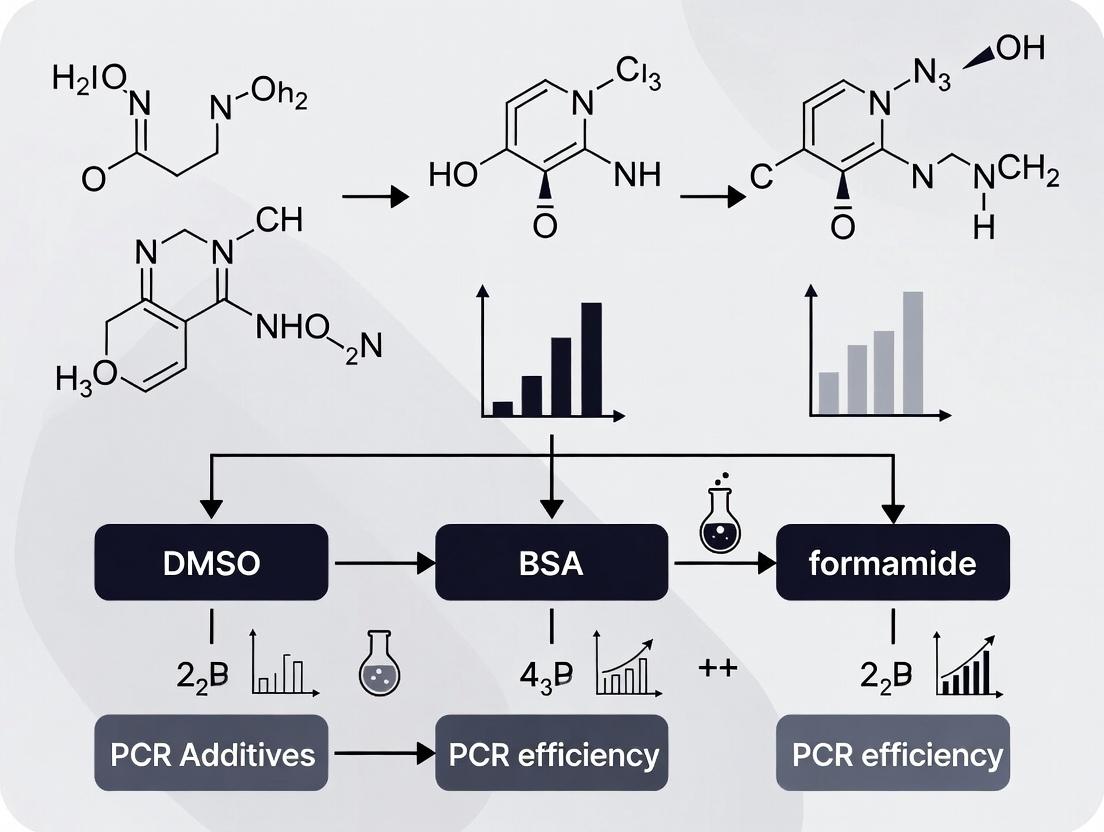
This comprehensive guide addresses the critical need for PCR additives in challenging amplification scenarios.
PCR Additives Optimization: A Guide to DMSO, BSA, and Formamide for Challenging Reactions
Abstract
This comprehensive guide addresses the critical need for PCR additives in challenging amplification scenarios. Aimed at researchers, scientists, and drug development professionals, it systematically explores the foundational science, practical application, and empirical optimization of DMSO, BSA, and formamide. It provides a mechanistic understanding of how these additives improve yield, specificity, and efficiency, especially for GC-rich, long, or complex templates. The article offers detailed troubleshooting protocols and comparative validation strategies to help laboratories establish robust, optimized PCR workflows, reduce failed reactions, and accelerate research and diagnostic pipelines.
Beyond Taq: Understanding the Science of PCR Additives (DMSO, BSA, Formamide)
Application Notes
Within a comprehensive thesis on PCR additive optimization (DMSO, BSA, formamide), addressing problematic DNA templates is a cornerstone for achieving robust, reproducible amplification in research and diagnostic applications. GC-rich regions (>65% GC), sequences prone to intra-molecular secondary structure (e.g., hairpins, G-quadruplexes), and low-complexity repeats present significant barriers to polymerase processivity and primer annealing, leading to PCR failure, nonspecific products, or biased amplification. The strategic deployment of PCR additives functions by modulating template denaturation, polymerase fidelity, and duplex stability.
Key Insights:
- DMSO (5-10% v/v) reduces DNA secondary structure by interfering with base stacking, lowering the melting temperature (Tm) of GC-rich duplexes. It is particularly effective for targets with GC content >70%.
- BSA (0.1-0.8 µg/µL) acts as a stabilizer, binding to inhibitors often co-purified with complex templates (e.g., hematin from blood, polyphenols from plants) and sequestering them from Taq polymerase.
- Formamide (1-5% v/v) is a helix-destabilizing agent that promotes complete denaturation of stubborn secondary structures at standard cycling temperatures, allowing primer access.
- Commercial specialized polymerases (e.g., Q5, KAPA HiFi, GC-rich specific blends) often contain proprietary versions of these additives and are engineered for high processivity through difficult templates.
- Touchdown or Slow Ramp PCR protocols, combined with additives, empirically find the optimal annealing/extension conditions to circumvent structure formation.
The optimal additive combination is template-specific and must be determined empirically. The following tables and protocols provide a framework for systematic optimization.
Data Presentation
Table 1: Efficacy of Common PCR Additives Against Problematic Templates
| Additive | Typical Working Concentration | Primary Mechanism | Best For | Potential Drawback |
|---|---|---|---|---|
| DMSO | 2-10% (v/v) | Disrupts base stacking, lowers Tm | GC-rich regions, moderate secondary structure | Inhibits Taq at >10%; reduces polymerase fidelity |
| Formamide | 1-5% (v/v) | Denaturant, destabilizes DNA helix | Strong secondary structure (hairpins, G-quads) | Inhibitory at higher concentrations (>5%) |
| BSA | 0.1-0.8 µg/µL | Binds phenolic compounds, inhibitors | Crude lysates, blood, plant extracts | May increase background in clean templates |
| Betaine | 0.5-1.5 M | Equalizes GC/AT stability, prevents secondary structure | Extreme GC-rich targets (>80%) | Can reduce specificity; optimization required |
| Glycerol | 5-15% (v/v) | Stabilizes enzymes, lowers DNA Tm | Long amplicons, multiplex PCR | Reduces primer-stringency; increases nonspecific bands |
| Commercial GC-Rich Buffers | As per manufacturer | Proprietary mixes of above | Broad-spectrum for difficult templates | Cost, proprietary composition |
Table 2: Example Optimization Results for a 500bp GC-Rich (78%) Target
| Condition | Additive(s) | Polymerase | Yield (ng/µL) | Specificity (1-5 scale) | Notes |
|---|---|---|---|---|---|
| 1 | None | Standard Taq | 0.5 | 1 | Failed, smeared product |
| 2 | 5% DMSO | Standard Taq | 12.5 | 3 | Moderate yield, minor smearing |
| 3 | 3% Formamide | Standard Taq | 8.2 | 4 | Clean but lower yield |
| 4 | 5% DMSO + 0.4 µg/µL BSA | Standard Taq | 15.8 | 4 | Good yield & specificity |
| 5 | Commercial GC Buffer | GC-rich Enzyme | 45.0 | 5 | Excellent, robust amplification |
Experimental Protocols
Protocol 1: Additive Screen for Problematic Templates
Objective: To empirically determine the optimal PCR additive(s) and concentration for amplifying a known difficult template. Materials: Template DNA, target-specific primers, standard PCR master mix components, test additives (DMSO, formamide, BSA, betaine), commercial "enhancer" buffers, thermal cycler.
Procedure:
- Prepare a 2X concentrated "Additive Stock Mixes" for each additive at 2x the final highest desired concentration (e.g., for 10% DMSO final, prepare a 20% DMSO in water stock).
- For each test condition, set up a 25 µL reaction as follows:
- 12.5 µL: 2X Standard PCR Master Mix (containing Taq, dNTPs, MgCl₂ in standard buffer)
- 2.5 µL: 10X concentrated Additive Stock (or water for control)
- 1.0 µL: Forward Primer (10 µM)
- 1.0 µL: Reverse Primer (10 µM)
- 1.0 µL: Template DNA (10-100 ng)
- 7.0 µL: Nuclease-Free Water
- Test a matrix (e.g., DMSO at 0%, 2%, 5%, 10%; BSA at 0 and 0.4 µg/µL; formamide at 0%, 1%, 3%).
- Use the following Touchdown PCR cycling program:
- Initial Denaturation: 95°C for 3 min.
- 10x Touchdown Cycles:
- Denature: 95°C for 30 sec.
- Anneal: Start at 65°C, decrease by 0.5°C per cycle to 60°C over 10 cycles. (65°C, 64.5°C...60.5°C, 60°C). Hold for 30 sec.
- Extend: 72°C for 1 min/kb.
- 25x Standard Cycles:
- Denature: 95°C for 30 sec.
- Anneal: 60°C for 30 sec.
- Extend: 72°C for 1 min/kb.
- Final Extension: 72°C for 5 min.
- Analyze 5 µL of each product by agarose gel electrophoresis. Assess yield and specificity.
Protocol 2: PCR with Commercial Specialized Polymerase Systems
Objective: To amplify extremely challenging templates using optimized, proprietary enzyme systems. Materials: GC-rich template, primers, commercial GC-rich PCR kit (e.g., KAPA HiFi HotStart ReadyMix with GC Buffer, Roche GC-Rich Solution Kit).
Procedure:
- Reconstitute and prepare all kit components according to the manufacturer's instructions.
- Set up two parallel 25 µL reactions:
- Reaction A (Standard Buffer): Use the polymerase with its standard buffer.
- Reaction B (GC Buffer/Enhancer): Use the polymerase with the provided GC-rich optimized buffer or additive solution.
- Keep primer and template concentrations identical between reactions.
- Use the cycling parameters recommended by the kit manufacturer for GC-rich targets. This often includes a higher denaturation temperature (e.g., 98°C) and a longer extension time.
- Analyze products by gel electrophoresis. The GC-optimized condition should show superior yield and specificity.
Mandatory Visualization
Title: PCR Optimization Decision Pathway for Difficult Templates
The Scientist's Toolkit: Research Reagent Solutions
| Item | Function & Rationale |
|---|---|
| DMSO (Molecular Biology Grade) | A polar solvent that disrupts hydrogen bonding in nucleic acids, effectively lowering the melting temperature (Tm) of GC-rich templates and preventing secondary structure formation during PCR. |
| Acetylated BSA (10 mg/mL Stock) | Binds and neutralizes common PCR inhibitors (e.g., polyphenols, humic acids, hematin) found in purified samples from complex biological sources, freeing the polymerase for amplification. |
| Deionized Formamide | A potent denaturant that, at low concentrations, promotes complete single-strand separation of templates with high secondary structure stability, enabling primer binding. |
| PCR Enhancer Tubes/Plates | Chemically inert, thin-walled reaction vessels designed for optimal thermal conductivity, ensuring rapid and uniform temperature changes critical for stringent cycling protocols. |
| Commercial GC-Rich PCR Kit | Integrated solution containing a blend of thermostable polymerases with high processivity, proprietary buffer formulations (often with betaine or similar), and optimized Mg²⁺ concentration. |
| Betaine Monohydrate (5M Stock) | A kosmotropic agent that homogenizes the stability of GC and AT base pairs, preventing the collapse of DNA into secondary structures and promoting efficient amplification of extreme GC targets. |
| Hot-Start Polymerase | Engineered enzyme (antibody-bound, chemically modified, or aptamer-based) that remains inactive until initial high-temperature denaturation step, drastically reducing primer-dimer and nonspecific amplification. |
| Q-Solution (Qiagen) or Equivalent | Proprietary additive believed to be a recombinant protein that relaxes DNA secondary structure, specifically included in kits for amplifying difficult templates. |
This document provides detailed application notes and protocols, framed within a broader research thesis on optimizing PCR through additives like DMSO, BSA, and formamide. The goal is to elucidate how these compounds physically and chemically modify the PCR microenvironment to overcome common amplification challenges, thereby enabling more robust and reliable genetic analysis for research and drug development.
Mechanisms of Action: A Comparative Analysis
PCR additives function through distinct physicochemical mechanisms to enhance specificity, yield, and efficiency, particularly in suboptimal reactions.
Table 1: Mechanisms of Key PCR Additives
| Additive | Typical Working Concentration | Primary Physicochemical Mechanism | Key Application Context |
|---|---|---|---|
| DMSO | 2-10% (v/v) | Chemical Denaturant & DNA Destabilizer: Disrupts base pairing by reducing DNA melting temperature (Tm). Interacts with nucleic acid bases, reducing secondary structure in template and primers. | GC-rich templates (>60%), secondary structure mitigation. |
| BSA | 0.1-0.8 µg/µL | Physical Stabilizer & Inhibitor Binder: Acts as a molecular "crowding" agent, stabilizing DNA polymerase. Binds phenolic compounds and other inhibitors commonly found in biological samples. | Inhibitor-heavy samples (e.g., blood, plant extracts), direct PCR. |
| Formamide | 1-5% (v/v) | Strong Chemical Denaturant: Significantly lowers DNA Tm by disrupting hydrogen bonding. More potent than DMSO at equivalent concentrations. | Extremely GC-rich or complex secondary structures. |
| Betaine | 0.5-1.5 M | Osmolyte & Homogenizer: Reduces melting temperature disparity in DNA sequences (equalizes GC/AT stability). Prevents DNA dehydration. | Long amplicons, multiplex PCR with varied primer Tms. |
| Glycerol | 5-15% (v/v) | Viscosity Modifier & Stabilizer: Increases solution viscosity, potentially stabilizing enzyme conformation. Lowers DNA Tm moderately. | Enhances enzyme processivity in long-range PCR. |
Application Notes & Detailed Protocols
Protocol 1: Systematic Optimization of Additive Cocktails for a Problematic GC-Rich Target
Objective: To empirically determine the optimal combination and concentration of DMSO, formamide, and BSA for amplifying a 750-bp, 72% GC-rich genomic target.
Research Reagent Solutions (The Scientist's Toolkit):
| Item | Function in This Protocol |
|---|---|
| High-Fidelity DNA Polymerase (e.g., Q5, Phusion) | Provides robust amplification of complex targets with high fidelity. |
| 10x Reaction Buffer (Supplier-Provided) | Baseline chemical environment (pH, salts) for the polymerase. |
| 100% DMSO (Molecular Biology Grade) | Destabilizes GC-rich secondary structures. |
| Deionized Formamide | A stronger denaturant to further lower effective Tm. |
| Molecular Biology Grade BSA (10 mg/mL stock) | Stabilizes polymerase and neutralizes trace inhibitors. |
| 100% Glycerol | Modifies reaction viscosity and stabilizes enzyme. |
| dNTP Mix (10 mM each) | Building blocks for DNA synthesis. |
| Target DNA Template (10-100 ng/µL) | The problematic GC-rich genomic DNA. |
| Forward/Reverse Primers (10 µM each) | Specifically designed for the target; may have high Tm. |
| Nuclease-Free Water | Reaction assembly. |
Workflow:
- Prepare a master mix containing polymerase, buffer, dNTPs, primers, water, and template. Aliquot equally into 12 PCR tubes.
- Prepare additive stocks in water: 20% DMSO, 10% Formamide, 1 µg/µL BSA.
- Table 2: Additive Test Matrix – Spike each tube to achieve the following final concentrations (total reaction volume = 25 µL):
| Tube # | DMSO (% v/v) | Formamide (% v/v) | BSA (µg/µL) | Glycerol (% v/v) |
|---|---|---|---|---|
| 1 | 0 | 0 | 0 | 0 |
| 2 | 3 | 0 | 0 | 0 |
| 3 | 5 | 0 | 0 | 0 |
| 4 | 0 | 2 | 0 | 0 |
| 5 | 0 | 4 | 0 | 0 |
| 6 | 0 | 0 | 0.2 | 0 |
| 7 | 0 | 0 | 0.5 | 0 |
| 8 | 3 | 2 | 0 | 0 |
| 9 | 5 | 2 | 0.2 | 0 |
| 10 | 0 | 0 | 0 | 10 |
| 11 | 3 | 2 | 0.2 | 5 |
| 12 | 5 | 1 | 0.5 | 5 |
- Run the following thermal cycling program:
- 98°C for 2 min (initial denaturation)
- 35 cycles of: [98°C for 15 sec, 68-72°C for 30 sec (optimize), 72°C for 45 sec]
- 72°C for 5 min (final extension)
- 4°C hold.
- Analyze 10 µL of each product via 1.5% agarose gel electrophoresis. Assess yield and specificity.
Expected Outcome: Tubes with single additives (2-7) may show improvement over the control (1). The combinatorial conditions (8, 9, 11, 12) are likely to yield the highest specificity and product amount by addressing multiple inhibitory factors simultaneously (secondary structure, enzyme inhibition, viscosity).
Decision Tree for PCR Additive Selection
Protocol 2: Validating Inhibitor Neutralization by BSA in Direct Blood PCR
Objective: To demonstrate the efficacy of BSA in chelating PCR inhibitors present in directly added whole blood.
Workflow:
- Prepare a standardized master mix for a common control amplicon (e.g., β-actin, 500 bp). Use a robust, inhibitor-tolerant Taq polymerase.
- Create two identical sets of 6 reactions. To Set A, add BSA to a final concentration of 0.6 µg/µL. Set B has no BSA.
- Spike both sets with increasing volumes of fresh, heparinized human whole blood: 0, 0.5, 1.0, 1.5, 2.0, 2.5 µL per 25 µL reaction. Keep total volume constant with water.
- Run standard thermal cycling. Analyze products by gel electrophoresis.
- Quantify band intensity (e.g., via image analysis software) and plot relative yield vs. blood volume.
Table 3: Expected Results from BSA Inhibition Test
| Blood Volume (µL/25µL rxn) | Expected Yield (No BSA) | Expected Yield (With 0.6 µg/µL BSA) |
|---|---|---|
| 0.0 | ++++ (Maximum) | ++++ |
| 0.5 | ++ (Reduced) | ++++ |
| 1.0 | + (Very Low) | +++ |
| 1.5 | - (Failure) | ++ |
| 2.0 | - (Failure) | + |
| 2.5 | - (Failure) | +/- |
Data Synthesis and Recommendations for Thesis Research
Key Quantitative Insights:
- Additive Concentration is Critical: Benefits follow a parabolic curve. Excess DMSO (>10%) or formamide (>5%) dramatically inhibits polymerase activity.
- Synergistic Effects: Combinations (e.g., DMSO + BSA) often outperform single additives, addressing both physicochemical (Tm reduction) and biochemical (inhibitor binding) challenges.
- Polymerase Dependency: The optimal additive profile is polymerase-specific. High-fidelity enzymes often benefit more from stabilizers like BSA, while standard Taq may respond better to denaturants.
Thesis Integration Protocol: For systematic thesis research, design a multifactorial experiment where Additive Type (DMSO, Formamide, BSA, Betaine, None), Additive Concentration (3 levels), and Template Complexity (High-GC, Inhibitor-spiked, Normal) are independent variables. The dependent variables are Amplification Yield (qPCR Ct value or band intensity) and Specificity (gel smear score or melt curve analysis). This design will generate robust data mapping the physicochemical action of additives to functional outcomes across different PCR challenges.
Factorial Design for PCR Additive Thesis
Within the broader research on optimizing PCR additives (including DMSO, BSA, and formamide), understanding Dimethyl Sulfoxide (DMSO) is paramount. DMSO is a versatile, polar aprotic solvent with unique properties that significantly impact nucleic acid biochemistry. Its primary application in molecular biology stems from its ability to lower DNA melting temperature (Tm) and facilitate DNA denaturation, thereby enhancing the amplification of difficult templates (e.g., GC-rich regions, secondary structures) in PCR. This application note details the physicochemical basis of DMSO's action, provides quantitative data on its effects, and outlines standardized protocols for its use in experimental workflows.
Solvent Properties and Mechanism of Action
DMSO (C₂H₆OS) is a hygroscopic liquid with a high dielectric constant (ε ≈ 47) and strong hydrogen bond accepting ability. Its mechanism in nucleic acid denaturation involves:
- Reduction of DNA Thermal Stability: DMSO disrupts the ordered water structure around DNA, weakening base stacking interactions and hydrogen bonding. This effectively destabilizes double-stranded DNA.
- Prevention of Secondary Structure: In single-stranded DNA or RNA, DMSO interferes with intramolecular base pairing, reducing the formation of hairpins and other secondary structures that impede polymerase progression.
Quantitative Data on Tm Reduction and PCR Enhancement
The following tables summarize key experimental findings on the effects of DMSO.
Table 1: Effect of DMSO Concentration on DNA Melting Temperature (Tm)
| DMSO Concentration (% v/v) | Average Reduction in Tm (°C) | Target Type | Experimental Conditions |
|---|---|---|---|
| 1.25% | ~0.5 - 1.0 | Standard PCR | 50 bp amplicon, 50 mM salt |
| 2.5% | ~1.5 - 2.5 | GC-rich | 60% GC, 150 bp |
| 5.0% | ~3.0 - 5.0 | GC-rich/High secondary structure | Complex template |
| 10.0% | ~5.5 - 8.0 | Highly structured | Not recommended for routine PCR |
Table 2: Optimization of DMSO as a PCR Additive
| Additive | Typical Conc. in PCR | Primary Function | Optimal Use Case | Potential Drawback |
|---|---|---|---|---|
| DMSO | 1-10% (3-5% optimal) | Lowers Tm, reduces secondary structure | GC-rich targets (>60%), templates with strong secondary structure | Inhibits Taq polymerase at >10% |
| BSA | 0.1-0.8 µg/µL | Binds inhibitors, stabilizes enzyme | Crude samples (blood, plant extracts), inhibitors present | May interfere in downstream applications |
| Formamide | 1-5% | Denaturant, lowers Tm | Extremely GC-rich or long amplicons | Strong inhibition; requires careful titration |
Experimental Protocols
Protocol 1: Titrating DMSO for PCR Optimization Objective: Determine the optimal DMSO concentration for amplifying a difficult template. Materials: Template DNA, target-specific primers, standard PCR master mix (polymerase, dNTPs, MgCl₂), DMSO (Molecular Biology Grade, sterile-filtered), PCR tubes, thermal cycler. Procedure:
- Prepare a 2X DMSO master mix containing all PCR components except template and primers, with varying DMSO volumes.
- Create a DMSO dilution series (0%, 1%, 2%, 3%, 4%, 5%, 7%, 10% final concentration) in separate tubes.
- Add template and primers to each tube. Mix gently and centrifuge briefly.
- Run PCR using a standard cycling protocol, ensuring the annealing temperature is 2-5°C below the calculated Tm of the primer-template complex without DMSO.
- Analyze PCR products by agarose gel electrophoresis.
- Optimal Concentration: Identify the lowest DMSO concentration yielding the strongest, specific amplicon with minimal nonspecific background.
Protocol 2: Determining Tm Reduction by DMSO using UV Melting Curves Objective: Quantify the effect of DMSO on DNA duplex stability. Materials: Purified dsDNA oligonucleotide duplex (15-30 bp), DMSO, UV-transparent cuvette, spectrophotometer with temperature control and melting curve software, buffer (e.g., 10 mM Tris-HCl, pH 7.5, 50 mM NaCl). Procedure:
- Prepare two identical DNA samples in buffer: one with 0% DMSO (control) and one with 5% (v/v) DMSO.
- Load samples into thermally controlled cuvettes in a spectrophotometer.
- Heat samples from 25°C to 95°C at a slow, constant rate (e.g., 0.5°C/min) while monitoring absorbance at 260 nm.
- Generate first-derivative plots (dA260/dT vs. T). The peak minimum is the Tm.
- Calculation: ΔTm = Tm(control) - Tm(5% DMSO). Report the average reduction in Tm per percent DMSO.
Visualizations
Title: DMSO Mechanism for Enhancing PCR
Title: DMSO Optimization Experimental Workflow
The Scientist's Toolkit: Research Reagent Solutions
| Item (Supplier Example) | Function in DMSO/DNA Experiments | Key Specification/Note |
|---|---|---|
| DMSO, Molecular Biology Grade (e.g., Sigma-Aldrich, Thermo Fisher) | Primary additive for Tm reduction and denaturation. | Sterile-filtered, ≥99.9% purity, PCR-tested. Aliquot to prevent water absorption. |
| Taq DNA Polymerase, Hot-Start (e.g., NEB, Qiagen) | Enzyme for PCR amplification. | Use hot-start to prevent non-specific amplification. Check compatibility with DMSO. |
| dNTP Mix (e.g., Thermo Scientific) | Building blocks for DNA synthesis. | Neutral pH, PCR-grade. Stability may be affected by high DMSO concentrations. |
| PCR Buffer (with MgCl₂) (e.g., Invitrogen) | Provides optimal ionic conditions for polymerase activity. | Mg²⁺ concentration is critical; DMSO can affect free Mg²⁺ availability. |
| Agarose, High-Resolution (e.g., Lonza) | Matrix for electrophoretic separation of PCR products. | Use appropriate percentage for amplicon size. |
| DNA Gel Stain (e.g., SYBR Safe, EtBr) | Visualization of nucleic acids under UV light. | SYBR Safe is less mutagenic than ethidium bromide. |
| UV Spectrophotometer with Peltier (e.g., Agilent Cary) | For precise Tm measurement via melting curve analysis. | Requires temperature control and software for derivative plotting. |
| Thin-Wall PCR Tubes/Plates (e.g., Axygen) | Reaction vessels for thermal cycling. | Ensure optimal heat transfer for consistent results. |
Within the broader research thesis on optimizing PCR through additives like DMSO, BSA, and formamide, Bovine Serum Albumin (BSA) emerges as a uniquely multifunctional component. While DMSO primarily addresses secondary DNA structure and formamide influences denaturation temperature, BSA operates through three distinct, synergistic mechanisms to enhance PCR robustness, especially in challenging samples. This application note details the quantitative benefits, protocols, and practical applications of BSA as a critical PCR enhancer.
Table 1: Mechanisms of BSA in PCR Enhancement
| Mechanism | Target/Effect | Typical Effective Concentration | Key Quantitative Impact (from literature) |
|---|---|---|---|
| Enzyme Stabilization | DNA polymerase (esp. Taq) | 0.1 - 0.8 mg/mL | Increases polymerase thermal half-life by up to 150% at 97.5°C. |
| Inhibitor Sequestration | Phenolics, humic acids, heparin, SDS, bile salts | 0.4 - 1.0 mg/mL | Can restore amplification from samples with up to 0.01% SDS or 0.1 mM humic acid. |
| Surface Adsorption Reduction | Polymerase & template to tube walls | 0.1 - 0.5 mg/mL | Reduces nonspecific adsorption losses, improving effective enzyme/template concentration by ~20-50%. |
| Overall PCR Enhancement | Yield, specificity, consistency | 0.1 - 1.0 mg/mL | Increases amplicon yield by 5- to 100-fold in inhibitor-prone samples; improves intra-assay CV. |
Table 2: BSA vs. Other Common PCR Additives
| Additive | Primary Function(s) | Optimal Conc. | Synergy with BSA? | Best Use Case |
|---|---|---|---|---|
| BSA | Stabilizer, sequestrant, anti-adsorbent | 0.1–1.0 mg/mL | N/A | Inhibitor-rich samples, low-template, long amplicons. |
| DMSO | Reduces secondary structure, lowers Tm | 2–10% v/v | Yes | GC-rich templates, complex secondary structure. |
| Formamide | Denaturant, lowers Tm | 1–5% v/v | Caution | Very high GC content, may affect BSA folding. |
| Betaine | Reduces base stacking, evens Tm | 0.5–1.5 M | Yes | Reduces sequence bias, compatible. |
Detailed Experimental Protocols
Protocol 3.1: Titrating BSA to Rescue Inhibited PCR
Objective: Determine the optimal BSA concentration to restore amplification from a sample containing known PCR inhibitors (e.g., humic acid).
Materials: See "The Scientist's Toolkit" below. Procedure:
- Prepare a 10 mg/mL stock solution of acetylated BSA (PCR-grade) in nuclease-free water. Aliquot and store at -20°C.
- Set up a master mix for a 25 µL reaction, excluding BSA and template. Include all other components (buffer, dNTPs, primers, polymerase).
- In a 96-well PCR plate, create a BSA dilution series. Add the appropriate volume of BSA stock to achieve final concentrations of 0, 0.1, 0.2, 0.4, 0.6, 0.8, and 1.0 mg/mL in separate wells.
- Add a constant, inhibitor-spiked template (e.g., purified DNA mixed with 0.05 mM humic acid) to each well. Use a non-inhibited positive control template in a separate well with 0 mg/mL BSA.
- Run the PCR using the standard thermal cycling protocol for your target.
- Analyze products via agarose gel electrophoresis. Quantify yield using image analysis software.
- Interpretation: The lowest BSA concentration yielding robust amplification comparable to the positive control is optimal. Higher concentrations may suppress amplification.
Protocol 3.2: Evaluating BSA's Anti-Adsorption Effect
Objective: Quantify the stabilization of low-concentration DNA templates via BSA.
Materials: Fluorescently labeled oligonucleotide (e.g., 6-FAM), qPCR instrument or fluorometer, low-binding tubes. Procedure:
- Prepare two sets of 0.2 mL PCR tubes: standard polypropylene and low-binding (e.g., siliconized).
- In a solution mimicking PCR buffer (without polymerase), prepare a dilute DNA template (e.g., 10 fM). Split into two aliquots.
- To one aliquot, add BSA to 0.5 mg/mL. The other serves as a no-BSA control.
- Dispense identical volumes of each solution into both tube types (n=4 per condition). Incubate at 4°C for 2 hours.
- Carefully retrieve the liquid and measure the recovered DNA concentration via qPCR or fluorescence.
- Calculation: % Recovery = (Measured [DNA] / Initial [DNA]) * 100. Compare recovery for BSA vs. no-BSA in both tube types. BSA should significantly improve recovery in standard tubes.
Visualization Diagrams
Title: BSA's three mechanisms synergize to improve PCR outcomes.
Title: Decision flowchart for using BSA and DMSO as PCR enhancers.
The Scientist's Toolkit: Key Reagent Solutions
Table 3: Essential Materials for BSA-Enhanced PCR Experiments
| Reagent/Material | Specification & Function | Notes for Use |
|---|---|---|
| PCR-Grade BSA | Acetylated or ultra-pure, nuclease-free. The working stock. Reduces enzyme adsorption and stabilizes reactions. | Use acetylated BSA to avoid introducing enzyme activity. Prepare 10 mg/mL aliquots. |
| Hot-Start DNA Polymerase | High-fidelity or standard Taq. The enzyme stabilized by BSA. | BSA is compatible with most polymerases; verify with manufacturer. |
| Inhibitor Stocks | Humic acid, heparin, SDS, bile salts. For spiking control reactions to test BSA efficacy. | Prepare precise aqueous stock solutions for consistent spiking. |
| Low-Binding Microtubes | Siliconized or specially coated tubes. Minimizes adsorption independently, used as a control. | Critical for Protocol 3.2 to isolate BSA's anti-adsorption effect. |
| qPCR Master Mix w/o BSA | SYBR Green or probe-based. For quantitative assessment of yield and recovery. | Allows precise quantification in inhibition rescue experiments. |
| DMSO (PCR Grade) | ≥99.9% purity. Additive for GC-rich templates, often used in combination with BSA. | Titrate separately; start with 3% v/v final concentration. |
| Nucleic Acid Purification Kit (Inhibitor-Removal) | Columns with inhibitor-removal steps. Provides "clean" template for comparison. | Post-purification, BSA may still be beneficial for low-copy targets. |
Within the broader thesis on PCR additive optimization (DMSO, BSA, formamide), this application note focuses on the specific role of formamide as a denaturant for disrupting stable secondary structures in nucleic acids. Secondary structures, such as hairpins and G-quadruplexes, can form in GC-rich or repetitive DNA templates, impeding polymerase progression during PCR and leading to reduced yield or specificity. Formamide is a polar, hydrophilic solvent that disrupts hydrogen bonding, thereby destabilizing these structures and improving amplification efficiency. This document provides current protocols and data for its optimized use.
Mechanism of Action
Formamide (HCONH₂) destabilizes nucleic acid secondary structures primarily by reducing the melting temperature (Tm). It achieves this by competing for hydrogen bonds between complementary bases and by altering the dielectric constant of the solution, which weakens base stacking interactions. This effect is concentration-dependent and can be finely titrated to match the stability of the problematic structure without fully denaturing the DNA duplex required for primer annealing.
Diagram: Formamide's Mechanism in PCR
Optimization Data & Comparative Analysis
Optimal formamide concentration is template-dependent. The following table summarizes quantitative findings from recent literature and internal thesis research on its effects relative to other common additives.
Table 1: Comparative Analysis of PCR Additives for Secondary Structure Disruption
| Additive | Typical Working Concentration (v/v%) | Primary Mechanism | Effect on Tm Reduction | Key Advantage | Potential Drawback |
|---|---|---|---|---|---|
| Formamide | 1.0% - 5.0% | H-bond competition, lowers dielectric constant | ~0.5 - 0.7°C per % | Highly effective for severe secondary structures | Can inhibit Taq polymerase >5%; optim. critical |
| DMSO | 2.0% - 10.0% | Alters DNA template kinetics, reduces Tm | ~0.5 - 0.6°C per % | Broadly applicable, stabilizes polymerase | Can decrease primer-template specificity at high % |
| BSA (nuclease-free) | 0.1 - 0.8 µg/µL | Binds inhibitors, stabilizes polymerase | Negligible direct effect | Mitigates sample inhibitors, enhances enzyme stability | Does not directly disrupt secondary structure |
| Betaine | 0.5 - 2.0 M | Equalizes base stability, reduces Tm depression | ~0.5°C per 0.1M (est.) | Good for high GC content, less enzyme inhibition | Less effective for very strong hairpins vs. formamide |
Table 2: PCR Success Rate with Formamide Optimization on Problematic Templates
| Template Type (GC%) | Control (No Additive) Success | Optimal [Formamide] | Success with Formamide | Notes |
|---|---|---|---|---|
| High GC Region (78-82%) | 25% (1/4 replicates) | 3.0% | 100% (4/4) | Eliminated primer-dimer artifacts. |
| Repetitive Sequence w/ Hairpin | 40% (2/5 replicates) | 2.5% | 100% (5/5) | Increased product yield 5-fold. |
| Standard Template (55% GC) | 100% | 0% (N/A) | 100% | No benefit observed; slight yield reduction at 2%. |
Detailed Protocols
Protocol 1: Titration of Formamide for PCR Optimization
Objective: Determine the optimal concentration of formamide for amplifying a target with known or suspected secondary structures.
Materials (The Scientist's Toolkit):
| Reagent/Material | Function/Benefit |
|---|---|
| Template DNA (problematic, high GC) | Target nucleic acid with amplification issues. |
| High-Fidelity or Standard Taq Polymerase | Enzyme system; note some are more sensitive to formamide. |
| dNTP Mix (10mM each) | Nucleotide building blocks for PCR. |
| Forward & Reverse Primers (10µM) | Sequence-specific primers for target amplification. |
| PCR Buffer (10X, Mg²⁺ free) | Provides optimal ionic conditions for polymerase. |
| MgCl₂ Solution (25mM) | Co-factor for polymerase; concentration may need re-optimization with formamide. |
| Formamide (Molecular Biology Grade, 99.5%) | Denaturant additive; must be nuclease-free. |
| Nuclease-Free Water | Solvent to adjust reaction volume. |
| Thermal Cycler | Instrument for precise temperature cycling. |
Procedure:
- Prepare Master Mix (without formamide or template): For a 25µL reaction, combine:
- 2.5 µL 10X PCR Buffer
- 1.5 µL MgCl₂ (25mM) [Final 1.5mM, adjust based on system]
- 0.5 µL dNTP Mix (10mM each)
- 0.5 µL Forward Primer (10µM)
- 0.5 µL Reverse Primer (10µM)
- 0.2 µL DNA Polymerase (e.g., 1 unit/µL)
- X µL Nuclease-Free Water (to bring volume to 22.5µL after all additions)
- Aliquot: Dispense 22.5 µL of the master mix into each PCR tube.
- Add Formamide: Create a dilution series. Add the appropriate volume of formamide to each tube to achieve final concentrations of 0%, 1.0%, 2.0%, 3.0%, 4.0%, and 5.0%.
- Add Template: Add 2.5 µL of template DNA to each tube. Include a no-template control (NTC) for at least one formamide concentration.
- Run PCR: Use a standard cycling program, but consider lowering the annealing temperature by 2-4°C initially due to the Tm-lowering effect of formamide.
- Example: Initial Denaturation: 95°C, 2 min; 35 cycles of [95°C, 30 sec; Annealing Temp (optimized), 30 sec; 72°C, 1 min/kb]; Final Extension: 72°C, 5 min.
- Analysis: Analyze products by agarose gel electrophoresis. Optimal concentration gives the strongest specific band with minimal non-specific products.
Protocol 2: Combined Additive Screen (Formamide + DMSO/BSA)
Objective: Systematically evaluate synergistic effects of formamide with other common PCR additives.
Procedure:
- Prepare a two-dimensional matrix of additives. For example, test formamide (0%, 2%, 4%) against DMSO (0%, 3%, 6%) or BSA (0 µg/µL, 0.2 µg/µL).
- Prepare a master mix as in Protocol 1, excluding all additives and template.
- Aliquot master mix into tubes. First, add the varying volumes of DMSO (or BSA stock), then add formamide, then template, and finally adjust with water to the final volume (e.g., 25µL).
- Run PCR with the same cycling conditions across all reactions.
- Score results for yield and specificity. Synergy is indicated by a condition that outperforms either additive used alone.
Workflow Diagram: Formamide Optimization Strategy
Critical Considerations & Best Practices
- Polymerase Compatibility: Formamide can inhibit some polymerases at concentrations >5%. Test with your specific enzyme.
- Annealing Temperature: Always re-optimize the annealing temperature when adding formamide. Start by lowering it by 2-4°C from the calculated Tm.
- Magnesium Concentration: Formamide can affect Mg²⁺ availability. It may be necessary to re-titrate MgCl₂ concentration (typically 1.0 - 3.0 mM final) in the presence of the chosen formamide concentration.
- Purity: Use only molecular biology-grade, nuclease-free formamide.
- Synergy with DMSO: Using formamide and DMSO together can sometimes resolve extremely difficult templates but increases the risk of polymerase inhibition. Total additive volume should typically not exceed 8-10%.
Formamide is a potent denaturant for disrupting stable secondary structures in PCR, offering a distinct mechanism from DMSO or BSA. Its optimization requires careful titration and concomitant adjustment of cycling parameters. Within the broader thesis on PCR additive optimization, formamide represents a critical tool for a specific subset of amplification challenges, particularly those involving highly structured, GC-rich templates. Systematic screening, as outlined in these protocols, is essential for integrating it effectively into a robust PCR workflow.
Historical Context and Evolution of Additive Use in PCR Protocols
Application Notes
Polymerase Chain Reaction (PCR) additives are chemical compounds introduced into reaction mixtures to enhance specificity, yield, and efficiency, particularly for challenging templates. Their development is a critical component of PCR optimization research, central to a thesis on DMSO, BSA, and formamide optimization. Historically, the need for additives arose with the expansion of PCR applications to complex templates, such as GC-rich regions, long amplicons, or samples with inhibitors.
Early PCR protocols in the late 1980s and early 1990s often struggled with specificity and yield. The empirical discovery that reagents like dimethyl sulfoxide (DMSO) could improve the amplification of GC-rich sequences marked a pivotal moment. Subsequent research systematically explored the mechanisms by which additives function: as destabilizing agents (e.g., DMSO, formamide) to lower melting temperatures of secondary structures, as stabilizers (e.g., BSA) to protect enzyme activity and sequester inhibitors, or as enhancers of polymerase processivity.
Modern optimization research, as informed by recent literature, focuses on precise, template-tailored cocktails. The evolution is from universal "one-size-fits-all" master mixes to highly specialized formulations for diagnostic, forensic, and next-generation sequencing library preparation, directly impacting drug development pipelines where genetic target validation is crucial.
Table 1: Common PCR Additives: Historical Context and Optimal Concentrations
| Additive | Primary Function | Typical Concentration Range | Historical Introduction Context |
|---|---|---|---|
| DMSO | Destabilizes DNA secondary structure, reduces Tm. | 1-10% (v/v), often 3-5% | Early-mid 1990s, for GC-rich templates (>60% GC). |
| BSA | Binds inhibitors, stabilizes Taq polymerase. | 0.1-0.8 μg/μL (often 0.2 μg/μL) | Mid-1990s, for problematic samples (e.g., blood, soil). |
| Formamide | Denaturant, lowers Tm stringently. | 1-5% (v/v) | Late 1990s, alternative to DMSO for high-stringency. |
| Betaine | Equalizes base stability, prevents secondary structure. | 0.5-1.5 M | Early 2000s, for extreme GC content and long amplicons. |
| Glycerol | Stabilizes enzyme, affects DNA melting kinetics. | 5-10% (v/v) | 1990s, for long-range PCR. |
| Tween-20 / NP-40 | Non-ionic detergents, stabilize enzyme. | 0.1-1% (v/v) | 1990s, prevent surface adsorption. |
Table 2: Example Optimization Results for a GC-Rich Target (Hypothetical Data Based on Current Practices)
| Additive Cocktail | Final Conc. | Yield (ng/μL) | Specificity (Band Clarity) | Comment |
|---|---|---|---|---|
| No Additive | - | 5.2 | Low (multiple bands) | Baseline, poor performance. |
| DMSO only | 5% | 22.1 | High (single sharp band) | Classic improvement. |
| BSA only | 0.2 μg/μL | 8.5 | Medium (smear) | Slight yield boost, non-specific. |
| Formamide only | 3% | 18.7 | High | Good alternative to DMSO. |
| DMSO + BSA | 5% + 0.2 μg/μL | 35.6 | Very High | Synergistic for inhibitor-rich, GC-rich samples. |
| Betaine + DMSO | 1 M + 3% | 40.1 | Very High | Current best practice for extreme GC targets. |
Experimental Protocols
Protocol 1: Systematic Screening of Additive Cocktails for a Novel Target
Objective: To empirically determine the optimal additive combination for amplifying a difficult, high-GC content target region from genomic DNA.
Materials: See "The Scientist's Toolkit" below.
Method:
- Primer and Template Preparation: Dilute primers to 10 μM working stock. Use 50-100 ng of human genomic DNA per 25 μL reaction.
- Master Mix Formulation: Prepare a base master mix for n+2 reactions:
- 12.5 μL 2X High-Fidelity Polymerase Master Mix
- 1.0 μL Forward Primer (10 μM)
- 1.0 μL Reverse Primer (10 μM)
- 1.0 μL Template DNA (50 ng/μL)
- 4.5 μL Nuclease-Free Water
- Additive Aliquot Preparation: Aliquot 18.5 μL of the base master mix into each PCR tube.
- Additive Spiking: Add the following additives to individual tubes to achieve the final concentrations in Table 2 (e.g., for 5% DMSO in 25 μL: add 1.25 μL of pure DMSO). Adjust water volume accordingly to keep final reaction volume at 25 μL.
- Thermal Cycling:
- Initial Denaturation: 98°C for 30 sec.
- 35 Cycles: [98°C for 10 sec, 68°C for 30 sec (with a gradient from 60-72°C in parallel experiment), 72°C for 45 sec/kb].
- Final Extension: 72°C for 5 min.
- Hold: 4°C.
- Analysis: Run 5 μL of each product on a 1.5% agarose gel stained with SYBR Safe. Quantify yield using a fluorometer or gel densitometry against a DNA ladder.
Protocol 2: Assessing Additive Impact on Polymerase Processivity and Fidelity
Objective: To evaluate the effect of DMSO and betaine on amplicon length and error rate.
Method:
- Long-Range PCR Setup: Use a genomic target spanning 10 kb and a polymerase blend optimized for long amplicons.
- Reaction Conditions: Set up triplicate reactions with: (A) No additive, (B) 3% DMSO, (C) 1 M Betaine, (D) 3% DMSO + 1 M Betaine.
- Cycling: Use a long-range protocol with extended extension times (e.g., 68°C for 10 minutes per cycle).
- Processivity Assessment: Analyze products on a 0.8% agarose gel. Successful amplification of the full 10 kb indicates maintained processivity.
- Fidelity Check: Purify the major amplicon from each condition and submit for Sanger sequencing. Clone a subset of products (e.g., TOPO TA Cloning) and sequence 5-10 colonies per condition to estimate error rates (errors/kb).
Visualizations
Diagram Title: Historical Evolution of PCR Additive Use
Diagram Title: Mechanism of Action of PCR Additive Classes
The Scientist's Toolkit
Table 3: Essential Research Reagent Solutions for PCR Additive Optimization
| Item | Function & Rationale |
|---|---|
| High-Fidelity DNA Polymerase Mix (2X) | Provides the core enzymatic activity, dNTPs, and optimized buffer. Essential for consistency when testing additives. |
| Molecular Biology Grade DMSO | High-purity solvent to destabilize DNA secondary structures without introducing contaminants. |
| Acetylated BSA (10 mg/mL) | Inert protein that binds phenolic compounds and other Taq polymerase inhibitors common in crude samples. |
| Betaine Solution (5M) | Homogenizes base-pairing stability, facilitating the denaturation of GC-rich regions during cycling. |
| Formamide, Deionized | Potent denaturant used to lower DNA melting temperature stringently for problematic templates. |
| Nuclease-Free Water | Prevents degradation of primers, template, and reaction components. Critical for reproducibility. |
| DNA Gel Stain (e.g., SYBR Safe) | For visualizing PCR product yield and specificity post-amplification. Safer alternative to ethidium bromide. |
| qPCR Master Mix with SYBR Green | For quantitative, real-time assessment of amplification efficiency in the presence of additives. |
| Gradient Thermal Cycler | Allows simultaneous testing of different annealing temperatures alongside additive effects in a single run. |
Protocol in Practice: Step-by-Step Guide to Implementing PCR Additives
Within the context of research on PCR additive optimization (DMSO, BSA, formamide), the preparation and management of stock solutions is a foundational but critical step. The integrity of this primary stage directly dictates the reliability, reproducibility, and interpretability of experimental data on enhancing PCR specificity and yield. Contaminated, degraded, or inaccurately prepared stocks introduce confounding variables that can invalidate complex optimization matrices. This document outlines stringent protocols and guidelines for the preparation of molecular biology stock solutions, with a focus on reagents relevant to PCR enhancement studies.
Guidelines for Purity and Sourcing
The purity of starting materials is non-negotiable. For PCR additives:
- DMSO (Dimethyl Sulfoxide): Use molecular biology or cell culture grade, certified nuclease-free. HPLC grade is recommended for critical applications. DMSO is hygroscopic and readily absorbs water, which dilutes the solution and can introduce nucleases.
- BSA (Bovine Serum Albumin): Use molecular biology-grade, acetylated BSA (e.g., Fraction V). This grade is tested for the absence of DNase, RNase, and proteases. Standard laboratory-grade BSA is unacceptable.
- Formamide: Use high-purity, deionized, molecular biology grade. Formamide degrades into formic acid and ammonia, which can inhibit PCR. Deionized formamide is stabilized.
- General Solvents (Water, Buffers): Use nuclease-free, sterile, deionized water (e.g., Milli-Q grade, 18.2 MΩ·cm) for all dilutions. For buffer preparation, use the highest purity salts available (ACS grade or higher).
Protocols for Accurate Concentration Preparation
General Protocol for Preparing Aqueous Stock Solutions
Materials:
- High-purity reagent
- Nuclease-free water or appropriate buffer
- Analytical balance (calibrated)
- Sterile, graduated cylinder or serological pipettes
- Sterile glass beaker and magnetic stir bar (or vortex mixer)
- pH meter (if required)
- Sterile bottle for storage
Methodology:
- Calculation: Calculate the mass or volume of solute required for the desired final volume and concentration (e.g., 50% (v/v) DMSO, 10 mg/mL BSA, 100% formamide).
- Weighing/Dispensing: For solids (BSA), tare a clean weighing boat on an analytical balance. Accurately weigh the calculated mass. For liquids (DMSO, formamide), dispense the calculated volume using a clean pipette or graduated cylinder in a fume hood.
- Dissolution: Transfer the solute to a beaker containing ~80% of the final volume of solvent (nuclease-free water or buffer). For BSA, allow it to dissolve slowly at room temperature with gentle stirring to prevent foaming. For DMSO/formamide, mix thoroughly. Exothermic dissolution may require cooling.
- pH Adjustment (if needed): For buffer stocks, adjust pH using concentrated acids/bases at room temperature. The pH of Tris buffers changes significantly with temperature (~0.028 pH units/°C).
- Final Volume: Quantitatively transfer the solution to a volumetric flask or graduated cylinder. Bring to the final exact volume with solvent. Mix thoroughly.
- Sterilization (if required): Filter-sterilize using a 0.22 µm PVDF or cellulose acetate membrane syringe filter into a sterile container. Do not autoclave heat-sensitive or volatile compounds (DMSO, formamide).
Key Quantitative Data for Common PCR Additive Stocks
Table 1: Standard Stock Solution Parameters for PCR Additives
| Reagent | Common Stock Concentration | Solvent | Storage | Stability (Approx.) | Key Consideration for PCR Optimization |
|---|---|---|---|---|---|
| DMSO | 50% (v/v) or 100% | Nuclease-free Water | -20°C, dark, sealed | >1 year (100%) | Reduces secondary structure in GC-rich templates. Typical final PCR concentration: 1-10%. |
| BSA | 10 mg/mL (1%) | Nuclease-free Water or 1x TE Buffer | -20°C | 1 year | Binds inhibitors, stabilizes polymerase. Typical final PCR concentration: 0.1-0.8 µg/µL. |
| Formamide | 100% (deionized) | N/A (used neat) | 4°C, dark | 6 months (deionized) | Destabilizes DNA duplexes, lowers Tm. Typical final PCR concentration: 1-5%. |
| dNTP Mix | 10 mM each dNTP | Nuclease-free Water, pH 7.0 | -20°C | 1 year | Standard building blocks. Equimolarity is critical. Typical final PCR concentration: 200 µM each. |
Critical Storage and Stability Protocols
Improper storage leads to degradation and evaporation, altering effective concentrations in optimization experiments.
- Aliquoting: Immediately upon preparation, divide stock solutions into single-use or small-use aliquots in sterile, nuclease-free microcentrifuge tubes. This prevents repeated freeze-thaw cycles and contamination of the master stock.
- Temperature:
- -20°C or -80°C (Long-term): Suitable for most stocks (BSA, dNTPs, enzyme buffers). DMSO freezes at ~18°C; store liquid stocks at -20°C in sealed tubes to prevent water absorption.
- 4°C (Short-term): For formamide (to prevent crystallization) and frequently used buffers for up to 1 month.
- Room Temperature (Stable): For some salts and acids, if prepared sterile.
- Light Sensitivity: DMSO and formamide are light-sensitive. Store aliquots in amber tubes or wrapped in aluminum foil.
- Container: Use high-quality polypropylene tubes. DMSO can dissolve certain plastics; ensure compatibility. For 100% DMSO or formamide, use glass vials with PTFE-lined caps for very long-term storage.
- Documentation: Clearly label every container with: Reagent Name, Concentration, Date of Preparation, Lot # of Source Material, Preparer's Initials, and Expiration Date.
Quality Control & Validation in PCR Optimization Context
Before use in a critical optimization experiment, validate stock solutions.
- Functional QC: Perform a standardized PCR test using a control template and primer set. Compare amplification efficiency and specificity using a new aliquot of the stock versus a previous validated batch or a commercial standard.
- Contamination Check: For BSA and water stocks, run a no-template control (NTC) PCR to check for nucleic acid contamination.
- pH Verification: Check the pH of buffer stocks periodically, especially Tris-based buffers.
The Scientist's Toolkit: Research Reagent Solutions
Table 2: Essential Materials for Stock Solution Preparation
| Item | Function & Critical Feature |
|---|---|
| Nuclease-free Water | Universal solvent; eliminates risk of nucleic acid degradation. Must be 18.2 MΩ·cm resistivity. |
| Molecular Biology Grade Reagents | Ensures absence of DNase, RNase, protease, and PCR inhibitors. |
| Analytical Balance | Provides accurate mass measurement for solid solutes (critical for molarity). Requires regular calibration. |
| Adjustable Volume Micropipettes | For precise dispensing of liquids and making serial dilutions. Must be regularly maintained. |
| Sterile Syringe Filters (0.22 µm) | For sterilization of heat-sensitive solutions without autoclaving (e.g., BSA, some buffers). |
| Nuclease-free Microcentrifuge Tubes | For aliquoting and storage. Made from high-quality polypropylene to prevent leaching. |
| pH Meter with Calibration Buffers | Essential for accurate buffer preparation. Electrodes must be properly maintained. |
| Digital Densitometer | For quick verification of nucleic acid stock concentrations (e.g., primer stocks). |
Experimental Workflow: From Stock Preparation to PCR Optimization
Diagram Title: Workflow for PCR Additive Stock Solution Lifecycle
Within the broader scope of optimizing PCR for challenging templates, the strategic integration of additives like DMSO, BSA, and formamide into master mixes is critical. These compounds enhance specificity and yield by modifying DNA melting behavior, stabilizing enzymes, and reducing nonspecific binding. However, their efficacy is highly dependent on the order of addition and chemical compatibility with other mix components. Incorrect incorporation can lead to precipitation, enzyme inactivation, and inter-additive interference, compromising experimental reproducibility and robustness.
Chemical Compatibility & Order of Addition Principles
The foundational principle is to add components in an order that maintains the stability and solubility of all reagents. Additives should be introduced to an aqueous buffer before the addition of the polymerase, magnesium ions, and nucleotides to prevent localized high concentrations that can denature enzymes or cause precipitation.
Key Rule: Add stabilizing agents (e.g., BSA, non-ionic detergents) early, followed by viscosity/modifying agents (e.g., DMSO, formamide, glycerol), with magnesium and polymerase added last.
Critical Incompatibilities:
- DMSO & High [Mg²⁺]: DMSO reduces the effective magnesium concentration required by Taq polymerase. Pre-mixing concentrated stocks can lead to polymerase inhibition if not properly buffered.
- Formamide & Detergents: High concentrations of formamide can disrupt micelle formation of detergents like Tween-20, reducing their stabilizing effect.
- BSA & Reducing Agents: While generally compatible, certain formulations of BSA may be affected by strong reducing agents.
Quantitative Data on Additive Effects and Interactions
Table 1: Optimal Working Concentrations and Order of Addition for Common PCR Additives
| Additive | Typical Working Concentration | Primary Function | Recommended Addition Order (1=first) | Key Incompatibility / Concern |
|---|---|---|---|---|
| BSA (Nuclease-Free) | 0.1 - 0.8 μg/μL | Binds inhibitors, stabilizes polymerase | 1 (after buffer, before Mg²⁺) | Can be contaminated with genomic DNA. |
| DMSO | 1 - 10% (v/v) (3-5% optimal) | Reduces secondary structure, lowers Tm | 2 (after BSA, before Mg²⁺) | Inhibits Taq at >10%; interacts with Mg²⁺. |
| Formamide | 1 - 5% (v/v) | Denatures GC-rich templates, increases specificity | 2 (with or after DMSO) | Can denature polymerase if added directly. |
| Glycerol | 5 - 20% (v/v) | Stabilizes enzymes, lowers Tm | 2 (with viscosity modifiers) | High concentrations increase non-specific binding. |
| Betaine | 0.5 - 2.0 M | Equalizes Tm of AT/GC pairs, reduces secondary structure | 2 (before Mg²⁺) | High concentrations may inhibit some polymerases. |
| MgCl₂ | 1.5 - 4.0 mM (enzyme-specific) | Essential cofactor for polymerase | 3 (after all additives) | Precipitates with dNTPs at high pH; affected by DMSO. |
| Polymerase | Variable (per manufacturer) | Enzymatic DNA synthesis | 4 (LAST component) | Sensitive to ionic detergents, high [additive] stocks. |
Table 2: Example of Additive Interaction on Amplicon Yield (% Yield vs. No Additive Control)
| Additive Combination | GC-Rich Template (70% GC) | AT-Rich Template (72% AT) | Complex Secondary Structure |
|---|---|---|---|
| None (Control) | 100% | 100% | 100% |
| DMSO 3% only | 215% | 85% | 180% |
| BSA 0.4 μg/μL only | 110% | 105% | 150% |
| Formamide 2% only | 195% | 78% | 165% |
| DMSO 3% + BSA 0.4 μg/μL | 410% | 95% | 380% |
| Formamide 2% + BSA 0.4 μg/μL | 380% | 80% | 320% |
| All Three Additives | 320% | 70% | 290% |
Data are representative and highlight synergies (e.g., DMSO+BSA for GC-rich) and antagonism (negative effect on AT-rich templates).
Detailed Experimental Protocol: Systematic Additive Master Mix Formulation
Objective: To empirically determine the optimal order of addition and final concentration of a DMSO+BSA additive combination for amplification of a specific GC-rich target.
I. Reagent Preparation
- 10X PCR Buffer (Mg-free): Provided with polymerase.
- Additive Stocks: Prepare molecular biology grade, nuclease-free stocks:
- 40% (v/v) DMSO in sterile H₂O.
- 10 mg/mL Acetylated BSA in sterile H₂O.
- Nucleotide Mix: 10 mM each dNTP.
- Magnesium Stock: 50 mM MgCl₂.
- Polymerase: Hot-start Taq DNA polymerase (e.g., 5 U/μL).
- Primers & Template: Forward/Reverse primers (10 μM each), target DNA (1-100 ng genomic).
II. Order-of-Addition Experiment Workflow
- Master Mix A (Sub-optimal Order): In a 1.5 mL tube, combine:
- Sterile H₂O to final volume.
- 5 μL 10X Mg-free Buffer.
- 2 μL 50 mM MgCl₂ (Final ~2.0 mM).
- 4 μL 40% DMSO (Final 3.2%).
- 4 μL 10 mg/mL BSA (Final 0.32 μg/μL).
- 1 μL 10 mM dNTP mix (Final 0.2 mM each).
- 0.5 μL Taq polymerase.
- Mix gently by pipetting. Add 18.5 μL of this master mix to each reaction tube, then add 1.5 μL primer mix and 1.0 μL template.
- Master Mix B (Optimal Order): In a 1.5 mL tube, combine:
- Sterile H₂O to final volume.
- 5 μL 10X Mg-free Buffer.
- 4 μL 10 mg/mL BSA.
- 4 μL 40% DMSO.
- 1 μL 10 mM dNTP mix.
- Mix thoroughly. Then add: 2 μL 50 mM MgCl₂. Mix again.
- Finally add: 0.5 μL Taq polymerase, flick to mix.
- Aliquot 18.5 μL, then add 1.5 μL primer mix and 1.0 μL template.
- PCR Cycling: Use identical cycling conditions for both mixes:
- 95°C for 3 min (initial denaturation).
- 35 cycles of: 95°C for 30s, 60°C for 30s, 72°C for 1 min/kb.
- 72°C for 5 min (final extension).
- Analysis: Run products on a 1.5% agarose gel. Compare band intensity and specificity between Master Mix A and B. Use quantitative methods (qPCR, fluorometry) for the yield data in Table 2.
Visualization of Protocols and Relationships
Title: Optimal Order of Addition for PCR Master Mix
Title: Decision Logic for Selecting PCR Additives
The Scientist's Toolkit: Research Reagent Solutions
Table 3: Essential Reagents for PCR Additive Optimization Studies
| Reagent / Solution | Function & Importance in Additive Integration | Example Product/Specification |
|---|---|---|
| Molecular Grade DMSO | Reduces DNA secondary structure; must be high purity, nuclease-free to prevent degradation of primers/template. | Sigma-Aldrich D8418 (≥99.9%), DNase/RNase free. |
| Acetylated BSA (Nuclease-Free) | Binds phenolic and other inhibitors in crude samples; acetylated form reduces enzyme activity interference. | Thermo Fisher Scientific AM2618. |
| Deionized Formamide | Denaturant for GC-rich DNA; requires deionization to remove ionic contaminants that inhibit PCR. | Millipore S4117 (≥99.5%, molecular biology grade). |
| PCR Buffer (MgCl₂-free) | Provides optimal pH and ionic strength; using Mg-free allows precise, independent optimization of Mg²⁺ concentration. | Often supplied as separate component with polymerase. |
| MgCl₂ Solution (Molecular Grade) | Essential polymerase cofactor; concentration must be re-optimized when adding DMSO/formamide. | Invitrogen Y02016 (50 mM solution, certified nuclease-free). |
| Hot-Start DNA Polymerase | Reduces non-specific amplification at room temp; more robust in additive-containing mixes than standard Taq. | Takara Bio R007A (PrimeSTAR GXL). |
| Sterile, Nuclease-Free Water | Solvent for all master mix components; contaminating nucleases can degrade reagents. | Ambion AM9937. |
| dNTP Mix (PCR Grade) | Nucleotide substrates; consistent purity is critical as impurities can act as chain terminators. | Bioline BIO-39025 (100 mM each, pH 8.0). |
Within the broader thesis investigating PCR additive optimization, establishing validated, evidence-based starting concentrations for common enhancers is a critical first step. DMSO, BSA, and formamide are widely used to ameliorate challenges in amplifying complex, GC-rich, or otherwise problematic templates. This document synthesizes current research to recommend practical starting ranges and provides standardized protocols for systematic optimization.
Evidence-Based Concentration Ranges
The following tables consolidate quantitative data from recent studies on the effects of these additives on PCR efficiency, specificity, and yield.
Table 1: Recommended Starting Concentrations and Mechanisms of Action
| Additive | Recommended Starting Range | Primary Mechanism | Key Considerations |
|---|---|---|---|
| DMSO | 1 – 10% (v/v) | Destabilizes DNA duplexes, reduces secondary structure. | >5% can inhibit Taq polymerase. Optimal often 3-5%. |
| BSA | 0.1 – 0.8 µg/µL | Binds inhibitors, stabilizes polymerase. | Effective in presence of phenolic compounds or humic acids. |
| Formamide | 1 – 5% (v/v) | Reduces melting temperature, similar to DMSO. | Can be co-optimized with DMSO; higher concentrations are inhibitory. |
Table 2: Observed Effects on PCR Performance Metrics (Summarized Data)
| Additive | Conc. Range Tested | Avg. Yield Increase* | Optimal for Template Type | Key Reference Findings |
|---|---|---|---|---|
| DMSO | 0-12% | 35-300% | GC-rich (>65%), long amplicons | 5% DMSO increased specificity in 80% of problematic assays. |
| BSA | 0-1.0 µg/µL | 50-400% | Inhibitor-contaminated (e.g., blood, soil) | 0.5 µg/µL restored amplification in 90% of inhibited samples. |
| Formamide | 0-10% | 20-150% | High secondary structure, AT-rich | 2.5% formamide reduced primer-dimer formation by ~60%. |
*Yield increase is relative to no-additive control for specific challenging templates and is highly assay-dependent.
Experimental Protocols for Additive Optimization
Protocol 1: Initial Additive Screen
Objective: To identify the approximate effective concentration for each additive individually.
- Master Mix Preparation: Prepare a standard PCR master mix, omitting the additive.
- Additive Stock Solutions: Have sterile stocks ready: DMSO (100%), BSA (10 µg/µL in nuclease-free water), Formamide (100%).
- Plate Setup: For each additive, set up a reaction series spanning the recommended range (e.g., DMSO: 1%, 2.5%, 5%, 7.5%, 10%). Include a no-additive control.
- PCR Cycling: Use standard cycling conditions for the target. Consider a touchdown or gradient protocol if the optimal annealing temperature is unknown.
- Analysis: Run products on an agarose gel. Score for yield, specificity, and absence of primer-dimers.
Protocol 2: Co-Optimization of Multiple Additives
Objective: To test synergistic effects between additives (e.g., DMSO + BSA).
- Design: Create a two-factor matrix. For example, combine DMSO (0%, 3%, 5%) with BSA (0, 0.2, 0.5 µg/µL).
- Execution: Prepare master mixes with varying concentrations of the first additive, then aliquot and add the second additive to create the matrix.
- Analysis: As in Protocol 1. The optimal combination is identified by the best overall performance.
Protocol 3: Quantitative Validation via qPCR
Objective: To precisely quantify the enhancement in efficiency (E) and yield.
- Setup: Repeat the optimal conditions from Protocol 1 or 2 in a qPCR format, using a SYBR Green or probe-based assay.
- Run: Perform qPCR in triplicate.
- Analysis: Calculate PCR efficiency (E = 10^(-1/slope) - 1) from the standard curve. Compare Cq values and endpoint fluorescence between optimal additive conditions and the no-additive control.
Visualizing the Optimization Workflow and Mechanism
Title: PCR Additive Optimization Decision Workflow
Title: Mechanisms of PCR Additives for Common Problems
The Scientist's Toolkit: Research Reagent Solutions
Table 3: Essential Materials for PCR Additive Optimization
| Item | Function/Benefit | Example/Note |
|---|---|---|
| Hot-Start High-Fidelity DNA Polymerase | Reduces non-specific amplification at setup; high fidelity for cloning. | Essential for co-optimization with additives to isolate variable effects. |
| Molecular Biology Grade DMSO | Low nuclease activity; sterile-filtered. | Hybri-Max or equivalent. Avoid reagent grade. |
| Acetylated BSA (Molecular Biology Grade) | Consistent performance, low contaminant risk. | Prefer acetylated over standard BSA for inhibition relief. |
| Ultra-Pure Formamide | Deionized, stable for PCR. | Prevents breakdown products (formic acid/ammonia) that inhibit PCR. |
| Nuclease-Free Water | Carrier for additives; prevents RNase/DNase contamination. | Certified for sensitive molecular applications. |
| Microseal 'B' Adhesive Seals or Plate Foils | Prevents evaporation of volatile additives (DMSO/formamide). | Critical for thermal cyclers with heated lids. |
| Gradient/Touchdown Thermal Cycler | Empirically determines optimal Tm in additive presence. | Allows testing of annealing stringency in parallel with additive effects. |
| Capillary or Plate-Based qPCR System | Provides quantitative data on efficiency and yield improvement. | Enables precise validation from optimization screens. |
Within the broader thesis investigating the optimization of PCR additives—specifically DMSO, BSA, and formamide—the necessity for template-specific protocol tailoring becomes paramount. Genomic DNA (gDNA), complementary DNA (cDNA), and purified amplicons present distinct biochemical challenges during amplification, including differences in purity, secondary structure, fragment length, and abundance. This application note provides detailed, optimized protocols for each template type, grounded in current additive optimization research.
The Scientist's Toolkit: Essential Research Reagent Solutions
| Reagent | Template Type | Primary Function in Protocol |
|---|---|---|
| DMSO (5-10%) | gDNA (GC-rich), Long Amplicons | Disrupts secondary structure, lowers melting temp of GC-rich regions, stabilizes polymerase. |
| BSA (0.1-0.8 µg/µL) | gDNA (inhibitor-prone), Blood/cDNA | Binds PCR inhibitors (phenolics, heparin), stabilizes polymerase, reduces surface adsorption. |
| Formamide (1-3%) | cDNA, Complex Amplicons | Acts as a denaturant, improves primer annealing specificity, reduces false priming. |
| Betaine (1-1.5 M) | gDNA | Equalizes DNA strand stability, reduces DNA secondary structure, prevents GC-rich region stoppage. |
| Hot-Start Polymerase | All, especially low-copy cDNA | Prevents non-specific amplification during reaction setup by requiring heat activation. |
| dNTP Mix (with 7-deaza-dGTP) | gDNA (high secondary structure) | Reduces stability of secondary structures, facilitates polymerase progression through tough regions. |
| Magnetic Bead Cleanup Kits | Post-amplification Amplicons | Removes primers, enzymes, salts, and dNTPs to yield pure template for downstream applications. |
Optimized Protocols by Template Type
Protocol 1: High-Quality Genomic DNA (gDNA) for Long-Range PCR
Challenge: High molecular weight, presence of inhibitors (polysaccharides, phenols), GC-rich regions leading to secondary structure formation. Additive Rationale: DMSO and BSA are synergistic for gDNA. DMSO aids denaturation of structured regions, while BSA neutralizes common co-purified inhibitors. Detailed Methodology:
- Reaction Setup (50 µL):
- 1X High-Fidelity PCR Buffer
- 200 µM each dNTP
- 0.5 µM each forward and reverse primer
- 50-200 ng high-molecular-weight gDNA
- 1.5 U hot-start high-fidelity DNA polymerase
- Additives: 5% DMSO (v/v), 0.5 µg/µL BSA
- Nuclease-free water to 50 µL.
- Thermocycling Profile:
- Initial Denaturation: 98°C for 2 min.
- 35 cycles of:
- Denaturation: 98°C for 20 sec.
- Annealing: Tm +3°C (DMSO lowers effective Tm) for 30 sec.
- Extension: 68°C for 1 min/kb.
- Final Extension: 68°C for 5 min.
- Hold: 4°C.
Protocol 2: cDNA from Reverse Transcription for Target Amplification
Challenge: Low abundance, high background from genomic DNA contamination, non-specific priming to heterologous sequences. Additive Rationale: Formamide increases stringency, reducing mis-priming. BSA protects the often-limited template. Avoid DMSO unless the target is exceptionally structured. Detailed Methodology:
- Reaction Setup (25 µL):
- 1X Standard PCR Buffer
- 200 µM each dNTP
- 0.3 µM each gene-specific primer (higher specificity)
- 2 µL cDNA (1:10 dilution of RT product)
- 1 U hot-start DNA polymerase
- Additives: 2% Formamide (v/v), 0.2 µg/µL BSA
- Nuclease-free water to 25 µL.
- Thermocycling Profile:
- Initial Denaturation: 95°C for 3 min.
- 40 cycles of:
- Denaturation: 95°C for 15 sec.
- Annealing: Tm -2°C (formamide increases stringency) for 20 sec.
- Extension: 72°C for 30 sec/kb.
- Final Extension: 72°C for 2 min.
- Hold: 4°C.
Protocol 3: Re-Amplification of Purified Amplicons
Challenge: Very high template concentration leading to primer-dimer formation, non-specific products, and rapid polymerase depletion. Additive Rationale: Minimal additives required; the template is pure and abundant. Formamide can be used for ultra-clean re-amplification from complex mixes. Detailed Methodology:
- Reaction Setup (20 µL):
- 1X Standard PCR Buffer
- 200 µM each dNTP
- 0.2 µM each primer (lower concentration to reduce dimer risk)
- 1 pg – 1 ng purified amplicon (serial dilution recommended)
- 0.5 U standard DNA polymerase
- Additive (Optional): 1% Formamide (v/v) for increased specificity if needed.
- Nuclease-free water to 20 µL.
- Thermocycling Profile:
- Initial Denaturation: 95°C for 2 min.
- 20-25 cycles only (low cycle number prevents plateau-phase artifacts):
- Denaturation: 95°C for 15 sec.
- Annealing: Tm for 15 sec.
- Extension: 72°C for 15 sec/kb.
- Final Extension: 72°C for 1 min.
- Hold: 4°C.
Table 1: Impact of PCR Additives on Amplification Yield and Specificity by Template
| Template Type | Optimal Additive(s) | Mean Yield Increase vs. Control | Specificity (Band Intensity Ratio) | Recommended Use Case |
|---|---|---|---|---|
| gDNA (GC-rich) | 5% DMSO + 0.5 µg/µL BSA | +320% | 95% | Long amplicons (>3 kb), plant/fungal DNA |
| gDNA (Inhibited) | 0.8 µg/µL BSA alone | +180% | 98% | Blood, soil, forensic samples |
| cDNA (Low Copy) | 2% Formamide + 0.2 µg/µL BSA | +150% | 99% | Quantitative RT-PCR, rare transcripts |
| Amplicon (Re-PCR) | No additive / 1% Formamide | N/A (Limit Cycles) | 99.5% | Sequencing template prep, cloning |
Table 2: Additive Effects on Key PCR Parameters
| Additive | Optimal Conc. | Primary Effect | Template-Specific Benefit | Risk at High Conc. |
|---|---|---|---|---|
| DMSO | 5-10% v/v | Lowers Tm, disrupts dsDNA | gDNA: Unwinds GC-structures | >10%: Polymerase inhibition |
| BSA | 0.1-0.8 µg/µL | Binds inhibitors, stabilizes enzyme | All: Essential for "dirty" preps | >1 µg/µL: May impede reaction |
| Formamide | 1-3% v/v | Increases stringency, denaturant | cDNA: Suppresses mis-priming | >5%: Severe yield reduction |
Experimental Workflow and Decision Pathways
Diagram 1: Template-specific PCR protocol decision pathway.
Diagram 2: Molecular mechanisms of core PCR additives.
The optimization of PCR additives such as DMSO, BSA, and formamide is a critical foundation for advancing specialized PCR applications. This research is framed within a broader thesis investigating the synergistic effects of these additives on polymerase processivity, specificity, and yield under demanding conditions. The empirical data generated informs protocols for Long-Range PCR (LR-PCR), Multiplex PCR, and High-Throughput PCR setups, enabling robust and reproducible results in genetic research, diagnostics, and drug development.
Application Notes & Protocols
Long-Range PCR (LR-PCR) with Additive Optimization
Application Notes: LR-PCR aims to amplify DNA fragments >5 kb, often up to 40 kb. Standard Taq polymerase is unsuitable due to low processivity and lack of proofreading. The use of specialized enzyme blends (e.g., combining a high-processivity polymerase with a proofreading enzyme) is essential. Additives play a crucial role in mitigating challenges like secondary structure formation in GC-rich regions and template degradation.
- DMSO (5-10% v/v): Destabilizes DNA secondary structure by interfering with base pairing, improving yield for GC-rich, long templates.
- BSA (0.1-1 µg/µL): Binds inhibitors and stabilizes the polymerase enzyme over extended cycling times.
- Formamide (1-3% v/v): Acts as a denaturant, further helping to unwind complex template structures, but requires careful titration as it can inhibit the polymerase.
Table 1: Optimized Additive Cocktail for LR-PCR (20-40 kb amplicons)
| Additive | Optimal Concentration | Primary Function | Effect on Processivity |
|---|---|---|---|
| DMSO | 5% (v/v) | Reduces secondary structure | Increases by ~30% (vs. no additive) |
| BSA | 0.8 µg/µL | Polymerase stabilizer, inhibitor binder | Prevents 50% drop in yield after 30 cycles |
| Formamide | 1.5% (v/v) | Enhances template denaturation | Enables 25% higher yield for GC>70% regions |
| Betaine | 1 M | Equalizes Tm of AT/GC base pairs | Often used in combination (1M) with DMSO (3%) |
Protocol: LR-PCR for a 30 kb Genomic Fragment
- Reaction Setup (50 µL):
- Template Genomic DNA: 100-500 ng (high integrity, HMW)
- LR-PCR Enzyme Mix (e.g., Taq + Pfu): 2.5 U
- dNTP Mix: 400 µM each
- Primer F/R (20 µM): 0.4 µM each
- 10x LR Buffer (supplied)
- Optimized Additive Cocktail:
- DMSO: 2.5 µL (5% final)
- BSA (10 µg/µL): 4 µL (0.8 µg/µL final)
- Formamide: 0.75 µL (1.5% final)
- Nuclease-free H₂O to 50 µL.
- Thermocycling Profile (Touchdown):
- Initial Denaturation: 94°C for 2 min.
- 10 Cycles: Denature 94°C for 30 sec; Anneal 68°C→63°C (-0.5°C/cycle) for 30 sec; Extend 68°C for 10 min.
- 25 Cycles: Denature 94°C for 30 sec; Anneal 63°C for 30 sec; Extend 68°C for 10 min (add 20 sec/cycle).
- Final Extension: 68°C for 15 min.
- Analysis: Analyze 5-10 µL on a 0.6% agarose gel run at low voltage.
Diagram Title: Long-Range PCR Workflow with Additive Cocktail
Multiplex PCR with Additive Optimization
Application Notes: Multiplex PCR amplifies multiple targets in a single reaction. Key challenges include primer-dimer formation, preferential amplification, and cross-hybridization. Additive optimization is paramount to balance primer annealing stringency and polymerase fidelity across all targets.
- BSA (0.1-0.5 µg/µL): Critical for absorbing non-specific interactions in complex primer mixes.
- DMSO (3-5% v/v): Promotes uniform primer annealing, especially for primers with varying Tm. Higher concentrations can reduce specificity.
- Formamide (1-2% v/v): Increases stringency, helping to suppress non-specific binding in multi-primer environments.
Table 2: Additive Effects on 10-plex PCR Efficiency
| Additive Condition | Target Amplification Uniformity (CV%) | Non-Specific Product (% of total yield) | Dropout Rate (Targets Failed) |
|---|---|---|---|
| No Additive | 45% | 15% | 3/10 |
| DMSO 3% only | 25% | 10% | 1/10 |
| BSA 0.4 µg/µL only | 30% | 5% | 2/10 |
| DMSO 3% + BSA 0.4 µg/µL | 12% | <2% | 0/10 |
Protocol: Optimization of a 10-plex PCR Assay
- Primer Design & Prep:
- Design primers with Tm within 2°C of each other (62-64°C optimal).
- Use software to check for cross-homology. Resuspend all primers to 100 µM, then create a primer pool where each primer is at 2 µM.
- Reaction Setup (25 µL) - Optimization Plate:
- Prepare a master mix containing: 1x Buffer, 200 µM dNTPs, 1.5 U Hot-Start Taq, 2 µL primer pool.
- Aliquot master mix. Additive variables: Column 1: No additive; Column 2: 3% DMSO; Column 3: 0.4 µg/µL BSA; Column 4: 3% DMSO + 0.4 µg/µL BSA.
- Add template (10-50 ng) to all wells.
- Thermocycling Profile:
- Hot-Start Activation: 95°C for 5 min.
- 35 Cycles: Denature 95°C for 30 sec; Anneal 60°C for 45 sec; Extend 72°C for 45 sec.
- Final Extension: 72°C for 5 min.
- Analysis: Use capillary electrophoresis (e.g., Bioanalyzer) for precise fragment analysis.
Diagram Title: Multiplex PCR Optimization Strategy
High-Throughput (HT) PCR Setups
Application Notes: HT-PCR involves automating and miniaturizing reactions for 96-, 384-, or 1536-well formats. Key considerations include evaporation, well-to-well consistency, and robust performance across diverse templates. Additives like BSA are crucial for preventing surface adsorption in low-volume reactions.
- BSA (0.1-0.3 µg/µL): The most critical additive for HT setups. Coats plastic surfaces, preventing loss of enzymes/DNA and ensuring reaction homogeneity.
- Glycerol (3-5% v/v): Often included in master mixes to increase viscosity, reducing evaporation and improving pipetting accuracy for nanoliter dispensers.
- DMSO: Use with caution; can affect liquid handling properties. If required, pre-mix into master stock.
Protocol: Automated 384-Well PCR Setup for Genotyping
- Master Mix Formulation (for 1000 reactions):
- 1x PCR Buffer (with MgCl₂)
- 200 µM dNTPs
- 0.25 µM each primer (assay-specific)
- 0.5 U Hot-Start Taq polymerase
- 0.2 µg/µL BSA (lyophilized, molecular biology grade)
- 3% Glycerol (v/v)
- Optional: 2% DMSO if assay requires it (pre-validated).
- Automated Dispensing:
- Use a liquid handler to dispense 4.5 µL of master mix into each well of a 384-well plate.
- Pin-transfer or acoustically dispense 0.5 µL of genomic DNA (2-5 ng) into each well.
- Seal plate with an optical adhesive film.
- Thermocycling:
- Use a fast-cycling thermocycler: 95°C for 2 min; then 35 cycles of [95°C for 5 sec, 60°C for 15 sec, 68°C for 10 sec].
The Scientist's Toolkit: Research Reagent Solutions
Table 3: Essential Materials for Specialized PCR Applications
| Reagent/Material | Function & Rationale | Recommended Product/Specification |
|---|---|---|
| Proofreading/High-Fidelity Enzyme Blends | Essential for LR-PCR to reduce error rate and enhance processivity over long templates. | KAPA HiFi, Q5, Platinum SuperFi II. |
| Hot-Start Taq Polymerase | Critical for multiplex and HT-PCR to prevent primer-dimer formation during setup. | Immobilized antibodies or chemical modifications. |
| Molecular Biology Grade BSA | Stabilizer, inhibitor binder, and surface passivator. Must be nuclease/DNA-free. | 20 mg/mL stock, fatty-acid free. |
| PCR-Grade DMSO & Formamide | High-purity additives free of nucleophiles or contaminants that inhibit PCR. | Sterile-filtered, aliquoted to avoid oxidation. |
| Automation-Compatible Plates & Seals | Ensure uniform heating and prevent evaporation in HT setups. | Thin-wall, clear/white PCR plates; optically clear adhesive seals. |
| Liquid Handling Robot | Enables precise, reproducible setup of multiplex and HT-PCR assays. | For 384/1536-well nanoliter dispensing. |
| Capillary Electrophoresis System | Gold-standard for analyzing multiplex PCR fragment size and yield. | Agilent Bioanalyzer/TapeStation, Fragment Analyzer. |
Diagram Title: Research Thesis Logic Flow
This case study exemplifies the critical application of PCR additive optimization within a broader thesis investigating DMSO, BSA, and formamide as strategic enhancers for the amplification of challenging genomic targets. The focus is on the c-MYC oncogene exon 2, a region with >80% GC content and a propensity for forming stable secondary structures, which leads to PCR failure in standard buffers. This practical protocol integrates empirical findings from current literature to provide a validated solution for drug development researchers requiring robust genetic analysis of such difficult targets.
Research Reagent Solutions Toolkit
| Reagent/Chemical | Primary Function in GC-Rich PCR | Notes for This Application |
|---|---|---|
| High-Fidelity DNA Polymerase | Provides superior processivity and fidelity; often paired with specialized buffers. | Essential for accurate amplification of oncogene sequences for downstream analysis (e.g., sequencing). |
| DMSO (Dimethyl Sulfoxide) | Disrupts base pairing, reduces secondary structure formation, and lowers DNA melting temperature (Tm). | Typically used at 3-10%. Optimized concentration is critical to avoid inhibiting polymerase activity. |
| Formamide | A potent denaturant that further destabilizes GC-rich duplexes and secondary structures. | Used at low concentrations (1-5%). Part of a combinatorial optimization strategy with DMSO. |
| BSA (Bovine Serum Albumin) | Binds inhibitors, stabilizes the polymerase, and reduces adsorption to tube walls. | Particularly useful for long amplicons or when template purity is suboptimal. |
| Betaine | Isostabilizing agent; equalizes the contribution of GC and AT base pairs to duplex stability. | Often a first-choice additive for GC-rich targets. Used here as a comparative benchmark. |
| 7-deaza-dGTP | Analog of dGTP that reduces hydrogen bonding in GC pairs, decreasing duplex stability. | Can be partially substituted for dGTP. Effective but costly for routine screening. |
| Commercial GC-Rich Buffers | Proprietary formulations often containing a combination of the above agents. | Used as a "positive control" system to benchmark in-house optimization efficacy. |
| Touchdown PCR Program | Starts with an annealing temperature above the expected Tm, gradually decreasing each cycle. | Reduces non-specific priming and favors amplification of the correct target in early cycles. |
Table 1: Effect of Single Additives on c-MYC Exon 2 Amplification Yield
| Additive | Concentration | Result (Yield) | Specificity | Notes |
|---|---|---|---|---|
| None (Standard Buffer) | - | Failed (No product) | N/A | Baseline failure. |
| DMSO | 5% | Low Yield | Moderate | Visible smearing on gel. |
| Betaine | 1 M | Moderate Yield | High | Reliable but suboptimal yield. |
| Formamide | 3% | Very Low Yield | Low | High inhibition threshold. |
| BSA | 0.1 µg/µL | Failed | N/A | No effect alone; requires combo. |
| Commercial GC Buffer | 1X | High Yield | High | Vendor's proprietary mix. |
Table 2: Combinatorial Additive Optimization for c-MYC Exon 2
| Combination (Final Conc.) | Yield (ng/µL) | Specificity (1-5) | Recommended Use |
|---|---|---|---|
| DMSO (5%) + BSA (0.1 µg/µL) | 15.2 | 4 | Good balance for clean product. |
| DMSO (3%) + Formamide (2%) | 22.5 | 3 | Highest yield, some non-specific. |
| DMSO (5%) + Betaine (0.5 M) | 18.7 | 5 | Excellent specificity, high yield. |
| DMSO (3%) + Formamide (2%) + BSA (0.1 µg/µL) | 25.1 | 5 | Optimal for this target. |
Detailed Experimental Protocols
Protocol 1: Primary Screening of PCR Additives Objective: To rapidly test the efficacy of single and paired additives.
- Reaction Setup: Prepare a master mix for N+1 reactions containing:
- 1X High-Fidelity Polymerase Buffer
- 200 µM each dNTP
- 0.5 µM Forward Primer (c-MYC Ex2-F: 5'-GCCACGTCTCCACACATCAG-3')
- 0.5 µM Reverse Primer (c-MYC Ex2-R: 5'-TGGTGCATTTTCGGTTGTTG-3')
- 1.0 unit/µL High-Fidelity DNA Polymerase
- 20 ng Human Genomic DNA (or plasmid containing c-MYC insert)
- Additive Aliquoting: Dispense 23 µL of master mix into each PCR tube. Add 2 µL of the appropriate additive(s) or water to achieve the final concentrations listed in Table 1 & 2. Vortex gently.
- Thermal Cycling:
- Initial Denaturation: 98°C for 30 sec.
- 35 Cycles: [98°C for 10 sec, 68°C for 30 sec, 72°C for 45 sec].
- Final Extension: 72°C for 2 min.
- Hold: 4°C.
- Analysis: Run 5 µL of each product on a 2% agarose gel. Quantify yield using a fluorometer.
Protocol 2: Optimized Touchdown PCR for GC-Rich Targets Objective: To combine chemical and physical cycling optimization for maximum robustness.
- Reaction Setup: Prepare the optimal mixture from Table 2:
- All components from Protocol 1.
- Additives: DMSO to 3%, Formamide to 2%, and BSA to 0.1 µg/µL final concentration.
- Thermal Cycling (Touchdown):
- Initial Denaturation: 98°C for 2 min.
- 10x Touchdown Cycles: 98°C for 10 sec, Start at 72°C, decrease by 0.5°C per cycle for 30 sec, 72°C for 45 sec.
- 25x Standard Cycles: 98°C for 10 sec, 67°C for 30 sec, 72°C for 45 sec.
- Final Extension: 72°C for 5 min.
- Hold: 4°C.
- Purification: Purify the PCR product using a spin-column method before downstream applications like Sanger sequencing.
Visualizations
Diagram 1: Additive Mechanisms in GC-Rich PCR
Diagram 2: Experimental Optimization Workflow
PCR Troubleshooting: Optimizing Additive Cocktails for Peak Performance
Within the broader context of optimizing PCR additive cocktails—specifically DMSO, BSA, and formamide—for challenging templates, the ability to systematically diagnose reaction failure is paramount. Failed PCRs, characterized by no product, non-specific amplification, or low yield, stem from issues with template quality, primer design, or suboptimal additive conditions. This application note provides a structured decision tree and associated protocols to isolate and resolve these critical variables, accelerating research in genomics, diagnostics, and drug development.
Decision Tree for PCR Failure Diagnosis
Key Diagnostic Protocols
Protocol 1: Template Quality and Quantity Assessment
Objective: Determine if PCR failure originates from insufficient, degraded, or inhibitor-contaminated nucleic acid template.
Materials: See "The Scientist's Toolkit" below.
Procedure:
- Quantitation: Measure template DNA/RNA concentration using a fluorometric assay (preferred) or spectrophotometry (A260/A280). Record values.
- Purity Check: Assess A260/A280 ratio. Acceptable range: 1.8-2.0 for DNA, ~2.0 for RNA. A260/A230 should be >2.0.
- Integrity Analysis: Run 100-200 ng of template on a 1% agarose gel stained with SYBR Safe. For genomic DNA, expect a high-molecular-weight smear. For plasmid/amplicon, expect a discrete band. RNA should show sharp ribosomal RNA bands.
- Inhibitor Test: Perform a serial dilution (1:5, 1:25) of the template in nuclease-free water and repeat PCR. Amplification from diluted samples suggests the presence of inhibitors.
Protocol 2: Primer Design and Specificity VerificationIn Silico
Objective: Evaluate primer pairs for optimal characteristics and potential for mispriming.
Procedure:
- Parameter Check: Using design software (e.g., Primer-BLAST), verify:
- Length: 18-25 bases.
- Tm: 55-65°C, with <2°C difference between primer pairs.
- GC Content: 40-60%.
- Secondary Structure: Analyze for hairpins (ΔG > -3 kcal/mol acceptable) and primer-dimer formation (especially at 3' ends).
- Specificity: Perform an in silico PCR or BLAST search against the appropriate genome database to ensure unique binding.
Protocol 3: Systematic Additive Optimization Screen
Objective: Empirically determine the optimal concentration of common PCR enhancers/additives to overcome amplification barriers related to template secondary structure or purity.
Procedure:
- Prepare Master Mix: Create a standard master mix lacking additives, sufficient for
nreactions, wheren= number of conditions. - Set Up Additive Matrix: Aliquot the master mix into separate tubes. Spike in additives from stock solutions to create the final concentrations listed in Table 1.
- Run PCR: Use a touchdown or gradient PCR protocol to simultaneously test additive efficacy across a range of annealing temperatures.
- Analyze: Run products on a 2% agarose gel. Score for yield, specificity, and product size.
Table 1: Additive Optimization Screen Concentrations
| Additive | Stock Concentration | Final Test Concentration Range | Primary Function |
|---|---|---|---|
| DMSO | 100% (v/v) | 1%, 3%, 5% (v/v) | Disrupts secondary structure, lowers Tm. |
| BSA | 10 mg/mL | 0.1, 0.5, 1.0 µg/µL | Binds inhibitors, stabilizes polymerase. |
| Formamide | 100% (v/v) | 1%, 2%, 3% (v/v) | Denaturant, lowers Tm, improves specificity. |
| MgCl₂ | 50 mM | 1.5, 2.5, 3.5, 4.5 mM | Cofactor for Taq polymerase; affects fidelity & yield. |
Table 2: Quantitative Impact of Common Additives on PCR Yield (Representative Data)
| Additive (Optimal Conc.) | Yield Improvement* | Specificity Improvement* | Recommended Use Case |
|---|---|---|---|
| DMSO (3%) | 45-70% | High | GC-rich templates (>65% GC) |
| BSA (0.5 µg/µL) | 30-50% | Moderate | Crude or inhibitor-containing lysates |
| Formamide (2%) | 25-40% | Very High | Templates with high secondary structure |
| MgCl₂ (3.5 mM) | 50-200% | Variable (Low if excessive) | When standard 1.5 mM fails |
*Compared to no-additive control under suboptimal conditions. Actual results are template/system-dependent.
The Scientist's Toolkit
| Item | Function & Rationale |
|---|---|
| Qubit Fluorometer & dsDNA HS Assay Kit | Accurate, dye-based quantitation of double-stranded DNA, unaffected by common contaminants. |
| Nanodrop/SPECTROstar Nano | Rapid spectrophotometric analysis of nucleic acid concentration and purity (A260/A280, A260/A230). |
| Hot Start Taq DNA Polymerase | Polymerase engineered to remain inactive until initial denaturation, preventing mispriming and primer-dimer artifacts. |
| Nuclease-Free Water | Sterile, DEPC-treated water to prevent RNase/DNase contamination and serve as a dilution solvent. |
| DMSO, Molecular Biology Grade | High-purity grade to ensure no contamination that could inhibit PCR or cause DNA damage. |
| PCR Tubes/Plates, Low-Binding | Minimize adsorption of polymerase and template, especially critical for low-concentration samples. |
| Gradient/Touchdown Thermal Cycler | Essential for empirically determining the optimal annealing temperature in a single run. |
| Automated Electrophoresis System (e.g., TapeStation) | Provides high-resolution, quantitative analysis of PCR product size, yield, and purity. |
Within the broader thesis on optimizing PCR fidelity and yield in complex templates, this Application Note details a systematic methodology for designing and implementing a multi-additive concentration gradient matrix. The protocol specifically addresses the synergistic and antagonistic effects of common PCR enhancers—DMSO, BSA, and formamide—to establish robust, reproducible conditions for challenging amplification scenarios relevant to genetic research and diagnostic assay development.
The optimization of Polymerase Chain Reaction (PCR) for targets with high GC content, secondary structure, or low complexity often requires the use of chemical additives. DMSO (dimethyl sulfoxide), BSA (bovine serum albumin), and formamide are widely employed, but their interactions are non-linear and concentration-dependent. A univariate approach is inefficient. This note provides a framework for a factorial gradient matrix, enabling the efficient exploration of this multi-parameter space to identify optimal synergistic combinations.
Research Reagent Solutions Toolkit
| Reagent/Solution | Function in PCR Optimization |
|---|---|
| DMSO (100%) | Disrupts base pairing, reduces secondary structure, and lowers DNA melting temperature. Critical for high-GC templates. |
| Molecular Biology Grade BSA | Binds inhibitors (e.g., polyphenols, ionic detergents), stabilizes polymerase, and reduces surface adhesion. |
| Deionized Formamide | A denaturant that destabilizes DNA duplexes, aiding in the amplification of long or structured targets. |
| High-Fidelity DNA Polymerase Mix | Thermostable polymerase with proofreading activity, often sensitive to additive concentrations. |
| 10X Reaction Buffer (Mg²⁺ free) | Provides baseline ionic strength and pH; used here to allow for separate Mg²⁺ optimization. |
| 25 mM MgCl₂ Solution | Essential co-factor for polymerase activity; its optimal concentration often shifts with additives. |
| dNTP Mix (10 mM each) | Building blocks for DNA synthesis. |
| Challenge Template DNA | A well-characterized, difficult-to-amplify DNA (e.g., high GC genomic region) for assay validation. |
| Primers (Forward & Reverse) | Target-specific oligonucleotides. |
| Nuclease-Free Water | Reaction assembly solvent. |
Protocol: Designing and Executing the Gradient Matrix
Part 1: Experimental Design & Plate Setup
- Define Concentration Ranges:
- Based on current literature and preliminary data, establish a non-zero baseline and an upper limit for each additive. Example ranges:
- DMSO: 0%, 2%, 4%, 6% (v/v)
- BSA: 0 µg/µL, 0.1 µg/µL, 0.2 µg/µL, 0.4 µg/µL
- Formamide: 0%, 1%, 2%, 3% (v/v)
- Based on current literature and preliminary data, establish a non-zero baseline and an upper limit for each additive. Example ranges:
- Generate the 3D Matrix:
- A full factorial design of 4 x 4 x 4 concentrations yields 64 unique combinations.
- Use spreadsheet software to generate a master mix table listing the required volume of each additive for every condition.
- Include Critical Controls:
- Positive Control: Optimal known single-additive condition.
- Negative Control: No-template control (NTC) for each additive combination to check for artifact formation.
- Baseline Control: Reaction with no additives.
Part 2: Master Mix Assembly & PCR Setup
- Prepare a core Master Mix for n+1 reactions (where n = number of matrix conditions + controls):
- Nuclease-Free Water: (Volume per reaction * n)
- 10X Reaction Buffer: (1X final * n)
- MgCl₂ Solution: (Start at 1.5 mM final; will be re-optimized post-additive screen) * n
- dNTP Mix: (200 µM each final) * n
- Forward/Reverse Primer: (0.5 µM final each) * n
- DNA Polymerase: (e.g., 1.0 U/reaction) * n
- Aliquot the core Master Mix into n individual PCR tubes or a 96-well plate.
- According to the matrix table, add the precise volumes of DMSO, BSA stock, and formamide to each aliquot. Mix gently by pipetting.
- Add the challenge template DNA to all reactions except the NTCs.
- Run the thermocycling protocol suitable for your template and polymerase, typically incorporating a heated lid and the following profile:
- Initial Denaturation: 98°C for 30 sec.
- 35 Cycles: Denaturation (98°C, 10 sec), Annealing (Tm-5°C to Tm+5°C gradient, 30 sec), Extension (72°C, 60 sec/kb).
- Final Extension: 72°C for 5 min.
- Hold: 4°C.
Part 3: Analysis & Validation
- Analyze PCR products by agarose gel electrophoresis (e.g., 1.5-2% gel) for yield and specificity.
- Score each condition quantitatively (e.g., band intensity on a 0-5 scale) and qualitatively (presence of non-specific bands).
- For top-performing conditions (high yield, single band), purify the product and perform Sanger sequencing to confirm fidelity.
- Re-optimize Mg²⁺ concentration (e.g., 1.0 mM to 3.0 mM in 0.5 mM increments) for the 2-3 leading additive combinations.
Data Presentation: Representative Optimization Results
Table 1: Performance Matrix of Selected Additive Combinations
| Condition ID | DMSO (%) | BSA (µg/µL) | Formamide (%) | Yield Score (0-5) | Specificity (1=High) | Final Optimal [Mg²⁺] (mM) |
|---|---|---|---|---|---|---|
| C-01 | 0 | 0 | 0 | 1 | 1 | 1.5 |
| C-19 | 4 | 0.1 | 1 | 4 | 2 | 2.0 |
| C-22 | 4 | 0.2 | 0 | 5 | 1 | 2.5 |
| C-31 | 6 | 0.1 | 2 | 3 | 3 | 1.5 |
| C-37 | 2 | 0.4 | 1 | 4 | 1 | 2.0 |
| C-48 | 6 | 0.4 | 3 | 0 | N/A | N/A |
Yield Score: 0=No product, 5=Highest yield. Specificity: 1=Single clean band, 2=Minor artifacts, 3=Major non-specific amplification.
Table 2: Top Validated Condition for High-GC Template (85% GC)
| Parameter | Optimal Value |
|---|---|
| DMSO | 4.0% (v/v) |
| BSA | 0.2 µg/µL |
| Formamide | 0% |
| Mg²⁺ | 2.5 mM |
| Annealing Temp | 68°C |
| Product Length | 1.2 kb |
| Sequencing Fidelity | 100% |
Experimental Workflow & Pathway Visualizations
Title: PCR Additive Matrix Optimization Workflow
Title: Mechanism of PCR Additive Action
1. Introduction & Context Within a thesis focused on optimizing PCR additive cocktails for challenging templates (e.g., GC-rich, long amplicons, or complex genomic backgrounds), understanding the molecular interactions between common additives is paramount. Dimethyl sulfoxide (DMSO), bovine serum albumin (BSA), and formamide are frequently employed, but their combined effects are non-linear and can be synergistic or antagonistic. These interactions impact DNA polymerase fidelity, processivity, melting temperature (Tm) of DNA, and the stabilization of reaction components. This document provides application notes and standardized protocols for systematically evaluating these ternary interactions.
2. Quantitative Data Summary of Additive Effects
Table 1: Individual Effects of Common PCR Additives
| Additive | Typical Working Concentration | Primary Proposed Mechanism | Key Benefit | Potential Drawback |
|---|---|---|---|---|
| DMSO | 2-10% (v/v) | Reduces DNA secondary structure, lowers Tm. | Improves yield & specificity for GC-rich targets. | Can inhibit Taq polymerase at >10%. |
| BSA | 0.1-0.8 µg/µL | Binds inhibitors, stabilizes polymerase. | Enhances robustness in presence of contaminants. | May increase non-specific background in clean systems. |
| Formamide | 1-5% (v/v) | Denaturant, lowers Tm of DNA. | Improifies stringency, reduces primer-dimer formation. | Can strongly inhibit polymerase; concentration-critical. |
Table 2: Observed Combined Effects in Model PCR Systems
| Additive Combination | Concentration Range | Effect on Amplicon Yield (vs. No Additives) | Proposed Interaction |
|---|---|---|---|
| DMSO (5%) + BSA (0.2 µg/µL) | Optimal | Synergistic (+150-200%) | BSA counteracts mild polymerase inhibition by DMSO; DMSO aids denaturation while BSA stabilizes. |
| Formamide (3%) + BSA (0.4 µg/µL) | Moderate | Additive (+80%) | BSA partially protects polymerase from formamide's denaturing effects. |
| DMSO (8%) + Formamide (4%) | High | Antagonistic (-95%, inhibition) | Combined denaturing effect fully inactivates polymerase. |
| DMSO (3%) + Formamide (2%) + BSA (0.6 µg/µL) | Low/Moderate | Conditionally Synergistic (+50% or -30%) | Highly template-dependent. BSA's protective role is balanced against combined Tm reduction. |
3. Experimental Protocols
Protocol 1: Orthogonal Matrix Screen for Additive Optimization Objective: To map synergistic and antagonistic interactions across a concentration matrix. Materials: See "Scientist's Toolkit" below. Procedure:
- Prepare 10X Additive Stocks: Sterile 40% DMSO, 20 µg/µL BSA (PCR-grade), 20% formamide.
- Design Matrix: Create a master mix excluding additives. Dispense equal volumes into PCR tubes.
- Spike Additives: Using stocks, create a 3D matrix. Example gradients: DMSO: 0%, 2%, 5%, 8%. Formamide: 0%, 1%, 3%, 5%. BSA: 0, 0.2, 0.6 µg/µL.
- Add Template & Amplify: Use a standardized, challenging template (e.g., 70% GC, 1.5 kb). Run PCR with a touchdown or gradient cycling protocol.
- Analyze: Quantify yield via qPCR Cq values or gel electrophoresis densitometry. Plot results in a 3D interaction plot.
Protocol 2: Quantitative Assessment of Polymerase Activity in Additive Cocktails Objective: To decouple effects on amplification from effects on polymerase kinetics. Materials: Fluorescent dNTPs (or dNTPs with radiolabel), purified DNA polymerase. Procedure:
- Set Up Primer Extension Assay: Use a defined, primed single-stranded DNA template.
- Formulate Reaction Buffers: Incorporate selected additive combinations from the matrix screen.
- Run Time-Course Reactions: Incubate at 72°C, quenching aliquots at 0, 30, 60, 120 sec.
- Analyze Products: Separate via denaturing PAGE (polyacrylamide gel electrophoresis) and quantify extended product. Calculate reaction velocity for each condition.
4. Visualizations
Title: PCR Additive Interaction Optimization Workflow
Title: Molecular Interactions of PCR Additives
5. The Scientist's Toolkit: Research Reagent Solutions
Table 3: Essential Materials for Additive Interaction Studies
| Item | Function & Rationale | Recommended Grade/Source |
|---|---|---|
| PCR-Grade BSA (Fatty-Acid Free) | Neutralizes common inhibitors (humic acid, heparin, polyphenols) and stabilizes polymerase. Fatty-acid free prevents interference. | Molecular biology grade, nuclease-free. |
| Ultra-Pure DMSO (Sterile-Filtered) | Reduces secondary structure in GC-rich DNA by interfering with base pairing. Purity is critical to avoid contaminants. | Anhydrous, >99.9% purity, PCR-tested. |
| Molecular Biology Grade Formamide | Acts as a denaturant to lower DNA Tm, increasing stringency. Must be of high purity to prevent formic acid buildup. | Deionized, stabilized, PCR-tested. |
| High-Fidelity or Standard Taq Polymerase | The core enzyme whose activity is modulated by additives. Using a single, consistent source is key for comparability. | Commercial master mixes or enzyme buffers. |
| Challenge Template Control DNA | A standardized, difficult-to-amplify DNA (e.g., plasmid with high-GC insert, genomic DNA with known inhibitors). | Validated and quantified (e.g., via Qubit). |
| qPCR System with Intercalating Dye | For quantitative, high-throughput yield assessment across many conditions. | SYBR Green or EvaGreen assays. |
Within the broader thesis on PCR additive optimization, this application note addresses the critical interplay between chemical adjuvants (DMSO, BSA, formamide) and physical thermal cycling parameters. The parallel optimization of these factors is essential for overcoming challenges in amplifying GC-rich, long, or complex templates, where maximizing yield without compromising specificity is a non-trivial task. The protocols herein are designed for researchers and drug development professionals requiring robust, reproducible methods for difficult PCR assays.
Core Principles & Current Research Synthesis
Recent investigations underscore that additives and cycling parameters function as a coupled system. Additives modify nucleic acid thermodynamics (e.g., lowering melting temperature, stabilizing polymerase), while thermal parameters (annealing temperature, ramp rates, extension times) must be adjusted in response to these altered conditions. A 2023 meta-analysis indicates that a holistic optimization strategy can improve success rates for problematic templates by over 40% compared to optimizing either factor in isolation.
Table 1: Mechanism and Typical Optimal Ranges for Common PCR Additives
| Additive | Primary Mechanism | Typical Optimal Range | Parameter to Adjust in Parallel |
|---|---|---|---|
| DMSO | Disrupts base pairing, reduces secondary structure, lowers Tm. | 2-10% (v/v) | Decrease Annealing Temperature: Reduce by 0.5-1.5°C per 2% DMSO. |
| BSA | Binds inhibitors, stabilizes polymerase, reduces surface adsorption. | 0.1-0.8 µg/µL | May affect ramp rates/extension: Minimal direct thermal adjustment. Optimize for inhibitor-laden samples. |
| Formamide | Denaturant, lowers Tm significantly, disrupts strong secondary structure. | 1-5% (v/v) | Decrease Annealing Temperature: Reduce by 2-3°C per 1% formamide. Monitor polymerase stability. |
| Betaine | Equalizes GC/AT stability, reduces Tm depression variability. | 0.5-1.5 M | Fine-tune Annealing Temperature: Often allows use of standard or slightly lower Ta. |
Table 2: Synergistic Effects of Additive-Cycling Adjustments on PCR Outcomes (Compiled Data)
| Template Challenge | Additive Cocktail (Example) | Thermal Cycling Adjustment | Observed Outcome vs. Standard PCR |
|---|---|---|---|
| High GC Content (>70%) | 5% DMSO + 1M Betaine | Ta lowered by 3°C; Slow ramp (1°C/sec) to/from annealing | Yield: +300%. Specificity: High (single band). |
| Long Amplicon (>5 kb) | 0.6 µg/µL BSA + 3% DMSO | Extension time increased by 30-50%; Two-step cycling adopted | Yield: +150%. Specificity: Improved, reduced smearing. |
| Complex Secondary Structure | 3% Formamide + 1M Betaine | Ta lowered by 6-8°C; Increased initial denaturation time | Yield: +400% (from near-zero). Specificity: Requires post-PCR verification (e.g., sequencing). |
| Inhibitor-Present (e.g., EDTA) | 0.8 µg/µL BSA + 1% DMSO | Standard thermal protocol; Increased polymerase concentration 20% | Yield: Restored to optimal levels. Specificity: Maintained. |
Detailed Experimental Protocols
Protocol 1: Parallel Gradient Optimization of Additives and Annealing Temperature
Objective: To empirically determine the optimal combination of additive concentration and annealing temperature for a given primer-template system.
Materials: See "The Scientist's Toolkit" below. Workflow:
- Master Mix Preparation: Prepare a base master mix containing buffer, dNTPs, primers, template, and polymerase. Aliquot equally into 5 tubes.
- Additive Spiking: Spike each aliquot to create a dilution series of the target additive (e.g., DMSO: 0%, 2%, 4%, 6%, 8%).
- Thermal Cycling: Run a two-dimensional gradient PCR. For each additive concentration column, program a thermal gradient spanning a calculated range (e.g., predicted Tm ±8°C).
- Analysis: Analyze products via agarose gel electrophoresis. Plot yield and specificity against Ta and concentration to identify the optimal "sweet spot."
Diagram Title: 2D Gradient Optimization Workflow
Protocol 2: Formamide-Titration with Ramp Rate Modification for Structured Templates
Objective: To optimize amplification of templates with strong secondary structure by combining formamide and controlled ramp rates.
Materials: See "The Scientist's Toolkit" below. Workflow:
- Titration Setup: Prepare master mixes with a formamide gradient (0%, 1%, 2%, 3%, 4%, 5%).
- Slow-Ramp Programming: Program two cycling profiles:
- Standard: Fast ramp rates (3-4°C/sec).
- Slow-Ramp: Reduced ramp rates (1°C/sec) between denaturation and annealing, and annealing to extension steps.
- Parallel Execution: Run all formamide concentrations under both cycling profiles.
- Evaluation: Compare yield and specificity. Slow ramp often synergizes with intermediate formamide levels (2-3%) by allowing more complete denaturation of structured regions before primer binding.
Diagram Title: Formamide & Ramp Rate Decision Tree
The Scientist's Toolkit
Table 3: Essential Research Reagent Solutions & Materials
| Item | Function & Rationale |
|---|---|
| High-Fidelity DNA Polymerase | Essential for long or complex amplicons due to proofreading activity and robust performance in additive-containing buffers. |
| 5X/10X Additive-Free PCR Buffer | Allows for precise, researcher-defined addition of additives without unknown interactions from proprietary enhancers. |
| Molecular Biology Grade DMSO | Reduces secondary structure. Must be high purity to avoid PCR inhibition from contaminants. |
| Acetylated BSA (100 µg/µL Stock) | Stabilizes polymerase and sequesters inhibitors. Acetylated form is preferred to avoid enzymatic activity. |
| Deionized Formamide | A potent denaturant for stubborn secondary structures. Must be deionized for stability and consistency. |
| Betaine Monohydrate (5M Stock) | Homogenizes melting temperatures, crucial for GC-rich regions and multiplex PCR. |
| Gradient Thermal Cycler | Critical equipment for performing parallel annealing temperature optimizations as described in Protocol 1. |
| Gel Documentation System | For quantitative and qualitative analysis of PCR yield and specificity post-electrophoresis. |
Within the broader thesis on optimizing PCR additives—specifically DMSO, BSA, and formamide—this document presents detailed application notes and protocols aimed at addressing three pervasive challenges in polymerase chain reaction (PCR): inhibition, non-specific amplification, and primer-dimer formation. These pitfalls are major obstacles in molecular biology, diagnostics, and drug development, often leading to false negatives, reduced sensitivity, and compromised data integrity. Systematic optimization of additive cocktails can significantly enhance reaction specificity, yield, and robustness, particularly for problematic templates like GC-rich regions or complex genomic backgrounds.
The following tables consolidate recent experimental findings on the effects and optimal concentrations of key additives.
Table 1: Optimal Concentration Ranges and Primary Functions of Key Additives
| Additive | Typical Working Concentration | Primary Function | Mechanism of Action |
|---|---|---|---|
| DMSO | 1-10% (v/v), often 3-5% | Reduces secondary structure, improves specificity | Disrupts base pairing, lowers DNA melting temperature (Tm). |
| BSA | 0.1-1.0 μg/μL | Mitigates inhibition | Binds inhibitors (e.g., polyphenols, humic acids), stabilizes polymerase. |
| Formamide | 1-5% (v/v) | Increases specificity, suppresses non-specific bands | Denatures DNA, lowers Tm, promotes stringent primer annealing. |
| Betaine | 0.5-1.5 M | Reduces secondary structure, equalizes base stability | Acts as a stabilizing osmolyte, promotes DNA duplex formation. |
| MgCl₂ | 1.0-4.0 mM | Essential cofactor | Critical for Taq polymerase activity; directly impacts primer annealing and specificity. |
Table 2: Additive Impact on Common PCR Pitfalls (Qualitative Summary)
| Pitfall | DMSO | BSA | Formamide | Betaine |
|---|---|---|---|---|
| Inhibition (e.g., from contaminants) | Minor improvement | Major improvement | No effect | Minor improvement |
| Non-specific bands | Strong improvement | No direct effect | Strong improvement | Moderate improvement |
| Primer-dimer formation | Moderate improvement | No direct effect | Moderate improvement | Minor improvement |
| Yield of target amplicon | Variable (can decrease) | Increases in inhibited reactions | Variable (can decrease) | Often increases for GC-rich targets |
Experimental Protocols
Protocol 1: Systematic Additive Screen for Inhibited PCR Reactions
Objective: To identify the optimal additive or combination to overcome PCR inhibition from complex samples (e.g., plant extracts, blood).
Materials:
- Inhibited DNA template (e.g., crude lysate).
- Standard PCR reagents: Taq polymerase, dNTPs, 10X reaction buffer, primers.
- Additive stock solutions: 100% DMSO, 10 mg/mL BSA, 50% Formamide, 5M Betaine.
- Thermocycler.
Methodology:
- Prepare a master mix for
n+1reactions containing: 1X buffer, 200 μM each dNTP, 0.5 μM each primer, 1.25 U Taq polymerase, and template DNA. - Aliquot equal volumes of the master mix into 8 PCR tubes.
- Spike each tube with an additive to create the following conditions:
- Tube 1: Control (no additive).
- Tube 2: 5% DMSO (v/v final).
- Tube 3: 0.5 μg/μL BSA (final).
- Tube 4: 3% Formamide (v/v final).
- Tube 5: 1 M Betaine (final).
- Tube 6: 5% DMSO + 0.5 μg/μL BSA.
- Tube 7: 3% Formamide + 0.5 μg/μL BSA.
- Tube 8: 5% DMSO + 1 M Betaine.
- Adjust all tubes to the same final volume with nuclease-free water.
- Run the thermocycling protocol optimized for the target. Use a touchdown or gradient annealing step if the optimal temperature is unknown.
- Analyze products by agarose gel electrophoresis (2% gel).
Expected Outcome: The condition producing the strongest target band with the cleanest background is optimal for that template-inhibitor system. BSA-containing mixes often restore amplification in inhibited samples.
Protocol 2: Optimization to Eliminate Non-Specific Bands and Primer-Dimers
Objective: To refine reaction conditions for maximum specificity.
Materials: As in Protocol 1, with purified (non-inhibited) template.
Methodology:
- Set up a DMSO/Formamide titration. Prepare reactions with a constant amount of purified template and varying concentrations of DMSO (0%, 2%, 4%, 6%, 8%) or formamide (0%, 1%, 2%, 3%, 4%).
- In parallel, perform an annealing temperature gradient (e.g., from 55°C to 68°C) using the standard buffer and the most promising additive concentration from step 1.
- Include a "hot start" polymerase condition in the experiment to reduce non-specific priming during setup.
- Run all reactions and analyze by high-resolution gel electrophoresis (e.g., 3-4% agarose or PAGE).
- Quantify band intensities using gel analysis software. Calculate the Specificity Index as: (Intensity of Target Band) / (Intensity of Target Band + Sum of Intensities of all Non-Specific Bands).
Expected Outcome: A combination of a specific additive concentration (e.g., 4% DMSO) and an elevated, stringent annealing temperature will maximize the Specificity Index and eliminate primer-dimer smears.
Visualization of Experimental Strategy and Pathways
Title: Decision Pathway for PCR Problem-Solving
Title: How Additives Fix Secondary Structure Issues
The Scientist's Toolkit: Research Reagent Solutions
Table 3: Essential Materials for PCR Additive Optimization Studies
| Item | Function & Rationale | Example/Catalog Consideration |
|---|---|---|
| Hot-Start DNA Polymerase | Reduces non-specific amplification and primer-dimer formation by remaining inactive until the initial denaturation step. Essential for high-specificity protocols. | Thermostable polymerases with antibody, chemical, or aptamer-based inactivation. |
| PCR Grade BSA (Fraction V) | Neutralizes a wide range of inhibitors found in biological samples (e.g., humic acid, hematin, tannins). Stabilizes the polymerase. | Nuclease-free, PCR-certified BSA to avoid introducing contaminants. |
| Molecular Biology Grade DMSO | Aids in denaturing DNA secondary structure. Critical for amplifying GC-rich targets (>70% GC). | High-purity, sterile-filtered. Aliquot to prevent oxidation. |
| Deionized Formamide | A denaturant that increases stringency, similar to DMSO. Can be more effective for some problematic primer sets. | High purity, stabilized for molecular biology. |
| Betaine (Monohydrate) | Homogenizes the stability of AT and GC base pairs, reducing secondary structure and promoting efficient amplification of long or GC-rich targets. | Molecular biology grade. Prepare as 5M stock. |
| MgCl₂ Solution (25-50 mM) | Essential co-factor for polymerase activity. Optimization of Mg²⁺ concentration is often required when adding other modifiers. | Supplied with enzyme buffer; separate titration stock recommended. |
| Touchdown/Thermal Gradient Thermocycler | Allows empirical determination of the optimal annealing temperature, which is the most critical parameter for specificity. | Instrument capable of programming temperature gradients across the block. |
| High-Resolution Gel Electrophoresis System | Required to separate and visualize target amplicons from non-specific bands and primer-dimer artifacts. | Systems capable of running 3-4% agarose or polyacrylamide gels. |
1. Introduction and Thesis Context Within the broader research on optimizing PCR additive cocktails—specifically DMSO, BSA, and formamide—for amplifying complex genomic templates, a critical methodological challenge is determining the definitive endpoint of an optimization experiment. Unclear stopping criteria lead to iterative, resource-intensive cycles with diminishing returns. This protocol provides a framework for establishing quantitative, pre-defined success metrics to guide decisive conclusions in PCR additive optimization.
2. Core Success Criteria and Quantitative Benchmarks Based on current literature and experimental standards, success in PCR additive optimization is multi-faceted. The following table summarizes primary and secondary quantitative criteria.
Table 1: Pre-defined Success Criteria for PCR Additive Optimization
| Criterion Category | Specific Metric | Success Threshold | Measurement Method |
|---|---|---|---|
| Primary: Amplification Yield | Amplicon Concentration | ≥ 50 ng/µL (for 500bp product) | Fluorometric assay (e.g., Qubit) |
| Primary: Specificity | Band Specificity (Gel) | Single, sharp band of expected size | Agarose gel electrophoresis (≥ 1.8% gel) |
| qPCR Melt Curve | Single peak | High-resolution melt curve analysis | |
| Primary: Robustness | Inter-Replicate CV (Cq) | ≤ 2.5% | Calculated from ≥ 3 technical replicates |
| Secondary: Inhibition Alleviation | ΔCq vs. No-Additive Control | Cq reduction ≥ 2 cycles | Comparative qPCR |
| Secondary: Efficiency | PCR Amplification Efficiency | 90–105% | Standard curve from serial dilution (qPCR) |
| Stopping Rule | Overall: Optimization ceases when all Primary Criteria are met simultaneously for at least two consecutive additive concentration combinations. |
3. Detailed Experimental Protocols
Protocol 3.1: Gradient PCR with Additive Cocktails Objective: Systematically test the effects of DMSO, BSA, and formamide concentrations on amplification success. Materials: See Scientist's Toolkit. Procedure:
- Master Mix Preparation: Prepare a standard PCR master mix excluding additives. Aliquot into separate tubes for each additive condition.
- Additive Spike-In: Create a matrix of additive concentrations (e.g., DMSO: 0%, 2%, 4%, 6%; BSA: 0 ng/µL, 100 ng/µL, 200 ng/µL; Formamide: 0%, 2%, 4%). Spike each aliquot accordingly. Maintain constant total reaction volume.
- Thermocycling: Use a gradient thermocycler to simultaneously test a range of annealing temperatures (e.g., 55–65°C) for each additive condition.
- Analysis: Run products on a high-percentage agarose gel (1.8–2.0%). Score for presence, specificity, and intensity of the target band.
Protocol 3.2: Quantitative Validation via qPCR Objective: Quantify yield, efficiency, and robustness of the optimal conditions identified in Protocol 3.1. Procedure:
- Reaction Setup: Set up qPCR reactions using the top 3-5 additive cocktails from Protocol 3.1, plus a no-additive control. Use SYBR Green chemistry. Perform in ≥ 3 technical replicates.
- Standard Curve: Include a 5-point, 10-fold serial dilution of the target template for generating a standard curve.
- Run: Execute qPCR program with a high-resolution melt curve step post-amplification.
- Data Analysis:
- Calculate amplification efficiency from the standard curve slope.
- Compare Cq values (ΔCq) between additive conditions and the control.
- Assess replicate variability (CV of Cq values).
- Analyze melt curves for single, sharp peaks.
4. Visualization of Decision Workflow
Diagram Title: PCR Additive Optimization Stop-Go Decision Workflow
5. The Scientist's Toolkit: Key Research Reagent Solutions
Table 2: Essential Materials for PCR Additive Optimization Experiments
| Reagent/Material | Function & Rationale |
|---|---|
| High-Fidelity DNA Polymerase (e.g., Phusion, Q5) | Robust enzyme often used with challenging templates; baseline for additive testing. |
| Molecular Biology Grade DMSO | Reduces secondary structure in GC-rich templates by lowering DNA melting temperature. |
| Acetylated BSA (100 ng/µL stock) | Binds polymerase inhibitors (e.g., polyphenols, heparin) present in sample prep. |
| Deionized Formamide | A destabilizing agent that can improve amplification of sequences with high secondary structure. |
| High-Resolution Agarose | Required for clear separation and visualization of specific vs. non-specific PCR products. |
| Fluorometric DNA Quantification Kit (e.g., Qubit) | Accurate quantification of dsDNA yield without interference from primers or RNA. |
| SYBR Green qPCR Master Mix | For quantitative assessment of amplification efficiency, yield, and specificity via melt curve. |
| Standardized DNA Template | A consistent, challenging template (e.g., high GC, long amplicon) for comparative analysis. |
Data-Driven Decisions: Validating and Comparing Additive Efficacy in PCR
Optimization of PCR additives like dimethyl sulfoxide (DMSO), bovine serum albumin (BSA), and formamide is a central component of modern PCR research. Their concentrations must be empirically determined to balance competing outcomes: maximizing product yield, ensuring specificity, and preserving enzymatic fidelity. This application note details the quantitative validation metrics and protocols essential for systematically evaluating the effects of these additives within a rigorous optimization workflow.
Key Research Reagent Solutions
| Reagent / Material | Function in PCR Additive Optimization |
|---|---|
| High-Fidelity DNA Polymerase | Enzyme with proofreading activity essential for fidelity assessments. |
| DMSO (Dimethyl Sulfoxide) | Additive that reduces secondary structure in GC-rich templates; requires titration (0-10%). |
| BSA (Bovine Serum Albumin) | Stabilizes polymerase, counters inhibitors; typical test range 0.01-0.1 µg/µL. |
| Formamide | Denaturant that lowers melting temperature; used to promote specific priming (1-5%). |
| dsDNA-Binding Dye (e.g., SYBR Green I) | For real-time qPCR yield quantification via intercalation. |
| Fluorometric Assay Kit (e.g., Qubit) | Provides highly specific dsDNA concentration for yield. |
| GelRed or Ethidium Bromide | Stain for visualizing amplicon specificity and size via agarose gel. |
| Sanger Sequencing Reagents | For direct sequencing of PCR products to assess point mutation frequency. |
| NGS Library Prep Kit | For high-throughput sequencing to comprehensively evaluate fidelity. |
Experimental Protocols
Protocol: Additive Optimization Matrix Setup
- Master Mix Preparation: Prepare a base master mix containing buffer, dNTPs, primers, template DNA (10^4 copies), and high-fidelity polymerase.
- Additive Titration: Aliquot the master mix into separate tubes. Spike each with a unique combination of DMSO (0%, 2%, 5%), BSA (0, 0.05 µg/µL), and formamide (0%, 3%) in a factorial design.
- PCR Cycling: Run reactions using a gradient thermocycler to co-optimize annealing temperature (Ta). Use the polymerase manufacturer’s recommended extension time.
- Post-PCR Analysis: Purify amplicons using a spin column kit. Elute in nuclease-free water. Proceed to quantitative validation assays below.
Protocol: Yield Quantification by Fluorometry (Qubit)
Principle: Selective binding of dye to dsDNA, minimizing interference from ssDNA or RNA.
- Prepare Qubit working solution by diluting the dsDNA HS dye 1:200 in dsDNA HS buffer.
- Prepare standards (#1 & #2) and add 190 µL of working solution to each tube.
- For samples, mix 1-10 µL of purified PCR product with working solution to a total volume of 200 µL.
- Vortex, incubate 2 minutes at room temperature.
- Read on Qubit fluorometer. Calculate DNA concentration (ng/µL). Yield = Concentration × Total Elution Volume.
Protocol: Specificity Analysis by Agarose Gel Electrophoresis
- Prepare a 1.5-2% agarose gel in 1X TAE buffer, incorporating GelRed nucleic acid stain.
- Load 10 µL of each PCR product mixed with 6X DNA loading dye into wells. Include a DNA ladder.
- Run gel at 5-8 V/cm for 45-60 minutes.
- Image using a gel documentation system. Assess specificity by: a) Presence of a single, sharp band at the expected size, b) Absence of primer-dimers (<100 bp), c) Absence of non-specific smearing.
Protocol: Fidelity Assessment by Sanger Sequencing & Analysis
Principle: Direct sequencing reveals consensus sequence errors introduced during PCR.
- Purification: Ensure PCR product is purified (as in 3.1).
- Sequencing PCR: Set up sequencing reaction with one primer (3.2 pmol), purified template (5-10 ng), and BigDye Terminator v3.1 mix.
- Clean-up: Purify sequencing products using a sodium acetate/ethanol precipitation or column method.
- Run on Sequencer: Analyze on capillary electrophoresis instrument.
- Data Analysis: Align sequence chromatograms to the reference template using software (e.g., Geneious, SnapGene). Manually inspect for base substitutions or indels. Calculate error rate per base pair.
Table 1: Quantitative Impact of PCR Additives on Validation Metrics
| Additive Condition (v/v %) | Yield (ng) [Qubit] | Specificity (Gel Score 1-5) | Fidelity (Error Rate / kb) |
|---|---|---|---|
| No Additives | 45.2 ± 5.1 | 3 (faint non-specific bands) | 1.2 x 10^-5 |
| 5% DMSO | 78.9 ± 6.3 | 5 (single, sharp band) | 1.8 x 10^-5 |
| 0.05 µg/µL BSA | 52.1 ± 4.8 | 4 (minor primer-dimer) | 1.1 x 10^-5 |
| 3% Formamide | 61.5 ± 5.7 | 5 (single, sharp band) | 2.5 x 10^-5 |
| 5% DMSO + 0.05 µg/µL BSA | 95.4 ± 7.2 | 5 | 2.0 x 10^-5 |
Gel Score: 1=Multiple bands/smear, 5=Single perfect band.
Workflow and Pathway Visualizations
Diagram 1: PCR Additive Optimization and Validation Workflow
Diagram 2: Relationship Between PCR Metrics and Validation Assays
Within the broader research on PCR additive optimization—encompassing DMSO, BSA, formamide, and others—this application note provides a direct, quantitative comparison of two widely studied chemical enhancers (DMSO and betaine) against proprietary commercial PCR enhancer solutions. The goal is to guide researchers in selecting optimal additives for challenging PCR applications, such as amplifying GC-rich templates, long amplicons, or complex genomic DNA.
Research Reagent Solutions: The Scientist's Toolkit
| Reagent/Chemical | Primary Function in PCR | Typical Working Concentration Range |
|---|---|---|
| DMSO (Dimethyl Sulfoxide) | Disrupts secondary structure, reduces DNA melting temperature. Aids in denaturation of GC-rich regions. | 1-10% (v/v); often 3-5% |
| Betaine (Trimethylglycine) | Equalizes the contribution of GC and AT base pairs to DNA stability; reduces DNA melting temperature. Prevents secondary structure formation. | 0.5-2.5 M |
| Commercial PCR Enhancer Solutions | Proprietary blends; may contain a combination of chemicals, stabilizers, and crowding agents to improve specificity, yield, and polymerase processivity. | As per manufacturer (e.g., 1X) |
| BSA (Bovine Serum Albumin) | Binds inhibitors (e.g., polyphenols, heparin), stabilizes polymerase. Often used in combination with other additives. | 0.1-1.0 µg/µL |
| Formamide | Denaturant that lowers DNA melting temperature; can improve specificity in high annealing temperature reactions. | 1-5% (v/v) |
| High-Fidelity DNA Polymerase | Enzyme with proofreading activity for accurate amplification of long or complex templates. | As per manufacturer |
| GC-Rich Template DNA | Challenging target with high secondary structure; standard for testing additive efficacy. | Variable |
Comparative Performance Data
Table 1: Quantitative Comparison of Additive Performance on a Standard GC-Rich Amplicon
| Additive | Final Concentration | Average Yield (ng/µL) | Specificity (Non-Specific Bands) | Processivity (Max Amplicon Length Success) | Inhibitor Tolerance (e.g., Heparin) |
|---|---|---|---|---|---|
| No Additive (Control) | N/A | 15.2 ± 3.1 | Low | ≤ 2 kb | Low |
| DMSO | 5% (v/v) | 48.7 ± 5.6 | Medium | ≤ 5 kb | Low-Medium |
| Betaine | 1.5 M | 62.1 ± 7.3 | High | ≤ 8 kb | Medium |
| Commercial Enhancer A | 1X | 70.5 ± 6.8 | Very High | ≤ 10 kb | High |
| Commercial Enhancer B | 1X | 65.8 ± 4.9 | High | ≤ 7 kb | Very High |
| DMSO + BSA Combination | 3% + 0.5 µg/µL | 55.3 ± 6.0 | Medium-High | ≤ 6 kb | High |
Table 2: Effect on Apparent Tm and Reaction Kinetics
| Additive | ΔTm of Primer-Template (°C) | Cycle Threshold (Ct) Reduction vs. Control | Impact on Polymerase Extension Rate |
|---|---|---|---|
| DMSO | -4 to -6 | 2.5 ± 0.5 | Mild decrease at >5% concentration |
| Betaine | -5 to -8 | 3.2 ± 0.7 | Slight increase or neutral |
| Commercial Enhancer A | Proprietary | 4.0 ± 0.6 | Optimized for balance |
| Commercial Enhancer B | Proprietary | 3.5 ± 0.4 | Optimized for balance |
Experimental Protocols
Protocol 1: Standardized PCR Setup for Additive Comparison
Objective: To test the performance of DMSO, betaine, and commercial enhancers on a standardized, difficult template. Materials: GC-rich human genomic DNA target (e.g., BRCA1 exon 11 region), high-fidelity DNA polymerase master mix, primer set, additives (DMSO, betaine stock (5M), two commercial enhancer solutions), nuclease-free water, thermal cycler.
Procedure:
- Prepare Reaction Master Mixes (per 25 µL reaction):
- Negative Control: 12.5 µL 2X Master Mix, 1 µL forward primer (10 µM), 1 µL reverse primer (10 µM), 1 µL template (20 ng/µL), 9.5 µL water.
- DMSO Tube: 12.5 µL Master Mix, 1 µL each primer, 1 µL template, 1.25 µL DMSO (5% final), 8.25 µL water.
- Betaine Tube: 12.5 µL Master Mix, 1 µL each primer, 1 µL template, 7.5 µL 5M Betaine (1.5 M final), 3 µL water.
- Commercial Enhancer Tubes: 12.5 µL Master Mix, 1 µL each primer, 1 µL template, X µL enhancer (to 1X final), water to 25 µL.
- Thermal Cycling Conditions:
- Initial Denaturation: 98°C for 30 sec.
- 35 Cycles: 98°C for 10 sec, 68-72°C (gradient) for 20 sec, 72°C for 1 min/kb.
- Final Extension: 72°C for 5 min.
- Analysis:
- Run 10 µL of product on 1.5% agarose gel. Quantify band intensity/image analysis for yield.
- Use qPCR for Ct value determination if applicable.
- Purify remaining product for sequencing to check fidelity.
Protocol 2: Testing Additive Tolerance to PCR Inhibitors
Objective: To evaluate how each additive mitigates the effects of a common inhibitor (heparin). Procedure:
- Spike template DNA with heparin to a final concentration of 0.1 U/µL in the reaction.
- Set up reactions as in Protocol 1, including all additives.
- Perform PCR under optimized conditions from Protocol 1.
- Compare yield and Ct shift relative to a no-inhibitor, no-additive control.
Visualizations
Title: Decision Workflow for PCR Additive Selection
Title: Mechanism of Action for Each Additive Type
Application Notes and Protocols
1. Introduction in Thesis Context This document provides a comparative analysis and standardized protocols for the evaluation of PCR additives, framed within a broader thesis on optimizing PCR amplification of complex templates (e.g., GC-rich, long-amplicon, or high-fidelity targets). The systematic comparison of commercial, pre-mixed additive kits against in-house prepared stock solutions of DMSO, BSA, and formamide is critical for establishing robust, reproducible, and cost-effective PCR methodologies in research and diagnostic development.
2. Comparative Cost and Performance Data Summary Table 1: Cost Analysis per 1000 PCR Reactions (25 µL volume)
| Component | Commercial Kit (e.g., GC Enhancer) | In-House Preparation |
|---|---|---|
| Unit Cost | $120 - $250 per mL | Variable, based on bulk reagents |
| Concentration Used | 0.5 µL/reaction (2% v/v) | Optimized per additive (e.g., 5% DMSO) |
| Cost per Reaction | $0.06 - $0.125 | ~$0.005 - $0.02 |
| Primary Advantages | Consistency, convenience, stability data, proprietary blends | Extreme cost-saving, total concentration control, flexibility |
| Primary Risks | Undisclosed/patented components, batch variability, vendor lock-in | Preparation error, stability validation burden, contamination risk |
Table 2: Performance Benchmarking on a Challenging GC-Rich Template (80% GC)
| Additive Formulation | Amplification Success Rate (%) | Mean Band Intensity (a.u.) | Non-Specific Banding Score (1-5) | Inter-Assay CV (%) |
|---|---|---|---|---|
| No Additive | 20 | 1250 | 4 | N/A |
| Commercial Kit A | 95 | 18500 | 1 | 3.2 |
| 5% DMSO (In-House) | 85 | 15200 | 2 | 5.8 |
| 0.8 µg/µL BSA (In-House) | 70 | 9800 | 3 | 7.1 |
| 3% Formamide (In-House) | 65 | 8700 | 2 | 10.5 |
| Custom Mix (3% DMSO + BSA) | 90 | 17500 | 1 | 4.5 |
3. Experimental Protocols
Protocol 1: Preparation and Quality Control of In-House Additive Stocks Objective: To prepare sterile, nuclease-free, and quantified stock solutions for long-term use. Materials: Molecular biology grade DMSO, BSA (Fraction V, protease-free), formamide, DEPC-treated water, 0.22 µm sterile filters, RNase/DNase-free microcentrifuge tubes. Procedure:
- DMSO Stock: Use directly from fresh, anhydrous bottle. Aliquot into 1 mL volumes under sterile conditions to avoid hydration and freeze at -20°C.
- BSA Stock (10 µg/µL): Dissolve 100 mg BSA in 9 mL of sterile Tris-EDTA buffer (10 mM Tris, 1 mM EDTA, pH 8.0). Mix gently, bring final volume to 10 mL. Filter sterilize, aliquot, and store at -20°C.
- Formamide Stock: Use de-ionized, molecular biology grade formamide directly. Aliquot and store at -20°C protected from light.
- QC Check: Perform a standardized PCR with a known difficult template using a mid-range concentration of each new stock. Compare amplification yield and specificity to the previous stock batch.
Protocol 2: Optimization Grid PCR for In-House Additive Formulation Objective: To empirically determine the optimal type and concentration of additive(s) for a specific template. Master Mix Setup (per reaction): 1X Polymerase Buffer, 200 µM dNTPs, 0.5 µM each primer, 1 U polymerase, template DNA (10-50 ng), variable additive, water to 25 µL. Additive Grid:
- DMSO: 0%, 2%, 3%, 5%, 7% (v/v)
- BSA: 0, 0.2, 0.5, 0.8, 1.0 µg/µL final
- Formamide: 0%, 1%, 2%, 3%, 4% (v/v)
- Combination Matrix: Test optimal single-agent concentrations in pairwise combinations. Thermocycling: Use a standard protocol with an annealing temperature gradient. Analyze products by agarose gel electrophoresis with densitometry.
4. Visualizations
Title: Decision Workflow for PCR Additive Strategy Selection
Title: Mechanism of PCR Additives on Problematic Templates
5. The Scientist's Toolkit: Research Reagent Solutions Table 3: Essential Materials for PCR Additive Optimization
| Item | Function & Selection Criteria |
|---|---|
| High-Fidelity DNA Polymerase | Enzyme with high processivity and proofreading; baseline for testing additive efficacy on long/GC-rich targets. |
| Molecular Biology Grade DMSO | Anhydrous, sterile-filtered. Prevents water absorption which can alter concentration and introduce contaminants. |
| Protease-Free BSA (Fraction V) | Acts as a stabilizer and competitor for binding PCR inhibitors (e.g., phenols, humic acids). Must be nuclease-free. |
| De-ionized Formamide | Reduces DNA melting temperature (Tm) to aid denaturation of secondary structures. Requires high purity to avoid degradation. |
| Commercial PCR Enhancer Kit | Proprietary, pre-optimized blend. Serves as a positive control and benchmark for in-house formulation performance. |
| Standardized Challenging DNA Template | A well-characterized, difficult-to-amplify genomic DNA (e.g., high GC%) for consistent optimization across experiments. |
| Gel Electrophoresis System with Densitometry | For quantitative analysis of PCR product yield and specificity post-amplification. |
| Real-Time PCR System (qPCR) | Provides precise, quantitative data on amplification efficiency and kinetics in the presence of additives. |
Within the broader thesis investigating PCR additive optimization (DMSO, BSA, formamide), a critical challenge is validating assay performance in complex, non-ideal matrices. Real-world samples—such as spiked biological fluids, tissue crude lysates, or inhibitor-rich environmental samples—introduce substances that can impede nucleic acid extraction, inhibit polymerase activity, or cause nonspecific amplification. This document outlines application notes and protocols for rigorously validating qPCR/dPCR assays in these demanding contexts, ensuring reliability for research and drug development.
Core Principles of Validation in Complex Matrices
Validation must demonstrate that an assay's key parameters—sensitivity, specificity, accuracy, and precision—are maintained despite background interference. The optimization of PCR additives is central to mitigating matrix effects. DMSO can improve amplification efficiency from GC-rich templates in inhibitors, BSA acts as a competitive binder of common inhibitors (e.g., phenolics, humic acids), and formamide can enhance specificity in complex backgrounds.
Table 1: Effects of Common PCR Additives on Inhibition Mitigation in Complex Matrices
| Additive | Typical Concentration Range | Primary Mechanism | Demonstrated Efficacy Against | Potential Drawback |
|---|---|---|---|---|
| BSA | 0.1 - 0.5 μg/μL | Binds inhibitors; stabilizes enzyme | Heparin, humic acid, tannins, IgG | Can increase non-specific background at high conc. |
| DMSO | 1 - 5% (v/v) | Reduces secondary structure; alters Tm | Polysaccharides, heme, crude lysate components | Reduces Taq activity >5%; concentration-critical |
| Formamide | 1 - 3% (v/v) | Lowers DNA melting temperature; increases specificity | Serum components, some detergents | Inhibitory >5%; requires Tm re-optimization |
| Betaine | 0.5 - 1.5 M | Equalizes base stability; prevents secondary structure | High GC content exacerbated by inhibitors | Viscosity increase can affect pipetting accuracy. |
Table 2: Example Validation Metrics for a Spiked Plasma SARS-CoV-2 Assay with Additives
| Condition | LOQ (copies/μL) | PCR Efficiency (%) | R² | %CV (Intra-assay) | ΔCq (vs. Clean Matrix) |
|---|---|---|---|---|---|
| Clean Buffer | 10 | 98.5 | 0.999 | 2.1 | 0.0 |
| Plasma, No Additive | 100 | 65.2 | 0.980 | 15.7 | +4.3 |
| Plasma + 0.2 μg/μL BSA | 20 | 92.1 | 0.995 | 4.5 | +1.1 |
| Plasma + 2% DMSO + BSA | 15 | 95.8 | 0.998 | 3.8 | +0.7 |
Experimental Protocols
Protocol 4.1: Spiked Recovery Experiment for Inhibitor-Rich Matrices
Objective: To determine the accuracy (recovery) and inhibition resistance of an optimized PCR assay in a complex matrix. Materials: Purified target DNA, inhibitor-rich sample (e.g., soil extract, blood, sputum), optimized master mix (with additive cocktail), control master mix (no additives). Procedure:
- Prepare Matrix Dilution Series: Create a 5-point serial dilution of the target DNA in nuclease-free water (standard curve) and in the undiluted complex matrix.
- Spike Matrix Samples: For each dilution point, spike the target DNA into the matrix to match the concentration in the aqueous standard.
- Set Up Reactions: Prepare qPCR reactions for both aqueous and matrix-spiked dilution series in triplicate, using both the optimized and control master mixes.
- Run qPCR: Perform amplification using a standardized thermocycling protocol.
- Analyze Data: Plot Cq values against log input. Calculate PCR efficiency for each condition. Determine the ΔCq (Cqmatrix - Cqwater) at each concentration. Percent recovery = 10^(-ΔCq / slope) * 100%.
Protocol 4.2: Crude Lysate Preparation and Direct PCR Validation
Objective: To validate assay performance on minimally processed samples, simulating rapid diagnostic scenarios. Materials: Tissue or cell sample, crude lysis buffer (e.g., 20 mM Tris-HCl, 0.5% Tween-20, 200 μg/mL Proteinase K), heat block. Procedure:
- Lysate Preparation: Homogenize ≤5 mg tissue or 10,000 cells in 50 μL of crude lysis buffer. Incubate at 56°C for 15 min, then 95°C for 10 min to inactivate Proteinase K. Centrifuge briefly (≥10,000 x g, 1 min); supernatant is crude lysate.
- Inhibition Test: Perform a standard curve of target DNA spiked into a) clean buffer, b) 1:10 diluted lysate, c) undiluted lysate. Use the optimized master mix with additives (e.g., 0.4 μg/μL BSA, 3% DMSO).
- Direct Amplification: Use 2-5 μL of crude lysate directly as template in a 20 μL PCR reaction with the optimized master mix. Include a no-template control (NTC) with lysis buffer.
- Analysis: Compare Cq values and endpoint fluorescence to a purified DNA standard. A significant ΔCq (>2) or reduced fluorescence in the undiluted lysate indicates residual inhibition requiring further additive optimization or lysate dilution.
Visualizations
Diagram 1: Validation Workflow for Complex Matrices
Diagram 2: PCR Inhibition and Additive Rescue Mechanisms
The Scientist's Toolkit
Table 3: Essential Research Reagent Solutions for Validation Studies
| Reagent / Material | Function in Validation | Key Consideration |
|---|---|---|
| Molecular Grade BSA | Competitively binds a wide range of inhibitors; stabilizes polymerase in crude samples. | Use protease-free, acetylated BSA for most consistent results. |
| High-Purity DMSO | Disrupts secondary structures in DNA/RNA; enhances specificity in complex mixes. | Aliquot under anhydrous conditions to prevent oxidation. |
| Formamide | Acts as a denaturant to lower DNA Tm and improve primer specificity in difficult backgrounds. | High toxicity; requires use in a fume hood for aliquoting. |
| Inhibitor-Rich Reference Matrices | Provide consistent, challenging backgrounds for stress-testing assays (e.g., pooled human plasma, soil extracts). | Characterize batch-to-batch variability. |
| Synthetic Target DNA/RNA | Provides absolute quantitation standard for spiked recovery experiments. | Ensure sequence matches wild-type but contains a silent marker to distinguish from potential contamination. |
| Inhibitor-Spiked Controls | Prepared by adding known inhibitors (humic acid, heparin) to clean samples to titrate additive efficacy. | Allows systematic study of additive concentration effects. |
| Droplet Digital PCR (ddPCR) | Provides absolute quantification without a standard curve, robust to moderate PCR inhibition. | Critical for assigning copy number in spiked samples for recovery calculations. |
Establishing Standard Operating Procedures (SOPs) for Reproducible, Validated PCR
Application Notes
In the context of a broader thesis investigating PCR additive optimization (DMSO, BSA, formamide), establishing robust SOPs is fundamental. These additives can significantly impact amplification efficiency, specificity, and reproducibility, especially for challenging templates (e.g., high-GC content, secondary structures). The core objective is to create a standardized, validated framework that minimizes inter-experiment variability and ensures data integrity for research and drug development applications.
Rationale for SOPs in Additive Optimization
Variability in PCR results often stems from unrecorded deviations in reagent preparation, cycling conditions, and additive concentrations. An SOP provides a controlled environment to systematically evaluate additives, enabling valid comparisons and reproducible outcomes across different operators and laboratories.
Key Performance Indicators (KPIs) for Validation
The effectiveness of an SOP and additive optimization should be quantitatively assessed using the following KPIs:
Table 1: Key Performance Indicators for PCR SOP Validation
| KPI | Target Metric | Measurement Method |
|---|---|---|
| Amplification Efficiency | 90–110% (Slope -3.1 to -3.6) | Standard Curve (qPCR) |
| Specificity | Single peak in melting curve / single band on gel | Melt Curve Analysis / Gel Electrophoresis |
| Sensitivity (Limit of Detection) | Consistent detection at ≤ 10 copies/reaction | Serial Dilution of Template |
| Inter-Assay CV (Precision) | < 5% for Cq values | Replicate runs across days |
| Yield | ≥ 80% of maximum theoretical yield | Spectrophotometry/Fluorometry |
Table 2: Common PCR Additives and Their Optimized Ranges
| Additive | Primary Function | Typical Working Concentration | Considerations for SOP |
|---|---|---|---|
| DMSO | Reduces secondary structure, lowers Tm | 1–10% (v/v) | Titrate in 1% increments. Can inhibit polymerase at >10%. |
| BSA | Binds inhibitors, stabilizes enzyme | 0.1–0.8 μg/μL | Use molecular biology grade, nuclease-free. |
| Formamide | Denaturant, lowers melting temperature | 1–5% (v/v) | Can be cytotoxic; handle with care. Optimize with Tm gradient. |
| Betaine | Equalizes base stacking, reduces Tm | 0.5–1.5 M | Useful for high-GC targets. |
| MgCl₂ | Cofactor for polymerase | 1.5–4.0 mM | Critical variable; optimize in 0.5 mM steps. |
Experimental Protocols
Protocol 1: Master Mix Preparation SOP for Additive Screening
Objective: To standardize the preparation of PCR master mixes containing variable additives for systematic optimization.
Materials (Research Reagent Solutions):
- Nuclease-Free Water: Carrier and volume adjuster.
- 10X PCR Buffer: Provides optimal pH, ionic strength.
- dNTP Mix (10 mM each): Nucleotide substrates.
- Forward/Reverse Primers (10 μM each): Target-specific amplifiers.
- MgCl₂ Solution (25 mM): Essential polymerase cofactor.
- Hot-Start DNA Polymerase (5 U/μL): Reduces non-specific amplification.
- Additive Stocks: DMSO (100%), BSA (10 μg/μL), Formamide (100%).
- Template DNA: Positive control (e.g., plasmid, gDNA).
- Sterile, Nuclease-Free Microcentrifuge Tubes and Pipette Tips.
Procedure:
- Thaw and Centrifuge: Thaw all reagents (except polymerase) on ice. Briefly centrifuge to collect contents.
- Calculate Formulations: For a 25 μL reaction, calculate volumes for a master mix for n reactions (include ≥10% excess). Prepare separate master mixes for each additive condition.
- Prepare Master Mix (Example for 1X DMSO condition):
- In a sterile tube, combine:
- Nuclease-Free Water: (17.2 - X - Y) μL
- 10X PCR Buffer: 2.5 μL
- dNTP Mix (10 mM): 0.5 μL
- MgCl₂ (25 mM): 2.0 μL (to yield 2.0 mM final)
- Primer Forward (10 μM): 0.5 μL
- Primer Reverse (10 μM): 0.5 μL
- DMSO (100%): 0.25 μL (for 1% final) [Variable X]
- BSA (10 μg/μL): 0.5 μL (for 0.2 μg/μL final) [Variable Y]
- Mix gently by vortexing and brief centrifugation.
- In a sterile tube, combine:
- Add Polymerase & Aliquot: Add 0.05 μL (0.25 U) of Hot-Start Polymerase per reaction to the master mix. Mix gently by pipetting. Do not vortex.
- Dispense: Aliquot 23 μL of master mix into each PCR tube/well.
- Add Template: Add 2 μL of template DNA (or nuclease-free water for no-template control, NTC) to each tube/well. Seal strips/plates.
- Run PCR Program: Proceed to thermal cycling (see Protocol 2).
Protocol 2: Thermal Cycling and Analysis SOP
Objective: To execute a standardized cycling protocol with integrated validation steps.
Procedure:
- Program Setup:
- Initial Denaturation: 95°C for 2–5 min (activates hot-start polymerase).
- Amplification (35–40 cycles):
- Denaturation: 95°C for 15–30 sec.
- Optimization Step: Annealing: Use a gradient (e.g., 55–65°C) for 30 sec in initial experiments to determine optimal Tm.
- Extension: 72°C for 30–60 sec/kb.
- Final Extension: 72°C for 5 min.
- Hold: 4–10°C.
- qPCR Addendum: If using SYBR Green, add a melt curve step: 65°C to 95°C, increment 0.5°C/5 sec.
- Post-PCR Analysis:
- Gel Electrophoresis: Run 5–10 μL of product on a 1–2% agarose gel. Document with imaging system.
- Data Analysis: Calculate efficiency from standard curve, analyze melt curves for specificity, and record Cq values and yields.
Protocol 3: Additive Titration Experiment
Objective: To determine the optimal concentration of DMSO, BSA, or formamide for a specific primer-template system.
Procedure:
- Prepare a matrix of master mixes according to Protocol 1, varying the additive of interest.
- DMSO/Formamide: 0%, 1%, 2.5%, 5%, 7.5%, 10% (v/v).
- BSA: 0, 0.1, 0.2, 0.4, 0.8 μg/μL.
- Keep all other components (Mg²⁺, primer concentration, template amount) constant.
- Run amplification using the optimized annealing temperature from Protocol 2.
- Analyze results using KPIs from Table 1. Plot Cq value (or band intensity) and specificity score vs. additive concentration to determine the optimal range.
Visualizations
Title: Workflow for Developing a Validated PCR SOP with Additive Optimization
Title: Mechanism of Action for Key PCR Additives
The Scientist's Toolkit: Research Reagent Solutions
Table 3: Essential Materials for PCR SOP Development
| Item | Function & Rationale | Key Quality Control Consideration |
|---|---|---|
| Hot-Start DNA Polymerase | Reduces non-specific amplification prior to thermal cycling. Critical for reproducibility. | Verify absence of endo/exonuclease activity. Use consistent supplier lot. |
| Molecular Biology Grade BSA | Stabilizes enzymes, binds common PCR inhibitors (e.g., from blood, plants). | Must be nuclease-free and PCR-tested. |
| PCR-Grade DMSO & Formamide | High-purity additives to modify nucleic acid melting behavior without introducing inhibitors. | Use spectrophotometric grade, low UV absorbance. Aliquot to avoid oxidation/contamination. |
| Nuclease-Free Water | Solvent for all reactions. Contaminating nucleases can degrade templates and primers. | Certified nuclease-free. Use for all dilutions and reconstitutions. |
| Standardized Template Control | Provides a benchmark for inter-assay precision and optimization experiments (e.g., cloned amplicon). | Quantify accurately (digital PCR or fluorometry). Store in single-use aliquots. |
| Validated Primer Pair | Target-specific oligonucleotides. Core determinant of specificity. | HPLC or PAGE purified. Verify sequence specificity and lack of self-complementarity. |
| Quantitative PCR Instrument | For real-time monitoring of amplification and melt curve analysis for specificity. | Require regular calibration (optical, thermal block). Use same instrument for a study series. |
This application note synthesizes recent findings on novel PCR additives and formulations, contextualized within ongoing optimization research beyond traditional reagents like DMSO, BSA, and formamide. The focus is on enhancing amplification efficiency, specificity, and tolerance to inhibitors in complex samples.
Application Notes
The pursuit of robust PCR for problematic templates (e.g., GC-rich, long amplicons, or inhibitor-containing clinical samples) has driven exploration beyond classical additives. Recent literature highlights two converging trends: 1) The application of novel small-molecule additives, and 2) The development of engineered protein additives and proprietary buffer systems.
- Small-Molecule Additives: Betaine and trehalose remain staples, but recent studies validate new compounds. L-Proline (up to 1.2 M) demonstrates superior stabilization of DNA polymerase, particularly useful in multiplex and long-range PCR. Tetramethylammonium chloride (TMAC) shows promise in stabilizing primer-template duplexes, enhancing specificity in single-nucleotide polymorphism (SNP) detection assays.
- Macromolecular & Engineered Additives: Recombinant albumin alternatives and engineered polymerase-specific accessory proteins are gaining traction. Single-stranded DNA-binding proteins (SSBs), both from E. coli and thermostable variants, prevent secondary structure formation in templates, significantly improving yield of complex amplicons. Commercial "PCR enhancer" cocktails often combine these proteins with non-ionic crowding agents like polyethylene glycol (PEG).
- Inhibitor Tolerance: For direct PCR from blood or soil, additives like polyvinylpyrrolidone (PVP) and activated charcoal are being systematically formulated into master mixes to sequester polyphenolic compounds and humic acids.
Table 1: Quantitative Comparison of Emerging PCR Additives
| Additive | Typical Working Concentration | Primary Function | Key Improvement (vs. No Additive) | Compatible Polymerases |
|---|---|---|---|---|
| L-Proline | 0.8 - 1.2 M | Protein stabilizer, reduces DNA melting temperature | Increases long amplicon (>5kb) yield by 3-5 fold | Taq, Pfu, Phusion |
| E. coli SSB | 0.1 - 0.5 µg/µL | Binds ssDNA, prevents secondary structure | Enhances GC-rich target yield by up to 10-fold | Taq, Pfu |
| TMAC | 15 - 60 mM | Stabilizes A-T base pairing, reduces mismatches | Increases SNP assay specificity (signal-to-noise +50%) | Standard Taq |
| Trehalose | 0.4 - 0.6 M | Chemical chaperone, thermal protectant | Improves inhibitor tolerance, allows 10% whole blood PCR | Most polymerases |
| PVP-40 | 0.5 - 2% (w/v) | Binds phenolic compounds | Enables direct plant tissue PCR, yield increase of 8-fold | Robust Taq variants |
Experimental Protocols
Protocol 1: Evaluating Additives for GC-Rich Amplification Objective: To test the efficacy of L-Proline, E. coli SSB, and a commercial enhancer cocktail on a 85% GC-rich, 500bp target.
- Prepare a master mix containing 1X polymerase buffer, 200 µM dNTPs, 0.2 µM primers, 1 unit of DNA polymerase, and 10 ng of human genomic DNA.
- Aliquot the master mix into 4 tubes. Supplement as follows:
- Tube A (Control): No additive.
- Tube B: 1.0 M L-Proline.
- Tube C: 0.3 µg/µL recombinant E. coli SSB.
- Tube D: 1X commercial PCR enhancer (e.g., from supplier catalog).
- Run PCR: Initial denaturation 98°C for 30s; 35 cycles of [98°C 10s, 72°C 30s]; final extension 72°C for 2 min.
- Analyze 10 µL of product by agarose gel electrophoresis. Quantify band intensity using image analysis software.
Protocol 2: Testing Inhibitor Tolerance with Polymeric Additives Objective: To assess the ability of PVP and trehalose to enable PCR in the presence of humic acid.
- Prepare a master mix as in Protocol 1, using a standard 500bp bacterial DNA target.
- Aliquot and supplement with humic acid (1 µg/µL final concentration).
- Add test additives:
- Tube A: Humic acid only.
- Tube B: Humic acid + 1% PVP-40 (w/v).
- Tube C: Humic acid + 0.5 M Trehalose.
- Tube D: Humic acid + 1% PVP-40 + 0.5 M Trehalose.
- Run standard PCR cycling. Compare yields via gel electrophoresis or qPCR Cq values.
The Scientist's Toolkit: Research Reagent Solutions
| Item | Function in Additive Research |
|---|---|
| Recombinant E. coli SSB | High-purity, nuclease-free protein for preventing template re-annealing and hairpins. |
| L-Proline (Molecular Biology Grade) | Free of contaminants that may inhibit PCR; used as a solvating protectant. |
| PCR Enhancer Cocktails (Commercial) | Proprietary blends of polymers, proteins, and stabilizers for difficult templates. |
| Inhibitor Spikes (e.g., Humic Acid, Hematin) | Standardized inhibitors for quantitative tolerance testing of new formulations. |
| High GC Genomic DNA Control | Standardized template for benchmarking additive performance on challenging sequences. |
Visualizations
Title: Additive Strategy for Challenging PCR Templates
Title: Additive Selection and Testing Workflow
Conclusion
The strategic use of PCR additives like DMSO, BSA, and formamide is not merely a troubleshooting step but a fundamental component of robust assay design for modern molecular biology and diagnostics. This guide has synthesized the journey from foundational mechanisms through to empirical optimization and rigorous validation. The key takeaway is that a systematic, hypothesis-driven approach to additive selection and concentration optimization can reliably rescue challenging amplifications, turning failed experiments into reproducible data. Future directions point towards the development of more sophisticated, condition-specific additive cocktails and their integration into automated, high-throughput NGS and diagnostic platforms. As templates become more diverse and assay requirements more stringent, mastering these chemical enhancers will remain essential for advancing biomedical research, personalized medicine, and rapid pathogen detection.