Strategies for Enzyme Activity Preservation During Storage: A Comprehensive Guide for Biomedical Research and Drug Development
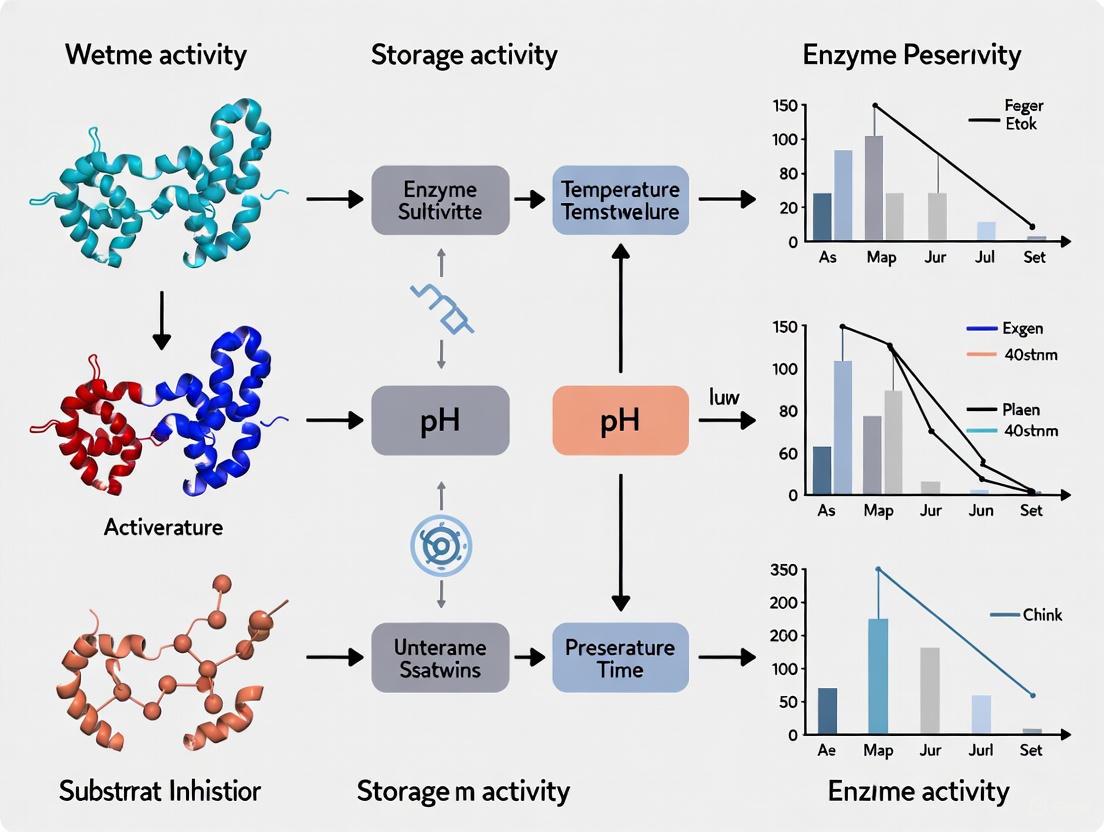
This article provides a comprehensive examination of enzyme activity preservation strategies during storage, addressing critical challenges faced by researchers and drug development professionals.
Strategies for Enzyme Activity Preservation During Storage: A Comprehensive Guide for Biomedical Research and Drug Development
Abstract
This article provides a comprehensive examination of enzyme activity preservation strategies during storage, addressing critical challenges faced by researchers and drug development professionals. It explores fundamental mechanisms of enzyme degradation and stability, presents practical methodological approaches for short and long-term preservation, offers systematic troubleshooting and optimization frameworks, and establishes validation protocols for assessing preservation efficacy. By integrating foundational biochemistry with practical applications, this guide aims to enhance experimental reproducibility, extend reagent shelf life, and support the development of stable diagnostic and therapeutic enzyme products.
Understanding Enzyme Stability: Fundamental Mechanisms and Degradation Pathways
For researchers in drug development and biotechnology, preserving enzyme activity during storage is a critical prerequisite for experimental reproducibility and data integrity. Enzyme function is highly dependent on its three-dimensional structure, which can be disrupted by environmental stressors such as temperature fluctuations, suboptimal pH, and desiccation. These stressors can induce denaturation, loss of catalytic activity, and ultimately compromise research outcomes. This technical support center provides evidence-based troubleshooting guides and frequently asked questions to help scientists mitigate these challenges, with content framed within the broader context of enzyme activity preservation research.
Troubleshooting Guide: Enzyme Storage and Stability
FAQ 1: How does temperature during storage and transport affect specific enzyme activities?
Temperature is a primary determinant of enzyme stability, influencing conformational flexibility and catalytic activity. Inappropriate temperatures can accelerate denaturation or permanently inactivate enzymes.
- Problem: Unexplained loss of enzyme activity following storage or shipping.
- Root Cause: Enzymes have specific temperature stability profiles. Deviations from optimal ranges, especially exposure to elevated temperatures, can cause irreversible denaturation. Even frozen storage can be detrimental for some enzymes due to ice crystal formation and resulting osmotic stress [1].
- Solution:
- Immediate Analysis: For enzymes like nitrate reductase, activity plummets to near-zero levels even with short-term cold storage or freezing. For these, immediate processing after collection is mandatory [2].
- Standard Freezing: Many enzymes, including common clinical biomarkers like ALP, AST, CK, and LD, show stable activity when stored at -20°C for up to 30 days [3].
- Ultra-Low Freezing: For long-term archival or particularly sensitive enzymes, storage at -70°C or -80°C provides enhanced stability, preventing the activity loss observed at -20°C for some enzymes over longer periods [3] [1].
- Cold Storage: Some enzymes, like faecal proteases, can be stable for up to 72 hours at both 4°C and room temperature when stored as crude samples [4]. Soybean urease also retains more initial activity when stored at 4°C compared to room temperature [5].
Table 1: Enzyme-Specific Temperature Stability Profiles
| Enzyme | Stable Storage Condition | Key Stability Findings | Source |
|---|---|---|---|
| Nitrate Reductase | Immediate processing | Activity decreased to near-zero under all storage conditions (room temp, on ice, -16°C, -45°C). | [2] |
| Faecal Proteases | 4°C or RT for ≤72 hours (crude sample) | Activity stable for 72 hours; declines rapidly if stored in extraction buffer. | [4] |
| Clinical Enzymes (ALP, AST, CK, LD) | -20°C | No statistically significant change in activity over 30 days. | [3] |
| Soybean Urease | 4°C | Significantly preserved initial activity over 72 hours compared to room temperature. | [5] |
| General Enzyme Guidance | -20°C to -80°C | Most enzymes require frozen storage; -20°C is common, but -70°C/-80°C prevents long-term degradation for sensitive enzymes. | [6] [3] [1] |
FAQ 2: What is the impact of pH on enzyme extraction and storage stability?
The pH of the environment directly affects the ionic state of amino acid residues in the enzyme's active site and overall structure, thereby influencing activity and stability.
- Problem: Reduced catalytic efficiency or precipitation of an enzyme solution after reconstitution or extraction.
- Root Cause: Using a buffer with a pH outside the enzyme's optimal range can lead to partial denaturation or irreversible inactivation.
- Solution:
- Determine Optimal pH: Consult literature for the specific enzyme's optimal pH. For novel enzymes, conduct a pH profile experiment.
- Use Appropriate Buffers: Always use a buffering agent with sufficient capacity to maintain the optimal pH during both extraction and storage. For instance, Tris-based buffers at a higher pH (>7) are optimal for extracting faecal proteases [4].
- Consider Extraction Conditions: The optimal pH for extraction may differ from the optimal pH for activity. For example, soybean urease activity was found to reach its maximum at approximately pH 8 [5].
FAQ 3: Can desiccation be a viable alternative to cold storage for preserving biological samples?
Desiccation removes the water necessary for hydrolytic reactions and microbial growth, potentially stabilizing samples at ambient temperatures, which is advantageous for field research or remote sampling.
- Problem: Need to preserve samples for DNA or enzyme analysis where cold chain logistics are impractical.
- Root Cause: Freezing can cause physical damage to cells and tissues from ice crystal formation, leading to the release of intracellular contents and potential degradation of target analytes [7] [1].
- Solution:
- Silica Gel for DNA Studies: For phyllosphere (leaf) microbial community DNA analysis, desiccation with silica gel packs was as effective as freezing for preserving community structure for up to three weeks at 21°C [7].
- Evaluate Analyte Compatibility: The success of desiccation is highly dependent on the target molecule. While effective for DNA in some contexts [7], its utility for preserving labile enzyme activities requires validation for each specific enzyme.
- Standardized Protocol: Use a standardized drying protocol with sufficient desiccant (e.g., 10g silica gel packs) and ensure samples are properly sealed to prevent moisture ingress [7].
Table 2: Comparing Storage Method Efficacy for Different Analyses
| Storage Method | Mechanism | Best For | Limitations | Source |
|---|---|---|---|---|
| Deep Freezing (-20°C to -80°C) | Slows molecular motion and microbial growth. | Long-term storage of many enzymes; clinical chemistry samples. | Can cause ice crystal damage, osmotic stress; not all enzymes are stable. | [3] [1] |
| Cold Storage (4°C) | Reduces metabolic and reaction rates. | Short-term storage (days) of some stable enzymes and crude samples. | Not suitable for long-term storage; microbial growth may still occur. | [4] [5] |
| Desiccation / Lyophilization | Removes water, halting most chemical and biological processes. | Ambient temperature storage & transport of DNA samples; some stable proteins. | May not preserve activity of all enzymes; rehydration can cause osmotic shock. | [7] [1] |
Experimental Protocols for Stability Assessment
Protocol 1: Assessing Temperature and pH Stability of an Enzyme Extract
This protocol can be adapted to characterize the stability of any enzyme under different storage conditions.
Materials:
- Enzyme extract of interest
- Buffers at different pH values (e.g., phosphate for pH 6-8, Tris for pH 7-9)
- Temperature-controlled water baths/incubators (e.g., 4°C, 25°C, 37°C) and freezers (-20°C, -80°C)
- Spectrophotometer or other equipment for activity assay
Method:
- Preparation: Prepare aliquots of your enzyme extract in the desired pH buffers.
- Incubation: Incubate the aliquots at the various temperatures you are testing (e.g., -80°C, -20°C, 4°C, 25°C).
- Sampling: At predetermined time points (e.g., 0, 1, 3, 7 days), remove aliquots from each storage condition.
- Activity Assay: Immediately assay the enzymatic activity of each aliquot under its optimal assay conditions. For example, the activity of recombinant chitinase (SmChiA) was assessed by monitoring the release of p-nitrophenol, which was measured spectrophotometrically at 410 nm [8]. Similarly, soybean urease activity was evaluated using the electrical conductivity (EC) method, which tracks the rate of urea hydrolysis [5].
- Data Analysis: Express the remaining activity as a percentage of the activity measured at time zero. Plot the data to determine the half-life of the enzyme under each condition.
Protocol 2: Evaluating the Efficacy of Desiccation for Sample Preservation
This protocol is based on methods used for preserving phyllosphere microbial communities [7].
Materials:
- Biological samples (e.g., plant tissue, soil)
- Silica gel packs in high-quality, sealable plastic bags or containers
- For control: equipment for freezing (liquid nitrogen, -80°C freezer)
Method:
- Sample Division: Immediately after collection, divide the sample into two portions.
- Treatment:
- Storage: Store the desiccated samples at a stable ambient temperature (e.g., 21°C) for the desired duration.
- Analysis: After the storage period, extract DNA or target analytes from both the desiccated and frozen control samples using standardized protocols (e.g., CTAB method for DNA [9]).
- Comparison: Compare the yield, quality (e.g., via gel electrophoresis), and downstream application results (e.g., qPCR, metabarcoding for microbial community structure [7]) between the two preservation methods to assess the performance of desiccation.
Workflow and Decision Pathways
The Scientist's Toolkit: Research Reagent Solutions
Table 3: Essential Materials for Enzyme Storage and Stability Studies
| Reagent / Material | Function / Application | Example Use Case |
|---|---|---|
| Tris-based Buffers | Maintaining stable pH during extraction and storage. Optimal for many enzymes at slightly basic conditions. | Extraction of faecal proteases at pH >7 for optimal activity [4]. |
| Silica Gel Packs | Desiccant for ambient temperature storage of samples by removing moisture. | Preservation of phyllosphere samples for DNA-based microbial community analysis [7]. |
| Glycerol | Cryoprotectant to prevent ice crystal formation and protein denaturation during freezing. | Added to enzyme solutions before storage at -20°C or -80°C to stabilize activity [6]. |
| Sodium Alginate | A natural polymer used as a support matrix for enzyme immobilization. | Covalently immobilizing chitinase to enhance its stability and reusability [8]. |
| Glutaraldehyde / EDAC | Cross-linking agents for covalent enzyme immobilization onto solid supports. | Activating functional groups on a support matrix (e.g., alginate beads) to form stable covalent bonds with enzymes [10] [8]. |
Molecular Mechanisms of Enzyme Inactivation and Denaturation
FAQs on Enzyme Inactivation and Stability
What are the primary molecular mechanisms behind enzyme inactivation? Enzyme inactivation occurs when the three-dimensional structure of the protein is disrupted, leading to a loss of catalytic function. Key mechanisms include:
- Structural Denaturation: Unfolding of the secondary and tertiary structures (e.g., α-helices and β-sheets), which destroys the active site. Treatments like Ultraviolet-C (UV-C) radiation combined with L-cysteine can turn α-helices into random coils and disrupt the tertiary structure [11].
- Aggregation: Denatured enzyme molecules can clump together, physically blocking the active site. Combined UV-C and L-cysteine treatment has been shown to increase the aggregation index and turbidity of Polyphenol Oxidase (PPO), leading to the active center being covered [11].
- Covalent Modification: Chemical reactions, such as the formation of incorrect disulfide bonds or oxidation of amino acid side chains (e.g., cysteine and methionine), can alter the enzyme's structure [12].
How do temperature and pH extremes lead to enzyme denaturation?
- Temperature: High temperatures increase molecular vibrations, which break the weak interactions (hydrogen bonds, hydrophobic interactions, van der Waals forces) that maintain the enzyme's native structure. This can lead to complete unfolding. Even at low temperatures, ice crystal formation during freezing can cause mechanical damage and pH shifts due to solute concentration, leading to osmotic stress and partial denaturation [2] [12].
- pH: Extreme pH levels alter the charge of amino acid residues. This disrupts ionic bonds critical for the protein's structure and can change the charge profile of the active site, preventing substrate binding or catalysis [12].
Why do my enzymes lose activity during storage, even at low temperatures? Storage instability, including at freezing temperatures, is a common challenge. Causes include:
- Conformational Changes: During freezing and thawing, enzymes can undergo subtle conformational changes that inactivate them. Nitrate reductase, for instance, is highly sensitive and loses nearly all activity after storage, even at ultra-low temperatures [2].
- Slow Unfolding: Over time, enzymes can undergo slow, partial unfolding, especially if stored in sub-optimal buffer conditions [12].
- Microbial Growth: If not stored sterilely, microbial proteases can degrade the enzyme [13].
What strategies can I use to enhance enzyme stability for long-term storage? Several advanced strategies can significantly improve stability:
- Immobilization: Attaching or entrapping enzymes onto a solid support can restrict structural movement and protect them from denaturation. Immobilizing chitinase on sodium alginate-modified rice husk beads greatly enhanced its pH, temperature, and storage stability compared to the free enzyme [8].
- Encapsulation: Entrapping enzymes within a polymer matrix, such as electrospun nanofibers, provides a protective microenvironment. This shields the enzyme from harsh conditions and can lead to 100% immobilization efficiency and high activity retention after extended periods [14].
- Engineering and Additives: Using site-directed mutagenesis to introduce stabilizing bonds or adding stabilizers like polyols (e.g., glycerol) and sugars to storage buffers can reduce molecular mobility and prevent denaturation [12].
Are some enzymes inherently more stable than others? Yes, enzyme stability varies greatly. Enzymes from extremophiles (organisms living in extreme environments) are naturally more robust. Furthermore, an enzyme's structure and the number of stabilizing bonds (e.g., disulfide bridges, salt bridges) determine its intrinsic stability. Studies on plant enzymes have shown that stability during storage is also species-dependent, with some enzymes like glutamine synthetase showing increased activity after storage in certain plants, potentially due to tissue degradation processes [2].
Troubleshooting Guides
Problem: Rapid Loss of Enzyme Activity During Storage
| Observation | Possible Cause | Recommended Solution |
|---|---|---|
| Activity drops within days/weeks at 4°C or -20°C. | Proteolytic degradation; slow unfolding; oxidation. | Add protease inhibitors; use stabilizing additives (e.g., 1-10% glycerol or sucrose); store in small aliquots to avoid freeze-thaw cycles [12] [13]. |
| Activity loss after a single freeze-thaw cycle. | Ice crystal damage; cold denaturation; pH shifts in buffer. | Use cryoprotectants (e.g., 50% glycerol for storage at -20°C); fast-freeze in liquid nitrogen; use buffered systems with high capacitance [2]. |
| Precipitate forms upon thawing or during storage. | Aggregation of denatured enzyme molecules. | Filter or centrifuge to remove aggregates; optimize pH and ionic strength of storage buffer; consider immobilization to restrict movement [11] [14]. |
Problem: Inconsistent Enzyme Activity Between Experiments
| Observation | Possible Cause | Recommended Solution |
|---|---|---|
| High variability in assay results. | Improper handling causing partial denaturation; outdated or contaminated reagent solutions. | Standardize all handling procedures (thawing, pipetting); prepare fresh substrate solutions regularly; run a standard/control with each assay [2] [13]. |
| Activity lower than expected after immobilization. | The immobilization process may have denatured the enzyme; the active site may be obstructed. | Optimize immobilization protocol (pH, time, concentration); choose a different immobilization chemistry or support matrix to orient the enzyme favorably [8] [14]. |
Experimental Protocols for Enzyme Stabilization
Protocol: Enzyme Immobilization on Alginate-Based Beads
This protocol, adapted from research on chitinase immobilization, provides a method to enhance enzyme stability and reusability [8].
Key Research Reagent Solutions:
| Reagent | Function |
|---|---|
| Sodium Alginate (SA) | Natural polysaccharide that forms a porous, biocompatible gel matrix for entrapment. |
| Modified Rice Husk Powder (mRHP) | Inexpensive, sustainable material that increases surface area and binding sites for the enzyme. |
| Calcium Chloride (CaCl₂) | Cross-linking agent that ionically bridges alginate chains to form stable hydrogel beads. |
| EDAC (1-Ethyl-3-(3-dimethylaminopropyl)carbodiimide) | Cross-linking agent that catalyzes the formation of amide bonds between enzyme and matrix. |
Methodology:
- Carrier Preparation: Mix sodium alginate with citric acid-modified rice husk powder (mRHP). A 1:0.5 (SA:mRHP) ratio is often optimal.
- Bead Formation: Drop the SA-mRHP mixture into a stirred solution of calcium chloride (0.1 M) using a syringe. Allow the beads to harden in the solution for 30-60 minutes.
- Activation: Recover the beads and activate them by stirring in a solution of EDAC for 5 hours to create reactive sites.
- Immobilization: Incubate the activated beads with the enzyme solution (e.g., 1.75 U/mL) for several hours to allow covalent binding.
- Washing and Storage: Wash the beads thoroughly with buffer to remove any unbound enzyme. The immobilized enzyme can be stored in a suitable buffer at 4°C [8].
Protocol: Assessing Enzyme Stability Under Storage Conditions
This protocol outlines a systematic approach to evaluate how storage conditions affect enzymatic activity, based on a study of plant nitrogen metabolism enzymes [2].
Methodology:
- Sample Preparation: Prepare a concentrated, pure enzyme solution in a chosen buffer. Divide into multiple aliquots.
- Storage Conditions:
- Temperature: Store aliquots at different temperatures (e.g., room temperature ~22°C, 4°C, -16°C, -45°C, -80°C).
- Time: Remove samples at predetermined time points (e.g., Day 0, 7, 14, 28) for activity assay.
- Activity Assay: At each time point, assay the enzyme activity under standard optimal conditions (e.g., specific substrate, pH, temperature). Always include a positive control (freshly prepared enzyme).
- Data Analysis: Express the remaining activity as a percentage of the initial (Day 0) activity. Plot the data to determine the half-life of the enzyme under each condition.
| Parameter | Effect of Combined UV-C/L-cys Treatment | Molecular Mechanism |
|---|---|---|
| Enzyme Activity | Decreased | The active site is covered and disrupted due to structural changes. |
| Secondary Structure | α-helix converted to random coil | Loss of regular, stable protein folding leads to inactivation. |
| Tertiary Structure | Destroyed | Loss of the specific 3D shape required for catalytic function. |
| Thermal Properties | Reduced denaturation temperature; Increased denaturation enthalpy | The enzyme structure becomes less stable and requires less energy to begin unfolding, but the overall unfolding process may involve more energy changes due to aggregation. |
| Microstructure | Increased aggregation and turbidity | Enzyme molecules clump together, physically blocking the active center. |
| Enzyme | Response to 18h Storage on Ice (0-2°C) | Response to 28-Day Storage at -16°C | Suitability for Delayed Analysis |
|---|---|---|---|
| Nitrate Reductase (NR) | Decreased to near-zero levels | Decreased to near-zero levels | Not suitable |
| Glutamine Synthetase (GS) | Species-dependent increase (e.g., in T. repens) | Species-dependent response | Conditionally suitable (requires species-specific validation) |
| Phosphomonoesterase (PME) | Species-dependent increase (e.g., in C. gayana) | Species-dependent response | Conditionally suitable (requires species-specific validation) |
Visualization of Mechanisms and Workflows
Enzyme Inactivation Pathways
Enzyme Stabilization via Immobilization
Protein-Protein Interactions and Their Impact on Conformational Integrity
Troubleshooting Guide: Preserving Enzyme Activity During Storage
This guide addresses common challenges researchers face in maintaining enzyme conformational integrity and catalytic activity during storage, framed within the context of a broader thesis on enzyme activity preservation.
FAQ: Enzyme Stability and Storage
Q1: Why does my enzyme lose activity faster when stored in dilute solutions? Enzymes in dilute solutions lack the beneficial protein-protein interactions found in crowded environments. In dense suspensions, reduced intermolecular spacing allows for transient molecular encounters and weak, long-range interactions that restrict excessive conformational fluctuations and prevent loss of structural integration. This stabilization mechanism preserves enzyme structure and function over extended periods [15].
Q2: What is the "stability-activity trade-off" in enzyme engineering? The stability-activity trade-off describes the frequent observation that mutations which increase enzyme thermostability often come at the cost of reduced catalytic activity. This occurs because rigidifying mutations that enhance stability may simultaneously restrict the conformational dynamics essential for catalytic function. Advanced engineering strategies like iCASE aim to overcome this limitation by identifying mutations that enhance both properties simultaneously [16].
Q3: How do repeated freeze-thaw cycles affect my enzyme preparation? Repeated freeze-thaw cycles cause protein denaturation and function loss through mechanical damage from ice crystal formation and recrystallization. Each cycle promotes ice crystal growth, which disrupts muscle structure in biological samples and mechanically damages protein conformation. This process increases drip loss upon thawing and alters functional properties [17] [18].
Q4: Can buffer additives really improve enzyme stability during storage? Yes, specific buffer additives significantly enhance stability. Sugars like trehalose and sucrose protect against denaturation, reducing agents like DTT prevent oxidation of thiol groups, and protease inhibitors reduce proteolytic degradation. Glycerol (10-50%) acts as a cryoprotectant to prevent ice crystal formation during freeze-thaw cycles [17].
Troubleshooting Common Experimental Issues
Problem: Unexpected decrease in enzyme activity after short-term storage
- Potential Cause: Conformational changes due to insufficient protein concentration or suboptimal buffer conditions.
- Solution: Increase enzyme concentration to >1 µM for storage and optimize buffer with appropriate stabilizers. Research shows enzymes in 10 µM stock solutions retained significantly higher activity compared to 1 nM solutions after 48 hours [15].
- Prevention: Aliquot enzymes to avoid repeated freeze-thaw cycles and use storage buffers with compatible preservatives like sodium azide (0.02-0.05%) to prevent microbial contamination [17].
Problem: Irreversible aggregation observed after thawing frozen enzyme samples
- Potential Cause: Ice crystal formation during freezing causing mechanical disruption of protein structure.
- Solution: Implement faster freezing rates, add cryoprotectants like glycerol or trehalose, and avoid storing at temperatures where ice recrystallization occurs (typically -16°C to -25°C) [17] [18].
- Prevention: Use controlled-rate freezing rather than placing directly at -80°C, and consider lyophilization for long-term storage of highly stable proteins [17].
Problem: Inconsistent activity assays despite controlled storage conditions
- Potential Cause: Conformational fluctuations leading to gradual decay of structural integrity.
- Solution: Implement activity assays immediately after thawing and use structural integrity checks like fluorescence spectroscopy or circular dichroism to monitor conformational stability [15].
- Prevention: Standardize thawing protocols (rapid thawing at 25-37°C) and avoid partial thawing during handling [17].
Quantitative Data on Enzyme Stability
Table 1: Catalase Activity Preservation Under Different Crowding Conditions
| Condition | Relative Activity (24h) | Relative Activity (48h) | Key Observation |
|---|---|---|---|
| Dilute Solution (1 nM) | ~40% | ~20% | Rapid activity loss |
| Dense Suspension (10 µM) | ~85% | ~75% | Significant preservation |
| With Ficoll 70 | ~65% | ~50% | Moderate enhancement |
| With Glycerol | ~45% | ~25% | Minimal stabilization |
Source: Adapted from [15]
Table 2: Enzyme Stability Monitoring Techniques
| Method | Parameters Measured | Application in Stability Assessment |
|---|---|---|
| Fluorescence Spectroscopy | Tryptophan fluorescence intensity | Detects conformational changes in aromatic residues |
| Circular Dichroism (CD) | α-helix and β-sheet content | Quantifies secondary structure preservation |
| Activity Assays | Reaction rate with substrate | Direct measurement of catalytic function |
| Dynamic Light Scattering | Hydrodynamic radius, aggregation | Moniters oligomeric state and aggregation |
Source: Adapted from [15] [17]
Experimental Protocols for Assessing Conformational Integrity
Protocol 1: Monitoring Structural Stability via Fluorescence Spectroscopy
- Prepare enzyme samples at different concentrations (300 nM to 10 µM) in appropriate buffer.
- Set excitation wavelength to 280 nm (for tryptophan/tyrosine residues).
- Measure emission spectrum from 300-400 nm, noting peak intensity at ~336 nm.
- Monitor intensity decay over time at storage conditions.
- Interpret results: More rapid fluorescence decline indicates faster conformational changes. Dilute solutions (300 nM) show significantly faster intensity decay compared to dense suspensions (10 µM) [15].
Protocol 2: Assessing Secondary Structure Stability via Circular Dichroism
- Dialyze enzyme samples into CD-compatible buffer (low absorbance).
- Load sample into quartz cuvette with 0.1-1.0 mm path length.
- Collect spectra from 190-250 nm with appropriate averaging.
- Analyze for characteristic minima: 208 nm (α-helix) and 215 nm (β-sheet).
- Calculate α-helical content using established algorithms [15].
- Compare samples from dilute versus concentrated stock solutions to detect structural preservation in crowded environments.
Protocol 3: Evaluating Functional Stability Under Different Crowding Conditions
- Prepare catalase (1 nM) with 10 mM H₂O₂ substrate.
- Test under various crowding conditions: artificial crowders (Ficoll 70, Ficoll 400, Dextran 70) and biological crowders (urease, BSA).
- Monitor H₂O₂ decomposition by absorbance change at 240 nm.
- Compare initial reaction rates with those from freshly prepared samples.
- Quantify time-dependent activity: Enzymes in higher-concentration suspensions retain catalytic activity significantly longer [15].
Research Reagent Solutions
Table 3: Essential Reagents for Enzyme Stability Research
| Reagent | Function | Application Notes |
|---|---|---|
| Ficoll 70 | Artificial macromolecular crowder | Mimics crowded cellular environment; mild stabilization observed |
| Glycerol | Cryoprotectant | Prevents ice crystal formation; use at 10-50% concentration |
| Trehalose | Stabilizing sugar | Protects against denaturation; particularly useful for lyophilization |
| DTT | Reducing agent | Prevents oxidation of cysteine residues; maintain at 1-5 mM |
| Sodium Azide | Antimicrobial preservative | Prevents microbial growth; use at 0.02-0.05% concentration |
| Protease Inhibitor Cocktail | Prevents proteolytic degradation | Essential for long-term storage of purified enzymes |
Source: Adapted from [15] [17]
Experimental Workflows and Molecular Relationships
Enzyme Storage Stability Decision Pathway
Molecular Interactions Governing Stability
The Role of Non-thermal Fluctuations in Enzyme Catalytic Activity
Technical Support Center
Frequently Asked Questions (FAQs)
FAQ 1: What are non-thermal fluctuations and how do they differ from thermal noise in enzymatic processes? Non-thermal fluctuations, often called active noise, are correlated mechanical disturbances generated by the biochemical activity of cellular machinery, such as molecular motors and other enzymes utilizing ATP hydrolysis. Unlike random thermal noise, which originates from equilibrium thermodynamic processes, non-thermal fluctuations are driven by metabolic energy, are temporally correlated, and can induce meso-scale collective motions within the crowded cellular environment. These active fluctuations can influence enzyme conformation and catalytic efficiency in ways that thermal energy alone cannot [19] [20].
FAQ 2: Can non-thermal fluctuations directly increase an enzyme's catalytic turnover rate? Yes, under certain conditions. Research suggests that the fast-component spectrum of active hydrodynamic fluctuations can significantly enhance the turnover rate of enzymes. Theoretical models indicate that these fluctuations assist in crossing the energy barrier of the reaction. In biologically relevant regimes, the coaction of thermal and active forces can potentially increase the enzyme turnover rate by up to 200%. However, strong active noise with long correlation times may slightly hinder activity [20].
FAQ 3: How does macromolecular crowding, a source of non-thermal fluctuations, affect enzyme stability and activity? High enzyme concentration and macromolecular crowding can enhance enzyme stability and preserve catalytic function over extended periods. In dense suspensions, reduced intermolecular distances foster stronger intermolecular interactions and transient clustering. This environment restricts excessive conformational entropy and shields enzymes from denaturation, thereby maintaining structural integrity and activity longer than in dilute solutions. Excluded volume effects alone are insufficient for this stabilization; weak, long-range interactions and cooperative effects play a key role [21].
FAQ 4: What experimental evidence links cellular metabolic activity to non-thermal fluctuations? Studies using feedback-tracking microrheology in living HeLa cells have quantified non-thermal fluctuations by observing the violation of the Fluctuation-Dissipation Theorem (FDT). Experiments show that non-thermal displacement fluctuations are significantly reduced in ATP-depleted cells, while the cytoplasm becomes more solid-like. This demonstrates a direct correlation between the strength of non-thermal fluctuations and the cell's metabolic activity, indicating that metabolism-driven activity fluidizes the otherwise glassy cytoplasm [19].
Troubleshooting Guide: Common Experimental Challenges
Problem 1: Inconsistent Catalytic Rate Measurements in Crowded In Vitro Systems
| Observed Symptom | Potential Cause | Recommended Solution |
|---|---|---|
| Unpredictable enzyme kinetics in concentrated solutions. | Uncontrolled, long-correlation-time active noise from other enzymatic activities. | Characterize the fluctuation spectrum of the crowders. Use crowders with minimal catalytic activity (e.g., Ficoll, Dextran) or account for their noise contribution in the model [21] [20]. |
| Rapid decline of enzyme activity in dilute stock solutions. | Loss of stabilizing self-interactions and enhanced conformational entropy in unfolded state. | Prepare and store enzymes in concentrated stock solutions (>10 µM). Dilute immediately before activity assays to benefit from concentration-dependent stabilization [21]. |
| Enzyme activity declines over time despite crowding. | Dominance of steric exclusion effects without beneficial self-interactions. | Use active enzyme crowders of the same type (e.g., catalase in catalase) to leverage specific self-interactions that suppress denaturation [21]. |
Problem 2: Failure to Replicate In Vivo Enzyme Dynamics in Model Systems
| Observed Symptom | Potential Cause | Recommended Solution |
|---|---|---|
| Model system fails to capture cytoplasmic fluidization. | Lack of metabolic activity and associated non-thermal fluctuations. | Incorporate an ATP-regeneration system and active mechano-enzymes (e.g., motor proteins) into the synthetic cytoplasm to generate essential non-thermal noise [19]. |
| Tracer particles in microrheology show sub-diffusion but no active fluidization. | The system is missing meso-scale collective fluctuations generated by metabolism. | Ensure the experimental model includes a sufficient density of active components that generate correlated fluctuations, not just random noise [19]. |
| Measured active force does not correlate with metabolic state. | Focusing on microscopic force generation instead of meso-scale displacement fluctuations. | Quantify non-thermal displacement fluctuations directly via the violation of the FDT in combined active/passive microrheology, rather than inferring force [19]. |
Key Experimental Protocols
Protocol 1: Quantifying Non-thermal Fluctuations via Microrheology
This protocol measures non-thermal fluctuations in a living cell by comparing active and passive microrheology, based on methods used in [19].
- Sample Preparation: Culture adherent cells (e.g., HeLa cells) to form a confluent monolayer. Introduce PEG-coated melamine tracer particles (~1 µm diameter) into the cytoplasm using a gene gun.
- Instrument Setup: Utilize an optical-trapping system with a feedback-controlled 3D stage for stable tracking.
- Active Microrheology (AMR): Apply a sinusoidal optical force to a tracer bead. Measure the resulting displacement to compute the complex shear viscoelastic modulus, G(ω).
- Passive Microrheology (PMR): On the same cell, track the spontaneous displacement fluctuations of the tracer bead without applied force.
- Data Analysis: The Fluctuation-Dissipation Theorem (FDT) relates the thermal fluctuations (from AMR) to the response function. Calculate the non-thermal fluctuations by subtracting the estimated thermal noise power (from AMR) from the total fluctuation power (from PMR). The extent of FDT violation quantifies the non-thermal activity.
Protocol 2: Assessing Enzyme Stability in Crowded Environments
This protocol evaluates how macromolecular crowding affects enzyme stability over time, as described in [21].
- Sample Preparation:
- Prepare concentrated stock solutions (e.g., 10 µM) of the enzyme of interest (e.g., catalase, urease).
- Prepare control dilute solutions (e.g., 1 nM).
- Store all solutions at a constant temperature (e.g., 23°C).
- Activity Assay:
- At regular intervals (e.g., 24 h), dilute an aliquot from each stock into an assay buffer to a standard concentration for measurement (e.g., 1 nM).
- Immediately measure the initial reaction rate. For catalase, monitor the decomposition of 10 mM H₂O₂ by the change in absorbance at 240 nm over 120 seconds.
- Normalize the reaction rate to that of a freshly prepared sample (0 h).
- Structural Integrity Check (Parallel Assay):
- Use intrinsic fluorescence spectroscopy (excitation 280 nm, emission 336 nm) to track conformational changes. A rapid decline in fluorescence indicates structural perturbation.
- Use Circular Dichroism (CD) spectroscopy to quantify secondary structure content (e.g., α-helix content from minima at 208 nm and 215 nm).
- Data Interpretation: Compare the time-dependent activity and structural integrity of enzymes from concentrated versus dilute stock solutions. Enhanced stability in concentrated stocks indicates crowding-mediated stabilization.
Essential Signaling and Workflow Pathways
Non-thermal Fluctuation Pathway
Enzyme Stability Workflow
The Scientist's Toolkit: Research Reagent Solutions
| Reagent / Material | Function in Experiment | Key Characteristic / Consideration |
|---|---|---|
| PEG-coated Tracer Beads | Probe particles for microrheology to measure intracellular mechanics and fluctuations. | Inert, non-adhesive surface prevents binding to cellular components; ~1 µm diameter ideal for tracking [19]. |
| Artificial Crowders (Ficoll, Dextran) | Mimic macromolecular crowding to study excluded volume effects without enzymatic activity. | Chemically inert polymers of defined size; useful for isolating steric effects from active interactions [21]. |
| Active Enzyme Crowders (e.g., Catalase) | Create a dense, active environment to study self-interactions and active fluctuation effects. | High catalytic turnover generates significant hydrodynamic fluctuations; same-type enzymes enable beneficial self-interactions [21] [20]. |
| Thermal-Responsive Polymer | Stabilize enzymes against heat inactivation via multipoint grafting in polymer-enzyme conjugates. | Protects enzyme conformation at high temperatures; flocculates above LCST and redissolves upon cooling [22]. |
| Single Enzyme Nanoparticles (SENs) | Nano-scale porous polymer network around individual enzymes to dramatically improve stability. | Increases stability over wide pH and temperature ranges in organic solvents without significant mass transfer limitation [23]. |
Analyzing Structural Changes During Freeze-Thaw and Lyophilization Cycles
FAQs on Structural Stability and Activity
Q1: How do freeze-thaw cycles fundamentally alter protein structure? Freeze-thaw (F-T) cycles induce significant structural modifications in proteins. Research on Clitocybe squamulosa protein isolate (CSPI) demonstrated that F-T treatments cause remarkable alterations and reduce the content of protein ordered structure. Specifically, surface hydrophobicity and free sulfhydryl content first increase and then decrease with successive cycles, while carbonyl content consistently rises, indicating progressive protein oxidation. These structural changes directly impact functional properties [24]. Similarly, studies on mirror carp myofibrillar protein showed that F-T cycles lead to protein degradation and oxidation, significantly altering the protein's crystal structure, thermal stability, and zeta potential [25].
Q2: What is the relationship between protein concentration and stability during storage? Enzyme stability exhibits a strong concentration dependence. Studies with catalase revealed that enzymes in higher-concentration suspensions (10 µM) retained catalytic activity for significantly longer durations compared to those in dilute solutions (1 nM). Fluorescence spectroscopy and circular dichroism confirmed greater structural stability in dense suspensions, with higher α-helical content observed in concentrated enzyme solutions. This stabilization effect arises from enhanced intermolecular interactions and reduced conformational fluctuations in crowded environments [21].
Q3: Why does lyophilization sometimes cause protein aggregation and how can it be minimized? Lyophilization can induce protein unfolding and aggregation due to acute freezing and dehydration stresses. Infrared spectroscopic studies have documented that these processes can disrupt protein native structure, often decreasing α-helix and random structure while increasing β-sheet content. This can be prevented by optimization of lyophilization excipients; for instance, sucrose serves as an effective lyoprotectant for basic fibroblast growth factor and γ-interferon. Additionally, PEGylation of bovine serum albumin before lyophilization was shown to reduce structural alterations, with BSA-PEG (1:0.25) presenting the least structural changes [26].
Q4: How do freeze-thaw cycles affect protein digestibility and bioavailability? The impact of F-T cycles on protein digestibility follows a pattern of initial enhancement followed by deterioration. With mirror carp myofibrillar protein, mild oxidation from few F-T cycles promotes partial unfolding that increases contact sites with digestive enzymes, enhancing digestibility. However, vigorous oxidation from multiple cycles promotes protein aggregation, reducing enzyme accessibility and deteriorating digestive properties. CSPI undergoing two F-T cycles showed the highest digestibility and maximum polypeptide content [24] [25].
Experimental Protocols for Structural Analysis
Protocol: Monitoring Structural Changes During Freeze-Thaw Cycling
Based on: Characterization of Clitocybe squamulosa Protein Isolate (CSPI) [24]
Objective: To evaluate the impact of successive freeze-thaw cycles on protein structure and functionality.
Materials:
- Protein isolate solution (20 mg/mL in deionized water)
- Polyethylene vials
- -20°C freezer
- Centrifuge
- Spectrophotometer
- FTIR spectrometer
Methodology:
- Sample Preparation: Redissolve lyophilized proteins in deionized water to a final concentration of 20 mg/mL. Distribute 2L of CSPI suspension into 25 polyethylene vials.
- Freeze-Thaw Cycling: Place vials at -20°C for 24 hours, then thaw at room temperature for 5 hours. Remove 5 vials after each cycle (1-5 cycles).
- Structural Analysis:
- Free Sulfhydryl Content: Mix CSPI samples (3 mg/mL in Tris-Gly buffer, pH 8.0) with Ellman's reagent (DTNB). Incubate 1 hour in dark, centrifuge, and measure absorbance at 412 nm.
- Carbonyl Content: Mix CSPI dispersions (20 mg/mL) with DNPH in HCl, incubate 1 hour, precipitate with TCA, wash, dissolve in guanidine HCl, and measure absorbance at 370 nm.
- Surface Hydrophobicity: Mix CSPI samples (5 mg/mL in phosphate buffer) with bromophenol blue (BPB), react 2 hours, centrifuge, and measure supernatant absorbance at 595 nm.
- FTIR Analysis: Mix CSPI with KBr (1:100), compress into tablet, and scan from 4000-400 cm⁻¹ to analyze secondary structure changes.
Key Parameters:
- Cycle progressively increases carbonyl content (oxidation marker)
- Surface hydrophobicity and free sulfhydryl show biphasic response
- FTIR reveals reduction in ordered structure with increasing cycles
Protocol: Lyophilization Process Optimization for Therapeutic Proteins
Based on: Freeze-Thaw Characterization for Protein Therapeutics [27]
Objective: To identify optimal freeze-thaw conditions that minimize aggregation during biopharmaceutical processing.
Materials:
- Monoclonal antibody solution (e.g., mAb-1 at 5.5 mg/mL in sodium phosphate, NaCl, surfactant, pH 6.0)
- Controlled-rate freezer (Tenney TUJR)
- Size exclusion HPLC system
- Low-temperature differential scanning calorimetry (LT-DSC)
- Electrical resistance measurement system
- Freeze-drying microscope
Methodology:
- Low-Temperature Thermal Analysis:
- Electrical Resistance: Cool and warm protein sample at 0.5°C/minute while measuring resistance deviation to identify phase transitions.
- Freeze-Drying Microscopy: Observe sample behavior during controlled cooling (0.5°C/min to -60°C) and warming using 16-330× magnification.
- LT-DSC: Cool sample to -65°C and warm at 10°C/minute while monitoring heat evolution/uptake.
Freeze-Thaw Rate Studies:
- Slow Freeze-Fast Thaw: Freeze from 5 to -50°C at 0.03°C/min, hold 2h, thaw at 1°C/min to 5°C.
- Fast Freeze-Slow Thaw: Freeze to -50°C at 1°C/min, hold 2h, thaw at 0.03°C/min to -25°C, hold 24h, ramp to 5°C at 0.03°C/min.
Formulation Screening:
- Test different concentrations of phosphate buffer (10-50 mM) and NaCl (0-150 mM).
- Evaluate protein concentrations (5 mg/mL and 15 mg/mL).
- Assess surfactant types and concentrations.
Aggregation Analysis:
- Use SE-HPLC to quantify monomer loss and aggregate formation.
- Employ Analytical Ultracentrifugation for detailed aggregate characterization.
Key Parameters:
- Identify critical temperature transitions for complete solidification
- Determine optimal freezing and thawing rates for specific formulations
- Balance excipients to minimize aggregation while maintaining stability
Analytical Workflow for Structural Assessment
The following workflow illustrates the integrated approach for analyzing structural changes during freeze-thaw and lyophilization processes:
Troubleshooting Guide: Common Experimental Challenges
Protein Aggregation and Stability Issues
| Problem | Possible Cause | Solution |
|---|---|---|
| Increased aggregation after F-T cycles | Ice-water interface denaturation | Add non-ionic surfactants (Polysorbate 20/80) to minimize surface-induced denaturation [27] |
| Progressive loss of enzymatic activity | Protein oxidation | Include antioxidants (methionine, glutathione) in formulation; limit F-T cycles to ≤3 when possible [24] |
| Irreversible precipitation | Buffer crystallization and pH shifts | Use amorphous buffers (e.g., Tris, histidine) instead of crystallizing buffers (phosphate); adjust buffer type and concentration [27] |
| Reduced digestibility after multiple F-T cycles | Protein cross-linking and aggregation | Limit F-T exposure to ≤2 cycles for optimal digestibility; consider cryoprotectants [25] |
| Structural perturbations post-lyophilization | Dehydration stress during drying | Incorporate lyoprotectants (trehalose, sucrose) at optimal concentrations (e.g., 75 mM trehalose) [28] [26] |
Analytical Methodology Challenges
| Problem | Possible Cause | Solution |
|---|---|---|
| Inconsistent structural data | Incomplete sample thawing | Standardize thawing protocols (water bath at 25±2°C with intermittent mixing) [27] |
| High variability in activity assays | Enzyme inactivation during storage | Avoid multiple freeze-thaw cycles; use benchtop cooler during handling; make aliquots to minimize freeze-thaw exposure [29] |
| Unreliable FTIR secondary structure quantification | Inadequate moisture control during analysis | Ensure complete lyophilization; control humidity during sample preparation and analysis [26] |
| Inconsistent digestion patterns | Star activity from suboptimal conditions | Follow manufacturer's recommended buffer exactly; avoid excess glycerol (>5%); use correct incubation temperature [29] |
Impact of Freeze-Thaw Cycles on Protein Structural Parameters
Table: Structural changes in Clitocybe squamulosa protein isolate during freeze-thaw cycling [24]
| F-T Cycles | Free Sulfhydryl Content | Carbonyl Content | Surface Hydrophobicity | Ordered Structure |
|---|---|---|---|---|
| 0 (Control) | Baseline | Baseline | Baseline | Maximum |
| 1 | Increased ~25% | Increased ~15% | Increased ~30% | Slight decrease |
| 2 | Peak value | Increased ~30% | Peak value | Moderate decrease |
| 3 | Decreased from peak | Increased ~50% | Decreased from peak | Significant decrease |
| 4 | Continued decrease | Increased ~70% | Continued decrease | Major decrease |
| 5 | Minimum value | Increased ~100% | Minimum value | Minimum |
Functional Property Changes During Freeze-Thaw Treatment
Table: Functional properties of CSPI relative to freeze-thaw cycles [24]
| F-T Cycles | Solubility | WHC | OHC | Foaming Capacity | Emulsifying Activity | Digestibility |
|---|---|---|---|---|---|---|
| 0 (Control) | 100% | 100% | 100% | Baseline | Baseline | Baseline |
| 1 | 95% | 92% | 90% | Increased ~20% | Increased ~15% | Increased ~10% |
| 2 | 88% | 85% | 83% | Increased ~35% | Increased ~25% | Maximum (+15%) |
| 3 | 80% | 78% | 75% | Peak (+40%) | Peak (+30%) | Slight decrease |
| 4 | 72% | 70% | 68% | Decreased ~25% | Decreased ~20% | Moderate decrease |
| 5 | 65% | 63% | 60% | Minimum | Minimum | Significant decrease |
Lyophilization Excipient Efficacy for Biomolecular Preservation
Table: Effectiveness of lyoprotectants in maintaining enzymatic integrity [28]
| Lyoprotectant | Optimal Concentration | Efficacy | Key Findings |
|---|---|---|---|
| Trehalose | 75 mM | High | Best performer in RT-LAMP reaction preservation; maintained activity for 28 days at room temperature |
| Arginine | 10 mM | Moderate | Good protective effect; combination with trehalose showed no significant improvement |
| PEG 2000 | 10% | Moderate-High | Effective in cake appearance and enzyme protection when combined with arginine |
| PEG 8000 | 5% | High | Optimal with trehalose; provided excellent stability and reaction consistency |
| PVP 40000 | 2-5% | Low | Inconsistent performance; not recommended for RT-LAMP systems |
Research Reagent Solutions
Table: Essential reagents for freeze-thaw and lyophilization studies
| Reagent Category | Specific Examples | Function | Application Notes |
|---|---|---|---|
| Cryoprotectants | Trehalose, Sucrose, Glycerol | Stabilize protein structure during freezing, reduce ice crystal formation | Trehalose at 75 mM effective for enzymes; glycerol concentration must be kept <5% to prevent inhibition [28] [29] |
| Lyoprotectants | PEG (2000, 8000), Hydroxypropyl-β-cyclodextrin | Protect against dehydration stress during lyophilization | PEG 8000 at 5% combined with 75 mM trehalose optimal for diagnostic enzymes [28] |
| Surfactants | Polysorbate 20, Polysorbate 80 | Minimize surface-induced denaturation at ice-water interfaces | Critical for monoclonal antibodies during freeze-thaw; concentration must be optimized [27] |
| Antioxidants | Methionine, Glutathione | Prevent protein oxidation during storage and processing | Essential for proteins with oxidation-prone residues (Met, Cys) [24] |
| Structure Probes | Bromophenol blue, DTNB, DNPH | Quantify structural changes (hydrophobicity, sulfhydryl groups, carbonyls) | BPB for surface hydrophobicity; DTNB for free sulfhydryl; DNPH for carbonyl content [24] |
| Buffers | Tris-HCl, Histidine, Phosphate | Maintain pH stability during freezing and thawing | Amorphous buffers (Tris, His) preferred over crystallizing buffers (phosphate) [27] |
Practical Preservation Techniques: Formulations, Additives, and Storage Protocols
Core Mechanisms: How Sugars and Polyols Stabilize Enzymes
This section details the fundamental biophysical principles by which sugars and polyols maintain enzyme structure and function, providing a scientific foundation for the troubleshooting guidance that follows.
The Preferential Exclusion and Hydration Mechanism
Compatible osmolytes, including sugars and polyols, are preferentially excluded from the immediate surface of a protein. This means the local concentration of the osmolyte near the protein surface is lower than its concentration in the bulk solvent. This exclusion creates a thermodynamically unfavorable state, as it effectively increases the protein's chemical potential. To minimize this unfavorable state, the system favors a reduction in the protein's solvent-accessible surface area. Since the denatured or unfolded state has a larger surface area than the native, folded state, the equilibrium shifts towards the native conformation, thereby stabilizing it [30] [31]. This process is accompanied by an increase in the hydration shell around the protein, a phenomenon known as preferential hydration [32]. The native state is stabilized because the unfolded state, with its larger surface area, would be even more strongly disfavored by the preferential exclusion mechanism [30].
Hydrogen Bond Competition and Strengthening
Recent research has revealed a more direct interaction mechanism. Nuclear Magnetic Resonance (NMR) studies and molecular dynamics simulations demonstrate that polyol and sugar osmolytes can shorten protein backbone hydrogen bonds. Osmolytes, with their multiple hydroxyl groups, compete with the protein for hydrogen bonding with the solvent. This competition effectively weakens protein-solvent hydrogen bonds, which in turn strengthens the crucial hydrogen bonds within the protein itself that maintain secondary structures like alpha-helices and beta-sheets [30]. Although the average change in hydrogen bond length is small (an estimated decrease of 0.006 Å for a 0.01 Hz increase in the J-coupling constant), this subtle strengthening can have significant effects on protein function, including modulating binding equilibria and slowing hydrogen/deuterium exchange rates [30].
Vitrification and Water Replacement
Under drying conditions, such as during lyophilization (freeze-drying) or air-drying, many disaccharides and larger polyols exhibit a strong tendency to form an amorphous glassy state, a process known as vitrification [33]. In this solid, glassy matrix, molecular mobility is drastically reduced, locking the enzyme in a rigid structure and slowing degradation processes. Furthermore, the hydroxyl groups on these solutes can act as a surrogate hydrogen bonding partner for the protein, effectively "replacing" water molecules that are essential for maintaining the protein's native structure. By forming hydrogen bonds with polar and charged groups on the protein's surface, these additives prevent the structural collapse and denaturation that would otherwise occur upon dehydration [33] [31].
Table: Primary Stabilization Mechanisms of Sugars and Polyols
| Mechanism | Primary Conditions | Key Molecular Effect | Result for the Enzyme |
|---|---|---|---|
| Preferential Exclusion | Aqueous Solution | Increases protein chemical potential; favors reduced surface area. | Shifts equilibrium to the native, folded state; inhibits unfolding. |
| Hydrogen Bond Competition | Aqueous Solution | Strengthens intra-protein hydrogen bonds. | Increases structural rigidity and thermal stability; can modulate function. |
| Vitrification & Water Replacement | Dehydrated/Frozen State | Forms a glassy matrix and H-bonds with protein surfaces. | Suppresses molecular mobility; prevents denaturation during drying/freezing. |
The following diagram illustrates the logical relationship between these core stabilization mechanisms and their functional outcomes for enzyme preservation.
Troubleshooting FAQs and Guides
This section addresses common challenges researchers face when using sugar and polyol additives, providing evidence-based solutions.
Incomplete Digestion or Unexpected Cleavage Patterns with Restriction Enzymes
- Problem: My restriction enzyme digestion is incomplete or shows an unexpected cleavage pattern (e.g., extra bands on a gel). I am using a reaction buffer containing glycerol.
- Background: Glycerol is often present in enzyme storage buffers to prevent freezing and stabilize activity. However, when it comprises more than 5% of the total reaction volume, it can induce "star activity," where the enzyme loses specificity and cuts at non-canonical sites [29] [34].
- Solution:
- Reduce Glycerol Concentration: Ensure the volume of restriction enzyme added to the reaction does not exceed 1/10th of the total volume, keeping the final glycerol concentration below 5% (v/v) [29].
- Use Enzyme Diluents: For reactions requiring small enzyme amounts, do not pipet volumes less than 0.5 µL. Instead, use the manufacturer's recommended dilution buffer to create a working stock [29].
- Optimize Reaction Conditions: Use the manufacturer's recommended buffer and avoid prolonged incubation times. Consider using high-fidelity (HF) restriction enzymes engineered for reduced star activity [34].
Low Enzyme Recovery After Freeze-Thaw or Lyophilization
- Problem: My enzyme loses significant activity after repeated freeze-thaw cycles or the lyophilization process.
- Background: Without stabilizers, freezing and especially dehydration can cause irreversible damage to enzyme structure. For example, freezing Glucose-6-Phosphate Dehydrogenase (G6PD) at -20°C or -80°C can reduce activity by ~24%, while freeze-drying or air-drying can reduce it by 90-95% [33].
- Solution:
- Select Effective Stabilizers: Not all sugars and polyols are equally effective. For G6PD, sorbitol was stabilizing, while mannitol was destabilizing during freezing. For freeze-drying, di-, tri-, and oligosaccharides (e.g., trehalose, raffinose) generally outperform monosaccharides [33].
- Incorporate Additives Before Processing: Add stabilizing solutes to the enzyme solution before freezing or lyophilization. A concentration of 25-50% (v/v) glycerol or other polyols is common for frozen storage [35].
- Prevent Crystallization: Use additives that remain amorphous during freeze-drying. Crystalline stabilizers like mannitol can lose their protective effect as they phase separate from the protein [33].
Suboptimal Refolding Yield from Inclusion Bodies
- Problem: I am getting a low yield of active enzyme when refolding my protein from inclusion bodies.
- Background: Refolding intermediates often expose hydrophobic surfaces that lead to aggregation. The efficacy of osmolytes can vary significantly between proteins, even close homologs [32].
- Solution:
- Screen Multiple Osmolytes: A study on homologous alpha-amylases (BLA and BAA) found that glycerol, sorbitol, and trehalose were more effective in refolding BAA than BLA. Systematically test a range of polyols (e.g., glycerol, sorbitol) and sugars (e.g., sucrose, trehalose) in your refolding buffer [32].
- Optimize Refolding Conditions: Perform refolding at low protein concentrations (e.g., 0.025 mg/mL) and at a controlled temperature (e.g., 25°C) to minimize aggregation [32].
- Exploit Preferential Hydration: The refolding yield often correlates with the preferential hydration potential of the osmolyte. Larger polyols like sorbitol generally provide greater stabilization than smaller ones like glycerol or ethylene glycol at equimolar concentrations [32].
Quantitative Data and Comparative Efficacy
This section provides structured, quantitative data to inform the selection and application of different stabilizing additives.
Table: Comparative Efficacy of Sugars and Polyols in Stabilization Studies
| Stabilizer | Enzyme / Protein Model | Stabilization Context | Key Quantitative Outcome | Citation |
|---|---|---|---|---|
| Glycerol | GB3 & TTHA Proteins | H-bond strength (160 g/L) | Avg. H-bond coupling (3hJNC') increased by 0.011 Hz (equiv. to 3-6°C temp decrease) | [30] |
| Sorbitol | GB3 & TTHA Proteins | H-bond strength (160 g/L) | Avg. H-bond coupling (3hJNC') increased by 0.007 Hz | [30] |
| Glycerol | Catalase | Structure-function & aggregation | Most stabilizing polyol tested; increased activity & prevented aggregation | [36] |
| Sorbitol | Catalase | Structure-function & aggregation | Showed a stabilizing effect, but less pronounced than glycerol | [36] |
| Sorbitol | G6PD | Freezing (-20°C / -80°C) | Stabilized the enzyme, preventing activity loss | [33] |
| Mannitol | G6PD | Freezing (-20°C / -80°C) | Destabilized the enzyme | [33] |
| Trehalose | G6PD | Freeze-drying | Protected the enzyme; disaccharides outperformed monosaccharides | [33] |
| Lactose | G6PD | Air-drying | Was ineffective at stabilization | [33] |
Table: General Guidelines for Stabilizer Use
| Stabilizer Class | Recommended Typical Usage | Key Considerations & Mechanisms |
|---|---|---|
| Glycerol | 20-50% (v/v) for frozen storage at -20°C to -80°C. | Prevents ice crystal formation; excellent for liquid storage but can interfere with some enzymatic reactions at >5% concentration. [37] [35] |
| Sucrose / Trehalose | 0.2-1.0 M for liquid stabilization; 1-5% (w/v) for lyophilization. | Excellent for freeze-drying via vitrification and water replacement; generally inert and non-interfering. [33] [31] |
| Sorbitol / Mannitol | 0.5-2.0 M for liquid and dried formulations. | Sorbitol is often effective in freezing. Mannitol can crystallize during lyophilization, reducing its efficacy. [32] [33] |
Detailed Experimental Protocols
Protocol: Testing Stabilizer Efficacy in Freeze-Thaw Cycles
This protocol is adapted from methods used to evaluate Glucose-6-Phosphate Dehydrogenase (G6PD) stability [33].
- Sample Preparation: Prepare a series of identical enzyme solutions (e.g., 1 mL aliquots) at a concentration of 0.1-1.0 mg/mL in an appropriate buffer.
- Additive Inclusion: Add the test stabilizers (e.g., 0.5 M sorbitol, 0.5 M trehalose, 10% glycerol) to the aliquots. Leave one aliquot with no additive as a negative control.
- Freezing: Seal the tubes and place them in a freezer at the desired temperature (e.g., -20°C or -80°C).
- Thawing: After 24 hours, rapidly thaw the samples in a warm water bath (25-37°C) until just ice-free.
- Activity Assay: Immediately perform a standard activity assay for the enzyme (e.g., monitoring the rate of NADPH production for G6PD at 340 nm).
- Data Analysis: Compare the activity of the stabilized samples to the unstabilized control and a freshly prepared, never-frozen sample. Calculate the percentage activity recovery.
- Cycle Repetition: Repeat steps 3-5 for multiple cycles to assess cumulative damage.
Protocol: Refolding Proteins Using Polyol and Sugar Additives
This protocol is based on the refolding of bacterial alpha-amylases (BLA and BAA) [32].
- Denaturation: Fully denature the purified protein (from inclusion bodies or otherwise) in a high concentration of denaturant (e.g., 6 M Guanidinium HCl) for 1-2 hours at 25°C.
- Refolding Buffer: Prepare a large volume (e.g., 50-100x the volume of the denatured sample) of ice-cold refolding buffer. This buffer should contain the desired concentration of the osmolyte (e.g., 0.5 M sorbitol, 0.4 M trehalose), a redox system if needed (e.g., GSH/GSSG), and standard buffer salts.
- Initiate Refolding: Using slow, drop-wise dilution, add the denatured protein into the vigorously stirring refolding buffer. This ensures immediate and high dilution of the denaturant.
- Incubation: Allow refolding to proceed for 12-24 hours at a controlled, low temperature (e.g., 4°C or 25°C).
- Analysis: Concentrate the refolded protein if necessary. Determine the refolding yield by measuring the enzymatic activity of the refolded sample against a native protein standard and by analyzing the amount of soluble protein versus aggregate (e.g., via centrifugation and SDS-PAGE).
The workflow for this refolding protocol is summarized in the diagram below.
The Scientist's Toolkit: Essential Research Reagents
Table: Key Reagents for Enzyme Stabilization Studies
| Reagent | Core Function | Specific Example & Rationale |
|---|---|---|
| Glycerol | Cryoprotectant & Stabilizer in Solution | Used at 20-50% (v/v) to prevent denaturation during frozen storage at -20°C by inhibiting ice crystal formation. Also stabilizes via preferential exclusion. [37] [35] |
| Trehalose | Lyoprotectant for Freeze-Drying | A non-reducing disaccharide that excels at forming a stable glassy matrix, immobilizing the enzyme and replacing water molecules via H-bonding during dehydration. [33] [31] |
| Sorbitol | Stabilizer for Refolding & Freezing | A polyol sugar alcohol that demonstrates high preferential hydration potential, effectively stabilizing proteins during refolding and against freeze-thaw stress. [32] [33] |
| Sucrose | Stabilizer in Liquid & Dried Forms | Functions similarly to trehalose via preferential exclusion and vitrification. A readily available and cost-effective alternative for many formulations. [32] [31] |
| Dithiothreitol (DTT) | Reductant for Sulfhydryl Groups | Protects sulfhydryl enzymes from gradual inactivation due to oxidation in air, preserving catalytic activity. Used at ~1 mmol/L. [35] |
Trehalose-Based Formulations for Dry Storage Applications
Trehalose, a naturally occurring disaccharide, has emerged as a premier lyoprotectant for stabilizing biological materials in dry storage applications. Its unique chemical properties enable exceptional preservation of enzymes, proteins, vaccines, and even whole cells by forming stable glassy matrices that protect structural integrity during freeze-drying and extended storage. This technical resource center provides comprehensive guidance for researchers developing trehalose-based preservation protocols, with particular emphasis on maintaining enzyme activity—a critical consideration for pharmaceutical development, diagnostic applications, and fundamental biochemical research.
Mechanisms of Action: How Trehalose Stabilizes Biomolecules
Trehalose provides stabilization through multiple complementary mechanisms that protect biomolecules during dehydration and storage:
- Water Replacement Hypothesis: Trehalose molecules form hydrogen bonds with polar groups on biomolecules, effectively replacing water molecules that are removed during dehydration and maintaining native conformation [38].
- Vitrification Theory: Trehalose forms an amorphous glassy matrix that immobilizes biological structures, dramatically reducing molecular mobility and preventing degradation reactions [39] [40].
- Preferential Exclusion: Trehalose is excluded from protein surfaces, creating a thermodynamically unfavorable situation that stabilizes the native folded state [41].
- Oxidative Protection: Trehalose accumulates in cells during stress responses, reducing reactive oxygen species (ROS) and protecting against oxidative damage [39] [40].
Experimental Protocols for Enzyme Stabilization
Protocol 1: Basic Enzyme Freeze-Drying with Trehalose
This standardized protocol enables researchers to preserve enzyme activity during lyophilization, based on methodologies demonstrated to maintain full catalytic function even after extended storage [42] [38].
Table: Standardized Trehalose Formulation for Enzyme Preservation
| Component | Concentration Range | Purpose | Considerations |
|---|---|---|---|
| Trehalose | 0.5-1.0 M (≈17-34% w/v) | Primary lyoprotectant | Higher concentrations improve stability but increase viscosity |
| Enzyme | Variable | Active component | Purified enzymes typically at 0.1-5 mg/mL |
| Buffer | 10-50 mM, pH optimized | Maintenance of native state | Avoid phosphate with some metal-dependent enzymes |
| Additives | 0.1-1 mM DTT/EDTA (optional) | Redox control | Prevents oxidation of thiol groups |
Procedure:
- Prepare trehalose solution in appropriate buffer, filtering through 0.22μm membrane
- Mix enzyme solution with trehalose solution to achieve final desired concentrations
- Aliquot into freeze-drying vials (10-20% of vial capacity)
- Freeze at -30°C to -50°C for 2-4 hours
- Primary drying: -30°C at 60 mTorr for 5 hours
- Secondary drying: ramp to +40°C at 0.1°C/min, maintain for 12 hours at 60 mTorr
- Seal vials under vacuum or inert atmosphere
Quality Control Assessment:
- Reconstitute with deionized water to original volume
- Measure enzyme activity compared to unpreserved control
- Assess protein aggregation by turbidity at 350-550 nm [39]
- Determine residual moisture by Karl Fischer titration (<1% ideal)
Protocol 2: Advanced mRNA-LNP Stabilization with Dual-Function Trehalose
This innovative approach addresses both colloidal and chemical stability challenges in complex biologics, representing cutting-edge methodology published in 2025 [40].
Table: Dual-Function Trehalose Loading Strategy for mRNA-LNPs
| Trehalose Location | Function | Experimental Outcome |
|---|---|---|
| External (in lyophilization medium) | Protects LNP colloidal stability via vitrification | Maintains particle size distribution (PDI < 0.3) |
| Internal (co-encapsulated with mRNA) | Stabilizes mRNA through hydrogen bonding | Reduces chemical degradation during storage |
| Internal (cellular delivery) | Mitigates oxidative stress in transfected cells | Enhances in vivo transfection efficiency |
Procedure:
- Prepare trehalose-loaded LNPs (TL-LNPs) using nanoprecipitation and solvent evaporation
- Characterize particle size (150-250 nm target), PDI (<0.3), zeta potential
- Freeze-dry using optimized cycle with external trehalose (5-10% w/v)
- Store under controlled conditions (temperature, humidity protection)
- Assess stability: colloidal (DLS), mRNA integrity (gel electrophoresis), and in vivo expression
Technical Support: Troubleshooting Guides
FAQ: Addressing Common Experimental Challenges
Q1: Our enzyme recovery after freeze-drying with trehalose shows inconsistent activity. What factors should we investigate?
- Residual Moisture: Verify moisture content <1% as higher levels permit molecular mobility and degradation. Ensure complete secondary drying [39].
- Freezing Rate Optimization: Too-rapid freezing can cause trehalose crystallization; controlled cooling at 1°C/min to -30°C improves glass formation [39].
- Formulation pH: Confirm buffer compatibility and capacity during freezing where pH shifts can occur.
- Trehalose Purity: Use pharmaceutical-grade trehalose with HPLC verification >99% purity [43].
Q2: How does trehalose concentration affect enzyme kinetics and storage stability? Trehalose exhibits complex concentration-dependent effects:
- Low concentrations (≤0.2 M): Minimal stabilization, insufficient glass formation
- Intermediate concentrations (0.5-1.0 M): Optimal stabilization with acceptable viscosity effects
- High concentrations (≥1.5 M): Superior glass formation but significantly increased viscosity that may reduce reaction rates (kcat) by impeding substrate diffusion [41]
Q3: Our lyophilized enzymes show poor long-term stability at room temperature despite using trehalose. How can we improve this?
- Glass Transition Temperature (Tg) Optimization: Ensure storage temperature ≥20°C below Tg. Trehalose provides Tg ≈ 15°C in plasma systems [39], but this varies with formulation.
- Oxygen Exclusion: Seal under nitrogen/argon atmosphere as trehalose reduces but doesn't eliminate oxidative damage [39].
- Additive Screening: Combine trehalose with inulin, which demonstrated synergistic stabilization in THP-1 cell preservation [44].
Q4: Can trehalose actually enhance enzyme function beyond stabilization? Yes, under specific conditions. Research on rabbit muscle lactate dehydrogenase (rbLDH) demonstrated trehalose enhanced catalytic action with oxaloacetate substrate by improving substrate occupancy and optimizing cofactor orientation, despite generally reducing kcat in other enzyme systems [41].
Q5: What are the critical differences between trehalose and other common lyoprotectants?
- Vs. sucrose: Trehalose provides superior stability with higher glass transition temperature and reduced chemical reactivity [42] [38]
- Vs. glucose: Trehalose has significantly higher Tg (72°C vs. 15°C for equivalent concentrations in plasma systems) [39]
- Unique property: Trehalose enables stability at elevated temperatures (up to 70°C) unmatched by other disaccharides [42] [38]
The Scientist's Toolkit: Essential Research Reagents
Table: Key Reagents for Trehalose-Based Stabilization Research
| Reagent/Category | Function in Formulation | Research Application Notes |
|---|---|---|
| Pharmaceutical-Grade Trehalose | Primary lyoprotectant | Verify α,α-1,1 glycosidic bond structure; purity >99% by HPLC [43] |
| Inulin (Combination Use) | Synergistic stabilizer | Enhances stabilization in cell preservation; reduces residual moisture [44] |
| Nitroblue Tetrazolium (NBT) | Oxidative damage assessment | Quantifies ROS accumulation during storage; formazan formation measured at 550nm [39] |
| Size Exclusion Chromatography | Aggregate quantification | Detects protein oligomerization post-rehydration [39] |
| Differential Scanning Calorimetry | Glass transition measurement | Determines Tg critical for storage stability prediction [39] |
| FTIR with PCA | Secondary structure analysis | Monitors protein conformational integrity in dried state [39] |
Visual Experimental Workflows
Freeze-Drying Process Optimization
Dual-Function Trehalose Mechanism
Trehalose-based formulations represent a powerful approach for dry storage of sensitive biological materials, with applications spanning from basic enzyme preservation to advanced mRNA vaccine stabilization. The methodologies and troubleshooting guidance presented herein provide researchers with evidence-based strategies to overcome common challenges in lyophilization protocol development. As research advances, innovative applications of trehalose—including dual-loading approaches and combination therapies—continue to expand the possibilities for stable, room-temperature storage of biologics, potentially revolutionizing distribution networks and accessibility of critical biomedical products worldwide.
In the context of enzyme activity preservation research, selecting an appropriate drying methodology is a critical step for ensuring the long-term stability and efficacy of biocatalysts. Lyophilization (freeze-drying) and vacuum-drying are two prominent techniques employed to remove moisture, thereby inhibiting degradation reactions and extending shelf life. These methods operate on distinct physical principles, which directly influence their impact on sensitive biological structures. This technical resource center provides a comparative analysis, detailed protocols, and troubleshooting guidance to assist researchers and drug development professionals in selecting and optimizing drying processes for enzymatic and pharmaceutical applications.
Fundamental Principles and Comparative Analysis
Core Mechanism of Action
The primary distinction between these technologies lies in the fundamental physical process of water removal.
- Lyophilization (Freeze-Drying) relies on sublimation. The product is first frozen solid, and then, under a deep vacuum, the ice crystals transition directly into water vapor without passing through a liquid phase. This process preserves the product's physical structure by avoiding the capillary forces associated with liquid evaporation [45] [46] [47].
- Vacuum-Drying relies on evaporation. The surrounding pressure is reduced to lower the boiling point of water, causing liquid water within the product to evaporate at lower temperatures than at atmospheric pressure. This process still involves a liquid-to-gas transition and can lead to structural collapse and concentration of solutes [45] [48].
The following workflow diagrams illustrate the distinct stages of each process.
Lyophilization Process
Vacuum Drying Process
Quantitative Comparison of Operational Parameters
The different mechanisms result in significant variations in operational parameters and their impact on the final product. The table below summarizes these key differences.
Table 1: Operational and Outcome Comparison between Lyophilization and Vacuum-Drying
| Feature | Lyophilization (Freeze-Drying) | Vacuum-Drying |
|---|---|---|
| Water Removal Principle | Sublimation (Solid → Gas) [45] | Evaporation (Liquid → Gas) [45] |
| Typical Temperature Range | -40°C to -80°C (Freezing); -50°C to -30°C (Drying) [46] [47] | Moderate (30°C to 80°C) [46] [48] |
| Typical Pressure Range | 1–100 Pa (Very low vacuum) [45] | 0.1–0.5 MPa (Higher than freeze-drying) [45] |
| Drying Time | Long (Hours to several days) [46] [48] | Moderate to Short (Hours) [46] [48] |
| Impact on Product Structure | Excellent structural preservation; porous, friable cake [45] [46] | Can cause shrinkage, collapse, and densification [48] |
| Suitability for Heat-Sensitive Materials | Excellent (Ideal for proteins, enzymes, vaccines) [46] [48] | Good for moderately sensitive materials [46] |
| Retention of Bioactivity | Superior preservation of enzyme activity and complex molecules [49] [50] | Variable; heat-sensitive components may degrade [46] |
| Reconstitution Efficiency | High (Porous structure enables quick rehydration) [46] | Moderate to Low (May clump or dissolve slowly) [46] |
| Operational Cost | High (Specialized equipment, high energy consumption) [45] [48] | Lower (Simpler equipment, less energy-intensive) [48] [47] |
Experimental Protocols for Enzyme Preservation
Detailed Protocol for Enzyme Lyophilization
The following protocol for the lyophilization of recombinant whole-cell biocatalysts, based on research with Rieske non-heme iron dioxygenases, demonstrates high retention of enzyme activity [50].
The Scientist's Toolkit: Key Research Reagents
Table 2: Essential Reagents for Enzyme Lyophilization
| Reagent / Equipment | Function and Critical Notes |
|---|---|
| Trehalose | A cryoprotectant that stabilizes enzymes during freezing and drying by forming a glassy matrix, replacing hydrogen bonds with water [50] [51]. |
| Glycerol-free Enzyme Stocks | Glycerol can interfere with the freezing and sublimation process; glycerol-free buffers are critical for successful lyophilization [51]. |
| Magnesium-Free Isothermal Amplification Buffer (IAB) | For enzyme mixes used in molecular diagnostics, omitting magnesium from the buffer during lyophilization is critical for reliable colorimetric readouts post-reconstitution [51]. |
| Liquid Nitrogen | Used for rapid plunge-freezing of samples, which prevents the formation of large ice crystals that can damage enzyme structures. |
| Freeze-Dryer | Equipment capable of maintaining very low temperatures (-78°C chamber) and pressure (e.g., 0.091 mbar) for sublimation [51]. |
| Silica Gel Desiccant | Used for post-lyophilization storage to maintain a low-moisture environment and protect the dried product. |
Step-by-Step Workflow:
Sample Preparation:
- Harvest recombinant cells expressing the enzyme of interest via centrifugation (e.g., 6000 × g, 20 min, 4°C) [50].
- Resuspend the cell pellet in a suitable buffer (e.g., 100 mM potassium phosphate buffer, pH 7.4) containing a cryoprotectant like 10% (v/v) glycerol or 10% (w/v) trehalose [50]. Rotate the suspension gently at 4°C for 30 minutes.
- For purified enzyme mixes, prepare a concentrated master mix with all components (enzymes, primers, dNTPs, etc.) at 5X final concentration, including 10% trehalose and using a magnesium-free buffer [51].
Freezing:
Primary Drying (Sublimation):
- Quickly transfer the frozen samples to a pre-cooled freeze-dryer.
- Initiate the main drying program with the chamber temperature set very low (e.g., -78°C) and under a high vacuum (e.g., 0.091 mbar). This stage sublimes the bulk of the frozen water and may take 16 hours or more [51].
Secondary Drying (Desorption):
- After primary drying, the temperature may be gradually raised (e.g., to 20-30°C) to desorb bound water molecules without collapsing the structure. This further reduces the final moisture content to 1-4% [47].
Storage:
While vacuum-drying protocols are product-specific, a general methodology for a heat-stable protein peptide powder is outlined below [49].
General Workflow:
- Sample Loading: The sample solution is placed in a vacuum drying oven.
- Drying Cycle: The chamber is sealed, and a vacuum is applied. Moderate heat (e.g., 70°C) is supplied to facilitate evaporation at the reduced pressure. The process is typically conducted for a defined period (e.g., 12 hours) [49].
- Collection: The dried powder, which may have undergone some structural collapse, is collected from the chamber.
Troubleshooting Guides and FAQs
Frequently Asked Questions
Q1: Why is lyophilization preferred over vacuum-drying for preserving the activity of sensitive enzymes and vaccines? Lyophilization is preferred because it operates at low temperatures, avoiding thermal stress, and removes water via sublimation from a frozen state. This prevents the denaturation, aggregation, and solute concentration effects that can occur during liquid-phase evaporation in vacuum-drying, thereby superiorly preserving the tertiary structure and biological activity of delicate molecules [46] [48] [50].
Q2: My freeze-dried enzyme has poor activity upon reconstitution. What could have gone wrong? Potential issues include:
- Inadequate Cryoprotection: The absence or incorrect concentration of a cryoprotectant like trehalose can lead to damage during freezing and drying [50] [51].
- Slow Freezing: Slow freezing can form large ice crystals, which physically damage enzyme structures. Ensure rapid freezing in liquid nitrogen [51].
- Residual Moisture: Incomplete drying or moisture uptake during storage can allow degradation reactions to occur. Ensure the secondary drying step is complete and store with ample desiccant [47].
Q3: Can I use vacuum-drying if my lab cannot afford a freeze-dryer? For enzymes and other highly sensitive biologics, vacuum-drying is not recommended due to the high risk of activity loss [48]. However, for more robust molecules, peptides, or inorganic compounds where full structural preservation is not critical, vacuum-drying can be a cost-effective alternative. The trade-off between cost and product quality must be carefully evaluated [46] [47].
Q4: How does the structure of the dried product differ between the two methods? Scanning electron microscopy (SEM) studies reveal that lyophilized products typically have a porous, spongy, and well-defined structure due to the sublimation of ice crystals. In contrast, vacuum-dried products often exhibit a denser, more collapsed, and shrunken morphology because the structure collapses as liquid water is removed [48] [52].
Troubleshooting Common Issues
Table 3: Troubleshooting Common Drying Problems
| Problem | Possible Cause | Suggested Solution |
|---|---|---|
| Lyophilized cake has melted appearance or collapses. | Temperature during primary drying exceeded the product's eutectic point. | Lower the shelf temperature during primary drying. Ensure samples are completely frozen before starting vacuum. |
| Long reconstitution time for lyophilized product. | Over-drying during secondary drying, leading to a highly dense structure. | Optimize the secondary drying time and temperature. The porous structure should be largely formed in primary drying. |
| Poor retention of enzyme activity after lyophilization. | Lack of effective cryoprotectant/lyoprotectant; slow freezing. | Incorporate stabilizers like trehalose (e.g., 10% w/v) into the formulation. Implement faster freezing (liquid nitrogen plunge) [50] [51]. |
| Vacuum-dried product is discolored or charred. | Excessive heating causing thermal degradation. | Reduce the heating temperature during the vacuum-drying cycle, even if it extends the process time. |
| Vacuum-dried powder is hard and insoluble. | Severe structural collapse and denaturation. | This is a inherent risk. Consider switching to lyophilization for this specific product. |
Troubleshooting Guide: Common Issues in Enzyme Stabilization Experiments
Problem: Rapid Loss of Enzyme Activity in Polymer Matrices
| # | Problem Symptom | Possible Cause | Solution | Key References |
|---|---|---|---|---|
| 1.1 | Significant activity loss (>50%) after immobilization. | Enzyme denaturation during polymer synthesis (e.g., exposure to organic solvents or high temperature). | Use in-situ immobilization during polyamide synthesis to entrap enzymes under mild, aqueous conditions. | [53] |
| 1.2 | Initial activity is good, but declines rapidly over few cycles. | Weak binding (e.g., physical adsorption) leading to enzyme leakage. | Apply covalent bonding using glutaraldehyde-activated supports (e.g., chitosan-alginate, polyamide) for robust attachment. | [53] [54] |
| 1.3 | Low enzyme loading capacity in the matrix. | Polymer pore size is too small or inaccessible to the enzyme. | Select supports with high surface area-to-volume ratio, such as electrospun nanofibers, to maximize loading capacity. | [14] |
Problem: Inefficient Release or Diffusion
| # | Problem Symptom | Possible Cause | Solution | Key References |
|---|---|---|---|---|
| 2.1 | Substrate cannot access the immobilized enzyme; low reaction rate. | Dense polymer matrix restricts substrate/product diffusion. | Optimize polymer porosity (e.g., via electrospinning parameters) or use hydrogels like chitosan-alginate that allow better mass transfer. | [14] [54] |
| 2.2 | Unpredictable or burst release profile in delivery applications. | Polymer degradation rate is too fast or poorly controlled. | Tailor degradation kinetics by using composite matrices (e.g., PLA/Pluronic F127) and model release with the power law: ( Mt / M\infty = k \cdot t^n ). | [55] |
Problem: Poor Stability During Storage
| # | Problem Symptom | Possible Cause | Solution | Key References |
|---|---|---|---|---|
| 3.1 | Activity loss during storage at 4°C, even in buffer. | Structural instability of the enzyme; aggregation over time. | Employ multi-point covalent immobilization on epoxy resins or functionalized polymethacrylate to rigidify the enzyme structure. | [56] |
| 3.2 | Enzyme is unstable under operational pH/temperature. | Lack of protective microenvironment. | Integrate metal ions (e.g., Zn²⁺, Mg²⁺) into the polymer matrix to enhance structural stability and catalytic function via metal ion catalysis. | [13] |
| 3.3 | Magnetic carrier separation leads to activity loss. | Shear stress or inefficient separation damages the enzyme. | Use chitosan-alginate composites with embedded Fe₃O₄ MNPs for gentle, high-yield magnetic recovery without significant activity loss. | [54] |
Frequently Asked Questions (FAQs)
Q1: What are the primary advantages of using polymer matrices over free enzymes for long-term storage? Polymer matrices significantly enhance operational stability and enable enzyme reuse, which is critical for economic feasibility [53]. Immobilization protects the enzyme from denaturation under adverse conditions such as pH extremes, elevated temperatures, and the presence of organic solvents [56] [53]. For instance, laccase immobilized on chitosan-alginate-Fe₃O₄ composites retained significantly higher activity after multiple uses and storage compared to its free form [54].
Q2: How do metal ions contribute to enzyme stabilization within these formulations? Metal ions such as zinc (Zn²⁺) and magnesium (Mg²⁺) play a crucial role in metal ion catalysis. They stabilize the transition state during catalysis, thereby reducing the activation energy required for the reaction and improving the enzyme's efficiency and stability [13]. They can also contribute to the structural integrity of both the enzyme and the polymer matrix.
Q3: My encapsulated enzyme shows low activity. Is the enzyme deactivated, or is it a diffusion barrier? A kinetic assay can help distinguish between the two. Compare the activity of the immobilized enzyme with that of the free enzyme using a low-molecular-weight, non-diffusion-limited substrate. If the immobilized enzyme shows low activity even in this case, deactivation during encapsulation is likely. If activity is high with a small substrate but low with a large one, a diffusion barrier is the probable cause [53] [14].
Q4: What are the key parameters to optimize when using electrospun nanofibers for enzyme encapsulation? The key parameters that influence enzyme loading, activity retention, and stability in electrospun nanofibers are:
- Spinning Solution: Polymer type, concentration, and solvent composition.
- Processing Conditions: Applied voltage, flow rate, and needle-to-collector distance.
- Environmental Conditions: Temperature and humidity during the electrospinning process [14].
Q5: Can you provide a specific example of improved storage stability achieved through immobilization? Yes. In one study, laccase encapsulated in poly(methyl methacrylate)/iron oxide (PMMA/Fe₃O₄) nanofibers retained 90% of its initial activity after 40 days of storage, whereas laccase attached via covalent bonding retained only 75% under the same conditions [14].
Detailed Experimental Protocols
Protocol: In-Situ Immobilization in Polyamide (Nylon) Matrix
This protocol describes the physical entrapment of an enzyme during the formation of a polyamide matrix, a simple one-step method that avoids toxic reagents [53].
1. Materials Needed
- Enzyme of interest (in aqueous buffer, pH as required for stability)
- ε-caprolactam monomer (for Nylon-6) or diamine/diacid chloride monomers (for Nylon-6,6)
- Aqueous phase (Water, potentially with a stabilizer)
- Organic phase (e.g., hexane)
- Cross-linking agent (if interfacial polymerization is used)
2. Step-by-Step Method 1. Solution Preparation: Dissolve the enzyme in the aqueous phase. For interfacial polymerization, this aqueous solution will contain the diamine monomer. 2. Monomer Separation: Dissolve the complementary monomer (e.g., diacid chloride) in the immiscible organic phase. 3. Interface Formation: Carefully layer the organic phase over the aqueous enzyme-monomer solution, or combine them with stirring to form an emulsion. 4. Polymerization: Allow the polymerization to proceed at the interface at low temperature (e.g., 4°C) for a specified time to form the polyamide matrix with the enzyme entrapped within. 5. Recovery and Washing: Recover the formed polymer particles/film and wash extensively with a suitable buffer (e.g., pH 7.4 PBS) to remove any unentrapped enzyme and monomer residues. 6. Activity Assay: Determine the activity of the immobilized enzyme and compare it to the initial activity of the free enzyme used to calculate loading efficiency and activity retention.
3. Critical Notes
- Maintain low temperatures throughout to prevent enzyme denaturation.
- The rigidity of the nylon matrix may limit diffusion for large substrates; test activity with your specific substrate [53].
Protocol: Covalent Immobilization on Chitosan-Alginate-Magnetic Composite
This protocol outlines the creation of a robust, reusable, and easily separable biocatalyst by covalently binding an enzyme to a magnetic chitosan-alginate composite [54].
1. Materials Needed
- Chitosan (CS)
- Sodium Alginate (ALG)
- Ferric and ferrous salts (e.g., FeSO₄·7H₂O, Fe(NO₃)₃·9H₂O)
- Sodium Tripolyphosphate (TPP)
- Glutaraldehyde (GA)
- Enzyme of interest (e.g., Laccase)
- Calcium Chloride (CaCl₂)
- Buffer solutions (e.g., Acetate buffer, PBS)
2. Step-by-Step Method 1. Synthesize Fe₃O₄ MNPs: Co-precipitate ferrous and ferric ions in an alkaline solution under an inert atmosphere. Wash and dry the resulting magnetic nanoparticles. 2. Form CS-ALG-MNP Composite: * Dissolve Chitosan in dilute acetic acid. * Dissolve Sodium Alginate in water. * Mix the CS and ALG solutions, then add the synthesized Fe₃O₄ MNPs and suspend uniformly. * Crosslink the composite by adding TPP and CaCl₂ solutions dropwise under stirring to form stable nanoparticles. 3. Activate with Glutaraldehyde: Suspend the composite particles in a glutaraldehyde solution (e.g., 2.5% v/v) for several hours to introduce aldehyde groups for covalent binding. 4. Immobilize Enzyme: Wash the activated particles and incubate with the enzyme solution in a suitable buffer (e.g., phosphate buffer) for several hours at room temperature with gentle mixing. 5. Wash and Store: Recover the particles magnetically and wash thoroughly with buffer to remove any unbound enzyme. The immobilized enzyme (CS-ALG-Fe₃O₄-Enzyme) is now ready for use or can be stored in buffer at 4°C.
3. Critical Notes
- Glutaraldehyde is toxic; perform activation steps in a fume hood.
- The concentration of glutaraldehyde and immobilization time should be optimized for each enzyme to minimize activity loss from over-crosslinking [54].
Performance Comparison of Different Immobilization Methods
| Immobilization Method / Support | Enzyme | Optimal Activity pH / Temp | Reusability (Cycles, % Activity Retained) | Storage Stability (Duration, % Activity Retained) | Key Advantage |
|---|---|---|---|---|---|
| Covalent on Chitosan-Alginate-Fe₃O₄ [54] | Laccase | Broader pH profile / Higher thermal stability | 10 cycles, >70% | 30 days, >80% | Enhanced stability, easy magnetic separation. |
| Encapsulation in PMMA/Fe₃O₄ Nanofibers [14] | Laccase | Not Specified | Not Specified | 40 days, 90% | Superior long-term storage stability. |
| Covalent on PMMA Nanofibers [14] | Laccase | Not Specified | Not Specified | 40 days, 75% | Good stability, but less than encapsulation. |
| In-Situ (Entrapment) in Polyamide [53] | Various | Mild conditions | Facilitates reuse | Enhanced stability vs. free enzyme | Simple, non-toxic process, protects enzyme. |
| Cross-linked Enzyme Aggregates (CLEA) [56] | Various | Often broader | High | High | No solid support needed, high stability. |
Metal Ion Roles in Enzyme Catalysis and Stability
| Metal Ion | Enzyme Example | Role / Function in Catalysis | Effect on Stability |
|---|---|---|---|
| Zinc (Zn²⁺) | Proteases (e.g., Trypsin) [13] | Facilitates peptide bond cleavage by stabilizing the transition state. | Can contribute to structural integrity of the enzyme's active site. |
| Magnesium (Mg²⁺) | Amylase [13] | Acts as a cofactor, aiding in the binding of the substrate (starch) and lowering activation energy. | Helps maintain active enzyme conformation. |
| Iron (Fe²⁺/Fe³⁺) | Fe₃O₄ in Composites [54] | Primarily used to impart magnetic properties for easy separation, not direct catalysis. | Protects enzyme from shear stress during retrieval, indirectly improving operational stability. |
The Scientist's Toolkit: Key Research Reagent Solutions
| Reagent / Material | Function / Role in Enzyme Stabilization | Example Use Case |
|---|---|---|
| Chitosan [54] | Biocompatible cationic polymer providing amino groups for covalent enzyme attachment via glutaraldehyde. | Forming the structural core of magnetic nanoparticle composites for laccase immobilization. |
| Sodium Alginate [54] | Anionic biopolymer that forms hydrogels with divalent cations (e.g., Ca²⁺); used with chitosan to form polyelectrolyte complexes. | Creating a protective matrix in chitosan-alginate composites for enzyme encapsulation. |
| Fe₃O₄ (Magnetite) Nanoparticles [54] | Provides superparamagnetism for rapid separation and recovery of immobilized enzymes using an external magnet. | Incorporating into polymer composites to create magnetically separable biocatalysts. |
| Glutaraldehyde [53] [54] | Crosslinking agent that activates functional groups (e.g., -NH₂) on supports and enzymes, forming stable covalent bonds. | Activating chitosan or polyamide supports before enzyme immobilization to prevent leakage. |
| Polyamide (Nylon) [53] | Robust, inert synthetic polymer used as a support; can be modified or used for in-situ entrapment of enzymes. | Forming a durable matrix for enzyme entrapment via interfacial polymerization. |
| Poly(D,L-lactide-co-glycolide) (PLGA) [57] | Biodegradable polyester used for encapsulation; degradation rate can be tuned to control release kinetics. | Forming microspheres for the controlled release of protein-based therapeutics. |
| Pluronic F127 / PLA Polymers [55] | Amphiphilic block copolymers that self-assemble into nanostructures (e.g., vesicles) for drug/enzyme encapsulation. | Creating nanoparticles for hydrophobic/hydrophilic drug delivery, with release affected by enzymatic degradation. |
Supporting Diagrams
Metal Ion Stabilization Mechanism
Experimental Workflow for Formulation Testing
Why is temperature optimization non-negotiable for enzyme activity preservation? Enzymes are proteins that act as biological catalysts, and their three-dimensional structure is essential for catalytic activity. Temperature fluctuations directly impact this structure, causing enzymes to gradually denature and lose catalytic activity when stored at higher temperatures. Proper temperature control is therefore fundamental to maintaining enzymatic function across research and diagnostic applications. The preservation of enzyme conformation and catalytic efficiency is not merely a storage concern but a prerequisite for reproducible experimental results in molecular biology, drug development, and clinical diagnostics. This technical support center provides evidence-based guidance to help researchers navigate the complex interplay between temperature conditions and enzyme stability, ensuring the integrity of valuable biological samples throughout the storage lifecycle.
Temperature Storage Guide: From Ultra-Low to Ambient Conditions
What are the standard temperature ranges for enzyme storage, and which enzymes are suited to each?
The table below summarizes optimal storage temperatures for various biological materials, based on current preservation research and manufacturer recommendations. Selecting the appropriate storage temperature depends on the enzyme type, intended storage duration, and specific stability characteristics of the material.
Table: Temperature Storage Guide for Enzymes and Biological Materials
| Storage Temperature | Typical Applications | Enzyme Examples | Storage Viability |
|---|---|---|---|
| Room Temperature (15–27°C) | Lyophilized samples, some stabilized enzymes | Certain lyophilized hydrolases | Short-term (2-4 hours) [58] |
| Refrigeration (2–8°C) | Stable enzymes, antibodies, centrifuged biological fluids | Peroxidase-labeled immunoglobulins [59] | Up to 24 hours [58] |
| Standard Freezing (-20°C) | Many restriction enzymes, nucleic acids, plasma | Isomerases, Hydrolases (e.g., lipases, peptidases) [59] | Up to 4 weeks; years for some enzymes [58] [59] |
| Ultra-Low Freezing (-70°C to -86°C) | Cell lines, DNA, RNA, sensitive enzymes, critical reagents | Transferases, Lyases [59] | Long-term (years) [58] [60] |
| Cryopreservation (-196°C) | Tissues, organs, cells, high-value enzymes | N/A | Ultra-long-term [58] |
Troubleshooting Guide: Common Enzyme Storage and Activity Issues
Why is my restriction enzyme digestion not working, and how can I fix it?
Incomplete or failed digestion is a common problem in molecular biology workflows. The causes and solutions are multifaceted, often relating to storage history, reaction conditions, or substrate quality.
Table: Troubleshooting Restriction Enzyme Digestion Problems
| Problem | Possible Cause | Recommended Solution |
|---|---|---|
| Incomplete or No Digestion | Inactive enzyme due to improper storage | Store at –20°C; avoid freeze-thaw cycles (>3); use benchtop cooler [29] [61]. |
| Incorrect reaction buffer or conditions | Use manufacturer's recommended buffer; verify need for cofactors (e.g., Mg²⁺, DTT, ATP) [29] [62]. | |
| DNA contamination or methylation | Clean up DNA to remove inhibitors (e.g., salts, SDS, EDTA); use dam-/dcm- E. coli strains if methylation is blocking cleavage [29] [62] [61]. | |
| Excess glycerol in reaction | Keep final glycerol concentration <5% (enzyme volume ≤1/10 total reaction) [29] [62]. | |
| Unexpected Cleavage Pattern | Star activity (off-target cleavage) | Reduce enzyme units; avoid prolonged incubation; use recommended buffer [29] [62]. |
| Contamination with another enzyme | Use new tubes of enzyme and buffer to avoid cross-contamination [29]. | |
| Diffused DNA Bands / Smearing | Poor DNA quality or nuclease contamination | Re-purify DNA; use fresh reagents and running buffer for electrophoresis [29] [62]. |
| Enzyme bound to DNA | Heat digested DNA at 65°C for 10 min with loading buffer containing 0.1-0.5% SDS before gel loading [29] [62]. |
Advanced Techniques and Experimental Protocols
What advanced preservation methods can enhance enzyme stability?
Beyond temperature control, researchers can employ advanced biochemical and biophysical methods to stabilize enzymes. These techniques are particularly valuable for enzymes that are inherently unstable or destined for use in challenging applications.
Enzyme Entrapment in Hydrogels: Research demonstrates that entrapping enzymes like β-galactosidase within degradable poly(ethylene glycol) diacrylate (PEGDA) hydrogel matrices can significantly preserve activity. This method creates an amicable microenvironment that protects against denaturing challenges. For instance, entrapped enzyme retained 91% activity after a pH challenge, compared to only 23% retention for free enzyme in solution [63].
Optimized Cryoprotectant Formulations: For long-term preservation of enzymatic activity in biological systems, studies on lyophilized probiotic bacteria show that a combination of 5% glucose, 5% sucrose, 7% skim milk powder, and 2% glycine provided optimal protection when stored at -80°C. This formulation reduces oxidative and gastrointestinal stress, preserving functional integrity [64].
Utilizing Molecular Crowding: Scientific investigations reveal that in a dense suspension, enzyme catalytic activity and structural integrity are preserved for extended periods. Catalysis-induced mechanical fluctuations appear to help sustain enzymatic activity over longer timescales, offering insights into stabilization in complex intracellular environments [65].
What is a standard protocol for testing restriction enzyme activity?
A reliable experimental protocol is essential for verifying enzyme functionality after storage.
Assemble Reaction on Ice:
Add Enzyme:
Incubate:
Analyze and Interpret:
- Heat the reaction to 65°C for 10 minutes with a loading dye containing 0.1-0.5% SDS to dissociate the enzyme from the DNA if smearing is observed on the gel [29] [62].
- Analyze the digested DNA by agarose gel electrophoresis alongside undigested DNA and appropriate size markers.
- A clean, complete digestion pattern matching expected fragment sizes confirms enzyme activity.
The Scientist's Toolkit: Essential Research Reagent Solutions
What key reagents and equipment are essential for effective enzyme preservation?
Successful enzyme preservation relies on a combination of specialized reagents and reliable equipment. The following table details critical components for maintaining enzyme activity during storage and experimentation.
Table: Essential Research Reagent Solutions for Enzyme Preservation
| Item | Function | Application Notes |
|---|---|---|
| Glycerol | Cryoprotectant to prevent protein denaturation. | Often added at concentrations of 20-50% for long-term storage at -20°C [59] [64]. |
| Ultra-Low Temperature Freezer (-80°C) | Long-term storage of sensitive enzymes and biological samples. | Prevents molecular degradation; ensures experimental consistency. Look for uniform temperature distribution and quick recovery times [58] [60]. |
| Molecular Biology Grade Water | Solvent for reaction buffers and dilutions. | Free from nucleases and bacterial contaminants that could degrade enzymes or DNA [29] [61]. |
| Specialized Reaction Buffers | Provide optimal pH, ionic strength, and cofactors (Mg²⁺, DTT) for enzyme activity. | Always use the manufacturer's recommended buffer. Incompatible buffers are a leading cause of failed digests [29] [62] [61]. |
| Cryoprotectant Mixtures | Protect against ice crystal formation and osmotic shock during freeze-thaw. | Combinations of sugars (sucrose, glucose), proteins (skim milk), and amino acids (glycine) are highly effective [64]. |
| DNA Cleanup Kits | Remove contaminants like salts, solvents, and enzymes that inhibit reactions. | Essential for purifying DNA prior to digestion; minimizes salt inhibition of restriction enzymes [62] [61]. |
Frequently Asked Questions (FAQs)
Q1: How should I store my restriction enzymes to ensure long-term activity? Restriction enzymes must be stored at -20°C in a non-frost-free freezer. Frost-free freezers undergo heating cycles to remove ice, which can cause repeated partial thawing that degrades enzyme activity. Always use a benchtop cooler when transporting enzymes from the freezer to your workstation, and avoid multiple freeze-thaw cycles by aliquoting enzymes if frequent use is anticipated [29] [59] [61].
Q2: Why is my digested DNA appearing as a smear on the agarose gel? DNA smearing can result from several factors. The most common include nuclease contamination in your reagents or water, poor-quality DNA that is itself degraded, or the restriction enzyme remaining bound to the DNA fragments. To resolve this, use fresh, high-quality reagents, re-purify your DNA, and/or heat-inactivate the digestion reaction with SDS-containing loading dye before gel loading to dissociate the enzyme [29] [62].
Q3: Can adjusting ultra-low freezer temperatures from -80°C to -70°C impact my samples? For many enzymes and biological samples, adjusting the setpoint from -80°C to -70°C can result in significant energy savings without compromising stability. However, this should be validated for your specific materials. Some highly labile enzymes or clinical samples may require strict -80°C storage. Always refer to the manufacturer's specifications for critical reagents [60].
Q4: What is "star activity" and how can I prevent it? Star activity refers to the alteration of a restriction enzyme's specificity, causing it to cut at non-canonical, secondary sites. This is often induced by suboptimal reaction conditions, such as high glycerol concentration (>5%), too many enzyme units, prolonged incubation time, low ionic strength, or incorrect pH. To prevent it, follow the manufacturer's protocol precisely, use the minimum amount of enzyme and shortest incubation time needed for complete digestion, and consider using High-Fidelity (HF) enzymes engineered to reduce star activity [29] [62] [61].
Technical Support Center: FAQs
FAQ 1: What are the most critical factors for maintaining HRP conjugate activity during long-term storage?
The stability of Horseradish Peroxidase (HRP) conjugates during storage is critical for diagnostic accuracy. Key factors include storage temperature, the presence of stabilizing agents, and protection from microbial growth. For long-term stability, storing conjugates undiluted is highly recommended. Furthermore, the use of specific stabilizer solutions, such as LifeXtend HRP Conjugate Stabilizer/Diluent, can protect the enzyme from inactivation and the antibody from denaturation, significantly extending shelf life [66] [67]. The preservative sodium azide must be avoided for HRP conjugates as it inhibits enzyme activity [66] [67].
FAQ 2: My HRP-conjugated antibody is producing a weak signal. What could have gone wrong during storage?
Weak signal from an HRP conjugate can result from several storage-related issues:
- Incorrect Temperature: Conjugates stored at inappropriate temperatures rapidly lose activity. While 4°C is common for short-term storage, long-term storage requires colder conditions [68].
- Repeated Freeze-Thaw Cycles: Multiple freeze-thaw cycles can denature the antibody and damage the HRP enzyme, leading to a significant loss of potency. Aliquoting the conjugate into single-use volumes is essential to minimize this damage [68].
- Dilution Prior to Storage: Storing the conjugate in a diluted state accelerates degradation. The conjugate should be stored at its highest practical concentration [66].
- Inherent Antibody Instability: Some antibodies are intrinsically less stable. Optimal storage conditions should be determined experimentally for each conjugate [66].
FAQ 3: Are there any specific buffer components I must remove before conjugating an antibody with HRP?
Yes, several common buffer additives interfere with the conjugation chemistry. Your antibody buffer should be free of the following components prior to conjugation:
- Primary Amines: Tris, glycine, and ethanolamine compete in the conjugation reaction [66] [67].
- Thiols: Reagents like mercaptoethanol or DTT can interfere [67].
- Preservatives: Sodium azide significantly inhibits HRP and must be removed [66] [67].
- Stabilizing Proteins: BSA and gelatin should be absent or at very low concentrations (<0.1%) [67]. An antibody purification or buffer exchange kit is recommended to remove these incompatible components [66].
Troubleshooting Guides
Troubleshooting Low Signal or No Signal
| Symptom | Possible Cause | Recommendations |
|---|---|---|
| Little or no signal | Low conjugate concentration/activity due to degradation | Confirm storage conditions; avoid freeze-thaw cycles; use a fresh aliquot [68]. Test conjugate activity by mixing with substrate; if no color develops, the conjugate may be inactive [69]. |
| Sodium azide contamination | Ensure no sodium azide is present in storage or assay buffers, as it inhibits HRP [66] [70]. | |
| Faint bands/Weak signal | Conjugate instability over time | The performance of HRP conjugates diminishes over time even with correct storage. Use a dedicated stabilizer like LifeXtend [67]. |
| Inherent instability of the antibody | The optimal storage conditions for each antibody are determined experimentally, using small aliquots [66]. |
Troubleshooting Storage-Related Performance Loss
| Storage Factor | Optimal Condition | Rationale & References |
|---|---|---|
| Temperature | Long-term: -70°C to -20°CShort-term: 4°CHRP conjugates: Avoid -20°C for PE conjugates; store at 4°C | Fluctuations compromise integrity. Long-term stability is best at ultra-low temperatures. Initial storage at 4°C is recommended for 12–18 months if the antibody is stable at this temperature [67] [68]. |
| Formulation | Concentration: Store undilutedStabilizers: Use proprietary stabilizers (e.g., LifeXtend)Cryoprotectant: 50% glycerol for -20°C storage | Storing undiluted is recommended. Glycerol prevents ice crystal formation. Dedicated stabilizers protect from multiple degradation factors [66] [67] [68]. |
| Handling | Aliquoting: Aliquot into single-use volumesFreeze-Thaw: Minimize cycles completely | Aliquoting prevents repeated freezing and thawing of the entire stock, reducing degradation risk and preserving integrity [68]. |
| Buffer Components | Avoid: Sodium azideCheck: Purity from amines (Tris, glycine) | Sodium azide inhibits HRP. Amine-containing buffers interfere with the initial conjugation process [66] [67]. |
Experimental Protocols for Stability Assessment
Protocol: Accelerated Stability Studies for HRP Conjugates
Purpose: To predict the long-term stability of HRP conjugates under various storage conditions.
Methodology:
- Aliquot Preparation: Divide the HRP conjugate into multiple small, identical aliquots.
- Storage Conditions: Store aliquots under different stress conditions:
- Condition A: -80°C (optimal control)
- Condition B: -20°C with 50% glycerol
- Condition C: 4°C
- Condition D: 4°C with LifeXtend or similar stabilizer
- Condition E: Room temperature (accelerated degradation)
- Sampling: Remove one aliquot from each condition at predetermined time points (e.g., day 0, 7, 14, 30).
- Activity Assay:
- Use a standardized colorimetric substrate (e.g., TMB).
- Prepare a dilution series of the conjugate.
- Add substrate and measure the absorbance at 652 nm (or appropriate wavelength) kinetically over 5-10 minutes.
- Calculate the enzyme activity (e.g., in Units/mL) based on the initial rate of the reaction [71].
- Data Analysis: Plot residual activity (%) over time for each condition to determine degradation kinetics and predict shelf life.
Protocol: Testing Conjugate Functionality via ELISA
Purpose: To verify the immunoreactivity and signal generation of stored HRP conjugates in an immunoassay.
Methodology:
- Coat Microtiter Plate: Adsorb a known antigen to the wells of a polystyrene plate.
- Block: Use a blocking buffer such as 3% BSA in PBS to prevent nonspecific binding.
- Incubate with Conjugate: Apply the stored HRP-conjugated antibody to the wells. Always include a positive control (a freshly prepared or known-good conjugate) and a negative control (no conjugate).
- Wash: Remove unbound conjugate.
- Detect: Add chromogenic substrate (e.g., TMB). The enzyme catalyzes the oxidation of the substrate, producing a colored product [67] [72].
- Quantify: Measure the absorbance. A significant signal reduction compared to the positive control indicates a loss of conjugate functionality due to improper storage.
Signaling Pathways & Experimental Workflows
The Scientist's Toolkit: Research Reagent Solutions
| Reagent / Material | Function in HRP Conjugate Storage & Analysis |
|---|---|
| LifeXtend HRP Stabilizer | A proprietary multi-component reagent system that protects antibody-HRP conjugates from inactivation, denaturation, and microbial attack, enabling storage at working concentrations [67]. |
| Glycerol | Acts as a cryoprotectant when storing conjugates at -20°C (typically at 50% concentration), preventing damage from ice crystal formation [67] [68]. |
| TMB (3,3',5,5'-Tetramethylbenzidine) | A chromogenic substrate for HRP. It produces a soluble blue product upon enzymatic oxidation, which turns yellow when stopped with acid. It is essential for quantifying HRP activity in stability assays and ELISAs [67] [72]. |
| Sodium Azide | A common antimicrobial preservative (0.05-0.1%) for biological reagents. Critical Note: It must be avoided for HRP conjugates and in assays using HRP, as it inhibits the enzyme [66] [67]. |
| BSA (Bovine Serum Albumin) | Used as a stabilizing protein in antibody and conjugate formulations (typically 0.05-0.1%). It helps prevent adsorption to surfaces and stabilizes proteins in solution [73]. |
Frequently Asked Questions (FAQs)
Q1: What are the primary advantages of using paper as a substrate for reagent storage in point-of-care (POC) devices? Paper is an attractive substrate for POC devices because it is affordable, accessible, and versatile [74]. Its porous, fibrous structure provides a high surface-to-volume ratio, which is useful for storing and releasing reagents and for sample filtration [74]. Furthermore, paper is biocompatible, biologically inert, and has a high tolerance to moisture [74]. These properties make it particularly suitable for use in low-resource settings.
Q2: How stable are biological reagents, like enzymes and antibodies, when stored on paper? Reagent stability is a recognized challenge for diagnostics in low-resource settings [75]. Stability is highly dependent on the specific reagent and the storage conditions. For instance, one study found that antibodies stored on filter paper with specific stabilizers (as ammonium sulfate precipitates) could retain over 90% of their enzymatic and immunological activity after two years when stored at 4°C [76] [75]. Without optimized storage protocols, activity loss can be significant.
Q3: What are the key factors that lead to the degradation of enzymes in paper-based systems? Enzymes are inherently unstable proteins. The primary factors causing degradation include:
- Temperature: Elevated temperatures denature enzymes and can promote bacterial growth, leading to premature degradation. Most enzymes require storage at -20°C or lower to maintain activity [76].
- Humidity: Enzymes do not perform well in humid environments, which can destabilize their structure [76].
- Poor Immobilization: Uncontrolled interactions between the enzyme and the paper support due to a poorly designed protocol can actually reduce stability compared to the free enzyme [77].
Q4: What is the "ASSURED" criteria and why is it important for POC devices? The ASSURED criteria are guidelines established by the World Health Organization for evaluating diagnostic tests, especially those intended for low- and middle-income countries [78]. The acronym stands for Affordable, Sensitive, Specific, User-friendly, Rapid and Robust, Equipment-free, and Deliverable to end-users. Paper-based POC platforms are often designed specifically to meet these criteria [78].
Troubleshooting Guides
Problem: Low or Inconsistent Signal Output
This problem often indicates a loss of enzymatic activity, either during storage or during the assay.
Table: Troubleshooting Low Signal Output
| Possible Cause | Recommended Action | Preventive Measures |
|---|---|---|
| Improper Storage Temperature | Verify that storage units (refrigerators/freezers) are maintaining target temperatures. Check calibration logs. | Store enzymes at recommended temperatures, often -20°C for many types, with some requiring -70°C to -80°C for long-term stability [76]. |
| Enzyme Desiccation | Visually inspect paper pads for cracking or discoloration. Re-hydrate according to manufacturer's protocol if applicable. | Ensure devices are sealed in moisture-proof packaging with desiccant packs to control the local storage environment [76]. |
| Poor Immobilization Technique | Perform an activity assay on the immobilized enzyme compared to a free-enzyme control. | Optimize the immobilization protocol (e.g., covalent bonding, entrapment, adsorption) to securely anchor the enzyme and prevent conformational changes that reduce activity [77]. |
| Expired Reagents | Check the lot number and expiration date on all reagents. | Implement strict inventory management (e.g., First-In, First-Out) and do not use expired materials. |
Problem: High Background Noise or False Positives
This issue typically relates to non-specific binding or leakage of reagents within the paper matrix.
Table: Troubleshooting High Background Noise
| Possible Cause | Recommended Action | Preventive Measures |
|---|---|---|
| Reagent Leakage | Run a negative control (e.g., buffer without analyte). If the control shows a positive signal, reagent leakage is likely. | Employ immobilization techniques that create a strong bond (e.g., covalent bonding) to prevent unintended release of the enzyme during the reaction [77]. |
| Non-Specific Binding | Include a blocking step during the device fabrication process (e.g., with BSA or casein). | During development, test different blocking agents and paper types to minimize non-specific interactions [74]. |
| Contamination | Audit the cleanroom or fabrication environment for airborne particulates. Review personal protective equipment (PPE) protocols. | Fabricate devices in a controlled, clean environment and use purified reagents. |
Experimental Protocols for Stability Validation
Protocol: Assessing Antibody Stability on Filter Paper
This protocol is adapted from a study that used flow cytometry to measure antibody activity stored on paper [75].
1. Objective: To quantitatively measure the stability and activity of antibodies stored on filter paper over time under various conditions.
2. Materials:
- Purified antibody of interest
- Filter paper (e.g., Whatman Grade 1)
- Stabilizer solutions (e.g., trehalose, sucrose, BSA)
- Flow cytometry buffer and equipment
- Fluorescently-labeled antigen or secondary antibody
- Humidity-controlled chambers
- Refrigerators/freezers (4°C, -20°C)
3. Methodology:
- Step 1: Immobilization. Spot the antibody solution, with and without different stabilizers, onto the filter paper.
- Step 2: Storage. Dry the spotted papers and store them under different temperature and humidity conditions (e.g., 4°C, 25°C, 40°C; low and high humidity).
- Step 3: Reconstitution and Elution. At predetermined time points, cut out the spotted areas, elute the antibodies into a suitable buffer, and centrifuge to remove paper debris.
- Step 4: Activity Assay. Incubate the eluted antibodies with fluorescently-labeled antigen or cells expressing the target antigen. Analyze using flow cytometry.
- Step 5: Data Analysis. The activity is measured as the Mean Fluorescence Intensity (MFI). Compare the MFI of stored samples to a fresh, non-immobilized antibody control (100% activity) [75].
Protocol: Evaluating Immobilized Enzyme Activity Retention
1. Objective: To determine the catalytic activity and reusability of an enzyme immobilized on a paper-based POC device.
2. Materials:
- Target enzyme
- Paper substrate
- Immobilization reagents (e.g., glutaraldehyde for cross-linking, EDC/NHS for covalent binding)
- Enzyme substrate and reagents for activity assay (e.g., colorimetric or fluorometric)
- Microplate reader or spectrophotometer
3. Methodology:
- Step 1: Immobilization. Immobilize the enzyme onto the paper using the chosen method (e.g., adsorption, covalent attachment, entrapment) [77].
- Step 2: Initial Activity. Incubate the immobilized enzyme with its substrate and measure the initial reaction rate (e.g., by absorbance change per minute).
- Step 3: Storage Stability. Store the devices under accelerated aging conditions (e.g., elevated temperature) and test the activity at regular intervals. Calculate the percentage of initial activity remaining.
- Step 4: Reusability. After an assay, wash the paper device and re-introduce fresh substrate. Repeat for multiple cycles to see how many times the enzyme can be reused before activity drops below a usable threshold [77].
Workflow and System Diagrams
Stability Testing Workflow
Reagent Integration Logic
Research Reagent Solutions
Table: Essential Materials for Enzyme Activity Preservation Research
| Reagent / Material | Function / Explanation |
|---|---|
| Filter Paper (Cellulose) | The primary substrate for building the POC device. Its fibrous, porous structure allows for capillary flow and provides a high surface area for reagent immobilization [74] [78]. |
| Enzyme Stabilizers | Chemicals like glycerol, trehalose, sucrose, and BSA are added to the immobilization solution to help maintain the enzyme's native three-dimensional structure, preventing denaturation during drying and storage [76] [75]. |
| Cross-linking Reagents | Chemicals such as glutaraldehyde or EDC/NHS are used to form strong covalent bonds between the enzyme and the paper substrate or between enzyme molecules. This prevents leaching and can enhance stability [77]. |
| Laboratory Grade Refrigerators/Freezers | High-performance, temperature-stable units are critical for preserving enzyme activity. Storage often requires specific temperatures (e.g., -20°C, -70°C) to prevent gradual denaturation and loss of catalytic function [76]. |
| Blocking Agents | Proteins like Bovine Serum Albumin (BSA) or casein are used to cover unused binding sites on the paper after enzyme immobilization. This reduces non-specific binding, which lowers background noise and false positives [74]. |
Optimizing Preservation Protocols: Systematic Approaches and Problem-Solving
Design of Experiments (DoE) for Efficient Assay Optimization
FAQs: Addressing Common Enzyme Activity Preservation Challenges
Q1: What are the most critical factors to control to preserve enzyme activity during storage?
The preservation of enzyme activity during storage is highly dependent on environmental conditions and storage formulation. The most critical factors to control are temperature, pH of the storage buffer, and the presence of stabilizers. Temperature fluctuations are particularly detrimental as they can accelerate denaturation. Using Tris or citrate buffer systems at the enzyme's optimal pH range helps maintain structural integrity. Additionally, additives like glycerol (at 10-50%) serve as cryoprotectants for frozen storage, while bovine serum albumin (BSA at 10-100 μg/mL) can stabilize dilute enzyme solutions by preventing surface adsorption [79] [80].
Q2: Our enzyme assays show high background noise. How can DoE help resolve this?
High background noise often stems from sub-optimal reagent concentrations or incubation conditions. A DoE approach allows you to systematically test and optimize these variables simultaneously rather than one-at-a-time. You would typically create a screening design (e.g., a Plackett-Burman or Fractional Factorial) to identify the critical factors among possibilities such as substrate concentration, Mg²⁺ levels (0.5-5.0 mM), incubation time, and temperature. For instance, excessive Mg²⁺ can increase non-specific signals, while insufficient incubation time may lead to incomplete reactions and variable readings. This method efficiently pinpoints the significant factors affecting your signal-to-noise ratio for further optimization [79] [80].
Q3: Why do we observe poor reproducibility between assay runs, and how can DoE improve this?
Poor inter-assay reproducibility typically indicates poorly controlled critical process parameters. DoE addresses this by helping you understand the interaction effects between variables and establishing a robust operational window. Key factors to investigate in your design include pre-incubation temperature stability (±0.5°C variations can cause significant differences), reagent preparation consistency (especially for co-factors like Mg²⁺), and enzyme thawing/handling procedures. Automated systems like the Gallery Enzyme Master can enhance reproducibility by providing precise temperature control (±0.1°C) and automated reagent handling, eliminating manual variation [80].
Q4: How should we approach optimizing storage conditions for a novel enzyme with unknown stability profile?
For a novel enzyme, employ a sequential DoE strategy beginning with stability screening. First, use a full or fractional factorial design to test the main effects of storage temperature (-80°C, -20°C, 4°C), buffer pH (covering 6.0-8.0), ionic strength (50-200 mM NaCl), and common stabilizers (glycerol, BSA, sucrose). Measure residual activity at predetermined intervals. Then, based on screening results, apply a response surface methodology (e.g., Central Composite Design) to optimize the critical factors identified and model the optimal storage condition that maximizes activity retention over time [81] [80].
Troubleshooting Guides
Troubleshooting Poor Assay Performance
| Problem | Potential Causes | Recommended Solutions | DoE Application |
|---|---|---|---|
| Low Signal Intensity | • Suboptimal substrate concentration• Insufficient cofactors (e.g., Mg²⁺)• Enzyme degradation during storage• Incubation time too short | • Test substrate levels from 0.1-10X Km• Optimize Mg²⁺ (0.5-5.0 mM) [79]• Verify storage conditions: -80°C with 25-50% glycerol• Extend incubation time (5-60 min) | Use a Response Surface Design to model the relationship between substrate, cofactors, and signal output. |
| High Background Noise | • Excessive enzyme concentration• Non-specific enzyme activity• Contaminated reagents• Substrate auto-hydrolysis | • Titrate enzyme (0.5-2.5 units/50 μL reaction) [82]• Add BSA (10-100 μg/mL) [79]• Prepare fresh reagents; use molecular grade water• Use stabilized substrate formulations | A Screening Design can identify which factor (enzyme amount, buffer composition) most affects background. |
| Poor Inter-Assay Reproducibility | • Variable storage conditions• Inconsistent thawing of reagents• Manual pipetting errors• Temperature fluctuations during assay | • Standardize storage at consistent temperature• Implement single-use aliquots• Use automated liquid handlers• Employ instruments with precise temperature control (±0.1°C) [80] | A Robustness Testing Design (e.g., 2³ full factorial) evaluates method resilience to small, intentional variations. |
Troubleshooting Enzyme Stability During Storage
| Problem | Potential Causes | Recommended Solutions | DoE Application |
|---|---|---|---|
| Rapid Activity Loss | • Incorrect storage temperature• Inappropriate buffer pH• Proteolytic contamination• Oxidative damage | • Store at -80°C for long-term; avoid freeze-thaw• Match buffer pH to enzyme optimum (e.g., citrate, Tris) [79]• Add protease inhibitors• Include antioxidants (DTT, BME) in storage buffer | A Stability Study Design with time as a factor can model degradation kinetics under different conditions. |
| Precipitation Upon Thawing | • Rapid freezing/thawing• Lack of cryoprotectants• High protein concentration• Ionic strength mismatch | • Flash-freeze in liquid N₂; thaw slowly on ice• Include 10-50% glycerol or sucrose• Dilute to optimal concentration (<5 mg/mL)• Adjust salt concentration (35-100 mM KCl) [79] | A Mixture Design can optimize cryoprotectant combinations (glycerol, sucrose, sorbitol). |
| Altered Enzyme Kinetics After Storage | • Conformational changes• Partial denaturation• Metal ion leaching• Formation of aggregates | • Include 0.1-1.0 mg/mL BSA as stabilizer• Avoid ultrapure water; include mild salts• Add 1-10% DMSO for structure preservation [79]• Remove aggregates by brief centrifugation | A Split-Plot Design can study both storage formulation and assay conditions on kinetic parameters. |
Key Experimental Protocols for DoE-Based Assay Optimization
Protocol: DoE-Based Optimization of Enzyme Storage Conditions
Objective: To systematically identify and optimize critical factors affecting enzyme stability during storage.
Materials:
- Purified enzyme preparation
- Buffer components (Tris, citrate, HEPES)
- Stabilizers (glycerol, sucrose, BSA, DTT)
- Microcentrifuge tubes (cryogenic)
- Temperature-controlled storage units (-80°C, -20°C, 4°C)
- Activity assay reagents
Methodology:
- Factor Screening (Plackett-Burman Design):
- Select 5-7 potential factors: storage temperature, buffer pH, glycerol concentration (5-25%), BSA concentration (0.1-1.0 mg/mL), ionic strength (50-200 mM NaCl), presence/absence of DTT (1 mM), and freeze-thaw cycles.
- Execute 12-run Plackett-Burman design.
- Store enzyme aliquots under each condition for 2 weeks.
- Measure residual activity using standardized assay.
- Statistical analysis to identify 2-3 most significant factors.
Response Surface Optimization (Central Composite Design):
- For the 2-3 significant factors identified, create a Central Composite Design with 5 levels for each factor.
- Prepare storage formulations according to the design matrix.
- Store aliquots for 4 weeks with activity measurements at 0, 1, 2, and 4 weeks.
- Model the response surface to identify optimal storage conditions that maximize stability.
Verification and Validation:
- Prepare fresh enzyme aliquots under predicted optimal conditions.
- Conduct long-term stability study (1-6 months) with periodic activity assessment.
- Compare with initial storage method to confirm improvement.
Data Analysis: Use statistical software to analyze the experimental data, build predictive models for enzyme stability, and determine the design space for robust storage conditions [81] [80].
Protocol: DoE for Minimizing Background Signal in Enzyme Assays
Objective: To identify key factors contributing to high background signal and optimize assay conditions for maximum signal-to-noise ratio.
Materials:
- Target enzyme
- Substrate solution
- Assay buffer components
- 96-well microplates
- Plate reader with temperature control
- Automated liquid handling system (recommended)
Methodology:
- Initial Factor Screening:
- Select potential factors: substrate concentration, enzyme concentration, Mg²⁺ concentration (if applicable), incubation temperature, incubation time, and detergent concentration (e.g., Tween-20).
- Create a Resolution IV fractional factorial design (16 runs) to screen these 6 factors.
- Execute experiments in randomized order to avoid bias.
- Measure both total signal and background signal (no-enzyme controls).
Response Surface Methodology:
- Based on screening results, select 2-3 most influential factors for background.
- Design a Box-Behnken or Central Composite Design with center points.
- Run experiments and measure both signal and background.
- Calculate signal-to-noise ratio for each run.
Robustness Testing:
- Once optimal conditions are identified, conduct a robustness test using a 2³ full factorial design with small variations (±10%) around the optimal settings.
- This verifies that the method remains reliable despite minor operational variations.
Data Analysis: Generate contour plots and response surfaces to visualize the relationship between factors and signal-to-noise ratio. Determine the optimal operating conditions that maximize signal while minimizing background [79] [80].
Quantitative Data Tables for Assay Optimization
Critical Factors for Enzyme Storage Stability
| Factor | Typical Range | Optimal Range | Effect on Stability |
|---|---|---|---|
| Storage Temperature | -80°C to 25°C | -80°C to -20°C (long-term) | Lower temperatures reduce degradation rate; avoid freeze-thaw cycles [79] |
| Glycerol Concentration | 0-50% (v/v) | 25-50% (frozen)10-25% (refrigerated) | Prevents ice crystal formation; stabilizes protein structure [79] |
| Buffer pH | 6.0-8.5 | Enzyme-dependent (±0.5 pH units from optimum) | Maintains ionization state of critical residues; prevents denaturation [80] |
| BSA Concentration | 0.1-1.0 mg/mL | 0.1-0.5 mg/mL | Prevents surface adsorption; stabilizes dilute solutions [79] |
| Ionic Strength | 0-200 mM | 50-150 mM | Shields surface charges; prevents aggregation [79] |
DoE Parameters for Assay Optimization
| DoE Type | Factors | Runs | Optimal For | Key Outputs |
|---|---|---|---|---|
| Full Factorial | 2-5 | 2^k (k=factors) | Initial method development when factors are limited | Main effects; all interaction effects [80] |
| Fractional Factorial | 4-8 | 2^(k-p) | Screening many factors efficiently | Main effects; confounded interactions [80] |
| Plackett-Burman | 5-11 | Multiple of 4 | Identifying critical factors from many possibilities | Main effects only; highly efficient for screening [80] |
| Central Composite | 2-5 | 2^k + 2k + cp | Response surface modeling; finding optimum | Quadratic models; optimal conditions [80] |
| Box-Behnken | 3-7 | k=3:15; k=4:27 | Response surface without extreme conditions | Quadratic models; avoids corner points [80] |
Essential Research Reagent Solutions
| Reagent | Function in Enzyme Preservation | Application Notes |
|---|---|---|
| Tris/Citrate Buffers | Maintain optimal pH range to preserve enzyme conformation | Use at 10-100 mM concentration; check enzyme-specific pH optimum [79] |
| Glycerol | Cryoprotectant that prevents ice crystal formation during freezing | Use at 25-50% for -80°C storage; 10-25% for -20°C storage [79] |
| BSA (Bovine Serum Albumin) | Stabilizes dilute enzyme solutions by preventing surface adsorption | Use at 0.1-1.0 mg/mL; ensure it doesn't interfere with assay [79] |
| DTT (Dithiothreitol) | Reduces disulfide bonds; prevents oxidative damage | Use at 1-5 mM for sulfhydryl group protection; prepare fresh [79] |
| Mg²⁺ Salts | Essential cofactor for many enzymes; stabilizes active conformation | Optimize concentration (0.5-5.0 mM); note that EDTA in buffers chelates Mg²⁺ [79] |
| Protease Inhibitors | Prevents proteolytic degradation during storage | Use cocktails for multiple protease classes; consider specific inhibitors [81] |
| Sucrose/Trehalose | Stabilizes protein structure by water replacement | Alternative to glycerol; useful for lyophilization formulations [81] |
DoE Workflow for Enzyme Assay Optimization
Enzyme Storage Stability Optimization Pathway
Response Surface Methodology for Multi-factor Analysis
Response Surface Methodology (RSM) is a powerful collection of statistical techniques for modeling and analyzing problems in which a response of interest is influenced by several variables, with the goal of optimizing this response. For researchers focused on enzyme activity preservation during storage, RSM provides a structured framework to understand complex interactions between multiple factors—such as temperature, pH, buffer composition, and stabilizer concentrations—that would be difficult or impossible to identify using traditional one-factor-at-a-time (OFAT) approaches. By employing experimental designs, polynomial models, and optimization methods, RSM enables scientists to efficiently identify optimal preservation conditions while quantifying interaction effects between critical variables affecting enzyme stability [83] [84].
The methodology is particularly valuable in enzyme preservation research due to its ability to:
- Reduce the total number of experiments needed while obtaining comprehensive data
- Model interaction effects between multiple preservation factors
- Predict optimal storage conditions with statistical confidence
- Develop robust preservation protocols that maintain enzymatic activity over time
Key Experimental Designs in RSM
Comparative Analysis of RSM Designs
| Design Type | Key Characteristics | Best Use Cases | Advantages | Limitations |
|---|---|---|---|---|
| Box-Behnken Design (BBD) | 3 levels per factor; treatment combinations at midpoints of edges [84] | Enzyme production optimization [83] [85] | Fewer experimental runs; avoids extreme conditions | Cannot test extreme factor combinations |
| Central Composite Design (CCD) | Includes factorial points, center points, and axial points [84] [86] | Multi-enzyme production [86]; pectinase optimization [87] | Estimates curvature; covers wider experimental region | More experimental runs required |
| 3ⁿ Factorial Design | Full factorial with 3 levels per factor [84] | Preliminary screening of factors | Comprehensive assessment of all combinations | Number of runs increases exponentially with factors |
| Fractional Factorial Design | Selected fraction of full factorial runs [84] | When resources are limited or many factors | Reduces number of runs while maintaining information | Confounds some interaction effects |
Experimental Workflow for RSM in Enzyme Studies
The diagram below illustrates the systematic workflow for implementing RSM in enzyme preservation studies:
Essential Research Reagents and Materials
Key Reagents for Enzyme Preservation Studies
| Reagent/Material | Function in RSM Studies | Application Examples |
|---|---|---|
| Glycerol | Protein stabilizer; prevents denaturation during storage [88] | Cryoprotectant in enzyme storage buffers |
| Ammonium Sulfate | Enzyme stabilizer; preserves immunological and enzymatic activity [88] | Maintaining antibody-enzyme conjugates for immunoassays |
| RNAlater | RNA stabilizer; preserves tissue integrity for enzyme analysis [89] | Maintaining enzyme activity patterns in tissue samples |
| HEPES Buffer | Maintenance of physiological pH during homogenization [89] | pH control in enzyme extraction and storage buffers |
| Protease Inhibitor Cocktails | Prevention of enzymatic degradation during processing [89] | Preserving native enzyme structure during extraction |
| Pectin Substrates | Carbon source for pectinase production optimization [87] | Agro-industrial waste as substrate in fermentation studies |
| Starch Substrates | Carbon source for amylase production studies [85] | Substrate for amylolytic enzyme production optimization |
Troubleshooting Common RSM Implementation Challenges
Frequently Asked Questions
Q1: Why did my RSM model show poor predictive capability despite high R² values?
This common issue often stems from overfitting or violation of statistical assumptions. Ensure you:
- Check the adjusted R² value rather than relying solely on R², as it accounts for the number of terms in the model
- Perform residual analysis to verify normality, independence, and homogeneity of variance
- Conduct lack-of-fit tests to assess model adequacy
- Consider transformations of the response variable if residual plots show patterns [84]
Q2: How can I determine appropriate factor ranges for my enzyme preservation study?
Factor ranges should be determined through:
- Preliminary OFAT experiments to establish approximate ranges [83] [85]
- Literature review of similar enzyme systems
- Equipment limitations and practical constraints of your storage conditions
- Wider initial ranges in screening experiments, which can be narrowed in optimization phases [84]
Q3: What is the minimum number of experimental runs required for a meaningful RSM study?
The required runs depend on your specific design:
- Box-Behnken Design: Approximately 15 runs for 3 factors [83]
- Central Composite Design: Typically 20-30 runs depending on factors and center points [86] [87]
- Include adequate center points (5-6 replicates) to estimate pure error [83] [86]
- Always include validation experiments not used in model building [84]
Q4: How do I handle multiple responses, such as optimizing both enzyme activity and stability?
Multiple response optimization requires:
- Establishing priority weights for each response based on research goals
- Using desirability functions to combine multiple responses into a single metric
- Finding operating conditions that achieve balanced optimization across all responses
- Validating predicted optima with confirmation experiments [86]
Detailed Experimental Protocols
Protocol 1: Optimization of Enzyme Production Using Box-Behnken Design
This protocol outlines the application of BBD for optimizing enzyme production parameters, based on successful implementations in recent literature [83] [85]:
Factor Identification: Select 3-4 critical factors identified through preliminary screening (e.g., temperature, pH, substrate concentration, incubation time)
Experimental Design:
- Code factor levels as -1, 0, +1 representing low, middle, and high values
- Use statistical software (e.g., Design-Expert, Minitab, R) to generate randomized run order
- Include 5-6 center point replicates to estimate experimental error
Model Building:
- Fit experimental data to a second-order polynomial model: Y = β₀ + ΣβᵢXᵢ + ΣβᵢᵢXᵢ² + ΣβᵢⱼXᵢXⱼ
- Perform ANOVA to identify significant terms
- Remove non-significant terms (p > 0.05) to simplify the model
Model Validation:
- Check model adequacy using residual plots and lack-of-fit tests
- Confirm R² and adjusted R² values are in acceptable range (>0.80)
- Verify that the normal probability plot of residuals follows a straight line
Protocol 2: Enzyme Stability Monitoring During Storage Optimization
This protocol specifically addresses the monitoring of enzyme activity during storage condition optimization:
Stability Indicators: Define measurable stability indicators (e.g., residual activity %, kinetic parameters, structural integrity)
Accelerated Stability Studies:
- Expose enzyme preparations to varying storage conditions according to RSM design
- Monitor activity at predetermined time intervals
- Calculate degradation rate constants for each condition
Analytical Methods:
- Employ standard enzyme activity assays (e.g., spectrophotometric monitoring of substrate conversion) [83]
- Use protein quantification methods (e.g., Bradford assay) to correlate activity with protein content
- Consider advanced analytical techniques (circular dichroism, fluorescence spectroscopy) for structural stability assessment
Advanced RSM Applications in Enzyme Research
Relationship Between RSM Components and Enzyme Stability
The following diagram illustrates the conceptual relationship between RSM components and their application in enzyme stability research:
Multi-Enzyme Optimization Approaches
For studies involving multiple enzymes, RSM can be adapted through:
Global Desirability Functions: Combine individual enzyme activities into a single optimization criterion [86]
Sequential Optimization: Prioritize the most critical enzyme first, then optimize others within constrained ranges
Multivariate RSM: Use principal component analysis to reduce multiple responses into key components for optimization
Recent studies have demonstrated successful application of these approaches for co-production of cellulosic and hemicellulosic enzymes [86], providing valuable frameworks for complex enzyme preservation challenges.
Addressing Enzyme-Specific Storage Challenges
For researchers, scientists, and drug development professionals, maintaining enzyme stability is a fundamental prerequisite for experimental reproducibility and success. Enzyme functionality is intrinsically linked to its delicate three-dimensional conformation, which can be disrupted by various environmental factors encountered during storage [21] [90]. The central challenge lies in preserving both the structural integrity and the catalytic efficiency of enzymes from the point of manufacture to their final application in the laboratory or clinic. This technical support center is designed within the broader context of ongoing research into enzyme activity preservation, providing evidence-based troubleshooting and FAQs to address the specific, practical challenges faced by professionals in the field.
Theoretical Foundations: How Storage Impacts Enzyme Stability
Enzymes are complex biocatalysts whose function depends entirely on their precise three-dimensional structure. This native conformation is maintained by a delicate balance of intramolecular forces, including hydrogen bonds, disulfide bridges, and salt bridges [21]. The overarching goal of enzyme storage is to create an environment that minimizes perturbations to this balance, thereby preventing the two primary pathways of degradation:
- Physical Instability: Unfolding (denaturation) and subsequent aggregation, where exposed hydrophobic regions cause enzymes to clump together [90].
- Chemical Instability: Modifications of specific amino acid residues, such as the oxidation of methionine and cysteine or the deamidation of asparagine, which alter the enzyme's structure and function [90].
Recent research has revealed that a enzyme's stability is not solely an intrinsic property but is also influenced by its concentration and local environment. Studies on catalase and urease have demonstrated that enzymes in concentrated suspensions retain their structural integrity and catalytic activity for significantly longer durations than those in dilute solutions [21]. Fluorescence and circular dichroism spectroscopy confirmed that dense suspensions provide greater structural stability, minimizing conformational fluctuations [21]. This suggests that in concentrated solutions, reduced intermolecular spacing and increased transient molecular encounters can contribute to conformational stability, a factor beyond simple excluded volume effects [21].
The diagram below illustrates the two key enzyme stabilization mechanisms supported by recent research.
Troubleshooting Guide: Common Enzyme Storage and Activity Problems
Incomplete or No Enzymatic Activity
| Possible Cause | Recommendations & Experimental Verification |
|---|---|
| Enzyme Inactivation | Verify storage temperature and history. Check expiration date. Avoid more than three freeze-thaw cycles. Store single-use aliquots in polypropylene or siliconized tubes [29] [91] [92]. |
| Suboptimal Reaction Buffer | Use the manufacturer's recommended buffer. Confirm the presence of required cofactors (e.g., Mg²⁺, DTT). For a diagnostic test, perform a positive control reaction with a standard substrate to isolate the issue to the enzyme versus the experimental setup [29] [93]. |
| Improper Dilution | Avoid pipetting very small volumes (<0.5 µL). Dilute the enzyme using a manufacturer-recommended dilution buffer, not water or a 10X reaction buffer, to prevent osmotic shock or denaturation [29]. |
| High Glycerol Concentration | Ensure the glycerol concentration in the final reaction mix is <5%. The enzyme volume should not exceed 1/10 of the total reaction volume. High glycerol can inhibit enzyme activity and promote "star activity" in restriction enzymes [29] [93]. |
| Carryover of Inhibitors | Repurify DNA or protein substrates if contaminated with SDS, EDTA, salts, or nucleases. For unpurified PCR products, ensure the PCR mixture is no more than 1/3 of the final reaction volume to dilute potential inhibitors [29] [93]. |
Loss of Activity Over Time (During Storage)
| Possible Cause | Recommendations & Experimental Verification |
|---|---|
| Incorrect Long-Term Storage Temperature | Most enzymes require -20°C for stability. Some require -70°C to -80°C for long-term preservation (e.g., certain transferases) [92]. Store in a dedicated, non-frost-free enzyme freezer to avoid temperature fluctuations. |
| Repeated Freeze-Thaw Cycles | Aliquot enzymes upon receipt into single-use volumes (recommended ≥10-20 µL) to avoid repeated freezing and thawing, which causes protein denaturation and activity loss [29] [92]. |
| Denaturation at Air-Water Interfaces | Store reconstituted or liquid enzymes in single-use aliquots to minimize surface exposure. The use of stabilizers like BSA (e.g., 50 µg BSA per 1 µg of recombinant protein) can protect against interfacial and mechanical stress [91] [90]. |
| Instability in Carrier-Free Formulations | For carrier-free proteins that are unstable, contact the manufacturer's custom services to inquire about the possibility of obtaining the protein bottled with a stabilizing carrier like BSA [91]. |
Unexpected Cleavage Patterns (Restriction Enzymes)
| Possible Cause | Recommendations & Experimental Verification |
|---|---|
| Star Activity | Use no more than 10 units of enzyme per µg of DNA. Avoid prolonged incubation. Use the recommended reaction buffer and ensure glycerol is <5%. Consider using High-Fidelity (HF) engineered restriction enzymes designed to eliminate star activity [29] [93]. |
| DNA Methylation | Check the enzyme's sensitivity to Dam/Dcm/CpG methylation. If inhibited, propagate plasmids in a dam¯/dcm¯ E. coli strain or use a methylation-insensitive isoschizomer [29] [93]. |
| Enzyme Bound to DNA | If the digested DNA runs as a smear or shifts on a gel, heat the sample for 10 minutes at 65°C in a loading buffer containing 0.1–0.5% SDS prior to electrophoresis to dissociate the enzyme from the DNA [93]. |
| Substrate DNA Structure | For supercoiled plasmid DNA, use more enzyme (5-10 units/µg). For sites near DNA ends, verify the enzyme's requirement for additional flanking bases. Some enzymes require two recognition sites for efficient cleavage [29]. |
Quantitative Data on Enzyme Stability
The following table summarizes key quantitative findings from recent research, providing a evidence-based reference for predicting enzyme behavior under various conditions.
Table 1: Quantitative Research Data on Enzyme Stabilization
| Stabilization Method | Experimental System | Key Quantitative Findings | Reference |
|---|---|---|---|
| Concentrated Suspensions | Catalase and Urease stored at 23°C | Enzymes from a 10 µM stock retained activity significantly longer than those from a 1 nM stock. After 48h, the 10 µM stock showed the highest reaction rate. | [21] |
| Polymer-Enzyme Conjugates | Urease and Papain grafted to thermal-responsive polymers | The conjugated enzymes retained activity after high-temperature treatment, whereas free enzymes were inactivated. The polymer acts as a multipoint stabilizer. | [22] |
| Glycerol-Free Formulations | Glycerol-Free Taq HS DNA Polymerase | The enzyme maintained full activity after 15 freeze-thaw cycles, performing equivalently to a glycerol-containing polymerase. It also retained full functionality and sensitivity after lyophilization. | [94] |
| Biomolecular Condensates | Lipase BTL2 in Laf1-BTL2-Laf1 condensates | Condensates increased the overall initial enzymatic rate by 3-fold compared to the homogeneous solution, attributed to a more apolar environment and high local concentration. | [95] |
Essential Research Reagent Solutions
The following reagents and materials are critical for developing robust enzyme storage and stabilization protocols.
Table 2: Key Reagents for Enzyme Stabilization and Storage
| Reagent / Material | Function in Enzyme Preservation |
|---|---|
| Glycerol | A cryoprotectant that lowers the freezing point, allowing storage at -20°C without freezing and preventing ice crystal damage. Typically used at 50% in storage buffers [94] [92]. |
| BSA (Bovine Serum Albumin) | A carrier protein that stabilizes dilute enzyme solutions by reducing adsorption to surfaces and protecting against interfacial and mechanical stress [91]. |
| Sucrose & Trehalose | Stabilizing excipients that form a protective hydration shell around enzymes in both liquid and lyophilized states, preventing denaturation and aggregation [90]. |
| Polysorbate Surfactants | Protect enzymes from surface-induced stress at air-liquid or solid-liquid interfaces during mixing, shipping, or filling operations [90]. |
| Recombinant Albumin | An animal-free, highly pure alternative to BSA, used in reaction buffers to stabilize enzymes without introducing contaminants or variability [93]. |
| Antioxidants (e.g., DTT) | Reducing agents that prevent the chemical oxidation of methionine and cysteine residues, preserving enzymatic activity [29] [90]. |
| Lyophilization Stabilizers | A proprietary mix of sugars, polymers, and buffers designed to protect enzyme structure during the freeze-drying process, enabling room-temperature storage [94] [90]. |
Detailed Experimental Protocols
Protocol: Testing Enzyme Stability in Concentrated vs. Dilute Suspensions
This protocol is based on research investigating how protein-protein interactions influence conformational stability [21].
Principle: Catalytic activity and structural integrity are preserved for extended periods in dense enzyme suspensions. This experiment quantifies the time-dependent activity and structural changes of an enzyme (e.g., catalase) stored at different concentrations.
Materials:
- Purified enzyme (e.g., Catalase).
- Appropriate substrate (e.g., 10 mM H₂O₂ for catalase).
- Spectrophotometer or fluorescence spectrometer.
- Circular Dichroism (CD) Spectrometer.
- Storage buffers.
Method:
- Sample Preparation: Prepare three different stock solutions of the enzyme (e.g., 1 nM, 1 µM, and 10 µM) in an appropriate buffer. Store all stocks at a consistent temperature (e.g., 23°C).
- Activity Monitoring:
- At regular intervals (e.g., 0 h, 24 h, 48 h), withdraw aliquots from each stock.
- Dilute the aliquot to a standard assay concentration (e.g., 1 nM) using the reaction buffer.
- Immediately mix with substrate and monitor the reaction kinetics by measuring the change in absorbance or fluorescence over time (e.g., initial 120 seconds).
- Calculate the initial reaction rate for each sample.
- Data Analysis: Normalize the activity of aged samples to the reaction rate of the freshly prepared sample (0 h). Plot the normalized activity versus time for each stock concentration to visualize the stability profile.
- Structural Analysis (Optional):
- Use intrinsic fluorescence (excitation at 280 nm, emission at ~336 nm) to monitor conformational changes. A more rapid decline in fluorescence intensity in dilute solutions indicates faster structural perturbation.
- Use CD spectroscopy to quantify secondary structure (e.g., α-helix content). Calculate the percentage α-helix from the CD spectra obtained for enzymes from dense and dilute stock solutions.
Protocol: Assessing Glycerol-Free Enzyme Stability
This protocol is designed to validate the performance of glycerol-free enzyme formulations, which are critical for lyophilization and ambient-temperature storage [94].
Principle: Glycerol-free enzymes, when formulated with the correct stabilizers, can maintain activity after lyophilization and multiple freeze-thaw cycles as effectively as glycerol-containing counterparts.
Materials:
- Glycerol-free enzyme (e.g., Glycerol-Free Taq HS Polymerase).
- Standard glycerol-containing equivalent.
- Enzyme-specific assay reagents (e.g., PCR mix, specific substrate).
- Thermo-cycler or plate reader.
Method:
- Freeze-Thaw Stability Test:
- Prepare aliquots of the glycerol-free enzyme and a standard glycerol-containing enzyme.
- Subject the aliquots to multiple freeze-thaw cycles (e.g., 0, 10, and 15 cycles) between -20°C and room temperature.
- After the designated cycles, perform a standardized activity assay (e.g., a PCR amplification for a polymerase using a serial dilution of template DNA).
- Compare the performance (e.g., yield, sensitivity) of the enzymes after cycling to their fresh (0 cycle) performance.
- Post-Lyophilization Activity Test:
- Lyophilize the glycerol-free enzyme according to the optimized formulation protocol.
- Reconstitute the lyophilized enzyme and compare its activity directly to a non-lyophilized "wet" sample of the same enzyme in a functional assay (e.g., qPCR for sensitivity and speed).
- The expected result is no significant loss in sensitivity or reaction efficiency after lyophilization.
The workflow for testing enzyme stability under different conditions is summarized below.
Frequently Asked Questions (FAQs)
Q1: Can an enzyme be stored after it has been activated or diluted? It is not recommended. Once activated or diluted, enzymes should be used immediately for each experiment. While they may remain active for a limited time, manufacturers typically do not have data to support extended storage after preparation, and stability is not guaranteed [91].
Q2: We received a lyophilized enzyme vial that appears empty. Is it? Likely not. Carrier-free lyophilized enzymes can be very difficult to see, often appearing as a transparent film. Tap the vial firmly on the bench or give it a quick centrifugation to bring all material to the bottom before reconstituting as directed. The presence of a carrier protein like BSA makes the pellet much more visible [91].
Q3: What is the biggest mistake teams make in enzyme formulation and storage? A common mistake is delaying formulation development and stability testing until late in preclinical work. This can lead to rushed decisions and suboptimal formulations that cause problems during scale-up or long-term storage. Thinking about formulation early ensures the selected candidate is truly "developable" [90].
Q4: Is it possible to switch from a lyophilized to a liquid formulation later in development? Yes, but it requires a deep understanding of the molecule's specific stability liabilities. A data-driven approach is essential to identify the right combination of excipients (sugars, amino acids, surfactants) to ensure stability in an aqueous environment over the intended shelf life [90].
Q5: How can I convert enzyme activity from mass to units or international units? Manufacturers who sell by mass often provide an ED50 range (effective dose for 50% response) for a standard bioassay. It is strongly recommended to perform a dose-response curve using the midpoint of the ED50 range as your starting point. If comparing to a WHO standard, you may need to perform a side-by-side assay in your lab to determine the specific activity in units for your particular lot [91].
FAQs: Addressing Common Enzyme Storage and Activity Problems
Q1: Why has my enzyme solution precipitated, and how can I recover it? Precipitation often occurs due to unsuitable storage conditions or the removal of essential stabilizing agents. Enzymes stored in pure, salt-free form are particularly prone to this. To recover activity, first gently mix the solution. If the precipitate does not redissolve, try dialyzing the enzyme against a fresh, appropriate storage buffer. This can help remove crystallized salts or other compounds causing the precipitation. For long-term storage, ensure the enzyme is in a buffered solution with recommended additives like glycerol [35].
Q2: What are the primary causes of enzyme aggregation and loss of activity during storage? The main culprits are improper temperature, exposure to denaturing conditions, and repeated freeze-thaw cycles.
- Temperature: Storing enzymes at higher temperatures gradually leads to denaturation. Most enzymes require storage at -20°C, though some are stable at 4°C and others require -70°C to -80°C for long-term preservation [96] [35].
- Denaturing Conditions: Factors like high concentrations of glycerol (typically >5%), low ionic strength, non-optimal pH, and the presence of organic solvents can promote not only denaturation but also "star activity" in some enzymes, leading to non-specific cleavage or function [97].
- Repeated Freeze-Thaw: This can physically damage the enzyme's structure. It is best to aliquot enzymes into single-use portions to avoid this issue [97].
Q3: My enzyme activity is low immediately after thawing. What might be wrong? This is frequently a result of improper handling or an unstable formulation.
- Enzyme Concentration: Generally, enzyme proteins are more stable at high concentrations and are prone to dissociation, adsorption, and even surface denaturation at low concentrations [35].
- Loss of Cofactors: Some enzymes require cofactors (e.g., metal ions like Ca²⁺ or Mn²⁺, or coenzymes) for activity. Check if your enzyme is a metalloenzyme or requires a specific cofactor, and ensure it is present in the storage and assay buffers [97] [35].
- Oxidation: For sulfhydryl enzymes, oxidation of thiol groups can lead to gradual inactivation. Adding reducing agents like DTT (1 mmol/L) can help stabilize them [35].
Table 1: Common Stabilizing Additives for Enzymes
| Additive Type | Examples | Function & Mechanism | Application Notes |
|---|---|---|---|
| Polyhydric Alcohols | Glycerol (25-50%), Sucrose | Stabilizes protein structure, prevents ice crystal formation in frozen stocks [96] [35]. | Common for storage at -20°C; reduces freezing point. |
| Substrates/Cofactors | Specific substrates, Coenzymes (e.g., FAD), Metal ions (Ca²⁺, Mn²⁺) | Stabilizes the active conformation of the enzyme by binding to the active site [35]. | Prevents structural denaturation during storage. |
| SH-Protective Agents | Dithiothreitol (DTT), Glutathione, EDTA | Prevents oxidation of cysteine residues in sulfhydryl enzymes [35]. | DTT is oxygen-sensitive. EDTA chelates metal impurities. |
| Serum Proteins | Bovine Serum Albumin (BSA) | Reduces surface adsorption and stabilizes dilute enzyme solutions [35]. | Acts as an inert carrier protein. |
| Preservatives | Toluene, Benzoic Acid, Thymol | Prevents microbial contamination in enzyme preparations [35]. | Typically have no adverse effect on most enzymes. |
Table 2: Optimal Storage Conditions by Enzyme Class
| Enzyme Class | Recommended Storage Temperature | Key Stabilizing Factors | Special Considerations |
|---|---|---|---|
| General Guideline | -20°C in 50% glycerol [97] [96] | High concentration, specific pH buffer, stabilizing additives [35]. | Aliquot to avoid repeated freeze-thaw cycles. |
| Hydrolases | -20°C [96] | Glycerol, optimal pH buffer. | For proteolytic enzymes (e.g., papain, bromelain), store at 4-10°C in a dry environment; freezing not recommended for liquid forms [98]. |
| Transferases | -70°C (for some) [96] | Glycerol, specific cofactors. | Check specific enzyme requirements. |
| Ligases | 12°C to 16°C (for reactions) [96] | N/A | Stability during ligation reactions is optimal in this range. |
| Lyases | -80°C (long-term) [96] | Glycerol, specific reagents for stabilization. | Stabilization needs vary for short- and long-term storage. |
| Oxidoreductases | -20°C [96] | Glycerol, dilution in buffered solution. | Can retain activity for at least two years under these conditions [96]. |
Experimental Protocols for Stability Assessment
Protocol 1: Assessing the Impact of Glycerol Concentration on Enzyme Stability
Objective: To determine the optimal concentration of glycerol for maintaining the activity of a liquid enzyme preparation during storage at -20°C.
Materials:
- Purified enzyme
- Storage buffer (e.g., Tris-HCl, pH as recommended)
- Glycerol (100%)
- Microcentrifuge tubes
- Equipment for activity assay (spectrophotometer, etc.)
Methodology:
- Preparation: Dialyze the purified enzyme into the storage buffer to remove any existing salts or additives.
- Formulation: Prepare a series of enzyme solutions with identical protein concentrations but varying final glycerol concentrations (e.g., 0%, 10%, 20%, 30%, 50% v/v) in the storage buffer.
- Storage: Aliquot each formulation into multiple tubes and store at -20°C.
- Activity Assay: At predetermined time points (e.g., day 0, 7, 30), remove one aliquot from each condition. Thaw on ice and perform a standard activity assay.
- Data Analysis: Plot the residual activity (%) against time for each glycerol concentration. The condition that best preserves initial activity over time is optimal.
Protocol 2: Evaluating Thermostability via Residual Activity
Objective: To quickly screen the thermal stability of an enzyme under different buffer conditions or with different additives.
Materials:
- Enzyme in different buffer/additive conditions
- Heating block or water bath
- Ice bath
- Assay reagents
Methodology:
- Aliquot: Divide the enzyme solution into multiple small aliquots in thin-walled PCR tubes.
- Incubate: Place the tubes in a heating block set to a challenging temperature (e.g., 45°C). Remove tubes at different time intervals (e.g., 0, 5, 15, 30, 60 minutes) and immediately transfer them to an ice bath.
- Assay: Measure the residual enzymatic activity in each tube using a standard assay.
- Analysis: Calculate the half-life (the time at which 50% of the initial activity is lost) of the enzyme under each condition. Conditions that extend the half-life indicate improved stability.
Visualizing Stability and Troubleshooting Pathways
Enzyme Storage Stability Logic
Enzyme Activity Troubleshooting Workflow
The Scientist's Toolkit: Key Research Reagent Solutions
Table 3: Essential Reagents for Enzyme Stabilization
| Reagent | Function | Specific Application Example |
|---|---|---|
| Glycerol | Cryoprotectant; prevents ice crystal formation and protein denaturation during freezing. | Standard additive (25-50%) for storage of restriction enzymes and many others at -20°C [97] [96]. |
| Dithiothreitol (DTT) | Reducing agent; protects sulfhydryl groups from oxidation, maintaining enzyme activity. | Added to storage buffers for sulfhydryl enzymes at 1 mmol/L concentration [35]. |
| Bovine Serum Albumin (BSA) | Inert carrier protein; stabilizes dilute enzyme solutions by preventing surface adsorption. | Used to stabilize enzymes at low concentrations (e.g., 0.1-1 mg/mL) [35]. |
| EDTA | Chelating agent; binds metal ion impurities that can catalyze oxidative damage or form inhibitory complexes. | Used in buffers to protect against metal-ion catalyzed degradation [35]. |
| Specific Cofactors (e.g., Ca²⁺, Mg²⁺) | Essential for structural integrity or catalytic activity of metalloenzymes. | Ca²⁺ stabilizes α-amylase; Mg²⁺ is a cofactor for many restriction endonucleases [97] [35]. |
| Ammonium Sulfate | Precipitating agent; enzymes can be stored as suspensions in ammonium sulfate paste for long-term stability. | Common for storing precipitated or crystallized enzyme products, slowing degradation [35]. |
Stability Testing Under Accelerated Storage Conditions
FAQs and Troubleshooting Guides
What is the purpose of accelerated stability testing, and when should I use it?
Accelerated stability testing subjects your enzyme formulation to elevated stress conditions (like high temperature and humidity) to rapidly predict its degradation pattern and estimate shelf life under normal storage conditions [99]. This is essential during early product development to quickly identify formulation challenges, establish initial shelf-life claims for clinical materials, and guide the design of your long-term real-time stability studies [100]. It is a temporary measure to expedite development; the final shelf life must always be verified through real-time studies conducted at the intended storage conditions [99].
My enzyme activity drops significantly during stress testing. What are the primary degradation pathways I should investigate?
A rapid drop in activity under stress typically points to one of several key degradation mechanisms. You should systematically investigate the following:
- Thermal Denaturation: Elevated temperatures can cause the enzyme's protein structure to unfold, leading to loss of catalytic function. This is often observed as a sharp decline in activity at high stress temperatures [101].
- Oxidative Damage: Enzymes can generate reactive species (e.g., H₂O₂) during catalysis that may attack their own amino acid residues. Trace metal contaminants can catalyze these reactions, accelerating damage [101].
- Moisture-Induced Degradation: Water uptake can plasticize a dried enzyme formulation, increasing molecular mobility and accelerating degradation reactions. The shift from a glassy to a rubbery state is particularly detrimental [101].
- Cofactor Loss: For enzymes requiring cofactors (e.g., FAD, PQQ), stress conditions can cause the dissociation of these essential components, rendering the enzyme inactive [101] [35].
How can I design an accelerated stability study to generate predictive and reliable data?
A well-designed study requires careful planning of stress conditions and data collection points. The ICH Q1A(R2) guideline provides a framework for standard storage conditions [100]. The core of the design involves using the Arrhenius equation, which describes the relationship between temperature and the rate of a chemical reaction [99].
Key steps in your experimental design should include:
- Select Appropriate Stress Conditions: Common accelerated conditions include 40°C ± 2°C / 75% RH ± 5% RH. The chosen conditions should accelerate degradation without altering the fundamental degradation pathway seen at recommended storage temperatures [100] [99].
- Incorporate Multiple Lots: Use at least three independent production lots to understand lot-to-lot variability, a significant source of product variation [99].
- Use Multiple Stress Levels: Storing your enzyme at several elevated temperatures (e.g., 4-5 different temperatures) provides a more robust dataset for Arrhenius modeling and reduces prediction error [99].
- Plan Frequent Timepoints: Monitor enzyme activity at several time intervals that cover the expected degradation period at each stress condition. Collecting data points both above and below the critical activity specification (C) is crucial for modeling the degradation trend accurately [99].
What are the most effective formulation strategies to improve my enzyme's stability?
Implement a layered defense strategy combining multiple stabilization approaches. No single method is sufficient for long-term stability.
Effective Stabilization Strategies
| Strategy Layer | Mechanism of Action | Common Reagents & Methods |
|---|---|---|
| Glassy Matrices [101] | Replace water molecules and form a rigid, protective vitrified matrix around the enzyme, reducing molecular mobility. | Trehalose, Sucrose, Glycerol |
| Protective Proteins & Polymers [101] [35] | Provide molecular crowding to stabilize native conformation; act as sacrificial targets for oxidative species and chelate trace metals. | Bovine Serum Albumin (BSA), Casein, Gelatin |
| Chemical Cross-linking [101] | Creates covalent networks that lock the enzyme in a stable conformation. | Glutaraldehyde, Biocompatible cross-linkers |
| Advanced Encapsulation [101] | Provides a physical barrier against environmental stress while allowing substrate access. | Sol-gel silica matrices, Alginate hydrogels, Polymer nanofibers |
| Additives & Cofactors [35] | Stabilizes structure or prevents oxidation of essential groups. | Substrates, Competitive inhibitors, Cofactors (e.g., Ca²⁺, Mn²⁺), SH-protective agents (e.g., DTT) |
| Immobilization [35] | Restricts molecular movement and can enhance stability against denaturants. | Covalent attachment to solid supports, Enzyme encapsulation |
How do I treat the data from my accelerated stability study to predict shelf life?
The most common method uses the Arrhenius equation to model the relationship between temperature and the degradation rate constant (k). The following workflow outlines the data treatment process.
After extrapolating the degradation rate (k) at the recommended storage temperature, you can calculate the shelf life. For a first-order reaction, the time (t) for the activity to drop to a critical level (C) from the initial activity (A₀) is estimated by t = ln(A₀/C) / k. The labeled shelf life is conservatively set as the lower confidence limit of this estimated time to ensure public safety [99].
My assay results are inconsistent during stability testing. What are the key methodological pitfalls?
Inconsistencies often stem from not adhering to fundamental enzymology principles. Ensure your assay is run under initial velocity conditions, where less than 10% of the substrate has been converted. This ensures the substrate concentration doesn't change significantly and the reverse reaction is negligible [102]. Other critical factors to check include:
- Enzyme Concentration: The reaction rate must be linear with respect to enzyme concentration. If the enzyme is unstable, the maximum product formed will not be proportional to the amount of enzyme added [102].
- Detection System Linearity: Confirm your instrument's signal is linear across the range of product concentrations generated in your assay. A non-linear detection system will give inaccurate velocity measurements [102].
- Substrate Concentration: For competitive inhibitor identification, use substrate concentrations at or below the Km value. Using excessively high substrate concentrations will make it difficult to detect stability changes or inhibitor effects [102].
- Buffer and pH: The buffer type and pH can profoundly affect enzyme stability and activity. Always use a buffered system to maintain pH stability over time [35] [98] [71].
What are the critical quality control (QC) metrics to monitor during formulation and stability testing?
Beyond final activity, monitor these physical and chemical parameters to ensure a robust and stable enzyme product.
Essential QC Metrics for Enzyme Stability
| Metric | Purpose & Rationale | Target / Method |
|---|---|---|
| Residual Moisture [101] | High water content accelerates degradation; critical for lyophilized or solid products. | Controlled via optimized freeze-drying. |
| Glass Transition Temperature (Tg) [101] | Indicates the stability of a solid formulation; storage below Tg maintains a stable glassy state. | Measure using DSC; target storage T < Tg. |
| Potency & Km Shift [101] | ≥90% activity retention after stress; >15% Km shift suggests altered enzyme-substrate interaction. | Enzymatic assay pre- and post-stress. |
| pH Stability [101] [98] | Ensures the buffering capacity maintains the optimal pH for stability throughout shelf life. | Monitor pH throughout aging studies. |
| Visual Inspection [101] [100] | Detects physical instability like precipitation or color change, indicating formulation issues. | Visual check for precipitation/color change. |
What regulatory considerations are crucial for stability data submission?
Regulatory agencies like the FDA and EMA require robust stability data to support shelf-life claims. You must document both real-time and accelerated stability data in your submissions, following guidelines like ICH Q1A(R2) [100] [101]. Be vigilant about process changes; any modification in stabilizer grade, cross-linker concentration, or drying conditions may require new bridging studies to demonstrate equivalence [101]. Furthermore, consider global market requirements, as products destined for tropical climates may need more aggressive stabilization strategies and supporting data compared to those for temperate regions [101].
The Scientist's Toolkit: Key Research Reagent Solutions
Essential Materials for Enzyme Stability Testing
| Reagent / Material | Function in Stability Testing & Formulation |
|---|---|
| Trehalose [101] | A "glassy sugar" that acts as a superior water replacement agent, forming a stable protective matrix around enzymes during drying. |
| Bovine Serum Albumin (BSA) [101] | A protective protein used for molecular crowding, stabilization of native conformations, and as a sacrificial agent for oxidative species. |
| Dithiothreitol (DTT) [35] | A SH-protective agent that prevents the inactivation of sulfhydryl enzymes by keeping cysteine residues in a reduced state. |
| Glycerol [103] [35] | A polyol commonly added (e.g., 25-50%) to enzyme solutions for storage at -20°C or below to prevent protein denaturation and ice crystal formation. |
| Glutaraldehyde [101] | A cross-linking reagent used to create covalent networks that lock enzymes in stable conformations, preventing unfolding. |
| Desiccant Packs [101] [98] | Essential packaging component to maintain low water activity within enzyme containers, preventing moisture-induced degradation. |
| Specialized Buffers [35] [102] | Maintain the pH within the enzyme's optimal stability range and can provide essential cofactors or ions (e.g., Ca²⁺) for stability. |
Buffer Composition and Additive Screening Strategies
Troubleshooting Guide: Common Buffer-Related Issues in Enzyme Preservation
Why is my enzyme activity declining during storage?
Problem: Enzyme activity decreases significantly after storage, affecting experimental reproducibility.
Solutions:
- Verify Buffer pKa and pH: Ensure the buffer's pKa is within ±1 unit of your desired pH. Use buffers with pKa values between 6.0 and 8.0 for physiological conditions [104].
- Check Ionic Strength: High ionic strength can destabilize enzymes. Optimize salt concentrations to preserve enzyme structure without causing precipitation [104].
- Add Stabilizing Additives: Incorporate glycerol (5-50%) as a cryoprotectant, bovine serum albumin (0.1-1 mg/mL) to prevent adsorption, or reducing agents like DTT (1-10 mM) to protect thiol groups [29].
- Assess Temperature Sensitivity: Some buffers (e.g., TRIS) exhibit significant pH shifts with temperature changes. Use temperature-stable buffers like HEPES or MOPS for storage across different temperatures [104].
Why am I observing incomplete enzyme reactions?
Problem: Enzymatic reactions do not go to completion, showing partial substrate conversion.
Solutions:
- Evaluate Buffer Interference: Test for metal chelation; avoid buffers like citrate that may chelate essential metal cofactors. Use non-chelating alternatives such as MOPS or HEPES [104].
- Check for Chemical Incompatibility: Ensure buffers don't react with enzyme substrates or products. For example, amine-containing buffers (TRIS) can interfere with carbonyl-containing compounds [104].
- Verify Cofactor Requirements: Add essential cofactors (Mg²⁺, ATP, S-adenosylmethionine) that may be required for full enzyme activity [29].
- Optimize Glycerol Concentration: Keep final glycerol concentration <5% in reaction mixtures, as higher concentrations can inhibit some enzymes [29].
How can I prevent enzyme denaturation in preservation solutions?
Problem: Enzymes lose structural integrity during long-term storage.
Solutions:
- Optimize pH Conditions: Maintain pH at the enzyme's optimum. Remember that optimal pH often correlates with the enzyme's natural environment [105].
- Implement Oxygen Control: Use antioxidants (e.g., DTT, β-mercaptoethanol) to prevent oxidative damage, especially for oxygen-sensitive enzymes [106].
- Select Appropriate Buffer System: Phosphate buffers often show superior preservation for many biological systems compared to HEPES or TRIS, as demonstrated in hepatocyte preservation studies [107].
- Control Storage Temperature: Store enzymes at -20°C or -80°C with appropriate cryoprotectants. Avoid frost-free freezers that undergo freeze-thaw cycles [29].
Frequently Asked Questions (FAQs)
How does buffer composition specifically affect enzyme stability during storage?
Buffer composition directly impacts enzyme stability through multiple mechanisms. The ionic strength influences protein solubility and structural integrity, while specific ions can act as cofactors or inhibitors. Buffers with appropriate pKa values maintain optimal pH, preventing ionization state changes that could alter the enzyme's active site conformation. Studies comparing preservation solutions found phosphate buffers resulted in significantly lower enzyme release (LDH, GOT) from hepatocytes compared to HEPES or TRIS buffers during cold hypoxia and reoxygenation [107]. The pH of the preservation solution also correlates with enzyme leakage, with higher pH generally leading to greater damage [107].
What strategies are most effective for screening buffer additives?
Effective additive screening employs systematic approaches:
- Design of Experiments (DoE): Use fractional factorial designs to efficiently test multiple factors simultaneously. This approach can identify optimal conditions in days rather than weeks [108].
- High-Throughput Screening: Implement 384- or 1536-well plate formats to test numerous additive combinations with minimal reagent use [109].
- Response Surface Methodology: Apply Box-Behnken designs to model interactions between critical factors and identify optimal concentrations after initial screening [110].
- Universal Assay Platforms: Utilize mix-and-read assays (e.g., Transcreener, AptaFluor) that detect common enzymatic products, enabling rapid screening across multiple enzyme targets [109].
Which buffer systems are most compatible with long-term enzyme storage?
The optimal buffer system depends on the specific enzyme, but general guidelines exist:
- Phosphate Buffered Saline (PBS): Demonstrated superior performance in hepatocyte preservation studies with minimal enzyme leakage [107].
- HEPES: Good for physiological pH maintenance but showed higher enzyme release in preservation models compared to phosphate buffers [107].
- TRIS: Temperature-sensitive but useful in specific applications; showed rising LDH and GOT liberation in preservation studies [107].
- Histidine/His-HCl: Caused striking cell damage during preservation and reoxygenation in hepatocyte models [107].
- MOPS: A weak acid that provided low enzyme release during preservation but higher release after reoxygenation [107].
How can I troubleshoot buffer-related problems in enzymatic assays?
Follow this systematic troubleshooting approach:
- Include Proper Controls: Always run enzyme-free and substrate-free controls to identify buffer-specific effects [109].
- Check for Interference: Verify that buffers don't absorb at detection wavelengths in spectrophotometric assays [104].
- Test Metal Requirements: Identify if your enzyme requires specific divalent cations (Mg²⁺, Ca²⁺, Zn²⁺) and ensure buffers don't chelate them [104].
- Evaluate Buffer Capacity: Ensure sufficient buffering capacity throughout the reaction, particularly for proton-producing or consuming reactions [105].
- Validate with Alternative Buffers: Confirm results using a different buffer system with similar pKa to rule out buffer-specific artifacts [104].
Quantitative Data Tables
Table 1: Buffer Performance in Hepatocyte Preservation Model
| Buffer System | pKa at 25°C | Relative Enzyme Release (LDH) During Preservation | Relative Enzyme Release (LDH) After Reoxygenation | Cell Viability Preservation |
|---|---|---|---|---|
| Sodium/Potassium Phosphate | 7.2 | 100 (baseline) | 100 (baseline) | Highest |
| HEPES | 7.5 | 125-150 | 130-160 | Moderate |
| TRIS (THAM) | 8.1 | 140-170 | 150-180 | Moderate to Low |
| MOPS | 7.2 | 110-120 | 140-170 | Variable |
| Histidine/His-HCl | 6.5 | 180-220 | 190-230 | Lowest |
Data adapted from comparative study of buffers in liver preservation solutions [107]
Table 2: Buffer Selection Guide Based on Application Requirements
| Application | Recommended Buffer | Concentration Range | Critical Additives | Temperature Considerations |
|---|---|---|---|---|
| Long-term Enzyme Storage | Phosphate, HEPES | 10-100 mM | 5-50% glycerol, 1-5 mM DTT | Stable at -20°C to -80°C; avoid freeze-thaw |
| Kinetic Studies | HEPES, MOPS, Phosphate | 20-50 mM | Enzyme-specific cofactors | Pre-equilibrate to assay temperature |
| High-Throughput Screening | TRIS, Phosphate | 10-25 mM | Compatible with detection method | Account for pH shift if TRIS used |
| Diagnostic Applications | PBS, Carbonate | 50-100 mM | Stabilizers, preservatives | Long-term stability at 4°C |
| Industrial Biocatalysis | Phosphate, Citrate | 10-200 mM | Metal cofactors, substrates | Optimize for process temperature |
Recommendations synthesized from multiple sources [104] [109] [105]
Experimental Workflows
Buffer Optimization and Additive Screening Workflow
Buffer Optimization Workflow
Systematic Troubleshooting Protocol for Buffer Issues
Troubleshooting Protocol
Research Reagent Solutions
Table 3: Essential Reagents for Buffer and Additive Screening
| Reagent Category | Specific Examples | Function in Enzyme Preservation | Recommended Concentrations |
|---|---|---|---|
| Biological Buffers | HEPES, MOPS, TRIS, Phosphate | Maintain optimal pH environment | 10-100 mM depending on application |
| Cryoprotectants | Glycerol, Ethylene Glycol, Sorbitol | Prevent ice crystal formation during freeze-thaw | 5-50% (v/v) |
| Reducing Agents | DTT, β-mercaptoethanol, TCEP | Protect thiol groups from oxidation | 0.5-10 mM |
| Protease Inhibitors | PMSF, Protease Inhibitor Cocktails | Prevent proteolytic degradation | Manufacturer recommendations |
| Stabilizing Proteins | BSA, Gelatin | Prevent surface adsorption and stabilize dilute enzymes | 0.1-1 mg/mL |
| Metal Cofactors | MgCl₂, CaCl₂, ZnCl₂, MnCl₂ | Essential for metalloenzyme activity | 0.1-10 mM |
| Chelators | EDTA, EGTA | Control metal availability; prevent metal-catalyzed oxidation | 0.1-5 mM |
| Antimicrobial Agents | Sodium Azide, Antibiotics | Prevent microbial growth during storage | 0.02-0.05% (azide) |
| Osmolytes | Trehalose, Proline, Betaine | Stabilize native protein structure | 0.1-1 M |
| Antioxidants | Ascorbic Acid, Glutathione | Scavenge reactive oxygen species | 0.1-5 mM |
Compiled from multiple sources on buffer preparation and enzyme preservation [104] [29] [106]
Assessing Preservation Efficacy: Validation Methods and Comparative Analysis
Analytical Techniques for Monitoring Enzyme Integrity and Function
Core Concepts: Enzyme Integrity and Key Assays
Enzyme integrity refers to the preservation of an enzyme's native three-dimensional structure and its associated catalytic activity. For researchers focused on activity preservation during storage, this means ensuring that enzymes remain stable, functional, and free from degradation or denaturation over time. Analytical techniques to monitor this are vital for achieving reproducible experimental and diagnostic results [111].
Several core enzymatic assays form the backbone of functional monitoring in research and quality control. The table below summarizes the key types and their applications.
Table 1: Key Analytical Assays for Monitoring Enzyme Function
| Assay Type | Detection Principle | Key Advantages | Common Applications |
|---|---|---|---|
| Fluorescence-Based [112] | Measures changes in fluorescence intensity or shift. | High sensitivity, suitable for real-time and kinetic studies. | Drug screening (e.g., for kinases, proteases via FRET assays). |
| Luminescence-Based [112] | Detects light emission from a biochemical reaction. | Very high sensitivity with low background noise. | Monitoring ATP-dependent reactions; high-throughput screening. |
| Colorimetric [112] | Measures visible color change, often via absorbance. | Simplicity, cost-effectiveness, and straightforward quantification. | Preliminary screening for hydrolases and oxidoreductases. |
| Mass Spectrometry-Based [112] | Directly measures the mass of substrates and products. | Unparalleled specificity and detailed mechanistic insights. | Identifying enzyme inhibitors; characterizing biochemical pathways. |
| Label-Free Biosensor (e.g., SPR, BLI) [112] | Measures binding dynamics in real-time without labels. | Provides kinetic data on binding affinity and rates. | Studying enzyme-ligand interactions and pharmacodynamics. |
| Functional Enzymatic Integrity Assay (e.g., detectEV) [113] | Uses membrane-permeant fluorogenic substrates (e.g., FDA). | Assesses both luminal enzyme activity and membrane integrity. | Quality control of enzyme-containing vesicles/extracellular vesicles. |
FAQs and Troubleshooting Guides
FAQ 1: Why is my enzymatic assay producing no signal or a very low signal?
A lack of signal often indicates a fundamental failure in the enzymatic reaction.
- Possible Cause: The enzyme has lost activity due to improper storage or handling [114].
Solution:
- Confirm the enzyme's expiration date and verify consistent storage at the recommended temperature (often -20°C). Avoid frost-free freezers and multiple freeze-thaw cycles [114].
- Test enzyme activity using a control reaction with a fresh, high-quality substrate to isolate the problem [114].
- Ensure all reagents have been stored correctly and have not expired [115].
- Equilibrate all assay buffers to the correct temperature before starting, as low temperatures can severely reduce enzyme activity [115].
Possible Cause: Omission of a critical reagent or cofactor, or the use of an incorrect assay protocol [115].
- Solution:
FAQ 2: My digestion reaction is incomplete, showing unexpected band patterns on the gel. What went wrong?
Incomplete digestion is a common issue in restriction enzyme-based experiments and can stem from several factors.
- Possible Cause: The enzyme's activity is blocked by DNA methylation [116] [114].
Solution: Check the methylation sensitivity of your enzyme. If it is sensitive to Dam or Dcm methylation, the plasmid DNA must be propagated in a methylation-deficient E. coli strain (e.g., GM2163) [114].
Possible Cause: Suboptimal reaction conditions, including incorrect buffer, low enzyme concentration, or short incubation time [116] [114].
Solution:
- Always use the recommended buffer supplied with the enzyme [116].
- Use at least 3-5 units of enzyme per µg of DNA, and increase the amount for supercoiled or difficult-to-digest DNA [116] [114].
- Increase the incubation time; 1-2 hours is typically sufficient, but some "slow sites" may require longer [116].
Possible Cause: The substrate DNA is contaminated with inhibitors like salts, organics, or PCR components [116] [114].
- Solution: Clean up the DNA using a spin column kit (e.g., Monarch kits) prior to the digestion reaction. Ensure the DNA solution does not exceed 25% of the total reaction volume to prevent salt inhibition [116].
FAQ 3: I see extra, unexpected bands in my restriction digest gel. What does this mean?
Unexpected bands can typically be attributed to two main phenomena: star activity or partial digestion.
- Possible Cause: Star Activity (off-target cleavage) [116] [114].
Solution:
- Use the recommended reaction buffer and avoid non-optimal conditions (e.g., high pH, low ionic strength) [114].
- Ensure the glycerol concentration in the final reaction is not too high (should be ≤5%). Do not let the enzyme volume exceed 10% of the total reaction [116].
- Use the minimum amount of enzyme and incubation time required for complete digestion [116].
- Switch to a High-Fidelity (HF) restriction enzyme, which is engineered for reduced star activity [116].
Possible Cause: Partial Digestion [116].
- Solution: Follow the solutions for incomplete digestion above, particularly ensuring sufficient enzyme and incubation time.
FAQ 4: How can I improve the stability of my enzymes for long-term storage and shipping?
Overcoming stability challenges is central to preserving enzyme activity.
- Strategy: Glycerol-Based Formulations. Traditionally, enzymes are stored in buffers containing ~50% glycerol, which acts as a cryoprotectant. This lowers the freezing point to -23°C, allowing storage at -20°C without damaging freeze-thaw cycles [117].
- Strategy: Glycerol-Free Formulations. For advanced applications, especially in diagnostics, glycerol-free formulations are a breakthrough. They enable lyophilization (freeze-drying), allowing enzymes to be shipped and stored at ambient temperatures, which is crucial for use in remote areas. However, developing these requires extensive buffer optimization with alternative stabilizers to protect the enzyme's structure [117].
- General Best Practices:
Detailed Experimental Protocols
Protocol 1: detectEV Functional Assay for Enzyme Integrity and Bioactivity
This protocol, adapted from a 2025 study, is a quantitative method to assess the integrity of enzyme-containing vesicles (e.g., extracellular vesicles) by measuring luminal enzymatic activity [113].
1. Principle: The assay uses fluorescein diacetate (FDA), a non-fluorescent, membrane-permeant substrate. Upon entering an intact vesicle, FDA is hydrolyzed by luminal esterases into fluorescein, a green-fluorescent, membrane-impermeable product. The resulting fluorescence intensity is directly proportional to both the esterase activity and the structural integrity of the vesicles [113].
2. Workflow:
3. Key Steps:
- Sample Preparation: Isolate and resuspend EVs or enzyme-containing vesicles in an appropriate buffer (e.g., PBS) [113].
- Reaction Setup: Incubate a small volume of the sample with FDA (e.g., a final concentration of 0.5-1 µM) in a suitable well plate for fluorescence reading [113].
- Incubation and Measurement: Protect the reaction from light and incubate at 37°C for a defined period (e.g., 30-60 minutes). Measure the fluorescence with a plate reader (Excitation ~492 nm / Emission ~517 nm) [113].
- Controls: Always include a negative control (e.g., buffer alone) and a sample control with disrupted membranes (e.g., using detergent) to confirm the signal is intra-vesicular [113].
- Data Analysis: Enzyme activity can be quantified in enzymatic units. The assay can detect batch-to-batch variations and is sensitive to different storage conditions [113].
Protocol 2: ELISA for Quantitative Enzyme Recovery in Complex Matrices
This protocol is widely used for specific quantification of enzymes, such as phytase or xylanase, applied to animal feed in Post-Pellet Liquid Application (PPLA) systems [118].
1. Principle: An Enzyme-Linked Immunosorbent Assay (ELISA) uses antibodies specific to the target enzyme to capture and detect it from a complex sample extract, allowing for precise quantification of the recovered active enzyme [118].
2. Workflow:
3. Key Steps:
- Sample Extraction: Perform two independent extractions of the enzyme from the complex matrix (e.g., feed sample) using a defined buffer protocol [118].
- Assay Setup: Follow the specific ELISA kit instructions. Typically, this involves adding samples and standards to an antibody-coated microplate, followed by a series of incubations and washes [118].
- Quality Control: Analyze each sample extract in duplicate. This yields four data points per original sample, which should be statistically evaluated (e.g., for coefficient of variation, CV%) to ensure intra-sample consistency [118].
- Data Analysis: Generate a standard curve from the known standards and use it to calculate the enzyme activity in the unknown samples. Report results based on measured values without adjustment for transparency [118].
The Scientist's Toolkit: Key Research Reagent Solutions
Table 2: Essential Reagents and Kits for Enzyme Integrity Research
| Tool / Reagent | Function / Description | Application in Research |
|---|---|---|
| Fluorescein Diacetate (FDA) [113] | A membrane-permeant fluorogenic substrate for esterases. | Core component of the detectEV and similar assays to evaluate membrane integrity and luminal enzymatic activity. |
| High-Fidelity (HF) Restriction Enzymes [116] [114] | Engineered enzymes with reduced star activity under standard conditions. | Provides cleaner, more specific digestion for molecular cloning, avoiding off-target cleavage. |
| Glycerol-Free Enzyme Formulations [117] | Enzymes formulated without glycerol for enhanced stability and lyophilization compatibility. | Enables development of stable, room-temperature-storable reagents for diagnostics and field applications. |
| Monarch Kits (DNA Cleanup) [116] | Spin column-based kits designed to purify DNA while minimizing salt carryover. | Critical for removing contaminants from DNA samples prior to enzymatic reactions to prevent inhibition. |
| QuickStix Kits [118] | Immunoassay-based test strips for rapid, qualitative detection of specific enzymes. | Provides a quick, user-friendly method for initial screening of enzyme presence in samples (e.g., in feed mills). |
| ELISA Kits (e.g., for Phytase/Xylanase) [118] | Immunoassays for specific and quantitative measurement of target enzymes. | Gold-standard for accurate quantification of enzyme recovery from complex sample matrices. |
FAQs: Enzyme Stability and Storage Conditions
1. How does long-term frozen storage affect common clinical enzymes? A study analyzing the stability of five critical enzymes (ALP, AST, ALT, CK, and LD) in serum samples stored at -20°C found no statistically significant change in activity after 30 days of storage. The values showed high correlation (r > 0.99 for all correlations) between initial measurements and those taken at 15 and 30 days, indicating that these enzymes remain stable for at least one month when properly frozen [3].
2. What temperature storage is recommended for research enzymes? Most enzymes used in research require dedicated enzyme refrigerators or freezers to prevent premature degradation. Typical storage temperatures range from -10°C to -25°C for lab freezers, while certain enzymes may require ultra-low temperature freezers at -70°C to -80°C for optimal long-term preservation [119]. Specialized enzyme storage freezers with precise temperature control and manual defrost features are recommended over household freezers [120].
3. Are all enzymes equally stable under frozen conditions? No, enzyme stability varies significantly by type. For example, nitrate reductase (NR) activity decreases to near-zero levels under all storage conditions, making it unsuitable for delayed analysis. In contrast, glutamine synthetase (GS) and phosphomonoesterase (PME) activities show species-dependent responses to storage, with some maintaining or even increasing activity after freezing [2].
4. What is the impact of repeated freeze-thaw cycles on enzyme activity? Freeze-thaw cycles can significantly damage enzymes. Best practices recommend aliquoting enzymes into smaller vials to avoid repeated thawing of the same sample. This minimizes degradation and maintains enzymatic activity over time [119] [120].
Troubleshooting Guides
Problem: Inconsistent enzyme activity results after storage Solution: Verify your storage temperature matches the enzyme's specific requirements. Check that your freezer maintains consistent temperatures without fluctuations. Implement a temperature monitoring system with alarms to detect excursions. Use manual defrost freezers to prevent the temperature swings associated with automatic defrost cycles [120].
Problem: Enzymes degrading faster than expected Solution: Consider adding stabilizing agents. Studies show that storing peroxidase-labeled immunoglobulins as ammonium sulfate precipitates at 4°C preserved 92% of enzymatic and 91% of immunological activity after 2 years. For some enzymes, dilution in buffered solutions with additives like glycerol can prevent protein denaturation during frozen storage [119].
Problem: Determining optimal storage duration for a new enzyme Solution: Conduct accelerated stability studies. One approach for laccase rPOXA 1B used the Arrhenius equation to calculate half-life (t1/2) at different temperatures, determining it remained stable at 277.40 ± 1.32 K with a t1/2 of 46.2 months. This method allows prediction of long-term stability based on higher temperature testing [121].
Experimental Data on Enzyme Stability
Table 1: Serum Analyte Stability Across Different Storage Temperatures [122]
| Analyte | Baseline Value | 24h at 4°C | 24h at -20°C | 24h at 25°C | 72h at 4°C | 72h at -20°C | 72h at 25°C |
|---|---|---|---|---|---|---|---|
| Urea (mg/dL) | 15.0 | 15.0 | 15.0 | 14.5 | 15.0 | 15.0 | 14.0 |
| Creatinine (mg/dL) | 1.2 | 1.2 | 1.2 | 1.1 | 1.2 | 1.2 | 1.0 |
| AST (U/L) | 25.0 | 24.5 | 24.8 | 20.0 | 24.0 | 24.6 | 15.0 |
| ALT (U/L) | 30.0 | 29.8 | 30.0 | 25.0 | 29.0 | 29.5 | 18.0 |
| Total Protein (g/dL) | 7.0 | 7.0 | 7.0 | 6.8 | 6.9 | 7.0 | 6.5 |
Table 2: Real-time Stability of rPOXA 1B Laccase at Different Temperatures [121]
| Storage Temperature | Relative Activity After 1 Year (%) | Estimated Half-life (months) |
|---|---|---|
| 243.15 K (-30°C) | 101.16% | 230.8 |
| 277.15 K (4°C) | 115.81% | 46.2 |
| 298.15 K (25°C) | 75.23% | 12.6 |
| 303.15 K (30°C) | 46.09% | - |
| 313.15 K (40°C) | 5.81% | - |
Table 3: Recommended Storage Conditions by Enzyme Class [119]
| Enzyme Class | Examples | Recommended Storage |
|---|---|---|
| Transferases | Riboflavin synthase, Chlorophyll synthase | -70°C in ultra-low freezer |
| Hydrolases | Esterases, lipases, phosphatases | -20°C |
| Lyases | Decarboxylase, dehydratase, aldolase | -80°C for long-term preservation |
| Isomerases | Triose phosphate isomerase | -20°C in buffered solution (stable ≥2 years) |
Experimental Protocols
Protocol 1: Assessing Enzyme Stability Across Multiple Temperatures and Timepoints
This methodology is adapted from comparative analysis of biochemical serum analyte stability [122]:
- Sample Collection: Collect samples using appropriate containers (e.g., plain vacutainers) under aseptic conditions.
- Baseline Measurement: Analyze samples immediately after collection to establish reference values using appropriate methods:
- Urea: Urease GLDH method
- Creatinine: Enzymatic method
- AST/ALT: IFCC method without PLP
- Total Protein: Biuret method
- Albumin: Bromocresol green dye binding method
- Storage Conditions: Divide aliquots into three temperature groups:
- -20°C (frozen)
- 4°C (refrigerated)
- 25°C (room temperature)
- Time Intervals: Reassess samples at 24h, 48h, 72h, and 1 week.
- Statistical Analysis: Use paired t-tests and ANOVA to compare stability across conditions.
Protocol 2: Real-time and Accelerated Stability Studies for Enzymes
This protocol is adapted from laccase stability research [121]:
- Sample Preparation: Prepare enzyme concentrates from multiple batches, adjusting to uniform initial activity with distilled water or appropriate buffer.
- Temperature Selection: Store samples at temperatures spanning expected use conditions (e.g., -30°C, 4°C, 25°C, 30°C, 40°C).
- Activity Monitoring: Measure residual enzyme activity at predetermined intervals using standardized assays.
- Accelerated Stability Calculation: Apply the Arrhenius equation to data from higher temperatures to predict shelf life at lower temperatures:
- Determine activation energy (Ed) for thermal denaturation
- Calculate half-life (t1/2) at each temperature
- Molecular Dynamics Simulation: Complement experimental data with computational analysis of enzyme flexibility and structural changes at different temperatures.
Research Reagent Solutions
Table 4: Essential Materials for Enzyme Stability Studies
| Reagent/Material | Function/Application | Examples/Specifications |
|---|---|---|
| Laboratory Grade Freezers | Precise temperature maintenance for enzyme storage | -10°C to -25°C range; ±1°C accuracy; manual defrost [120] |
| Ultra-low Freezers | Long-term preservation of sensitive enzymes | -70°C to -80°C range; required for certain lyases [119] |
| Temperature Monitoring Systems | Detect temperature excursions during storage | Visual/audible alarms; digital temperature displays [120] |
| Glycerol | Cryoprotectant to prevent protein denaturation | Added to enzyme solutions before freezing [119] |
| Ammonium Sulfate | Precipitating agent for enzyme stabilization | Preserves enzymatic and immunological activity in conjugates [119] |
| Buffered Solutions (e.g., Tris-HCl, Potassium Phosphate) | Maintain pH stability during storage | Concentration and pH vary by enzyme requirements [119] [2] |
Experimental Workflow and Theoretical Models
Experimental Workflow for Enzyme Stability Studies
Equilibrium Model of Enzyme Thermal Behavior [123]
Within the broader scope of research on enzyme activity preservation during storage, validating stability in complex, biologically relevant matrices like serum and tissue extracts presents a distinct set of challenges. These matrices closely mimic the in vivo environment but introduce variables such as proteolytic degradation, enzyme inhibitors, and nonspecific binding that can rapidly compromise enzymatic function. This technical support center provides targeted troubleshooting guides and detailed protocols to help researchers, scientists, and drug development professionals overcome these hurdles, ensuring the reliability and accuracy of their data in pre-clinical and clinical development pipelines.
Frequently Asked Questions (FAQs) & Troubleshooting
1. Why is my enzyme activity rapidly lost in serum-containing storage buffers?
Serum is a complex fluid containing numerous proteases that can degrade enzymes during storage.
| Potential Cause & Solution | Rationale |
|---|---|
| Cause: Proteolytic degradation by serum proteases. | Serum contains active proteases (e.g., trypsin, thrombin). |
| Solution: Incorporate protease inhibitor cocktails. | Commercially available cocktails target a broad spectrum of serine, cysteine, and metallo-proteases [124]. |
| Solution: Use specific enzyme inhibitors like PMSF (for serine proteases) or EDTA (for metalloproteases). | Targeted inhibition of the most common and active protease families in serum [124]. |
| Cause: Presence of natural enzyme inhibitors in serum. | Serum contains inherent inhibitors for many enzymes (e.g., α-glucosidase inhibitors) [124]. |
| Solution: Dilute the serum matrix to a level that minimizes inhibition but maintains biological relevance. | A dilution curve can help find an optimal balance for your specific assay. |
2. How can I prevent the loss of enzyme function when working with tissue extract matrices?
Tissue homogenates are a source of proteases, nucleases, and other confounding factors.
| Potential Cause & Solution | Rationale |
|---|---|
| Cause: Nonspecific adsorption to container surfaces or matrix components. | Enzymes can stick to plastics and other proteins, reducing free concentration. |
| Solution: Add a carrier protein like Recombinant Albumin (rAlbumin) or BSA to the storage buffer (e.g., 0.1-1%). | Inert proteins block adsorption sites, keeping the enzyme in solution [125]. |
| Solution: Use tissue-specific extracellular matrix (ECM) coatings on storage vessels. | Tissue-matched ECM provides a more native, protective microenvironment for the enzyme [126]. |
| Cause: Co-purification of interfering substances from the tissue. | Tissue extracts can contain salts, lipids, or pigments that inhibit enzymes. |
| Solution: Desalt or purify the tissue extract via spin columns, dialysis, or gel filtration before use. | Removes small molecule contaminants and salts that can inhibit enzyme activity or cause high background [125] [29]. |
3. What factors can lead to inconsistent enzyme recovery and activity assays from complex matrices?
Inconsistency often stems from matrix effects and suboptimal handling.
| Potential Cause & Solution | Rationale |
|---|---|
| Cause: Incomplete or variable extraction of the enzyme from the matrix. | Enzymes can be sequestered in complexes or cellular structures. |
| Solution: Optimize homogenization and extraction conditions (e.g., buffer salt concentration, use of mild detergents). | Systematically varying extraction parameters ensures reproducible recovery. |
| Cause: Interference from the matrix in the activity assay. | Colored compounds or fluorescent substances in the matrix can quench signals or increase background. |
| Solution: Include a matrix-only control (without the enzyme) in every experiment to quantify background. | Essential for correcting background noise and validating the assay signal [29]. |
| Solution: Clean up the sample post-extraction using spin columns or precipitation methods. | Removes interfering contaminants prior to the activity assay [125] [29]. |
Experimental Protocols for Validation
Protocol 1: Assessing Enzyme Stability in a Serum Matrix
This protocol evaluates the half-life of an enzyme when stored in a serum-based buffer.
- Preparation: Dilute the purified enzyme in 50% serum (in a suitable buffer) to a final volume of 200 µL. Prepare multiple identical aliquots.
- Inhibition: Add a broad-spectrum protease inhibitor cocktail to the serum mixture according to the manufacturer's instructions.
- Storage: Incubate the aliquots at the intended storage temperature (e.g., 4°C, -20°C, -80°C).
- Sampling: At predetermined time points (e.g., 0, 6, 24, 72 hours), remove one aliquot and immediately place it on ice.
- Activity Assay: Perform the standard enzyme activity assay for your target enzyme. The activity at time zero serves as the 100% baseline control.
- Data Analysis: Plot the percentage of remaining enzyme activity versus time to determine the stability profile and half-life.
Protocol 2: Validating Enzyme Activity in a Tissue Extract Matrix
This method outlines the steps for creating a tissue extract and validating that enzyme activity can be accurately measured within it.
- Tissue Homogenization: Mince the tissue and homogenize it in an ice-cold, appropriate extraction buffer (e.g., PBS with protease inhibitors) at a ratio of 1:5 (w/v) tissue to buffer. Use a Dounce homogenizer or sonicator on ice.
- Clarification: Centrifuge the homogenate at high speed (e.g., 12,000 x g for 15 minutes at 4°C) to remove cellular debris. Collect the supernatant (tissue extract).
- Matrix Characterization: Measure the DNA and total protein content of the extract to ensure consistency between preparations. Lyophilized tissue samples can be used for DNA measurement to confirm decellularization if a clean matrix is required [126].
- Spike-and-Recovery Experiment:
- Prepare a standard curve of the enzyme in a simple, clean buffer.
- Spike a known amount of the same enzyme into the tissue extract.
- Measure the activity of the spiked sample and calculate the recovered activity by comparing it to the standard curve.
- A recovery of 80-120% is typically acceptable, indicating minimal matrix interference.
- Stability Monitoring: If the enzyme will be stored in the tissue extract, follow the time-point sampling method outlined in Protocol 1.
Workflow and Pathway Diagrams
Enzyme Preservation Validation Workflow
The following diagram outlines the logical workflow for validating enzyme preservation in complex matrices.
Challenges in Complex Matrices
This diagram visualizes the primary challenges and their interactions that affect enzyme stability in complex matrices like serum and tissue extracts.
The Scientist's Toolkit: Key Research Reagent Solutions
The following table details essential materials and reagents used to address common challenges in preserving enzyme activity in complex matrices.
| Reagent / Material | Function in Validation & Preservation |
|---|---|
| Protease Inhibitor Cocktails | Protects the enzyme from proteolytic degradation by inactivating a wide spectrum of proteases present in serum and tissue extracts [124]. |
| Recombinant Albumin (rAlbumin) | Used as an inert carrier protein to prevent nonspecific adsorption of the enzyme to tube walls and matrix components, stabilizing concentration [125]. |
| Tissue-Specific ECM Coatings | Provides a physiologically relevant microenvironment (e.g., from liver, muscle) that can help maintain the structure and function of tissue-matched enzymes during storage or assays [126]. |
| Spin Columns / Dialysis Kits | For rapid desalting and removal of small molecule contaminants from tissue extracts that can inhibit enzyme activity or interfere with assays [125] [29]. |
| Cross-Linking Agents (e.g., Glutaraldehyde) | Used in techniques like Cross-Linked Enzyme Aggregates (CLEAs) to immobilize enzymes, dramatically enhancing their stability under extreme pH, temperature, and storage conditions [127]. |
| Nanoparticle Supports (e.g., COFs, Magnetic NPs) | Provide a high-surface-area solid support for enzyme immobilization, improving stability, facilitating easy separation from the matrix, and enabling enzyme reuse [127]. |
Comparative Performance of Different Stabilization Formulations
For researchers in drug development and industrial biotechnology, preserving enzyme activity during storage is a fundamental challenge that can dictate the success of downstream applications. Enzymes, as biological catalysts, are inherently prone to degradation through multiple pathways, including thermal denaturation, oxidative damage, and moisture-induced plasticization [101]. The stability-activity trade-off presents a particular dilemma: high-turnover enzymes that deliver rapid response times often sacrifice long-term stability, while more stable enzymes may lack the catalytic efficiency required for modern applications [101] [16]. This technical support center provides evidence-based troubleshooting guidance to help scientists navigate these challenges, with content framed within the broader context of enzyme activity preservation research.
The economic and practical implications of enzyme stabilization are substantial. Recent market analyses indicate the enzyme protectants market is valued at approximately $820 million in 2025 and projected to reach $1,511 million by 2035, reflecting a compound annual growth rate of 6.3% [128]. This growth is driven by expanding applications in pharmaceuticals, diagnostics, and industrial biotechnology, where maintaining enzymatic integrity is essential for product consistency and regulatory compliance [128] [129]. By implementing robust stabilization strategies, research facilities can significantly reduce costs associated with enzyme replacement, improve experimental reproducibility, and enable new applications previously limited by stability constraints.
Stabilization Mechanisms and Formulation Strategies
Understanding Enzyme Degradation Pathways
Effective stabilization begins with recognizing the primary mechanisms of enzyme degradation. Three dominant pathways threaten enzyme stability in research and diagnostic formulations:
- Thermal Denaturation & Cofactor Loss: Elevated temperatures cause protein unfolding and release of essential cofactors like FAD or PQQ. Even modest temperature excursions during shipping or storage can initiate irreversible structural changes [101].
- Oxidative Self-Damage: Enzymes often generate reactive species during catalysis that can attack amino acid residues. Trace metal contamination catalyzes these oxidative reactions, accelerating enzyme degradation [101].
- Moisture Plasticization: Water uptake softens dried enzyme films, increasing molecular mobility and accelerating chemical reactions. The transition from glassy to rubbery state dramatically reduces stability [101].
Each degradation mode requires specific protective strategies, leading to the layered defense approach that characterizes successful long-term formulations [101].
Stabilization Formulation Classes and Their Performance
Comparative analysis of stabilization approaches reveals distinct advantages and limitations across formulation classes. The table below summarizes the performance characteristics of major stabilization strategies:
Table 1: Performance Comparison of Enzyme Stabilization Formulations
| Stabilization Approach | Mechanism of Action | Optimal Use Cases | Performance Metrics | Key Limitations |
|---|---|---|---|---|
| Glassy Sugars & Polyols (Trehalose, sucrose, sorbitol) | Water replacement, formation of vitrified protective matrix [101] | Lyophilized formulations, long-term storage | ≥90% activity retention after 6 months at 45°C [101] | May require optimized drying protocols |
| Protective Proteins (BSA, gelatin) | Molecular crowding excludes denaturants, scavenges toxins [101] | Diagnostic enzymes, liquid formulations | 2.2-year room-temperature shelf life demonstrated for FDA-cleared glucose strips [101] | Potential for unwanted interactions in some assays |
| Metal Ion Cofactors (Ca²⁺, Mg²⁺, Zn²⁺) | Reinforce structural integrity, prevent unfolding [129] | Metalloenzymes, high-temperature applications | Significant stability extension under challenging conditions [129] | Specificity to particular enzyme classes |
| Encapsulation Technologies (Alginate hydrogels, silica matrices) | Physical barriers against environmental stress [101] [8] | Industrial biocatalysis, reusable enzyme systems | Maintained full activity after 22 reuses for immobilized chitinase [8] | Potential diffusion limitations for substrates |
| Glycerol-Based Cryoprotection | Prevents ice crystal formation, lowers freezing point [117] | -20°C storage of liquid reagents | Prevents damage from freeze/thaw cycles [117] | Interferes with lyophilization, limits ambient stability |
| Glycerol-Free Formulations (Advanced polymer blends) | Tailored stabilizer combinations for specific enzymes [117] | Lyophilized diagnostics, ambient temperature storage | Equivalent freeze-thaw resistance to glycerol-containing formats [117] | Requires extensive formulation optimization |
Quantitative Stabilization Performance Data
Recent studies provide quantitative comparisons of stabilization efficacy across different formulations and conditions:
Table 2: Quantitative Stabilization Performance Across Enzyme Classes
| Enzyme Class | Stabilization Method | Experimental Conditions | Stability Improvement | Activity Retention |
|---|---|---|---|---|
| Glucose Dehydrogenase (GDH) | Trehalose-BSA-alginate matrix [101] | 45°C for 180 days | Proxy for 24-month shelf life | ≥90% activity retention [101] |
| Recombinant Chitinase A | Covalent immobilization on SA-mRHP beads [8] | 4°C storage for 60 days | Enhanced pH and temperature stability | ~70% activity vs. ~20% for free enzyme [8] |
| PQQ-dependent GDH variants | Layered formulation strategy [101] | Elevated temperature & humidity | 24+ months shelf life | Matching traditional GOx stability [101] |
| Taq DNA Polymerase | Glycerol-free optimized buffer [117] | 10-15 freeze-thaw cycles | Equivalent to glycerol-containing formats | No loss in sensitivity or speed [117] |
| Cytochrome P450 (CYP2D6) | Buffer engineering with sugars/amino acids [130] | In vitro stabilization | Prevention of rapid degradation | Preserved native activity [130] |
Troubleshooting Guide: Frequently Asked Questions
Formulation Development and Optimization
Q: Our research team is transitioning from glycerol-based to glycerol-free enzyme formulations for lyophilized diagnostic tests. What stabilization alternatives should we prioritize, and what methodology should we follow?
A: Successful transition from glycerol-based to glycerol-free formulations requires systematic reformulation with alternative stabilizers. Glycerol's cryoprotective properties are traditionally leveraged for -20°C storage, but its ability to lower freezing points interferes with lyophilization and limits ambient temperature stability [117]. Implement the following protocol:
- Start with highly purified enzyme material to eliminate contaminants that accelerate degradation [117].
- Screen sugar-based stabilizers including trehalose, sucrose, and maltitol, which form protective glassy matrices [101] [131]. Test concentrations ranging from 5-20% (w/v).
- Evaluate protective proteins such as bovine serum albumin (BSA) at 0.1-1% (w/v) for molecular crowding effects and sacrificial oxidation protection [101].
- Optimize buffer components including magnesium, salts, and PCR enhancers specifically tailored for your enzyme [117].
- Validate through accelerated stability testing by monitoring activity retention after 6 months at 45°C as a proxy for 24-month room temperature stability [101].
Q: How can we determine whether observed enzyme instability stems from intrinsic protein fragility versus suboptimal formulation conditions?
A: Diagnosing the root cause of enzyme instability requires systematic investigation. Follow this diagnostic workflow to identify the primary failure mode:
Critical indicators of intrinsic fragility include:
- >15% shifts in Km values during stress testing, suggesting fundamental changes in enzyme-substrate interaction [101]
- Rapid activity loss even in minimal buffers across multiple batch preparations
- Visible precipitation or aggregation under mild stress conditions
Formulation-related instability typically shows:
- Variable performance across different excipient lots
- Significant protection from certain stabilizer classes (e.g., improved stability with antioxidants)
- Correlation between residual moisture content and degradation rate [101]
Storage, Handling, and Stability Assessment
Q: What critical quality control metrics should we monitor during enzyme stabilization studies to predict long-term shelf life?
A: Comprehensive stability assessment requires monitoring both formulation parameters and functional metrics:
Table 3: Essential QC Metrics for Enzyme Stability Studies
| Metric Category | Specific Parameters | Target Specifications | Analytical Methods |
|---|---|---|---|
| Formulation Physical Properties | Residual moisture content | <1% for lyophilized formats [101] | Karl Fischer titration |
| Glass transition temperature (Tg) | ≥50°C for room temperature storage [101] | Differential scanning calorimetry | |
| Biochemical Integrity | Enzyme kinetics (Km, kcat) | Within ±10% of initial values [101] | Enzyme activity assays |
| Specific activity | ≥90% retention after stress testing [101] | Spectrophotometric analysis | |
| Chemical Stability | Peroxide scavenger capacity | Maintained throughout aging [101] | Redox-sensitive dyes |
| pH stability | Consistent throughout shelf life [101] | pH measurement | |
| Secondary chemistry degradation | No detectable degradation products [101] | HPLC, gel electrophoresis |
Q: Our laboratory develops enzyme-based assays for pharmacogenetic studies. We struggle with maintaining CYP450 enzyme activity during in vitro experiments. What stabilization approaches show efficacy for these fragile enzyme systems?
A: Cytochrome P450 enzymes, particularly CYP2D6, present unique stabilization challenges due to their complex reaction cycles and generation of reactive oxygen species [130]. Based on systematic screening of stabilization additives, implement the following buffer formulation:
- Include sugar stabilizers: Trehalose (100-250mM) demonstrates exceptional stabilization by replacing water molecules and forming hydrogen bonds with the enzyme surface [130] [131].
- Add antioxidant systems: Incorporate a combination of dithiothreitol (1-5mM) and EDTA (0.1-1mM) to combat oxidative damage from reaction uncoupling [130].
- Optimize phospholipid content: Include phospholipid mixtures (0.01-0.1%) to mimic native membrane environments and stabilize structural integrity [130].
- Consider amino acid supplements: Certain amino acids like proline (50-200mM) can stabilize protein structure through osmotic regulation and direct binding [130].
Experimental validation should include coupling efficiency measurements to assess whether stabilization preserves functional catalysis beyond mere structural integrity [130].
Research Reagents and Materials Toolkit
Successful implementation of enzyme stabilization strategies requires access to high-quality reagents and materials. The following table details essential components for formulation development:
Table 4: Essential Research Reagents for Enzyme Stabilization Studies
| Reagent Category | Specific Examples | Function | Application Notes |
|---|---|---|---|
| Sugar Stabilizers | Trehalose, sucrose, maltitol [101] [131] | Form glassy matrices, water replacement | Trehalose particularly effective due to high glass transition temperature [101] |
| Polyols | Glycerol, sorbitol, mannitol [117] [129] | Cryoprotection, preferential exclusion | Glycerol (40-50%) for -20°C storage; interferes with lyophilization [117] |
| Protective Proteins | Bovine serum albumin (BSA), gelatin [101] | Molecular crowding, sacrificial oxidation | BSA at 0.1-1% provides effective stabilization for diagnostic enzymes [101] |
| Antioxidants | Dithiothreitol, EDTA, ascorbic acid [130] [129] | Scavenge reactive oxygen species | Essential for enzymes generating ROS during catalysis [130] |
| Immobilization Supports | Sodium alginate, silica matrices, modified rice husk powder [8] | Physical barrier, reusable enzyme formats | SA-mRHP beads show excellent stability and reusability [8] |
| Metal Ion Cofactors | CaCl₂, MgAc, ZnSO₄ [129] | Structural reinforcement, catalytic activity | Concentration-dependent effects; typically 1-10mM [129] |
Experimental Protocols for Stabilization Assessment
Accelerated Stability Testing Protocol
Robust assessment of stabilization efficacy requires standardized accelerated stability testing:
- Prepare enzyme formulations with test stabilizers and controls (n≥3 replicates per condition)
- Divide samples for real-time (4°C, -20°C) and accelerated (45°C, 37°C) stability assessment
- Monitor activity retention at predetermined intervals (0, 7, 14, 30, 60, 90, 180 days)
- Assess multiple activity parameters: specific activity, Km, kcat, and if applicable, coupling efficiency
- Apply Arrhenius equation to extrapolate accelerated data to predicted shelf life under standard storage conditions [101]
Acceptance criteria should include ≥90% activity retention after 6 months at 45°C (industry proxy for 2-year room temperature stability) with enzyme kinetics (Km, kcat) remaining within ±10% of initial values [101].
Additive Screening Methodology for Novel Enzyme Stabilization
Systematic identification of optimal stabilizers for previously uncharacterized enzymes follows this workflow:
This methodology aligns with approaches used for cytochrome P450 stabilization, where multiple substance classes were systematically evaluated, including sugars, salts, amino acids, proteins, detergents, solvents, metal ions, phospholipids and antioxidants [130]. The selection of individual compounds should be based on literature review of established stabilizing agents in membrane enzyme analysis, formulation science, and protein purification [130].
Enzyme stabilization remains a dynamic field with several emerging technologies poised to impact research practices. Machine learning approaches like the iCASE (isothermal compressibility-assisted dynamic squeezing index perturbation engineering) strategy enable prediction of mutation sites that enhance both stability and activity, addressing the traditional trade-off between these properties [16]. The market shift toward natural and bio-based protectants reflects broader sustainability initiatives while maintaining performance standards [128]. Integration of advanced encapsulation technologies with traditional formulation science offers promising avenues for further enhancing enzyme longevity, particularly for applications requiring reuse or extended operational stability [8].
By implementing the systematic approaches outlined in this technical support guide, researchers can significantly enhance enzyme stability in their experimental systems, leading to improved reproducibility, reduced costs, and more reliable research outcomes across pharmaceutical, diagnostic, and industrial applications.
Fundamental Concepts: FAQs
What is enzyme activity retention and why is it a critical quality control metric?
Enzyme activity retention refers to an enzyme's ability to maintain its catalytic function and structure over time and under specific storage conditions. It is a paramount quality control metric because enzymes are inherently unstable biological molecules that can gradually denature and lose their catalytic activity, directly impacting the reproducibility and reliability of experimental results and industrial processes. Proper cold storage is paramount to prevent premature degradation, as enzymes can quickly start decaying processes in perishable products used in research [132].
How is enzyme shelf-life formally defined in a research context?
Shelf-life is the duration for which an enzyme retains its specified level of functionality under defined storage conditions. For enzymes, this involves maintaining its structural integrity and catalytic activity, ensuring it remains safe and effective for its intended use. This is determined by monitoring key parameters such as catalytic activity over time, often under controlled storage temperatures. For instance, some isomerase enzymes, when diluted in a buffered solution and stored at –20°C, have been shown in clinical studies to retain activity for at least two years [132].
What are the primary molecular mechanisms behind enzyme degradation during storage?
The main mechanisms leading to enzyme degradation are:
- Denaturation: The unfolding of the enzyme's three-dimensional protein structure, leading to a loss of its active site conformation and thus its catalytic ability. This can be triggered by elevated temperatures, extreme pH, or mechanical stresses [12].
- Deactivation: The loss of activity can occur without full denaturation, often due to the dissociation of essential cofactors or chemical modification of critical amino acid residues in the active site [132] [12].
- Microbial Contamination: Enzymes stored in non-sterile conditions or at higher temperatures are susceptible to microbial growth, which can consume the enzyme or introduce proteases that degrade it [132].
Experimental Protocols & Data Presentation
Protocol for Real-Time Shelf-Life Determination
This method involves storing the enzyme under its recommended long-term conditions and periodically testing its activity.
Detailed Methodology:
- Preparation: Divide the enzyme sample (e.g., a lyophilized powder or a stabilized solution) into multiple identical, sterile aliquots in appropriate containers (e.g., cryovials).
- Storage: Place all aliquots in the designated storage environment (e.g., -20°C freezer, 4°C refrigerator). Ensure the storage unit has a calibrated and monitored temperature control system.
- Sampling Schedule: Create a schedule for testing. An initial sample (t=0) is tested immediately to establish the 100% activity baseline. Subsequent aliquots are then removed and tested at predetermined intervals (e.g., 1, 3, 6, 9, 12, 18, and 24 months).
- Activity Assay: For each time point, perform a standardized activity assay under optimal conditions (pH, temperature, substrate concentration). The assay must use initial velocity conditions, where the reaction rate is measured when less than 10% of the substrate has been converted to product. This ensures the velocity is linear with respect to time and enzyme concentration [102].
- Data Analysis: Calculate the percentage of initial activity remaining at each time point. Plot these values against time to create a stability curve. The shelf-life is often defined as the time point at which activity falls below a predefined threshold, typically 90% or 95% of the initial activity.
Protocol for Accelerated Shelf-Life Testing (ASLT)
ASLT subjects the enzyme to elevated stress conditions (like higher temperatures) to rapidly predict its long-term stability.
Detailed Methodology:
- Stress Conditions: Prepare aliquots as described above and store them at multiple elevated temperatures (e.g., 4°C, 25°C, 37°C, and 45°C).
- Frequent Sampling: Sample aliquots at each temperature more frequently (e.g., daily or weekly) due to the accelerated degradation.
- Activity Measurement: Assay each sample for remaining activity, again ensuring measurements are taken under initial velocity conditions [102].
- Kinetic Modeling: Plot the degradation data (e.g., log of % activity remaining vs. time) for each temperature. The relationship between degradation rate and temperature often follows the Arrhenius equation, allowing for the extrapolation of stability at the intended, lower storage temperature.
The diagram below illustrates the core workflow for determining enzyme shelf-life using both real-time and accelerated methods.
Quantitative Stability Data
The following tables summarize key stability data for different enzymes and storage conditions, derived from the search results.
Table 1: Optimal Storage Temperatures for Different Enzyme Classes [132]
| Enzyme Class | Example Enzymes | Recommended Storage Temperature | Key Storage Notes |
|---|---|---|---|
| Transferases | Riboflavin synthase, Chlorophyll synthase | -70°C (Ultra-low freezer) | Clinical studies show this temperature guarantees best stability. |
| Hydrolases | Lipases, Phosphatases, Peptidases | -20°C | Standard laboratory freezer temperature is sufficient. |
| Lyases | Decarboxylase, Dehydratase, Aldolase | -80°C (Ultra-low freezer) | Optimal for long-term preservation; may require stabilizing reagents. |
| Isomerases | Triose phosphate isomerase | -20°C in buffered solution | Retains activity for at least two years under these conditions. |
| General/Other | Peroxidase-labeled immunoglobulins | 4°C as ammonium sulfate precipitate | Retained 92% enzymatic activity after 2 years. |
Table 2: Impact of Storage Factors on Enzyme Stability [132] [98]
| Factor | Effect on Stability | Best Practice for Mitigation |
|---|---|---|
| Temperature | A 1°C change can cause 4-8% activity variation [133]. High temperatures denature enzymes and accelerate bacterial growth [132]. | Use high-performance, dedicated laboratory refrigerators/freezers with minimal temperature variance and alarms [132]. |
| Moisture/Humidity | Leads to premature activation and degradation [98]. | Store in airtight containers with desiccant packs (e.g., silica gel). Use low-humidity environments [98]. |
| pH | Exposure to non-optimal pH can denature the enzyme [98]. | Store in appropriate buffered solutions. For papain/bromelain, maintain neutral to slightly acidic pH [98]. |
| Light & Oxygen | Exposure to UV light and oxygen can degrade enzymes [98]. | Store in dark, opaque, or amber-colored containers. Use nitrogen flushing for liquid solutions [98]. |
Troubleshooting Common Issues
Problem: Significant loss of enzyme activity after a single freeze-thaw cycle.
- Potential Cause: The formation of ice crystals during freezing can physically shear and denature the enzyme protein. Repeated freeze-thaw cycles exacerbate this damage.
- Solution: Aliquot the enzyme into single-use volumes before the initial freezing. This prevents the need to repeatedly thaw and refreeze the main stock. Use rapid thawing methods (e.g., holding in hand or gentle warming in water bath) and place on ice immediately after thawing [132].
Problem: Enzyme activity decreases rapidly during an assay.
- Potential Cause: The assay is not being performed under initial velocity conditions. If the reaction is allowed to proceed beyond the linear phase (where >10% of substrate is consumed), factors like product inhibition, substrate depletion, and enzyme instability during the assay can cause the measured rate to drop [102].
- Solution: Redesign the assay. Determine the linear range of the reaction by measuring product formation over time at several enzyme concentrations. Adjust the enzyme concentration or incubation time to ensure that all measurements are taken within this initial linear period [102].
Problem: High background noise in an enzyme-linked immunoassay (e.g., ELISA).
- Potential Cause: Inefficient washing or non-specific binding of the enzyme-conjugated antibody.
- Solution: Optimize washing steps and buffer composition. Furthermore, select a chromogenic or chemiluminescent substrate with higher specificity and a better signal-to-noise ratio. For example, TMB is known for its high sensitivity as an HRP substrate [134].
Problem: Liquid enzyme formulation shows precipitation or microbial growth.
- Potential Cause: Instability in the liquid formulation or contamination during handling.
- Solution: Ensure the solution is properly buffered and includes stabilizers like glycerol (often at 50% for storage at -20°C) to prevent protein denaturation [132]. For long-term storage, prefer lyophilized (freeze-dried) forms. Practice sterile technique and add antimicrobial agents if compatible with the enzyme's function [98].
The Scientist's Toolkit: Research Reagent Solutions
Table 3: Essential Reagents and Materials for Enzyme Stability Research
| Item | Function/Benefit |
|---|---|
| Laboratory Grade Freezers/Refrigerators | High-performance units (-20°C, -80°C) provide stable, low-variance temperatures essential for preventing premature enzyme degradation [132]. |
| Glycerol | A common cryoprotectant added to enzyme solutions (e.g., 50% v/v) to prevent protein denaturation and ice crystal formation during freezing and storage at -20°C [132]. |
| Buffered Solutions (e.g., Phosphate, Tris) | Maintains the enzyme at its optimal pH during storage and in assay mixtures, protecting it from pH-induced denaturation [98] [102]. |
| Ammonium Sulfate | Storing enzymes as ammonium sulfate precipitates at 4°C is an excellent method for long-term retention of both enzymatic and immunological activity, as shown for conjugates in ELISA [132]. |
| Desiccant Packs (e.g., Silica Gel) | Placed inside storage containers to absorb excess moisture and prevent hydrolysis or activation of lyophilized enzymes [98]. |
| Airtight, Opaque Vials | Protects enzymes from both moisture ingress and degradation caused by exposure to light, especially UV radiation [98]. |
| Chromogenic/Fluorogenic Substrates | Ready-to-use substrates (e.g., TMB for HRP) are vital for reliable, high-quality activity assays to monitor stability over time [134]. |
Advanced Topics & Emerging Trends
How is computational protein design influencing enzyme stabilization? Recent advances are moving beyond traditional methods. The integration of molecular dynamics simulations, mutational profiling, and structure-guided engineering allows for the rational design of enzyme mutants with enhanced stability. Furthermore, AI-assisted enzyme design is now paving the way for the development of next-generation biocatalysts that are optimally engineered for industrial scalability, performance, and longevity under harsh process conditions [12].
What role do extremophiles play in this field? Enzymes sourced from extremophiles (organisms that thrive in extreme environments like hot springs or salt lakes) naturally possess superior stability traits, such as high thermostability or resistance to solvents. Metagenomic discovery from these organisms provides a rich resource of robust enzyme templates. These can be used directly or their stability motifs can be synthetically reconstructed into other enzymes to enhance their resilience [12].
Within the context of a broader thesis on enzyme activity preservation during storage research, this case study addresses a fundamental challenge in biochemical research and clinical diagnostics: the stability of liver enzymes in stored serum samples. The integrity of research data, particularly in longitudinal studies, retrospective analyses, and biobank-based research, is highly dependent on the stability of enzymatic activities from the time of sample collection to the moment of analysis. Liver enzymes, including aspartate aminotransferase (AST), alanine aminotransferase (ALT), alkaline phosphatase (ALP), and gamma-glutamyl transferase (GGT), are crucial biomarkers for hepatocellular integrity and function. However, their catalytic activities are susceptible to degradation under suboptimal storage conditions, potentially compromising research outcomes and diagnostic accuracy. This technical support document provides evidence-based troubleshooting guides, frequently asked questions (FAQs), and detailed experimental protocols to assist researchers and scientists in optimizing serum storage conditions for reliable liver enzyme activity measurements.
The stability of liver enzymes varies significantly depending on storage temperature and duration. The following tables synthesize quantitative findings from recent studies to guide protocol development.
Table 1: Stability of Liver Enzymes at -20°C Over Time
| Enzyme | 15 Days | 30 Days | 1 Year | 2 Years | 5 Years | Primary Study Findings |
|---|---|---|---|---|---|---|
| AST | Stable [3] | Stable [3] | Stable [135] | Partially Stable [135] | Not Detectable [135] | Linear regression showed high correlation (r>0.99) over 30 days [3]. |
| ALT | Stable (with bias) [3] | Stable (with bias) [3] | - | Partially Stable [135] | Not Detectable [135] | Stable but with noted bias in regression analysis [3]. |
| ALP | Stable [3] | Stable [3] | - | - | - | F-tests showed no statistically significant differences (p>>0.05) over 30 days [3]. |
| GGT | - | - | Stable [135] | Stable [135] | Stable [135] | Remained stable and detectable even after 5 years of storage [135]. |
Table 2: Impact of Storage Temperature on Enzyme Stability over 72 Hours
| Enzyme | Room Temp (25-27°C) | Refrigeration (4-6°C) | Frozen (-20°C) |
|---|---|---|---|
| AST | Significant Decline (up to 40% loss by 72h) [122] [136] | Moderate Decline (up to 4% loss by 72h) [122] | Minimal to No Change [122] |
| ALT | Significant Decline (up to 40% loss by 72h) [122] | Moderate Decline (up to 3.3% loss by 72h) [122] | Minimal to No Change [122] |
| ALP | Variable Findings [122] [136] | Stable [136] | Stable [3] [136] |
Experimental Protocols for Assessing Enzyme Stability
Protocol 1: Stability Assessment over 30 Days at -20°C
This protocol is adapted from a study that evaluated the effects of freezing (-20°C) on enzyme activities over a one-month period [3].
- Sample Preparation: Collect blood samples in appropriate vacutainers and allow them to clot for 30 minutes at room temperature. Centrifuge at 2000 rpm for 10 minutes to separate serum. Exclude samples with visible hemolysis. Aliquot the serum into multiple tubes [3] [137].
- Baseline Measurement: Analyze one aliquot immediately after separation (Day 0) to establish baseline activity levels for ALP, AST, ALT, CK, and LD [3].
- Storage and Delayed Measurement: Store the remaining aliquots at -20°C. Remove one aliquot each at predetermined time points (e.g., Day 15 and Day 30). Thaw and assay the enzyme activities on a clinical chemistry analyzer, such as a Beckman-Coulter AU5800 [3].
- Statistical Analysis:
- Perform F-tests on the variances of the enzyme activities at different time points to determine if values are statistically different (with a significance level of p<0.05) [3].
- Conduct linear regression analysis between the initial (Day 0) values and values at each subsequent time point. A high correlation coefficient (r > 0.99) indicates strong stability [3].
Protocol 2: Multi-Temperature Stability Profiling
This protocol is designed to evaluate the simultaneous impact of different storage temperatures, based on methodologies used in comparative studies [122] [136].
- Sample Collection and Processing: Following venipuncture, allow samples to clot for 30 minutes. Centrifuge at 1,644 G for 10 minutes. Pool and mix the serum, then divide it into multiple aliquots [136].
- Experimental Groups:
- Control Group (CG): Analyze immediately upon processing [136].
- Room Temperature (RT): Store aliquots at 25-27°C and analyze at 24h and 72h [122] [136].
- Refrigeration (RF): Store aliquots at 4-6°C and analyze at 24h, 72h, and 7 days [122] [136].
- Freezing (FZ): Store aliquots at -20°C and analyze at 7, 14, and 30 days [136].
- Chemical Analysis: At each time point, assay the samples for AST, ALT, and ALP using standard IFCC methods on an automated biochemistry analyzer [122] [136].
- Data Analysis: Calculate the percentage change from baseline for each analyte at each time point and temperature condition. Use paired t-tests or ANOVA to determine the statistical significance of the observed changes [122].
Visual Workflow: Sample Stability Assessment
The following diagram illustrates the logical workflow for designing and executing a serum enzyme stability study.
The Scientist's Toolkit: Essential Research Reagents & Materials
Table 3: Key Research Reagent Solutions for Enzyme Stability Studies
| Item | Function & Application in Stability Studies |
|---|---|
| Serum Separator Tubes | Used for clean blood collection and serum separation; minimizes cellular contamination which can affect analyte stability [136]. |
| Polypropylene Aliquot Tubes | Inert tubes for storing serum aliquots; prevent sample adhesion and ensure sample integrity during long-term storage [136]. |
| Automated Clinical Chemistry Analyzer (e.g., Beckman-Coulter AU5800, Wiener CM 250) | Precisely measures enzyme activity using standardized methods (e.g., IFCC); essential for generating reliable and reproducible kinetic data [3] [136]. |
| Commercial Enzyme Assay Kits (e.g., Bioclin) | Provide optimized, standardized reagents for specific enzymes (AST, ALT, ALP), ensuring consistency and accuracy across assay runs [136]. |
| Quality Controls (Biorad Normal & High Level) | Used to verify the accuracy and precision of the analyzer before each run, ensuring that reported enzyme activities are valid [3]. |
| Insulated Polystyrene Transport Boxes | Maintain stable temperature during sample transport from collection site to the laboratory, a critical pre-analytical step [136]. |
Troubleshooting Guides & FAQs
FAQ 1: What is the maximum recommended storage time for serum samples intended for liver enzyme analysis at -20°C? For the most reliable results, it is recommended to analyze samples for AST and ALT within one to two years. While some studies show stability for up to 30 days is excellent [3], long-term data suggests a significant decrease in concentration and detectability for these enzymes after two years, and they may become undetectable after five years [135]. In contrast, GGT demonstrates remarkable stability and can be reliably measured even after five years of storage at -20°C [135].
FAQ 2: Our samples were accidentally left at room temperature for 48 hours. How will this affect AST and ALT results? Storage at room temperature (25-27°C) for 48-72 hours leads to a significant and clinically relevant degradation of AST and ALT activities, with studies reporting losses of up to 20% at 24 hours and up to 40% by 72 hours [122] [136]. Results obtained under these conditions should be interpreted with extreme caution, and the sample should be clearly flagged as compromised. For accurate results, immediate processing and analysis or storage at frozen temperatures is mandatory.
FAQ 3: Are there any liver enzymes that are particularly stable for long-term archival studies? Yes, Gamma-Glutamyl Transferase (GGT) has been identified as the most stable liver enzyme for long-term storage. Research indicates that GGT concentrations remain stable and detectable with minimal degradation even after five years of storage at -20°C, making it a robust biomarker for archival serum samples [135].
FAQ 4: What is the single most critical step to ensure the stability of liver enzymes in serum before analysis? The most critical step is prompt processing and proper temperature management. Blood samples should be centrifuged and serum aliquoted within two hours of collection. If analysis is not immediate, aliquots should be rapidly frozen at -20°C or -80°C to preserve enzyme activity and avoid multiple freeze-thaw cycles [3] [135] [138]. This minimizes the pre-analytical variability that is a major source of error.
Troubleshooting Guide: Inconsistent Enzyme Activities in Stored Aliquots
- Problem: High variability between replicate aliquots of the same sample.
- Potential Cause 1: Inconsistent freeze-thaw cycles. Each thaw can degrade enzyme activity.
- Solution: Aliquot serum into single-use volumes to avoid repeated freezing and thawing [139] [140].
- Potential Cause 2: Improper aliquot volume or tube type.
- Solution: Use adequate and consistent volumes in inert polypropylene tubes to prevent evaporation and sample adhesion [136].
- Problem: Gradual decline in enzyme activities across all stored samples over time.
- Potential Cause 1: Temperature fluctuations in the freezer.
- Solution: Use a dedicated, non-frost-free freezer with a continuous temperature monitoring alarm to ensure a stable -20°C environment.
- Potential Cause 2: Naturally occurring degradation over extended periods.
- Solution: For studies longer than two years, consider storage at -80°C, which offers superior stability for many analytes [140] [135].
Conclusion
Effective enzyme preservation requires a multifaceted approach integrating fundamental understanding of degradation mechanisms with practical formulation strategies and rigorous validation. Key takeaways include the demonstrated efficacy of trehalose-based formulations for dry storage, the critical importance of temperature control, and the value of systematic optimization approaches like DoE. Future directions should focus on developing universal stabilization platforms, advancing room-temperature stable formulations for point-of-care applications, and establishing standardized validation protocols. These advances will significantly impact biomedical research by enhancing reagent reliability and supporting the development of stable enzyme-based diagnostics and therapeutics, ultimately contributing to more reproducible and translatable scientific outcomes.
References
- 1. Impacts of soil storage on microbial parameters - Copernicus.org [https://soil.copernicus.org/articles/11/247/2025/]
- 2. Enzymatic Activity Responses to Transport and Low ... [https://www.mdpi.com/2504-3129/6/1/5]
- 3. Stability of Values for the Activities of Critical Enzymes ... [https://www.annclinlabsci.org/content/48/5/618.full]
- 4. Evaluating the effect of different storage and extraction ... [https://www.sciencedirect.com/science/article/pii/S0731708525002651]
- 5. Extraction efficiency and activity determinants of soybean ... [https://link.springer.com/article/10.1007/s44268-025-00056-8]
- 6. Enzymes Storage Best Practices to Prevent Pre [https://k2sci.com/blogs/news/enzymes-storage-best-practices-to-prevent-premature-degradation?srsltid=AfmBOopOFHDSU0Y58WKu5uM8wYyDuvGXAi5TxRC1euxrvaLwRz0O-ufy]
- 7. Desiccation as a suitable alternative to cold-storage of ... [https://www.nature.com/articles/s41598-024-82367-x]
- 8. Enhanced enzyme activity and stability through immobilization ... [https://jbioleng.biomedcentral.com/articles/10.1186/s13036-025-00546-4]
- 9. Effects of Different Storage Conditions on Physiological ... [https://www.mdpi.com/2311-7524/11/8/975]
- 10. Review of research progress in immobilization and ... [https://pmc.ncbi.nlm.nih.gov/articles/PMC12273361/]
- 11. Inhibitory effect and molecular mechanism on polyphenol ... [https://pubmed.ncbi.nlm.nih.gov/40458118/]
- 12. Enhancing stability of enzymes for industrial applications [https://pubmed.ncbi.nlm.nih.gov/41060484/]
- 13. Enzyme Technology in the Food Industry: Molecular ... [https://pmc.ncbi.nlm.nih.gov/articles/PMC12441743/]
- 14. Progress on encapsulation and entrapment of enzymes in ... [https://link.springer.com/article/10.1007/s00449-025-03244-z]
- 15. Preserving enzyme conformation and catalytic efficiency in ... [https://pmc.ncbi.nlm.nih.gov/articles/PMC12394905/]
- 16. Tailoring industrial enzymes for thermostability and activity ... [https://www.nature.com/articles/s41467-025-55944-5]
- 17. Best Practices for Recombinant Protein Storage & Stability [https://www.genextgenomics.com/best-practices-for-recombinant-protein-storage-and-stability/]
- 18. a comparative study of fresh and six-month frozen storage - PMC [https://pmc.ncbi.nlm.nih.gov/articles/PMC12362132/]
- 19. Activity-dependent glassy cell mechanics II: Nonthermal ... [https://pmc.ncbi.nlm.nih.gov/articles/PMC10698330/]
- 20. Acceleration of enzymatic catalysis by active hydrodynamic ... [https://www.nature.com/articles/s42005-022-00878-3]
- 21. Preserving enzyme conformation and catalytic efficiency in ... [https://pubs.rsc.org/en/content/articlehtml/2025/na/d5na00405e]
- 22. Protection of Enzymes Against Heat Inactivation by ... [https://pubmed.ncbi.nlm.nih.gov/39803803/]
- 23. Improvement of chymotrypsin enzyme stability as single ... [https://www.sciencedirect.com/science/article/abs/pii/S0009250908006052]
- 24. Effects of Freeze–Thaw Cycles on the Structures and ... [https://pmc.ncbi.nlm.nih.gov/articles/PMC10418645/]
- 25. Effects of freeze-thaw cycles on in-vitro digestive properties ... [https://www.sciencedirect.com/science/article/abs/pii/S030881462302280X]
- 26. Effect of lyophilization on the structure and phase changes ... [https://www.sciencedirect.com/science/article/abs/pii/S0378517305005399]
- 27. Freeze–thaw characterization process to minimize ... [https://www.nature.com/articles/s41598-021-90772-9]
- 28. Development and evaluation of a lyophilization protocol for ... [https://pmc.ncbi.nlm.nih.gov/articles/PMC11078981/]
- 29. Restriction enzyme troubleshooting guide [https://www.thermofisher.com/us/en/home/life-science/cloning/cloning-learning-center/invitrogen-school-of-molecular-biology/molecular-cloning/restriction-enzymes/restriction-enzyme-troubleshooting-guide.html]
- 30. Polyol and sugar osmolytes can shorten protein hydrogen ... [https://www.nature.com/articles/s42003-020-01260-1]
- 31. Osmolyte-Induced Folding and Stability of Proteins [https://pmc.ncbi.nlm.nih.gov/articles/PMC7393045/]
- 32. Differential effect of polyol and sugar osmolytes on the ... [https://www.sciencedirect.com/science/article/abs/pii/S0301462221002167]
- 33. Efficacy of sugar alcohols and sugars in protein ... [http://www.frigidzonemedicine.com.cn/en/article/doi/10.1515/fzm-2025-0007]
- 34. Restriction Enzyme Troubleshooting Guide [https://www.neb.com/en-us/tools-and-resources/troubleshooting-guides/restriction-enzyme-troubleshooting-guide?srsltid=AfmBOooju0CK8lw4NAPTxPkfcM-GviaUV-soIfeJlRAr1rsBBXyGRU2K]
- 35. Enzyme Stability and Preservation [https://www.creative-enzymes.com/blog/enzyme-stability-and-preservation/]
- 36. Effect of polyol osmolytes on the structure-function integrity ... [https://www.sciencedirect.com/science/article/abs/pii/S0141813022007115]
- 37. Enzymes Storage Best Practices to Prevent Pre [https://k2sci.com/blogs/news/enzymes-storage-best-practices-to-prevent-premature-degradation?srsltid=AfmBOoqBB2oa3dgx46tYUSvKO3OR_pt6AgJ_2VVUU8Ar2JkAIBBkiXTS]
- 38. Extraordinary Stability of Enzymes Dried in Trehalose [https://www.nature.com/articles/nbt0992-1007]
- 39. Increasing storage stability of freeze-dried plasma using ... [https://pmc.ncbi.nlm.nih.gov/articles/PMC7289390/]
- 40. Trehalose-loaded LNPs enhance mRNA stability and ... [https://www.nature.com/articles/s41541-025-01253-3]
- 41. Not only an inhibitor: Trehalose enhances the catalytic ... [https://pmc.ncbi.nlm.nih.gov/articles/PMC12432435/]
- 42. Extraordinary stability of enzymes dried in trehalose [https://pubmed.ncbi.nlm.nih.gov/1369408/]
- 43. How Trehalose Works — In One Simple Flow (2025) [https://www.linkedin.com/pulse/how-trehalose-works-one-simple-flow-2025-glimpsegrid-research-v19ef]
- 44. Combination of trehalose and inulin efficacy as ... [https://www.sciencedirect.com/science/article/pii/S0011224025000938]
- 45. Differences Between Vacuum Drying and Lyophilization ... [https://vikumer.com/differences-between-vacuum-drying-and-lyophilization-freeze-drying/]
- 46. Lyophilization vs. Traditional Drying Methods: Why Choose ... [https://www.specialtysolutions.co/blog/lyophilization-vs-traditional-drying-methods/?srsltid=AfmBOopkoVryxwYQPfjpCW3bxJ2tYpfFRkK-u3rnxWK_FOvIzi1sP6qi]
- 47. Vacuum Drying vs Freeze Drying | Difference and ... [https://greenthumbdepot.com/blogs/guides/vacuum-drying-vs-freeze-drying?srsltid=AfmBOopwhqvbUo-s1rlQBFixTHNpChHNQWz777wArsRgarUtoLCrJJrx]
- 48. Lab Drying Techniques: Freeze Drying vs Vacuum Drying [https://www.drawellanalytical.com/lab-drying-techniques-freeze-drying-and-vacuum-drying/]
- 49. Effects of spray drying, freeze drying, and vacuum drying ... [https://pmc.ncbi.nlm.nih.gov/articles/PMC9626763/]
- 50. A simple and efficient method for lyophilization of ... [https://pmc.ncbi.nlm.nih.gov/articles/PMC8374376/]
- 51. Lyophilization - RTLAMP [https://www.rtlamp.org/get-started/lyophilization/]
- 52. Effects of Different Drying Methods on Physicochemical ... [https://www.mdpi.com/1420-3049/30/7/1516]
- 53. Immobilization of Enzymes in Polymeric Materials Based ... [https://www.mdpi.com/2227-9717/13/1/200]
- 54. Improving enzyme immobilization: A new carrier-based ... [https://www.sciencedirect.com/science/article/abs/pii/S0141813024081716]
- 55. Effect of enzymatic degradation on the release kinetics ... [https://www.sciencedirect.com/science/article/abs/pii/S0168365905003676]
- 56. Tunable Polymeric Scaffolds for Enzyme Immobilization - PMC [https://pmc.ncbi.nlm.nih.gov/articles/PMC7406678/]
- 57. Assessment of protein release kinetics, stability and ... [https://pubmed.ncbi.nlm.nih.gov/11853925/]
- 58. Ultra-freezing and sample preservation in clinical biobanks [https://bexen.com/en/bioservices-en/ultra-freezing-biobank-sample-preservation/]
- 59. Enzymes Storage Best Practices to Prevent Pre [https://k2sci.com/blogs/news/enzymes-storage-best-practices-to-prevent-premature-degradation?srsltid=AfmBOoqOJTHX6AiQv-_tnh0Cbps6u3OjEi80FPwog8PGbWSYmPP4eCSG]
- 60. Ultra-Low Freezers in Life Sciences: Roles, Price, ... [https://www.bmedicalsystems.com/en/blog/ultra-low-freezers-in-life-sciences-roles-price-challenges-and-the-u701v/]
- 61. Fix Failed DNA Digests: Restriction Enzyme Troubleshooting [https://go.zageno.com/blog/restriction-enzyme-digestion-troubleshooting]
- 62. Restriction Enzyme Troubleshooting Guide [https://www.neb.com/en-us/tools-and-resources/troubleshooting-guides/restriction-enzyme-troubleshooting-guide?srsltid=AfmBOorPx-WB1f_OmiVUNNmtUpZ0LJGwk9b4YjGPMC2fVKRlu_w1mLwR]
- 63. Enzymatic activity preservation and protection through ... [https://pubmed.ncbi.nlm.nih.gov/23744741/]
- 64. Optimization of cryoprotectants and storage temperatures for ... [https://journals.plos.org/plosone/article?id=10.1371/journal.pone.0328216]
- 65. Preserving enzyme conformation and catalytic efficiency in ... [https://www.sciencedirect.com/org/science/article/pii/S2516023025003715]
- 66. Antibody Conjugation Troubleshooting [https://www.bio-techne.com/resources/protocols-troubleshooting/antibody-conjugation-troubleshooting]
- 67. HRP antibody conjugation protocol [https://www.abcam.com/en-us/technical-resources/protocols/hrp-antibody-conjugation]
- 68. Antibody storage: preserving monoclonal antibodies [https://www.susupport.com/blogs/knowledge/antibody-storage-preserving-monoclonal-antibodies]
- 69. IHC Troubleshooting Guide [https://www.thermofisher.com/us/en/home/life-science/protein-biology/protein-biology-learning-center/protein-biology-resource-library/pierce-protein-methods/ihc-troubleshooting-guide.html]
- 70. Western Blot Troubleshooting Guide [https://www.rndsystems.com/resources/technical/troubleshooting-guide-western-blot]
- 71. Enzyme assays [https://www.sciencedirect.com/science/article/pii/S2213020914000068]
- 72. Enhanced Colorimetric Immunoassay Accompanying with ... [https://www.nature.com/articles/srep03966]
- 73. VEGF Monoclonal Mouse Antibody (VEGF/1063) [https://biotium.com/product/monoclonal-anti-vegf-a-vegf1063/]
- 74. Recent Advances In the development of enzymatic paper ... [https://www.sciencedirect.com/science/article/abs/pii/S0956566323000738]
- 75. Stability measurements of antibodies stored on paper [https://pubmed.ncbi.nlm.nih.gov/24361717/]
- 76. Enzymes Storage Best Practices to Prevent Pre [https://k2sci.com/blogs/news/enzymes-storage-best-practices-to-prevent-premature-degradation?srsltid=AfmBOooWg5nr8tpPRjQ3NW9Xri_o3q1YzlfHcG_RR0YRxcH2_2A0p8xp]
- 77. A Comprehensive Guide to Enzyme Immobilization: All You ... [https://pmc.ncbi.nlm.nih.gov/articles/PMC11857967/]
- 78. Current Challenges and Future Trends of Enzymatic Paper ... [https://www.mdpi.com/2079-6374/11/12/482]
- 79. PCR实验疑难解答 - 赛默飞 [https://www.thermofisher.cn/cn/zh/home/life-science/cloning/cloning-learning-center/invitrogen-school-of-molecular-biology/pcr-education/pcr-reagents-enzymes/pcr-troubleshooting.html]
- 80. 酶分析| Thermo Fisher Scientific - CN - 赛默飞 [https://www.thermofisher.cn/cn/zh/home/industrial/chromatography/automated-wet-chemical-analysis/discrete-analysis-enzyme-applications.html]
- 81. 酶蛋白及检测方法开发服务 [https://cn.sinobiological.com/services/enzyme-development-profiling]
- 82. 聚合酶链反应:基本协议加上故障排除和优化策略 [https://www.jove.com/cn/t/3998/polymerase-chain-reaction-basic-protocol-plus-troubleshooting]
- 83. The Use of Response Surface Methodology as a Statistical ... [https://pmc.ncbi.nlm.nih.gov/articles/PMC4403615/]
- 84. Response Surface Methodology to Optimize the Extraction of ... [https://pmc.ncbi.nlm.nih.gov/articles/PMC10742715/]
- 85. Optimization of thermostable amylolytic enzyme production ... [https://microbialcellfactories.biomedcentral.com/articles/10.1186/s12934-025-02709-w]
- 86. Optimization of multi-enzyme production by fungi isolated from ... [https://bioresources.cnr.ncsu.edu/resources/optimization-of-multi-enzyme-production-by-fungi-isolated-from-palm-kernel-expeller-using-response-surface-methodology/]
- 87. Media Optimization by Response Surface Methodology for ... [https://www.mdpi.com/2311-5637/8/10/485]
- 88. Enzymes Storage Best Practices to Prevent Pre [https://k2sci.com/blogs/news/enzymes-storage-best-practices-to-prevent-premature-degradation?srsltid=AfmBOor0dO4aKf3bctAei9ihhbrCKqNPNyVj-0EfcOnD2FltOI7MuieV]
- 89. A comparative method study on freeze‐drying, RNAlater ... [https://pmc.ncbi.nlm.nih.gov/articles/PMC12422806/]
- 90. Why Is Enzyme Formulation So Difficult? Unpack Stability [https://www.leukocare.com/blog/why-is-enzyme-formulation-so-difficult]
- 91. Help & FAQs: Proteins and Enzymes [https://www.rndsystems.com/resources/faqs/proteins-and-enzymes]
- 92. Enzymes Storage Best Practices to Prevent Pre [https://k2sci.com/blogs/news/enzymes-storage-best-practices-to-prevent-premature-degradation?srsltid=AfmBOorr5mjvMDsdX_gwx5my-vxbupsBV-8VOe10paUhd1df8zXIPRXI]
- 93. Restriction Enzyme Troubleshooting Guide [https://www.neb.com/en-us/tools-and-resources/troubleshooting-guides/restriction-enzyme-troubleshooting-guide?srsltid=AfmBOoqVO_9tj3i09Ve85SMlQ3EPpsK_F7k6PV6WD3PYG4q_xaaHZaEb]
- 94. Solving Enzyme Stability by Tackling Glycerol-Free ... [https://meridianbioscience.com/lifescience-blog/solving-enzyme-stability-by-tackling-glycerol-free-formulation-challenges/]
- 95. Enhancement of enzymatic activity by biomolecular ... [https://www.nature.com/articles/s41467-025-61013-8]
- 96. Enzymes Storage Best Practices to Prevent Pre [https://k2sci.com/blogs/news/enzymes-storage-best-practices-to-prevent-premature-degradation?srsltid=AfmBOopwKF5-paUs5VTaJ0sOJ7eoJzTa9Fn6iVBoN4LmiMaRLj1m5NNU]
- 97. 星号活性和不完全酶切-限制性内切酶疑难解答 - 赛默飞 [https://www.thermofisher.cn/cn/zh/home/life-science/cloning/cloning-learning-center/invitrogen-school-of-molecular-biology/molecular-cloning/restriction-enzymes/restriction-enzyme-key-considerations.html]
- 98. Best Practices for Papain & Bromelain Storage & Stability [https://www.biolaxienzymes.com/enzyme-stability-and-storage-best-practices-for-papain-and-bromelain/]
- 99. Assessing Shelf Life Using Real-Time and Accelerated ... [https://www.biopharminternational.com/view/assessing-shelf-life-using-real-time-and-accelerated-stability-tests]
- 100. The importance of stability programs in early clinical drug ... [https://www.iconplc.com/insights/blog/2025/08/20/importance-stability-programs-early-clinical-drug-product-development]
- 101. Double Your Shelf Life: Long Lasting Fast Glucose Enzymes [https://bbisolutions.com/insights/news/enzyme-stabilization-glucose-sensors/]
- 102. Basics of Enzymatic Assays for HTS - NCBI - NIH [https://www.ncbi.nlm.nih.gov/books/NBK92007/]
- 103. Enzymes Storage Best Practices to Prevent Pre [https://k2sci.com/blogs/news/enzymes-storage-best-practices-to-prevent-premature-degradation?srsltid=AfmBOorVOX8skKMkiu99pDX8s9FdAOZYXsJKXbdPiJYBXkdVmWVvKWbg]
- 104. The Role of Buffers in Biological and Chemical... | MSE Supplies LLC [https://www.msesupplies.com/blogs/news/the-role-of-buffers-in-biological-and-chemical-experiments]
- 105. Effect of pH on Enzyme (3.2.2) | CIE A-Level... | TutorChase Activity [https://www.tutorchase.com/notes/cie-a-level/biology/3-2-2-effect-of-ph-on-enzyme-activity]
- 106. How to Work with Challenging or Limited Genomic ... [https://blog.omni-inc.com/blog/how-to-work-with-challenging-or-limited-genomic-samples-updated-for-2025]
- 107. [The effect of buffers in liver preservation solutions on hepatocytes in...] [https://pubmed.ncbi.nlm.nih.gov/7990620/]
- 108. A General Guide for the Optimization of Enzyme Assay ... [https://www.sciencedirect.com/science/article/pii/S247255522206779X]
- 109. Biochemical Assay Development: Strategies to Speed Up ... [https://bellbrooklabs.com/accelerate-biochemical-assay-development/?srsltid=AfmBOopC_AEymjTJav3JJyPWv0H9qvwLiMgOh-xLdMKBlmMlgQEWYD94]
- 110. Optimization of the scale-up production process for high-yield ... [https://pmc.ncbi.nlm.nih.gov/articles/PMC12394975/]
- 111. Advances in Enzyme-Based Biosensors: Emerging Trends ... [https://www.mdpi.com/2673-4591/106/1/5]
- 112. Top Enzymatic Assays for Drug Screening in 2025 [https://synapse.patsnap.com/article/top-enzymatic-assays-for-drug-screening-in-2025]
- 113. DetectEV: A functional enzymatic assay to assess integrity and ... [https://pmc.ncbi.nlm.nih.gov/articles/PMC11705427/]
- 114. Troubleshooting Common Issues with Restriction Digestion ... [https://www.thermofisher.com/us/en/home/brands/thermo-scientific/molecular-biology/molecular-biology-learning-center/molecular-biology-resource-library/spotlight-articles/7-common-issues-with-restriction-digestion-reactions-and-how-to-avoid-them.html]
- 115. Troubleshooting [https://bioassaysys.com/troubleshooting/]
- 116. Restriction Enzyme Troubleshooting Guide [https://www.neb.com/en-us/tools-and-resources/troubleshooting-guides/restriction-enzyme-troubleshooting-guide?srsltid=AfmBOoqRzBmVikzj3JLl_mTaFQnJzJJZuD2floghIFG84QU3byOAGOBG]
- 117. Solving Enzyme Overcoming... | Meridian Bioscience Stability [https://www.meridianbioscience.com/lifescience-blog/solving-enzyme-stability-by-tackling-glycerol-free-formulation-challenges/]
- 118. Smart Solutions for Reliable Enzyme Recovery in... - SR Publications [https://www.srpublication.com/smart-solutions-for-reliable-enzyme-recovery-in-post-pellet-applications/]
- 119. Enzymes Storage Best Practices to Prevent Pre [https://k2sci.com/blogs/news/enzymes-storage-best-practices-to-prevent-premature-degradation?srsltid=AfmBOorU-p_AU4IQb-9IrHKUn3_-dO7_qaL2ppsOMDqvtIEyNqdzFjZ2]
- 120. The Crucial Role of Enzyme Storage Lab Freezers [https://tovatech.com/blog/495/lab-freezer/enzyme-storage-lab-freezer]
- 121. Recombinant laccase rPOXA 1B real-time, accelerated and ... [https://bmcbiotechnol.biomedcentral.com/articles/10.1186/s12896-021-00698-3]
- 122. Effect of Storage Temperature (-20°C, 4°C, 25°C) and ... [https://healthcare-bulletin.co.uk/article/effect-of-storage-temperature-20-c-4-c-25-c-and-duration-24h-1week-on-biochemical-serum-analyte-stability-in-healthy-adult-samples-a-comparative-analysis-4086/]
- 123. The dependence of enzyme activity on temperature [https://pmc.ncbi.nlm.nih.gov/articles/PMC1798444/]
- 124. Recent progress in chemistry and bioactivity of novel enzyme inhibitors from natural products: A comprehensive review - ScienceDirect [https://www.sciencedirect.com/science/article/abs/pii/S0223523425002466]
- 125. Restriction Enzyme Troubleshooting Guide [https://www.neb.com/en-us/tools-and-resources/troubleshooting-guides/restriction-enzyme-troubleshooting-guide?srsltid=AfmBOopeIHTTVk0ROiElPPKgz43UeTEifxLvlgcCkQH7K9gVMnHAnjEO]
- 126. Tissue-Specific Extracellular Matrix Coatings Promote Cell ... [https://pmc.ncbi.nlm.nih.gov/articles/PMC8404219/]
- 127. Frontiers in nanoparticles redefining enzyme immobilization: a review addressing challenges, innovations, and unlocking sustainable future potentials | Micro and Nano Systems Letters | Full Text [https://mnsl-journal.springeropen.com/articles/10.1186/s40486-025-00228-2]
- 128. Protectants Market Enzyme [https://www.futuremarketinsights.com/reports/enzyme-protectants-market]
- 129. Enzyme Stabilizers And Additives For Enhanced Longevity [https://eureka.patsnap.com/report-enzyme-stabilizers-and-additives-for-enhanced-longevity]
- 130. Evaluation of stabilizing additives to protect activities ... [https://www.sciencedirect.com/science/article/abs/pii/S0304416525000157]
- 131. US6294365B1 - Method and formulation for stabilization of enzymes [https://patents.google.com/patent/US6294365B1/en]
- 132. Enzymes Storage Best Practices to Prevent Pre [https://k2sci.com/blogs/news/enzymes-storage-best-practices-to-prevent-premature-degradation?srsltid=AfmBOoouQzveXliCMWKGoBIDk8qjV61WDV36efUlZum1rUCyOLKifBTO]
- 133. Enzyme Assay Analysis: What Are My Method Choices? [https://www.thermofisher.com/blog/analyteguru/enzyme-assay-analysis-what-are-my-method-choices/]
- 134. ELISA Enzyme Substrates | Thermo Fisher Scientific - US [https://www.thermofisher.com/us/en/home/life-science/antibodies/immunoassays/elisa-kits/elisa-enzyme-substrates.html]
- 135. Effect of Storage Temperature and Time on Stability ... [https://pubmed.ncbi.nlm.nih.gov/32383613/]
- 136. Influence of temperature and storage time on the stability of ... [https://pmc.ncbi.nlm.nih.gov/articles/PMC12332929/]
- 137. Effects of Storage on Serum Biochemical Parameters [https://jccpractice.com/article/effects-of-storage-on-serum-biochemical-parameters-a-cross-sectional-study-770/]
- 138. Enzyme Assay - an overview [https://www.sciencedirect.com/topics/agricultural-and-biological-sciences/enzyme-assay]
- 139. Is long-term serum preservation suitable for research ... [https://pmc.ncbi.nlm.nih.gov/articles/PMC12265091/]
- 140. Effect of serum sample storage temperature on ... [https://www.nature.com/articles/s41598-022-08429-0]